
In short
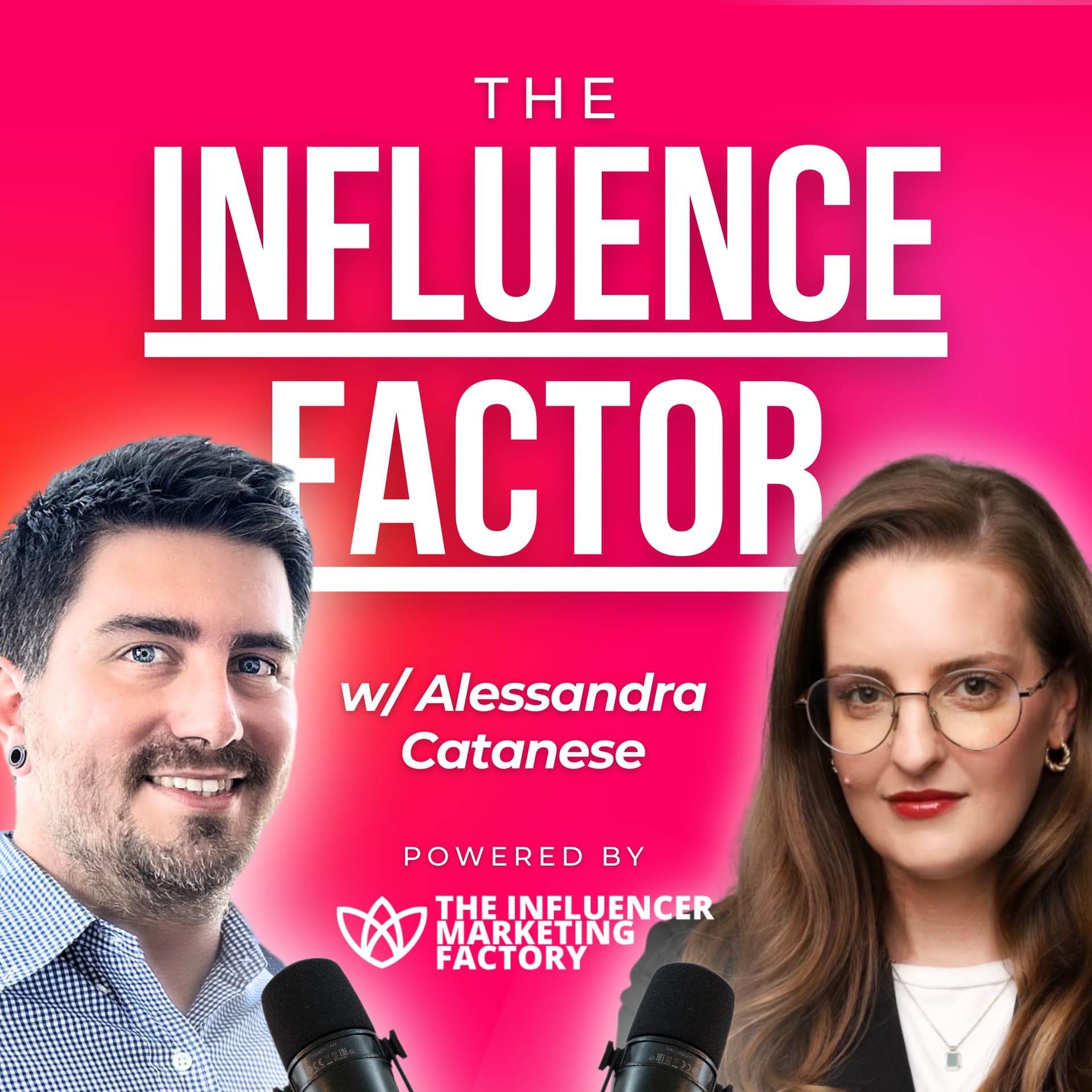
Podcast Notes: The Influence Factor - Revolutionizing Digital Comedy w/ Alessandra Catanese (Smosh's CEO)
Episode Summary In this episode, Alessandro Bogliari interviews Alessandra Catanese, the CEO of Smosh, discussing the brand's evolution and its significant role in the creator economy over the past 20 years. Catanese shares insights on Smosh's mission to create comedy centered on friendship, its achievements, the balancing act between creative freedom and business strategy, and the impact of audience feedback on content creation.
Key Themes
- Smosh's Mission and Purpose
- Mission: To create comedy rooted in friendship and connection.
- Purpose: To help artists thrive and make art accessible, emphasizing the importance of community support in the creative process.
- Achievements and Milestones
- Celebrated 20 years of Smosh.
- Received numerous awards, including Guinness World Records.
- Catanese's extensive background in digital media and talent management.
- Evolution of Digital Entertainment
- Early Days: Smosh began as a website and transitioned into video content in the YouTube era.
- Changing Perceptions: The entertainment industry’s initial skepticism about digital content has shifted as it has become a legitimate space.
- Merging of Traditional and Digital Media
- The distinction between traditional and digital media is increasingly blurred.
- Recognition of co-viewing experiences where audiences engage with content on multiple platforms simultaneously.
- Audience Engagement and Feedback
- Smosh actively measures audience sentiment and incorporates feedback into content creation.
- Balance is essential; while audience input is valuable, it's important not to become overly reliant on it.
- Business Strategy and Day-to-Day Operations
- Catanese emphasizes the importance of planning and adaptability in running Smosh.
- Discusses the responsibilities of a CEO in ensuring sustainable business practices and profitability.
Detailed Insights
Introduction to Smosh and Alessandra Catanese
- Background: Discussion about Alessandra’s journey and the foundation of the Smosh brand.
Celebrating 20 Years of Smosh
- Milestone: Reflecting on 20 years of content creation and community building.
- Impact: Smosh's role in shaping internet comedy and its evolution.
The Merging of Traditional and Digital Media
- Industry Dynamics: Shift from skepticism to acceptance of digital content as a legitimate entertainment form.
- Production Value: Increasing quality in digital content, narrowing the gap with traditional media.
Engaging with Audience Feedback
- Real-Time Feedback: The importance of audience reactions during live shows.
- Data-Driven Decisions: Using audience sentiment to inform programming and marketing strategies.
A Day in the Life of a CEO at Smosh
- Strategic Planning: Catanese describes her proactive approach to business, focusing on long-term goals and immediate actions.
- Operational Challenges: Balancing creativity with the practical aspects of running a digital entertainment company.
Takeaways
- Community Focus: Art and work can be enjoyable and should allow for collaboration and support.
- Adapting to Change: The creator economy is evolving, and industry leaders must adapt to new audience engagement strategies and production methods.
- Balancing Creativity and Business: Maintaining creative freedom while ensuring business sustainability is crucial for long-term success.
Conclusion Alessandra Catanese’s insights highlight the importance of adaptability, community engagement, and the blending of traditional and digital media in the evolving landscape of entertainment. Smosh's journey reflects broader trends in the creator economy, emphasizing the role of artists and community in shaping content and sustaining creative endeavors.
🌟 Call to Action Listeners are encouraged to engage with Smosh’s content and support their mission to foster laughter and creativity in the digital space.
Written by AI. May contain mistakes. Listen to the episode to check what was said.
Chapters
Tap a time to open that second in VOExploring Smosh's Mission and Achievements
0:45 to 5:53
Alessandra shares Smosh's mission, her personal achievements, and the purpose behind their work.
“So what do you aim to achieve with your work?”
The Evolution of Digital Comedy and Smosh's Impact
5:53 to 12:05
Discussion on how Smosh revolutionized digital entertainment and the changes in the creator economy over 20 years.
“all the time, one week in the creative economy is like seven years in every other industry.”
Understanding Audience Feedback and Community Engagement
12:36 to 14:00
Alessandra discusses how Smosh uses audience feedback to shape content and the importance of community.
“Tell me a bit more about how do you also use the fandoms and the community behind the audience to understand what type of content people would love to see.”
Audience Engagement and Feedback
14:00 to 16:34
Learn how audience reactions and feedback shape content decisions.
“but you also don't want to not hear them and, you know, and ignore them, right?”
Navigating Business Decisions in Comedy
16:34 to 19:36
Discover the complexities of making business decisions in the comedy industry.
“They don't know some of the business decisions that we have to make or like the availability or the production lifts or things like that.”
The Role of a CEO in Digital Comedy
19:36 to 26:06
Get insights into the daily responsibilities and challenges of a CEO at Smosh.
“Do we want to risk that the company who owns the IP that we are commenting on will then come after us?”
Transcript
Automatic transcript. May contain errors.0:00Art doesn't have to be painful. Work doesn't have to be painful. we can all come together and there can be community at places like these that help support each other and lift each other up.
0:14Hey, Alessandra, welcome to the show. How are you? Hi, good. Thank you for having me. Absolutely. Today, it's a bit of a, you know, I'd say different episode. I'm very, very curious, right, to go into that, especially, you know, with the 20th anniversary as much. Like there are a lot of things. What was it before? What was it during? what is the present and the future, right? So I'm very excited about this episode. But before we get started, for every guest, just to know a bit more about yourself, right? And also for the audience listening today. We use this thing called the MAP. Basically, it's divided in three main sections.
0:44So M stands for mission. So what do you aim to achieve with your work? Achievements, any notable milestones that could be in your career, in your life, or both. And the last one is the purpose. So why do you do what you do? So our mission at Smosh is to make people laugh through comedy rooted in friendship. And my personal mission has always been to help artists be artists, you know, and just I've always loved working with different types of talent. I love the way that they get creative. I love the differences in their creativity. And I always I always had this knack for helping provide structure and in a structureless setting.
1:22So a lot of my career is working with talent who are like, I want to do this thing, but I don't know how to get there, but I have such a clear vision of what it is, right? And I'd be like, well, let me help you get there. Okay, so that's mission. What was your second one? The achievement. It's anything that you're proud of. Achievement. Yeah. Yeah, I mean, I've done a lot of stuff. I've been on the board of VidCon. You know, Smosh has received an incredible amount of awards. This last year, we did a lot of Guinness Book of World Records. Oh, wow. And yeah, we broke, I think, maybe two new ones.
1:53And then we found out that we already had a few from our 20-year history, obviously. My personal achievements, you know, I've worked with talent where I've helped them win awards like Streamys and Webys. You know, Anthony and I won a couple together for our work at Press Alike. You know, I've worked in the MCN world. I've worked in crowdfunding. I've worked in San Francisco. I've worked in consulting. I've worked all over the place. And I think like one of my starting like launch points in this career was working in a multi-channel network like Maker Studios and being able to stay through the acquisition to Disney.
2:27So I was there all leading up to the charge. I was there for the transition over, you know, and then I stayed for about a year after we transitioned into the Walt Disney Co. And from there, you know, I bounced around. Like I said, I went into crowdfunding. I went to Patreon in San Francisco and then I started consulting and talent managing. And then when I was talent managing, we got acquired by Anonymous content and we started their emerging platforms department so i got to work with a lot of traditional celebrities and help them bridge the gap between what they thought digital was versus what opportunities really were for them in digital yeah so i mean i've been around the block i've done a lot but that was yeah so we went through mission that she made the last one is the purpose so why why you do what you do my purpose i think like outside of smosh's purpose which like again i'll just restate our mission statement is to make people laugh through comedy rooted in friendship and connection right so my personal purpose definitely helped drive that mission statement you know I love what people are able to do in the entertainment world I love bringing stories to life I love bringing entertainment to especially an audience that needs an escape you know I think right now life is heavy you know what we're dealing with in the world what we're dealing with in the economy, you know, especially just in the United States, you know, people are paycheck to paycheck.
3:51And I think like the one thing that we all look to during good and bad times is art, right? And people's art is so vast and ever-changing and different and beautiful. And I love to bring to light the art that I think might not get seen if people don't help. You know, it's a community effort just like anything else. And so when I think about my purpose, I think, about helping people's comedy, helping people's art, helping people's entertainment of all kinds be heard, whether that's platforming it or whether that's sharing it, you know, on social media in any way, or even just helping it make money so that people can make more art, right?
4:33You know, if you can pay your bills, then you can make, you can do more of what you're passionate about. And so, yeah, that's where my purpose and drive comes from is wanting to create things with really talented people, help bring it to life, help make it sustainable. And I think like part of that is also driving a way that things can be better, right? So consistent growth, consistent reflection, consistent accountability, things like that. So like art doesn't have to be painful. Work doesn't have to be painful. We can all come together and there can be community at places like these that help support each other and lift each other up.
5:10And that's not just in sharing things that's also in like providing a living wage and providing work life balance and you know and making sure that there are boundaries and breaks to avoid burnout so things like that right so i i think like with that i'm kind of always charging to make things better however they can be yeah absolutely no no i mean it makes sense right from the what you say like the importance of art and entertainment and the importance of being able to sustain yourself with that, to learn from that, to reinvest, grow, and so on, right? It's a lot of different topics that we also shared in previous episodes.
5:46So we'll have to hear more about that. But let's start with the 20th anniversary, right? Just I think last November, right? Celebrated that huge milestone, especially what I say all the time is that, I say this all the time, one week in the creative economy is like seven years in every other industry. So I can only imagine 20 years, right? How many things happen right out there. So, you know, again, given these amazing milestones, can you share how, you know, Smosh, right, has a revolution in the world of digital entertainment, right, and comedy, as you mentioned before, and also overall on the creative economy?
6:20Like, I'm very curious what was 20 years ago and what now? So Smosh started as a website in kind of like a community forum. So it started as a place for Anthony and Ian to connect with their friends in high school and, you know, share messages, probably a little bit of like high school gossip and drama and stuff, but quickly became the website where they decided, let's make some video content. Let's share it with our friends. They're here on our website, right? Let's give them something to talk about kind of thing. And, you know, I think it's also two kids being funny and goofing off and having fun with each other.
6:54Right. And making silly things that they thought would make others laugh. And so since then, you know, I think very shortly after, because in 2005 is when that started. And then 2006 or 7, I think, is when the partner program came out somewhere around there with YouTube. And so I think the guys realized, oh, we could get paid to put this content up instead of paying hosting fees on a website. So, you know, they were some of the first creators ever in the partner program. And from there, it really just became this this hub of, you know, I think YouTube was this this root of anybody can do it. Right.
7:35So back 15 years ago, it was something along the lines of you. well, you can, you know, go viral in your bedroom overnight. That's kind of the way that we looked at YouTube. And it was cat videos and it was slowly becoming the search engine that we know of it today. But, you know, back then it was very much the creator economy wasn't, we didn't call it the creator economy. I think, you know, like I'm sure you remember, most of the entertainment industry thought that it was a joke, thought that it was a flash in the pan. And yeah, I was like that one guy from YouTube, who cares? Right. And, you know, still today we see in media some of those typecast things where it's like, you know, some procedural drama has like influencer episode where like, you know, the influencers do something that gets them in trouble.
8:22And then, you know, the main characters of the TV show have to go clean it up. Right. Whatever. So we still see some of that stereotype, if you will, in today's media. But what it's become is a full-fledged media industry, right? So I don't really see a difference between traditional and digital anymore. I think we just call it that because we have to like categorize these things as humans. And I think the industry as well, really, like especially the traditional industry is like really up on their, you know, pedestal. And they really don't want to be compared to digital because they don't want to have to face the fact that what they create costs millions and millions of dollars and takes months and months and months.
9:09and what we create costs a fraction of the budget and takes weeks. You know, and I'm not saying that like, you know, what we make here is comparable with something like, you know, an Oscar winning or award winning, you know, TV show or film, but they're getting pretty close. You know, the two worlds, the industry is getting really close and there's a lot of things, you know, on YouTube that are high quality and that do have the production value and not just the production value, but the creative behind it, like the writing and the plot line and the growth and maturity and the substance that we're looking for out of the content that it is that we choose to watch.
9:54And so more often we're seeing audiences say, especially younger audiences say, well, I don't want cable TV or I don't want to watch this, that or the other that's on the traditional side. I want to watch what's on YouTube. And we've seen this new thing that, you know, the economy really just can't because we're seeing how the user habits from digital have influenced traditional. Right. So you'll see today's news is about how Matt Damon and Ben Affleck went on to talk about how Netflix is changing the way that they make movies that you have to reiterate. Why? Because of the co-viewing experience.
10:28because while I'm watching a Netflix show, I'm also scrolling on my phone, right? And so when I think of the creator economy today, I think of the ways in which we can win. And not to say we're going to beat out traditional, but to say we're going to blend into one, and that's recognizing these co-viewing experiences and not having to necessarily water down your content, but working with the co-viewing experience. So for me, one of the things that Smosh is really leaning into is the living room experience, is the 4K experience. We've invested heavily in 4K over this last year. And so the quality of our content, we are starting to encourage audience members to watch it on the TV.
11:08And the best part about that is while they're watching something in 4K on their TV, you know, that Smosh, they can also be commenting on their phone and liking and sharing and being a part of the conversation on their phone while they're watching. And that's something that I think traditional can embrace, right? We can teach them something the same way that they can teach us something, you know? And so today's creator economy is starting to embrace the writers and directors and producers of the traditional world who don't have that much work because traditional is struggling in, you know, different ways.
11:40So in all these ways, I see the creator economy becoming the entertainment industry. And there's too much gray area now. It's really hard to delineate between the two. And I think as much as some people may want to keep a gap, I just don't think that there's a choice anymore. I think that the future of the creator economy is clear. It is the entertainment industry, and we are morphing into one. Hey, if your brand is ready to grow, we are here to help. At the Influencer Marketing Factory, we run full-service influencer campaigns that actually move the needle. We handle everything, creator identification, campaign strategy, contract, shipping, logistics, you name it.
12:20We have supported brands of every size, from world-recognized Fortune 500 companies to ambitious DTC startups. And with our in-depth ROI tracking, you always know what's working and why. Just visit theinfluencermarkeringfactory.com to learn more and get started. very interesting and still on this you know you said about you know the 4k tv together with the experience of real-time commenting and sharing right in addition to that also you know between this line and these differences between the digital entertainment right and hollywood more of the traditional celebs and everything i also can think of the fact that if you see and you watch a movie or a tv show you can comment right on social media but this comment goes to like on the internet right maybe the producer are not even gonna read them While a YouTuber or a team behind the YouTube, I'm pretty sure that you read the comments, you understand what people want to see.
13:12Tell me a bit more about how do you also use the fandoms and the community behind the audience to understand what type of content people would love to see. How do we use the feedback from people? Because again, that's the main difference. Instead of unilateral communication, this bilateral, constant, real-time feedback from YouTubers and vice versa. How do you use that for your content and t-shirt? Yeah, so we do measure audience sentiment, right? We want to know how the audience feels about a piece of content or a series of content or, you know, whatever, a series of programming that we have created.
13:50And so for us, it's a balance. I'd say for anybody, it's going to be a balance. You don't want to over-listen and over-dedicate yourself to the consideration from the audience. but you also don't want to not hear them and, you know, and ignore them, right? Like to us, I think we care about the overall sentiment and reaction. So a good example for us is this last Friday, we just had a live show. We just did Smosh Hospital and there's audience reactions and people in the chat. It's a ticketed live event. So you watch the stream by paying for a ticket and then you host it on your computer, right?
14:30And, you know, people can leave comments there, but I don't just look there to see, you know, because if somebody bought a ticket, they're much more likely to say, this is great because they spent money on it. Then, you know, I want to know both sides. And so we check everything from like Twitter and Reddit to a certain degree, not often and not daily, but we check them maybe like weekly, monthly to see like what's the conversation generally around something and so we'll check on like smosh hospital ticket sales right people will comment on price points and then we will see what the reaction is you know on the actual content and did they like the cast members and did they like the characters how about the stunts or the bits that we did right like we also find ways to get them involved so like we have them vote on different choices and we also have them submit like Mad Libs stuff sometimes ahead of time so that we can throw gags at the actors, at our comedians while they're live.
15:29And we're able to see the show is very well received. The show is widely well received. We had, you know, one of our highest viewerships on a ticketed live event in a very long time. And the sentiment was extremely positive. That's important to us. We want to know that what it is that we're delivering is received well. And we want to know that we are investing in the right properties. We want to know that we're investing in the right talent. Right. So sometimes the audience will highlight a particular comedian's work and it wouldn't have stood out to us before. Right. Maybe we're like, oh, this is a great episode.
16:07And, you know, the talent works firing on all cylinders. And then we see the audience reaction. It's like, oh, my gosh, you know, so and so had such a funny moment, blah, blah, blah. And that helps inform, you know, what highlight clips will distribute on social or, you know, how we pitch the show to advertisers and things like that. So, like, it's very symbiotic relationship. But like I said, it's all with a grain of salt and balance because, you know, the audience doesn't know everything happening behind the scenes. They don't know some of the business decisions that we have to make or like the availability or the production lifts or things like that.
16:41So sometimes they don't know what they're asking for and or they don't understand the implications of something that they might say. So they might say like, you know, we love Smosh Hospital so much. We wish you guys would do this all the time. Well, it's a very expensive show to put on. So I wish I could do it all the time, too. But I don't have the budgets to put it on, you know, every month. And there are other audience members that would say, I can't afford to buy a ticket every single time. So we want to make sure that our ticket prices are affordable and approachable and accessible, right?
17:10We want to make sure that the programming we're delivering is strong and going to resonate well with our audience. We want to make sure that we're investing in lifting up cast members that are doing a great job and making sure that they're also taking their platform seriously and, you know, not taking for granted the excitement generated by that audience, but also are able to launch their own independent projects and careers from it. Right. So everything's a bit of a balance, but it all feeds into each other. And I think when you find your own balance, it can be a very beneficial relationship as long as you understand that there's something you can't make everybody happy all the time.
17:47Right. My goal is not to make everybody happy all the time. My goal is to provide more opportunity for our artists, for our employees, for our business. Right. And therefore that indirectly, but also directly creates more entertainment for our audience. And that's, I think, what the Internet told us. Right. And told us that the fact that no one will always be happy. if you go in the comment section, it's always going to be, I don't want to say 50-50, but even if you think that it's the best product ever, you're going to have haters and people complaining and this and that. So I totally understand what you mean.
18:18Like looking around and not be that company that doesn't really listen. Maybe some people don't see the big picture and they don't understand budgeting and timeline and IP and media rights and all the complications. Right, right. And there's so much in the entertainment industry. You know, maturing Smosh as a business also means that like we can't do things that we could get away with before. You know, we have we have a clearance attorney now. Right. And there's a lot of things that we have to consider because, you know, people will say, well, oh, I can use this thing or this music or this thing because it's fair use.
18:54And I'm like, OK, maybe you have the argument for fair use, but just because you might have what you think is considered a good point or good argument as to why this is considered fair use doesn't mean that the company that owns the IP that we're using isn't going to sue us. right like and that's the thing is when you're a small fish in a small pond you're not really a big target but even if we think that we're utilizing fair use to its fullest extent like properly that doesn't mean that the success we're amassing isn't going to make us a target to a bigger company right so at the end of the day even here internally i have to educate people of like yes we could use this picture and if we comment on this picture extensively then we are essentially falling into fair use.
19:37Do we want to risk that the company who owns the IP that we are commenting on will then come after us? Right. Because it's not about it's not a black and white business when it comes to fair use. You have to have the willingness and the capacity to go to court for it. Right. Like you have to like understand that the risk that you're taking is you could end up trying to argue something, you know, in a legal battle. And like, sometimes things just aren't worth that risk. Sometimes they are. Sometimes it's, it's easy and it's fun and it's let's do it and let's have that social commentary. But sometimes you have to really reconsider what it is that the risk that you're willing to take when it comes to your business.
20:21And this is a business that's very precious to me. So I like to make sure that we're not, you know, it's comedy. We're always going to be taking risks yeah but like at the same time sometimes my job is to play it safe you know and that's the balance and let's continue on your job right because what you said you know earlier about 20 years ago youtube what was this very experimental new things i know what was taken seriously then after a few years people were like yeah i'm like i do videos on youtube but they didn't want to share too much because it was this weird thing and then it became like popular and now YouTubers, right, don't, are not like this solo, right, I'd say, players in the market, they do have a team, video editor, people, you know, helping with brand meals and scripts.
21:04You are the CEO, right? What is your week, you know, like, or a day, like, is, like, I'm very curious, right, because, again, usually people are used to maybe the CEO of a company that is, I don't want to say more traditional, right, than something like Smosh, right, but how do you approach, right, your work with the team? What does entail your typical day working there? It's different every week, but I think generally as the CEO, my job is to always be furthering our business. So I like to tell the team here, I carry the weight of making sure we can pay the paychecks, right? And so that kind of fuels me.
21:42So every week I'm looking at what is our one year, three-year, and 10-year plans, and how are we putting into action over the next 90 days, right? The small steps that accumulate to those bigger steps, right? So this week, I'm looking at like, you know, what are the conversations I can be having with studios or networks or platforms like Netflix and whatnot to consider what their appetite is so that Smosh can go sell shows, right? Like, what does that look like? How are we furthering our business there. I'm looking at what are the events that we're going to attend this year so that we can sponsor some, so that we can have live appearances and others, so that we can meet audiences in different places that they are.
22:25I look at our distribution, right? I'm looking at some of our deals with distributing partners. We have one major deal with Samsung TV +, where all of our content gets licensed exclusively. And then we have the platforms that we work with to repurpose our YouTube content onto social platforms like Facebook and Snap so that they can be monetized. So some of that we have a team internally, but there's another half of that that's a big portion that we work with an external team with, right? And then we just did payroll last week, right? So I'm making sure, you know, do I know what our payroll amount is?
22:59Do I know? I mean, granted, we're able to meet it, which is nice. But like, if we're not able to meet it, right? Like I need to know two, three months ago, right? Like I, so I'm looking at things that affect us, you know, three to six months in advance, but I'm also starting projects that affect us three to six months in advance. So, you know, but sometimes even a year in advance, if we sell a TV show this month, you're not going to see that TV show for six months, maybe even a year, right? Like, so like the things I'm working on today won't come to fruition until a while out, but somebody has to start them and then get them to a place where they're real enough to pass on to the team.
23:41So a good example would be Smosh Hospital, right? So over six months ago, I went to our streaming partner, Kiswi, and then I went to some of our talent, specifically Shane Topp. And I said, hey, we know that around this time, we're going to want to do another show, another live show. So we have to plan for a date for that. So I get Kiswi and our production team together, start planning for dates. And then I went to Shane and I said, they're really not going to be able to get much done until we have, you know, a script for something like this. This is your original idea. And I know you had a theme for it.
24:15Let's set you up with a writer. So we do the deal to set them up with a writer. And George Primavera, who works with us often on a lot of our dread formats, came on board to start writing the show. You know, I have to do that deal. And then I get them to a certain point where the programming team then has a script. And that script can then be reviewed and given notes and gotten feedback and blah blah and then they kind of like run with it from there because now the production team is able to set an actual production date for us to bring this live and work backwards with what does the art team need to do what does the post team need to do what is what assets are we building for this live show both physically and digitally right and then how then the social team steps in how are we marketing the show all that kind of stuff gets set up that's when i that's when i get to let go and say okay everybody's got their marching orders.
25:00Everybody's got their jobs. You guys to go do this. I need to go work on the next one. Right. So before it even airs, I'm already thinking about what's our next project? What's the spend going to be on that project? We need to review the budget from this last project to see what did we think was absolutely necessary? What did we think was not necessary? Where is where can we be better with our spending? Whereas where do we get the most bang for our buck? Things like that. And so in the coming weeks, I will both be working on the next project and setting it up to handoff and be reconciling this last project and going through, you know, how much money did we make?
25:35What did we make after expenses? What is the, our actual profit margin? Is it enough, right? Does it justify what it is that we've done? And then are we able to take that money that we profited and reinvest it in the next project so that we can make the next project even better? Is there a portion of that profit that I want to take to help make us a movie, to help hire on a new, you know, studio hands that helps support what it is that we do, things like that right so again it's it's this cycle of setting up handing off and then starting the next only to have to review the last one you know no thank you for sharing that you know it's fascinating because as we said earlier right many people don't realize the work that is behind right a product like that you know you see a video could be a 30 seconds up to a 20 minutes long form and people just think that something happened right that the video comes to light right you And then it goes back to listening to the feedback with a grain of salt because, yeah, we would love to do that.
Read the full transcript
26:30But maybe the budget is limited for that or maybe it doesn't work because of that type of monetization or because this and that. So I was very curious about that. So thank you for sharing some of the behind the scenes because many people don't even know, right? It was a feel like yours does for Smosh. Yeah. Yeah. And it's different every day. You know, so the calls I get this week about business are going to be really different than the calls I get next week or next month or next year about the business that we can do. You know, and I think like people don't realize like you really got to push to get Smosh's brand continually out there.
27:03It's out there and it's well known, but the struggle then becomes how do we keep it relevant in people's minds? So like a lot of my work ends up just being matters. What is the press opportunity or what's the next announcement we can get? What deal do I need to sign to get the industry reignited and excited about what it is that we're doing so that we can create more opportunity for our people, for our talent, etc. Amazing. Alessandra, thank you so much for, you know, like telling us about, again, like, you know, all these 20 years and all your, you know, all your work. And as you said, from traditional celebrities, you know, and then YouTubers, like I can see that you saw a lot of these different point of view.
27:39very important in my opinion to understanding you know how they how they are decent but very similar these days at the same time and you know best of luck with all the future right as much thank you thank you so much for sharing all your knowledge with us today this was the Influencers Factor by the Influencer Marketing Factory and I'll see you next week
From the publisher
In this episode of The Influence Factor, Alessandro Bogliari chats with Alessandra Catanese, CEO of Smosh, to discuss the brand’s evolution from a single website to a major force in the creator economy. She shares Smosh’s mission to create comedy rooted in friendship, reflects on milestone achievements - including Guinness World Records and awards - and highlights the power of community in shaping content.
Alessandra also explores the merging of traditional and digital media, how Smosh is investing in premium content, and how she balances creative freedom with business strategy to keep the brand relevant in a fast-moving industry.
🌟 Leave a 5-star rating on Apple Podcasts and Spotify🚀 Start Your Next Influencer Marketing Campaign: Get In Touch🎙️Want to be a guest? Apply here
Show Notes:
(00:56) - Introduction to Smosh and Alessandra
(06:23) - Celebrating 20 Years of Smosh
(08:27) - Evolution of Digital Entertainment
(10:12) - The Merging of Traditional and Digital Media
(13:35) - Engaging with Audience Feedback
(21:26) - A Day in the Life of a CEO at Smosh
Check out some of our previous episodes!
- Inside Etsy’s Creator Ecosystem w/ Monty Montalto
- From Creator to CEO: How Influencers Are Building Real Businesses Beyond Brand Deals w/ Billy Parks
- AI’s Impact on the Creator Economy w/ Alexander Frolov (HypeAuditor)
- How Visa Supports Creators as Small Businesses w/ Jonathan Kolozsvary
- Patreon’s Secrets to Building Loyal Superfans w/ Paige Fitzgerald
- How FP Movement Builds Impact w/ Courtney Weis
- Inside McDonald’s Bold Marketing Moves w/ Jennifer Healan
- The Rise of B2B Creators and Monetization Strategies w/ Olivia Owens (Teachable)
- What Makes Content Stick w/ Victoria Blinova (YouTube)
- The Daily Grind of a Tech Journalist w/ Amanda Silberling (TechCrunch)
- The Creator’s Attorney w/ Tyler Chou
- The New Currency of Marketing w/ Raja Rajamannar (CMO of Mastercard)
- How To Protect Your Social Media Accounts w/ Liron Segev
- Liquid Death's Unconventional Marketing w/ Greg Fass
- The Secrets Behind ESPN's Social Media Success w/ Maxwell Kelley
- Inside Snap's Playbook w/ Brooke Berry
- Scaling Miss Excel w/ Kat Norton
- (Mastering Money w/ Vivian Tu (Your Rich BFF)
- The Inside Scoop on Social Media w/ Jasmine Enberg (Insider Intelligence)
- TikTok's Influence w/ Adrienne Lahens & Sofia Hernandez


