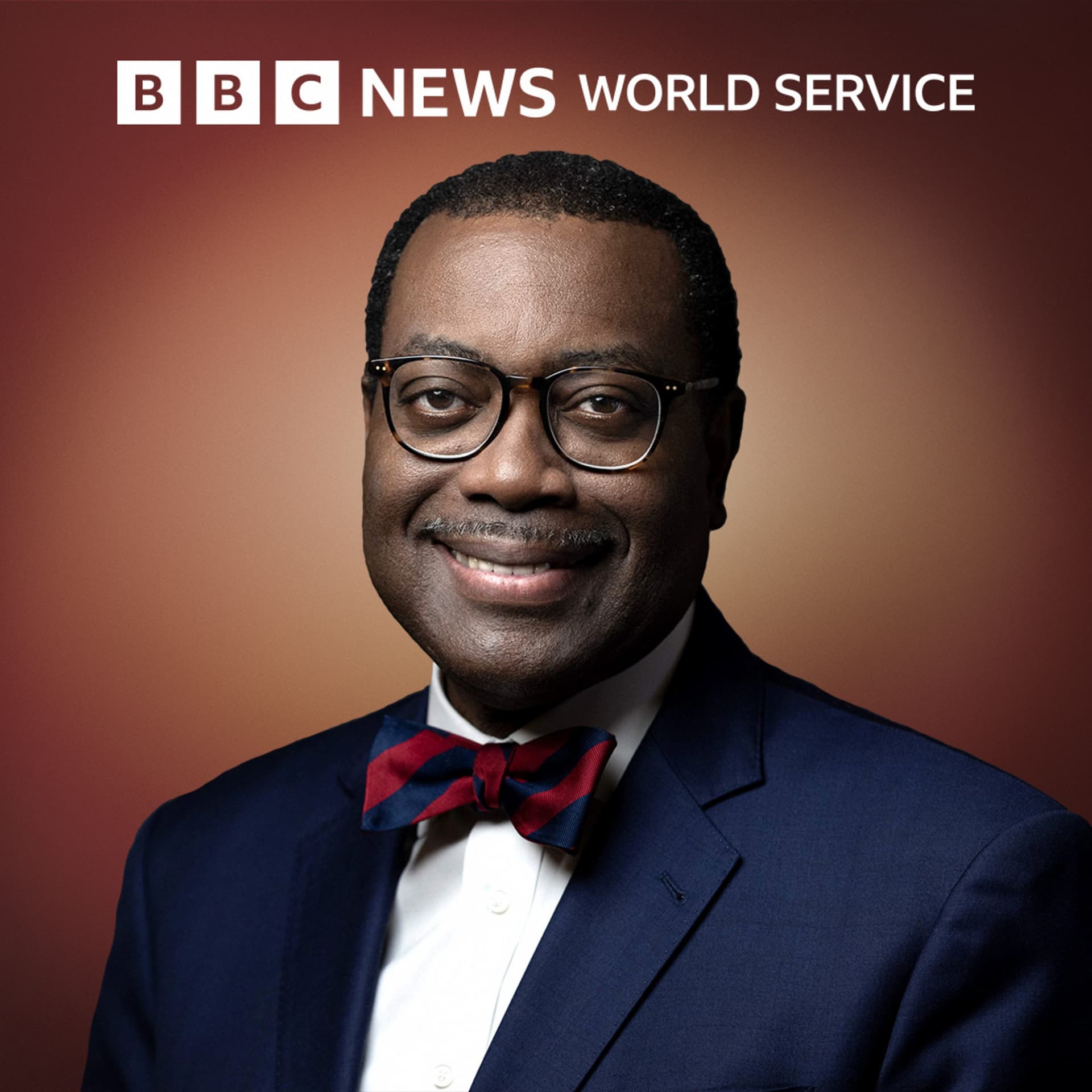
In short
Podcast Episode Notes: Akinwumi Adesina, President of the African Development Bank: Mission accomplished?
Podcast Title: The Interview Host: Audrey Brown Episode Description: A reflection on Akinwumi Adesina's achievements and challenges during his two terms as President of the African Development Bank, focusing on his High Fives framework, vision for Africa, and personal experiences guiding his leadership.
Key Themes and Highlights
- Background of Akinwumi Adesina
- Former Minister of Agriculture in Nigeria.
- Elected President of the African Development Bank (AfDB) in 2015.
- Focus on advocacy, strategic positioning, and amplifying Africa's voice globally.
- High Fives Framework
- Objective: To improve the quality of life for African people and address critical issues.
- Components:
- Light up and Power Africa: Aims to provide electricity to millions.
- Feed Africa: Enhances food security and agricultural productivity.
- Industrialize Africa: Encourages local manufacturing and job creation.
- Integrate Africa: Promotes regional trade and economic cooperation.
- Improve Quality of Life for Africans: Ensures access to healthcare, education, and clean water.
- Achievements During Tenure
- Electricity Access: Connected over 25 million people to electricity.
- Food Security: Improved food security for 101 million people.
- Infrastructure Investments: Over $55 billion invested in infrastructure projects.
- Youth Initiatives: Launched the Youth Entrepreneurship Investment Bank.
- Challenges Facing Africa
- Youth unemployment and the migration of young people seeking better opportunities abroad.
- The ongoing impact of COVID-19 and climate change on agriculture and livelihoods.
- Political challenges, including allegations of embezzlement against Adesina, which he claims were politically motivated.
- Personal Motivation and Leadership Philosophy
- Adesina attributes his drive to his faith and personal experiences growing up in poverty.
- Emphasizes the importance of listening to the voices of the poor and ensuring they are represented in decision-making.
- Advocates for a new form of leadership in Africa that prioritizes accountability and transparency.
- Future Vision for Africa
- Adesina envisions a continent that leverages its demographic dividend for economic growth.
- Calls for African leaders to move away from dependence on foreign aid to focus on investments and trade.
- Highlights the need for a shift towards high-value manufacturing and value-added exports.
Key Quotes
- "The future of Africa's youth lies in Africa, not Europe or the United States."
- "Poverty is not just a statistic; it is a reality that I lived as a kid."
- "Investment is a strategy, benevolence is not."
Conclusion Akinwumi Adesina's leadership at the African Development Bank represents a significant commitment to transforming the African continent through strategic initiatives and frameworks. While his tenure has seen notable achievements, he acknowledges ongoing challenges and emphasizes the need for continued effort to improve the quality of life for all Africans. His reflections provide insight into the complexities of leadership and the importance of a clear vision for Africa's future.
---
Listen to more episodes: Available on the BBC World Service and various podcast platforms. Contact: [TheInterview@bbc.co.uk](mailto:TheInterview@bbc.co.uk) | #TheInterviewBBC on social media.
Written by AI. May contain mistakes. Listen to the episode to check what was said.
Transcript
Automatic transcript. May contain errors.0:00This BBC podcast is supported by ads outside the UK. If journalism is the first draft of history, what happens if that draft is flawed? In 1999, four Russian apartment buildings were bombed, hundreds killed. But even now, we still don't know for sure who did it. It's a mystery that sparked chilling theories. I'm Helena Merriman, and in a new BBC series, I'm talking to the reporters who first covered this story. What did they miss the first time? The History Bureau, Putin and the Apartment Bombs. Listen on BBC.com or wherever you get your podcasts. I am Nina Khrushcheva, the great-granddaughter of Nikita Khrushchev, the leader of the Soviet Union in 1962.
0:47And I'm Max Kennedy, the nephew of US President John F. Kennedy. We explore what was a terrifying moment in history. The story of the Cuban Missile Crisis. How close the world came to nuclear war. And what they had to do to pull it back. from the brink. The bomb, Kennedy and Khrushchev. All episodes available now, wherever you get your BBC podcasts.
1:13Hello, I'm Audrey Brown, and this is the interview from the World Service, the best conversations coming out of the BBC. People shaping our world from all over the world. I will come back to Russia. I will participate in the elections. There's an increase in violence according to the Coca-Crop. There is no place in the world where women are equal. I will give away the vast majority of my money. It's my full-time focus for the rest of my life. For this interview, I speak to Akinwumi Adeshina, president of the African Development Bank. We recorded our conversation when he was here in London on a recent visit.
1:53He's been reflecting on the achievements and challenges of the past 10 years in office before he steps down in September. In his two terms, Mr Adeshina focused much of his time on advocacy, strategic positioning and amplifying the continent's voice on the global stage. We're going to hear about his High Fives, a framework which includes getting power to those without electricity and improving the quality of life for African people. He tells me about his vision for the continent's development and how his faith and personal experiences shape his approach to the job. I have to make sure that everything that I do, that the voices of the poor are heard and that I accelerate every action to do that.
2:36Part of it is also my growing up days. I grew out of poverty. And so, you know, as an economist, for me, inequality is not something that is a theoretical concept. It's a reality that I lived as a kid. Since taking office as president, Akinwumi Adeshina has tackled challenges like the COVID-19 pandemic and the brain drain as young people leave Africa to improve their lives abroad. He's launched initiatives like the Youth Entrepreneurship Investment Bank, but he acknowledges that so much more needs to be done. He's also been accused of embezzlement and nepotism, allegations that were investigated and found to be false.
3:13He says they were politically motivated. Welcome to the interview from the BBC World Service with Akingwumi Adeshina, president of the African Development Bank. When you started the job, you said this was not just a job, this was a mission. What was the mission? Well, you said it exactly. It's not a job because I couldn't think of anything more important than to be given the platform, the resources, and the advocacy necessary to actually accelerate the development of the continent of my birth. It is a mission. I live it every single day, and I want Africa to be respected in the way in which we develop.
3:52And so it's more than just simply running a bank. It's actually trying to well position Africa at all times. Where did that come from, the drive to do that? Because lots of people say that. Lots of people find themselves in positions of power and authority and agency. They don't necessarily achieve what they want to. So we'll come on to the achievements. But what I want to find out from you is what made you decide that you were not just going to be this, that or the other. You are actually going to be somebody that does this. You started off in public life. You were the minister of agriculture in Nigeria, and that's the first time I interviewed you.
4:28Yes. Tell me why that. Well, I think a lot of it comes actually from my faith, because I see myself as nothing more than an instrument of change, and that my life only matters to the extent that it is used of God to transform the lives of people. How does that work in practical terms? So practical times basically means that, you know, I have to make sure that everything that I do, that the voices of the poor are heard and that I accelerate every action to do that. And when I was actually, part of it is also my growing up days. I grew out of poverty. And so, you know, as an economist, for me, inequality is not something that is a theoretical concept.
5:05It's a reality that I lived as a kid. I actually went to a village school in which my classmates were all children, mostly children of farmers. And I realized very early to your point on agriculture that when the agricultural sector worked, they were in school. And when it failed or productivity failed, there was a shock or whatever, they dropped out of school. And so I remember asking my dad, why are you sending me to a village school? I remember him telling me, again, I don't know what God is ever going to make you in life. But when you live in a village, you see the reality of life. Whatever God makes you, you will know exactly what to do.
5:38And that has been my guiding light. So when I actually got elected as president of the bank, I did say something to my board members and staff that, look, in this boardroom, we're going to be making a lot of decisions, but the poor are not here. We don't see them. But if we strain our ears enough, we must hear them. I don't believe that the future always has to be that far, that Africa's best years are always in its future. For example, my first board meeting, there's a project in West Cordova. It was in Sudan. I remember it very vividly in 2015. West Cordova. West Cordova, yes. I should probably cover some stories over there.
6:11And I remember the project. I took a look at the board docket. It was about water. It's a place where about more than 50 % of the household income was being spent on water. 50 % of the girls were falling out of school because they had to go 5, 10 kilometers to go look for water. And about 80 % of the conflicts were all water related. So I asked, if we don't accelerate this kind of project, what it means is that by the time we're done, all the girls will be out of school. That's what I mean. By straining your ears enough and having an accountability that people are not statistics. Poverty is not a statistic.
6:46So everything that I did when I became president of the bank was to actually crystallize that into a very simple, very powerful framework, which is called high fives. Indeed. Let's talk about your high fives. But what I want to do with your high fives is that I want you to talk about it in terms of one five-year-old. She's a girl. She can live wherever you want her to live. from the time that you became president of the bank, she was five then, she's got brothers, she's got sisters, mother, father, she lives wherever, whichever country in Africa, to 10 years later, she's now 15. So talk us through every single one of your high fives, which are essentially things like...
7:30Light up and power Africa. You talk about light up and power Africa. You talk about agriculture, industrialization, integration, and quality of life. Talk us through that five-year-old's life. Yeah. When I started, I said to myself, you know, it's not just about strategy. It's also about being clear about what you have to do operationally to bring that strategy to life and bring that reality to the life of that five-year-old. Since we started that one 10 years on, we have connected, provided electricity for more than 25 million people like her and others that kids that can actually go to school, they can actually study well because they have electricity, but for others that are their parents that actually have access to electricity for productive use and so on.
8:13And just in January of this year, myself and Ajay Bangar, the president of the World Bank, got together and we said, look, we still have, despite all the gains we were making, 600 million Africans, close to that, let me say, that city didn't have access to electricity. So let's do it in a way at scale. And we did. But 600 million Africans still don't have power. Close to that, yeah. Despite all the gains that we've made. But the thing is, it's like surgery. Sometimes complicated things take time. And so we have 25 million people with access to electricity like her and others. So let's talk about the other things.
8:50Yeah, but I wanted to say something about the life of how this affects us. Like in Kenya, for example. I was just in Kenya where the president of Kenya gave me the highest national award and distinction of the country. And I had gone to the Rift Valley with one of the ministers then. We helped Kenya to increase access to electricity from about 34 % to almost 80%. At 20 million, though, compared to 600 million. And this particular ambition is not new to you. It's an ambition that African leaders and leaders of the bank have had for a long time. Yeah, but take a look at what we've done. For example, that is just people with access to electricity, but we are making investments that are going to change that completely in three ways.
9:37One is we have something called Desert to Power. Desert to Power, it's a$20 billion investment we are making already in turning the solar energy in the entire 11 countries of the Sahelian region. So that will provide electricity for 250 million people. Now, joining that with the Mission 300 with the World Bank will provide electricity for another 300 million people. That is 550 million people out of that. So we are on the money on getting to those numbers and making sure that it's a good one. What's the timeline? Well, the timeline, actually, it's over a 10-year period. And I think that we are very, very focused on that, the Mission 300.
10:14We already have 12 countries. That's 120 million people that we are working on. There will be another 20 countries whose plans are going to be developed before the end of the year. What do you mean by integration is one of your high fives? If you look at Africa more generally, you have to go from one place to the other. So you need connectivity. You need corridors. You need digital infrastructure. You have to integrate your financial markets so you can mobilize capital and deploy it across the countries. You need to be able to also have navigation systems, sea ports, rail, and all of those things.
10:45But those things are there, though, aren't they? No, but we're investing in them. We've invested more than$55 billion on infrastructure from rail to ports to airports. Tell us a specific example once again. And we're talking about the five-year-old and her family. So, okay, let me give you some example of that. So first and foremost, you take, for example, the case of Kasungula Bridge, which is connecting, for example, Zambia all the way to Botswana and to Namibia and so on. The Lagos Abidjan corridor, you know, we helped structure, we're structuring right now with the Economic Commission of Africa, the ECOWERS Commission.
11:16That is going to be the largest corridor, actually, in terms of population in the world. So that just tells you when you say integrate Africa, you've got to be able to move, you've got to be able to have economies integrate. So it's not just road, but also integrating your financial markets because we are also integrating the capital markets all the way from Johannesburg to Nairobi to Egypt, Cairo, and to Lagos, for example. So tell me this. Why is this five-year-old brother still planning to leave the country, plunging the family into debt as he finances this epic journey that it's going to take through the Sahara Desert, across the Mediterranean.
11:55Why are people still leaving the countryside where they should be farming in such large numbers to go and live in crowded cities where they don't have sanitation, where they don't have proper housing, where they don't have proper roads, where they don't have proper schools? That five-year-old is now 15. Her brother is 18. That is what is happening in that family. Why do these initiatives not join up? Why do they not scale up? No, they are scaling up. You know, say, for example, you've got 101 million people in Africa today that have food security because of the efforts that we have done as a bank.
12:31If you take a look at the crisis transport, you were just mentioning that, all our investment has actually provided improved transport for more than 121 million people. If you take health, you've got today 127 million people, So I want you to take that out of the 127 million. I want you to place us somewhere. Which part of the country or which part of the continent are you talking about? No, all over the place. Give us a concrete example. Okay, so let me take, for example, the case of food. You know, when we look at farmers that are dealing with climate change, from Kenya to Malawi to Zimbabwe, you know, we have a platform that's called Technologies for African Agricultural Transformation.
13:13We get technologies that can allow farmers to adapt to climate change. So when drought happened in Kenya, when it happened in Zimbabwe, when it happened in Malawi, we as African Development Bank, through that platform, deployed technologies that are water-efficient maize varieties that allow them to deal with that for more than 5.2 million households. When you talk about the case of health, for example, you're looking at rural health care centers. The problem is that girl or any other girl have to travel more than five kilometers to go and get access to primary health care services. We are upgrading primary health care centers, connecting them to water and sanitation.
13:52I was just in Lesotho, and I went to one of our projects on water. I was in a school, and I just pictured myself as when I was in a village school. These kids have access to water. I went to their own health clinic and they said, thanks to our project, they now have water. The kids can go there. The amount of communicable diseases have actually gone down. So all in all, when you talk about accountability in the last 10 years that I've been president, it's impacted on more than 515 million people. But it's not a completed job. We have to continue to accelerate things. You're listening to the interview from the BBC World Service.
14:31people shaping our world from all over the world. If journalism is the first draft of history, what happens if that draft is flawed? In 1999, four Russian apartment buildings were bombed, hundreds killed. But even now, we still don't know for sure who did it. It's a mystery that sparked chilling theories. I'm Helena Merriman, and in a new BBC series, I'm talking to the reporters who first covered this story. What did they miss the first time? The History Bureau, Putin and the apartment bombs. Listen on BBC.com or wherever you get your podcasts. I am Nina Khrushcheva, the great-granddaughter of Nikita Khrushchev, the leader of the Soviet Union in 1962.
15:18And I'm Max Kennedy, the nephew of US President John F. Kennedy. We explore what was a terrifying moment in history. The story of the Cuban Missile Crisis. How close the world came to nuclear war. And what they had to do to pull it back from the brink. The bomb, Kennedy and Khrushchev. All episodes available now, wherever you get your BBC podcasts.
15:46For this episode of The Interview, I'm speaking to Akinwumi Adesina, president of the African Development Bank. He came into our studios here at New Broadcasting House. It wasn't his first visit or our first meeting. I first interviewed him for Focus on Africa when he was Nigeria's Minister of Agriculture, a position he held until 2015. Every time we've met, he was wearing a broad smile, his trademark bow tie and polished shoes. Shoes, he told me, he shines himself. And every time we meet, he is fired up with his mission to improve the lives of all Africans. Now let's dive back into my conversation with Akinwumi Adeshina, President of the African Development Bank.
16:30Now I want to ask you, this five-year-old, now 15, right? You've just told us that you received the highest accolade in Kenyan society from President Ruto. Last year, that 15-year-old and her brothers were out on the streets, the Gen Z protests. You received this award just recently. The reason why they were out on the streets were for a variety of reasons, including the fact that they felt that President Druto had betrayed them. He said that he was there for them. And they are saying in those protests, you weren't there for us. Across the board in various African countries, young people are saying, these things are not working for us.
17:08So how will you turn around and look that 15-year-old in the eyes and say, I accepted this award from somebody that she says betrayed her? Well, you know, the work of development is not a finished business in one day. Let me tell you, for example, in the case of Kenya, what you find in Kenya is a demographic shift. And not just Kenya, it's all across Africa. You have a rapidly growing youthful population. They are now looking for handouts. They are looking for opportunity to have the skill, the entrepreneurship capacity, and the financing to turn their businesses into great ideas. I've been on record, but I don't believe that the future of Africa's youth lies in Europe.
17:44It doesn't like the United States, it doesn't like anywhere else. The hundreds of thousands of them that are leaving don't believe you and they haven't heard you say that. No, no, no. But there are so many that are working in Africa. So the issue is how you turn your demographic advantage into an economic asset and give more priorities to them. First is that people talk about youth empowerment all the time. I don't buy it. It's not because I don't want youth people to be empowered. They are not looking for words. They are looking for investment. The issue is how you provide them the capital. And that's why the African Development Bank is now supporting to set up what's called youth entrepreneurship investment banks.
18:22These are all new, brand new financial institutions that will allow that 15-year-old, that 16, 21-year-old, to have access to the capital they need to turn their ideas into great businesses. So these are the things that are going to create opportunities for those young people to stay and work in Africa. Now, one of the things we need to talk about are the investigations into allegations that you were involved in embezzlement, awarding contracts to friends and relatives, and that you gave fellow Nigerians, you know, senior positions and promoted people suspected of fraud. Now, you were cleared by an internal investigation.
18:58The U.S. wasn't happy with that and wanted to do an external probe. What interests me about that is that so many people were not surprised about the allegations, firstly, and found it quite easy to believe, you know, that somebody in your position would actually behave in that way. What surprises me is that people wouldn't think twice about it. What does that say about leadership and African leadership? You know, rumors are not facts. You know, I was cleared up because it was all made up stuff. I'm not going to go into all of that. My integrity is 100 % intact because I know what I did. I've run a first-class financial institution.
19:36Just two years ago, this bank was ranked the most transparent financial institution in the world. When I was reelected, I was reelected by 100 % of all the shares. No, but my question is, yeah. But it's important that I make the point. People just have to realize that just because you're an African doesn't mean that you're corrupt. And so I don't accept those labels. The important point, though, is that even Africans believe that. So what does it say about leadership was my issue? Well, what I'm saying is the kind of leadership that I have offered shows that accountability matters, transparency matters, good governance matters.
20:15I'm proud of the African developing bank where we are today. Tariffs. Yes, OK. So the Sahel states have imposed 0.5 tariffs on goods from outside their countries. Now, that kind of sounds a little bit like chicken feed compared to what the American administration is doing. Why is tariffs the weapon of choice in global communications and interactions between states right now? No, I think that when you take a look at the U.S. administration and tax, I think the president of the United States was elected for the United States, and I think he's trying to do four things. One is to make sure that he rebalances the patterns of trade.
20:53The second is to be able to also create manufacturing, but also to raise more revenue, but also to make sure that the American manufacturing can pass its back. So all that is fine because it's President of the United States. Every country has to do what's in the interest of their countries. But I think what we have to kind of think about, you know, from the African perspective is how are we positioning ourselves in this kind of a world? And I think that's why accelerating the Africa continental free trade area for me becomes very, very important. But even doing more than that in terms of trade, making sure that what we do is to have industrial manufacturing over whether it's agriculture, processing and adding value to food, from textile to garments, but also making sure you process your cocoa, add value to everything you have, your oil, your minerals, your gas, so that you are actually trading value-added products.
21:47And lastly, what happens to you in terms of your strategic rare earth and also critical minerals and metals that are critical for global energy transitions that you are doing that. So what I'm saying is that inside of all of these things lies an opportunity to reposition Africa. And repositioning Africa means that we must have a diversification, of course, of exports. We also must have manufacturing capacity. And we must also make sure that we grow domestic demand. What would you say to African leaders now? You're in seats until September. You meet all of them in various points and some of them, you know, face very serious challenges inside their countries, not just economic, but in terms of broken promises and so on.
22:32What would you say to them? The way the world has changed, and because that world has changed, the issue is you can't just depend on the benevolence of others. Benevolence is not a strategy. Investment is a strategy. And so you have to grow into this world based on the discipline of investment, right? So basically it's structuring yourself to be able to have investable projects in which private capital can move into. Look, we can talk all we want about money, global money. A lot of it is government. It helps with concessional financing. It helps with blended finance, which is very important. But there is no substitute to actually hard-nosed investments in which you actually bring in private capital to unlock all of your assets.
23:17So that's where the opportunities are. Why is trade such a difficult barrier? People have been talking about this for decades. Well, you know, the thing is you don't just wake up trading. Question is, what you're trading and what are the structural barriers for you to trade in higher value products and that's why you can say you can even open the market for somebody through bilateral trade agreements but you need a critical infrastructure that's why the role of African Development Bank and others continue to be critical investing in energy investing in infrastructure investing in skills in mobilizing cheap capital for small and medium-sized enterprises to grow so that you continue to do that.
23:57But what I'm saying is when you come to say the Africa continental free trade area, I love it and we are all supportive of it. But it's not the first time we've been trading. We've been trading forever. The issue is if you are trading with me, maize, and I'm trading with you, sorghum, both of us are trading in a free trade zone, but we are both going to be competitively and efficiently poor. The reason is that we are trading among ourselves low value products. And so that's why I'm saying that our work is our focus to be how to constantly develop industrial value chains that allows us to take the coffee, the tea, and we make them into value-added products.
24:35And we also move ourselves up to value chains into other sectors like electronics and all of those things with our young people, which we are talking about. So you're moving yourself off the value chain in which you can actually trade and be. How far up the value chain are we now? Not very far. We have to build highly competitive industrial value chains that we can trade among ourselves, high value added. We can get the skills, some of the people that I live in. That is the highway to prosperity. And that's what I want for Africa. Thank you for listening to the interview on the BBC World Service with me, Audrey Brown.
25:09If you enjoyed today's program, you can listen to the interview wherever you get your BBC podcasts. Until next time, thanks for listening.
Read the full transcript
25:24If journalism is the first draft of history, what happens if that draft is flawed? In 1999, four Russian apartment buildings were bombed, hundreds killed. But even now, we still don't know for sure who did it. It's a mystery that sparked chilling theories. I'm Helena Merriman, and in a new BBC series, I'm talking to the reporters who first covered this story. What did they miss the first time? The History Bureau, Putin and the apartment bombs. Listen on BBC.com or wherever you get your podcasts. I am Nina Khrushcheva, the great-granddaughter of Nikita Khrushchev, the leader of the Soviet Union in 1962.
26:05And I'm Max Kennedy, the nephew of US President John F. Kennedy. We explore what was a terrifying moment in history. The story of the Cuban Missile Crisis. How close the world came to nuclear war. and what they had to do to pull it back from the brink. The bomb, Kennedy and Khrushchev. All episodes available now wherever you get your BBC podcasts.
From the publisher
Audrey Brown, Host of Focus on Africa, speaks to Akinwumi Adesina, the President of the African Development Bank, as he reflects on the achievements and challenges of the past 10 years in office.
In his two terms he’s focused much of his time on advocacy, strategic positioning, and amplifying the continent’s voice on the global stage. We hear about his ‘High Fives’ framework, which includes getting power to the millions without electricity and improving the quality of life for African people.
He also tells us about his vision, the challenges facing the continent and how he draws on his faith and his personal experiences in his work.
The Interview brings you conversations with people shaping our world, from all over the world. The best interviews from the BBC. You can listen on the BBC World Service, Mondays and Wednesdays at 0700 GMT. Or you can listen to The Interview as a podcast, out twice a week on BBC Sounds, or wherever you get your podcasts.
Presenter: Audrey Brown Producer: Clare Williamson and Gabriel May Editor: Sam Bonham
Get in touch with us on email TheInterview@bbc.co.uk and use the hashtag #TheInterviewBBC on social media.