In short
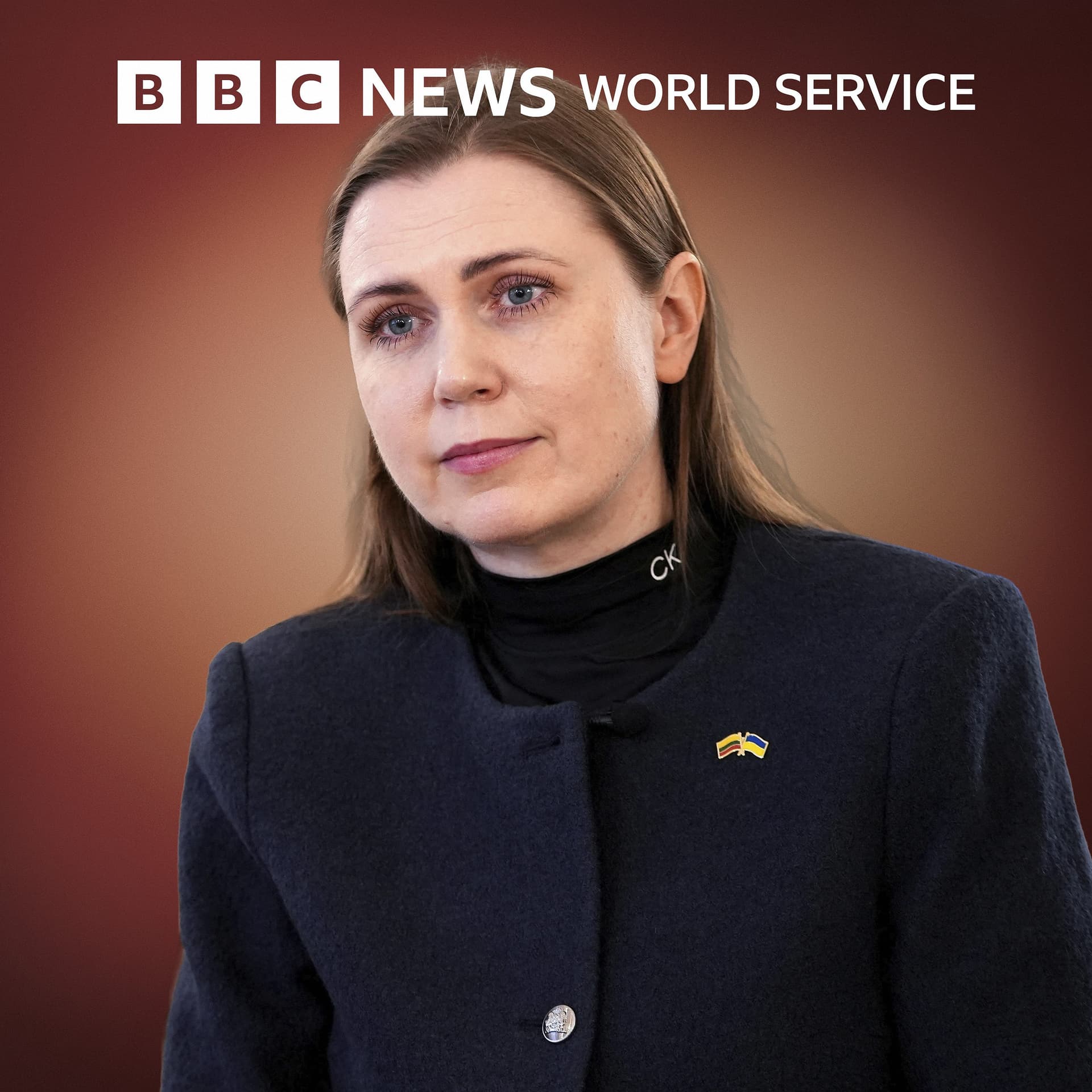
Podcast Summary: The Interview - Dovilė Šakalienė, Defence Minister of Lithuania: Uncertain Times for Europe
Podcast Overview Title: The Interview Description: Conversations with influential figures shaping our world, featuring insights from business, politics, finance, sports, and culture. Each episode is about 20 minutes long, providing a deep dive into pressing global issues.
Episode Overview Episode Title: Dovilė Šakalienė, Defence Minister of Lithuania: Uncertain Times for Europe Host: Jonathan Beale Producer: Ben Cooper Editor: Richard Fenton-Smith
Key Themes and Topics Discussed
- Geopolitical Context:
- Lithuania and its Baltic neighbors (Latvia and Estonia) have a historical context of tension with Russia, particularly after the Soviet annexation during WWII.
- Lithuania's NATO and EU membership since 2004 and its adoption of the Euro.
- Concerns Following the Ukraine Conflict:
- The Russian annexation of Crimea in 2014 intensified fears in the Baltic states.
- The full-scale invasion of Ukraine in 2022 heightened these fears further.
- Russia's Military Strategy:
- Dovilė Šakalienė expressed skepticism about the possibility of a ceasefire in Ukraine, citing Russia's ongoing military mobilization and transformation into a wartime economy.
- She highlighted Russia's military capabilities and readiness, including potential troop expansions and international cooperation with nations like China, North Korea, and Iran.
- NATO and European Security:
- Discussions on the reliability of U.S. support under President Trump and the implications for NATO's collective defense (Article 5).
- Šakalienė emphasized the need for Europe to take more responsibility for its defense, while still valuing NATO's structure.
- Defense Investments:
- The episode discussed the urgency for increased defense spending across Europe, driven by the perceived threat from Russia.
- Lithuania is currently spending about 4% of its GDP on defense, with plans to increase this in the coming years.
Key Insights
- Russia's Commitment to War:
- Šakalienė believes Russia is unlikely to cease its military actions, indicating a long-term conflict may be expected.
- Importance of NATO:
- Despite uncertainties regarding U.S. leadership, Šakalienė noted an increase in collaboration among Baltic and European nations, reinforcing trust in NATO.
- Need for Rapid Adaptation:
- The necessity for Europe to streamline defense procurement processes to adapt quickly to changing security threats was emphasized.
- Call for Unity:
- Šakalienė advocates for a unified European military strategy and greater investment in defense capabilities to deter potential threats from Russia.
Conclusion The episode highlights the precarious security situation in Europe, particularly for Baltic states like Lithuania. Dovilė Šakalienė's candid assessment underscores the urgency for European nations to enhance their defense readiness and the importance of NATO solidarity in the face of ongoing threats from Russia.
Further Listening Listeners interested in global defense issues and the dynamics of international relations can tune into more episodes of The Interview for in-depth discussions with influential leaders and experts.
---
For feedback or inquiries, reach out at TheInterview@bbc.co.uk or use the hashtag #TheInterviewBBC on social media.
Written by AI. May contain mistakes. Listen to the episode to check what was said.
Transcript
Automatic transcript. May contain errors.0:00This BBC podcast is supported by ads outside the UK. If journalism is the first draft of history, what happens if that draft is flawed? In 1999, four Russian apartment buildings were bombed, hundreds killed. But even now, we still don't know for sure who did it. It's a mystery that sparked chilling theories. I'm Helena Merriman, and in a new BBC series, I'm talking to the reporters who first covered this story. What did they miss the first time? The History Bureau Putin and the apartment bombs Listen on bbc.com or wherever you get your podcasts From the Winter Olympic and Paralympic Games To the European Athletics Championships The 2026 sporting calendar is packed full of big events Keep up with all the action with More Than The Score The podcast that goes beyond the score sheet Join expert BBC sports journalists every Monday to Friday For interviews with sports stars, big talking points and the stories behind the headlines.
1:07More Than The Score from the BBC World Service. Listen now. Search for More Than The Score wherever you get your BBC podcasts.
1:19Hello, I'm Jonathan Beale, the BBC's defence correspondent. And this is the interview from the BBC World Service. The best conversations coming out of the BBC. People shaping our world from all over the world. I will come back to Russia. I will participate in the elections. There's an increase in violence according to the coca crop. There's no place in the world where women are equal. I will give away the vast majority of my money. It's my full-time focus for the rest of my life. For this interview, I met Tavila Shakiliana, Lithuania's defence minister, at a conference for investing in the European defence industry.
2:02Lithuania is the largest of the three Baltic nations in north-eastern Europe, with a population just shy of three million people. All three countries have had turbulent relationships with their much larger neighbour Russia. They were annexed by the Soviet Union during the Second World War and were subject to decades of rule from Moscow up until the end of the Cold War. It wasn't until 1990 that Lithuania managed to declare independence once again and set itself on a path to become a modern European nation. In 2004, it joined both the European Union and NATO and just over a decade later adopted the euro as its currency.
2:44But despite looking westwards, the country has always kept one eye on developments over its eastern border, in neighbouring Russia. Russia's annexation of the Ukrainian region of Crimea in 2014 set off alarm bells in the Lithuanian capital Vilnius. And when the full-scale invasion of Ukraine by Russia began in 2022, Lithuania, its neighbours in the Baltics, as well as countries in Scandinavia to the north and in Eastern Europe to the south, began fearing and preparing for the worst. I'm talking about Finland, about Baltic states, about Poland. I don't really have time to listen to their propaganda.
3:25But, you know, this narrative, you know, that there are Nazis living in the Baltic states, that Russia has no borders, that they are not going to wage war against Baltic states, and at the same time that they are going to restore what is rightfully historically Russian. I mean, contradiction of the messages? What is that? They don't know about that. Those concerns have been compounded in recent months by the re-election of President Trump in the US, whose rhetoric around Ukraine, NATO and the Russian President Vladimir Putin raise what was once considered the unimaginable prospect of America no longer coming to the defence of Europe.
4:06Without a clear support of the United States, that would risk at being not efficient. I believe that Russia considers Europe still too peaceful and too slow to be able to produce a persuasive safeguard. Currently, the position of President Trump's administration has been complicated, I would say. Welcome to the interview from the BBC World Service with me, Jonathan Beale. Earlier this week, Donald Trump spoke to President Putin in a two-hour phone call. Although the US president said afterwards that Russia and Ukraine would immediately start negotiating towards a ceasefire, Vladimir Putin was less clear, saying Russia had agreed to work on a memorandum on a possible future peace agreement.
4:57In my conversation with the Lithuanian defence minister, which took place before that call, I found someone deeply sceptical about President Putin's commitment to ending the war. I began my interview with Davila Shakalyana by asking whether she thought a ceasefire in Ukraine was within reach. I don't think so. Why should we stop? They actually are moving forward quite successfully. They are slowly but surely eating up territory of Ukraine day by day, inch by inch. So why should they stop right now, especially having in mind that the Russian economy has undergone full transformation from peacetime to wartime economy, They are ready for a multi-annual conflict.
5:42And I think that even they're ready for a war which is even of a larger scale. They are successfully executing reform of their armed forces. They have divided their Western military districts, Moscow and Leningrad military districts. And they are enhancing number of troops quite fast. They may have 1.5 million troops by the end of this year. Their military industry is really pumped up, and the cooperation that they have with China, North Korea, and Iran is actually quite efficient. And Putin cannot stop waging war, actually. He's an old person who really wants to keep his power. This is like life or death issue, in my opinion.
6:29And therefore, he needs his country to be at war. Why should he stop? So you see no sign of a ceasefire? Even though Donald Trump is clearly trying to broker a ceasefire, you see no possibility of a ceasefire? I see a very low probability of ceasefire in the near future, and the only possible motivation would be for Russia to speed up, to accelerate development of its military industry and finalizing its military reform. So would you call President Trump's efforts futile in that case? You know, in certain cases, even when the percentage of success is 0.001, you still have to try. In this case, I can understand the reasoning.
7:15I can understand the motivation. Really, nobody wants this war to end more than Ukrainians. But if there is a possibility of sustainable ceasefire, let alone peace, With Russia, I am not an optimist for centuries. Russia has never kept any agreement, any treaty. They have violated always everything we have agreed upon. And then for centuries, we have been in a continuous effort to annihilate their neighbors. We have occupied Lithuania twice in 18th century. and then in 20th century, we still feel the scars of those occupations and we know that they are not to be trusted. And I can understand that those who have not experienced Russian brutality on their own skin may still look at them as the country with fragments of civilization, but we know that it's not like that.
8:16I mean, do you feel threatened here in Lithuania? you? Well, I'm able to hear very well messages by Mr. Putin and to see visually, you know, all those maps, how the exercises look from their side. So they are sending a very clear message for years. Hang on, they're focused on a war at the moment in Ukraine. You're talking about military exercises. I mean, they can't do both. Well, they haven't even tapped yet normally into their human resources. They do have ability to mobilize live troops with not really much challenges. So I don't think that the coming military exercises of Zapat, where Belarus and Russia are going to have their exercise at the moment, I don't think that they could become something more than military exercise, but military exercise is happening.
9:20So they are able to do a lot of things. Would it be possible for them currently, whilst having the full-scale invasion in Ukraine, to move hundreds of thousands of soldiers to a different location? I think that would not be easy. But regarding exercises, the scenario of their exercises for years are towards us, towards the region that they still feel that somehow should belong to Russia, although... You're talking about the Baltic states. I'm talking about Finland, about Baltic states, about Poland. I don't really have time to listen to their propaganda. But, you know, this narrative, you know, that there are Nazis living in the Baltic states, that Russia has no borders, that they are not going to wage war against Baltic states, And at the same time that they are going to restore what is rightfully historically Russian.
10:19I mean, contradiction of the messages. What is that? We don't know about that. You said you think there's a very small chance of a ceasefire. But if there were a ceasefire, you've been to briefings about a reassurance force provided by mostly European countries. Do you think that's going to happen? Do you think that there are enough countries led by the UK and France who are going to put boots on the ground if there were a ceasefire in Ukraine and that force would make a difference? That is one of the most difficult questions that we are facing. What would be the mandate of reassurance force? But even more important question is, would we have support of the United States?
11:05without a clear support of the United States, that would risk at being not efficient. I believe that Russia considers Europe still too peaceful and too slow to be able to produce a persuasive safeguard. Currently, the position of President Trump's administration has been complicated, I would say. So we have heard actually, I think, a very important message recently that General Keith Kellogg, that President Trump would be able to ensure that Russia does not violate ceasefire if it is agreed upon. If that means that the United States would be on board with that backstop, with that reassurance from their side, I think that would be a critical element of efficiency of such a force.
12:02You're listening to the interview from the BBC World Service, people shaping our world from all over the world. If journalism is the first draft of history, what happens if that draft is flawed? In 1999, four Russian apartment buildings were bombed, hundreds killed. But even now, we still don't know for sure who did it. It's a mystery that sparked chilling theories. I'm Helena Merriman, and in a new BBC series, I'm talking to the reporters who first covered this story. What did they miss the first time? The History Bureau, Putin and the apartment bombs. Listen on bbc.com or wherever you get your podcasts.
12:45From the Winter Olympic and Paralympic Games to the European Athletics Championships. The 2026 sporting calendar is packed full of big events. Keep up with all the action with More Than The Score, the podcast that goes beyond the score sheet. Join expert BBC sports journalists every Monday to Friday For interviews with sports stars, big talking points and the stories behind the headlines. More Than The Score from the BBC World Service. Listen now. Search for More Than The Score wherever you get your BBC podcasts.
13:25For this episode of The Interview, I'm speaking to Davila Shakiliana, Lithuania's Defence Minister. She doesn't hide her concerns about Russia. And it comes from bitter experience. Members of her own family, she says, were imprisoned and tortured under occupation in the former Soviet Union. Her own mother was born in exile in Siberia and, she says, barely survived. Northern European politicians tend to be more direct in their answers. Davila Shakalyana tends to be even more direct than most. OK, let's return to our conversation. Are you worried about your own security? If, for example, there is a ceasefire and European countries commit troops to that and the UK and the France are lead nations in that coalition of the willing.
14:13But there are also nations that are defending the Baltics with battle groups here. Are you worried that the defences of the Baltic states would be weakened if there was a commitment to put European troops on the ground in Ukraine? Well, I think that the main headache for Europe right now is to realise its own power and to admit to ourselves that we are capable of more than we act upon. What I mean is that Europe is able to deliver enough forces to defend eastern-northern border and to provide reassurance forces to Ukraine. We just have to muscle up a bit. Is that happening? that is happening at that middle speed not at the you know really fast speed but that's because most europeans do not think they're at war do they you know what really helped donald trump really helped i have seen change in the you know posture of my colleagues just in the matter of couple of weeks that we weren't able to extract out of them for a couple of years.
15:36Yeah, but that's because European countries do not think they can trust Donald Trump, isn't it? You know what, whatever they think, what I'm happy about is that defense investments are going up. We have been having discussions about their inability to allocate more resources to defense for years. And now, matter of weeks? I mean, how many countries have already raised their defence investments in a matter of just several weeks? And how many have made pledges in the course of next year to raise their defence investments significantly? About half a block? Yeah, there are still countries in NATO who are not spending even 2 % on defence.
16:25It is important not to get lost in details about specific numbers of reassurance forces. It's about what Russia believes. If Russia believes that we are not going to provide an instant and violent response, if they touch our borders, then our readiness will not be enough. So readiness next to a very clear message. Don't touch us. We are going to hit back and we are going to hit back hard. And what's been critical to that is being a member of NATO, isn't it? Because there is Article 5, an attack on one is an attack on all. But at the moment, there are question marks about NATO. I mean, do you trust Donald Trump, who is President of the United States, which is the guarantor of NATO and has been, you know, for the last 70 plus years?
17:19Actually, I think now we have a bigger trust in NATO than ever. I have seen more meetings and I've had more talks with my colleagues in the Nordic Baltic region and in the general Baltic Sea region, including Poland, Germany, Netherlands, UK. In the past few months, more than in the past few years, we are the club of hardliners, of course, but we are working now closer than ever. And regarding United States, yes, we know that currently there is no alternative for United States. We actually really need them. But that's, thank God, so far, only two messages that have not changed during a period of a lot of changing narratives.
18:04So these two stable messages were that United States is not going to leave NATO. that was said publicly and personally both by President Trump and members of his administration that United States is not going to leave NATO and a very clear proof of that is that we are pressuring NATO to invest more secondly what we are saying is that we are not going to abandon you we are going to aid you we are not going to defend you instead of you but we are going to aid you And we have specifically mentioned commitment to Baltic states, to Poland and to Baltic states, which for me is very, very important personally.
18:43So these two messages are also sending this strategic message to Russia. Yeah, but you know, I was there at the last summit when Donald Trump was last president, the last NATO summit, where he was thinking about quitting the alliance. You've got a summit coming up in The Hague next month. Are you not worried that Donald Trump could once again just threaten to pull out of NATO because he'll say that countries are still not spending? I mean, you're an exception. You're spending 5%, aren't you, on defense of the amount of GDP? We are spending now 4 % and we have already planned our budget and our detailed shopping list for over 5%.
19:22Probably it's going to be around 5.5%. So he's going to be OK about Lithuania, but there are plenty of countries or there are a number of countries that aren't spending 2%. Aren't you even slightly worried this NATO summit coming up will end in chaos because Donald Trump, you never quite know what he thinks about NATO. And lots of people don't know about the future of the alliance at the moment because of Donald Trump. Given, as I said, the current circumstances where what I see from military level, all the preparations, all the planned work exercises, prepositioning, certain resource allocation and everything that is related to cooperation between United States and our region is ongoing consistently, smoothly and systematically.
20:11So there is no change there. and then secondly, as I said, through all that stream of ever-changing messages, two messages were consistent. And we have heard reassurances on every different level that no, United States is not going to leave NATO. I believe that it would be so detrimental for the interests of the United States that probability, rationally speaking, is zero. probability, including the human factor, still is very, very low. But if you ask me if I sleep peacefully at night, I don't think any defence minister in Europe is now sleeping peacefully at night. You seem to be sure that NATO will survive and that the US will be an important part and provide security for NATO allies, even though Donald Trump has said things like if they're not spending 2%.
21:05Russia can do what the hell they like to them. Yeah, but next day he edited that. But do you think it is now time to look beyond NATO and for Europe to take responsibility for its own defence without America? But I mean, Europe is in NATO. All of us are in NATO. I don't think that we have to look beyond NATO. I think that we need to strengthen NATO and to ensure that the element of NATO Europe is on equal footing as the element of United States. That is our way forward. Are we doing certain additional work in strengthening bilateral relations of NATO allies in the region? Yes, we are. Are we considering scenarios, you know, how to ensure flexibility and speed of reaction?
22:02Yes, we are. But NATO is the most efficient defense framework that we have in the current world. And Ukraine is the best example of that. Couldn't the European Union take over and do that? European Union is in NATO? Well, most of the countries in NATO are. It doesn't really matter how many hats you put on the head of one soldier. So, you know, ascribing him to NATO or to European forces or whatever, it doesn't change that it's the same one soldier. So we now really have a quite well-functioning structure, military and political structure, which really is now working as tightly together as ever before, I'd say.
22:42And currently, what we need to do is, you know, let's not dramatize. Let's not, you know, jump to conclusions where we need not jumping but steady, steadfast work forward. And let's invest money right now. And you talk about investment. What are the problems of European defence procurement at the moment in terms of speed and amount? In other words, if you look at the war in Ukraine, what lessons should Europe be learning? What should they be doing now? At the risk of sounding very blunt, I would say murder bureaucracy. That would be the principle number one, because that ensures speed, that ensures flexibility, and that ensures that we adapt to changing circumstances.
23:33Next to murdering bureaucracy, and by bureaucracy, I do not mean institutional structures, which are necessary, but overregulation in the areas related to banking environment and building permits and et cetera, et cetera, we really need to act fast. And second thing is to, in this case, this is one of the rare cases where diversity is detrimental, uniformity is an ideal. we cannot have an army in Europe which looks like patchwork blankets. We really have to have an army which can function on the battlefield as efficient as possible because any delay can cost lives. And buying European rather than American military equipment, is that something that you're learning the lesson of?
24:24Honestly saying I'm probably a part of minority here saying that we need everything. Everything that will be produced on both sides of the pond is going to be bought because need is now so much bigger than the supply. Let them produce. Let us produce. We need to rebuild our armies. We really need hundreds of thousands of more soldiers in Europe that are ready to go. We need dozens of huge, sophisticated platforms in this region alone. And if we talk about Europe, we have to have an army, which is so strong that when Russia looks at it, it decides that, you know, maybe we move our forces somewhere else.
25:09Are we going to move our forces? They are. I don't believe that Russia is going to stop. But as Minister of Defence of Lithuania, I will do everything that we don't move in our direction. Thank you for listening to the interview from the BBC World Service. If you enjoyed today's programme, you can listen to The Interview wherever you get your BBC podcasts. Until the next time, it's bye for now. If journalism is the first draft of history, what happens if that draft is flawed? In 1999, four Russian apartment buildings were bombed, hundreds killed. But even now, we still don't know for sure who did it.
25:52It's a mystery that sparked chilling theories. I'm Helena Merriman and in a new BBC series I'm talking to the reporters who first covered this story. What did they miss the first time? The History Bureau, Putin and the apartment bombs. Listen on BBC.com or wherever you get your podcasts. From the Winter Olympic and Paralympic Games to the European Athletics Championships the 2026 sporting calendar is packed full of big events. Keep up with all the action with More Than The Score, the podcast that goes beyond the score sheet. Join expert BBC sports journalists every Monday to Friday for interviews with sports stars, big talking points and the stories behind the headlines.
26:39More Than The Score from the BBC World Service. Listen now, search for More Than The Score wherever you get your BBC podcasts.
From the publisher
BBC Defence Correspondent Jonathan Beale speaks to Dovilė Šakalienė, Lithuania’s Defence Minister.
The Baltic nation, along with its neighbours Latvia and Estonia, share a border with Russia, and have nervously watched the invasion of Ukraine, fearing they could be next.
All three countries have had turbulent relationships with their much larger neighbour, Russia. They were annexed by the Soviet Union during the Second World War, and were subject to decades of rule from Moscow up until the end of the Cold War.
In 2004, Lithuania joined both the European Union and Nato, and just over a decade later, adopted the Euro as its currency. But despite looking westwards, the country has always kept one eye on developments over its eastern border in Russia.
Russia’s annexation of the Ukrainian region of Crimea in 2014 set off alarm bells in the Lithuanian capital Vilnius, and when the full-scale invasion of Ukraine by Russia began in 2022, Lithuania and its neighbours began fearing and preparing for the worst..
Presenter: Jonathan Beale Producer: Ben Cooper Editor: Richard Fenton-Smith