In short
Podcast Notes: The Interview – Niklas Frank
Episode Overview
- Podcast Title: The Interview
- Episode Title: Son of Hans Frank, Governor General of Nazi Occupied Poland - Niklas Frank
- Host: Stephen Sackur
- Guest: Niklas Frank, son of Hans Frank
- Release Date: (not specified)
- Duration: Approximately 20 minutes
Key Themes
- Family Legacy and Guilt: Niklas Frank discusses the burden of being the son of a notorious Nazi leader and the impact of his father's actions on his identity and worldview.
- Historical Accountability: The conversation reflects on the importance of acknowledging and confronting the dark legacy of the Nazi regime.
- Fear and Mistrust of Society: Niklas expresses his deep mistrust of contemporary German society and its ability to confront its past.
Background
- Hans Frank: Served as the Governor-General of Nazi-occupied Poland, known for his role in the atrocities committed during the Holocaust. He was executed for war crimes at the Nuremberg trials.
- Niklas Frank's Early Life: Born into a family of privilege, he had limited awareness of the atrocities until later in life. His relationship with his father is characterized by conflict and disdain.
Discussion Points
- Relationship with His Father
- Despair and Disdain: Niklas describes his feelings of anger, rage, and cowardice towards his father.
- Acknowledge the Victims: He emphasizes that thinking of his father immediately brings to mind the victims of his father's policies.
- Family Dynamics
- Silence in the Family: Niklas notes that discussions about their father's actions were often shrouded in silence among family members.
- Differing Perspectives: His siblings had varying views, with some defending their father's actions, which deeply affected family relationships.
- Accountability and Silence in Germany
- Cultural Silence: There is a prevailing culture of silence in German families regarding Nazi history, which Niklas finds troubling.
- Fear of Recurrence: He fears that societal conditions could lead to a repeat of the past, voicing concerns over a potential resurgence of authoritarianism.
- Forgiveness and Rage
- No Forgiveness: Niklas states firmly that he will never forgive his father for his actions during the Holocaust, asserting that many families were irreparably damaged as a result.
- Impact on Personal Life: Niklas considers how his father's legacy has shaped his own life and thoughts, indicating that the anger he feels keeps his father's memory alive in a painful way.
- Contemporary Germany
- Mistrust of Society: Niklas expresses a lack of trust in contemporary German society, fearing that the same attitudes that led to the Nazi regime could resurface.
- Generational Responsibility: He believes that knowing and acknowledging history is crucial for younger generations to avoid the mistakes of the past.
Key Takeaways
- Personal Struggle: Niklas Frank’s internal conflict is a lens through which the historical horrors of the Nazi regime are examined.
- Cultural Reflection: The discussion encourages reflection on how societies confront their pasts and the legacy of historical figures.
- Legacy of Silence: The importance of dialogue and acknowledgment of historical wrongs is underscored as essential for healing and preventing recurrence.
Conclusion Niklas Frank's candid insight into his father's legacy provides a complex portrayal of personal and societal responsibility in the aftermath of one of history's darkest chapters. The interview highlights the ongoing struggle for many to reconcile with their family's past and the collective memory of a nation's history.
Written by AI. May contain mistakes. Listen to the episode to check what was said.
Transcript
Automatic transcript. May contain errors.0:00This BBC podcast is supported by ads outside the UK. If journalism is the first draft of history, what happens if that draft is flawed? In 1999, four Russian apartment buildings were bombed, hundreds killed. But even now, we still don't know for sure who did it. It's a mystery that sparked chilling theories. I'm Helena Merriman, and in a new BBC series, I'm talking to the reporters who first covered this story? What did they miss the first time? The History Bureau, Putin and the apartment bombs. Listen on BBC.com or wherever you get your podcasts. I am Nina Khrushcheva, the great-granddaughter of Nikita Khrushchev, the leader of the Soviet Union in 1962.
0:47And I'm Max Kennedy, the nephew of US President John F. Kennedy. We explore what was a terrifying moment in history. The story of the Cuban Missile Crisis. How close the world came to nuclear war. And what they had to do to pull it back from the brink. The bomb, Kennedy and Khrushchev. All episodes available now, wherever you get your BBC podcasts.
1:13Welcome to Hard Talk with me, Stephen Sacker. This year marks 80 years since the start of the Nuremberg trials, when some surviving leaders of Nazi Germany were put on trial for crimes against humanity. In today's program, there's another chance to hear an interview I recorded in northern Germany back in 2017 with Niklas Frank, the son of Hans Frank, the brutal Nazi governor of Poland between 1939 and 45. Niklas Frank was only seven years old when his father was executed after those Nuremberg trials. Hans Frank had been one of Hitler's most trusted lieutenants, a lawyer who defended the Nazi party and became governor-general of occupied Poland, an enthusiastic, tireless, ruthless overseer of genocide who had the blood of millions of Jews and others on his hands.
2:12Hans Frank ruled Poland as if he were a king. Nicholas, as a child, saw just glimpses of the unimaginably cruel reality. He has lived under the shadow of his father's crimes ever since. He became a journalist and a writer. He, more than any other child of the Nazi elite, has spoken out publicly of the evil within his family and within Germany. And even today, he seems to feel deep mistrust of his own country and people. So, has he let the crimes of his father define him. Nicholas Frank, welcome to Hard Talk. I'm wondering why you have chosen to make your life in the very far north of Germany. Is it because you wanted to get as far away as possible from your family background in Bavaria?
3:07No, I still love Bavaria. And every year We are about many weeks in Bavaria, in the same village where I grew up. But it was my profession as a journalist. And Stern Magazine, which I worked for 23 years, was based in Hamburg. So I had to lure my wife. She was a judge in Munich because she was a big gardener to a house with a big garden. It was a good idea. And so we live here since 33 years. This place where you now live is extraordinarily peaceful. Yes, it is. Would you say it has helped bring you some sort of peace of mind? No, no, I don't think that it depends on the country I'm living in.
3:57It's in myself that I found peace because I acknowledged what my father has done. That, I think, is the first and most important step. Thinking of my father is thinking at first about his victims. There's no German around who has not certain pictures of corpses in his mind. And those pictures are, which always reminds me of my father, what he did. I want to hear more about your family history. dig deeper into your relationship with your father, but I also want to get out of this cold North German wind. That's a good idea. Why don't we head back into your house? Okay, that's great. Do you feel that you have some sort of a duty to your country to speak about your past?
4:53I think so, yes. I think I have the duty. Because by chance I was born in this family and I could tell the people how to behave with parents like I had. When do you think you first began to feel that you must speak out as volubly, as publicly as possible about your father and about your feelings toward your father? It was a growing wish because of the silence in Germany. the families, all the families of my friends. Everybody was silent. And they didn't talk about the past. And this I couldn't endure because I always wanted to know how a society behaves if it changes to a dictatorship. And I always were feeling that Germany is still prepared to do this.
6:06And so I looked closer to all the families and friends and acquaintances. And I found out that still is something in the German people which makes me fear them. Fear? Your own country and your own people? Yes, I would say so. Well, I want to pick up on that because that's a pretty remarkable thing to feel and to say. But before I get to your thoughts on the country, on Germany, I do want to stay with the personal. Because it seems to me, in that period you're talking about, after the end of the war, and for decades afterwards, Many families of senior, top Nazis still felt a sort of residual, a vestigial loyalty to their kin, to their blood.
7:05Did you never feel that? No. Especially not for my father. It's slightly different with my mother. because I have experienced my mother as a really fighting mother for us. But she was a Nazi too. She wasn't a Nazi. She was never a member of the Nazi party, nor was she a Nazi. She hated all this screaming of her husband when he was delivering a speech. And she hated this kind of stuff. but she very much liked the luxury she found through the position of her husband. There she was a very cold and inhuman woman. In terms of your father, I want you just to look at this picture with me of your father in his Nazi uniform.
8:08when you look at him, do you feel anger, rage? What do you feel? Anger and rage. Anger and rage. And the next thing was always the word, which for me is always sticking to my father, is what a coward you were. What a coward.
8:37and that feeling isn't just a memory feeling it's something that's very alive it's very alive it is still as if he is sitting on your place I despise him really he died he was hung after the Nuremberg trials when you were seven years old. So I'm just wondering how strong your memories can be of him when you were in that castle in Krakow, his headquarters, the headquarters of the Nazi occupation force in Poland. Do you really remember what it was like and what he was like? No, I didn't remember what kind of profession he had. I only knew Poland was ours and the castle was ours and the other castle outside of Krakow was ours and the big Mercedes was ours and the SS guards were our property It was almost like you were part of the royal family Yes, it was That is, I enjoyed very much like my mother I enjoyed it What about the truth of the unimaginable crimes and cruelty?
10:04As a young boy, growing up from the age of, well, from being a baby to being six years old, did you have any awareness of what was happening? No. The only thing was when I accompanied my mother into the Krakow ghettos when she was shopping. It was one visit, maybe more, but I remember especially this one visit. There was a lot of people, everybody was looking very sadly. And this was the only memory, but I didn't know where it was. Later on, I talked to my nanny, my beloved Hilde, and I told her the flashes of my memory. and she told me it was the Krakow ghetto and we were together and I remembered her sitting beside me in the car.
10:56We now associate your father with the Holocaust. He was instrumental in delivering millions of Jews and others to their deaths and he seemed to be enthusiastic about it. Was there any way that anybody else in your family could have known exactly what was happening? Exactly knew it. his wife, my mother. Your mother knew. She knew exactly. You have to imagine this Wawel castle in Krakow. It was really like a kingdom. Everybody knows each other, yes? Everybody talked to each other. They knew exactly what was going on in the death camps and what was going on day by day. You have said, I think, that you have no doubt that your father loved Hitler more than he loved his own family.
11:53Yes, that's for sure. And you use that word love advisedly. You really mean love. Love. It is something of a homosexual kind of love. Tell me about your last encounter with your father. He, of course, was tried at Nuremberg as one of the top Nazis Nazis, to be held responsible for the genocide, for the war crimes, crimes against humanity. But before he was executed, you saw him one last time. Yes. Sitting on my mother's lap, it was a big room on the other side. I always remember I was scurrying behind this window with small holes to understand each other. And I was sitting on my mother's lap and knowing that will be my last visit to him, and he smiled at me and laughed.
12:57Do you have a picture of him at Nuremberg? It's here, it is during his... This is during the trial? During the trial, yes. So he smiled, and what did he say to you? What was his last message to you? The last message was to me a big lie. I knew that he will be hanged, and he told me, Hi, Nicky, which was my short name in the family. Hi, Nicky, we will soon celebrate Christmas at our house at Schliersee. And I was really thinking, why is he lying? Why is he lying? Let's move forward and think about the impact of all of this on your family. You have siblings, two older sisters and I think two brothers.
13:49Yes. Could you, in the years that followed, talk to them, share feelings with them, actually have the same sort of understanding of what your father had done and what it meant to you as a family? I was living in a boarding school until I finished school. We were separated in different places. But whenever we came together, after a short high, we were discussing our father. And then, very slowly, I found out that there were very different approaches to my father, especially. And this separated me. Because your sisters, what, they... Three of my sisters defended my father as an innocent victim of Hitler, Himmler, and the justice of Nürnberg.
14:43I would say it cost them their lives they died very early my next older sister Brigitte called Kitty she already wrote in her diary when she was about 16, 17 years old I will not become older than our father and she committed suicide when she was 46 the same age when my father was hanged my next elder brother Michael was a really great looking guy, very sporty, very funny guy. And he suddenly started to drink milk till 13 liters a day and became fatter and fatter and died. All what follows if you are too fat. And he also defended, he was alive and my book came out and he attacked me in public.
15:39It sort of destroyed your family. Yes, for sure. What about forgiveness? There are many people who hear your story and the rage and the anger that you acknowledge, you feel to this very day, and they say there's something inhuman about it because humanity is full of the deepest failings and flaws, and in the end part of humanity is to find forgiveness. I am an inhuman being. I will never forgive him. Looking around in Europe and also in the other countries of America and wherever, you find a lot of families. My father has ruined, has killed a part of those families. And that's just I can't forgive.
16:33Never. Do you ever wonder whether you might have had a better, happier, more positive life if you had found a different way to deal with what is, after all, your father's terrible crime, not yours? Yes, but it was this crimes. you can say it was my father but the crimes are belonging in demolishing society, in demolishing families, in killing innocent children this is what it's more the victims and it's not my father, my father did it and my father gave all the signatures for death penalties and for all this kind of stuff he was responsible by law by the German law, he was the deputy of Hitler in Poland, so every death come he was responsible for the true power was with him that's for sure but he was responsible for instance with you talking to me asking this question as you can see maybe in the redness of my face that i become furious again because it's so unbelievable in which he was involved in which he did actively but the red cheeks and the fury that you feel are they not allowing your father to define you?
18:00You are giving your father another form of enormous power. He wielded this terrible power over so many millions in Poland and still over you. I think one's called yourself a puppet on a string. Yes. Why don't you cut those strings? Don't allow your father even in death after so many years to pull your strings too many victims too many victims let's not just talk about you though let's talk about germany you introduced that topic early in this conversation and i want to come back to it because it does seem to me that you feel and i think you used the word fearful still of your own country and your own people yes today 72 years after the liberation of Auschwitz Why?
18:55You know my people not so as I know I don't trust them Because nobody talked inside the families The normal German family Never really talked about What their fathers and mothers Or grandfathers or grandmothers have really seen where they were cowards, where they were actively involved in the system. They were silent. And this is like a swamp. A swamp was never drained. So here and there in Germany, you find nowadays and all the years I have lived till nowadays, you found those poisoned flowers coming out. and suddenly is a meadow full of those poisoned flowers. But that, when you say suddenly there is a meadow full of poisoned flowers, that's where I wonder whether that is fair.
19:57This interview is being filmed by three young German men, all in their 20s and their 30s. Why should they have to bear any sense of guilt or shame or responsibility? No guilt, no shame. acknowledge acknowledge really acknowledge if you talk to these youngsters really in quiet hours you will find out a lot of uncertainty of not really want to talk about it there is some no because they say why should we be taken on high school trips to bergen belson or dachau why should Should we have to, as kids, be fed this sense of our collective responsibility? The responsibility, for me, is a dead word. You have to know your history, the history of your people.
20:58It hurts to admit that there was a time in Germany where we left the family of people all around the world And we killed millions of innocent people in a system, which was really a tough system. And to be against the system then has to have a very brave character to do it. But this hurt you can endure like I do it. And I still love Germany. I love being world champion in football, for instance. Really, I'm a nationalist, yes. And I also laughed very much when Merkel said, we will do it with the refugees. Now she is. Everybody will be thrown out. That was a good thing. But also, as you can see, especially with Merkel and the refugees, everything changed because the silent majority, as if it were Jews again, this swamp is coming.
22:03You really feel that? You feel so insecure about your Germany today? Don't trust us. And the special thing, I was very happy when the European community, yes, suddenly we were watched with countries all around Germany. We have invaded them centuries before, sometimes or often. So that gave me a happy feeling. now England is leaving Poland is like a dictatorship Hungary, Czechoslovakia Austria, Italy now who is the strongest left? The Germans yes but the Germans as you paint it, Germany today is a bulwark of moderation, of tolerance compared to so many messages coming from Hungary or from Marine Le Pen or from so many people in so many As long as our economy is great and as long as we made money, everything is very democratic.
23:14But let's wait and hopefully not see if we have five to ten years heavy economical problems and the swamp is a lake and is a sea and will swallow again everything. I swear to you, Stephen, really. I don't trust them. It always makes me thinking and feeling exactly. Wait a minute, Niklas, there's something else. You can lead a happy life, but there's something else around you. Yeah, that makes it. It hurts, but on the other hand, because life is really stronger. I had really a happy life. Ask my grandchildren. It's a good thought to end with. Ask the grandchildren. Nicholas Frank, we have to end.
24:08But thank you for being on Hard Talk. If journalism is the first draft of history, what happens if that draft is flawed? In 1999, four Russian apartment buildings were bombed, hundreds killed. But even now, we still don't know for sure who did it. It's a mystery that sparked chilling theories. I'm Helena Merriman, and in a new BBC series, I'm talking to the reporters who first covered this story. What did they miss the first time? The History Bureau, Putin and the apartment bombs. Listen on BBC.com or wherever you get your podcasts. I am Nina Khrushcheva, the great-granddaughter of Nikita Khrushchev, the leader of the Soviet Union in 1962.
24:54And I'm Max Kennedy, the nephew of US President John F. Kennedy. we explore what was a terrifying moment in history. The story of the Cuban Missile Crisis. How close the world came to nuclear war. And what they had to do to pull it back from the brink. The bomb, Kennedy and Khrushchev. All episodes available now, wherever you get your BBC podcasts.
From the publisher
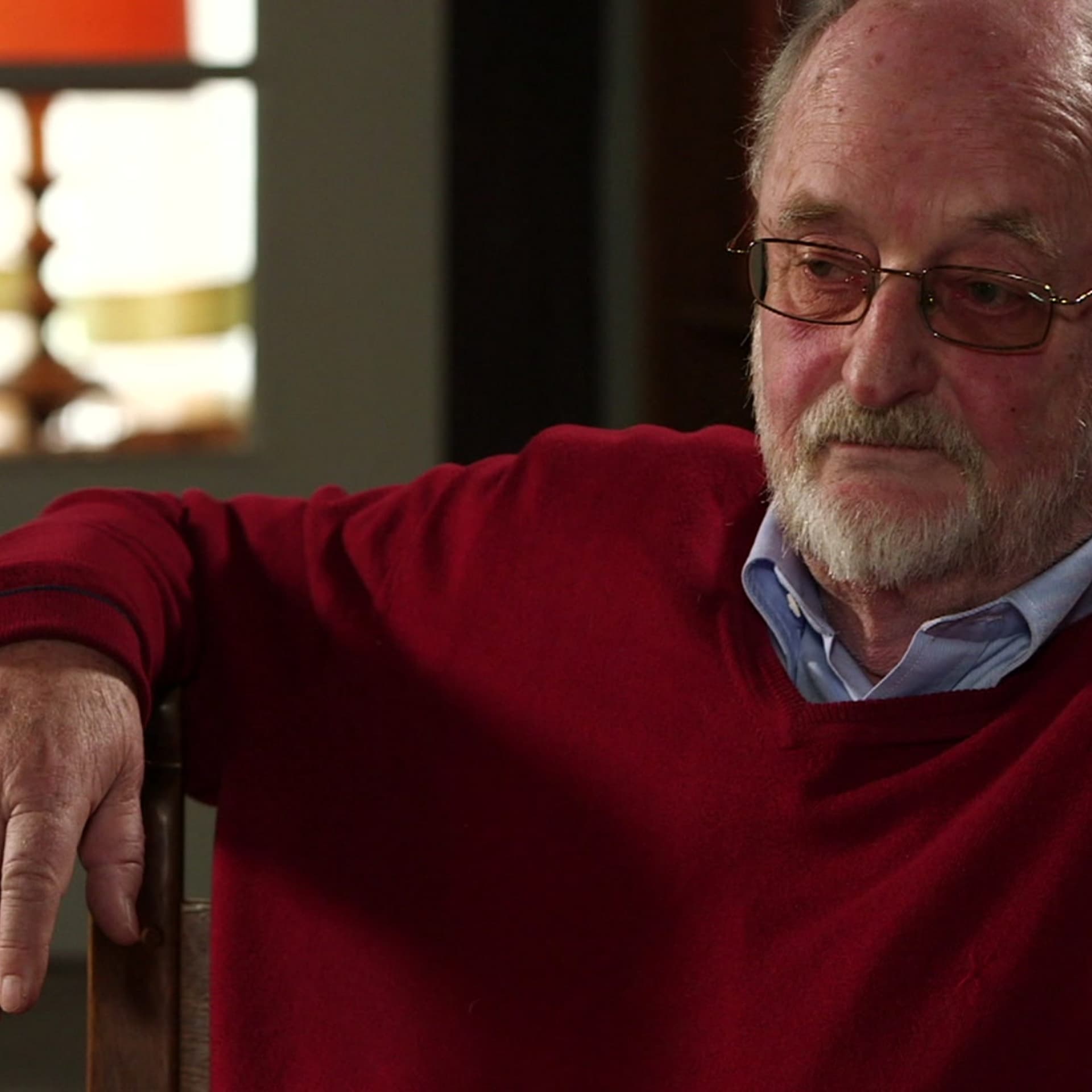
Stephen Sackur is in Germany to speak to Niklas Frank. His father was Hans Frank, the Governor General of Nazi Occupied Poland during the World War Two. He was convicted of war crimes and crimes against humanity at the Nuremberg trials and executed in 1946. Niklas Frank tells Stephen Sackur he 'despises' his father and does not want Germany to forget the crimes of his father and the legacy of the Nazi era.
(Photo: Niklas Frank)