
In short
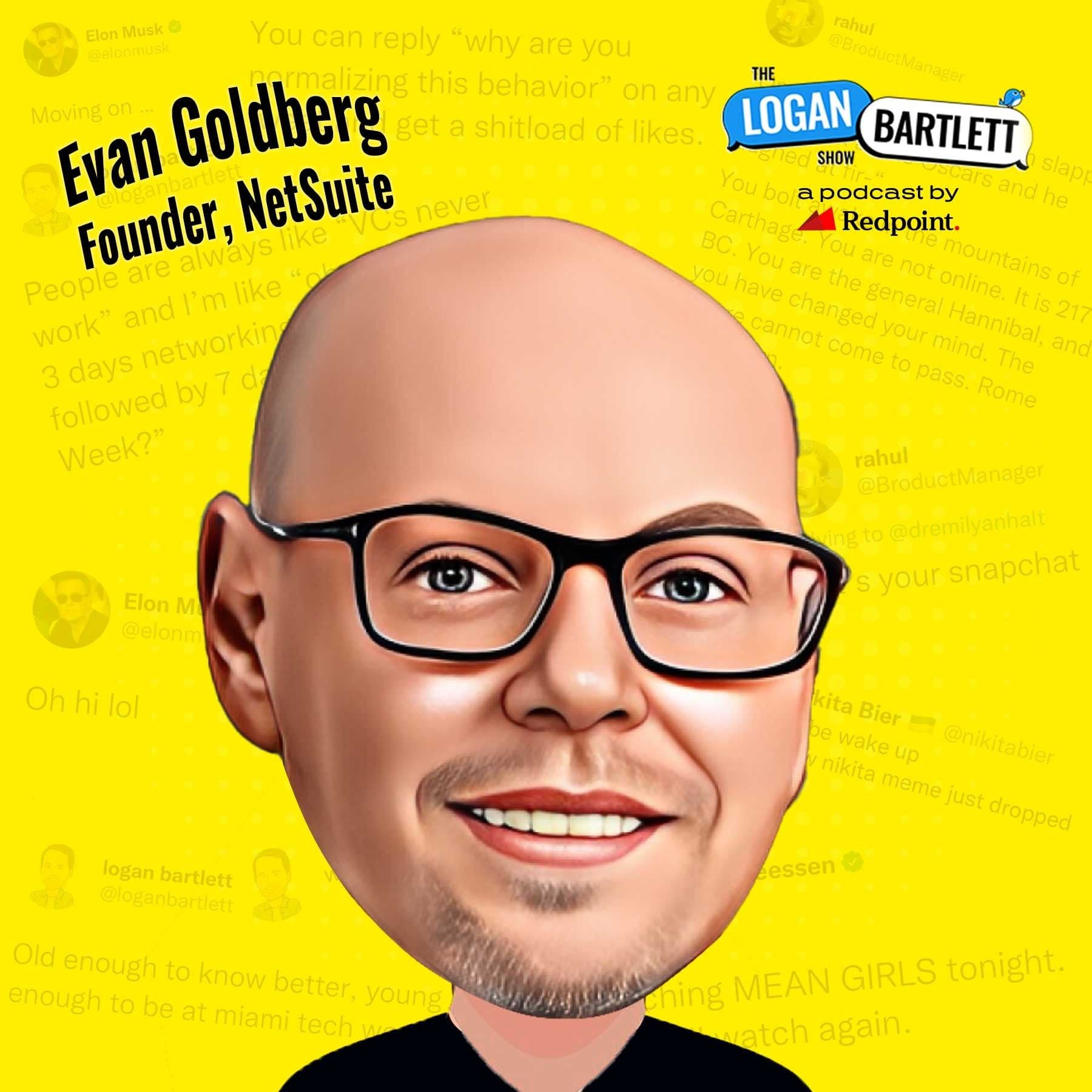
The Logan Bartlett Show - Episode 120: Evan Goldberg on 26 Years of Operating Lessons Running NetSuite
Episode Overview In this episode of The Logan Bartlett Show, Evan Goldberg, Founder and Executive Vice President of Oracle NetSuite, shares insights from his 26-year journey of building and growing NetSuite. From its inception with Larry Ellison's backing to its acquisition by Oracle for $9.3 billion, Evan reflects on the lessons learned and his leadership philosophies.
Key Topics Covered
Introduction
- Host: Logan Bartlett
- Guest: Evan Goldberg, Founder and EVP of Oracle NetSuite
- Discussion Focus: Lessons from 26 years of operating NetSuite, company culture, leadership, and the future of AI in business.
- Lessons from Economic Crises
- Improvement through Crisis: Economic downturns force introspection and innovation. Evan highlights how slow periods allow companies to reassess and enhance their offerings.
- Customer Focus: The realization that prioritizing existing customer relationships can lead to enduring improvements.
- Founding and Early Days of NetSuite
- Origins: Founded in 1998, Evan transitioned from Oracle to create business software that was web-based.
- Initial Challenges: Early struggles included understanding customer needs and building a comprehensive system.
- Partnership with Larry Ellison: Collaboration led to the development of NetSuite's unique features.
- Customizability and Growth
- Customizability: Key to NetSuite's success, enabling adaptation for various business needs.
- Business Software Evolution: The transformation from basic accounting software to a full suite of business solutions.
- AI and the Future of NetSuite
- AI Integration: Evan's vision for leveraging AI to enhance user experience and improve business processes.
- Transformation Goals: Reinventing NetSuite to provide a more delightful user experience.
- Leadership Philosophy
- Empathy in Leadership: The importance of listening to team members and understanding their perspectives.
- Management Style: Emphasis on collaboration, consensus-building, and allowing team members to take ownership.
- Company Culture
- Fun and Humor: Maintaining a lighthearted work environment with elements like mascots and humorous branding.
- Core Values: Establishing a culture that prioritizes empathy, intensity, and enjoyment in work.
- Navigating Growth and Changes
- Adapting to Hypergrowth: The challenges of scaling and the necessity of sometimes moving on from initial team members who may not fit future needs.
- Maintaining Focus: The need to stay aligned with the company's core mission and avoid distractions from potential new opportunities.
- Legacy and Community Engagement
- V Foundation Involvement: Evan's passion for cancer research and philanthropy, reflecting on personal experiences with the disease.
- Mentorship and Advice for Aspiring Founders: Key qualities to look for in entrepreneurs, including humility, empathy, and the ability to accept feedback and adapt.
Key Takeaways
- Crisis as Opportunity: Use economic downturns to innovate and improve relationships with existing customers.
- Importance of Customizability: Tailor solutions for diverse customer needs to foster long-term success.
- AI as a Transformational Tool: Embrace emerging technologies to enhance product offerings and user experience.
- Empathy and Culture: Foster a supportive workplace that prioritizes humor and collaboration.
- Focus on Core Competencies: Know and enhance your differentiators while avoiding distractions that could derail progress.
Conclusion Evan Goldberg's journey and reflections offer valuable insights for entrepreneurs and business leaders. His experiences emphasize the significance of adaptability, customer focus, and strong leadership in navigating the complexities of building a successful business.
---
Executive Producer: Rashad Assir Producer: Leah Clapper Mixing and Editing: Justin Hrabovsky
For more insights, subscribe to The Logan Bartlett Show and follow on social media platforms.
Written by AI. May contain mistakes. Listen to the episode to check what was said.
Transcript
Automatic transcript. May contain errors.0:28Welcome to the Logan Bartlett Show. Evan and I talk about a number of different things, including the lessons he's learned from Larry Ellison, as well as his former coworker and friend, Mark Benioff at Salesforce. We also talk about his appreciation for the journey along the way, building NetSuite into the business that it is, and why he keeps going despite being on the journey for 26 years and having the financial means to do other things. A really fun conversation that you'll hear with Evan here now. Thanks for doing this. So I guess one of the things I heard you say that I thought was interesting, and maybe is relevant to people at this moment, was when you're struggling in some ways, that's when you actually make incredible improvements to your company.
1:07And I think you lived through two major crises. Is that right? That's true. What did you learn about managing through crisis that kind of gives you this power to make improvements? Yeah, well, the obvious thing is when the orders are coming in over the transom and you're just basically order taking, there's not a lot of time or desire for introspection. When they slow down, and when your customers themselves are having significant issues because of, you know, economic headwinds and the like, which then ends up sort of transferring to you, that's the time where you start looking at things that you could safely ignore in the past.
1:49You know, that phrase that's been massively overused, never let a crisis go to waste, if you are smart about it, you're going to make some changes that are going to endure. And you'll be able to look back, and I look back on several of the things we did during both of those crises that endured and really became important components of our success going forward. Is there a specific one that stands out? I mean, the most obvious one is that I think that's true and we see this, I'm fortunate enough with NetSuite to get to see a lot of companies in various times of their journey from startup to past going public and sometimes to get acquired.
2:35What I've seen in the maturation process of so many companies is that they come to the realization that there's so much more they can do with their existing customers. The allure of the new customer and growing your customer base and keeping track of that customer count. And look, we love to do it at NetSuite, too. We have 40 ,000 companies now. That can be something that you chase to the detriment of everything you can get from your existing customers, not only to get more revenue from them, but to learn from them. And what we learned, and this was especially during the financial crisis of, you know, 08, 09, was that, you know, our customers wanted to get more out of NetSuite to just help them be more successful.
3:21Now, of course, we started NetSuite to help companies be more successful, but we always thought of it like, oh, they're going to be fast-growing startups like us, and really all they need to do is make sure that they can take all those orders and that they can, you know, find out who their best sales reps are, etc. Not so much, you know what, our customers want to figure out how they can run more efficiently and where they can cut. I mean, and without necessarily ultimately impacting what little growth they have. We had a lot of customers in crisis, and we partnered with them and learned the power of really partnering with our existing customers.
3:53We started an entire organization, which exists to this very day, called our account management organization, which is all about really the care and feeding of our existing customers. It sounds obvious, but for fast-growing startups, I think it's something that it's not a muscle that sort of comes naturally. And it's something that you have to build over time. And that was probably the biggest lesson and improvement that we made to NetSuite in one of those. And so for people that don't know, so NetSuite was founded what year? 1998. 1998. So you were applied math out of Harvard and then went directly to work for Oracle.
4:31You were there for how long? I was there for eight years. And that was, you know, that turned, you know, it was 1995. sort of the dawn of the internet. And I, you know, I'd always wanted to do my own software company and build my own software company. So that's when I made the leap, started a company, you know, to kind of capitalize on the explosion of internet sites and how people wanted to make them more interactive. And the first company didn't work out. The legacy of that company is we were a competitor to Flash, which some of you may remember, you know, in the audience, and some of them maybe weren't born yet, but it was a way to make sites more interactive.
5:09They out-competed us, and we realized that we weren't going to achieve that wild success we had hoped for. But out of the ashes of that, I learned a ton about running a company, and that was sort of the raw materials with which we built NetSuite. And so then the insight for what was NetLedger was Larry Ellison's in the original days, or was it? It was the combination, because in running that company, which Larry did invest in, which was great, though he wasn't particularly interested in site interactivity tools. He used to call it the graphic stuff. Evan, how's your graphic stuff going? But in running that company, it was obviously my first stint as CEO.
5:50And really, I had just been another kind of employee at Oracle, and all of a sudden I was thrown into the pressure cooker world of you're responsible for everything. and you know what i learned among other things was that the tools available to entrepreneurs were woefully lacking and we had quickbooks and we had yahoo stores for people that remember that that we were selling because we were selling sort of a shrink wrap software product on a cd uh bringing up really old the old terms here and um but i you know and and i could never figure out who our real customers were i could you know i didn't have access to the data half the time because it was on someone's computer that I didn't have access to.
6:30And I was like, there has to be a better way. So when Larry called me one day and said, how's your graphic stuff going? I said, I think I want to do a pivot into business software and specifically software to help companies like mine grow. And there was really a mind meld because Larry was like, well, I was just thinking about this. If I was going to start a company right now, I'd do something like accounting for small businesses, but it has to run on the web. and that was his really key insight is to make it run on the web. My answer to him was, well, okay, yeah, accounting, I know that's useful, but I'm really interested in sales and the overall picture of my business.
7:08And he said, oh, yeah, well, we'll do accounting first because it's the thing that's sort of the basis of all your products and your sales and your people, but then we'll expand into other things. So it really was that sweet idea of doing more than accounting, that sort of came from my desire to have sort of a comprehensive system, one place that I could go to get all the information about my business because that's what I was so frustrated by in my first company. And so NetSuite, when did Salesforce get going around? About three months later. Three months later, okay. No, Mark and I were very close.
7:39Mark actually performed my wedding ceremony. And yeah, he came a couple weeks later now because I was really interested in doing sales. That's what I was going to say. You wanted to do the sales thing. And Mark knew that. And he came to me somewhat sheepishly and said, yeah, I'm going to do one of these internet startups too. And it's going to be sales. And he said, sales for small companies, sort of like Siebel, which was the de facto choice, at least for bigger companies at the time. And my response was, great. I think that'll be very successful. Yeah. I like that idea so much. And so did you pick, as you imagine what NetSuite could become.
8:20Were you picking some point in inevitability that you sort of felt that everyone will be running their systems like this at some point in the future? Or do you think this was a... I will give Larry 100 % credit on being the visionary on running software sort of in the cloud. It wasn't called that back then. I was very focused on what's it going to do for the entrepreneur. Let's get everything all in one place. He said, these companies, they're small companies, they don't want to have to run software, databases, that sort of thing, which I thought showed some decent self-awareness that they didn't want to run databases, that being his, you know, his business.
8:56And I sort of went along with that. And Larry was so excited about it. I mean, he really, he said to me, probably a few weeks after we started, oh, yeah, this sort of internet model running software. Well, first, we had mainframe computers, and then we had client server. And this model. This is what we're going to do for the next thousand years. I don't know what's going to happen after that, but definitely for the next thousand. So he was quite excited about it. He told his friend Steve Jobs about how excited he was. And I happened to see Steve at one of Larry's parties. And he said, oh, Larry's super excited about this accounting in a browser thing.
9:33But does anyone want to do accounting in a browser? And I was sort of like, he seems to think so. So I'm not sure. I guess we'll see. And fortunately, it was just a couple weeks later that we actually were able to load our financial information from our QuickBooks file into NetLedger because we got it working. And so we loaded it in and I was at home in my browser looking at, you know, sort of all the key information about my business. We didn't have any sales yet. So really, the key information was like, what are we paying our employees and how much is our rent? but all in one place, everything I needed to know in a browser at my house, not on some person's computer at the office and they might be using it, you know, to play Doom.
10:20And so, yeah, I was like, wow, yeah, this is going to work. When I've heard you tell like elements of the early days before, it seems like we go from there to IPO to M &A. That seems like a pretty linear path. Oh, yeah. I'm sure. I know there's - We were an overnight success in eight years. Yeah, eight year overnight success. But in those early days, like who was it? You said, I don't know if anyone, or you told Steve Jobs, like we'll see if anyone wants to do it. Larry seems to think so. Was there resonance in the early days once you got it up and running with people? And you know what it was is that there were a lot of companies that were struggling.
10:56I mean, I even saw it in our local PTA. Our local PTA, because people want, you know, there wasn't really an office for it. My wife was the president of the PTA. one person dealt with the incoming donations and one person dealt with the expenses to do you know events etc and they were literally in two different quickbooks files because people wanted to work on it with their own computers so there were definitely you know this sort of um silent mass of people that were struggling with the fact that they had to use it in one place on one computer and they had distributed operations even if they were a tiny company because net But, I mean, NetLedger was originally for very small companies.
11:36It was$4.95 a month. Later in the company's history, I said, you know, our vision was 5 million companies paying us$5,$50 a year. And now it's more like 50 companies paying us$5 million a year. That wasn't exactly true, but we definitely moved off market. And what was that? Was that just the customer demand? These people grew with you and started to ask for different features? Well, I mean, we just didn't have the features yet. You know, you have to build it. And one of the things that we've done over 26 years is build an enormous feature set for all different kinds of business and very, very deep in terms of what they need to do as they grow.
12:09They need more and more sort of systematic software and systematic systems, for lack of a better word, as they grow. And so we've built so much of that. But at the time, we had not built very much of it. It was your basic financials. You could run an income statement, do a basic balance sheet. So it was for small companies that that's all they needed. But we found out that there were a decent number of them that loved the sort of anytime, anywhere access. And those were our initial fans, and they were big fans. They came running. It was really amazing. What was the thought process? You sort of talked about like this suite vision, and ultimately what was NetLedger became NetSuite, as the name would apply.
12:53And so it no longer was just a general Ledger product. Did you have all the aspects of what you were going to build? And at what point did you start thinking about integrating additional products into the business? Yeah, well, right in that first five-minute phone conversation that I described earlier, we agreed we needed front office software in addition to back office. And Larry said, and we're going to need a web store because everybody sells on the web. And so we did have a map really at the beginning that we would start with accounting. Then we would add CRM. and also at the same time, which is related to CRM, add a way to sell online.
13:28So those were sort of our next two components. And we moved to build those rapidly. And within a couple years, we did really have a suite. And that was my second sort of epiphany when I saw all that information. And by now, NetSuite was selling and we were using NetSuite. So we really needed those capabilities for ourselves. And we used to talk about we're a company designed by entrepreneurs for entrepreneurs. and when I saw a dashboard that had my information, everything I needed to know about where my sales were coming from, my opportunities, my pipeline, in addition to how many sales we'd actually made and how those payments were coming in, where people actually paying for the things that they agreed to pay for, when I could get that all in one place in one dashboard, we called it the executive dashboard.
14:14That was really sort of the culmination of my vision initially and then from there, it was really just filling it out over the next 20-odd years. Yeah, a rounding error of time. So through that period of time, though, when you were actually going through the dot-com stretch, and I assume a lot of your customers went bankrupt during that period of time. Yeah, I mean, we actually had a great variety of customers. So it wasn't just software companies. I mean, that was a core for us, always has been, because that's what we were, internet, web-based software companies. So we definitely attracted a lot of those and always have.
14:54And that's the fact that such a high percentage of companies that go public are on NetSuite or because that was such a core constituency for us. But we really attracted all different kinds of companies. I mean, I remember one of the earliest companies was a combination. They did tech consulting and limousine. They did limos. I mean, like they were, they were like transportation plus, yeah, exactly. The concentric circles of the. I mean, and they were like, yeah, and I have, you know, I, and I don't even have an office, you know, I just go to people's places and I have my drivers. And so I need to be able to use this, you know, kind of anywhere on my laptop and, um, and if I, you know, in an internet cafe or whatever.
15:38So we had some pretty interesting companies that ran sort of the gamut. And were most of these people finding you inbound or where? Yeah, Scott Cook of Intuit once said, you guys get more PR per customer than I've ever seen. And one of the reasons was is because every time we talked to any journalist, the first and last words out of our mouth were Larry and Ellison. Yeah. We drove – I mean PR was such an amazingly effective vehicle for us and I still – it's harder now. I mean, it's such an explosion of media and all the platforms and channels. But I still think that PR, if you can do it right and you can find an angle that interests people, is such an amazing way for startups to spend very little and get a lot of eyeballs.
16:29And that really drove a lot of those early customers. And your role within the business in the early days evolved, CEO to CTO to CEO to chairman. Chair and CTO. Chair and CTO and all that. Were you just egoless about what responsibility you had and whatever made the most sense at the opportunity? Absolutely. I mean, I encourage everybody to be very introspective and clear-eyed about where your strengths are and where your weaknesses are and where you need to supplement them. And I think the best leaders know that and they're willing to bring in people that are better than them in certain ways and listen to them and let them, you know, sort of, you know, hand them the ball and let them run with it.
17:14So, you know, my role has changed. I think I've developed, I've built skills sort of in the external facing like I'm doing right now. That took time. I knew that there were people that had it. And I was most interested in building the technology, honestly. At that point in my career, I wanted to dig in, and I was writing code for the first at least 15 years of the company's history. I was just reminiscing with my wife about how she was going for a scheduled C-section at Stanford Hospital. But I had a driver there, and I was on the computer, and I'm like, look, I just have to check in this feature, and then I can take two days and deal with the baby.
17:59was this was this 98 or was this a substitute this was 2001 okay second second child your first child was you had a busy 1998 yes exactly so getting married founding a business and having a child all within one year 1998 so my golf ball says 98 on it that was a big year in case you in case you don't yeah i guess i forgot yeah in case you forget what it is um in terms of one of the things i i heard you say about operating um that suite that maybe was i don't know i haven't heard anyone to say this before, was that a lot of the features were built by consensus. Not that it was a committee necessarily, but you actually take a vote and have people weigh in and ultimately decide as a leader what makes the most sense.
18:39Well, in terms of features, we certainly relied very much on listening to our customers. And one of the challenges is listening to your biggest customers versus listening to all your customers. And your biggest customers, they have a very big microphone. So really, in terms of features, it was from the very beginning, very customer driven. Of course, we want to have innovation, which comes from within. Sometimes we're going to think of things first, and you have to sort of sell the customer on it ultimately, because they have to see it in action, and they have to try it to really see it. But most of the things we added were because our customers said, this is what we wanted.
19:12And it was really just navigating and making the right decisions there. For the direction of the company, and when I've been CEO and chairman and on the board, I feel like we've always run it in a very consensual way. A leader has to decide at the end of the day, but the best situation is when you don't. You don't have to pull rank. You don't have to sort of lord over the realm. And you talk it out, and you get to a point where everybody's like, I'm behind this, or if I'm not behind it, I can get behind it. And that's what we've always tried to do in running NetSuite. And I think that's why we've had people stay for 15, 20, 25 years.
19:53Yeah, I mean, so you're 26 years in now. And I'm curious, I mean, the different cycles you've gone through, starting at Oracle, ending up back at Oracle along the way. I'm curious what keeps you going now, 26-some-odd years in. Yeah, that's a great question. I get that question a lot. You know, NetSuite is my baby. and I really believe it holds, it has delivered on its tremendous promise to businesses, but there's so much more we can do. Before even this most recent AI revolution, I've been really interested in AI. I left Oracle for about two weeks to go to graduate school in AI until Larry lured me back.
20:38I've always been interested in it. That's the next revolution. The internet gave us this ability to give these very, very powerful tools to small companies that had never been able to have that power before. And AI is kind of the next game changer in giving this enormous power to entrepreneurs to run their businesses better and achieve their goals faster. And so that is certainly a major driving force. Also, after 25 years, we've learned a ton. And so we're in the process of reinventing NetSuite from the ground up. We talked about it most recently at our major user conference, SuiteWorld. And it's delivering a business user experience that's delightful, that people actually want to use.
21:26Business software is kind of hobbled by this reputation of you have to use it. Someone's forcing you to use it, but you don't really want to use it. I mean, we want all our users to say, it helps me. I like using it. You know, I come in on Monday morning and I'm excited to log into NetSuite. And I think AI is going to be a big part of how we do that. So we're kind of trying to do the heart transplant in the moving ambulance and rebuild NetSuite sort of from the inside out. But ultimately, users are going to see this tremendous new business user experience. And our goal is, like every company that sort of reaches a point where you kind of can just rest on your laurels and you'll have a couple more decades of success that'll just sort of diminish over time as you become less and less relevant.
22:08Our goal is to have as much success over the next 25 years that we did in the first 25 years. Having lived through and seen the journey of the internet explosion and now still being active as a practitioner in the AI world that we're in right now, what parallels do you draw for people that maybe forget or weren't even alive when the internet was booming? Well, it's alike in many ways, and it's very, very different in other ways. I mean, you know, AI goes to the heart of what these systems do. For business software, the internet did change how systems work to some degree. It obviously allowed more connectivity, but it was a new medium with which you could, you know, use these systems and democratize them, let, you know, more companies have these systems that couldn't have them before.
23:01But now AI is really going to fundamentally change how these systems work. It's going to be able to automate so much. it's going to be able to deliver you insights that you've never been able to have before. Even the bigger companies that have all these analysts, I mean, AI's ability to process and look at data in a deep way is sort of unparalleled. So that way, it's quite different. But I do think, obviously, the excitement level is there. The hype level may be higher, just because there's so much even more ability to generate hype than there was before. So that That aspect of it is similarity.
23:38There will obviously be some disappointments for people's great ideas. I went through it between 1995 and 1998. What I thought was a great idea, I still think is a great idea, about helping people build highly interactive sites. I'm sure there's going to be a lot, and that was embed. And I'm sure there's going to be a lot of embeds that are great ideas but can't get the traction. And when you went back and took that AI class, was that – that was 20 years? No, I was at the AI lab at MIT, you know, ready to spend like eight years getting a PhD. I like to say, you know, now I'd be in my heyday, to which people generally answer, eh, I think it worked out okay.
24:13Yeah. What year was that that you... 1990. Oh, wow. Okay. I was three years out of undergrad, and I felt, you know, my Jewish family wanted me to get as many degrees as I possibly could because, you know, they can't take that away from you. And I'm like, who is they and why do they want to take it away from me? So, yeah. But Larry of the, you know, more of the drop out of college mindset was like, you don't need any of that. Come back to work. Yeah. Okay. So he recruited me out. But in 2019, I had read or maybe heard that as you were starting to think about the modern opportunity that existed within artificial intelligence, you focused on maybe some quick wins with NetSuite.
24:59How did you think about the surface area or where to start? Right. I mean, we didn't have the benefit of this technology that looks like it can be applied to anything. And obviously, I think it's getting over-applied in some cases, but it obviously is massively useful in so many different ways. We didn't have that sort of chuggernaut in 2019 and before. I mean, we really started on that before. Our first idea was just what we called an upsell manager that would be able to look at the patterns of your selling and suggest which of your customers might want to buy something more from you and what might they want to buy.
25:32And so we've applied, you know, we started applying traditional AI to that particular problem because it looked like a problem that most small companies have. And it looked like AI might be able to do a good job at it. And it has. So we developed a feature with traditional AI called intelligent item recommendations, which we're continuing to improve and we're starting to see how, you know, LLM technologies could help with that. And, but yeah, I mean, there just wasn't that all encompassing, you know, technology asset that we have with large language models now to apply. So we had to look at it, I think, a little more.
26:11And now as the large language models are prevalent or present in the world, has that changed the approach to the incrementality of the development? Yes, because we are looking at every single aspect of our system and seeing where that technology can apply and maybe where it doesn't apply. There's still lots of role for traditional AI. I mean, large language models were trained on language, but business information to a large degree is numbers. And so I think there's still some advances to be made in terms of taking some of the techniques and approaches of LLMs, but applying them to business data.
26:44And that's something that we're very eager to pioneer at Oracle and at NetSuite. But certainly there are so many incredible possibilities for the uses of large language models. So we're taking more of a all-encompassing view, assuming, basically before it was kind of like, prove that AI would help. Now it's like, prove that AI wouldn't help. Yeah, the default. And so then from a team organizational standpoint, like you have an existing business that's doing exceptionally well, but you need to rethink maybe how the customer is going to approach some of these problems? Or by default, is AI going to prove to me it's not going to change what it is you're doing?
Read the full transcript
27:25How do you embed that culture within the organization? Well, the AI hype cycle certainly helps because our employees do read the newspapers, so to speak. Helps them at cocktail parties, I imagine. Exactly. Part of it, of course, is making sure they have the training. So we have a great customer of NetSuite called Coursera, And Andrew Ng has this amazing sort of introductory course to machine learning. And we got basically every engineer. This is way before 2020.
27:59When did 2020? It was several years ago. It was pre-pandemic to take that course. And so they need to know what's possible, first of all. And they need the basics of the techniques. and then you know we are really kind of you know internally uh evangelizing uh and and and and and these wins that we already have show you know showing them internally so that you know every engineer and every product manager and user experience designer is has it in their head okay how can i do something like that because they've seen the successes from other parts of the organization. So that's an important part of it.
28:42And the other thing is we hire a lot of kids right out of college. Yeah, that helps. Yeah, they want to think about all this stuff. And so as you look at how the opportunity set is presenting itself and how it can manifest across all these different verticals, and you guys have a vertical approach to a lot of the different applications, have there been things or moments that have stood out to you as like, Like, wow, this is really fundamentally going to change the way at which we operate or anything you've been exposed to that kind of stands out? Yeah. I mean, and it hasn't really been verticalized yet.
29:19It certainly will be. The things that I've seen is the experiments we've done where it's, you know, well, the first experiment we did, which turned into our first product, which we call Text Enhance, was I got a very quick demo. this is right after, you know, ChatGPT, you know, kind of made its massive world debut. And on the one hand, it was like, you know, hallucinating and trying to convince journalists to leave their wives. But at NetSuite, someone rigged it up so that it said, write an introductory email about this sales order. And here's the fields that are important in the sales order. And it wrote an amazing introductory email that was like, exactly what you'd want to say, you know, dear customer, here's your sales order, we've prepared it to, you know, meet your needs.
30:15And here's how much it'll cost over this many years. And here's the terms and etc. And here's the key items that you know, that was the immediate aha moment that like, obviously, there's a very straightforward application within NetSuite. And what we did there, I think, was pretty interesting is that what we proceeded to do is to wire up the LLM so that wherever you're using it in NetSuite, it kind of knows what's relevant. So if you're using it in a sales order, it knows that the list of items and the terms, et cetera, is relevant. If you're using it in a job posting, it knows the other parts of the salary, other things in the record.
30:52So we kind of pre-wired it up so that anywhere you used it, it really gave you more relevant information than if you had just basically gone to ChatGPT and said, write me an introductory email. And then the next advance that we've made that we just announced recently is that we're now letting customers rewire it and say, you know what, for this use of the LLM, this is what's important for me. And here's some custom information because NetSuite, we haven't really talked about this, but one of the huge drivers of NetSuite's success was our customizability. That's what I really brought to the game.
31:26I didn't know anything about accounting. When Larry told me that we were going to start with accounting, I had to go out and buy an accounting textbook. But what I did know is how to make really customizable systems, sort of application development systems. NetSuite from the beginning has been extremely customizable, tailorable, and that's been a big driver of our success. We're able to easily tailor it to industries. They're able to easily tailor that last mile to their company. So that was a natural thing for us, is to make the use of large language models extremely tailorable by company or if you were implemented by a partner, they can do it for you.
32:01Different partners that serve different, you talked about verticals. This is a way that they can say, you know what, in this vertical, what's important when you're writing an email about a sales order is X, which may not be important in another vertical. So that level of customizability is sort of the next advance we've made in what started as a very simple kind of just plug in the LLM into NetSuite. I didn't realize customizability was such an important element of NetSuite. Even for the smallest companies. And so was that something that contemporaneous companies that had similar insights just didn't build that framework of customizability and it ended up falling down?
32:41Or how much did that provide your initial success versus allow you to sustain it? Well, one thing is that in the U.S., most customers that adopt NetSuite are coming from QuickBooks, and it's not particularly customizable. We have several orders of magnitude more customizability. And we heard from small companies that the minute we added the ability to do custom fields, we saw these companies using it in all kinds of unique ways. So then we added more capabilities, like adding your own custom records. And ultimately, you're able to write scripts. Or we have a workflow manager, so you can do no-code development to make the system work in ways that match what your company does.
33:21And you don't do that across the board. That's too much customization. You definitely can. It's a weapon that you can use to your detriment, for sure. Too much of a good thing. But we use it, actually, to develop versions of NetSuite for particular verticals. So they get sort of a standardized version that's still using our kind of extensibility layer to make it appropriate for them and, you know, a thousand other companies in their particular vertical. And then they can go that last mile for what's unique about your company. And, you know, companies are alike, like all companies in many ways, they all have needed income statement.
34:00And then, you know, for companies that are distributors, they all need warehouse management capabilities. and then that last 10 % is like what's unique and maybe they have this sort of micro vertical features breweries need particular things but then there's that sort of you're a secret sauce what do you do that's really different and how do you do things differently than other companies and that's what makes your company stand out and that's where they'll tell us, they'll say no everything else we're willing to sort of go with how the industry does it because it makes a lot of sense and it's replacing our old crufty way of doing it which made sort of no sense because we designed it on the back of a napkin when we first started the company.
34:38But in this area, we have a very unique process, and we want NetSuite to adapt to that process. And that's where the fact that you can do this no-code customizability, things like anybody can go in and rewire how the LLM works within NetSuite. That's where that stuff becomes extremely powerful. Did you have any framework in the early days of how to make the decisions on what were the primitives or the platform that you built out versus what were the more modular applications? That's a great question. What happened was there was one day when I looked at our feature list for our next release, and basically feature A was for big company B.
35:17We had some big customers. They were demanding things. The allure of keeping them happy and getting them to pay you more money can cause you to drift away from what you know that your larger asset companies wants to do. I took one look at that. I said, okay, this is not going to work. We need to be able to build more extensibility into the system so our professional services organization or a reseller partner can build what this big company needs because nobody else wants this. This is just for them. And we can really focus on what the massive companies want. And that path, traveling that path was a huge part of our success.
35:58And interestingly, it became one of our biggest selling points is how much you could adapt the system if you needed to. There's this phrase now, I don't know if you've heard it pop up more and more, but companies talk about building compound startups. I don't know if you've heard this, but it's basically building a suite in some ways. It's the new name du jour, I guess. and thinking about having these platforms and then building the different applications on top of it. I'm curious. I mean, I think NetSuite, probably Microsoft. We could probably come up with a handful of ones. It's nice that you put those.
36:31Yeah, yeah, yeah. Well, I don't know. The two immediate ones that come to mind, two very successful businesses. I'm curious how you thought about that framework of the platform and the applications and all of that and building in those other incremental products to one another. How did you decide to stop there? How did you not go do the next 10 things on the path of the journey? What became enough for you all? That's a great question. You've got to decide what is core to you and what do you want your partner community to build. Another decision we made was what do we want our extensibility platform to be for?
37:12Salesforce.com developed force.com, which was for any kind of application development. That was something where we were like, we don't have the resources to necessarily support anybody building any random application. So we really focused our extensibility platform not as a general purpose application development platform, but something to let companies extend NetSuite. And that became our singular focus.
37:39And what you have to, every company has to do this, what is core? What can you not let go of? because if it's not done right, it's going to jeopardize your company. So that's sort of how we thought about it. So we can't do everything. When you say everything you need to grow all in one place for a company, that's a lot of stuff. And ultimately, we needed a partner community for us to really achieve that vision. And now when you go to our Sweet World user conference and you look in the expo floor, you see hundreds of partners that are doing amazing things that they've found that white space. And we obviously have a discussion with them so that they can kind of understand what our direction is and we together can kind of have the ships aligned to expand what customers can get out of the entire NetSuite ecosystem.
38:30You had shared an article I had seen about four major levers to pull for profitability and efficient growth. I'm curious, we've gone in these cycles of infinite capital and then feeling like scarcity and then elements of infinite capital again. I'm curious how you thought of setting the orientation for the business of what the appropriate balance between profitability and efficiency was and growth over the years. Well, I don't think we necessarily got it right. We spent a lot of money on some things that I wish we hadn't. You know, and in the go-go days of that early, you know, internet boom, it was like, oh yeah, just do all this digital advertising and, you know, the people will come and it'll, and so we, you know, we blew a lot of money like a lot of companies did.
39:24We were able to fail relatively fast, I think, because we used our own system very thoroughly to see how these things were working. And we typically, unfortunately, sometimes we signed contracts that were too long, But, you know, so I don't think we necessarily quite got the balance right. And that's really challenging. We had one little cheat code, you might say. And it was called Larry Ellison because that guy doesn't really pay that close attention to the vicissitudes of the outside world. He's just like, I have an idea. I'm going to help. I'm going to build this idea and this kind of relentless consistency on driving that idea.
40:06And so that certainly helped us weather that first storm of the downturn. It's not like we kept hiring at the exact same rate, but it wasn't an extinction-level event, at least from our perspective. And so that was very helpful. Not something that every company, unfortunately, has access to. But hopefully you do have investors that are willing to take the long view and can really help you weather that storm, knowing that it inevitably is going to pass. And if your idea is great, it might take a little longer to have it come to fruition. But that belief, having the investors have that sort of same belief that you do is critical.
40:45You spoke about maybe your evolution as a leader or more willingness to do, I don't know, stuff like this, but also not coding as much. I don't know if that's the right way of phrasing it. Sometimes I want to rip the keyboard away, but I generally have been able to resist the temptation lately. So what have you learned about leading and managing people over the years that maybe you could go back and tell yourself in 98? I think my management philosophy has remained primarily the same. I already had 10 years of experience, and Oracle was such a fast-growing organization. You could learn a lot really quickly.
41:28High hundreds when you joined, a couple thousand when you left? Several thousand, several, I mean, probably 10 ,000 when I left. So that gave me the opportunity to make a lot of my mistakes in management early. And so I feel like my management philosophy was pretty well set when I got there. And I talked about, you know, surrounding yourself with people that are better than you in certain ways. And, you know, having the humility to listen to them and say, you know what, you know more about this than I do. That's how you're going to do it. that's how we're going to do it. And I still feel to this very day, and I look at my key leaders, and in their domain, they know a lot more than I do.
42:10And, you know, there's a temptation when you're a leader, and you've seen success, to assume that you're right about everything. And you're so smart, looking at while the success you've had, you must be right. And I've, you know, I do think that I have some insights in a lot of areas, and especially as I look at an area over time. But I think, again, and we talked about this earlier, I think one of the reasons people stay is because I do give people the ability to sort of stretch their wings in their area. And so that to me is a critical, critical part of leadership. Surround yourself with the people and the best people that you can find.
42:52in any area that is critical for your organization. If you don't have that capability, you definitely need to hire the best possible person you can have and let them run with the ball. I feel like a lot of leaders I talk to maybe recognize they're falling short in some way, shape, or form, but they don't know what good or excellent or the best possibly could look like in some functional area. Was there any means of getting up to speed so that you could figure out and learn what you didn't know? Well, your network and your mentors, and hopefully you have mentors that are not just the next generation, you in 20 years.
43:37That's not particularly helpful. It's somewhat helpful. But what's much more helpful is having mentors that are in very different areas from you and bring a completely different perspective. And Larry had a lot more wide-ranging experience than me, so that was certainly one. But I sought out people from various aspects of my life that were great at sales. It's fun to hang around. First of all, it's fun to hang around people that are great at sales. They happen to be very socially advanced. In fact, when our original CEO – sorry, our CEO that I hired in 2002, Zach Nelson, who was CEO for the entire rest of the history of NetSuite, he and his wife came over for dinner.
44:23And as we closed the door behind him at the end of the evening, Cindy turned to me and said, he's very socially advanced. You can learn a lot from him. so you know i mean just basically being open to learning from people that are very very different from you i think is absolutely critical for a leader because your responsibility as a ceo you have to be everything you have to be a psychiatrist psychologist you know you have to be an expert in code you have to be um a great marketing person i mean there's the is so many of these um sort of skill sets that you need to have you're not going to be able to get all of them yourself but um you You can use your network to at least become enough of an expert that you can identify real experts.
45:05Give you some calibration around. Yeah, just enough to be dangerous. Zach was CEO through, how long was it? Until the acquisition. Until the acquisition. What allowed that partnership to work as well as it did? Yeah, I mean, we were very complimentary, and I think our goals were very complimentary. I mean, he's an incredible communicator. He was uniquely equipped to go out. And I've never seen a guy who can do a presentation. And every presentation I've ever seen in Silicon Valley, I've never seen someone who can do a presentation as well as Zach Nelson. And he would go out there and really tell our story in a way that I never could and still can't.
45:44I still, you know, I've gotten better. But I'm no Zach Nelson. So we had really, and I, you know, wanted to really focus on the technology and where it was going to go and how we were going to make it scalable. And so that was just, it was very complimentary. I think we both saw the value of the partnership. And you have to, again, have the humility to say, you know what, I don't have to be the guy. Some people want to be the guy. And maybe there's good reason for that. But I, in my entire career, have really felt that the power of partnerships is more powerful than any single individual. In terms of, I guess, you mentioned your management style was largely set through Oracle and that experience.
46:32And then my experience running my own company, which was like, that is the crash course. Yes, digesting quite a bit through that. I'm curious for entrepreneurs that are maybe listening about just different tactics of management or giving feedback or anything that comes with leading people. Are there things that you've particularly internalized that are broadly applicable and not maybe personally applicable? Well, the most obvious one is empathy, and empathy can only come from listening. It is impossible to have empathy if you don't listen. but so, and, and it's more than just listening because you have to draw people out and typically, you know, you're, you won't, you have to, at the end of many one-on-ones and I think, you know, some of my, uh, my director, I mean, people that have worked for me will recognize this.
47:24Sometimes at the end of one-on-one, I'll just kind of pause and sit back and say, sort of, you know, basically, how are you doing? I mean, what's, you know, how are you thinking about your job right now? How do you feel about your world? And they didn't prepare for it. They didn't necessarily expect it. So you get to some degree unvarnished answers. And that's absolutely critical. If you want to be able to sort of head off problems early, to me, that's the best way to do it. is just really stay in touch with the bigger picture of how your people are thinking about their role, the company, everything going on in the world, whatever it is.
48:08And sometimes out of those questions will come, here's something that I'm dealing with in my world, not necessarily related to NetSuite, but that is affecting me in a big way. And so, again, it's about drawing people out and then really, really listening. And that's how you can have empathy, and empathy is the number by far. It's the number one success factor in management. It's the number one success factor in building a great product for our customers. That would be the one word I'd sort of leave every entrepreneur with. One of the things that I think a lot of companies, when they're in this hyper-growth mode, they often will hit a point in certain functional areas that maybe the people that got them there might not be the people that will get them there along the way.
49:00And I'm sure you've lived some different parts of that journey. It's always a tough question to ask, and it's a tough thing to go through. As you sort of reflect, are there things that you learned or maybe questions you asked yourself when you felt it or maybe knew in your gut that it might be time to move on that ultimately got you over that hump? It's hard to fire people. Yeah. I mean, especially if you have empathy. Yes, back to the earlier point. You know how that's going to potentially affect their lives. One thing I'll say is that for yourself personally, it's usually a huge sense of relief when you do it because you know you've waited too long.
49:44It's often a huge sense of relief for the individual. Not always. and so you got to be prepared for that. Don't try to fool yourself and think this isn't going to be really hard for them. In a lot of cases it will be. But if something's not working, it's not good for either party and sort of if you can steal yourself, don't do anything hasty, but if you can steal yourself and deal with the problem earlier even though you really don't want to and you'd rather be writing code or going out and talking to customers, probably both parties are going to benefit from it. It's hard. You almost never hear about people saying they fired someone too early.
50:24Yeah. Or I always get it right. I know exactly when to cut the cord. Yeah. It's always, it's always, I waited too long. And I think that's human nature, if you're empathetic at all, if you're not a sociopath, it's human nature to give people the benefit of the doubt and to wait a little bit. And so I think - If you, if, yeah, if. Knowing that that's our inclination as humans is, you don't want to pursue that conflict. And you know what? I mean, you're working, so everybody's working so hard. It does take on the feeling of a family. And, you know, you generally don't fire your family. Sometimes I guess people have to, but so that makes it doubly hard when the organization is small and very, very tight knit.
51:06But to this very day, you know, with thousands of people, it's still hard. Yeah. I think one of the things we talked about product and architecture and some of those decisions and having empathy for the customers. I think you all have prided yourself on trying to bring elements of consumer quality to enterprise software. And I know that it's probably hard in all the different ways that it can manifest itself. But I'm curious in terms of style and product design and some of the things that have been really successful for DebtSuite. Have there been primitives or lessons about this, maybe getting feedback from customers that you sort of think about?
51:47I mean, yeah, we've said for the long time, you know, there's applications on people's phones now that they love. Why can't NetSuite be an application that they love? There really is no reason, and you're spending eight hours a day plus using these applications, you know, half of your waking hours. If you can make it enjoyable, I mean, it's such a weird thing to talk. It seemed like a weird thing. Now, the good news is that we've been talking about this at NetSuite for years. I got back to Oracle, and let's just say that Oracle had not always prioritized user experience, is sort of the nice way of putting it.
52:27It was more like, we build great technology and we dare you to use it. And so when I talked to Larry about coming back to Oracle, he said, well, maybe you'll see that Oracle's changed. And I had the typical sort of eye roll on that. Because back in the day, when I first started Oracle, I mean, Mark and I started the Mac group at Oracle. And, you know, we were evangelists for making Oracle much easier, but we were always swimming upstream. And so I figured that's what I was going to be encountering when I got back to Oracle. Well, lo and behold, that was not true at all. Oracle had seen the light, so to speak, and had an incredible organization devoted to making business software enjoyable to use.
53:13I mean, it was unbelievable. And we had already been working on a brand new user experience framework for NetSuite towards this very goal of being able to really innovate and build real consumer-grade interactions into the product. And we'd been working on this for several years. I got a presentation from the gentleman who runs the organization, the user experience organization, Oracle, about what they were building and what they were going to do. And within about 10 minutes, I'm like, oh, we're just going to have to throw out everything we did and adopt this. And that's what we've done. It's called the Redwood Design System.
53:50And it's a complete about face from what I experienced back in the late 20th century. and it's incredibly inspiring and we're so happy to be partnering with them because they have this exact same mentality that we do that why should you go into work and hate using this stuff and then go home and love using this stuff why should that be the case and so it's an ambitious goal but I think we're tracking and AI is just going to make it easier I'm curious, I mean I realize you weren't there for that journey or that transformation You sort of walked into it. But it did. I mean, that group was hired after I got back, but I hadn't really noticed that.
54:35Got it. The idea was already there. I mean, Oracle has gotten much more deeply kind of in the space of business applications. They've had business applications for a long time, but now it's really central to Oracle's strategy. I mean, it's applications and infrastructure, and they play off of each other. The fact that you can use these business applications from Oracle, they run in Oracle's infrastructure, and then you can build the extensions to them on Oracle infrastructure. It's a very symbiotic relationship. So that changed to where business applications became so central to Oracle's strategy.
55:10They realized that people want to like these things. So that mentality was already there. but that group came into being soon after we came. And I met with their leadership very soon after they came into the company. So it was an aha moment for sure. Was that a top-down directive of, hey, we need to get more consumer-friendly and all that? Or is it bottom-down? Well, here's what I'll say. The Redwood design system is because Larry had a lovely Redwood Grove in Woodside that he felt was a great inspiration for the sort of look and feel of Oracle's applications for the coming years. And we're still going strong on that idea that was driven by him.
55:57One of the things that I think all our companies struggle with at some point along the way is focus and trying to stay focused on the company's core mission when there's countless other things that can be distractions. How did you think about finding signal from noise, making sure you're pursuing, staying consistent? I mean, Larry is great at this, but at one point he said, we should consider having a personal version of NetSuite so you could use it for your personal finances. And look, it would be pretty cool because there was nothing really, I mean, ultimately there was Mint, but there wasn't really anything like that yet that was sort of mass adopted.
56:39and um i was the one that had to basically say you know i think that's a bridge too far and um but generally you know larry has that in spades understanding the the value of focus and you know kind of like belligerently uh consistent about that um and so now you know when i advise companies now kind of putting myself in that position i i see that drift and i you know you You have so much energy and so much excitement about what you do. You see applications everywhere. It's very hard to resist the temptation to try to, you know, throw a lot of spaghetti against the wall and see what sticks. And sometimes, you know, a trial balloon is not a bad idea.
57:22Maybe you'll discover something that is incredible and transforms your company, but most of the time it's going to be a distraction. And so you have, discipline is incredibly important. And again, I think it's the role of advisors in companies to, you know, keep people on the straight and narrow towards that North Star and always be asking the question, is this a distraction? Is this going to get us off track? Is this going to take away from what we really, really need to do, those core milestones that we need to achieve in order to get where we want to go? In the example of the Mint.com or the personal NetSuite, did you have some sample customers that you thought about?
58:06Well, all our little companies, a lot of them were sole proprietorship, so they were pretty close to that. They were probably using the same system to pay their personal bills as they were using to pay their business bills. So, yeah, we already had some sort of almost sample customers, and it was an interesting approach. But it took us really – I mean the success, I joked earlier about 50 million companies paying us$50 a year versus 50 companies paying us$50 million. I mean, the upmarket move for NetSuite was absolutely critical to our success. And getting to that mid-market, that vast chasm between small business software like QuickBooks and big company systems like SAP, getting sort of into the middle of that chasm was absolutely critical.
58:54And this was going to take us completely in the opposite direction, as attractive of a possibility as it may have been. I guess there's still kind of that opportunity that exists today. So, I mean, Mint is no longer, right? I think it's officially shut down. Or it was, yeah, I thought they, did they get bought? They got bought by IntoIt, but then I think they've like kind of sunset it. Yeah, I don't think there's necessarily a great player there yet, but maybe next company. Yeah, yeah. Well, it seems like you're enjoying what you're doing these days. One of the things, I guess, we sort of talked about the bottoms up element or trusting your existing employees to help set some of the directive or provide feedback and guardrails by which you make decisions.
59:39How did you think about culture and what the codify versus what was kind of implicit within the organization? Well, hopefully, culture starts at the top, no doubt about it. And you and your key leaders establish it. And so that happens naturally when you're small. When you're big and there's so many layers between the top and the bottom, or just, you know, there's just the telephone game, you know, in terms of like getting your notion of how a company should be out to hundreds of employees or thousands of employees. That's when you sort of have to put things in place and you develop the values and you make sure everybody sees them all the time and you live them in your communication and try to show examples of them.
1:00:24So we had a culture initially which I think was just driven personally from the type of people, the type of person that I was, the type of people that we brought into the company, Zach, for sure, which was number one, sort of a low-key intensity, which means, obviously, as little drama as possible. We're doing very important stuff. It's critical for our customers. It's their lifeblood, but there's no reason that we have to make it unpleasant to do.
1:00:55Try to bring in people that you sort of, you know, want to have lunch with. And then the second aspect of it was humor. And I think humor is a critical part of, of management and being open to having those kind of fun, humorous experiences, no matter what you're doing, if you're, you know, sending a person to the moon, or developing business software, or, you know, writing video games. I mean, I think that's such of fun and that, um, that ability to laugh and is important. So we have still to this very day, we have a mascot, sweet Stanley. I mean, I still laugh every time I see sweet Stanley and his wife, sweet Sally and their little kid, sweet pea.
1:01:38And so I think, you know, it's a little bit cheesy, I'll admit it, but people laugh. And, um, so that's that part of the culture. I, no matter how big you are, I think you got to have it. I mean, you're again, people are at your company, eight, 10 hours a day at the beginning of the company, they're working, you know, around the clock. If there's no laughter there, that's soul sucking. Yeah. Did you hire for that? Those characters? Zach Nelson is one of the funniest people I know. So I don't know, maybe. Yeah. Yeah. But it was, it wasn't a part of the rubric that you were, uh, that you were evaluating people on, or was that something you sort of thought about?
1:02:15Would they fit in? Probably it was certainly wasn't written down. But I think, you know, it grows on itself. I mean, there are people that are just really, really serious. And they probably got to NetSuite and looked around at our office and said, this looks more like, you know, Yahoo. I don't know. Like in our office right now, we have prominently displayed cereal boxes with Sweet Stanley replaced. We have one called Sweeties instead of Wheaties. We have Suite Loops. I mean, that's always how it's been at NetSuite. So I think when you go into that office, you kind of are attracted to that or not.
1:02:53Yeah. And so NetSuite now has stayed within Oracle, but it's still its own unique culture as a part of Oracle? I think so. I mean, it's what's called a global business unit. And we have our own, obviously all hands meetings and our own communication, but we are very, very much part of Oracle. I mean, we're part of Oracle's strategy, as I mentioned, which is to build applications for really for companies of basically all sizes, and then the infrastructure to run those applications and other applications that they need in their business. And we have collaborated with pretty much every other group at Oracle to enhance NetSuite.
1:03:36As I said, our core user experience enhancements that are going to be coming out over the next coming years are derived completely from a collaboration with Oracle team. So that's the balance. And we, you know, we kind of had a, to some degree, I guess you'd say a dream acquisition because we were already sort of cousins. I like to say it's like, was cousins marrying, but second cousins. And, you know, the fact that Larry was the founder, when Larry came and talked to our entire employee base a few months after the acquisition, I got so many comments where people were like, wow he really gets us i'm like um yeah he was the founder along with me so not surprising yeah so it's it's kind of a unique a unique situation um but it didn't have to end up that way it's always you know the the fact that so many people have stayed that there's people there across the all parts of the company that have been there for 20 years and can talk about the old days and try to We're always trying to make NetSuite feel small again because that's what people love.
1:04:38They love hearing about all the history and want to sort of – while we're not going to be a five-person startup, we can take some aspects of that and perpetuate it, hopefully, for the entire history of NetSuite so people can feel some of that sort of excitement that you have as a startup. Yeah, I don't need you to go through the blow-by-blow machinations. There's proxy statements for this stuff and all of that. But was it a little surreal at the coming full circle? How many years later? 20 years later? Yeah, it was about 18. 18 years later. You know, life has a lot of twists and turns. And as I said, I came back.
1:05:14Larry asked me to stay a year. I expected that's what I might do. And then the next time we talked about it, it was at the Oracle board meeting where he said, well, Evan's going to spend the rest of his career at Oracle. And I'm like, well, good to know, because now I don't have to worry about anything else. You made that decision. Done. But so far, I'm proving him right. Yeah. I mean, at that point in time, did you have any opinion on how long you were sort of looking ahead? I was warming up to the idea of staying longer. We were really starting to think about this sort of next generation of NetSuite technology.
1:05:54You know, I was starting to see the focus on user experience and the ability to do more at Oracle than I possibly could do independently. So I was getting there. I didn't contradict him in the middle of the board. Yeah, you're going to let that go by the wayside, I'm sure. I guess as you, we talked about like AI providing this new invigoration to it. And it seems like you uniquely enjoy the elements of both the technology as well as solving the business problems as well. Is there something that you find on a regular basis that's like most fulfilling about the job or little moments you enjoy? It's kind of exactly what you just said.
1:06:35Okay. The ability to know what can be done and what should be done, that's sort of, I think, what I bring to the table at NetSuite. And so I stay very involved in the design of the technology and what we're going to build, but also how we're going to build it and what's possible. And I'm staying current. I'm taking courses in AI. I'm staying current on all of that so I can bring the what's possible to the table. but also bring what's the right thing to the table. The merging of those two things, I think, is what's most exciting about technology. As you advise startups today, invest in startups, and you've lived two journeys, I guess three if you want to count it, Oracle early days, but also you had Embed and you had NetLedger and NetSuite and that whole very successful journey.
1:07:28are there things about being a founder or an operator that you look for uniquely in people today? And if there's someone listening that's sort of questioning, hey, should I be a founder? Should I go down this path? Are there questions that you would have them ask themselves to sort of reflect on that? Well, we talked about how you need to be open to, you need to know what you don't know and what isn't a strength. And to me, again, some people want to try to do everything. I don't look at that as a successful founder. Founders can do a lot of things. Successful founders are typically sort of polymaths, and they can do a lot of things.
1:08:13But I also look for people that are open to bringing in the right people for things that they don't know. And there's a tendency I see so many people that try to project their success in one area to another area. And to me, that's a big obstacle to success. So that's one of the first things I look for is do you know what you don't know? Do you have the fortitude to deal with the ups and downs, the intense ups and downs? I mean, like every email that comes in, you're either worried it's going to be terrible or it's going to propel your company to massive success. So do you kind of have the stomach for that?
1:09:00And do you truly, truly believe in your idea? Now, I was fortunate enough that I was sort of building for myself. And as an entrepreneur, I wanted what I was building. And that's great. and it can also be a burden because you're just one customer. You might not be typical. But I think in general that's an advantage is to sort of being able to eat your own dog food as the term goes. But it's not a requirement. But you do need to be passionate about, you know, if you're building for something that you wouldn't use, you still need, again, we talked about empathy. You sort of have to have passionate empathy for your customers.
1:09:37Like you are so excited to bring this to them. You really think it's going to change their world and change the world. You know, I think those are just some of the elements that I sort of look for when I look whether I think someone is going to be able to do it. And then they're still probably going to fail. Statistically, that's, yeah, it seems like that's the most likely scenario. You mentioned 98, Larry came to you and said, hey, if I could do another company, I would be doing this. Are there things you look at today and say, say, hey, if I wasn't doing NetSuite, I would be doing XYZ? Well, I mean, I think there's personal reasons that I would say if I wasn't doing NetSuite, I'd probably be working at a company or an institution that's trying to cure cancer.
1:10:24I'm the chairman of the board of the V Foundation, the Jimmy V Foundation for Cancer Research. And I, you know, from that vantage point, see how much suffering there is in the world due to cancer. My family has been impacted by it. So, So just kind of on that basis, I'd do something sort of outside high tech. Most things that I look at that I could do that are in my domain are probably features of NetSuite. So it's a little hard to figure out how to do that because I'd probably, if I went off and did a company halfway in, I'd be like, we should just do this at NetSuite. Yeah, that can be hard.
1:11:02I'm curious, the V Foundation, how did you get involved with that? Those of your listeners that have seen Jimmy V's speech at the ESPYs. We can link it. Yeah, I mean, it's unbelievable. Jim Balvano is the coach of NC State. Oh, you're an expert. He won two national titles or one? One national title in crazy, unpredictable fashion. Like every game was a cliffhanger and they were the underdog. He was playing Hakeem Olajuwon in Houston. Who else was on that team? It was an amazing team. Yeah, it was a big underdog. On everybody, you thought it was a shooter. But, you know, it's one game. Yes. And so that was incredible.
1:11:37And then very tragically developed cancer at an early age. And he did a speech on the ESPYs when he was really, really suffering. I mean, late stages of terminal cancer. Passed a couple months after. Yeah, passed a few months after that. And an absolutely incredible speech that has so much wisdom in a few minutes. And so I went over a friend's house, saw the speech. We already were getting involved in cancer research because of how cancer had affected our family. And it was, it just was like, and it was NetSuite had recently gone public or was soon or about to go public. So I figured there was a good chance I was actually going to have some resources to apply to that challenge.
1:12:27And they happened to have an amazing wine celebration in Napa. And my wife and I love Napa. And so we saw the speech, went to the wine celebration. I met the scientists because they bring all the scientists to this event every year. Incredible, incredible scientists from every major cancer center you could think of, who were so personable and so passionate about the cause from the science perspective. And then it really felt still like sort of a family. And I saw the analogy with NetSuite. It started in 1993, still had that sort of real family feel a decade or so later. and so I got more and more involved and eventually Steve Bornstein, who was one of the originators of the foundation, he joked one day, he's like, I see you as the next chairman.
1:13:19I'm like, ha, ha, ha. And then a few years later, he's like, no, I'm serious. So how long have you been doing it? Four years now. Oh, wow. That's great. I mean, but I've been involved in the organization, as I said, for 15 or so years. But I'm still sort of a newcomer because he's got legendary people. Coach K is an incredible supporter of the organization. And so I'm still a newcomer. I'm kind of, I feel like I'm kind of the bridge. I'm the Gen X bridge. Yes. Because unfortunately, we're, you know, we've been doing it at the V Foundation for 30 years. And unfortunately, it's probably going to, you know, be another few decades.
1:13:54But I hope there's a silver bullet, but it doesn't quite look that way. Yeah, yeah, yeah. Well, that's great to hear. Well, I guess as we sort of wrap, I'm curious, you've lived a very interesting journey, Oracle and NetSuite. You've come across a bunch of interesting people along the way. As we wrap, one of your friends, Mark Benioff, I'm curious what you maybe learned from him or about startups that you would pass along to people that are listening in a mind. Well, I mean, the guy can create hype like no one ever. I mean, so that's one of those things that, I'm not that great at that maybe because I'm a little more sort of inwardly focused so that's something that we had to kind of that was a muscle that we had to learn and one of the best ways to learn was to just sort of watch what Mark did I definitely think that to a certain degree even though we started three months earlier I mean we rode on the coattails of Mark's hype machine because he promoted this very pithy idea that is not completely accurate called no software.
1:15:07Our engineers would be like, wow, it feels like I'm writing software, but I guess I'm not. But it caught on and it was, you know, it may have been, it was true in spirit, if not in letter. And so... Don't let a good narrative get in the way. Exactly. Exactly. So that was definitely something that I learned from... And we've talked about a lot of lessons or things that you've learned from Larry Ellison, but I guess, is there anything that we haven't said or anything that bubbles to the top about? You know, one of the things, you know, if you hang out with the guy, you'll just get relatively more frequently than you'd expect something that you can carry for the rest of your life.
1:15:49And one of the things he told me is, you know, always be just brutal about making sure that in your core differentiator, you shine. You always shine. These other things that customers are asking for that your other customers have, you can fall behind and you can just sprint ahead every once in a while to make sure that you just sort of have the checkbox items. But no, you need to know what your key differentiator is and you need to be light years ahead of the competition in that. And, you know, he just kind of dropped that in one of our conversations and that was probably 25 years ago and I'm like, I still use that.
1:16:31That's great. Well, thank you for doing this. This was fun. It was great. Thanks for having me.
1:16:38Thanks for joining this episode of The Logan Bartlett Show with co-founder of NetSuite, Evan Goldberg. If you enjoyed this conversation, we really appreciate it if you subscribe to us on whatever platform you're listening to us on, as well as shared with anyone else that you think might find this interesting. We look forward to seeing you back here next week with another great episode of The Logan Bartlett Show. Have a good weekend, everyone. Bye.
From the publisher
Evan Goldberg has been leading NetSuite for 26 years and counting. In this episode, Evan reflects on the journey of building NetSuite—from launching it with Larry Ellison’s support, to scaling through its IPO, and eventually being acquired by Oracle for $9.3B. He shares his leadership philosophies around humor and empathy, lessons learned from Larry Ellison and Marc Benioff, and why he still feels passionate about the business after all these years.
[0:00] Intro
[1:13] Lessons from Economic Crises
[2:22] The Importance of Existing Customers
[4:24] Founding and Early Days of NetSuite
[6:32] The Pivot to Business Software
[10:26] NetSuite's Growth and Customizability
[20:26] AI and the Future of NetSuite
[32:24] The Role of Customizability in NetSuite's Success
[38:49] Balancing Profitability and Growth
[40:46] Leadership Evolution and Management Philosophy
[46:59] The Importance of Empathy in Leadership
[48:42] Navigating Hypergrowth and Tough Decisions
[51:11] Consumer Quality in Enterprise Software
[52:31] Oracle's Transformation and Redwood Design System
[55:57] Maintaining Focus Amid Distractions
[59:39] Company Culture and Humor
[1:03:03] NetSuite's Unique Position within Oracle
[1:10:15] Involvement with the V Foundation
[1:13:52] Reflections on Founding and Leadership
[1:16:38] Conclusion and Final Thoughts
Executive Producer: Rashad Assir
Producer: Leah Clapper
Mixing and editing: Justin Hrabovsky
Check out Unsupervised Learning, Redpoint's AI Podcast: https://www.youtube.com/@UCUl-s_Vp-Kkk_XVyDylNwLA
🎥 Subscribe on YouTube: https://www.youtube.com/channel/UCugS0jD5IAdoqzjaNYzns7w?sub_confirmation=1
Follow on Socials
📸 Instagram - https://www.instagram.com/theloganbartlettshow
📱 X - https://twitter.com/loganbartshow
🎬 Clips on TikTok - https://www.tiktok.com/@theloganbartlettshow
About the Show
Logan Bartlett is a Software Investor at Redpoint Ventures - a Silicon Valley-based VC with $6B AUM and investments in Snowflake, DraftKings, Twilio, and Netflix. In each episode of The Logan Bartlett Show, we sit down with the people behind today’s most important startups and extract the tactics, lessons, and frameworks they’ve learned the hard way. Conversations span hiring to GTM, product, growth, fundraising and everything in between - collectively forming the ultimate playbook to make you a better CEO, investor or board member.
Tap follow and enable notifications to stay ahead of the game.