
In short
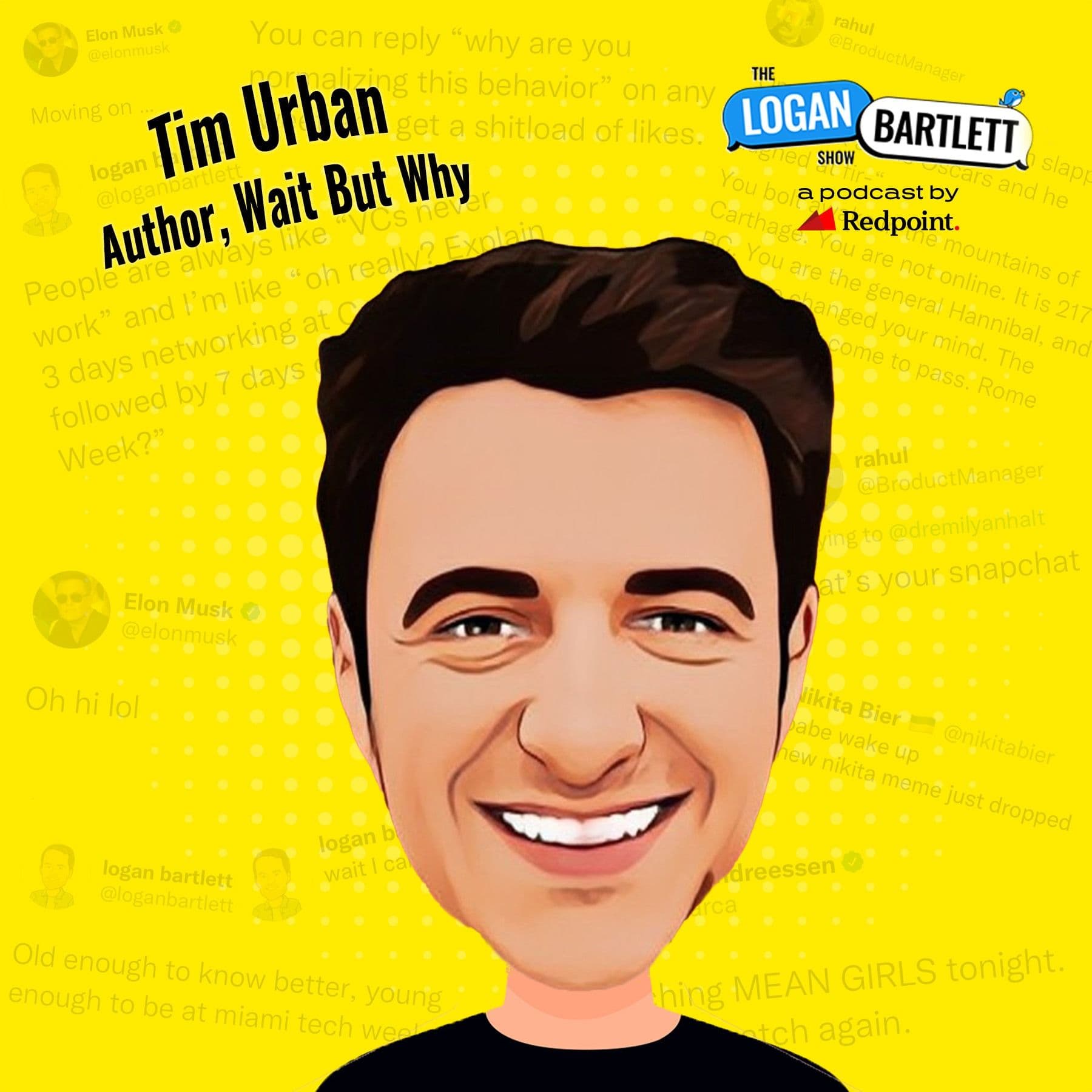
The Logan Bartlett Show - Episode 70: Tim Urban on Wokeness, AI Girlfriends, and Humans Living to 150 Years Old
Episode Summary In this episode of *The Logan Bartlett Show*, Logan Bartlett interviews Tim Urban, the author of the blog "Wait But Why." They discuss a wide array of topics, including the impact of AI on social relationships, the possibility of extending human lifespans to 150 years, and the cultural phenomenon of wokeness. Urban reflects on his writing process, the evolution of his thoughts over time, and the bizarre nature of our current societal dynamics.
Key Topics Discussed
- Introduction to Tim Urban (0:00 - 5:11)
- Urban's background and his blog "Wait But Why."
- His TED Talk's reception and influence.
- Writing Process (5:11 - 18:40)
- Insights on the challenge of writing a lengthy book over six years.
- Urban reflects on the evolution of his thoughts and writing styles.
- Longevity and Genetic Engineering (18:40 - 29:39)
- The potential for humans to live to 150 years through advancements in genetic engineering.
- Discussion of societal implications and ethical considerations.
- Changing Expectations of Success (29:39 - 36:01)
- Examining how societal definitions of success have evolved over time.
- Shortform vs. Longform Writing (36:01 - 42:11)
- The differences and challenges associated with each format.
- Social Media and Different Audiences (42:11 - 49:10)
- The role of platforms like TikTok in shaping discourse and audience engagement.
- Cultural Observations: College and Time (49:10 - 55:39)
- Urban’s reflections on the nature of college experiences and perceptions of time.
- Writing North Star (55:39 - 1:03:03)
- Urban discusses his guiding principles for writing and content creation.
- Political Tribalism and Wokeness (1:17:55 - 1:43:25)
- The concepts of tribalism in politics, including the dynamics of wokeness and its social implications.
- Awareness and Courage (1:43:25 - 1:52:01)
- Urging listeners to be aware of their biases and to demonstrate courage in their beliefs.
- AI and Potential Dystopia (1:52:01 - 2:21:43)
- Discussion around the implications of AI and its potential effects on humanity.
- Cryonics and the Future of Humanity (2:21:43 - 2:34:25)
- Urban's thoughts on cryonics as a method for potentially extending human life into the future.
- Social Media Reflections and Future of Twitter (2:34:25 - 2:38:15)
- Evaluating Twitter’s evolution under Elon Musk’s leadership and its impact on public discourse.
Key Takeaways
- The Importance of Awareness and Courage: Urban emphasizes the necessity of being aware of biases and having the courage to confront them in discussions, particularly in political contexts.
- Navigating AI's Future: The conversation reflects on the dual potential of AI to either greatly benefit or harm humanity, stressing the importance of cautious development.
- Cultural Shifts around Longevity: The prospect of extending human life raises numerous ethical and societal questions, which Urban encourages listeners to consider.
- Political Tribalism: Urban critiques the current state of political discourse, suggesting that the rise of tribalism is detrimental to meaningful conversation and understanding.
- Personal Growth and Career Choices: Emphasis on the value of exploring diverse experiences in youth to inform future career paths and personal development.
Conclusion Tim Urban's appearance on *The Logan Bartlett Show* offers a thoughtful examination of contemporary societal challenges, urging critical reflection on personal beliefs and the future of humanity. His insights on the intersection of technology, culture, and politics provide valuable context for navigating a rapidly changing world.
Written by AI. May contain mistakes. Listen to the episode to check what was said.
Transcript
Automatic transcript. May contain errors.0:04Welcome to the 70th episode of the Logan Bartlett show. I am your host Logan Bartlett and What you're going to hear on this episode is a conversation I had with Tim Urban. Tim is a writer at the blog, waitbutwhy.com, where he goes in on a bunch of interesting topics, including being invited by Elon Musk to write about both SpaceX and Tesla. Tim was also early to artificial intelligence, writing about the path that we were potentially on back in 2015. He's also known explainers on things more simple, like how much time we have left with our parents and more complicated like the conflict of the Iraq war.
0:39In this conversation, we discuss a number of different things, including who really wants to suppress free speech, artificial intelligence, and the likelihood of AI related best friends and girlfriends, as well as genetic engineering and increasing the human lifespan. A really fun, wide ranging conversation with someone that I grew up reading and following, and it was a pleasure to finally be able to sit down with him and talk about all this stuff in person. Now here's Tim. Tim, thanks for doing this. thanks for having me so uh i want to talk about a bunch of different things one of which you wrote a book recently it took you a little while uh which i want i want to understand what writing a book for six and a half years actually entails but the way it opens up and one of the things that i think you open up a lot of your talks and uh posts and the book itself uh is just how society's getting weird.
1:28And we're at a point of exponential growth where what 50 years ago looks very different like than 100 years ago versus 200 years ago and all that. And it's a weird thing to internalize, right? Because everything looks very similar to us every day as we go about it. So at what point do you sort of feel like that kicked off? Is it going back to like a steam engine basically in the industrial revolution and ever since then we've been on this exponential curve of change? Or how do you sort of think about when this started and what the implications are for us as a society as it keeps going and getting weirder and weirder?
2:17Yeah, it's so interesting to like think about because it's like there's this great story that's better than any fiction story. that we're living in and his you know historians like their job is to try to but we don't know the story come out you know we we start off just not knowing what happened and then the historians like go to try to piece the puzzle together and archaeologists and whatever to um so it's like it's just so interesting it's like we're trying to figure out our own story and as it's going on yeah and and we stitch together some narrative that like ultimately might not hold true oh yeah Yeah.
2:54And it changes and we're wrong about a lot of things. And then also like what happened is, um, is also very relevant to what's happening because it's the same species creating what happened and what happened. So, so that, so the technology changes, the knowledge changes, but the people and all the human nature are the same. And it's amazing when you read about, you know, the Assyrian Empire in 700 BC or, you know, the Greeks or the Romans or the Mongols. And it's just like, there's so much of just like, yep, that looks like this, you know, the Nazis. And it's just, it's the same primates doing all of these things.
3:32Yeah, totally. And so if one of the questions we have about the future is what are the primates going to do now? Where are we headed? it's obviously very useful to um to it's almost like a wisdom cheat to get to instead of just experience what you're experiencing your own lifetime um if uh there's like a couple wisdom cheats you can um you can study what happened and like learn those lessons even though you didn't get to live through them learn other people's lessons um collectively together so it's like there can be this like two-dimensional cheating it's like we can collectively share our own life experience and collectively explore the past and discuss it so that like as a collective we can be as wise as possible like way above our our actual pay grade for wisdom but anyway to your question like i see two and again this is i'm no historian this is based on me listening to a bunch of history podcasts and reading a bunch of history books because i'm curious there seems just to be that get brought up again and again and again two like major um inflection points and like one is um you could always you could go all the way back you know cognitive revolution we start having like language we can you know that's when the first humans start moving away from other primates but then that was long and over a very extended period and it went and it went a it's just so i have this diagram i use this thousand page book if human if human history is a thousand if We've been around for a thousand page book.
5:02950 of those pages, that's 95 % of the book is just hunter gatherers. That's it. So again, maybe there's a cognitive revolution, but not, it doesn't, it's not enough alone to make the change. It basically, it was like, there was kind of a, there was a dormant, massive thing that was like, that could happen. The potential had woken up, but it didn't come together for a long time. I mean, think how long we think of Jesus ago and the Romans. I mean, 2 ,000 years. We're talking like 200 ,000 years. 2 ,000 centuries is how long we were just sitting around hunting and gathering. What page in that book is Jesus?
5:48Jesus is like page 993. 993. A.D. is the epilogue of the book. It's like epilogue A.D., the last eight pages. The people point to the agriculture revolution, right, which was about – that was – so let's see. That was about maybe 10 ,000, 12 ,000 years ago. So that is about page 950, let's say, maybe even 960. So 950, 960, you have people – the reason this was an inflection point in progress is, you know, yes, there's a different way to get food, but there's, it was hurting and there was, um, hunting and gathering. And it wasn't that like, now we had food, more food. I mean, it was, but the reason that it was to me, and as far as this story, um, an inflection point is because one of the magic things about humans, again, this dormant thing that happened once we have this cognitive revolution and now we can, I can take my life experience and send it to you through words, like in a very nuanced way, even if we're not, you know, it's not just, about something that's here.
6:52I can talk about something that happened last year. And that's crazy. It's a magical superpower. And so a tribe now could, could over time collect wisdom, collect knowledge together. And I think of it as like a little knowledge tower in the middle of the tribe that's being built in every generation, it gets a little higher. Um, and that they got, that's how I'm sure weapons got developed over many generations. Um, you know, chimps aren't developing, developing anything over many generations. They develop life experience, But because they can't photocopy it into each other's brains, it's just stagnant.
7:23So things got better, but the agriculture revolution happens. And now you have 10 ,000 plus people together instead of 100, 150. And so the knowledge tower just starts shooting up. And then, of course, then a giant, you know, mini inflection point happens around 975, page 975, which is writing. because now instead of just coming from, I can give it to you, the information if we're in person, and you can give it to someone else, and it's kind of lossy. Instead, now I can put it onto an object. Again, we take this for granted. We think like it's early writing. This is magic. We are taking information in our brains and we're imprinting it onto a rock or a piece of papyrus and in a imprinted way that anyone else's brain can now take, and then you can go over, you know, of course, just as a side topic, the printing press is so cool when you think about it because, you know, I was hearing something, this is so recent, like the Lincoln-Douglas debates was like this important moment, you know, because it was this moment when the debates happened in front of X number of people, very small, and then they print the transcript and thousands of books, and you get hundreds and thousands X of people reading the same debate.
8:37It's almost like it's like an old school recording, right? It's like a book is like a recording of this event and they were actually getting to like watch the debate even though in their own living room uh a year later it's just bizarre and so this concept of information spread it's just it's just useful sometimes to think to about how amazing any of it is sure totally so agricultural revolution but most of those were like i mean it's sort of slow graphs still really slow functions along the way yeah yeah yeah so we talk about inflection point like in the big scheme of things like big evolution like the human history is this blip so then everything looks really quick but if you just extend human history out the agricultural revolution was still you know it was okay page 950 but 50 pages of this book is a long time that's again that's ad times five or six it's an you know epics and eras and just you know these so this was still you know it's like okay now we have agriculture which by the way it wasn't just like it all starts at 10 ,000 it rolls out worldwide over like a 5 ,000 year span, 7 ,000 year span.
9:41You know, and it happens very slowly. And so, but, so it's still quite slow. Like, I don't know what happened in the year 9 ,000, 8 ,000, 7 ,000, 6 ,000. Like, there are some developments, but they're very slow. From my knowledge, it just seems from around like around the year, like 3 ,000 BC or so. And maybe it has to do with writing. the speed seems to pick up at least it could also be that we know a lot more about those times because there was writing um so maybe there was all kinds of things that we just don't know about and there probably were but it seems like maybe it's writing but you start to have these like these more legit civilizations start to form um obviously mesopotamia and you have all these other uh that that was like the first but then all these river valleys around the world start developing these like pretty big cities hundreds of thousands of people like that's a lot back then um and and uh and so so but it's still kind of like a study of course then you have start to have empires and uh and then you have you know empire again crazy concept it's like a human one person is in charge is oh in power over tens of thousands of people like that didn't happen in most of human history that's weird you had a chief that maybe was in charge of 150 people like this is it's just this is this unprecedented amount of power held by single humans you know the king of syria or whatever we can probably say that the second major inflection point is like you said steam engine the industrial revolution was just it's just hard to wrap our heads around what a big deal it was um it the it basically was the birth of modern civilization it just modern civilization just exploded into the world um and it it started us and it's not just the industrial revolution by the way i would say it's like it seems like there's like the scientific revolution which is which is our like it was like a nut putting the knowledge tower the collective knowledge tower on steroids now there was a method for finding the truth that everyone in any language all around the world could participate in and collaborate together it was it became a species wide project to build the knowledge tower um and just the freedom from a lot of like the religious structures for knowledge to just build unfettered worldwide so that happened in the same ballpark um the enlightenment basically you know innovated on you know many previous trials of different kinds of governments and came up with the best system yet which is the liberal democracy um which is what we all live in now and you know i don't know what percentage but a large percentage of the world so the system of government that kind of enabled progress the the best system of government for progress yet formed the methods for finding knowledge scientific revolution and then you have the industrial revolution so we can build and make things in crazy scales and lower the price and prosperity can just grow and um and so um these things all kind of happened around the same time and uh and so if you think about the thousand page book 250 years a page we live at the end of page 1000 right by this definition so 1770s to today um which seems like a long time to us but it's the last one page that's any of everyone everyone who lived in there is on our page of the book um and those revolutions these things we just talked about all kind of happened right on page 999 on the border between 999 and And so this is why page 1000 is a crazy anomaly.
13:12It doesn't make any sense compared to the rest of anything. Everything about our modern world is brand new, basically. Everything you do today, you live your life, you go into your hot shower, you go to the grocery store, you open your phone, you make a call, you just name a thing you're doing today, and it is basically a page, almost definitely just a page 1000 phenomenon. Except, ironically, what we're doing right now, talking, goes all the way back to the beginning of the book, which is so weird, or maybe like halfway through the book, which we can talk about later. But that's like the one thing that I think, and that could change.
13:47We might have a different way to do this. But talking is like the OG human technology, but almost everything else we do. Like there were couches before page 1000, but they were, a nice couch like this would be so much more expensive because you just can't mass produce anything. A frying pan? Imagine trying to get a frying pan in the year 1500. Great, but someone's going to handcraft that for you, and you better be real rich to have a frying pan. Now everyone can have a frying pan because we have these mass production. So the grocery store is just, it looks normal to us. This is crazy. It's everything we might want to eat.
14:23By the way, all this human engineered fruit, all this food packaged, preservatives, it doesn't go bad, and like every kind of everything, you walk around and it's just all neatly on the aisles with like expiration dates and it's cheap it is it's just like um so that that that's the that is the this is the the book and the fact that page 1000 is an anomaly in every way it can be is my like starting place for a lot of what i think about and a lot of like it's it's a good place to frame your mind when you start thinking you know it's a way to zoom out and just remind ourselves what is going on totally and it makes it seem like how weird, quote unquote, in the sense of how different it is just on that page compared to any other page.
15:12And in projecting forward of what the next page is likely to look like, it's probably if we're following the slope of the line forward, it's probably going to be beyond anything that we can actually comprehend today. In the same way that George Washington in 1776 could not fathom anything going around here. It would just be so mind-blowing. He would be wrong about almost all his predictions. Everything would be wrong, right? I think there was a quote you said, we may be living at the climax of the movie of our world, right? Or like this could be the human movie. Yeah. Yeah. This could be the BC period for whatever's to come.
15:54well it kind of feels like we're page 1001 is probably not going to be like just okay yeah it's probably going to be unfathomably awesome in the way that i think george washington would think today was unfathomably awesome yeah like the life expectancy the medicine the phones the technology the the heated rooms like the lights everything just magic everywhere or it's the apocalypse or maybe it's like the the apocalypse light when we just destroy our civilization so we are still humans here but we're all back in the stone age it's like you know under like local warlords like trapping up murder people for food like so so if it goes badly obviously that's the climax because it's the big end of the movie it's crazy after 200 200 remember 2 ,000 cent 2 ,500 centuries we would be alive at the end which by the way shouldn't be surprising necessarily it seems like what are the chances well actually one of the things you might expect before the end is crazy progress because it's progress that kills you it's that right and so what does crazy progress also involve population explosion which means a lot of people are here for the end when the population's exploding you know this is i forget the name of the theory but it's a it's a common theory it's like population is exploding at the end you know i think nick bostrom talks about it it's like um yeah maybe that's something that happens before the before the very end and like so a lot of people are gonna it is not you know it's one still only a one in 15 chance or so but not like a one in a thousand chance that you're here for it but or if it's the unfathomably awesome future i think it's so amazing like i think we conquer mortality for example we look back it'll be like i think it has to be a new kind of bc ad where whatever page 1001 and on are like is going to be so vastly different i think it'll have to be just like called a different era entirely than anything before.
17:48And I think, you know, we're living on that, if things go well, we're living on the cusp of that, which is also amazing and crazy. And who knows what the, you know, historians in a thousand years, maybe the cusp started in 1700s and goes till 2100. Maybe the cusp started in 1990 and goes till 2150. Who knows what the way they'll actually want to have some hindsight. Maybe we're inside the cusp right now, or maybe we don't realize how crazy things are about to get. And so we're still in BC. It's getting closer, but actually the crazy stuff hasn't even started yet. There's a few things in there that I want to touch on.
18:22And at least you've written about a few different things that I think are to the mainstream weird, including cryonics. You were very early on artificial intelligence and writing about like the implications of it, at least for the mainstream discourse and consumption, brain emulations as well. Are there any other things that maybe you haven't written about, like as we sort of think about the future of what technology or life, are there other things that are kind of, because I want to go through each of those individually, but are there any other things that have been ruminating in your brain about like, as we look forward to, I mean, obviously I sort of put cryonics and mortality together, like beating mortality.
19:07But is there anything else that's sort of in your mind as you sort of fantasize or theorize about what the utopian state of the future could look or the negative one, I guess, as well? But yeah, there's a ton. I mean, because we live in a time where there are like 20 world changing paradigm shifts happening simultaneously. That's the craziness of living at the end of page 1000. So yeah, you mentioned a few. um i would love to write about genetic engineering what we can get into our software like so life extension is almost a smaller topic that i do want to get into life extension chronics is like a subtopic of that but just in general what are the prospects of you know if you look at these graphs of life extension of human lifespan it's such a great story except it's like pinned down like a year hundred around you know it's just like there aren't even outliers there's not one person who like happens to live to 150 this this our soft that's a software problem otherwise it would be some freak you know just like a seven foot five nba player there'd be a freak 160 year old the fact that there's not means there's something in our software that basically says without question 100 this person must be shut down because for the sake of the tribe whatever it is i don't think there's some inherent law of nature i think it is actually like our you know you don't have a 90 year old who can't see or hear very well, but they run fast, right?
20:29Like, every single part of the system shuts down simultaneously. And it's sad, because once you have this really healthy, awesome, you know, with it 90 year old, and you just know, you know, what's coming doesn't matter. It's like, there is this plan in their software, and they will probably not be here in 10 years, even if it seems like they were doing great. So genetic, so life extension involves, you know of course what are the things that do kill the hundred year old there's there's cancer there's stroke there's heart disease there's alzheimer's there's not too many things there's like four or five things that really kill almost all of us um and then so you conquer those but again i still feels like then you know it's you know so maybe you get maybe we're now healthy until 110 but it's like okay but how do we elbow this think about what we've done with the rest of are we've exploded through limitations in so many ways astronomically a hundred x our old limitations you know so so what's this like nudging five percent with all of our modern tech and so that's the software problem and it's like let's how can we so genetic engineering is so interesting can we get in there and change the software i mean there's also the you know the nanotech that might allow you to replace the cells and things like that and then of course there's mind upload which is just fuck the body okay we don't know how to do the genetic engineering and it's too risky anyway.
21:53And once I think right now we're just used to it. We just go out, we daredevil, you go skiing. As soon as like actual like living 50 centuries is a possibility, the idea that you would like do anything to risk. So you'd either have a backed up consciousness or you would be like, I think pretty careful because it would just, right now it seems like, okay, worst that happens is I lose a few decades. You know, it's bad. All my instincts go against that happening, but it's a few decades. It's a much bigger tragedy if someone was going to live to 5 ,000 if they die at 80 or 40. So all of those are kind of related to me.
22:29I want to get into all of that. Basically, the question of mortality, human mortality, involves like seven different technologies. Cryonics, mind upload, all of this. And, you know, with AI, AI is interesting because it touches all of these. AI can explode all. It can be kind of like the Industrial Revolution. It wasn't just helping to with textiles, right? It eventually turned into the development of electricity and it turned into every single part of our world progressing. So likewise, I think AI could be something like that where it's like another inflection point, which is crazy because it's already going so fast.
23:06Another inflection point where now everything gets on steroids even more, like steroids cubed now if it's already squared. I also would love to write about like artificial meat. Seems really interesting. I could just, it's much less big topic, but it's also in some ways a pretty huge topic. It's, you know, livestock is, you know, a major contributor to emissions. Obviously, there's a lot of food inefficiency, which leads to hunger around the world. It's kind of like a Holocaust for animals going on that, you know, we might look back on is like absolutely horrified which i think we probably will you you wrote about it in your book but like it could be very well something that we look back on like we have a really hard time explaining to our grandkids yeah no it was mass slaughter of animals like and like a lot of them were yeah we knew they were kind of intelligent but we lined them up and we just killed them and a pig is as smart as a dog yeah and we're just like yeah we're pretty fine with it and we don't really think that much about it it's this bizarre thing we're doing where all you have to do is imagine a thousand golden retrievers in a tiny pen crying and suffering and bleeding and and they never see the light of day and then they're taken to the thing terrified shaking and they have their throat slit that people would react to that almost like they'd react to humans right that's maybe maybe somehow some people more it would be even worse because it's like this innocent creature and it's like this sweet innocent helpless creature and that's actually happening and we've normalized it and and i feel like a lot of people know it and we're just kind of like what meat's good you know vegetarian no i'm a huge ass hypocrite i i like i know it to be true and in 75 years my grandkids will watch uh maybe this will exist on youtube still or whatever and they'll be like so you were aware of all that and you just kind of laughed about it and then went about eating pigs and i'm like yeah no that's right but then we'll look back at people who are like cheering it like witch burnings we're like well barbarians and it's like they also were like this is so awful imagine being that person but like it's life like we again it's the same people who did the witch burnings who are now being like well pork is good so um i don't know if we have the discipline as a species to actually like stop our addiction to delicious meat and of course like it's a great business um but it seems like just again the The environmental impact is like, I mean, you learn about it, you're like, damn.
25:30Oh, yeah. And then, you know, across lots of fronts, like land, water, you know, just ecosystems, and then the cruelty to the animals. Yeah. The environmental impact, I sort of, I'm a techno-optimist in the way that I'm kind of, and maybe this is just blind naivety, I'm kind of like, yeah, we'll figure that part out. Yeah, I agree, but it just also just takes up a lot of land. It's just like, the point is, that's not the reason to stop it, at least to me, but that is that would um it would just like free up a lot of things oh totally time space so government subsidies yeah yeah it's just it's just it's huge it's just kind of albatross yeah so um artificial meat is one of those things that um when people hear it like and i think once we have it it'll become like almost gross to be eating really it's like oh it's from a real animal yeah right it's like that's like actual like veins in there i i want like and much healthier better tasting cheaper eventually right now it's massively expensive right so this is the this is like the 1960 giant room-sized computer sure yeah eventually we'll have the iphone which will be cheaper incredibly delicious and nutritious it won't be bad for you um and it'll be plentiful and and so i i'm saying this not i haven't done my deep dive so maybe i'll get there and be like actually this is harder than we thought we're not going to get there but it seems to me like want something that's going to move in that direction so that's to me is interesting um transportation is always like super like will we have flying cars because that was always like the joke about people in the 60s thought that and oh we don't didn't happen and like we couldn't that would be ridiculous and then i talked to some people building some stuff and i'm like you're building flying cars and there's obviously a bunch of hurdles with regulations and noise and safety you know but maybe down the road um you hop in your you know new yorkers like to go to the hamptons you you're going this afternoon okay so it's going to take you how long way too long right three hours of probably hideous traffic i'm going to montauk which is about as far away as you possibly can yeah you're going to be sitting in track right so now imagine instead you call your uber and you say montauk and you get in it and it it goes it'll probably drive for 12 minutes to one of the nearby takeoff strips they'll get in a little line and you're fourth and then and you go now it's 30 minutes and it lands in a landing strip again wait waits for a minute and then heads drives right to your door and you the crazy thing is the first time of course you'll be i did it you people you want to hear about it like the first iphone can i look can i hold it and then we'll all get incredibly used to it and just be like lying there not even looking out the window just like lying there complaining on her phone or being like this thing took like eight minutes to arrive you know you ever see the louis ck bit about everything's amazing and no one's happy the wi-fi on the internet totally the funny thing about that clip is so he talks about it as um he is like that was one of the first times i had heard of him he was on um conan yeah conan and i was like that clip helped like blow him up um and it was he was saying how the guy next to him was like there's no wi-fi he's like you didn't this is bullshit he's like what are you going to do after this partake in the miracle of human flight but then he has said in another interview once he was like oh yeah there was no guy that was me complaining and then i realized it was funnier if i said it was someone else that's funny just a separate point yeah but that's such a great point it's such a relevant point like the hedonic treadmill it doesn't matter how it's like if you picture the future and you're like imagine people can live 500 centuries if they want they die when they're ready and they all fly around and no one has to work and you'd be like they must be so happy and you know that's going to happen is unless we've really recoded human nature which maybe we can do you're going to get there and they're all going to be depressed and bitching about all the same things just like we are depressed about no matter where you get to you reorient around what the the level you're at is and your expectation change and it's true of success i'm sure you feel this way of like if you go back 10 years ago or 15 years ago and you were like I have this blog and I have this book and people know me for my thoughts.
29:37And it's incredible that I get to, I get to research and think about interesting things. And then I get gratification from people and all that. But then, you know, whatever the first week of book sales come out and you're like, fuck, well, okay. Maybe, you know, if, maybe if I had done the press tour a little bit better, it would be a little bit higher on the list or whatever. You just recalibrate to some level that like you never could have imagined right i really have a numerical way to measure it which is that i had an old blog which you know i never i never was writing it to go viral it was i i it was just my stories about my day whatever but i still was really excited when things you know got a little attention you know there might be 50 readers a day usually and then like sometimes something would like blow up and there'd be like 800 readers a day or a thousand and that that's even high maybe it's more like 250 i'm like oh my god like this people are passing this around it was like hugely exciting like dopamine hit and then wait but why of course at the beginning you know when when you're when things are going up it's like accelerating you feel acceleration in in a plane yeah a car and then you stop and then it hits this constant velocity and it feels like you're still again right it's like relativity um it's the same thing it's like when you're accelerating either up or down it feels you feel it emotionally it feels really good or really bad and when you feel that it feels like i'll always feel happy about this or when it's going down this will always be this nothing could be worse than this whatever um and then you hit constant velocity or even you get used to the acceleration all your emotions settle back into the hedonic treadmill so for me wait but why now is getting a thousand x the viewers and i got used to that and suddenly i'd be like okay just like 50 000 whatever and then i'd be like oh you got up to like 250 today it's it's like human it's madness totally and it's like if you saw all those people in a room that's one of the things if i saw the 50 people in a room i would have been like my god i have a whole like i have a whole like it's bigger than a classroom all here to listen to me you know it's funny is i uh similarly with doing this i i did a talk recently and 250 people were in the room and i was like anxious you know i was like i know i like had to psych myself up to go do it and i'm like i every every single one of these gets like you know whatever 10 20 100 times and i'm just like this doesn't make me nervous at all it's two of us sitting here uh but the number of people that are going to see this is so much more than having all the people look at you it's a weird like internalization thing that i i yeah it's it's it's one it's a reminder one of many that both of these the gratitude reminder the fact that you just get used to it and then this fact that a 250 person live audience seems scary and a whatever that 100 000 it doesn't matter how big it is if it's if it's on the internet it seems less it's a reminder that the human brain is not a magical thinking tool that is smart yeah it is a an organ in our body that was developed to help a hunter gatherer survive survive in the wild that's what it is yes and and and it is amazing organism and it's amazing how plastic it is where it can adjust this totally different world than it was evolved for and actually kind of make it work but it's not meant to be here and it's not meant to understand things like it's 250 percent audience is intuitive to it because they were you see it you're the chief and you're making a you're gonna fire up your your little you know tribe to go fight the other tribe okay that we know that 2 ,500 people 25 million people behind the screen or behind the microphone is just it's the same way that we are I if you if there's a cockroach on this thing I would jump up like a baby right now and embarrass myself but I'll drive in a car and text because the cockroaches the brain is like ah I know that that's in the world I was for that was I'm that's pre-programmed that might have disease that may be scary right um driving is it there's no idea what this is totally right so there's a hundred examples and it's just the most important thing to remember all the time don't trust this thing necessarily like consider ask what it is doing and whether it's actually making any sense i had a funny one where uh a family member was going to it was in the peak of covid and they they didn't want to get on a plane and so instead they were going to drive uh 18 hours down to georgia uh And I was just like, getting on the plane is so much safer than driving for 18 hours.
34:10But there's this weird feeling of control, right? When you're driving versus this scary COVID thing and be on a plane. The numbers are crazy. Yeah. Planes are actually, I read somewhere that being on a plane, like in the air, is the safest place you could be on Earth. You're the least likely to be murdered or like die on Earth. Oh, that's interesting. In the air because there's no one, no one can murder you. It's hard. um and so you're actually in the safest place on earth but it's just i i saw i i forget the stat but it was like per 10 000 miles traveled like or maybe maybe it was a million miles traveled or something and like commercial air aircrafts have like one death or two deaths and cars are like 650 or something and it's just like such a funny whatever driving is unless you're like a daredevil person who does like you know kind of physical things like physical scary things driving is from 99 % of us by far the most dangerous thing we do it's not even a question like there's not like for a young person like 30 year old me living in I guess I was 25 year old me living in LA where I drove a lot um I it's like if you looked at like the pie chart of things that might kill me this year driving must have been 99 because driving I was constantly kind of like that was a close one like and meanwhile nothing else I'm like a young healthy person like there's no tiger's gonna run out and get me.
35:27I'm very safe in every other way. And there's a weird internalization of having the wheel versus not. That lets you feel like you're in control. But in truth, it's, yeah. No, you haven't written as much in the last seven years as you've been writing the book. You clearly have other stuff ruminating in your head. Have you missed the process of like going through in a much shorter form and putting some different thoughts out there? Very much. I really like writing blog posts because um a the dumb brain so is is most aware of like people actual real people hearing what i'm saying if i'm on stage right same with you but and then a book is the opposite side of the spectrum it's like this the words i'm typing will be read by a much bigger stage than any i could be on and it just i can't but the dumb part of my brain can't conceive of that so it doesn't feel the high stakes adrenaline it what it's what makes me work hard and perform and really like it also awakens my creativity um and it's really hard to get those things with a book i learned um blog post is is somewhere in the middle where it because of this people home people might see this on you know in three days it's just some adrenaline and there's some pressure some deadline pressure it's like you know people are expecting this versus this very open thing which is, again, it's just there's something motivating to the kind of dumb instant gratification monkey in my head
37:00about, A, an impending deadline, but also the fact that if I wake up in the morning and I crush it today, I could finish the whole post today. I could finish the whole post. It's going to go up tomorrow if I really just get in a flow or the next day if I don't. a book i'm like if i crush it today i'm gonna get from 34 done to 34 and a half percent done that's if i crush it if i don't crush it i'll get from 34 done to 34.2 done if i do nothing i'll just stay there those feel very similar the incrementality of progress it's so depressing it's so it's so just like it's so um demoralizing being like i had a great day and and okay it just doesn't feel like it just so i think this is different personalities i think some people function great with that they work great they like to put a brick down every day and then there's a house.
37:42For me, it was very hard to motivate to put one brick down. It's like the perfectionist in me, I wanted to like do the whole thing or it's like, I'm just going to do one brick. That's and it, and so I didn't like that. Now I am doing another book, but this book, I try, I was like, let me learn every lesson I can from this last book. So a, the topic is a hundred topics. Basically there's a ton of the things we've already talked about are in this book. It's like everything I'm excited to talk about or write about right now is in this book together. and I gave myself and I'm like working really hard to keep it like a one-year deadline so not six years like the last book can I do an even better book in one year and that's I don't know if I can but that is I'm trying to like work with my own psychology and be like look this is not this is not that smart of a primate here that we're living in and it's just a fact it we saw what it happened to this primate over this how do we let's manage the primate better now what how do we get this primate to do anything?
38:37That's right. What was the six and a half years of like, literally your days of doing it? Like, was it, was it like one day you bet you'd have some breakthrough and write a bunch of stuff down and then you would go, uh, you know, you have famous Ted talk about watching, uh, YouTubes of Justin Bieber's mom or, uh, or the Tanya Harding, Nancy Kerrigan, Wikipedia page. Those are all real examples. Yeah. I mean, Tanya Harding, Nancy Kerrigan crazy story I mean I'm glad it's gotten its due now that they've made like so good and stuff it's like you kind of forget some of the weird pop culture things that happen oh I know even just going back to OJ it's just like you forget there's going back to like 90s kind of or my wife has become obsessed with like I think everyone's wife that I know true crime and so she'll go back to like Scott Peterson or John Bonnet Ramsey and I'm like first I'm kind of like And I'm like, this is interesting.
39:30I see why this is such a. So you're 41, 41, 41. I'm 35. My fiance is 29. And so like a lot of the pop culture stuff, I was in second grade with OJ. I was in eighth grade with 9-11. But like, you know, I kind of remember Branch Davidians in Waco, Texas, but like not really. And so over the years, I love that stuff. So I'll go back and study it for my fiance. It's her first time learning about all this. And so that is really fun for me. I'm like, no, no, no. now we're going to go learn about david koresh totally like this is going to be a really good or like she missed um the jinx and that and so i'm like we're going to go learn about robert durst now right so all these little pop culture things it's fun for me as like the six-year-old guy that loves pop culture going and teaching all that she knows about waco because of me and i and i i know all the lyrics to every taylor swift song because of her oh interesting because she's actually at the generation she's she's 33 okay yeah and she claims that like all the teeny boppers at the concert that she just went to are like not the real fans because she is taylor swift's age and she's like i actually grew up with her i'm the actual og fan yeah i remember tim agraw when it came out in 2006 or whatever versus all these teeny boppers uh like that was her whatever original song and all these teeny boppers weren't even born then no no no totally i mean it's and also it's like there's some interview with billy eilish where they're like asking her who she's heard of and she hasn't heard of any of the people that i think of as like house you know you know your dad's like you know oh like dick clark you know of course you know i'm like who's that again and he's like that's you know that that that sounds like brad pitt to me right totally i play i play a mean game uh at times and i'm like mick jagger what band and she's like stop i don't want to play this game right yeah right which is like it makes me feel old but also it's weirdly gratifying but it's also like so mick jagger was before our time but it was like close enough that like we all are familiar but like i also can't name 10 rolling stones songs probably i if you if you played them for me i'd be like okay i know that song but like my parents for sure can but then you get to the next generation and it's just everything it's it's like the treadmills moved 30 years so billy eilish had never heard of the grateful dead and i was like okay that that is crazy to me because i just i just feel like they're a household name but they're you don't realize it's like it's kind of like parallel universes and i am realizing also that the internet is in a nice way actually makes you feel very like not old because inevitably who am i who are i'm interacting with on twitter is a bunch of people within 10 years of me sure when i go on tiktok very quickly it gets it's like okay you're you're not going to be sending you teen stuff very quickly it's sending me stuff maybe not exactly my age but like my references i i'll see a thing like you know you're a 90s kid when or you know you're an 80s kid when 15 year olds are never coming across that meme it's just not that the algorithm is never going going to feed them that meme they're going to see you're you know you're a 2010 kid when and so it's almost like the internet segments these parallel universes and keeps us like contained which i think is nice because i if the whole thing was flooded with teen stuff which is like i think before the internet it's like all the pop stuff everything is young people now and i feel old i think it's nice because it kind of like makes you feel like your generation still has memes yeah exactly you're self-contained and like furbies and tamagotchis still get totally to us because all those people are still here yeah and so i'm like we're all here let's like still have a fun time talking about our generation not just be like oh that's the for the kids now it's like well let's all hang out still so yeah it's like my dad yeah i use tiktok and it's like deck improvement self you help tiktok you know and i'm like oh yeah exactly the same tiktok that's what people are like i mean i love tiktok and then i got rid of it when people freaked me out about china my texts i don't know i miss it a lot actually because now i'm on twitter for you which i go on one trashy video and then start scrolling and it's just guy gets his pinky bit off by a shark fist fight and that it's addictive but it's trash and then instagram reels to me is just a hugely inferior youtube youtube flipping is it's just a lot of like i don't know like joe rogan or it's just like it's just like podcast clips it's just very like these these things tiktok was had a variety it could be i could flip up and see anything and and it was like they really had they mixed from like a really funny comedian doing impressions to like a crazy science fact to like a funny dog video too but but but i just liked it the most i think it had that yeah so i miss it and i i've totally ceded to the ccp like the brain manipulation they're doing to me i'm like listen i i need that dopamine hit of the dog videos mixed with like you know whatever the comedian mixed with the sports news so i am totally willing for trying So, okay.
44:05So, okay. I want to, if you, because you're, you're like a smart dude who's decided that it's fine. So maybe is it fine if I just put TikTok? I kind of, I kind of think so. I sort of think all these things are like when Facebook did the big study on, uh, on like how they were actually manipulating stuff to see how it changed people's moods and all that. It was so much at the incremental margin about like 0.1 % here to like 1 % there about how they were actually able to manipulate. I think. I don't care about that. I don't want them like downloading all the contents of my phone and using as blackmail 10 years from now.
44:38Yeah. Yeah. I haven't given as quite as much thought to all that. I sort of think I am very willing to have the totality of my life. The famous last words when someone ultimately airs the totality of my life, but I'm sort of willing to be out there in some way. And so like whatever they find, I sort of think we're operating in a world. It's not just me too. with it's also like if my texts get leaked all of my friends texts get leaked and that's part of it is like i'm like i feel like i i would feel really guilty about and that i guess that goes for you know that's why it's my own texts i if i were really worried about it i would tell everyone i've ever texted yeah exactly so it's not i'm not really it's more like you know if it's my text it's i'm the epicenter of this disaster totally that's right i i doubt if it happens i doubt tim urban or Logan Bartlett are going to be the atomic unit of how we all get taken down.
45:30And so that's sort of at least my justification for it. I'm trading the dog videos and the, you know, whatever the random Shane Gillis clips in exchange for that catastrophic risk. And I assume we're all going down one way or the other if that happens. So right at that point, it'll just be everyone's things. And it's just living a whole catastrophe. It's sort of like once once Barack Obama got elected president and like admitted to smoking weed and doing coke as a kid, it's sort of like, okay we're like cards are going on the table for presidents now going forward and i think everyone's going to accept there's going to be some level of like adolescence that's going to be captured he minutes doing coke yeah yeah yeah yeah uh yeah i think in his book or something which is interesting but yeah so wait your process of actually going in and doing the deep dive so you know you know if i ask you like what were you doing on a thursday afternoon in college you might have a hard time like remembering yeah it's like what was i doing yeah long hits i don't know and if you if you try to guess and like map out your time you might actually i would bet if they went and actually said well here's what you really did it would not be a great reflection you know what's funny about that by the way is when i i took up like a month off in between jobs and uh and during that month like the first two days i was so productive and reading books and doing my laundry and going out and like seeing parts of new york i hadn't seen before and by the like like week two or something, I was like, yeah, you know, I have a haircut later that day.
47:01So I'm not sure, like, my day's already pretty full. It's just like a funny different like time is such a mind. Yeah, it's like when your day is super regimented. It's very easy. It's like, okay, I got a 30 minute window, I'm gonna go get a haircut versus when you had nothing going on all day, going into your hair feels like the totality of the day. That is how I feel right now where it's like if i have like a meeting at three it kind of ruins my day like hangs over my entire day as opposed to being like i have clear open i'm like how is this going to be coming up and then when that's done it's like dinner is a couple hours away this makes no sense and if you just blocked out every hour and you're like i have these four work hours and then this and this and then it would just i should do that more honestly probably people who work now there's that such an epidemic now of everyone working from home i think a lot of people are probably struggling in a way they weren't before with like freedom yeah um again our brain in our head is not it's good at general freedom it's not good at freedom plus advanced civilization like um when you have all these expectations and and this feeling of if i'm not being productive i'm wasting time that like civilization makes us feel um and also our friends are working so it's like we don't sound like we can just like be social it's like i feel like our brain struggles with that and ends up it seems like if you don't have that it seems like how could anyone who can work from home ever be unhappy oh my god your life is amazing but then when you're doing it i think actually um you're often i would i would guess that the cumulative work from home people are less happy on average than they were when they were working in the office i don't know but um anyway so back to what i spent my six years doing and this was it's i also like moved a lot so i was like oh that apartment i was working on through that apartment in that apartment which is nice milestones by the way to have.
48:43Yeah, it helps. Yeah, in general, apartments and cities you moved in and relationships you started always like these. Yeah, like like four years of college living in four different places feels like such a long period of time. And then if you spend four years in the same apartment working at this was one of the things that really bummed me out is when I realized college is an eternity when you're in it. It's like it's an era of your life. Yeah. When you graduate college, you now you're 22 living somewhere. You think senior year of high school it's like i was a different human and entirely different world i was a different stage in my life i was a kid now i'm a grown-up and i'm writing this book and thinking this has been longer than college so even like a part i was working on this part four years ago like i was i'm on like a new part now and i look back and i was like oh my god this document this notes doc which doesn't feel that long ago is from when a kid was starting college and now that kid is graduating that that was that hurt yeah um that's part of why i was like never again you know it was just like that is my is my personal hashtag never again um because actually the finished product i'm like you know it is a pretty long fully hand illustrated by me extremely thoroughly researched like i read i just there's like 100 pages of end notes and it covers so much right and i'm like that's a six-year project i don't i don't maybe it's maybe it's a three-year project if i'm at my best but it's not like a it's not like i just like that's a beast it's a giant research book about society you know drawn and written and revised and feedback and all that so the bummer for me was that it that wasn't the plan the plan was a blog post and then i was like oh this is taking so long this is such a long blog post i gotta make it a series and then i was like oh the series is now this the last thing is going to be more longer than the whole series i gotta make it a book and then i was like but i'm gonna every time it was like the delusion it was like but i'm gonna knock this book out really quickly because i gotta move on and then the book takes on forever And so it was the expectations.
50:34You know, it's expectations minus reality equals happiness, right? Sorry, reality minus expectations. So if my expectations were this is I'm settling in for a six-year project on this, then I would have been totally fine. And I don't think there – but it was the fact that I always thought I should be done by now. This is a problem. This is a mistake. It was like this constant feeling of something is like wrong in my world for six straight years. So that was a bummer. As far as like the actual time, like actual writing is a good chunk of the time, but not that much. Because on a good like writing day, I'll write on a really flow day, I'll write three or four thousand words, just like beast.
51:11But that's unusual. Usually, I don't know, one to two thousand words on a good, good writing day. And the totality of the book was how many words? 120 ,000. So people, I always think in words and everyone else thinks in pages. yeah one to two thousand words is like four microsoft three two to four microsoft word pages five microsoft word pages single space um so the the book was 120 but i wrote i wrote at least 300 total um and then most of that was cut and revised and so i would say include including like the new writing and stuff i probably wrote yeah three let's say 300 total thousand words to make this book so even there on a even on a not such a great writing day 1 000 words that's still only one year, you know, or if I'm not working weekends, which I did, I also crushed my social life.
51:56I was just like, cause I always felt like it's almost done. So I was working on weekends and stuff. Um, but so that's one year. So the time, you know, and a lot of that was, you know, I, I, uh, I've written about procrastination. It was, you know, it was, I was procrastinate by tweeting. I would procrastinate by, by researching too much or just going into a research spiral that was no longer that productive. In some ways it would make it worse. Cause I would, then I would get a book to read a chapter that was relevant and then I would just get kind of hooked and read but then not only was that a waste of time not a waste you're learning something but it's not a productive it's not good for work time but then I'd learn something later in the book I'm like well that needs to get incorporated and so with so much time and so much so much going on in the world that's another big part of it is I would you know George Floyd I mean it's like this I have to you know blow up this whole section and rewrite a huge chunk of it because there's all this new information this new thing happened um there's 10 of those examples um the entire trump presidency happened during the book so i mean it was like i was gonna say something about trump by the end i had a whole different thing to say so um there was there was that going on and there was just like a lot of different areas and everything seemed relevant so then it was like a nightmare of outlining was like how do you wrangle everything from like the history of media to you know the way confirmation bias to um the history of the republican party to cancel culture um you know uh to to social media and deep far history and human nature and and how that maps on to today and a hundred other things i was like how do you wrangle that all into one book and i i think you know maybe i i could have focused in and done something but i was just at that point perfectionism was like i have to tell this whole story because it's one big story um and so the times pass like i i would my ideal schedule is i wake up in the morning and this happens rarely but i i've gotten there and i and i first little stretches i wake up in the morning and i just start writing and i just like folk deep focus barely look at my phone till like noon and then then days of wind and now i can work more i can stick around and that's for that's for a book or is that for a blog post in general that would be how do you go about on the blog post side uh like picking a topic and then researching it like what do you actually do uh to to like where do you start yeah just start is it a youtube rabbit hole is it a talking to experts in the field that you i'm sure it's some of all the above but like how do you actually go about doing that say cryonics yeah i will say okay i've heard about this thing freezing people after their death and and and especially i've now heard about it from some very smart people that that's what got me interested because i heard about with ted williams like a lot of people and i was like this is like for kooks um whatever and then and then i heard but then much more recently like 2013 14 15 i'm hearing some like very smart people say no no this is this is a very important technology people should do it really so okay that that's all i need to know that it's a good topic.
Read the full transcript
55:02Whether it ends up being something I agree with or not, the fact that I'm like, huh, I didn't know this was a real thing. And it's such an interesting thing to be a real thing. I now know for sure, because my only focus group is myself. I know there's a lot of people out there just like me, right? Is that your North Star in this stuff? It's just like what I find interesting. We're all not that unique. There's just a lot of other people who happen to share my interests and my sense of humor and the exact place I am with that topic where they also would be interested in it but they haven't learned about it yet yeah that's what ai when i took it on i was like this is a good topic because i'm sure a lot of other people are saying what's this thing i keep hearing about topic is easy there now that that part's easy i pick it and now i'll just open chrome and i'll i'll maybe the very first thing i mean i'll do is just like read the wikipedia page it's just a nice it just lays out the topic in general um and then at that point i'll have a little bit of sense of where i need to go so then i'll just open i'll just hold down command and i'll i'll i'll search in google for like um uh cryonics and then i'll hold command and just click click click click click click and then a new window and i'll search um um why cryonics can work click click are you pulling salient points out along the way no no no i'm just clicking the links i'm opening them in tabs right now just opening them and why cryonics makes why cryonics will never work let's get all the skeptics and hear what they're saying um how cryonics works click click whatever but i may have learned something in the article also in the wikipedia article about uh the fact that it's vitrification it's not freezing those are two different things vitrification uh freezing is when your water in when water uh turns to ice right so it expands and it becomes rigid um and if that happens in your body all your cells explode can't freeze a human vitrification is what we do for organs for example organ transplants when we have to put something on ice but you can't actually freeze it or it'll destroy the organ you use antifreeze to pump antifreeze through this through it and then you use something like liquid nitrogen to bring it to like 195 negative 195 degrees i forget if it's celsius or fahrenheit um and some crazy cold temperature and what you're doing is it's like a it's almost like a glass glass isn't actually like a solid it's a liquid it's a very viscous liquid it's the same thing here where you're basically turning this into your the the crystalline structure doesn't happen it's just all the atoms all the molecules just stop moving right where they are because they can't because there's not enough heat so you're just pausing it exactly as it is so it can't because if you leave an organ out with not neither of those things it will just deteriorate right that the world will just all the bacteria will eat it away whatever decompose so this is the solution so i'll go read about vitrification what's the science of it how does it work where is it using other things i heard about cryonics i always thought it was cryogenics what's the difference cryogenics and let me just read about what's cryo i'll google cryonics versus cryogenics and be there anyway so now i have all those open and i'll just start going and i don't read every article sometimes i'll just look and that looks like trash or whatever or i'll get i'll get the picture but i will just just absorb and um and it's it's it can be kind of icky at first and then it becomes really fun when you start to get it because now then what i like to do and this is this is like you know it's hard to know if this is actually an efficient thing to do but I think it does help the article is now that I get it and I feel like I really have a good sense you know I'll go fill the holes I'll like now I'll go on YouTube or somewhere and um I'll watch videos explaining what I already know which I think is a really fun thing to do when you really understand something to watch a really good explainer explain it because they're gonna either it's either you already know and that's just satisfying but also um you know you can kind of in your head predict what's coming next and if i if i can't predict every if i if i if there's stuff in that video that i'm like i didn't understand that at all good that tells me so i'll test myself but it's also just kind of a fun process it's fun once you have a tree trunk of knowledge to just add leaves to it little leaves and just to keep kind of like soaking in how much you know it's like really fun so um i'll do that um and then do you have a note document yeah okay so so oh yeah yeah yeah yeah and the note doc gets there's both usually a couple docs open there's like a note doc and then there's like an outline doc so there's like also what's the game we're gonna play here with cryonics i was like if you're gonna do it here's the here's how you have to do it step one two three four step five was die you know step six was now you do this whatever but that's not obvious that's it you know the the obvious thing would just be like here's this technology here's how it works here's here's the pros and cons and i'm like let's have more fun than that right let's make it more of a addictive kind of read um and more fun to write too so i want to always come up with like what's a good game here what's like the structure sometimes it is just chronological but usually there's something come up with it's better um so i'm also like thinking of i'm pasting quotes and stats and notes along with the links i'll need to source it or go back to it um i've made that mistake before i'd be like where the fuck did this stat come from i can't find it um and that's my problem by the way sometimes i'll put things in quotes uh you don't remember and i'll be like, did he say that?
1:00:07Or did I take that from someone else that was quoted? You got to be really careful, by the way, with a good quote, a good colloquial quote, because I write colloquially. If I just paste it in, I'll think that's me writing my idea. Totally. And now you're plagiarizing it. So I have to be very careful and write like, someone colon, blah, blah, blah. It's like, I'm always terrified of accidental plagiarism. And so yeah, then it's just like collecting all the info. And while you're collecting the info, that's a useful exercise where you're also thinking what are the buckets here of of areas there there's like how it works and then there starts to be what's the game and then once you have the game okay now i'm going to go through the steps and i want to talk about this in the intro and this in the conclusion then i will go and take the most the stuff i really need from the note stock and make basically a second version of that outline and put the much the long one that has all the things i need in it now i'm ready to write and then i'll go and write it out and and that honestly at this point the The hard part is done.
1:01:01Like that's the icky. The reading is fun. the outlining is shitty it's just like i feel like i'm doing like high school homework it's not fun writing if you happen to be in one of those like glorious flows which does happen anyone who does any kind of creative work or probably any kind of work at all knows the feeling of like it's just you're on fire and you have all this adrenaline and you have dopamine and it's just it's just going and no you know you have to go to the bathroom for an hour you don't even get up because you're just no one can and that's a good metric by the way because when i'm procrastinating i'll be like do i have to go to the bathroom i think maybe just a little i'll just go just anything do i need to get something from the fridge just anything to get up so it's the opposite you're like it's a magnet to your work so uh unless i'm in that zone which is hard to come by and of course it's dumb brain when i'm in that zone i i don't i take it for granted i think good i'm just this topic is good for me i'm just oh i'm on a roll this week no you're on a roll right now don't fuck it up like go get it get as much as you can right i'll just be like oh this is who i am now so when you hit a good golf shot sure and you're like oh i got this and you're like you know it's amazing how much i can just like hit two good drives in a row and i'm like oh i'm like i finally cracked it.
1:02:08I'm like, good at this now. No, you're not. You're in a good zone for two holes. So then, and then drawing is also miserable. So basically the whole thing sucks. But then once the drawings are done and I finish and I read it and I'm revising it, now I'm like so satisfied. I'm like, I did it. Wrangled this topic into this thing and then publishing it is great. Publishing is great because you're actually connecting it to all, this is what it's all for, is all the brains that you've collected that think like you, you know, all this fondness for them. You get to guess what I have to show you now. Boom.
1:02:36And And people are all reading it and absorbing it. And they're having the same epiphanies that you had. And it's great. What's the most fun part of all, besides the publishing side, what part of that do you enjoy the most? I mean, if you're into writing flow, that's great. That's euphoric. It's like, you know, you write a really funny joke or a really good line. And you're just like, yes, that was great. Same with drawing. It's like up and down. Like a new blank canvas, hell. Just sitting there just being like, I don't want to do this. I'm just bad. So I'm like, how do I draw a horse? I don't know.
1:03:05but then once the drawing is like coming along and I'm like doing the details or a diagram, diagrams are kind of fun because you're not, there's nothing with the pen. I'm like, if I'm making like a chart, those are kind of fun. I like those. Um, and then, um, and then, and then research, you know, learning is, is exhilarating. If I'm like, if I'm like really, if it's a topic like cryonics or AI where I go from, I feel like at one through 10 knowledge, I'm like at a two to start off and I get myself up to like a six getting, you know, every it's orders of magnitude difficult. So at that point it's like logarithmic.
1:03:33If you want to get from from a six to an eight, you're going to have to probably spend a year. You want to get to an eight to a 10, you have to spend a career, right? Sure. You know, you get a PhD and all that. So I like to get to like, right before it starts to get hard, like get to a six where I'm like, I can, the way I would define that is I can explain the shit out of it to like a table of smart friends who don't know about it. And, or I can do a talk on it to a group of laymen and be accurate. Like I'm saying things that an expert would say, yeah, he's right about those things. And I can also crush the Q &A.
1:04:02So it's not just like, I better not go out of what I know. It's like, no, no, you can ask me anything about this. And I'll either, you know, either I'll know, I know what I know and I know what I don't know, but I have a pretty good sense. That's a six. It's like, you know, a lot, you know, enough to write a really good explainer on the internet. I'm not going to go write a paper on it. I'm not going to go and sit on a panel with experts. And I'm not going to do a talk to experts unless sometimes I do a talk to experts just because my angle there is I'm not going to teach you something you don't know about the topic, but I'm going to introduce you to my framing.
1:04:28Maybe it's helpful to you. The simplification. Yeah, maybe this will help you explain to others or maybe it will inspire – sometimes it can – maybe it will remind you how important your work is or whatever. So I want to talk about your book. It was a big task. We've talked about how long it was. And it's called – the name of the book is What's Our Problem, a self-help book for society. It took you six and a half years to write it. Why did you do it? i know it started as a blog post let me tell you if this were six years ago and someone said you have here's an option you can write you can spend the next six years writing a book right there i'd say no yeah i'm not going to spend six years doing any project life is too short and then they say a book about society and politics and human nature i would say definitely no that's not even like my topic it's like tim irvin your your nps is in the high 90s and let's pick something that's going to piss off people inevitably and it's not what i'm most interested in yeah i think it's really important that's why i write i was going to dive in even though i didn't want to write about politics at all because i felt like this page 1000 thing we talked about none of these it felt a little bit there was this cloud hanging over all of those futuristic topics i wrote about genetic engineering life extension chronics ai because i was like we're gonna fuck all of this up right now you know we if we if our society is a house we live in and that house is the the only way we're going to get to a good future is if that house is sturdy and that i see the foundation is crumbling i'm not going to be like in the house being like let's talk about the future i'm like uh the foundation is crumbling like you know or potentially crumbling um so it did feel like the root topic it felt like the the the the topic um beneath all the other topics and And it's like, so I, that's why I took it on.
1:06:21And I don't regret taking on the topic. It's just that a book, I'm going to spend even three years on a book. It's like, it should be one of my favorite, most Tim topics. And this was not that. And it just became that. So it is what it is. Like, I'm happy with the result. I'm happy. I think it can, it can make a good impact at least. At least it was, you know, but, but, but that was the impetus to get into. it was like i was looking around and i was like we are going we are declining in wisdom right now like collectively we're like um like mobs and shamings and like demagogues are on the rise like what this is stuff that like just to think other countries do or people in the past did like the red scare and like um i'm like we're we're doing this stuff now right as like technology is accelerating at the unprecedented rate and we need to be like grown-ups right now if we're not going to fuck this up and end up in the dystopia um and so that was like the genesis of the and so so the root of the issue uh or that you talk about and there's a bunch of different things that we can go into but basically uh the book frames that were addicted in your words to the uh the real politicians of washington dc and it talks about we have left and right axis but actually you introduced the concept of having a high and low rung on those axis is which i want to talk about but one of the things i heard you say is maybe three quarters of your readers at one point in time voted for hillary yeah i did a survey in 2016 um during the general election i said you know who you're voting for and it was three three quarters hillary one eighth trump and one eighth another Republican, which tells me that I would guess a little more than a quarter are Republicans then because I'm sure some Republicans are saying the other Republican is not going to win.
1:08:18And I'd rather have Hillary than Trump, but I'd still vote for most Republicans in most elections. So maybe I have their 30 % Republican readers. And, and also, you know, I think the lots of change in the life, I wouldn't be surprised if that I should do it again. I think I wouldn't be surprised if it's different today, more even more 50 50 or closer to it. But that that was what it was then. What's the feedback been like from the book? I mean, you've written about like the need to be, to have approval and the need to feel gratification from people. I assume just inevitably, I have to imagine not everyone loved the book, right?
1:08:56So what has that been like? Yeah. Like I write about procrastination, you know, I do a TED talk on procrastination. 50 million viewers on procrastination. Everyone loves it. Everyone, either they have the problem and they relate or they don't. And they're like laughing at you and they're being self-deprecating. Or you made some good jokes on there. Exactly. Like, right. Yeah. There's a lot of topics. And even AI, which is a little controversial. No one's like hates me for what I said about it. So, yeah. No, it's like you said. It's like I have a friend that was like, you don't have any haters.
1:09:23Why are you doing this? And I was just like, A, it feels important. B, sunk costs, man. I'm a perfectionist. I'm already in it. I'm not stopping now. so the result i will say if i published this in 2020 2021 i think it would have been way bigger negative reaction than it was in 2023 i think that was a big couple years in a lot of and a a lot of people who were pretty tribal like chilling out a little bit and b i think just a little bit like forget i'm not gonna i'm not cancelable because i have my know, but cancel culture vibe, that vibe of we will, we should try to ruin the reputation of a person who says something.
1:10:07It's still very present and it could have, and it goes in ways. It might, it might go back up, but at least when I published, it felt like it was a little bit less fashionable because it's all about fashion. Most of the people doing this, they're not very grown up. They're not acting grown up. And when we're not being grown up, what do we care most about is like approval, tribalism, right? We want to be in the in group. We want to show off peacock, you know for virtue signal and we want everyone to like us and want to be popular right it's middle school vibe that does cancel culture and that same vibe cares so much about what is cool what's not so i think a huge amount of the people who who participate in that are um are really just doing whatever's popular whatever's going to get them the most popularity points and they probably did that in when they were in middle school too or maybe they were unpopular in middle school and they feel like they can be suddenly in the in-group and it feels so good.
1:10:57I don't know what the psychology is. But as soon as that goes out of fashion,
1:11:0590%, I don't know what the percent, huge hordes of people start acting kindly again because they're not kind or mean. They're social climbers. They want to be popular, right? And so when it starts to be like, hey, it's just his opinion. you know don't blah blah when that becomes the thing that all the cool kids are saying they're going to say that too uh and when when it's saying this person is dangerous and like now we know that they're a terrible person let's find their old tweets and show everyone this is what as righteous people we need to do to protect marginalized people whatever it is they'll say that and so it so i'm i'm paying a lot of attention to that trying to keep my like finger on the pulse of that because it's been i had to for the book i had to i had to follow a ton of divisive twitter accounts, which is just enraging.
1:11:49Also across the spectrum, I had to listen to a bunch of podcasts because I was like, I need to really have a sense of what's going on if I'm writing this book. Now I can go back to being a little bit more out of it. But I think that cancel culture is just, even the term was very helpful in making it a thing and making people see that it's a form of bullying, maybe. At least some people see a lot of it as a whole other group that says there's no such thing as cancel culture. But I feel like it's a little less fashionable. And I think that the book's reaction benefited from that, in that there was plenty of negativity and plenty of people who, you know, I got plenty of, this is so disappointing from Tim.
1:12:24You know, I used to connect with him so much and he just, or, you know, Tim's, you know, he's really gone off the whatever. There's some of that, but just not that much. Like, I thought there was going to be more. And I thought that, you know, there was a couple articles and one in New Republic, I think, you know, just kind of tearing it apart. But I thought there would be more. And I also thought that the things they would be saying would be much more like ad hominem, like cutting, like this guy is not a good guy. Like this is like, this guy's either a hack or he's a, he's a bad dude that you shouldn't, we shouldn't like his colors, all of his other stuff.
1:12:56Not much of that. Most of it is saying that, you know, uh, you know, I, I, I took, took on the wrong, I spent way too much time on this problem when like there's real problems going on when like I, for reasons I said, I totally think that's the opposite. But, um, so anyway, I, I, I was heartened by the response. I was also heartened by the other thing i thought in 2021 i think a lot of people secretly agreed with me and would have like liked the book but it would have a harder time spreading because it would be something that would be a little scary to share because you see you know the way that these in a scary mob environment which america and all societies can go into if it's if it's like so when there's like a little cancel culture in the air then someone who writes something can get punished but like if you share it no one cares when there's a more cancelation in the air it starts to cancel the in the book i depict it like paint like a smear the smear travels to the association so it travels to people who hire them it travels to people who have them on their podcast if this is 2021 you might be getting some flack for having me this is not going to be i mean we'll see but i don't think there's gonna be any of that here it travels to people who share their stuff who compliment their stuff who defend them from cancellation they might say i disagree but this person we shouldn't be trying to get them fired she travels to that person and so and and if it's really bad it'll go multiple degrees away i saw um you know i saw something it's somewhere said something like they were they were criticizing someone for being in a movie with um this is right in the me too hot zone um they were criticizing someone for being in a movie with justin timberlake because justin timberlake doesn't care about women because as evidenced by he was in a movie with woody allen a different movie with woody allen so justin timberlake now is smeared and anyone is in a movie now granted i don't know if that like actually hurt him or whatever but now anyone so so the podcast is another example where it's like if i am a demon right because of this book if if to a certain crowd now i go on and now they will not forget you know this is like uh sam harris having charles murray on yeah um now you know a left-wing person who really wants to be popular amongst the left might not go on sam harris i mean they probably wouldn't go on sam harris anyway but for a lot of reasons because he's very tarnished in that crowd but they would they they might not go on him specifically because they can't go on someone that he also had this person so you see what i'm saying it's a smear a smear web yeah yeah and and that's by the way not a mistake this is psychology this is you know mob psychology it's um if you can not just punish this person but punish all the people who might defend them you a hinder anyone who's criticizing the mob and you also you isolate them and you make it so so undesirable for anyone else to end up in this situation.
1:15:55It's like a mafia. It's like the mafia. It's all these power. It goes back to real, this is again, this organ in our head. One of the things it is natural at is this, is power dynamics between people, social dynamics, right? Because in tribe, you had to negotiate a lot of that. If you were on the unpopular crowd in a tribe, you might die, right? You might starve, you might get killed, you might get kicked out. You might never mate again. And you can imagine how someone who defends the unpopular person, maybe they're now also on the out group with the chief. So you have to suck up to the chief.
1:16:33Look at middle school. This is just tribal dynamics just going. And then we grow out of that, some of us, and some of us don't, but we all have it in us still. And then a certain environment takes over. And, like, it's in the air suddenly. and all these grown-ups, you see who it's just, you can, it actually reveals a lot of true colors. You see who really has overcome that and they're genuinely kind out of principle. And you see who is just being kind because that's what it was, it was acceptable for grown-ups. It was unacceptable for grown-ups to act like that. Now it's acceptable. Same with bigotry.
1:17:05A certain kind of bigotry, it becomes okay to say, you know, to just group all white men together as a negative stereotype. boom all the true color anyone who doesn't anyone who has a principle against bigotry doesn't jump in on that someone who jumps in on that but they were really anti all other kinds you don't you know anti-bigotry you're anti-unpopular bigotry that's a huge difference so i think a time like this reveals like i'm sure i'm sure nazi germany if you could have gone back then revealed so many true colors um so yeah wait so so so on the on the distinction for people that haven't read it.
1:17:38So there's left, right, there's high rung, low rung. And the distinction on high rung, low rung is low is going to be much more just beholden to the tribalism that exists within that group and sort of not willing to engage in the discourse across versus high rung willing to hold views, but also engage and understand and have conversations or at least shift views coming at it from an intellectually pure standpoint around that kind of stuff. Now, one question, I guess, on this tribalism, how we ended up here. In your book, you talk about social media, you talk about cable news, you talk about whatever, all the different things.
1:18:20Where do you think this tribalism has come from and come to be such a identity politics, right, as it's defined. Is it all this social media? Is it a lack of, I don't know, what used to take the place of organized religion and now people are defining themselves in a different way around politics and these types of things? What is the root cause of the lack of discourse that we're able to sort of have as a society? Yeah, so there's many, many causes. This is like, you know, whole books just on the different hypotheses of what has made this more tribal but so without without like um identifying these as the causes here's what here's what what i see as some of the major ones um you've got first of all the it's like before you before we get to like even like media or any of these environmental changes, the structure of U.S.
1:19:25tribalism is a thing that I don't think we often think about. So tribalism happens on different levels. 1950s, it's known as a time that was very untribal, right? But actually, it was just as much tribalism, it was just divided so you had on the high level you have patriotism versus other countries that's the soviet union um and before that world war ii so there was a lot of like there had been a lot of reason for americans to feel like a single tribe on that level um and and probably a lot of bigotry and nasty ugly tribalism stuff towards other countries in those times. It's still ugly. It's still tribalism.
1:20:14And then there's Republican versus Democrat, which was still a thing. You know, every state race, people are proud Democrats and lifelong Republicans and the presidential election. So there's still plenty of national tribalism. And then there is inter-party tribalism. And in the 50s, you had a ton of it because there were lots of conservatives and progressives in both parties, which is a weird concept to us today but that's how it was there was actually people who were concerned that um that that it was actually a problem because it actually removed the power of the voter because the voter wants to vote for conservative things they can't really a conservative voter can't really doesn't have much power because whoever they vote in is going to have a lot of conservatives and progressives in power and it's going to mostly be amongst the party to negotiate what really happens not the voter so they're saying that you know there was this um this uh kind of recommendation from a think tank that was saying, you know, we think this party should be more clear and divided.
1:21:10Again, it's kind of be careful what you wish for and how things turned out. But you can see the reasoning. And so if you go back to the 60s and the 50s, I mean, the people inside the parties, the factions hated each other, maybe more than they even hated the other party. They sometimes would, you know, collaborate with the other party against people in their own party. So what you have is three levels of political tribalism. There's also, of course, religious and all kinds of other tribalism you can have. And I think, in a way, what you want is distributed tribalism, distributed amongst different arenas, and also within politics, kind of vertically distributed.
1:21:44Because the hatred of the foreign country unites, you know, simmers the tribalism against each other. And likewise, the hatred of people within their party simmers the national divide. So the national divide couldn't have that much gravity. It was just, it just only took up a little bit of space. And then a couple of things happened. The national one melts away as the Soviet, you know, World War II moves further into memory and including people who ever experienced that level of patriotism that World War II must have engendered are just older and dying. And so more and more of the population has no memory of World War II.
1:22:23And the Soviet Union becomes less of a threat until eventually it's a non-threat in the 90s. And so you lose that upper tier, that kind of thing that glues us here, gone. It's a little harder to be maybe proud patriots altogether, right? And so then you also have the realignment of the parties. And this was no one's fault. uh it was something that if anything it's kind of like when there's when it's mixed it's a little bit unstable and it just takes like something to nudge it and then the whole thing starts a feedback loop so this was maybe the civil rights act um more republicans than democrats percentage wise voted in favor of the civil rights that people often forget that um it was still close both parties were torn because you had northern young democrats that were very progressive but the southern democrats were the least progressive people in the country and then republicans were the party of lincoln you know they were for civil rights and stuff but they also were kind of a white country club party that was icked out by multiculturalism so you had a little bit of both um but goldwater was the candidate and it's a whole other story but it kind of uh you know kind of a freak rise that then you know went back down uh he kind of was an underdog and he voted against civil rights act and so now you have all these black americans and progressive uh republicans black republicans leaving and going to and now it makes less sense for the next candidate to pander to those people and to try to and it makes maybe more sense so in a bunch of southern democrats move to their now it makes maybe we don't know let's capture those southern states we can actually get those for the first time in a century um and so and very quickly the messaging now it feeds now politicians that are still in this party feel ostracized and that their voters are gone and you can see it very quickly not not quickly it took a few decades but it just polarizes so now you've got no upper level and no lower level you have the red team and the blue team but even in the 90s it was still um on for congress they were still running based on their hometown needs mostly and like whether they were republican or a democrat didn't really map on to the national thing so much and there's this evidence clear evidence and that they have this there's this interesting metric which is basically partisan loyalty it's in the in in the i think i think it's as recently as the 90s people were like half the people voted for at least both parties in one election so one for democrat one for congress another for president whatever and that just completely disappeared likewise in congress the overlap ideologically was kind of like a sizable overlap and that is just gone like there's the most conservative democrat is still more progressive voting wise ideologically than the most progressive republican so you have this extreme you know it's like anything it's like feedback loops these things they happen and once they happen they become hard to reverse because it becomes them so then you have these mega cultures start to form around the kind of people like us that vote for that party are the kind of americans And you see that, and, you know, Reagan didn't talk like that at all.
1:25:34He was the opposite. Reagan talked like, you know, if you love America, you love your fellow Americans, and, you know, we're all Americans, and, you know, and Obama more recently actually talked like that, you know, that we're not red states and blue states, we're the United States of America, right? That was the theme a lot, but early 90s, you start having a lot of Republicans. Gingrich is famous, of course, for this, and then, you know, Pat Buchanan's 1992 speech, and he's saying at the convention, you know, there's the real America, and then there's that America that is for gay people and for women in the military and for the declining values, and then there's real Americans.
1:26:12And that sounds very familiar today, but then it was horrifying. people who's got a really negative backlash but that sentiment started to kick in and then again it then it takes on a life of its own it becomes much bigger than politics it becomes like obviously um i am a good person and my friends are obviously we're on this side we're not and then it becomes this whole crazy thing where you're you're it's it might as well be hitler's germany it's like the total you know bigotry is just the um the kind of rank stereotyping of a giant group of people who you probably don't know any of them uh and negative negative stereotyping and then you know and and and so when it's of course race is so sensitive in the u.s so bigotry against black people from a white person is completely out of fashion i think in almost all circles i'm sure there are some circles there, but it is really out of fashion where it's, and it sounds to us like bigotry, like an awful person would say that.
1:27:09Political bigotry doesn't have any stigma at all. You can say, of course, the right-wingers, blah, blah, blah, right? And with no stigma, again, true colors, you see kind of who is totally into bigotry, they just are also into being fashionable. And who is, they don't talk like that. That's what I'm talking about, the high rung, low rung. And the high rung, no one talks about half of America as the problem. It's just, it's not true first of all it's not accurate it's that's it's not nuanced at all it's complicated every individual is complicated society is insanely complicated so it's just kind of like um it's like a dumb part of your brain is in a mode where i call it political disney world you're in a mode where it's like a disney movie there's protagonists and then there's like there's aladdin and jafar and you know it's like obviously the bad guys obviously the good guys and obviously we're right about everything and smart and they're dumb and wrong about everything and every problem is their fault.
1:27:57We are the completely correct, completely smart, completely righteous, good people. And they are the bad, dumb, evil people. And every problem in our country is their fault, right? That is not real. That's no thinking adult could ever think that's how it is. But we stop being thinking adults when we get into this mode. So now you compound this with the changes in the media, right? So you had, again, it would kind of look, it was, you had these, these television stations, ABC, NBC, CBS, that had to broadcast to the whole country. If one of them started being blatantly right-wing or left-wing, they would lose all the viewers.
1:28:36They would become the joke, the laughingstock. If they started being less accurate than the others, they'd become a laughingstock. So there was this pressure, this incentive to keep them near kind of the media North star where they're being reasonably neutral and accurate. And then cable TV, talk radio that fairness doctrine goes away which is a law that we used to prevent one-sidedness and so suddenly you have rush limbaugh you have fox news you have msnbc you have these stations and these voices who are very much out in the table instead of telling people instead of having their political leanings be very secret which is what it used to be they're very clearly on one side and instead of telling you who's going to win the election who might win the election they're saying who ought to win the election and it's very clear we all agree that there's the good a candidate that is not news that's weird right if people in the 60s i think or 70s or even 80s if they saw today they'd be like what is this isn't news this is appalling this is like so unprofessional and like ridiculous it's like trash but that's what we have and that's where almost everyone gets their news is from something that is basically political junk food it's catering to kind of our primitive minds our tribal minds and it is doing so by um uh firing up the tribe about how good and right and we are confirming that political disney world worldview over accuracy and neutrality all out the out the window then you have social media on top of that the internet starts social media starts i think social media can actually can can be good in some ways too it becomes hard to really for a mob to truly silence anything when there's social media but it has been very good for echo chambers and even more so for scaring people it's it's it's a digital mob is a new concept now there were never digital mobs in the human history before very recently a decade basically so we the digital mob springs on the scene scares the shit out of everyone and everyone starts saying what the digital mob wants to hear and so all it is and then there's all these other structural factors that are super boring that i won't get into you know campaign finance lessons are way more expensive now gerrymandering the red and blue districts.
1:30:41There's so many more. So it used to be a lot more purple districts. And purple districts incentivize voters to vote for the most reasonable person on their side, the person they can win over the other side. They have to win the general election. When it's a red district, it's who can be the reddest red, who hates the blue the most, and likewise. And this is both parties' fault. Republicans have done more of it. But it's a lot of times an agreement where they'll say, if we turn these two purple districts into one red, one blue, neither of us have to spend money on either. They don't have to spend money on them, the national party.
1:31:08So that's been bad. There's a big list of those. And it seems like a lot of different factors are all feeding into this story, this problem. And it's led us to a place that I kind of dub hypercharged tribalism. It's like you have distributed tribalism, which I think is the best. And then you have kind of concentrated, but then concentrated, if the factors are right, can turn it to hypercharged. Hypercharged is when it subsumes everything. It's not just, no one's arguing about tax policy. Some people are. That's not tariffs. That's not what we're sitting there hating each other about. It's that there's the good kind of American and the bad, evil kind of American.
1:31:44That's something we all have in us, and it happens to be politics, happens to be politics, that has exploded that into, it could have been religion in another time. It could have been, you know, East versus West or North, South. And in this case, it happens to be politics, but politics isn't really what's going on, it's that we're having a wave of a flare up of very, very common human problem. So social justice fundamentalism is basically the term that you use. I mean, I think this is a very loaded term, the wokeism of stuff. But the book itself has three chapters-ish dedicated to SJF. Yeah, it's a big part of the book.
1:32:22Big part of the book. And one chapter dedicated to like the rise of Barry Goldwater and Ronald Reagan and Fox News and all that. The proportionality of those two things, why did you do it that way? It wasn't, I didn't, I wouldn't have designed it that way. It doesn't really make sense. It was that I initially was just going to take on the social justice side. I was going to do, I was going to build this framework, talk about the history, and then use this one thing that's happening, not as this is the problem. This is a symptom of the problem. And we look at it up close, And I think it's a huge problem.
1:32:57I think it's damaging. By the way, I think it's the biggest problem for social justice causes. I think the progressives should be the most upset about what's happened here. But I think it's a great friend of Trump. I think, you know, the far right loves wokeism. But anyway, so that was, I was going to take that on. I didn't expect to make it as thorough, but it was just, it was like, if you're going to do this, you have to do it right. And it's also, I did think it was interesting once you really start digging into the history in this, what is a really far left ideology? What even is it? What does that mean?
1:33:25and how did that develop and how does how did an ideology that such a small number of people actually subscribe to and understand have such crazy influence over the country that's supposed to be kind of democratic you know um based on what the will of the people so um and then just so much psychology and victimhood culture and cancel culture and all of this so anyway there was a lot to say there and that turned long and then i kind of thought that even though i can say a hundred times in the book. This is not, but I'm not saying that our problem is this movement. That's blinders on. I'm saying our problem is this giant trend that emerges from human nature sometimes that's happening now at the worst possible time.
1:34:04And there are lots of symptoms of it all around the world, but in the US multiple, and this is one that I'm going to focus on. It's still going to get read as, this is Tim's anti-woke book about he thinks the problem is social justice, wokeness, whatever. So I said, and to me it was also, it was painful to not, I had a few paragraphs in basically showing all the parallels on the right, but I was seeing so many parallels on the right. I was seeing the MAGA movement. It's another perfect example of a symptom of a demagogue, a classic demagogue who lies, who will do anything to get in power, has no actual principles, and who will undermine the core pillars of the country for gain, right?
1:34:42Classic demagogue. That person is always here. There's always a hundred, thousand of those guys who want to run right every year. Some of them, one of them won. What's going on? That's part of this story to me. Why is this bully mob movement and this demagogue both rising up at the same time and helping each other? So I said, it's worth a chapter. But by the time it was all done, I just had spent so many more years on the other problem. And so yeah, so some people will still read it as that's bias or whatever. I wasn't trying to even make an equivalency or not. It's not that I'm saying they're the same.
1:35:13It's that I'm saying that they are both wrecking balls outside the house we live in and that I'm anti-wrecking ball and I'm pro-house. And so that makes me both sides, as I'm sure. But like, I'm not saying that inside the house, the left and the right are equal. I'm saying that they're, I haven't even expressed my opinions on left and right, but the wrecking balls of all kinds outside the house are a problem. Yeah. I mean, the cancellation stuff is, especially within academia, it's pretty crazy. I didn't realize just going through the list of people that have been revoked as speakers, like Justice John Roberts being revoked from Butler, Condoleezza Rice from Rutgers, Christine Lagarde from Smith College.
1:35:52It's super. The examples you give of. It's almost like with someone like Christine Lagarde. I mean, she's like the first female head of the. IMF. Yeah, the IMF. Right. And she massively. Was that Wellesley? Yeah. Smith. Smith. Women's College. she would be massively inspiring to so many people and it's almost like it's like every ask anyone in alone in a room if you've got all the faculty and all the students alone you say do you think it makes sense to actually kick her out from the cancel spotters like you know 90 i believe even at smith a really progressive place would be like well no it's not i'm not gonna like revoke the thing but like maybe it wasn't the right choice and yet publicly now someone says she shouldn't come and it's like dare me i dare any of you to say to say otherwise And suddenly there is this, everyone starts saying, yeah, it's a bully in middle school, saying that kid's a loser.
1:36:41Suddenly it's all these sidekicks start coming on and they say, yeah, you know, in the petition. And who wants to be the professor to say, this isn't what a college should be. This is insane. And they're all thinking it and they're all having that private conversation. And so they, and it's just, and there's hundreds of these, fire the website, you know. A hundred examples of it. Hundreds of examples. And it's going like this. And it's, and by the way, disinvitations is just the tip because there's the shutdown, which is the secret comes and they either won't let people in, they'll forcefully, or they'll block the entrance or they'll scream in the thing until people give up on the talk.
1:37:21Or the much bigger part of the iceberg is all the people who are saying, we want to invite this secret, it's just not worth it. Let's just get someone else. So it's the same thing with all the books that are canceled. How about all the books that sit on the publisher's desk that never get published? How about all the books that never get written? Those are the much bigger part of the iceberg than the famous cancellation stories. There are so many fascinating examples of social justice fundamentalism and the wokeism, the academic thing. I just want to read this off. Just everyone should read your book.
1:37:48But the proportionality of people donating or supporters of different political ideologies within universities, I just found to be crazy. So I'm just going to rattle it off for the sake of people hearing it. But it used to be, I think you quoted two to one to four to one between Democrat to Republican within academia. STEM fields now are four and a half within chemistry to five and a half within mathematics between Democrats and Republicans. Psychology, 12 to one. Philosophy, 11 to one. English, 27 to one. Sociology, 27 to one. anthropology 42 to 1 interdisciplinary studies not a single example those are all the social justice fields all the critical race theory not a single uh republican that uh maybe in the whole country in the whole country which is it's just it's crazy i mean that's the and the fact i guess the interesting thing for me is it used to be like and you talk about this in the book but academia was the bastion of free speech and different thought and just, you know, at least hearing the other side of the ideas in the 60s and 70s.
1:38:59Like it used to be that the left was the ones bringing in the progressive thought. And that was where the controversy was coming from, whether Vietnam or civil rights or whatever it is. Now it's actually the opposite of all this, that we're not actually letting these people on campus sort of speak at all, which I just, it's an interesting well and there's there's really two reasons i would say the first is like who really wants to suppress free speech the powerful if you're in power you like the status quo free speech is not the friend of the status quo you want everyone to have to shut up and do what the powerful say in the 50s and 60s when all these free speech you know berkeley and stuff and free speech was the main thing in those 60s protests was one of the main things um the left was not powerful.
1:39:45The right had the money, had the power. But today, the top, like some crazy number, like of the top 50 earning congressional districts, something like 48 or 47 are blue, right? And culturally, who can get you fired? Not the right. When the right hates me, which they do plenty of the time too, I don't even care. It doesn't have, they had no power, no effect to do anything. The left, if they hate me enough, can kind of, I can kind of really hurt my career. so it's a little bit of that where it's that that now the left is powerful culturally and financially maybe not politically all the time but culturally and financially and so yeah free speech is no longer so fun but also it's the fact that in a somewhat purple environment diverse environments like diversity they're friendly to diversity so when you have even four to one, even if it's for, you know, 75 % or 80 % Democrats on campus, that's a sizable minority, a vocal enough minority where people appreciate the minority, appreciate the differences.
1:40:48And this is there's studies on this many studies, as long as that when that 20 % starts going down to 10, five, even just at 5 % now, the environment is gone from a little bit, you know, purplish blue to blue blue and that a blue blue or red red environment is going to be much more hostile to the other side and hostile to the concept of opinion diversity and viewpoint diversity in general and so as these things it's a feedback loop as there's a little bit of more hostility towards the the right wing on campus they just go some of them filter off to think tanks a little bit worse more than filter off suddenly that's getting bluer and bluer more hostility starts to happen it becomes scarier for those people to speak up so that the big point here is that you don't have to go to zero Republicans to essentially have that effect.
1:41:34When you have, when the ratio is four to one, that one does a huge amount of work in keeping the four honest. So when all those progressive papers come out, they're going to have to go through and progressive ideas and progressive things, they're going to have to go through the filter of the conservative filter, which is really good for truth. And there's going to be debate. And even when I was in college in 2004 at Harvard, a super progressive place, there were lots of debates, lots of vocal conservatives today it is just because it's not that there aren't they aren't they're not there they're there in lesser amount but it got into a critical mass where now it doesn't make sense for anyone to speak up so it might as well be zero and now you just have an echo chamber which is i got so much in intellectual invigoration i went to college pretty bright bright blue and left still pretty blue but i was so invigorated by watching smart conservatives say their thing and especially debate oh i went to like so many debates i just would always got to stop pinker and larry summers and Michael Sandel.
1:42:31And I would just go to so many different debates and I just thought it was so interesting. And I just feel like kids today are legit not getting that. The press would be fired for saying what they said in debates back then. Anyway, it's sad because college has two huge things. It educates our future adults, our future society, and teaches them how to think. It teaches them the response to dissent, which is now they're being taught their responses to punish the person. and of course it produces knowledge it's where we get our research and knowledge and so it's a really bad institution to go south the you you concluded the book with uh um awareness encourage as the important things uh to help find our way out of this allowing people to really speak their mind have the bravery to do it one no it exists and two to have the bravery to do it But maybe that's the answer.
1:43:25I left yearning for more of a silver bullet just because it's such a big problem that we have in trying to communicate across the aisle and political spectrums and all that. Now that the book's published and you've had time to digest it, you've gotten feedback on it. Are there any specific tactics or things? If someone's listening to this and they realize, like, I've been in my echo chamber either way, I assume more of my listeners are liberal than they are conservative in their politics. But, you know, I have no idea. Do you have any advice of, like, breaking out of this and just trying to be more open minded to the high rungness?
1:44:10I assume most people think they're high rung. Certainly, if they're willing to listen to whatever, two plus hours of us talking about this, they probably are a little bit more high rung. but like what would you encourage people to help break this mold in this tribalism that we have so the reason i i say awareness and courage and not more concrete examples because there's could be a whole book on concrete examples maybe we should have rank choice voting maybe we should change the way primaries work maybe we you know i like all those yeah and that's just a different that's that's for a political scientist to really write about or from if i spend another six years which i'm not going to do um and so i do think there are some concrete things that can help but to me um the reason i have these kind of much more kind of abstract um solutions is because i actually think if my prescription here was i think our society is rotten to its core it's fucked we need to we need a new kind of society we need a revolution that's a tall order right and i'm happy to say that that's not what i think we need i think that the house that we're in this a lowercase l liberal democracy is the right house to get us to the future i i'm open to other suggestions but i haven't heard one yet that sounds better and when i talk to most people most people left right and center agree with that they and so being agreeing with the liberal house means being pro-free speech very very pro-free speech it means being you know individualism and and just uh you know just general kind of equality of opportunity all the things that you know grew up hearing about most people want that and most people do not want political disney world to sit there and you know there's some people that are just really mired in some people say my my parent has just totally gotten sucked into it or whatever my sister or whatever but um most people i talk to are pretty much just like yeah like i'm sick of political tribalism it's super annoying and like i just want people to i just want like government to function well and like be able to compromise and us to be able to make better decisions and so therefore but but they're not saying it out loud right now because it's become scary so that's nice as opposed to say we need to revolt i'm like no no no we just need people to to resume saying and what they think and defending the house that we're all in against any wrecking balls outside of it whether it's i think i'm going to in the book i spend half the book explaining why i think wokeness not liberal social justice, which is the opposite of wokeness to me, Martin Luther King style, which is Martin Luther King said, the house is great, but it's failing in some areas.
1:46:42We need to make a better house so that it supports, so that all people in it are getting what they promised. Wokeness says the house is rotten to its core. You know, it's a Marxist ideology. It says it is inherently oppressive, this house. It is the master's house. It'll always be the master's house, knock it down. So whether that's from the left or from the right, you know, Trump undermining trust in the election, to me as as is wrecking ball outside the house that is that is a drill into the foundation um and so a lot of people agree with this but i so the first thing is awareness just to first of all where am i being tribal where am i totally doing confirmation bias and trying to confirm my existing beliefs much more than i'm actually trying to um get to the truth and open to changing my mind.
1:47:30We all have these things where it's like, you know, you're just, you're, you're too emotional about this topic. You're, it's too tied to your identity. It's too fun to have this viewpoint. It's too convenient to have this viewpoint with all your friends having it too. For whatever reason that you're not open to changing your mind. So be aware of that because you're not thinking you're doing a very primitive thing, which is you, you stopped playing with ideas intellectually and you're now playing with them tribally. Um, and stop doing that because your brain is too awesome to like make it, you're letting the ideas be your boss.
1:47:58You work for the ideas now and you'll read all the right things to confirm it. You are those ideas, loyal servant. You're the disciple of that. And fuck that. You're way too impressive and smart to do that with your own brain. Like you be the boss of your ideas, which means you're down to change them. There's no idea that's too sacred to argue against or change. So first think about yourself and then concentric circles. Think about the people around you. Are you in an echo chamber at times? Who's enforcing that? Is it you? Is it someone else? Is it the whole group's kind of culture? Is it the vibe?
1:48:27Is it something where we actually would all rather not be in this if someone could just break out of it? Or would it go really badly? And it's not saying that you should always try to break out of that. If your family is super blue and you know that it's going to hurt your relationship with them to say it, you know, maybe don't give up maybe over time. But I would say your family is more important than any of this. So like don't hurt your relationships for this, but maybe seek out some people also that can be like this. Or if you think a group is, you think, you know, I can this we can be better than this let's work on your own group and try to make it more of what I call an the opposite of an echo chamber an idea lab where it's a safe space to say what you think because no one takes it personally and people like to kick ideas around and people disagreement is cool as opposed to an echo chamber where it's all about we all agree and then and then finally you know like what what are the big things going on that's what my book is about you know read books like mine and lots of others and try to see what you think about what what's the big story going on society.
1:49:21This is awareness. This is all about you getting clear-headed about what is the right way for things to be going and wrong and what we should be doing. Then courage is the second thing because there's a lot of people who are aware of all this, but they're keeping it to themselves or to their little conversations. And that just doesn't do anything. The worst thing you can do is actually pander to the people you disagree with because it's popular or because you're scared not to because now you're actually you know if there's a boat we're in uh headed towards that fork in the river and i was talking about utopia and dystopia you're actually paddling towards dystopia with them so at least take your first thing take your your oar out of the river and don't just stay silent and don't say stuff you don't believe out of pressure or out of popularity then if you can start rowing in the other direction and going against the grain maybe and maybe it's not that socially fun, but like, if you're part of the liberal democracy and you care about the house and you care about the future, like, it's kind of your part.
1:50:19It's like you recycle. Why do you recycle? Because it's kind of doing your part. Well, I think you should be, you know, trying to speak out against tribalism and against kind of collective stupidity. And then finally, if you can, concentric circles, go. If you're not going to get fired, I don't want people to get fired. Maybe they can be a martyr, great, but most people aren't going to get fired. They're just going to deal with some backlash and maybe not even that much. I thought I was going to get more than I God. Go public. Start talking about this in classrooms, at your company. And again, talking about this, I'm not saying you should talk about why a political side is right or wrong.
1:50:51I'm saying why political tribalism taking over companies and institutions and shutting down discourse and killing our ability to have productive discussions and to be wise as a collective for the future, that's what I'm talking about. Push back against that. So that's why I wrote this book to get people in the zone where they could like read it and be like fuck yeah like yes i'm gonna start talking about this that's what i'm hoping um hoping i can change some minds and also fire up some people who already agreed with me to start speaking out that is not a silver bullet and i'm not sure there is one maybe there is and i just i just think first let's go for the low-hanging fruit if we could just do that we'd already be a lot better than we are now then i think there should be a lot of people writing hopefully great books about specific changes we can make to change the environment and tweak it so that we make good decisions for the future but But yeah, that's not what I tried to do here.
1:51:39One thing I heard you say at some point, I think it's a Paul Graham quote about keeping your identity small. Why is that an important quote to you? And what do you think? Like, how does that actually apply to your life? Yeah, I just think of your identity as kind of like a, well, it's at its core. it's just like a an awareness uh like a a human awareness working its way through life um that's like the the most basic thing that it is and then then there's a backpack on your back and every more specific thing you attach to your identity is like a rock in that backpack and i don't think you should have nothing i don't think it's it's okay to be like yeah i'm the kind proud american or um like i i love this i'm the kind of person who has a dog i love you know it's like you're gonna have some things and having a personality you're gonna have some things that are just it's kind of fun to just have some stuff that's part of who you are um but when you have too much and especially certain things they're like big rocks and that backpack can get very heavy um and it can be able to kind of like a another analogy could be like it's like a it's like bars and eventually you're like inside of a cage that you've built for yourself um so a classic one i think is a bad thing is to be like i'm a proud progressive or conservative or republican or democrat all you're doing is saying i cede my independent mind to that corporation the democrat party of america or to this ideology or this concept why why would you box yourself in like that maybe if by the way if you think conservatives are right about most stuff and the conservatism is you just really happen great you can still be mostly have your views tend to fall conservative and but but but but you if you say i would never have a progressive policy viewpoint or vote for a Democrat because that's not who I am.
1:53:51All you've done is removed your independence from the equation. And now it's like that. That's by the way, that's exactly where like those big parties want you is just blindly in their pocket, just like Apple wants you to be that I'm the kind of person who has an iPhone, not just I happen to have an iPhone because it seems like the best phone right now. And if, you know, they want you to, I get Apple products, right? That's great for them. And, and by the way, I think that that one is a lot less harmful because, okay, so just so you're a tribal Apple person, which I am. I think that one at least is, so maybe the downside for me is I'll maybe have a little bit less exploration in tech products, which can be fun.
1:54:33An upside is that I don't have to spend that time doing that. A downside is that maybe there's a better Android phone here and there, or maybe there's a better tablet that I'll just never get. And maybe I'm overpaying. That's minor compared to letting your seeding your intellect to a political party or to, you know, so I think once you start saying or even worse, another bad one is career. I am a lawyer. No, you're not. You're someone who's practicing law right now. You know, if you are a lawyer, then it's going to feel like an identity crisis to change careers. um i'm i live in this city i'm a new york city person through and through it's like well okay maybe this isn't right for you in 10 years and you're not going to even consider that now so with all of those things um if if now i'm a a proud democrat lawyer who lives in new york um who like who loves to travel this to beaches but not to mountains and a hundred other things you're just you dug in your heels in these things you back yourself into an unpleasant corner so the point is that it's that we all have a kind of a tendency some of us more than others to do this and partially it's because it feels like that's what a personality is and if you don't do that you're boring you're what are you just a person you're nothing and that's what gives me my person and it's actually not true actually like uh i think a lot of people feel like they're boring if they don't have either like a job they can stick to themselves that sounds cool or a bunch of really strong opinions or a bunch of like quirks and it's like um at least i don't judge my friends that way i want to be friends with people who are fun to talk to who are like nice people who are funny who laugh a lot you know and who like laugh at the same things i laugh at and who think of them and it's and it's like it's i don't know and i don't know anyone who's like i want to be friends with the you know with new york lawyers like me no one's so the point is it's just like i think that um we do this as kind of a shield and it's like one and the paul graham quote is so good because it's a reminder that just put the backpack down you can just knock these bars down that you've set up and it's so liberating i can just like oh i'm just a i'm just a wandering guy figuring it out and this is what i like right now and this is what i believe right now and that might all be different next year freedom and suddenly all this creativity and openness and exploration can emerge from that do you have any blogs that you've written where your thoughts have really evolved or changed or that you regret uh the wait but why posts that sit out there usually i so there's every post i if i go back and reread a post i'm always like wincing from either like the slang i was using back then or the um the fact that i've learned a lot more now there's a lot of posts where i'm like oh that was i have such a more nuanced thought or that's just wrong now but i don't actually mind those i'm like that's fine that was being 2014 and the date's right at the top there um and so i'm like that's it's uh it's like an old picture of me it's like whatever so i don't usually have any problem with those i'm like that's okay um uh and i think you know i i i i am proud of most of them i think most of them hold up really well there are there's like there's some like um again i i don't go back and read them that often so i think i probably would have a lot more answer if i had to go read the whole thing i'd be like oh fuck it there's like all these that i can't believe i said that publicly the very first post this is so old now it's almost not even relevant but it's called seven ways to be insufferable on facebook and it was fully me saying i want to get some buzz for this new blog um and i think it's a funny post i think i make some good points in it and it was an early take on social media it was like image crafting look at all this image crafting we're doing um but it was just kind of like mean i don't know i feel like looking back on it i'm like that's not me and that's like and i feel like a lot of my readers they come to it but why because they can they they it helps them feel comfortable in their skin and like um and that that is who i am and who i want to be and so i like and i look back at that i'm like i'm like i feel like if my big readers who really like my stuff go back and read the first post i feel like they're it's like it's it's mean just and then i'm like basically making fun of people who are just like i'm like why are you posting why are you telling all of us that you like had this for lunch it's so like boring but like people are doing that because they're lonely and they're just sharing their friends and like so i just felt i i felt bad about that one like pretty soon after and i so so that that's one you have a ted talk that has 50 million views on youtube i think it's one of the most popular ted talks of all time uh uh, it's about procrastination and, uh, how people procrastinate and how you procrastinate.
1:59:12Um, are there any methods for dealing with procrastination? I had heard you say that you actually have a coworker or someone you work with that actually has access to your screen to watch what you're doing at all times. Like, are there any tactics? I have so many methods and, and, and, and they're each for different things um i i've so um the worst method by far is underwriting the problem thinking like i'm just not going to procrastinate tomorrow i'm just going to get up tomorrow and unlike today and all the other days tomorrow i'm going to just crush it that's a terrible method because that's your dumb brain being delusional um and that's how you'll do it day after day after day after day you just continue to think tomorrow i'll be different so methods are good um uh one method is the one that you just mentioned which is like like in the old days when i was in school i'd have a free period i'd be hanging out with my friends and then i'd be like it's five of i have to go to class and i really didn't want to go to class i wanted to stay and hang out with my friends i was having fun i was like oh i have to go to class now But I went to class because I had to because there was external pressure to if I didn't bad things would happen.
2:00:23and I had to go. So I would just get up and go. And it wasn't like torture. I would just be like, okay, I got to go to class. See you later. And I get up and go. And then you kind of forget it. And you're in class and it's fine. Once you're there, it's actually not so bad, you know? And it's that little moment of like, I don't want to, but I have to. And then you do it. So part of a thing, a problem for a lot of today's procrastination, especially ones working at home with a lot of like freedom is there's no one making them go to class. So it's like that. It's be, oh, it's 9.20 a.m. I said I'm going to start writing at 9.30.
2:00:54And I should have that feeling of like, but I got to do it. So I got to sit down and start doing it. But there is no class starting. That's just a me rule in my head. I can just, so, and even then I won't say to myself, oh, I'm going to skip the rule. I'll say, no, I'm going to do it. I'm just going to like do it in a second. I'm going to go do some other stuff. It's down at the computer. And I'm like, well, I'm not going to start right now. It's in a second. I'm just going to, suddenly it's 11. and suddenly it's one right and um and so i will have my wapowise manager of lots of things alicia um it's like she does a little of everything um and she deals with me she has to deal with my shortcomings day in and day out and so she's very used to it um one of the things was like let's co-work and during covet it became let's co-work on zoom you sit next to me or i'll share my screen and now I'm in class like it's again it's not that like it's you don't need it's not like there's a mountain you have to climb there's just a bump you have to get over you need something to push over the bump and alone it's just like there's not enough momentum so even just having someone who I respect who's going to uh be shaming me if I'm not doing this it's just push me over the thing and then I'm working again it's like class once I'm actually ready I'm often like I'm having fun like and i get kind of like in a flow and i'm like this is great so it's not rational it's not like i hate writing and i'm tortured and i'm doing it it's that it's just starting writing and then you get in the momentum and then the the perfectionist in my head that will also go down other spirals will also sometimes get kind of addicted to the writing and get kind of into it and then suddenly i want to and i have a great day then so that's one another one is i will have i have these two friends um they're youtubers philip detmer and cgp gray and we talk every week.
2:02:40And one of us will say, I have to finish this thing for next week. So I have to do this either every day I have to do something. I'll send an emoji when it's done, or also I'll send you each 200 bucks. Or by the end of the week, I have to show you this is done. And you have to be honest. You can't lie. And so you have to. And so that is very effective. These are all just ways of getting an external now this is this is the um immediate duct taping the boat that's not that's leaking solutions um if you really want to fix it you have to get deeper into psychology and build different habits which we could talk about forever but like that's something i'm also just working on is like what is the psychology here how do i turn it how do i flip a switch over time that can make me not need these things.
2:03:30And I'm working on it. I have more to say about that in a future post sometime. AI best friends and AI girlfriends slash boyfriends. It's something that feels pretty dystopian to me, but I'm not actually sure it's wrong. Do you think we're going to live in a world in which some of our best friends are actually AI or that people are in relationships with chatbots in different ways i think we are and i'm unsure if it's right or wrong um or if it's good or bad i don't think there's anything morally wrong about it um whether it's gonna have a positive or negative effect it seems to people today and me too probably like first instinct this is bad right people are gonna not be socializing with their real friends and they're gonna be like stuck you know inside talking to their ai friends and whatever um but i i saw a tweet or some quote or something that someone said extroverts think the internet makes people lonelier introverts may think the internet makes people less lonely and i'm like i think that's a lot of what's going on is extroverts will always be horrified at a concept like this they're like this isn't real this isn't real life this isn't real socialization you're in the internet you're on a reddit thread like get outside right introverts are saying this is the first time i've found a community this is the first time i can be myself and have all these friends So I think that's a big part of it.
2:04:53I think, like, of course, extroverts won't like this. And I think they should have some humility and think about what's it like to not be them. Someone with a lot of friends should be very, you know, slow to comment on this and think, what would it be like? There's a lot of people that have no friends. They go to work. They talk to their colleagues or whatever. They leave. There's no one to call. They wake up in the morning. They're single. And they wake up on a Saturday morning. And there's just no one to hang out with. That's a lot of people's reality. Or there's a couple friends they'll see once a month for a drink, and they're just deeply lonely.
2:05:22And lonely, of course, is like such a human. It's like a core need, right? We're social species. So that inclines me to think that it might be a little like social media. There's a Wild West phase where, like, at first there's like all these people that end up getting convinced to commit suicide. Just really awful things start to happen, and, you know, people go off the map in depression. And I think maybe then it matures into a place when the AI friends are very integrated and they're real friends and it's great. And it's a little like when I look at like a very weird Reddit thread and like a very weird subreddit, and I see all these people like joking and all these private jokes I don't get on it.
2:05:56I'm like, this is clearly a good thing, I think, for those people. Like, you know, maybe they'd be outside more seeing people more. But like they are socializing right now. They're getting all that. They're getting a lot of what they need there. And I don't think these are real extroverts stuck on Reddit all the time. I think there's a there's like the some the you know the Myers-Briggs thing that second thing n versus s I mean these are all like intp or intj's I did a survey of my own readers it's like it's like 80 percent of the world are s's this is like you have to know that basically n is like your heads up in the clouds you're like thinking a bunch of like other versus s you're like in the room with the 80 from the world's s isn't like 80 percent of my readers are n's and I think reddit's probably like that it's just like these are a certain profile and i think that it could be really good for them as far as like romantic relationships i think it's interesting now the one thing that is very scary is looking at japan you have a lot of they're ahead of us on all this stuff you know you have sex dolls and you have like cuddle rooms that you can like pay someone to cuddle with you and you you have a big sex industry and you have fewer kids because fewer a lot of you know there are at least a sizable portion of men are getting what they need now that they would otherwise seek out a family or wife and then that would turn into kids i think you could see a decline in marriages and real real life marriages where kids are and kids maybe i mean i'm just thinking now maybe someone in their ai wife have a a kid with um your ai husband have a kid with a sperm donor and or whatever a surrogate and then they have a kid and they actually raise it together i mean the ai people are going to be real people like and so maybe they legitimately and someone grows up with a person dad and an ai mom and it doesn't seem to matter i request for wait but why on sex dolls in japan and ai culture and cuddle rooms they're going to be ahead if you want to see wherever any of this industry is going just look there because they're like five ten years i want i want you to do the deep dive so i don't have to uh i think that'll probably lead me down into some more weird forums but um so so elon uh you're friends with them uh i don't want to um ask too much about uh yeah how he how he operates or all that stuff but i guess interesting question of what you've done blog posts on what makes him like special and unique as an operator if you were to distill down what was tens of thousands of words and and i guess that was what 2015 16 that you did all those posts on it so you've had communication with them since then what trait or traits or characteristics or like if you could if you could extrapolate all of that stuff and actually say here's one or two just like very unique things that you wish more people had or more people emulated that he does so so well what would that be it's interesting because when i tried to figure out like why is this guy able to do what he does he has a lot of things he's extremely smart right he's a lot of money to work with um he's he's ambitious you know he has he has these big goals but what was interesting was i think it was a reflection on us on the rest of us more than him is it's almost like what he lacks that a lot of us have so i talked about our brain is an organ that is made for a certain thing and it's going to misfire all kinds of ways in today's world.
2:09:26And so we have a weird relationship with risk. You know, starting a company seems scary. It's not dangerous. So scary, you know, it should make something. Oh, I can't quit my job and start a company. What if I had to? Well, what if? And if you actually play it out, often it's like nothing that bad is going to happen, actually. And this is a dream of yours. It could change your whole life and you really want to build this thing and you're not because what? because you might have to get a smaller apartment and then what and then some people talk about you behind your back and then you you you feel frustrated for a little and then so what right and so there's a lot of examples like that of of things that are um that seem scary to us that aren't actually scary i think he's like five standard deviations above the mean at this particular quality which is ability to override um so many of these weird human irrationality traits that we have we we are we just have a certain things areas where we have really struggle being rational and it's a superpower if you can actually be rational in those so another classic example is uh you know who was great at doing this was um you know i was using an example like steve jobs apple right the human mind there says you're a computer company you don't know how to make phones okay right there don't do it secondly there's all these companies that have been doing this forever obviously your idea of no keyboard if it were a good idea they would have done a long time ago and the fact that no one's doing it is kind of proof that it's not and just don't don't you know whatever and that's why most computer companies stay out of the phone industry because they stop there they say yeah this is not our thing and and i if there was a huge innovation to do they would have figured it out you know we're not gonna steve jobs said people are wrong all the time he has this great quote he said the world around you is built by people no smarter than you and like um the fact that all those phones suck might just mean that those companies are not doing a good job and like let's go to it right so superpower and this is why he's steve jobs so elon you know the classic example with um he has example after example but like starting spacex lots of billionaires who tried to start a rocket company they've all failed this is a terrible idea you're gonna be a laughing stock you're also gonna waste all your money um and imagine if you went from you know being so rich after paypal to having nothing um and and secondly you want to land a rocket you know once spacex starts you want to land a rocket like obviously nasa and the soviet union with their billions of dollars would have done that if they if it was possible obviously you're with your startup in silicon valley or in la not going to do that and he it's the same as two jobs he says he just that means nothing right he'll look at that as a little piece of information.
2:12:09It'll say companies are often bad. NASA is often, you know, whatever. They haven't been innovating in a long time. Okay. I'll do the math. The raw materials cost this much. They weigh this much. Gravity is this much. I think we can land a rocket. Maybe. I think we have a chance. And that's first principles reasoning. The first principles there are the laws of nature and the materials and the weight of them and the gravity. And with those, he said, the conclusion says, my math says this can be done. All that other information, all, about NASA. So that's not, well, disagrees with the first principles reasoning, so I don't care.
2:12:42Steve Jobs said, we have multi-touch technology now. If they're not doing it, it must just be because they suck. And so he's really, really, really, really, really good at reasoning from first principles in the face of conventional wisdom that says the opposite of what his reasoning comes to he's really good at saying i guess conventional wisdom's wrong and i'm going to put my money behind it and my reputation behind it and even then we fail i'm still going to stick with it because it seems like so and and likewise then then kind of layered on top of that is the second is the other thing i was talking about is like this idea that failure is bad and he's like what's what's wrong with failure like i'm gonna die one day who cares if i like to try a bunch of projects and it's an experiment and so again overriding human stuff so we all should be he's just he's not doing anything magical in that case i mean again it's very impressive to do the engineering feat but to try in the first place is a superpower just based on not being crazy like we all are um you could you a totally different example of um in my single days i used to be you know this is before the apps frustratingly so i'd be in a bar and i'd like i want to talk to that girl and a huge part of my brain's like you know warning warning like terrifying you might get rejected you might get you know humiliated and at some point i figured out that that is nonsensical stuff from our tribal days back when if you got rejected by one of the girls in the tribe your reputation was ruined forever with the only people you'll ever know and so i used to think of it like grand theft auto when you can just like drive over someone and doesn't matter it's not real i was like this is grand theft life let's pretend I'm in a video game playing this of course I would just go up and talk to her because who cares because it essentially is it might as well be a video game in terms of the how zero percent it matters if this person laughs at me or rejects me or whatever I will walk away never I will three seconds later I will never see them again and so I started just like being way more bold and it served me so well it's how I met my wife um it's like so like I just like end up on all these like fun first dates from people who I just met just by like maybe a coffee shop because I realized that like the fear is irrational.
2:15:01So I developed a little mini superpower on something very small for my life. And it's the same concept. Now I wish I could apply that everywhere in my life because it was like, it was like, that was the best version of me is when I could tap into this ability to say this, my brain, my fear makes no sense here. I'm just going to stop paying attention to it. And, and so I think we should all try to do that in so many different areas of our lives because fear, irrational fear holds us back in so many ways. So that to me is, is Elon's superpower beyond like the things he's good at. That to me is like why he's Elon.
2:15:33Career. You wrote a great one about picking your career and how people should go about doing that. If you were to distill that down, I'd recommend people go read the totality of it. But if you were to go distill down like the way, if you're an 18 to 22 year old that's trying to find, or maybe you're a 26-year-old and you're kind of aimless in your career right now and you want to find something that you uniquely enjoy or get energy and passion out of, what would you recommend? What are the things that you would suggest for someone like that? It's tough because, you know, 18 to 25, they are such precious years because it is both the best time to not have a job and responsibilities and be settled and just travel and have fun and try things and date and like it is amazing time for that you'll never have a better time for that you haven't even dug into your life you also have no reason to have any money there's no shame in having dirt poor you can be you know living on your friend's couch no one cares like it is a beautiful time for that it's also the best time to to experiment with your career figure out what you want to do set the slope of the line of what can be yeah and like and if you do have an idea if you know what you want to do it's like if you start early and you can do get a startup under your belt by the it's a huge advantage um and so it's you can't waste the time the only way you can waste the time is if you do the worst thing you can do in that time is to do a job you don't like that you're not learning from in a career you don't really want to do just to like make money or something that is a terrible or like or being too concerned about money right now versus like money later it's like you don't need to be rich right now like this and it's such like a you know i i so my my my business partner and finn and i started a test prep company um this is before we put why um and a huge advantage we had was we were just like we're each going to take 40 and then maybe 50 000 a year for our whole 20s and it's just we just don't need much more into everything got invested in the company would have been such a huge it would have held the company back from growth so much if we needed to be rich dudes at 25.
2:17:46So anyway, as far as career goes, what I would say is I say, first of all, having fun and doing life experiences and stuff, it does help you figure out who you are. And that is important. But like the best way to figure out what you want to do is to try a lot of things, put your, go apprentice for people, see if you can shadow people at work, get different internships. like if you want to if you have any kind of entrepreneurial spirit like just start something you have if you if you start a company in your early 20s and it just flops there is zero shame in that that if anything that makes if i hear about that person like oh cool person i want to hear more from them what are they going to do next so um so it's i've stated this about dating it's like people who sit there and they're like if you wanted to figure out if you wanted to get married would the right thing be to sit at home and think on a spreadsheet about every quality you want and just obsessed.
2:18:40So no, no, I'm going to get the perfect profile. No, obviously you go out and you go on a hundred dates and something will eventually happen. So the same thing here is, I think it's, you know, when you're 35, I think by the way, 35 year olds still should, more than they do, feel like my whole life's ahead of me. I'm going to go and try a bunch of things. But it's harder then because a lot, you might have a family, you might now be used to a nicer lifestyle. Your friends might be doing more expensive things you want to join them. so um it's like uh it's it is the best time ever to like just learn and try and learn as well like it's like it's good thing to remember that if you're 22 or 24 or 25 there's no skill or expertise in the world that you cannot still get so like you might you know think all the people who are like physics experts you may oh i didn't do physics in college you still can you go to physics go to grad school right now and you can become the world's leading physics expert by 40 you know you want to become you want to be you know music you can become an absolute master yo-yo ma level cellist if you have the talent with the time you still have so it's also like you also but now now granted this i can hear someone being stressed out by what i'm saying too because the tyranny of choice and it's like well why i don't know i'm if i go to the cello and then five years later now it's like i'm going and now i'm closing off all the other things so should i be trying a bunch of things or should i be specializing and there is no good answer it's just that the good news is that if you're either having a lot of fun or you're really trying a bunch of things or you're learning something you're digging deep in something that you might really want to do forever those are all good uses but a lot of people do none of those because they're doing a job that they don't like because or they're just kind of living in their hometown because they they don't really like it there and it's like no you know do something that is serving the rest of your life because 30s you 40s you 50 60 70s you're all thank you for you know and none of them i don't think any of them will look back on you and be annoyed that you had so much fun either.
2:20:37I mean, I don't know, maybe some people say I should have started earlier and I was dicking around. I personally think that like, you know, what is in the end all of this about if you had amazing time for seven years, that is itself a good. That is like, you know, unless it really hindered you for the long run, I feel like that's like great. Most some people never get seven years of fun in their whole life. And you did. You win in some ways. I'm not sure that's a satisfying answer. No, it's good. I mean, honestly, it's a hard thing to internalize to figure out. But I think the pressure people feel at 22 to 25 to kind of get it sorted out.
2:21:11And it's scary to me to talk to the number of people at like 19 that think they want to be venture capitalists. And I'm like, how do you possibly know that? Maybe, maybe, but like, probably not. Shifting gears, so you wrote a long blog post in 2015 about artificial intelligence where you outlined both the euphoric potential as well as the concern for building so much smarter than humans. Ironic timing, that was probably around the time OpenAI was founded. Did you know that that was going on, the Puerto Rico meeting at the time of actually writing? I think I probably learned about it after. Okay, got it.
2:21:46It seems to me like people have a hard time internalizing AI being like euphorically good or bad. And I think what you wrote was something that was, I don't know, one of the first very mainstream accessible things about the potential of it. So I want to read something you wrote in 2015. When I'm thinking about this, the only thing I want is for us to take our time and be incredibly cautious with AI. nothing in existence is as important as getting this right no matter how long we need to spend in order to do so but then i think about not dying not dying and then i might consider humanity's music and art is good but it's not that good and actually a lot of it is actually just bad a lot of people's laughter is annoying and those millions of future people aren't actually hoping for anything because they don't exist and maybe we don't need to be over the top cautious since who really wants that so uh in the in the writing you basically talk about like hey maybe it's all going to kill us or maybe it's all going to save us, right?
2:22:41There's two different courses of action. Now we're in 2023 and it actually, it's pretty prescient today in terms of how it's held up. What, as you reflect on that and have watched AI evolve over the course of the last couple of years, do you agree that maybe we haven't been super cautious about? We haven't been cautious at all. Okay, fair. So what's your perspective? yeah so basically what i was saying then is that if you're thinking about the species it's extremely obvious if your concern is the human species don't build it or if you're going to build it build it always spend 50 years worrying about ai safety first then resume building um if i'm thinking about me uh as a non-religious person as a 41 year old who has 50 years yeah to figure this out like let's keep going yeah like i i it's not and it's not i'm so scared of that i just like life i want to live for 50 centuries and i'm like if ai stopped today i have no chance i think i think i'll probably you know cryonics maybe for the send me to the future we're at a time but it's it's it's five percent or less chance that i can that we can have some dramatic life extension technology ai i think pretty high chance actually so if ai stopped today i don't and so then i'm thinking like if i'm just being totally rational and being a dick like thinking selfishly especially dick to all the future people um i'm thinking let's roll the dice what do i have to lose i have four decades that i could lose but i have a 50 100 i could a thousand i could gain if humanity ends i'm dying and if humanity doesn't end i'm not i'm having my own apocalypse in 50 years yeah exactly either way yeah so i'll take a chance society goes out with me then you know this is just pure game theory i'll take a chance with the big apocalypse since i already have an apocalypse coming because whatever personal level and then it the big but taking a chance at the big apocalypse is the only way we can maybe not have any apocalypse so that was my thinking there and the thought the thought being just to be crystal clear on it that artificial intelligence is probably our best way to figuring out all the different things around we talked about um you know gene replacements and whatever and everything else sequencing all that solving everything people get stressed about climate change or poverty or disease i mean it's just all just solved and i mean i just i read the ian banks culture series i read six of those books like i yearn to live there and maybe that's never maybe there's nowhere in the entire universe where something like that is able to happen for some reason or another it's just not possible but maybe it is possible um and where it's just this utopia it's a utopia where everyone is safe everyone you can live in any kind of space habitat you want you kind of have conquered the galaxy um and you can do whatever you want with your time and you can leave when you're ready you get to die when you're ready you know uh it just sounds awesome especially i'm sure once we're there i'd be complaining about all the same things we said hedonic but still um you know uh and so um ai actually is like when i read you read a book like that usually you're like yeah well not that's sci-fi when you hear about the ai advancements intelligence a little bit of intelligence advantage over chimps gives us the ability to build a civilization they can't do shit like that think about equivalent advantage over us or a hundred times more of that it's mind-blowing.
2:26:14You can't even talk about, you know, George Washington not being able to predict today. To predict a world where super intelligent AI is here, let alone what it's doing and building and the world it makes for us or for itself that we live in, is beyond comprehension. And I'm curious. And it sounds like if it's good, it could be the best thing ever. Of course, people like Eliezer Yurkowsky and all the doomers, they say they would snicker at this saying dude it why would it be good it's not that it's like it's like the bird they think the burden of proof is on the people saying it's going to be good to say you map out how this is not going to go badly with this non-human super intelligent thing that does not inherently care about us um that and we're so fragile and our ecosystems are so fragile and this giant thing with a huge footprint is coming and you know look at what we did to pigs right something's gonna be a lot smarter than us yeah and and we didn't we don't hate pigs yeah uh we also do it to a million other species without realizing it look what we're doing to polar bears you know in the arctic with the climate changing like the the little things that could just totally destroy our civilization you don't realize how fragile everything is until something way more powerful than you comes here um a lot of ecosystems that have been destroyed by us weren't fragile before we were here they were actually robust and they you know and then something that this footprint comes down and just starts mowing down trees and just changing the temperature and like boom just so i get it um i also a little part of me says well they don't know eliezer's a smart dude but like they still don't know anything we know we have no idea what this is going to be like i get those arguments and i guess part of the way i feel about them is i don't necessarily disagree it's that i kind of as i said i feel like in a lot of ways selfishly i don't have that much to lose now unselfishly when i'm not in dick mode thinking about the species then i'm like we should pay attention to the doomers we should be cautious they sound pretty you know logical in what they're saying and even if they're wrong like let's not do the dumbest experiment in history as elon likes to say about climate change.
2:28:31This is the even more dumbest experiment in history. Let's spend 50 years getting it right. So, you know, very obvious, but I say a little, you know, my little primate brain is also very self-absorbed. And so that little part, part of me is kind of like, but I'm also kind of excited to see what happens. It's also just part of it. It's just like, it's just so interesting. Like what super intelligence, like maybe it's going to be awful, but like, it's going to be so cool. I think it's Eliezer who says like, or someone says, you know, we will have the apocalypse, but there'll be some great companies along the way.
2:28:59I'm like, well those companies are gonna be cool you know i'm like you know i want to see how cool the phones are gonna get so you know necking on a highway is uh you know it's interesting to see the car crash right exactly i mean and and uh i it look i i will say that the other day i did have i think it was a dream or a thought something where it was like i learned that ai was gonna be okay everything was gonna be fine and it's like this was all overblown and i felt this immediate emotion of like oh thank god which tells me that deep down somewhere me i'm like pretty scared and upset about this whole situation and like kind of wish it would go away and like would love someone to tell me it's going to be okay because like it is really scary obviously and so like think like gun to my head i probably press to like shut it down button if i have to but um but also i think a lot of what people's opinion on this it comes down to is who are they i'm an optimist i just am i have a friend who says i think ai is going to be fine because i was held as a child I have no other good reason to say that um and um and like that's a little how I feel I'm like I just kind of have a hope in general about the world and about the future and I think that that's coloring how I feel I couldn't really defend it I would not want to go in like a debate against a doomer because I I don't necessarily disagree with them and I but I don't I also don't feel confident that they're right I just don't know but I certainly don't have any good argument for optimism like that there's plenty of potential reasons for optimism but I don't have like a strong reason why no optimism makes more sense here than but i just kind of still feel that way what about cryonics we've touched on it earlier we've talked about it a little bit uh do you are you actually signed up i am signed up i have a life insurance plan which is what the way the way you do it you just pay a couple hundred bucks a year it's like a term insurance plan then you can deal with the rest later but is your logic just why not well it's so well this is complicated because certainly it would be an absolute no-brainer because I said burial, 0 % chance of being woken up in a magical utopia in the future.
2:30:58Cremation, 0 % chance of being woken up in a magical utopia in the future. Cryonics, non-zero chance, right? Like maybe it's 1%, maybe it's five. I might even put it at five. Don't underestimate the future. The future is gonna be mind-blowing. So this is a way to toss your brain to the future. Pause it right before you die with all of your memories and personality in there and toss it to the future. and like think about how mind-blowing George Washington want to be by today. Like the future might be able to say, yeah, we can easily upload that to it. I wouldn't necessarily bet against it. Of course, a lot of things have to go right.
2:31:28You know, the facility has to stay intact and like there has to be altruistic future. So that actually takes, you know, treats you like a long-term patient, which is what they're phrasing it as. It's a lot of things have to go right, but it's again, against what? Now there's this other, so otherwise it would be, I'd sign up and I would tell everyone I know, don't be an idiot. You spend this much on your phone every year. just for potential like many more centuries plus it helps keep those business going and more people sign up right yeah yeah of course um i still have to do one thing which is i have to get like the final form notarized before i'm officially a member i've done i'm paying currently and i've been procrastinating and the reason is a getting a notary is like the most icky thing ever but secondly um there's this black mirror i've seen too many black mirror episodes and And so there's a non-zero chance you come back and a much smaller but still non-zero chance that you come back into the hands of a sick fuck who wants to torture you for a million years.
2:32:28And that's true. It is a possibility. If you die normally, zero percent chance. So it's about weighing like these are pretty big decisions to make. You're making a big decision for potentially millions of years of future you. and it's like the upside is so good the downside is terrifying way scarier than death death is nothing in the face of that the upside i think is way bigger i just think of this what the chance is that future is going to be torturing their long-term patients future is going to be probably more evolved than we are and like even if it's an apocalypse they also have these contingencies by the way that that you can say if they're if the government seems like it's going to go down and plug me, you know, so you can, so it's so unlikely.
2:33:14But what I take, is it worth taking a one in a thousand chance of a million years of torture? It's easy to say, well, you know, even a million, a million years of torture, what if you're in minute 12 of that? And you think I have a million years of it. So Black Mirror has fucked me up a little bit. I still think I'll probably do it. But I just know that I'm not the only person thinking about this. And I want, when there's a bigger industry, they will for sure have some kind of safeguard against this, right? And I'm just, I want that to happen. I want it to be a bigger industry with this problem very well labeled and identified and discussed in papers about it and solutions so that like, there's no way you're going to be left in the wrong hands.
2:33:55And then it's back to no brainer. I still think right now, if I had to, if I knew I was dying tomorrow, I'd be like, yep, Krynax. But it's just a little part of me that's like icked out. I don't want to ask you about your friend, Elon, and running Twitter and what all that's been like. But the product that is Twitter today, it feeds into – are you still a big user of it? I use it every day. What's your perspective today of Twitter, the product, and are you optimistic about the future of it and where it's headed? Do you think it's sort of this, it is what it is, and we're always going to be dealing with the balance of trade-offs of vitriol with, you know, whatever, the feedback loops and all the great reasons I use it and you use it as well?
2:34:44I kind of see today's social media platforms as like flip phones. I think that the future us will look back and be like, oh, that was such a shit show. There were like mobs and there was like political junk everywhere and everyone's being nasty and it was like addictive. and and i i i hope that this is like the wild west phase when we just didn't know what to do we didn't know how bad dangerous it was it's causing depression teen girls and all that and i hope that we get to a place where we have like a way like if i went in a time machine 10 15 years i'd hope to get out and be like oh social media is like awesome now it's like everyone likes it now like you know steve jobs when he introduced the iphone said one of the things everyone hates their phone and it's like i forget that now because i know i mean i i love my phone it's like my favorite object i think it's like so you know some people of course like don't like phones and don't like that but i think it's just like i just look at i'm like you're so magical it's like so crazy it's like you're so like incredibly well made and useful and like um but i hated my phone before that i was like so impossible to send a text and like this typing is slow and so right now everyone hates social media right or almost everyone um and i i i i don't think it's going away but i i think that so so anyway elon the reason i'm thrilled that he bought twitter is because um i i think he can steve jobs entered the the phone industry from from outside and was like applying a bunch of like computer apple principles to this industry and um was able to reason from first principles and do something right social media is harder because he's not starting you know this is it's like it's like this would be like if steve jobs bought nokia you know it's a little harder but um and it's just i think in some ways a harder problem in general than just making a good piece of hardware and software um um but people like elon i that's the person who i think is gonna you know be able to like rather than little iterations on something that has some major fundamental problem just come in and start to just try dirty and just yeah not be nothing sacred throw away the so i actually think you know and i think a lot of people maybe even he would say this now like the blue check thing was not handled the perfect way like i should have could have kept verification made it politically neutral which it wasn't and then also had like twitter right okay that's my personal opinion those mistakes i agree with that and by the way every first principles kind of innovator is going to just make some big mistakes along the way so um but what i like is just you see it's changing it's iterations happening it's just different oh there's long videos now every week something new that's what i want to see i don't want the lazy twitter before had so many employees probably way too many and it was sitting around you know being lazy and like making the tiniest changes once a year or whatever so um yes i want big changes to happen and uh and i want just innovation um and i think if one of these can become really good like really great and maybe twitter could get there um then i think the other ones will copy like the phones iphone comes out suddenly everyone's making a big glass screen and app store and all yeah yeah last one before i let you go um what's one thing that you that's conventional wisdom uh or commonly held among people that you fundamentally disagree with well i mean i mean it's a little bit we've talked about already but like I think it's conventional wisdom that I just had a baby that she will probably live to be around 90 or 100.
2:38:19And I think if I had to bet,
2:38:25that's not likely. I think that... One way or the other. Yeah. This is crazy, but actually I was feeding her the other day and she's like this little larva and I'm like, you... You said 12 weeks? uh 16 16 almost four months um and i'm like you are probably it's it is it is a solid probability you die in the apocalypse it's a solid probability you live to 500 it's a it's also a it's also i would give it another solid probability that we're overestimating all these changes and that she does live to 94 and it lives in a slightly more futuristic world i doubt it i would give that less of a chance i would give you know normal her having a normal life less of a chance than like really awful or really great and and i just don't think that we are wired to believe that even if all the signs are saying that if it's not if it doesn't fit with our life experience and that of our parents and grandparents so we just look can we say nothing that crazy yeah why why the world but at some point at some point you hit that adbc line with utopia or you hit the apocalypse and whoever lived in then wasn't thinking it was going to happen because it hasn't happened yet so did that consideration actually factor into having a kid or no because i'm a dumb human and i'm just like i want to have a kid you know like if i'm thinking totally rationally like maybe i wouldn't uh but i'm just same i mean i also eat meat like i you know i'm a hypocrite we're we're hypocrites at least i'm a hypocrite um so i know i am but but but even that said i with the meat i'm like this is obviously bad but having a baby i'm like i don't know if it's it might be the chance of 500 it sounds great and it might be just like a super cool life to be living the next hundred years or or not i don't know but um and as i said like as if it is a non-religious person if she dies in the apocalypse at 30 i'm like okay well she had her own apocalypse coming at 80 anyway or 90 so like it's not like the worst worst thing in the world i don't know again i don't want her to be tortured then i would if i thought there's a chance of like of true deep suffering like a high chance of that then i wouldn't have a kid but maybe maybe ai tortures us that would suck you never know nothing is predictable but like i don't know i don't i don't think i think there's more upside than downside if the starting place is that we all expire in our first century right now tim thanks for doing this thanks this is fun
From the publisher
Tim Urban is the Author of the blog "Wait But Why" and has one of the most listened-to Ted talks of all time. His work covers a broad range of topics from why we procrastinate, to how much time we have left with our parents, to breaking down the US involvement in the Iraq war. In this episode, Logan and Tim dive into some of the ideas that Tim has written about, as well as newer topics like the role AI will play in social relationships and how genetic engineering could impact the human lifespan.
(0:00) Intro
(1:23) Welcome Tim Urban
(5:11) Thousand-page book
(18:40) Living to 150 Years Old
(24:04) Looking back on eating meat
(29:39) Changing expectations of success
(36:01) Shortform vs longform writing
(42:11) TikTok and different internets for different audiences
(49:10) College is an eternity
(55:39) North star for writing
(1:03:03) Tim's favorite part besides publishing
(1:17:55) Tribalism, wokeness, and politics
(1:43:25) Awareness and Courage
(1:52:01) Keeping identity small
(1:57:16) Feeling different about old blog posts
(2:03:55) AI Girlfriends
(2:08:19) Talking Elon
(2:15:54) Advice on picking a career
(2:21:43) AI and will it kill humanity?
(2:30:51) Signing up for Cryonics
(2:34:25) Twitter Talk
(2:38:15) Disagreeing with conventional wisdom
Mixed and edited: Justin Hrabovsky
Produced: Rashad Assir
Executive Producer: Josh Machiz
Music: Griff Lawson
🎙 Listen to the show
Apple Podcasts: https://podcasts.apple.com/us/podcast/three-cartoon-avatars/id1606770839
Spotify: https://open.spotify.com/show/5WqBqDb4br3LlyVrdqOYYb?si=3076e6c1b5c94d63&nd=1
Google Podcasts: https://podcasts.google.com/feed/aHR0cHM6Ly9mZWVkcy5zaW1wbGVjYXN0LmNvbS9zb0hJZkhWbg
🎥 Subscribe on YouTube: https://www.youtube.com/channel/UCugS0jD5IAdoqzjaNYzns7w?sub_confirmation=1
Follow on Socials
📸 Instagram - https://www.instagram.com/theloganbartlettshow
🐦 Twitter - https://twitter.com/loganbartshow
🎬 Clips on TikTok - https://www.tiktok.com/@theloganbartlettshow
About the Show
Logan Bartlett is a Software Investor at Redpoint Ventures - a Silicon Valley-based VC with $6B AUM and investments in Snowflake, DraftKings, Twilio, and Netflix. In each episode, Logan goes behind the scenes with world-class entrepreneurs and investors. If you're interested in the real inside baseball of tech, entrepreneurship, and start-up investing, tune in every Friday for new episodes.
Executive Producer: Rashad Assir
Producer: Leah Clapper
Mixing and editing: Justin Hrabovsky
Check out Unsupervised Learning, Redpoint's AI Podcast: https://www.youtube.com/@UCUl-s_Vp-Kkk_XVyDylNwLA
🎥 Subscribe on YouTube: https://www.youtube.com/channel/UCugS0jD5IAdoqzjaNYzns7w?sub_confirmation=1
Follow on Socials
📸 Instagram - https://www.instagram.com/theloganbartlettshow
📱 X - https://twitter.com/loganbartshow
🎬 Clips on TikTok - https://www.tiktok.com/@theloganbartlettshow
About the Show
Logan Bartlett is a Software Investor at Redpoint Ventures - a Silicon Valley-based VC with $6B AUM and investments in Snowflake, DraftKings, Twilio, and Netflix. In each episode of The Logan Bartlett Show, we sit down with the people behind today’s most important startups and extract the tactics, lessons, and frameworks they’ve learned the hard way. Conversations span hiring to GTM, product, growth, fundraising and everything in between - collectively forming the ultimate playbook to make you a better CEO, investor or board member.
Tap follow and enable notifications to stay ahead of the game.