Ask ChatGPT
 The Louis Theroux Podcast
18 Nov 2026 · 1h 18m · 31 chapters
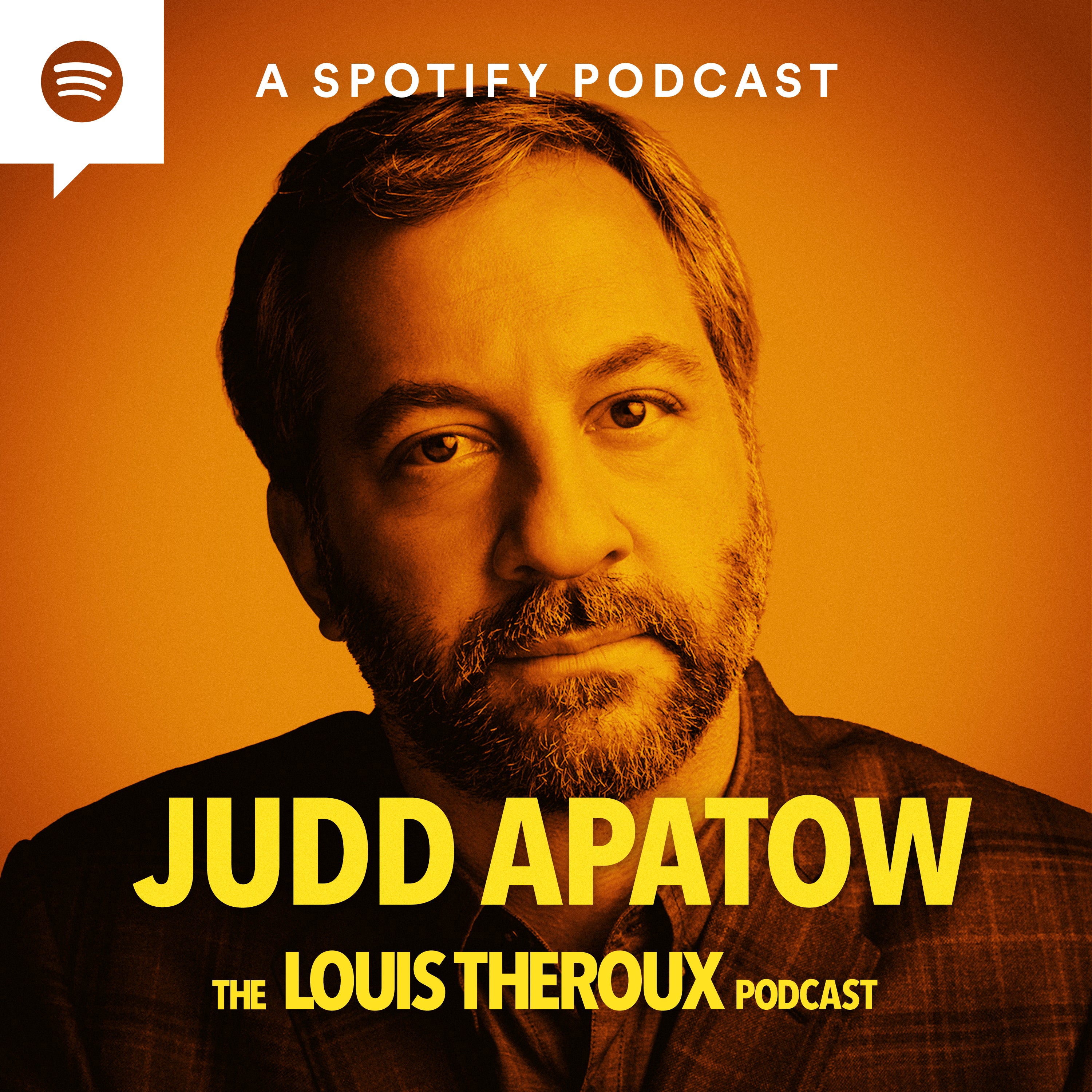
Judd Apatow discusses how he helped shape modern comedy film/TV, why Steve Carell became a leading man in The 40-Year-Old Virgin, how comedy can tackle dark themes, and his critique of today’s comedy ecosystem (including the manosphere/political extremism and the decline of mid-budget comedy movies).
Judd Apatow is a director/producer/screenwriter behind The 40-Year-Old Virgin, Superbad, Knocked Up, Freaks and Geeks, Forgetting Sarah Marshall, and more. He broke through writing for The Larry Sanders Show under Gary Shandling, and has mentored/comedy-cast talent including Paul Rudd, Seth Rogen, Jonah Hill, Lena Dunham, and Leslie Mann (his wife). He also discusses his own upbringing in Long Island after his parents’ divorce.
Apatow says his comedies attack misogyny/“manosphere” thinking by showing men failing with bad “boot camp” advice. He argues comedy movies declined because DVD-era economics disappeared and streaming/young-audience pipelines don’t reliably create new stars. He also criticizes how extremist voices have become mainstreamed.
The 40-Year-Old Virgin’s “worst advice” masculinity boot camp (Paul Rudd’s “MGTOW” vibe, Jay/Andrew-Tate-like nightclub pickup, Leslie Mann’s drunk-women sequence). Superbad’s premise that cocky guys learn women wanted them to be human. Larry Sanders Show’s meta talk-show format and Hank Kingsley arcs. Anchorman’s Steve Carell performance as a turning point for Carell’s leading-man potential.
Written by AI. May contain mistakes.
Discussion about Judd Apatow's early career and The Larry Sanders Show.
“if you've ever seen that, and his wife, Leslie Mann.”
Judd reflects on his career, social media, and the landscape of modern comedy.
“Because we've been corresponding a little bit, very sporadically, and I was thinking, I think we were DMing on X.”
A deep dive into the themes and characters of The 40-Year-Old Virgin.
“What I confess to you, and we can come on to this, was that I had originally wanted very much to be a sitcom writer in the 90s.”
Discussion on the balance of humor and human emotion in comedy films.
“Seth Rogen and Evan Goldberg wrote that But the premise is we're going to try to go to a party, bring liquor, and get the two girls that we've had a crush on all of high school to get with us.”
Learn about the balance between real emotions and high comedy in films.
“but then sometimes he dials into something more recognizably human.”
Understand the pivotal moments that reshaped comedy films in the early 2000s.
“Yeah, I'm just remembering the Steve Carell scenes in Anchorman where he's actually completely subnormal and wouldn't function in any office.”
Discuss the impact of Larry Sanders on modern television and comedy.
“transcribing sketches from Saturday Night Live, figuring out how they work.”
Examine how complex characters enhance comedic storytelling.
“It was kind of a meta show as well, because you dip in and out of seeing his cameras, right?”
A discussion on the humor found in vulnerable moments in comedy.
“The one I watched last night was one you'd written called The Bump.”
Insights into the writer's experiences with shows like News Radio and Freaks and Geeks.
“I don't know what my mental process was.”
Discussion of the challenges and dynamics on the set of The Larry Sanders Show.
“On Freaks and Geeks, we would notice a tension between some of the kids, and then we would just start writing to them having little fights.”
Exploring how personal trauma influenced creative vision in comedy.
“and you were like, oh, well, I would do this.”
A look at how family dynamics shaped the writer’s journey into comedy.
“So to finish my story, so I sent in my spec script to News Radio, and then I got a call from Paul Sims saying, it was an answering machine message.”
Reflections on the impact of parental divorce on personal development and creativity.
“It just shapes your way of seeing things.”
The importance of comedy and television as a personal escape and development tool.
“And then when I met Gary, he had a similar thing.”
Judd discusses his childhood and how his passion for comedy evolved during adolescence.
“I would just watch every talk show and I watched the news and every sitcom.”
Discussion on the ideological shifts within the comedy landscape and its implications.
“How generally stressed are you at just the direction of the world?”
Exploration of the decline in comedy films and the impact of streaming on the industry.
“I mean, it contributes to maybe a healthy cultural immune system, if you like.”
Judd shares his fears and thoughts about participating in comedy roasts and their effects on self-esteem.
“And then you can't break the next generation.”
Judd reflects on the emotional aspects of working in television and the need for approval from executives.
“I remember Jonah Hill said that when he did it, it was so brutal that it almost felt like a baptism, like it freed him from all the ideas of what certain insults would be.”
Judd Apatow discusses the emotional struggles faced in the comedy industry.
“because it is so deeply tied to your self-esteem and your sense of self.”
Apatow recounts a notorious email argument with the creator of 'That 70s Show'.
“There was also a, you've never commented on this, and I remember reading it at the time, a notorious email argument with the creator of that 70s show.”
Apatow shares some outrageous lines exchanged during the feud.
“Your opponent in the feud said, I feel you've made a career out of being a sycophant to Kerry, Jim Carrey, or Shandling or Roseanne.”
Apatow reflects on how conflict can lead to humor and creativity in comedy.
“Who later won an Oscar for the animated Spider-Man.”
Apatow discusses the challenges of humor in a public space versus private life.
“I mean, I certainly have jokes where people look back and go like, should you be doing that?”
Apatow talks about his experience working with Lena Dunham and her creative process.
“I mean I make jokes among friends that I wouldn't make if I was on a podcast awesome.”
Apatow emphasizes the importance of supporting young creators in their projects.
“You'd seen Tiny Furniture and you reached out.”
Learn how Judd Apatow identifies and nurtures talent during productions.
“So as a producer, you have to pay attention to, oh, how does she work?”
Listen to a humorous clarification about a job offer that never existed.
“Judd has a new documentary out called Norm, the tale of Norm Macdonald about the legendary Canadian comedian.”
Explore creative ideas for potential film projects discussed in jest.
“And he has to learn real survival skills in order to survive because he's kind of a...”
A reflection on a memorable comedy scene from an iconic film.

Get the gist, explore an idea or ask about something said.
 Claude
On The Louis Theroux Podcast, what are the key points of this episode?
Searching your listeningAutomatic transcript. May contain errors.
0:04Hello there, welcome back to the Louis Theroux podcast.
0:16For this episode, my guest is director, producer and screenwriter Judd Apatow, one of the most influential makers of film and TV comedies of the last 30 years. Judd is the man behind such classics as The 40-Year-Old Virgin, Superbad, Knocked Up, Freaks and Geeks, Forgetting Sarah Marshall, and many, many more. He's produced, directed, written for, and mentored some of the biggest names in comedy, including Paul Rudd, Seth Rogen, Jonah Hill, Lena Dunham, the Exec Girls, if you've ever seen that, and his wife, Leslie Mann. That's just a small sampling. I could go on and on. In fact, if you've laughed at a comedy film in the last two decades, there's a decent chance Judd was involved in some way.
0:59True. Having cut his teeth on the LA stand-up scene, Judd got his big break working on The Larry Sanders Show for his hero and future mentor, Gary Shandling. We talk about The Larry Sanders Show. It was a show that mattered to me. I wanted to write on it. We talk about that. And for those who don't know, it was a show about a fictional talk show host, Larry Sanders, played by Gary Shandling. But they had real stars coming on playing themselves. In a way, it was a forerunner of extras with that celebrity cameo, but the celebrities playing a kind of sort of mischievous version of themselves, sending themselves up a bit sometimes.
1:39Why am I going into such a lot of detail? Because we talk about that in the show. And also, Larry Sanders' show is often cited as one of the greatest TV shows of all time. and Judd wrote for it. Judd and I also, well, we had a sort of online bromance, mutual fan club. Don't say circle, jerk. Two people can't be in a circle if you think about it. That's just a line. Line, jerk. We were sending messages back and forth saying, I like you. No, I like you. And then we said, come on the podcast, and then a year or two went by and it finally happened. That's the background. We also talk about The Road Not Taken, the tragic loss to TV sitcoms that was the fact that I never wrote for one, but I wanted to.
2:32We recorded this interview in June this year during London's heatwave. I can't even remember it. Seems a million years ago. It's quite cold now. I caught Judd in a break between filming and an edit for his upcoming film starring Glenn Powell, The Comeback King. A warning, this conversation contains the strongest of languages. Languages, English. Language, singular, the C-bomb. Which C-bomb? You've already done this bit. Millie says, I've already done this bit. In capitals, it looks like Clint. Have I done that? And adult themes, all that as well as much else besides coming up.
3:20Get this. When you're with Xfinity, you're already a member. No sign-up, no cost. Score epic experiences from our family at NBCUniversal. Plus movie tickets, discounts on streaming, mobile, and more. Check the Xfinity app every Thursday for exclusive perks and experiences. Only with Xfinity. Now that's the way to start a weekend. Let the magic begin. Restrictions apply. Visit Xfinity.com slash membership to learn more. Are you ever shopping online and suddenly a discount that helps you save pops up? It makes your day, sometimes even your week. Want that feeling month after month? Well, new customers who save by switching their home and auto insurance to Progressive save hundreds.
4:07Cue your happy dance. Get your quote today at Progressive.com. Progressive Casualty Insurance Company affiliates and other insurers not available in all states
4:28Welcome, they're still fussing around. All right, that's it. It's real, we finally did it. We finally did it. Because we've been corresponding a little bit, very sporadically, and I was thinking, I think we were DMing on X. Which I have left. And then I was like, well, I'll pick up the thread. I'll try and figure out how this started, how we first got in touch with each other. And then the messages were all gone. I wiped. What's that all like? Wait, if I wipe, you still get mine? I couldn't see them. I couldn't see them. Interesting. Well, that's good to know that I'm fully wiped. That was very hard to do.
5:03I had a real Twitter addiction. But at some point, the evil is too intense. What caused you to wipe your profile? Well, everyone in my family had been begging me forever to get off of it. Because I like reaching out and talking to people and strangers and you. That's the good part. You get to meet people you admire. Sure. I mean, in the beginning, it really was a lot of comedy on there. And comedians were funny. And then it just turned into just this political hellscape. And then I realized that no one was seeing my stuff anymore. Like I could feel something happened and no one is responding. Were you shadow bad?
5:42I don't even know, but probably in some form. And then I just thought, this has all taken a dark, manipulative turn when it was sold to Elon Musk. And I just thought, I don't think I can be a part of it. So then I looked for new addictions and found them. Did you feel you were your best self when you were tweeting? Probably not. I mean, I certainly was politically very concerned. And I think everything I was worried about happened. You know, all the things that I was ranting and raving with my Trump derangement syndrome occurred. But it didn't stop it. So then did I just waste a massive amount of time?
6:31Probably. My family and people always say, well, the thing you do that makes the world a better place is you make things. And you make comedies. And hopefully that brings people together or makes people happy or gives people a break. So all the time you spend doing that is a waste. And maybe destructive because you're not doing the positive thing you do. But in my gut, I think, aren't we supposed to all kind of start screaming about what's happening in our country and make a lot of noise about it? So it's hard for me to figure out what the line is of how much time to put into it. Or no time. But unfortunately, it means I can't access the cute little flirtation, bro flirtation that we had.
7:16I think it was very Judd-sided praising you. I appreciate that. I think it was mutual. What I confess to you, and we can come on to this, was that I had originally wanted very much to be a sitcom writer in the 90s. Let's talk about that later. In the run-up to this, I thought, you know what? In order to get myself back in Apatow world, I'll re-watch a couple of the films. So I re-watched 40-Year-Old Virgin and Knocked Up. How did it hold up? So good. Oh, good. I never go back and watch. Do you not? Not on purpose, but it just kind of doesn't seem to happen. I'll just watch Step Brothers and Walk Hard.
7:59For some reason, those are the ones. Why those two? I don't know. Maybe because I didn't direct either of them. It may be a directing thing that Adam McKay did Step Brothers and Jay Kazin did Walk Hard. So I was a producer on Step Brothers and a co-writer on Walk Hard and a producer. So maybe there's something about the intimacy of directing that you worry that if you watch it again, you're going to be like, oh, God, what did I do wrong? But I don't know. I probably will at some point. It's striking how many of the themes in the films feel very current. And in a world where there's this obsession with incels, you were this and the manosphere, this was a more innocent time, but you were kind of dealing with some early iteration of what does it mean to be a man?
8:50I'm the opposite of your manosphere documentary. It was kind of like... I'm the person who doesn't know how to grab the reins of manhood. And I love all your documentaries. And they're on all sorts of people, but that hits my button. I feel almost bullied just listening to these people talk. And I feel like almost all of my work in some way has been an attack on it, even unconsciously, like those types of people. I'm the opposite of Andrew Tate. Well, it's interesting. How would you describe, for someone who'd never seen it, what 40-Year-Old Virgin is about? Well, the 40-Year-Old Virgin is about a man who works at a stereo store.
9:34And he works in the storage room. And Seth Rogen works with him. Played by Steve Carell. It was based on a sketch or an improv he did at Second City, which he told me about one day. And I instantly thought, I know exactly what that is. because when I worked at the improvisation doing stand-up, there was a guy there, and one day I was watching television, and I saw the guy who was like a patron there that said that he was a 45-year-old virgin or something. And so when we started writing it, we were like, well, what would you really be like if that had gotten by you? And we kept talking about it in those terms.
10:10This is a real, this happened for real? Well, it was just a guy that I didn't know very well, but I saw him on one of those Oprah Winfrey-type shows, with older virgins. And I thought, well, maybe we could handle this very comedically but also very seriously. What is the psychology of this? That it just got by them and then they got scared and then more scared and feared being rejected and being thought of as less than. We never knew what an incel was back then. It wasn't a word at the time. Yeah. We certainly came at it at a place of being kind of, I can't speak for Steve, but for me it's like a nerdier type of guy, not a lothario and that the idea of lothario's made us laugh like guys who are like cocky and give you advice about how to hit on women to us was a joke yeah uh so in a way it's it's kind of making fun of that kind of uh misogyny and and that's what we were doing with a lot of our comedies will farrell and adam mckay with anchorman it's a joke on misogynistic men they They really enjoyed making fun of arrogant men who are really dumb and shouldn't have any of their arrogance.
11:18Arrogant men in power. Now that's the whole world, in a way. We're all in the manosphere. What's striking, re-watching it was, well, it's about a 40-year-old virgin, but it's actually about guys kind of putting a boot camp together to try and help him lose his virginity. With the worst advice ever. So he's got a little pack, and each one kind of represents a different problem with masculinity. You've got Paul Rudd. He's recently been dumped and he's going to quite a dark place. And he kind of goes mug towel. Do you know the term mug towel? No. Like stalkery? Men going their own way. He's like, I don't need women.
11:53Yeah, yeah. Like they're too complicated and weird. You just need to cut them out. Yeah. And then you've got Jay, who's kind of Andrew Tatey. And his advice is like, you know, you need to go to a nightclub, find the drunkest woman in there and basically pick her up. Yeah. And that's Leslie Mann. Is that how you met her? No, I had met her years before. But she was so funny in that sequence. And it was a sequence we talked a lot about because it is a you should hit on drunk women sequence. And we're like, well, we should just show this go wrong because we think it's wrong. And we're talking about it as the worst thing you can do.
12:31So it ends in a car accident and her vomiting in his face. And I think that's a lot of what our comedy was. people trying to figure things out doing the absolute wrong thing and things going horribly wrong. Yeah, and it's a testament to the magic of comedy that it can deal with dark themes. Like when you subtract comedy from something, sometimes you're like, wow, this is messed up. But actually it all works because you assume the goodwill on the part of the filmmakers. Yeah. Does that make sense? You know that our heart is in the right place. I mean, Superbad has a similar theme. Seth Rogen and Evan Goldberg wrote that But the premise is we're going to try to go to a party, bring liquor, and get the two girls that we've had a crush on all of high school to get with us.
13:17And then literally every single thing goes wrong. And then they wind up at the mall after this terrible night buying slacks with the two girls. And you realize that's all the women wanted was for them to be human beings and normal. and that all of this attitude and cockiness and thinking we should be partying and drinking was the exact opposite of what they wanted. They wanted them to be real people and to respect them. What I'm also struck by is how, you know, so much about comedy is the tone, right? And that actually the Steve Carell character, The Virgin, he's both at times kind of absurd, like it belongs in the realm of high comedy, fairly broad.
14:01but then sometimes he dials into something more recognizably human. Does that make sense? Absolutely, and I think that's a little bit of the style that I'm going for, which is can you be real and grounded and have those emotions, earn them, have credibility, and get to big, high, hard comedy in the same project where it doesn't feel like two different things? How elastic can it be and make sense? So, for example, there's an opening sequence where you've come to a movie, It's called The 40-Year-Old Virgin. He wakes up. He gets out of bed. He goes to take a piss. He's visibly tented out at the front due to a morning glory.
14:41Yes. First big laugh. And his whole routine, you know, the precision of how his breakfast is laid out, everything bespeaks a kind of repression, a sublimation of some primal instinct. He has a lot of time on his hands. He has a lot of time on his hands. Then later on, there's a lot. You know how after a movie you remember some random bit? The bit that stayed with me for some reason was his description of what his weekend was like. Yeah, which is kind of dealing with all the cords in his house and how long they should be. Actually, it was the egg salad sandwich. That's a funny example because that's another one that we shot, which is when we shoot these things, I always shoot a lot of different variations because I don't know what's funny.
15:20And so the one in the movie is Seth tells a crazy story about going to a donkey show in Mexico. It's a very good bit And he shows an iota of self-awareness He goes, I felt bad I felt bad for the donkey It wasn't as cool as you'd think it would be Which is kind of the premise of the whole movie And then Steve starts talking about Making the perfect chicken salad sandwich For way too long And it's so boring to Seth Who starts miming, please kill me Are scenes like that improvised? They're usually written as well as we can write them, we shoot that, then we drift a little, and then we drift a lot.
16:02And then a lot of times, you know, I'm pitching variations, or maybe we're trying variations that we did in rehearsal. And I'm also letting the actors and actresses improvise. And, you know, especially with Seth and Steve, an enormous amount of it comes out of that play. Do you, should we talk a bit about how you got to the place where you made Four Year Old Virgin, which kind of, actually though, was it more Anchorman? There was a moment where you kind of arrived. Is that fair? Well, there was a moment in comedy where a lot of the people that we wanted to make movies with started doing well. So for a long time, I wanted to make movies with Jim Carrey, but he hadn't made a movie yet.
16:46And we would go pitch movies, like, let's make a movie with Jim Carrey, and people would just say no, or we would try to get movies done with Will Ferrell, and we really couldn't get them made. This is what sort of late 90s? The 2001, 2002. And then there were a couple of breakthroughs that weren't our breakthroughs. There was a movie called Old School, which Will Ferrell was in, and then Elf. Right. Old School is a Todd Phillips film. Yes. Who later made the Hangover movies. Hangover sort of bears some little bit of the mark of the Apatow school. Well, I'm also kind of influenced by Todd, who did Old School first.
17:26And he made a lot of great, great comedy. So there was a lot happening. There was Wedding Crashers a couple of years before that, something about Mary. I think that my tone was trying to figure out how can you get a little James Brooks humanism or Cameron Crowe vibe into like a big set piece comedy. But Old School, in a lot of ways, opened the door. And then before Anchorman came out, Elf came out. And so Will had a resurgence. And then when Anchorman did well, people were open to me making The 40-Year-Old Virgin, which happened because I was talking to Steve Carell on the set of Anchorman and noticing that he seemed like someone who also could lead a movie.
18:07Yeah, I'm just remembering the Steve Carell scenes in Anchorman where he's actually completely subnormal and wouldn't function in any office. There's a massive suspension of disbelief. Yes. He just yells, I don't know what you're saying right now. I'm not doing the voice right, but... I love lamp. Is that what he says? Yes, I love lamp. I love chair. No, it was really a brilliantly written character by Adam McKay and Will that Steve Carell took to another level. And there was also a lot of improvisation and McKay would pitch him these lines. and I was just watching as a producer thinking I've never seen anybody as on fire as Carell and everyone was on fire you know Rudd and Dave Koechner and then Christina Applegate and Will but there was something Steve was doing where all of us were like wow this guy is really offering something up right now you know that saying uh I think it's in crimes and misdemeanors if it if it bends it's fun if it breaks it's not funny yes and you would think I love lamp It breaks, right?
19:10He's like, that doesn't take place in a recognizable universe. And yet it works. Why does it work? You know, I think that just Will and Adam created some sort of rules for this universe that allowed that. And that's, I think, the brilliance of them, is they created a completely new style and tone, which people hadn't seen before, which was really the core of their sense of humor. But the funny thing is they had the script, and we tried to get it made for years, and no one got it. We would pitch it and get really close at different studios. And they ultimately would just say, why is an anchorman funny?
19:49There's never been a movie that was funny with a journalist, and they just couldn't get their heads around it. How would you pitch it? I would always pitch it like it's like The Jerk, the Steve Martin movie. I would always say you're overthinking it. It's just an excuse to be really funny and really silly. And I think that Adam and Will were a lot ahead of their time in making fun of the arrogant American man. And to make fun of how unfair and hostile workplaces were. And these morons who look down on people who are much smarter and talented than them and were keeping them down. and there was a real sense that that was the thing to be mocked.
20:36You talked about studying comedy, right? And growing up, you were a comedy nerd. And so you're kind of taking things apart, sketches, transcribing sketches from Saturday Night Live, figuring out how they work. Is there a sort of science of comedy? Do you think there's something you've learned about how it all fits together? I remember going to see Alan Alda and John Cleese discuss comedy. And they could talk about all these theories and Freud and, you know, why you laugh. I don't understand any of that other than in a very instinctual way. I probably could break it down if I really tried to think about it.
21:15But I generally think of it in the simplest terms, which is life is really hard. We all don't know what we're doing. we're trying to figure it out and we tend to root for people as they try to get through it and when the bad things happen that give us these lessons for some reason we find that funny because we relate to it but kind of joke for joke and why do you laugh when you see someone get smacked in the head it is not something that I truly get but I must get it in some way from just watching a lot of it and absorbing it. Like someone who knows how to play an instrument but doesn't know how to read music.
21:55I mean, let's talk a bit about Larry Sanders, because it feels like you were coming up, you wanted to be a stand-up for a while, and then you were in LA with your peer group, and then you start writing for people, Gary Shandling being one of them. For me, the Larry Sanders show was always kind of a benchmark for what TV could aspire to be. Yeah. Something that I wanted to write for when I was living in New York, as I think I mentioned when I was messaging you. How did you come to work on that and what did that sort of represent for you? Well, I started writing jokes for Gary when he hosted the Grammys.
22:34And then we became very close friends. And he did a cameo on the pilot episode of the Ben Stiller Show, which is a sketch show that Ben and I were doing. And then when that was canceled after 12 episodes aired, we shot 13, I was very depressed. And Gary said, do you want to work on the second season of the Larry Sanders Show? And I had been around him when he was writing the first season and casting it and knew all about it. So I worked there as a consulting producer. And that's when I learned how to write about stories. And Gary's theories were all about getting to the core of people. And the whole show to him was a metaphor for life, this idea of the curtain and the face you put on for people to try to be accepted.
23:18But it's actually not what you're really thinking, that people are mainly lying to each other and presenting their best face. It was kind of a meta show as well, because you dip in and out of seeing his cameras, right? Like you're inside the chat show. Sometimes it starts with the chat show ending and then you go into a behind-the-scenes sequence. It was also, I think, alert to kind of the frailties and even like just the dark side of the human condition. Yeah, and you see a lot of it now. Like you could do the Larry Sanders show now about what's been happening with Jimmy Kimmel and Stephen Colbert.
23:59And this pressure to be funny and political. And these people weren't built to do this. They didn't start talk shows to have to oppose the president. And when we were doing the Larry Sanders show, there was a lot of Johnny Carson was retiring. And everyone was switching chairs. And Conan O 'Brien was there. And it was like a perfect moment for Gary to talk about it. And I remember when it ended, there was some talk that he would keep the show going. and have Larry Sanders pushed out by Jon Stewart and keep the show going as the Jon Stewart show. But ultimately, I think Gary had just ran out of gas with doing the show and didn't want to keep connected to his manager who he was suing because they had some business conflicts.
24:47But now would be the perfect time to do the Larry Sanders show. And Seth Rogen talks a lot about how the studio was influenced by a world like the Larry Sanders show. So in a way, that's the perfect way to talk about everything that's happening now in movies and streaming and culture. A lot of the comedy is close to tragedy. Does that make sense? Yeah. I mean, there is a dark, sad part to most of the stories. A lot of those stories are about someone whose ego is so big that in one episode he's dating Sharon Stone, but he can't handle that she's more famous than him. And they ultimately break up.
25:25or the first episode that I ever directed was about him dating Ileana Douglas, and he didn't know if he could date her because she wasn't a good talk show guest. But it was also about, you know, it became about the business and how an older person would be pushed out for a newer person. You know, things would happen in Gary's life, like this lawsuit with Brad Gray, his manager and producing partner, and then suddenly the show would be a way for him to talk about what he was going through. Jeffrey Tambor plays his sidekick, Hank Kingsley. Rip Torn is the producer, arty. For me, a lot of the comedy is in the Hank Kingsley character because he's both an imbecile but also quite sensitive.
26:11And he's constantly on the edge of being humiliated. And also almost like one of the characters from Anchorman. Yeah. There was a bit where he was really hitting on one of the people in the office and the whole bit was about her trying to get people to walk her to her car. And so I think there was also a lot of discussion of hostile work environments and men behaving badly and he was making fun of a lot of that too. And that's why it's a fascinating character because you love Hank Hingsley, but he's also awful and maybe truly awful. The best episode maybe of the whole series was written by Peter Tolan and it was called Hank's Night in the Sun.
26:50and it was about that Larry Sanders can't get to work one day and Hank has to host the show. And strangely, he kills. Like the audience gets behind him and it's a triumph. Because people feel bad for him. They're rooting for him because he's visibly nervous. And so suddenly he just does it and he does do a good job and he instantly becomes an asshole. And he just becomes an egomaniac in the office. He doesn't want Larry to return and then he gets to host again. And the second night, he wants it so bad that he bombs. And then he has to apologize to Larry. And I remember in the scene, he says, I prayed you would stay sick or something like that.
27:34And I'm just a terrible man. And it was kind of the entire arc of showbiz madness in one episode. And Jeffrey was brilliant doing it. And sometimes there would be things in the script that we were trying to fix as writers. and Jeffrey would go leave it. I wanted to see if I can figure out how to make it funny even though it's not working on the page. If I could just find a way to say it or do something physical. And he would. The one I watched last night was one you'd written called The Bump. The Bump, yes. And there's a bit where Hank's at a meeting and he's talking about his dad's just died and he does a little whimper of grief, which made me laugh out loud.
28:16Because there's something so, I mean, it's just weird. I don't know why that would be funny. Like using your grief to get something. Maybe. Or maybe it's just like kind of the nakedness of his, I don't know, his vulnerability. It's just the way he plays it because he's such a ludicrous character that when he's in pain, there's something kind of funny about it. Well, I always remember there was a scene where Hank is so mad at Larry's wife because she's a journalist and she's investigating this product, the Hankercizer, some exercise product that turns out to be very dangerous. like you connect it to your doorknob, but it'll break and hurt you.
28:53And he says, your wife, she's a cunt. I am so sorry. That hypnotist who was on yesterday put a hex on me. I remember there was all sorts of other options about like, this hay fever medication has really done something. And it was just him trying to take back that he called her a cunt. And I remember at the time that was not a word that was said ever. in America. Like here it's thrown around in all sorts of ways, in lighter ways, but in America it was the worst word you ever could say. And him backing off of it, knowing he's in trouble, was one of the great acting moments. Good stuff. Who did you give your script to?
29:36How come you didn't get hired? Okay, so I didn't... I thought, oh, I don't think I'm equal. I'll never get hired on an HBO show. I don't know what my mental process was. I thought that's too high. It made me too high. So Paul Sims, who was one of the original writers, had moved on and started a show called News Radio. And News Radio was a little bit more in the lane of mainstream NBC. But also really unique and really funny. Really funny. Phil Hartman. Yeah, I loved it. Phil Hartman played a very pompous news anchor, almost like an anchorman type. Yeah, yeah, before that, yeah. And starred Joe Rogan.
30:13And Joe Rogan. And Stephen Root. Joe Rogan plays kind of the office The handyman And a little piece of trivia Ray Romano was supposed to play that part And after maybe the first couple of rehearsals Lost the part And they recast it Why? I don't know But maybe he just didn't fit in For whatever reason And then he went on to be the greatest leading man In sitcom history in the United States In a lot of ways Do you believe that? Oh, yeah. I think Everybody Loves Ray is as good as you can do it. I mean, obviously, there's Archie Bunker in there. But I put him right up there with the best people to ever do it.
30:54That show really holds up. And the Joe Rogan character is a conspiracy theorist. I wonder if Paul was like, let's work with Joe's personality. Well, that happens a lot. On Freaks and Geeks, we would notice a tension between some of the kids, and then we would just start writing to them having little fights. We're like, oh, those guys are a little edgy with each other. Let's put that in there. I remember when Gary was doing the Larry Sanders show, his girlfriend, Linda, was going to do an episode where she's offered to be in Playboy magazine. And she plays Hank's assistant. And we were going to have Hugh Hefner on the show.
31:29So Gary's real-life girlfriend played Hank's assistant. Yes. And then while we were working on the show with Hugh Hefner, he asked her to be in Playboy magazine. And then she was in Playboy magazine. And so the whole staff went to the Playboy Mansion for the reveal of her spread. And then that became this kind of meta experience where he's making an episode. And then also in real life, he's dealing with how comfortable he feels about his girlfriend being in Playboy Magazine. Really? And things like that would happen all the time where like they would just fold in on each other. Was it a happy set?
32:04It wasn't a happy set. I think everyone knew something great was happening. it was a set that was tense because the bar was so high but in a way where everybody felt it where I feel like at a place like Everybody Loves Ray Phil Rosenthal and Ray are very centered solid funny guys who like create a world that is supportive but what Gary was doing was a breakthrough it was just ran in a weird way because part of it was on video part of it was on film we had to actually shoot a talk show and it was I think too much work for one man to do. And so I think he was often in a state of, this is going to go badly.
32:45And then trying to make it go better and being really stressed out and not feeling supported when everyone's trying to support him. But it is like, how do you have your work be on the genius level of your boss? I used to always say it was like, if Picasso said, paint half of this with me, and you were like, oh, well, I would do this. And he's like, why are you doing that? Well, I'm not Picasso. I don't think exactly like you. So it was tricky that way because it was so in his head. What was his sensibility? Like could you put your finger on what his unique insight was or his creative vision? Well, he was certainly mining his own trauma and his own pain.
33:29And I think on some level, he was really into Buddhism and Eastern thought. And I think he was embarrassed at his own ego. And so on one level, he wants to be a big comedy star. He wants to be respected and have his own show. And on another level, he thinks that it's really silly to care what people think about you. And it goes against all of his religious thought. And so he's mocking his own inability to walk the walk. But he would say the difference between me and Larry Sanders is Larry Sanders couldn't write the Larry Sanders show. He has no awareness of it. Yeah. So to finish my story, so I sent in my spec script to News Radio, and then I got a call from Paul Sims saying, it was an answering machine message.
34:16I picked it up. He said, I got your script, and I liked it. And so if you're in L.A., come by the office, and blah, blah, blah. And honestly, that was one of the most exciting moments of my life. And then I went by the office and I was like, wow, this maybe doesn't look as fun as I thought it would. Well, there I don't think it necessarily was. I mean, in those years, Paul was a real night owl. The windows were all blacked up with tinfoil. Yeah, exactly, which usually is a bad sign. I took that as a red flag in the middle of the day. But he just was someone that really operated at night. Yeah.
34:55So with the Larry Sanders show, sometimes we would get all the notes from Gary, and I would work with the staff for a little bit, and then give it to Paul, and then Paul would rewrite the whole script himself from midnight till dawn or whatever. And then I think after he left the Larry Sanders show, he created his own work environment, which involved the whole staff writing very late into the night. And this is in the 90s. Yeah. But I guess, I'm not sure why the windows were blacked out other than maybe they worked past sunrise. Presume it's like Vegas, right? You just can't tell what time it is.
35:37Yeah. So it's like. But the show was hilarious. I mean, and as you know, Paul went on to be one of the greats of all time. He did Atlanta. He does What We Do in the Shadows. Yeah. English Teacher. Yeah. And he was one of the people that really taught me when I was there, that's when he was there. And he could not have been better at that job. So talented.
36:05So basically, you grew up in Long Island, New York. Pain and fear from the divorce. Your parents got divorced. I think you knew that. They did. Pain and fear from the divorce became the fuel in my tank. it has led to every success and good thing in my life. Isn't that weird? But I guess that's how it goes. It just shapes your way of seeing things. For me, it was like, I don't think they're handling this well. This is getting really ugly. I think I need to figure out how to handle things, which led to just being very interested in people's point of views and comedy and people who were attacking social norms and power structures.
36:47it was kind of like the whole game fell apart of just adult behavior. And so it made me look for other mentors and voices. And they were nice people who just didn't know how to handle their marriage meltdown. It was before there was a lot of self-help. There wasn't conscious uncoupling. It got dark and ugly in those days. And as a teenager in a very formative stage, it made me very hypervigilant. like oh you better be on your game and figure out how to get a job and work hard because your stability will come from yourself. What did your parents do? My dad worked for my grandfather's record label.
37:30My grandfather was a music producer who produced people like Charlie Parker and Janis Joplin. I mean he had this kind of amazing career in jazz and blues and so he owned a label called Mainstream Records. My dad worked there for a long time and he also worked in real estate development. And your mom? And my mom was a homemaker who was just very surprised that at this stage of her life, she was going to get divorced. She just wanted to just raise the kids. So then she had to go off into the workforce. And so my mom was like a very, I mean, I wish I knew like the psychological way to describe it.
38:08because I don't think she was bipolar, but she certainly was kind of manic, but very hilarious and warm, but then would get really angry, and it was just all over the place, and kind of an unpleasable person in a lot of ways, but also hysterical. And so even now I... She's still with us? She's not. Okay. But even now, in therapy, I'm kind of a self-help junkie. I'm still reading and trying to understand what being around that kind of person did to me in terms of trying to make her happy and trying to understand her and how it affected how I saw myself and saw the world. But certainly it tuned me into a certain kind of neurotic personality that made me the kind of person who was good at working with Gary Chandling or Roseanne or even just understanding people's personalities and point of view because I was trying so hard to understand her that I think I became someone that could write characters because I had paid a lot of attention to it on some level that I didn't understand.
39:18Like, why are people doing this? I think is really the core of it. Like, why is this happening? What's the point of view of it? And then when I met Gary, he had a similar thing. He had a mom who was very difficult and all the trauma we talk about in the documentary about Gary. Your Gary Shandling documentary. So when I would talk to Gary, it was like we spoke the same language somehow. And what was the this? Like, why are they doing this, meaning what? Meaning, why can't they get along? Why are they so mean to each other? Why can't they figure out their financial issues? How come they don't know to stop this so that the kids could not suffer?
39:58Like, why are they unable to resolve this? Because they never did resolve it. I mean, that was the whole thing. They never resolved it. And so there was no divorce settlement. There was no agreement. It just kind of stopped. Like the fighting went on for a decade, and then it just went away. But they never resolved any aspect of it. So it was something that it wasn't like a year that was bad. It was just kind of forever bad. And so that's enough to kind of make you a comedy writer. But at the same time, they were incredibly supportive. So that was the other part is whenever I wanted to be involved in comedy, my dad would drive me at night to all these comedy clubs when I was in high school.
40:44They always just said, you're definitely going to make it. They filled me with a lot of confidence. And when my parents got divorced, my mom took a job at a comedy club seating people. And I always thought, what could she have been paid to do that, to seat people for a couple hours? And then later on, literally decades later, I thought, oh, she must have done that because she knew I would want to have access to it. So there were these other really lovely levels to it that I talked to with my parents about and thanked my mom for later on in life. But in those formative years, it was forming me for sure.
41:21What were you taking refuge in? You did music and comedy. And also the idea of having an obsession that no one had. I liked that no one cared about comedy in my school. There wasn't another kid to talk to about it. You were born in 68? 67. 67. So Saturday Night Live came out in 75, so everything hit. So you're like eight years old. And then Monty Python's kind of going. Yeah, Monty Python, SETV, Saturday Night Live. Like everything's hitting in my formative years. Richard Pryor, George Carlin, Steve Martin. I mean, I used to watch TV from three to like one in the morning as a kid. I would just watch every talk show and I watched the news and every sitcom.
42:05You get home from school and just watch for 10 hours? I literally would do that when my friends were busy with sports. I would just sit home and listen to music and watch TV from the moment I got home until the moment Letterman ended at 1.30 in the morning. Like an enormous amount of time. I mean, kind of from 14 to 17 or 18, I finally got a girlfriend, and I'm sure that slowed it all down. But there were periods where that was very comfortable for me. I loved that there was this thing that I liked that no one cared about at all. There was no one to even talk to about it with. One of my friends a few years ago said to me, I think I finally get what you were doing back then, and watching all those talk shows and all of that.
42:48And I also thought this thing's going to save me because no one else is into it. I think there's a job here, and if I really study and work, I think I'm going to get in. And part of that was because I felt no competition. I think now everyone loves comedy, and it's a big thing. But back then, it really felt like nobody cared.
43:22Get this. When you're with Xfinity, you're already a member. No sign-up, no cost. Score epic experiences from our family at NBCUniversal. Plus movie tickets, discounts on streaming, mobile, and more. Check the Xfinity app every Thursday for exclusive perks and experiences. Only with Xfinity. Now that's the way to start a weekend. Let the magic begin. Restrictions apply. Visit Xfinity.com slash membership to learn more. Are you ever shopping online and suddenly a discount that helps you save pops up? It makes your day, sometimes even your week. Want that feeling month after month? Well, new customers who save by switching their home and auto insurance to Progressive save hundreds.
44:09Cue your happy dance. Get your quote today at Progressive.com. Progressive Casualty Insurance Company affiliates and other insurers not available in all states.
44:30How generally stressed are you at just the direction of the world? You have kids. Wait, whose podcast is this? Because I'm stressed. Are you interviewing me now? Well, you're in the thick of it. You went right into it. Although I know people in the comedy world like that. Like Manosphere people? Yeah, just people that were like, you know, in the old days old comedians were just talking about like airplane food, you know, like cats and dogs. You never felt any kind of political division or that people were in different places and now you feel like, wow, there's kind of different camps of ideology, which is terrible for the space, the social space of it, but also I guess it reflects what's happening in the world.
45:15But the idea of people moving backwards in their beliefs into ways that take away rights or hurt people or diminish people is really scary and troubling. And it's getting mainstreamed in a lot of ways. Voices that you never would have heard on normal talk shows talking as if it isn't weird that they're there. Like who? Well, there's like these preachers that you go, oh, there's Pete Hegseth's pastor. Right, he's called Doug something. And you're just like, why is this guy on a normal show? Doug Wilson? He thinks the women shouldn't vote. Shouldn't vote. And you just go, wow, so we're talking to these people, and now their word's getting out, and other people are thinking, I guess some people, I want to get in with this Doug guy.
46:06And I find that all really troubling. I guess they were always there, and this has always been bubbling up. Maybe it's the exposure of it. But I always wonder if it's growing or just exposed, and it's good that it's exposed because eventually the pushback will prevent it from growing. I tend to think that homeopathic amounts of extremist material can be healthy because you develop antibodies and you can metabolize it in some way. I mean, it contributes to maybe a healthy cultural immune system, if you like. But there comes a time when you're like, actually, that viral load is excessive. Staying in comedy, though, because this is an interesting...
46:54Comedy has become kind of a wedge issue, right? In the sense that you've got a form that traditionally was viewed as, I guess, subversive, maybe progressive a lot of it in direction although not exclusively so and then now it's you've got right-wing comedians or comedians who maybe aren't right-wing but who just feel their job is to take a shot at the status quo which they perceive to be maybe orthodox liberal right that's the confusing part about it is i think if you really look at the stances of most of the people that people think are right-wing comedians, they're progressive. It's a lot of freedom of speech issues, freedom to give people a hard time, to say shocking things, to say things that are the types of things you're not supposed to say, more than a specific ideology.
47:47Even attempting to, there's not an incredibly sharp right-wing political comic. There's kind of funny, angry guys who don't want to be told what to do. Well, did you, how did you, because this became real in the run-up to the last election in the US when I guess it was a campaign rally maybe, or maybe it was the Republican National Convention where Tony Hinchcliffe made a joke where he talked about, he compared Puerto Rico to a large patch of garbage in the ocean, which even isolated out of the context of a bit feels a little unfair, but nevertheless. But it's not even a political stance in a way.
48:24No. That's what I mean is, it's not like people have opinions and they're using comedy in a way to make a case. That's just a shock joke. That's what I find really interesting about it because I was thinking about it the other day. Like, who's got the great bits? Like, who's got the great bit about why Trump needs a ballroom? You know, who has a great bit why we should have UFC fighting on the White House lawn or any of it, like a really good piece of material that's saying you're seeing this wrong, that's thoughtful and hilarious, and you don't really see it. Well, let me throw a quote at you.
49:08We mentioned Todd Phillips, director of The Hangover. In 2019, he said he'd moved away from making comedies because of, quote, woke. And this was the quote he gave. There were articles written about why comedies don't work anymore. I'll tell you why, because all the fucking funny guys are like, fuck this shit because I don't want to offend you. It's hard to argue with 30 million people on Twitter. That hasn't been my experience. I do think there's an experience people have had where they've made edgy jokes that they thought were funny and then people dig up your old tweets and then they kind of think that you're this terrible person because maybe you were trying to be shocking and that people think that the cost of that was way too high because there was a time, you know, 15, 20 years ago where people were trying to push the boundaries of jokes.
49:58And I think that was part of what Twitter was, was there was this kind of fun light thing, but there were other people who were, you know, they were testing it out. And so there were a lot of really smart people making some really bad jokes, but it wasn't like who they were. And so I think there's a lot of anger around that. I don't know about it with movies because I think the reason why comedy films have struggled is because the comedy business was about selling DVDs. You'd make a movie for 20. If it made 40, it would make 40 on DVD, so it really made 80. And when the DVDs disappeared, that really hurt comedy.
50:38And suddenly it became a better bet to make a$3 or$4 million horror movie than to make a$20 or$30 million comedy. and so comedies you know have struggled and haven't been made at the same volume as before you know a lot of people left comedy to go make tv comedy and a lot of the great people uh in our business have just made a lot of streaming material and so you know you get into like a doom loop where young people do their comedy on tiktok or they want to get jobs on streaming tv shows and young people aren't trying to write screenplays and then the studios want old IP, well, that means you're not going to break the next 25-year-old hilarious woman because they're not a giant name already.
51:24And then you can't break the next generation. Then people are like, well, I guess you can't make comedies. If you don't create new stars, you can't. You have to create the next generation. You said DVD sales, but aren't the ancillary sales to streamers enough to offset the loss of the DVDs? I mean, that's, I think, is what the issue is. Why not? Whatever they lost, they don't get back in the same percentages. So, you know, you would make a movie and it would gross$100 million and then it would make another$100 on DVD. And then so these movies would just, you know, be something that they really wanted to bet on.
51:58And so maybe a quarter of that comes back now. Right. It doesn't even out.
52:07What about the Netflix roast of Kevin Hart? Did you watch? I haven't seen it, so I can't speak to it. I was asked to host one of those roasts years ago, and I didn't do it because that's my worst fear, is to find out what people really think of me through roast jokes. I didn't want to be like the host, but you were roasting someone else, but then you also make fun of me. So you would have got a kind of low-fat version of the roast as the host because everyone roasts everyone else. Yeah, so I just didn't want to know. Who was the roast of? Who was it the roast of? I remember that Seth Rogen, James Franco, and Jonah Hill were involved.
52:45I don't remember. But, yeah, I just got scared. For real? Yeah. Like, for real? Like, you haven't seen me near those. And I've watched some of them. I used to watch those Dean Martin ones when I was a kid, and I certainly can appreciate them. But I definitely really, like, fear it. I don't think my self-esteem can handle it. I think I would find out some new wrinkle of a thought about me that I've always feared was what people thought about me and that I wouldn't recover. What do you think it would be? I remember Jonah Hill said that when he did it, it was so brutal that it almost felt like a baptism, like it freed him from all the ideas of what certain insults would be.
53:27And he felt better. Exposure therapy. Yeah, he felt better. I don't think that I would have. It's an extraordinary thing. and you see, what's his name, Pete Davidson. There's jokes about his father dying in 9-11 and a lot of highly charged racial humor. And there's a part of you that thinks, this is amazing. This is the way it should be. There'd be no pain and hurt if these words were robbed of meaning. It's a bit like Scientology, actually. You just sit down and you drill on things that are painful until the e-meter no longer reads. Well, yeah, I mean, I think that's one way to look at it. And one of the issues with, I think, the way everything is distributed these days is everybody thinks everyone's supposed to like everything.
54:13And it's just not the case. I mean, there are people that love the edgiest, most brutal humor that some people find wrong. And there are other people that watch it. And it's brutal for them. And it really bothers them. And I think most comedians would say, well, they don't watch it. You don't have to. That's the debate, I think, which is, you know, are we okay with that or not? I mean, I generally am of the school. There's a lot I don't agree with. But, you know, it is a market and let people decide if they want to see it or don't want to see it. You seem comfortable. So you're comfortable basically calling out bullshit.
54:57Should I put it like that? But this was the thing I liked. in 2001 you had a show canceled it was called undeclared you sent a missive in a christmas card to a fox executive it said i don't know if you just fucked me in the ass again or you just never took it out in 1992 merry christmas judd yeah that probably wasn't the right move but at the time you know i had made a show for fox with ben stiller and it got canceled by a certain gentleman. And then years later, I said to the same person at Fox, I'll come back and do another show, but you have to give me the full season. Just give me the season to find the audience.
55:40And then he canceled me in the middle of the season. And so there was this incredible review, like the top 10 shows of the year. And it was like the first year of the Sopranos. It was like the Sopranos and us. And so I just framed it and sent it to him with that note. I think it's just an example of, You work so hard to make these things. And people have no idea just how much it takes out of you emotionally because it is so deeply tied to your self-esteem and your sense of self. And so the business is so brutal that there are moments when you fully snap. Like you just crack and you send the note.
56:16I wish I could say it's never happened since, that there hasn't been other notes. Maybe that was the worst note. But there are certain moments when you just can't believe it because you're working on a show and there's just a person and they can just go, don't come to work anymore. Tell all those people you like hanging out with, you're not going to see each other anymore starting Thursday. And the amount of rage and hurt, you know, because it's an abandonment, gets nuts. And I've gotten better. You know, I've had a lot of therapy, but I think I was very tired. You think it goes back to abandonment?
56:49Yeah, oh, yeah, yeah, absolutely. And around that time I realized, like, oh, I'm treating these two heads of Fox like my mom and my dad. I need too much approval from them. I'm hoping that they can be, you know, not parental figures, but authority figures that treat me well. And so when it didn't go well, which is the natural way it is on TV, I mean, ultimately, you know, it always ends that way. Seinfeld had that great quote where he said, the show always beats you. You know, you always get canceled or run out of gas. But you just put your heart into it. And that's what I would appreciate about people like Gary, the reason why he's so sensitive and explosive.
57:31Their days he'd be super cold. He just so wanted it to be great. And then on some level, that need is connected to some thought like, I don't exist if this isn't great. This is the essence of who I am. And so it took me a long time to unravel that. I was never as bad as a lot of other people I worked with, but I certainly had a bunch of it, because it's like your fuel as a young man.
58:01There was also a, you've never commented on this, and I remember reading it at the time, a notorious email argument with the creator of that 70s show. Yeah, well, that's similar too, is that my show is about to be cancelled. I was trying to book one of the stars of that 70s show to do a cameo because we were on right after it. Topher Grace. Topher Grace. And so then I heard that a friend of mine who was one of the creators of the show didn't want his actor to be on our show. And it started this email war. we were so bored at our show and about to be cancelled that he wrote a mean note and then I would use the whole staff to punch up these replies and for like a week there were this vicious exchange it turned out he felt sore from something he thought a sketch on the Ben Stiller show had ripped off an unsolicited contribution he'd made so he was accusing you of plagiarism he had a television pilot I mean it's so funny when you look back at like arguments from 35 years ago.
59:09But he had a pilot that was inspired by the grunge era that was like the monkeys with grunge. And a writer on our show had written a sketch called The Grungies. And so he thought in some way that it had been lifted, but none of us had ever seen it. And so he got really upset, and then we got upset because like, well, we didn't even see it, and grunge is popular now. But I think it had more to do with, there's a certain madness to youth to trying to make it. And so in these moments when you have these clashes whether it's with executives or like friends and you're all trying to survive and you're all trying to make it and you just lose your shit.
59:49You just go too far. And the weird thing in comedy is it serves us. The things you say that are so outrageous and out of line is funny. And it's comedy. It's misbehavior. Shall I remind you of a couple of the choice phrases? Sure. Your opponent in the feud said, I feel you've made a career out of being a sycophant to Kerry, Jim Carrey, or Shandling or Roseanne. And when you weren't kissing ass, you were stealing from lesser known comics or leeching off other people's ideas. Get cancer, love Mark. That was to you. And you came back with, well, I'll go back to my life of thievery and leeching. as for the cancer I'll wait till you get it and then steal it from you.
1:00:33I think then later I admit that someone else wrote that joke. I think you said it was a it was a run and he said by the way that was a line by Rodney Rothman. Exactly. Who later won an Oscar for the animated Spider-Man. Did he? Was that him? Exactly, yes. He wrote on Letterman and another guy who I knew was a Letterman writer said oh Rodney might be a genius. Yeah. And at the time I did like the early part of my career was writing for Jim Carrey and Roseanne and different people. It took me a while to find my voice. So I'll just say Mark was right. He then said, die in a fiery accident and taste your own blood.
1:01:07Well, that just wasn't a good joke. And then you said that to Sam Kinison line, you stupid fuck. It went back and forth. Was it real? It was real. Well, I don't actually think it was real. I think it was like he was running that 70s show and I was running my failed show. And I just think we got caught up and distracted. And I think we were amusing ourselves with it. Not that there weren't emotions around it, but at the same time, I think I was emotionally dysregulated, as I've learned from my current therapist, that there's some dysregulation in that. And it led to good comedy. So what does that mean?
1:01:45You know, like a weird email exchange from the year 2001 is still pretty engaging and funny because two guys lost their minds for a moment. I guess that is a roast. See, I said I didn't like roasts. Maybe that's why I don't like roasts because Mark nailed me so hard. Maybe you wish. We have since made up. But Mark's Wikipedia page, it's about one-tenth the size of yours, and one of the main entries is about the feud with Judd Apatow. Well, that may say more about my needs. He had an actually hugely successful show, and I had to make a zillion shows to still not succeed as well as that. So gracious.
1:02:31Have you never had a brush with cancellation? Not over jokes and things like that. I mean, I certainly have jokes where people look back and go like, should you be doing that? But nothing that people are really super mad about. As a comedian, your whole life is talking, right? So if you just imagine 30 years of babbling, how could you not say a dozen things that people think should be career ending? Just based on filling the time. I think people get in trouble because I think we all like say things that are too far to our friends and family Like we have our own sense of humor in the house Like I'll say to my kids keep that in the house and that every once in a while someone forgets they're not in the house and Slip or or they think I think I'm right on the edge of being allowed to say this because this is so weird I can get this by and I think that says a lot about social media too and the collapsing of categories of private and public like X or Twitter sometimes feels like your front room you're joking intimately but actually it is also viewable by almost anyone in the world and stays there forever so all these codes that you switch between of acceptably edgy I mean I make jokes among friends that I wouldn't make if I was on a podcast awesome.
1:03:54And then some people are just so great at it, like South Park, where you may not agree with all of it, but you know their heart is in the right place. And that's usually what I think. I have a sense of people. And so if somebody is awful all the time, that's different than somebody that took a shot and made a mistake. But it's hard for the world to judge if someone has a good heart or is this thing that they said meaningful in a negative way. But people seem to be kind of tired of it. I feel like everyone's going back the other way of being too sensitive about what they're saying. I feel like people are getting harsher because they feel like now they're allowed to a little more.
1:04:35It's part of the vibe shift. Yeah, there's like a little blowback on that. Do you think, you know, knowing some people who've been in your films who I'm curious, you know, we've got Russell Brand on maybe further, further to one side, you've got James Franco, in various ways touched by whether you call it scandal, allegations of misconduct. Do you have any insight into what your role is in this? You forgot Diddy. P. Diddy. You worked with P. Diddy. Thank you for pointing that out. I always want to make sure everyone knows that I sat next to him on the set. He never invited me to a party.
1:05:21we don't know what I would have said. People confuse the parties with the freak-offs. That's true. There's many layers. There's two different things. The thing that more troubles me sometimes is I just go, man, I thought he was hilarious. Really? But it's interesting because he had a real sense of his persona as someone who was wild and crazy. So in the movie, he's very funny, and he's improvising, And he gets the joke of the irrational, out of control head of a record label. And so that's the part where I go like, oh. I wasn't scanning for this guy is up to something that is terrible. I just thought, oh, isn't it funny that he gets this.
1:06:10He's not offended by this joke. He's embracing this joke. if he emails you and says hey uh judd i'm getting out in a little bit i'd love to meet and talk about ideas yeah i don't i don't think i would set the meeting i'm sure i wouldn't set the meeting let me be clear i would not be setting that meeting uh did you read lena dunham's book i haven't read it yet fame's sick it's really good you're in it I hear I just wrapped a movie so I can go in do you think it's nice about you I heard it is nice about me I've gotten calls where people are like are you nice because Lena said nice things about you she said on season 3 you got in touch and said this seems lazy the direction is lazy it's stiff it's too static I guess I was brutal then and she writes he was right I was phoning it in And then it's along the lines of Judd's instinct for, I think, but humor and life are unerring along those lines, something like that.
1:07:18That's nice. Well, I mean, that was a great experience for me with Lena. We just had a very good communication the entire time. You'd seen Tiny Furniture and you reached out. I saw Tiny Furniture and I just said to her in an email well, if you ever want someone to do something with and hurt your career, I'm here. And then I found out that she was just starting an HBO pilot. And so she asked me to come on board. But, you know, again, it's also about these collaborations. You know, my job when I'm in, you know, producer mode is to just try to figure out how to help her figure out how to do this.
1:07:58She'd never done a TV show. She just made super low-budget movies. So we're going to try to get a good budget. But now you don't have a crew of 11. You have a crew of 100 or 150. And a lot of it was me and Jenny Connor working with her to just set up the show in a way that… Staffing-wise? Staffing and just how the whole machine would work. Having seen it not work well for Shandling and knowing like, oh, this is a young woman who's going to write, often direct, star, produce. The dynamic, because usually with Chandling and the Larry Sanders show, you're talking about the internal dynamics of the outfit.
1:08:35Yeah, the whole thing. Not so much the relationship with the network. I imagine HBO are pretty hands-off. Well, they were very positive with her, and they loved the show, and they were very productive. As they were with Gary? Yes, yeah. I mean, when you get rolling with HBO, they're very supportive and smart, and that's why people like working there. But it's still a giant machine, and how do you have enough time to write and act? And, you know, it's almost like a pacing thing. Like how many months before we start shooting? How much can I accomplish? What do I need to accomplish while we're shooting, writing-wise and editing-wise?
1:09:06Like it's a, it'll take most people down. And so I think a lot of our job was to just set up the machine well because she's so brilliant. How could you give her the most time to do what she does and the most support? When people go wrong, how do they go wrong? Um, well, like Lena was very collaborative. So she would always have an amazing staff of people and she liked working with them and she would use their ideas. She had no ego about, I don't want to do that because I didn't think of it. And she also enjoyed the process. And occasionally if she just didn't like a script, even when she was working on, she would just go home and over a weekend write a new one.
1:09:53and she was able to do that where you would read that script and think that must have taken months to write and literally it took her two days. I mean, it was pretty startling. So as a producer, you have to pay attention to, oh, how does she work? How do you create a world around her that is kind of supporting that? Sometimes you have a great writer at the helm, you have to say to the staff, this is all about getting the most out of her. It's not about the writers getting the most done. It's like we want to get the most out of her and then we're going to fill in the rest. And the same with Gary.
1:10:29How much energy does he have to write scripts, to do the rewrites? And we have to step in when he gets tired. I think we're nearly there. How's your energy? Are you all right? I have never been more energized in my life. I haven't had any breakfast. Usually that's what makes me tired, you know, like a French toast, some maple syrup. but all I've had today is a banana and I'm sharp as a tag. What do you think your secret is? I mean, I think I'm in tune with how it's challenging to be a person and I'm interested in all the ways we deal with it. And there's something about it that I think is comic.
1:11:11Like that's how I survive as somebody who is maybe slowly discovering spirituality, but that's the filter which makes everything dealable. And I'm endlessly interested in it. You seem to have figured something out because, I mean, that's your sensibility, but there's also a pragmatic side, which is an ability to recognize talent, to get projects off the ground. I'm a fan. I mean, first of all, I just have always looked at it like, When I see someone, just would I like to see them in something? So if someone auditions, it could be someone I've never met before. I might go, oh, I wish they were in a movie.
1:11:58Oh, let's put them in this movie. We did a table read for this Glenn Powell movie, Comeback King, here in London about a year and a half ago. And we just needed people to read it so we could see if it was getting anywhere. I wrote it with Glenn. and we needed someone to play his roommate. And someone sent us a video of a comedian, this guy named Jin Hao. And we do the table read and he's hysterical. Like he couldn't be funnier. The table read didn't go well at all. It was very like, it was a bumpy ride. But this one guy murdered. So we were like, we're just going to hire him in the movie. We didn't shoot it for another year.
1:12:40But as a fan, it doesn't matter that I don't know who he is. I just see someone and go, oh, I love what that person's doing. And that's about as far as it goes in my thinking. It's just, oh, I'd love to watch that person. You make it sound quite easy. I mean, only from the sense that it's like if you went to a comedy club and you saw eight people, you might go, oh, I love these two more than the other six. But for me, I'm doing the same thing, but then trying to work with them. You would have learned all this if you took that job at news radio. The road not taken.
1:13:24We're back. Thanks so much to Judd for joining and to you for listening or watching. Miscellaneous plug. Judd has a new documentary out called Norm, the tale of Norm Macdonald about the legendary Canadian comedian. Canadian comedian. that's that's very assonant isn't it um who we didn't talk about in the in the interview actually we did a little bit and merely cut it out thanks millie clarify that i was never offered a job at news radio for outro i was never offered a job at news radio did it sound like i was no i wasn't it was it was lightly teased it was mentioned it was tantalizingly dangled but it was never formally offered or informally.
1:14:11So just to clear that up. Do you still have your script? I still have my script. It's on my computer. If you're interested in reading my never produced news radio script, well, say so in the comments and I'll think about publishing it online. It's pretty good. I read it about three years ago and I was like, wow, that's a good script. maybe I would say that I think I'm a tough critic of my own work would I take a job in a Judd Apatow film and who would I play we should have asked Judd I mean there was a small part of me who always thinks like well Judd you're super successful like do you want to see my ideas and I do have a couple you did that with Yorgos though and it didn't go that well I've got an idea for a Will Ferrell vehicle that's kind of a takeoff on Bear Grylls where they realise he's a survival expert and his brand is damaged and then he's out in the field and he realises the producers are trying to kill him because they'll make more money from him dead.
1:15:17That's good. That's good. Millie actually looks like she... I actually think it is quite good. It's good. And he has to learn real survival skills in order to survive because he's kind of a... He's like a fake. and he's got a rivalry with a new up and coming i've gone quite deep into this up and coming it's sort of based on the will that sort of bear grills ray mears duel of the late 90s oh this is genuinely good millie looks impressed i haven't seen that look before it's kind of unfamiliar uh i love lamp i've written this i love lamp i love desk after i did the i love rug does he say that after i the i love lamp bit which jud mentioned i went back and watched that scene again so amazing it's paul rudd dave keckner uh will ferrell is it those three oh and steve carell and um and then they're going in and out of close vocal harmony doing afternoon delight it's so it goes but and also they go between being kind of leery and and sort of gross and then kind of childlike and curious one of them goes have you ever been in love what's it like i'm not really doing it justice watch it we'll include a link to that maybe um in the show notes and uh that will keep you happy for a good two minutes that's it for today thanks so much for watching and or listening i'll see you for another episode next week
1:17:05Get this. When you're with Xfinity, you're already a member. No sign-up, no cost. Score epic experiences from our family at NBCUniversal. Plus movie tickets, discounts on streaming, mobile, and more. Check the Xfinity app every Thursday for exclusive perks and experiences. Only with Xfinity. Now that's the way to start a weekend. Let the magic begin. Restrictions apply. Visit Xfinity.com slash membership to learn more. Life is all about making decisions. Sometimes you make questionable ones, like buying a new TV that's too big for the wall because the electronics store employee was a little too good at their job.
1:17:47Then sometimes you make great ones, like protecting your home and auto with Progressive. You get customized coverage options so you can be sure you have the right coverage. Get your quote today at Progressive.com. Progressive Casualty Insurance Company affiliates and other insurers. Not available in all states.
1:18:10Sometimes, remembering where you started makes you think where you're going. What if there's another way? Another way to breathe? Another way to connect? Another way to create? What if there's another way to grow? Another way to fly. There's always another way. Paradigm, Eau de Parfum, and the new Parfum by Prada.
In this week’s episode, Louis speaks to producer, director, writer and all-around funny guy Judd Apatow. The pair discuss how Judd made Steve Carell into a leading man, how his films attack the Manosphere and why comedy movies are a dying breed.
Warnings: Strong language and adult themes.
Links/Attachments:
Film: The 40-Year-Old Virgin (2005)
https://www.netflix.com/title/70028904
Film: Anchorman: The Legend of Ron Burgundy (2004)
https://www.youtube.com/watch?v=JSkcCIeSTAU (I love lamp)
Film: Superbad (2007)
https://www.netflix.com/title/70058023
Film: Knocked Up (2007)
https://www.netflix.com/title/70059982
TV Show: Freaks and Geeks (1999-2000)
https://www.imdb.com/title/tt0193676/
Film: Forgetting Sarah Marshall (2008)
https://www.netflix.com/title/70084800
Film: Old School (2003)
https://www.netflix.com/gb/title/60023650
Film: Elf (2003)
https://www.imdb.com/title/tt0319343/
TV Show: The Larry Sanders Show (1992-1998)
https://www.imdb.com/title/tt0103466/
TV Show: The Ben Stiller Show (1992-1995)
https://www.imdb.com/title/tt0103360/
TV Show: NewsRadio (1995-1999)
https://www.imdb.com/title/tt0112095/
TV Show: Everybody Loves Raymond (1996-2005)
https://www.imdb.com/title/tt0115167/
Film: The Zen Diaries of Garry Shandling (2018)
https://tv.apple.com/gb/show/the-zen-diaries-of-garry-shandling/umc.cmc.4shqelqq73gir7g8lr8ohue7s
TV Show: Saturday Night Live (1975-present)
https://www.nbc.com/saturday-night-live
TV Show: The Roast of Kevin Hart (2026)
https://www.netflix.com/title/82194570
TV Show: Undeclared (2001-2002)
https://www.imdb.com/title/tt0273028/
TV Show: South Park (1997-present)
https://www.southparkstudios.com/
TV Show: Girls (2012-2027)
https://www.imdb.com/title/tt1723816/
Film: The Comeback King (2027)
https://www.imdb.com/title/tt36593129/
Film: Norm: The Tale of Norm MacDonald (2026)
https://www.netflix.com/title/81611105
Credits:
Producer: Millie Chu
Senior Assistant Producer: Maisie Ellen Williams
Junior Production Manager: Rosie Pender
Production Executive: Francesca Bassett
Original Music: Miguel D’Oliveira
Video Editor: Scott Edwards
Audio Editor: Tom Guest
Executive Producer: Arron Fellows
A Mindhouse Studios Production for Spotify.
Learn more about your ad choices. Visit podcastchoices.com/adchoices