
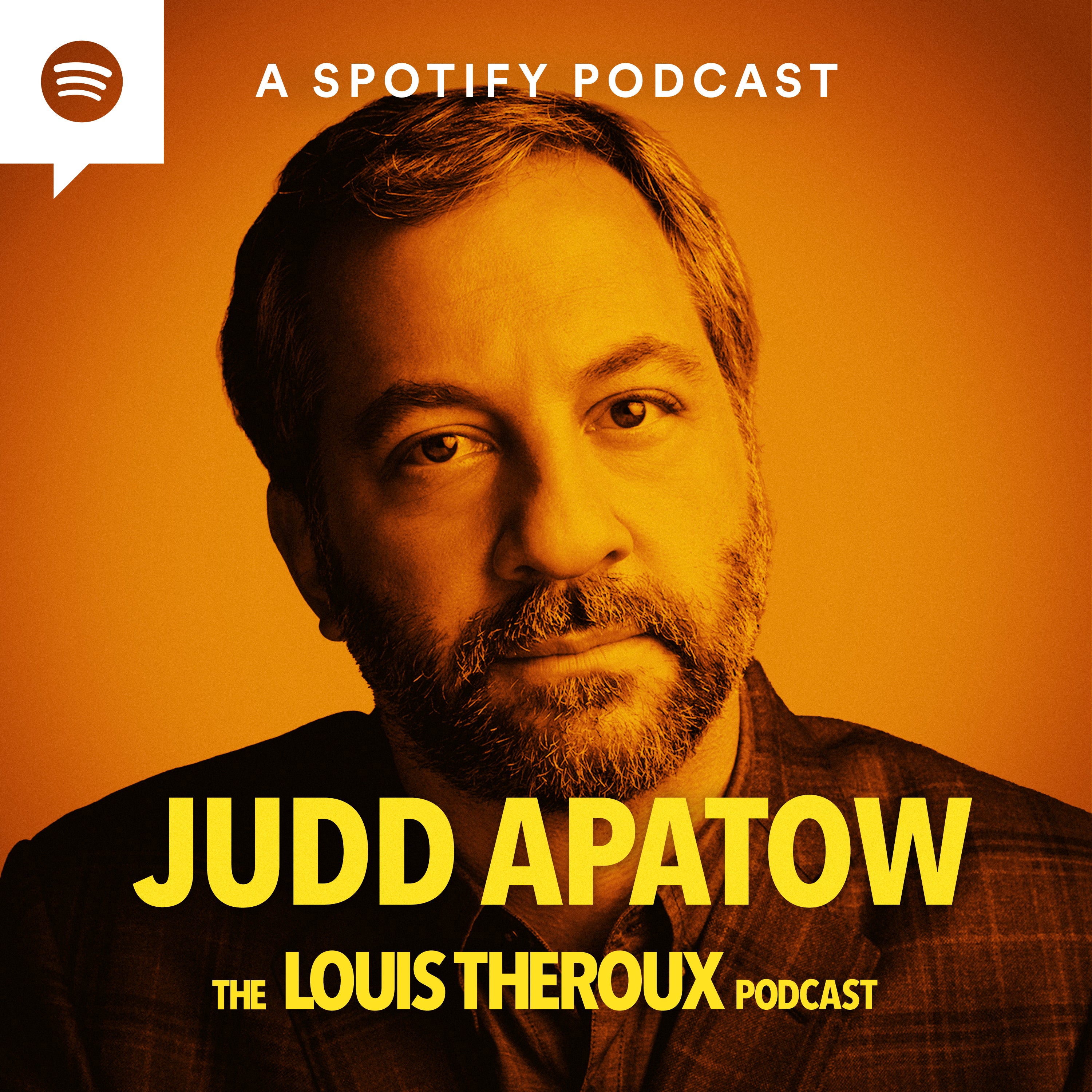
 The Louis Theroux Podcast
13 Oct 2026 · 1h 14m

 Add vo to ChatGPT or Claude to ask about everything you hear
vo listened to this episode to put together the overview and transcript, so there may be the odd mistake.
Jon Ronson discusses his book The Castle and the “culture wars,” framing them as an “unravelling” of men and a broader collapse of older social structures. He argues that online systems reward disinhibition, rage, and increasingly extreme content, turning people into personal brands and amplifying “shamelessness.” He also explores masculinity through a true-crime style investigation and personal encounters.
The guest is Jon (John) Ronson, a writer and broadcaster known for Them (Adventures with Extremists), The Men Who Stare at Goats, The Psychopath Test, and So You’ve Been Publicly Shamed. He has reported by embedding with extremists and has a podcast series (Things Fell Apart). He also discusses his own experiences, including colon surgery for diverticulitis.
“Crisis of masculinity” is too polemical; the real story is narrative and behavioral. Disinhibition spreads when people feel society has “no stake” in them. Algorithms and media incentives push people toward darker, more extreme behavior.
Graham Linehan’s escalating online trans-focused activism and harassment; Ronson’s “castle” encounter with a man running a “101 princesses” reality-show-style scheme; Greg Chisholm, a lawn-care YouTuber whose algorithm-driven “baby”/food-fight videos led to police/SWAT attention and demonetization.
0:04Hello there and welcome back to the Louis Theroux podcast.
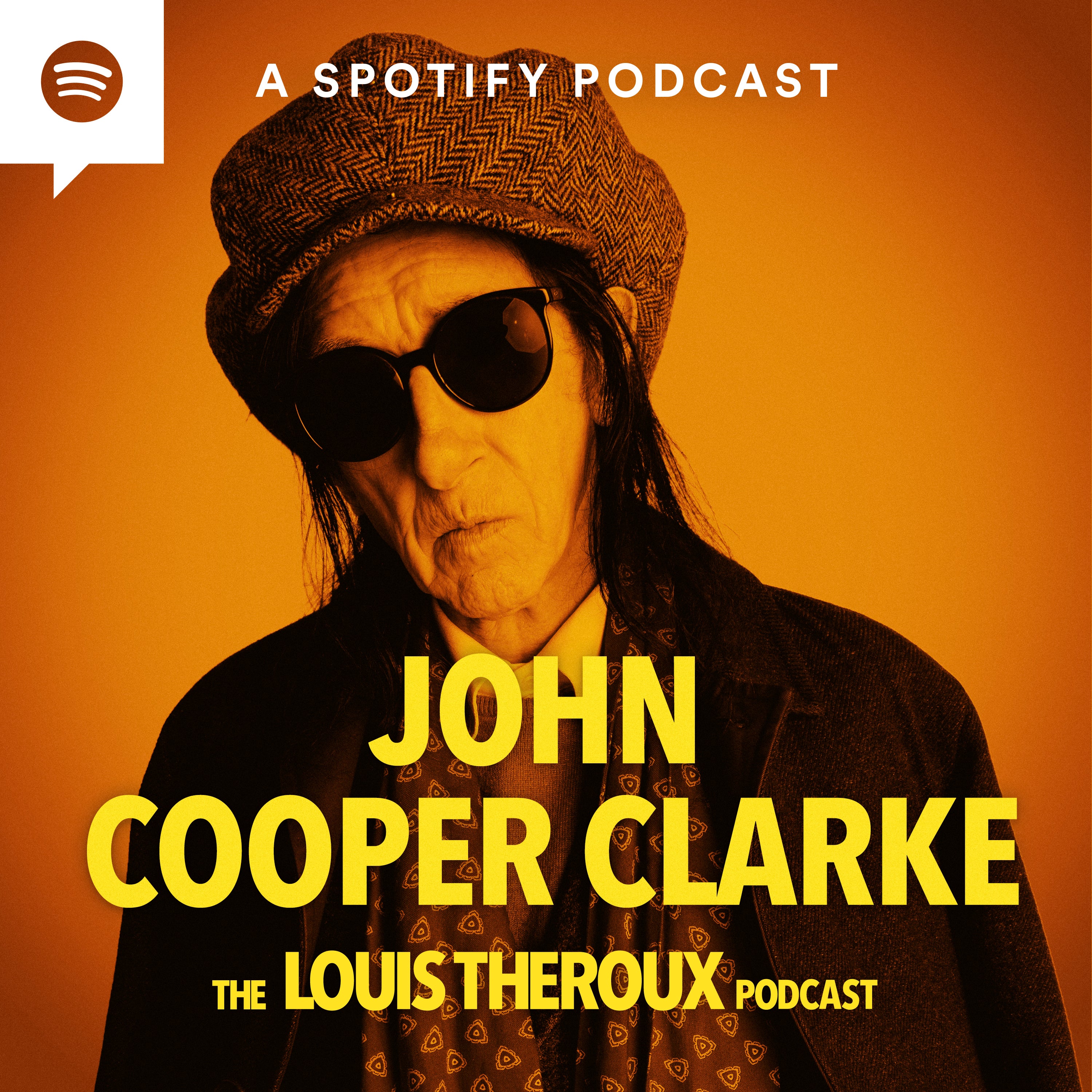
0:17You join me in our brand new studio for the start of a new era of the LTP. Yes, we're going to be releasing episodes weekly all through the year. So if you've ever thought, gosh, I love the Louis Theroux podcast, I just wish there were more of them, today's your lucky day. And for our first episode back, it only feels right that I'm joined by writer, broadcaster, friend, the man who once described me as his professional conjoined twin, John Ronson. John spent his career seeking out remarkable stories from hanging out with the Ku Klux Klan to shadowing David Icke. His best-selling books include Them, Adventures with Extremists, The Men Who Stare at Goats, later a film starring George Clooney, The Psychopath Test, and So You've Been Publicly Shamed.
1:06I've read all of them. Like me, he's also conquered the medium of podcasting. His latest offering being Things Fell Apart, a look into the origins of the culture wars, which I'm sure you're familiar with, and if not, then do check it out. Why am I speaking to John? Well, because he's fascinating. I love his books, his podcasts, his TV shows, and we've kind of been on parallel tracks through the years. We've even covered the same subjects at different times. And there's a few examples of that over the years of us sort of double dipping on subjects, which, you know, let's call it what it is. It can be awkward, which led to him calling me his professional conjoined twin.
1:50And I know it was kind of a joke, but he said that one of us had to die in order that the other should live. He meant no harm by it. We recorded this interview in September this year at Spotify HQ. John was in the midst of a grueling publicity campaign for his brilliant new book, The Castle, which is out now. A look at, well, we talk about this at the beginning of the chat. It's a look at masculinity. I have also made a program about masculinity, a film called Inside the Manosphere. And so once again, there's a little bit of overlap. And in fact, the main contributor to my film, Harrison Sullivan, also known as H.S.
2:29Tiki Toki, is in John's book. A quick warning, this conversation contains strong language and adult themes. All that as well as much else besides, coming up.
3:01helping keep you, your family and your devices safer from online scams and scammers. Whether it's your smart doorbell keeping an eye on your home or a baby monitor watching over your baby, built into BT's latest smart hub 3, HubThreat Protect helps stop the wrong people accessing your personal information through vulnerable devices. And when you're out and about, BT's CyberThreat Protect gives you an extra layer of digital protection on up to 15 devices, including when you're using unfamiliar Wi-Fi or browsing on the move. Search BT Broadband today. Advanced threat protection only from the UK's best broadband.
3:41BT. Protecting brilliant things. Verify at bt.com slash claims.
3:57Nice to see you, John. Welcome. How are you? Really good. How are you doing? I'm so tired. I couldn't be more tired. Are you? Mid-tour. No one wants to hear that at the beginning of an interview. I'm going to do this interview so badly. We're going to wake you right up. You're promoting your new book. We're going to come on to that. You are... Have we begun? This is the good stuff. You know me. This is the bit in the edges. One Michael Moore taught me... If he taught me one thing, he taught me more than one, It was like film before you think you've begun. When you arrive, you're rolling. You go up and then the person comes to the door, the Klan member, in his underpants.
4:39He's like, what are you doing? I thought we were starting at nine o 'clock. Like, yeah, well, we got here faster than we expected. Sorry. Yes, no, you're right. And you have a golden moment. Yeah, yeah, you were right. Bo Grites, one interviewed Colonel Bo Grites. You've interviewed. I've interviewed Bo Grites. Well, can I tell you a story before you tell me this story? Mine's very quick. Okay. And he came to the drawer and said, you've come on the wrong day. And I got shaken and I was like, oh, sorry. And it was a little moment. Well, I don't know if I've ever told you this story, but it's like the late 90s.
5:12I'm driving to interview a friend of Bo Grites' called Jack McLamb. We should set up Bo Grites for the general audience. Thank you, Millie. He was characterised as a militia leader, the real life Rambo. So he was special forces, bluff kind of, was he a general or a colonel? Yeah, Colonel Beau Grimes, that's right. And him and Jack McLambe were like very early anti-New World Order conspiracy theorists. Yeah, in the mid-90s, militia guys. Yeah. So I was making a documentary about Ruby Ridge, about Randy Weaver and this family of white separatists who got into trouble with the ATF and it escalated and escalated.
5:48And two members of the family were killed and it was a terrible story. But anyway, as part of that, I went to see Jack McLamb. And he was right in the middle of nowhere. Like, he couldn't have been further from civilisation. We drove for like nine hours from Idaho to Montana or vice versa. And at one point, we saw a sign that said, winding road next 76 miles. So that's how remote we were. And we finally got to this tiny little white separatist enclave. and I pulled up and I wound down the window and I said, hi, I'm here to see Jack McLam. And the guy said, oh, you're a Brit. We had another Brit here last week, Louis Theroux.
6:32Really? Yeah, because this was right at the heart of when there was so much competition between us. I prefer to think of it as overlap. Overlap, you're right. An overlap that we've kind of kept alive really until this very moment and probably on into the future because the new book, I feel like a real broadcaster because I'm doing a segue. The new book is called The Castle, and it's emphatically not about the manosphere. No. Nevertheless, there's some manosphere figures in it, and it's dealing with what you call a crisis of masculinity. Yeah. Oh, I find that, I don't like that. You don't like that term either.
7:11No. The subtitle is Adventures in a World of Unraveling Men. Yeah. The reason why I don't like that title is because this is like a very strange, weird, unfolding narrative which goes into places that you'd never anticipated. There's twists and turns and, you know, revelations. And when you say words like crisis of masculinity, people immediately think boring, polemical book. And that's the only reason why. it's more like a true crime investigation threaded with these other bizarre encounters often examples of the internet distorting people's behaviour yes Patrick Radden Key for Friend of the Pod called it fantastic and intensely of the moment Marina Hyde she works down the corridor she's part of The Rest is Entertainment oh is that down there?
7:58a rival podcast it isn't a rival their numbers are off the chain it's disgusting she does a podcast have you ever listened to it? yeah It's with Richard Osman. That's exactly right. He can sign 15 ,000 books in the amount of time it takes me to sign 5 ,000, I've discovered. But that's because... Wow, major brag. That's a humble brag. Because you're like, I can't sign as many, but we learned that you signed 5 ,000. I think I did 6 ,000 once. Okay, so there you go. Someone should expose that scam, right? Because a signed book is a... Sold book. That's an expression they use in retail. Signed book is a sold book.
8:35They can't send it back. Yeah, yeah, yeah. Anyway, I was going to say, the reason why Richard Ostman can sign 15 ,000 books is because his signature is that, whereas mine is that. After 4 ,000, your signature probably changes a bit. It gets more like that. It gets more like that. Marina Hyde said, Nobody tells an unbelievable but true story like John Ronson. He's done it again with the castle. Louis Theroux, that fucking guy, said, Ridiculously compelling and wonderfully weird. brilliantly phrased the castle is vintage ronson why is timely and extremely funny so let's talk about how you how you how you came to write um the castle okay so i'm asleep this is a story that crashed unannounced into my life while i was asleep so i wake up and there's a series of texts from joel my son so i read the last text first and it said we left that was completely fucked.
9:31We're okay now. So I read the other text and it turned out that he and three friends had been invited to a party being held by a stranger that one of them had met a few days earlier on Tinder. So they piled into the car, four of them, and drove into the forests of Connecticut to this man's house. And when they arrived, this man's house was a giant, newly built, extremely ostentatious gothic castle. I've googled it. Sometimes in America there's buildings that are castle-shaped. This is really a castle. Yeah. What did you think when you saw the... It was way more impressive than I expected. Yeah, it's got way too many turrets.
10:10It felt like the castle being designed by a man whose brain is going in all different directions because the castle seems to go in all different directions. Yes. And it's not out in a remote area particularly. No, it's on a road of otherwise ordinary modest homes. It's like ordinary modest home, ordinary modest home. Weird fucking castle, ordinary home. Like Gru and Despicable Me. Yeah, like a great garish Disney castle, but indistinctly stranger. So they cross the drawbridge over the moat, passing various relics of war. There's lots of war relics all over the place. and they enter the grand banqueting hall to discover that there's no party.
10:56There's just a small number of equally bewildered young people standing around. So nobody knows why they're there. And then the castle owner comes out and they said, sorry, where's the party? And he said, oh no, I've invited you here for a different reason. I would like you all to take part in my reality show. So Joel said, what's the name of your reality show? He said, 101 princesses. Joe said, what's the core concept? And he said, I'm the king. I'm looking for my queen. And I have 101 princesses to choose from. Then he said to the women in Joe's party, go downstairs to my basement costume room, put on some princess costumes and come back upstairs for filming.
11:38Has he invited them to a party? Or has this been characterized as a first date? No, a party. I've seen the text. Really? It says castle party. He wants women. So does he know Joel's coming or is Joel there as a chaperone? Joel's a plus one. He's disappointed to see Joel. Yes, he only wanted women there. So Joel and Joel's male friend Cement were unwanted. His name's Cement? Yes. Like the building material? Yeah, I think it's wrong to focus too much on the fact that he's called Cement because there's so much other weirdness in the story. But I think he's a goth. Right. In fact, the castle owner had to hastily improvise because there were some unwanted men there.
12:20So he apparently got Joel and Cement to dress up in tuxedos for the filming. And they hastily devised a skit in which the women would reject Joel and Cement in favour of Chris, the castle owner. So Joel and Cement put on tuxedos. The two women put on princess costumes. They come back upstairs. a videographer called Nicholas appears and filming begins but it becomes very clear that this isn't a real reality show not least because the videographer had this other job which was to cut up meat for the castle owner he had a huge slab of meat and only the castle owner was allowed to eat the meat then he's getting more and more annoyed with Joel and his friends for refusing to participate in 101 Princesses he was taking this very seriously and he was very annoyed that they weren't so he kicked them out and that's the end of their story but a couple of days later they came to my house and told me the story and i'm sure you would have done the same thing i went to the castle yeah obviously hugh hefner would be the other comparison well that was the one that i thought of i thought okay this man Because down in his basement next to his costume room, he has an underground hot tub botanical gardens and also like a pole dancing room with cages.
13:47So I thought, OK, this guy's trying to be Hugh Hefner at surely the worst moment in human history to be Hugh Hefner. Unless you're HS Tiki Toki or one of your guys, you can't lord it over your princesses in your castle like it's the 1970s anymore. So I guess that was my starting point. This was a man out of time. I, as it happened, had just come out of hospital, and I was feeling a little bit like a man out of time, all my purpose draining away as I'm supposed to be lying there convalescing. You'd had quite serious surgery. Yeah. Abdominal surgery? Colon surgery for diverticulitis. So presumably the diverticulum or diverticulus is a part of your colon?
14:27Colon, yeah. And it gets infected, then you have flare-ups, and it's agony, and you have a few of them. But in America, the American healthcare system is so bad. But one good thing that comes from it if you've got insurance is that you can do elective surgery. It's amazingly bad and amazingly good. Yeah. That's the weirdness of it. Yeah, that's exactly it. So they cut out my foot of colon and I'm fine. How did that kind of prime the pump for you to go on this investigation? Well, I'd noticed I'd been like convalescing by sitting on benches, trying to think up story ideas, because that's like the only way I can get self-esteem is if I'm working on a story.
15:08And I wasn't coming up with anything and I would be overwhelmed by these like terrible sort of existential thoughts. Like I'm just a man sitting on a bench. And I thought there was like a weird parallel between me and the castle owner. We were both like rattling around looking for purpose in our lives. at a time when I think a lot of people are also feeling under purposeful and a lot of people all of their self-esteem is wrapped up in their work and AI's come along to rob us of our jobs and to try and convince us that we want a world without work and all the odd structures are collapsing that kept people sane and and so I thought there's a weird resonance between me and this castle owner who by right should never have known of each other's existence but now I'm driving towards his castle every time my car hits a bump it kind of tears at my surgery scar because i'd only been out of surgery like 10 days or something and i'd like like this i like some quasimodo at notre dame or something um how old are you i am 59 how are you you're like 57 56 i just turned 56 feels quite old doesn't it being in the upper 50s i mean that's sort of I'm sure that inflects or colours one's worldview a bit as well.
16:23Yeah, and I think I wanted that. It's a time of life when you maybe feel slightly unravelled. Yeah, and all of that was playing into me wanting to write this book. I think that like all of my books in a way, even when I'm barely in them, are like little memoirs. Like Them, I'm having an adventure and I'm like a young guy. Them is your brilliant, it was your first real chef d 'oeuvre or whatever, where you went on an exploration of conspiracy theorists to try and find the smoky room where all the decisions are made. Illuminati, lizards, whoever they may be. And it culminates in me sneaking into this secret club called Bohemian Grove with Alex Jones.
17:00With Alex Jones, not the one show presenter, but the American conspiracy theorist. Yes. And to pick up on that, your willingness to own the part of you that resonates with the weirdness that you explore has always been part of what distinguishes your work. You like to go native a bit. Yeah, and I always think that, you know, you have that yearning to do it too, right? I think I do. I would feel dishonest not to acknowledge that. No, the worst type of person who does the kind of things that we do are the ones who see themselves as a representative of a hierarchy. Like, I'm going in, I'm perfect, these people are crazy.
17:39You have to, like if you're going to be scrutinising other people's weirdnesses and absurdities, you have to be willing to do it to yourself. And I've noticed that it's happening more and more in your work too. I appreciate that. I think it's always been slightly the case. And I think perhaps maturing as a journalist is allowing yourself to be okay with, what is it, being okay with exposing the bad parts? Your own weaknesses. Maybe that's a good thing about getting a bit older. Somebody said, I can't remember who it was, maybe it was like someone who was balding, maybe someone from like Blur, if anyone from Blur, somebody said this anyway, that they were losing their hair at the exact same time that they were getting to an age when they didn't care that they were losing their hair.
18:27Right. Yeah. So maybe when you get a bit older, some of those old vanities and the things, the self-protections kind of go away a bit and you can loosen up and be more open about your weaknesses and frailties. Plus, you know, because of things like the mental health, self-advocacy movements and so on, people are like a lot more open and willing to talk about their frailties. And I think ultimately, you know, it's like a very positive thing about the way the world is turning. Continuing on from the idea of self-exposure, you also interrogate and explore intimate relationships, friendships, let's be specific, that you've had.
19:02There's a chapter, and this has had a bit of pickup about Graham Linehan the writer of Father Ted Black Books Brass Eye, IT Crowd many other things, a brilliant, brilliant comedy writer how do we get into this do you think? basically he became very focused on the issue of trans people to the point it took over his life. Yeah, okay so I should explain, so the castle half the book is me and the castle owner getting into an increasingly odd relationship where he says he has two murderers on his payroll called Carlos and Brandon who are going to find me if I ever write anything negative about the castle and they've only just come out of prison for killing somebody and I don't want to make them angry.
19:50So you know, all of this weird stuff's going on but I use him to bounce off to like other personal stories. About unravelling men. Yeah, and one of them is Graham because I really want to try about i think honestly i think graham kind of epitomized two things that i noticed in the culture that i thought were very important to think about one was disinhibition um the idea that if you start to think that society doesn't have a stake in you which graham clearly started to feel then he will respond in kind and he'll the analogy I use in the book is that it's like he's kind of ripped off his face and just allowed his ears to run wild where anything goes he can say anything like any social niceties just don't matter anymore and I noticed a lot of people doing that but Graham was doing it a lot so one night I was in Edinburgh on a tour and somebody I was falling asleep on Twitter.
20:53Somebody said to Graham, why is John Watson still following you? And then I fell asleep and then when I woke up the next morning... Why is he still following you? Given what? Given the fact that you've, you know, become this single issue person. As in John shouldn't be following you because you're toxic and... Yes, follow please. Which isn't that much of a thing anymore, but it was for a while. So one night in 2019, after Graham had been doing this for a couple of years, somebody tweeted that. And then I fell asleep and I woke up the next morning and I saw that Graham had replied, the reason John Ronson still follows me is because he thinks you're all assholes, meaning his critics.
21:28So he'd recruited you to his cause. Without, as I've had a conversation about it, yeah. So the one mistake I think that I made in this situation, when I look back on it, and this is like the one thing I did wrong, I messaged back, not like an open public, but I replied. So it was visible to people who followed both of you. Yeah, I don't think that your critics are assholes. And I think you've been acting like a bully. And then his, you know, 30 seconds passed a little bit when you stub your toe. And it's like a moment before the pain starts. There was like a moment. And then Graham replied, how dare you?
22:04And then eight years later, it's just been nonstop. You regret saying it publicly. You wished you'd said it privately. Yeah, and I said that to him and he said, well, it wouldn't have made a difference. I'd have been just as annoyed if he'd said it privately. So I guess it wasn't that big a mistake. It's fair. It should be acknowledged like Graham, as a result of what he'd call his activism, his advocacy, kind of exploded his life. Yeah. He probably would say he had some sort of a mental health emergency. He writes in his own memoir about how he would be upstairs fighting with someone on the internet and then he would hear his wife and children laughing downstairs.
22:45And in the old days, he'd have gone downstairs to join them, but he couldn't bear to stop the fight. So he would stay upstairs and continue to fight. And that felt like such a kind of modern sickness that any one of us could succumb to. But we pull ourselves back. but he didn't so this was all the reasons why i wanted to i was just genuinely very interested in like what had happened to our old friend graham and and um and then for eight years like it would be you know there were days when he would hurl you know these insults at me publicly like 50 times in a day yes um but my my interest was his his behavior was the was you know the way the way he expressed himself what had happened to him in his inner life those were the things i was interested in he's clapped back in a telegraph article did you read it i did not why not because i'm on tour and i'm trying to manage my stress levels right it's stressful i mean in fact you talk about in the book how stressful it was every time you started to write it you had to stop because it was making you stressed levels were spiking but then i thought well the only reason like i wanted to write about disinhibition in in the castle it felt very like like like the right place for the book to go to and i thought well who am i going to write about and i thought i could write about manosphere type men in this way but i don't know you know louis done his documentary i can't beat that stop it you hadn't seen that was late he just threw that in to butter me up i did i saw you coming so so i thought well graham you know graham is the right person for me to write about, particularly because I'm so much, he's made me so much a part of this story, because he's like constantly, constantly posting about me.
24:33And I thought the only thing that will stop me from writing about Graham in this context is fear. And when we're led by fear, what me and you do, then we lose our integrity. I know you said you hadn't read, should I quote you a couple of small bits? I won't if it's going to completely freak you out. Well, if it's, I guess. It's fine. He's got one main thing, right? John never once asks in all those pages whether I was right. Dot, dot, dot. Are men women? Are women men? Should men be in women's prisons or their sport? Should children be castrated in gender clinics? There's two things with Graham, it feels to me, that have been elided.
25:14One is his beliefs, which I think, actually, if you sort of put your finger in the wind, a lot of people might share, right? Certainly, if you look online, they don't feel massively out of the mainstream, whether you believe them or not. But the other is his behaviour and the obsessiveness of it. Do you want to take up Graham's invitation, I guess, is the question. Well, Graham... So the reason why I wanted to write about Graham is because I think Graham, because of his behaviour, is in a totally different, you know, sort of strata. So I did an interview with him, which I've used in the book. And then about a year later, I tried to do another interview with him for Things Fell Apart.
25:55And that's when we had this conversation. Things Fell Apart, your BBC podcast series. Yeah, because he was kind of the reason why I wanted to make the whole series, because I was trying to understand why people were losing themselves in such a dramatic way. So he said to me, I'm not going to do this interview unless you say that two plus two equals four, whatever his words were. And I said to him, Graham, I can't, no, I'm not going to submit to your purity test before you agree whether or not to do an interview with me. No journalist would do that. And I said to him, if you want to ruin a journalist's life, make them do a purity test.
26:31And then once they've done it, tell everybody, because then that completely undermines. We do, I mean, obviously you should say in public whatever you want to say, but I think me, you, there's a few of us out there in America, John Wilson and Nathan Fielder who's about to bring out what looks like a brilliant documentary about Elizabeth Holmes. And we do something different to what pundits do. We lose ourselves in a story. we dive in we spend forever thinking about the nuances of it and the characters and what it means and the twists and the turns and the hypocrisies you know and then we emerge with a really hopefully good interesting long-form piece of narrative non-fiction that is the opposite of being a pundit of just like blaring out and i think if i'm a pundit like if i splurge out opinions a i'm shit at it and and so why do something that you know good at it's like asking me to be a hairdresser or something.
27:32And B, I think it undermines what we do. And my whole point, you know, and things fell apart. What people like about my work is that I'm not part of a tribe. And I think it's totally fine. There's not many of us that have that attitude. But I think you should, those of us who do have that attitude, you should just let us do what we do well and don't force us into doing something that we do badly. You know, the way I try and work is that I'll go out into whatever adventure I'm having with no preconceptions, just try and be like a sort of feather in the wind of the story and not, you know, forget about my values, forget about it all.
28:14and then get all the information, have the adventures, go where the story takes me, be a twig in the river of the story and then come back. And when you're back at home, that's when you start to make sense of it and that's when your values come back in and that's when you realise what your morality is and that's how it works. I'm not going to blur about anything that I haven't spent months doing my own kind of story on. I love that you mentioned Nathan Fielder he was on my mind a bit partly because of this Elizabeth Holmes documentary that he's just launched which sounds amazing yeah are you a fan?
28:53oh yeah I was watching him last night which one? Finding Francis that might be his best piece of work I've got 15 minutes to go I fell asleep you must have been very tired no reflection on the quality no no no I was loving it but I thought I'm falling asleep here I'm not going to try and watch the last 15 minutes. So don't tell me if he finds her. How would you characterize what Nathan Fielder is doing? He kind of does what we do, but he brings like other things into it. He brings the kind of Werner Herzog sort of artistry to it. And also a kind of prankiness, but it's a weird prankiness. It's a little bit like Chris Morris, but it's sort of slightly more surreal.
29:33They're like pranks that don't really have a point. The point is not immediately apparent. He goes into these... He hates being called a prankster. Right. We should probably retract all of that. I had John Wilson on. He's like, oh, don't call Nathan a prankster. He does not like that. And I think that's reasonable because parts of it are more about almost art, some sort of avant-garde performance piece, right? Yeah, yeah. You know, Nathan's probably still best known for Nathan For You. Yeah. Which reminded me a tiny bit of, wait for it, the Ronson Mission. Oh. Which you'll remember because you made it in 1993, your first TV outing.
30:12Yeah. Why do you say it like that? Well, I'll tell you exactly why I said it like this. You were one of the few people who liked it, I believe. I find that hard to believe. Do you know, it's hard to find it. I'd say, like, listeners and viewers can check it out. I don't think they can check it out. No. It's been scrubbed from YouTube. Yeah. Why? Oh, I paid a foot. No, I'm kidding. I don't know. I've certainly never tried to get it on YouTube. It was kind of a prank show. Prank show does it a disservice. Yeah, although some of my favourite moments were pranky moments. Actually, I did something that Nathan Fielder then later did, and now I'm thinking about it.
30:53I wonder whether he was... Come on, which bit? Well, we should say you'd come up through unconventional... Am I right that you didn't go to university? Well, I did two years and then flunked out. And then you got a job. I guess columnist is a timeout. basically doing humorous columns. I was very, like 23, 24. Did you know you were a good writer? Well, when I was at college, my teacher was David Cardiff, who was married to Lynn Barber, who was like the greatest journalist of the age. Certainly she was the definitive profile journalist. Yeah, quite scabrous and elegant and funny. She could spend an afternoon with someone and she had no compunction about skewering them.
31:34Yeah. In a way that at times certainly could feel to the subjects, I'm sure, quite cruel. The moment I remember, and I'm not even sure, it's just the moment I remember, I can't say it's like her best moment, but I remember she asked Gerry Adams if he had a favourite funeral. Really? Yeah, so that's kind of the kind of places she went to. But we were like so impressed with her. She was like Dorothy Parker, you know, so elegant and scabrous. In her writing or in her person? Just the whole package. Did you meet her? A couple of times because her husband was my teacher and I've met her subsequently.
32:08And he took me for coffee and he said, you're the only person who writes for the college newspaper who knows how to write. Really? And I think I've always thought that's the moment that cemented my life. Interesting. Yeah.
32:36This episode is brought to you by Boots. We're in the era of optimisation. We're being encouraged to max everything in our lives for health reasons, and it can feel overwhelming. I'm not impervious to it. I feel like I should take massive steps in order to overhaul my health, and then you get paralysed. My advice is don't make the perfect the enemy of the good, And that's a simple truth that Boots really understands, that taking little steps can generate huge results. For example, as autumn rolls around, you might start to feel those busier schedules and shorter days are catching up with you. But doing something as simple as taking a proactive approach to your health and well-being can help.
33:19Boots can help you take those first steps, bringing together pharmacist expertise, healthcare services, trusted advice, and everyday well-being support in one place. helping with everything from seasonal health concerns to everyday health questions. So go on, give it some boots. Visit boots in-store or online at boots.com to discover how you can stay well and feel more like yourself this autumn.
33:55your writing i mean i think what's perhaps under acknowledged about your writing is the technical aspect like people are you obviously you get to great stories but really your the The clarity of your prose and your ability to unfold a yarn or unfurl a yarn is really striking. And I know that's developed over time as you learn more to do it. I'm wondering, did you have models that you were following early on? Yeah. All the people I liked the most back then were people who could put a whole load of ideas into a very small number of simple words. So Kurt Vonnegut, Slaughterhouse-Five. That's a terrific book and wonderfully simply written.
34:40Yeah. He'd worked in advertising. So it's said that writing advertising copy had partly honed his craft. That really makes sense. For people who don't know Slaughterhouse-Five, it's about a young soldier who survives the firebombing of Dresden in the Second World War. An American soldier, yeah. And is then kidnapped by space aliens and taken to a planet called Tralfamadori and displayed at a zoo with a porn star called Montana Wild Hack. And the aliens teach him how to go back and forward in time so he can be at any point in his life at any moment. And I'd say it's all, because that makes it sound a bit Douglas Adams-y, maybe it is, but it's really about, as well, about Kurt Vonnegut processing the trauma of having been involved in this atrocity.
35:26Yeah. Because he was a veteran himself and he'd gone through all of that. Yes. And I don't think Billy Pilgrim, the character, was ever. One of the questions in the book that's left unsaid is, is he fantasizing being on this planet? Or did it really happen? And obviously, I think it's kind of a form of PTSD. And so, yeah, I was really inspired by that. Raymond Carver, for a similar reason, like very simple sentences, but with a hell of a lot going on underneath the surface. His short stories. Had you read those in Cardiff growing up? Because he kind of came to fame late in life, having been a poet, serious alcohol issues, and then fell in with, is it Gordon Lish, his editor?
36:11And then together they created this lapidary prose style that involved leaving everything out. Yes. Everything is just... As did Vonnegut, I think. elliptically described. Yeah. You know, this is one of the main reasons why I wanted to write So You've Been Publicly Shamed, my public shaming book, because I noticed that with... So the main character in that book was this woman, Justine Sacco. And she tweeted an ill-advised tweet. She was like the patient zero of public shaming, that nothing like this had ever happened before. And she's on her way to Cape Town and she tweets, Go to Africa. Hope I don't get AIDS.
36:50Just kidding. I'm white. and got on the plane, fell asleep, woke up 12 hours later, turns on her phone and her phone just like exploded. The first text is somebody saying, I'm so sorry to see what's... Somebody she hadn't spoken to since high school saying, I'm so sorry to see what's happening to you right now. That was the first thing that she saw. When I first saw that tweet overwhelm my timeline, my first thought was, you know, oh, somebody's fucked. And I kind of put the pillow behind my head and I watched. But then it didn't take me more than a couple of seconds to think, Like, you know, this is a bad version of this literary tradition that I really like.
37:26She's leaving it all unsaid. She's leaving unsaid her own privilege. It's like a kind of, a little bit like Randy Newman. We call it irony, don't we? Yeah. It's the one word version. And what I noticed after that was that people were so scared that that would happen to them, that everybody was over explaining everything. And that's my least favourite type of writing. I want there to be a hell of a lot unsaid. I want the writing to be a kind of pact between the writer and the reader, where the writer leaves things unsaid because they trust that the reader knows what's going on and can fill in the gaps and so on, which is what I learned from Carver and from Vonnegut.
38:07And yeah, that's what I was trying to do. There's a danger with irony is that you get taken at face value, you get taken literally. Which is exactly what happened to her while she was asleep and oblivious. So, yeah, I was doing all of that stuff. And so for some reason I got offered the column in Time Out and I did it for a few years. And then I got a call from the BBC from Deaf 2, which was youth television. I think your column must have developed quite the following, right? Yeah, I think it did well. I remember it won Columnist of the Year. Oh, my God. Columnist of the Year. I won Columnist of the Year.
38:41I was 25. And I'm celebrating my win. and I'm standing in this crowded ballroom, like at one of those big hotels on Park Lane, and someone came up to me and whispered in my ear, how does it feel to have peaked at 25? And then just vanished again into the crowd. Wow. I know. No idea who that person was. Well, it couldn't have been further from the truth. Yeah, well, Janet Street Porter then offered me my own series on Def 2. It was just before the little cameras had come along, the little... PD-150s. Yeah, and so I had to drive around in a massive truck with a big camera and boom and, you know.
39:24At the very beginning of your career, did you have to do that too? Yes. I think it's good to acknowledge the technological substrate in this and many contexts, the fact that certain products, pieces of culture look the way they do because they were printed on a printing press or a manuscript. In this case, it's like we had huge cameras. You needed a dedicated camera person, sound recordist, which isn't always the case. And certainly at that time in the 90s, you had tapes that lasted about half an hour. And every half hour, someone would be in the middle of a kind of racist rant, let's say, covering the Ku Klux Klan.
40:00You think like, we're getting it. This is sort of what we needed for the segment to work. And then you'd hear, I got two minutes. You know, like basically the tape was about to run out and then you had to change it. And then it would kind of mess up the flow. And for some reason, at the age of 25, I'm giving my own TV show on the BBC. It's like a dream. And I hated it. And I remember the director said to somebody, I just can't do anything to make John happy. And it's so weird looking back on it now because what a break I was given. What a gift. You must have been excited when they proposed it.
40:35I think I was nervous the whole time. Because I've said before, when I was offered my series, they said we've got four episodes it's called weird weekends i was like i don't like it's called louis through's weird weekends i said please let's not call it louis no one knows who i am that's ridiculous feels overweening and also why are we doing four like couldn't we just do one and also why are they 50 minutes yeah that seems too long so i can relate to the sense of i don't have that level of confidence that any of us have a clue how to do this i don't think i do like this is folly. Yeah well yeah and especially in that form like you turn up at somebody's house with all of these people and you're setting up and I'm asking questions I'm not directing it so I'm not making the choices about the storytelling and and I just thought this is not what I'm doing yeah yeah I'm a writer and suddenly I'm an actor and I'm not an actor I can't be in front of the camera.
41:28Had you pitched it to them did they say would you be interested in doing something and then you came up with ideas no it's just really weird so i had a teacher at college called frank hatherley and without telling me he approached when he saw my time out column he approached the bbc and said this could be a tv show so then janice street porter calls me in and i'm sitting there and janice street porter goes i think it's a brilliant idea and i'm sitting there thinking i have no idea what the idea is i don't know why i'm here i feel out of my depth i feel like events are moving fast and I don't really know.
42:05So right from the beginning, I felt uncomfortable. What I wanted to say is, can we all just stop and think about this? So for the whole making of the series, I was miserable. I felt like it wasn't right. And it was only later on when they brought out these tiny little cameras and I got to be the director. So I got to make the storytelling decisions. And that's why I started directing myself. We were in a long dogleg, a very enjoyable one. Part of it was Nathan Fielder and to what extent the Ronson mission foreshadowed it. Did you say you thought there was some idea that overlapped? Yeah. So I did a couple of...
42:41So one of the things I did was a celebrity charity pop video called... And this was a prank. I wrote the song called Let's Stamp Out Crime By Any Means Necessary. This was right at the time when all the celebrities, like, you know, We Are The Worlds were coming out. and we got all of these celebrities to sing this viciously right wing. There's a lot of bad people about. Really? Yeah, let's clean up the grime by any means necessary. So that was one. Which celebrity did you have involved? Like people from Brookside, Nicholas Parsons. I do remember Nicholas Parsons coming up to me and saying quietly to me, he's dead now, I can see this, right?
43:22He said, I'm so glad that, you know, you're saying what everybody's thinking. Really? Yeah. And the people from Brookside. Oh, my God, that's a shock. The beloved translation for the younger people. He was part of a comedy double act. Then in the 70s and 80s, he presented Sale of the Century, the quiz show. And then for many years, was mainly known as the presenter of Just a Minute. Join us as we play Just a Minute. I'm now feeling some guilt that I mentioned that. He probably was just trying to put you at ease. At ease. So, yeah, so that was where I remember the Brookside. people. I heard later on that they said if we ever see John Ronson again we've got to beat the shit out of him.
44:04After it came out they realised they'd been pranked. Yeah. Did you have issues with doing pranks? I always found it very stressful and the bad faith involved I didn't like. Yeah. Well I was I mean when I was in my mid-twenties then when my ethical framework hadn't been completely. Did Nathan do a version of that for one of his episodes? No. This other thing that I'm about to tell you. Okay. So I interviewed Janet Ellis. This one I remember. The presenter of Blue Peter. Yeah, and I had Janet Ellis' biggest fan in a bus outside feeding me the questions. He was a super fan to the point where he might have been possibly neurodivergent, I would argue.
44:43Yeah, and I think Nathan Fielder, he had a very similar scene where he's interviewing somebody and it's like a seven-year-old kid is asking the questions in his earpiece. So who knows? Can I bring us back to the present tense? We should talk about the chapter on Greg Chisholm. Yes. It's been singled out by a lot of reviewers and in interviews because it's a distillation of something, right? I think something to do with the algorithm, YouTube. How would you explain? Yeah, okay. So as I said, much of the castle is my unfolding relationship with the castle owner. But I wanted to look at how when all the old structures are collapsing, people are losing their jobs, people are no longer working in institutions.
45:30And instead, YouTube's come along to say, come to us. We're the wide open country where somebody could thrive through grit and perseverance as an influencer. So people are being encouraged in a sort of post-institution world to become personal brands, institutions of one. And I really wanted to cover that. And it's a really, truly incredible story. Greg came from a dying Rust Belt town. He should have worked at the factory, but the factory is closed. He has multiple open heart surgeries and owes the medical insurance companies$200 ,000 at the age of 18 in a dying Rust Belt town. Then he gets married, has two kids, and his wife leaves him, a single father.
46:14So he has two daughters under the age of two. So this is a man at rock bottom with no prospects. But he sees a YouTube video made by an Australian fruitarian cyclist called Durian Rider. He's cycling through Australia. And he's like, I used to be in prison. I've lived on the streets. But look at me now. I'm making a YouTube video. You can make a YouTube video. What's your story? You've got a story. it was Greg's Damascus moment so he starts making YouTube videos the early days, now that's like a normal I mean everyone's done that kids say like I want to be a YouTuber it's probably the most popular job for young people well 39 this is a while ago but this is also why this is such a relevant story I think 39 % of Americans now identify as content creators 20 % of boys and 13 % of girls say that being a content creator is the only choice of career for them.
47:13So it's very important, I think, to look at what happens when somebody gives themselves over to the algorithms, which is what Greg did. So Greg becomes a lawn care influencer and does very well. He makes his hour-long lawn care ASMR type videos where people just watch him mowing the lawn. And they're thinking, Greg, don't miss that patch. And then he hits it. Is it also for people who want great lawns and they think, you know, he has tips on how to get the best out of your green sward? Yeah, he does a lot of that. He would also do good Samaritan lawn work where he'd drive along, find a lawn in need, leap out of his truck, mow the lawn, film himself doing it, and then jump back in the truck and vanish into the night like the Zorro of lawn care chores.
47:58And he was getting 100 ,000 views a week. He suddenly was popular. He was making money. And making money. Yeah. I mean, at that stage, not making that much money, but yeah, maybe a few hundred dollars a week or something. And then something happens. He has this other channel. It's just called Greg Chisholm. And it's just a place for him to store his home videos with his daughters. Nobody was watching. I had a couple of hundred subscribers. So one day he buys, I think his sister buys the kids a Barbie cruise ship for Christmas. And they're playing in the box. they're running around with the box on their heads and he films it and puts it on the greg chisholm channel and for some bizarre fluke it it catches fire and it has a million views and then it has 10 million views and then has 20 million views and youtube phone him and that we can teach you how to replicate this success and so he goes on a youtube course where they say uh follow the algorithm follow what's popular get into search engine optimization you need a wtf moment what's the WTF moment.
49:05So Greg is just blindly thrilled at this change in his life and does everything that YouTube tell him to do and starts making these more and more, he doesn't realise are extreme videos with his daughters. He's doing this innocently. Disturbing, outlandish. They're all dressed as babies. They're crawling around. Spitting food at each other. Yeah. He's just like, well, sure, some of it's gross, but that's the stuff that people are encouraging us to do, like the grosser the better. So he's just following. Do you remember that novel, The Dice Man? Yes, Luke Reinhart. Yeah. I never read it. I read it.
49:42People loved it. Yeah. He rolls a dice to decide what he should do. Yeah. And I was Greg. Instead of rolling a dice, he was doing what the YouTube viewers and the algorithms and YouTube itself were telling him to do. It's like a dice, but it's a loaded dice with a built-in bias towards our darkest impulses yeah big tech is encouraging our darknesses and our strangenesses are encouraging us to go further and further and i've got to say it's not just big tech anymore um the whole media mainstream media independent media we're all following this now because everybody's desperate for clicks everything so the headlines are all rage bait and click bait so this thing that was created I guess by big tech algorithms has swallowed up the entire media.
50:30You could say twas ever thus in the sense that headlines have always been slightly histrionic you know oh the weekly world news was a thing Elvis spotted on the moon anything that would pique your interest so what do you think the difference is now? No and you're right I've thought I've fought it like my whole career i remember years ago i did a story about amanda palmer the um the singer and um the headlined at amanda palmer visionary or egotist and i'm always trying to not do things like that in my stories yeah exactly and so yes sort of it's always been that way but it feels like it's more now it feels like it feels like people feel they have no choice everything has be rage-baity or click-baity.
51:14Because of the low barrier of entry, you're not required to buy the Weekly World News. It's on your phone for free, and one click leads to another, and there's pop-ups. Yeah, everyone's panicking. It's the level of interactivity and the always-on-ness. Yeah, everyone's panicking. And the no-bar to... It could be extreme, it could be... There's no real pushback in terms of quality or content moderation. Yeah, yeah. Yeah. And so Greg was following all of this, getting into more and more extreme places, doing incredibly well. Greg's most watched video, which was called something like Victoria and Annabelle and Freak Daddy, Toy Freaks, Family Fun in Real Life Food Fight or something like that, because it was like this word salad of search engine optimization, had 622 million views.
52:08and in 2016 and 2017 his videos were watched a total of 13 billion times and everybody loved it until suddenly everybody didn't you said at one point he was the biggest content creator on youtube yeah so greg was following it into more extreme places until suddenly buzzfeed and reddit and everybody discovers him and sees a man and his two daughters crawling around like babies in some random midwestern house and alarm bells ring and his life is just ruined that completely ruined people people start calling the police and SWAT teams turn up and he has to take his kids to family services and he becomes incredibly panicky and depressed youtube kick him out for the vague videos that they were encouraging him to make see people see the content decided it's deemed to be troubling perhaps even abusive although in fact it turns out it isn't so his life collapses i mean Part of the weirdness as well, and then it metastasises around the world in weird bastardised forms.
53:11Yeah, yeah. Because it's being done by other people or bots. AI is spitting it out. This was before AI. So this was humans basically doing what AI is now doing. Humans making what we now call... Slop. Slop. Yeah. Human created slop. So, for instance, Greg would do a video where he would take his two daughters dressed as babies in a shopping cart through a Walmart in Granite City, Illinois. And the next day, a man in Kiev would do exactly the same thing, ape it all. Same dialogue, the same camera angles, the same music, and with two adult women playing the parts of his bad babies. So all over the world, Greg would put out a video and in Hanoi or Kiev or Moscow, people would ape it with an eerie precision.
53:57The algorithm started sending it all to all of these kids on YouTube Kids. And that's why the scandal exploded, because suddenly YouTube Kids were watching these bizarre, grotesque copycats of copycats of copycats. And suddenly people dressed as Elsa from Frozen were enacting dismemberments or cannibalism. And there were like cartoons of Peppa Pig eating her own father with that blood spurting everywhere. And it was being fed to all of these children on YouTube Kids. because the algorithm couldn't tell the difference between real Peppa Pig and grotesque Peppa Pig. And that's why the scandal exploded.
54:35James Bridle is one of the people who you mentioned who discovered this early on in an article called Something is Wrong on the Internet. Something's Wrong on the Internet. And I went back and read his original post and what I was struck by was how it's difficult for him to assign humans behind the problem. He assign agency to humans behind it. He says, what concerns me is not just the violence being done to children, it's just one aspect of a kind of infrastructural violence being done to all of us all the time. And we're struggling to find a way even to talk about it, to describe its mechanisms, actions and effects.
55:14Yeah, it's a beautifully written piece. I struggle where the agency is actually so diffuse. like I don't have trouble believing that many of the people maybe most of the people in the tech business are people like you and me and the algorithm is to some extent out of their control like the technology is driving a lot of the decisions yeah well YouTube kids they made the active decision to to to cede control to the machine like there was a moment when YouTube invented YouTube kids where it's like should we put humans or the algorithm in charge of the content on YouTube Kids. The people who wanted to let the machines do it said kids love trains, but no human would think to put trains on YouTube Kids.
56:01And then the aunties would say, yeah, but if we put trains on YouTube Kids and we allow the algorithm to decide, then there's going to be train crashes because people love to watch train crashes. Google, YouTube's parent company, decided to let the algorithms do it. And it was a terrible mistake it went haywire with millions of kids being traumatized by these horrific images coming from these russian content farms that were aping gregs videos but making it more and more disgusting
56:31how do you find your stories i'm always struck especially not just in this one with um things fell apart you've got a hotline to these great each one is like a little crystal of something strange in the culture. Yeah. Would you have spent, you want to spill any of your secrets? Well, I mean, my main secret is that it's hard. Like, you can spend months going down dead ends. What are you scanning there? What do you read? What do you consume? I look everywhere. You're looking for, I remember asking Christiane Kubrick when I made my documentary Stanley Kubrick's Boxes, what was he looking for in those ever-lengthening gaps?
57:06She said, the magical moment of falling in love with the story. So that's what I'm always looking for. And what is that magical moment. I suppose it's something that in itself is absurd and mysterious and funny and strange and all these like conflicting emotions, particularly mysterious, something I don't understand. But it has to be something that also resonates, also tells us something about the way that the world is turning. So it's a very specific combination. And then, because I'm access driven, you can find the most incredible story in the world. But if the person won't talk to you, you have to dump it.
57:42So thank God, Greg, talk to me. Are you still on X a lot? No, I'm not on X at all. At all? Why not? Well, partly because, apparently the last couple of weeks, because of Graham's ire, there's been a quarter of a million tweets directed at me, I've been told. Yeah, so I don't want to. But the thing is, when you delete the app, because of the siloed world we live in, just dissolves. It does. But there is a real world out there as well. I was talking to my brother about this, It's like, what if you just turn off all the social media? Yeah, but then you'd be like, why are there hundreds of men with balaclavas running down the street?
58:16You know what I mean? Or why is this guy Tommy Robinson able to put a million people or whatever it is, hundreds of thousands of people on the street? The effects will still take place, right? Well, that's true. It's a real push and pull because I don't like this siloed world. And I think it's weird, actually, that everybody's consuming very much their own bubble of media. where I can be bombarded with quarter of a million tweets on X of Graham's fans. And I don't know if that number's true or not. I just read it. Where did you read that? I read it on a site called Cooked and Bombed who assiduously document Graham's online footprint.
58:53As fans or critics? As critics. You know, I would interview people for, say, being publicly shamed, where they would say I stayed up all night reading every tweet and believing every single one, believing I was the terrible person that they said I was. And after a while, people had to, for their own sanity, reject that and become unashamed. It's like the only way to survive. If you overuse shame as a weapon, like hospital superbugs being sanitised and sanitised and they become impervious to treatment, the only thing they can do is to become unashamed. So our overuse of shame created a generation of unashamed transgressors, which now I think has mutated into disinhibition which is what i'm writing about in you know so so this siloed world became was almost like a kind of defense mechanism for the fact that everybody getting to look into each other's worlds was a disaster because justin sacker would make a joke that millions and millions of people would be able to to weigh in on but the siloed world it's great for my emotional well-being on tour because it means I don't have to read all of those things.
1:00:01But ultimately, is it good if everybody's in their own bubble? That feels like it could be just as bad as the world that it's replacing. The Telegraph gave you four stars, very positive, and said, almost heroically, given this theory on narcissism thriving post-COVID, Ronson gets through the whole book without mentioning Donald Trump. How do you react to that? I wanted to stay away from the touch points. I wanted to stay away from incels. When you made the Manosphere documentary, I decided not to do the Manosphere. And it made me... I'm about to butter you up, Louis. Louis, I'm ready. I'm a piece of toast.
1:00:40Okay, so the fact that you made that Manosphere documentary so funny and so watchable, I don't think I could have done that. And I think that's real testament to you. I appreciate that. I wanted to stay away from all of those touch points because you think, okay, if I don't do the Manosphere, if I don't do incels, if I don't do Trump, then what will I do? And that kind of forces you into more interesting and unexpected places. A couple of Goodreads reviews. This one's relevant to what we were saying before. In contrast to Louis Theroux in the Manosphere, Ronson tells a much deeper and more vulnerable story.
1:01:13This is painful to read. Instead of quick... I don't know why they put these in my notes. My team, they're very cruel. Instead of quick gotcha interviews with publicity-hungry influencers, he spends significant time with his subjects, trying to understand them and place them in a larger cultural context. What do you think about that? I think that's disgusting. I prefer the one where they gave you one star and said self-righteous, pretentious, and at its worst, public bullying conducted from a position of considerable commercial success and the backing of his liberal elite circles. Oh, that would be a gremlin.
1:01:53To be honest. I could do the codes there. You can spot them. I think you can spot that. Yeah. I think we're nearly there. What advice do you give? I'm sure, I mean, I know you have millions of admirers. What advice do you give to young people who say, oh, I want to do what you do? Well, find a story that you're passionate about. Passion and mystery is the wind behind your sails. Fill your head with curiosity and not prejudgment. So that's another reason why. Like if you come up with something, you know, you want to be open. You want to be open to anything. You want to be a twig in the river of the story.
1:02:33Fill your head with curiosity instead of judgment. Find a story that you really want to get the answer to. Care as much about how you tell the story as what the story is. I think a lot of writers, a lot of nonfiction people, have very low creative ambitions. They see themselves as like an information service. There's so many nonfiction books out there that say, in this book, I'm going to tell you this. In chapter one, I'm going to tell you this. you know don't do that be be experimental i think the castle is a really kind of experimental book it goes up in really interesting directions it's a page turner it's weird yeah it doesn't it doesn't feel like a sort of formulaic book so i think have those kinds of ambitions use some of the devices of fiction if you're writing in prose like you i was struck in the greg chisholm chapter where you I'm going to leave Greg here at the height of his success.
1:03:29And now I'm going to take you down to this other part of the story. So you're always conscious of managing the revelations. Yes. It was Ian McEwen. I read a thing where he said, like, suspense is the withholding of information, which is really simple, but actually a great thing to recall. And there's always a temptation to say too much too early on. Yeah, you've really got to think about that stuff. I remember one of the reasons why I gave up writing screenplays was because to be a good screenwriter, it doesn't matter how well written the screenplay is, you've got to put yourself in the seat of an audience member watching the movie.
1:04:04And I could never quite do that. But for some reason with writing, with nonfiction, I can do it. So I'm constantly thinking, at what point is the reader going to want there to be a cliffhanger? At what point will they appreciate me withholding some information? so you've got to put yourself in you've got to think about the reader's experience as you're writing it as a cultural whisperer someone who you've always been ahead of the curve I feel and sort of had a sense a nose for things that are bubbling often online but not always do you have a sense of where we're going next it feels like there was this sort of what they call the awokening right this moment of aspects of progressivism becoming mainstream and then institutionalized in corporations that's sort of 2010 through 2022 more or less yeah then swirling alongside you have 2016 uh trump and brexit and what they're calling the vibe shift right and um obviously ai as well well yeah do you know where what's happening well the two things i'm okay so i do have a little prognosis go on and it's not good i i every time i just have a positive prognosis for the future, it turns out to not be true because things are only getting worse.
1:05:24So I think AI is a real problem. I mean, even if you put aside the possibility that it's going to wipe out humanity within 10 years, even if that doesn't happen, it's robbing us of our jobs. This book, The Castle, is a lot about purpose and how important work is to our lives. And the reason why I wanted to write that is because I think we're entering a world of, we have entered a world of increasing purposelessness which is why a lot of people are going to youtube and so on to try and find purpose there i i heard an ai guru who whose ai makes music trying to convince people uh oh no people don't enjoy making music right and sam altman says you know we're creating a world a post-work world yeah and then musk is saying the same thing right and then to make super For abundance, there'll be leisure.
1:06:15It doesn't really sound like that. I mean, it's so pernicious. I can't see why everybody doesn't feel the same feeling of rage that I do about all of this. Well, not about abundance per se, right? No, but about the trick that they're playing on us. Musk is keeping us all furious down here with these culture wars, prodigate each other with these culture wars while he's getting richer and richer up there. The AI gurus are robbing us of our jobs. And then ChatGPT is coming along to offer this like these false flattery. This obsequiousness. Yeah, like my castle owner is coming up with these different reality TV show ideas like 101 Princesses.
1:06:54And ChatGPT is telling him it's the most compelling entertainment project ever. We've all had a bit of that, haven't we? So what happens is ChatGPT is robbing us of our jobs, robbing us of our purpose. and then swooping in, you know, sees how lost people are and is swooping in by saying, come to me, you're not purposeless, you're creating the most compelling entertainment project ever. It's like a double, it's like a double punch in the face. So that's bad. And I think the response to that can only be fight. And I'm not a sort of crazy ideologue about this. There's certain aspects of AI that are positive and helpful, of course.
1:07:31but the data centers the slop um you know fight it as much as possible and i think people i used to go on instagram to watch videos of unlikely friendships between different species of animals can't do that anymore because the giraffe and the hedgehog you have no idea if they're even real so people are going to be moving away from the shit and moving into a more analog real life and that's already happening and that has to happen people have to re-enter a community and realise that we're all just part of the community. We're all humans trying to get by. And we're being brainwashed by these like AI billionaires and so on into these kind of cultural battles.
1:08:08And we need to get out into the world. So that's one thing I think is happening and is going to happen. But the other thing, I kind of thinking that there's something on the horizon. And I could be wrong, in a year's time, people might think, well, John was wrong to think this. But this El Nino that's coming, I don't know. I wouldn't be surprised if in a year's time all anyone's going to be talking about is the weather. There's some dark shit coming down the pike with the weather. This El Nino is forming now in the Pacific at unprecedented levels. How do you do a story about that? Well, that's the terrible thing about it.
1:08:51it's like there's nothing that can be done. And as I say, look, I might be being catastrophic here and it may not be as bad. Sometimes people offer catastrophic predictions for the future that I believe and they don't turn out to be real. That happens quite a lot. But there's a little bit of me that thinks this El Nino is a little bit like COVID, like it's going to upend everything. It may not, I could be wrong and I really hope I'm wrong, but I do think it's possible. what a great cliffhanger to end this episode on
1:09:36welcome back hope you enjoyed that thank you to John for coming by it's always a pleasure talking to John and I have to be careful that it doesn't turn into shop talk. You know, there's a bit of shop talk, but sometimes I forget there are people listening and watching. I think I might have been trying to impress John. Anyway, note to self, don't talk too much. I'm 56. I'm still learning. You never stop growing. You never stop learning. As Bob Dylan once said, those not busy being born are busy dying. I don't know how busy it is dying. Feels like the absence of busyness. But anyway, it's poetic.
1:10:20Mainly, I just want to say mad, mad props to John. I literally have read all his books. I admire his writing so much. He's a true craftsman, craftsperson. His ability to keep you reading. His light irony, his comic understatement. the first one I read of his was Them so you know it's a bit like albums where you like the one you heard first so Them for me is maybe the gold standard but they're all excellent and the new one does not disappoint so check it out The Castle we've got some other exciting news yes, not just a new studio but brand new social accounts for the podcast which we'd love if you followed that's at the Louis Theroux podcast on Instagram and TikTok talk.
1:11:11That's it for today. Thanks so much for watching or listening, and I'll see you for another episode next week.
Louis is joined in our brand-new studio by writer, documentarian and creative doppelganger Jon Ronson. Jon tells Louis all about delving into culture wars, how public shaming has created a ‘superbug’ of shamelessness, and the cast of ‘unravelling men’ in his new book, The Castle.
Warnings: Strong language and adult themes.
Links/Attachments:
Book: The Castle, Jon Ronson (2026)
https://jonronson.com/book/the-castle/
Book: Them, Jon Ronson (2001)
https://jonronson.com/book/them/
TV Episode: Finding Frances, Nathan For You, Comedy Central (2017)
https://www.imdb.com/title/tt7277634/
TV Show: The Ronson Mission, Channel 4 (1993)
https://www.imdb.com/title/tt1235493/
Book: So You’ve Been Publicly Shamed, Jon Ronson (2015)
https://jonronson.com/book/so-youve-been-publicly-shamed/
Podcast: Things Fell Apart (2021-2026)
https://www.bbc.co.uk/sounds/brand/m002j8rl
Book: The Dice Man, Luke Rhinehart (1971)
https://www.waterstones.com/book/the-dice-man/luke-rhinehart/9780006513902
Article: Something is Wrong on the Internet, James Bridle, Medium (2017)
https://medium.com/@jamesbridle/something-is-wrong-on-the-internet-c39c471271d2
Documentary: Stanley Kubrick’s Boxes (2006)
https://www.imdb.com/title/tt1263704/
Documentary: Louis Theroux: Inside the Manosphere (2026)
https://www.netflix.com/title/81920687
Credits:
Producer: Millie Chu
Senior Assistant Producer: Maisie Ellen Williams
Junior Production Manager: Rosie Pender
Production Executive: Francesca Bassett
Original Music: Miguel D’Oliveira
Video Editor: Scott Edwards
Audio Editor: Tom Guest
Executive Producer: Arron Fellows
A Mindhouse Studios Production for Spotify.
Learn more about your ad choices. Visit podcastchoices.com/adchoices
Scan the code with your iPhone camera
Listen in the app.