In short
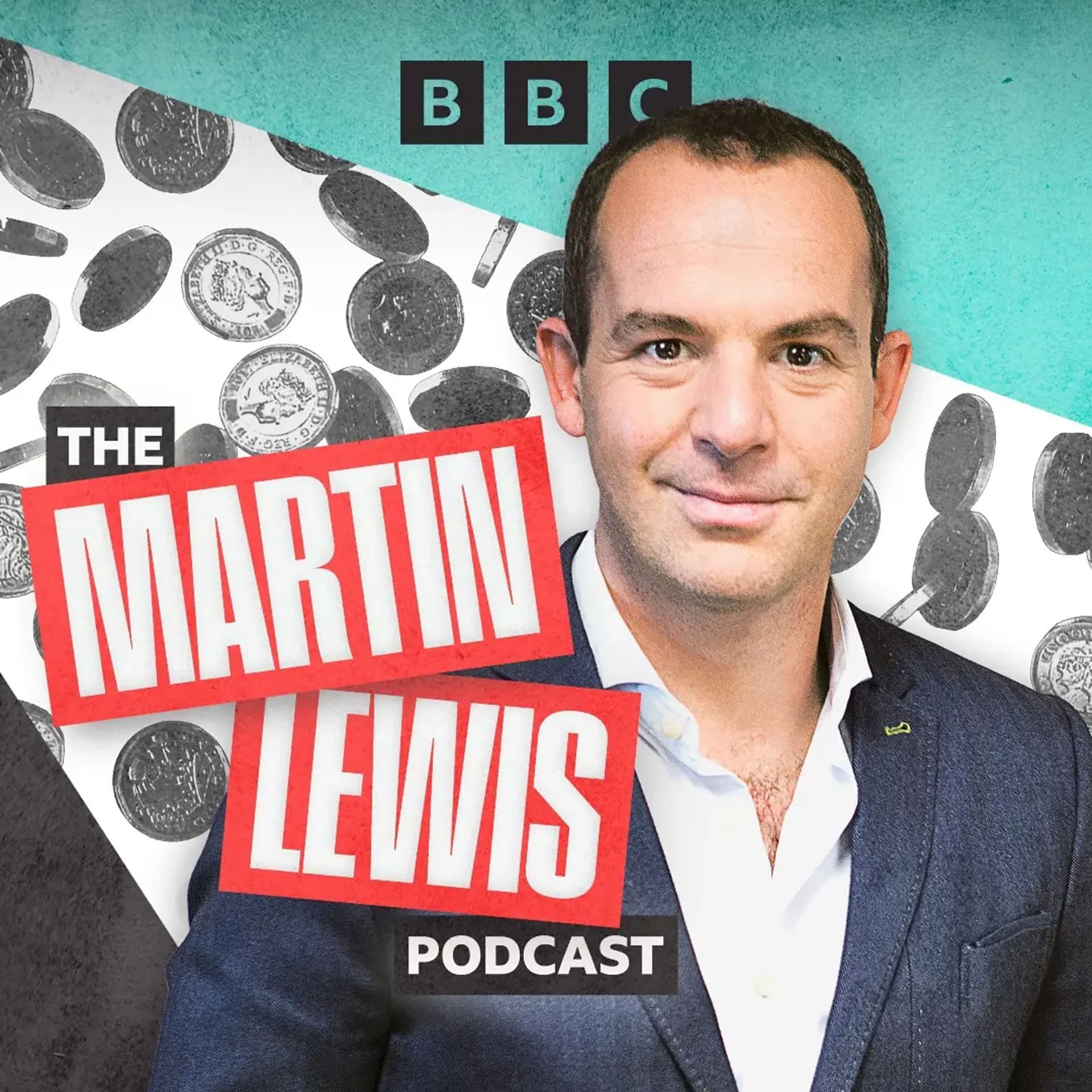
The Martin Lewis Podcast - Episode Summary
Episode Title
A Tell-Us Your Needs Knows Special: Inheritance Tax, Pension Savings, Debt Pecking Order, Life Insurance, Compound Interest.
Episode Description
In this special episode, Martin Lewis addresses a wide range of financial queries from listeners, including inheritance tax, pension savings, debt repayment strategies, life insurance, interest payments, cash ISA rules, car finance, and even the tax arrangements of Father Christmas. The episode also features a "Mastermind" segment focused on credit card interest repayment.
---
Key Topics Discussed
- Consumer Rights
- Christmas Consumer Rights:
- Return Policies:
- No legal right to return items bought in-store if you change your mind. Always check the store's return policy.
- Online purchases have a 14-day return period with specified conditions.
- Faulty Goods:
- Items must be of satisfactory quality, fit for purpose, and last a reasonable length of time. Martin introduces a mnemonic: SAD FART.
- Inheritance Tax
- General Overview:
- Only 6% of estates pay inheritance tax, despite widespread concern.
- Key exemptions include:
- Transfers to a spouse or civil partner are exempt.
- The first £325,000 is tax-free, increasing to £500,000 if the main residence is left to offspring.
- Married couples can combine allowances, potentially passing on £1 million tax-free.
- Pension Savings
- Recommended Savings:
- Suggested savings percentage is based on age:
- Start at 20: save 10% of income.
- Start at 30: save 15% of income.
- Start at 40: save 20% of income.
- Early Investment: Emphasizes the importance of starting early to benefit from compound interest.
- Debt Repayment Strategy
- Pecking Order:
- Prioritize paying off debts with the highest interest rates first, while making minimum payments on others.
- This strategy reduces the overall cost of debt and improves financial health.
- Life Insurance
- Types of Policies:
- Mortgage Life Insurance: Covers mortgage payments if the insured passes away; often decreases in value.
- Level Term Assurance: Fixed payout amount, providing security for dependents.
- Interest Payments
- Understanding Interest:
- Interest is often accrued daily but may be paid out monthly or annually.
- Credit Card Interest: Paying off nearly the full balance will still incur interest on the entire amount due to credit card rules.
- Cash ISAs and Savings
- Transferring Funds:
- Help to Buy ISAs can be converted into other ISAs without penalties.
- Importance of understanding ISA limits and potential transfers to maximize tax-free returns.
---
Key Takeaways
- Consumer Awareness: Consumers should familiarize themselves with their rights, especially around returns and faulty goods.
- Planning for Inheritance Tax: Many people unnecessarily worry about inheritance tax; understanding exemptions and allowances can alleviate concerns.
- Proactive Pension Contributions: Starting early with pension contributions can significantly impact retirement savings.
- Debt Management: Paying off high-interest debts first is crucial for financial stability and credit score improvement.
- Life Insurance Necessity: It's important to evaluate life insurance needs based on personal circumstances, especially when dependents are involved.
- Interest Understanding: Consumers should be aware of how interest on debts works to avoid unexpected costs.
---
Conclusion In this episode, Martin Lewis provides a wealth of financial knowledge and practical advice across various topics, empowering listeners to make informed decisions about their finances as they approach the new year. The importance of consumer rights, proactive financial planning, and understanding the implications of financial products is emphasized throughout the discussion.
Written by AI. May contain mistakes. Listen to the episode to check what was said.
Transcript
Automatic transcript. May contain errors.0:01BBC Sounds. Music. Radio. Podcast. Hello, I'm Martin Lewis and this is the cunningly named The Martin Lewis Podcast. I do wonder what that's going to be about. Now, usually, much of it comes from my BBC Radio 5 live show with Adrian Childs. But instead of being live with him on a Thursday, this week we met up on a Wednesday to do a podcast-only programme. Yes, I should, Coco, it's just for you. Because I wanted to do a Tellers special. Today's podcast is all about your questions. I asked you what money saving or financial questions would you like me to answer before Christmas? What's playing on your mind or don't you understand that you'd like a little bit of help with?
0:42And you got back in droves to ask about inheritance tax, how much to have in a pension, debt payoff pecking order, life insurance, how interest payments work, cash ISA rules, car finance in 20 words, even what are Father Christmas's tax arrangements and a whole lot more. It's a huge smelly potpourri of fiscal facts and fun Plus A back to basics on consumer rights So you're tooled up this Christmas And the money mastermind, the last of the year Is all about credit card interest And it's a good 'un Play the theme tune
1:39Martin, you want to talk about consumer rights? I would suggest that's because it's Christmas. You want to talk about Christmas consumer rights? Well, it is because it's Christmas, Adrian, but not for the reason that you're thinking. Now, many people will know that for years I've campaigned about unnecessary Christmas presents, tit-for-tat giving that fills landfill and means many people end up with tat. So thinking of ways that don't cost money and things that are going to be useful for people. One of them is, you know, make up a Christmas gift check where you might offer to babysit for a friend's children or cook someone dinner or give them a special massage they like, whatever it is.
2:12So I thought, what could I get you, my friend Adrian, for Christmas? Oh, go on. Tell me. And then I decided, because you're doing so atrociously at Mastermind, and there are so many consumer rights questions at Mastermind, I could give you a consumer rights briefing for Christmas that hopefully in 2025 means you'll get more answers right. Could I be more generous? You couldn't be any more generous. And if you could turn it into a book I could leave by my toilet to dip into once or twice. I don't want you dipping that book in your toilet. Okay, fine. Right, so where should we start on consumer rights?
2:48there's a lot to get through. There is, but the most important one for people to understand, especially at this time of year, is you do not have a legal right to return goods bought in store if you change your mind. And this is only in store, this is about your statutory rights. If goods are faulty, it's different. But if you go and buy something you don't try it on or it doesn't work, you get it home, you decide it doesn't match the colouring of the place that you're going to put it or whatever it is, you have no legal rights to return it. And you've never had legal rights to return it. Now, over 50 % of people, when I polled on this, don't know that.
3:18They think they can return items when they change their mind. You can't. Now, many shops will have a policy that allows you to return. So you should check that policy. And if that policy says to return, you need to hop on one leg and turn around and go, then you have to do it because they're being generous in allowing you to do it. If they say you need the receipt, then you need the receipt. If they say we'll only give you a credit note, then you get the credit note because they're being generous. And the really important thing at this time of year and in the January sales. It's some shops that normally have return rights to spend them in the sales and they are allowed to do that.
3:55So you may be expecting a shop you're used to that allows returns, but in the sales it has different rights. So it is a big warning. Do not automatically assume you can just take things back. Now that is different online. Online you have an absolute right to change your mind and you have 14 days to notify a firm that you'll be sending the item back and 14 days after that in order to actually send the item back so maximum 28 days there are some big store websites i'm dotting eyes crossing t so i'm not going to say it on air because of legal reasons some big store websites that give you the wrong date information until you have to do it more quickly they are wrong what i'm saying is your statutory your absolute legal rights 14 days to notify 14 days to send back so think about this if you want longer time and you know you're going to send it back don't notify them as long as you're within the 14 days until you're ready to start sending it back because otherwise the clock starts ticking on the second 14 day period but there are some exceptions to that online right which are perishable and personalised goods so you know if you buy something that's going to rot in a couple of days you can't send it back or a personalised tin of chocolates yeah if I get an I Love Adrian t-shirt that type of stuff made up specially then I couldn't send it back under the online rules.
5:13There'd be a lot of takers for that too. There would. I mean, I'd be able to resell it on the market probably on eBay for more than I paid for it, I suspect, so it wouldn't be a problem anyway. Now, the big one that everybody gets confused about is what counts as faulty? What is a faulty item? And I have a mnemonic which will help you understand these rules. Adrian, I strongly suggest for mastermind purposes, you remember this. He's writing it down. I'm writing it down. It is sad, fart. Sad thought. The sad is when you buy goods, they must be of satisfactory quality, as described, there's your sad, fit for purpose, and last a reasonable length of time.
6:00Satisfactory quality as described, fit for purpose, and last a reasonable length of time. If they do not, they are faulty, and then we take them back within the first month and you've got a right to a full refund. After that, it's repair or replacement. I look at the word reasonable with some doubt a lot of the time. One man's reasonable is another man's unreasonable. It is, and ultimately it's for a judge to decide in court because sadly we have no alternative dispute resolution process in retail rights, which is a big problem, and I gave evidence to the Consumer Rights Act about this, saying it's all very well when they strengthen the rights.
6:32But if you bang a 50 quid kettle, you're not really going to take someone to court if the shop and you disagree over what is faulty. So there is a problem, but it would be a judge to decide. But let's do the reasonableness test. Here is my easy way to understand this. Great. Okay. You have just bought a£6 ,000 LCD huge TV. How big? Oh, it's 90 inches. Really? Really big. Make sure you do it on low power setting because it's using a lot of energy. You've bought that. After 19 months, you've not done anything. The software starts working. it stops working and it can't be fixed and there's a patch on the screen that's not working.
7:11Has it lasted a reasonable length of time? I would feel very strongly it hadn't. Having paid six grand for something I would hope to get more than 18 and a half months out of it. Personally I would agree with you. I suspect if we polled everyone listening the majority of people would say if you paid six grand for a telly the text should not go after 18, 20 months. It is too quick. That is not reasonable. I think a judge would say that provided you haven't caused the fault. Now, let's take exactly the same question. You've been into a cheap store. You have bought a plastic whistle. That plastic whistle cost you 50 pence.
7:48You've been blowing it, and it's been making a sweet sound for 18... Let's just move on. It's been making a sweet sound for 18... Now, go on. I love it when you extemporise like this. You've been making a sweet sound for 18 months, and then something just stops working. It's not making the sweet sound. So 18 months, it costs 50p. Has it lasted a reasonable length of time? I mean, for 50p, 18 months of sweet whistling, I would have thought was reasonable. Any more than that, it'd be gilding the lily. And I would agree with you. And I've used extreme examples to show you that reasonable length of time is what, I mean, in the old test used to be what a group of people on the Clapham omnibus would say is reasonable.
8:29If you took a group of people together, they'd say, is that reasonable? So it depends on the cost. It depends on, you know, what you were buying it for and the usage level. It is a reasonable definition. What comes really important in this, though, is when we talk about expensive tech and phones are the classic one here. And a certain fruit based phone manufacturer I tend to think is particularly bad for this, but we won't name them. You know, it could be Blackberry. It wasn't. So you have a warranty. They give you a warranty for a year. Now, a warranty is a contractual agreement that you have been given voluntarily for a certain service levels.
9:05That does not affect the law. The statutory law is way more powerful than a warranty. The statutory law applies whether they like it or not. So what happens is people will take their mobile phone back, their 1 ,000, their 1 ,200 quid mobile phone. They'll say, look, it's not working properly anymore. And I'm so sorry, you're out of warranty. and as I always say, warranty, shmarranty. My rule is, is it of satisfactory quality as described, fit for purposes and last a reasonable length of time because the law says it should and that is all about was it in that position when you bought it so this gets slightly esoteric here but if it develops a fault after 18 months then what you're actually arguing is it was not built well enough when I bought it to last a reasonable length of time so the fault is an evidence that it wasn't made right originally rather than the fault is happening now so therefore i have said to many people when they've told me about this say to them that's totally irrelevant i have statutory rights and your rights by the way are always with the firm that you've bought from not with the manufacturer so you go to and i want it fixed because it was did not last a reasonable length of time the fact amount of volatility is irrelevant i'm looking at my statutory rights i'm not looking at my contractual rights you have voluntarily given me And it's really important that people start to understand that difference because these firms actually, in a way, we tend to think they're being generous by giving you these one-year warranties.
10:28What they tend to use them by is a sop to say to you, no, you're out of warranty, it can't be fixed. Well, warranty, schmorrante. But what are you going to do when you're standing there and they're saying, I'm sorry, you're out of warranty? OK, in the end, a judge might agree with you, but who's going to do that? Well, I would say, well, under the Consumer Rights Act, you as the store I've bought it from are legally liable not the manufacturer I do not believe that this product has lasted a reasonable length of time it is faulty and I would like to refund it and that is a formal complaint and I've always be very polite but I'd escalate it to someone senior and if you get to it certainly for a 1200 pound phone then I would start to say well I will be you know you write a formal letter to notify you of a pre-action that you will take them to money claims it doesn't get that far most of the time it doesn't get that far when they know you know what you're doing it really doesn't get that far and they tend to go negotiate and come up with some solution that works for the two of you assuming you're right and you're not lying i mean i'm not trying to tell people they should claim it's faulty when they put their elbow through it i'm saying when it doesn't work and that's what you need to do my favorite story on this yeah i shouldn't tell this story oh god mrs money saving expert bought me a very expensive watch when we got engaged.
11:43It was beautiful and I loved it, but it stopped working. And she took it back to the place and they said, sorry, I mean, we're going to have to send it to the manufacturer and be repaired and it's going to cost you. And I was like, absolutely no way. I said, no, I've got rights. It hasn't lasted a reasonable length of time. They need to fix it. We shouldn't be paying. So I got on the phone and I spoke to the person. You're taking the romance out of it a bit here, but I don't blame you for doing that. And I spoke to them and they said, well, no, no, it's up to them. I said, it's not. I'm very polite, very nicely said.
12:18Under the Consumer Rights Act, it is you as the people I have the contract with who are legally responsible for fixing the watch. And it's not satisfactory quality as described. I went through all the things and I did it formally. And I said, there's no buts here. It's your legal responsibility. They put me on to the manager. We had the same conversation. And then they agreed to repair it. and I spoke to Lara afterwards and she said, I can't believe they agreed to repair it, you know, for free. I'm like, yeah. And she said, and by the way, this was before, it wasn't me. I hadn't used my name. I'd used her name because she had bought it.
12:52I wasn't using the Martin Lewis factor. And she said, because, you know, I thought it was the place that you bought it from. She said, what do you mean? She said, I just took it to a repair shop.
13:03I totally got the wrong end of stick and I thought she'd take it back to where she bought it from. And I was so embarrassed and I called them up and I said, I'm so sorry, I was under the wrong... You are right to charge me and we'll pay. I was mortified by it. Oh, God, that's brilliant. So, look, and so that was wrong, what I did, clearly, but for the right reasons. So there you go. The only final thing I'll say on consumer rights before we get on to the tellers is section 75 is the other thing everyone needs to remember. If you buy something on a credit card that costs between£100 and£300, and I should note primarily you have to be the main cardholder.
13:42There are problems if you do it as a secondary cardholder when you do this. Then the credit card company is jointly liable with the retailer for the entire transaction. So even if you put a penny on the credit card and you're buying something that costs£10 ,000, the credit card company is liable for the entire£10 ,000 in exactly the same way the retailer, no matter where you bought it in the world. So you have the same consumer rights I've just discussed about sad fart rules with the credit card firm as you do with the retailer. So if the retailer goes bust or the retailer's difficult to contact or the retailer's playing hardball and you have to take it to court with a credit card, you can go to the financial ombudsman that's easier than you can go to the credit card firm.
14:19So if you're making any significant purchase over 100 quid, pay a little bit on a credit card, but of course pay the credit card off in full at the end of the month. On warranties, I'm assuming that extended warranties. Yeah, that you're paying. Which they always attempt to sell you on, whatever you're buying. I mean, I was offered a three-year extended warranty on a£25 electric blanket. Yeah, pointless. Actually, it might be worth considering on something that cheap because it's expected time. Yeah, and depending on the cost of the warranty, but also a reasonable amount of time might not be very long for a£25 electric blanket.
14:58No. So what I would suggest on that is, first of all, are you actually going to bother with the warranty if you had the electric bank and it wasn't faulty or would you just buy a new one? Yeah, but yes. So it probably isn't worth it in a practical sense. Most warranties that you're asked to buy when they come direct from the product provider are expensive. And actually, for many of the things that people buy warranties on, such as washing machines or drying machines, they tend not to break down very much. which once did some great research on this that looked at you know the very small percentage and then if you if you defer the cost and you look at it and you combine it it isn't worth buying what i would suggest is if you want the extended warranty there are multi warranty policies where you can buy warranties for a whole host of your home electricals all in one go that cost you a fraction of the price of buying the manufacturer's extended warranty so if you're going to do it and it can be worthwhile if it would be a struggle for you to be able to deal with the replacement cost when it came to get a multi-extended warranty rather than an individual one.
15:57So the tellers, what money-saving or financial questions would you like me to answer before Christmas? What's playing on your mind or you don't understand that you'd like a little bit of help with? And I believe podcast producer Simon has separated these into big questions and we've got rapid fire to come later on. I'm looking forward to that. He's been a busy little elf. He's got the ears as well, you know. Literally, he's like sport. coming. He's not really. Fantastic. The most common question asked, and I think we've got a notional questioner representing all the people who've asked this. And we're going for Zoe.
16:28I'd like to know exactly about inheritance tax please, Martin. There are so many differences just for a normal family. Well, I'll be honest, most normal families won't pay inheritance tax. Right, inheritance tax is only paid by about 6 % of estates. It is disproportionately worried about by far more people than it actually affects. I've done polls on this. And I can't remember. I'm making up this percentage. But it was somewhere in the realms of 30 to 40 percent of people worry about inheritance tax, even though it's only affecting 6 percent of estates. So there's a disproportionate worry. So here are the first things you need to know.
17:01The first thing is anything left to a married or civil partner is exempt. This is my first point of five. So if you leave something to your spouse, there's no inheritance tax to pay on it. Now, it's very important. It's married or civil partners. If you are just cohabiting, you don't get this. And this inheritance tax boon is one of the big benefits of marriage. Number two, you don't pay any inheritance tax on the first£325 ,000 that you leave to someone else. So if your total assets, including your house, are under£325 ,000, then inheritance tax is just not an issue for you. You will not pay it or your estate will not pay it.
17:43So if your house, let's say it's mostly about the house and it will be. Let's say the house is worth£425 ,000. So you're£100 ,000 over the threshold. There's an exemption coming in. Well, let me do the third point first before I answer that. That£325 ,000 is boosted to£500 ,000. So there's£325 ,000 plus a£175 ,000 special allowance if your main residence is left to your offspring. So offspring is defined as biological foster step, adopted children and grandchildren. And this is provided your total estate isn't over£2 million. So on your£425 ,000 question, there wouldn't be inheritance tax as long as your other assets aren't over£75 ,000 because you're within, as long as it's going to your offspring.
18:33OK, so if you're£100 ,000 above either of the two thresholds, 40 % tax. 40 % on the amount above the threshold. But, number four, you can pass on your unused allowance to your spouse. This is really important to understand. It's the other big inheritance tax boon of being married. So let's get ourselves married again, Adrian. We've done it many times before. We'll do it again. We are a couple. Sadly, you're passing away first. You've left everything to me. Right. Now, because you've left everything to me, all of your allowances are unused. So you have your 325 ,000 and your 175 ,000 making 500 ,000.
19:14I have my 325 ,000 and my 175 ,000 making another 500 ,000. So between us, because you've passed it on to me, when I leave, I've not got, including my main property, a million pounds that I can leave to other people as long as I'm leaving the main house to offspring. There is no inheritance tax to pay. That's why many people are excluded. So we actually, between us as a married couple, we can leave a million pounds, including the main house, to offspring without paying inheritance tax on it. So can the lucky offspring, unlucky offspring, because they've lost somebody dear to them, but lucky in the sense that they've got a house, can they live in it for six months and then just sell it?
19:54Well, they don't have to live in it at all. There's no inheritance. The house is, I'm passing my house to my offspring. It's not within inheritance tax. I'm just not paying inheritance tax on it. They can sell it whenever they want. Listen, there are practical issues of probate and all that type of stuff, but we're talking inheritance tax here. So, yes, you have a million pounds as a couple of assets, including the main house, that you can pass on without inheritance tax. Now, if you are going to be above the threshold, so clearly there are some people out there going, we're not married, this isn't fair, or I'm single, I only get£325 ,000 because I've got no offspring and I'll be leaving it to my cousin, so I've only got£325 ,000.
20:30Yes, absolutely right. The system is biased towards married or civil partnership couples who can leave a lot more. And I have had people get in touch with me. A friend of a friend did it quite recently and they got in touch to say, we've just we've been together 20 years. We heard you talking about inheritance tax. We just got married. Thank you. Right. Because they suddenly realised that they were going to be paying a lot more inheritance tax unless they got married. So they got married. If it's likely rule number five, you'll be taxed. Gifting rules can help. so you can do any gifts from annual income so as long as it's from your income it's quite tricky to prove that that it's money you wouldn't miss from your annual income you can give that and it doesn't count towards inheritance tax or if you live long enough seven years afterwards then there's no inheritance tax as long as you give it has can't be a gift with reservation though so you can't say i'm giving my kids my house but i'm still going to live in it rent free that that doesn't work right that's a gift with reservation and there are a whole load of other allowances, so annual allowances to individual people and allowances for all types of things that you should look up.
21:29But in the big picture, the question was inheritance tax for a normal family? Well, for a normal family, you probably won't pay it. Second most common question asked is from hypothetical Karen. What's a good amount to have? No, it's real Karen. Oh, this is real Karen. All these questions are real, yes. They're real, but they're an example of the... Karen speaks for many. Karen is a representative of the most common question. Okay. Karen, I'm sorry I called you hypothetical Karen you are real Karen and the real Karen Karen, you can call him pathetical Adrian yeah, pathetical what's a good amount to have in a pension for a decent standard of retirement ok, I'm going to do the horrible equation here now, which just gives you an example, so you take the age that you start putting money in your pension, so Adrian a man of your age, 30 am I right yeah, we'll go for 30, halve it 15 That is the percent of your income you want to be putting in for the rest of your life.
22:25So if you start at age 30, 15 % for the rest of your life. You start at age 20, 10 % for the rest of your life. You start at age 40, 20 % for the rest of your life. Now, the most important message to take from this is the earlier you start, the better. Because most people will not get anywhere near that. That is meant to give you roughly two-thirds of your final income, of your final main income in your retirement. You won't touch that. But it does include your employer's contribution if you're an employee. So if you're putting 4 % in and your employer's putting 4 % in, or you're putting 5 % in and they're matching at 5%, slightly above the minimum they have to do, then you would have 10%.
23:00So the answer is put as much in as you can and put it in as early as possible, especially if you get a pay rise. I would always suggest whatever you get in a pay rise, before you feel that money, before you get used to that new amount of money, then give a quarter of it towards your pension in your first pay packet and never get used to getting the full amount so that it costs you more. I'm just trying to think why people wouldn't do that. they might think the rules will change by the time you're 30 years old, the rules might change on annuities or something. Well, annuities are gone. I mean, you don't have to have an annuity.
23:29Now you have pension freedom that you have to be very careful on the tax. The most important rule in financial life of everything I talk about is before you withdraw money out of your pension, call pension-wise free guidance because there are really big tax implications for taking money out the wrong way that could cost you for the rest of your life. I'm not going to go through it now, but call pension-wise. it's one of the few areas where free guidance is offered to you that you can get one-on-one help and i would absolutely do that but look there are lots of reasons the big reason people won't do it is they can't afford to spend that much out of their income i mean that's the problem in saying to pay 15 of your income is impossible for most people but interestingly the people who can tend to be those people in decent jobs when they're young before they have children and that's the people who don't put money in the pension at the one time before you're going to have much bigger costs being thrown on you once you've got kids and you're buying a house that's when you really because if you're putting this in when you're 20, if putting money in when you're 20, it's got 45 years, hopefully, to compound and to grow.
24:27And that's why the earlier you put it in, the better. You know, a pound in your 20s is probably worth putting it six, seven, eight, nine, 10 pounds in in your 50s because it has that growth. So there is no right answer here. But the answer is start as early as possible and put as much in as you can afford to. What about if the worst happens and you die relatively young, you die in your 40s? What happens to the pension part? What you must do is you do a nomination form. Pensions don't go in the will. So you do an expression of wishes or a nomination form, and that says who you want the trustees to pass the money on to.
24:59It's not binding. Trustees could choose to do something else, and many people have not updated theirs and are at risk of leaving it to their ex. So be very careful, because people fill it in them when they first get a pension, then they forget about it. It's not a new will. It's an expression of wishes. But if you die, the money will go on to somebody else. Yeah. Right, but you won't benefit from it. But hey, most people in this country who get to pension age will live another 19 years afterwards, roughly. So we must assume and protect ourselves from our old age. Assuming we'll die early is not good planning.
25:30Hamish wants to know, is there a pecking order in which to pay off debt, credit card overdraft, mobile phone contract, bank loan, etc., which, if any, should be paid off first to restore your credit rating sooner? Okay, so it was all an easy question until you added in the credit rating thing, so I'm going to split it into two. The pecking order to pay off your debt, in my view, is very simple. List all of your debts in order of the rate of interest and then throw all of your spare cash of paying off the one with the highest interest rate for the very simple reason that that is growing most quickly.
26:06Assuming you're allowed to pay more on that, pay more on the one that costs you the most. Many people pay them evenly or they pay the biggest ones. Just pay the most expensive one. It's the one that's growing most quickly. And then when that disappears, pay the next most expensive one off. It's called snowballing. It'll get rid of your debts quicker. You asked me which will restore your credit rating soon as well. Assuming that you don't have certain debts they don't like, like high cost credit, like payday loans, then actually it's all done on credit utilisation and debt use type equations in there.
26:34So it doesn't make that much difference. And in my view, you having greater disposable income because you've paid off more expensive debts in the long run will be better for your credit rating anyway. So I'm going to stick with my answer of pay off the highest interest rate debts first. Pay the minimums on everything else and pay the maximum on your highest interest rate. Because if you've got a debt at 30 % and all your others are at 10%, well, if you don't pay that one off, it's going to grow and grow and grow and grow. So get rid of that one and then move on to the next ones. Lisa says, do I still have to pay life insurance if I've now paid my mortgage off?
27:06So it depends what life insurance you've got. I'm going to presume you've definitely probably got one of two types, either mortgage life insurance, which was known as mortgage-decreasing term assurance, or level term assurance. Now, with term assurance policies, the crucial bit is term. That life insurance policy pays out if you die within a set term. So you might get it for 20, 25 years. You might have got it to cover the length of your mortgage. With level term, with the mortgage term policy, it roughly covers the amount you have left on your mortgage when you got it. With a level term policy, it pays a fixed amount out.
Read the full transcript
27:45So a level term policy, you would say, I want it to pay out£300 ,000 if I die within the next 23 years. Quite a simple policy. So many people get the mortgage life assurance policy to cover their mortgage. But if you pay it off early, do I still need to keep paying it? well if you stop paying it you're no longer covered from that second yeah so any money that was about to be left would go so find out what it's going to pay and ask yourself do i still need it now level term assurance is the easiest way to protect your family if you were to die to keep give them some money to be coming in remember when you die on compounded on the the grief and the awful nature if you have young dependents you're also got a lost income and Level term policy protects from that.
28:31So it's difficult to answer this without knowing exactly what the policy is. Do you need to keep paying it? No, you could cancel the policy and you would no longer be covered. Just double checking the terms that you can do that. Should you keep paying it? Well, it depends. Do you have other life cover? Would it be worthwhile having that money because you've got dependents if you were to die? I mean, if you've got two years left on the mortgage and it's only going to pay out three grand and it's expensive, you might want to think about getting rid of it. It's probably a condition of the mortgage.
28:54Swings and roundabouts. But you've got to be careful. A friend of mine was just short of his 70th birthday and he was looking at his life assurance. And it was only then he realised he had term assurance. So if he dropped dead the day before his 70th birthday, his widow would have got a quarter of a million quid or something. If he dropped dead the day after, she gets zero. It depends what you're covering for. So most people get level term assurance, which is a cheap, simple policy. It's not cheap. the cheapest type of simple policy to cover their dependents while they need it. So you'd normally cover your kids until they finish full-time education.
29:29And it depends, does your spouse work? Would they be able to support themselves? Those are the questions that you need to ask yourself. Now, if he's 70, he may well no longer have dependents. What was the money for in the first place? So yes, you're right. But the purpose, what was the purpose of it? Now, there's other types of whole-of-life insurance and other policies that you get effectively to defer inheritance tax if you're going to pay inheritance tax. But level term is more to provide money for your family in the event that you were to die. Martin says his daughter has a help to buy ISA.
30:00It's now impossible to purchase a home under 250k. Can she transfer the money into another product? Yeah, so a help to buy ISA is the predecessor of the lifetime ISA. Just like the lifetime ISA, it gives you a 25 % interest rate boost when you save and use it as a first time buyer. you can have that with a lifetime ISA but you can only get the first time buyers bonus on one of them the help to buy ISA unlike the lifetime ISA has no penalties for withdrawal so you could take the money out of that very easily you could also transfer it into a normal cash ISA which you're allowed to put up to 20 grand a year in so let's say you've got 10 grand and you help to buy ISA you could move it into a normal cash ISA that keeps it tax free and you might get a better interest rate if you're not going to use it for the house and you could move it into a lifetime ISA The problem, though, is you can only put£4 ,000 in a lifetime ISA per tax year.
30:50So if you've got£10 ,000 in a lifetime ISA, and a lifetime ISA, unlike a help to buy ISA, you can buy a property worth up to£450 ,000. The help to buy ISA is only on a property up to£250 ,000. And you've got£10 ,000 in your help to buy ISA, you'd have to move£4 ,000 this tax year. Then you could move another£4 ,000 the next tax year, and you could move the remaining£2 ,000 the following tax year. So it would take time to move it across. but if you're not going to get that benefit from a help to buy ISA and you're definitely going to be buying the qualifying lifetime ISA home within more than a year because it has to be open a year before you can use it then I would look at moving it to a lifetime ISA but lifetime ISA is worth doing some reading I'm sure you can find out where there are good articles on how lifetime ISAs work before because there are some ifs and buts Now Adrian, I'm just going to interrupt you because we're in the middle of our tellers which is on what money saving or financial questions would you like the listeners like me to answer before Christmas but I have a question I'd like you to answer
31:52now Adrian the mainly mastermind score is currently you've got three right on this three option multiple choice test and eight wrong so worse than random chance everyone listening is hoping that in this final main mastermind of the year you are going to get it right you've got your calculator ready you're ready to deliver are you pumped are you up for it with that normal Adrian bursting with enthusiasm charm. No, I feel sure I'll fail again. Right, so here's the set-up. Adrian has bought himself the perfect Christmas present. Coffee gourmet that he is, he's decided to go for the billionaire's choice and shelled out two grand on a coffee machine from high-brand manufacturer Foo.
32:33Be careful with this coffee machine. We will say it is from Foo. It's a bit like you must call the Isles of Scilly the Isles of Scilly and not call them the Scilly Isles. So this is a coffee machine from Foo. Right. Don't say it out aloud. Just think about it. Are you with me? Yes. Good. Are you with me at home? Good. Coffee machine from Foo. Now, you put it on your cash back credit card to get a little bit of rewards. You've got the money in savings to pay it off because you've been listening to the show. But just as you're about to do it, you realise you want to buy Christmas drinks for the team.
33:07Chance will be a fine thing. So you hold back£50 just in case, meaning it costs£2 ,000, that's the only debt on the credit card, but you're paying off£1 ,950 of it. The card is a standard high street card with an APR of 24.9%, pretty typical. Roughly, how much will the interest be for a month? £2 ,000 debt on the card,£1 ,950 is what's being paid off. A, nothing, there's no interest for the month. B,£1. C,£40. Roughly how much? 24.9 % annual percentage rate of interest. So you've paid it off when the bill comes for everything bar the£50. Everything bar the£50. So for that month, interest on...
34:00Roughly. Tell me if I'm overthinking this. So if the interest is around 25%. A year. A year. Then on that£50 in a year, that would be, I don't know, that would be about another, what is it,£15 on top of that, a bit less? £12.50 would be 25 % of 50, wouldn't it? It would be half a bit. So we divide that by 12, then per month, and that's a pound. So the options were A, nothing, B, a pound, C,£40. Well, let me wait a second, because a pound doesn't sound much, and I don't know why it's£40. It sounds like a con if it's£40, but for some reason, I think it's£40. I'm looking at your purpose in telling the story is surely to warn people of the dangers of not.
34:52It's a meta answer. It is. This is overthinking. Are you overthinking, or is it a simple question for Christmas that I've just given you a straight one. I've just tossed the ball up and I'm expecting you to hit it. It's not in your nature, that level of generosity, I don't think. I don't know what. It ought to be£1. For some reason, it's£40. Play the hallelujah.
35:15Well done, mate. Now, this I'm looking forward to hearing. How on earth does this end up with£40? So, now, you're absolutely right. Mike, the question has a deliberate and a specific purpose in me asking it. And you get the hallelujah, but you don't get much kudos because you've got it. You don't know the reason why. You've just guessed. Okay. So what is my catchphrase when I talk about credit cards? In full. Do I say nearly in full or do I say in full? In full. And the reason I say that is this. if you pay near if you've got£2 ,000 and you pay off£1 ,915 you are charged interest for that month on the whole£2 ,000 it is only if you fully clear it you don't pay interest so it is not the sum you were doing of 25 % interest on£50 was wrong, it's 25 % interest for the month on the whole £2 ,000 but why, how has that evolved?
36:16because you get this 56 day interest free payment and the price to that is you, but you only get that if you pay it off in full. That is standard credit card rules has been for decades. Now, I went a little easy on this because I just assumed it was over a month. Actually, if you made the payment, if you bought this item on the first day of the month, you've actually, on the first day of the statement period, you've got 56 days and you'd actually be paying 56 days of interest on the£2 ,000. But the big thing people need to remember is the reason I say in full, pay off your credit card in full, is if you miss a penny on£2 ,000, you pay interest not on the penny, you pay interest on the whole£2 ,000.
36:57That's how credit cards work. It's one of the ways they make more money from you than they should, and you need to know it. And that's the reason I have the catchphrase in full, because it's not nearly in full. It's not just, oh, it's best to nearly pay your debts off. It's in full, or you're paying the interest on the whole amount. And if you haven't got the money to pay it off, there's nothing you can do. if all you can scrape together is that. No, but again, we go back to how you should be paying off your cards. If there's any card you can pay off in full, then you don't pay any interest on it.
37:26So if you can clear a card in full and pay the minimums on the other, but it's just incredibly important for people to know that. And that's why when we're talking about rewards credit cards or cashback credit cards that give you money on when you spend on them, the in full is properly in full by direct debit. Too many people think, oh, I'll nearly pay it in full. No, that's the reason I've got it as a catchphrase. That's why I say it with such gusto. That's why I try and, you know, it's a hypnosis to the nation's mind by saying you must pay it off in full. So that was your in full answer.
38:01Now back to our Tellers special. I asked you what money-saving or financial questions you wanted me to answer before Christmas. Now we're going to try and get through quite a lot more in quite a short time. There's a good one from somebody calling themselves Uber Green on Blue Sky. I like questions like this. This might be dumb, but I've never really understood interest payments. Is it just once a year? And do you need to have had that money in the account all year to get it? What if you've recently taken out a lot of money? Does the amount of interest paid represent an average of the balance across the year?
38:33Great questions. I couldn't tell you. So what people get confused by is the interest earned and the interest payment date. So you may be paid annually. You may be paid monthly. That is just when they choose to pay you. In most accounts, the interest accrues daily. so whatever balance you have in the account on that day you will then get a to the power of one over 365 of the interest rate so with one 365th of the interest rates worth of interest for that day so you've got a thousand pounds in at 36 and a half percent you're going to be paid 365 quid over the year for that one day you're going to earn roughly one pound if you took nine pounds out the next day, so you've only got£1 in, you're going to earn roughly 10p the next day.
39:30If you put£900 in the day after that, you've got£1 ,000 in, you're going to earn£1 that next day. You earn interest based on the amount in on the day. Even if you're being paid annually, it's calculated by the day, but it's then totaled up and paid in one lump sum. So the payment arrangement differs from the calculation arrangement. Does that make sense? It does make sense. So the classic example on this is on regular savings accounts, which we've talked about before, which many of the banks offer as perks on low volumes. So first direct is, I believe, 7 % up to£300 a month. So people put in£300 a month, and they think, I've got£300, I've got£600, I've got£900, I've got£1 ,200.
40:11They get to the last month, they've got£3 ,600 in there. The interest rate's 7%. They go, 7 % of£3 ,600, I should be getting around£250 quid because that's 7 % of 3 ,600. And they look in their statement and they've got around 140 quid. And they're going, this is outrageous. They've not paid me the full interest. Well, in month one, you were getting 7 % on 300. In month two, you were getting 7 % on 600. And so actually, the easier way to conceptually think of that is halve the total amount at the end, 3 ,600 halved is 1 ,800 quid because that's your average balance over the year. I'm not saying that's how they calculate it.
40:49And you would expect about 7 % on 1800 quid plus a little bit more for compound interest. Let's go through some quick fire questions. Lindsay, can you stop paying national insurance after 35 years contributions as an employee? No, 35 years is typically what you need to get the full state pension, but it's 35 years-ish. I always say ish because it varies, but national insurance is a tax. You've got it building up your credits for the state pension, but that's irrelevant. Even if you've got full state pension credits, it's a tax you need to pay on your income. If you have to pay it, you cannot stop sorry simple clarification on car finance like in 20 20 words says you there are two major car finance claims going through one being done by the regulator which is on discretionary commission arrangements those are where the car finance dealers could increase your interest rate with permission of the lender to get more commission those were outlawed in 2021 if you had car finance between 2007 and january 2021 you get in touch with the car finance firm to find out if you were one of the 40 with discretionary commission arrangements and after a court case yesterday actually which barclays lost its challenge to the regulator is looking quite likely at the end of 2025 the regulator will could well order mass payouts mass redress scheme rather coming for discretionary commission arrangements there's free tools online you can work out where they are which will do the complaint for you.
42:09There's a second case which basically said, and it was taken through by a claims management firm that basically said that the Court of Appeal ruled if car firms didn't tell you all the details of the commission, including the amount of the commission, then the agreement was invalid. And that is going to be challenged in the Supreme Court. That affects all car finance claims going right back to around 2007. But there's a big question whether the Supreme Court will hold it. That's all on hold at the moment. You can put in a complaint on that at the moment. They do not have to deal with it right now, but you can lodge a complaint if you're worried about a time bar.
42:43That's difficult in 20 words. That's the best I can do. You can go and find more information on that on the interweb thing. Can you swap shares in a stocks and shares ISA from one year to the next without impacting on the current year's ISA? That's from David. What counts in an ISA is what money you put in it. If it is in the ISA wrapper, you can sell shares, hold cash as long as you don't take it out within the ISA wrapper and use that to buy other shares and none of that affects your current year allowance because you haven't taken money out and you haven't put any money in and what counts with the cash isa is what money are you putting in you can put in up to 20 grand a year so yes you can do that martin can you have a fixed rate bond and a cash isa at the same time absolutely a cash isa is simply an allowance you can save up to 20 000 pounds a year tax-free a fixed rate bonds a saving product you can have that you can have an easy access account and a regular saver three easy access accounts five fixed rate savings accounts have a many different savings accounts as you like It's only the cash ISA that's limited up to£20 ,000.
43:39Some providers may stop you having more than one with it. And yes, sometimes it's good to mix and match to get the different features of those savings. Keep going, I'm liking this. Rajat, can you open more than one ISA every year in addition to your previous year's ISA? You can open one ISA every year. And from this tax year, 24-25, you can open more than one cash ISA in a tax year as long as you don't go over the limit. The rules have changed. You used to be only able to open one new one per year. this year you can now open multiple cash ISAs but you've got to stick within the£20 ,000 maximum amount that you put in.
44:12Tony has a question on the married tax allowance. If I'm on the cusp of higher rate tax will increasing pension contributions keep me on basic rate tax and retain the additional married tax allowance? Yes. Good. Sarah, compound interest. How much should you invest and likely returns? How do you get it started? Difficult question but I'm going to give you is it the rule of 72 or the rule of 78? The rule of 72, here's a simple way to think about savings compound interest. So take 72, give me a typical interest rate. Say 10%. Okay, good interest rates for you in savings, I wish. Okay, but let's take 10%.
44:49Divide 72 by 10%. By 10? 7.2. That is how many years it would take for your savings to double if you put them in at a 10 % interest rate, roughly. So if you put£1 ,000 in at 10 % interest rate, roughly, I mean, it's not exact. It's an easy rule to come to work out in your head. After seven-ish years, you would have£2 ,000. If the interest rate was 5%, 5 goes in 14 times, it would take 14 years for the£1 ,000 you put into double. That's how compound interest work. I'm puzzled why Sarah would ask about compound interest, because it's always compound interest, isn't it? Well, some people don't understand compound interest.
45:23It's not always... There is one mainstream financial area where you get simple interest, which is if you have a court or an ombudsman ruled backdated payment say it used to happen with ppr then that is eight percent simple interest in other words if you owe if you were due a payout of ten thousand pounds ten years ago i think it's still eight percent i'd have to double check that figure but it's that would do it a simple interest anyway you would get eight hundred pounds per year it wouldn't compound so you just get a flat eight hundred pounds for each of the 10 years. So you get£8 ,000 interest on£10 ,000 10 years ago.
45:59So there are some times that simple interest is used, but compound interest is used when you're saving or when you're borrowing, compound interest is used. And interest on the interest it is, basically. So we just do it very quickly. £100 at 10%. Think about this. I put£100 in savings, a 10 % interest. After one year, I've got£110. After two years, I've got 10 % on the£100 and 10 % on the£10 interest, so I've got£121 because I've got£11 interest. That's compound interest. Les wants to know how Santa funds his operations. Does he pay his tax in one country or does he have to pay it individually in each country he visits?
46:38I mean, perhaps you never pay tax. That's why he's on the move the whole time. So I think that's a very good question to end with. It's very simple. Santa comes from the North Pole and therefore he doesn't have to worry about tax because he's got a huge slush fund. I'm very pleased to answer. As long as you can use yourself. He's got a slush fund. Come on, a slush fund. It's very good. Thank you. But it's not slushy on the North Pole, though. It doesn't work. Oh, well, give me a break. Well, you come up with one then. Oh, I don't. His assets have been frozen. Yes, that'll do. Any more, please get in touch with the Martin Lewis podcast at bbc.co.uk for better puns to answer the Santa question that we finished with.
47:20have a marvellous holiday Martin look forward to seeing you in 2021 yeah wonderful holidays to everybody I hope everyone who gets to have time off work enjoys themselves for those of you who will be working whether it's in hospitals or shops so that the rest of us can have a better festive season thank you very much for those of you who find this time of year lonely or filled with grief. May you get through it more easily than you were hoping for, with more smiles than you expect. We'll see you in 2025. Happy New Year, everybody. I got meals. I gotta pay. So I'm gonna work for the world. I gotta mouth.
48:05I gotta feed. So I'm gonna make sure everybody eats. Martin Lewis is the founder of MoneySavingExpert.com. But of course, other consumer and price comparison websites are available. You can get in touch with Martin's podcast production team by emailing martinlewispodcast at bbc.co.uk. The offers and rates mentioned in the podcast are correct at the time of recording. However, if you are listening on demand, it's worth double checking as details can date. Remember to subscribe on BBC Sounds and leave us a review however you listen.
48:47Radio podcasts.
From the publisher
Martin answers your Money Saving and financial questions on topics such as inheritance tax, how much to have in your pension, debt pay off pecking order, life insurance, how interest payments work, cash ISA rules, car finance and even the tax arrangements of Father Christmas.
There is also a Mastermind looking at credit card interest repayment.