In short
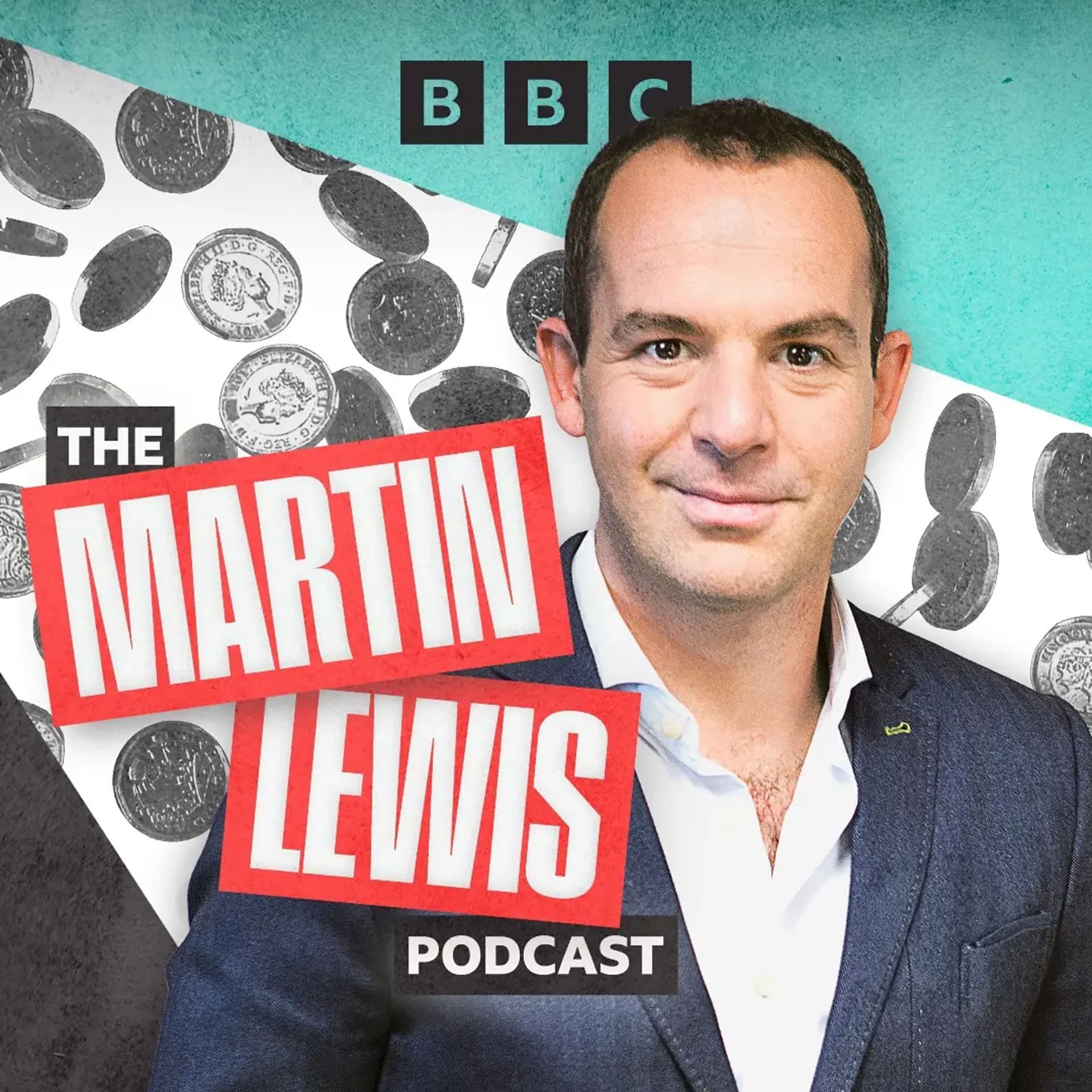
The Martin Lewis Podcast - Episode Summary
Episode Title
Question Time: Best kids’ savings or investments? Pension at 50? Which mortgage to overpay? Snakes, or an angry gorilla?
Episode Description
In this episode, Martin Lewis addresses a range of financial questions submitted by listeners, covering topics such as credit card interest payments, children’s savings and investments, optimal mortgage overpayment strategies, and pension considerations for those at age 50. The episode also includes a light-hearted question about hypothetical scenarios involving snakes and gorillas.
Key Discussions
- Credit Card Interest Payments
- Question: Why is interest charged even when credit cards are paid in full?
- Martin's Explanation:
- Interest might be charged on cash withdrawals made using the credit card, which do not follow the same rules as purchases.
- Full payments must be made to avoid interest, and even a small shortfall can result in interest being charged on the total balance.
- Children’s Savings and Investments
- Listener’s Situation: A listener has children receiving pension income and wants advice on managing their savings and investments.
- Martin’s Recommendations:
- Cash Junior ISAs: Good for tax efficiency but consider the investment options for potentially higher growth.
- Junior SIPs: Suggests using the half-your-age rule for contributions.
- Premium Bonds: While tax-free, they generally have low returns unless a large amount is invested.
- Considerations: Emphasizes the importance of a diversified investment strategy as the children’s money accumulates.
- Mortgage Overpayments
- Question: Which mortgage should be overpaid first: the smaller high-rate or the larger low-rate?
- Martin’s Advice:
- Pay off the mortgage with the higher interest rate (4.2%) despite it being a smaller sum.
- Suggests considering better savings accounts with interest rates higher than the mortgage rates.
- Starting a Pension at Age 50
- Listener’s Situation: A listener who has been self-employed asks about moving from a workplace pension to a personal pension.
- Martin’s Guidance:
- Recommends a free Pension Wise appointment for tailored advice.
- Highlights the importance of understanding the differences between guidance and advice in terms of pension management.
- Hypothetical Questions
- Funny Question: Would you rather be locked in a shopping center with a thousand snakes or an angry gorilla?
- Martin’s Take: He humorously rationalizes choosing snakes, based on the definition of poisonous versus venomous.
Key Takeaways
- Credit Card Management: Always ensure full payments without any shortfalls to avoid interest.
- Investment for Children: Diversifying investments is crucial for long-term growth; consider both traditional savings and market investments.
- Mortgage Strategy: Focus on the loan with the higher interest rate for overpayments, while also maximizing savings through high-interest accounts.
- Pension Advice: Utilize free resources like Pension Wise to assess personal pension situations, especially as one approaches retirement age.
- Light-hearted Engagement: The integration of fun, hypothetical questions adds a relatable element to the financial discussions.
Additional Notes
- Listener Engagement: The episode encourages listeners to send in their questions for future episodes.
- Martin Lewis' Background: He is the founder of MoneySavingExpert.com and is known for providing invaluable financial advice.
Conclusion
This episode provides a wealth of financial advice in an engaging and approachable manner, making it suitable for listeners of all backgrounds seeking to improve their understanding of personal finance.
Written by AI. May contain mistakes. Listen to the episode to check what was said.
Chapters
Tap a time to open that second in VOUnderstanding Credit Card Interest
0:45 to 2:54
Explaining why interest may still be charged on credit cards despite full payments.
“What's the best place for me to start a new pension aged 50?”
Patricia's Pension Inquiry
2:54 to 4:36
Listener Patricia discusses her children's dependence pension and tax implications.
“She says she pays off both her credit cards every month in full.”
Managing Children's Finances
4:36 to 7:58
Discussion on managing children's pensions and savings, including ISAs.
“Never the best way to get a good answer, Patricia, I'll be honest with you.”
Investment Strategies for Children
7:58 to 10:01
Advice on investment strategies for children's savings, including pension options.
“so that's why i appreciate some guidance so this is what i've done so far so my first intention was for managing the money was to save in a tax-efficient way because of what I thought about the£100.”
Exploring Premium Bonds and Tax
10:01 to 13:03
Analyzing the effectiveness of premium bonds versus other savings options.
“So the only thing with this, of course, is that if I put money into this, it does lock it away and they cannot access it, as you say, until they're 57, I think it is.”
Navigating Capital Gains Tax
13:03 to 14:06
Discussion on the implications of capital gains tax when investing for children.
“No, because they've got their£1 ,000 allowance and they've got their starting savings allowance.”
Understanding Capital Gains Tax on Investments
14:06 to 17:44
Learn about capital gains tax implications when investing for children.
“You know, if you put money away for them now that they can't touch for 10 years and you're going to end up putting five, 10, 15 ,000 pounds in and that money grows, you only get a 3000 pounds capital gains allowance.”
Navigating Investment Risk and Emotional Decisions
17:44 to 18:40
Discuss how emotional experiences influence investment choices and risk tolerance.
“And you have done a brilliant amount of research.”
Permission Questions and Investment Confidence
18:40 to 20:07
Explore the concept of permission questions in financial decision-making.
“No, but you can't make the right decisions because you don't have a crystal ball.”
Mortgage Overpayments: Which to Prioritize?
20:07 to 22:44
Learn the strategy behind overpaying mortgages and prioritizing debts.
“There's nothing you're doing here that is making me go, what's she doing?”
Show all 14 chapters
Optimizing Savings vs. Mortgage Payments
22:44 to 24:19
Discover when it is more beneficial to save rather than pay down mortgage debt.
“And we can only do this based on that you're going to put your savings in the best possible place.”
Financial Titles and Their Importance
24:19 to 26:50
Delve into the significance of titles like 'Esquire' and their modern usage.
“I'd look at paying the one with the highest interest rate, because that's the one that's growing faster.”
Light-hearted Questions: Snakes vs. Gorillas
26:50 to 28:01
Engage in a humorous debate about survival scenarios with snakes and gorillas.
“Does that count as our funny question or do you have a funny question?”
Pension Questions and Guidance
28:01 to 31:00
Learn about the importance of pension reviews and how to get impartial guidance.
“But it's kind of focused my attention on reviewing my future and reviewing my pension.”
Transcript
Automatic transcript. May contain errors.0:02Now, cash withdrawals on most cards, you have to pay interest for the month. Hello, Matt and Martin. Martin and Matt? I'd look at paying the one with the highest interest rate because that's the one that's growing faster. What's she doing? It's the body of a dragon, my face, breathing fire, but you may think it's not a good answer. Hello and welcome to the cunningly named The Martin Lewis Podcast. I do wonder what that's going to be about. And this is our question time episode where you get to ask me your questions on absolutely anything and everything, brackets within reason, close brackets. This week you asked me, why do I pay interest if I pay off my credit cards in full?
0:38Where's the best place to save and invest for my young children who have pension income from my late husband? I have two mortgages on my house, which do I overpay? What's the best place for me to start a new pension aged 50? And, Martin, would you rather be locked in an empty shopping centre for 24 hours with a thousand snakes or an angry gorilla? Play the theme tune. I got bills, I got bills. So I'm going to work for the world I've got a mouth I've got a feet So I'm going to make sure everybody's Hello and welcome to our Question Time edition. Let me introduce he who must be obeyed, the curator of questions himself, Mr.
1:24Matthew Burnham Esquire. Full name in me. Do you know, not many people do that. Can I check? Go on. Are you a property owner? I'm not, no. Don't edit it. We'll just, I'll make an apology on air. Let's delete the Esquire. No, no, I like the Esquire. You can't have it. I believe to be an Esquire, you have to own property. Rosie, Rosie, who's listening. Rosie, can you let me know and we'll check whether I'm right or not about Esquire a little bit later in the podcast. But let's get on with the question before we get into it. You were talking on the podcast with Adrian about your walk into work and how something happened to you.
1:59Someone asked you, what was it, a poem? A poem. A poem. So I had something not very similar, but it was on my walk to work. As I was walking in, I was drinking my coffee. It's something I've started doing. I make my coffee and then drink it on the way. I tried to get the last bit of dregs from the bottom of the cup. So I tipped it up with a lot of fury to try and get it. And something from the cup went into my mouth. And I don't know what it is. So I just spat it everywhere. And unfortunately, there was someone in range who didn't get too much, but, you know, had to jump out of the way. It was disgusting.
2:32Did you apologise profusely? Profusely. Went really red, really embarrassed. Were they all right? They were fired. I was voicing all my friends to, you know, when you've just got to get it off your chest? Yeah, yeah, totally. And we'd like to, on behalf of the podcast, to the person who Matt spat in their face, he's a good boy, Ria. On their shoes, but it's fine. Okay. Shall we go into a question? Right, I've got one from Maggie to start with. Okay. She has a simple one. She says she pays off both her credit cards every month in full. In full. But she's still charged interest. Why is that? Could be a number of reasons.
3:06I think it's not likely to be because you have one of the very, very few credit cards. Lloyd's used to have one. I don't know if it's still available that does make you pay interest, even if you clear in full. The vast majority don't. You're looking for a, it's normally on the summary box, it's something like 56 day interest free period. What I think is maybe happening. Have you withdrawn cash? I think it may be cash withdrawals now cash withdrawals on most cards even if you pay off in full you have to pay interest for the month so the in full rule is if you clear a card in full with your spending then there is no interest to be paid at all but even if you miss it by a penny so I always give the example if you have a thousand pounds on a credit card you pay off a thousand pounds there's no interest if it's all from spending if you have a thousand pounds on a credit card, you pay off£999.99.
3:58You don't just pay interest on the penny, you still pay interest on the entire£1 ,000. And that's why my rule is in full. Not nearly in full, not close to in full, it's in full. But that rule tends not to work on cash withdrawals. So if you ever take cash out on a credit card, then you are paid the interest on what you've taken out on cash across the month. So my guess, without knowing more details, is it's probably a cash withdrawal. OK, so all of you listening, you know his format. Let's say it all at once. Matt, is it a caller? Of course. It's Patricia. She's in Edgeware. Hi, Patricia. Hello, Matt.
4:37Hello, Patricia. Hello, Matt and Martin. Martin and Matt. You did say Matt first. It's always Matt and Martin. Never the best way to get a good answer, Patricia, I'll be honest with you. You know, who do you want? I mean, he puts you on air, but it's me who gives you the... Anyway, what can we do for you? Right. So my late husband left a dependence pension in 2024 and it's shared between our two children. And as the gross amount of their income is a bit over the tax threshold, they pay a small amount of income tax on their pension earnings. But they end up with a net amount of just over 1 ,100 monthly.
5:17So this is a low income for an adult, but it's actually a considerable amount for a child. How old are your children? they're almost 11 okay so they're still very young they're still primary age yeah they are yes just about yes so um i'm so sorry for your for your loss as well thank you very much um hasn't been easy but um well i don't know if you know but i i lost my mother when i was 11 oh i didn't know that she's the same age and it's a very difficult time in life and i you've got a lot on you and so let's see what we can do to help you. Thank you. So I'm aware that they'd be taxed on interest over£100, I think, because the source is a parent.
5:57And I'm assuming that pension still counts, their dad's pension counts as a parent source. I need to be straight. I don't know that. Okay. I would have to check. It's a relatively rare situation for me. I would have to check because the money isn't from a parent, the money is from a pension. Right. And therefore, are they the pension recipient as if it's straight tax? I can't answer that now. I genuinely do not know the answer, but I don't think it's as straightforward as you're saying. I certainly don't think it's a slam dunk that you'd have. And just let me explain to people who are listening.
6:35So there's a rule. If money given by a parent or step-parent to a child and put in savings, if more than£100 a year of interest is earned on it, this is only from a parent or step-parent, not grandparent, not auntie or uncle, then that savings is taxed at their parents' marginal tax rate. And so as I say that, Patricia, and sorry, I need to be blunt and I hope I'm not sounding, because your husband isn't with us, he doesn't have a marginal tax rate. Right. So I think it's very difficult for it to work in that sense, would be my assumption, but I'm only guessing. OK, I just worked on the assumption that it would be.
7:15So what I did was I opened a cash junior ISA. Good idea. Well, I think that's a good idea. I might question whether it should be cash or not, but I think it's a good idea. I'm coming to that. So the pensions are going to be paid to me for around another seven more years, but then they revert to their control. But for the time being, I'm the sole custodian of this money. So just to check, you're the custodian of the money. but it's their income so you're not taxed okay that's right so they're taxed actually yeah they're taxed at source from the pension and then they receive um they receive the net amount not the gross amount yeah um so there's a lot of information on managing money for adults obviously but there's actually a lot less for children because they're not usually significant earners so that's why i appreciate some guidance so this is what i've done so far so my first intention was for managing the money was to save in a tax-efficient way because of what I thought about the£100.
8:16So they've reached a maximum of their second cash junior ISA now, which is a lot lower the threshold for a child than it is for an adult. But you can do it each year, though? Yes, yes. So this is their second one. So it's the second year and they've maxed that out now. so um i then um i also opened a junior sip good for you almost a year ago because i what i did was i used your half your age rule yeah i calculated five percent of the gross pension to work out what monthly contribution i should put and then obviously there's 20 percent the government has so to me that's free money it's a no-brainer so just let me just let me do this for those listening not for you um so a sip is a self-invested personal pension you can put money into a pension for a child, even if they have no income of their own, you can put up to£3 ,600 a year in, cost you about£2 ,700 because effectively you get as if they had paid income tax at 20 % on it gets put into your pension.
9:17The earlier you put money into a pension because of compound growth, generally the much better it is for you. So putting it in them at the age of nine, when they get to be old and wrinkly like me, this will be hugely beneficial. It will not make up for the reason that they have the money being paid to them but at least it means that that your husband is giving them a sound financial future so i think that's a really good and sensible thing to do and you know hopefully you've got a nice broad spread of investments that will work well for you over that period well i just i didn't know what to do so i just did the recommended one which is like a general world index okay yeah global global index tracker but i mean i can't advise on investments but it's not giving me any horror signs.
10:01Right. So the only thing with this, of course, is that if I put money into this, it does lock it away and they cannot access it, as you say, until they're 57, I think it is. So I don't want to put too much that they might need in life. But I think the 5 % of what they're earning at the moment is probably OK. May I ask you a personal question just before we carry on? and I don't want to go too much into detail do you have enough funds to be able to look after their day-to-day needs yes right okay that would have changed yes that would have changed the equation well that that's good so then we're only looking about what we do that's best for them not what's best for the family no no I mean this is this is um the way I look at it is this is their money for their future so it needs to be wisely looked after for them so the lot the the next thing I did was once they'd maxed out their ISA this year, I bought some premium bonds, about one and a half thousand, because that's tax free, the prizes.
11:08I understand the median return is zero. You knew where I was going, didn't you? I know exactly. And you're right, it is zero if you don't have a larger number of bonds. And of course, they don't. You need about probably 30 ,000 or more to start to make what you would in even just a savings account or, you know, let alone win a top prize. So I do understand that, you know, it's zero, but it's not at risk, is it? So... No, but it wouldn't be. Honestly, I think where everything else... So if I were to make a couple of points, this is your choice. I can't advise you on this. I can probably be looking when you're putting money away in a junior isa as you have that you can save up to nine thousand pounds a year tax-free for your child and there's no tax on that even if money given by the parent and that money is locked away until they're 18 i because it's being locked away for a long period i'd be thinking about doing some form of investment in that too rather than cash so i would be thinking maybe in the next one you do an investment jisa and and you again just so that they'd have that cash could grow more quickly and that would be accessible to them at the age of 18.
12:17I think you may be slightly letting the tax tail wag the dog here. I mean, you're worried. I mean, if we just take, and I'm going to reduce it to absurdity, and of course we don't know, you're saying to me, I've put 1 ,500 quid in premium bonds, even though the median return is likely to be zero because it prevents me from tax, protects me from tax. Well, you're not going to pay any tax on zero return anyway. You'd be better to pay that 20 % tax on a 4 % return than no tax on a 0 % return. Yes, that does make sense. Yeah. So, and of course, you might win in premium bonds, but with typical luck, you won't.
12:51So on that amount, I would probably be putting that into some more, you know, a nationwide flex saver at 5 % interest or the Halifax regular saver that you could put money away for them in. That would be my instinct. There's no rights or wrong here on that particular amount. and we will do the check for you and find out and we will get in touch about what the situation is on the pension money as to whether you have that£100 cap because if there isn't, then there's no tax to pay anyway until they go over. No, because they've got their£1 ,000 allowance and they've got their starting savings allowance.
13:23There wouldn't be any tax on the income that they've got on savings interest. Anyway, carry on. Sorry. So they've now got a couple of months' payments to come in this financial year, this tax year. But then I was wondering whether I should not, obviously I can't do a tax, sorry, a stocks and shares ISA because they've used up their allowance. But I was thinking, should I therefore, rather than put it in premium bonds, invest that in just a normal stocks and shares ISA? Not ISA, sorry, account, beg your pardon, just a normal account. Well, I mean, my answer is yes, but I have a slight thing that you might need to think about here.
14:05The risk of tax is likely more on the amounts that you're saving or you're going to be saving. Capital gains tax. You know, if you put money away for them now that they can't touch for 10 years and you're going to end up putting five, 10, 15 ,000 pounds in and that money grows, you only get a 3000 pounds capital gains allowance. And that capital, even if you've invested for 10 years, you only get 3000 pounds of capital gains. You can make 3000 pounds of profit you can make before it's taxable. Per year. Per year. But if you invest for 10 years, it's in when you crystallise it. It's in the year you sell it.
14:38So if it's grown over 10 years, it's not£3 ,000 a year. It's still only£3 ,000 in the year that you sell it. Yes, yes. When you make profits. So the risk of tax is probably more on the stocks and shares than it is on your cash jicer. Right. So what you might want to do is if we're saying, I'll make it very simple. If we're saying you've got£10 ,000 and you want to put£5 ,000 in cash and£5 ,000 in shares and you've got an allower, then you would probably want to prioritise if you're using your JISA for the shares as opposed to for the cash and having the cash be the one that isn't inside an ISA.
15:18Right, because it's, yes, I see what you mean, because you're more likely to make a bigger gain on the stocks and shares. Because you're putting money in stocks and shares for it to make a bigger gain. Now, you can move a cash JISA into a stocks and shares JISA relatively easily. So if that's what you were doing, and again, I can't give you advice. My thought is you need to question which will be the most. I have a tax wrapper. I have different assets. Which assets would be best for me to protect from tax? Right. And I think that's an open question for you. I'm just a little bit nervous about stocks and shares, It's only because I got burnt some years ago by I bought some shares in food companies and they crashed and they have never recovered.
16:03Did you put them in individual companies? Yes, I did. And I, yes, I did. And I think the point is we're not, no one's saying that. Now, this is not a recommendation. This is an example. You could put some in a FTSE 100 tracker, some in an S &P 500 tracker, some in a global tracker, which is a broad spread, a broad spread over a lot of indices. And the likelihood of you losing lots of money in that is lower. The likelihood of you gaining lots is lower because you're mitigating the risk by putting it in a basket. So, look, you're right. And there is a risk in stocks and shares. But there is a long time to play the market here.
16:41And therefore, and also this money isn't crucial. Let's be really plain. It's not crucial. So therefore the risk is, again, your decision whether you think it's an acceptable risk. I think if you went to an independent financial advisor, which is something you might want to do with this amount of money coming in, I suspect they would be weighting you much more heavily to investments than you are right now. Right. OK. So that doesn't mean they're right. No, I mean, what you're saying makes sense is there's always a kind of an emotional thing with stocks and shares. There's a fear. And I know you keep the only reason I started thinking about this was because you keep saying more people should be investing.
17:23Yeah. And I was thinking, well, they should be investing with money they don't need over a long term in a broad spread of investment. Yeah. Yeah. So it does make sense. Listen, it's good thinking. Your question is very interesting, what I call a permission question, right? This is what you've done today. And you have done a brilliant amount of research. You obviously have taken this very seriously. You know what you're talking about. And you've come to me because you want permission with a sounding board that, if it's not self-aggrandising, someone you trust to say, am I doing all right? Well, the first thing I say to you is you're doing really well.
18:05OK, what you've done so far is really we're talking about the icing, not the cake. OK, that's the first thing I want you to understand. We're saying, well, could you do could you do a little better? Could it be a little bit tastier if you added some sultanas? You know what I mean? We're not saying what on earth have you baked here? So I think I hope you should be really proud of yourself for the way that you have sorted this out. and what I'm saying are some things that you may want to think about but the decision is ultimately yours without a crystal ball there are no rights or wrongs here no that's right but you're doing you're doing a good job okay thank you that's reassuring and I think I'm a little bit more confident now about going down the stocks and shares but you can you can dip your toe in you don't have to do all of it if you're not comfortable you know you have nine thousand pounds in a jisa a year that you're allowed to use you could put if you feel put two thousand in stocks and shares and seven thousand in cash if that's what makes you feel better yeah yeah maybe yes right to gain confidence to gain confidence and remember investments go up and down that's why you do it over the long period so if you look at them don't look at them too often no i know objectively if you look at the market you look at the footsie 100 for example it's historically it's it rises over a long period over a long time and there's no guarantee of that but over a long period it does and again that's what makes people nervous isn't it this isn't your there's no guarantee and this isn't you're feeding yourself money no no it's not it's not it's a it's a hopefully setting up your kids for life money yes but i but i do take it seriously and i am their custodian and so i feel that i don't want to make the wrong decisions even if it's as you I know it's not food money, but it's...
19:54No, but you can't make the right decisions because you don't have a crystal ball. So don't, you know, you can make a good decision and have a bad outcome, right? Yes. And that happens to people. And then they beat themselves up and they think I made a bad decision. There's nothing you're doing here that is making me go, what's she doing? Right. Okay. I'm not doing that at all. Okay. Good luck to you. Thank you so much. That's a pleasure. Thank you for calling. Now, just doing a little bit of digging and I'm not fully there. So on the back of that, under section 579A to 579C Income Tax Earnings and Pensions Act 2003, the person receiving the dependent scheme pension is liable for income tax on the amount they receive as pension income.
20:36The pair of the pension will deduct tax in accordance with the PAYE regulations. My first reading of that, and I will want to check this, is that that means this is not subject to the£100 cap as money from a parent. We'll check this and we'll get Patricia the proper answer. But that's my instinct as where we're going. On Martin's request after we recorded the podcast, we played Martin's full chat with Patricia to Kate Gannon, Chartered Independent Financial Planner and Vice President of the Personal Finance Society, and also to a financial advisor from AJ Bell. And they agreed both on a tax issue and the general premise of moving towards investing.
21:15They confirmed the pension money wouldn't be subject to the£100 and would encourage Patricia to increase her investments and think about, while possible, putting even more into the pension as it can always be reduced if the children need the money. Right, Matt, what do you have to read out for me now? A question from Jamie that he sent to Martin Lewis podcast at bbc.co.uk. He says, hi, Martin, and then in brackets, and Matt. Which is the correct etiquette, everybody. He says, looking for some advice, if you can help, our mortgage is split into two parts. On the first one, we owe about 70k and the interest rate is 4.2 % until February 2029.
21:55The second part's about 135k is on a 2.3 % rate till December 2028. Have you got that? Yeah. Cool. I have about 3k I've saved up towards making overpayments. The interest rate is now less than the 2.3%. So I think I should now pay it off the mortgage. My question is, what would you do? Pay off the bigger balance at the lower rate or the smaller one that has the higher interest rate? In December 2028, when the big one needs to be renewed, that's going to bump our monthly payments up massively. So I'm leaning towards that one. But is it more sensible to pay off the smaller one because that debt is growing faster?
22:32Well, the first thing I noticed in there is you said that your savings are paying 2.3%. I would start by saying get better savings. I mean, the top paying easy access savings at the moment is with Chase for newbies at 4.5%. And we can only do this based on that you're going to put your savings in the best possible place. And based on that, your savings interest rate is higher than the interest you're being charged in a mortgage. Therefore, you're generally better, as a rough ball of thumb, just to keep earning the interest in savings rather than overpaying on the mortgage. And then you have the savings in somewhere accessible, somewhere easy access that you're able to do, or you could put it in a fix until one of those were to come up so that at 4, 4.1%, you could lock money away for two years now.
23:14And then when your mortgage comes up to renewal, you make sure that the money is vested so you have it accessible at that point and you can use it to reduce the next mortgage that you're going to get if the rates are going to be higher there. If we ignore that, then the question's pretty simple. You've got£70 ,000 at 4.2 % until roughly the start of 2029 and you've got£135 ,000 at 2.3 % until roughly the start of 2029. Well, clearing the 4.2 % mortgage will save you more money than clearing the 2.3 % mortgage. Even though it's smaller, it doesn't make any difference. You're paying more on that one.
23:54And the point of which the repayments of each of these mortgage ends so close together, there's only a month or two difference, that even if you're going to have to pay a slightly higher rate for a couple of months, it doesn't change the equation. So I think it's pretty simple from my basis. I'd probably start by putting it more in savings. Sorry, I'd probably start by getting higher interest on my savings. And then if you do want to pay one off, and the 4.2 % is close to the top that you get in savings. And if you're paying tax on the savings, then the 4.2 % is more expensive than the savings.
24:22So you might want to overpay. I'd look at paying the one with the highest interest rate, because that's the one that's growing faster.
24:35Thank you.
25:05Thank you.
25:43Now, I just need to come back to you on Esquire, Matt. Go on. And whether you are Esquire. I'm going to, because frankly it's not that important, I'm going to trust an AI answer. Which says, in the UK, Esquire, abbreviated as ESQ, is not legally restricted to property owners. while it was historically a formal title for the landed gentry, its modern use is involved into a general courtesy title for any man in a formal or professional setting. And sometimes it can be used as a shield bearer. So I'm going to say you're my shield bearer and therefore you can be Matt Burnham, Esquire. Thank you very much.
26:24So, yeah, I will be writing that on my emails for the foreseeable. You can, yeah. I've got letters after my name. You can have some after yours. What would your shield look like? Would it be money? I don't know. I don't know. Your face? A little consumer dragon. A little consumer dragon with your face on it? Yeah, maybe a bit like a sphinx. I'll be a dragon sphinx. A body of a dragon, my face, breathing fire at high interest rates. And if anyone can draw that and send it in, then I'll send it on to Martin. Does that count as our funny question or do you have a funny question? I want to do a funny one because it's quite simple and I really like it.
26:58It's from Will. he asks quite a random one actually sometimes you do them semi-serious it's not one of those this is not serious in any way this is the whole point for those people listening who are new because I always say you can ask me anything and everything within reason this is Matt's within reason anything and everything it's a bit of light relief he asks would you rather be locked in an empty shopping centre for 24 hours with a thousand poisonous snakes or just one angry gorilla I actually have, I'm going to be super pedantic and say that's a very, very easy question. I would choose to be with a thousand poisonous snakes.
27:39And here's why. I was going to say why. Because poisonous snake, I believe, means for something to be poisonous, I have to eat it. And I do not plan to eat any of those snakes. If they were venomous, then they could bite me and I would be in trouble but if they're poisonous I think I would have to eat them in order to be poisoned and therefore my assumption is these are simply a thousand snakes that are not dangerous to me and while it wouldn't be particularly pleasant I'm not going to choose to eat any of them and therefore I'd be safe whereas an angry gorilla I am in big trouble and I think okay Marie you probably have one as a caller for me I do it's Marie she's a couple of weeks ago you sound so much younger?
Read the full transcript
28:25I look it too. But it's kind of focused my attention on reviewing my future and reviewing my pension. I've had a workplace pension for about 25 years, consolidated two into one. And then at the end of 2018, I was made redundant. So I've been self-employed ever since and I've been very good and I've paid in every month, sort of less contribution, but still paid in. But I've obviously had no employer contribution now for six years and that situation is not going to change. So my annual statement like came a couple of days ago and I thought, right, I need to have a look at this and actually be sensible and plan for my future.
29:05And looking at it, the fees seem quite high and they seem to be actually negating what I'm paying in. So I really wanted to know if it's going to be best for me to move this across from a workplace base-based pension to a personal pension and whether there are likely to be better deals with a pension, a personal pension? I'm going to give you a very good answer, but you may think it's not a good answer. I think now you're 50, you are entitled to get a free Pension Wise appointment. Pension Wise is part of the Money and Pension Service, which is a non-governmental organisation funded by a compulsory levy on the financial services industry.
29:49And it is there to give you impartial guidance on your personal pension situation. Now, when I say guidance, the difference between guidance and advice is they can answer all your questions, but they can't tell you individual products to go to. But everything that you've asked, they can do a proper detailed fact find with exactly what you've got and exactly what you should be doing and go through that with you. You can get a free pension wise appointment if you're 50 or over, which you are, or if you're under 50 and have inherited someone else's pension, are retiring early due to poor health, or you scheme lets you take your pension before age 55.
30:23You can book yourself an appointment through moneyhelper.org.uk. So my answer is quite simple. The best way to do this is to have a full fact find. If you go through that, by the way, and there are some complicated things you need to do, you can then go and pay for independent financial advice, but this is free. So I would always start with this. And I think I'm not going to answer your question any more than point you in that direction, because they can do a better job and you'll be able to give them all the facts and look at your actual pension products that I could do. That's fantastic. Thank you very much.
30:55Really appreciate that. So it was a good answer, not a bad answer? No, it was a great answer. Phew, good.
31:05And that seems a very nice, simple and clear-cut way to end this week's edition of Question Time If you have any questions, do get in touch Email dearmartin, brackets and matt, close brackets at martinlewispodcast at bbc.co.uk And if you really want it included, start it with Matt That's it for this week's Question Time Don't forget to subscribe so you know when we release a new episode. We put out a new question time each Monday alongside the podcast with Adrian that runs on a Thursday. Aren't you lucky? Two doses of money-saving tips and tricks a week. Make sure you send in your questions. You can email martinlewispodcast at bbc.co.uk.
31:48And remember, it's addressed in Dear Martin, open brackets and closed.
32:01Martin Lewis is the founder of MoneySavingExpert.com. But of course, other consumer and price comparison websites are available. You can get in touch with Martin's podcast production team by emailing martinlewispodcast at bbc.co.uk. The offers and rates mentioned in the podcast are correct at the time of recording. However, if you are listening on demand, it's worth double checking as details can date. Remember to subscribe on BBC Sounds and leave us a review however you listen. I got bills. I got to pay.
From the publisher
In our Question Time podcast, Martin Lewis gives you answers on anything and everything, including: why do I pay interest even if I pay off my credit cards in full? Where’s the best place to save and invest for my young children who have pension income from my late husband? I’ve got two mortgages on my house, which should I overpay? What’s the best place for me to start a new pension aged 50? Plus, would Martin rather be locked in an empty shopping centre for 24 hours with 1000 snakes, or one angry gorilla? Listen to find out!
If you want to ask Martin a question, you now can! His Question Time podcast lets you ask Martin absolutely anything and everything (within reason!) – so if you’ve always wanted to know if he’s got a favourite marsupial, how many miles he could walk backwards, or have a very complicated question about your personal finances, email it to MartinLewisPodcast@bbc.co.uk.