In short
The Martin Lewis Podcast - Episode Summary
Episode Title
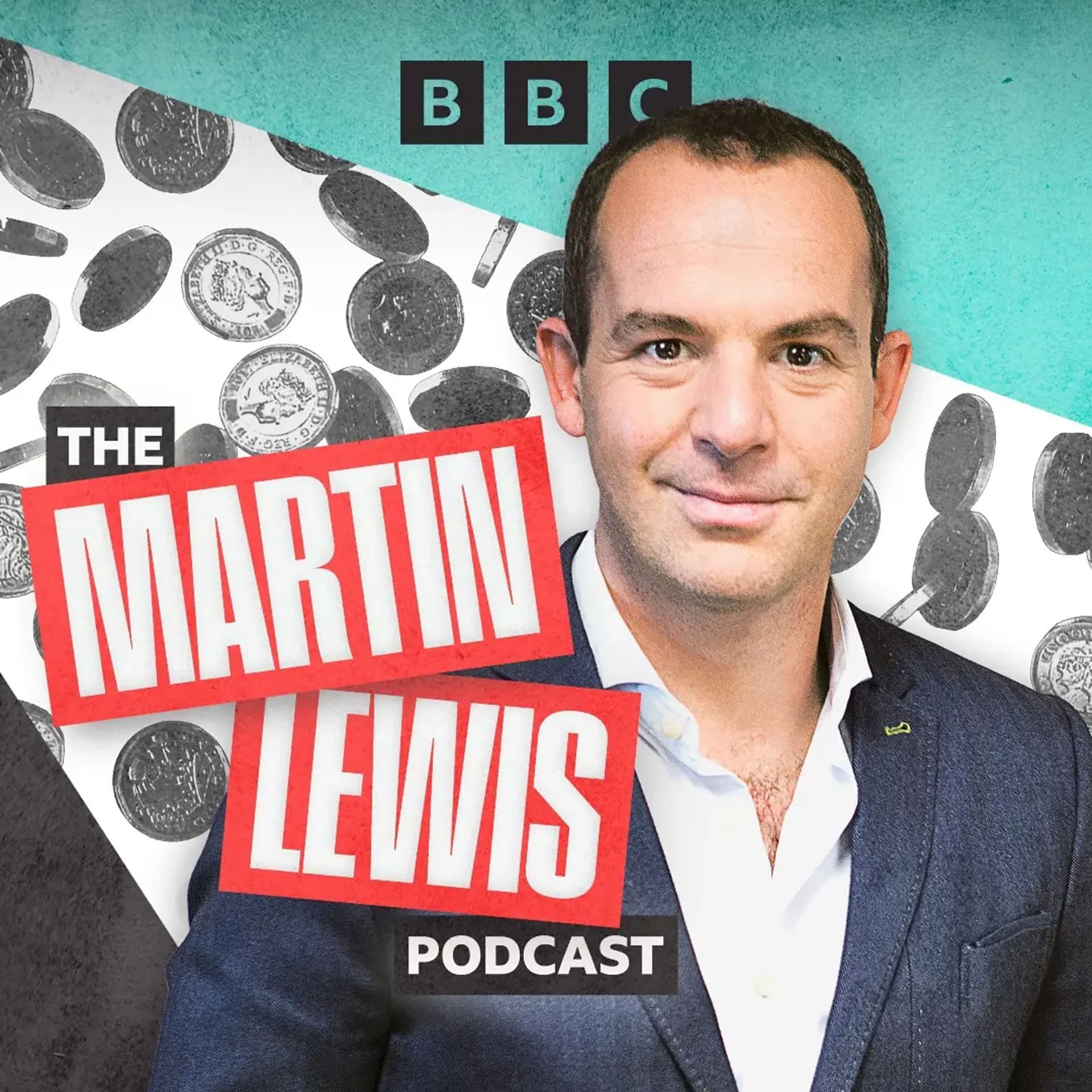
Question Time: Is my energy bill wrong? Do credit cards repay 0% debt first? Is your AI investment a scam? Podcast Description: Martin Lewis answers financial questions, providing helpful money-saving tips.
Key Themes and Questions Addressed
- High Energy Bills
- Question: Why is my energy bill so high and how to check if it’s right?
- Response:
- The caller, Charlene, mentioned that her family pays roughly £1,120 for electricity and £353 for gas each month, questioning the accuracy of these bills.
- Martin suggested several steps to investigate:
- Check the functionality of the smart meter.
- Conduct an audit of appliances to determine which ones might be causing high usage.
- Consider hiring an energy efficiency consultant if the issue persists.
- If unable to resolve, escalate the complaint to the energy company or the energy ombudsman.
- Credit Card Payments and Repayment Hierarchy
- Question: If I have 0% debt and normal debt on a credit card, which do they clear first?
- Response:
- Martin clarified that you must pay the entire balance in full to avoid interest charges.
- He explained the importance of repayment hierarchy, emphasizing that payments are applied to the highest interest debt first, which was formalized following advocacy efforts in 2009.
- Spending on cards with 0% interest can complicate repayments if not managed correctly.
- Investment Scams
- Question: Is the 'Quantum AI' investment with a guaranteed £25,000 return legitimate?
- Response:
- Martin confirmed that such schemes are scams, emphasizing the common tactics used by scammers on social media.
- He advised against trusting any investment advertisements linked to well-known figures, including himself.
- Key points about recognizing scams:
- Look out for promises of guaranteed returns with little to no risk.
- Be cautious of social media ads, as they often use famous names and buzzwords to entice potential victims.
- Cashback and Refunds
- Question: If I've earned cashback but then returned a product, what happens?
- Response:
- Martin explained that refunds on purchases effectively result in negative cashback, which will be subtracted from the total earned.
- He hinted at a need for clarification on whether such negative cashback could lead to owing money if the card is no longer in use.
- Kids' Savings Accounts
- Question: What’s the best savings account for under-11s?
- Response:
- Martin discussed options for kids' savings accounts, noting that availability may vary by institution.
- Recommended accounts:
- Kent Reliance Building Society (4.18% for under sevens).
- HSBC My Savings (4% for ages seven and above).
- Halifax Kids Saver (2.25% with the ability to deposit at the post office).
Additional Notes
- Personal Insights:
- Martin Lewis humorously touched on his affinity for science fiction during the episode, revealing his favorite series and sharing anecdotes related to his love for books and escapism.
- Engagement Encouragement:
- Listeners were invited to submit their financial questions via email, highlighting the interactive nature of the podcast.
Conclusion This episode of The Martin Lewis Podcast provided listeners with crucial insights into managing high energy costs, understanding credit card repayments, avoiding scams, and making smart financial decisions for children. Martin’s approachable style and detailed explanations made complex financial concepts accessible to a broad audience.
Written by AI. May contain mistakes. Listen to the episode to check what was said.
Chapters
Tap a time to open that second in VOExploring High Energy Bills
0:45 to 2:03
Discussion on the common issue of excessive energy bills and potential causes.
“I'm not quite sure why, but I do have two older brothers.”
Advice for Managing Energy Costs
2:03 to 9:59
Detailed advice on managing high energy costs, including meter checks and appliance usage.
“No, but the Sir Matthew, but I've pushed too hard.”
Understanding Credit Card Repayment
9:59 to 14:01
Clarification on credit card repayment hierarchy and managing different debt types.
“But actually, you know, there comes a point with that much money when I go back, I think you might need to pay someone to come and do an investigation for you.”
Understanding Credit Card Debt Management
14:01 to 14:59
Learn how to effectively manage credit card debt and pay it off strategically.
“However, the interest-free period that we talked about, the thing that drives the in-full rule, is a specific thing that only happens if you clear your debt in full.”
The Importance of Paying in Full
15:00 to 16:01
Discover why paying your credit card balance in full can save you money on interest.
“It was a seriously, it was a much nerdier question than you potentially thought it was, but I very much enjoyed answering it.”
Identifying Investment Scams on Social Media
16:02 to 17:42
Understand how to recognize scams that exploit trust and social media platforms.
“about not doing a different transaction on it because that transaction won't be at 0%.”
Anatomy of a Scam: How Scammers Operate
17:43 to 20:09
Learn about the psychological tactics and strategies used by scammers to deceive victims.
“So look, the way the anatomy of a scam on social media works like this.”
Preventing Scams: Key Takeaways
20:10 to 22:05
Get essential tips on how to protect yourself from online financial scams.
“So I've had for years that I've been beaten up, and there's an AI picture of me with black eyes.”
Seeking Help After Being Scammed
22:06 to 22:23
Find out where to get assistance if you've fallen victim to a financial scam.
“you can understand that stories that I have died to get you to click through, I can tell you right now are not true.”
Understanding Cashback Cards
22:24 to 25:28
Learn how cashback credit cards work and their benefits for everyday spending.
“I'm not a fan of Mattin, because that puts Matt first.”
Show all 15 chapters
Managing Cashback and Refunds
25:29 to 27:30
Understand how refunds affect cashback earnings and what to do about it.
“So it is a brilliant spending card for people who do not want to borrow.”
Managing Credit Card Cash Back
28:01 to 28:39
Learn how to effectively manage cash back on credit cards to avoid complications.
“So actually, one of the things is really interesting, because if you go the wrong way and you have too much positive money on a credit card, less from cash back, but it can trigger more money laundering.”
Kids' Savings Accounts Explained
28:40 to 29:57
Discover the best children's savings accounts and how to teach kids about saving.
“Shall we try and squeeze one more quick question in, Matt?”
The Influence of 'The Martian'
29:58 to 34:14
Explore the impact of Martin's blog on the popularity of 'The Martian' book and film.
“So then the best lump sum account that you can pay in, you've got the Santander 123 Mini, but then if under 13, you've got to have that.”
Favorite Books and Genres
34:15 to 35:21
Hear Martin's preferences for escapist literature and his favorite book genres.
“And actually, I find that for my mental health, I have to be in a book.”
Transcript
Automatic transcript. May contain errors.0:00This BBC podcast is supported by ads outside the UK. If there was a big red button that would just demolish the internet, I would smash that button with my forehead. From the BBC, this is The Interface, the show that explores how tech is rewiring your week and your world. This isn't about quarterly earnings or about tech reviews. It's about what technology is actually doing to your work, your politics, your everyday life. And all the bizarre ways people are using the internet. Listen on BBC.com or wherever you get your podcasts.
0:42The anatomy of a scam on social media works like this. I'm not quite sure why, but I do have two older brothers. Short answer, yes, you would have to pay the entire balance off in full. Well, I thought it was worth asking anyway. We're going to start from a basis that you'd be using at least twice what a normal house uses. You can't make a meme out of me saying I don't know the answer. Hello and welcome to the cunningly named The Martin Lewis Podcast. I do wonder what that's going to be about. And this is the question time episode, where you get to ask me your questions on absolutely anything and everything, open brackets within reason, close brackets.
1:14This week, you asked me, why are my energy bills so high? And how do I check if it's right? If I've got 0 % debt and normal debt on a credit card, which one of those do they clear first when I make my repayments? I've just seen you advertising quantum AI with a guaranteed£25 ,000 return. Is it true? spoiler no it's a scam please be careful if you've earned cash back on a card but then return the product what happens what's the best savings account for an under 11 and Martin what's your favorite sci-fi no spoilers play the theme tune
2:02I want to make sure everybody's...
2:32Sir... Can I just have both? No, but the Sir Matthew, but I've pushed too hard. No, no, you haven't. I've gone too far. I have. You're not a Sir. Each... You haven't earned it. Oh, I have. You're not even an MBE. Not yet. Do you know the order? Of course not. I'm a normal person. So, but I'm going to teach my tip for knowing the order. Okay? Another sad fart. It is. It's mock. So MBE, CBE... No, MBE, OBE, CBE. OBE, CBE, KBE. That's the order. So it starts at MBE, member. Then order. No, then O is officer. Then C is commander. OK. And then K is knight. Ooh. Shall we get on? How have you been? Yeah, good.
3:12How are you? I'm good, thank you. Yes. Good. Yes, I'm good because we're not doing pods next week. I'm having a week off. It's half-term week. Yes. So I'm quite good. I'm semi-demob happy. Anything nice planned? Just not working is what I'm going to phrase because I'll be honest, I don't talk about what I do in my time off. No, you don't. I try to keep it private. So that was my not working and most importantly for my mental health, not being on social media. I was going to ask a few girls. Do you not go on at all then? Do you log off and then you're done? I sign off most weekends, as people will know, and I sign off publicly and I sign off when I go on holiday.
3:45I try not to look at it, but I sometimes do. And it's always a bad idea because then I'm then drawn into something and I can't even respond because I'm in my self-imposed silence rule. So I might even, there's one app that's particularly bad. I might even delete the app while I have my week off and then reinstall it. I think that's a sensible move. But anyway, we're not here to talk about me. We're here to answer some questions. Yes. What do you have, Matthew Burnham Esquire? I have an email from Charlene. She starts, good morning. Please, is there any way you can help my parents with their energy bill or give us advice?
4:20Although I'm middle-aged, I've never owned my own house, so I have no idea how to help them. We all live in a large house with lots of perks. However, we still think our bills are excessive. We pay roughly£1 ,120 a month for electricity. A month. And then another£353 for gas a month. They also have solar panels. Their bills have been extremely high for years and they've questioned this with their supplier. However, they only noticed a month with lower prices. Then they went back up to silly amounts once they changed their meters. Can you give them any suggestions on how to check things? They have a smart meter, but it doesn't always work.
4:59Is there anything you can suggest they do? There's a lot in there. That is a very, very large energy bill. I mean, you're almost using in a month what a typical usage is in a year. So let's just put this in perspective. Now, the little bit in there at the start, which we have to put some brackets around is, I think you said, was it, we all live in a large house with lots of perks? I don't know what perks are. It's perks, a hot tub, a swimming pool, a sauna, you know, anything of that ilk, which is using heating for pleasure, massively pots up your costs. So that might be one of the causes for much higher energy bills.
5:42And also it's a large house. So if we start on just a basis, we're going to start from a basis that you'd be using at least twice what a normal house uses. Because when you're saying a large house and you're living in it, I think it means a really large house. But they could be pushing up the bill. So what do you do about this? Well, you say you have a smart meter that doesn't work. It depends what you mean by a smart meter not working. A smart meter is a meter that sends readings to the energy firm of exactly how much you've used. You will also then have an in-house meter and an in-house display, which shows you how much you are using.
6:16My guess is from your phrasing, it's your in-house meter that doesn't always work. Now, I'll be honest, the first thing I would check so you can start to understand your bills, and you could have, you know, there could be issues with your smart, I mean, there's a lot of issues with solar panels recording or even going the wrong way. So you need to be careful that your solar panels are actually deleting your bills, because that should be reducing all this, is I would hopefully, if your in-house smart meter is working, I would be looking at how much you're using, and then I would start and try and turn everything you can possibly turn off, off in the house.
6:51Everything off. So you're getting down to near as damn it, zero usage. And then I would be going through each appliance on a one by one basis to see what it's using. I would be doing a search to see what we would expect it to use. Energy prices, energy appliances tend to work in kilowatts, right? So an appliance is kilowatts. So if you have or watts. So let's say you have an appliance that is 1500 watts. So that might be a kettle or an iron or something hot. That's 1.5 kilowatts. And energy prices is based on kilowatt hours. So on the price cap, it's normally typically about 28p. So if you had a 1.5 kilowatt appliance and you left it on for an hour, you would expect it to use 1.5 kilowatts, which would cost you about 40 pence.
7:44I'm just trying to give you an idea of how you do the sums. I hope that this is useful. But that's where I would want to start, is I'd be going around and looking, what is this thing that is causing us massive usage? Now, the likelihood is for it to be that expensive, it's going to be some form, this is pure guesswork, of heat-based device that is using a lot of energy and is on all the time. So it could be underfloor heating, it could be if you have any form of water heating, if you have a hot tub, it could be something like that that is just burning and is staying on very hot all the time, that's likely to be using it.
8:18If you find out what that is, that works. If this isn't working and you're going, we're just paying a lot and we don't seem to be using any, then you may have a problem with your meter. So that's roughly where I would go. I mean, you're also using a lot of gas, to be honest. I mean, I don't know. And that's probably heating as well. Look, if none of that's working, then I would be going back to my energy firm and making a formal complaint that something must be wrong and you want to investigate that the meters are working and whether there's any form of leak going on or anything, if you can't figure it out.
8:51If you go through all that, remember with an energy firm, if you're still not happy, you can make a formal complaint to the energy ombudsman service. Frankly, at this type of level, if you're finding that you're not capable of doing this yourself, I say that not pejoratively, you know, if this is just all too difficult, You might want to see if there's a local energy efficiency consultant that you could pay. I mean, let's just do these numbers. You're paying 20 grand a year, right? That's a lot. Right. I mean, you could afford, frankly, paying someone, a consultant, four or five thousand pounds, even if it costs that much, to come in and do this investigation for you, if you can't find what it is yourself, is probably going to be worthwhile.
9:29Because, I mean, that is a really, really big. You're talking really, really big house with a swimming pool and a hot tub that's permanently heated type level of energy usage. So, whew. I'm imagining like a big stately home or something. Well, that's what it feels like. Yeah, yeah. But clearly it isn't, because if you're in a stately home, then you'd be expecting more. Yeah, I mean, yeah, yeah. Something's wrong somewhere. I hope that helps, Charlene. I hope that gets you somewhere. At least it's a place to start. But actually, you know, there comes a point with that much money when I go back, I think you might need to pay someone to come and do an investigation for you.
10:07OK, so I hope I've been somewhat helpful on that. It's always frustrating because, I mean, I'm doing it from above. It's all a bit misty what's going on there. So I'm guessing now, second question, sounds like a caller to me, Matt. Am I right? You're right. We've got Jamie. He's in Leeds. Hi, Jamie. Hi, how are you doing? Good. Hello, Jamie. What is your question today? So my question relates to interest in credit card balances. and I understand the... Paying it off in full. In full? Yeah, yeah. Sorry, I'm contractually obliged to myself that I have to do that every time. But my question is, credit card balances or parts of credit card balances don't always attract the same interest rate.
10:52So, for example, if you had a balance of£2 ,000 that was at 0%, you know, from a balance transfer or a money transfer, and then you're spent on the card, would you need to pay the entire card off in full to avoid the interest or would you just need to pay the amount off that you had spent in addition to the balance transferred amount? I'm just not 100 % sure how it works. I'm with you. So let me give you the straight, I'll give you the short answer first and then I'll give you the long answer. Short answer, yes, you would have to pay the entire balance off in full, right? Because that is the way it works.
11:30And this is one of the reasons when I talk about balance transfers I have in my golden rules, don't spend or withdraw cash on the card because that's a different category of spending and that complicates the rules because you have all those different categories at once. Now, the in-full rule is basically because almost every credit card gives you, it's normally, say, a 56-day interest-free on purchases. And what that means is, in effect, if you spend on the card and you clear it in full, then you won't be charged interest on those purchases. But as I've said before, you know, you've got£1 ,000 debt on a credit card, clear£999 and£99p, you're effectively going to pay interest on the entire£1 ,000 because you didn't clear a penny.
12:14that's why it's in full not nearly in full or as much as you can it's not as much as you can it's in full because it has to be in full now to get into the more nitty-gritty of what you're asking this is about repayment hierarchy now before i'm gonna guess that it was 2009 because richard lloyd was a special advisor at the treasury and he then went on to be um involved in which and then he was there i went with him on my charity and then he went on else i'm going i'm dating this to 2009, none of you care about that. I worked with the government at the time, it was Brown's government, on trying to change repayment hierarchy, and we did it.
12:51What happened before then is they would always clear the lowest interest rate first. So what that meant is if you had£500 at 25 % and you had£500 at 0 % and you paid your credit card off, you paid 500 quid off, they'd get rid of the 0 % debt and you'd left with£500 at 24.9%. And it was effectively a way of trapping in high interest rate debt if you had different debt forms. From that point, and I'm going to guess it was 2009, but if I'm wrong on that, it doesn't matter. From that point, it was then changed so that it's the highest interest rate debt they have to clear. Now, there's a few things before that, minimum repayments and existing interest and various other things, complications that happen.
13:39But in general, the rule is your money should go towards paying the highest interest rate debt. So now, if you had£1 ,000 on a credit card and you had£500 at 24.9 % and£500 at 0 % and you paid off£500, you would only have the 0 % debt left. However, he's following me so far. Yeah, yeah, yeah, yeah, yeah. However, the interest-free period that we talked about, the thing that drives the in-full rule, is a specific thing that only happens if you clear your debt in full. Now, obviously, if you've only got 0 % debt left, it wouldn't matter. But it means you'd still be paying interest for the month.
14:20But after that, it would be clear. Which is why I tend to think of credit cards as bespoke specific tools. You get a credit card, you have it for a purpose. That purpose could be spending at 0%. It could be shifting debt to. It could be cheap spending abroad. It could be getting rewards. And occasionally it might be good for two purposes, but you have it as a specific tool for the purpose and you only use it for that. And then you get a different credit card if you want to use a different purpose. And that's always been my philosophy on them because of all these complexities. And that way you can choose what you pay off and you would always choose to pay off the highest interest rate first.
14:56I think I've answered it. Did that get there? Yeah, you have completely, yeah. It was a seriously, it was a much nerdier question than you potentially thought it was, but I very much enjoyed answering it. So thank you for asking. I thought I might have, I was thinking the answer is going to be in full means in full. Yeah. But I thought it was worth asking anyway. But you can, now just on the in full, the key to in full is, and some people get confused because I don't always say pay your credit card in full. I talk about paying your credit card in full when it's effectively, you're using it as a reward credit card.
15:30Now, rewards, I think, could be cash back, it could be points, it could be cheap spending abroad. So when you're using your credit card not to borrow, you should pay it in full because if you don't pay it in full, you'll pay interest. Clearly, if you've got a 0 % card and you're using your credit card as a form of cheap borrowing, then there's no point if you've suddenly decided that you're doing up your kitchen and it was cheaper to put it on a credit card at 0 % and get a 6 % loan, you can't pay it off in full. You're going to pay it off by the month because that's the whole point of getting it.
15:58And you just need to make sure you clear it by the time the 0 % ends. But that's particularly where you want to be very careful about not doing a different transaction on it because that transaction won't be at 0%. And that is an answer in full on where we should leave it. Thank you very much. Cheers for calling. Cheers, bye. Now, I enjoyed that one. What have you got next for me, Mr Burnham, sir? I have a... That's better, by the way. It's not Sir Matt Burnham. Mr Burnham, sir, is fine. I like Samap. But you're not. No, I know. Mate, I hope for you in 30, 40 years time, that will be something that you've earned and succeeded and got yourself through.
16:39But I'm afraid you haven't earned it yet. Fair enough. So what have you got for me? I have a question. It's a question that actually was sent into the inbox and it wasn't really a can you ask Martin this. It was a I have a question and I don't know if it's... Basically, Hamara got in touch and they asked, basically they were scrolling through Facebook and noticed an announcement by you about using this investment platform. And you just deposit£200 and you are guaranteed to gain£25 ,000. And they asked if that's a correct or a scam. So very quickly, I emailed back and was like, just in case you were in doubt, it is a scam.
17:20But I thought it'd be quite good to get your take on this. Well done, mate, and thank you very much for doing that. Yeah, I mean, I'm plagued by these at the moment, again. It's interesting. Ten may need to be on Meta, but there's a rash of them on X at the moment, which it drives me up the wall. I don't do adverts. And while I do now do some talking about investment, nothing of this case, nothing special products. So look, the way the anatomy of a scam on social media works like this. they try and target shortcut rationales. So they use things that resonate with people. Now, the two people who tend to resonate most, and trust me, this is not aggrandising, is me for trust on money and Elon Musk for being really, really rich.
18:10So between us, we're something like 80 % of all scam adverts involved in finance. Myself and Elon Musk, and sometimes the combination. The next one is Bitcoin, because Bitcoin is like a subriquet for getting rich quick. Yeah. So they put Bitcoin in. I should note, it's not, you know, there's lots of Bitcoin is a whole discussion in its own right. But when they're putting Bitcoin in these adverts, you're not actually getting Bitcoin. It's just using Bitcoin, just like they're using me and Elon Musk as another as another buzzword to go. Oh, Bitcoin, Elon Musk, Martin Lewis. Wow. AI, because it sounds clever.
18:47So this was an AI one. And all of those added together are the anatomy of a scam. And what they want to do is they want your contact detail and then they want to get your hooks in you. And these people are very clever, psychologically adept and manipulative. They will always start you with 200 or 250 quid. You put your 250 quid in, what you will often get is you'll be given a trading platform, something you look and log into so you can see your 250 quid. So that's real, isn't it? It's a real investment. I can see it. I know what's going on. I've got my 250 quid. Well, then what happens? You check back in a few days.
19:22My 250 quid is now worth six, 700 quid on this completely fake, meaningless platform. And they call you back. It's going very well. Do you want to invest a bit more? Well, yeah, actually. Yeah. Yeah. Wow. I'm going to put well, I didn't give us a thousand pound. And then they hook you in more and more and people start losing thousands, tens of thousands, hundreds of thousands in some extreme cases of pounds. And then when you want your money out, oh, yeah, well, unfortunately, it's not very liquid. And the rules, because we're based in Switzerland or we're based in Romania, wherever they are, it's all nonsense, right?
19:55Mean that you actually, I'm afraid, we're going to need funds from you to release your money. So you'll need to give us an extra£10 ,000. And you give that and, of course, no money comes. It's just a scam. There's no investment. The platform is wrong. None of it is true. The other route that scammers use, so the other thing to watch for, is they do extreme clickbait. So I've had for years that I've been beaten up, and there's an AI picture of me with black eyes. Oh, I've seen that one, yeah. Yeah. And I've been dead. And when that first came out, that was quite upsetting for a couple of sort of older, distant family members who got in touch, what's happened.
20:32Because clearly, I'm not dead. And they do that to get people to click. You know, they're using dark web marketing agencies about what gets people to click through. And then you click through and then you get a fake BBC or other news story that you then read through. And somewhere in that story will be the, this has been done by the elites as a hidden way to stop you getting this investment that he wasn't allowed to tell you about. If you'd like to know more about it, click. And that's the way that it works. So just to finish, let's do the very plain rules. If you ever see me in an advert relating to investment or a news story relating to an investment or specifically a get rich quick investment or anything that implies that knowledge has been hidden by the elites, it's a scam.
21:12Do not touch it. Do not go near it. Report it to the platform. But as an even bigger rule, and I have no compunction in saying this, social media is so rife with scams that I simply would not trust any advert, especially one with a well-known face in. I mean, anything with me in is definitely a scam, but with anyone else in, I wouldn't trust it. And I would go and do independent research. and you need to be very careful when you click through these things that you could get somewhere that looks like, go and do independent, legitimate research on a recognised platform, right? And if it's a news story that's got a click back, then go and research it somewhere legitimate that you know is a proper news source because these are scammers manipulating, you know, this really is fake news.
21:59This is proper fake news, pure, deliberate, no sense, and not, you know, all of this, me dying, I think it's probably pretty fair you can understand that stories that I have died to get you to click through, I can tell you right now are not true. Look, if you have been scammed, it is difficult, but Citizens Advice has good information and good helplines that can help you.
22:23We have Joff in Enfield. He is on the line. Hi, Joff. Hello, hello, Mattin. Yes. Very good. Hold on. No, no, no, no. I'm not a fan of Mattin, because that puts Matt first. It gives you all of your letters. It could be Mar-t-t. Matthew. Matthew. So we're talking names, Geoff. Geoff? Is that a nickname or is that your real name? I hope that's not rude. It is. No, my real name's Jonathan, but I've always been called Geoff since I can remember. I'm not quite sure why, but I do have two older brothers and I think it probably came down from them. They probably couldn't pronounce Jonathan when you were a little one.
22:57Yeah, the curse of the three-syllable name. Yeah, exactly. Cool. Well, let's move on. Enough naming. What's your question? So this is related to cashback on credit cards. Yeah. So in November, I started using the Lloyd's Ultra credit card for the 1 % cashback, converted all my daily spending, and guess how I pay that off every month? In full. Nice. Very good. Nice. You see, that's good producing, Matt. You could learn from that, mate. Oh, carry on, John. I'm in the wrong job. In December, I purchased a piece of luggage online. And a few weeks later, I hadn't heard from the retailer. So I went back to them and just asked them what was going on.
23:41And they said, we're really sorry, we don't actually have the item in stock. Fair enough. So they said, we'll give you a refund in the next few days. That all was fine. And it came through. But it just got me thinking, what happens with the cashback with that? I'm assuming you don't get the cashback. But what's the mechanism behind that? So this is one of the reasons that they will be refunding you on the same card that you spent on generally. So when they refund you on that card, when there is a purchase refund, you effectively get a negative cashback. So if you're on the Lloyds card, you have a little cashback account in the app, don't you?
24:15It tells you how much cashback you've earned. Correct. Yeah. So they will just minus the amount. So you effectively you're going to earn a negative cashback. And that is in their terms and conditions that they do that. What you've just made me think of that I don't know the answer to, and Matt, you can't make a meme out of me saying I don't know the answer. I know you'd be tempted. That I don't know the answer to is in the event that you got a negative cashback refund. So it's quite, you get what I'm saying. It's pretty simple. You just get, you know, if you earn£1.20 cashback, you now earn minus£1.20 cashback.
24:49In the event that you were to never use the card again, and they're just subtracting it from your cashback account, so you wouldn't earn any future cashback. I don't know if in that circumstance they would then come for you for the actual cash back that you owed. So I only because, you know, it's easy to understand what happens as an ongoing cash back because terms and conditions generally say they won't take it from your account. But I don't know what they would do in those circumstances. I'm going to get Researcher Rosie to check on that one and we will come back and I will try to do it in future.
Read the full transcript
25:19But I just want to talk to you about your cash back card while you're on. so for those people who are listening i know you know this um lloyd's is probably the top all-round flat pick cash back card at the moment um with it you get one percent cash back for a year it also gives you the near perfect exchange rate so it's a top card for spending overseas and you get the cash back on spending overseas which effectively means if you go overseas you're getting a near perfect exchange rate and one percent cash back you're actually getting better than the spot rate on your spending abroad. So it is a brilliant spending card for people who do not want to borrow.
25:55And I often find this is one of those messages, and I suspect for listeners of Question Time will know this, but we'll do it anyway, that I really struggle to get across to people because my view is when you spend on a credit card, the merchant, the shop that you're paying, has to pay a fee to the credit card company. And effectively, when you get cash back, this is a way of subverting that as long as you pay off in full, it's a way of subverting that. So you're effectively getting the merchant fee into your account in the form of cashback. And so it's a no-brainer. Is this your first cashback card?
26:25Have you been doing it a long time? No, since the first one, actually. And how are you finding it? Yeah, fine. I don't really think about it because it gets paid off in full by direct debit. And then you can see the amount you've earned on the app, like you said, and they pay it back to you in January, I think. Yeah. And how much have you earned? If it's not rude to ask, we'll always cut it out if it is. No, it's OK. I think about£48. And so this is the no-brainer for me. So you've had it from November. You've earned about 50 quid. So over a year, you're probably going to earn£140 to£150. And all you had to do was – and you sound like you probably – I'm guessing you're a virtual wallet spender.
27:04Are you a phone beeper or are you a card beeper? A bit of both, mostly phone. OK, so all you had to do is get a card, put it in your virtual wallet and change what you're beeping and set up your direct debit. and you're making 150, what's not to like? And I find it quite frustrating that more people don't do it. Do you know what I mean? Now you're doing it, you're sort of going, I wish I'd done this before, aren't you? Yeah, yeah, it's interesting. I did sort of have a follow-up question relating to what happens if you've got negative cash back. Yeah. So if I may be, so the 1 % deal ends in November and then it goes to something very inconsequential.
27:40At that point, I'm probably going to stop using it. So when they pay the cash back to me in January, I'm likely to have a zero balance. So I'll therefore end up with a positive balance in January when they pay the cash back. Is there any sort of do's and don'ts with positive money on a credit card, what to do with it and what not to do with it? Yeah. So actually, one of the things is really interesting, because if you go the wrong way and you have too much positive money on a credit card, less from cash back, but it can trigger more money laundering. yeah so what i would suggest you do is just spend something on it to use up your cash back that's by far the easiest thing you know go go to the supermarket use that card one more time you won't be paying interest on it anyway you just won't be earning cash back yeah so there's no there's no net cost to you and and just do that to get yourself clear would be the tip then okay brilliant thank you thank you so much for calling it was really interesting No.
28:37Cheers. Thank you very much. Cheers. Bye-bye. Shall we try and squeeze one more quick question in, Matt? Yeah, I've got one from Craig. He's emailed it in to martinlewispodcast at bbc.co.uk. He says, dear Martin and Matt. Carry on. Firstly, thank you, Martin, for all the money-saving advice over the years. The podcast is still my first port of call for money-related topics. He didn't say that, did he? You were BBC-ifying it because there's a place that I also do that we can't mention. Carry on. We've started giving pocket money to our six-year-old daughter and want to start teaching her about savings accounts and that banks pay to keep your money.
29:14We live in a medium-sized town, but we're losing our last bank. We have a nationwide building society, but Nationwide don't offer a savings account for under-11s. Are there any kids' savings accounts which can be operated at the post office so we can physically deposit her money? Or how else can we do this? OK, so I need to be honest, you're limiting me by the specificity that you have to be able to pay it in at the post office. The best paying account that we can put lump sums in for under sevens is Kent Reliance Building Society at 4.18%. You put up to£25 ,000 in there. An adult would have to apply for an under seven, but you cannot pay that in at the post office.
29:48So then the best children's savings account that you can pay in at the post office on lump sums is HSBC My Savings, which is 4 % on up to£3 ,000. But that's only from age seven. So then the best lump sum account that you can pay in, you've got the Santander 123 Mini, but then if under 13, you've got to have that. The other one is the Halifax Kids Saver, but that's only 2.25 % that you can get and you can pay in at the post office. There is a Halifax Kids Regular Saver at 5.5%, which you can put between£10 and£100 a month in. So that's a good interest rate, but you have to put a minimum£10 in a month.
30:29So hopefully one of those will work for you. I would probably sort of stick where you are and then do this from age seven with HSBC, my savings at 4 % would probably, sort of guessing what you're saying but hopefully I've given you, I've given you sort of, point you off in your research of what you can do on that one. Matt. Yeah. I feel, are we not funnying this week? I sort of feel like left out without my funny. Nah, let's do a funny. Oh, phew. Last one. It feels right to do it at the end, yeah. We've got one from Ken. He has sent in our funny this week. He says the other month, Martin, you made a science fiction joke or reference which made him realise that you're probably a geek as well as a nerd.
31:10Our man can. Neither of which is a bad thing in his book, he says. He asks, which is your favourite skiffy programme or film that you like to watch? And then he defines skiffy is what the great late and much missed Ian Banks called science fiction to stop it from sounding too pompous. What a good question. Well, I do like my science fiction, though. I'm also a science fantasy as well. So I'm somewhere in between the two of them. Well, program, I mean, I grew up on the next generation Star Trek. So it has to be that. And I'm definitely Trek over Wars. Books. Books. So I recently enjoyed the Bobbyverse, for those people who know the Bobbyverse.
31:51But I know what I should mention. What I really should mention is I actually believe, and some of this may be completely made up in my own head, but I believe I am partially responsible for the success of the book The Martian, which later went on to be a film. Why? Well, I'm just finding a blog that I wrote on it. So, OK, this is a blog that I wrote in 2013. It was titled The Martian, the most gripping book I've read in a long time, and it cost 77p. And that's where it started. And I then write about how I'd got a Kindle book, The Martian, and I had 20 % less to read. And I read, I say the best way to send up Andy Wears, The Martian e-book, is with this quote.
32:38Don't worry, it isn't a spoiler. So that's the situation. I'm stranded on Mars. I've no way to communicate with Hermes or Earth. Everyone thinks I'm dead. I'm in a hab designed to last 31 days. If the oxygenator breaks down, I'll suffocate. If the water reclaim breaks down, I'll die of thirst. If the hab breaches, I'll just kind of explode. If none of those things happen, I'll eventually run out of food and starve to death. So yeah, I'm a goner. Last word wasn't what was written. No, I can imagine. So I wrote that now. And then this is the update note from August 2016, three years later. When I wrote this blog, The Martian was by a minor publisher.
33:17Many people downloaded the book after the blog, which boosted it up the Amazon charts. I remember seeing it go right up the Amazon charts. Can't remember. It had gone from like being in the hundreds or thousands to being in the teens. Soon after, it was taken off as it was due to be republished with a bigger publisher and to become a film. That film became a Hollywood blockbuster with Matt Damon and the book is now a big deal. I like to think I had a little role to play in that for publicising the book. I'm aware that's almost certainly not true, and I haven't checked it out properly as, well, I like to think I played by part.
33:48I definitely boosted the book up the charts, because it was literally a 77p Kindle book that people weren't doing, and then I wrote a blog, and it really did move up the charts at the time, because I think I put the blog in my weekly email, because I just thought the book was so good. So maybe that's my bit of skiffy history. Maybe I had a part to play in The Martian. And also, another recommendation, Project Hail Mary the book that I believe is also being made into a film is brilliant too although The Martian just what a clever concept and that seems a good way to end that well you didn't actually answer is that your favorite one my favorite one tends to be the one I've read most recently right okay I don't I'm always you know I love a series of books I because I have a stressful life I tend to only read science fantasy and fiction or historic novels I don't like reading fiction that can resonate with what's going on in my day-to-day.
34:41So it has to be a form of escapism. And actually, I find that for my mental health, I have to be in a book. And I tend to listen now, not read. I listen. I do audiobooks. But I always want to be in a book, which is why I love a trilogy or a long set of books, so that I can be in it for weeks and weeks and weeks and weeks. And whichever one I'm in at the time tends to be my favourite. But I think there's a good couple of ones I mentioned. Just after we finished recording that, Matt, after we stop muttered, not that anyone asks me, but I like spy novels. Matt, what's your favourite spy models? You need some attention.
35:14Very quickly, 20 seconds. I really like the Tom Clancy ones. All right, that'll do. Thanks very much for listening, everybody. That's the end of it this week. That's rude.
35:26Tom Clancy's good too. Tom Clancy's the best. This isn't a book club. No, I know. All right. Thanks for listening, everybody, and thank you for your questions.
35:37And that's it for this week's Question Time. Don't forget to subscribe so you know when we release a new episode. We tend to put out a new Question Time each Monday alongside the podcast with Adrian on Thursdays. Aren't you lucky? Two doses of money-saving tips and tricks a week. Make sure you send in your questions. Just email martinlewispodcast at bbc.co.uk. Address them to me and Matt will receive them. Feel free to address them, dear Martin, though. Dear Matt. Dear Martin.
36:20Martin Lewis is the founder of moneysavingexpert.com but of course other consumer and price comparison websites are available you can get in touch with Martin's podcast production team by emailing martinlewispodcast at bbc.co.uk The offers and rates mentioned in the podcast are correct at the time of recording. However, if you are listening on demand, it's worth double checking as details can date. Remember to subscribe on BBC Sounds and leave us a review however you listen.
36:56If there was a big red button that would just demolish the internet, I would smash that button with my forehead. From the BBC, this is The Interface, the show that explores how tech is rewiring your week and your world. This isn't about quarterly earnings or about tech reviews. It's about what technology is actually doing to your work, your politics, your everyday life. And all the bizarre ways people are using the internet. Listen on bbc.com or wherever you get your podcasts.
From the publisher
In our Question Time podcast, Martin Lewis gives you answers on anything and everything, including: why is my energy bill so high, and how do I check if it’s right? If I’ve got 0% debt and normal debt on a credit card, which do they clear first? I’ve just seen you advertising ‘Quantum AI’ with a guaranteed £25,000 return! Is it true? (Spoiler: no, it’s a scam). If you’ve earned cashback, but returned the product, what happens? Can you tell me the best account for under 11s? Plus, beam me up, Martin, what’s your favourite sci-fi?
If you want to ask Martin a question, you now can! His Question Time podcast lets you ask Martin absolutely anything and everything (within reason!) – so if you’ve always wanted to know if he’s got a favourite flower, if he’s a proper romantic, or have a very complicated question about your personal finances, email it to MartinLewisPodcast@bbc.co.uk.