In short
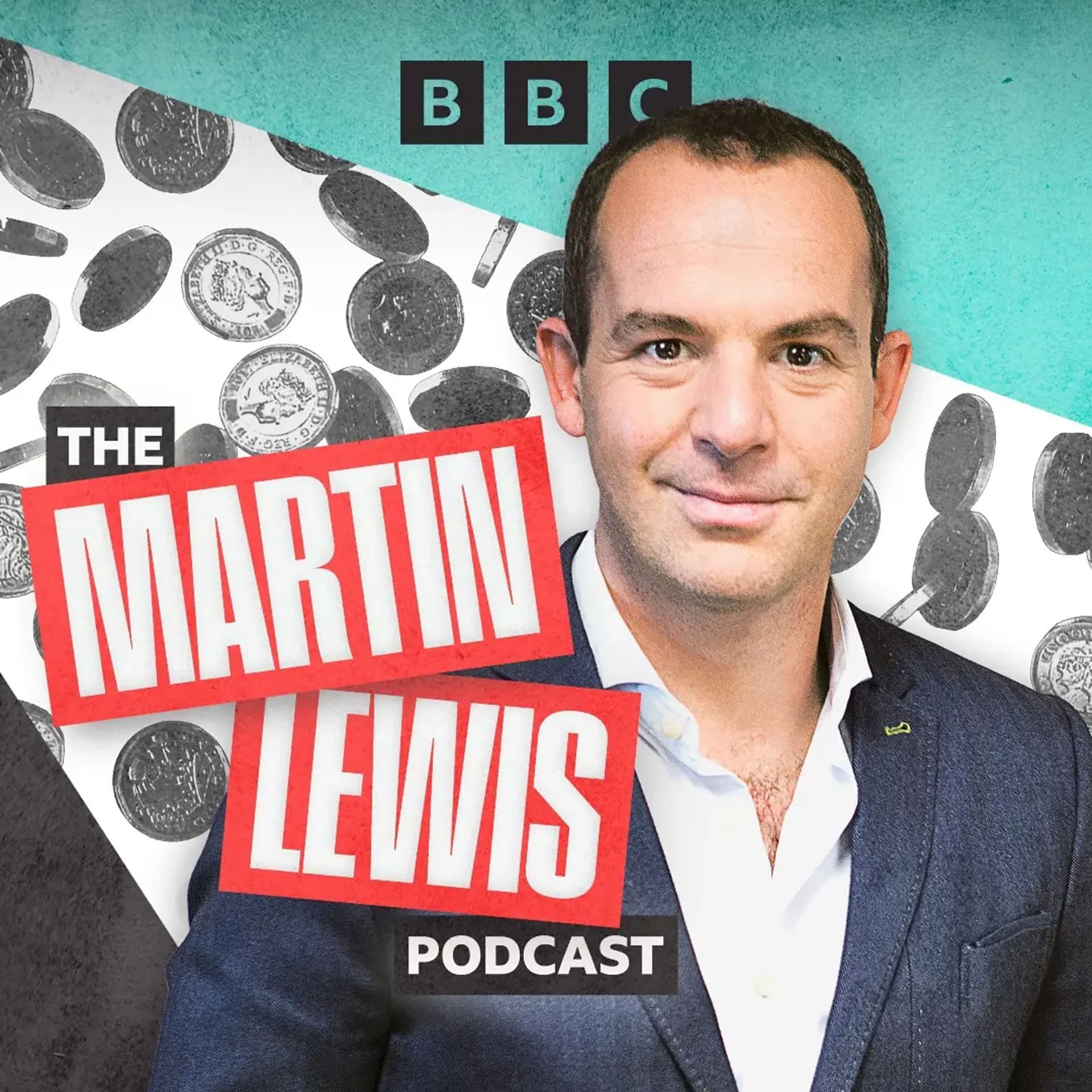
A “Question Time” episode of The Martin Lewis Podcast covering: (1) whether car finance misselling compensation applies to interest-free deals; (2) mortgage vs investing vs spending more for a young family; (3) using a Lifetime ISA (LISA) bonus if completion happens before the bonus is paid; (4) whether to buy missing National Insurance years at age 36.
Guests/callers
Mick (interest-free car finance, ~12 years ago); Dan (mortgage fix ending in October, ~1% currently, considering investing vs overpaying and spending); Harry (LISA bonus timing for a first home purchase); Alex and Millie (Harrogate couple: section 75 success, bank switching, and £30,000 stoozing pot); Holly (age 36, two NI years missing, considering paying to reach 10 years).
Key claims/examples
Interest-free car finance generally yields no compensation; only complaining reveals undisclosed discretionary commission misselling (2007–2024). Dan: overpaying at ~5% is strong; consider a “toe-dip” (e.g., £100/month) into a stocks & shares ISA while keeping an emergency fund. LISA: if completion is before the bonus is credited, that year’s bonus can’t be used; withdrawing later triggers an effective ~6.25% penalty on the bonus. Alex/Millie: £1,800 recovered via credit card/section 75 after a timing-chain dispute; £30k stoozing using 0% debt and high-interest savings. NI: buy-back is usually overkill if projected to get full state pension; consider only if years are cheap (e.g., part-years) and after checking gov.uk projections.
Written by AI. May contain mistakes. Listen to the episode to check what was said.
Chapters
Tap a time to open that second in VOEngaging Banter and Podcast Dynamics
3:06 to 4:44
Hosts Martin and Matt engage in light-hearted banter about their time apart.
“And of course, it couldn't be the Question Time podcast without Professor Dr Sir Matthew Burnham, Esquire.”
Car Finance Misselling Explained
4:44 to 8:21
Discussion on car finance misselling and how to address it.
“Yes, and then what we're going to do is send a badge to anyone who comes on the podcast.”
Balancing Financial Security and Enjoying Life
8:21 to 14:00
Caller asks about saving, investing, and spending on family.
“Reason number one, the process is far quicker if you complain than if you don't.”
Navigating Mortgage Overpayment vs. Investment
14:00 to 17:36
Learn the balance between overpaying your mortgage and starting investments.
“But you know what you're doing roughly, don't you?”
Living Life vs. Saving for the Future
17:36 to 20:01
Explore the importance of balancing financial discipline with enjoying life.
“it's only, the only prices that count, we'll ignore dividends for a second, is the price you buy at and the price you sell at.”
Understanding Lifetime ISAs and Government Bonuses
20:01 to 22:50
Get insights on how Lifetime ISAs work and the impact of government bonuses.
“And I wish you good luck and I wish you and your wife and your son a lot of happiness as well as lots of wonderful financial security too.”
Strategies for House Buying and Timing Bonuses
22:50 to 27:55
Learn strategies for timing house purchases with Lifetime ISA bonuses.
“He says my question relates to the Lysa bonus.”
Success with Section 75 Claim
28:27 to 29:35
Alex and Millie share their experience with a successful Section 75 claim related to a car purchase.
“We've got It's Alex and Millie, their husband and wife.”
Bank Switching Benefits
29:35 to 31:26
Millie discusses their successful bank switching strategy that earned them over £2,000.
“We put in one ourselves with our bank after we had a bit of an issue with our car and managed to get£1 ,800 back.”
Exploring Stoozing for Home Renovation
31:26 to 32:57
The couple explains how they utilized stoozing to save money for their home renovation.
“So I first started following you way, way back, Martin, as I said.”
Show all 18 chapters
Joint Financial Efforts in Relationships
32:57 to 34:21
Alex and Millie emphasize the importance of both partners being involved in financial decisions.
“pot I've heard, new stew's pot I've heard in a while.”
Thanking the Hosts
34:21 to 34:55
Alex and Millie express gratitude for the hosts' advice and support.
“And I think both, if you're in a couple especially, I think both of you need to be on board to get it like the absolute max benefit.”
Addressing National Insurance Contributions
34:55 to 36:58
A new question from Holly about whether to fill in gaps in her national insurance contributions is discussed.
“Matt, I think we could probably squeeze in one more question before we get into the discussion of what we're going to call contributors.”
Understanding National Insurance Years
36:58 to 42:01
Martin explains the implications and benefits of contributing to national insurance for pensions.
“Is it worth paying the two now or would it be considered a waste of money as I'm likely to reach the 35 years needed for a full state pension anyway?”
Understanding State Pension Contributions
42:01 to 42:38
Learn about the importance of considering additional state pension contributions.
“And this would be a really cheap way to buy it.”
Introducing Contributor Badges
42:39 to 44:45
Discover the new badge system for podcast contributors and its significance.
“This is the important point where we reveal what our selection of the two potential names for contributors.”
Voting for Contributor Names
44:46 to 47:17
Find out how listeners can vote on the official names for podcast contributors.
“But still, Matt, this is giving you a little bit of something that you can say, you get a badge if you come on, isn't it?”
Upcoming Badge Rewards for Callers
47:18 to 48:38
Learn about the new badge rewards for podcast callers starting next week.
“Have you got a video of you jumping through hoops?”
Transcript
Automatic transcript. May contain errors.0:00This BBC podcast is supported by ads outside the UK.
0:29CFO. LinkedIn has a word for that. Bull spend. Now you can invest in what looks good to your CFO. LinkedIn ads generates the highest ROAS of all major ad networks. You'll reach the right buyers because you can target by company, industry, job title, and more. So cut the bull spend. Advertise on LinkedIn. The network that works for you. Spend$250 on your first campaign on LinkedIn ads and get a 250 credit for the next one. Just go to linkedin.com slash broadcast. That's linkedin.com slash broadcast. Terms and conditions apply. The sun is out, the birds are chirping, and the open road is calling.
1:16Bring on the spring at the Honda Spring Event and take that road trip you've been dreaming of. Now is the time to check out the Honda Civic and HRV from Honda, the 2025 Kelley Blue Book's KBB.com best value brand. For great deals, visit your local Chicagoland and Northwest Indiana Honda dealer today. Based on 2025 Consumer Choice Awards from Kelley Blue Book, visit KBB.com for more information.
1:44Martin Lewis:We feel spiritually like we're as one, don't we? As it wasn't disclosed to you, you won't know and can't know whether it happened to you without asking, did it happen to me? If you're in a couple especially, I think both of you need to be on board to get it like the absolute max benefit. We are doing something we've never done before. Isn't that what's good about question time? It's so good. Hello and welcome to the cunningly named The Martin Lewis Podcast. I do wonder what that's going to be about. And this is our question time edition, where you get to ask me your questions on absolutely anything and everything.
2:13Martin Lewis:Open brackets within reason, close brackets. And this week, you ask me, can I claim car finance misselling if I had an interest-free deal? Then we have a brilliant caller who asks, should I continue to save hard and overpay my mortgage and invest? Or should I be spending a little bit more on enjoying life with my young family? How do you balance emotional quality of life against financial security? It's a fascinating conversation, that one. Then what do I do if my Lysa bonus comes after I've already moved house? We've got a brilliant success story from a couple of Stoosers. They've built a£30 ,000 Stoos pot.
2:50Martin Lewis:That's artificial 0 % debt that they're using to save at high interest and make money on the money banks have lent them interest-free. And finally, I'm 36. Do I need to top up my missing national insurance years? Let's get on with it. Play the theme tune.
3:21Martin Lewis:Yes, we are back. And of course, it couldn't be the Question Time podcast without Professor Dr Sir Matthew Burnham, Esquire. Add the applause track. Oh, that's just me doing it with my own voice properly. Yeah, I'll do it properly. Hello. Hello, how have you been? Have you missed me in these last couple of weeks where we've not been in pod land? Two weeks without this pod has actually... I've missed it. I've missed spending time with you on our... Virtual time. Virtual time on our recording sessions. Yeah, virtual time, because listeners, while you can't, you won't know because we don't do a video podcast, which is something we have been discussing.
3:56Martin Lewis:I sit in the studio in London. Matt is in Salford. I sit in the studio in London with Rosie. Regulars will know who Rosie is. If you don't, you need to keep listening for other times and other mentions when Rosie gets a mention. I'm not explaining her today. So I sit in London with Rosie, and Matt sits there in Salford. but we feel spiritually like we're as one, don't we? Yes. And it's all there. And I can see you on a TV screen. And I can't see you. So I think, you know, I've definitely won on that basis. Good one. Did you have a nice time off? I had a lovely time off. I really did need to have a little bit of time away from work.
4:28Martin Lewis:It's been quite a stressful opening to the year and there's loads going on at the moment. I do feel somewhat recharged. Although, as always, since I came back to work, which was about Sunday night when I started to really start thinking about work again, I've been so flat out it's always the problem with a holiday isn't it yeah you know you take time off work and then you come back and you've got to catch up on everything you didn't do while you were away there we go anyway speaking of that yes later on yes we're going to make the announcement of the final two aren't we we are so the final two names for what we're going to call people who come on the podcast and ask questions I could just call them our contributors we could but that's not fun that's not in the spirit of what we're doing no so we have selected two you'll have to wait until the end to hear what they are and then we will tell you how you can have your say of which of the two it should be.
5:16Yes, and then what we're going to do is send a badge to anyone who comes on the podcast. Now you and Rosie have been discussing the badge
5:24Martin Lewis:I haven't seen it, she's just so... We need to get on, Matt. This is Question Time podcast, not Martin and Matt Natter podcast. Although I think it might be a little bit of that. Let's carry on. What have you got? Shall we do a question? Yes. One from Mick. He sent it in, martinlewispodcast at bbc.co.uk. He says, hi, Martin and Matt. Fine. Hello. That's perfectly good. Yeah, fine. Yeah. You're at peace with it. I like that. Yeah, it's fine. I've got over it. He says, I'm guessing I know the answer, but if you don't ask, you don't get. I had an interest-free car finance agreement about 12 years ago.
6:02Obviously, I wasn't overcharged as far as the interest rate is concerned, but I assume the dealership added the finance company's fee onto the price of the car. Assuming that the car dealership did a deal with the finance company for the benefit of them and not me, is there any way I could be owed some money? I won't hold it against you if you say no. I still love the podcast.
6:21Martin Lewis:I'm glad you won't hold it against me because the answer is a very, very simple no. What you have to remember is this is the financial regulator and it is the financial regulator who's launched this mass redress scheme into car or motor vehicle finance misselling for for finance agreements between 2007 and right up till 2024, you may have been missold. About 12 million agreements may have been missold. But it's the financial regulator, not a motor regulator. So if you're suggesting that you paid an overinflated price for your car and that then went on the finance, that's somewhat irrelevant because this is about the finance, not the car itself.
6:59Martin Lewis:And the finance tends to be about the interest and you didn't have any interest. and it's all of the compensation and the money that's coming back is coming out of the interest. So no, if you had an interest-free loan, you are not due compensation. Interestingly, even if you had a relatively small amount of interest and there was only a very small commission on the car finance, once they made the announcement a couple of weeks ago, that frankly, you're not going to get any money on that either. But still, big message. You know, we did a special podcast on it the last podcast, a couple of podcasts ago.
7:29Martin Lewis:You can go and listen to that. The big message is if you had car finance between 2007 and 2024, the only way to know if you've got a complaint is to complain. Because the way that they missold to you, for example, a discretionary commission arrangement where the car dealer was given a bigger commission for charging higher interest. That was called a discretionary commission arrangement. The whole way it was missold is that that wasn't disclosed to you. So as it wasn't disclosed to you, you won't know and can't know whether it happened to you without asking, did it happen to me, which is the main way that you put a complaint in.
8:07Martin Lewis:Even though the regulator's going to get firms to try and spot who has been missold and contact them even if they don't complain, that's why it's called a mass redress scheme, you are still better to put in a complaint in. And there are three reasons for that. Reason number one, the process is far quicker if you complain than if you don't. If you complain, the likelihood is if you were missold, you will be paid out this year in 2026. If you wait for them to contact you, then you'll probably be paid out in 2027 or 2028. Reason number two, you may have moved address and they may not have your details and may not be able to contact you.
8:47Martin Lewis:Whereas if you complain, you'll put all that information in your complaint. And the free tools that are out there to help you complain, you don't need to pay anyone to go via the regulator's route. free tools that are out there to help you complain that they will do all that for you you'll put all the details in that you need so the company will be able to contact you reason number three well this goes back to 2007 and with some older agreements the firms may not have kept your paperwork and may not know you exist but if you have the paperwork or you go onto the equifax tool which is part of its app you don't need to pay anything if they're charging you you're doing it the wrong way you can just use the free tool to do this which we talk about in that podcast before and exactly how to use it, then you can find your paperwork and you can send it in.
9:25Martin Lewis:So even if they've lost it, you've still got a complaint. And for those three reasons, if you got a PCP or HP deal on a car, a van, a camper van or a motorbike between roughly April 2007 and 2024, you want to get a complaint in and you want to do it now. And there are free tools online that will help you. But I'm afraid all of that was a very long answer for Mick, because with Mick, sorry, it was interest-free, it's a no. Right, so I presume it's that time in the programme where we have a caller. The reason I presume that is because of timings, we're actually having to record this caller before we do anything else.
10:00Martin Lewis:So you, of course, are going to put it in the show at the point where a caller should come in. So I feel pretty certain that I can say we're at that time of the show where you're going to put it in a caller, aren't you, Matt? No, let's do a read instead. Just kidding. Dan is in Maidstone and he is on the line. Hi, Dan. Hello, Dan. Hello, Dan. Hello. What can we do for you? Lovely to hear from you. Thank you. So I'm sure it's a question you get all the time, but my good interest rate on my mortgage is coming to an end. After a five year fix, it's coming to an end in October. That interest rate is currently just below one percent.
10:36Well done, you. Thank you very much. And obviously, we're looking at interest rates of around five percent. when we renew. Over the last five years, because the interest rate on our mortgage has been so low, we've been putting extra money into a cash ISA, which has been earning anywhere between 4 % and 3.6%. So my question is, do I go ahead as intended and throw the lump sum that we've grown over the last five years at the mortgage at the point of renewal? Or do we look at stocks and shares, stocks and shares ISA, in the hope that we can outpace the 5 % of the new mortgage? Or do I stop putting so much emphasis on paying down the mortgage, paying off the debt, and spend a little bit more money spending time with my wife and my son, making memories?
11:40Martin Lewis:Well, first of all, what a lovely question and well done. You know, financial security and stability is really important. And we shouldn't, you know, many people think of money as just a money issue, but money isn't. Money is a core, crucial wellbeing issue. And the fact that you've managed to build up this pot of money to reduce your future mortgage, to give you more financial security for yourself and your family, all of that adds to your wellbeing. Now, it's not something that makes you happy, but it takes away some of the anxiety and stresses and the misery that comes with life. I always think of money.
12:12Martin Lewis:Money doesn't make you happy, but it takes away many of the negatives. And I think you've done that. And I think you and your family can be very proud of yourself. So let me try. And I think I've got the question. It's basically pay off the mortgage or invest or have a bit more fun and spend a bit more. So let's let's do the let's do the first the easy bits, the bits that's in square brackets in my head, which is paying off the mortgage as opposed to saving, just saving rather than investing. Well, first of all, you've been doing it right. And just for those people who are listening, because your mortgage rate was lower than the interest rate you could earn in savings, you were absolutely right to build up your savings rather than overpay the mortgage because you could earn, because, you know,£1 ,000 at 4 % in savings will ignore tax, gains you£40 a year.
12:59Martin Lewis:£1 ,000 on a mortgage costing you 1 % only cost you£10 a year. So you were£30 per£1 ,000 better off saving than overpaying the mortgage. So you've done that right. But now the mortgage rate is going to be higher than you can earn in savings. You want to reduce the amount on your mortgage. I don't know, and I'm not going to ask you exact numbers because I don't particularly want you to give them out in the podcast. Do you know what a loan to value is on your mortgage? Yes, I do. Is your loan to value below 60 %? Are you borrowing less than 60 % of a house's value? Yes. So overpaying the mortgage isn't going to help you get a cheaper mortgage.
13:35Martin Lewis:Generally, that only works up to 60 % loan to value. So we can factor that one out in this decision. Let's move to the next stage, which is... So overpaying the mortgage is definitely right compared to savings because you're going to be at a 5 % rate and you can't get that in savings, if that's what you're saying, the rate that you can get. I'm sure you've been to a mortgage broker. you're sounding like you're someone who's on top of it and is very financially savvy. So I'm framing my answers in the context of thinking of you that way. If you're not, speak now. But you know what you're doing roughly, don't you?
14:06Martin Lewis:Yes, I do. Yeah, good, good. And it helps me to know that. So the next question is one of risk. If we think of overpaying the mortgage as a certain 5 % return, the question is, what type of return would you want to look at in order for it to be worth you not getting the certainty and you taking some risk. Where's your head on that? Well, I'd be looking for a 7 % or 8 % return, which I am not convinced with my knowledge of stocks and shares that I would be able to do that consistently or comfortably. The balance against that, and just to play the other side is, it sounds to me like you're probably going to have this mortgage cleared in, what, 7, 8, 9 years?
14:52If I've done my maths correctly, it should be five years.
14:54Martin Lewis:OK, so you're going to have your mortgage cleared in five years. And with investing, the longer you invest for, if things go right and there's no certainty and you know all that, the better. So starting off some investing sooner may well be good. You know, and in terms of what you do, you know, the standard thing is a global tracker. Put some money in the global tracker that's got a broad spread of investments. We had the investment podcast a couple of weeks ago where you can hear about that in more detail. and go for nice, easy tracker funds at the start where you've got a really broad spread of investment.
15:24Martin Lewis:And over the long run, there is a decent chance that you will get 7 % on those. Of course, you may not. Of course, you may lose money. But I would say with the amounts that you've got and certainly listening to you, I would be looking at overpaying your mortgage, but I wouldn't be saying it is a binary thing that you should only overpay your mortgage. I think there is certainly room for you to maybe take 20 % of that. That's an arbitrary number, not a suggestion. 20 % of that and start to invest in stocks and shares. Obviously, in a broad spread of funds, we're talking not individual shares where the risk is high.
15:58Martin Lewis:Where would your instinct go? Because this is your decision, not mine. Well, my instinct is that I wanted to pay down the mortgage as much as I could, retaining enough for an emergency fund, as you always advise. Yeah. and at that point probably start drip feeding a percentage of what we are currently putting away into savings some into a overpaying the mortgage additionally and some into a stocks and shares isa yeah i mean i think why i would say why don't you dip your toe in i don't know what what would be dipping your toe in amount that you wouldn't worry about too much be probably£100 a month something like that so here's a suggestion for you and again I have to be very careful I'm not telling you to do anything right why don't you start because you're worried about your lack of knowledge but you sound to me like somebody who is capable of gaining the knowledge over time so why don't you start by drip feeding£100 in a month into a stocks and shares ISA yeah start doing that now and use that both as an investment in its own right but also as an educative process for yourself in future for once you're going to have more money to be able to do this with.
17:08Martin Lewis:How does that sound? It sounds good. My only fear is that I did start drip feeding some money into the stocks and shares ISA. And of course, the war kicked off and that money sharply went down. But you know, you've got to close your eyes to that. You're talking about money you're putting away that you're not going to touch for five, six years. If you look, the worst thing you can do if you've got simple investments in stocks and shares is look at it every day. I mean, it's terrible for you. You know, look at it once a year and remember, it's only, the only prices that count, we'll ignore dividends for a second, is the price you buy at and the price you sell at.
17:44Martin Lewis:Everything else in the middle is irrelevant. So, you know, volatility happens in the world. I think we should go on to the next one, which I think is probably the most interesting bit of all. And I love your question. Thank you so much, Dan, for coming on, which is should you live life a little bit more how old are your kids i've got a three-year-old son who's going to be starting school in september okay that's how lovely um look they grow up really quick mine's 13 now i cannot believe it you know everybody says it to you it's so true that's not financial information it's just true they grow up so much more quickly than you can possibly imagine and i don't think there's anything wrong with someone who's in a stable financial position saying maybe I don't put every single penny away.
18:25Martin Lewis:I mean, it's interesting. We have money personalities out there. There are some people who are terrible and never look after the futures. And there are some people who actually restrict their lives by being too overly focused on the finance. And it is me saying that. You know, my underlying philosophy of what I do, the whole idea of saving money, is not to stop people spending. It's so that you get maximum utility from the money that you've got so that you minimise the cost of the things where you're not seeing gain from, you know, paying your bills. You want them to be as cheap as possible because you don't get happiness from them being bigger.
18:59Martin Lewis:But that doesn't mean you shouldn't spend on something that you enjoy and that you can afford and it's going to make your life happy. So I think if you... I'm trying to... Reading between the lines, it sounds to me like you've been pretty tight and controlled over the finances while you've been doing this for the last five years. Is that fair? Yeah, that's a fair assumption. and well you've done incredibly well and i think if you had maybe saved you know five ten percent less than you had you would have still done incredibly well and you may be if that will give you and it will give you genuine real enjoyment and time with your child then i don't think you should feel guilty if that's what you choose to do and I suspect that your question is because you sort of want to do that but you're worried you're doing a bad thing for the long term and it's what I call a permission question so if if I'm right and it is a permission question if I'm wrong and I hope it's not patronizing but if I'm right and it is a permission question then you definitely have my permission to do it a little bit because I don't think you've done so well is that why you were really asking if you're honest that's definitely part of it and it's it's uh my and my wife's uh priorities not aligning my my priorities were to to save up as much as we could whilst we had the good insurance rate uh in order to get rid of that anxiety she is much more in favor of making memories and uh and living life you you have done incredibly well and it sounds to me like you will continue to do incredibly well and if you can increase the happiness in your life by doing putting 10 less money aside but you're still putting lots of money aside and you're still overpaying the mortgage and you're still putting that money which i think you have the room to do by the sound of it then i i think you could probably get a bit more happiness by just loosening up a bit on it i think that's very good advice thank you very much and and i'm saying that which hopefully you i know what's gone on here i can there's guilt there's worry and guilt and stress and i just want to get it right and i just want i think i think you're pretty comfortable i think you can do it by the sound of it and and just to say to listeners, I have a written question from Dan in front of me that he sent in that includes some numbers that I'm not giving you which is why I'm saying some things that you might think, how does he know?
21:15Martin Lewis:I think you've done well. Thank you. Thank you very much. And I wish you good luck and I wish you and your wife and your son a lot of happiness as well as lots of wonderful financial security too. Bravo to you. Appreciate it. Thanks very much. Good luck mate. Take care. Keep up the good work. Thank you. Thank you. Right, Matt, that was really interesting. It was a fascinating question. What I do love about this podcast is that we have the ability to go into sort of what I would call softer skills questions rather than the hard skills questions, which I tend to focus on in the main pod. So it's great because I don't think there's a place that we could do something like that elsewhere.
21:52Martin Lewis:Isn't that what's good about Question Time? It's so good. It's so good, says Matt, producer of the Question Time podcast. Obviously. So you've probably got to read for me. Yes, shall we do Harry in Sheffield? Yes, I don't know what his question is, but probably yes. Unless it's a bad question, in which case, no. Harry has emailed in, he says, Dear Martin and Matt, people are doing this now. It's just Martin and Matt, isn't it? Yeah, but that's good. I think you need to remember that most producers don't get themselves... Yes, you said that last episode, Martin. I think it's hugely flattering to you.
22:22It would be inappropriate for Matt and Martin. Right, here's a question. Firstly, he just wants to say thanks to Martin and his team for the financial information you provided over the years. Thank you very much. And he also says to Matt and the rest of the podcast team for the hard work in bringing the podcast to us every week. You're welcome. Thank you. Oh, well done, Harry. I like that. Thank you. That actually makes me look like a bit of a mean person now, doesn't it? For commenting on the fact you said Matt to the mat. No, it doesn't. It's nice.
22:48Martin Lewis:Everybody knows. Everybody listening gets that's just part of cutie shtick. Do not worry. Carry on. He says my question relates to the Lysa bonus. I'm currently in the process of buying my first home and will be using the Lysa as part of it. Great. As the new tax year has started, I contributed another£4 ,000 to it, which means I should be entitled to the 25 % government bonus. Correct. However, what would happen if I complete the purchase before the bonus for the year is paid, which is usually the last day of the following month? I'm assuming it will get paid into the now empty account as normal, and I'll just have to pay the penalty if I wanted to take it out before retirement.
23:27or is there a way the bonus can be paid early if the provider is notified that the lice is going to be used?
23:34Martin Lewis:I do not think there is a way around that. If you complete before a bonus is paid, you won't get to use that bonus towards your house move and you would either have to keep it or withdraw the penalty. I'm not aware of a way around that. Now, let's just talk everybody through this. So the Lifetime ISA is a first-time buyer's product that you can open between age 18 and the day before your 40th birthday. you get 25 % bonus put on top of the money you put in. You also earn interest as well, but you don't get a bonus on the interest. 25 % bonus put on top of the money that you put in when you use it towards a qualifying first-time property, which is a property that you have a mortgage on that costs under£450 ,000.
24:15Martin Lewis:You can only do that if you've never owned a property or part-owned a property anywhere in the world before. Alternatively, you can leave it until you're age 60 and take it out. But if you take it out for any other purpose, you would pay. what I normally talk about is an effective penalty of 6.25%, but it does work slightly differently in this case. So let me just try and explain. So the bonus tends to be paid monthly after you've put the money in. So if you put£4 ,000 in, you would get a£1 ,000 bonus on that. That's the maximum you could put in a year. And that bonus would be paid at the end of the month.
Read the full transcript
24:48Martin Lewis:Now, the rule is, if you withdraw money, so of course, you can leave this here until you're 60, But if you withdraw the money, then you pay a 25 % penalty. Now, the reason I phrase the 25 % penalty as a 6.25 % penalty is this, because that's a 6.25 % effective penalty on what you've put in. So if you put in£10 ,000, you get 25 % added on top of that, which is£12 ,500. But you then get 25 % taken off that. And as we're now taking 25 % off a bigger number, 25 % off,£12 ,500 is a bigger amount than 25 % on£10 ,000. And that's actually where the 6.75 % penalty comes in because you would effectively withdraw£9 ,375.
25:40Martin Lewis:So you put£10 ,000 in, you get£9 ,375 out because the bonus is added on, then the penalty's taken off. That's why I call it an effective 6.25 % penalty. Now, the reason I'm explaining this is because in Harry's specific example, he's put£4 ,000 in for this year. I'm sure he's got money in from previous years and got bonus in for previous years. All of that will go to his housing deposit. But if the bonus on the£4 ,000 is added afterwards and he wants to withdraw it, he would lose 25%. So he would take out£750. pounds. Now, while that is not a situation that Harry wants, quite understandably, it is worth thinking if you are in the position where you need that money and you've got your own pension savings elsewhere and you really want it for your new house, it's not like you're paying the penalty on the entire amount.
26:29Martin Lewis:And at least it's only the penalty on the bonus. It's not the penalty on the money that you put in. You're just paying the penalty on the bonus. So 750 is still better than nothing. You're at least going to get some form of bonus on the back of it. That's me trying to put a silver lining to the cloud. So most important, let's just hope they pay you quickly enough for you to be able to use it. I mean, what you could certainly do is you could ask them, do you know when you're going to pay this bonus? I mean, you always have the call, is it possible to speed it up? I've never heard of it being done, but this is the first time I've had this question.
27:00Martin Lewis:So you may be able to do it and do let me know if you can. But even if they just tell you the day the bonus is going to go in, you might be able to utilise that and to move your exchange date as long as you're not losing the house that you're going for. I wish you good luck on it, Harry. That was going to be my question. Could you just move the date that you complete? Well, you could move the date, but of course, I don't know, and I don't say this in a pejorative way. Have you ever bought a house, Matt? No, no. Okay, so the point when you buy a house, it is always a negotiation between the buyer and the seller.
27:30Martin Lewis:And the seller will obviously want you to exchange and get it locked in sooner. And if you don't exchange they might there's always the chance that they'll sell it to somebody else and not sell it to you and someone else will come in and gazump you so it's never moving the date is is quite a big thing i see if you want if you've got if this is the house that you really want to buy and you want to lock it in then you're not going to want to move the date because there's a that increases the risk that you might not get it so uh that's why that's why it's quite difficult on that one are you sitting there thinking oh i know what i wanted to ask him well this is your opportunity.
28:02Martin Lewis:If you've got a question, then just send them in to martinlewispodcast at bbc.co.uk and please do start them, dear Martin. No, dear Matt. Dear Martin. Dear Matt. Matt, are we going into a caller now? We are doing something we've never done before. What's that? We are going to get two callers up at the same time. It's a bug-off call. It's a bug-off call. We've got It's Alex and Millie, their husband and wife. They're both in Harrogate and they are here with us. Hello. Good afternoon, Matt and Martin. Hello, Alex, and hello, Millie. Hello. Good afternoon. And I'm glad, Millie, I'm guessing I can work out which one you are because Alex could have been confusing if there hadn't been a Millie there.
28:49To be fair, it's probably the one with the kids screaming in the background. Okay. Yeah.
28:53Martin Lewis:That's good. Alex and Leslie, that would have been a tough one, wouldn't it? Which would you have gone for? Alex and Millie, anyway, I digress to carry on. So what are you calling for? So I emailed in to Matthew Esquire recently. Thank you very much. We've sort of been avid listeners of the podcast. My wife actually introduced me to you, Martin. You married very well, Alex. Yes, you did. You married very well. Alex, remember that. And yeah, obviously we've been following for years now and obviously we take all your advice and guidance and we've recently had a couple of really good successes. Off the back of, I think it was one of your previous callers who mentioned the section 75 claim.
29:36We put in one ourselves with our bank after we had a bit of an issue with our car and managed to get£1 ,800 back.
29:44Martin Lewis:Oh, tell us, how, tell what, when, when, how, why? So we bought a car secondhand from an approved used garage and after about 11 months, the car developed a timing chain issue and the garage was absolutely awful. They refused to respond to anything. We went through the ombudsman, which took an absolute age. The motor ombudsman? Yes, correct, yeah. Well, it's called an ombudsman. It's not a statutory-based ombudsman like the financial ombudsman. It's a trade body ombudsman. I always have questions, who should be allowed to call themselves ombudsman or not? But carry on, I'm delaying your story.
30:19Eventually, we sort of gave up with that route, saw the story and we thought, hey, let's try this and went to our bank and, yeah, it was absolutely incredibly easy. They were very supportive, got the evidence to them and very quickly we found ourselves back in the position of having£1 ,800 which we'd had to fork out to cover a car.
30:36Martin Lewis:Oh, well, that's absolutely wonderful. So just to explain to everybody, if you pay for an item costing between£100 and£30 ,000 and you pay for any of it, even a penny on a credit card, the credit card company is jointly liable with the retailer. Now, the advantage is if the retailer is causing difficulties, you can go to the credit card company and hopefully as in your case which is brilliant it will say all right we will give you your consumer rights and we will get because you have the same consumer rights with the credit card companies with the retailer and if they don't what's actually interesting is with the credit card company you can take them to the financial ombudsman about consumer rights whereas it's much more difficult with normal retail you generally have to go to court unless as an ombudsman but the ombudsman tend to be actually dispute resolution processes rather than full-on ombudsman.
31:22Martin Lewis:That's why it worked. Well done. Brilliant. You said a couple. I want more. More savings, please. Millie, have you got one? Yeah, no, absolutely. So I first started following you way, way back, Martin, as I said. You are so superior at money saving too, Alex. I'd like to say that now. But that started in 2019. Before I met Alex, I was obviously trying to save a big pool for a deposit for a mortgage on a house. It meant by the time I'd met Alex and we pooled together, I'd save so much. one of the recommendations I took was to open at the time, which was a really, really high interest or the highest at the time, which was a Marcus by Goldman Sachs.
31:54So like that, for example, was great. We've done all of the bank switches you've recommended. So we've made over two grand on that.
32:01Martin Lewis:Oh, your serial bank switches. Love it. Yeah, no, absolutely. So I mean, don't get me wrong. The logistics of working the joint diary and all the bits. I will admit I did cock up on one of them, didn't I, Alex? Of which Alex will always, always hold that against me. um we're all allowed one mistake a lot and then at the moment i think alex can talk more about what we're doing for our house renovation and money saving we uh we ended up sort of listening in and hearing about the whole stoozing thing and being fairly fastidious with money we thought we'd have a look into it a bit more and decided we'd try it um given we're doing a diy project renovation at the moment we thought it'd be a great way of covering all our costs and not having to dig into our savings and it's worked out really well and we've managed to sort of pull about 30 30 grand so far.
32:45Martin Lewis:You've got a 30 grand stew's pot? Yeah. Wow. We're trying to find a way of making it a bit bigger, really, because we've got a lot of credit with other people, which isn't on a 0%, so it's a sort of wangle of the way of getting around that. That's the biggest stew's pot I've heard, new stew's pot I've heard in a while. So for those who don't know, stew's pot is where you deliberately create artificial 0 % debt that you don't need. So you borrow money at 0 % and then you save it at high interest. So if you've got 30 grand at 0 % and it's complicated how you do it and this is only for people who are financially savvy as Alex and Millie clearly are and we've talked about how to do it in the past I'm not going to run into the full details on it it's called stoozing well with 30 grand at four percent interest that's 1200 quid a year gained isn't it I mean that's really well done that's really I tell you what's interesting for me and we had we had the caller on earlier and he was talking about how his he and his wife have slightly different ideas about whether savings and that that can be a friction in a relationship I'm not saying it was in his case.
33:40Martin Lewis:But to do something like you're doing, you both have to be into it. To be able to get a 30 grand stews pot and to be doing the bank switching, it has to be something that you both love together, I'm presuming. And I can hear it's there. I mean, absolutely. I mean, we've done it all together. I'd say we're a couple. We sort of, it sounds awful. The stereotype is there's always one person in the couple that knows all about the accounts, the money, et cetera. And I think, like, we are completely against that. Like, we both know what's going on. I mean, Alex started with the stusing and I was like, hold on now.
34:11Come on, you've got to let me in. I need to know what's going on. I'm the diariser here. You know, we have not missed any of them. So, yeah, absolutely. You're right. It's definitely a joint effort. And I think both, if you're in a couple especially, I think both of you need to be on board to get it like the absolute max benefit.
34:27Martin Lewis:I think it's perfect. You two are amazing. I want to do a program with you. You're brilliant. I love it. It's fantastic. Matt, we might need to do an Alex and Millie special, I think. I was just thinking the same thing. we could go through we could maybe bring them in with Adrian here on the main pod one day and just go through all those different issues, that could really work you never know, you're listening here, you might hear it in the future, you two are brilliant thank you so much. And thank you for your help as well. Thank you for all you've done for us as well. It's absolutely my pleasure, I love to hear it, thank you.
34:55Thank you.
34:55Martin Lewis:Thanks both. Cheers, bye. Matt, I think we could probably squeeze in one more question before we get into the discussion of what we're going to call contributors. Okay, I think we can do one from Holly. She says, Hi Martin, big fan of the show. Oh, thank you, Holly. And I'm sure she loves you too, Matt. Yeah, definitely. Even if she didn't mention you. She just forgot. And I don't want you to get upset about that. She forgot my name. We're not going to mention that she didn't mention you. Just carry on. Just move on. Actually, no. Someone did email in the other day and said, Hi Martin, and I forgot the name of the other guy.
35:27Martin Lewis:Well, at least they remembered you. I mean, Holly, she's not noticed you. Well, I did think you could just go back on a previous podcast, but I didn't want to say anything. Anyway, let's go. Holly's question. We may be getting two up our own whatever, McCall's on this show. No, never. Holly, what's Holly's question? I like Holly. She's a big fan of the show. She says she's currently debating whether to fill in some of the gaps in her national insurance contributions. It's hard to say that. Okay. I have two years I can pay. It's not really. It's national insurance contributions. It is. Some of the gaps in my national insurance contributions.
35:59Well done. Carry on. Thank you. So she says, I have two years I can pay, which would bring my total number of years to 10. Not as many as I would have. Oh, I can't speak. Matt, what's happened to you?
36:11Martin Lewis:Have you got podcast fatigue? I have, yeah. I'm going to have a nap under the desk. This is a new condition that many people of your age, many millennials are suffering. It's podcast fatigue. It's a terrible thing. Too many podcasts. So she has two years. She has two years. I want you to leave all of this in. The listeners want this in, Matt. They don't want this in. They do want to hear the question. Leave it in, Matt. Can this guy just say this question so I can hear it? Do you know what I'm going to let you do so the question's clear? You can start the question again, but all this needs to stay in.
36:42OK. OK. Holly, big fan of the show. She's currently debating whether to fill in some of the gaps in her national insurance contributions. She has two years she can pay, which would bring her total number of years to 10. Not as many as she'd like to racked up. But she spent several years working abroad and sometimes studying. She goes on to say, I'm currently 36. Is it worth paying the two now or would it be considered a waste of money as I'm likely to reach the 35 years needed for a full state pension anyway?
37:09Martin Lewis:Righty-ho. That's a really interesting question, Matt. Well done for getting all the way through without any stumbles on the second read. You are a professional. Right. So the first thing to understand is the minimum number of years that you need to have of national insurance contributions in order to get a state pension is 10 years. That's the minimum. If you have less than 10 years, nothing counts. But it sounds to me like you're planning to work in the UK, so that isn't an issue. I think this is probably overkill. Until last year, you could buy back a huge number of years in one go, and that was a transitional arrangement when we shifted from the old state pension to the new state pension.
37:45Martin Lewis:That's gone. You can now buy back six years. For those of you thinking, what is all this buying back extra national insurance years all about? Just a quick briefing. When you hit state pension age, whether you get a state pension or not, it depends on the number of national insurance years. Now, you get national insurance contributions from work. You can also get it when looking after children or if you are eligible for certain benefits. And you accrue them over the years. To get a state pension, you need a minimum of 10 years. To get the full state pension, you need roughly 35 years. It isn't 35 years.
38:24Martin Lewis:Don't think it is 35 years. Whether it's 35 years or not depends. But let's just say roughly 35 years. Now, if you've got between 10 years and the full amount of years, roughly 35, then each extra year that you have means you get a bigger state pension. An extra national insurance year is worth around 360 quid a year of state pension for you. So if you're going to retire on less than the full state pension, and you can buy a year even if it costs you£1 ,000, because it's going to add£360 a year to your state pension, if you live just a few years, once you get your state pension, you make the money back.
39:05Martin Lewis:And currently, the state pension is also triple locked. That means it rises with the higher of average earnings, 2.5 % or inflation. So it's completely unbeatable looking at the current system. The question for younger people, though, is the current system could change. So that's why you may want to look back if you're missing national insurance years and buy them back if you're not going to get the full state pension anyway. But as I've been explaining in the podcast, it's a little bit more complicated than that. Back to my other explanation after this explanation. I know it's all a bit meta.
39:42Martin Lewis:The first thing I'd do is I'd go and look at your pension projection. On your pension projection, your state pension projection, which is on gov.uk, are you predicted to be able to get that you will have the full state pension when you retire, which is a very long time away? If you are, I think this is probably overkill. Because it's not like once you get to the full state pension, you earn more national insurance years. You're getting even bigger than the full state pension. You know, it doesn't work like that. And many older people complain, going, I've now got enough for my full state pension.
40:13Martin Lewis:Why do I have to keep paying national insurance? and that's because national insurance is a tax. In reality, it's just a tax that also happens to be demarked as your contributions towards getting a state pension once you're older. So if you are on for the full state pension, then you probably don't need to do this. The only time I would make an exception on that is if you could buy these years really, really cheaply. If any of these are part years, so a part year is where you've almost got all the contributions you need to get a year, but you're not quite, and it's binary. So I know people who've been able to buy part years for 15 quid.
40:49Martin Lewis:Normally, a full year is going to cost you in the 900-ish pounds. But if you could buy a part year for 15 quid, 20 quid, hey, maybe even 50 quid, even at your age, just in case something happens in future, as you can only buy back a certain amount, you can only buy back six years, I would be tempted to go, you know what, it's 50 quid, I'm just going to do it just on the half chance that I might need it at some point in the future. but if you're having to pay the full 950 for it I'd probably be thinking it wasn't worth it now when I was doing my big explanations on buying back national insurance years when you could buy a lot back I could only really go you could only really strongly do the analysis for people who were basically got to around their 60s because once you're around your 60s you have a pretty firm idea of what's going to happen to you you are so young at 36 for doing this there are a lot of risks that you're just going to be buying money throwing stuff away you know there are big risks for you that the state pension might become means tested once you're older.
41:43Martin Lewis:We don't know that. I mean, I don't think that's going to happen imminently. I don't think it's going to happen for people who are retiring now. But you're talking about retiring in 30 to 35 years. And who knows what will be happening in the UK to state pensioners in 30 to 35 years. So there are a lot of risks in this, in doing it now. If you're on to get the full state pension, I probably wouldn't be doing it other than if you can get a year really cheaply so that, you know, it's beer money type costs where you may as well do it just as a safety net in case there's a year that you don't work in the future and you wouldn't be able to get.
42:15Martin Lewis:And this would be a really cheap way to buy it. I hope that makes sense. You do need to go and do a little bit more reading. If you are thinking, if you've gone in the frame of saying, actually, I think I will do by a year, then you need to do some thinking. And there's a government system where you need to call and get some advice first on whether it's right or wrong for you before you buy it. So we're only on the first step of whether you should look at it, not whether you should actually do it at this point.
42:37Martin Lewis:Right. And now, Mr. Burnham Esquire. Yes, Martin Lewis. This is the important point where we reveal what our selection of the two potential names for contributors. A contributor is being defined as anyone whose question is read out or any callers who come on to the Question Time podcast or anyone who gives information that we use. you will then get to use this name, whatever we call you. You will be able to perfectly legally, within the canon of the podcast and not within the actual law, perfectly legally use this after your name. And if you are a caller, you're going to get a badge. Is that right?
43:17Martin Lewis:Yes. I haven't seen it. She's just so mean. So I took the liberty of designing the badges myself. and I want to say that I've done a fantastic job. So, what do you think? It's yes. It's definitely me with Mickey Mouse-ish headphones on and I am A and you've gone for one of the two options but of course that could change. Yes, so that was just the mock-up. And have we got budget from the BBC to send badges to our callers? We do. I've had the green light from the editor. Has Tom said yes? Tom said yes. Well done, Matt. Thank you. Wow. This is exciting. but we're just clarifying the rules now this is only for callers so yeah if you come on and we speak to you and you ask your question or you say your success to us then you can have a badge if we just read out your question then you can call yourself one of these whichever one of the two options is whatever you decide but you won't get a badge unfortunately now this for those listening this is Sony award winning gold standard producing here thank you because what Mr Burnham Esquire has done is he's the person who has to get people to come on and do the calls on the podcast.
44:30Martin Lewis:Now, what's interesting is actually in my subject, it's often quite difficult because many people who call, say, in the main podcast, it's about problems that they have. We actually tend to find it easier in this podcast as many of the people are quite into their finances and it tends to be about positive rather than negative things, which they're more happy to talk about, like our brilliant callers today that we've had in. But still, Matt, this is giving you a little bit of something that you can say, you get a badge if you come on, isn't it? That's where you've come from. That's what you've done this for.
44:57Martin Lewis:When they see their badge, they might not be as... Are we going to, just, sorry for going in this, before we reveal, before we do the big reveal, are we going to show anybody what the badge looks like or is it only for people who get the badge who will actually get to know what's on the badge? This is an interesting decision. I think you should not tell anyone. We don't show anyone and you only find out if you come on and ask the question, Dane will send you the badge. Because, honestly... And just to say, the BBC's going to do the postage and everything. People don't have to come to London to pick the badge up.
45:29No, no, no. It'll get sent to you. Second class stamp is fine. Second class. I'm looking at the badge now on my phone. I'm very impressed. I'm proud of myself. Do you and I get a badge? Yeah, of course. Does Rosie get a badge? It depends how nice she is to me that day.
45:47Martin Lewis:Oh, she's just pulled her... She's just done pouty lips. She's not happy. Rosie gets a badge and I might need a badge for my daughter. And Sally as well. And Sally gets a badge too, yes. Does Simon get a badge? I'm not getting involved between you and Simon. Especially on the mass reveal that's about to happen. So mass reveal, in editing afterwards, please add a drum roll. Thank you. So, the two potential names for contributors on the show are first of all, suggested by podcast producer Simon, and which really annoys podcast producer Matt, Matt Samley produces the main podcast, is MPC, Martin's Podcast Contributor, which is also the Monetary Policy Committee of the Bank of England to Decide Interest Rate.
46:33Martin Lewis:That's why you like it so much. That's the clever financial spin. Yeah. The other one, and can you remind me who suggested it? Yes. So this was from Steve. Yeah. Steve suggested that people become Esquires, which is, as we call Matt, Matthew Burnham, Esquire. you'd be able to become an Esquire. But an Esquire stands for? Extremely Savvy Questioners. So your choice is between MPC, Martin's Podcast Contributor, and Extremely Savvy Questioners, who will be referred to as Esquires in future. And that is the choice. And how are we going to allow people to vote on this? I've been thinking about this for a while.
47:11I had to go and email someone at the BBC to find out if we could do it properly. Oh, I had to jump through many hoops. I think Have you got a video of you jumping through hoops? Yeah, many I'll put that on social Okay It's at Crufts actually So I think what we should do is you should email in with which one you like put it in the title not the title the subject line and just put ESQ or MPC I'll top them all up we'll close it after a week or so
47:41Martin Lewis:Yeah, so we decided so we did discuss me doing a social media poll which I do a lot of but then we'll have a lot of people voting who don't actually listen to the podcast and we didn't think that was fair. This is, it's you who are listening towards the end and us droning on about this. I don't know, we've been going for about 40 minutes now and who are still listening who get the right to vote on this. So yeah, so email martinlewispodcast at bbc.co.uk. You don't need to put anything else in there. You literally just put in the subject line either MPC or ESQ. Matt will top them up and no cheating and multiple voting, please.
48:14Martin Lewis:Nope. That's not in the spirit of what we're doing. And then we'll reveal it next episode. And then we will reveal it next episode, and that will be the formal name, and then the badge will be done, and then I'm going to say this, Matt, and I hope we're not, you know, busting budgets here. From next week, when we do the reveal, if you are a caller on next week's show, you will get a badge. It might take a little while for the badges to be made and for it to be sent to you, because we have to wait until we know which the winner is. But you will get a badge from next week onwards. Yep. Hooray! Let's end here.
48:42Martin Lewis:Woo! Thanks, everyone. And that's it for this week's Question Time. Don't forget to subscribe so you know when we release a new episode. We, yes, that's me and Matt, put out a new Question Time episode each Monday alongside the podcast with Adrian on Thursdays. Aren't you lucky? Two doses of money-saving tips and tricks a week. Make sure you're sending your questions. You can email martinlewispodcast at bbc.co.uk. And don't forget to vote. Do you want to be, if you contribute, an MPC or an ESQ? We need your votes now. Keep voting, folks.
49:32Martin Lewis is the founder of MoneySavingExpert.com. But of course, other consumer and price comparison websites are available. You can get in touch with Martin's podcast production team by emailing martinlewispodcast at bbc.co.uk. The offers and rates mentioned in the podcast are correct at the time of recording. However, if you are listening on demand, it's worth double checking as details can date. Remember to subscribe on BBC Sounds and leave us a review however you listen.
50:27I got bills, I gotta pay independent journalism and storytelling. It all starts with a subscription to bbc.com and the BBC app. Find out more at bbc.com slash unlimited.
From the publisher
In our Question Time podcast, Martin Lewis gives you answers on anything and everything, including: can I claim car finance mis-selling if I had an interest-free deal? Should I continue to save hard, overpay my mortgage and invest, or spend a bit more enjoying life with my young family? What do I do if my LISA bonus comes in after I’ve bought my first house? Do I need to top up missing National Insurance years at 36? We also have a brilliant success story from a couple of stoozers who’ve managed to build a £30,000 stooze pot, plus, you get to decide what we call you if you ask Martin a question on the podcast – but to find out how, you’re going to have to listen to the show! If you want to ask Martin a question, you now can! His Question Time podcast lets you ask Martin absolutely anything and everything (within reason!) – so if you’ve always wanted to know his favourite ice cream flavour, if he’s ever pondered the meaning of life, or have a very complicated question about your personal finances, email it to MartinLewisPodcast@bbc.co.uk.