In short
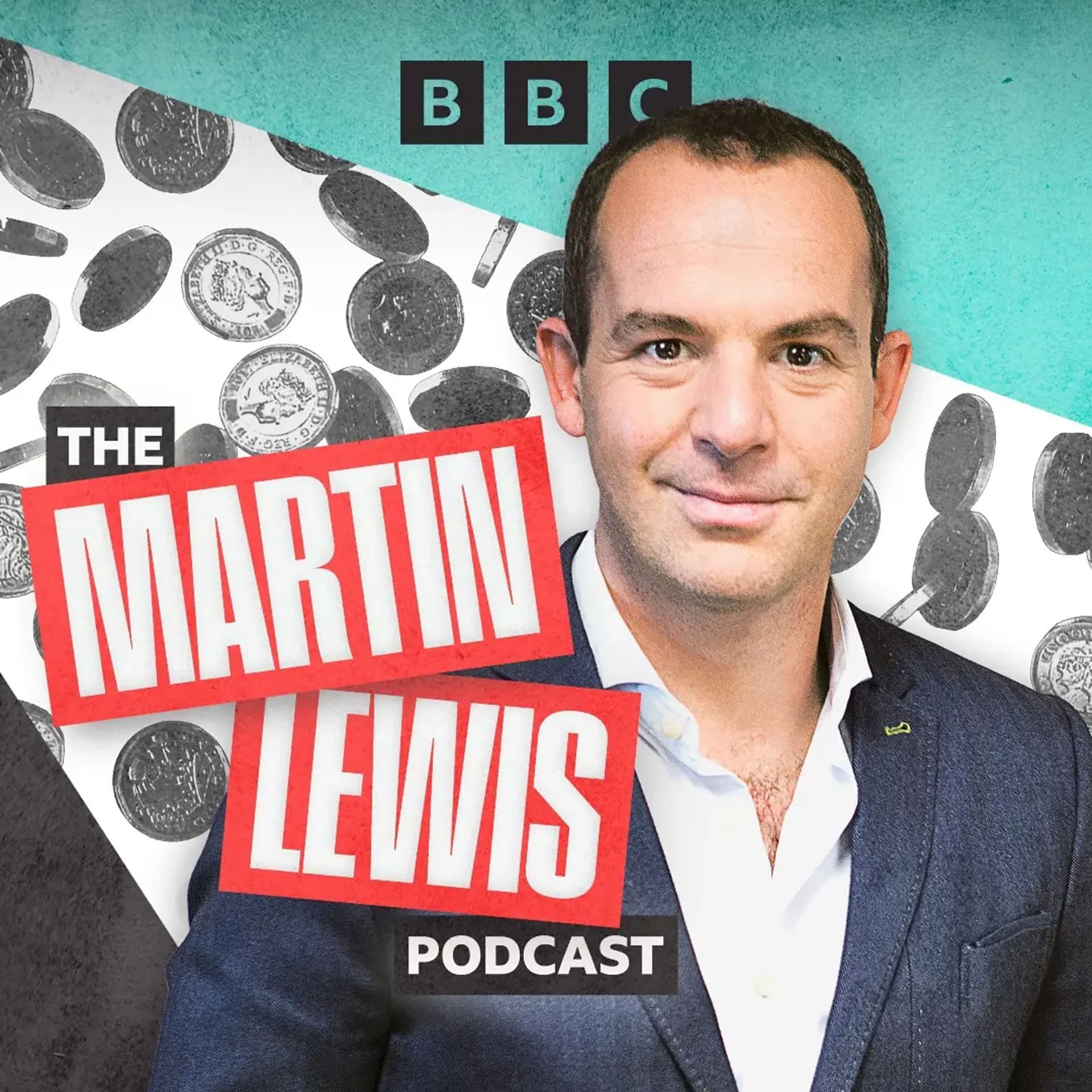
Summary of The Martin Lewis Podcast: Episode on Premium Bonds, Student Loans, and More
Podcast Details
- Title: The Martin Lewis Podcast
- Description: Martin Lewis answers your financial questions, offering valuable money-saving tips.
- Episode Title: Question Time: Time to ditch Premium Bonds? Do student loans cost more for middle earners? Credit on a low income?
- Episode Description: Martin Lewis addresses questions related to financial topics including ISA limits, the Online Safety Act, credit on a low income, Premium Bonds, student loans for middle earners, and tax on savings interest.
Key Topics Discussed
Premium Bonds
- Question: Should Josie and her partner withdraw their £60,000 from Premium Bonds?
- Response:
- Martin Lewis expresses skepticism about Premium Bonds for most people.
- Current prize fund rate is 3.6%, but actual returns can vary significantly.
- Median average returns for typical luck are often lower than the mean average, suggesting fewer wins for most investors.
- Tax Advantages: Premium Bonds are tax-free, which may be beneficial for higher earners who would otherwise pay taxes on savings.
- Conclusion: If a saver pays tax on savings and has filled their ISA allowance, Premium Bonds might still be a reasonable choice.
Student Loans
- Question: Gavin inquires about the repayment dynamics of student loans for his son.
- Response:
- Student loans require repayment once earning above a threshold (£25,000 for Plan 2).
- There exists a "perverse curve" where middle earners may pay back more compared to higher earners.
- Example scenarios illustrate that lower earners may never pay back their loans, while higher earners pay off quickly, potentially leading to unfairness in the system.
ISA Limit Clarification
- Question: Sean asks about the ISA savings limits over multiple years.
- Response:
- Martin clarifies that the ISA allowance is an annual limit (£20,000).
- Money within the ISA remains tax-free indefinitely unless withdrawn, which would not affect the tax-free status.
- Changes in ISA limits may occur, with a reduction announced for 2027, impacting future contributions.
Online Safety Act
- Question: An inquiry about the Online Safety Act's effectiveness.
- Response:
- Martin discusses his involvement in campaigning for protection against scam ads.
- The Act has faced delays and is not yet implemented, leading to ongoing risks from scammers.
- Emphasizes the need for stronger regulations to protect consumers from fraudulent advertisements online.
Tax on Savings Interest
- Question: Helen raises a question about when interest counts for tax.
- Response:
- Interest is taxed upon accessibility, not when paid.
- If interest is paid into an easy-access account, it is taxable in that financial year.
- Martin discusses complexities regarding fixed accounts and the implications for tax reporting.
Key Takeaways
- Financial Decision-Making: The episode emphasizes the importance of understanding the nuances of financial products like Premium Bonds and student loans.
- Investment Strategies: Listeners are encouraged to consider the best vehicles for savings and investments, particularly regarding tax implications.
- Consumer Protection: Martin’s concerns about the Online Safety Act highlight the ongoing need for consumer advocacy in the digital space.
- Tax Awareness: Understanding when and how savings interest is taxed is crucial for effective financial planning.
Contact Information
- If listeners want to ask Martin a question, they can email: [martinlewispodcast@bbc.co.uk](mailto:martinlewispodcast@bbc.co.uk).
Conclusion This episode of The Martin Lewis Podcast provides valuable insights into financial decision-making, particularly for those navigating the complexities of savings, loans, and tax. Martin Lewis encourages listeners to engage actively with their financial choices and stay informed about changes in financial regulations.
Written by AI. May contain mistakes. Listen to the episode to check what was said.
Transcript
Automatic transcript. May contain errors.0:28Of course, the big issue is tax. questions about absolutely anything and everything, brackets within reason, close brackets. This week, you asked me, is this the time to take money out of premium bonds? Do middle earners pay back more on student loans than higher earners? It's a complex but fascinating answer, that one. How does the cash ISA allowance really work? Is it per year or in total? Do you, i.e. me, Martin, think the Online Safety Act is really working? And finally, when you interest on savings? When does it count? How do I know which tax year it falls in? Play the theme tune.
1:18Okay, welcome to this new edition of my Question Time podcast, where I'm joined by the wonderful, the fantastic curator of questions, producer Matt. Hello, Martin. Hello. Hello. I'm really not happy with that, but I don't think you're going to drop it, are you? This curator of questions is sticking. By the way, I know some of you like to write in the podcast to Dear Matt, as well as Dear Martin. Feel free to write Dear Martin and Dear the Curator of Questions. I think you should just say Matt. No. I think you should. This is a title. I've got letters after my name. I'm giving you letters before your name.
1:53It doesn't spell something that we shouldn't say on the podcast. Well, no, it doesn't quite. No, it's like a chicken, isn't it? Cock-a-van. Oh, right. Cock-a-van. Bonjour. It's fine. And mine starts with a C as well, so we're all sort of fine. Shall we go to a question? Yes. I've got one to start you from Josie. She's saying, me and my partner have£60 ,000 in premium bonds. Is it now time to start looking to invest the money somewhere else? It's an interesting question. So we've discussed this before, probably six weeks ago. I'm never the greatest fan of premium bonds for most people. So what's interesting for me is the phrasing, is it now time to start looking to invest the money somewhere else?
2:37I don't know what predicates the now, because I don't see anything that has changed in whether you should be in premium bonds or not. So I'm going to have to answer, is it worth you being in premium bonds or not? Because, you know, so let's go. the premium bond prize fund rate is 3.6 % currently. Now, what that means is if you were to add up every single premium bond in existence in the UK and you were to take 3.6 % of it, that's how much money they are paying out in prizes in a year. Now, what that doesn't mean, because it doesn't work that way, is if you put£100 in premium bonds, you're going to get back£3.60 because that's impossible.
3:19The smallest prize is£25. So what happens on£100 is a lot of people get nothing and a few get 25. And that means the mean average is 3.6%. But far more important is the median average, which is zero on£100 in premium bonds over a year. The median average, that's the if you lined everybody up who had£100 in premium bonds in a row from those who win the most to those who win the least, what would the person exactly halfway along win? And I state that so I can explain to you that when I'm going to talk about premium bonds now, when I talk about someone with average luck, I'm talking about someone who wins the median average amount, because that is the best way to address typical luck in premium bonds.
4:04So the first thing to say is someone with typical luck will always win less than the mean average, less than the 3.6%. Now, what affects the amount you win generally on typical luck is the amount that you've got in. The more you have in, the closer you will get to the mean average of 3.6 % on typical luck. Now, you've got£60 ,000 in. I'm going to assume you've got£30 ,000 in each, and you're getting pretty close. I mean, the maximum you can have is£50 ,000. Once you're above about£7 ,000 or£8 ,000, you're probably, I'm making this up because I haven't done the numbers, but off the top of my head, with median luck, you're probably going to be winning 3.2 or 3.3 % on that money.
4:49It will be somewhere of that order of magnitude. So then the question is, if we factor it on typical luck, how good is 3.2 or 3.33 %? The answer is not very. You know, the best easy access savings account on the markets are paying about 4.5%. The top fixes on the market are in the 4 to 4.5 % type range. And of course, the big issue though is tax. Premium bond prices are tax free. So there may be a tax advantage to you of premium bonds, but let's just play this through. Most people do not pay tax on savings. That's because as well as your normal personal allowance up to£12 ,570 a year you can earn from many source.
5:34Most people are getting either£1 ,000 personal savings allowance, so that's£1 ,000 of interest they can earn a year without paying tax on it, or£500 personal savings allowance if you are a higher rate taxpayer that you can earn a year. So most people, but you've got quite a lot of savings, so you may well be paying tax on savings, you may well be over that threshold, in which case, if I'm doing this purely on statistically likely returns that you would get, then the next thing you want to do is make sure you're filling up your cash ISA allowance each year. That's assuming you're not using it for shares ISAs which if you are investing you probably want to put money in shares ISA first in case it grows really well and you've got a capital gains tax allowance.
6:14So if you've got cash ISA allowance available I would be putting it there. Then if you're paying tax on your savings and you've filled up your cash ISA allowance and especially if you're higher rate taxpayers, which means you're going to be losing 40 % off your savings interest on any that you pay tax on, at that point, premium bonds, even on typical luck, at around 3.2%, 3 % after tax, because there's no tax, so it's the same equivalent to an after-tax earnings, start to look good value. So my very long-winded way to answer your question is if you're paying tax on other savings, you've either filled up your ISA allowances and don't have any more money, and especially if you're high-rate taxpayers, premium bonds probably look a pretty decent bet for you with£60 ,000 in because it's a reasonable amount, so you'll be getting quite close to earning the prize fund rate.
7:12If you're not paying tax on savings and you're basic rate taxpayers, then on the balance of probability, you would be better off statistically to have your money simply in top-paying cash ISAs or top-paying normal savings. Of course, you can look at investing too. If you're putting money away for the long run, investing will tend to outperform all of those things. So it does depend. And yes, I know to all those people saying, what about the thrill of winning? Yes, there's a thrill of winning. But you know what? You put money in a savings account that amount, you're going to win interest each month and you'll know exactly how much you're getting and it'll probably be bigger.
7:41And yes, what about the chance of winning a million? Well, there is a chance of winning a million. But if you really want to talk about the thrill of winning, then it's probably far more sensible and more effective for those people who don't pay tax on savings and who aren't high-rate taxpayers to go and put their money in top savings and then take a couple of quid out and put it in the national lottery and then you get your thrill of winning anyway, but you get more return on the underlying savings. So there. Phew. I've just come up with a title for you. You know, you call me the creator of questions.
8:13Doesn't look like that, Matt. No one asked you for a title, Matt. The title is The Martin Lewis Podcast. My podcast, that's my title. I've just worked really hard on this, so I'm going to say it anyway. You can say it, but we're not using it. Okay. the answerer of rarely simple questions extraordinaire yeah arse I've got people in the studio with me they found that funny which is proof that we're not using it it's brilliant I'll give you that one shot and now we move on just remember Matt my reputation is what carries the podcast so that's very important your reputation for now where are we going next Gavin is in Kidderminster.
8:55Gavin, hello. Hello. Hello. Hi, Gavin. What's your question? Yeah, well, the question, it was about the student loans. My son went to university and I was doing some sort of figures, some sort of brief on the back of a beer map figures. And it seemed to me that there was a sort of a spot in the middle of earnings where you paid a lot more than, you know, if you earned more than that or less than that. So there was, I mean, where you could actually pay sort of 250 % of your initial loan. Whereas if you earned a lot more than that, you paid it off quicker, so you didn't pay as much. And obviously earning less, you didn't pay as much off.
9:42And as my son was in that bracket, I was just, that was the question I was asking. Is that true? Yes. So there has always been this perverse curve on the student loan repayment amount. I'll be honest with you, it's an issue only at the periphery. We can think about it quite easily, if you like. You repay a set amount, 9 % of everything you earn, above£25 ,000 on Plan 5 lines. When did your son start university, by the way? He's on Plan 2. He's on Plan 2. It's more exacerbated on Plan 2. That's the old loans for people who went in England and Wales, Wales currently, but people who started in England before 2023.
10:21And so what happens is on the Plan 2 loans, you're paying 9 % of everything above around 28 and a half grand. And you're repaying that for 30 years. But the interest is set above the rate of inflation, up to inflation plus 3%, which I should contrast is different to the Plan 5 loans, the loans that current starters in England are on, where it's based at the rate of inflation, that does change things quite a lot because that means there's no real cost. I won't bother with that. The essential answer is if we take three different case studies, people will understand. Case study one, someone who never earns above the threshold, someone who's earning£27 ,000 for the rest of their life.
11:00Well, they'll never pay anything and it wipes after 30 years gone. They don't pay a penny. Number two is someone who is on a decent whack and earns just enough to clear it plus the interest within the 30 years. So they're always paying the RPI plus 3%, so inflation plus 3%. They're doing that for 30 years. And on the day that the 30 years ends, they then have cleared the loan. Well, they will be paying the absolute maximum because they'll be paying all of the interest over the maximum length of time. And then your third example is Mark Zuckerberg. Comes out of university earning a billion quid a year.
11:43Well, clearly 9 % of everything above£25 ,000, okay, we'll call it, he's earning a billion quid a year, means he pays off his student loan within the first three weeks. So there is no interest to accrue. So it's far cheaper for him. He basically just repays what he earned. So what you find is if you plot the curve, that the absolute maximum that someone would pay under a plan to the old loans is someone who earns enough to pay the maximum interest but doesn't earn enough to clear it more quickly than the 30 years. So yes, the way it basically works is you pay nothing if you're a low earner, you pay a little bit as your earnings go up.
12:18The maximum you pay is what I would call still a pretty high earner on Plan 2 loans, but extremely high earners who are starting on very high graduate salaries, they pay less. So somebody goes to one of those top city loyal firms and gets a starting salary of£120 ,000 a year, yes, they will pay less in total because they're paying the loan more quickly. But equally, you could also argue that someone who didn't take a tuition fee loan because their parents decided to pay it all for them would also pay less. So yes, there are implicit unfairnesses in the system, though I'd still say overall, it tends to be a relatively progressive way to play, but the curve isn't perfect.
12:56Does that make sense? Yes, yeah, no. And obviously the interest rates, as it was, I think it was 7.6 % when I did the figures. Well, the interest rate changes every year in line with inflation. It's inflation plus 3%. So it's currently going to be this year, it's going to be 6.2%. 6.2%, yeah. Now that's great. I mean, I don't know how the system can be done any fairer. It just seems a higher... Well, there's lots of ways it could be fairer, but that would take me a whole show. Yes, fair enough. Are you sitting there thinking, oh, I know what I wanted to ask him? Well, this is your opportunity.
13:31If you've got a question, then just send them in to martinlewispodcast at bbc.co.uk. And please do start them, dear Martin. No, dear Matt. Dear Martin. Dear Matt. OK, Matt. So, next one I presume you're going to read to me. I love a format. That's what the curator of questions is so good for. He knows his format. He locks it in. He gives us consistency. Where are we going next? Question from Sean, who's emailed in. It's a long one, so bear with me. Okay. Good morning, gentlemen. I have a question to which I believe I know the answer, but I think a nuance of understanding does present a query wishing clarification.
14:13That's a start. That is a start. Right. So I know that currently we can all save up to 20k tax-free in a year. If I save 20k in one year and on day one of year two, the ISA has 20k in it and I save a further 20k during year two, will my first£20 ,000 be taxed as it means I will effectively save£40 ,000 by the end of year two? Putting it another way, can I save£20 ,000 each year for four years, thus amassing£80 ,000 tax-free? Many thanks as always. Simple answer, yes you can. That's exactly how it works. Your ISA allowance is an annual allowance. Once the money is in a cashier ISA or a stocks and shares ISA, it remains tax-free in perpetuity as long as it's inside the ISA wrapper.
14:59And I don't mean you have to pay tax on it to take it out. I just mean if you were to take money out of it, then it's not in the ISA wrapper. So if you're then to save the money you've taken out, then you would pay tax on the interest for that. I know some people get confused about that. So your money is tax-free as long as it's in the ISA. So you could put in£20 ,000 this tax year. You've heard I've paused, Matt, don't you? I can. And I've paused because I suddenly realised something. There's a bit of a timing issue going on here. Because the budget is such a busy week, we're recording this Question Time podcast slightly earlier than we normally do, and we're recording it before the budget.
15:31But one of the big potential announcements in the budget is that the cash ISA threshold may be cut. And by the magic of podcasting, I'm now recording this bit after the budget, and the Chancellor has indeed announced a reduction in the cash ISA allowance to start in April 2027. from that point you will only be able to put a maximum of£12 ,000 in a cash ISA if you're under 65 if you're over you can still put£20 ,000 in although the total ISA allowance remains at£20 ,000 so you could put up to£20 ,000 in shares or you could put£12 ,000 in a cash ISA and£8 ,000 in a shares ISA but let's go back to the premise of the question this is all about what you put in in a tax year so a few years ago you could have put£20 ,000 in then the tax year after that you could have put£20 ,000 in, then last tax year£20 ,000 in, then this tax year£20 ,000 in, and next tax year£20 ,000 in if you have enough money, and then after that£12 ,000 in, and£12 ,000 in, and£12 ,000 in, in the subsequent years.
16:33So it's all about what you put in in a tax year, and this is the reason why there are some people already who've maxed out their cash ISA allowances over the years, who have hundreds of thousands of pounds in them, and some people in stocks and shares ISAs, because if they do well, they grow faster, have over a million pounds in them. Now, back to Martin of a few days ago with the original answer. What I'm going to phrase this to as, you can put the maximum ISA allowance in this year, and then you can put a whole new ISA allowance in at the start of the next tax year, and the same the tax year after that, and the same the tax year after that.
17:08And that's the way ISAs have worked, and that's what enables people to build money in. So, Sean, yes, you understood it right. I may have been overtaken by events, as they say. Breaking the fourth wall. But hopefully people will still understand the way that ISAs work on the back of that. Clearly, there might also be some massive other technical change I don't know about, but then I would have been out talking about it anyway, so you'd know. A final note, just to be really clear on this. So, people are always worried that when they have a cash ISA and they want to transfer it to a new cash ISA provider to increase the rate that that will use up their annual allowance.
17:42It doesn't. The allowance is simply on new money that you are putting in ISAs that has not been in ISAs before. Money already in ISAs, whether you're transferring it, even if you're transferring it from a cash ISAs to a shares ISA, does not use up your annual allowance. So you can do it. There's no timing issue on doing it. It's only new money going in that affects how much you can put in in future.
18:09right Matt normally at this point in the show you do one of your funny questions and people don't let Matt come up with his own funny questions if you have interesting questions that you'd like to ask me they're a bit off kilter you know what my favorite food is what did you do last week what my favorite music is would I prefer to fight a giant bear with seven heads or a giant bear with 1500 arms or whatever it is then let's have that coming in from the listeners, just email martinlewispodcast at bbc.co.uk. What have you got for me this week, Matt? OK, no funny one, but one that's... After all that.
18:41After all that, but it's a bit different. The Option Monkey on X has asked, do you think the Online Safety Act has actually achieved anything positive? Yeah, that definitely isn't a funny question. OK, now I need to ring fence my answer. The element of the Online Safety Act that I have been involved in and was campaigning on was about the protection of scam adverts. Clearly, as many people know, I'm the most scam face in Britain. I appear in more of these adverts than anything else. Any advert you see with me in is, of course, a scam because I don't do adverts. So the problem that we've seen is that element of the Online Safety Act has been delayed now twice and is potentially not coming in until 2027.
19:23So in terms of protection from scam ads, I think we have seen very little change. There is still a complete wild west out there. You absolutely have to protect yourself and be incredibly sceptical about any advert you see on social media or even the internet in general, apart from sites that are regulated by other advertising regulations. So, for example, TV companies like ITV or Channel 4, because they have to go through broadcast regulations where the advertising standards are much tighter. And I'm incredibly frustrated about this time that this is taking. It is not about protecting me and my reputation.
19:59This is about the thousands, tens, hundreds of thousands of vulnerable people and non-vulnerable people and clever people who form for adept, psychologically manipulative scams online that use dark web marketing research to find out how to target people, to steal your information, steal your data and steal your money. And we need the big social media and tech firms and the little ones to deny them the oxygen of publicity, to stop accepting their money. They pay to have their adverts published and these big tech firms take their money. And we need to make it more expensive for those firms to take scam adverts than they currently make from making advertising easy to do.
20:46They don't do it because they want the scam adverts money. They just want anybody to be able to advertise at the drop of a button. Drop off. I forgot the word. You know what I mean. and they want anybody to be able to advertise and therefore they make it really easy and that's what lets the scammers through. So we have to change the financial mathematics behind that. It hasn't been done. So you asked me, do I think the Online Safety Act has achieved anything positive within the scam ad space? Not yet, but I'm going to continue working hard for them to speed it up and get it done. And even when it does come in, it only regulates the big firms, not the small ones.
21:16And that seems to have been lost right now. And it is very frustrating. It's something I'm working on and I know which is working on as well. if you want to know about the wider online safety act way too controversial for me move on next question what have you got next for me matt i presume it's a caller it is it's helen in east grinstead grinstead is that you pronounce it helen that's correct yes hello helen what's going on in east grinstead in your financial world hi martin my question is about savings interest tax yeah um i understand i can earn a thousand pounds in interest before having to pay any tax on it Correct, if you're a basic rate taxpayer, yes.
21:53But when does the interest count? So I have accounts that pay interest monthly and annually. So if I opened an account August 25 and the interest is paid August 26, what financial year does that interest count towards? Let's do that one first before we move on, I think. Sure. Okay. You haven't actually given me enough information to answer the question. which is not a criticism, it's important for me to explain that it isn't actually either of those things that trigger the interest. What triggers the interest counting for tax purposes is when the first moment that the interest is accessible to you.
22:37Let me give you an example. It's very simple. In an easy access account where you can take out money when you want, if your interest is paid monthly, the moment the interest goes in, you can withdraw the money. But now let's imagine you've got a fixed savings account. Do you have fixed savings? I presume you do from the question. No fixed. No fixed. Okay. So, well, in your case, it's easier, but I'm going to do this for everybody to understand. Let's imagine you've got a fixed savings account where you've got a two-year fix and the money is locked in for that period, but the interest is paid annually.
23:09The interest is paid every year. So you open the account. After one year, the money is paid. Many people think the money has been paid therefore it accrues at that point it doesn't because it's a fix and your money is locked away and you cannot access the interest even though it has been added to your account that interest is not taxable until the point that you can access it which on a fix your account would be after two years once the account closes and then you can then take the money out so the interest is taxable at the moment you would first access it you don't have to access it, it's the moment it's accessible.
23:44Does that make sense? Kind of. Okay, well, let's go through your scenario and see if we can get there. It's not when you take it out. It's not when it's paid. It's when you first could take that interest out, even if you didn't do it. So where would I be able to find out when I can first access it? What accounts do you have? What type of accounts? I don't need to know the specifics. So are all yours easy access savings? They're all easy access then it's the moment it's paid okay because in your accounts you as soon as that money's in you can take that money out so it's the moment so it's the moment it's paid but with a fixed account you understand why i was using a fixed example to show you the difference because even though the money's paid you can't take it out so it's not taxable at that point so in your account the the interest is in the tax year on the date of payment if they're all easy access OK, brilliant.
24:38And just as an aside, not for you, so don't let what I'm about to say worry you. One of the problems with this is I have concerns. Now, if you earn less than£10 ,000 of interest and you don't do a self-assessment, then actually the savings providers are notifying HMRC of the interest that you earn and your tax code is reduced to pay the interest that you would need to pay that way. Now, my concern is they often tend to report interest when it's paid, but on some accounts it should be interest when it's accessible. And you could lose out because of that. So let me give an example for people listening.
25:16I'm getting really technical now. Sorry, Helen, this isn't you. Don't panic. But maybe you can let me know if you understand it at the end. So let's say you had a fixed account that lasted three years and you got that fixed account the year before you retired when you were a 40 % rate taxpayer. that account pays interest every month. So in that first year, if the savings provider is reporting to HMRC that you've earned interest and HMRC is taxing you as if you earned interest in that year, it will be taxing you if you're above your personal savings allowance at the higher tax rate. But because you can't access that interest until the third year, the interest should have accrued after three years.
25:59Because you've now retired, you are now just a basic rate taxpayer, 20 % rate taxpayer, and the interest should technically have accrued then. So you should be paying 20 % interest in it, not 40 % interest in it. Now, we believe, and we're struggling to find this, that many people are therefore in that type of relatively niche circumstance, I admit, paying too much interest, paying too much tax on their savings because it's being reported when it's being paid, not reported when it's being accrued. And as HMRC does it automatically, people don't see this. So that is something that my team and I are in the midst of investigating and not fully there on.
26:38Did it make sense, Helen? Yes, it does make sense. Thank you very much. It's very complicated. But your answer is easy. As soon as the money's paid, that's when it's taxable. And that's the tax year it's in. OK, can I give you part two? Yes. Is it worth closing an account early to cash in the interest for this financial year and then reopen for next year? Is there a best time of year to open an account? I mean so I think what you're trying what you're suggesting is I close the account early so that my interest is paid earlier so my interest accrues within this tax year and therefore start a new account for the rest of the year so that that interest I'll do it on an annual payment so that interest accrues in the next tax year is that what you're suggesting it's correct yes okay so my first question is are you close to using up your personal savings allowance your thousand pounds yes potentially and have you used have you filled your cash isis yes um i think you would probably just be easier in that in that circumstance i mean you could if you had an account you could close it and then open an annual an account that paid your annual interest next year and you could defer some of the interest i think if you're only on the boundaries it seems like a lot of work for a relatively small amount of gain to me.
Read the full transcript
28:04OK, yeah. Right. I'm not saying it doesn't work. You know, I think it possibly could work and you could therefore deliberately defer it and you'd have to make sure it was an annual interest that you were being paid so that the interest was paid next year, not this year. And that is why some people choose annual interest rather than monthly interest so that they can calculate which year it's going in. I think what I'd probably say to you is, yes, you could do it. I probably wouldn't bother because it's quite a lot of hassle. But what I would do is I would start taking that into account when you set up new accounts.
28:37Yes. Do you want monthly or annual and plan them out so that the interest payments are spread into different tax years at the time? Because the truth is interest next year. We're now not thinking interest rates will drop as much as they were predicted. Obviously, you don't know. But interest on savings is probably going to be somewhere roughly in the same ballpark as it is right now. so unless you're planning to spend those savings what's going to be the difference next year that means you've got so much less savings that you earn so much less interest that you won't be paying tax next year as well is it are you planning to spend those savings you might be buying a house or something i don't know yes i there's the potential of putting it towards a property next year oh well in that case you may want to do it okay that does change it because then next year you won't be using up your full allowance and there is a difference so in that case yes i can see a benefit in doing it okay fantastic It's like an A-level doing this sometimes.
29:55I gotta pay So I'm gonna work Work for the world I gotta mouth I gotta feed So I'm gonna make sure Everybody eats Martin Lewis is the founder of MoneySavingExpert.com But of course, other consumer and price comparison websites are available. You can get in touch with Martin's podcast production team by emailing martinlewispodcast at bbc.co.uk The offers and rates mentioned in the podcast are correct at the time of recording. However, if you are listening on demand, it's worth double-checking as details can date. Remember to subscribe on BBC Sounds and leave us a review however you listen.
From the publisher
In our Question Time podcast, Martin Lewis gives you answers on anything and everything, including: how does the ISA limit actually work, is the online safety act really working, how can I get credit on a low income, is it time to ditch premium bonds, do student loans cost more for middle earners, and when does savings interest actually count for tax purposes?
If you want to ask Martin a question, you now can! His Question Time podcast lets you ask Martin absolutely anything and everything (within reason!) – so if you’ve always wanted to know his favourite sandwich filling, how many sugars he has in his tea, or have a very complicated question about your personal finances, email it to MartinLewisPodcast@bbc.co.uk.