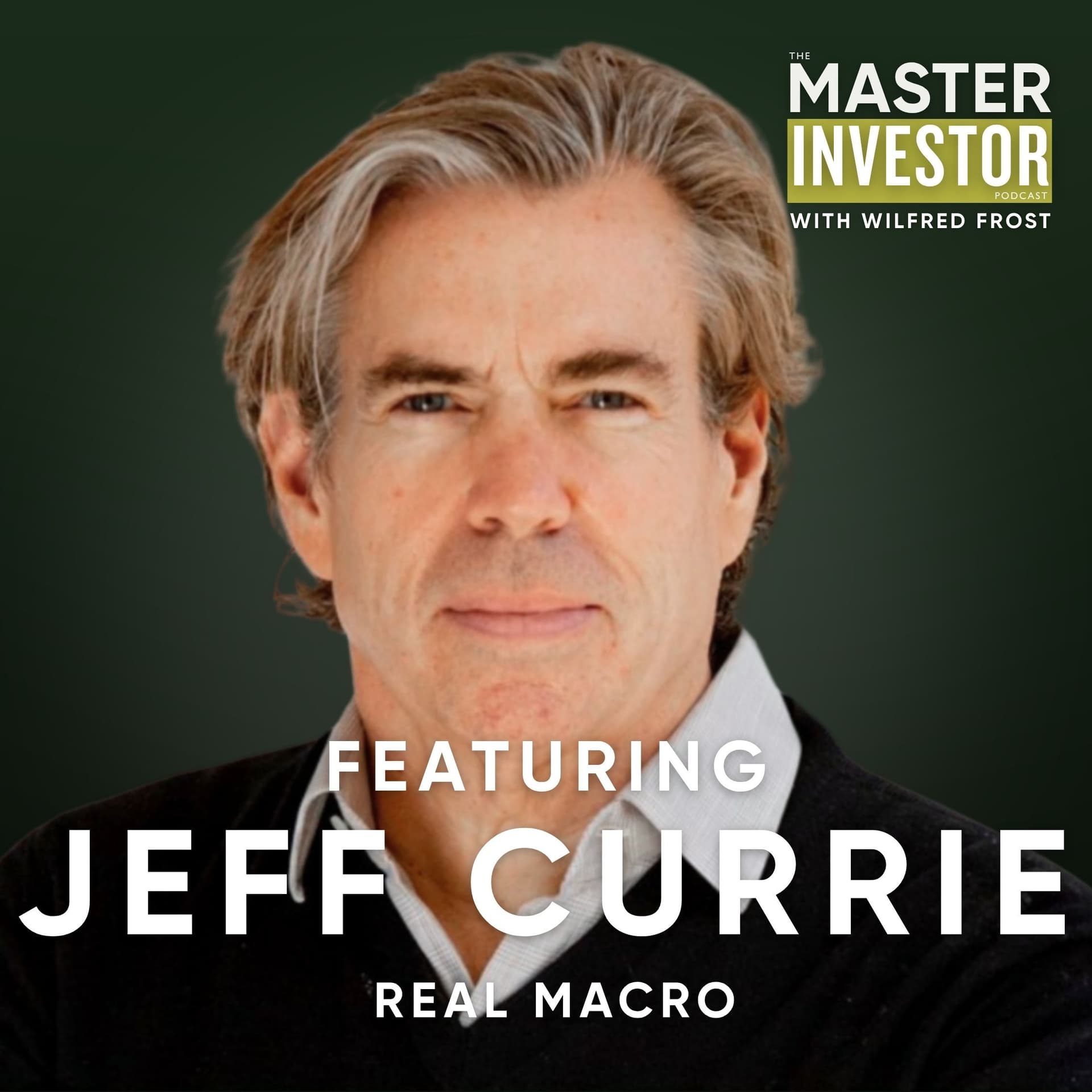
In short
The AI-driven shift from enterprise software to “dumb data pipes” feeding ChatGPT/Claude, plus how that changes the AI capex cycle and which parts of the semiconductor stack benefit (GPUs, CPUs, memory, optics/networking).
Guest
Dominic (Dom) Rizzo, portfolio manager of T. Rowe Price’s $8.7B Global Technology Fund (PRGTX) and manager of their $300M TTEQ ETF. Background: Long-time T. Rowe Price tech investor; covered semiconductors for much of his career, became global technology strategy lead in 2022; started PRGTX leadership Dec 1, 2022 (up 43.6% p.a. since).
Key claims
AI will sit atop most enterprise software; software’s recurring-seat model is vulnerable because users now demand better UX and usage-based “token path” economics. Capex is still mid-cycle (he compares it to innings 4–5) and “compute equals revenue.”
Notable examples
Google raising ~$85B equity capital as a sign capex continues; NVIDIA’s systems approach (Vera CPU, networking via Mellanox); agentic computing shifting GPU:CPU demand toward parity; memory surge tied to 5–10x higher memory consumption in agentic systems; OpenAI/Anthropic enterprise growth (Anthropic $5B run-rate to $47B in nine months).
Written by AI. May contain mistakes. Listen to the episode to check what was said.
Chapters
Tap a time to open that second in VOAI's Impact on Software
0:00 to 1:34
Explore how AI is transforming the enterprise software landscape.
“I think the software companies frankly got fat and happy.”
Dominic Rizzo's Investment Performance
2:26 to 4:30
Insights into Rizzo's impressive fund performance linked to AI trends.
“The performance since he took over leadership of the fund on the 1st of December 2022 has been outstanding, up 43.6 % per annum.”
Navigating the AI Cycle
4:37 to 8:12
Discussion on the current state and future of the AI investment cycle.
“because I kind of paused and I thought 44 % per annum and only 5 % ahead, because your benchmark is not the QQQ.”
Investment Strategy in Emerging AI Technologies
8:15 to 11:43
Rizzo shares his investment criteria and focus on tech innovations.
“And I actually think we got a pretty strong sign of that this week with Google raising$85 billion or equity or whatever the number ended up being.”
The Future of Software Stocks and AI
14:35 to 20:48
Explore the impact of AI on the software industry and the evolving business models.
“And you've been bearish software stocks for a few years?”
Transition to Semiconductor Discussion
20:48 to 22:06
A brief interlude discussing the transition from software to semiconductors.
“You know,$45 billion of recurring run rate revenue.”
NVIDIA and the Semiconductor Landscape
22:07 to 28:00
An in-depth analysis of NVIDIA's position in the semiconductor market and its innovations.
“Because as you said, you were specifically a semis analyst.”
ARM's Market Position and Architecture
28:00 to 30:18
Learn about ARM's unique positioning in the semiconductor market and its architecture's relevance.
“So all of this, let's just be very clear about how we're thinking about things.”
Understanding Memory as a Commodity
30:50 to 34:37
Explore the complexities and market dynamics of memory chips in tech.
“This sponsorship does not constitute financial advice.”
The CapEx Boom and Its Implications
34:37 to 41:40
Discuss the implications of the capex boom on tech companies and memory markets.
“I think there's a lot of technical market drivers all over the place.”
Show all 20 chapters
Compute Equals Revenue: A Central Thesis
41:40 to 42:00
Examine the thesis that compute equals revenue and its potential counterarguments.
“Is everything that we've been discussing based on that thesis that you said that compute equals revenue?”
Exploring Compute and Revenue Dynamics
42:00 to 43:30
Understand the relationship between compute power and revenue generation in AI.
“How would I steel man the argument against compute equals revenue?”
The Role of Active Management in Stock Selection
43:30 to 46:00
Learn about the importance of active management in navigating AI-related investments.
“They have very high marginal profitability.”
Assessing AI's Impact on Major Companies
46:00 to 47:50
Explore how AI influences the business strategies of major companies like Apple.
“DRAM's a little light in their old ones.”
Comparing AI Companies and Their Market Potential
47:50 to 50:50
Examine how different AI companies stack up in terms of market potential and revenue.
“We'll be forced to buy them quite quickly.”
Valuation Trends in Semiconductors vs Software
50:50 to 54:20
Analyze the current valuation trends between semiconductor and software sectors.
“so so who knows a lot could change that's the public numbers and combined they're like two trillion dollars of value right based on the the public numbers um that doesn't sound insane to me, you know, by any means.”
Investment Advice: Key Takeaways
54:20 to 56:00
Discover essential investment advice focused on finding the right frameworks.
“So first, let's just do semiconductors versus software.”
Investment Advice from Dom Rizzo
56:00 to 57:43
Dom Rizzo shares his top three pieces of investment advice for listeners.
“As we flag before the conversation, we ask everyone this.”
Closing Remarks and Gratitude
57:43 to 57:53
Wilfred Frost thanks Dom Rizzo for his insights and participation in the podcast.
“So get lucky would be the great advice at the end.”
Next Week's Guest Announcement
57:55 to 58:08
Wilfred announces the upcoming guest for the next episode of the podcast.
“we will be joined by my great friend and former colleague, Becky Quick, the legendary CNBC anchor.”
Transcript
Automatic transcript. May contain errors.0:00I think the software companies frankly got fat and happy. They had this beautiful business model, highly recurring, low churn that allowed them to focus on raising prices and overselling seats, right? And all of a sudden you have this new technology and AI that not only gives the user a wonderful experience, but could sit on top of the enterprise software stack. I think what will happen over time is ChatGBT and Claude, specifically those two, will end up sitting on top of basically the entire enterprise software stack. And almost everything else will end up being a dumb data pipe into those two.
0:38So you wake up every day and you start your day with ChatGBT or Claude. You don't start your day in Microsoft Word or Outlook or any of these other historically really important applications. The market is debating, is the CapEx boom sustainable? And I think that's why this Google event of raising it. This is the third most profitable company in the world raising equity capital. This is not, you know, some small cap. This is the third most profitable company in the world raising equity capital. Which tells you what? The CapEx boom is continuing? Yeah, I think so. But I do think we're at this unique period of time where the game theory is who's going to spend the capital.
1:23And why is that the case? Because we've learned time and time again, compute equals revenue. I'm going to say it again because it's so important. Compute equals revenue. Compute equals revenue.
1:39Welcome to the Master Investor Podcast with me, Wilfred Frost, where we celebrate and learn from the success of the greatest investors, business leaders and politicians in the world, giving you, our listeners, the edge. The Master Investor Podcast is sponsored by LSEG, Interactive Brokers, the World Gold Council and BNY Investments. Please do remember the views expressed in this podcast are for general information purposes only. Nothing in the podcast constitutes a financial promotion, investment advice or a personal recommendation. More on that in the show notes. My guest today is Dominic Rizzo.
2:19He's the portfolio manager of the$8.7 billion Global Technology Fund at T. Rowe Price. The ticker is PRGTX. The performance since he took over leadership of the fund on the 1st of December 2022 has been outstanding, up 43.6 % per annum. That's outperforming the benchmark by 5 % per annum. He also manages their$300 million TTEQ ETF, which has strong performance as well since its more recent inception in October 2024. Dom, welcome to the Master Investor Podcast. Great to see you. Yeah, great to see you, Wolf. Thanks for having me. That performance, I just want to dwell on it as we kick things off.
3:04The numbers obviously speak for themselves very impressive outperformance five percent per annum is is you know stuff that people uh dream of delivering but also that the absolute performance has been fantastic which i guess speaks a little bit as well to to good timing uh and the great tech bull run we've had of recent years yeah so so part of it's clearly timing right so if you think about my start date is december 1st 2022 it's lucky timing it's the day after chat gbt launched right and i actually You hadn't really realized that when I put the question together. Yeah, November 30th, 2022 is the day of the ChatGPT launch.
3:40And here I am lucky enough to have covered semiconductors for basically my entire career at T-Row, right? 2015, I was given small cap semis because no one wanted to cover them. And then 2018, moved over to Europe, took over our European technology role. And then in 2022, took over the global technology strategy. And that, when combined with our framework, which I'm sure we're going to get into, led us to be early, right, and in size to the AI in semi-trade. You know, I love economic history. It's one of my favorite subjects. And it became pretty clear that AI could be this incredible productivity cycle.
4:18And productivity cycles come with speculative bubbles inherently, right? electricity, internet, trains, railroads. Our job is to navigate that responsibly for our clients. So fortunately, we've been early right in size now, and now the game's still going, and we're going to keep trying to navigate that responsibly for our clients. And just drawing on the performance a little bit more, because I kind of paused and I thought 44 % per annum and only 5 % ahead, because your benchmark is not the QQQ. It's the MSCI all-country world IT, which we were just discussing has been quite far ahead of the US NASDAQ during that period of time.
5:00Yeah, I think NASDAQ over that time is up 31 % a year or something along those lines. So you're way ahead of that. Well, so, you know, I think a couple things. When I take a step back, I think we were really early to this concept of parallelism being very important for training in AI. And that led to a sizable investment in NVIDIA, which in hindsight, obviously, was right. I think we've navigated the different trends in AI quite well, whether it's the rise of memory, optics, agentic, CPUs. We were fairly early to the rise of open AI and Anthropic as well. You know, when I did the anthropic round last summer and the global technology strategy, they were just doing$5 billion of run rate revenue.
5:54They've now announced they're doing$47 billion of run rate revenue just nine months later. So this has been such an exciting time. And I'm just so grateful to be at a platform like T-Row, where I'm given the resources to try to consistently outperform, to have a great team. And then I think a lot of it's the framework. And that's the thing that can help us navigate, hopefully, the up markets and the potential down markets along the way. So I want to get into the framework. I want to get in as well later to Anthropic and SpaceX, the sort of big IPOs that are coming. Because as you mentioned there, you do have a private market investment in one of those in Anthropic.
6:29But first, let's just do big picture. And coming off the back of that performance, where are we in the AI cycle? I mean, clearly, you got ahead of the curve. Are we still early on that curve, middle, late, in your view? Well, let's, you know, I said I love economic history. I did a year at the London School of Economics. Let's kind of put it in economic history terms. I think AI has the potential to be the biggest productivity enhancer for the global economy since electricity. Okay? And electricity, roughly, added 1 % a year to global GDP growth every year for 32 years. I think AI is already smashing that, right?
7:12I think there's a world where we see mid to high single digit growth out of the United States consistently because of AI, nominal, not real, but why is that? There's three factors that drive economic growth, solo economic growth model. There's capital, there's labor, and there's productivity, right? And so AI is this massive productivity surge. Productivity surges come with capex cycles, right? People chase the productivity surge and they get so excited and inevitably they overspend. And the question people always ask me, have we overspent yet, right? I don't think we've overspent yet. To use an American analogy, you know, baseball, there's nine innings in a baseball game.
7:55I think in the capex cycle, we may be in inning four or inning five. So we're not at the beginning of the game. We're not at the end of the game either. It's not quite the beginning of the end, right? But there's a whole other game, which will be what happens when the CapEx cycle cracks and how do we navigate that? So I think this CapEx cycle can keep going. And I actually think we got a pretty strong sign of that this week with Google raising$85 billion or equity or whatever the number ended up being. So I guess, you know, clearly the AI theme for the public took off, you know, the day before you took over the fund, you know, chat GPT was what kind of pushed it into the public mindset.
8:42You said you've been really good at navigating the kind of more recent step ups. And as I look at, I think, you know, the two big moments in the last sort of few quarters have come from AI companies shifting to serving enterprise much more than those large language models that in late 2022, you know, consumers became aware of and using. And secondly, shifting to charging for usage. you know the amount of tokens being used pay a lot more rather than just all of us paying 20 pounds a month just to to be able to ask whatever question we want on a whim is that a fair summary of the most important themes of of the last few months the last year and what what are you looking ahead to to be the next short-term ai theme so the last few months you know um dan niles actually talked about this on your pod i thought he did a wonderful job explaining agentic computing And what's the difference between just traditional gen AI and agentic computing?
9:41Gen AI with a chat pod, you just ask questions to ChatGPT or Gemini or Claude, and it gives you answers back. And that's useful. 20 pounds a month, useful. I think that's roughly how much. I think over time, there's a huge advertising opportunity there, and we should talk about that and why OpenAI specifically is very well positioned for that. 900 million monthly active users, how do I know you? I think they're going to have a home run advertising capability over time. But with Agentic, the big difference is the model can now go do tasks on your behalf. So it's not just about raw intelligence, but task completion.
10:22And the first use case of task completion was writing code, generating code. And I remember meeting Dario three years ago in this little San Francisco office. Now they have these big, beautiful, you know, but, and there was a very strong focus on the company on two things. One, chasing the scaling loss and two, understanding code generation because code generation is what unlocks the ability for the model to go do tasks for you agentically. And that results in different types of compute that's needed. So in a training world, you know the gpu to cpu ratio is eight to one eight gpus for every one cpu as we go to an agentic world that ratio becomes parity one to one if not two to one the other direction two cpus for every one gpu and you know that's why you know for the you know uh since the beginning of the year our largest bets have been amd and intel are just two of our largest bets um so i think there's different elements that become more important.
11:27And then what you see in the market is the market chases the bottlenecks, right? Where's the next tightness? You want to be careful just chasing the bottlenecks. What you really want to do is understand who's going to be able to accrue economic value over the next 18 to 36 months. And that's where I really focus on trying to find these linchpin technologies, the ones that are mission critical to the success of their customers. So let's touch on that then, your investment process. And specifically, when you are trying to pick a theme or much more importantly, the final stock, what are the key things you look out for?
11:58Yeah. So there's four things we look for. And I developed this as an analyst. I'm really lucky. I got to cover hardware, software, payments, US, Europe, Asia, small cap, mid cap, large cap, mega cap. So you need a framework that could do that. And I ended up developing this by frankly stealing great parts of other people's framework at T-Row. And so TS Eliot is this great line, good authors borrow, great authors steal. I think that's the same way with developing your investment framework. Go look around, see smart people around you and try to take the good parts that resonate with you. So there's four parts to my framework.
12:37There's linchpin technologies, looking for companies that sell mission-critical technologies, innovating in secular growth markets, taking share in fast-growing markets. One reason we were so early and in size to AI in semis is we saw AI chips going from$45 billion in 2023 to a trillion dollars in 2030 because of the chip intensity of AI, right? Third, probably most important for buying and selling is improving fundamentals. So that's revenue that's accelerating, growing faster than you did over the next 12 months than you did in the last 12 months, operating margins that are expanding, or free cash flow conversion that's improving.
13:17And finally, you want to make sure you pay a reasonable valuation. The way you get earned in tech, I think, is you pay way too high of a valuation and you can't compound from there. So 2021 software stocks is a great example. Or you buy a broken company and it's cheap and it's cheap for a reason. So I just want to pay a reasonable valuation.
13:48provided market-leading research to help investors understand gold's role and modernize how gold is owned, traded, and used, developing industry standards and market infrastructure. Learn more at goldhub.com. This episode is sponsored by Interactive Brokers. Building wealth starts with the right broker, and Interactive Brokers helps you reach your goals with powerful tools, global market access, low costs, and unmatched financial strength. That's why the best informed investors choose IBKR. Learn more at ibkr.com forward slash master investor.
14:34So why don't we dwell on software stocks then before getting into semis? And you've been bearish software stocks for a few years? There's pockets that you can play, but broadly speaking, we've owned far more semis than software yeah and and just expand why did you correctly see that yeah so so a couple different elements so so number one ai is is a a horizontal technology and what does what does that mean that means it's going to apply to every element of every use case and the area it's going to attack first is zero incremental cost products like software right and And I think what's happening in the enterprise is because you've had this magical chat GPT experience, your tolerance for crappy software has gone down.
15:22How many times have you had this experience with your enterprise software? It's just terrible. And I think the software companies frankly got fat and happy. They had this beautiful business model, highly recurring, low churn that allowed them to focus on raising prices and overselling seats. right and all of a sudden you have this new technology in ai that not only gives the user a wonderful experience but could sit on top of the enterprise software stack so truly aggregate enterprise software which we haven't had in the enterprise we've had it in consumer right we've had aggregators in consumer google and meta being the two most famous but but i i think what will happened over time is ChatGBT and Claude, specifically those two, will end up sitting on top of basically the entire enterprise software stack.
16:15And almost everything else will end up being a dumb data pipe into those two. So you wake up every day and you start your day with ChatGBT or Claude. You don't start your day in Microsoft Word or Outlook or any of these other historically really important applications. That's really interesting because I was going to ask, with the growth area, I guess the important revenue area being enterprise sales as opposed to individual sales, the ability for companies or the likelihood for companies to switch across in any kind of speedy way. I think of this at Sky and Comcast, the parent company where I work, the day job.
16:56It's a Microsoft company. Everything's a nightmare logging in on it. You know, it's not going to move anytime soon. And then you think of which company we're talking about. Microsoft, they're pretty innovative. You know, they've got a bit of runway. They're plugged into lots of these AI companies. I guess the pushback would be, can they not adapt? Yeah. So let's go through Microsoft specifically. So Microsoft basically, you know, you can think about it in two businesses. You have the cloud business and you have the application software business. There's a lot more underneath it, but just for ease of use.
17:27The cloud business, they're very well positioned. Microsoft Azure grew 40 % over the last quarter. They are making this trade-off because they took their foot off the accelerator on the CapEx budget between their products business, their first-party applications business, and their cloud business. So where do the GPUs go? Really hard question. Because they have to defend their core, which is what? Which is Copilot, Word, Excel, Teams. and they have a lot of really nice applications that if they can get that knowledge graph working together, I think they can provide a good enough solution for most people, okay?
18:06And they'll probably deliver that through Copilot or they have a product called Cowork now where they're just white labeling Anthropic, but it will be good enough for most people. The issue I think is AI is not a normal technology. What is AI? AI is intelligence, right? And I think in most organizations around the world, 20 % of the people probably do 80 % of the work already. And so what I tell my team all the time, be in that 20%, make sure. And I think that the returns to intelligence are almost unlimited. I don't think they're unlimited, but they're very, very high. And so if you give your best people the best tools and you're willing to spend tens of thousands of dollars on them already for travel, you know, our case research, you know, tools, why would you not be willing to spend tens of thousands of dollars on leading edge intelligence?
19:00You know, our job is intelligence, right? Effectively. And so I think that Microsoft has a potential to be a good enough solution for, you know, most people. And that's okay. and their positioning is okay. But take something like a Salesforce. Salesforce is very different or a workday. You know, if any salesperson who's been on this call hates interacting with Salesforce, they absolutely hate it. It's a terrible user experience. And all Salesforce really is in the end is a database of your customer relationship management, right? It's when did you talk to your customer last? What did you talk about?
19:38Why did you talk about what you did? that can be delivered through ChatGPT and a really nice, easy, sleek user experience. Every time I meet a client, it can say, hey, this is the last time you met them. This is what you talked about. You talked about your semis versus software thesis. So there's this fundamental change that's happening combined with there's a business model change that's happening. You're going from this, you know, we have a PM internally, Dave Eisworth, who likes to say, if you grew up covering semis, you grew up in Sparta. And if you grew up covering software, you grew up in Athens.
20:09Yeah. Right? You live this delicate life, nice and easy in software and internet land because, you know, software is recurring revenue. Recurring revenue is easy, right? Especially if your net retention is high. That means you have to fight it out every day. Well, guess what? Now it's not just recurring revenue. You have to go fight every day to make sure you're in the token path. Make sure that your usage aligns with your revenue. And there's only a few software companies that are already usage-based. So there's a business model change. There's a technology change. And then there's a crowding out effect.
20:45So this is the last bit on software. You know,$45 billion of recurring run rate revenue. That money's coming from somewhere. There's only so much in the IT budget. And, you know, the question going forward is, is Salesforce a 7 % growth company that's going to 3? Or is it a 7 % growth company that's going to 10? right? Benny Off is trying to do everything he can to get it back to 10. You know, if you made me wager, I'd say it's probably going, the growth rate decelerates from here, not accelerates. I mean, I always think when things turn, 7 to 3, you know, can go the other way altogether. But I'm not talking about Salesforce specifically.
21:26By the way, as a counterpoint to the software thesis in general, and as it happens, Microsoft and Salesforce, I refer people back to our episode with Mason Morfitt, the CEO of Value at Capital from January or so this year, which he's a bull on both of those and made a very good case. Great episode, great episode. Well, thank you. Hi guys, it's Wilf. I hope you're enjoying this episode. Just a quick reminder to please hit follow or subscribe on your podcast or video app so that you never miss an episode. And if you've got time, please do give us a five-star rating and leave us a comment. And it really helps other people find the podcast too.
22:04Now, back to the episode. Let's talk about semis. Because as you said, you were specifically a semis analyst. You grew up in Sparta, as you just said, and obviously have been right and ahead on understanding a lot of the pie would go in that direction. Is NVIDIA still the name, the number one? Am I right? It's 18 % of the fund? uh so strategies vary kind of you know depending on on around around the world but it but it's consistently the largest position and you mentioned there and we discussed this with dan niles a few weeks ago the shift from gpus being in in the most prominent kind of demand to cpus he kind of framed that i think is saying it's not bad for nvidia but it doesn't make them the number one in the same way.
22:55How do you frame that? So like you said, first off, I'm so lucky to have covered this space for the past 10 years. One of my first meetings with Lisa Su, AMD was a$2 billion market cap. What is it now? You know, almost a trillion. I remember having dinner with Lit Bu when he was CEO of Cadence in Barcelona, and he was explaining the importance of this technology called Serdes, which is probably the most important connectivity technology in the world today, you know, a decade ago. So I'm so grateful to all these. Lipu, now Intel. Lipu is now the CEO of Intel, who's a wonderful man, a mentor, but I think an incredible business executive.
23:38So is NVIDIA still the king? Yes, is the answer. Pretty unequivocally. Look, they have this new system, Vera Rubin, Vera being their CPU. and their Vera CPU is built on top of ARM. I think this ARM acquisition, had it gone through a few years ago, probably would have been the best acquisition of all time in semis. The second, the current best, I would say, is probably when Jensen bought Mellanox, the networking company. But look, they have a very strong positioning in CPU with their Vera system. They're going to do very well there. but a lot of traditional software runs on top of x86 today that's the architecture that is used for the cpus for amd and intel and so i'll give you a personal example so my agent tool of choice is codex at work um chat gpt's codex open ai's codex and the way it works internally is i have all these different agents i have a linchpin agent i have an innovating and secular growth market agent.
24:45I have an improving fundamental agent. I have a reasonable valuation agent. I have an acceleration chart agent. I have all these different agents internally that sit in Codex. I have two great days on my data team, Albert and John, constantly building me new tools to throw into my agent and accelerate me. And every time they build me a new tool to go use in Codex, they throw data in Snowflake, right? Going back to some software that's in the data path, and the token math, they throw it in Snowflake, Codex taps into Snowflake, and then the CPU usage starts running. It starts spinning. And that CPU usage is usually x86 AMD or Intel.
25:28And so that's why you see such strong demand for CPUs. Honestly, I think the market's going to be so big that they can all do well. The CPU market in the data center has been$25 billion for a while. And I think we're going to a world where it's 125 billion dollars right so um i i think they can all do well so that's really interesting to explain that to me as a layman that so amd and intel really well placed in the cpu space cpus are more in demand this year than they were last year and those stocks have taken off nvidia because they're so brilliant have pivoted from making the best gpus to now making also one of the best CPUs?
26:11Is that what you're basically saying? Yeah, but what I would say about NVIDIA, the way to think about NVIDIA is not as a chip company, but a systems company. Okay, so it's not just GPUs. It's not just CPUs. It's not just networking. It's how they all work together, right? Jensen, in many ways, is the most brilliant computer architect in the world, right? Why was that Mellanox acquisition so brilliant? It's because he figured out the chips need to talk to each other, okay? Who's the best at talking to each other? This small Israeli company, Mellanox. Let's go buy them. So what Jensen can do with his racks is really create a system.
26:49And he just bought this Grok chip as well to have something called LPUs and put it all together and make it work flawlessly. And if you're in this race, right? You're in this race. Who's in the race? OpenAI is in the race. Anthropics in the race. Meta's in the race. I don't know if Microsoft's in the race Google's in the race for leading edge intelligence XAI's in the race you want the system to just work you want it to work really brilliantly and really quickly and incredibly powerfully and what we've learned from Jensen and team is that they always try to optimize for the leading edge the best performance token per cost per watt is what they try to optimize for you know Google I would argue, and we haven't talked about Broadcom too much, but Google probably optimized a bit too much for cost relative to performance on their TPU 8 and potentially their TPU 9 as well.
27:48So all that to answer your question, yes, basically Jensen's really brilliant and he knows how to bring the symphony together of all the different pieces. Just dwell on ARM for me for a second because that's funny. we had Rene Hasson in January really loved that episode and I reposted it recently because they just crossed to become the biggest British company,$375 billion market cap and then by the time two days passed it's actually like$420 billion I was going to say that sounds low so again comfortably the biggest company in the UK and so many people don't know about it obviously it's listed in the US how brilliant are they in this are they a company you own or it has run up aggressively.
Read the full transcript
28:33You could go look, it's public. I've owned ARM for a while. Look, ARM has had an incredible run. So all of this, let's just be very clear about how we're thinking about things. The semiconductor index is up 90 % year to date and software is flat. I'm not saying that you can't see a software balance. In fact, you're probably likely to see some sort of software balance and trying to make sure that we have enough portfolio construction to make sure that we're well positioned for some sort of bounce. That's okay. And stocks go up and stocks go down and stocks go up too much. And you got to think about portfolio construction and risk management and be able to trim when stocks go up.
29:08All of that's true. But why is ARM so well positioned for a few reasons? One, because they were the architecture for smartphones, they really figured out low power, low power CPU processing. And guess what's one of the most important things to do in the data center, low power CPU processing. The second thing is their architecture is very well positioned for this agentic, being able to do tasks on the behalf of the large, using the large language model to do tasks on your behalf. And so I think ARM will have its place in the data center and it'll be a hybrid model. Sometimes, you know, they'll give the IP to, they won't give, NVIDIA will pay for the IP.
29:49And sometimes they'll help someone like Meta design the CPU, which is one of the great moves that Rene has made is changing the business model from just a pure IP royalty to hey, let us help you design this chip. We really understand how this architecture works. He was fantastic when he joined us on talking about all of those things and refer people back to that episode as well.
30:18This episode is brought to you by LSEG, the leading global financial markets, infrastructure, data and analytics provider. To learn more about how LSEG connects businesses, investors and markets worldwide, visit lseg.com. This episode of the Master Investor Podcast with Wilfrid Frost is sponsored by BNY Investments, a trusted partner for many delivering financial solutions to investors and institutions worldwide. This sponsorship does not constitute financial advice.
30:58You mentioned there, to sort of round out some semi-stuff, the amazing performance here today. Talk to me about memory. Where do you stand in that and the, frankly, absurd performance you've seen of late? Yeah. So memory, I love when people say memory is a commodity. Okay. Okay, memory is a commodity in the sense it doesn't matter if you get a Samsung chip, a Hynix chip, or a Micron chip. Okay, they're all the same. That's not true for GPUs or CPUs or ASICs. That's not a true statement. So you can literally go pull out a Samsung chip, plug in a Micron chip, and the system will work perfectly. Okay, this commodity is the hardest commodity in the world to make.
31:45I mean, tens of billions of dollars at CapEx. Only three companies in the world could do it. You know, Samsung used to have this thing called the golden price where they knew the exact price of memory where all their competitors would go out of business. I mean, this is a ruthlessly competitive, difficult business. And now you're down to effectively three people who can make it. Being Samsung, Hynex, Micron. That's right. And that's on the DRAM side. I don't want to get too technical. There's the NAND side as well. There's more players who could do that. And the Chinese are coming quickly. And we could talk about that.
32:18What's happened is in an agentic system, again, this agent being the big takeoff, memory consumption is like 5 to 10x. And so you're writing all this code and guess what? You're hitting the DRAM a zillion times. And what happened is these companies, because 22 was such a weird downturn, they really slowed down the CapEx investment. And memory is one of those businesses where there's a price of a bit, just like there's a price of an oil. There's a price of oil. There's a price of a bit. And if there's a lot of demand for the bit, prices are going up. And so what you've seen is a market that was way oversupplied go to a market that's way undersupplied with an increasing cost curve and a consolidated industry.
33:13And that's why you've seen such incredible performance out of the stocks. But I think it's really because going back to the framework, linchpin technologies, there's only three companies that can do this. That's very essential. Innovating and secular growth markets. Memory continues to proliferate all around the world. With improving fundamentals, what happened the past 12 months? You went from 0 % growth to 500 % growth, right? And then reasonable valuations. These stocks still trade at four times earnings. Now, the tough part today as we sit here. They're four times P. Hynex and Samsung are four or five.
33:46Micron's eight or nine. Because the market's so smart, right? The market's this amazing thing. The market's daring you to buy them. That's what's happening. And why is it daring you to buy it? Because fundamentals are about to decelerate. I was going to say, it's not going to be 400 % growth forever. It can't. And so going back to the fund, so the tension right now on the team and with my framework is three of the four look really good and we have decelerating fundamentals. So, you know, Dave, if you're listening, I'm quoting you again. I'm memory curious. I'm interested. I have some positioning in it, but we did just go through this major acceleration and we have to be humble about the fact that pricing probably normalizes and revenue growth has to decelerate mathematically from here.
34:36So just add onto that, I mean, I didn't realize the P's were quite that low, particularly of the Korean names. But add to me how you factor in thinking about this explosion that we've seen in ETFs in Korea, 3X levered, various ETCs and ETNs, where clearly there was just a technical market dynamic of forced buying that has played into this. I think there's a lot of technical market drivers all over the place. I mean, just, you know, the VU is now a trillion dollar ETF. Yeah. Right. What's going to happen with these IPOs, how quickly they get placed into the passive will drive not just demand, but how people think about risk.
35:20Right. Because your risk is relative to a benchmark. And then you have these levered ETS. You have higher participation from retail, which I think is net net a good thing in the world. Right. Lower cost, higher participation in capital markets is great. You know, if one thing you can do to address wealth inequality is make sure everyone's an owner, right? You want everyone to be an owner. All that being said, of course, there's these technical dynamics. But what I've found and where can we be, you know, the goal is always to be the best in the world, right? That is the goal. You have to have that goal.
35:58Focus on improving fundamentals. Focus on the technology excellence. Don't focus on the management teams. Don't focus on the technical dynamics of the market. But I guess you don't think that has contributed to the share price performance. I mean, you know, one of your four factors is obviously the price you're paying. But I guess, I mean, it comes back to the fact that P is at four. That's mad. Well, I think, well, why is the PE at four? And why does NVIDIA trade at, you know, 17 times, 15 times, 14 times? It doesn't really matter. the market is debating, is the CapEx boom sustainable? And then what percentage of that CapEx boom goes to memory?
36:37What percentage goes to GPUs? What percentage goes to CPUs? What percentage goes to optics and networking? And the area that it has more confidence that you're going to take share in the CapEx boom, trade at higher multiples. Right now that's optical and networking, but at different points, it's been GPUs or CPUs or memory. And then you have to balance that with what's the game theory at the hyperscaler level. And I think that's why this Google event of raising it. This is the third most profitable company in the world raising equity capital. This is not some small cap. This is the third most profitable company in the world raising equity capital.
37:21Which tells you what? that the capex boom's continuing yeah i think so does it also tell you for a company that's bought back tons of shares that i mean look you could argue they've been a good hedge fund they bought they bought back shares cheap and they're raising capital at an expensive price but that's also not why we buy shares in them right i mean Because I guess the other point to pair that with is their trend has been to buy back shares, not to issue shares. And their trend has been to fund either out of cash flow or out of debt. Does the fact that they have to turn to the equity markets warn something else, which is the debt markets are drying up or their cash flow is already stretched?
38:07I spent a lot of time with our fixed income team talking to this. This is the benefit of a T-Row, right? I have Mark Stodd and our fixed income analyst is wonderful. I do not think we're at a point yet where the debt markets have dried up. I think what it says is the size, scale, and scope of the spend is bigger than people think. And I don't know how much of it was wanting to get in front of pending IPOs. I don't know how much of it was, hey, we're trading at a reasonable valuation now 27 to 30 times. Like you said, they bought back stock lower. But I do think we're at this unique period of time where the game theory is who's going to spend the capital.
38:49And why is that the case? Because we've learned time and time again, compute equals revenue. I'm going to say it again because it's so important. Compute equals revenue. Compute equals revenue. And it was a great pod, so I'll reference it again. The one place I really disagreed with Dan was that OpenAI was writing checks that it couldn't cash. I think Sarah, Sam, and the entire OpenAI team were very, very thoughtful in locking up compute capacity early. And guess what? Go listen to what CC Wei said last night. 26, 27, you know, potentially out to 28. It's very hard to get capacity right now. And compute equals revenue.
39:37And if that is the case, I think it leads to a more sustained CapEx boom. One final question on the Google capital race. Step back with a perfect benefit of hindsight type world as the fund manager investing in tech companies for what tech companies do. Would it have been more ideal if all of these companies, before even issuing equity, which obviously is a decent trade, as we said, based on the prices, but they've all had to issue tons of debt. Should they all have not bought back stock for years? I don't know. I think the world changes. You have to play the game on the field. And the game on the field three years ago was not capital-intense business models, right?
40:21Why did the MAG7 outperform the rest of the market? And why did passive gain so much share, right? Why did passive gain share? It was because MAG7 outperformed the rest of the market, I think. I think what happened before November 30th, 2022, to was that these companies had effectively perfect business models, local dominance, and were the perfect aggregators, right? They controlled demand, they commodified supply, and they were free cash flow machines. Everything changed with AI. And why is that? And it's because the scaling laws, going back to that original Dario meeting, effectively. You know, people can quibble about the exact relationship.
41:05But if you spend 10x the money, you get 2x the intelligence. And that's held. And as long as that holds, and you believe that there's a very high demand for leading edge intelligence, it leads you to spend more money. And it leads you to compete with your competitors. because if you're spending the money, you've got to get an ROIC on that. And guess what? Now you have to go into search more if you're Microsoft or defend your turf from ChatGPT and Claude. A few other little areas before we get into the upcoming IPOs that are just coming to mind. Is everything that we've been discussing based on that thesis that you said that compute equals revenue?
41:51I mean, I guess I just want to test therefore that. i'm trying to think through the question but i can't but have you thought about how that could be wrong like yeah it's it's the it's the that is the central thesis right now today on i keep looking at my watch to find out the date i don't know what today's date is but june uh i don't know guys shout out the date 10th or something fourth june the fourth june the fourth 12 30 p.m uh british summertime i get mocked at sky because i think in quarters i know we're late q2 but my My life is a bunch of quarters back to back in a good way. So compute equals revenue, right?
42:29So what's a great counter case? How would I steel man the argument against compute equals revenue? It's that, Dom, you were overestimating the return to leading edge intelligence. And these N minus one models, the models that are almost as good, are dramatically cheaper. And if you have intelligence that's almost as good and 90 % cheaper, why wouldn't you use that instead of the leading edge intelligence? And so these are the rise of these open source models in China, which I actually think there's some really interesting ones. Every software vendor in the world will tell you this. I've never met a CEO of a software company who doesn't tell you, yeah, we do all of our hard work at the leading edge and then we go to N minus one the second we can.
43:21And they so desperately want this to be true because they don't want to live in a capital intense world. They don't want to move to Sparta. They want to live in Athens where there's diminishing costs. They have very high marginal profitability. And that's not the type of technology AI is, right? As long as the scaling laws hold and you can keep doubling your intelligence for every 10x compute, again, roughly speaking, I think this is a dynamic. And then people say, well, isn't intelligence enough at some point, right? And I think if you just think about IQ, that may be the case, right? What's the difference between a 160 and a 170 IQ?
44:05I don't know. You don't know. No one knows. if you think about intelligence as task completion that's that's very different and and even today as much as i love my codex there's a bunch of tasks it still gets wrong and in six months it'll be better and a year from now will be better yeah i guess it still does rest on there being an ongoing acceleration in terms of the intelligence development and that we might reach the top of that one point another little offset question i mean you might be right at the theme as a whole but clearly there'll be some losers from this and maybe it won't be winner takes all but maybe there'll only be one or two winners and and there's a lot of market cap that sits across you know whatever it is 38 of the s &p 500 now represented by this sector as a whole yeah what's the risk that half of that is not profitable like it is today in a few years time i you've got to get the stock selection right you have to get individual stock selection right and that comes down to the framework understand so linchpin let's start with the first part of the so i so i i get that and i guess my question on that is if half of those stocks have a big correction that is hugely relevant for our listeners my is my point i mean i think you're going to see the S &P 500 falls hard in that scenario.
45:27Yeah. Look, I think that this is the beauty of active management, right? And what is my job? My job is to pick relative winners and relative losers by following the framework. So another way you're asking the question on my framework is whose linchpin status is getting stronger and whose is getting weaker? Is AI positive to your business or is it negative? Great question for Apple right now. Right now, we haven't seen any negative effects to Apple's business at all because of AI. If anything, they've probably had a modest acceleration. People are probably upgrading their hardware a little bit faster because, you know, their DRAM's a little light in their old ones.
46:06They don't even know it's light, but, you know. Going forward, if Apple can't make the shift to agentic operating systems, it's going to be a major problem for them. And I think we're going to start seeing the first agentic operating systems come out in 27. Now they're partnering with Google. Let's see what happens there. But, you know, Apple's service line is primarily driven by one big payment from Google. It's$25 billion a year or whatever the number is. Does that balance a power change as Google provides more AI? These are all the questions we're asking ourselves internally right now. yes, active management really matters right now, whose linchpin status is getting stronger or weaker.
46:50And then you better have the revenue to justify the spend. And so one reason I think we've seen such incredible stock performance year to date is because before Claude Code, people didn't see the revenue, right? People didn't see agentic taking off, but Claude Code and OpenAI Codex have opened everyone's eyes to, oh, wow, there's a huge enterprise opportunity here. That's really interesting. I mean, clearly that has been one of the big shifts as we referenced at the start. We're getting squeezed on time, so we're going to have to drop a couple of topics, but definitely want to hit these IPOs. Now, obviously, as you said, in the private market, you have some positions in open AI and in Anthropik.
47:33So I really want to come at this question via SpaceX. A hard one. But we've touched on one of these issues on the technical market dynamics. And as we've discussed on some recent past episodes, the indexes, rules are changing, which is perhaps an amber flag to some people. We'll be forced to buy them quite quickly. SpaceX has not had that revenue uplift that Anthropic has had. I mean, we've got the pricing now. 1.8 trillion market cap, 20 billion revenue. Is that mad? Obviously, I'm not going to kind of say what our plan is for a live deal, right? But let me go through kind of how I think about the different businesses and the different puts and takes.
48:18And then how I kind of compare and contrast their positioning in the AI world versus Open AI, Anthropic, and Gemini. So number one, I think launch is an incredible business, right? They're, I mean, they're the only ones in the world that can launch rockets and land them. My three-year-old has never lived in a world where we can't catch rockets. Isn't that an amazing thing? That's a good way of saying it. Every Saturday, we get up or we watch rocket videos. And then there's connectivity, right? Starlink, I think, really interesting questions. What does that mean for communications all around the world?
48:59Comcast stocks, it's not been great. Well, so I think if you had a lot of fixed assets into areas that can now be addressed by satellite communication, which is really strong, I think it does kind of beg questions. I don't know the answer, but it's something to think about. Okay. Then on the XAI side, they have unique data in the form of X. I do think there's this trope going around the internet now. Now, Elon is the best at turning atoms to electrons. I mean, he's really good at building stuff. He's great at building data centers. I think that's true. And I think it's very interesting, this cursor call option they've done, right?
49:44Because they need a harness. So the model is very important, the intelligence of the model. But the harness that surrounds it is also really important. And actually, that's the takeoff in Claude Code was you figured out how to harness the model really well. And so I think the question is, can they create a strong digital enterprise solution between a leading edge model and a harness? And I don't know the answer, but if they do, I know it's a big number, but I don't know the answer there. So those are the puts and takes on SpaceX. Compare that and contrast that with open AI and Anthropic. So like you said, Anthropic very focused on enterprise, has done a really strong job there.
50:29OpenAI focused on both, 900 million monthly active users, whatever the number is, and a very strong enterprise business as well. combined those companies you know based on the public reporting look to be on a path to to to something like 200 billion dollars of run rate revenue by the end of the year so so who knows a lot could change that's the public numbers and combined they're like two trillion dollars of value right based on the the public numbers um that doesn't sound insane to me, you know, by any means. So I think you have to think about all these differently and you have to see where the prices come and then you got to play the game on the field.
51:19The question around SpaceX is can they take a leading edge model positioning, which they have a very strong leading edge model and put a harness around it and generate strong enterprise revenue. I mean, the interesting thing there, though, is OpenAI and Anthropic, based on your numbers just there, is still 10 times revenue, which is a lot. Fine if you're growing like a weed, but it's not 10 times earnings. It's 10 times revenue. But to my point, SpaceX, roughly$2 trillion, just below that same valuation, but for$20 billion of revenue. Let's see is kind of my answer. I think you're raising a really good point.
52:01And I think the question is, is there latent revenue growth in XAI and Kershaw? And frankly, I haven't decided yet. So we'll see. Do you think these IPOs as a whole are the, I mean, by their size they are, but are just unbelievably important for the market as a whole? Yeah. You know, yes, unequivocally. You know, Ray Dalio has been talking a lot recently about what makes bubbles pop. And it's when you need to turn wealth into, you know, equity wealth or assets into income. Right. And effectively, the S &P 500 has been buying back stock for a long time as a whole. And now we're in a world where supply is coming on in the form of new securities, in the form of, you know, companies like Google doing equity raises, right?
52:57So I do think they're very important. I think the question for me is how much does this passive dynamic change the typical pop and then bleed down that you see combined with the magnitude of these IPOs being so large, right? I mean, they're insanely large. What's so interesting, though, is as large as these IPOs have been, the capacity for the U.S. companies to raise in the private markets has been as large, if not larger. and so yes these ipos really matter but i also i also think there's this unique statement on the depth breadth and strength of the u.s capital markets that it's been able to support companies getting this large and and and then to to this phase i mean it really i think talks a lot about the u.s system it does i mean the u.s capital markets are just unbelievably deep aren't they?
53:59And liquid. It's been highlighted, as you say, from this is going to be a fascinating couple of weeks with these IPOs. We, Dom, we really are out of time annoyingly. So we have to jump to - We didn't even talk about valuation. To our final topic, which is, well, dwell on that quickly then for me, valuation as a whole. But I guess, you know, the companies you have, you're very comfortable with. I'll very quickly, because I think it's such an important topic, but I wanted to make sure we hit it. So first, let's just do semiconductors versus software. Both are trading at like mid-20s, earnings multiples, the semiconductor sales multiple is now closer to nine times, the software multiple is closer to six times.
54:34Historically, that would be flipped, right? That would be the other way. Part of that is the margins have gone up a lot at semis. And part of that's the questioning around the long-term software business model. What I find so interesting right now is that the Mag7 actually trade at a cheaper peg ratio than the rest of the market. So P.E. to growth, right? So they trade at roughly a peg ratio of one times, you know, 22 times and 22 % earnings growth. Rest of the market trades at like a 1.25 times peg. And then so many of these companies we just said, the large semiconductor companies, trade at peg ratios of 0.4, 0.5 times.
55:14So you're talking incredible growth, 30, 40, 50 % growth. But then you're talking, you know, 15, 20, 30 times earnings. Thanks. So I look at valuations today. I think they're fine. That doesn't mean that you can't have momentum reversals, right? We've had a very heavy momentum market year to date, just from a factor basis. You probably do have a momentum reversal at some point. Like we said earlier, software is flat, semis up 90%. Again, you can totally have a reversal. But if I look at the underlying valuations, I think that they're relatively healthy. That's really interesting. And actually, Howard Marks also said that the Mag7 are great companies and justified.
55:56It's the other 493 he worries about when he came on with us. So final question, Dom, for you. As we flag before the conversation, we ask everyone this. What is your closing, overriding piece of investment advice for our listeners? So I don't have one. I have three. I know we're well over. Bring it. So number one is find a framework that matches your personality. So I hope you could tell through today. My framework and I are aligned, right? Linchpin technologies, innovating and secular growth markets, improving fundamentals, reasonable valuations. I once listened to a framework talk where the PM said, I'm a really boring guy and I like pouring stocks.
56:37And I thought that that was a great framework for him and it wouldn't work for me. So find a framework that meets your personality. Number two, work just relentlessly hard. One of my mentors once said, this is a business where people have won Nobel Prizes saying what you do for a living is impossible. That's the efficient market hypothesis. This is impossible according to that. So you have to work relentlessly hard. And then number three, you got to get a little lucky. You got to get really lucky. You know, the Romans had this phrase Felix, and it was a title they would give to people. And so Sulla was famously Sulla Felix, Sulla the fortunate one, Sulla the lucky.
57:24And it sounds cliche, but I just feel so lucky. You know, my coverage coming in, getting small cap semis in 2015, moving at the right time, taking over the strategy the day after Chachi Patti. You have to get lucky. And hopefully that extends to personal life, right? Lucky in terms of a wonderful wife, kids, parents, sisters. So get lucky would be the great advice at the end. Well, it's a lovely way to end it, Dom. It's been a real pleasure. Thank you so much for joining us here on the Master Investor Podcast. Thanks for having me, Wolf. And next week on the Master Investor Podcast, we will be joined by my great friend and former colleague, Becky Quick, the legendary CNBC anchor.
58:03So make sure to hit follow or subscribe on your podcast app if you haven't done so already. The Master Investor Podcast is sponsored by LSEG, Interactive Brokers, the World Gold Council and BNY Investments. Please do remember the views expressed in this podcast are for general information purposes only. Nothing in the podcast constitutes a financial promotion, investment advice or a personal recommendation. More on that in the show notes. this podcast is produced by Paradigm Productions and Master Investor Limited in association with Birdline Media if you've enjoyed the show please do subscribe on YouTube or click follow on your podcast platform and you'll be automatically notified each time a new episode drops
From the publisher
What happens the day after ChatGPT launches? If you’re Dominic Rizzo, you take over the helm of the $8.7bn T. Rowe Price Global Technology Fund and embark on an incredible run, delivering an outstanding 43.6% per annum return.
In this episode of The Master Investor Podcast, host Wilfred Frost sits down with Dom Rizzo to dissect the massive shifts reshaping the technology sector. Dom explains why he believes that the key question the market is grappling with is how much more AI CaPex spend there is to come, and why he believes we are only half way through a massive AI CapEx cycle, with Google’s recent $85bn capital raise is a proof point of that.
Central to all of Dom’s thinking is that “compute equals revenue” and how that empowers the best AI companies (Anthropic and OpenAI) to deliver not just the highest raw intelligence but increasingly task completion too. The main reason we have seen such a strong market year to date is that the revenue is now following. “People didn't see Agentic taking off, but Claude Code and OpenAI Codex have opened everyone's eyes the huge enterprise opportunity here.”
Dominic thinks Software companies got fat and happy and explains why AI is the worst possible threat for them as a horizontal technology that can attack every software use case. He predicts that ChatGPT and Claude will end up sitting on top of basically the entire enterprise software stack and almost everything else will end up being a “dumb data pipe” feeding into those two.
He also explains why Nvidia remains King, why AMD and Intel are incredibly well placed, and why he laughs when people say Memory is commoditised with only three real players left globally in Micron, Samsung and Hynix.
Wilf and Dom also debate the upcoming mega IPOs of SpaceX, Anthropic and OpenAI and how the latter two’s roughly 10/1 Price/Sales multiple compares to the 100/1 multiple for SpaceX.
He ends by sharing his key investment advice for listeners: find a framework that matches your personality; work relentlessly hard; and get lucky.
Recorded 4th June 2026
0:00 Intro
3:00 Great performance & good timing
6:29 AI - we haven’t overspent yet
09:28 Impact of Agentic computing
11:47 Four part framework for picking stocks
14:34 Software companies got fat & happy
17:01 Can $MSFT $CRM adapt? No.
22:05 Why $NVDA is still the King - $AMD $INTC too.
27:59 $ARM figured out low power CPU processing
30:56 Memory is the hardest “commodity” in world to make
35:00 Technical market factors – ETFs & IPOs
36:30 $GOOGL capital raise signals CapEx boom continues
38:40 Compute equals revenue
41:43 Why leading intelligence beats cheap
45:13 Is $AAPL vulnerable?
47:22 Upcoming mega IPOs
52:11 Pressure on broader markets from insanely large IPOs
54:12 Valuations overall
56:00 Concluding investment advice
You can watch the full video on The Master Investor Podcast YouTube channel
And follow @WilfredFrost on X and Linked In
Sponsored by BNY Investments, Interactive Brokers - ibkr.com/masterinvestor, The World Gold Council and London Stock Exchange Group (LSEG).
The Master Investor Podcast is produced by Paradine Productions, Master Investor Ltd in association with Bird Lime Media.
This podcast is for information purposes only. It does not constitute an invitation or inducement to engage in any investment activity. It is not a financial promotion as defined under section 21 of the Financial Services and Markets Act 2000 (FSMA). The views expressed by the presenter of this podcast are those of the presenter and are provided in the course of journalism. This podcast benefits from the exemption under Article 20 of the Financial Services and Markets Act 2000 (Financial Promotion) Order 2005 (FPO), It does not require approval by a person authorised under the FSMA. Generic information, not identifying any specific investment, fund, provider or service, about a class of investments such as shares, bonds, derivatives and cryptoassets, might be provided and/or discussed during this podcast. Such discussion falls within the generic promotions exemption (Article 17 of the FPO). Such discussion is not a financial promotion requiring approval by an authorised person under section 21 of the FSMA. Investing involves risk. You should consult a suitably qualified adviser who can assess your individual circumstances before making any investment decision.