In short
Jeff Currie argues the West is using “financial repression” to keep bond yields down, which he says boosts inflationary pressure and erodes debt holders’ value. He claims hard assets (especially gold) and commodities should outperform as yields rise and supply constraints tighten. He also highlights affordability stress from high diesel and gasoline, and expects ongoing commodity upside despite recession fears.
Guest background
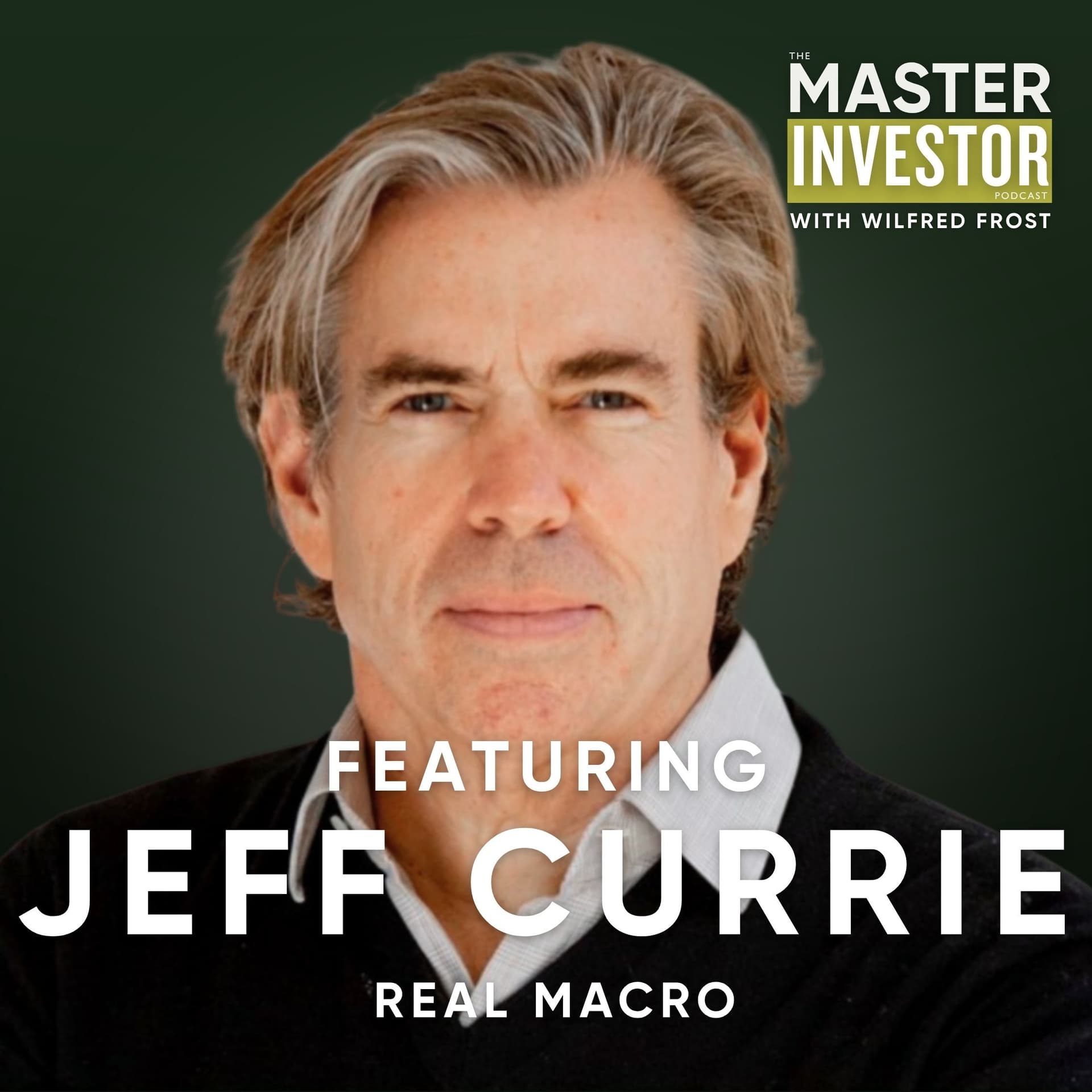
Jeff Currie is a commodities expert. He spent about 30 years at Goldman Sachs building and leading the commodities team, left in 2024, spent two years at Carlisle, and then founded Rail Macro and Abax Markets.
Key claims and notable examples
- US yield suppression via Treasury actions (e.g., maturity swaps/buybacks) is “aggressive” and timed after 30-year record levels; he estimates interest costs could rise from ~$1.1T to ~$1.5T.
- Gold: he calls for establishing/adding a long-term position; he cites gold’s earlier surge (up to ~$5,400) and later pullback (to ~$4,000) as buying opportunities. He links gold demand to de-dollarization and sanctions risk (Russia selling Treasuries and shifting to gold; emerging markets avoiding dollar assets).
- Energy: underinvestment in refineries plus war impacts (Ukraine taking out ~3–4 mbpd Russian refining capacity) and Middle East product bottlenecks; diesel affordability is the key problem (diesel ~$4.68 NYMEX / ~high at the pump).
- Agriculture: bullish on ag after late-August call, citing record El Niño and Black Sea grain corridor disruptions; he notes other choke points like the Rhine and Panama Canal.
Written by AI. May contain mistakes. Listen to the episode to check what was said.
Chapters
Tap a time to open that second in VOUnderstanding Financial Repression and Hard Assets
0:00 to 0:49
Learn about financial repression and the importance of hard assets in the current economic environment.
“There's only one thing you call that is they didn't like the price that the market was providing.”
Analyzing the Yield Picture and Market Interventions
1:14 to 4:00
Discussing the rise in yields and the implications of recent market interventions by policymakers.
“Nothing in the podcast constitutes a financial promotion, investment advice or a personal recommendation.”
The Impact of Financial Repression on Debt and Market Dynamics
4:00 to 7:22
Exploring how financial repression influences debt management and market dynamics, including the urgency of controlling yields.
“I mean, obviously, Scott Besson, the US Treasury Secretary, announced his buyback or the size of the buyback going forward and his intention to try and dampen the rise in yields at the longer end in the curve.”
The Case for Gold in Today's Economic Climate
7:22 to 13:05
Examining the long-term bullish case for gold as a sound investment amid inflation and financial instability.
“This was an action to push down those longer-term yields so that, hey, you can lower the cost of funding at a time when they need to roll some of this debt.”
Concerns and Future Predictions for Gold
13:05 to 14:00
Discussing potential concerns regarding gold prices and how historical events shape current market perceptions.
“One sort of final, quite basic question, if you'll allow it on gold, is if you step back and look at the chart of gold, it's not dissimilar from stepping back and looking at the chart of NVIDIA.”
The Shift from Dollar Assets to Gold
14:00 to 18:26
Learn how geopolitical tensions are influencing the shift from dollar assets to gold among nations.
“And it started in 2018 when the very first, by the way, Mnuchin is the only one who used secondary sanctions.”
Energy Market Dynamics and Underinvestment
18:33 to 23:24
Explore the reasons behind underinvestment in energy and its implications on the market.
“And as you've been alluding to, you've been successfully, accurately bullish since 2020.”
Refining Capacity and Product Pricing
23:24 to 28:01
Understand the current challenges in refining and its impact on product prices and inflation.
“But there's a lot of demand reasons also there that come into play.”
China's Role in Global Energy Markets
28:01 to 29:22
Explore how China's strategies impact global oil and energy prices.
“Its strategy, whether it's in steel, aluminum, AI, control the processing.”
Current Energy Crisis and Affordability
29:23 to 30:52
Discuss the current state of energy prices and the resulting affordability issues.
“And how much does where strategic reserves are globally feed into that case as well, that crude stocks are lower than they were when the war started?”
Show all 22 chapters
Historical Perspective on Energy Scarcity
30:53 to 34:24
Learn about the historical context of energy policies and public perceptions.
“And we think about gasoline prices, retail.”
The Evolution of Energy Strategies
34:25 to 36:28
Examine the shift in energy strategies from historical to modern times.
“It was about being protected in an environment just like today.”
Current Trends in Agricultural Commodities
36:29 to 39:24
Analyze the recent trends and impacts on agricultural commodities.
“Just a quick reminder to please hit follow or subscribe on your podcast or video app so that you never miss an episode.”
Commodities Versus Financial Assets
41:24 to 42:00
Understand the differences between commodities and financial assets in pricing.
“And as you kind of just outlined, it's hard to see many more choke points emerge in the global sort of shipping lanes that already exist.”
Commodities vs. Financial Assets
42:00 to 44:25
Understand the difference between commodities and financial assets and their impacts in inflationary environments.
“So to what extent do you worry that some of these things are already priced in?”
Historical Context of Commodity Prices
44:25 to 46:55
Explore the historical cycles of commodities and financial markets, including past economic crises.
“We all know the old adage that the cure for high commodity prices is high commodity prices, it draws investment in.”
Globalization and Geopolitical Shifts
46:55 to 51:46
Analyze the shifts in global power dynamics and the implications for the U.S. and China.
“If you can't turn the lights on, nothing happens.”
The Future of Technology and Crypto
51:46 to 54:45
Discuss the evolution of technology, the role of crypto, and the potential for digital ledger technology.
“What did the world look like before Britain?”
Real Macro and Hard Assets
54:45 to 56:01
Learn about Real Macro's focus on hard assets and future predictions regarding trading dynamics.
“You're going to leave a footprint going in.”
The Return of Hard Assets
56:01 to 56:44
Learn why hard assets are becoming essential in today's economy.
“And that's part of where the dollar sign and the coin was silver.”
Investment Advice on Hard Assets
56:44 to 57:28
Discover strategic advice on investing in hard assets and commodities.
“We like to end by asking what the overriding piece of advice you have for our listeners.”
Creating New Investment Vehicles
57:28 to 58:19
Explore the need for innovative investment vehicles in the hard asset space.
“premium, critical minerals, food guys own just a bad, don't try to actually pick which one.”
Transcript
Automatic transcript. May contain errors.0:00There's only one thing you call that is they didn't like the price that the market was providing. And in any other terminology, I call that financial repression. They want the yields lower. And the reason why we pounded the table on gold, we have financial repression. It creates inflationary pressures. It's intentionally done to lower the value of that debt. So the debt holders want out. What's going to protect you in that kind of environment is going to be owning the hard asset. We have a problem in diesel. And that's an affordability problem. And we just go back to our problem on interest rates, interest rates, that 10 year sets mortgages.
0:36It's an affordability problem. And we think about gasoline prices, retail. So everybody's thinking about, oh, oil's at 94, it's not at 150. You're 189 on diesel, you have an affordability problem. So it's not something we're waiting for. It's here. Welcome to the Master Investor Podcast with me, Wilfred Frost, where we celebrate and learn from the success of the greatest investors, business leaders and politicians in the world, giving you, our listeners, an edge. The Master Investor Podcast is sponsored by the World Gold Council, BNY Investments, LSEG and Interactive Brokers. Please do remember the views expressed in this podcast are for general information purposes only.
1:20Nothing in the podcast constitutes a financial promotion, investment advice or a personal recommendation. More on that in the show notes. My guest today is Jeff Curry. He's one of the world's foremost experts on commodities. He spent three decades at Goldman Sachs building and then leading their commodities team. He left Goldman in 2024, spent two years at Carlisle before deciding to go out on his own. He's the founder of Rail Macro and of Abax Markets. Looking forward to discussing both of those new ventures with him later on in the conversations. But Jeff, it is an absolute pleasure to see you.
1:59Welcome to the Master Investor Podcast. Oh, it's a pleasure to be here. I've been waiting to do this, Wilford. So, you know, I've done this with you going back from when you were at CNBC for literally decades. So it's a pleasure to be reunited in this kind of format. Well, I couldn't agree more. And particularly, I would say in this format, because it gives us plenty of time to explore the key factors. And obviously, we're going to get into all the commodities. But I feel like we have to start with the yield picture, which is the story of the last couple of weeks. What is your quick snapshot on the rise in yields before we get to some of the actions that we've seen from policymakers in response?
2:41I mean, this has been really at the core of our thesis is that the debasement pressures from public debt being so large at this point and the lack of investment in hard assets and the inflationary pressures creating a sharp rise in yields. And I think we're beginning to see that take place. And I would expect it to be a theme. We go back to, we turned bullish on commodities in October 2020. And that's when you look at yields, that's pretty much where they dropped. Yields, commodities, hard assets, all of that. And the view was that these things were just going to be a straight line up for decades.
3:23And by the way, if you look at the picture, it was a straight line down for what? Well, nearly four decades. And so I think that we are in that, call it a super cycle on hard assets and commodities and yields are going to be a part of that. And I think this is, we're not in the first inning of this. This is like we're in like the second or third inning of it. And I think we're going to see more of it. And for our non-American listeners, you're referring to the second or third inning of nine of a baseball game there. Yes, I forget. Being based in Spain now, Jeff, you're going to have to adapt some of your analogies going forward.
4:00I will. A true European that you are now. Let's touch on the intervention then. I mean, obviously, Scott Besson, the US Treasury Secretary, announced his buyback or the size of the buyback going forward and his intention to try and dampen the rise in yields at the longer end in the curve. Talk us through your reaction to that. You know, whatever you want to call it, maturity swaps or whatever people have termed it, there's only one thing you call that is they didn't like the price that the market was providing. and in any other terminology, I call that financial repression. They want the yields lower.
4:40And if we put it in the broader context of intervention, they started it with oil, intervention oil, through the SPR and other methods. Why? They wanted to get the term structure down and the term premium down. Then they intervened in the yen market. Why? Because they wanted to prevent the Japanese from selling. Then they intervene with FEMA, swap lines to places like the UAE to prevent them from selling. In other words, they're very concerned with yields going higher. And the question is, why are they concerned with yields going higher? Right now, the interest rate at which most of the U.S. price debt is somewhere around 3.2%.
5:25If they have to roll in the maturities, it goes up to 4.2. And if the interest rate bill is$1.1 trillion now, we estimate it go to around$1.5 trillion. That's a huge jump. So you can understand the urgency of keeping the interest rates lower. Because where are they going to come up with all that money to be able to pay that interest rate payments? And we look at what really changed over the last couple of years is when you look at where interest rate payments sit in the cap structure of the U.S. budget. Number one is Social Security and Medicaid. And then number two is the interest rate payments that are above defense costs.
6:08So it's really moved up there. And you probably all have heard once interest rate payments go above defense, the country has a problem. And if anything, the concern, what happened was we spent 20 years with low interest rates that really hit this. And then all of a sudden around 22, 23, we popped up. And that's why it's becoming urgent. And I mean, on one level, you could argue, you know, it's understandable if it's just a temporary move that he wants to kind of smooth out the market. But what do you kind of make of the timing of and the way in which it came out? It wasn't really a sort of structured announcement.
6:44No, that's why I say it's financial repression and not a maturity swap, because it came out a day after we hit record levels on the 30-year and after two to three weeks after the normal announcement and long before the announcement that they would have normally. So it was completely out of the blue, and it was very aggressive after a string of interventions in other markets like oil, yen, and swap lines through FEMA to other big owners of U.S. Treasury. So the timing of it, I think, is the tail that tells you this was not a normal action. This was an action to push down those longer-term yields so that, hey, you can lower the cost of funding at a time when they need to roll some of this debt.
7:32So I think it's meaningful, very meaningful. Do you think it's going to work for long-term yields? Because it's interesting, the open, you mentioned the long-term correlation or relationship between yields and the broad commodity index. Will they successfully cap those long-term yields and could that therefore cap commodity prices? I mean, that was always the view that we had taken was that financial repression is preventing yields from going high enough that clear the market. So then you end up with inflationary pressures that eventually erode the debt. So that's why it's repression called financial repression because it's not good in terms of the boners of these assets because ultimately it deteriorates the value of these assets, which is why the Japanese, the Emiratis, and the rest want out of these positions, because they're very aware that this is what the goal is.
8:29And you look at the reason why we pounded the table on gold. By the way, I may sound like I'm picking on the US. I'm picking on the West more generally. And by the way, China's in the same boat, is that all of these, in fact, everybody goes, well, the dollar is the dominant one. It's not going to be the way. Yes, it may end up being, I'd rather own dollar than pound sterling. Sorry, Wilford. But the reality is I want to own gold over the dollar and the pound sterling. And I think that that's the message here is that hard assets, which are independent of central banks and treasuries and other policymakers, are where the value is going to be generated.
9:11And that's why a lot of people ask, where do I come up with the$10 ,000 gold forecast? And by the way, I didn't do a scientific. It's rough to get you back to the levels of gold as a percentage of shares of reserves pre-1971 before Nixon took us off the gold standard. But so I think the key message here is, yes, we have financial repression. It creates inflationary pressures. It's intentionally done to lower the value of that debt. and so the debt holders want out, what's going to protect you in that kind of environment? It's going to be owning the hard assets. It's a really interesting point, Jeff.
9:52And by the way, I'd refer people back to our episode with Luke Groman recently, who echoed a similar point that all of the currencies look like cells against gold, but they might all move together. I just want to kind of highlight, though, or get you to highlight, Jeff, the significance of your call on gold, because this is, you've been a bull on energy for a while, and we'll come to that, but your loud banging the table buy case on gold was a late August call, and it is a pronounced one. Just remind people of the price action. We got up to, what, 5 ,400 on gold in January, have come back, and you now think now is the time to get in and establish a long-term position.
10:32Yeah, I mean, we've been long-term bulls. By the way, when I made this, we went short in March of this year, and when I made the case, I'm a permabowl on commods, hard assets. They go, no, no, actually, you and I will probably talk about it later. I was a bear up until October 2020. And that's when we shifted very bullish across all hard assets and in gold in particular. And so we look at gold. By the way, I want to emphasize, you put these commodities, these hard assets, people don't realize this. Since October 2020, they are the best performing asset class, bar none across all, even including crypto.
11:09And, you know, between energy, because you don't, the rotation may change across the hard assets, but the trend is the same when you look at the broader indices. And gold was one of the biggest drivers early on. You know, your point is January went to 5 ,400. In March, when the war started, we go, hey, you got to take a step back and get out of that. And by the way, I'll be honest with you, I'm kind of a little concerned right here, right now. And the reason why we said to get out in March was that when you look at the Middle East countries, they were going to have to sell gold to be able to fund themselves through this because they couldn't sell the oil.
11:44And then there's many of the emerging markets, places like Poland and Turkey, were going to have to sell gold to pay for the higher energy prices. For the most part, and pay for defense, I think Poland outright said it. So we saw the selling of gold. It came off down to$4 ,000. That's when we thought, hey, the coast is clear. And it was clear that we were starting to see the rise in interest rates. And we took the view it's time to get back in. And we were sitting around 4 ,200, 4 ,300. We rallied back up. And now with the hostilities in the Middle East and concerns around Warsh wanting to raise rates, gold took a backseat.
12:23But no way. I mean, these are little blips in the daily movements. Longer term, you know, whether you ask me what the actions by Besant is just the beginning of something that we're going to see on a much longer term basis. By the way, you know, I think is, you know, you look at Yellen did the same thing back and I think it was in 24. So it's not every time those interest rates get back up that high, it's not a partisan issue. It's whoever's sitting there realizes, how do I make the budget balance? As my interest payments goes up so much, I better intervene in these markets to get them down. And again, so that's the whole idea of debasement and financial repression, which is really the basis of we wanting to own gold right here.
13:05And listen, it's a very compelling long-term case for gold. One sort of final, quite basic question, if you'll allow it on gold, is if you step back and look at the chart of gold, it's not dissimilar from stepping back and looking at the chart of NVIDIA. that the rise in recent years looks unbelievably pronounced. And one wonders whether, you know, without being a chart expert or anything like that, those levels of sort of 4 ,000 were quite crucial support. Is there any part of you that worries if you fall below whatever that kind of relatively close level is that they could really pull back or is that a low probability in your eyes?
13:50I would view it as a low probability. And here's the reason why. And one of the key reasons why we were so bullish on gold back in 2020. And it started in 2018 when the very first, by the way, Mnuchin is the only one who used secondary sanctions. And he used them in March of 2018 when they punished Roussaint and Oleg Dara Pasca for meddling in U.S. politics. And by the way, that morning, I remember I was at Goldman at the time, but that was March 28th. We woke up, oh, my God, financial systems froze up. That's why when Bessett threatened it, was it this week or last? It was last Monday when he threatened it.
14:28Nobody goes, he's not going to do it. It's just it's too disruptive. But the point being why I bring this up when he did it. And by the way, it was like it was a shock through the global system. Don't touch it. We don't know who's going to get sanctioned. You're going to get taken out of the market forever. What did the Russians learn from that? Do not own dollar assets. That was first lesson. And by the way, they had something like 93 billion U.S. treasuries. They sold them down incredibly quickly and they replaced it with gold. And by the way, paperback, you know, greenbacks, they fly them in and these super jumbo 747s, you know, plates of gold and greenbacks.
15:05And if they ever had to deal with dollars, they'd do it in something that couldn't be sanctioned. And so it began there. And then you had the war in Ukraine occur. And that's when they sanctioned the rest of the portfolio of the Russian Central Bank. The rest of those, whether it's Chinese and all the emerging markets, look at it and go, we're not owning dollars anymore. We are done. And you look at the normal relationship between gold and interest rates, you can see the day they did that, they disconnected, just saw gold shoot up. And if you are a central bank in an emerging market right now, particularly given the fact that BASIN goes out and threats secondary sanctions, are you going to own any dollars?
15:50Absolutely not. And so the buying, you look at someplace like China is somewhere around 4.5%, 5%. They're going to continue to de-dollarize because something like gold leaves you in a place where you don't have to worry about sanctions. And by the way, on crypto, everybody goes, well, crypto is a good. No, it's not because it leaves a footprint. You got to go in and you got to get out. Gold, you can sneak it around. By the way, how do they, you know, with all these ships going to Straits of Hormones, a big old tanker, you know, you can see it. You You can move gold and you can move billions of dollars of gold really quietly in trucks and everything like that because it's so dense versus other commodities and other assets.
16:36So that your ability to hide dollars and wealth in an environment in which you have governments trying to do sanctions or taxes or whatever it is, the demand for gold is not going to stop. And as a share of reserves sitting in these central banks, it's still too small in places like China and emerging markets. I guess gold is heavier than a thumb drive, though. But I take your point about the transaction. Actually, on the thumb drive, I learned this from a Russian oligarch once. And he goes, you know, you're running down out in the woods and bad guys coming after you. And you got your fob with your Bitcoin on it.
17:10And you got your gold and platinum in here. And your partner, he wants to go a different way. And you can take out your axe. And what are you going to do? You can break open, then split the diamond, the gold, the platinum and split it. You can't take a fob and split it in half. And then he goes, the other thing, if you're swimming across the river and you got your fob in there, you can't get it wet because you're going to lose all your crypto. But hey, you know, gold, diamonds and platinum, it'll survive the river swim. So, you know, it goes down. Why? There's no substitute for these things have been around for three millennia.
17:43They're not going to change as being a store value. You'll have to tell me who that Russian was over a beer another time.
18:15Gold Council, the global experts on gold. They champion gold as a trusted strategic asset, provided market-leading research to help investors understand gold's role and modernize how gold is owned, traded and used, developing industry standards and market infrastructure. Learn more at goldhub.com. Let's move on and talk about energy. And as you've been alluding to, you've been successfully, accurately bullish since 2020. It's had a phenomenal run, particularly this year. Before we talk about the action this year, just outline for us one of the key reasons I think you've been bullish in the lead up, which is a very long term point about underinvestment in the space for decades.
19:00And when we look at, I'm not going to say it's been a decade. It's been it. Last time we invested, it was 2014. And that was when oil fell off the cliff. And I want to put this in the context of technology. And, you know, actually the same was... And when you say last time we invested, you mean as a collective Western global economy, even the Chinese. And the reason why, because the price gave you the signal, it was$120,$130 a barrel. And in refineries and all of those hard assets. You know, in fact, I just got back from Hong Kong and I was sitting in the same place I was sitting in 2014, 15, talking about commodities.
19:44And I go, last time I was sitting here, I think it was in 2013, and all you guys wanted to own was BHP and Rio or Exxon, Chevron and PetroChina. And if I would have brought you Microsoft or Google, you wouldn't touch it with a 10-foot pole. And it was interesting because the mentality was so commodities. In fact, I guess when I first met you, Wilford was talking commodities back then. And during that environment, people thought, in fact, you had peak PC demand, you know, tech is terrible. By the way, they were spending 15 to 25 % of their free cash flow. There's no investment. They were just the worst of the bunch.
20:29By the way, the metals guys, the oil guys, in fact, the term I use, we're spending like drunken sailors then. In fact, they were spending 120 % of free cash flow. And by the way, the investors are going, raw, raw, raw, more, more, more, more, grow, grow, grow. And then all of a sudden, as we all remember, it ended badly. Oil prices collapsed, metals prices collapsed, the dollar ripped. And that's when we transitioned out of that commodity super cycle into that tech super cycle. By 2015, 2016, they're going, hmm, Microsoft and Google look pretty interesting. And by the way, then they went on a tear.
21:10But I think there's a couple of takeaways that come out of this. People go, when are these oil guys going to spend again? I go, they won't. Remember, we fired all the CEOs and management teams in those metals and mining and those energy and oil companies in 2013 and 2014 because they spent too much. These guys were weaned on the idea you don't spend. And so, in fact, I like to call it the munificent seven. Munificent means gifting lavishly. When you look at the big energy companies put together, the top seven of them, they have a free cash flow yield of 15.5%. The mag seven is two and the hyperscalers are zero.
21:50They don't because they're spending. Now, by the way, those tech guys are now spending like the drunken sailors of the metals guys back in 2014. They're in 100 % of free cash flow. And everybody at this conference, we're all, what do they want to do? They just want to get long, the MAG-7, the tech, the AI guys, and they go, no, we don't want to touch these oil guys. And so when I go back to the point, this underinvestment theme, so you had that going on. By the way, the investors do not want, in fact, the one thing I've learned is growth is a, even though it's five letters, it's like a four-letter dirty word.
22:27You don't grow in this space. And so that's one of the mentality. The other one is, remember, people forgot about ESG. People are wondering, why aren't we having diesel prices go to the moon? We haven't built refineries because they were considered off-limits because we assumed we would never need them again because of peak oil demand, which is something that's thrown out the door and people have forgotten about it. But the overall incentive was not to spend. And I think that when we think about those two put together, that's why we don't have the investment and we have all the problems we're witnessing to hear today.
23:02But I also, and by the way, the first time I discovered it was in February 2002. We called it the revenge of the old economy because they call the dot-com guys new economy and the exons of the world were old economy. But it's something that we see here. But that's not the only reason. We can talk about it later why I want to own the space. But there's a lot of demand reasons also there that come into play. Let's stick on the supply just for a minute longer. And I kind of almost, it's a question I would have asked three weeks ago, before hostilities picked up again, because even before they picked up again in the Middle East, you were making a point, which you were alluding to just there that even if crude prices, Brent or WTI had pared back some of their gains, albeit still up on the year, you were watching closely the prices of the refined products, the products that we actually all use that actually will feed into CPI and other inflation prints.
24:03And those were spiking regardless of crude softening its rise. Yeah. And I think it goes to underinvestment in refineries. And going into this, there was expected to be zero investment in refineries after 2027. And I was just in a big refining thing yesterday in Hong Kong. And it made the point, we got a little bit more coming in 27 and 28, but that's delays from 24. There has been no new investment. By the way, cracks are normally somewhere around$15,$20 a barrel. They're$105 dollars a barrel. That's four times, five times more than normal. These refineries are printing cash. Again, the magnificent seven versus magnificent.
24:50And magnificent means giving you money. And these things just print the money right now because there's none of them. And we can't build them. It takes you seven years to build one. So you're not going to, you know, I actually was I was asking Claude the other day, who is richer, J.D. Rockefeller or Elon Musk? And he goes, well, as a share of GDP, U.S. GDP, they're about the same. But Rockefeller was a different kind of rich, i.e. cash. These assets spin out cash, which goes to munificent. They give you cash. But I can't get anybody to want to own them. For some reason, they don't want cash. They want something, you know, building data centers on the moon as opposed to getting cash today.
25:33But I think the key point there is we had the underinvestment of these refineries. The other factor that comes into play is you had people are focused on the Straits of Hormuz and don't have their eye on the ball on Ukraine. Ukraine has gone in and taken out somewhere around three to four million barrels per day of Russian refining capacity. And that was 10 % of the global supply of diesel. Also, when we think about the Straits of Hormuz, there's another 3 million barrels per day of refining capacity trapped behind the Straits. And when we think about if you're going to sneak a tanker out, are you going to sneak a tanker product out or a tanker of crude?
26:13You're going to do the crude. Why? If you get hit by a bomb, you have a good chance of surviving it. But if you're on a gasoline tanker, you're not surviving that if you get hit. So nobody's going to take the risk of taking the gasoline out. So those refineries stay offline. And that's where the shortage is. And I don't understand why everybody's so focused on counting the barrels of oil getting out when you've got a crisis in products. And you look at the price of diesel, it's like$4.68 on NYMEX, which means it's near $6 at the pump, if not higher. I haven't looked at it lately. This is where the real concern is.
26:49I think what it is, is people don't have any way to assess the$4.68 they see on their screen, and they don't think about it. I don't understand why they can't, but they don't look at it. And just a couple other areas to round this off. I mean, hypothetically, if you did get a lasting peace deal with Iran, and maybe not full peace, but something more peaceful with Russia, Ukraine, would that remove your significant bullishness on energy-related products? Actually, I think we're at that turning point right now today. China is coming back. And the point that people, in fact, somebody asked me the other day, oh, China is the reason why energy prices are low.
Read the full transcript
27:32I go, no, China, the reason why energy prices are high. Nobody in this world that's listening to this, unless you own a refinery or if you own an oil company, cares about the price of oil. The other 99 % of the world only care about the price of products. And I don't understand this. They tell me, oh, China's the reason why oil prices or energy prices are down. They're the reason why oil prices are down, because they're not buying the oil and exporting the product. China's a net export. And we think about what does China do? Its strategy, whether it's in steel, aluminum, AI, control the processing.
28:10Control the processing. you control the processing, you control the cost, you control the geopolitics, and you end up controlling where the value is in the supply stream. And so when we think about what China does, whether it's in copper or oil or steel or whatever, it buys the input and then trades what that processing margin is. And so for security reasons, for reasons around the price of wanting to control the price of energy domestically, they cut back on their runs and they cut back export a product. They're coming back. So if right now I'm not ready to go, hey, I'm going to short diesel cracks and I do want to be long oil.
28:55You can see it, by the way, at Dubai, it was a thing called backwardation. It's like the spread between the spot and the forward. It's super bullish formation, which tells you the Chinese are buying oil again, which means what's going to happen And right now, diesel prices are 189. Oil is, what, 94? Actually, it's 96 right now. What's going to happen is you're going to see oil go up and the refineries get less. And that's because the Chinese are likely to come back. That's very interesting. And how much does where strategic reserves are globally feed into that case as well, that crude stocks are lower than they were when the war started?
29:32You look at the U.S., it's really slowed down. you're at like 280 something, I'm not, you know, this is a million barrels, you know, but going into this, if you would have asked me, where do you get the problems? I'm just citing research of engineering experts. It'd be somewhere around 270 million barrels. You know, Amos Hochstein, who was, you know, in the Biden administration, he's harping on somewhere, you know, below 300. He's got to know, because he was the guy sitting there, you know, taking this thing down during the Biden administration, we're at that point where it's going to start to become dangerous.
30:05And where are you going to find it? And by the way, this whole idea that you can just take Venezuela and turn it on and refill it, it's a different kind of oil. It's going to take a long time. This is not going to happen tomorrow. And here's the other thing, too. People sit there and go, oh, they're up to two-thirds coming out of the straits. Let me just remind everybody that It's 7 million barrels per day of oil still shut in. I don't care if it's 12 to 13 or 14 or 7 million shut in versus 8 million. That's 7 % of global supply that's shut in. These markets run on very thin margins. We are going to have a problem eventually.
30:46By the way, it's not eventually. We have a problem in diesel. And that's an affordability problem. Let's go back to our problem on interest rates. interest rates. That 10-year sets mortgages. It's an affordability problem. And we think about gasoline prices, retail. So everybody's thinking about, oh, oil's at 94 and it's not at 150. You're 189 on diesel. You have an affordability problem. So it's not something we're waiting for. It's here. On that note, Jeff, I mean, I discuss this very regularly on Sky News. There's not, I guess no one's optimistic at the moment, particularly about the outlook for the economy, but there is a calmness that the tepid growth of recent years will continue.
31:31Do you think, whether it's the US, whether it's Europe, we're underestimating global recession risks? Absolutely. And I have a term for that is the abundance illusion. And I want to go back to Jimmy Carter, 1977, he did give what's now called the sweater speech. And he was in this cardigan sweater and he's on TV and you can see the thermostat in the back and it's turned down. And he's a burr, it's cold. He goes, you know, telling the public, you know, we have an energy crisis. You're going to have to conserve energy because we have scarcity. And what do you think happened the minute he finished that.
32:16Panic set in. By admitting the problem, it created hoarding a lot of other problems. And what would you do? Oh, my God, the president just told us we're out of oil rundown. And you're going to be a fact. I remember I'm old enough to remember my father put a diesel tank in our backyard. And that's not the reaction you want. And when you think about from that point forward, it started with Reagan never had a problem with it, so he didn't do it. But George Bush Sr. in the Iraqi war in 91, from that point forward, released the strategic reserves and talked the price down. Everybody thinks Trump's being different.
32:54No, Biden did this. Obama did it. George W. did it. Clinton did it. And George H.W. did it. They all did it. And so when we think about it, that abundance illusion, the Europeans do it because what happened to Carter? He created, he was a one-termer and it was done and over with. But I want to go one other point that Carter had another speech and it was in April of 1977. It was called a meow speech, M-E-O-W, moral equivalent of war. And by the way, the press killed him. They called it meow. I go, he's an idiot, blah, blah, blah. You know what he proposed? He proposed energy transition. Energy transition was never an environmental movement.
33:38It was all about energy security. He put solar panels on the roof of the White House and said, we need to quit consuming oil because it's portable and storeable. We need to consume non-fossil fuels because they're secure. We have sun, we have solar, and let's go nuclear power. I like to point this out during that time period. France has 90 % of its power coming from nuclear power. And it has the lowest carbon footprint in the world. How did it get there? It didn't get there because it wanted to save the planet. It got there because Charles de Gaulle was afraid of exactly what is happening today with the Straits of Hormuz shutting down.
34:16So that point, I want to say, you asked me, you know, are we underestimating it? It's done on purpose in the West. And one last point, I know I'm rambling on here, is China heated Carter. They did energy transition. It was never about saving the planet. It was about being protected in an environment just like today. Of course, you guys, the U.S. is obviously at least energy independent today, particularly with the help of some of the dirtier crude in Venezuela, not something you can say about the U.K. And I kind of agree. I think recession risks are significantly underpriced in places like this.
34:51before we move on to ag and and other commodities i just want to check so the munificent seven is what the global majors who are the the seven xom exxon mobil chevron conoco phillips bp shell total and saudi aramco okay so not not not any from italy and not the asian the asian names because you want people who pay big cash flow. I mean, that's the thing. The French total love a good dividend, but I'm not sure that their execution is always the best. Actually, I'm going to disagree with you on that. I would say Patrick Pousset, he does what we talk about as being the new jewel order. The new jewel order is diversify.
35:37Do it from oil, gas, solar, wind, nuclear. Do the whole. you know he has in you know east texas he has you know solar and wind going into the power with the gas underneath and then he has um you know oil and gas and places like you know i actually i can't take this way i think it i think he does in germany it's actually he has actually i think he has oil in germany but i think the key message about total is that it is it has a little he cares about the jewel, which is why we call it the new jewel order. And he focuses on creating jewels from all the available sources because you do not know which one is going to have a problem.
36:20And all seven of those, is there an ETF that merges them or you just think people should establish positions in? I'm working on the ETF right now as we speak. Hi guys, it's Wilf. I hope you're enjoying this episode. Just a quick reminder to please hit follow or subscribe on your podcast or video app so that you never miss an episode. And if you've got time, please do give us a five star rating and leave us a comment. It really helps other people find the podcast too. Now, back to the episode. Let's move on to ag, Jeff, because this is, again, a slightly more recent call, at least the extent to which you've been pounding the table.
37:02Again, in late August, you were loud and clear that you expected the ag commodities to pick up. Indeed, they have. Yeah. And when we look at the motivation behind that call, again, we've been long the whole complex going back to 2020. And if you look at ag, it's the one that's been the most explosive. And it was in the tree commodities first. And tree commodities are like coffee, cocoa, and cotton. And rubber's in there as well. The reason why they've been impacted the most is they're at the equator. And the global warming has had a really significant impact. on. Remember you saw that it was the Hondurans that were the immigrants that were coming into the U.S.
37:49in like 22 and 23 because they couldn't, their coffee was being taken out. And when we look at what's going on right now, it's two factors. It's a record El Nino and you have war. Ukraine is going into the Black Sea grain corridor and taking out Russian exports, also taking out Russian oil. So I'm kind of shocked the market is only focused on the straits of hormones. Is it open? Is it closed? You know, what is the president going to tweet today? Yet nobody's pain is, by the way, is today the first time in nearly, this has been going on for about two months, you know, Secretary Besant actually brought it up that's going on in the Black Sea with the Russians taking out refining capacity.
38:34And I think one of the reasons why the CIA, sent their representative to Moscow was tell the Russians, stop this, because you're starting to really impact inflationary pressure. So you have war plus weather combined. And let's think about what the weather is doing. The Rhine River is at record low levels. The Panama Canal is being shut down to things with only a 47 and a half foot draft. So we are a lot more choke points than Straits of Hormuz. You got the Straits of Hormuz. You have the Red Sea, which is war with the Hooties. You have Black Sea on oil, Black Sea Grain Corridor, Russian refinery capacity, Rhine River, and the Panama Canal.
39:14Those are a lot of choke points, and they're all out of reach of the toolkit that Washington has from its policy perspective. And we're beginning to see it on our screen. So, and actually, out of all those calls that we made back in August, and it's been about two and a half, three weeks ago, the best performers is the agriculture. Everybody go back and look at the price graph of wheat. It's a line going straight up. And also when we think about, last thing I want to say, and metals too are on fire right now, is most commodities are dirt and diesel. And I hate to boil it down to being that simple.
39:53If diesel is at an all-time high, you're putting a lot of pressure on everything else. At the same time, you have all these weather shocks going on. So, you know, the risk here, I think, is substantial, particularly on the grain side. And if we go back to everybody likes to take inflation and strip out food and fuel, but that's throwing the baby out with the bathwater. From an affordability perspective, food and fuel are central to the overall inflation expectations going forward. So, you know, again, going back to where we started this conversation, you know, the higher interest rates, you know, are being driven by the risk here that are getting increasingly more important day by day.
40:58at ibkr.com forward slash masterinvestor. This episode is brought to you by LSEG, the leading global financial markets, infrastructure, data and analytics provider. To learn more about how LSEG connects businesses, investors and markets worldwide, visit lseg.com. I guess as we kind of sum up all of these commodity kind of positive outlooks I have to ask the extent to which it's already priced in I mean I get that some commodities are only responding more recently than others but this year has already been a great year for those munificent seven stocks that you mentioned even if on you know price to free cash flow yield they're still relatively cheap.
41:50And as you kind of just outlined, it's hard to see many more choke points emerge in the global sort of shipping lanes that already exist. So to what extent do you worry that some of these things are already priced in? Very little. And the reason why is commodities are spot assets, financial assets are anticipatory assets. And what does that mean is that commodities, they're physical assets that's clear today's supply and demand, not tomorrow's. Even the futures are not tomorrow's. They're a cash and carry relative to today's prices. Financial markets like stocks and bonds, they price expectations on growth rates.
42:34In fact, the way I like to say it, why do you get a negative correlation between commodities and financial assets, is that when the inflation happens like it is right now, and Warsh expressed his concerns in Jackson Hole about raising rates, and that's what took some of the steam out of gold, and if he begins to start to raise rates, the financial assets go down. Because why? Growth expectations go down. Commodities will still go. Because think about this. Commodity is, demand is up here, supply is down here. You've got a deficit, whether it's oil, grains, or whatever. So you've that spread. Let's say they raise rates and they slow the demand down.
43:10You're still in a deficit. The markets are still going to die. The only way commodities go down is if the demand goes down like that, below the supply. And that's not likely to happen. And so when we think about with financial markets, they start going down because the higher rates says you have a lower growth rate, and that's why they go down. And so when we think about why you want to own commodities in this kind of environment, is they're going to be the ones that are going to power ahead as your financial markets get hit with the inflationary pressures. By the way, U.S. Labor Day is next week.
43:43I think when people come back and sit in their desk and they look at the situation and see record diesel prices, and who knows, oil will probably be over 100 by then. And we see metals prices. Copper is at an all-time high. I think zinc is getting there. Aluminum, they can look at this and go, hey, you know, the risk of inflation is probably pretty high right now. I better get out of the financials and start, you know, out of, you know, the equities, out of the bonds and start looking at these hard assets. So just finally on that, then to push it a bit further, I mean, I guess the question is, how long is the lead time with which you're confident commodities will still rise?
44:25We all know the old adage that the cure for high commodity prices is high commodity prices, it draws investment in. You've already touched on the very long lead time to build out more refining capacity. So I guess there's some breathing room there. But to your point on if demand is here and supply is here, if you do feel that there's risks of a recession, that would be a trigger to pull demand down. And by the way, that happened in 08-09. But commodities, High oil prices helped facilitate that credit crisis because you get higher yields and it compounded on itself. Commodities collapsed in there.
45:04But the structural bull story, the super cycle kept playing out in 9, 10, 11, and 12. And it wasn't until October 12 that we became neutral on there because it became apparent shale was going to solve the problem. And you had too much. Again, going back to these guys were, you know, spending way too much in 12 and 13. And, you know, eventually everybody goes, enough is enough. And you couldn't stop those managements from spending because that's what they knew how to do. Kind of like the AI guys today. But I think the so we think about where are we in this? I'm comfortable that this super cycle, there may be a recession will come down, but it's going to go back up really quick.
45:43I don't think there's going to be a catastrophic recession because we don't have the same in but when you think about where are the imbalances in the global economy today everybody wants a point point at private credit it's nothing like what we had in 08 note 9 and it's not systemic or anything like that the problem is in the sovereigns this time that's where the imbalance is it's not in public credit markets or anything like that it's with the sovereigns it's with the United States government the British government you know it's with the Chinese government. By the way, the only ones that are actually, it's the German-speaking countries that are actually, the continent, actually here in Spain, they're in pretty good shape.
46:21Actually, Europe is actually in really good shape. Take the UK out of it and Italy out of it. The rest of it's actually relatively, you know, you take, in general, they're 81%, including the UK. And when you get into places like Germany and Spain, you get into the 60%. Put it in perspective, the US is 125. Japan and China are the 200s, 300s. So these are real serious problems in terms of looking at these sovereigns. So that's why even if you do have one of these problems, it's not like 08, 09. It's very, very different. Yeah, those obviously are referring to the debt to GDP percentages there. So as we kind of start to kind of broaden out and conclude, um jeff i'm interested in terms of are there any moments in your career or other parts of economic history that you really feel uh feel like today where that kind of echo of history stands out to you well i originally if you would have asked me this question in january here's what my answer would be oh it's just another it's another hard asset cycle and here's the model I think about the world as being, is there's two industries that matter.
47:31One is energy and commodities. If you can't turn the lights on, nothing happens. The other one is technology. If you don't innovate, you never progress. And you look at history since the post-war era, it's either hard assets like commodities, or, you know, let's say like the exons of the world, or it is the world's being led by the technology guys. You know, let's say like IBM, Microsoft, Microsoft, NVIDIA, Google, it's always one of those sitting at the top. And if we go back to the 50s coming out of the Second World War, we had a big physical CapEx boom cycle to rebuild everything coming out of the war.
48:09And the commodity guys led. But eventually they overdid it. You're swimming in the capacity and we go to the nifty 50. The 60s was all about low and stable inflation and low interest rates, very similar to 2010s in the early part of this decade. But eventually you ended up starving off the capital to the hard assets and you went into the 70s. And then that was the boom. And so, you know, you look at, you know, IBM, Kodak, actually Coca-Cola is this long-term growth type brand that's the same thing as technology. They led the nifty 50. And then they got crushed in the 70s, the 80s, Exxon's the top of the king of the mountains.
48:45Then they get crushed. And then the tech leads, you know, the dot-com and Microsoft's the top of the mountain in 2000 and Exxon's down here in the bottom. And then they get crushed by 2010. Exxon's at the top and Microsoft, you couldn't give it away in 2011. And here we are, Microsoft, NVIDIA, Google at the top. Nobody really likes these oil companies right now. Where do you think we're going to be in 10 years? That's the way I looked at the world. Post-Iran, this is bigger. This is way bigger. And the reason why I say that is let's start looking at the bookends of what's changing here. And let's start going about the globalization story that occurred.
49:25I'm using this from Robert Pape, the professor at Chicago. And he goes, in 1991, two things happened. The Soviet Union collapsed and the United States goes to Iraq with 10 ,000 body bags and used 147. And the word was shock and awe, the Americans. They became the hegemen to the world. And that unleashed that globalization. What's happening here? The U.S. is being challenged by China. I came back from Hong Hong Kong, Hong Kong has the mojo back. China's like, hey, yeah, we're the big guy on the street now. And the U.S. is not doing too well in Iran. So those are the two bookends. That's globalization.
50:00That's done. Then let's think about Bretton Woods, 1945. What was the deal? It was the grand bargain. We're going to give you the World Bank, all this money, rebuild yourself, use the dollar. And we're going to use our big, gigantic navy to protect the world and free trade and globalization. Guess what? The United States is breaking the grand bargain today in the Middle East. And if people go with Bokrein, I go, are they going to walk away? They can't. Because what are they going to do? Excuse me, Mr. Ayatollah, can I bring my superpower, Abraham Lincoln, into the straits and park it at Bokrein, which is my big naval base there?
50:40This is huge. This is not, you don't take a big L and walk away like everybody thinks. This is huge. This is game-changing. And then I want to put this in the perspective bigger for 400 years. Bac Rain was founded by the Portuguese in 1602. It was called Fort Portugal. And when we think about that U.S. Navy, it's not the ships and the technology. In 1941, the Americans inherited it from the British. It got Diego Garcia. Think about that name. Who founded that? It was the Spanish and the Portuguese. Bac Rain. The British got it from the Spanish and the Portuguese. The Spanish and Portuguese founded all this stuff.
51:20Why? Because the Ottomans cut them off from the spice route going across Asia land. They had to figure out how to do this with ships. They created deep sea navigation. They're the ones who founded all that. Then the British inherited it, and then the Americans inherited it from the British. This is Western dominance for 400 years. By the way, I was making these arguments in China when I was there this week. They're like, rah, rah, rah, rah. This is our first time in 400 years. We can push the West out. What did the world look like before Britain? Because when the British defeated Napoleon, that's when we got a hegemon.
51:54And after Britain, it became the Americans. And the Anglos have controlled all of those islands, Diego Garcia, Bacrain, and everything, and been the global hegemon for a good 200 years. What was sovereign-backed corporates like the Dutch East India Company with their gunships. In fact, what do they trade? Gold and silver. And I think that are we going to go back to a world where you have sovereign-backed corporates that are running around the world? Are we going to be trading gold and silver in tokens? It's something you really need to think about because if the U.S. is not the hegemon, we're going into a very different world.
52:36it's it's fantastic food for thought uh with some great historical context jeff let's have that forward-looking uh kind of follow-on on crypto you're very bullish gold you've made that clear where are you on bitcoin and other crypto assets um crypto i think bitcoin did more damage to digital ledger technology dlt um than i think we can fathom people because the technology is incredible. And when I think about where we are on the process of web, web 1.0 was HTML. You read it. That was 1990. Web 2.0 was social media. That was in the 2010s. And then I have to point out, Goldman figured out how to do HTML.
53:28Enron Online was a force in trading. We created a liquidity explosion. And actually, it was the same with Goldman became the vampire squid by 11 and 12. What did President Trump? He figured out Web 2.0, how to read it or write it. That was understanding social media and everything like that. And the MAGA movement all came out of that and they took over the world. Web 3.0 is DLT. Own it. Read it, write it, own it. And was crypto ever made for humans? No, it was made for AI. Because now you can think about what this, you create your AI agent arming with his wallet. A wallet is a token. And you run them down the rails.
54:11And let's take baseball cards. They're really far down in terms of getting down into the downstream. They trade at 20 to 30 % bid-ask spreads. Now I arm my AI agent with his token. And he can go down there and arb that out and close that arbitrage. We're going into the possibilities are huge. But the problem is everybody's stuck with crypto. Now, what's my view on crypto? You know, it's not going to replace gold. It's been around for 17 years. It's about a$1.25 trillion market cap industry. Gold is$30 trillion. It's been around for three millennia. You can hide it. You're not hiding crypto. Everybody calls it crypto.
54:54though, you got to buy it. You're going to leave a footprint going in. So I'm super bullish on the technologies. I think actually when we look at, you know, the Genius Act and the Clarity Act, I think it's going to create another liquidity explosion like what we saw with Goldman in the 2000s, where they just went downstream and started trading. I like to point out that Web 1.0 allowed us not trade WTI and Brent, but to trade like, you know, gasoline and jet fuel and all these things further downstream. So I'm a big believer in the technology. I'm not a fan of Bitcoin and the crypto itself. Tell us a little bit more about what you're doing now with Real Macro, of course, two years after you left Goldman.
55:35Real Macro, I like to call it Real Macro. Your Spanish presence now. My Spanish presence. And I named it after Real Diocho. And what is the Real Diocho. It was the first silver coin. It was the first reserve currency that the Spanish developed. And by the way, that's where the dollar signs. Real Diocho means pieces of eight. It was in eight units. And that's part of where the dollar sign and the coin was silver. But the point being is here, we're going back to a world of hard assets. And I go back to the world before during the Real Diocho is that hard assets were at the key. We talked about the world before that, the British, it was gunboats and you traded in silver and gold.
56:23And I think we're going back to a world of that. One last point I want to make here, one of my predictions is the sovereigns or the corporates are going to trade through the sovereigns, meaning Apple's debt is going to trade at a tighter yield than the US treasuries. And that was what the world existed back in the Rialdeocho world that we lived in. Really, really interesting that, Jeff. We are pretty much out of time. This has been fascinating. I've loved it. We'll have to get you back on. But I flagged this to you at the start. We like to end by asking what the overriding piece of advice you have for our listeners.
57:00So what is it? don't try to get too fancy in these hard assets. And I like to call it halo, hard asset, local operations, because we're going to deglobalize and fragment. And you don't know which commodities are going to be the ones that are going to go up. So own the broader indices. Don't try to be smart and cute here. Own the basket of miners, oil producers, uranium, premium, critical minerals, food guys own just a bad, don't try to actually pick which one. Remember, I was saying before, why do I like Total's strategy? It's because they own a little bit of all of it. We don't want to just concentrate on one thing.
57:42So whether if it's a, you know, like an indice, like, you know, like the old part of why what I'm going to try to do is create new indices, because the only ones out there are like, you know, the, you know, the B-coms and then the Goldman Sachs Commodity Index, Quantix has one of them. But ultimately, that's where my focus is going to be is creating new investment vehicles because we haven't done this for 20 years since 2006 in that time period. Jeff, that was absolutely fantastic. Great to have you with us. Keep us posted when you launch those ETFs. We'd love to have you back. And thank you again for joining us here on the Master Investor Podcast.
58:18Great. Well, thank you for having me, Wilfred. I really enjoyed it. That was Jeff Curry, of course, of Real Macro, former Goldman Sachs head of commodities. Next week on the Master Investor Podcast, we will be joined by Thomas Pettervie, the founder and chairman of Interactive Brokers. So please do hit follow or subscribe on your podcast app to make sure you get that one too. We'll see you next time. The Master Investor Podcast is sponsored by the World Gold Council, BNY Investments, LSEG and Interactive Brokers. Please do remember the views expressed in this podcast are for general information purposes only.
58:57Nothing in the podcast constitutes a financial promotion, investment advice or a personal recommendation. More on that in the show notes. This podcast is produced by Paradine Productions and Master Investor Limited in association with Birdline Media. If you've enjoyed the show, please do subscribe on YouTube or click follow on your podcast platform and you'll be automatically notified each time a new episode drops.
From the publisher
This week on The Master Investor Podcast, Wilfred Frost sits down with one of the world’s foremost commodities experts, Jeff Currie. After nearly three decades building and leading commodities research at Goldman Sachs, Currie shares an unvarnished masterclass on why we are only in the "second or third inning of nine" of a generational commodity supercycle that will see hard assets crush tech and the dollar this decade.
At the heart of Currie’s thesis is a simple but radical shift: mounting sovereign debt, financial repression and the debasement of currencies will drive investors away from traditional financial assets and towards gold, energy, agriculture and other hard assets.
Currie explains his bold $10,000 gold forecast, why he would rather own gold than the dollar or pound sterling, and why central banks - particularly in emerging markets - are continuing to de-dollarize and accumulate gold. He reveals why he favours his “Munificent Seven” energy giants over tech’s Magnificent Seven - Exxon Mobil, Chevron, ConocoPhillips, BP, Shell, Total and Saudi Aramco - and explains why agriculture, uranium, critical minerals and other physical assets could all benefit from the same structural forces.
He also offers a sharp critique of Bitcoin and crypto, and explains why he believes digital ledger technology is better suited to AI agents than humans.
From the Iran War and extreme weather to droughts, El Niño and intervention in the bond market, Currie explains why the events of 2026 have only strengthened his conviction - and why he believes the great rotation into hard assets is still in its early stages.
0:00 Intro
2:23 Yields rising
4:00 Bessent intervention is financial repression
7:36 OWN GOLD
13:08 Not worried about gold pullback
18:36 Energy over Tech
23:30 Watch Diesel
27:02 China buying crude again
29:23 Crude reserves low
30:19 Recession risk underpriced
34:53 “Munificent 7”
36:53 Ag commods exploding
41:22 Buy any commod pullback
44:20 Recession risk to commods?
47:00 History suggests still early for commods
49:10 Iran hugely boosts commods bull case
52:43 Bearish Bitcoin
55:28 Post Goldman - Real Macro
56:50 Conclusion - Own all commodities
Check out our podcast channel The Master Investor Podcast YouTube channel
And follow @WilfredFrost on X and Linked In
Sponsored by BNY Investments, Interactive Brokers - ibkr.com/masterinvestor, The World Gold Council and London Stock Exchange Group (LSEG).
The Master Investor Podcast is produced by Paradine Productions, Master Investor Ltd in association with Bird Lime Media.
This podcast is for information purposes only. It does not constitute an invitation or inducement to engage in any investment activity. It is not a financial promotion as defined under section 21 of the Financial Services and Markets Act 2000 (FSMA). The views expressed by the presenter of this podcast are those of the presenter and are provided in the course of journalism. This podcast benefits from the exemption under Article 20 of the Financial Services and Markets Act 2000 (Financial Promotion) Order 2005 (FPO), It does not require approval by a person authorised under the FSMA. Generic information, not identifying any specific investment, fund, provider or service, about a class of investments such as shares, bonds, derivatives and cryptoassets, might be provided and/or discussed during this podcast. Such discussion falls within the generic promotions exemption (Article 17 of the FPO). Such discussion is not a financial promotion requiring approval by an authorised person under section 21 of the FSMA. Investing involves risk. You should consult a suitably qualified adviser who can assess your individual circumstances before making any investment decision.