In short
Jim Mellon argues markets are at a “tipping point” for big tech and US equities, citing MAG7 drawdowns, cash-flow deterioration, and investor fatigue. He uses SpaceX as a signal (“biggest short of all time”) and says UK smaller companies and some Japanese assets look attractive. He also discusses Iran/Straits of Hormuz risk as less economically damaging than feared, while trading oil tactically. He covers bond/yield risks, yen undervaluation, gold/silver long-term, and clean-food/precision fermentation investments.
Guest
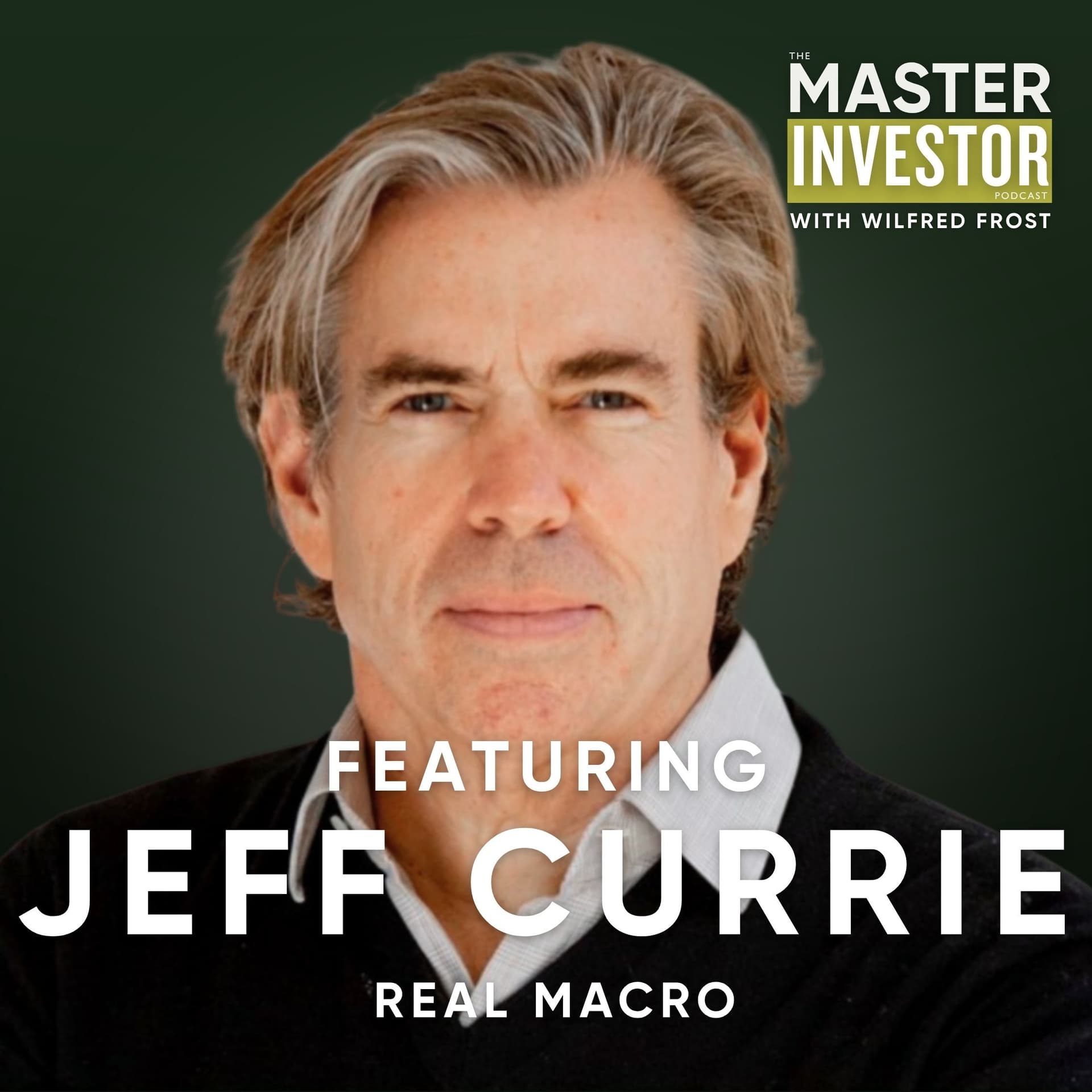
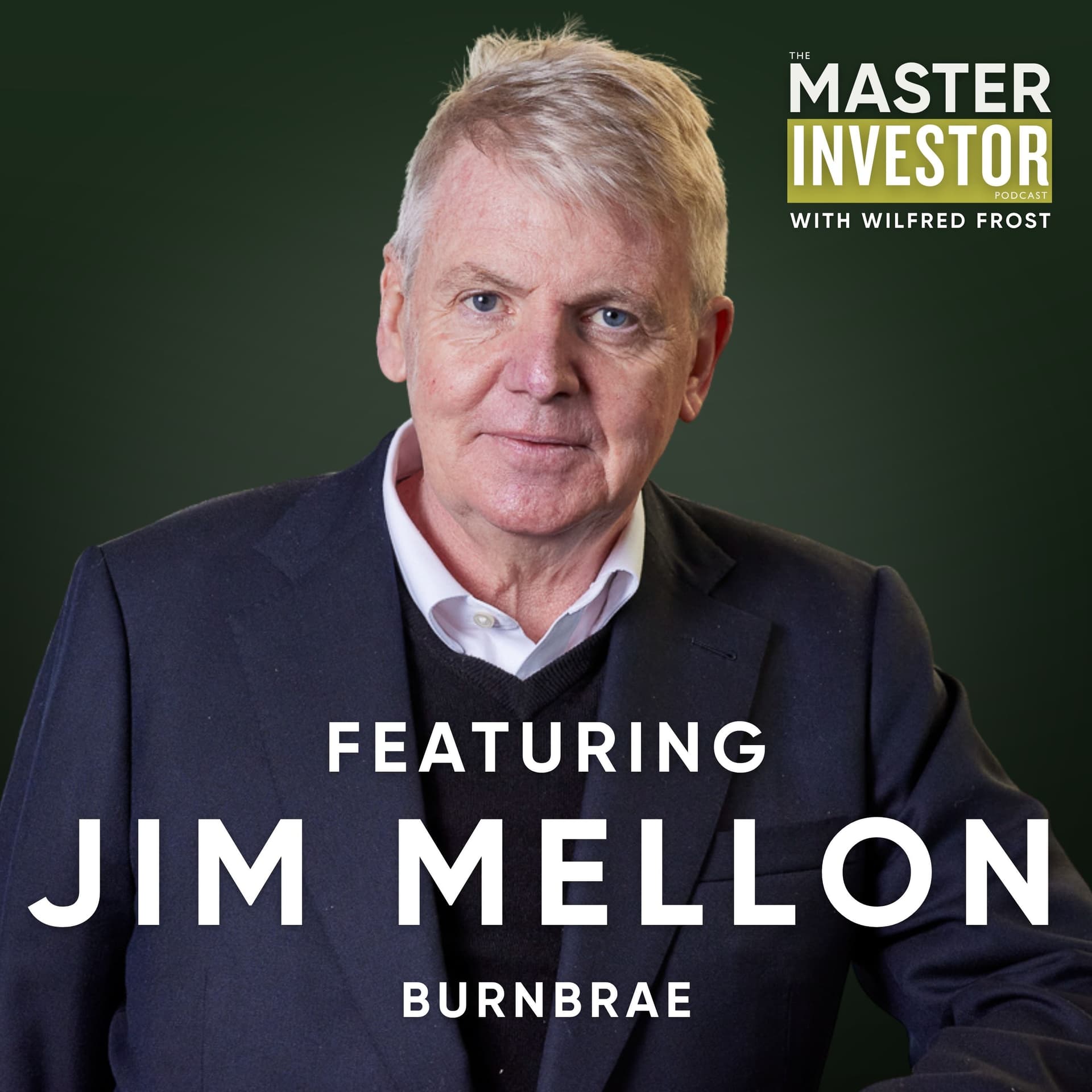
Jim Mellon, chairman of Burn Bay Group; long-time investor with a biotech background; founder-investor in psychedelic company Beckley Cytech (acquired by Attai; Eli Lilly bid mentioned). Host: Wilfred Frost.
Key claims
US tech business models are shifting toward cash-flow negative with no near-term profitability; SpaceX exposed US financial weaknesses; UK smaller P/E 10–11 with ~9% free-cash-flow yield and 4–5% dividends; “dance like a butterfly, sting like a bee” (be nimble, don’t stay fully invested).
Notable examples
SpaceX down ~50% from IPO high; Amazon down ~95% in 2000 bust; IBM/Google single-day sell-offs; Apple “safe haven” due to lower AI capex; Liverpool clean-food factory producing palm-free oils; Equinox and Metals Exploration as gold-miner examples.
Written by AI. May contain mistakes. Listen to the episode to check what was said.
Chapters
Tap a time to open that second in VOMarket Tipping Point Insights
0:00 to 1:30
Discussion on the current state of the U.S. market and its challenges.
“I think it's a sort of a general tipping point in markets, and I've been calling it too early.”
Welcoming Jim Mellon
1:50 to 2:30
Host welcomes investor Jim Mellon back to the podcast.
“Please do remember the views expressed in this podcast are for general information purposes only.”
Tech Earnings Reactions
2:30 to 3:40
Discussion on recent mega-cap tech earnings and market reactions.
“Yeah, and that's not a very nice word to use.”
Investor Fatigue in Tech
3:40 to 4:50
Analysis of investor fatigue and changes in tech company business models.
“make any money out of all the expenditure they're making.”
Sentiment Towards US Tech Stocks
4:50 to 6:10
Exploration of sentiment shifts and potential undervalued tech stocks.
“but I think critically below its IPO price now.”
Apple's Relative Performance
6:10 to 8:00
Discussion on Apple's market performance compared to other tech stocks.
“Just finally, one that has moved in the opposite direction in the last couple of weeks is Apple.”
Implications of the Iran Conflict
8:00 to 9:10
Analysis of the ongoing war in Iran and its economic impact.
“I think that the Straits of Hormuz could end up being, you know, not as important as people think.”
Energy Stocks and Oil Prices
9:10 to 11:10
Current views on energy stocks and the oil market amidst geopolitical tensions.
“You last joined us in January, Jim, and very, very loud and clear.”
Debt Market Implications
11:10 to 13:00
Discussion on rising yields and potential tipping points in global debt markets.
“Well, they've traded well because the oil price is up and gas price for that matter and also because there's an anticipation that there'll be a relaxation of these really punitive rules which have discouraged.”
Current Economic Overview
14:03 to 15:04
Discussion on employment and wage growth trends in the U.S.
“It's down below 3 % in the United States and that's not consistent with an inflationary boom.”
Show all 22 chapters
Treasury Yields and Global Economy
15:29 to 22:25
Exploration of U.S. Treasury yields and various global economies' impacts.
“for the moment because there's still sufficient foreign capital coming into the U.S.”
Japanese Yen Insights
22:25 to 23:06
Discussion on the valuation and future of the Japanese yen.
“And I recommend that if anyone wants to just check out how cheap Japan is, just go and look at hotel prices or prices of meals.”
Gold and Silver Market Update
23:06 to 28:00
Analysis of gold and silver market trends and investment strategies.
“about that as it relates to uh china as well and how cheap it is to to stay in you know a four seasons in Beijing compared to London or New York and also in Tokyo.”
Analyzing Market Trends in Japan and China
28:00 to 28:59
Learn about market dynamics in Japan and the ongoing changes in China's economic landscape.
“It has, but that doesn't mean to say that you couldn't get this final blow off as well.”
Analyzing Market Trends in Japan and China
29:23 to 29:37
Learn about market dynamics in Japan and the ongoing changes in China's economic landscape.
“This sponsorship does not constitute investment advice.”
Investing in Psychedelics: The Case for Change
29:37 to 31:05
Explore the potential of psychedelic investments and their medical benefits.
“Eli Lilly has come out and made a bid for that company.”
Innovations in Clean Food Production
31:05 to 35:20
Understand the future of food with novel proteins and clean production methods.
“And people were throwing themselves out of windows, the LSD trips and the ketamine and psilocybin, which is derived from mushrooms, etc.”
Investment Strategies in the Clean Food Market
35:20 to 38:18
Delve into the investment opportunities and market dynamics of clean food.
“It's just one of those industries that will suddenly take off.”
Market Predictions and Investment Advice
38:18 to 42:04
Get insights on market trends and actionable investment advice for 2026.
“I didn't know that I didn't know you'd made it that explicit yeah that's amazing and I guess this could be one of the biggest ones so we shall see um do you think it'll list here in the UK?”
Market Strategy and Investment Philosophy
42:04 to 43:31
Learn about the importance of adapting investment strategies in a rapidly changing market.
“Do you remember my advice the last time, the first time I gave my advice?”
Upcoming Guests and Episode Promotion
43:31 to 43:47
Get a sneak peek of the next episode with Luke Groman and subscribe for updates.
“So please do hit subscribe or follow on your podcast app if you haven't done so already to get that one.”
Upcoming Guests and Episode Promotion
43:53 to 44:14
Get a sneak peek of the next episode with Luke Groman and subscribe for updates.
“Interactive Brokers, the World Gold Council and BNY Investments.”
Transcript
Automatic transcript. May contain errors.0:00I think it's a sort of a general tipping point in markets, and I've been calling it too early. You have seen that the U.S. market has not done well this year, actually, compared to other markets around the world. And I don't think most people appreciate that, although the U.S. market has done well over the last five years. It's been highly concentrated in what it's done. Now it's really looking pretty bad. And I think the main signal for that was the SpaceX thing, which I wrote in the master investor letter was the biggest short of all time. And so it has proved it's down 50 % now from its high, which is incredible for such a big IPO.
0:35And it exposed so many weaknesses in the US financial system. If I had to choose markets now, I would say UK smaller companies are extremely attractive. And you can see UK companies being picked off one by one, three or four a week, which is tragic. But hopefully there'll be other companies that come along and replace them, which is why I'm quite bullish on the UK. But we're talking there about P ratios are between 10 and 11. Pre-cash flow yields of about 9%, dividend yields of 4 % to 5%. It's extraordinarily attractive. I think we just repeat Muhammad Ali, dance like a butterfly and sting like a bee.
1:09You've got to be a gorilla in these markets. If you think that you can lay down your portfolio for the next 20 years and you'll be fine, then I think you're making a big mistake. And if you feel hesitant about the markets, just don't go into them. Don't feel that you have to be involved at all times and just wait it out. there'll be an opportunity to buy much cheaper. Welcome to the Master Investor Podcast with me, Wilfred Frost, where we celebrate and learn from the success of the greatest investors, business leaders, and politicians in the world, giving you, our listeners, the edge. The Master Investor Podcast is sponsored by LSEG, Interactive Brokers, the World Gold Council, and BNY Investments.
1:50Please do remember the views expressed in this podcast are for general information purposes only. Nothing in the podcast constitutes a financial promotion, investment advice, or a personal recommendation. More on that in the show notes. My guest today is my great friend, podcast co-founder and the legendary investor, Jim Mellon, who comes back to the podcast for the fourth time. I'm delighted to say, Jim. Very happy to be here. Welcome back. I'm very delighted that you didn't use the word veteran investor. No, but you just have. I know, because obviously I have a sore spot about it. Yeah, and that's not a very nice word to use.
2:33So I hope the other members of the press don't. And Jim, great to have you back. And we want to get straight into the action. And I didn't know whether to rejig things with oil prices pulling back today, but maybe we'll get to that next. But first off, we've had most of the mega cap tech earnings now for this quarter. Clearly haven't gone down that well with the market. one or two of them, massive single-day sell-offs like IBM and Google. What's your takeaway of some of those earnings and reactions to them? Yeah, well, I just looked up the MAG7 performance since the June 24th highs, and the average looks like to be down 30%, which is incredible, considering how big they are as a component of the S &P and also in terms of their huge size in funds.
3:20and I guess it's basically because there's investor fatigue setting in with the whole tech thing. There's an understanding that these companies are moving from being cash flow positive, we know this, to being generally speaking cash flow negative and in some cases maybe Oracle in a pretty precarious place and an understanding that there is no real sign that they're going to make any money out of all the expenditure they're making. So the business model has changed, not for the best. And the business they've gone into doesn't look like being a profitable one for a very long time to come, if ever.
3:55Do you feel like sentiment, whatever the sort of median investor is, has shifted to be net negative towards those business models yet? Or is it just the start of a tipping point? I think it's a sort of a general tipping point in markets. And I've been calling it too early. But you have seen that the US market has not done well this year, actually, compared to other markets around the world. And I don't think most people appreciate that. Although the US market has done well over the last five years, it's been highly concentrated in what it's done. Now, it's really looking pretty bad. And I think the main signal for that was the SpaceX thing, which I wrote in the master investor letter was the biggest short of all time.
4:38And so it has proved it's down 50 % now from its high, which is incredible for such a big IPO. And it exposed so many weaknesses in the US financial system. Down 50 % from its high, which obviously it surged to after IPO, but I think critically below its IPO price now. By a big chunk. Yeah, IPO at 135. It's at about 115, I think, in the morning. Do you think looking back that will mark the peak of this sort of subset of the tech market? I'd hate to make that forecast because I get them wrong generally. So I would say in my heart of hearts, yes, but probably 50-50. but it's hard to see what's going to recatalize it because you've seen all these darlings of the market, including the semiconductor stocks, which were up so much, falling back quite a lot.
5:24The semis are down 20 % from their peak now, and they're not displaying any signs of wanting to go back up in a hurry. Do you think there are any cheap US tech stocks at the moment? Yeah, I think there probably are, but it's a bit like the 2000 bust when the US tech stocks really fell a lot. Amazon was down, as everyone knows, famously by 95 % from peak to trough. It was a pretty good company, but it went down with the rest of them. So the good girls go down with the bad. And I think that we're going to see all of them underperform for quite a while, even though there are great ones out there.
6:00And I know that you've mentioned Microsoft as being a great exemplar, and it is. It's a compounding company, but it could just tread water for a couple of years, if not more. Yeah, this business model, the core business model, could be under threat as well at the moment. We shall see. Just finally, one that has moved in the opposite direction in the last couple of weeks is Apple. It's flat from its height. Okay. But in a relative sense, it's outperformed. And its market cap is pretty much at its all-time highs. If you look at that, obviously, they haven't overspent on AI, which was a question mark for them for most of the last 12 months.
6:38It's kind of interesting that the market suddenly decided to reward that in a relative sense. But it's multiples on a traditional price to sales or price to earnings assessment is as high as it's ever been. Yeah, maybe it's the safe haven in the tech area. And the fact they didn't spend and they're not spending, I think their capital expenditure this year is one tenth that of the other Mag7 companies put together, basically, which is incredible, frankly. They'll probably just buy in the AI or buy a failed company, of which there will be plenty. Let's talk about implications for the Iran war restarting.
7:17I mean, it's interesting timing to ask you about this because we had 11, 12 days in a row of the US hitting Iran overnight each night. And then we've had two in a row where they haven't done so. So just assess for us what you think is going on there. And if this two days is a temporary hiatus and the war does persist, the strait does remain closed for months from now, how big a hit is that, do you think, to the global economy? I think that the global economy is finding ways of getting around the Straits of Hormuz. The Saudis are managing to find ways of exporting their oil quite successfully. The UAE is building at rapid pace another port beyond the Straits of Hormuz.
8:03I think that the Straits of Hormuz could end up being, you know, not as important as people think. And already you're seeing China has found ways of producing oil consumption, drawing down its oil reserves and so forth. And the U.S. is pumping large amounts of oil and gas. So I'm not particularly concerned about that. But I do think this war could go on for a very long time because who's going to end it? I mean, you know, possibly the current hiatus is due to the fact that the U.S. has run out of missiles to do the big attacks on Iran. It's possible. I mean, I've been reading about the fact they just don't have enough patriots.
8:42And Iran's sending up these very cheap drones and the U.S. is using million-dollar missiles to shoot them down. It's an unsustainable business model or war model. You know, I think it was a foolhardy war to get into. I think most people would agree with that now. But getting out of it, it's a lot harder than getting into it. And he has his ally, Israel, which doesn't want the war to stop and will do everything it can to prolong it, I would imagine. Now, let's talk about oil prices. First phase of the war, oil went from, if we talk about Brent, went from 60, 70 up to 115, settled at 70 when the peace deal was signed and then got up to 99 last week.
9:21And it's about 91 this morning. It's pulled back a bit this morning. You last joined us in January, Jim, and very, very loud and clear. you made a big call for energy stocks and oil and gas stocks, which turned out to be a fantastic call, obviously, with the war that then began at the start of March. Where do you stand now on those energy stocks? Oil is obviously elevated from where it started the year, but off its, you know, April highs. Yeah, I don't think oil is going to go to 150. I think demand destruction will be well entrenched before then. As I mentioned earlier, I don't think the Straits of Hormuz is as a big deal as people thought.
10:03So we do have oil and gas stocks. I trade the oil market in and out because I feel that every time there's a threat, the oil price goes up. It's time to short it. Every time there's a lull, it's probably time to buy it. So that's what I've been doing. And it's been fine so far. I don't know how long that will last for. But I would say that I do think the North Sea stocks are very attractive because they are going to drill in the North Sea. I mean, clearly, Burnham has recognized that this is an issue that is going to damage labor, particularly hard in Scotland, but elsewhere around the country, that the Miliband argument for not drilling is just a very poor argument.
10:42In fact, it's not an argument at all. And that the UK North Sea companies will probably gain tax advantages, will be allowed to drill more than just beyond Rosebank and Jackdaw. and those stocks could look very, very good. So you're looking at companies like Ithaca as an example, which are big companies being attractive. So that's the area in which I've been focusing my attention in the oil and gas sector. And how have they traded in the last year? Well, they've traded well because the oil price is up and gas price for that matter and also because there's an anticipation that there'll be a relaxation of these really punitive rules which have discouraged.
11:27You know, it is absolutely true that we buy a lot of gas from Norway, which is right adjacent to our own fields, and that we're paying Norway to do stuff we could be doing ourselves. It's crazy, frankly. And at the start of the year in January when you joined us, making a big call for the broader kind of either oil majors globally or some of the sort of services names and gas names in the US, Have you faded some of those positions? Definitely. Because, you know, the pricing has moved up and they're not as attractive as they were. I mean, we were looking at oil and gas as being then in January as being something between three and four percent of the indices in the United States.
12:06It having been in the 70s and 80s above 20 percent. It's crazy because energy is the the important transformer of of capital and labor into output, basically. And there is no substitute for fossil fuels for the foreseeable future. And they still represent a huge part of the world's energy consumption. But that percentage went up and it went up to a level which I deemed to be sufficiently attractive to let it go, basically. That's really interesting. Let's touch on yields, which has obviously picked up in the last month quite significantly, partly because of the war restarting. But I think it's broader than that.
12:50It was a factor, by the way, that Jamie Dimon warned about very clearly in our last episode and referred people back to that if they haven't gone to it yet. Do you think the pickup in yields is a sort of range bound factor that we shouldn't get too worried about? Or is there a probability or a risk that this is a real tipping point for global debt markets? That's a very good question. Basically, I don't see it being a tipping point yet, but I do see the escalation in debt in major economies around the world as being a future tipping point. Because at some point, you know, the debt levels will be so high that the price of that debt will have to go up to compensate for the fundamental risks that the governments are going to try and inflate their way out of the debt.
13:38But at the moment, the signals from an economic point of view are quite mixed. You know, the U.S., there's a good chance it's going to, the Fed will raise interest rates a little bit this week. There's a good chance it won't. It should raise interest rates because I think the monetary policy in the United States has been a little bit on the loose side. But the employment is very mixed. You know, you're seeing general employment being quite strong. but wage growth is weak. It's very weak actually at the moment. It's down below 3 % in the United States and that's not consistent with an inflationary boom.
14:16It's definitely not an inflationary boom going on in the United States. So I would say that we're in this range and in fact if I do occasionally trade bonds I would just trade the range. We're probably towards the upper end of the range at the moment so bonds are a buy and I would only buy the long dated ones because you don't get a sufficient leverage on the short-dated ones.
15:04This podcast is sponsored by Interactive Brokers. Building wealth starts with the right broker, and Interactive Brokers helps you reach your goals with powerful tools, global market access, low costs, and unmatched financial strength. That's why the best informed investors choose IBKR. Learn more at ibkr.com forward slash master investor. A bit this interesting, you think that ultimately Besant and Walsh and Trump will keep a lid on the potential disaster scenario of US Treasuries falling out of bed? for the moment because there's still sufficient foreign capital coming into the U.S. to allow it to continue in the way it's been going.
15:52But you know, in the next Senate, I think you probably know this as well, Social Security will become effectively bankrupt. It won't have enough money. So they'll have to print more money to pay for Social Security in the U.S. They have less discretion to cut expenditures in the U.S. and they have no desire, as far as I can see, to cut expenditures and their fiscal deficit continues to be awful. In fact, it's much worse than Japan's as an example. Do you think that there are other countries that could drag yields higher or the US is the anchor? I mean, clearly UK yields have been a focal point.
16:26Japan, you mentioned France, could be an interesting one with the presidential election next year. Or will the US kind of dance to its own tune? US is by far the most important. Japanese yields have to go up. The Bank of Japan has not been taking the necessary measures to tighten. But, you know, the inflation in Japan is definitely something that they haven't experienced for a very long time, so they're probably not used to it. It's like a sort of runaway horse being confronted with a human being for the first time. They don't really know what to do, but they're going to have to tighten policy, and that will obviously affect, hopefully, my very bad call on the Japanese yen so far.
16:58But I think the US is the most important. In the UK, I think things are okay here, actually. I don't think they're as bad as people think. I mean, obviously, it could be a lot better. France is interesting, but it has the sort of overarching backing of the European Central Bank. Whether that's good for forever is another matter. But their debt is much, much worse than the debt here. Yeah, they've got a big problem. I think it'd be interesting as we approach the election next year, whether political instability affects their yields in a standalone way. Clearly, in the meantime, they're backed by Germany and the rest of the ECB, but we shall see.
17:38It's going to be a very interesting presidential race there. Let's talk about the yen then. Yeah. Firstly, just remind our viewers why you have been very bullish on the yen long term. Yeah, well, it's partly because Japan is incredibly cheap. Now, that's an anecdotal point, but it is absolutely true. So I don't know if you know this, but the Japanese economy and the British economy are roughly speaking the same size and gross national output. And if you go to Japan, that should not be the case because they have twice the population. And ostensibly, Japan is a pretty advanced economy. So there's something fundamentally wrong with the pricing in Japan, as indeed there is in China, for that matter.
18:26Secondly, although Japan is indebted, its corporations are stuffed full of cash. Its consumers have very large savings, as we all know, and are not indebted. And Japan basically sells its bonds to its domestic audience, so it's not dependent on foreign inflows. It has a large current account. From time to time, it has a large current account surplus. Certainly, it's a much better trade position than the United States is. But most importantly, Japan is by far the biggest international creditor. It owns more assets around the world than any other country. And at some point, I don't know when that is, and I've got that timing completely wrong.
19:06the Japanese and there's already signs that the Ministry of Finance the Bank of Japan are trying to encourage investors to bring back money into the country the Japanese will as they always do stampede back into their own assets and what those assets are I don't know and that will improve the value of the yen I don't know how much by it but it's definitely been a bad call of mine and it goes against the fundamental principle that I always tell people I have which is that a foolish consistency is the hobgoblin of a small mind. In other words, you have to change your mind. And I've been very adamant on this particular position.
19:43Maybe I'm wrong, but I have my cash reserves, a lot of them in Japanese yen. It's not been great, but it's not been a disaster because I'm not a currency speculative person. I'm not taking on billions of dollars like George Soros or anything like that. But I do think that at some point, this call, of course, every call eventually will be right. But you've got to look at the long end of the Japanese bond market. You can get something like 4 % on that. If they get to 5 % of the yields in Japan, they're as attractive as US yields. And fundamentally, it's a much better bet, basically. And I mean, listen, it's interesting that you have continually reassessed the position and you do stick with it.
20:23In the short term, clearly it's interesting that you think the Fed is going to hike potential. Maybe the risk of a Fed hike is higher than the market expects. Are those types of factors priced in again in the short term? Do you think that would hit the yen to the downside in the short term? Or is it not really reacting too much to those yield differentials? I think the differentials now are not nearly as great as they were when you basically had zero against 4%. At the long end, 4 % against 5%. And any hike by the Fed will be a quarter of a percent. It will be de minimis. And it's probably, I would say the market is expecting 40, 60 that there's a hike this week.
21:04And just elaborate for a little bit on, you mentioned China there, because there's sort of similar arguments towards the start of the year, towards the Chinese Yuan and the yen. But the Yuan has sort of responded. So why has there been a difference, do you think, there? It's because you can't trade in the yuan, basically. It's as simple as that. I mean, if you and I wanted to put our money into Chinese yuan, it's almost impossible for us to do it. You can if you're a Hong Kong-based person with a yuan account, but fundamentally it's really hard to trade in it. And so that's the reason, whereas the yen is extremely liquid and is subject to huge flows of capital, trade, and speculation, basically.
21:48And then just remind people the scale of your conviction if we're at 160-ish. Yeah. If your view plays out, where does it go to? Well, someone said that the Japanese yen tends to halve over a 10-year period and then double in a two-week period. And so I would say that we're looking at – and the yen has gone, by the way, from 80 to way above 200 in its range in the last 25 years against the U.S. dollar. And I would say that we could see 110 to 120 on the Japanese yen against the US dollar. And I recommend that if anyone wants to just check out how cheap Japan is, just go and look at hotel prices or prices of meals.
22:34And you can live in Japan, in Tokyo, for, I would say, at least half the price, less than half the price of London. Hi, guys. It's Wilf. I hope you're enjoying this episode. just a quick reminder to please hit follow or subscribe on your podcast or video app so that you never miss an episode and if you've got time please do give us a five star rating and leave us a comment it really helps other people find the podcast too now back to the episode and for people a lot more on this um i suggest they go back to our episode with louis gav from gav cow we talked about that as it relates to uh china as well and how cheap it is to to stay in you know a four seasons in Beijing compared to London or New York and also in Tokyo.
23:22Jim, let's talk about gold and silver because, again, this is a call you got very right from your first appearance on the podcast over a year ago. You're very bullish over a long period of time. And obviously, they surge into the start of the year and you tempered your enthusiasm then. Gold peaked at 5 ,200 earlier this year. It settled around 4 ,100. Silver peaked at 110 earlier this year, and it settled down around half that level-ish at around 60. What's your view for each of those two, short-term, long-term from here? Well, short-term, I think they're still going to be under pressure, you know, and it's very hard to cut through the noise on gold and silver because there are so many bulls on both of them, you know, who are sort of demented bulls.
24:08They've been bulls for 50 years, basically who never see any opportunity to sell and maybe get back in there. But what I would say is that over the long term, they're both going to do very well. They're going to preserve your capital, which is what they're designed to do. I'm not in gold and silver at the moment, except for the miners. Silver miners are very difficult. There's only a few of them. But there are plenty of gold miners out there which are making very large profits, even with gold at 4 ,000 rather than 5 ,500. And they're all in sustaining costs of the production, generally speaking, around$2 ,000, even despite inflation and some of the inputs go up to make a mine cost.
24:53So they're generating huge amounts of cash and some of them forward hedge. So there are gold miners out there. I highly recommend that people look at those generating huge amounts of money. And as long as gold doesn't go down to, say, 3 ,000 or 2 ,500, which I don't think it will, because the central banks still remain buyers of gold, then I think they're extremely good buys. It's the same with oil and gas. You know, sometimes you buy the oil and gas. Sometimes you buy the stocks. At the moment, you buy the gold and silver stocks. Give us a few examples. Well, I've got – I own Equinox, which is a company that sort of morphed, and it's a very big Canadian producer.
25:34So it's one of the very largest producers. It's probably, I mean, if I said it was selling at three times cash flow, I think that's pretty accurate. I own a, which I've owned for a long time, something called metals exploration because we sold our Condor gold into it. And that looks very cheap, very leveraged to the price of gold. So, I mean, those are two examples, but there's plenty of other ones out there that, you know, or just buy the gold ETF, you know. The gold miners ETF. Yeah, yeah, exactly. Rather than the underlying gold ETF. Let's talk about different geographies, Jim. And you mentioned that the US hasn't been the best performer this year geographically.
26:17Which are the sort of countries or regions of the equities that you hold at the moment that you're most drawn to? Are you doing it company specific or are there countries that you think stand out? Yeah, again, a great question, because I think you should be pretty nimble on your feet at the moment in the current market. You know, if you looked at the markets at the beginning of this year and we just sat there and said, well, this is what we're going to do for the whole of the year. Almost certainly we have ended up losing money because of the massive churn. Like we're just talking about the Mag 7, you know, drawdowns of 30 percent from June.
26:52It's incredible. and that's applied to markets almost everywhere. But if I had to choose markets now, I would say UK smaller companies are extremely attractive. There are plenty of investment trusts out there that sell at discounts that are stuff all of these and you can see UK companies being picked off one by one, three or four a week, which is tragic, but hopefully there'll be other companies that come along and replace them, which is why I'm quite bullish on the UK. But we're talking there about P ratios are between 10 and 11, free cash flow yields of about 9%, dividend yields of 4 % to 5%.
Read the full transcript
27:29It's extraordinarily attractive. And if you put those away, tuck them away, and you buy an investment trust at, say, a 10 % to 15 % discount that is well run with those in it, then I think you'll do very, very well. And the other country, which I mentioned earlier, there could be a stampede into Japanese assets because the Japanese will suddenly all decide they want to get their money back from overseas. particularly if these US markets still continue to decline, then the Tokyo market could, having been moribund for the best part of 30 years, actually double from here again. But it has been quite strong already.
28:07It has, but that doesn't mean to say that you couldn't get this final blow off as well. Normally, I don't like that sort of, the Japanese market is still not very expensive. So if it was really, really expensive and I thought there was going to be a blow off, I'd say that that's a game of pass the parcel. Best sit it out. Elsewhere, you know, China, you know, I think maybe it was Louis Gav saying that when China walks in the room, profits walk out. That's coming to an end. The Chinese government actually realizes that these companies are overcompeting with each other to the point where there's no profits.
28:41And that's in the solar industry, the electric vehicle industry, you name it. And that's got to change. And so they are beginning to change that. And it could just be that Chinese stocks are very attractive at the moment. They're a fraction of the cost of comparable US stocks.
28:59This episode is brought to you by LSEG, the leading global financial markets, infrastructure, data and analytics provider. To learn more about how LSEG connects businesses, investors and markets worldwide, visit lseg.com. This episode is sponsored by BNY Investments. BNY Investments is part of BNY, a global financial services company supporting investors and institutions around the world. This sponsorship does not constitute investment advice. if we get more specific now to have some stocks that you've most conviction behind at the moment give us give us two or three names um okay so i was an early investor in i think you may even know the guy who founded it uh cosmo fielding melons um psychedelic company it's called uh beckley cytech and it was bought by a company called attai which is listed on the new york Stock Exchange.
30:05Eli Lilly has come out and made a bid for that company. And it's, you know, on paper, it's quite a generous bid. And those of us who are founder investors are going to do very well out of it. But I think it severely undervalues the company potentially because psychedelics are going to be a huge industry. Cosmo and Cosmo's mother identified that they were the earliest people in the world to really get onto that. So I think we could see, first of all, you can buy the shares now and you get a what's called a CVR contingent value right which is about another one and a half billion dollars potentially which I think they'll some of that at least will be paid out to shareholders so you can buy them with reasonable safety and even if Eli Lilly buys it then you'll make money on it but and I like that sort of flaw but if someone else comes along and buys it they're going to have to pay a lot more for it and so I would say that's a great buy at And just explain to us, for the uninitiated, the case for psychedelics.
31:04Well, the psychedelics got a very bad rap because people like Timothy Leary and, you know, the counterculture in the 1960s was misusing the psychedelics. And people were throwing themselves out of windows, the LSD trips and the ketamine and psilocybin, which is derived from mushrooms, etc. etc. Today, it's proven and they use clinical trials have proven it that you can reset brains much more effectively using psychedelics than antidepressants in people with PTSD, treatment resistant depression, a whole range of mental maladies. And this could be a very, very big market indeed. But it's done under medical supervision.
31:46It's not high and you're going in to get a trip and um but it is having very very profound and positive effects on people never done it myself um i know people who have and sort of swear by it but i think if you don't have one of those mental conditions then probably it's best not to try it yeah no but it's being approved as you say whether it's in places like holland and switzerland some places in latin america and the us now as well so the trend is is shifting um and just as a reminder to a years, nothing should be considered financial advice. And Jim obviously has a position in that company.
32:23What about food supplies? Because this is an area you've been very passionate about for a long time. It's a long term theme. But interestingly, with the Iran war and shortages of fertilizer, it's become a much more short term topic once again. Where are we in that in that cycle? And the investment opportunities? Well, I'm interested in what are called novel proteins creating this clean food. And there are two types of those. There's one which is made using cellular agriculture, which takes a cell out of any living being, basically, amplifies it and produces, let's say, beef, pork, fish, meat, not substitutes, but real meat, but made in a lab.
33:05And the other one is what's called precision fermentation. And that's a sort of brewing process been around for a long time. So kimchi is made by using precision fermentation as an example. Soy sauce is the same. Been around for hundreds if not thousands of years. That process has become more adept and so people can now produce dairy proteins that are exactly the same as cow's proteins, egg proteins and palm oil. And I'll give you a quick example of this. So we have a factory in Liverpool now, which is producing oils without any palms or any plants being involved. It's a very big factory. It's nearly 12 acres in size.
33:48We've been producing since the beginning of this year. We're doing batches of 100 ,000 litres at a time, and we've been approved for cosmetic oil, but it will absolutely sure to be approved for palm oil, cocoa butter, olive oil, any valuable oils you can think of that damage the environment. And they're producing it at a price which is equivalent or lower than the current production, with no environmental damage, no thousands of miles, no deforestation, no orangutans hurt in the process. That company will own the whole of the palm oil market here in the UK, in my opinion, within three years. So it's here and now.
34:23This is, I wrote a book called Mu's Law six years ago. The update has kind of come out quite soon. and uh you're right it it's it seems like a very long time but actually moose law riff off moore's law has happened really really quickly the price of this stuff has come down to the point where it's what i call griddle parity with uh the regularly produced foods they're all much better for your health because there are no environmental damage no antibiotics no hormones no uh you know bad stuff in there in the case of fish there's no microplastics, there's no mercury poisoning. So I think whatever is produced will be sold, and the production rates are going up dramatically.
35:05And as you rightly point out, food insecurity is now rife across the GCC in the Middle East. It's rife here. We have to import 40 percent of our food. We should be producing a lot more in situ, close to the consumer. And I think it's going to happen. It's just one of those industries that will suddenly take off. What will the implications be for the big palm oil, olive oil suppliers of the world? How much is this going to be undercut? Well, palm oil is, frankly speaking, I don't have any great regard for palm oil producers because it's one of the worst products on the planet. And it's used in absolutely everything.
35:44The palm oil market internationally is about 80 billion US dollars a year. So it's huge. but as far as olive oil is concerned there's always a shortage because the spanish which produce 90 percent of it are having droughts and greater quantity wildfires and all this sort of stuff so i think it'll be welcomed actually the production of olive oil it will be an adjunct to the super high quality spanish olive oils the extra virgin oils that we're familiar with but just aren't available and the price volatility will be gone which is really important for consumers because the input costs of the things that make the olive oil, and for instance, the Liverpool facility, are basically predictable.
36:26They don't go up and down with world markets. And actually, one of the things I'm going to look into is the whole concept of futures in these key products because if they can be produced at scale with no price volatility, then the futures markets are going to be very interesting to deal in. That is very interesting. Take us inside your thought process with an investment like that, Jim, because you've obviously been in the investment for a long period of time. It's a long play, and it's not obviously daily liquidity anyway. You couldn't trade in and trade out of it. But how do you weigh up the value, and when is the time to exit or take profits in a business like that?
37:12Yeah, well, there's not any profits to be taken at the moment. But the Clean Food Group, which is the company that does the oils, and we own approximately 40 % of it, has got two great assets. One is that it bought this plant for a million pounds, and probably the plant and the equipment in it is worth 100 million pounds. So its capital cost is very low. And that stands against the fact that energy costs, as we all know, are very, very high in the UK. And there is an energy component to this. So one more than offsets the other. And the second is it's got a very long patent life, 19-year patent life on the production of these valuable oils.
37:50And as you know, I've got a biotech background. And so I really like to look at the defensive moat around these companies. And it's very, very, very strong. Owning these markets around the world, which I think they can do will be incredibly lucrative. This company should go public in the next year or so. And I think it will achieve a very high valuation. And then we can decide, are we going to take some money off the table or are we not? But in my own case, and I've made this clear, everything that I make from the agricultural investments I've made, and they're quite substantial, all the profits and all the money that's been put in and so forth will go to animal welfare, which is a big passion of my other half that you know well and myself.
38:35I didn't know that I didn't know you'd made it that explicit yeah that's amazing and I guess this could be one of the biggest ones so we shall see um do you think it'll list here in the UK? Yes because we own it oh we're the largest sorry we don't own it we are the largest shareholders and I want it to list here in the United Kingdom and uh but they will have factories I mean basically the big market is the United States as we all know um I believe they'll have a factory there they'll have a factory in the Middle East. They'll have factories everywhere and license agreements, maybe even in China.
39:06So this is going to be a super company to get behind. And I really like the management as well. So bring it back to the broader markets for us, Jim, in terms of how you're feeling about the rest of 2026. As you said, the US can keep going as it is for the time being. Do you think that will be reflected in the S &P 500 by the end of the year? Or do you think things have started to turn in a way that those heavy market cap stocks will drag everything down? Well, a gut feel is that we're on a downward trajectory at the moment. And, you know, you just look at the way the markets are trading at the moment.
39:43They trade very heavy, I think, as you know, that's the way that I would describe it. And so and then you look at the fact that there's been a sort of what's the right word, gamification of the US market. You know, they're all on their Robin Hoods and their predictive markets and all this sort of stuff. And margin debt is at an all-time high, whatever way you look at it, whether it's percentage of outstanding shares and all that sort of stuff. And you did ask me earlier on in this conversation about whether SpaceX marked a turning point. And I didn't want to say definitively, but my gut instinct is yes.
40:21And he's very, very clever for all sorts of reasons. And one of the reasons he's so clever as he only released slightly less than 3 % of his shares. He got away with it. I don't know how he did on SpaceX. And there is going to be a huge outflow of unlocked shares as soon as he produces his first quarterly results, which is very, very soon now. So I can't see any reason why SpaceX would go up from here. You know, it's very... But at the same time, you look at the US investment banks that all came out with positive reports It's the highest dispersion range in the history of stock markets in terms of views on the SpaceX.
41:03The lowest recommended price is 80. That's the target price. And the highest is over 300. And the current price is 115, I think you were saying earlier. But, you know, they all wrote bullish reports because they all got the investment banking deals. And the bullish reports are just ridiculous to read, frankly. Yeah, some of them are pretty extraordinary, aren't they? By the way, to your point about the investment bank's earnings last week or two weeks ago, you know, record quarterly profit for J.P. Morgan, but Jamie Dimon said it's as good as it gets. So he's sort of hinting quite clearly at a similar theme to you.
41:40And he's as good as, I mean, he's so good that if he says that, then you've got to listen to him. Yeah, I agree. And it was great to have him on last week. So, Jim, as we wrap up, I guess we asked this to you on your first appearance, but it was a year ago. So I'm interested if the answer has changed and your view at the moment. But what is your overriding piece of investment advice this July 2026 for our listeners? Do you remember my advice the last time, the first time I gave my advice? I don't. I need to refer back. Not quite. Actually, I do remember. It was the foolish consistency is the hobgolom of a small mind, which I still think is good advice.
42:17But I was thinking about that this morning. and I think we just repeat Muhammad Ali, dance like a butterfly and sting like a bee. You've got to be a gorilla in these markets. If you think that you can lay down your portfolio for the next 20 years and you'll be fine, then I think you're making a big mistake because the rapid change in technology, the rapid change in almost everything in society means that you've got to be well-read, which I know we are, but you know you've got to have good sources of advice and if you feel hesitant about the markets just don't go into them don't feel that you have to be involved at all times and i think now is a time to be less involved rather than more involved but i do see areas that we can make money in but you know i'm a professional investor most people are not professional investors and if you have a sort of hesitancy because everyone's talking about stocks or everyone's involved in stocks and just wait it out there'll be an opportunity to buy much cheaper Jim it's always a pleasure great to see you once again Jim Mellon the chairman of the Burn Bay Group legendary investor and of course dear dear friend of the Master Investor podcast next week on the Master Investor podcast we'll be joined by Luke Groman the founder of Forest from the trees.
43:37Looking forward to that conversation. So please do hit subscribe or follow on your podcast app if you haven't done so already to get that one. And for now, our thanks again to Jim Mellon. The Master Investor Podcast is sponsored by LSEG, Interactive Brokers, the World Gold Council and BNY Investments. Please do remember the views expressed in this podcast are for general information purposes only. Nothing in the podcast constitutes a financial promotion, investment advice, or a personal recommendation. More on that in the show notes. This podcast is produced by Paradine Productions and Master Investor Limited in association with Birdline Media.
44:20If you've enjoyed the show, please do subscribe on YouTube or click follow on your podcast platform and you'll be automatically notified each time a new episode drops.
From the publisher
Wilfred Frost welcomes back legendary investor Jim Mellon for his fourth, and typically candid and outspoken, appearance on the podcast.
Jim discusses investor fatigue with US mega-cap technology companies, noting the Magnificent 7’s 30% average drop since their June highs. He also highlights the recent struggles of SpaceX, characterising it as the "biggest short of all time", and a sign of a major tipping point for markets.
While many investors fear a renewed Iran conflict could send energy markets soaring, Jim argues the world is adapting to the risk of disruption in the Strait of Hormuz. He outlines his active trading strategy for oil and his continued bullishness on North Sea oil and gas stocks, such as Ithaca Energy, but why he has faded many of his other long positions in the oil and gas space.
He acknowledges that he has been wrong about his bullish position in the Japanese Yen, but doubles down on his call, recapping why he remains a believer that the Yen is incredibly cheap, and revealing that he has the bulk of his cash stored in the currency.
Jim also reveals that he has faded his commodity exposure to gold and silver, albeit remains constructive on gold miners; that his favourite equity market at the moment is small-cap UK stocks; and why he thinks psychedelics and food security are powerful long term themes to explore.
Jim closes by reminding listeners that "a foolish consistency is the hobgoblin of a small mind" and advises them to remain nimble and be prepared to change their minds in volatile markets, predicting cheaper buying opportunities ahead.
0:00 Intro
2:25 US tech at tipping point
7:10 Strait of Hormuz less important than feared
9:27 Long UK North Sea plays
11:38 Fading most oil & gas longs
12:39 Debt LT problem not ST
15:28 US not the only risky bond mkt
17:41 Bullish on Yen still
23:22 Gold miners over gold/silver metal
26:07 Bullish UK small caps
29:46 The case for psychedelics
32:23 Novel proteins
39:12 Broad mkts trading heavy
41:49 Cheaper entry point ahead
You can watch the full video on The Master Investor Podcast YouTube channel
And follow @WilfredFrost on X and Linked In
Sponsored by BNY Investments, Interactive Brokers - ibkr.com/masterinvestor, The World Gold Council and London Stock Exchange Group (LSEG).
The Master Investor Podcast is produced by Paradine Productions, Master Investor Ltd in association with Bird Lime Media.
This podcast is for information purposes only. It does not constitute an invitation or inducement to engage in any investment activity. It is not a financial promotion as defined under section 21 of the Financial Services and Markets Act 2000 (FSMA). The views expressed by the presenter of this podcast are those of the presenter and are provided in the course of journalism. This podcast benefits from the exemption under Article 20 of the Financial Services and Markets Act 2000 (Financial Promotion) Order 2005 (FPO), It does not require approval by a person authorised under the FSMA. Generic information, not identifying any specific investment, fund, provider or service, about a class of investments such as shares, bonds, derivatives and cryptoassets, might be provided and/or discussed during this podcast. Such discussion falls within the generic promotions exemption (Article 17 of the FPO). Such discussion is not a financial promotion requiring approval by an authorised person under section 21 of the FSMA. Investing involves risk. You should consult a suitably qualified adviser who can assess your individual circumstances before making any investment decision.