In short
Episode topic: Dan Niles argues markets are in a late-1990s-style “rhyme” phase driven by AI infrastructure, especially agentic AI, but warns of macro risks from oil, bond yields, and potential AI-company shakeouts. He predicts 30–50% pullbacks early next year and says investors should hold higher cash.
Guest backgrounds
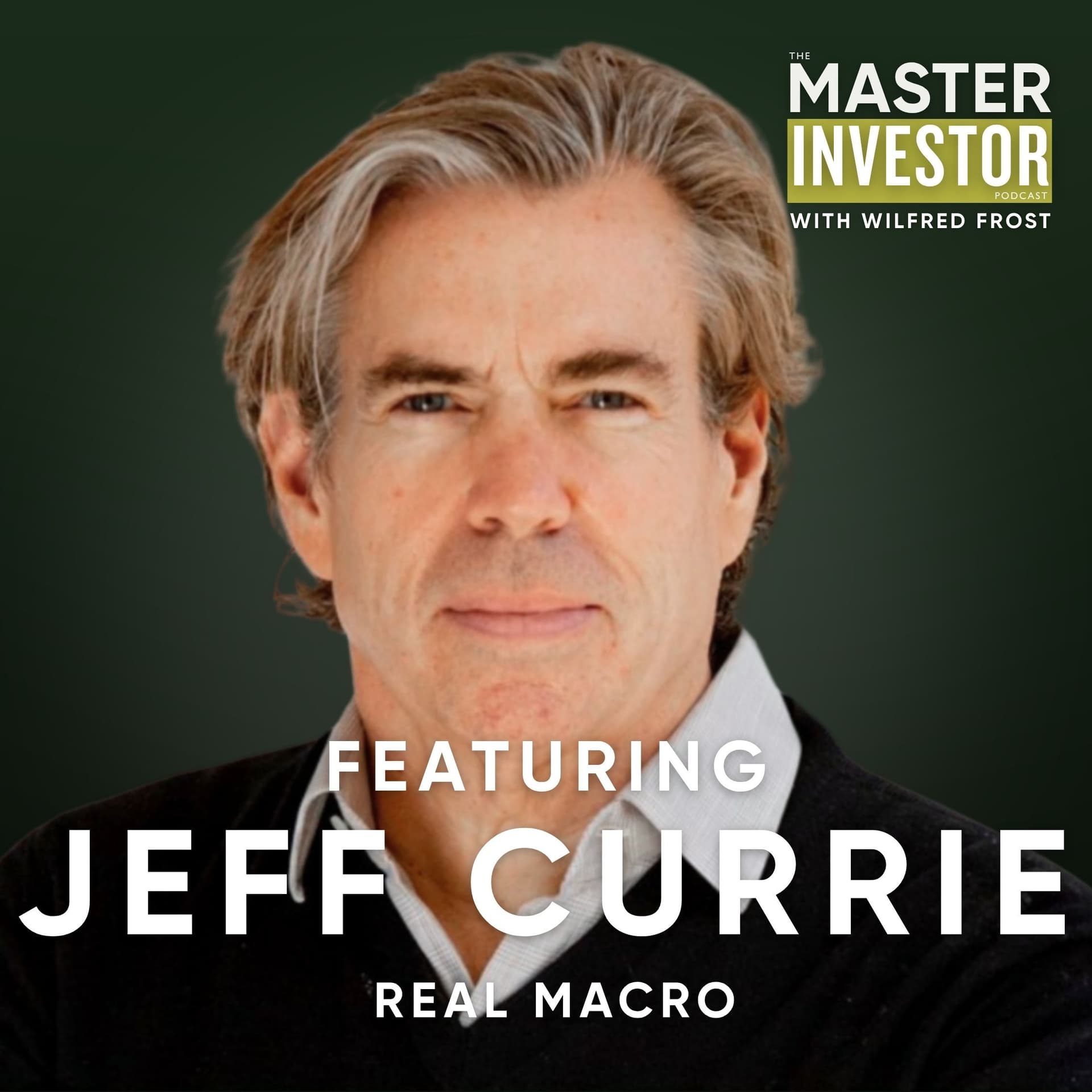
Dan Niles is founder and portfolio manager at Niles Investment Management and a prominent tech hedge fund manager.
Key claims
Google (Alphabet) is best positioned for 3–5 years due to “full stack” advantages (Gemini, cloud, chips, Android distribution, ad cash flow). Agentic AI (e.g., OpenClaw/OpenAI-style agent tooling) increases token usage 10–100x vs chat, shifting hardware demand toward CPUs/orchestration engines. Intel is “undervalued” and could benefit from foundry/fabrication customers. Oil staying in the mid-90s and rising yields could push recession and trigger stock corrections.
Notable examples
ClawedBot/OpenClaw timeline; Google Cloud growth accelerating 48%→63% YoY; McDonald’s consumer stress; OpenAI vs Anthropic revenue run-rate (~$24B vs ~$45B annualized); NVIDIA/semis overbought since 1995/2000; 1997–98 internet buildout comparisons.
Written by AI. May contain mistakes. Listen to the episode to check what was said.
Chapters
Tap a time to open that second in VOMarket Outlook for Mega-Cap Stocks
0:00 to 1:14
Discussing the future prospects of mega-cap stocks, particularly Google.
“Who do you think are best placed for the next three to five years of the mega caps?”
Current State of Semiconductors
1:14 to 2:16
Analyzing the semiconductor market's overbought status and individual stock evaluations.
“the success of the greatest investors, business leaders, and politicians in the world, giving you, our listeners, the edge.”
Historical Market Comparisons
2:16 to 5:14
Comparing current market conditions to historical events like the late 1990s internet boom.
“And what great timing, because we've just had a bumper week of earnings from the tech side of the bargain over the last couple of weeks.”
Impact of Geopolitical Events on Markets
5:14 to 7:50
Exploring how geopolitical events, like the Iran war, affect market dynamics and investor sentiment.
“And one specific thing being agentic AI really kicking off in the beginning of the year.”
The Rise of Agentic AI
11:15 to 14:00
Delving into how Agentic AI is transforming tech stocks and industry demands.
“Let's talk about Agentec AI because the other thing you wrote in your end of March post was the way in which this changes the bargain of which type of tech stocks are going to benefit the most.”
Semiconductor Valuation Insights
14:00 to 16:00
Explore the valuation perspectives on semiconductor stocks, particularly Intel.
“If you look at it from a valuation basis and you say, okay, the one thing you know about semiconductor stocks is the earnings estimates are always wrong, right?”
CapEx Growth in Hyperscalers
16:00 to 18:00
Understand the changes in capital expenditure growth among major tech players.
“up 70 % year to date, in light of also having, by the way, had the Iran war challenge, and people say it's 1999, not 97, 98.”
Earnings Reports of Big Tech
18:00 to 19:10
A deep dive into recent earnings reports from major tech companies and their implications.
“That one, obviously, Broadcom's another one relative to some of the other players, right?”
Google's Competitive Edge
19:10 to 22:40
Examine Google's advantages in the tech landscape and its growth trajectory.
“Let's dwell on earnings of the big tech players that we've seen over the last couple of weeks.”
Apple's Leadership Transition
22:40 to 25:30
Discuss the implications of Tim Cook's future at Apple and potential product innovations.
“And you saw that with the change to the iPhone 6, where you went from a four inch screen size to a five and a half inch screen size.”
Show all 22 chapters
Meta's Market Challenges
25:30 to 26:30
Analyze Meta's recent performance and concerns over user engagement and growth.
“combined with the fact of no public cloud.”
Meta's Market Challenges
27:00 to 28:00
Analyze Meta's recent performance and concerns over user engagement and growth.
“In the latest set of earnings, the FT's done a great piece of this.”
Stock Predictions for the Coming Year
28:05 to 29:14
Understand the potential drop in stock prices and the factors influencing it.
“What do I think happens to these stocks sometime early next year from wherever they get to, they probably go down 30 to 50%.”
The Rise and Fall of AI Companies
29:14 to 31:08
Learn about the contrasting growth trajectories of OpenAI and Anthropic.
“Well, you know, there's a structural build out and, you know, memory is not going to be cyclical.”
Market Reactions to Upcoming IPOs
31:08 to 33:01
Explore how imminent IPOs of major tech companies could affect market valuations.
“And so if you get to the end of this year and all of a sudden you've got an issue with open AI, then that could accelerate this process.”
The Impact of Rising Oil and Bond Prices
33:01 to 35:16
Discover the implications of high oil and bond prices on the stock market.
“you're watching for and the upside and potential pullback ahead.”
Navigating Cash Management Amidst Market Uncertainty
35:16 to 37:44
Learn strategies on cash management during volatile market conditions.
“If you're more going a lot of these stocks, like it doesn't, to me, it doesn't make sense that the stock market's at an all-time record high and oil prices are up 60 % this year.”
The Long-Term Outlook and Historical Context
37:44 to 42:01
Analyze the long-term market outlook in the context of historical trends.
“Now, if on the positive side, on Friday, you should get a new head of the Federal Reserve.”
Market Dynamics and Short-Term Momentum
42:01 to 43:32
Explore the current stock market dynamics and short-term trends.
“He's sitting on record levels of cash and it continues to go up because he's looking at some of these longer term metrics and saying, the valuations make no sense and I'm just going to keep raising cash.”
The Future of Quantum Computing and AI
43:32 to 45:41
Discuss the implications of quantum computing for technology and AI.
“trillions of dollars, but they'll attract attention to quantum.”
Comparing Today's Market to the Late 90s
45:41 to 48:24
Analyze the similarities between the current market and the late 90s tech boom.
“started comparing it to 97, 98, if you had to guess or kind of tie yourself to a year comparison now, it's more likely 98 than 99?”
Advice for Investors: Be Nimble
48:24 to 49:11
Receive practical investment advice during volatile market conditions.
“I think there's a phrase out there that says have, you know, strong convictions, but loosely held.”
Transcript
Automatic transcript. May contain errors.0:00Who do you think are best placed for the next three to five years of the mega caps? It's obviously Google. I mean, as I said earlier, they have the full stack and they're the ones you should bet on. And unless something drastically changes, they will continue to be the winner going forward because they've got everything and they've got the massive cash flow to fund it. So in the short term, are semis at the most overbought they've been since 2000 or 1995 before they had horrific corrections? Absolutely. But if you're taking a longer term view and you're trying to pick individual names, Intel's just gone back to where it was in 2000 this past year.
0:41And it's still undervalued. To me, it doesn't make sense that the stock market's at an all-time record high and oil prices are up 60 % this year. And the bond market we saw last week, the 30-year yields and the 10-year yields hit the highest levels for the year. Like, one of those is wrong. Should people have higher cash ratings than the normal right now? 100%.
1:13Welcome to the Master Investor Podcast with me, Wilfred Frost, where we celebrate and learn from the success of the greatest investors, business leaders, and politicians in the world, giving you, our listeners, the edge. The Master Investor Podcast is sponsored by LSEG, Interactive Brokers, the World Gold Council, and BNY Investments. Please do remember the views expressed in this podcast are for general information purposes only. Nothing in the podcast constitutes a financial promotion, investment advice, or a personal recommendation. More on that in the show notes. I am delighted to welcome back to the podcast, Dan Niles, founder and portfolio manager at Niles Investment Management and one of the leading tech hedge fund managers of the last decade.
2:03Dan, you were the Master Investor Podcast's first guest just under a year ago. A very good afternoon from London. Good morning to you there on the East Coast in Florida. Thanks for coming back. My pleasure, Wilford. It's always great to see you. And what great timing, because we've just had a bumper week of earnings from the tech side of the bargain over the last couple of weeks. And markets obviously back at all time highs in light of that and some other factors, despite a lot of challenges ahead. I wanted to start though with this comparison you made a couple of weeks back right at a day off pretty much the the short-term market lows that we got in the middle of the Iran war you you wrote this on the 31st of March history may not repeat itself but it often does rhyme and you're comparing 2026 there, not to 1999, not to 2008, not to some of these final years of great bull runs, but to 97, 98.
3:08Just talk me through why you made that comparison, which, by the way, turned out to be right near the short-term lows. Yeah. I mean, if you look back and compare where we are today, you're about three years into this build out for the AI infrastructure. ChatGPT came out at the end of 2022. So you're, you know, entered year four. If you go back to that time period, 97, 98, and use Netscape Navigator's launch as kind of the starting point of this new thing called the internet, then 97, 98, you were in years three and four of the internet infrastructure build out. But back then in 97, as you may remember, you had the Thailand currency crisis.
4:00And so then the S &P dropped 11 % intra-year in 1997. And then in 1998, you had the Russian bond default and the failure of long-term capital management. and the S &P went down 19 % intra-year. But if you look at the full years, 97 after that 11 % intra-year drop finished the year up 31%. In 98, the S &P finished after that 19 % intra-year drop up 27. And why was that? It's because you had this backdrop of this huge underlying build out of this new thing called the internet. And so that's kind of where we are today in that, yes, you have this macro issue around oil in Iran, but in some ways it's a lot easier to deal with, right?
4:49Because that was a man-made event, the war. Whereas those currency crisis, Russian bond default, you could say was more structural several years in the making. And so that's why I thought this would be the bottom. We'd get through the war, obviously. And then the markets would continue to bounce off those levels and continue to run up because of this AI infrastructure build out. And one specific thing being agentic AI really kicking off in the beginning of the year. So all through last year, Dan, and as I said, and I refer people back to our conversation last June, You were saying, and you talked about the need to be nimble in markets, that you were going to get bearish, that the huge bull run in AI-related stocks that we were already enjoying was going to take a pause at some point.
5:45Did we essentially get that forced because of a geopolitical event in the Iran war? And now it's done and dusted so we can go on to another meaningful, at least year-long bull run in these tech stocks? Sort of yes and no. You did get a reset because of the Iran war. But the big thing that happened was this thing called agentic AI. And by that, what I mean is your viewers may be familiar with this thing called ClawedBot that came out at the end of November and it morphed. And by January 30th, it was called OpenClaw. And so what that enabled you to do was before you would ask your chat GPT or Gemini a question, it would give you an answer.
6:29So that's chat-based AI. With Agentic, you might go ahead and say, hey, this is Wilfred and go get me this data from the BBC website. Go get me this data from the Bloomberg website. Go to CNBC, get me this other stuff, and then go ahead and put this all in Excel spreadsheet, well, that requires 10 to 100 times more tokens to be generated. And you can see that in the token generation data, where in the two months prior to January 30th in the formalization of OpenClaw, token growth was about 20 % over the prior two months. In the two months following, the token growth was over 120%. And that token growth is continuing to grow because corporations are just really starting to adopt this because this is kind of what the promise of AI was, which is you replace people with this agent that can then run, you know, 24 hours, 48 hours and get whatever project you want done versus just a chat-based AI query.
7:41So before we move on to the implication of Argentic and also the takeaways from MAG7 earnings, about the Iran war quickly, I mean, can you be bullish if the Iran war continues, even on these big tech structural themes in the background, if the Iran war or the strait remains closed for weeks and months from now, or do you need to see the strait reopen? You need to have it reopened. There's no question. I mean, you might, by some miracle, get out of this, but 10 out of the last 12 recessions have been preceded by a spike in oil prices, a sustained spike in oil prices. So if oil stays up at these levels in the mid-90s, and remember, we were sort of in the 60s before this started, you're probably going to be flirting with the recession by the time you get towards the end of this year.
8:38I mean, McDonald's, which reported recently, you know, surprisingly came out and said, hey, we're seeing some stress in our low end consumers. Their comp store sales missed. You know, obviously they're all over the world. And so when you see things like that start to pop up, you have to worry. And oil prices, they just seep into everything. But it takes time. So a spike and then a drop doesn't really matter. If it stays up at these levels for one to two quarters, you're going to have a huge issue because that'll seep into inflation. It'll go ahead and sap consumers' earnings power. And what we heard from McDonald's, you're going to hear from a lot of other companies going forward.
9:23And this is going to turn to a huge problem. And at that point, you're going to get a massive correction in the stock market. But the thing we know for sure, right, is we have an election in the United States coming up midterms in November. the incumbent party when you have a spike in oil prices leading into that just gets absolutely crushed and so president trump's going to want to get oil down and that means coming to some kind of resolution and from what you've seen right that's where he's going he's calling these things love taps these you know exchange of uh you know military actions by iran and the u.s which tells you he really wants this thing to end.
10:06Well, let's hope we get there. I do continue to wonder whether this is a harder genie to put back in the bottle than everyone might expect, but I guess we shall see.
10:22This episode is sponsored by the World Gold Council, the global experts on gold. They championed gold as a trusted strategic asset, provided market-leading research to help investors understand gold's role and modernize how gold is owned, traded, and used, developing industry standards and market infrastructure. Learn more at goldhub.com. This episode is sponsored by Interactive Brokers. Building wealth starts with the right broker, and Interactive Brokers helps you reach your goals with powerful tools, global market access, low costs, and unmatched financial strength. That's why the best informed investors choose IBKR.
11:05Learn more at ibkr.com forward slash master investor.
11:15Let's talk about Agentec AI because the other thing you wrote in your end of March post was the way in which this changes the bargain of which type of tech stocks are going to benefit the most. And in particular, focusing on the need of CPUs, rather than necessarily all the stocks that have performed previously. Expand on that for me a little. Sure. Well, as I said earlier, with the Gentic, you're doing multiple actions, multiple calls to APIs, opening up applications like an Excel or a Bloomberg or, you know, a CNBC website or SEC website, etc., and doing all of these things. And so you need an orchestration engine.
12:01You need something that goes ahead and organizes all of that. That's what CPUs do very well. And if you go back to training, you're just doing the same thing over and over and over again when you were training these AIs. that's what a GPU does incredibly well. And that's why you saw like an NVIDIA absolutely explode higher because CPUs weren't really valuable in training. You move to chat-based AI, again, that's pretty decent for a GPU. But now when you move to a Gentic, that's great for a CPU. So you went originally from about, let's say, eight GPUs for one CPU. when you move to a Gentic, that ratio gets closer to one to one.
12:46And so that just again shifts what kind of hardware you need to run this. And Intel has been given up for dead for decades, right? The stock has just gone back to its peak in 2000 this year. But between this move to a Gentic Plus the fact in Intel's case that they're probably going to end up with some pretty big foundry customers by the end of the year to help with supply being secure, being produced in domestic fabs run by U.S. companies in the United States. And in this case, Intel, that's really good for them. Obviously, it benefits names like AMD as well, which I also mentioned back then. Let's just dwell on both of those because you, as you said, correctly recommended them in March.
13:37I mean, Intel, as you've already wrenched, they've rallied so aggressively. Have you taken profits? Have you seen enough gains in just a matter of weeks? Well, I mean, here's the thing. There's obviously the short term and then there's the long term. If you think about it, we still haven't had NVIDIA or Apple or any of the people that have talked about getting a relationship or Tesla. with Intel starting to produce yet. If you look at it from a valuation basis and you say, okay, the one thing you know about semiconductor stocks is the earnings estimates are always wrong, right? They're either way too high or they're way too low.
14:21If you look at valuation and you say, well, I'm going to just look at it from an enterprise to sales basis. And you look at where an AMD is trading or TSMC, you can say, wow, you know, Intel is still undervalued relative to those companies on an enterprise value to sales basis. And so the stock should be able to continue to rise. And from a terminal value standpoint, like what is this stock worth two to three years from now, the composition of the business should look a lot different, right? They'll probably have some combination of NVIDIA, Apple, Tesla, others producing chips on their foundry business.
15:08And that will make the company a lot more valuable than what it was in the past. So in the short term, are semis at the most overbought they've been since 2000 or 1995 before they had horrific corrections? Absolutely. But if you're taking a longer term view and you're trying to pick individual names, Intel's just gone back to where it was in 2000 this past year. And it's still undervalued relative to what it can probably ultimately earn. And so would it surprise me to see the stock go down 15 to 20 % along with the entire semiconductor index over a short period of time, it wouldn't surprise me at all.
15:51But do I believe that by the end of the year, they'll be higher than where they are today? Yes. And Dan, what do you say when, just to broaden it out again, when you see the SOX, the SEMI's ETF up 70 % year to date, in light of also having, by the way, had the Iran war challenge, and people say it's 1999, not 97, 98. Do you have to rethink your thesis there when you see those really attention-grabbing performance statistics in the short term? No, because the other side of it, Wilfred, is that Agentic requires 10 to 100 times more tokens than chat-based AI. And so that's the difference. You're not talking about a small change.
16:40You're talking about an absolutely enormous change. I think when you look at where CapEx growth is right now, you can see that the numbers have moved up pretty dramatically. So you started the year thinking hyperscaler CapEx up maybe around 30 % for the year. Then Q1 guidance was given when companies reported Q4 results in January, February. And then that number moved from 30 % CapEx growth for 2026 up to about 60%. Then, you know, a couple of weeks ago, the big hyperscalers all reported again. And that number moved from 60 % CapEx growth to 70%. And so then this ties back to the fact that you're not talking about a small change in token generation required with Agentic.
17:34you're talking about 10 to 100 times more tokens needed when you do an agentic query relative to a chat-based query. Before we move on to earnings, and there was obviously some phenomenal numbers in the last couple of weeks from the big tech players, you mentioned the shift from the need for GPUs to CPUs. Is that bad news for NVIDIA? Well, on the margin, it'll change how the stock performs. That one, obviously, Broadcom's another one relative to some of the other players, right? Because Agentic requires more memory. It requires with some of the architectural shifts underneath, it requires more optical.
18:14And so you only have a limited budget. You don't have infinite money out there. And so what you're going to spend that money on is going to shift. And if the ratio was eight GPUs to one CPU, and that ratio is going to move closer to one-to-one, then obviously the stocks that are tied to that, those will be the ones you want to take a look at. And so that's why for me, the microprocessor vendors are a lot more interesting right now than the GPU vendors or other parts of the food chain. Hi guys, it's Wilf. I hope you're enjoying this episode. Just a quick reminder to please hit follow or subscribe on your podcast or video app so that you never miss an episode.
19:00And if you've got time, please do give us a five-star rating and leave us a comment. It really helps other people find the podcast too. Now, back to the episode. Let's dwell on earnings of the big tech players that we've seen over the last couple of weeks. Is Google Alphabet the standout of the mega caps? I mean, absolutely. I mean, you're seeing it in the numbers, right? Where if you look at Google Cloud for the fourth quarter, the growth rate year over year was 48%. When they reported the March quarter, that growth rate went from 48 to 63. So that's a 15 % acceleration. You look at AWS, that growth rate went from 24 % to 28%.
19:47So 4%, given that they're the biggest of the hyperscalers, that's not bad. You look at Microsoft, however, and you go, that growth rate went from 38 to 39. And so, you know, they're clearly the one that's struggling. But it's still accelerating slightly. And that's why you can look at kind of these are the numbers versus what these companies are all saying and see who's actually executing well and picking up a lot of share. And what do you think Google are doing well at the moment? Well, the thing is, Google has the full stack, right? If you look at them, they've got a leading large language model in Gemini, right?
20:30Microsoft relies on OpenAI, so they don't have one of their own. Amazon, who's heard of Rufus? So they've got that. They've obviously got their own chips. They've been producing their own internal chips for over a decade, which is the longest of any of the three. You've also got enormous cash flows funded by their ads business. And then you have N devices that they can distribute this technology through with their Pixel phones, which are really the model for the entire Android ecosystem, which is over 75 % of all smartphones sold wide are Android phones. So they've really got that full stack from top to bottom, which no other company has.
21:11Let's touch on Apple next. Is Tim Cook announcing his departure at a moment in time when he wants to think about his long-term share price performance? I mean, I'm not sure exactly what his motivation is, but I would say this. If you look at what Tim Cook did well, he was really good about the supply chain continuing on the legacy of Steve Jobs. When he took over, don't forget, the iPad had just been launched. And so the year he took over, Apple's revenues were growing 60%. And the next year, I think it grew like 40%. And then the growth obviously has slowed down since then. And so what innovative products have really come out?
22:03There hasn't been a lot. If you think about the last one, it was this Vision Pro ski goggles, as I like to call them, and nobody bought those. And so I think now putting a hardware guy in charge that hopefully can give you some innovative products, I think that's going to be interesting. And this year you should get a AI-enabled Siri, right? And they're a couple of years late on this product. And finally get a foldable iPhone probably late this year, early next year. And that should drive a pretty big upgrade cycle, because when you've seen big upgrade cycles, typically they're driven by changes in the form factor.
22:45And you saw that with the change to the iPhone 6, where you went from a four inch screen size to a five and a half inch screen size. And the growth accelerated from 7 % growth on the top line to 28 % growth on the top line in their next fiscal year. So I think that's what I'm kind of looking at and excited about. Obviously, the valuation is really high. But what you've seen is that people sort of do seem to treat their iPhones like consumer staples products. I mean, it's shocking to me. And Apple was one of my top picks coming into this year. But it's still surprising, even with oil prices as high as they are, that you've had the fastest two quarters of year over year growth rate since 2021 when you had COVID and everybody had to figure out how to work from home and were buying iPhones and everything else to make that happen.
23:41Let's touch on Meta. I mean, a lot of people have dwelt on Meta for a couple of quarters now with worsening free cash flow metrics. Were they the worst set of the MAG7 numbers that we've just had? Do they actually worry you or is it overdone that concern? Yeah, I don't think it's overdone because, again, if you go back to, well, who has a stack? You know, Meta has, with their latest launch, a model that's not too bad, right, in terms of large language model. But what they don't have is Amazon, Google, Microsoft all have a public cloud. And so they can go ahead and sell excess capacity to other companies.
24:23Meta doesn't have that. and they're pretty late in terms of trying to develop their own ASIC chip so that they can get their costs down. Obviously, they've got big cash flows. They've got great monetization. The other thing, though, which has nothing to do with AI, which should bother you, is this March quarter, they saw the first decline sequentially in history of people using their family of apps. So if you think about what they do, they sell ads, right? So how do you make money? Well, there's two ways. You get more users and you make more money per user. You now, it looks like you might've reached a saturation point on the adding more users part of it.
25:10And so you're taking away potentially one leg of growth, which makes sense, right? You've got three and a half billion people using their app, which obviously it's not allowed in China. And so that's a big percentage of the entire world's population. And so it had to happen at some point. And so that should concern you from a growth standpoint, combined with the fact of no public cloud. In terms of who the ultimate winners are of the mega caps, we've mentioned most of them in the last 15, 20 minutes. Who do you think are best placed for the next three to five years of the mega caps? It's obviously Google.
25:51I mean, And as I said earlier, they have the full stack and they're the ones you should bet on. And unless something drastically changes, they will continue to be the winner going forward because they've got everything and they've got the massive cash flow to fund it.
26:21and analytics provider. To learn more about how LSEG connects businesses, investors, and markets worldwide, visit lseg.com. This episode of the Master Investor Podcast with Wilfrid Frost is sponsored by BMY Investments, a trusted partner for many delivering financial solutions to investors and institutions worldwide. This sponsorship does not constitute financial advice.
26:54That's all the positives, I guess. Let's talk about some of the negatives of the AI trade overall. In the latest set of earnings, the FT's done a great piece of this. They pointed to the fact that about a third, 34%, much higher than normal, much higher than in recent years, of profits came under the guise of the income for the MAG7 names, which includes, but isn't totally reliant on revaluation of their non-listed assets, like the open AIs of this world or stakes in the anthropics of this world. Does that worry you when we're all celebrating big increases in earnings, but it's not all increases in free cash flow and it could fall as quickly as it's risen in future quarters?
27:46Yeah, absolutely. I'm approaching it from a different angle. I look at it and say, well, when did Eugenic AI come out? Well, you could say January 30th if you want to take the formalization of OpenClaw. So when should that ramp start to decelerate massively? Well, probably early next year. What do I think happens to these stocks sometime early next year from wherever they get to, they probably go down 30 to 50%. And so you've definitely, all of these structural issues you're seeing, they're definitely going to be a problem. And taking a very recent episode, so let's ignore the internet build out in 2001, 2002.
28:35Think about what happened in 2022. The Magnificent Seven as a group on average that year in 2022 went down 46%. That was the average change in the stock price. And that was just coming off of the build out of COVID. So fast forward to where the stocks are today, all the optimism out there. And I hear things like, well, you know what? Semiconductors might not be cyclical anymore. And so I start to laugh because I go, well, if you remember coming out of COVID, that's what a lot of people were saying. Well, you know, there's a structural build out and, you know, memory is not going to be cyclical.
29:19And then I think Micron had four quarters of negative gross margins. So by the nature of semiconductors, where it takes a couple of years to bring up a fab and demand can change. And you brought up earlier, Wilfred, which is 100 % true. What if this war doesn't get sorted out? Or even if it does get sorted out, much like the ExxonMobil CEO said at the beginning of May, it's going to take a, you know, it may take longer than what people think for this oil prices to normalize. You could have a huge issue as you get into, you know, early next year because of that. And you've got two companies that are accounting for half of the backlog at the hyperscalers, which is OpenAI and Anthropic.
Read the full transcript
30:07They're half. So if one of the two starts to struggle, and I've been saying this for a while, I think OpenAI ultimately has an issue because they don't have the cash flow to fund their ambitions. And you've already seen it by the way they're talking and what they've decided not to do. Then you're going to have a huge problem. And OpenAI is focused on the consumer, where Anthropics really focused on enterprise, which is why you've seen revenues at Anthropic now surpass what OpenAI is running at. The last numbers we have, obviously, are Anthropics around$45 billion, annualized run rate revenue, and OpenAI is right around$24 billion, which is very different than where it was at the beginning of 2025 when OpenAI was running about$6 billion in annualized run rate revenues, and Anthropics was at$1 billion.
31:00Right. So it's gone from 6 billion for open AI to 24. And it's gone from 1 billion at Anthropic to 45. And so if you get to the end of this year and all of a sudden you've got an issue with open AI, then that could accelerate this process. So, you know, you started the interview saying, hey, I was talking about being nimble, I think, in our first podcast. And I think you still want to remain nimble because things can change very quickly in this space if all of a sudden you have a problem with an open AI, because not everybody's going to win, which I think I said in our first podcast. And right now, obviously, the market's getting a lot more discerning, right?
31:42You can look at the software stocks as an example of that. But that applies to AI as well, which is not every company focused on this is going to do well. And that shakeout, you could argue, started late last year. Obviously, Microsoft's down for this year, which I believe it should be. And things could get a lot worse in the future, because if you back up and think about this, and you saw this on some of the earnings releases, you're not getting this massive increase in revenues at OpenAI and Anthropic, which started last year at$7 billion combined and now is running closer to$70 billion a year and change later without that extra spend coming out of the budgets of some other companies because every company that's using those two wants to show return on invested capital to their shareholders.
32:40And so they've got to figure out, well, where are we cutting? And so that's another thing in the background that's the negative of this, of some companies are going to suffer because the money that would have been spent with them is going to go to the likes of OpenAI and Anthropik. As you've always said, Dan, you need to be nimble and you've laid out a lot of the factors that you're watching for and the upside and potential pullback ahead. I just wonder in light of all of that, whether, and I know everything's got a price and we need to wait to see what the price is and with it, the demand, but whether the mooted upcoming OpenAI IPO might be one of those moments that you're looking at as a moment to switch from positive to negative outlook for all of this stuff.
33:27Or you could look at it and say, hey, it gives you a company to short to hedge your portfolio. And so it depends on how you want to look at it. But you're right. Typically, if you have a bellwether name running into problems, it's going to cause issues. And remember, you could very easily argue OpenAI late last year, some of these issues came from them. Because at one point, the forecast that they had out there was they were going to spend$1.4 trillion in capital commitments over eight years. And you're going, how are you going to spend that much when your revenues at the end of last year were running at$20 billion?
34:11Where are you going to come up with that money, especially when your cash burn gets worse before it gets better? And that started to shake out in some of these software names, obviously, like an Oracle as an example of that. But could that get a whole lot worse? Yes. The other thing is, to your point, you've not only got OpenAI probably going public, you've got SpaceX and you've probably got Anthropic. And so those companies are going to come out all at trillion dollar probably plus valuations. that money's got to come out of some other names. It's not like mutual fund managers are sitting on a lot of excess cash.
34:46They can't buy charter. So if they want to buy that, they're probably going to have to sell something else because these aren't the normal small IPOs. We're talking huge IPOs and they're going to be a big portion of the indexes that these managers track against. And so they're going to need a weighting in those names. But the fact that those names are going to enter a lot of these indexes a lot quicker than normal means that the weightings of these other names is going to go down. And so there's going to be a, it's going to be interesting to see how this works, because if you're a bull, you can say, oh my God, you know, these companies are going to get public and then everything's going to go up together.
35:26If you're more going a lot of these stocks, like it doesn't, to me, it doesn't make sense that the stock market's at an all-time record high and oil prices are up 60 % this year. And the bond market we saw last week, the 30-year yields and the 10-year yields hit the highest levels for the year. Like one of those is wrong. And so, you know, all of that combined with what you rightly brought up with the OpenAI IPO, SpaceX will get, that should come out, you know, sooner. we're going to see how that impacts the markets. And some of this is you have a theory, and then you'll see how the stocks react when these events occur.
36:13So in light of that trio of unsustainable factors, oil prices high, bond yields high, stock prices high, should people have higher cash ratings than the normal right now? 100%. At the end of March, obviously, as I wrote, history may, you know, not repeat itself, but it often rhymes. I thought that was a good time to really get aggressive. Right now, if you're right, and you very well could be that this is going to take a lot longer for this situation of the straight-up-form moves to get sorted out, then you're going to see stock prices collapse to catch up with where bond yields and oil prices are.
36:57I don't think that's the case, but right now I'm viewing things as you should be sitting with a lot of cash. You should be very nervous on how this ultimately gets resolved because the first thing I do every morning is I look at where are oil prices and where are bond yields and where's the stock market. And then for me, it's always about risk versus reward. And right now I go, one of these massive markets, asset classes is wrong. And that could cause a lot of disruption when one of those potentially reprices to, you know, have things make more consistent sense. Now, if on the positive side, on Friday, you should get a new head of the Federal Reserve.
37:50Kevin Warsh has talked about thinking, you know, rates should be lower, rightly or wrongly. He's looking at AI as a deflationary force. He's looking at trimmed mean PCE. I always like to joke, you know, if you narrow the scope of what you're looking for enough, you can always find something that supports your case, right? That has inflation at about 2.4 % versus over 3 % when you look at core PCE. So we'll see how things go. But really, since the end of 2022, the market's been driven by two factors, right? Easy money by the Fed. Well, that certainly looks like it's going to continue as of Friday.
38:37And AI. And as we've talked about earlier, that seems like it's going to continue. So that's why that famous saying goes, right? The market can stay irrational for longer than you can remain solvent. And so you could see it continuing to be irrational for a while, as long as those two twin forces of easy money and AI are powering it. It's interesting, though, that you use the word irrational for stocks to do well when you're so constructive on the underlying theme behind them. It just kind of, I guess, speaks to how long this rally has been going on for. Just to dwell on rates a little bit, easy money from the Fed, Kevin Walsh taking over, totally get that part.
39:19When you talk, though, about high bond yields, what is the maturity that you really look at and the level that you really watch out for for levels that would worry stock market valuations? I mean, it's interesting, by the way, because the UK 10 years already up at 5%. So the sort of 4.3, 4.4 level of the US 10 years is some stuff of dreams for people over here. What is the key level where, you know, if we continue to rise past it, on what maturity that you would be worried about? I mean, I look at them all. There's not one answer. So I look at the two-year because that's typically what the Fed focuses on.
40:01And there's sort of the mantra on Wall Street that the Fed funds rate will converge with wherever the market is pricing the yields. And that's the two-year. And so I watch that. And if that continues to rise, then I go, well, that means the Fed won't be cutting. They might have to raise, which obviously you can make a good case for the need to raise rates right now, right? Core PCE is nowhere near 2%. It's over 3%. With oil's impact seeping through the economy, that probably has more pressure to the upside than downside. So I look at the two-year for that reason. But then the real key is what do people think the long-term impact of these things are?
40:46And so that's why I move up to the 10 and then the 30. And also, if you tell somebody, hey, instead of being in the stock market, you could get near 15 % yields. Well, which one would you pick? Right? That was the situation when I was in college back in the 1980s. Well, it's obviously not 15%, but at 5%, which is where the 30-year just hit. So you can get a guaranteed 5 % return for 30 years. Well, that's a lot better than where it was during COVID. So at what point do people say, or the 10-year, right? And as you said, the UK has got much even higher rates. Like, when do you say, well, you know what?
41:31I'd rather get that guaranteed return over 10 years or two years, or you pick your favorite maturity because I'm getting older. I'm going to retire. I live through 0102. I live through 2022, or I live through whichever time period you want, right? The late 80s, et cetera. And I just don't want to have all that well eviscerated because if you look at what Warren Buffett's done and the Berkshire Hathaway annual meeting was just recently, right? He's sitting on record levels of cash and it continues to go up because he's looking at some of these longer term metrics and saying, the valuations make no sense and I'm just going to keep raising cash.
42:14And so, and you brought up a good point, right? There are these things I worry about, but in the short term, which is very different than the long term, the short term momentum is to the upside. I mean, it's shocking, like even today, right? oil prices are up again and the stock market, at least when I was just looking at it, pretty much didn't care. And so that's why I'm reminded of the late 90s, like 1999, where I go, yeah, I thought stocks were expensive coming out of 98 to 99 and then 1999 they just exploded higher. And so that's why I think we've still got some more room to the upside in the short term.
43:00But You know, as you said, when you started this podcast, you have to be nimble and look at, you know, what does oil do? What do bond yields do? And then what does the stock market do to figure out, well, what's the market thinking? What's the market focusing on? Because, you know, the market gets irrational and it'll stay irrational for a long period of time. And I think you're kind of in one of those phases, but you do have some fundamental underpinnings that can kind of support that much like in 1999. Dan, I wanted to ask as well quickly about your view on quantum computing, because we talked about some of the biggest IPOs coming, that there's going to be a few quantum computing relating IPOs, which obviously won't reach the hundreds of billions or the trillions of dollars, but they'll attract attention to quantum.
43:50Is this something you really buy into? What are its implications, I guess, for the broader tech and AI trade? Yeah, I'm a huge believer in quantum. I think we're going to get there. But, you know, there's the famous Bill Gates quote that technology is often overhyped near overhyped near term, but underhyped long term. And I think quantum kind of fits into that category. I think it's going to take longer to get there than what we imagine. Don't forget the earliest AI papers were written over 50 years ago. When did ChatGPT show up? end of 2022. So I think with quantum, it's somewhat similar, but I think when it does hit, it's going to be like the internet where again, the earliest papers were like 50 years before that came about.
44:39And it's just going to revolutionize everything. And so we'll see how these IPOs come out and how they do. But there's the bullish side of it, which is you go, oh my God, people are going to have to invest in these quantum computers. There's also the bearish side of it is if you can do all this stuff with a quantum computer, then classical computer demand is going to fall off. And so that's going to be the interesting push-pull of quantum. But it's an area where we've got some investments in right now. You know, you always want to think through the timing. Obviously, some of the quantum stocks were a lot higher a few years ago.
45:23They've collapsed. But I do think with some of these IPOs, it's going to draw attention back to the space. And much like with AI or much like with the internet back in the late 90s, this is something that's going to change the face of technology as we know it over the course of the next several years. It's interesting that we started comparing it to 97, 98, if you had to guess or kind of tie yourself to a year comparison now, it's more likely 98 than 99? Yeah, I 100 % think so. Because remember, you didn't have something like an agentic AI during the internet build out. There wasn't something new type of version of the internet that came out that then all of a sudden caused the step function increase in the amount of capacity that you needed.
46:17In the case of AI, you have a step function change. It's 10 to 100 times more. Now, obviously, costs are dropping a lot underneath that as all this infrastructure gets put into place. And so it's those two things. If you look at what happened in 0102 and why the NASDAQ went down 78 % from peak to trough, the reason was people were building, assuming that internet traffic was going to double every three months. What happened was internet traffic doubled about every year. It slowed down to those levels. And then that forced a repricing on everything underneath. What you have right now is agentic AI is driving a 10 to 100 times increase in the number of tokens you need if you switch from a chat-based AI conversation to an agentic platform.
47:18So that's why I'm looking at this and saying, do I think, you know, stock prices in certain areas of semiconductors have gone parabolic? Do I think that, you know, people thinking the sector is not cyclical anymore are crazy, absolutely. But I was thinking that in the late 90s as well. But don't forget the massive moves we had. And then what happened even at the beginning of 2000, right? I think the NASDAQ, I think, was up another 20 % at the beginning of the 2000 period. So, but this is why I think it's more like 1998 in the sense that you only are entering year four of this build out and you have this huge step function change in what you need because of this thing called agentic AI, which just started at the beginning of this year.
48:13And that's why I kind of go, well, the growth rates are going to continue to look astronomical until you anniversary that, which is in the beginning of next year. You know, be nimble. I think there's a phrase out there that says have, you know, strong convictions, but loosely held. And so look at what happens, but then look at how the market reacts to what happens, because that's what's important. And that will tell you when people's mindsets have switched to from, oh, my God, this agentic AI thing is really wonderful to, oh, my God, the cash flows of all these companies are dropping and OpenAI or somebody else has got an issue and this is about to fall off a cliff.
49:00And so my advice would be just be nimble and don't get too greedy on the way up. And that would, I guess, be my best advice. Dan Niles, always a pleasure. Thank you so much for joining us once again on the Master Investor Podcast. Thank you for having me on, Wilford. Next week on the Master Investor Podcast, we will be speaking to the chief US equity strategist at RBC Capital Markets, Laurie Calvasina. Please do hit follow or subscribe on your podcast app to make sure you receive that and all of our future episodes. But for now, our thanks again to the one and only Dan Niles. Thank you, Wilford.
49:44The Master Investor Podcast is sponsored by LSEG, interactive brokers the world gold council and bmy investments please do remember the views expressed in this podcast are for general information purposes only nothing in the podcast constitutes a financial promotion investment advice or a personal recommendation more on that in the show notes this podcast is produced by paradigm productions and master Investor Limited in association with Birdline Media. If you've enjoyed the show, please do subscribe on YouTube or click follow on your podcast platform and you'll be automatically notified each time a new episode drops.
From the publisher
Legendary tech investor Dan Niles cautions investors to consider raising their cash ratings in this week’s episode of The Master Investor Podcast, just six weeks after he correctly called for a more aggressive risk-on approach at the end of March
While he still thinks today is more like 1997/98 than 2000 and that the shift from chat-based AI to Agentic AI will sustain major earnings upgrades for the rest of this year, he warns that tech stocks are overbought, Iran War risks persist, and the challenges that will hit the AI trade either way by year end.
SEMIS: “So in the short term, are semis at the most overbought they've been since 2000 or 1995 before they had horrific corrections? Absolutely.”
IRAN WAR: “If this is going to take a lot longer for this situation at the Strait of Hormuz to get sorted out, then you're going to see stock prices collapse to catch up with where bond yields and oil prices are. I don't think that's the case. But, I'm viewing things as you should be sitting with a lot of cash.”
MEGA CAP WINNER: “It's obviously Google. They have the full stack and they're the ones you should bet on. And unless something drastically changes, they will continue to be the winner going forward because they've got everything and they've got the massive cashflow to fund it.”
He also discusses what the shift to Agentic AI means for $NVDA (not ideal), Intel $INTC (great) and $AMD (good); why concerns over $META are NOT overdone; why $AAPL fortunes should improve; why $AMZN and $MSFT are struggling a bit short term, and why $GOOGL shines bright.
Recorded 11th May 2026
00.00 Intro
02.39 Why today feels like 1997/98, NOT 1999/2000
05.25 Agentic AI suggests more upside to bull market
07.52 But Iran War could derail things
11.18 Agentic AI means CPU’s over GPU’s
13.35 Semis are overbought
17.51 Is shift to CPUs bad for Nvidia?
19.13 Google the standout performer
21.15 Apple leadership transition
23.45 Meta concerns not overdone
25.37 Google best placed
27.36 30-50% AI crash by early 2027
30.01 Concerns about OpenAI
34.27 Upcoming IPOs, oil, bonds signal problems
36.16 Hold more cash
37.48 Kevin Warsh a positive, but watch bonds
43.34 Quantum computing
45.44 Conclusion:1998 or 1999?
You can watch the full video on The Master Investor Podcast YouTube channel
And follow @WilfredFrost on X and Linked In
Sponsored by BNY Investments, Interactive Brokers - ibkr.com/masterinvestor, The World Gold Council and London Stock Exchange Group (LSEG).
The Master Investor Podcast is produced by Paradine Productions, Master Investor Ltd in association with Bird Lime Media.
This podcast is for information purposes only. It does not constitute an invitation or inducement to engage in any investment activity. It is not a financial promotion as defined under section 21 of the Financial Services and Markets Act 2000 (FSMA). The views expressed by the presenter of this podcast are those of the presenter and are provided in the course of journalism. This podcast benefits from the exemption under Article 20 of the Financial Services and Markets Act 2000 (Financial Promotion) Order 2005 (FPO), It does not require approval by a person authorised under the FSMA. Generic information, not identifying any specific investment, fund, provider or service, about a class of investments such as shares, bonds, derivatives and cryptoassets, might be provided and/or discussed during this podcast. Such discussion falls within the generic promotions exemption (Article 17 of the FPO). Such discussion is not a financial promotion requiring approval by an authorised person under section 21 of the FSMA. Investing involves risk. You should consult a suitably qualified adviser who can assess your individual circumstances before making any investment decision.