In short
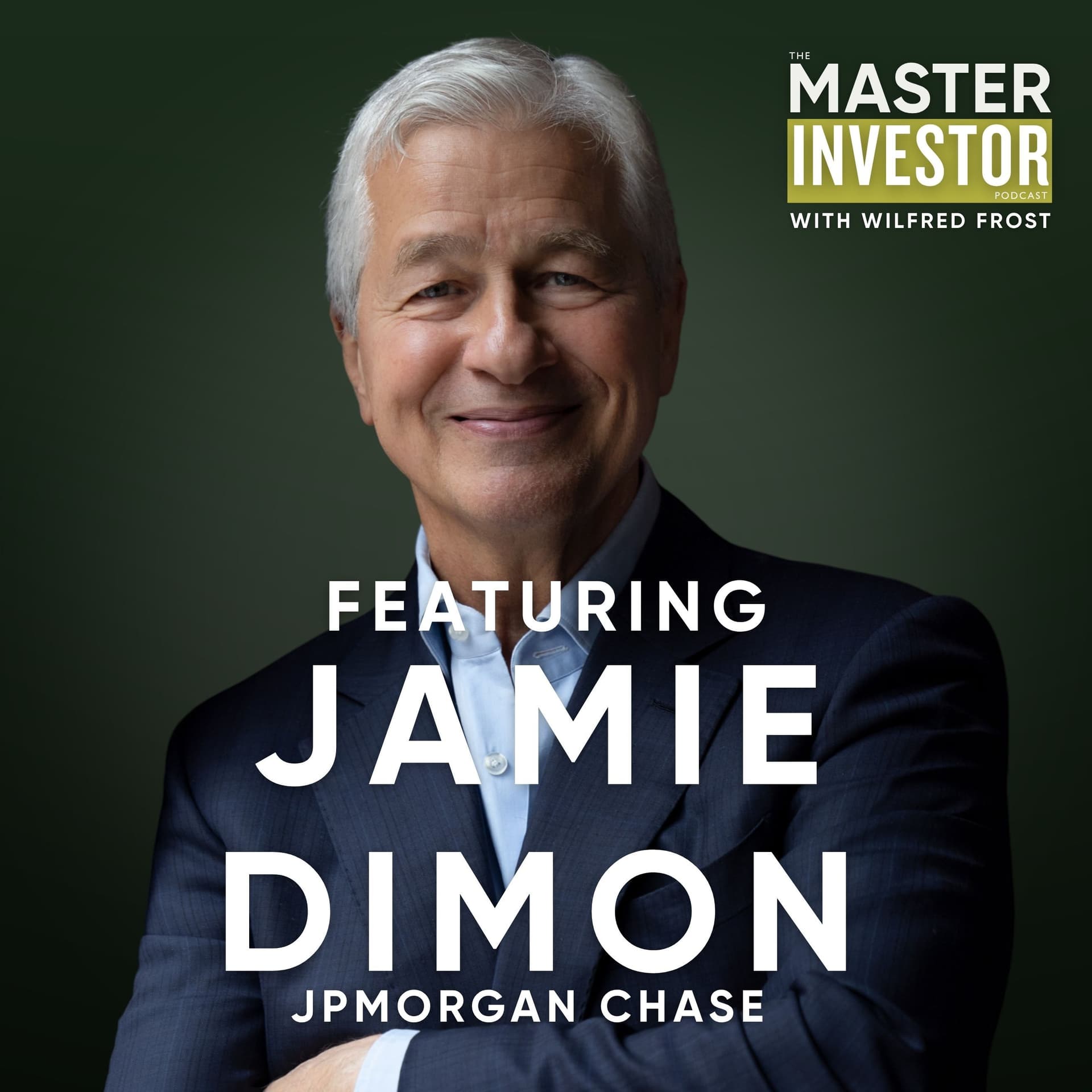
Jamie Dimon (JPMorgan Chase CEO) discusses why he wouldn’t buy long-dated government bonds, how he thinks about tail risks (geopolitics, deficits, wars), AI’s ROI and job impacts, and leadership practices at scale (anti-bureaucracy, humility, character). He also comments on US/UK economic policy, bank levies, and resilience/security initiatives.
Guest backgrounds
Jamie Dimon is chairman and CEO of JPMorgan Chase, leading since January 2006 through major crises (2008 financial crisis, sovereign debt crisis, COVID, 2023 banking crisis). Host is Wilfred Frost of the Master Investor Podcast.
Key claims
Long-dated bonds offer limited upside given interest rates/inflation expectations; markets may price “a good outcome” but not the occurrence of shocks. Global economies are more diversified and resilient to energy spikes, but tipping points remain possible. AI spending will likely pay off eventually, but not on the timeline investors expect; companies will become disciplined on ROI and reskilling will be needed. Leadership requires relentless self-critique, curiosity, and “character” in promotions.
Notable examples
2008 JPMorgan’s 7% tangible equity return; Great Recession-era bond/deficit history; Bear Stearns acquisition “margin of error” shrinking from $12B book value to a write-off; Starlink/SpaceX data-center-in-space concept; “customer complaints are a gift”; insecurity in leaders leading to “friends of Bob” and polished reporting.
Written by AI. May contain mistakes. Listen to the episode to check what was said.
Chapters
Tap a time to open that second in VOExploring AI Investment and Bonds
0:00 to 1:01
Discussion on the potential of AI investment and the current bond market.
“When I look at AI itself, the amount of money being spent is huge.”
Earnings Insights and Future Outlook
2:00 to 3:10
Jamie Dimon discusses recent earnings and the future of banking in current conditions.
“We've done about seven or eight interviews together, but I've never done something as long form as this.”
Geopolitical Risks and Market Resilience
3:10 to 4:28
Discussion on geopolitical risks that may impact the global economy and market resilience.
“The environment for your company is good.”
Military Strategy vs. Economic Stability
4:28 to 6:01
Debate on the balance between military objectives and economic health.
“You said on the earnings call that the, well, the U.S.”
Security Resilience Initiative
6:01 to 9:11
Jamie Dimon discusses the need for America to focus on security and resilience in various sectors.
“And even this current war started up again, it may be that's not enough to do it.”
Global Debt and Future Economic Risks
9:11 to 12:10
Insights on global deficits and the potential risks they pose to economies.
“It's like we need to do this to keep, to stay safe.”
The Future of AI and Job Creation
12:51 to 14:01
Jamie Dimon discusses AI's potential, its benefits, and job market implications.
“I mean, I know you think really carefully about when you make an investment as a company.”
The Impact of AI Investment
14:01 to 18:12
Explore how AI investments are expected to unfold and their potential economic impacts.
“When I look at AI itself, the amount of money being spent is huge.”
Leadership During Financial Crises
18:13 to 21:18
Learn about decision-making under pressure and the importance of due diligence in leadership.
“Looking back now, 18 years on, was there a 15 % to 20 % chance that J.P.”
The Challenges of Navigating Regulations
21:19 to 25:35
Understand the implications of taxation and regulation on business operations in New York and the UK.
“Stearns and take onto your balance sheet all this risk that you didn't have beforehand, And as you said, you had zero chance of going bust before that.”
Show all 20 chapters
The Importance of Competitive Tax Systems
25:36 to 29:13
Discover how tax policies affect business decisions and economic growth in different regions.
“A strong economy will benefit all of your citizens.”
Bureaucracy and Leadership Insights
29:14 to 42:00
Jamie Dimon shares his views on bureaucracy in organizations and leadership lessons.
“I wanted to move on and talk about bureaucracy.”
The Role of Business in Society
42:00 to 42:29
Jamie Dimon discusses the responsibilities of businesses in helping society.
“Like I think it's real for a business to get involved in making society better.”
Sympathy for Politicians and Leadership
43:14 to 47:04
Dimon expresses his views on politics, leadership, and the challenges faced by politicians today.
“On the flip side, in terms of respecting politicians, you at the peak of the financial crisis.”
The Value of Leadership Skills
47:04 to 49:19
Discussion on the leadership qualities needed for succeeding in business and politics.
“Not for their own tax benefits, you know.”
Reflections on a Near-Death Experience
49:19 to 53:05
Dimon reflects on his close call with death and lessons learned from his health scare.
“I mean, presumably you'd accept that whoever succeeds you has to do it their way.”
Family, Hobbies, and Balancing Life
53:05 to 56:00
Dimon shares insights on maintaining a work-life balance while prioritizing family.
“I mean, your job is relentlessly demanding.”
The Challenges of Finance
56:00 to 56:31
Explore the difficulties in finance and the humbling nature of market evaluations.
“Like, you know, the accounting is bad or the people are bad.”
Jamie Dimon's Career Advice
56:31 to 59:06
Jamie Dimon shares key career advice emphasizing the importance of learning and personal development.
“So I just want to end with a question that we ask all our guests, you know, which is an overriding piece of advice for our listeners.”
Balancing Life and Work
59:06 to 59:59
A discussion on the importance of balancing work responsibilities with personal life and family time.
“This isn't saying I didn't make them, but hopefully you learn when you make them, is that a lot of people that start their early careers, they're under a lot of pressure.”
Transcript
Automatic transcript. May contain errors.0:00When I look at AI itself, the amount of money being spent is huge. Will it in total pay off? Probably, just like the internet did. Will it pay off the way you expect and the time you expect? Definitely not. At the moment, long, long dated government bonds, would you be a buyer of those? But personally, no. I would not be a buyer. And part of it is interest rates. You know, inflation. I mean, even if inflation was 2%, you know, the 10 year bond should probably be at four and a half or four to four and a half. And they're almost there today. You know, being an economic historian, I can't take out of my mind what happened after the Great Recession of 74.
0:38That last thing, and you actually have to sign the piece of paper. And you know when you're signed that piece of paper that you've just committed the company, not just yourself, to backbreaking scary work for 12 months. And that your shareholder would be under pressure. Yeah, you know you're entering a malstorm that you could have avoided. Yeah, you feel a pit in your stomach. And that is lonely too. Welcome to the Master Investor Podcast with me, Wilfred Frost, where we celebrate and learn from the success of the greatest investors, business leaders and politicians in the world, giving you, our listeners, the edge.
1:11The Master Investor Podcast is sponsored by LSEG, Interactive Brokers, the World Gold Council and BNY Investments. Please do remember the views expressed in this podcast are for general information purposes only. Nothing in the podcast constitutes a financial promotion, investment advice or a personal recommendation. More on that in the show notes. My guest today is the undisputed heavyweight champion of the world of finance and banking. Jamie Dimon, of course, the chairman and CEO of JPMorgan Chase, a bank he took over in January 2006 and has led for the last 20 years through the financial crisis, through the sovereign debt crisis, through COVID, through the 2023 banking crisis, and each time emerging stronger on the other side.
1:59Jamie, it is great to see you again. Welcome to the Master Investor Podcast. I'm thrilled to be here. It's always good to see you, Wolf. It's really a treat to have you. We've done about seven or eight interviews together, but I've never done something as long form as this. So thank you for your time. Let's go in the short term, first of all, though. And your earnings just a few days ago, blockbuster, the highest ever quarterly profit, 21.2 billion, up 41%. I don't want to put a negative question on it, but can things go on that well? So, you know, listen, first of all, we've built a company for the long run.
2:31And obviously, we deal, you mentioned crises and ups and downs. We're clearly in a very, almost as good as it gets environment for banks, high volumes, high asset prices, a lot of people trading, et cetera. So this can go on for a while. It will eventually end, you know. But it's not how we run the bank. I run the bank. We serve clients. We serve them around the world. We serve them every day. We invest. We stick to the thick or thin. I remind people our best year, it wasn't the year we made the most money. Our best year was the year we had only a 7 % return in tangible equity. It was 2008. And that outperformed everybody.
3:03And that was our finest moment. in a relative sense, and I guess setting you up for the long term. And as you say, the current environment, we had, again, good economic data this morning on the retail sales front. The environment for your stock is good. The environment for your company is good. The environment for the economy is good. At the same time, do you think the probability of a major risk suddenly arising is a bit higher than, you know, you've been in charge for 20 years. if you took out 2008 and COVID? Is the risk, the tail risk bigger than outside of those moments? I think, I mean, first I was very intelligent to say it was the probability because we don't know which probability is baked into the market.
3:42There is something baked in. I tell people, if you said the market's going to fall 40%, there's only a 10 % chance, that's 4%. That's one PE turn. So it's possible something is baked in. What's not baked in is that it actually happens and such. So I do think if you made, and I always do this just as an exercise, otherwise make a list of all those really complex, long-term geopolitical, tectonic plates, things that could affect the market or may not. And they may, you know, mix and match in a certain way you don't understand. So you have wars in Ukraine, terrorism in the Middle East, obviously Iran, great global deficits, remilitarization in the world, you know, America's relationship with China.
4:18So there are a lot of things out there which, you know, could cause a problem. But again, they might not. I hope they all resolve properly. And that's what most governments want. But I do think those risks are probably bigger than other people think. You said on the earnings call that the, well, the U.S. economy, but the global economy quite impressively shrugged off oil price spikes with Iran. And it was quite resilient in the face of that. That said, fighting has obviously started again. The strait is obviously shut again. How much do you think of that resilience from March, April, May was because oil stocks were high?
4:50And if this current shutting of the strait persists, might we not be so lucky this time around? Yeah, I don't think the resiliency was from oil stocks and stuff like that. I think it was, first of all, it was amazing. If you look what happened, you know, we lost 20 million barrels a day, but China's cut back 5 million. They took down the reserves. We took down the reserves. They moved 5 million barrels to another, you know, the Red Sea as opposed to that. It was amazing how the adjustment took place. You know, if you had asked people before, they didn't forecast that. But I think that's just one of the issues.
5:18I mean, there were, you know, we've obviously had the war in Ukraine going on for a long time, you know, trade negotiations. I think it's, and the global deficits, I mean, I look at them and I don't know when and how they might cause a problem, but I would not take that off the list. The thing is, I think is likely, at least my current hypothesis is, that the world economy is more diversified and therefore more resilient. Far less reliant on energy as a component, input, and, you know, that makes more resilient. But that does not mean that there's not a tipping point. And tipping points are weird things when you see them because you've seen them all through history.
5:51And there's always a concurrence of different types of events that cause it. It just may be it's a lot harder to get there. You may need more straws in the camel's back to cause that tipping point. And even this current war started up again, it may be that's not enough to do it. you know, if the president sought your advice or if you were giving advice, can we afford as a country to pursue military objectives in Iran for months from now, the economy can handle that? Of course. You have to really separate like the really important subject from the economy. Like the economy, I mean, all due respect about the economy, you don't want gas prices up, you don't want unemployment and stuff like that.
6:30But, you know, Winston Churchill got you guys through, 18 months where he stood alone against Hitler, all by yourselves. Could the economy withstand that? Not really. Did you guys, what do you call it, you know, do it? You did it, you know, with him and standing behind you. And so, you know, this Iran, whether you like what happened with this Iran war or not, I think it's naive to act like it isn't a major, not a threat to the world. They've been killing and murdering people for 47 years. They can't have nuclear weapons. Something's got to be done. Why we allowed all this and proxy wars endlessly, and, you know, these proxy wars have been going on.
7:06And so it's a situation that needs to be resolved. I think it would take fortitude. I think a president would have to go to the American people and say, this is important. We're going to resolve it. I can resolve it without any military deaths or put 100 ,000 of your kids on the field and, you know, get ally support. but we are going to have this strategy, basically economic, just tighten down an economy until they say we're done. And that could happen. It may take a year and gas prices may go up, but is that a better outcome than them having a nuclear weapon in 10 years? Yeah. And I wouldn't even compare the economy to that.
7:39One is maybe life and death for mankind. The other one is the economy. And your security and resiliency initiative is linked to that. You want to make sure that the economy is always capable of these things. Yeah. And that's our effort to help, just a deep recognition that we, the Western world, and I put UK in that category, and Europe, we became over-reliant on potential adversaries for things like rare earths, semiconductors, active pharmaceutical ingredients. And every nation wants to be secure and resilient. And it's a different thing for every nation. Some people don't have enough food. Some don't have enough energy.
8:11Some, you know, Europe needs LNG, at least most of Europe needs LNG. And so that was our effort to say, you know what, instead of talking about it, do something about it. So the Security Resilience Initiative, You know, it's literally coming across drones and cyber and space and AI and APIs and semi-economics. What can we do from large companies to vendors to venture capital? As you know, we rolled it out in the UK. The Western world needs to get its act together to make sure it's safe and secure. And in particularly America, you know, America's already stretched a little bit. And then things like, you know, we look at it.
8:45We didn't have enough productive capability to triple production of Patriot missiles. We should have planned for that. You know, and some very basic stuff we have to change. I call this policy issues, not like directly military. So I think, I mean, I think for your viewership, American leadership, America having a preeminent economy, a preeminent military, and the preeminent economy are probably critical for a free, safe, and democratic world. So I put this in the category of absolute necessity. It's not a maybe. It's not a, it's a budget item. It's like we need to do this to keep, to stay safe.
9:16No, I think we would agree with that, whether we're in the UK or the US. You mentioned government deficits there, and it's obviously not just a US problem at all. It's certainly a UK problem, French problem, Japanese problem. I guess, how high on the list of risks is that for you? And do you think it's a problem that we will solve calmly over five or 10 years before it catches up with one of those countries and goes up? Global deficit, debt to GDP is 100%. Ours is 100 percent. Europe on average is 100 percent. I think you guys are not quite 100 percent, maybe a little bit over. And your deficit is less.
9:52Ours is 6 percent. The world's deficit is almost 5 percent. These are very high debt numbers and very high deficit numbers. And we're actually doing quite well. Usually you have to have like a Great Recession or a Depression or a war to have numbers like that. And so my view is it will become a problem. It's better we deal with it maturely and sit down. And we tried years ago with Paul Ryan and President Obama, but form a group, come together, acknowledge the problem and cover the solution. That would be the far better way to do it. The other way is to wait for it to become a problem. And my guess is that's what's going to happen.
10:27And that'll exhibit itself with higher interest rates, the market getting rattled a little bit, people talking about constantly, remember, the bond markets, the bond vigilantes. Hopefully not worse than that, but it could be worse than that. At the moment, long-dated government bonds, would you be a buyer of those? But personally, no. I think, you know, I know the inflation numbers were good yesterday. And again, the other thing about numbers, dig into these numbers. I mean, really dig into them. And I wouldn't give them too much credence. They kind of have some consistency month by month. But the actual numbers themselves, I think Kevin Warsh is right to say, let's look at how all these things get calculated and which ones react to and how you weigh and balance them.
11:07I would not be a buyer. And part of it is interest rates. You know, inflation, I mean, even if inflation was 2%, you know, the 10-year bond should probably be at 4.5 or 4 to 4.5. And the short rate should be, you know, at 3.25 or 3.5. And they're almost there today. So I don't understand what the upside is, even if you think inflation could go to 2%. And by the way, it's been over 3 % for almost five years. And, you know, it went up to 4 now recently because their gas prices coming down. It's down. It may very well tick down. But, you know, I, you know, being an economic historian, I can't take out of my mind what happened after the Great Recession of 74.
11:43Deficits were less. You know, guns and butter because the Vietnam War was over, it was away. And it climbed, you know, from 3.5 % to 5 % to 7 % to 9 % to 11%. And you could say, well, oil is a big component. There was the oil crisis of 73 and then 80. Yes, that is true. You know, unions were more powerful. all these reasons, but it didn't stop.
12:10This episode is sponsored by BNY Investments. BNY Investments is part of BNY, a global financial services company supporting investors and institutions around the world. This sponsorship does not constitute investment advice. This episode is sponsored by the World Gold Council, the global experts on gold. They champion gold as a trusted strategic asset, provided market-leading research to help investors understand gold's role and modernize how gold is owned, traded and used, developing industry standards and market infrastructure. Learn more at goldhub.com. Let's talk about AI. I mean, I know you think really carefully about when you make an investment as a company.
12:56Do you think all of the investment we're seeing in it at the moment by corporations across America will have a positive ROI on the investments? So, look, AI, I mean, for the public, it is real. And it's a technology that will cure cancers. Your children are going to live to 100. The afflictions we had are going to be less. It's going to invent drugs and errors in hospitals and errors in cars. And, I mean, it should be great for mankind. And obviously, there are downsides sometimes, like the word to airplanes and pharma. And that is a role of government to figure out how to regulate it, make sure you get the best out of it, not the worst out of it.
13:32And then there's the job issue, which I think, you know, I think it's a legitimate issue to raise. I don't think it's a legitimate issue to get breathless over because right now it's creating more jobs. I mean, I read today there are 8 million available AI and cyber jobs. So it's just we got to retool our training systems. And we need to do this right away anyway, which is, you know, that people can quickly get reskilled and retrained in something that's productive. There are a lot of jobs you know that are going to open up in the trades, very high-paying jobs. I just mentioned AI and cyber jobs.
14:00And companies themselves are going to be doing a lot of that. When I look at AI itself, the amount of money being spent is huge. Will it in total pay off? Probably, just like the internet did. Will it pay off the way you expect and the time you expect? Definitely not. And remember, so we had Yahoo and Netscape and all these companies that went bankrupt. up, but Google made it, you know, Facebook made it, like, and these are big, powerful companies. And then there are all these ancillary benefits from the internet, like your iPhones and your things like that. So yes, it is a powerful tool that will create a huge amount of value.
14:37Companies will become very disciplined in how they spend their money on it. Because as you pointed out, companies will look at, you know, okay, I put$100 million in this, but what am I getting? You know, like MPVs and values. And so there's that, and that will cause some of the issues out there, but what you need to pay for, what you're not willing to pay for, will you find cheaper ways to do it? We're already finding a lot of cheaper ways to do things today. And there are people writing code now that will send your queries to the cheapest and fastest, depending on what you need, as opposed to right now, when coders do it themselves, they just use the one they like, and maybe the most expensive one, and they're using it for a very simple, simple thing.
15:15Do you think, as you step back and look at the market as a whole, we're pricing in the perfect outcome at the moment? I said probably not perfect, but probably a good outcome. Profits are way up. You can grow into that, even if it's high. But if you have a downturn, then obviously it's a different story. So sort of give us a gist in the same way you did for long-dated bonds. Like S &P 500 here, are you a buyer of that? When I do things, equities is name by name. I'm not an index kind of person. Have you bought any equities recently? No, I have not. You said in general, my big buy at this price, no.
15:53But if you came to me and said that this is a great investment, I would consider doing it. With the SpaceX IPO itself, obviously it's now just, I think today is about round, it's back to its IPO price. How directly involved, you don't do individual IPOs, but you were quite involved with this one. You had Elon on just beforehand. How much did you think about that price? Quite a bit. But you have to understand about the price. It's not what you want or don't want. You have hundreds, thousands of very smart people, you know, saying what they would do and how they would do it and how they value it.
16:29And, you know, you need a clearing price. And so that's much more sets the price, you know. And this is unique because they said there's a price, which is kind of a different way to do it. But then people say, am I willing to buy at that price? And you can see all the debates and all the arguments. You know, it is an extraordinary company. That I do know for sure. I went to visit it. And Starlink is an extraordinary product and company, part of SpaceX. You know, I've seen numbers on the data centers in space that can actually work. You know, so some people know this actually works. There are some technical issues about, you know, getting data back here, which they would do by laser.
17:06You know, and then the technical issue is like, well, the weather's bad. And you just move the laser to another part of the planet by moving it to another satellite. But if it works, it's about very cheap energy, very cheap cooling, very stable. You don't get the vibrations in space you get here. And it solves this, where do you put the data center issue? Look, these are unbelievable things. Starlink has 10 ,000 satellites up there. The next version, V3, is going to have 100 ,000. And if you've used Starlink V2, version 2, it's extraordinary. It's particularly extraordinary in the English countryside where you have no ice.
17:42No other connectivity. That's my point. Yeah. I had Lloyd Blankfein on the podcast a few months ago, and we were talking a lot about the financial crisis. And he was talking about the first requirement. This was his quote. The first requirement of any business is to stay in business. You can recover from losses and live to fight another day. You can't recover from being dead. But he went on to say that in 2008, there was a 15 % to 20 % chance that Goldman Sachs could have gone bust, which struck me as quite a revelation in light of that quote. Looking back now, 18 years on, was there a 15 % to 20 % chance that J.P.
18:19Morgan could have gone bust? No chance. Zero chance. We had far more capital and far more liquidity than most people out there. I think the way I was always prepared for, and if you look at a lot of companies, I don't want to point out any one, their leverage ratio had gone up like this in the seven years beforehand. The day I got to J.P. Morgan, which is before I became the CEO. Oh, I was like, it's too much. I already did, you know, we already did stress testing. And I agree with Lloyd, by the way, that you've got to be prepared to live. I always said, what's the worst case? How bad can it get?
18:53If it gets there, can you handle it by unit? And then I added it all together and said, well, if every unit came to the worst place at the same time, can you handle it? And that's, even though that would almost never happen. And I was very cautious by 07. I guess you didn't just make it through the crisis. As you said, 2008, you had a positive ROE. It was a fantastic year in a relative sense. But you didn't just emerge from the crisis. You are quite comfortably now the biggest bank in the world. When you took over in 2006, you were third or fourth biggest in the US. You've grown about eightfold since then to$900 billion market cap.
19:32The rivals that were bigger than you then have grown about 1.5 to two times. You're more than double your biggest rival now. Back then, were you confident you'd get the bank to where it is now? No. Did you always have a personal belief? No. No, I didn't look at it that way. I think you get in trouble. If you say, oh, I want to be the biggest bank in the world. I always look at it kind of the same, which is you. I love Tom Brady and Peyton Manning. You know, they say they didn't have the best arm and they weren't good runners, but they became the best. They worked every day. They put the shoulder pads on every play, every practice, every thing.
20:10And just so I was always better branches, better people, better systems, better this. Look at the competition. You know, build the business, build it the right way, build the right people. You know, fix your mistakes. I mean, rapid recognition errors is a very important risk management tool and just continuously build. And, you know, we weren't number one in a lot of businesses back then. Even today we're quite critical of ourselves because when people say to me, we're number one, I say, yeah, no, you're not. Goldman is number one in that. And they're number one in that. And they're number two in Vietnam.
20:40And we're number seven. And at a very detailed level, when you look at those details, it's a little humbling. You're not as good as you think sometimes. And so just constantly building. So I did not expect it. Did I have a dream one day we'd be the star in the World Cup? Yeah. But that was more of a dream. That wasn't even a target at the time. Getting through those tough moments reminded me of, I guess, the pressure you must have felt in moments like the peak of the financial crisis. And whilst I know you have this amazing team around you that you must bounce ideas off and decide whether to do things or not, the decisions are ultimately yours to make.
21:18And if we took, say, the decision to buy Bear Stearns and take onto your balance sheet all this risk that you didn't have beforehand, And as you said, you had zero chance of going bust before that. I just wonder how lonely that is sometimes. And even you finish the due diligence for a big decision. How do you then make that final call? Are you sitting on the desk by yourself? How do you buy a company? Do you sign a piece of paper? Is that it? You have a very good point. So first of all, we did a lot of due... I do have great teams and we go through it like people... You're not guessing. Like we went through on that every asset, every loan, every trade.
21:54We went through their systems, their litigation, their personnel records. So by the time we knew we've done mergers before, consolidating, which is really hard to do, complex systems and stuff like that. So we actually went through all that. And the price was, I say there was a huge, in this case, a huge margin of error in the price. They had$12 billion book value. We're buying it for it. Ultimately, it became a billion, all of which we wrote off, by the way. So I tell people that we knew that was, we needed that to clean up the balance sheet, basically, and merge the companies. And we had the management team was going to run it the next day.
22:27So we were in pretty good shape. We say, OK, you're about to fight a war. Well, you got an army. You got the people. You know what you're doing. But when you, that last thing, when the board has voted and they bring, and you actually have to sign the piece of paper. And you know when you're signed that piece of paper that you've just committed the company, not just yourself. You just committed your 150 ,000 people at a time to back-breaking scary work for 12 months. And that your shareholder would be under pressure, that this would create political pluses and minuses. Yeah, you know you're entering a malstorm that you could have avoided.
23:03At this particular case, it was good for the country, that J.B. Moore could handle it, that we were going to get something of benefit out of it. It had a commercial plus to it. But yeah, you feel a pit in your stomach. And that one, you feel a pit in your stomach. That is lonely too. You are kind of by yourself and signing that piece. And a massive deal like that is closed by you signing. Do you keep the pen? No, I don't do that. You don't know where the pen is? No. I want to talk a little bit about New York and then the UK more specifically. I mean, there's lots going on in New York at the moment around the edges and more significantly, obviously you've built this fantastic new building.
Read the full transcript
23:37Are you committed to New York City regardless? Or are there certain things that the mayor or the governor could do that would force you to say too much? Yeah, I wouldn't make it binary like that. I've pointed out, and I've actually told this to the mayors, that our headcount in New York has gone from 35 ,000 to 26 ,000 in the last 20 years. And in Texas, it's gone from like 11 ,000 to 35 ,000. And it's, where's it attractive to do business? Why are you doing business there? Where do people want to live? So it's not just the taxes, but it is the taxes. It's the medicals, the hospitals, it's the social life, it's the commute, it's the housing.
24:13And, you know, if a mayor wants to do a good job, they have to be thinking about all that because they have to compete. You know, and you go way back, you know, New York City, there weren't as many competitive cities. Now there are a lot of wonderful, I love London. You know, it's a competitive city. So you have choices and people are going to vote not because of their ideology, but for their family or their pocketbook or their or they prefer the lifestyle, the weather or the parks or whatever it is. And so, you know, if governments do the wrong thing, it will work adversely. You see that happening in state after state and you see the adverse effects in places like Texas.
24:48They're open to business. They have low tax rates, low individual tax rates. And that's quite a great university, you know, graduating great kids, you know, easy for you to buy a house and have a family. Those things matter because not just you, it's what your people want, what the options are. And on the UK, what's your message to the new Prime Minister, Andy Burnham? I don't know. I would say the same thing. I want him to succeed. I want to see the UK thrive. I want London to succeed. I'd like London to be your home for a long period of time. It's been a wonderful home for us. But the U.K., like everybody else, and like my own country, so don't yell at me and tell me I'm an angry American.
25:27If we don't do the right things around immigration and taxation and regulation and health care and affordability, affordability is not a Democrat or Republican issue, or taking care of our lower-paid citizens, you need a strong economy to do that. A strong economy will benefit all of your citizens. You know, and just travel around the world and look what happens when, you know, when bad policies muck up a country. So, you know, the new chances are going to be good policies that actually cause growth. And growth, good policies are free, and growth is the best antidote. Growth also helps the lowest paid people the most.
26:04Sometimes you look like you're doing a policy that's in benefit of a big company or wealthy people, but it's growth which will drive it for everybody. and it also creates the wealth of the nation that you can use to fix schools and roads and hospitals and all of that. So I'm praying that they get policy right and government after government get it wrong. And look at Europe would be a primary example that they've been slowly slipping on most measures of economic competitiveness and it's a bad idea. And that is not helping the lower paid people, which is what people on the left and the right say.
26:38One tax that's talked about a lot is the banks levy. It's a 3 % extra corporate tax that other sectors don't have to pay. Yeah, there's two different taxes we have there, extra yes. And it used to be 8%. Rishi Sunak brought it down to 3%. What if that went back up again? It would be one more negative on that bucket of things you got to think about. I always thought it was wrong. JP Morgan did not damage the UK. And I called the chancellor at the time. Did not damage the UK. We're a great citizen there. We hire people there. We want to be bigger there. We train people there. We hire veterans there.
27:14We have programs with people. We have medical. All of our people get medical and all this stuff like that. And I just thought it was lack principle to punish a company. It had nothing to do with the crisis. Didn't cause the crisis. And it's still there 20, you know, what is it, six, 17 years later? Is that fair to a shareholder? I mean, it may sound great, you know, tax the banks, but it's$5 billion that my shareholder paid on that extra tax. And, you know, I just think things like that have adverse consequences. So if a government decides to do it, there's nothing I can do. But it will, over time, cause decisions made that they may not like.
27:47The new Canary Wharf building you announced the day after Rachel Reeves' last budget, when she didn't put that up, would you U-turn on that building? Well, that's again, it's a binary decision. I don't know what I'd do. I wouldn't make a binary decision like that. I thought Rachel did a great job, by the way. I want London to be our happy home for a long time. I would be very cautious if I was a government thinking that penalizing any company out of the ordinary is a good thing for that country. And what they should have, in my view, is a competitive tax system that's consistent and conducive to capital formation that will drive a country, drive the growth of a country.
28:30That is what they should do. If you have an uncompetitive tax system, you know, capital leaves your country. If capital leaves your country, it goes to other countries. And you see that. And now you see, what is it, how many companies have delisted from, you know, London in the last couple of years? Another one brought out yesterday as well. A lot. I mean, I wouldn't want to see that if I was running a country. Hi, guys. It's Wilf. I hope you're enjoying this episode. Just a quick reminder to please hit follow or subscribe on your podcast or video app so that you never miss an episode. And if you've got time, please do give us a five star rating and leave us a comment.
29:09It really helps other people find the podcast, too. Now, back to the episode. I wanted to move on and talk about bureaucracy. You've talked about how bad it was when you joined American Express with Sandy, Sandy Weil, and how he had to over... Do you remember that? I've read and listened to pretty much everything you've done in the last couple of years. So I have gone back over it all. And you now have 320 ,000 employees, more than you had then. So just compare and contrast what you found when you got there and how you avoid it today with a massive company to try and make sure it's not sprouting up anywhere.
29:49Well, first of all, it does start at the top. Not always, but it does start at the top. So I always say bureaucracy. And people know bureaucracy, they see it. You can see it in how you fill out forms and taxes and Department of Motor Vehicle and getting a certificate of occupancy for your house. And people hate it. It's like demoralizing. But I always tell people that the scourge of any company, big or small, it's not unique to big companies. Maybe more unique is bureaucracy, complacency, and its cousin, you know, arrogance, which is, well, of course you're doing well and that you can do well forever.
30:20But that's not true. You can run a great restaurant. You have to do great servings of great food every night. And we're in the same boat. We have to compete every day. And so the way you combat it is you're always an honest assessment of yourself, not yourself as a person, but your products and services. You read customer complaints. You go to the call centers. You talk to your people all the time. You're always finding out. You're constantly assessing what's taking place out there, and you're relentless about it. And you try to teach your own team to do the same thing. That's why we have bus trips and road trips.
30:52And it's not to show the flag. I want to hear, I always say we have these tellers and branch managers come on the bus. We give them beer and immunity. Say whatever you want. And I watch this sometimes where they tell me, you know, Jamie, you really want that? And they're like, why do we do this? I remember the first time we did faxes for some product. And they're just dumb things. And people accept them. And I'm like, ah, that's terrible. We'll fix it for you. I have seen people in my own management teams who were twisting in their chairs. They don't want to hear from someone layers down who reports to them how bad it is.
31:25And that tells me something about the manager, too, that they probably shouldn't have that kind of job or even have the job if they can't acknowledge it because you don't know. And then directly related to being is curiosity. Always learning. Always learning. Always looking at competition. Not so you can compete. Acknowledge where you made mistakes, the good, the bad, the ugly. You know, there are a lot of things that our competitors did that we could have done like Stripe and we simply didn't. We missed it. And I don't say that to flagellate myself or somebody else. I say it to be an honest assessment about, well, yeah, we may have the biggest payment system in the world, but we missed that thing.
31:59And that thing is really big and really important. And why? And you learn from why. You learn from your mistakes. And so you have a little heart and humility. You know, David Novak, who I think you know, recognized people. And I didn't always understand that recognizing people is a form of humility and a form of curiosity because it's saying, hey, well, you did a great job. We're going to recognize the job you did. It's also saying it wasn't me. It wasn't that person. It was you. Then you recognize it. You know, you. It's we have those anonymous ways to give feedback at Skype, but that you have to fill them on online.
32:32And I always get nervous that is it totally anonymous? But I'm pretty blunt in those. So I hope. I've always had that problem. And also, when I turn my, you have to get a response. I remember the first time I turned on Bank One, it was so overwhelmed. I closed it down with an apology. I'm sorry. And then we started to open it up by state just so we can handle it. Because it's disrespectful to say, you know, give me your input and then never get back to the person with that input might actually be. And so, I mean, what you learn from it. It's funny you mention. But I still do that where I ask them when I leave at lunch.
33:04They mention eight things and we're going to follow up on every single day. Right. And you're also, for someone in your position, you're very efficient at replying to emails, which I find amazing, actually, given how busy you must be. I've heard you talk, when we talk more broadly about leadership, about the importance of character many, many times across our interviews and just publicly. And I had always sort of assumed in my mind, that's a Jamie Dimon thing. He puts character right at the top of his list when he's trying to judge people. But I was recently reading my friend, your friend as well, Andrew Sorkin's new book, 1929.
33:42And I hadn't realized that it was also something that your founder does or did, sorry, John Pierre Point Morgan, that he put character above all else. And this is above all else's character. And is that something, therefore, that you adopted having studied J.P. Morgan or is it coincidence? It's coincidence. But I think a lot of people would say that's the highest thing. Now, you have to be honest what you mean by that, because a lot of these things, people say the word, but they don't act on the word. They put assholes in jobs, but they say it's all about character. And you learn more as you get on, like, what it means.
34:16Like, would you promote someone to a big job that you wouldn't have your child report to? It tells you something about, would you want to report to them? You know, and it tells you, like, how are you making, how actually are you making those decisions, you know, to the best salesperson or something like that. And so, no, but I brought back the Pierpont thing. So when I came, I saw that somewhere. I said, put that back. That's a big thing, you know. So we now use it as a key point. And it's really important in banking because, you know, in some ways we're like a financial partner. I mean, it's not like you're just buying a piece of steel.
34:50You know, we have to know, you know, how will you act in tough times? What kind of person are you? How do you treat your employees? and all these little things that you wouldn't normally put on a credit form, but they're different forms of credit. Do you want to be a part of that person? Do you want to play on a team with them? I love team sports because you see when team sports, when they are humming, man, you see them working together. That's the form of character. They may not even like each other, as opposed to another team where they hate each other and you can see that they won't pass the ball.
35:22There are all these different forms of how you analyze these things. You mentioned David Novak there, And I was listening to your appearance on his podcast a few years ago. And you were talking about, he was asking you, given all the success that we've touched on, how do you make sure you don't get a big head? And I was really struck because almost counterintuitively, you felt insecurity in CEOs is often what leads to them having a big head or the appearance of a big head. That's correct. So expand on that for me a bit. What do you mean by that? It's just, there's a great quote from John Weinberger in Goldman Sachs, who said, when some people get a big job, some grow into it and some swell into it.
36:01And what I've seen is that, you know, what happens, the bigger job you get, the less you know. Literally about the job. So you're, maybe if you're in a trade area and you run mortgages, you're the best mortgage guy in the world. You know more about mortgages than anybody else. I have to call you up to find out about what's going on today and mortgages and stuff like that. Maybe that mortgage guy gets promoted to run trading. Now he's got equities, commodities, fixed income, Asia. And all of a sudden, he's an expert in mortgages, but not in the other ones. And then make believe you get the next job up.
36:32Now you've got 36 functions reporting to. You're an expert in one, and you kind of learn five. But all the others are foreign to you, and there are different people running these things. So it induces insecurity. And what happens, and I've just noticed this with people, some people, when they get there, they have these innate skills to trust people, to get the best out of people, to not get embarrassed by not knowing, by having fun, by being curious and saying, God, just do that again and let me know if I can help you with it as opposed to, and then the people, when they have insecurities, they tend to be like friends, you know, friends of Bob.
37:08And, you know, don't, he doesn't like that. You know, it becomes PowerPoints, you know, make them look good. Don't tell them the bad news. And that is what causes the problem. And you get that in governments, too, by with government leaders where they're surrounded by people telling what want to hear because of insecurity. Whereas a secure person, you're not going to hurt my feelings by telling me we have a crappy product. I would probably say, well, thank you. I'm going to look because if you're right, I'm going to thank you for letting me know. You know, like I say, customer complaints are a gift, you know, and when a customer complains, people have to say the right or wrong.
37:43I said, no, no, look for where they might be partially right. Because very often there's an element of truth that we should actually do something about, even though in general they may not be right. So I do think insecurity becomes one of those things. And then you see the response to it is kind of covering up friends, don't embarrass them. Reports start being modified to look good as opposed to to undress what's going on in your company. How are you performing? What's your season score? What's your approval rates? which all the stuff their customer sees, it starts to disappear. Are we seeing some of that in the White House at the moment?
38:17Don't tell them it's not good. I can't comment on that. I'm not in the White House, so I don't. There's some very capable people I know there, and so you have to be in the room to find out what people are actually doing. But I think any leader should be worried about it. It's just an ordinary course. I know we don't know, and there's a lot of things that get exaggerated, but we do sometimes get to see inside the White House. sometimes we have those cabinet meetings that are recorded. I mean, you know, be frank with us. If your board meetings were like that, where everyone just said, Jamie, you're so fantastic.
38:49We love the job you're doing. You're the greatest CEO of all time. Would that be a good thing to have? I wouldn't mind having it every now and then. No, I definitely do not have that. We definitely do not do that. So it's not ideal. It's not ideal around the cabinet table. For me, it's not ideal. I'm not commenting on the White House. For me, it's not ideal. I'm much more the good, the bad, the ugly, just trying to do the best job type thing. My board does something unique, by the way, which is every single board meeting I leave, and they meet without me for 20 years now. And I insisted upon them to do that.
39:23It wasn't legal. It wasn't regular. I said because, and then when there are disagreements with people, I say, okay, Wilf, I tell board, we're about to make a decision, and Wilf just has a different point of view, and I want you to hear it directly. Because again, I'm just trying to do the right thing. I'm not trying to do the thing that I want to do. I want to do the right thing for the company, their clients, or the products or services. There's another thing just to follow up on this theme. You said this at Ohio State University commencement speech in 2021. You said, we all stand on the shoulders of those who came before us.
39:56Humility is the realization that those who came before paved the way. Never fool yourself into thinking that your success is just your own. We just had the 250th. Do you think that was enough on display, that respect for the 249 years beforehand? You know, it's hard for me to say. Like, I do think it's absolutely right that we should have shown it. I think a lot of things did. So if you were here, there were documentaries, there were things on TV, there's a lot about Jefferson and Washington and Lincoln and Hamilton. And so I think there was some. Was it enough is a very good question. I think in general in America is not enough.
40:39We have our Constitution, which is a legal document, but what's really important is it's the embodiment of values and principles that are more important. Life, liberty, and the pursuit of happiness. And some of these are British concepts, by the way. And the pursuit of happiness was not happiness the way they mean it to today's generation. It was pursuit of something meaningful, purposeful to you. It could be agriculture, it could be media, it could be education, it could be finance, something like that. But then all the other principles, you know, freedom of speech and free religion, freedom of enterprise, to do what you want, you know, individualism, rugged individualism, work ethic, civic responsibility.
41:18So if you read the founding fathers, that was all of it. We definitely do not teach enough of that anymore. And we definitely don't teach enough that those values are why billions of people would like to come to this country. Does that mean the country is perfect in its founding day? Of course not. I mean, do we spend a lot of time now talking about, you know, I heard one of our politicians talking about, you know, a country was founded on exploitation. I mean, that's absurd. The person obviously doesn't understand anything, but did we treat the black community right? No. Should we acknowledge that and do something about it?
41:48Yes. But that doesn't mean that those principles were bad and that we shouldn't support it. And so we're still the, you know, the bastion of freedom in the world. And so I think we should support that, help people that, educate people about that, and those other responsibilities. are real. Like I think it's real for a business to get involved in making society better. I think it's a mistake for us to blindly look at the bottom 20 % and act like we can't do anything to help. Didn't cause it. I don't like it when people act like sometimes JP Morgan caused bad inner city schools. Really? That just is not accurate.
42:23But can we help fix them? Absolutely, we can.
42:29This podcast is sponsored by Interactive Brokers. Building wealth starts with the right broker and Interactive Brokers helps you reach your goals with powerful tools, global market access, low costs, and unmatched financial strength. That's why the best informed investors choose IBKR. Learn more at IBKR.com forward slash master investor. This episode is brought to you by LSEG, the leading global financial markets, infrastructure, data and analytics provider. To learn more about how LSEG connects businesses, investors and markets worldwide, visit lseg.com. On the flip side, in terms of respecting politicians, you at the peak of the financial crisis.
43:20You sent Hank Paulson, former rival of yours, Goldman Sachs CEO, then had become Treasury Secretary. He was under a lot of stick at the time. And you sent him the Teddy Roosevelt quote, it's not the critic that counts, not the man who points out how the strong man stumbles. The credit belongs to the man who's actually in the arena, whose face is marred by dust and sweat and blood, who strives valiantly. And if he fails, at least he fails while daring greatly. With that in mind, do you have great sympathy for politicians? Yeah. So, yeah, I do. You know, I both come mad at them and have sympathy.
43:57You know, when we rolled out security resiliency in London, you know what I said to the whole crowd, all Brits in the room? I said, we owe you all a great debt of gratitude for standing alone with 40 ,000 dead in the Battle of Britain, saving the world from that scourge of Nazism for a year and a half by yourselves. And that is a debt of gratitude. I think politics is a very tough game. And I think those who do it well and try to do it well, and I was with David McCormick yesterday in Philadelphia rolling out some of these programs. The President Trump was there. That's maybe we thought he was going to see the President.
44:38And I greatly value the people who do that. I love the fact he talks to his senator, Fetterman, the other senator from Pennsylvania over the time. And I think if you look at when I come here, I always remind myself, there are a lot of people who want to do the right thing, who care about their country. They may disagree with you, by the way. Some may be more that. And I don't disrespect someone who's got a different point of view about what might work out there. But that doesn't mean you shouldn't get mad at the hypocrites, the liars, the bums, you know, the self-serving. And there's plenty of that too.
45:08And if you read history books, there was plenty of that in the original Congress. You know, it wasn't just our Congress that has that. You've obviously thought about politics at times. Is it a problem that someone like you has ultimately never decided to do it? I guess the link to this question is, how do you look at, you meet with them all the time. What's the caliber of G7 leaders today compared to, you mentioned World War II there, you know, the likes of Churchill? I can't compare them directly, but first of all, you're making a point. I think business leaders should get involved in trying to improve their countries and their societies.
45:46Because they have the know-how, the knowledge, the capability, it kind of transcends a little bit just their commercial enterprise. But I also remind people that, you know, J.P. Morgan is not going to be a lot better than our country. So if our country does really badly because we get all these policies wrong, which we are getting wrong all the time now, education policies, certain tax policies, you know, certain immigration policies and all that, that if society does badly, it's bad for all of us in a million different ways. And so a lot of these government people, they want to do a good job and they need help.
46:17And that's not an insult to them. They don't have the staff. The world is very complex. They often don't have the technology or the research capability or things like that. So when they have good faith, I want to do a good job with them. And so, look, I think, you know, I've met a lot of leaders in the world and it's It's hard to measure a leader when you have a 45-minute conversation with them. But some are quite exceptional. I mean, Macron is exceptional, very smart, very dedicated, very knowledgeable. He's got a lot of great things done. I know his polling. I know that that's bad. People say, yeah, but.
46:47But that's a poll. And I think Starmer is quite bright. And I'm hoping that these European leaders get together to form a coalition of the willingness to start to make the changes that Europe needs to make. And I also think the business community could be a lot more organized in Europe. You need a British roundtable, business roundtable, a stronger European roundtable that takes positions that aid and abet the growth of their countries, or EU in this case, for the benefit of the people of those countries. Not for their own tax benefits, you know. And so, like, I'll give you one. The capital markets union, the savings union, you know, it may sound boring to some of the population.
47:26That could incent growth. And if you had it, it actually would be bad for JP Morgan because there'll be better competitors. But I know it's better for Europe. I'm in favor of doing better for Europe. That was better for JP Morgan. And it'll make a better, tougher competitor in the United States, but so be it. I mean, and too often business uses the regulatory legal stuff to actually block competitors. That's a bad idea, too. In many of our conversations, we've talked about, you know, what might happen if you wanted to go into politics. and you've kind of ruled it out more clearly now. Do you ever pause to think about the value you personally add to JPMorgan Chase?
48:04I mean, clearly, as we've already reflected on, you're not the founder, but do you accept that you have a founder-like effect on the company's performance, on the company's share price? You're not JPMorgan himself, but you are Mr. JPM Chase. I try to do the best I can, yes. So every now and then I get called J.P. Diamond. I mean, look, I'm not a founder, but yes, this is an unbelievable company. I'm proud to be here. Whenever I travel the world, I remind people to be bank cities, schools, states, hospitals. I'm really proud. And we try to do the best wherever we can. We're respected in most places.
48:41And that's a hell of a thing. And then I think this company also has great impact, positive impact on society, you know, through our skills effort and our hiring veterans efforts and our SRI effort. and then we do much more than people don't see around policies and states and things like that. If you left, what? One day I would be gone, right? Yeah, but if you left the company, what would it do to the share price? 10 % down on the day, 20 % down? I don't think so. I think it'll be different by the time I, unless I'm hit by a bus, but I think it'll be, by the time it'll be, you know, probably organized, thoughtful, not a surprising event for people.
49:18So what aspect of the way you run the bank do you think will be hard to emulate? I mean, presumably you'd accept that whoever succeeds you has to do it their way. They can't try and copy you. They can't. We're all different, you know. And look, that's why I say, you know, someone asked me recently about that. They said, what are you looking for? What strains, like technology or AI? And I just think that's a false thing to look at. I think what you want is someone who's got work ethic, openness, curiosity, earns the trust of people, can really work hard, can have empathy at a deep level in many different ways, enough IQ to make sure the detail analysis is done.
49:58They don't even have to do it, make sure it's done. So they have to be kind of disciplined, like a little bit of a military discipline. Otherwise, it doesn't work. But then there's the heart. I mean, do you actually take care of people? Do they see you actually do it? I fire customers who treated our people really badly. I will not put up with that. And so, and that, you know, once you do something like that, filter through the company. We, you know, we pay our lower paid people more to make up for their medical insurance. And we've hired 14 ,000 vets. We try to be good citizens in every community we do business in.
50:29And so we were, everyone put together the harp, curiosity, grit. Like, you better have a little grit and a little bit of courage. And you better be able to say no. Like, because, you know, people say to me, you've got 20, you've got to decide by the end of the day. And so that's simple then. The answer is no. I'm not going to be put in a position where I have to make a stupid decision quickly. And so, but we have a lot of people who have this wide bucket of skills. And obviously their bucket will be different, how they execute them will be different, but they have the skills. Is your successor definitely going to be Troy or Doug, or could it still be Jen?
51:05Well, again, I wouldn't say, Troy and Doug, obviously, have been put in a position where there are likely successors hit by the bus type of thing. There could be somebody else there. Jen has made it clear that that's her preference. And that's the other thing about the job. I tell people sometimes the closer you get to it, the less they want it. I wanted to rewind the clock, if I could, to the 5th of March 2020. I remember reporting on this day when it crossed. You nearly died. You suffered a very nearly fatal heart failure but received sudden open heart surgery. Did your life flash before your eyes at that moment?
51:46Was it that close? Did you look back at JPMorgan Chase and what you built? Yeah. Just so you know, that wasn't nearly as painful as the thing I went through earlier where your life slowly flashes through. was the throat cancer and all the associated radiation and chemo that would knock the hell out of you. No, I knew, first I knew what it was, an air dissection. I knew that a lot of people don't even make it to the hospital, and I knew a lot of people get to the emergency room, don't make it out of the emergency room. So I knew at that point in time that, you know, there might be goodbye, yeah.
52:18And what stood out for you in the life that you'd led in that moment? I remember that I spoke to my wife and I told her to call their company and tell them exactly what's happening so they can do what they got to do. But I didn't, the good news is I didn't have any great regrets. I would be leaving behind great children, great wife, great company. I did the best I can. Of course, I made mistakes. I didn't think of that movie Defending Your Life, like when they show you your stupidest mistakes on a screen. But fortunately, I recovered from all that. Absolutely. I guess on the topic, though, of family, I mean, your job is relentlessly demanding.
53:11How hard is it to balance family life at the same time? I am also relentlessly organized. I mean, people would be surprised. I return every phone call every day. My office is magnificent. They know all you. So half of that isn't me. It's like they're just responding. You want to know if you want to come in town. We do this. I go to Joe. They respond. So they take care of a lot of stuff like that. And my calendar is I basically do work and personal life. So I don't golf. I don't go to red carpets. I don't go to a lot of black ties. I don't go to, you know, I often meet the family for dinner on a Friday night, all of them, like the whole gang of them.
53:49We have a house in Bedford. We all go up there and basically barbecue or hike or swim or something like that. And so, and we still do. We still take our family vacations. And so the kids, I used to tell them, you know, I did travel a lot. They were like, you never traveled. Because they remember that I was devoted to them on most weekends, even though I was gone some, you know, and we had a lot of family dinners. They said a lot more than most people, even though I was gone a lot. But I was home. I was like, okay, I'm coming home. We're going after dinner, bring your friends. And when they're younger, they bitch and moan and complain.
54:21But they love doing it. We still do it. And that's the best part of life. My daughter, one of them said, Dad, you need another hobby. You need hobbies. I said, what do you mean? I said, I'd like, and I'm not into fast cars per se, but I said, I have you. We eat together. We hike together. We travel together. I love history. I love wine. I love music. You know, I used to love tennis. I can't play anymore with my back. But I said those are my hobbies You know, and I'm perfectly content with those. I'm not looking for other stuff um, I've always heard you talk so so warmly and fondly about about your wife and and your kids and I did want to pick up on this because I didn't know this beforehand but your dad would rip out pages of annual reports of companies and Hand it over to you and say value this business, what would you pay for it?
55:12I didn't know that. So that's one of the ways you got into this. No, my dad was a stockbroker. So I was the, of the three boys, he didn't push anyone that way. My older brother was a physicist, a real class physicist, he was at Nielsberg Institute for years and my twin brother's an educator. So it wasn't anything, but I was interested. I read the papers. I read Graham and Dodd in high school. I was a nerd. I read all of Freud's books in high school. I mean, I just always would like taking this stuff in and, But this is a great exercise. You can still do this exercise, and I would still be humbled by it, which is back then, annual reports were smaller.
55:44They were 40 pages, 30 pages long. But there's always that part where it told you what the price of stock was. And you would give me an industry you might know something about, like a restaurant or something, and say, okay, look at this, look at the history, read the annual report, study the industry if you want. What would you pay for the stock? It's hard. It's brutally hard, you know? And then you learn also the why. Like, you know, the accounting is bad or the people are bad. There are other reasons people will not pay, but you think, oh, it's worth 13 times earnings. And the market has it at seven or 25.
56:17And so it's humbling. It's one of the many reasons I only did finance for five years and switched to media. I just have to comment on it now. I don't have to come up with the answer each time. Jamie, we're basically out of time. So I just want to end with a question that we ask all our guests, you know, which is an overriding piece of advice for our listeners. Often it's investment advice, but for you perhaps better to ask, you know, the overriding piece of career advice for our listeners who are ambitious and hungry to do well. I'll do the best I can. I mean, look, they're the base, like work hard.
56:52But the ones that people miss a little bit, learn, learn, learn, learn, learn. You can only learn two ways. By reading. So read a lot. and read, you know, Labor and Conservative. Read Democrat and Republican. Read George Will and David Brooks and Tom Friedman. Don't get buttonholed in your brain like to one thing. Read a lot of history. History itself teaches you a lot about what can go right, what can go wrong, what people do in tough times like Lincoln or Nelson Mandela, how people misbehave in good times. I mean, you read Andrew Ross Sorkin's book. You know, they're echoes of arrogance and leverage and greed.
57:28And you do actually learn from that and you learn you can you can learn from other people's mistakes Which is a better way to learn than making the same mistake and uh, and then you learn with people and that's that's a better one and a harder one Who are they where like don't have a natural? You know people are different than you. They are Smart a different way. They're verbal. They they're I mean, there's one guy pointed out to me worked at bank one years ago And he said you know guys say it was a sales guy in our one of our trading desks And he said that's one of the most decorated living American soldiers You know, I didn't know.
58:00You know, and you learn all the time. And a bus, ask people about their past, their histories, you'd be shocked. You know, if they trust you and they open up to you and develop your EQs. You know, EQ is, you know, which you have in media, but do you have empathy? Do you understand when someone's hurting? Do you put your hand, you know, some people have a bad day trading and the boss puts his hand on it and, you know, he's like, get out of here. You know, the other boss might put his hand on it and say, it's okay. It happens to everybody. You know, go home and have a drink. And so, you know, are you good at communicating?
58:33Like, you know, Jeff Bezos has people write those six-page memos. A lot of people are sloppy as hell when it comes to communicating. They'd rather just pontificate than say, I have three things I want to describe you. A, B, and C are three options. And here's how I weigh the options. Here's why I put B and not C. And then you can have a conversation about it. And so, and that's a discipline, by the way. Have some kind of discipline. Oh, and a very important one, you have to take care of your mind, your body, your spirit, your soul, your friends, and your family. You should look at that as not a formal job, but as part of what you should do.
59:05And you know a lot of people, all of us, look, I made a lot of these mistakes. This isn't saying I didn't make them, but hopefully you learn when you make them, is that a lot of people that start their early careers, they're under a lot of pressure. Early career, they got married, they got kids, and they start neglecting pieces. You know, and sometimes, like I tell some, when I was younger, we all had young kids, and some of the fathers would complain, but they didn't have enough time for the kids. Yeah, but you go play golf every Saturday and Sunday. Stop playing golf. Stop watching three football games the weekends.
59:39You know, learn how to do what you should do. Like, take your kid to play tennis, or have something to do with them that's just between the two of you or something. Jamie, I know we're out of time, and as you said, you're very organized, So I don't want to be the reason to make you late for your next meeting. It has been an absolute pleasure to catch up with you today. Thank you so much for your time. Pleasure is mine. Well, always good seeing you. Jeremy, cheers. Great to see you. Great to see you too. Thank you. The Master Investor Podcast is sponsored by LSEG, Interactive Brokers, the World Gold Council and BNY Investments.
1:00:11Please do remember the views expressed in this podcast are for general information purposes only. Nothing in the podcast constitutes a financial promotion, investment advice or a personal recommendation. More on that in the show notes. This podcast is produced by Paradine Productions and Master Investor Limited in association with Birdline Media. If you've enjoyed the show, please do subscribe on YouTube or click follow on your podcast platform and you'll be automatically notified each time a new episode drops.
From the publisher
In this episode of The Master Investor Podcast, Wilfred Frost sits down with the undisputed heavyweight champion of global finance: Jamie Dimon, Chairman and CEO of JPMorgan Chase.
Leading the world’s largest bank through 20 years of global economic crises, Dimon brings unprecedented, unfiltered insights into the true state of the macroeconomy. From inflation and government debt to AI, geopolitics and market valuations, this is a masterclass in risk management, leadership and long-term thinking.
Dimon's clearest market call is on long-dated government bonds: "I would not be a buyer." Drawing parallels with the inflationary spiral of the 1970s, he warns that investors may be underestimating the risks posed by record government deficits, rising interest rates and an increasingly unstable geopolitical backdrop. That said – he does think the world economy is more resilient in the face of oil price increases, and believes President Trump should pursue his goals in the Middle East regardless of its effects on the US economy, which he said can handle it.
On AI, Dimon is optimistic about its long-term impact but sceptical that today's expectations will be met on the timeline investors anticipate. "Will it pay off? Probably. Will it pay off the way you expect, and in the timetable you expect? Definitely not." In light of that, he would not be buying the broad equity market at this level either.
The conversation then shifts from markets to leadership. Reflecting on two decades at the helm of JPMorgan Chase, during which the bank has increased in value eightfold, Dimon discusses the hidden dangers of bureaucracy, why insecure CEOs make poor leaders, the importance of character over credentials, and how to build organisations that can thrive long after their leader has gone.
Finally, Dimon opens up about the lonely reality of making billion-dollar decisions, the moment he signed the Bear Stearns acquisition during the financial crisis, surviving two life-threatening health crises, living with no regrets, and the family values that have kept him grounded throughout one of the most successful careers in modern business.
Conversation took place on Thursday 16 July 2026 in Washington DC.
0:00 Intro
2:14 As good as it gets environment
3:08 Risks bigger than people expect
4:28 Resilience despite Iran
9:21 Would not buy bonds here
12:50 AI risk & opportunity
15:16 Not buyer of SP500 here
16:02 SpaceX valuation
17:45 Lessons from Financial Crisis
19:09 Don’t expect success
21:00 Loneliness of leadership
23:25 Commitment to NYC @NYCMayor
25:03 I want @AndyBurnham to succeed
26:40 UK Banks Levy is wrong
29:14 Fighting bureaucracy
33:20 Character most important trait
35:26 Insecurity ruins leaders
39:46 Success is not just your own
43:15 Politics is a very tough game
47:55 Dimon’s founder-like impact & succession
51:30 Near death experience
53:05 Family
56:34 Learn, learn, learn – from history & people
You can watch the full video on The Master Investor Podcast YouTube channel
And follow @WilfredFrost on X and Linked In
Sponsored by BNY Investments, Interactive Brokers - ibkr.com/masterinvestor, The World Gold Council and London Stock Exchange Group (LSEG).
The Master Investor Podcast is produced by Paradine Productions, Master Investor Ltd in association with Bird Lime Media.
This podcast is for information purposes only. It does not constitute an invitation or inducement to engage in any investment activity. It is not a financial promotion as defined under section 21 of the Financial Services and Markets Act 2000 (FSMA). The views expressed by the presenter of this podcast are those of the presenter and are provided in the course of journalism. This podcast benefits from the exemption under Article 20 of the Financial Services and Markets Act 2000 (Financial Promotion) Order 2005 (FPO), It does not require approval by a person authorised under the FSMA. Generic information, not identifying any specific investment, fund, provider or service, about a class of investments such as shares, bonds, derivatives and cryptoassets, might be provided and/or discussed during this podcast. Such discussion falls within the generic promotions exemption (Article 17 of the FPO). Such discussion is not a financial promotion requiring approval by an authorised person under section 21 of the FSMA. Investing involves risk. You should consult a suitably qualified adviser who can assess your individual circumstances before making any investment decision.