In short
Summary of The Master Investor Podcast - Mason Morfit Episode
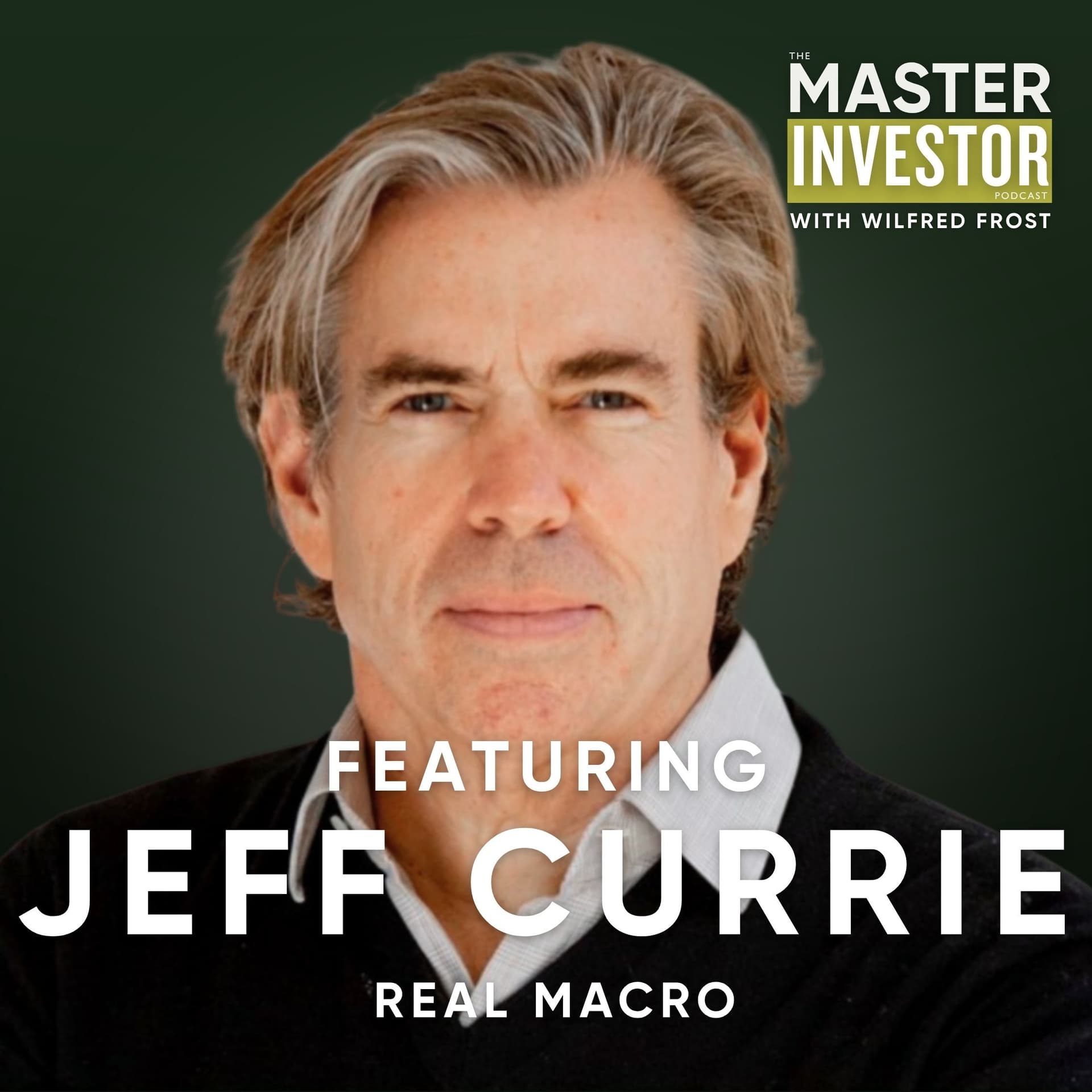
Episode Overview In this episode of The Master Investor Podcast, host Wilfred Frost interviews Mason Morfit, co-CEO and CIO of ValueAct Capital, discussing his unique investment philosophy and approach to corporate engagement, particularly in the context of evolving technologies and the current investment landscape.
Guest Information
- Mason Morfit: Co-CEO and CIO of ValueAct Capital, known for an activism model that is collaborative and focused on long-term partnerships with management teams. Notable for investments in major companies such as Microsoft and Salesforce.
Key Themes and Discussions
- ValueAct Capital's Investment Approach
- Quiet Activism: ValueAct employs a "quiet" but engaged form of activism that emphasizes long-term partnerships rather than aggressive confrontations.
- Focus on Management's Context: Morfit believes in understanding management's psychology and decision-making context, creating a safe space for leaders to pivot when necessary.
- Case Studies:
- Microsoft (2013): Helped the company pivot from a focus on Windows to cloud services by reallocating capital and highlighting losses in less successful ventures.
- Salesforce (2022): Engaged to enhance unit economics, improve product offerings, and address pricing strategies amidst a challenging SaaS environment.
- Current Investment Themes
- "Digitize, Organize, Automate": Morfit outlines this as a core theme for current investments, emphasizing the importance of not just digitizing but effectively organizing data before automation can take place.
- Illustrative Example - Spotify: Morfit discusses how Spotify's success depended not just on digitizing music, but on organizing rights and data for effective automated service delivery.
- Incumbent Advantages in AI and Tech
- Long-term Contracts: Companies like Salesforce benefit from established relationships and long-term contracts, which provide stability during technological shifts.
- Institutional Knowledge: Established firms possess substantial organizational knowledge and infrastructure that newer entrants may struggle to replicate.
- New Positions and Future Outlook
- BlackRock: Morfit discusses ValueAct's new position in BlackRock, emphasizing its transition to a data and software powerhouse, particularly with its Aladdin platform, which can manage and optimize investments efficiently.
- Investment Perspective: Morfit highlights the shift in asset management toward software solutions and the potential for growth in tailored investment products.
- Advice for Investors
- Stay Adaptable: Morfit suggests that investors should remain flexible and open to changes, particularly in how younger generations engage with technology and media.
- Long-term Focus: He emphasizes the importance of a long-term investment horizon, allowing for the complexities and potential temporary setbacks of investments to unfold.
Conclusion This episode provides insights into Mason Morfit's investment philosophy, the importance of strategic corporate engagement, and the need to understand data dynamics in technology investments. Morfit's perspective on the changing landscape of asset management and technology highlights the potential for established incumbents to thrive alongside new entrants in the AI era.
Additional Resources
- Watch the full episode on [The Master Investor Podcast YouTube channel](https://www.youtube.com/@TheMasterInvestorPodcast).
- Follow @WilfredFrost on X and LinkedIn for more insights.
Disclaimer This podcast is for informational purposes only and does not constitute financial advice. Always consult a qualified financial advisor before making investment decisions.
Written by AI. May contain mistakes. Listen to the episode to check what was said.
Chapters
Tap a time to open that second in VOValue Act's Role in Corporate Boardrooms
0:00 to 1:30
Learn how Value Act enhances corporate boardrooms with analytical rigor.
“I think this is a key part of what Value Act does well, which is we enter this arena, the corporate boardroom, which is populated by very, very, very good people that are very, very, very, very, very, very, very good.”
Mason Morfitt's Upbringing and Influences
3:08 to 4:48
Explore Mason's childhood influences and how they shaped his investment approach.
“I want to get into the investment approach.”
Early Experiences with Value Act's Investment Approach
4:48 to 8:18
Learn about Mason's first meeting with Value Act founder Jeff Ubbin and the company's unique approach.
“Yeah, and just to place this in context, we're talking about the year 2000, which was the peaking moments of the dot-com bubble.”
Engagement Strategy in Investments
8:18 to 11:45
Understand how Value Act approaches investment engagements and the importance of a generous spirit.
“He used to say he duct taped me to his leg.”
Identifying Key Investment Criteria
11:45 to 13:53
Discover the criteria Value Act uses to identify quality investments aligned with megatrends.
“And in terms of what you look for, is the big picture, the strategic long-term vision, the key thing for a company, as opposed to obviously short-term earnings predictions?”
ValueAct's Investment in Microsoft
14:19 to 16:52
Discover the pivotal role ValueAct played in Microsoft’s transformation starting in 2013.
“And for you specifically, you weren't the CEO yet, but you played an absolutely central role in ValueAct, taking a position in this company and helping it evolve to an extraordinary position that it's in today.”
The Shift in Microsoft's Paradigm
16:52 to 19:12
Explore how Microsoft had to shift its focus from Windows to Office and Azure under new leadership.
“I went to a meeting where I saw a demo of Office 365, which was taking PC Office and moving into the cloud.”
Creating Transparency with Shadow P&L
19:12 to 21:38
Learn about the creation of a shadow P&L to provide insights into Microsoft's financials.
“And I was allowed to participate in the CEO selection process and interviews.”
ValueAct’s Analytical Approach
21:38 to 23:06
Understand how ValueAct's analytical rigor helped Microsoft identify profitability issues.
“And what if you could put that into Office or Azure?”
The Future of Digital Transformation
23:06 to 27:20
Discuss the importance of digitization, organization, and automation in future industries.
“I mean, particularly in the US, so many chairman CEOs kind of essentially control their boards over time.”
Show all 27 chapters
Salesforce: Lessons from Microsoft
27:20 to 28:00
Explore the parallels between Microsoft and Salesforce as ValueAct invests in the latter.
“And so to get from a old world to the new world, you have to go through this digitize, organize before you can automate.”
Insights from Microsoft to Salesforce
28:00 to 28:32
Learn how lessons from Microsoft's journey are applicable to Salesforce's current challenges.
“planning for this, that you're kind of taking some of the learnings from the Microsoft journey into Salesforce.”
Salesforce's Cultural Dynamics and Historical Context
28:32 to 29:38
Explore Salesforce's unique culture and its historical business trajectory.
“So this, you know, when I was on the board of Microsoft, so there's some sort of long convoluted history here, but Salesforce was founded in 1998, pioneered SaaS business model, but also had a very unique culture.”
Analyzing Salesforce's Financial Strategies
29:38 to 30:38
Understand the financial strategies that led to Salesforce's stock success.
“And I will put them into two simple buckets.”
AI's Impact on Salesforce and the SaaS Industry
30:38 to 31:46
Discuss how AI technology could influence Salesforce and the broader SaaS market.
“But I do think that this organizing step that I talked about in the middle is super, super critical.”
Lessons from Microsoft's Resilience
31:46 to 34:36
Learn how Microsoft's adaptability offers insights for current tech companies.
“um from here why is the market wrong in the last six weeks that's in the recent pullback suggests sass is going to have its lunch eaten um okay so things that have happened in the last few months.”
Investment Strategies: Time and Trust
34:36 to 36:00
Discover the importance of time horizons and trust in investment strategies.
“I remember being in a meeting with Microsoft where people were like, how are we ever going to get Word to sync like Google Docs?”
Navigating Investment Decisions and CEO Relationships
36:24 to 38:40
Explore how to manage investment decisions with close relationships to CEOs.
“Most of our investors invest with us on a three to five year lockup basis, but all of them are aligned to the idea that the investment theses take time to play out.”
Identifying Winning Business Models
38:40 to 41:29
Understand the characteristics of 'win by winning' business models.
“or Mark's got this wrong, and we need to dump out of this position when you're so close to them.”
Insights on BlackRock's Market Position
41:29 to 42:01
Discuss the significance of BlackRock's position in the asset management industry.
“and that doesn't mean that they go up every single year metronomically.”
The Evolution of BlackRock in Asset Management
42:01 to 45:33
Explore how BlackRock is evolving and dominating the asset management space through technology.
“I know that we've only got sort of 10 minutes or so left, Mason.”
Market Confidence and Long-term Performance
45:34 to 49:19
Discussion on market confidence and the long-term performance metrics of investments.
“Where does the decision maker engage with the agents and the software?”
Navigating Market Disruption and Future Trends
49:20 to 53:28
Insights on market disruptions and how future trends will reshape industries.
“And so I feel very, very good about where we're going from here.”
Disney's Strategic Moves in the Streaming Wars
53:29 to 56:00
Analysis of Disney's strategies during the streaming wars and its future outlook.
“And he's got this breadth of understanding.”
Investment Insights from a Young Perspective
56:00 to 56:41
Discover how observing a 10-year-old's engagement with media can inform investment strategies.
“that I was envisioning, but we got pretty far towards it.”
Balancing Family Life and Investment
56:41 to 57:26
Learn about the personal joys of parenting and its impact on investment decisions.
“for the Master Investor Podcast listeners?”
The Importance of Authentic Relationships in Investing
57:26 to 58:28
Understand the value of developing genuine connections in the investment world.
“Not to be too pandering, but what you do in terms of trying to dig beneath the surface and develop authentic relationships and sources and stuff, it is analogous to the spirit in which we try to do our job.”
Transcript
Automatic transcript. May contain errors.0:00I think this is a key part of what Value Act does well, which is we enter this arena, the corporate boardroom, which is populated by very, very, very good people that are very, very, very, very, very, very, very good. at stake and they're not financial analysts and they're not going to spend all this time doing this detective work. And the power that is unlocked when you bring that analytical rigor and that intensity into a boardroom of good, well-meaning people to solve a problem collaboratively is enormous. If you can author software at the drop of a hat by sort of speaking it in plain English, great, you may be able to design really good functionality.
0:44But do you have the data provisioning and that you're plugged into the nervous system of the organization as managed by the chief risk officer, the chief information officer, etc. so that business processes can be executed compliantly, repeatedly, and auditively, I just don't think you can. And so the incumbents are hugely benefited in this. So it is always terrifying when new technology paradigms happen, but it doesn't mean that all the dinosaurs die. We realized a long time ago, particularly waking up in San Francisco, three hours behind New York, we were never going to beat people playing an information game.
1:23We just weren't going to be able to outrun them, right? And the only way that we could win was playing the understanding game, which is understanding how longer term tectonic forces at work, and then the influence game of having a voice in the system. And understanding and influence take time. Welcome to the Master Investor Podcast with me, Wilfred Frost, where we celebrate and learn from the success of the greatest investors, business leaders and politicians in the world, giving you, our listeners, the edge. The Master Investor Podcast is sponsored by BNY Investments, LSEG and Interactive Brokers.
2:01Please do remember the views expressed in this podcast are for general information purposes only. Nothing in the podcast constitutes a financial promotion, investment advice, or a personal recommendation. More on that in the show notes. My guest today, Mason Morfitt, is the co-CEO and CIO of Value Act Capital, which is one of the best known active investment funds. They have some$10 billion in assets under management, but that understates the impact that Mason and his predecessor as CEO Jeff Ubbin have had in shaping the evolution of some of the most transformational companies of this century, from Microsoft to Disney to Morgan Stanley.
2:46I say shaping because they take an active but not aggressive approach to investing and look to work with company management, not against them. and it is very, very rare that they do significant interviews, which is why it is a particular treat to welcome Mason Morfitt to the Master Investor Podcast. Mason, thanks so much for joining me. It's great to be here. Thank you for including me in this. I want to get into the investment approach. I want to get onto Value Act specifically very quickly, but I want to dwell on one part of your upbringing, which leaped out to me. um you grew up or spent a lot of your childhood in asia and went to a lot of british schools yes so my mother is from yorkshire and um i was born in newcastle actually and uh my father's american and they're of the uh quaker faith they got married in a quaker meeting house in newcastle and then went to do community service work in uh new delhi um and then my mother worked for the British Council.
3:53And we eventually ended up in Jakarta, Indonesia. I went to the British International School there and spoke with a British accent until about 12 years old when we moved back to the United States. And at that vulnerable psychological age, I assimilated very quickly to American life. But I can't tell you how impressed my mother was yesterday when I told her I was coming on this podcast, because I grew up in a house where we watched nothing but the BBC as it was carried on PBS, and she couldn't be more happy about this. Well, that is a real touching addition for you to make, but I'm delighted of that transatlantic special relationship aspect, which is central to this podcast so often.
4:37And that upbringing is in a child of a diplomatic household, maybe we'll come back to because it might have influenced the way you approach things so constructively with your target companies. As we work out and learn a bit more about Value Act itself, for those that don't know, tell me about the first meeting you went to with the Value Act founder, the former CEO who you succeeded, Jeff Ubbin, because I think it's really illustrative of the approach of the company as a whole. Yeah, and just to place this in context, we're talking about the year 2000, which was the peaking moments of the dot-com bubble.
5:16I'd been working inside a big investment bank, Credit Suisse, First Boston, which was a dominant tech IPO powerhouse. But what I found was that all the interactions with companies were transactional in the sense of either trying to get a banking deal or extracting some information for the purposes of trading, short-term product launch focus, financial focus, and also had a had a strange relationship sometimes where the CEOs were put up on this heroic pedestal that this was the era of Sandy Wild, Bill Gates, Jack Welch, et cetera. So short-term, transactional, asymmetric. And Jeff, whose background had been at Fidelity running a fund and was very successful, and they experimented with the investment strategy that became Value Act, was hanging a shingle.
6:05And a friend of mine from school worked with him and he sent me on a little meeting, which begat some free labor for Jeff, where he dragged me along to some company meetings. And the first ones that we went to were so different than anything I'd ever seen before in the following respect. I mean, I just sort of illustrate one of them. Gartner, who you guys probably know is a technology research firm, at that time had done a disastrous acquisition of something called Tech Republic, which was a website. That was sort of like CNET or ZDNet. And as you may remember, these were the hot sort of tech media properties of that era.
6:44And it had completely sunk the stock. And rather than focus on the next quarter, Jeff really explored with the CEO, Michael, the psychological conditions under which he'd made that decision. Right. Your P.E. was too high. You didn't think you could compete on the growth rate. You were envious of what was happening with CNET. Your board was was putting pressure on you to grow faster. And so you made this deal that that now, in hindsight, doesn't look like it's it's panning out. And the unmasking of that CEO in that moment where he's sort of confronted with he couldn't no longer stay in role. Right.
7:22It's how selling a story. Right. It sort of became this authentic engagement about what are we going to do differently? And we bought a bunch of stock in that company and ended up being part of, I think, the journey towards acceptance, which was that this was a terrible idea and that we should get back to the focus on the core and moving forward and internalizing that. But the focus of the conversation being on the humanity of what happened, being on the long term consequences of what happened in the long term planning of what could go differently and acting as a counselor and appear not a sycophant was a complete shock to me.
8:03And I and so I dropped what I was doing and moved over at the time. There was no assets under management and I wasn't getting paid anything at that point. And then I got paid a very little and was the backup receptionist and what have you. But it just was a thunderclap moment in my career. And then I learned a tremendous amount, basically apprenticing at Jeff's side. He used to say he duct taped me to his leg. I prefer a more dignified articulation of it. And sort of the rest is history, which I think we'll unpack here. Well, absolutely. And articulate how that has shaped the investment process for you today as CEO.
8:45I mean, you said there it's a full engagement with the management, but not sycophantic. I guess the other point that a lot of people would make is it's also not aggressive and necessarily critical of the management. Well, I think we approach our engagements with all these companies as sort of a generous spirit, which is we're all human beings trying the best we can in the context in which we operate. And I think we have seen, without being too pedantic, several chapters of both economic history of the last 25 years in capital markets history and management theory. And very often people get out of step or led astray.
9:22And in some like I articulated with this Gartner thing, the context is actually explanatory. very often rather than they're so stupid and we're so smart. And so helping understand how we got to where we got to and presenting alternative perspectives, information, and sort of a safe space to pivot is, I think, a lot more effective in getting to truth and then the right answers, because there's another path, which is to come in, berate, litigate, humiliate, intimidate. And my experience as a human being is that's not the best way to get people to do what you want. In fact, that's a good way to get them to circle their wagons and fight and resist and undercut and object.
10:05And so it's all about a pathway to the best answer. And we've just chosen to take what I think is a more shorter and more expeditious way to get to the right answer. And is that influence a deal breaker for you? Obviously, you invest in public markets. if you were really into an investment story, but you weren't going to be taking a big enough position to get a place on the board or to get that deep engagement, uniquely deep engagement you get with the CEO, would you not then invest in that company? No, not at all. And I think this is a really important distinction to make because we lead with the merits of the investment first, and then the engagement as an outflow.
10:50We often talk about it. We're going to invest in something where we think we have a unique insight into it. And that unique insight will birth the engagement rather than working backwards from sort of an ambulance chasing mentality of, hey, this company's had a scandal or it's really screwed up and in a moment of weakness, can we attack them? I've seen many other firms and we can go into the cycles of investor activism over the last 25 years. There was a bolus of firms that exploded in the first decade of the millennia that really focus on an ambulance-chasing model. And the problem with that is you end up with a lot of very sick patients if you get there.
11:28So you're much better off inverting it, starting with a good investment idea, and then allowing the engagement to present itself. And it will present on a spectrum from absolutely nothing to being chairman of the board and the most hands-on. But that cannot be the driver. It has to be the complement to what you're doing. And in terms of what you look for, is the big picture, the strategic long-term vision, the key thing for a company, as opposed to obviously short-term earnings predictions? The number one criteria is high-quality business that's aligned to megatrends, meaning the way that the economy is reorganizing, which we can unpack in a moment here.
12:08What I think we are particularly adept at spotting is something we call the diseases of abundance, which is a fantastic business that's generated such high returns on capital and has such a halo in the capital markets very often goes astray. And the temptation to diversify into things that don't make any sense, the temptation to be lax with your performance management and your expectations of your employees, the temptation to not run your balance sheet efficiently, et cetera, et cetera, all manifest in these very, very great businesses. And then they get decadent in not in a moral sense, but in sort of a Roman Empire kind of sense where they've overextended and lost their core identity, culture and focus.
12:55And so that phenomenon repeats and repeats and repeats in the economy. We see it happening over and over again. And then there's usually a moment of shock. And that could be a capital markets collapse. It could be a regulatory shift. It could be a federal budget change, right? It could be something exogenous generally happens. And all of a sudden the company, it becomes clear that it's a little bit lost and it needs a little help sorting through where it's going to go. And so these sound like vague conceptual ideas, but imagine after the tech bubble collapse of 2000, we did a lot of tech. When the Obama administration's sequestration cut aerospace and defense budgets, we did a bunch of that stuff.
13:36when pharmaceutical stocks collapsed. We did a bunch of those things. And so there tends to be sort of a sectoral element to where we spend our time. But the interesting thing about this job is that those sort of long arcs of history kind of keep repeating in patterned ways over and over again.
14:01This episode of the Master Investor Podcast is sponsored by bmy investments bmy investments is part of bmy a global financial services company supporting investors and institutions around the world this sponsorship does not constitute investment advice let's talk about an example where all of this came together came together beautifully for ValueAct. And for you specifically, you weren't the CEO yet, but you played an absolutely central role in ValueAct, taking a position in this company and helping it evolve to an extraordinary position that it's in today. And I'm talking about Microsoft. So you guys started to invest, started to take your position when exactly?
14:562011, 2012? Talk us through what you saw and why it was struggling in your eyes at that moment in time. Yeah, it was 2013. It's hard to even imagine today, but the company was unbelievably unloved in the capital markets. Its PE was about eight times, which is quite low. The joke at the time was that this ticker MSFT should have stand for missed search phone and tablet because they'd missed the three big tech trends. They had been flailing around really since the antitrust investigations of around the year 2000 to find their footing and had spent a lot of money acquiring things that didn't pan out or make really strategic sense.
15:44And the company was viewed to be a PC only company that was road revolution. And it almost perfectly exemplifies this phenomenon of diseases of abundance, because remember how incredibly powerful Microsoft was in the 90s, so much so that the government antitrust regulators came at it. But it had generated so much cash flow that it had diversified into tons of things. I mean, they were in your business, if you remember. They had television networks and web properties. They had gone into video games, search engines, because we uh articulated they were making pc mice and keyboards it was it was a empire that was stretched in far too many different directions and had lost its uh its soul in many respects and the investor base was very unhappy um the company had actually sort of cloistered itself and wasn't really talking to investors very much which is interesting to reflect upon but it but it It was just sitting there and we had this moment of insight.
16:52I went to a meeting where I saw a demo of Office 365, which was taking PC Office and moving into the cloud. And everybody presumed that everything about Microsoft's fate was tied to the PC cycle and that Office was only sold when a PC was sold. And PCs had just gone negative for the first time. And there was a big meme, again, not to throw aspersions on the business media, but the theme, the meme of the day was sort of the end of the PC era, right? And it was the borth of the iPad and the phone and this, and there's no more. And for the first time in ever, PCs were going negative, which cast even more negativity on the company.
17:28But we could pick up in our data that office sales were starting to decouple from Windows for the first time because it was becoming a cloud subscription, not a adjunct to your PC purchase. So we had an insight that if they kept leaning in that direction, in other words, take the company and decoupling it from windows there might be a germ of something quite interesting and an opportunity to rebirth in the cloud and mobile now shortly after we started buying the company bought nokia now nokia turned out to be a terrible idea the gist of why they did that was that they were still living in a world where windows was the preeminent religion of the company and i think a lot of these companies get stuck in these paradigms that become unhelpful to them And if you believe that you must control the operating system, which was a 1990s mantra, then, of course, you can't lose to the iPhone.
18:19You have to come out with a Windows phone. And so they bought Nokia to try to drive the Windows phone. and the transition they had to get to was to shatter this paradigm of windows overall and shift to office and azure overall and to and to be willing to put office on ios devices on into the chrome browser and to embrace other operating systems like linux like ios etc And that was a major, major, major psychological hurdle for them to get over. It violated everything that they believed. How open were they when you pushed this idea to them? And how much rested on also getting the right leader in charge, Satya Nadella, for the decade to follow?
19:07At the time that we engaged, a little bit unbeknownst to us, the Steve Ballmer era was about to end. And I was allowed to participate in the CEO selection process and interviews. And then I joined the board shortly after Sacha was chosen. And I think the lion's share of credit has to go to Sacha. He's just been an incredible, to state the obvious, CEO. The journey, again, like I talked about, to release this paradigm and this sort of binding constraint that Windows had to be the center of everything, took a new leader. but I also think it took a little bit of help on shining the light on what was actually happening at the company.
19:49And bear with me on this because as I said, we don't interact by trying to attack, humiliate, litigate, et cetera, but rather to solve problems collaboratively. One of the things that had become apparent to me hanging out in Redmond and attending some of these board meetings and then following up with some of the executives was there wasn't a lot of direct transparency to where resources were going. And there were tremendous amount of spend going to evangelizing the Windows phone, both through advertisement, through an army of people that would go out in the world and try to convince people like Uber and Spotify to build their apps on the Windows phone.
20:26And not to mention the losses that were happening in the hardware business. The company's financial bureaucracy was not organized to track the businesses in this way, where you could see the money going into these Windows fund related and Windows related investments. So we created something we call the shadow P &L. And this is a very important tool that we use, which is we don't have perfect information. We don't see the ERP system, but through detective work and interviewing people, it's a little bit, I mean, without being presumptuous, kind of like what you did, but talking to the developer evangelist team and the advertising team and the R &D team and the marketing team, We could sort of guesstimate how many heads were doing each function, how much media spend is going to each function, et cetera.
21:11And we created what was a matrix of P &Ls for Microsoft that could show Bing's profitability, Xbox's profitability, Windows profitability, Office, et cetera, et cetera. And in one of my first board meetings, we showed this to Satya, who was just blown away because the number that was on the screen was that the company was losing about$5 billion dollars a year on this ill-fated devices venture. And imagine, I mean, five billion dollars is a lot of money to spend in a year, right? And what if you could put that into Office or Azure? Oh my goodness, what could you unlock? And so he very quickly pivoted the company.
21:49And again, I'm not taking any credit for this other than being a thought partner and an analytical partner and a detective and a supportive shareholder and a supportive board member along for the ride that helped get to clarity on this. But I think this is a key part of what Value Act does well, which is we enter this arena, the corporate boardroom, which is populated by very, very good people that are very, very experienced in credentials, but they generally are taken from outside the industry. Unlike us, they didn't have$2 billion at stake and they're not financial analysts and they're not going to spend all this time doing this detective work.
22:28I mean, in addition to all the inside detective work, we were going to customer conferences and running surveys and we were putting together a mosaic of what was actually happening at the company. And the power that is unlocked when you bring that analytical rigor and that intensity into a boardroom of good, well-meaning people to solve a problem collaboratively is enormous, right? And I do think that's a vacuum in the public markets. Most boards do not have an actively engaged shareholder that is relentlessly interrogating all of the facts on the ground and trying to, in a healthy and discreet and collaborative manner, solve problems.
23:03And that's the kinetic energy that gets released when we should. For sure. I mean, particularly in the US, so many chairman CEOs kind of essentially control their boards over time. I think that's really, really, really interesting. I should also mention as well, you know, you said a$2 billion position, you've got 20 billion AUM, you often just have a focus of about 10 positions, which highlights the importance of them.
23:53forward slash masterinvestor.
24:23to Salesforce, a position now which is very relevant, similar-ish in terms to Microsoft, but in a different moment in time as software is being punished at the moment. But before we get to that, you said the importance of the big themes and being these companies need to be exposed to the big themes of the next decade. And your current, I think I'm right in saying big investment theme is everything digitizes, everything organizes, everything automates. Just explain that for us a little bit? I think every industry is moving in this direction inexorably at different rates of change. Digitizing is a fairly obvious concept.
25:01I mean, we stream music digitally, we process work digitally, we sign documents digitally, et cetera. And then automation is an intuitively obvious concept, whether it's robotic or software automation, just getting things done without human intervention. And what we see time and again across the economy is people trying to move towards the automation and where they get stuck is this thing called we've labeled organization. And what does that mean? Well, let's think about how Spotify was born and that this is relevant because this was a big position of ours in 2022 and 2023. You could digitize music.
25:43I mean, Napster did it, obviously, but to organize the digital rights infrastructure with contracts with all of the record labels and then auditable data where they could track every single stream so that Taylor Swift was paid appropriately for the number of streams that they had all the way down to the indie artists was a enormous task of organization. the entire industry had to set standards define terms, define who was going to audit these things and make sure that nobody was monkeying around with the results before you could get to the sort of production of the streaming services which then had automated playlists and recommendations and all kinds of interesting machine learning algorithms.
26:29So the bottleneck in all these things is the organizational step. And there are very often legal barriers that make that organizational very complicated. And so it's my hypothesis that as we all stare into the future with our crystal balls about what the AI world will look like, not many people are digging deep into this issue because privacy regulations across the world are very different country by country. Where data can be held in what kind of data centers geographically is very different, how they must be cyber secured, whether I can share your credit card number or your date of birth or your medical history is wildly different.
27:11What about your payment information? And while LLMs are wonderful technologies, they're statistical guessers rather than absolute sources of truth. And so to get from a old world to the new world, you have to go through this digitize, organize before you can automate. And, and that piece of the puzzle is in the middle is we're spending a lot of time deeply understanding how it manifests in different industries, which we can talk about across the portfolio. That's really, really so interesting. Digitize, organize, automate, and the opportunity particularly in, in organize. So let's move on and talk about Salesforce then.
27:53and why you think it's super attractive. And I think, you know, we spoke about this beforehand, planning for this, that you're kind of taking some of the learnings from the Microsoft journey into Salesforce. But I guess at the same time, you know, particularly at the start of this year, including today, people might question whether the Microsoft journey you went on is applicable today to a software-based name. Yeah. And if you don't mind just contextualizing for people in, yeah, it's an interesting trivia in 2016, it was leaked out that Microsoft was looking at buying Salesforce. So this, you know, when I was on the board of Microsoft, so there's some sort of long convoluted history here, but Salesforce was founded in 1998, pioneered SaaS business model, but also had a very unique culture.
Read the full transcript
28:47If you go visit one of the Salesforce towers, it looks a little bit like Disney World. There are animal characters and, you know, it's very Hawaiian themed. The culture has been the word they use is ohana, which is the Hawaiian word for family. And it has some very interesting cultural dynamics to it that I think have served it fantastically well, but had to evolve a little bit. But in 2022, remember that tech collapsed, stocks collapsed after a huge run up from 2016 to 2021. And Salesforce at that time's margins were not where they ought to be. Salesforce was swarmed by a number of activist investors.
29:37We did a bunch of analysis and presented it behind the scenes to Mark, the CEO, of lessons learned from Microsoft. And I will put them into two simple buckets. One was this matrix of like, where are you making money? Where are you losing money idea? And the second was the pricing and packaging advantages of bundling things into very nice packages that customers really value. The office bundle is the most paradigmatic example of it, but it also manifests in Azure credits. And the idea being the more that you can kind of package together in a synergistic way, the happier the customer is, the longer you retain them, et cetera.
30:18Salesforce had acquired a lot of businesses, hadn't rationalized them in terms of product bundles, nor cost structure. And we went to work on that issue. And to this company's credit, the results were unbelievable. And if you look at the stock chart, we came in, um, in the low to mid one hundreds. And for the next two years, it went up into the mid 300s so it was a great run just in time for ai to show up and hit the entire opera industry on the side of the head with a two by four in some ways this feels exactly like the microsoft platform shift from pc to cloud and this is a platform shift from sass to ai uh work and it is complicated on a number of different dimensions.
31:05But I do think that this organizing step that I talked about in the middle is super, super critical. And customer data is particularly regulated and protected and sensitive for not just legal reasons, but if you mess with your customers, you know, you're going to lose them. And so there is very precious how this stuff is handled by customers. The key question for me is in the last month or two in particular, I think people look at sales forces perhaps the bellwether for all of sass in this regard and wonder is ai going to eat its lunch or as mark benioff would say and i imagine you would say is ai gonna empower it um from here why is the market wrong in the last six weeks that's in the recent pullback suggests sass is going to have its lunch eaten um okay so things that have happened in the last few months.
32:01By the way, this is a theme that started manifesting in the second half of 2025. And for all of us, the listeners who are listening to this five years in the future, I'll give you some context about what we're talking about here. And only in the last month or so have there been breakout launches like Claude Code, which seem to suggest that one can code software through laypeople language and prompting and therefore existing software incumbents are dead. I want to analogize to Microsoft for a second because it is relevant and I'm not avoiding the question here. But at the time that we invested in Microsoft, there were several productivity suites that had launched that seemed to be better than Office.
32:39One was Google G Suite and one was a, there were a product called Evernote, if you remember that. And there was a product called Quip, which was a, Quip was a word processor that allowed for collaboration in real time in Office. Word couldn't do it. And so the belief was that because there are superior products now in market that are perfectly aligned to the new architecture of cloud, Office is dead. Well, it turned out that wasn't the case for two reasons. One is that the value of the Office suite wasn't the design of Word versus the design of Google Docs. It was the control system, the identity system, and the access and permissioning system called Active directory that sit underneath it.
33:21In other words, if I work at a company, it isn't just that I have Word, it's that I can open up the Word documents that Wilfred has made, or I can't because those are private or protected or legally sensitive or what have you. And it was the management of the data and the actors in the ecosystem that was the key, not the actual productivity software. So if you fast forward to today, if you can author software at the drop of a hat by sort of speaking it in plain English, great, you may be able to design really good looking user interfaces and functionality. but do you have the data provisioning and that you're plugged into the nervous system and of the organization as managed by the chief risk officer, the chief information officer, et cetera, so that business processes can be executed compliantly, repeatedly, and auditively?
34:18I just don't think you can. And so time will tell if we're right or we're wrong, but we are focusing all our attention again in this organizational stage like is the data protected is the data anonymized and and compliant is the data auditable so later you can see why did we make this decision was it the right thing to do or not and and so it's it very often is the oblique thing that is not just the authorization the authoring process of writing things or creating things but the integration and coordination planes that become uh most important and so So the incumbents are hugely benefited in this and they can catch up.
34:57It took years and years. I remember being in a meeting with Microsoft where people were like, how are we ever going to get Word to sync like Google Docs? Because we have a different code base for Windows, a different code base for IMAX, for the browser-based Windows, for et cetera. It's just like a mess. But they got there, right? Because they have time. The incumbents have time. They have multi-year contracts. The duration of a contract at Salesforce is 10 to 15 years generally. and they're plugged into the roadmap of the organization. So it is always terrifying when new technology paradigms happen, but it doesn't mean that all the dinosaurs die.
35:34It's really compelling that as someone that has worked and continues to work for a number of big companies, good luck to Claude or the next AI company to suddenly get an oil tanker to shift on a dime away from their existing providers. By the way, I love that you mentioned Evernote. I really like that product because the company I work for all the time forced it upon us, so I got used to it.
36:01This episode is brought to you by LSEG, the leading global financial markets, infrastructure, data, and analytics provider. To learn more about how LSEG connects businesses, investors, and markets worldwide, visit lseg.com.
36:23there's more areas i want to get to um including your new position in blackrock but just before we get to that i think i have like off the back of salesforce two key questions for your investment approach yeah the first is time horizon i guess you need the luxury of your investors giving you a long period of time to make these things work? Yes. Most of our investors invest with us on a three to five year lockup basis, but all of them are aligned to the idea that the investment theses take time to play out. In many cases, honestly, they have a J curve. They actually lose money right off the bat and things get worse, but the worse they get, the more the pressure builds to get things right.
37:11And so it's not something we're particularly terrified of. But yeah, you need to have time. And getting back to why I think we do things the way we do, we realized a long time ago, particularly waking up in San Francisco, three hours behind New York, we were never going to get people. We were never going to beat people playing an information game. We just weren't going to be able to like outrun them. Right. And the only way that we could win was playing the understanding game, which is understanding how longer term tectonic forces at work and then the influence game of having a voice in the system and understanding and influence take time.
37:45They take trust and they take, you know, really unpacking structural things. And so that does make our returns lumpy. We can, as you said, we're very concentrated and we might have value recognition at one of our core positions that comes very quickly and it doubles in a year or it might J curve and you layer all these things on and you sort of have a very idiosyncratic looking return path that tends to be quite good in the long run. But the key is that you have people who are willing. It all rhymes, right? We give our management teams time and trust and our investors give the same to us and the kind of the chain all winds up.
38:23The second follow-up question on the investment approach is how do you make sure you don't get too close? I guess to the companies that you invest in, but perhaps more importantly to the CEOs. I mean, I think I'm right in saying you're a pretty close personal friend with Mark Benioff. How do you know when to say, do you know what, guys? We've got this wrong. or Mark's got this wrong, and we need to dump out of this position when you're so close to them. Yeah, it's so interesting because we've tried to calibrate this issue back and forth to get it correct. And every time we sell out and stock runs as it did with Microsoft, people are saying, what are you doing?
39:02You had it all nailed. You should stick it out and write it for a decade. And you sold too early. And then there's the converse where you held too long. And so we you know, investing is a never ending series of lessons learned. Um, I will say just a few points about that. We've, we've over the course of our history had roughly 150 core investments and we only have 10 today. So it's not like we don't know how to do this. Many of those CEOs are now investors in the fund and we keep them in the family as advisors, uh, and assets to us. And so that keeps them close. And all of them understand that we're in the business of running a fund and we're in the business of making money and allocating capital and allocating time.
39:49And there are periods of time where our capital and our time can generate extraordinary returns. And there's times when we're the returns are skinnier and our role is lessened and they get it. And so we've gotten good at that breakup conversation. but again i think with my in hindsight mistake uh was sticking around for the first chapter of the microsoft story which was not brief i mean it was 2013 to 2018 where they made the successful pivot to the cloud and then i felt like the story was written and there wasn't much else to do even though i could tell that things were going to keep going well and i was better off allocating resources and time to some new project, which was Citigroup, which didn't pan out as well as we'd hope, but we can go into that if you'd like.
40:40But with many of these large platform tech companies, chapter one begets chapter two, begets chapter three, begets chapter four. That is, I think there's two types of businesses in the world. I call them ones that win by winning and ones that lose by winning, which sounds, I guess, like Donald Rumsfeld's no, no, no, no. But bear with me. In many industries, mean reversion hits. If you win, more capital floods into the industry, which compresses returns and things collapse. And that is true for oil and gas or retail. There are other ones where the more you win, the more optionality you have because you have a deeper set of customer relationships that you can add new services to.
41:17And you can have Spotify start with music and add podcasts. And after podcasts, add audiobooks. And after that, add user-generated content that filters into it, et cetera. And so when you find Microsoft's a great win by winning story, because the more office you have Word, you add Excel, you add PowerPoint, you add Teams, you add cybersecurity, you add identity, you add et cetera. And so what we have been working very hard to rotate the portfolio into over the last five years, having learned this lesson from Microsoft, is that we want to have a lot of win by winning business models, which extends the duration.
41:53and that doesn't mean that they go up every single year metronomically. You might have a big drawdown in one particular year as we see in Salesforce. But if we think that the potential is there for these endpoints to expand and expand and add and add and grow more and more interesting and more and more fully developed, we'll stick it out and ride the downs to get to the long-term upside that we see. I know that we've only got sort of 10 minutes or so left, Mason. There's so many stocks I want to, I'm going to drag you kicking and screaming back for another episode because i want to talk about city and morgan stanley and visa and disney and rocket if i can have you back but the one i did just want to dwell on before big picture conclusion is a new position uh i think a new position in q4 i don't think it's actually been talked about publicly yet which is blackrock yes so this is not just because you think they're really good asset management and they're the biggest player it's it's deeper than that it's the evolution of the market space and i guess the scale that they do have allowing them to to dominate the industry going forward yeah uh and you know it should be the quiet part should be said out loud this is the biggest force that's going to potentially wipe out all active management managers including myself so it's a little bit strange to invest in them and champion what they're doing, but it is so fascinating what they're doing.
43:17And it does relate to this digitize, organize, automate idea. With all due respect to all of us in the investment management industry, there's a lot of inefficiencies in what we do. And it is almost a perfect problem set for computer algorithms to attack. How to allocate your assets, how to tax optimize them, how to hedge them, how to manage your life stages, et cetera. Whether you're an individual that is middle income or wealthy or an institution, that is very programmable. The manufacturing of products that meet those needs has been very fragmented and bespoke. And so there's need for organization of all of this workflow.
44:04So BlackRock has historically been viewed, I think, as a diversified asset manager that's really good at making ETFs. And it's been in a price war with Vanguard on plain vanilla ETFs for a long period of time. And so the S &P 500 ETF price and market share war has been going on forever. But the interesting thing that piqued my attention in the last 12 months was that BlackRock is also one of the best data and software companies in the industry. It has a platform called Aladdin that manages your positions and your risks, et cetera. And it was beginning to place that software asset on the desktops of wealth managers and asset managers around the industry and driving the adoption of something called a model portfolio, which is what I'm describing to you.
44:51Right. Which is automatically software managing your investment decisions and optimizing things far better and faster than and cheaper than a human being could do it. And when it had that beachhead, right, and it won that landing place, it could expand and expand and expand with more and more services. And what it is pulling in now is a set of ETF products that is different than that plain vanilla S &P 500 price war set of products into more bespoke, active and optimized products. And that means the price per unit of assets is going up for the first time in decades. And once they control that control plane, and I think in the AI world, this concept of a control plane is going to be critically important.
45:40Where does the decision maker engage with the agents and the software? And if that is Aladdin and that is the BlackRock front end, they are in an incredibly advantageous position. because from there they can organize the asset allocation of much of the industry and pull through their products in a way that is almost impossible to dislodge for competition unless they can kick out that software front end. Almost impossible to dislodge and presumably over time going to be much higher margin? Yes. First of all, they do get directly paid for the software. So the business has a mixed shift of, of just fee-based AUM with faster growing software.
46:26Their product menu is expanding and expanding and expanding, not to waste too much of the clock on this, but what they did with Bitcoin ETFs is truly remarkable. And I will call that a form of organizing a blockchain based traded asset that was largely inaccessible to the average person could get converted, almost like alchemy, into a traded stock called iBit, which is by far the biggest ETF for crypto. And by organizing it in that sort of digestible wrapper, it could then fit into the model portfolio in Aladdin and everybody could have access to Bitcoin. They did something very similar with treasury bonds, which were traded on a dealer-to-dealer market that's somewhat opaque.
47:09They converted those into ETFs that could then fit into the Aladdin software that could then fit into the portfolios of everyone, really. I believe that they will do the same thing to alternative assets, many categories, private credit, real estate, etc. Package, format, organize, and slot into these sockets in their existing software. Beach heads. And all of that, yes, It means fees will go up and up and up. Tracking value delivered is able to make your life easier. You'll have access to products you couldn't otherwise get. All the fee leakage that you don't see that's happening in these opaque dealer to dealer markets gets washed away.
47:51And the customer ends up with a optimized, cheaper, better managed portfolio construction process. and that is dynamically adjusted using machine learning and AI to get the best outcomes you can have, as opposed to a daisy chain of human beings using phones, batch reported trade consults, et cetera, to try to, in an analog way, get to the same place.
48:26BlackRock's obviously there, Goliath, that really interesting to hear that take on it. I've got a couple of final big picture questions. I know we're right up against the clock, Mason. But your performance since the year 2000, since inception, has been 13.7 % per annum. Phenomenal over a 26-year period. The MSCI world for context over that time has been 6.8 % per annum. I think fair to say over the last five years, and I know you're super long-term and you're thinking it's lagged if say measured against the S &P 500. The markets there's lots of questions I know you don't like dwelling on short term bubble this or not kind of talking points but the markets obviously there are questions of evaluation overall how confident are you in the 10 or 12 big positions you have in absolute terms rather than relative terms over the next three to five years that it will be very much positive returns for investors or could massive overall equity market pullbacks prevent that we manage ourselves to an absolute standard as you suggest with it with a target of delivering the teens returns to our investors which you've kind of delivered over any uh measurable period um and with very very little loss of capital which is an interesting thing underneath the surface of those numbers.
49:57Because we do invest with both a margin of safety attitude in terms of valuation and asset value, as well as an opportunity from these transformations that we talked about into getting more aligned with the megatrends and releasing your psychological paradigms, et cetera. And so I feel very, very good about where we're going from here. In fact, I was just reviewing our price targets to where we think they're going to be on the one and three basis. And it's quite eye popping at the moment because there's so much fear in the market and just disruption happening that there's, there's wild activity so far in 2026.
50:33I never thought businesses as high quality as Moody's and S and P would plunge the way they have that. Um, so, uh, we're seeing interesting clustering of people hiding in consumer staple stocks and other things. And the AI physical infrastructure complex is obviously going to the moon. But sorting through all of those sector rotations and emotional swings of the market, I think it is starting to come into focus what the world is going to look like on the other side of this reorganization that we're having. I think I have a hokey metaphor. If you've seen the Jurassic Park movies, the T-Rex was the apex predator of this amusement park called Jurassic part.
51:15And then in one of the sequels, they infused it with Velociraptor DNA to create something called the Indominus Rex, which is an apex predator, bigger than the apex predator that we've ever seen before. The BlackRock story I told, hopefully articulate some of the, you can see what I'm talking about here. It was already the apex predator in asset management, but with the ingestion of software DNA into its dinosaur body, it becomes even more and more powerful. So I think when we look out in the future, I think industries are going to see particular cases, extreme market share grabs by the these new Indominus Rex dinosaurs.
51:52And there are going to be new interfaces in the way the world works around certain platforms. Visa being one for payments, meta being one for advertising, et cetera. And so long-winded way of saying right now, there's a lot of reductionist narratives, I think, about what's going to work and what's not going to work. You see tremendous capital flooding into semiconductors and data center buildup, asset-heavy industries. But most people seem to be fearful or confused about what is the mortgage market going to look like? What is the asset management market going to look like? How are consumer products going to be made, marketed and distributed to people?
52:35How are you going to buy a car? Are you going to buy a car? These are the problems that we're working through. And I think we have the advantages of relying on all the CEOs that we've invested with over the last 25 years that now invest with us. We have the asset of being inside the boardroom at Salesforce and watching the agentic revolution happen at all of their customers and at it as well. um we didn't get into it but we're wall crossed under ndas at several of our other companies to understand how creativity and media is going to shift and what is the movie of the future going to look like and and then what is human life going to look like and this sounds grandiose but we do need to ask that question given what's happening in the in the in the world today on the on the other side of this revolution and i believe that we are picking up some of the software and services assets very cheaply that are going to be extremely relevant for this um new worldview and you know because of these vantage points we have um if we're wrong we'll just adjust the portfolio accordingly as time goes on i mean maybe we're not going to get all these right but i feel very good about it is the short answer you're right we didn't get to media and i'm going to kick myself if we don't so i'm going to squeeze in one question very quickly on disney is the sale of warner brothers discovery to not disney a big blow and are you happy with the ceo choice uh very happy the ceo choice um in part because i think his his view of how ip can be used across multiple form factors is super important in a world where I do believe user generated content and interactivity with TV shows is going to increase and your experience on these streaming services is going to look radically different in the future.
54:29And he's got this breadth of understanding. I've met him, Josh, many times and he's great. Industries have chapters in their evolution. The chapter that we engaged with Disney on, chapter one, was coming in right during the the worst of the streaming wars and the worst of the creative strikes. If you remember, all the actors were on strike, the writers were on strike, and the streaming wars were a total bloodbath, and Disney was losing billions of dollars a year on Disney+. The idea that we had was similar to Microsoft, was that you could bundle more and more products together to create higher ARPU and lower churn.
55:01And we helped them recruit the new head of technology to the company, technology and product. You can see they integrated Hulu and Disney Plus and ESPN into one app, which drove up retention, up ARPU. Profits went from losing billions of dollars to making billions of dollars. And that was a successful run. In my heart of hearts, I had wished that the non-Netflix coalition had then, meaning Paramount and Warner Brothers and Universal, had jumped on. Shout out for Comcast family there. Thank you. Exactly. I wish they had all gotten together on the Disney Plus architecture because we hired the best tech team to build the best rails to go to war against the evil empire of Netflix.
55:45That was kind of the idea circa 2023. Unfortunately, Disney got all of its internal assets onto one platform and did had a great turnaround to Disney Plus. But between the Ellisons coming into Paramount and then the war for Warner Brothers, it didn't coalesce into the sort of platonic ideal. that I was envisioning, but we got pretty far towards it. And we'll see where things go from here. Well, I don't know if you saw today's announcement in the UK. Sky in just this region in the UK have bundled everything, including HBO Max, which now launches here. So it's not quite the same as your dream scenario there in the US, but it's also not a million miles from it.
56:29We are really out of time now, Mason. And I wanted to end with the question I flagged to you that we ask all of our investors. And that is, you know, as we want to try and provide our listeners an edge, what is your overriding piece of investment advice for the Master Investor Podcast listeners? Well, I have one that's totally impractical, but it's going to, I was thinking about this question. Have a 10-year-old boy in your house. I have a son who's 10 years, and he, watching Generation Alpha engage with the universe is fascinating. From how they consume media to how they play video games to how they, we didn't even get into our Roblox investment.
57:04And that's been a very successful one for us. And I think going to be one of the most important platforms for the future. And staying young, you know, again, not the most practical recommendation. However, I can't overstate how important it has been for me to have a young kid in my house and how much fun I have with him seeing the world through his eyes. well he deserves extra love and affection because he helps you in your job as well as i'm sure your your happiness at home i have a two and a half year old so i don't think it's informing my investment decisions yet but it's certainly it's certainly driving my life in the next couple of years and you'll hit a you'll hit a real sweet spot yeah well as you know i started as an investor and i know and i'm and i'm not doing it anymore perhaps for a reason I like the volatility in the discussion points without having quite the responsibility.
57:58Not to be too pandering, but what you do in terms of trying to dig beneath the surface and develop authentic relationships and sources and stuff, it is analogous to the spirit in which we try to do our job. which is why I'm making this rare exception to talk to you because it's very important to have this content out there in the way that you do it. Well, I really appreciate that. I particularly appreciate your time and your candor with us today. And there was a lot of stocks we didn't get to. So maybe I'll twist your arm again in the future to come on again. But for now, Mason, it's been a real pleasure having you on the Master Investor Podcast.
58:42Thanks so much for joining us. Thank you. The Master Investor Podcast is sponsored by BNY Investments, LSEG and Interactive Brokers. Please do remember the views expressed in this podcast are for general information purposes only. Nothing in the podcast constitutes a financial promotion, investment advice or a personal recommendation. More on that in the show notes. this podcast is produced by Paradigm Productions and Master Investor Limited in association with Birdline Media if you've enjoyed the show please do subscribe on YouTube or click follow on your podcast platform and you'll be automatically notified each time a new episode drops
From the publisher
Mason Morfit is the co-CEO and CIO of ValueAct Capital and in this incredibly rare extended interview he outlines the unique investment approach that defines ValueAct - “quiet” but highly engaged activism, using long-term partnerships with management teams to transform great but drifting companies like Microsoft in 2013 and Salesforce in 2022.
Mason contrasts the short-term, transactional culture he saw as a young banker during the dot-com boom with ValueAct’s model of deep, long-term relationships focused on understanding management’s psychology and context rather than attacking them.
According to Mason, ValueAct aims to provide a safe space for CEOs to pivot, avoiding berating or public confrontation, because that typically makes management defensive and less open to needed change.
Mason talks Wilf through some of ValueAct’s key positions including their 2013 investment in an out-of-favour Microsoft, then trading on a low multiple and seen as having missed search, phone and tablet. From his board seat, Mason helped highlight the billions in annual losses tied to devices and the Windows Phone, clarifying the opportunity to reallocate capital toward Office and Azure and supporting Satya Nadella’s strategic pivot. He uses this as a textbook example of what an engaged, analytical shareholder can add inside a boardroom that otherwise lacks a large, financially sophisticated owner at the table.
Mason also outlines ValueAct’s current core theme: “everything digitizes, everything organizes, everything automates,” arguing that the real bottleneck for AI isn’t flashy models but the messy middle step of organizing data and rights. Using Spotify as an illustration, he describes how the hard work was not digitizing music but building the global rights, standards, and audit infrastructure that then allowed automated recommendations and playlists to flourish. He then links those lessons and the Microsoft experience to Salesforce, where ValueAct pushed on unit economics, a clearer product matrix, and bundled pricing, helping drive a sharp margin and share-price recovery before the recent AI-driven SaaS sell-off. On the current fear that AI tools will “eat SaaS’s lunch,” he argues incumbents like Salesforce retain huge advantages in identity, permissions, compliance and long-term contracts, much as Microsoft Office ultimately outcompeted early cloud-native rivals.
Mason reflects on his most significant new position – BlackRock – as it transitions from a traditional asset manager into one of the industry's premier data and software companies. He views BlackRock as a dominant player in the "digitize, organize, and automate" megatrend and perfect example of a company whose opportunity set will expand further as it grows. He also discusses Disney and closes on his key investment advice - stay young in your thinking.
You can watch the full video on The Master Investor Podcast YouTube channel
And follow @WilfredFrost on X and Linked In
Sponsored by BNY Investments, Interactive Brokers - ibkr.com/masterinvestor and London Stock Exchange Group (LSEG).
The Master Investor Podcast is produced by Paradine Productions, Master Investor Ltd in association with Bird Lime Media.
This podcast is for information purposes only. It does not constitute an invitation or inducement to engage in any investment activity. It is not a financial promotion as defined under section 21 of the Financial Services and Markets Act 2000 (FSMA). The views expressed by the presenter of this podcast are those of the presenter and are provided in the course of journalism. This podcast benefits from the exemption under Article 20 of the Financial Services and Markets Act 2000 (Financial Promotion) Order 2005 (FPO), It does not require approval by a person authorised under the FSMA. Generic information, not identifying any specific investment, fund, provider or service, about a class of investments such as shares, bonds, derivatives and cryptoassets, might be provided and/or discussed during this podcast. Such discussion falls within the generic promotions exemption (Article 17 of the FPO). Such discussion is not a financial promotion requiring approval by an authorised person under section 21 of the FSMA. Investing involves risk. You should consult a suitably qualified adviser who can assess your individual circumstances before making any investment decision.