In short
Positioning portfolios amid the Iran war’s inflation/energy shock, arguing inflation is still persistent, the Strait of Hormuz will reopen but with lasting supply-chain mindset changes, and commodities/energy/precious metals may outperform while AI-led tech outperformance slows.
Guest
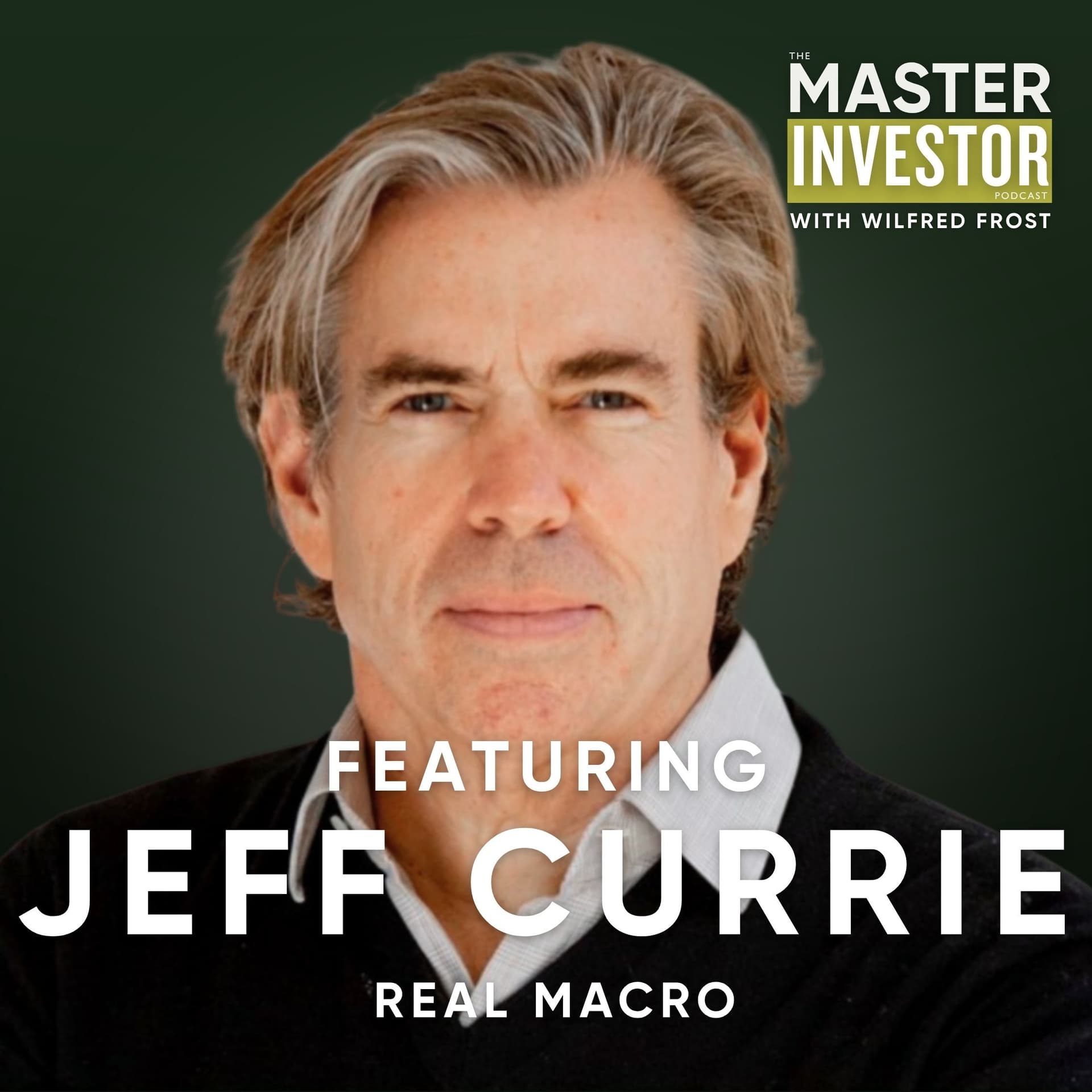
Peter Boockvar, CIO at One Point BFG Wealth Partners (rebranded from Bleakley Financial Group), editor of “book report” on Substack; previously a strategist/economist known from CNBC. One Point BFG has ~60 advisors across ~22 cities.
Key claims
War boosts inflation via producer costs and energy “ripples” (transport, petrochemicals, packaging). Oil won’t revert to $65 WTI; he expects a new “normal” around $80–85 and a futures curve “catch-up.” Global stockpiling (oil, fertilizer, critical minerals) will support commodity bids for months/quarters/years. Gold is a central-bank “settlement” asset as non-dollar trade grows; silver’s parabolic move likely near a late-stage. Energy and select international equities (UK/Europe, Japan, China) may outperform as US tech leadership slows.
Notable examples
Strait reopening; 10–12 mbpd oil loss estimate; jet-fuel rationing/4-day work weeks; Russia reserve freeze driving gold buying; Turkey/Poland gold sales via swaps; Urea/sulfuric acid/ammonia supply concerns; Fitch default-rate rise (healthcare providers, consumer products).
Written by AI. May contain mistakes. Listen to the episode to check what was said.
Chapters
Tap a time to open that second in VOMarket Implications of Reopened Straits
0:00 to 1:10
Understanding the potential market shifts post-reopening of straits.
“The straight is going to reopen whether there's tolling or no tolling.”
Insights from Peter Boockvar
1:31 to 3:29
Discussion on Peter's expertise and the rebranding of his firm.
“Nothing in the podcast constitutes a financial promotion, investment advice or a personal recommendation.”
Inflation Trends and Market Responses
3:29 to 8:00
Analyzing inflation trends and the impact of the Iran war on the economy.
“And I'm going to put a pin in the Iran war, if we can, first of all, as crazy as that might sound.”
Commodities and Stockpiling Insights
8:00 to 9:58
Exploration of stockpiling strategies and their implications on commodities.
“You're still losing, call it 10 to 12 million barrels a day.”
GDP Impact of Commodity Shortages
10:40 to 12:10
Examining how commodity shortages may affect GDP across economies.
“you know, only down 5 % or 6%, for example, since the start of the war, where people wonder whether this is being underpriced a little bit.”
Gold and Silver Market Insights
12:10 to 14:01
Discussion on the historical and current trends in gold and silver markets.
“impactful in terms of something that we use every single day, at least there's some deferring out of the food supply because the planting season in many countries are going on right now.”
The Transition to Gold as a Settlement Currency
14:01 to 18:07
Learn how recent geopolitical events have shifted the demand for gold as a key asset.
“And he felt that at the time, negative real interest rates was the right policy.”
The Dynamics of Platinum and Palladium
18:08 to 22:08
Discover the historical relationship between platinum, palladium, and gold amid shifting market conditions.
“a new thing where gold was bought for rainy days from the perspective of central banks.”
Analyzing Energy Companies Post-War
22:37 to 25:41
Evaluate the performance and valuation of energy companies amidst recent conflicts.
“Again, you've made some great calls here.”
Market Reactions to Oil Price Fluctuations
25:42 to 28:00
Understand how stock market investors are interpreting current oil prices and their implications.
“And do you think one of the two prices is wrong?”
Show all 18 chapters
Pre-War Stock Market Trends
28:00 to 30:06
Explore the shifts in the stock market leading up to the Iran war.
“And something that I started to really notice in that bells started ringing, in my opinion, and I'm going to fully answer your question in a second.”
Impact of the War on International Markets
30:06 to 32:42
Understand how international markets reacted to the onset of conflict.
“I mean, the UK stock market, and we own stocks there, these are some of the cheapest stocks in the world.”
Agricultural Commodities and Supply Disruptions
32:42 to 34:50
Learn about the agricultural commodities' market dynamics amid war-related supply issues.
“we started to buy some of the fertilizer stocks like mosaic and nutrient.”
The Bond Market's Response to War
35:24 to 38:29
Discuss the implications of the war on global bond markets and interest rates.
“How damaging is this war for Secretary Besant's plans, otherwise to this point, fairly successful plans to flood short-term issuance to offset the need for long-term issuance.”
Risks in Private Credit Markets
38:29 to 42:00
Examine the current state and risks associated with private credit and equity.
“So going forward, I don't like long duration bonds anywhere in the developed world.”
Analyzing International Stocks: Japan and China
42:25 to 46:02
Understand Peter Boockvar's insights on Japan and China's investment potential.
“Just want to have a quick view on Japan and China.”
The Importance of Humility in Investing
46:02 to 46:16
Discover Peter's key investment advice focusing on humility.
“We ask, and you've been a loyal listener of the podcast, you knew it already.”
Navigating Losses and Compounding Gains
46:16 to 46:53
Learn the significance of acknowledging mistakes in investing.
“The one word that I use when I think about that is humility.”
Transcript
Automatic transcript. May contain errors.0:00The straight is going to reopen whether there's tolling or no tolling. The straight is going to reopen. So what is the world going to look like post that? Where does oil go back to? Well, I argue it doesn't go back to$65 WTI. I just don't see that happening because I think there's a mindset change here that this caused. You're going to see global stockpiling for many months, quarters, maybe even the next couple of years of a lot of key things. 2025 was the industrial and precious metal bull market. Now we're in an energy commodity bull market. And I think ag will be the next commodity bull market after that.
0:38And I like to remind people that 75 % of the world's GDP takes place outside the US. 96 % of the world's population lives outside the US. But if I'm right, that the AI tech trade just slows down. It's not a bear call. It's just saying that the rate of change, the level of outperformance is going to slow. I do think it's important that investors should look globally because there are just so many good opportunities outside the US that I find attractive. Welcome to the Master Investor Podcast with me, Wilfred Frost, where we celebrate and learn from the success of the greatest investors, business leaders and politicians in the world, giving you, our listeners, the edge.
1:21The Master Investor Podcast is sponsored by LSEG, Interactive Brokers, the World Gold Council and BNY Investments. Please do remember the views expressed in this podcast are for general information purposes only. Nothing in the podcast constitutes a financial promotion, investment advice or a personal recommendation. More on that in the show notes. My guest today is the CIO of One Point BFG Wealth Partners and the editor of the book report on Substack. He's one of the most meticulous and independently minded strategists and economists I know on the street. And I'll give him this accolade, perhaps the most helpful to someone either on the buy side or in the media, trying to have the hardest bits of work done for them.
2:12So, Peter, it is great to see you. Welcome to the Master Investor Podcast. It's really an honor to be here, Wilf. And I've been a big fan of yours for a while and listening to all your pods and all the other stuff that you've done. And it's really great to be here. Well, right back at you. And as you know, I've been a big fan of the book report for a long time. And that's spelt, guys, listening, B-O-O-C-K report. We'll definitely list where people can find it. It's really well worth subscribing to our listeners. And then what is one point? Because that's new since we used to talk to each other regularly on CNBC.
2:51So the firm was originally Bleakley Financial Group. Bleakley was the last name of a gentleman 40 years ago who left 35 years ago. But the firm kept his last name. And then we brought in a minority investor last year. And we felt that it was time to go away from somebody's last name to an actual brand. And so it's the same firm, just rebranded. It's a pretty straightforward wealth management firm with about 60 different financial advisors in about 22 different cities, with many of them in New Jersey, where I am based. Let's start diving in, Peter, to some of your key advice for our listeners at the moment.
3:34And I'm going to put a pin in the Iran war, if we can, first of all, as crazy as that might sound. But you were already someone who thought the risk of inflation was much higher than people were pricing in even before the war. So in order to really dig deep into inflation, I think you do have to go back to the 2020, 2021, because we know what happened. And we saw the spike and we were naturally going to have a fallback as the year of year comparisons got tougher. A lot of the supply chains sort of opened up again and we had some normalization between supply and demand. But we were, of course, never able to get back to that arbitrary two percent level.
4:18And the interesting dynamic currently right now is we're seeing this deceleration on the services side. And I'm going to talk pre-war and then we'll talk post-war. Pre-war, the deceleration on the services side, because rental growth continues to slow in the U.S., and that's the main component of that part of CPI. But the good side has inflected back higher again, and the good side is where most of the disinflation took place after the 2022 peak. Now, can it be some tariffs? No doubt. But also just a normal rebound and also some friction just in the economy that leads to that higher goods price inflation.
5:00And then, of course, now you throw on the war, which is only going to exaggerate this. And it's important to have the setup also going into the war. If you look at the February data, particularly with PPI, it was hot. It was well higher than expected. core goods prices in particular, which I was just talking about, rising at north of a 3 % rate. And on the import price side, we saw that February number also rise more than expected. So the setup going into the war was still very persistent inflation. And I want to really emphasize here because some people, they define their inflation outlook based on what the consumer price index looks like.
5:43If consumer price indexes are falling, well, then we should be okay. If the rising, we're not. But just because a price increase doesn't show up at the consumer level and instead is at the producer level and gets eaten by margin, doesn't mean that price pressure all of a sudden disappears and that a central bank should ignore it. And that was the perfect example that we saw, as I mentioned, with PPI being hot and maybe the CPI not as hot. Price pressures are still here, whether it's borne by the producer, the company, or the consumer, if it's been able to pass through. Bottom line is inflation is still rather persistent.
6:25Now you layer on energy. And it's not just looking at oil and gas prices and how that flows through to the CPI and the producer prices. It's also the drip that takes place throughout the economy, transportation, airline fares, and a variety of other things where petro products show up as a raw material in a lot of finished goods like plastics and packaging and so on. So there is a ripple effect. And I know the conventional inflation is, yes, if you have too much fiscal spending monetized by too much monetary policy easing, that's your classic case of inflation. But from a consumer standpoint, a business standpoint, a rise in prices, whatever the cause is, is inflationary and hurts.
7:13And then let's add on the war on top of that. I mean, I guess my question on this is, even if it did suddenly end tomorrow, which clearly is less than likely anyway, but even if it did, are there already significantly inflationary pressures added on top of that setup you just outlined that are also being underpriced? Just the six weeks of war that we've already had will boost inflation more than people are currently pricing in? I think so. And I think it's important to think about what is the world going to look like after this ends, because it's going to end. The strait is going to reopen. Whether there's tolling or no tolling, the strait is going to reopen.
7:53So what is the world going to look like post that? And a lot of things will normalize. There's no question. It'll take time. It's going to take a couple of months. I mean, when you think about just on oil, only oil, we're losing, what, 10 to 12 million barrels a day if you sort of net out the gross number with the pipeline increase in Saudi Arabia and Oman has one and a few other outlets. You're still losing, call it 10 to 12 million barrels a day. Well, we're a month into this, so that's 300 plus million barrels that have not flowed through. And, of course, aluminum and fertilizer and naphtha and helium and so on.
8:30So let's assume this normalizes. Where does oil go back to? Well, I argue it doesn't go back to$65 WTI. The fertilizer prices fall back down again? Well, I'm not sure because that also means that sulfuric acid prices need to fall a lot. It also means ammonia prices need to fall back to where they were pre-COVID. I just don't see that happening because I think there's a mindset change here that this caused. And you thought that maybe after COVID, people would have been much more diligent with stockpiling supplies, but there's only so much you can do with that. But I do think with this sort of second iteration of supply disruptions, you're going to see global stockpiling for many months, quarters, maybe even the next couple of years of a lot of key things, whether it's strategic reserves in crude oil that were drawn down in the U.S.
9:26that are going to be rebuilt here and probably built up in a lot of different places. Make sure you're stockpiling fertilizer, even critical minerals like copper and nickel and lead. Not that that is necessarily being disrupted out of the street, but hey, what happens if there's some supply disruptions that I can't get my hands on? What happens if something happens in the Congo? What happens if Indonesia halts exports of copper? I need to stockpile this stuff. So I do think there's going to be an underlying bid to a variety of commodities, even after this war ends. that is going to show up in producer prices and consumer prices.
10:02You can draw a chart over the last 20 years, particularly on the Royal Industrial side, the CRB Royal Industrials Index relative to CPI, and they pretty much mimic each other.
10:17This episode is brought to you by LSEG, the leading global financial markets, infrastructure, data, and analytics provider. To learn more about how LSEG connects businesses, investors and markets worldwide, visit lseg.com.
10:39Let's talk about GDP impact, Peter, because, again, one wonders if, certainly if you look at the S &P 500, you know, only down 5 % or 6%, for example, since the start of the war, where people wonder whether this is being underpriced a little bit. We are not so much in the US, but in other major economies, a lot in Southeast Asia, Korea, Japan, Australia, now Europe and the UK, talking about actual shortages, not just the inflationary impact, actual shortages. In the UK and Europe, the eye of the storm is aviation fuels. How much does that affect GDP for an economy? Even if it's temporary, and even if it's not all fuels or all commodities, is the GDP impact being underpriced?
11:27Well, that's a really important point because we are shifting the conversation from price to volume. And if this doesn't reopen fully within the next couple of weeks, you're going to hear more and more stories about COVID-like shutdowns. Whether the story I read that the UK sort of got their last shipments of jet fuel, and then there was a story that Italy is now rationing. And we're seeing rationing in a variety of other countries for a variety of different things. You have countries that are going from five-day work weeks to four-day work weeks. And this is going to continue if this goes on.
12:03And it is rather scary when you think about sort of where you can extend this to. Now on the food side, which is obviously very impactful in terms of something that we use every single day, at least there's some deferring out of the food supply because the planting season in many countries are going on right now. But we don't really harvest that until, call it September, October, November. So at least on the fertilizer side, but jet fuel, if we can't travel, NAFTA, which goes into making ethylene, which is a petrochemical that's making a variety of different things. If I can't get packaging, well, then how can I ship anything?
12:44If I can't get my helium, how do I cool down my semiconductor equipment, that you really roll this out and you let your mind go to different places. And it's rather scary if we don't start seeing shipments ASAP. So let's talk about some of the potential commodities that might move off the back of this if they haven't already. I want to start with gold and silver. I mean, you have been a gold and silver bull for as long as I can remember. It's been a fantastic call. You also held your nerve last summer. I didn't. I took my profits, but that was all right. And talk me through why you were bullish gold and silver from years ago and whether, again, pre-war, it did overrun a little bit in the short term and why it hasn't performed better since the war began.
13:33So when I started really focusing on gold was when, in the early 2000s, when Greenspan experimented with 1 % Fed funds rate in response to the tech bubble crash. And a 1 % Fed funds rate was nothing we really ever saw. And it was an experimentation too with negative real interest rates. And that is a major driver in the price of gold is where real rates go, not where nominal rates go, but where real rates go. And he felt that at the time, negative real interest rates was the right policy. Of course, that led to the housing bubble, Bernanke experiment. There was zero, QE and so on. And the Eurozone decided, well, hey, zero is a great idea.
14:15Let's do even better and go to negative. And in that kind of environment, when you're talking about owning a piece of metal that doesn't yield you anything, you have to have reason to buy it. You have to have reason to buy it because maybe it preserves its purchasing power better relative to a fiat currency, whether it's being debased by what these central banks are doing and so forth. Now, the last leg of the gold bull market really began in 2022, as we know, when the EU and the U.S. froze half of Russia's central bank reserves. And it was a wake up call to all these central banks around the world, particularly China.
14:55Just imagine the look on Xi Jinping's face when he owned, at the time, probably$1.2 trillion of U.S. treasuries, and we in the EU just froze half of Russia's reserves. He said and tapped everyone on the shoulder, OK, let's call time out on buying U.S. treasuries. We need to own more gold that we can store on our own land, in our own vaults, and no one's going to wake up and not like us one day and freeze our reserves. So there's been this major transition out of U.S. dollar assets into gold. Now, the U.S. dollar is still the reserve currency. It's still the predominant transaction currency. It's still the biggest reserve currency.
15:35But there's been diversification, and gold has been a key beneficiary of that. And what gold now also has become, and then I'll get to its action in late last year, early this year in the parabolic movement and the war, it's become a settlement currency. In other words, if China now is going to start buying their oil from Saudi Arabia in yuan, if they're going to buy their oil from Russia in yuan, and then Saudi Arabia and Russia are going to take their yuan and then buy product from China, well, there's going to be many times balance of payments and balances, and gold is going to sort of be that settlement currency.
16:12So as more transactions take place and currencies outside of the dollar, gold, I believe, becomes more and more important as this central bank settlement currency. Then you throw in, of course, the parabolic move late 2025, where silver joined the party. Now, historically, when silver eventually joins the party, ironically, that tells you, at least in the short term, that's probably the latter part of the move in precious metals. And I think we saw that. Silver went parabolic. Gold almost did. We sold most of our silver in that move because I've been doing this long enough to know what a parabolic move looks like.
16:49And I think in the first two months of this year, actually more February, because January we continued the rally, gold, silver was due for a pullback, was due for a consolidation and digestion of that incredible run. And then, of course, you throw in the war. Going into the war, there was a lot of non-dollar trades out there where the dollar actually became the carry trade. You know, we talk about the yen for years being this carry trade currency. Well, the dollar became that. Not necessarily because dollar rates were so low, but because there was this global diversification taking place. You saw international stock markets do incredibly well last year.
17:28And people thought, well, this will continue. I'll sell my dollars and I'll buy gold and I'll buy international stocks. I'll buy emerging market local currency bonds and have non-dollar assets. And then, of course, when the war starts, everyone wants to get their hands on dollars. That trade unwinds. gold falls silver falls the international markets fall people focus on okay who are the bigger uh energy uh importing countries let's sell their currencies and and so on so here we are today gold settling out at call it forty seven hundred dollars an ounce and okay where does it go from here i do think we still have a few more months of consolidation i do think also we've thrown now a new thing where gold was bought for rainy days from the perspective of central banks.
18:15And now we have a rainy day. So you have Turkey that's selling some of their gold, mostly via a swap where they're taking in dollars, using it to buy lira to prop up their currency. There was talk that Poland may be interested. And Poland's been one of the largest buyers of gold since 2022 when Russia invaded Ukraine. There was talk that maybe even they would trim some of their gold to finance a buildup in their defense purchases. So gold could be a little bit of a source of funds here for the rest of the year if oil prices stay elevated. But it doesn't take away from that big-picture status that I think gold has achieved that still has one last leg of this bull market.
18:56So if you look at it from a baseball game, I think we're maybe in the seventh inning of the gold bull run. acknowledging the timeout that it's now called, but maybe a setup for another run higher at some point this year or next year. What's your view, before we come back to the war on oil and energy companies, on platinum and palladium, particularly platinum, which is, how does it historically track gold and silver? Is it next to run up or are they not linked in the same way that gold and silver Well, historically, and we'll take platinum, because palladium, 80 % of the use of palladium goes into the building of a catalytic converter, which we know goes to an automobile and to limit the auto emissions.
19:43Whereas platinum, about 40 % of its use is for catalytic converters. The rest is for jewelry, tableware, electronic products, and so forth. So platinum, to me, is more interesting because of those broader uses. and there was a time when EVs were really picking up steam in terms of its traction and people thought okay everyone's going to drive a full-on EV and why am I going to need a catalytic converter therefore I'm not going to own platinum and palladium. Now to your question of its relationship with gold well historically speaking platinum traded at a level per ounce above gold. Then we reached a point where people realized you know what full-on EVs are just not the most efficient form of the vehicle.
20:26And actually hybrids are much more practical, much more efficient, and you don't have the same range anxiety or not any range anxiety that you would with the EV. And it's also much more energy efficient. Well, a hybrid actually uses as much, if not more, platinum per vehicle than even an internal combustion engine. So I think that is what gave platinum a big leg higher last year, and also this desire to close the gap in its price relative to gold. Also, who were the three largest producers of platinum in the world? South Africa, Russia, and Zimbabwe. Not really the most reliable suppliers of this metal.
21:12And again, in this world of minerals that are considered critical, minerals that are tough not necessarily to get out of the ground, but to source from the producers of it, where politics also sort of cloud the ability to get it out of the ground. These metals have become literally, figuratively precious. And I think that after this pullback that we've seen in the platinum and palladium group, that they're going to be buys again. And we're five years into supply shortages relative to demand in platinum. Well, it's interesting hearing that as well on the location of where you find it, those countries.
21:57I think it's the focus, even though they're not involved in this latest war, the focus will be on those types of topics again.
22:07This episode is sponsored by Interactive Brokers. Building wealth starts with the right broker and interactive brokers helps you reach your goals with powerful tools, global market access, low costs and unmatched financial strength. That's why the best informed investors choose IBKR. Learn more at ibkr.com forward slash master investor.
22:37Let's talk about energy companies. Again, you've made some great calls here. You've been long energy companies and they've had a great period. Again, great period even before the war broke out. They've had another leg up off the back of it. Are they still cheap or not? Well, it's interesting because owning these in our portfolios prior to the war and then seeing the run up, it's very easy to buy a stock. It's very easy to invest in something. The more difficult position to be in is when to monetize it. So I think about that question every day now. Now, at$60 oil, I argued that it was one of the cheapest assets in the world.
23:1820 years ago, oil was$60. And here we are 20 years later. This was pre-war when it was again. And I was seeing a couple of things that led me to believe that I didn't know the timing or catalyst for when a move would go up, would take oil prices up. But I felt like we were sowing the seeds. And that was particularly U.S. shale. When you look at over the last 10 to 15 years, U.S. shale has been the major swing producer, non-OPEC plus, where U.S. shale provided about 85 % of the world's supply outside of OPEC in Russia. And if you look at the production numbers that took us from 5 million to 14 million in the U.S., they're now flattening out.
24:01And a lot of the major basins, they're now rolling over. So I thought, OK, this is really interesting. And oil is still stuck here at 60. and a variety of other reasons. On top of that, we had bought a bunch of oil stocks. And of course, not predicting the war, you get the war, you get this rise. So to your question, I do think there's no question that when this ends, the street reopens, oil prices are gonna have a nice correction. But as I said earlier, we're not going back to$65. To me, 80-85 is the new 60-65. And if you look at the futures curve, even today, where the front month in WTI, looking at the May contract, is trading at around$110 per barrel.
24:42The December contract is trading around$7172. So on any pullback with these oil stocks, I would be, for those that aren't long, I would be buying this pullback. Energy as a group, as a percent of the S &P 500, which got to around 3 % pre-war, which historically speaking, it's rare that it's ever been that low. Now it's maybe closer to four with the rally and the self and the S &P. It's still very low. And I think it can get to six or even seven when all is said and done. And you look at the natural gas side. Well, U.S. natural gas and U.S. LNG exports are going to be even more important, particularly with the supply disruptions in the Qatar facility in the Middle East, where we know 20 % of their LNG is going to be offline for three to five years.
25:37A few pit bears to pick up. I want to ask you about the European oil and gas names. But firstly, that disconnect between the current oil price around 110, for argument's sake, and the December price, the futures price at 70. Has it ever been that wide a gap? And do you think one of the two prices is wrong? And which one is it? So it's rare. I can't remember the last time it's been other than a major geopolitical event. I have to see where it was right after Russia invaded Ukraine to see how wide it got. I'm of the belief that the back end of the curve is going to catch up. Now, I want to make clear with listeners that the futures curve, while it's sort of predictive in a way, it's not predictive past today.
26:25It's telling you where they think oil would be in December today, but this can very much change tomorrow. So don't look at the futures curve and say, okay, I'm going to breathe a sigh of relief because the market's telling me that oil is going to be 70 by December. Well, that's only what they think today. It can change tomorrow. So I do think, though, that that back end is going to play catch up. And when the war ends, and again, it will, and that trade's going to reopen, hopefully within days, I still think that 80-85 is going to be the new normal. And a lot of these energy companies that were making money at 65, they're going to make a lot of money at 80-85.
Read the full transcript
27:04Do you think stock market investors are doing exactly what you're warning people not to do? I mean, when you think about, you know, put like Korean market aside, you look at the European stock markets, the FTSE 100, you look at the S &P 500. They're not down much since the war started relative to oil prices surging. Are equity market investors wrongly looking at the oil forward curve and saying, we've got nothing to worry about. It's going to be 70 before long. Well, it's interesting. I think some of that has to do with the makeup of the particular index. The FTSE 100 has the benefit right now of having BP and Shell and being a commodity, more of a commodity sector focused index.
27:52Be looking at the FTSE 100 in addition to financials, more so than the tech heavy U.S. stock market. And in answering that question, I think it's really important to look at the U.S. stock market prior to the war. And something that I started to really notice in that bells started ringing, in my opinion, and I'm going to fully answer your question in a second. To me, bells started ringing on the Gen AI tech trade in late 2025. And to me, the first bell that rang was Oracle, where after the stock spiked above 300, and I think that that was their July quarter, the September quarter, people started to pick apart that previous quarter.
28:35and say, wow, you had really heavy exposure to open AI. Also, your CapEx in 2022 was 10 % of revenue. Now it's 50 % of revenue. And the quarter that followed, that CapEx went up to 75 % of revenue. And how are you gonna make any money doing this? And then of course, Meta, phenomenal quarters, multiple quarters, and it's amazing how they can grow off very high revenue base, but investors focused on the huge CapEx. Then we saw Microsoft falter, people worrying about the disruption for their software business and all their CapEx, and Google, all their CapEx, and Amazon and all their CapEx. And all of a sudden, at the end of the day, Oracle expected to have negative free cash flow.
29:19Amazon expected to have negative free cash flow. Meta's free cash flow expected to go this year from$43 billion down to$8 billion. and Google also expected to see a major deceleration in cash flow. So all of a sudden, the U.S. stock market was losing the Gen AI tech trade, where the only thing was left was memory and storage, like Micron and SanDisk and Western Digital. Probably the most cyclical parts of the global economy, memory and storage. So there was a big change in leadership going on before this war. And when you look at international markets outside of China, which really doesn't have a tech-heavy focus, their markets were able to hang in there.
30:02And then, of course, the war starts. They get sold off. I think a lot of it had to do with the unwind of the dollar strength. But when you look out the rest of the year, when this war ends, I think international markets, even though they are definitely negatively impacted by the rise in commodity prices, particularly energy, because of their importing needs, I think their lack of tech exposure actually can lead them to outperform over the next couple of years, particularly the FTSE. I mean, the UK stock market, and we own stocks there, these are some of the cheapest stocks in the world. I find that market in particular hugely attractive from a multiple perspective and how it's skewed.
30:41And you had mentioned before, you know, international oil stocks. To me, they're trading in a fraction of the multiples of US stocks. BP Shell in particular, We own BP. We had recently sold Shell because we've owned it for years and it ran up. But from a multiple perspective, to me, they're more attractive than the U.S. energy companies, even though we still own some U.S. energy companies. No, I agree with that. I mean, of all the sectors, I'd say energy and asset management, for there to be an arbitrage opportunity between the US and UK on multiple, it makes the least sense because there's not that much difference between what the companies do and the scale of what they are good at in that regard.
31:23I will say on the war, though, the FTSE 250, which is much more smaller UK-centric stocks, to me, only down 10 % in March when you see how much our rates have risen. Still, to me, suggests complacency in terms of the sale of sell-off. A couple more energy-related and war-related questions before I want to get into a few other areas. One is agricultural commodities. Are they due a bid? I believe so. And also sort of giving perspective. Sort of the last bull run in crop prices, corn, soybean, and wheat, we'll focus on those, and the fertilizer names, was when Russia invaded Ukraine. Ukraine was considered the bread box of the world.
32:13They had big wheat producers, even soybeans, and also fertilizer, and we saw this huge spike. And then all of a sudden, people realized, you know what, this is like another typical geopolitical event. There was actually no supply disruptions of note, and prices came right back down again. Corn came back to four. Soybeans broke below 10. Wheat got back to five. Fertilizer prices were cut in half. And the fertilizer stocks also fell dramatically. So last year, when I started to look at some of the positioning, the futures positioning in corn, soybean, and wheat, and seeing how depressed those prices were, we started to buy some of the fertilizer stocks like mosaic and nutrient.
32:58So here you are, the war, and now you're dealing with a supply disruption, particularly of nitrogen, urea particularly. And the nitrogen prices have spiked. Urea prices have spiked. And now there's a worry about sulfuric acid. So sulfur prices have spiked because we get, I think, 20 to 30 percent of the world's supply outside of in the Middle East. And sulfur is used to make sulfuric acid, which is a key input into making phosphate, as is ammonia. Ammonia is also sourced in the Middle East to a great extent. So you have this big spike in nitrogen, phosphate producers, not so much because of all the huge rise in input costs with phosphate prices not rising, coincident with that.
33:43So I do think that when you look at the rest of the year, fertilizer prices are going to mean well bid crop prices aren't going to rise until we get to the late summer when we start to see how the planting is going and how the weather trends are and getting a sense of what the harvest will be in call it september october because if yields come in disappointingly well then you're going to see a jump in crop prices farmers need a jump in crop prices because all their input costs are going up. Fertilizer, not only fertilizer, but oil and diesel. Diesel goes into the tractors and the combines that are being used right now to plant the seeds.
34:25So while the average person doesn't want to see a rise in food prices, the average farmer does. So I think ag is the, so I felt, okay, so 2025 was the industrial and precious metal bull market. Now we're in an energy commodity bull market. And I think ag will be the next commodity bull market after that. But that's going to lag for the reasons I just gave outside of the nitrogen spike.
34:56This episode is sponsored by the World Gold Council, the global experts on gold. They champion gold as a trusted strategic asset, provided market leading research to help investors understand gold's role and modernize how gold is owned, traded and used, developing industry standards and market infrastructure. Learn more at goldhub.com.
35:24Let's talk about a different type of yield, bond yields. How damaging is this war for Secretary Besant's plans, otherwise to this point, fairly successful plans to flood short-term issuance to offset the need for long-term issuance. I guess behind this question is, how worried are you about a major blow up of the US bond market? And has the war increased the chances of that? Well, I think a big change here in global bond markets, because I feel like the developed world, the US, Japanese, the UK gilt market, the French oats, the German buns, we're sort of all in this group together, this boat together in terms of investor attitudes towards them.
36:18Whereas it's not just evaluating one's views on growth and inflation in determining how much duration risk you want to take in these treasury markets. But I believe debts and deficits now matter. And they have mattered for the last couple of years. To what extent, it's hard to say. How much was it inflation? How much is it a term premium outside of inflation? But I think now is actually an interesting test case of this, because there's no doubt we saw the jump in yields. People worried about the inflation aspects of what happened. inflation break evens rose across the world because CPI is a big input into what's paid out on those inflation protected securities and oil is obviously a major component.
37:04But I do think the worries about debts and deficits are a major factor here. And I think that when the war ends and people realize the amount of defense spending and other fiscal spending that's going to take place post-war is going to keep yields elevated. Now, getting back to Besant, I understand his thinking where his goal coming into the administration, he told us before and it reacted after, is to make sure that he helps to keep long-term interest rates subdued. Now, there's only so much a Treasury Secretary can do, particularly when foreigners own 30 % of your market. But what he criticized Yellen of doing, of reducing her issuance of long-term treasuries, he's obviously done the same and front-loaded it, as you said.
37:55He was banking on the next central bank president, we're a Fed chair, to cut interest rates by as much as 100 basis points. And therefore, his move would be genius. Well, here you are in a situation where maybe that's not the case, and maybe we don't get any rate cuts, even though Kevin Warsh is probably going to push for them, and we're not going to get the same interest expense benefit by front-loading that issuance. And maybe we should have issued a bit more 10 years when it was at 4.25 % rather than maybe 4.25 % to 4.5 % in the world that I think we're going to be in now. So going forward, I don't like long duration bonds anywhere in the developed world.
38:39Ironically, I do like them in the emerging world. To me, the most attractive bond markets right now are emerging market countries. You take Brazil, for example. You can buy 11 % real rates in Brazil. And if you want to take a little bit of extra risk, which we've done, you can do it in local currencies and benefit from an appreciation in the real, which is a commodity currency. I didn't know it was 11 % real. That is striking. And I agree in the short term that there could be some risk to longer maturity to develop world bonds. It's going to be really interesting to watch the UK in particular, France as well as we get towards the end of the year.
39:22A few more topics I want to race through if we can. Private credit. Jamie Dimon's annual letter just came out this morning. He's saying there's going to be bigger losses in private credit than people expect. Lloyd Blankfein was on the podcast a few weeks ago. Yeah, she pointed even more to private equity than private credit. But that said, we are all talking about this now quite openly. Is the risk inherent in those areas priced in or not? So I think private credit was your classic example of too much money chasing not enough good loans. And me sitting as CIO in a seat where we have a lot of retail clients, I sort of saw that firsthand where private equity, private credit decided to tap into that retail world.
40:10You know, I must have gotten 10 email deals a day for the last couple of years of the same pitch. We're going to sell you a senior secured paper, equity like returns, lower risk because you're top of the capital structure and so on, which on paper sounds fine. And we know that private credit was filling the vacuum of the banking system. It's a legitimate asset class. small, medium-sized businesses needs loans, and they need lenders of it, and private credits fill that gap. But the problem is, I believe it's been overdone in terms of the lending. There are plenty of good underwriters out there, and there are plenty of not so good underwriters out there.
40:53And now that default rates are rising, and interestingly enough, if you look at Fitch wrote a report last month, the number one rising default group was actually healthcare providers. Number two were consumer products companies. Software, which has been the factor of all the concerns, was actually third with a very low default rate. And I think the net result of all this is a rising cost of capital because now you have retail taking their money back, which definitely impacts the flow. It's also going to impact new loans that are given on those companies that need to refinance. It's now going to affect private equity because private equity relies on private credit to finance a lot of their private equity deals.
41:39So the money flow into private equity, which was already slowing going into this, is going to slow even more. So again, the net result is a rise in the cost of capital for a variety of small, medium-sized businesses that need to borrow, that need to raise money, that want to sell out.
42:02this episode of the master investor podcast with wilfrid frost is sponsored by bmy investments a trusted partner for many delivering financial solutions to investors and institutions worldwide this sponsorship does not constitute financial advice
42:24it's um i guess it's interesting though that it's not necessarily the end of the world type scenario that that some might be fearing even if it's uh definitely a big headwind um few few final questions because we're nearly out of time peter you're a big fan of international stocks you've been clear about that over over many years and we've touched a bit on EM, we've touched a bit on the UK and Europe. Just want to have a quick view on Japan and China. Everyone's pretty bearish Japan and the arguments are kind of obvious and also been fairly bearish on the yen itself. What's your view there? I'm still positive on Japan.
43:01We had sold our Japanese position in late 2025, more so just from an evaluation perspective. Japan is really still an interesting story. We know when you look at the Nikkei going back to the late 1980s, it's barely above where it was. And we've seen a tremendous change in the level of governance. It really started with Abenomics in 2012 in terms of a big focus on unwinding a lot of the crush share holdings, improving stock prices relative to book value, where companies were actually shamed for having a stock price below their book value. Stock buybacks became vogue, more focus on corporate governance, and so on.
43:45And I think that big picture trend still is intact. And I know that they import a lot of the energy needs. They're highly sensitive to what is going on. But I think over the next year, they're going to turn on more nuclear. They're actually going to be turning on more coal just to bridge the gap until things normalize. They're going to increase their imports of natural gas. And I think Japan's still going to be a very interesting equity story. I think China even is a very interesting equity story. Interestingly enough, and typical on Wall Street, when people started to call China uninvestable, that was the exact time to invest, call it late 2023.
44:24And interestingly enough, since December 31st, 2023 to today, the Hang Tsang has outperformed the S &P 500. Because when markets get really, really cheap, it discounts a lot of bad news. And that market discounted certainly a lot of bad news. And if you look at the tech side, you know, tech companies in China are as competitive or even more so competitive in certain areas to U.S. technology. I argue U.S. technology companies face the biggest competition globally from China tech than we've ever faced before, whether it's on the AI models, whether it's on the chip side that's catching up quickly to our semiconductor companies, but also markets that got very inexpensive.
45:07And I like to remind people that 75 % of the world's GDP takes place outside the U.S. 96 % of the world's population lives outside the U.S. I therefore believe it's very important to invest globally because, yes, the U.S. market has done very well. Yes, U.S. technology companies, which have really driven that bus for the last, call it 15 years, have done tremendously well. But if I am right that the AI tech trade just slows down, it's not a bear call. It's just saying that the rate of change, the level of our performance is going to slow. I do think it's important that investors should look globally because there are just so many good opportunities outside the U.S.
45:50that I find attractive. Peter, we've literally covered everything from different asset classes to different regions of the world. And I could keep going, as I've often done with you in the past. But we have to start to wrap up. And I flagged this to you before. We ask, and you've been a loyal listener of the podcast, you knew it already. But we like to wrap up by asking what your overriding piece of investment advice is for our listeners. The one word that I use when I think about that is humility. The investment business humbles one every single day. I say to my son, I'm wrong every single day.
46:28There's a stock I own that goes down every single day. And I do think the advice that I want to give is acknowledge when you're wrong. We cannot get every idea right. Always look in the mirror. Always stress test your ideas. Always acknowledge, hey, when I'm wrong, there's nothing wrong with taking a loss and moving on. because it's taking care of the downside allows you to better compound on the upside. Absolutely love it, Peter. No surprise that I love it. It's been an absolute pleasure catching up as always. Peter Bukvar, from One Point, thank you so much. Thank you, Will. This was fun to do.
47:09Next week on the Master Investor Podcast, we'll be joined by Larry McDonald of the Bear Traps Report. Make sure to hit subscribe or follow on your podcast app if you haven't done so already to get that. But for now, our thanks again to Peter Borgvar. The Master Investor Podcast is sponsored by LSEG, Interactive Brokers, the World Gold Council and BNY Investments. Please do remember the views expressed in this podcast are for general information purposes only. Nothing in the podcast constitutes a financial promotion, investment advice or a personal recommendation. More on that in the show notes.
47:48This podcast is produced by Paradigm Productions and Master Investor Limited in association with Birdline Media. If you've enjoyed the show, please do subscribe on YouTube or click follow on your podcast platform and you'll be automatically notified each time a new episode drops.
From the publisher
In this episode of The Master Investor Podcast, Wilfred Frost sits down with Peter Boockvar, CIO of OnePoint BFG Wealth Partners and editor of The Boock Report, to dissect what the Iran War means for markets - highlighting the stocks and commodities poised to benefit, and the rallies investors should be cautious of.
Peter shares his view thesis on why inflation was proving far more persistent than markets and central banks were willing to admit even before the war, and explains why this Iran War energy shock and renewed supply disruptions threaten to push PPI and CPI higher and global growth lower, with shortages in everything from jet fuel to fertilizers which threaten to trigger COVID-style hits to GDP in multiple regions.
He then lays out where he sees the most compelling opportunities and risks across asset classes. He sees gold as a “source of funds” in the short term, but still very attractive longer term; oil he doesn’t see settling back down to $65 regardless of when the war ends, and sees $80-85 long term which means oil companies should be bought on any pullback; and he sees agriculture as the commodity bull market for next year.
He makes the case for international equities - especially in the UK - which he views as chronically undervalued, while expressing caution of all developed markets long-duration bonds, while loving some EM debt, like that of Brazil.
Whether you are worried about the next inflation spike or looking for ways to position a portfolio for a world of higher prices, tighter supply and shifting market leadership, this conversation offers a clear, actionable framework for the months and years ahead.
If you would like to subscribe to The Boock Report, please visit peterboockvar.substack.com
You can watch the full video on The Master Investor Podcast YouTube channel
And follow @WilfredFrost on X and Linked In
Sponsored by BNY Investments, Interactive Brokers - ibkr.com/masterinvestor, The World Gold Council and London Stock Exchange Group (LSEG).
The Master Investor Podcast is produced by Paradine Productions, Master Investor Ltd in association with Bird Lime Media.
This podcast is for information purposes only. It does not constitute an invitation or inducement to engage in any investment activity. It is not a financial promotion as defined under section 21 of the Financial Services and Markets Act 2000 (FSMA). The views expressed by the presenter of this podcast are those of the presenter and are provided in the course of journalism. This podcast benefits from the exemption under Article 20 of the Financial Services and Markets Act 2000 (Financial Promotion) Order 2005 (FPO), It does not require approval by a person authorised under the FSMA. Generic information, not identifying any specific investment, fund, provider or service, about a class of investments such as shares, bonds, derivatives and cryptoassets, might be provided and/or discussed during this podcast. Such discussion falls within the generic promotions exemption (Article 17 of the FPO). Such discussion is not a financial promotion requiring approval by an authorised person under section 21 of the FSMA. Investing involves risk. You should consult a suitably qualified adviser who can assess your individual circumstances before making any investment decision.