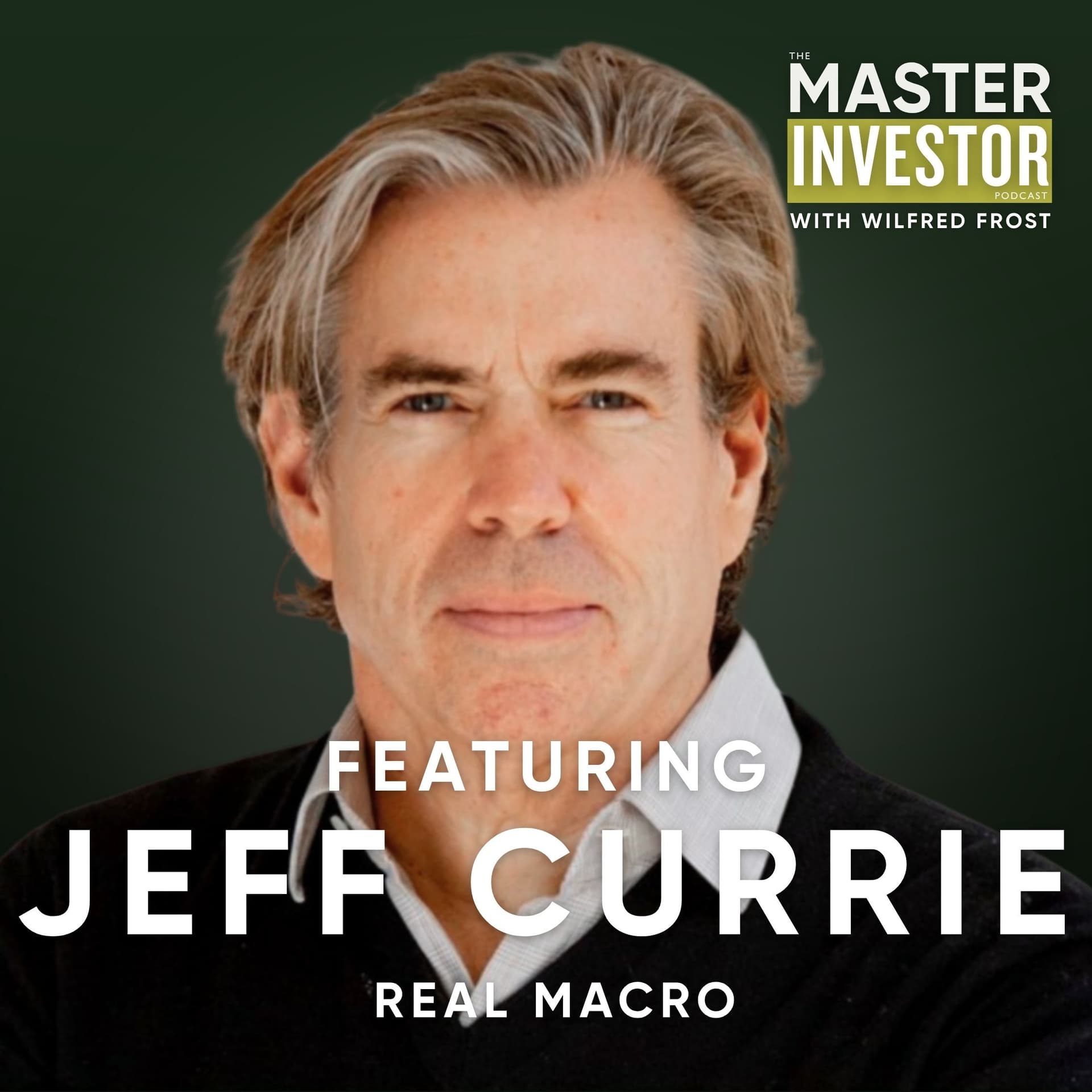
In short
The Master Investor Podcast: Episode Summary
Episode Title
Scott Bessent: Inside Trump’s Treasury; War Costs; & Why Bond Market is King
Host
Wilfred Frost
Guest
Scott Bessent, US Treasury Secretary and Global Macro Investor
---
Episode Overview In this episode, Wilfred Frost interviews Scott Bessent, a prominent figure in global finance and current US Treasury Secretary. The conversation covers a wide array of topics, including Bessent's investment philosophy, the current geopolitical climate, the implications of the Iranian conflict, and insights into the bond market's significance.
---
Key Topics Discussed
- Investment Philosophy
- Mindset for Success:
- Bessent emphasizes a healthy skepticism of elite opinion and the importance of anticipating market changes.
- Successful investing requires understanding that the consensus can be wrong and identifying mispriced predictions.
- Core Investment Principles:
- Know your risk tolerance and avoid being forced to sell at market lows.
- Stay engaged in the market, as conditions can change unexpectedly.
- Role as Treasury Secretary
- Guardian of the Bond Market:
- Bessent describes his role as ensuring the bond market operates transparently and resiliently.
- Markets are prioritized for their continuous functioning over mere volatility.
- Concerns Over Market Closure:
- The main risk lies not in volatility but in potential market closures, which inhibit price discovery.
- Geopolitical Context
- Iran Conflict:
- Discusses strategies to degrade Iran’s military capacity and the release of strategic reserves to stabilize oil prices.
- Highlights the significance of the Strait of Hormuz for oil shipping and potential military measures to ensure safety for tankers.
- International Relations:
- Reflects on America’s relationships with allies and the potential perception of "America first" leading to "America alone".
- Economic Considerations
- War Costs:
- Bessent provides insights into the fiscal implications of ongoing military activities, citing an estimated cost of $11 billion over a couple of weeks.
- Assures that America is in a strong position to manage these costs without jeopardizing financial stability.
- Tariffs and Trade:
- Detailing recent tariff investigations under Section 301, Bessent discusses how these are part of standard regulatory processes rather than punitive measures against allies.
- Personal Insights and Lessons
- Personal Experiences:
- Bessent shares anecdotes from his past, including lessons learned from being a lifeguard, emphasizing the importance of composure in crises.
- Discusses how unexpected life events shaped his career path towards finance.
- Market Predictions and Outlook
- Bond vs. Equity Markets:
- Bessent categorically states the bond market's vital role in the economic ecosystem, suggesting a need for continual monitoring and management.
- Long-term Economic Strategies:
- Offers opinions on potential shifts in Federal Reserve policy and the implications for US debt and inflation management.
---
Key Takeaways
- Understanding Risk: Investors must clearly define their risk tolerance and strategize accordingly to avoid forced selling during downturns.
- Market Dynamics: Continuous market operation is crucial; disruptions pose greater threats than mere fluctuations in prices.
- Policy and Politics: Bessent's experience highlights the complexities of balancing economic policy with geopolitical realities.
- Investment Adaptability: Successful investing often requires the ability to imagine alternative futures and the timing to act on those insights.
---
Closing Thoughts Scott Bessent's discussion provides a fascinating intersection of finance, geopolitics, and personal development, underlining the ever-changing landscape of global investment and the pivotal role of effective policymaking.
For the full video, visit [The Master Investor Podcast YouTube channel](https://www.youtube.com/@TheMasterInvestorPodcast).
---
Follow Wilfred Frost
- [Twitter](https://x.com/wilfredfrost?lang=en)
- [LinkedIn](https://www.linkedin.com/in/wilfred-frost-279667374/)
Sponsors
- BNY Investments
- Interactive Brokers - [ibkr.com/masterinvestor](http://ibkr.com/masterinvestor)
- London Stock Exchange Group (LSEG)
Disclaimer This podcast is for informational purposes only and does not constitute investment advice. Always consult a qualified financial advisor before making investment decisions.
Written by AI. May contain mistakes. Listen to the episode to check what was said.
Chapters
Tap a time to open that second in VOMarket Dynamics and Continuous Functioning
0:00 to 1:21
Understanding the importance of continuous market function amidst volatility.
“What's important is that they are continuous and functioning.”
Skepticism of Elite Institutions
1:40 to 3:17
Exploring Scott Bessent's views on market consensus and elite opinions.
“Please do remember the views expressed in this podcasts are for general information purposes only.”
The Importance of the Bond Market
3:17 to 4:40
Discussing why the bond market is crucial in economic stability.
“Well, I think in investing, it was always a guiding principle that the crowd is right 85 or 90 % of the time, and that's the momentum.”
Operational Concerns in the Bond Market
4:40 to 6:06
Bessent addresses potential operational issues within the bond market.
“And I guess with that healthy respect for the market that you have, you've brought that into your political role.”
Reflections on Career Choices
6:06 to 8:01
Bessent shares insights from his diverse career path and life lessons.
“What's important is that they are continuous and functioning.”
Key Aspects of Global Macro Investing
8:01 to 10:03
Unpacking the strategies for successful global macro investing.
“when we get into some of your views on different countries at the moment.”
The Yen Trade and Market Timing
10:14 to 14:00
Exploring Bessent's strategic yen trade and market timing insights.
“Let's dive into one of your famous trades, if we will.”
Transitioning from Investor to Policymaker
14:00 to 19:05
Exploration of the shift from investment strategies to policymaking and the new responsibilities that come with it.
“We picked up our conversation again a little over an hour later.”
Analyzing Current Energy and Economic Policies
19:39 to 27:48
An in-depth discussion on energy prices, military actions, and their economic implications.
“Just a quick reminder to please hit follow or subscribe on your podcast or video app so that you never miss an episode.”
U.S. Foreign Policy and its Global Impact
27:48 to 28:00
Insights on U.S. foreign policy actions towards Iran and Venezuela and their implications for global relations.
“Obviously, you're due to travel to meet the Chinese in Paris in the coming days.”
Show all 19 chapters
US Interests in Latin America
28:00 to 30:10
Explore the strategic shift in US relations with Latin American countries.
“Venezuela probably eased oil prices, whereas Iran's done the opposite.”
The Fed and Oil Prices
30:30 to 34:10
Discussion on the Federal Reserve's strategy regarding oil prices and inflation.
“Let's touch on the Fed and what the domestic policy should be long term, but in the short term.”
Comparing Central Banks
34:10 to 37:55
Comparison of the Federal Reserve and the Bank of England's roles and policies.
“All it requires is the governor to write the chancellor a letter and explain away why they haven't met the target.”
Treasury vs. Fed Chair
37:55 to 40:00
Insights into the roles of Treasury Secretary versus Fed Chair and their significance.
“So in terms of maintaining that in a fulsome way, there's a big national security component.”
US-UK Relations and Tariff Investigations
40:00 to 42:01
Exploring the current state of US-UK relations and recent tariff investigations.
“And I think that the main concern was the use of base Diego Garcia.”
Tariff Investigations and Global Alliances
42:01 to 46:00
Exploration of recent tariff investigations and their implications for global alliances.
“into that, you announced more tariff investigations yesterday under Section 301 of the 1974 Trade Act.”
America's Global Position and Economic Strength
46:01 to 48:42
Discussion on the current state of America's global leadership and economic strength.
“We're seeing what may be an international coalition in terms of the Straits of Hormuts.”
Investment and Career Advice from Scott Bessent
48:43 to 51:16
Scott Bessent shares valuable insights on investment strategies and career paths.
“And then the economy, the Europeans celebrated 0.3 % growth.”
Geopolitical Concerns and Future of the Middle East
51:17 to 52:10
Exploration of geopolitical dynamics in the Middle East and implications for U.S. policy.
“As I said, every day we are moving ahead of plan and Iran is degraded.”
Transcript
Automatic transcript. May contain errors.0:00Wilfred Frost:Markets go up and down. What's important is that they are continuous and functioning. In my 35, 40 year career, when people panic is when you're not able to have price discovery, when markets close, when there is the threat of gating, things like that. So we are just concerned that the market is continuously functioning, that there's a buyer, sellers, we can match them up.
0:28Scott Bessent:Is it your belief that the volume of ships going through the Strait of Hormuz will be
0:33Wilfred Frost:improving immediately from now? It is my belief that as soon as it is militarily possible, the U.S. Navy, perhaps with an international coalition, will be escorting vessels through. And that came up just now in the situation room? Your words, not mine. In terms of investing, I tell everyone you have to know what level of risk you're willing to take. You have to do what you're comfortable with and you just shouldn't get out over your skis. That's the main thing. You never want to have to sell at the bottom. You never want to find yourself chasing at the top. Is America out over skis in the Middle East right now?
1:17Scott Bessent:Absolutely not.
1:21Scott Bessent:Welcome to the Master Investor Podcast with me, Wilfrid Frost, where we celebrate and learn from the success of the greatest investors, business leaders, and politicians in the world, giving you, our listeners, the edge. The Master Investor Podcast is sponsored by BNY Investments, LSEG, and Interactive Brokers. Please do remember the views expressed in this podcasts are for general information purposes only. Nothing in the podcast constitutes a financial promotion, investment advice, or a personal recommendation. More on that in the show notes. My guest today is the single most important person in the world of global finance, the US Treasury Secretary Scott Besant.
2:03Scott Bessent:He's also one of the greatest investors around today. He was at fund management for 20 years in the 90s and 2000s, rising to be CIO, before founding his own hedge fund, Key Square, in 2015, amongst many other roles before his current one. Mr. Secretary, it's an honour to be here in the Treasury with you. Welcome to the Master Investor Podcast, and thank you for having me. Good, and welcome to the cash room. It's a fantastic room. You're telling me, the history used to host, in fact, inauguration balls for the president.
2:36Wilfred Frost:We did. We did. It was a much smaller affair there, but it's a grand room.
2:41Scott Bessent:It's certainly very spacious for a one-on-one interview. And it's, as I said, such a treat to be here. So much I want to get to, including your investment career and your current political role. Before diving into that, there was a quote in my preparation that you gave to the FT in October 2025 that really jumped out to me. You said, unlike most of my predecessors, I have a very healthy skepticism of elite institutions and elite opinion, whereas I think they didn't. But I have a healthy regard for the market. Is that a sort of guiding principle for you as you switched from investing to politics?
3:17Wilfred Frost:Well, I think in investing, it was always a guiding principle that the crowd is right 85 or 90 % of the time, and that's the momentum. But it's really that when things turn or when you could imagine a different outcome, then the consensus is when you can really make a lot of money. If we think back to impossible for a country to leave the exchange rate mechanism, there's unlimited support there. If we go back to the U.S. housing crisis in the 2000s, there was just this mantra, well, the U.S. has never experienced a down national housing market. So nothing to worry about. So I think that to the extent I've had success in my career, some of the really big successes have been taking the other side of elite opinion.
4:09Wilfred Frost:Japan can never change. They are mired in deflation and disinflation. The lost decades are going to continue. And I met this fellow called Abe and thought that he was a catalyst for change. So as a result, I'm always looking like, how could the consensus be wrong? How is the framing wrong? Where are we wrong here? Who would have believed, other than Ronald Reagan, that the Berlin Wall could come down?
4:40Scott Bessent:And I guess with that healthy respect for the market that you have, you've brought that into your political role. Which market is the most important? Is it ultimately the bond market that you have to respect the most?
4:54Wilfred Frost:It's ultimately the bond market. And the U.S. Treasury market is the deepest, most liquid, and most solid in the world. We manage it out of this building. And we are the guardians of the Treasury market. And we try to be very transparent. And we also try to make sure that the market itself is very resilient on an operational and a settlement basis, whether it was post-liberation day last year, whether it's during this Iranian conflict now, the market is smoothly functioning, settling well. So we are very concerned about it at all times.
5:40Scott Bessent:In your time as Treasury Secretary, how many times has the bond market given you pause for thought at least, or given you a little worried? Just in April last year, was that a moment? January a bit this year?
5:51Wilfred Frost:No, no, no. What I was saying is that that's when there could have been operational difficulties. I think about the bond market every day. I've been -
6:01Scott Bessent:And there's no moments when it scared you in your time as Treasury Secretary, the movements?
6:04Wilfred Frost:No, no, no, no. Because, again, markets go up and down. What's important is that they are continuous and functioning. In my 35, 40-year career, when people panic is when you're not able to have price discovery, when markets close, when there is the threat of gating, things like that. So we are just concerned that the market is continuously functioning, that there's a buyer, sellers, we can match them up.
6:36Scott Bessent:I'm diving into the background of your career a bit more. I'd learnt in my preparation, you've thought about being a lifeguard. You thought about being a computer scientist and a journalist. Obviously, you went into finance and started as a banks analyst at Brown Brothers, which I hadn't previously been aware of. I love that having been the lead banks reporter at CNBC. Settled on global macro investing. Yeah, I will point out I was a lifeguard. You were a lifeguard, sorry. Yeah, I was a lifeguard. But did you nearly do it long term? No, no, no, no.
7:07Wilfred Frost:That wasn't a long term career. You age out pretty quickly, both because of the physical and the sun. Well, either way, I hadn't been aware of the fact that you were a lifeguard. One thing you learn as a lifeguard, drowning people will try to pull you down.
7:24Scott Bessent:Wow. Wow. And has that been a metaphor that has come into your investing life or your political life? Oh, sure.
7:32Wilfred Frost:Sure. Both. Both. Where in politics is it? Well, sometimes when a drowning person is trying to pull you down, sometimes you have to give them a little nudge to be able to save them. But still ultimately always committed to saving them. Always committed to getting things to shore. and many drowning people can just be saved by being stand up. So a lot of times people are panicked in the water.
8:00Scott Bessent:Well, I'm looking forward to getting in, maybe coming back to that metaphor when we get into some of your views on different countries at the moment. Dwelling on being a global macro investor, you alluded to this a tiny bit in your first answer, but I've heard you talk about it before where you need, as a macro global, particularly investor, you have to be able to predict what's going to happen in the world. But really importantly, to make money, you have to identify when those predictions are also mispriced. Is that the key aspect to make money?
8:31Wilfred Frost:Exactly. I found, everyone asks me, well, what do you think got you ready for your career? And I go all the way back to my childhood, because I mentioned it in interviews before, my father was an incredible collector of science fiction novels and probably the largest collection in South Carolina not a high bar but you know he'd read those to me as a child I always say like I could point to Alpha Centauri on a map before I could Chicago so but with that a lot you have to be able to like imagine different worlds and with finance could you imagine a different state of the world you know what the legendary macro investor Bruce Kovner is quoted many times as saying I have the ability to imagine a different state of the world and believe it could happen so I think the question you're asking is like can you imagine a different state of the world and then you're also trying to predict the when, like when, why, how, and then how would you implement it?
10:03Scott Bessent:IBKR. Learn more at ibkr.com forward slash master investor.
10:14Scott Bessent:Let's dive into one of your famous trades, if we will. You mentioned ERM, but I kind of was more interested actually in your yen trade. 2010s to early 2020s, the yen was very strong. It was below or so. What did you see in the 2011 or 12, whenever it was you started the trade? What did you see then that others didn't see?
10:42Wilfred Frost:Well, and this goes back to timing, that I think in psychology, a big psychological bias is called endowment bias. So you've worked on something, so you want to implement it. And I think one of the strengths my team and I have always had is the ability to put something back on the shelf, do an immense amount of work, and then just say, now is not the time. And it was that with the Japanese yen. I think I went to Japan the first time in 1990. So I was there plus or minus six, nine months for the peak in the Nikkei. I lived at the Okoro Hotel, I think for three months. Imagine 1990, the price was about$500 a night.
11:32Wilfred Frost:In 2011, it was$350 a night. So that told you about the malaise there. So I'm very familiar with Japan. I'd seen the up, I saw the down, then I saw the stasis for a long time. And in 2011, right after Fukushima, terrible tragedy, tsunami, tidal wave, near nuclear meltdown, easy to remember. It's 3-11-11 when that happened. And I thought, well, maybe there's a catalyst here because the Japanese government demanded that the nuclear reactors be switched off. So if one was thinking of being short the yen, you were pushing against a very, very large current account surplus, about 3 % of GDP. But when the Japanese switched off the nuclear reactors, they had to start importing more fossil fuels.
12:37Wilfred Frost:And it took the current account to a deficit. But nothing really happened. And the end was kind of bouncing around between 78, 82, and 83. And then a contact in Japan, a great fellow, Funabashi-san, Japanese journalist, thinker, policy person, called and said, there's this fellow called Abe. He had been the prime minister before. He's going to come back. I think he could be the prime minister. and he's going to campaign on restoring the Japanese economy, economic strength, his national strength, and on a reflationary platform. And then kind of everything fell into line because I believe there were three board seats opening on the Bank of Japan.
13:27Wilfred Frost:Bank of Japan had been a group of deflationists or disinflationists. So prime minister was going to have the opportunity to reconstitute the board, including the governor. So everything fell into lines. Sorry, President wants to be very white. Oh, okay. Okay.
13:51Scott Bessent:Well, as you heard there, we were interrupted as the secretary was pulled away by the president to join him in the Situation Room in the White House. We picked up our conversation again a little over an hour later. Mr. Secretary, I have to say, it's a first, I'm sure a last as well, that an interviewee has been pulled away to go to the Situation Room. How was the president? Was he stressed?
14:17Wilfred Frost:No, the president is in great spirits. The Iranian mission is proceeding well ahead of schedule. And I have to tell you, Wilf, that I'm a teenager who's considering military service, and I could give this team my highest compliment from President Trump to the head of the Joint Chiefs to the Secretary of War. I would say that I would trust my child's life in their hands.
14:50Scott Bessent:Well, your child sounds like a brave person, Mr. Secretary. And we want to come to all of those details in a couple moments. But if I may, I want to pick up to where we were, which you just explained your successful trade on the yen and how you bought into the policies that Abe was going to deliver and what it would do to the market. I was really struck by something I heard you say on the Capital Allocators podcast in November 2024. You said that your boss then, George Soros, asked you about whether Abenomics and the policies would work for Japan and the economy. And you said this, you said, I have no idea, but it will be the market ride of a lifetime.
15:32Scott Bessent:Of course, you're right. You made a lot of money in that trade. I guess now you've switched from investor to policymaker, judging actually whether a policy will deliver or not, as opposed to how things are priced, is all that matters.
15:46Wilfred Frost:Well, and to circle back with the Japanese, the Abenomics, all three arrows, have been a fantastic success. So it started out as a market success, and then over time, like with all things Japanese, they were very deliberate and probably took a little more time than Westerners would have liked. But the things that they've done to restructure the economy, restructure the investment environment in terms of bringing up shareholders' rights, return on capital, what they call womenomics, bringing women into the workforce. There's now mobility among labor in terms of people switching jobs. So they've done a fantastic job of restructuring the economy.
16:35Scott Bessent:And now, in your role as a policymaker rather than as an investor, do you have to ignore what the market is pricing and focus on what will actually deliver?
16:48Wilfred Frost:No, I still find information, that there is information value in the market sometimes. But what I'm trying to do is for, quote, 30, 35 years, my job was to have my ear up against the door where the policymakers were meeting, maybe try to lift myself the transom and figure out what they were going to do. Now that I'm in the room, we try to figure out what can be done, what should be done, what will be done, and then how will the economy and the market react. And whenever I'm out speaking during a policy time, whether post-liberation day or on the economy in general, now with the Iranian conflict, what I try to do is think about if I were sitting in my old seat as a policy person, what guidance can I give to the market, to the US population, to other policymakers around the world to give good framing for what we're doing without giving away any material non-public information.
17:58Scott Bessent:Was the transition hard from unbelievably successful, wealthy investor, your own boss, to having a boss again?
18:07Wilfred Frost:Well, you got to remember for most of my career, I worked with Stan Druckenmiller, and he was really my mentor. And we have a great group with the cabinet. And I think that especially in stress times like this people have really come together. I just came from the Situation Room and we have a series of morning meetings and everyone, I thought the cabinet was performing at a very high level, everyone has stepped up that level unbelievably. So I would say in a way I I was training for this job for a long time because before, when I went to the G7 or the G20 meetings, I know the central bankers. I knew the finance ministers just before I was someone who they were trying to placate as an investor.
19:05Wilfred Frost:Now I'm speaking to them as a peer and a colleague.
19:14Scott Bessent:This episode of the Master Investor Podcast is brought to you by LSEG, the leading global financial markets, infrastructure, data and analytics provider. To learn more about how LSEG connects businesses, investors and markets worldwide, visit lseg.com.
19:38Scott Bessent:Hi guys, it's Wilf. I hope you're enjoying this episode. Just a quick reminder to please hit follow or subscribe on your podcast or video app so that you never miss an episode. And if you've got time, please do give us a five-star rating and leave us a comment. It really helps other people find the podcast too. Now, back to the episode. Let's touch about what I'm sure you were discussing in the Situation Room, details that I'm sure came up. WTI is obviously around $94,$95 as we're recording. It started the year under$60, briefly peaked at$114,$115 earlier this week. What level is too much for the US economy to take?
Read the full transcript
20:20Wilfred Frost:Well, I don't think it's the The level, I think it's probably the duration. If you recall, even in 2008, we had the record spike up to, I believe - 140 something. 147. So I think it's the duration. And I think that President Trump's energy policies have insulated the US quite a bit. We're record liquids production with both crude and natural gas. Natural gas prices have been little affected, and a lot of that goes into the energy, the household bills. So, and again, the president is focused on his mission of wiping out the Iranian missile capabilities, their manufacturing capabilities, their air force, their navy, and their ability to project power beyond their borders and to cut off the head of the snake as the leading architect of global terrorism.
21:29Scott Bessent:ED HARRISON You've obviously pledged to help in the insurance process for ships with Lloyds of London pausing on that detail. Big announcements in the last 24 hours about releases from strategic reserves from both the IAEA and you as well. It hasn't worked in the short term on oil prices.
21:46Wilfred Frost:MARK BLYTH Well, no, no, no. Let's back up. The market lives in the future. So we got the oil spike on Sunday night. and I think maybe at one point we were up about$30. And then overnight, the FT published that the IEA was considering a 300 to 400 million barrel release. And then we had the biggest single reversal in one day history that day. So it was already priced in. So we had a G7 finance ministers meeting on Monday where it was discussed, energy meeting, ministers meeting yesterday, and then, excuse me, Tuesday. And then yesterday, I was in the Oval with the president for the leaders meeting, and the leaders confirmed that it would, in fact, be a 400 million barrel release, which is the largest in history.
22:38Scott Bessent:Yeah, I fully accept that. The news of a potential release brought prices down from their peak, but clearly we're still up 50 % or so from where we started the year. I guess my point is, are you starting to think, if this does keep persisting as it is, that the Navy has to go into the Strait of Hormuz to help ships get through, which would have a big effect?
23:02Wilfred Frost:Look, that was always in our planning, that there's a chance that U.S. Navy or perhaps an international coalition will be escorting oil tankers through. There are in fact tankers coming through now, Iranian tankers, I believe some Chinese flag tankers have come through. So we know that they have not mined the straits.
23:27Scott Bessent:And was that what you were just discussing in the situation room?
23:30Wilfred Frost:We were discussing a plethora of things.
23:32Scott Bessent:And is it your belief that the volume of ships going through the Strait of Hormuz will be improving immediately from now?
23:41Wilfred Frost:It is my belief that as soon as it is militarily possible, the U.S. Navy, perhaps with an international coalition, will be escorting vessels through. And that came up just now in this situation? Your words, not mine. But again, we've been planning for this. We've done scenario analysis for months, for weeks. leading into this. But it's a prospect in the coming days then? It is a prospect as soon as we have complete control of the skies and are degrading their, they have no air force, the Navy is sunk literally and figuratively, and the munitions factories, the rebuilding capabilities for the missiles, they completely degraded.
24:42Wilfred Frost:So as soon as it is possible for safe patch to ensure safe passage, we will do it. And, you know, again, with the DFC insurance product, this was something that we had already anticipated. And because Lloyd's does call force majeure and the policies drop away. So we think that 20 billion in insurance for tankers going into and out of the Gulf will be enough to insure a circular insurance program.
25:19Scott Bessent:And tons more to get to on your policy long term, a couple more in this area, if I may. What is the running cost at the moment of this war? A billion a day? 10 billion a day?
25:31Wilfred Frost:Again, I'm not keeping the running costs because in the US, we separate Treasury from OMB. So that's why I'm the Treasury Secretary, not the Finance Minister. Paul Park. Well, a number came out today, and the public number that was released today was about 11 billion thus far.
25:50Scott Bessent:Thus far? Thus far. Over a couple of weeks. And how long, as you look long-term at America's finances, how long are you planning for this conflict to continue for?
26:04Wilfred Frost:Again,$11 billion is a lot of money, but we have cushions built in, and it's not something that we have to worry about over this horizon.
26:18Scott Bessent:There's no chance you could be knocking on the president's door to say, we have to pause on this, we can't afford it.
26:22Wilfred Frost:Oh, absolutely not. Absolutely not. What we've seen last year was continued and increasing foreign interest in US Treasuries. US Treasuries had their best year since 2022. And we were the only G7 bond market with lower yields last year on the 10-year.
26:46Scott Bessent:And just finally on this, you issued a 30-day waiver on Indian refiners who had been prevented from buying Russian oil. They got a 30-day waiver on that. Is it a matter of regret to you that Russia is benefiting from this conflict?
27:05Wilfred Frost:Well, again, I think it's an inevitability. And that's why we gave a 30-day waiver, because the Russian barrels are on the water. And it is a quick source for the Indian refineries. The other way to think about it is those barrels are going to end up in China anyway. So. But is it a shame that Russia benefits? Sorry, again, that it is unfortunate, and we hope that it will be in a micro period that they will benefit.
27:48Scott Bessent:Let's touch on China next then. Obviously, you're due to travel to meet the Chinese in Paris in the coming days. A lot of people look at some of the US foreign policy actions and wonder how you connect the dots. Venezuela probably eased oil prices, whereas Iran's done the opposite. But is one thing that links them that China suffers from US action both in Venezuela and in Iran? And was that part of the design of the action?
28:15Wilfred Frost:Well, nothing was done with China in mind. We're looking after US interest. With US interest, we had a near-failed narco state in the Western Hemisphere. President Trump has made it clear that we want to protect our neighborhood. We have a substantial movement that over the past few years of our Latin American neighbors, many from very far left, Bolivia, Chile, back to center -right, maybe far-right governments who want to embrace market principles and want to be allies of the U.S. So I went down to Argentina last spring and because I was in a U.S. government aircraft, we had to fly around Bolivia because Bolivia had closed U.S.
29:03Wilfred Frost:airspace, their airspace to U.S. military aircraft. Now Bolivia is our ally. Chile had briefly gone far left. Now that they are right, the president-elect has already said that he wants to be an ally of the US again. I think this is a generational opportunity in the Western Hemisphere to show the benefits of being allies with the US, both militarily, economically. And I would go back, Iran, that the military operation here was to keep them from being able to ring fence with their missile capabilities, the ability to create an atomic weapon inside of Iran, because what is being done now, imagine if Iran had had two or three times these armaments in a year or 18 months.
30:09Scott Bessent:This episode of the Master Investor Podcast with Wilfrid Frost is sponsored by BMY Investments, a trusted partner for many delivering financial solutions to investors and institutions worldwide. This sponsorship does not constitute financial advice.
30:31Scott Bessent:Let's touch on the Fed and what the domestic policy should be long term, but in the short term. Does the situation with the oil price change your outlook of how soon they should be easing?
30:46Wilfred Frost:Again, there's a balance here. I think the Fed is worried about maybe the energy component triggering inflationary expectations. On the other hand, it'll be the duration here to see how much it slows the economy. And is that slowdown permanent? Or is it just potential energy that can turn into kinetic energy within the economy? And we will bounce back quickly after that. And the other thing that I think is important to know here is that if the oil price was below 60 at the beginning of the year, once this conflict is over and resolved in favor of the US, I think there's a chance we can move to a substantially lower oil price regime over the medium term.
31:36Scott Bessent:A different question as it relates to the Fed. I mean, this is hypothetical. But if we were in a scenario, I mean, I think if you look at the US long bond yields, you've done a remarkable job in light of a lot of challenges, medium and short term, in keeping long yields down. And your debt management has been down to that, more short term issuance. If you were hypothetically in a situation where the Fed had to hike rates, would you issue more long debt again instead?
32:07Wilfred Frost:Again, we are collaborating with the Fed in terms of Treasury handles debt management. I think what you're asking, would the Fed maybe go back to QE? I don't know. That's their decision. But I think we're such a long way from that, it's not even worth talking about. Let's talk more long term about the Fed.
32:33Scott Bessent:You are an Anglophile. We'll maybe come to that. You've spent a lot of time in the UK. Do you admire the Bank of England model more than the model you have here? And there's a couple of things to point to there. Well, you're going to jump in.
32:46Wilfred Frost:Well, again, they're very different institutions that the Fed wears many hats. And the Fed is a much bigger, much more sprawling organization with the regional banks, with regional bank presidents. The board is much bigger and then that gets constrained into voters. The Bank of England has separated, there's a Monetary Policy Committee, then there's an Operating Committee, only the governor is on both. We call upon our Fed to do a lot in terms of monetary policy, in terms of regulatory policy, and then just this sprawling organization
33:34Scott Bessent:I guess there's a couple things in mind that I was particularly pointing to. One is the Bank of England directly reports to the Chancellor and to the government as opposed to the legislature. For extraordinary measures like QE, the Chancellor of the Shekha actually has to approve that, even though it's assumed that they will automatically. And the inflation target is actually a range, 2 % plus or minus 1. Are those factors, sort of factors you'd like to embrace?
34:03Wilfred Frost:Well, if we work backwards there, there is an inflation target. And I don't know how many letters. All it requires is the governor to write the chancellor a letter and explain away why they haven't met the target. And look, I'm old enough to remember too, when the chancellor actually set the rate. And I believe - Before 1997. Yep. And it was both. And same with the Bank of Japan. So, Bank of Japan and Bank of England actually separated themselves from the government at the latest point.
34:40Scott Bessent:And is those kind of things you'd like to move back towards?
34:43Wilfred Frost:No, no, no, no, not at all. And in terms of QE, I actually believe that the Bank of England's QE policy was better than the Fed's because I think extraordinary measures should only happen in extraordinary times. And the Bank of England stepped in. I think they've stepped in twice in the past few years. Once during the early days of COVID. I don't remember the exact timing, but let's say March, April, maybe May, and stabilized the smooth operation of the gilt market. And then they moved away. The Fed continued buying for years afterwards. And I believe that that's one of the things that got us the great inflation, 22 and 23.
35:31Wilfred Frost:I wanted to touch on gold.
35:34Scott Bessent:The US has a lot of gold, but it's valued at a price that has long since outdated,$42 an ounce, and we're currently at 5 ,000 plus. I know you and Kevin Walsh have ideas around reducing the size of the Fed balance sheet, but you also don't want to create a liquidity crisis. this, would revaluing the gold and at the same time sterilizing that provide an opportunity to sell off the assets you don't want without creating a liquidity crisis?
36:02Wilfred Frost:No, I think those are very, very independent. I think if you're thinking about changing the balance sheet, I think that well in the future, the Fed would have to signal that well in advance. And if they move from one regime to another in terms of reserves, that's going to take time. And I think we're also going to have to step back and look at how has banking regulation since the GFC affected the size of the balance sheet in terms of the interbank market, in terms of the necessity for the Fed to hold reserves as opposed to a skinnier reserve model where the banks got their reserves from one another.
36:49Scott Bessent:In terms of the Fed, you turned down the role of Fed Chair, wanted to stay as Treasury Secretary. Why is Treasury Secretary a better job?
36:58Wilfred Frost:Well, you have a musical that was written about the first Treasury Secretary. There's never been a musical about a Fed Chair. I'd like it. I'm not sure many people would. Look, I enjoy the interaction with the cabinet. And Fed Chair is a different kind of public service. I've wanted to do public service since I was a young person and this is you're really in it. You get called to the Situation Room, you're part of the cabinet, you're part of the policy making agenda. You know, I think of the Federal Reserve really as kind of guardians of the dollar, the reserve policy, and maybe I'd like to do it in the future, but I think now we're in an extraordinary moment.
37:45Wilfred Frost:There's so many things that need to be done by the Treasury Secretary to ensure dollar dominance, to ensure that one thing we haven't talked about is this building runs the sanctions regime. So in terms of maintaining that in a fulsome way, there's a big national security component. And then in terms of managing the debt and how do we think about that interacting with the Congress for the future.
38:14Scott Bessent:I want to come to all of that in a second. One final question on markets, which is private credit's getting a lot of focus at the moment. We've spoken about the importance of the bond market. We've spoken about stepping into the oil market with the release. If there's problems that unfold in private credit, is that on those people that have exposure there? If they enjoyed the upside when it was going well, do they have to take the downside?
38:38Wilfred Frost:Well, that's why it's called the shadow banking system. It's not the banking system. So, you know, my area of concern is how does, and I don't mean that I am concerned, but what I'm responsible for is how does this shadow banking system interact with the regulated banking system, with the regulated insurance industry? And again, we're seeing, to use a Britishism, some wobbles. And, you know, as we see these wobbles here, there's nothing that tells me that shadow banking is having a systemic problem. But we are monitoring any relationships between the regulated entities.
39:24Scott Bessent:Let's move on to the special relationship and developments there. We've touched on this already. You've lived in the UK before for many years, still go back there a lot. President Trump said last week he's not happy with the UK. He said Keir Starmer is no Winston Churchill. You were speaking about that and what he said in the Oval Office about Spain and the UK last week. And you said that Spain had put American lives at risk. Did Keir Starmer do the same?
39:58Wilfred Frost:Again, that we delayed being able to fully implement the military plan. And I think that the main concern was the use of base Diego Garcia. And the U.S. B-2s had to do a 37-hour round trip rather than, I think it's about a three, three and a half hour round trip. So, you know, to the end, you know, constantly refueling over. So, you know, I think any delay, you know, causes an increase in risk. And again, you know, President Trump is the commander in chief of the U.S. forces. And, you know, again, being in the situation room with him, that he so solemnly takes that leadership role in terms of his commitment to maintaining the lives of our service people, that anything that upsets that upsets him.
41:04Wilfred Frost:And I think that's what got the very strong reaction.
41:06Scott Bessent:And but just to clarify, you said of the Spanish, anything that slows down our ability to engage puts American lives at risk. The Spanish put American lives at risk. So did the UK do that, too?
41:18Wilfred Frost:Again, I think we have a great historical relationship, and I think we'll get it back on track.
41:25Scott Bessent:How unhappy is President Trump with Prime Minister Stalman right now? Yeah.
41:32Wilfred Frost:Again, belatedly, the prime minister offered to put resources in the region. I believe that there are resources in the region. And we have a long-term relationship. There will be some bumps in the road. I think we will eventually get back on track.
41:52Scott Bessent:Have you heard any discussions of the King and Queen's visit due in the spring being canceled? Not at all. In terms of relations more broadly over the last year, year and a half, and trade coming into that, you announced more tariff investigations yesterday under Section 301 of the 1974 Trade Act. Targeted countries like the EU, a group of the EU, Switzerland, Singapore, Korea, Norway, the list goes on. A lot of allies there. Interesting timing, given that you're at war. Is now not a moment where you want to make sure all of your allies are onside?
42:31Wilfred Frost:Well, look, I think if going back to the tariff level that we previously had is going to take an ally offside, then they weren't allies. And we're operating now with a global 10 % tariff. And I can tell you that the allies and all the countries that have done the trade deals with us have all come and said, we like our trade deal. We want to stick with that. So I think this is a good opportunity for me to explain any misperception about these investigations. These investigations are part of the normal course of business. The Supreme Court ruled that the president does not have the ability to use IEPA tariffs, the emergency power.
43:17Wilfred Frost:to apply tariffs. But the Section 301s, which President Trump used in his first term, has been challenged more than 4 ,000 times in court. So all we're doing is reconstructing the tariffs under a different authority that I would expect that everyone just goes back to the deal they had within the 150 days that we're allowed to use the Section 122 tariffs.
43:43Scott Bessent:So yes, there was Section 301. Section 122, would that mean that the UK is going to go up from 10 % to 15 %?
43:52Wilfred Frost:Again, Section 122 right now is still at 10.
43:55Scott Bessent:It's still at 10. I guess the broad point, you're saying that it's putting tariffs back to where they were, but not to where they were a few years ago for allies, and an interesting time in the middle of trying to get people on side. I guess when you've had these conversations with G7 finance ministers in the last week to coordinate policy on strategic reserves of oil and petroleum, did you approach that thinking it would have been more helpful to have a more friendly, conciliatory relationship with those people?
44:30Wilfred Frost:So again, everyone knew we had telegraphed well in advance that since the Supreme Court hearing that we believe that the Supreme Court will rule in our favor. But in case it doesn't be advised, this is how we are going to do it. So we've had a substantial communications policy in advance. We told everyone this is how we will reconstruct the tariff wall. and I think everyone's well-braked and well aware of it.
45:01Scott Bessent:I guess in the last week or two, we've been reminded of US policy that might be taking a step forwards without allies necessarily all coming on board. We talked about the clashes with Keir Starmer. I've heard you say very often, and the President said too, that America first doesn't mean America alone. That is your intention and your aim from all of your policies. Do you ever have conversations with your counterparts that makes you worried that that choice won't be available to you? That America alone is starting to be how they see the actions that you're taking?
45:39Wilfred Frost:Well, I think you're seeing, as I said, I was in the Oval Office for the G7 leaders call. And the G7 leaders were all pretty much rallying around what the U.S. is doing, congratulating us for taking out this Iranian cancer on the world. And they're more concerned about how does it proceed. We're seeing what may be an international coalition in terms of the Straits of Hormuts. That many countries have offered their minesweepers should it be necessary for detection. And the other thing too, because I don't think in terms of our allies, there's anyone in the world who wanted the Iranian regime as it currently was constituted and the power it projected to continue.
46:34Wilfred Frost:What we're also seeing too is the Arab nations that in the Gulf, they are shocked by the Iranian attack on them. And I think that they've gotten a rude awakening that imagine an Iran that was two or three times stronger than they were 12 or 14 days ago on February 28th.
46:58Scott Bessent:As we start to wrap up, Mr. Secretary, I know we're nearly out of time. You've described in the past your old boss, your old mentor, Stan Druckenmiller, as the best investor you've ever worked with. And I think you've described Warren Buffett as the best stock picker you've ever worked with. And you've reflected, I think, on the past on his two rules of investing. Number one being don't lose money. Number two being don't forget rule number one. And spoken about how you have to earn the right to be able to take risk. You have to stay in the game. Based on how big your chip stack is, you'll make different decisions.
47:35Scott Bessent:Is it fair to say that the size of America's chip stack today is smaller than it was a decade or two ago?
47:44Wilfred Frost:No, I would think it's the opposite. That I think we have this leadership. We have an energy dominance. That if we've been where we were a few decades ago in terms of importing energy as opposed to exporting energy. We have this technological lead, we have this military lead. Our military, before President Trump came in in the first term, was substantially run down. And you were talking about China earlier. And if I think, what are the three things that China envies the US for? It's our military. I think our military is more powerful and more lethal and more respected than it's ever been. I think that our technology, that the US leads the world, and we just keep pulling away.
48:33Wilfred Frost:That now with this AI boom, we're going to have over 70 or 80 % of all the compute in the world up from 40 or 50 a few years ago is going to be in the US. And then the economy, the Europeans celebrated 0.3 % growth. I don't think we celebrate that.
48:52Scott Bessent:Well, I didn't say the UK.
48:54Wilfred Frost:The EU celebrated 0.3 % growth. It was better than expected. And I think once things get back to normal after this conflict, that the US is going to grow at 3%, so 10x.
49:10Scott Bessent:I guess the debt is higher. The oil reserves suddenly lower.
49:15Wilfred Frost:But the debt to GDP, which is important, deficit to GDP, debt to GDP, is higher everywhere in the world. That's a post-GFC fact. That is a post-COVID fact. So in terms of relative strength, I think we're much better shaped.
49:35Scott Bessent:As we do wrap up, final questions for you, Mr. Secretary. This is something we ask everyone on the Master Investor podcast, which is, as you know from intro, I like to try and give our listeners an edge. And to wrap up, what is the overriding piece of investment advice you have for our listeners? We often ask for career advice too, and you're more than qualified to cover both topics for us.
49:58Wilfred Frost:Well, I'll do the career advice first. Career advice, you never know what's going to happen. You never know what's going to happen. I started out Yale 1980. I didn't know journalists, computer scientists, computer. I think you're too young to remember, computers used to have these cumbersome things called punch cards. And when I got to Yale, we just switched to screens. And so being a computer scientist was miserable. I didn't become editor of the Yale Daily News, which was the best thing I ever lost. But I did an internship in finance and realize that the quantitative side and the qualitative side, the quantitative side of the computing, qualitative side of a narrative is actually what the investment business is all about.
50:50Wilfred Frost:You think about scenarios and then can you prove it? And then in terms of investing, I tell everyone you have to know what level of risk you're willing to take. You have to do what you're comfortable with and you just shouldn't get out over your skis. That's the main thing. You never want to have to sell at the bottom. You never want to find yourself like chasing at the top. Is America out over its skis in the Middle East right now? Absolutely not. As I said, every day we are moving ahead of plan and Iran is degraded. There was a message from the bunker from the new Ayatollah. We haven't seen him, so let's see if we see him.
51:42Wilfred Frost:You're suggesting he's no longer alive? Is he a compass menace? Is he injured? Is he under threat from the other members of the regime?
51:55Scott Bessent:Do you think regime change is on the cards in the days ahead then?
52:00Wilfred Frost:And again, our goals are the three that I talked about. But once these things go in motion, you never know what's going to happen. They take on a life of their own beneath the surface.
52:12Scott Bessent:I can see we're very much out of time, Mr. Secretary. I really do appreciate all of your time in Canada today, not least because, as you proved in the middle of the interview, we know how busy you are now more than ever, Mr. Secretary. Thank you so much for joining us. Good to see you. The Master Investor Podcast is sponsored by BNY Investments, LSEG and Interactive Brokers. Please do remember the views expressed in this podcast are for general information purposes only. Nothing in the podcast constitutes a financial promotion, investment advice or a personal recommendation. More on that in the show notes.
52:50Scott Bessent:This podcast is produced by Paradigm Productions and Master Investor Limited in association with Birdline Media. If you've enjoyed the show, please do subscribe on YouTube or click follow on your podcast platform and you'll be automatically notified each time a new episode drops.
From the publisher
Scott Bessent, US Treasury Secretary and one of the most successful global macro investors of his generation, joins Wilfred Frost in the Cash Room at the Treasury for a rare, wide-ranging conversation that bridges markets, geopolitics and public service. In a gripping real-time interruption, Secretary Bessent is called to the Situation Room by President Trump in the middle of the interview, then returns to detail the administration’s response to the Iran war and the market turmoil it is creating.
They start with the mindset that powered Bessent’s decades of outperformance at Soros Fund Management and his own firm Key Square: a healthy scepticism of elite opinion, the discipline to wait years for the right catalyst, and the ability to “imagine a different state of the world” – from betting against the ERM to riding the yen from sub-80 to 150 after spotting the policy and current-account shifts behind Abenomics. He explains how that same framework now shapes his decisions as Treasury Secretary, what it means to be “guardian of the bond market,” and why the true risk is not volatility but markets closing altogether.
On the Iranian conflict he covers the goals of degrading Iran’s military capacity, the record 400-million-barrel strategic reserve release, contingency plans for escorting tankers through the Strait of Hormuz, and how he thinks about oil price spikes in terms of duration rather than level. He also sets out America’s approach to tariffs, sanctions and the “shadow banking” system, including how Section 301 is being used post–Supreme Court ruling and why private credit stresses matter only when they infect the regulated core banking system.
Along the way, Bessent reflects on the previously-special relationship with the UK, the G7’s behind-the-scenes response to the war, and whether “America first” risks becoming “America alone” in the eyes of allies. He compares the Fed and Bank of England models, discusses gold, QE and balance-sheet policy, and explains why he turned down the Fed chair job to stay at Treasury during what he calls an extraordinary moment for US dollar dominance and energy, military and technology leadership.
The episode closes with personal lessons: what lifeguarding taught him about crises and crowds, how a failed dream to edit the Yale Daily News nudged him into finance, and his core advice for investors – know your risk tolerance, stay in the game, avoid being forced to sell at the bottom, and remember that in both careers and markets “you never know what’s going to happen.”
You can watch the full video on The Master Investor Podcast YouTube channel
And follow @WilfredFrost on X and Linked In
Sponsored by BNY Investments, Interactive Brokers - ibkr.com/masterinvestor and London Stock Exchange Group (LSEG).
The Master Investor Podcast is produced by Paradine Productions, Master Investor Ltd in association with Bird Lime Media.
This podcast is for information purposes only. It does not constitute an invitation or inducement to engage in any investment activity. It is not a financial promotion as defined under section 21 of the Financial Services and Markets Act 2000 (FSMA). The views expressed by the presenter of this podcast are those of the presenter and are provided in the course of journalism. This podcast benefits from the exemption under Article 20 of the Financial Services and Markets Act 2000 (Financial Promotion) Order 2005 (FPO), It does not require approval by a person authorised under the FSMA. Generic information, not identifying any specific investment, fund, provider or service, about a class of investments such as shares, bonds, derivatives and cryptoassets, might be provided and/or discussed during this podcast. Such discussion falls within the generic promotions exemption (Article 17 of the FPO). Such discussion is not a financial promotion requiring approval by an authorised person under section 21 of the FSMA. Investing involves risk. You should consult a suitably qualified adviser who can assess your individual circumstances before making any investment decision.