In short
The Master Investor Podcast: Episode Summary
Episode Title
Tectonic Shift or Head Fake? Cameron Dawson on the Market’s Next Move
Host
Wilfred Frost
Guest
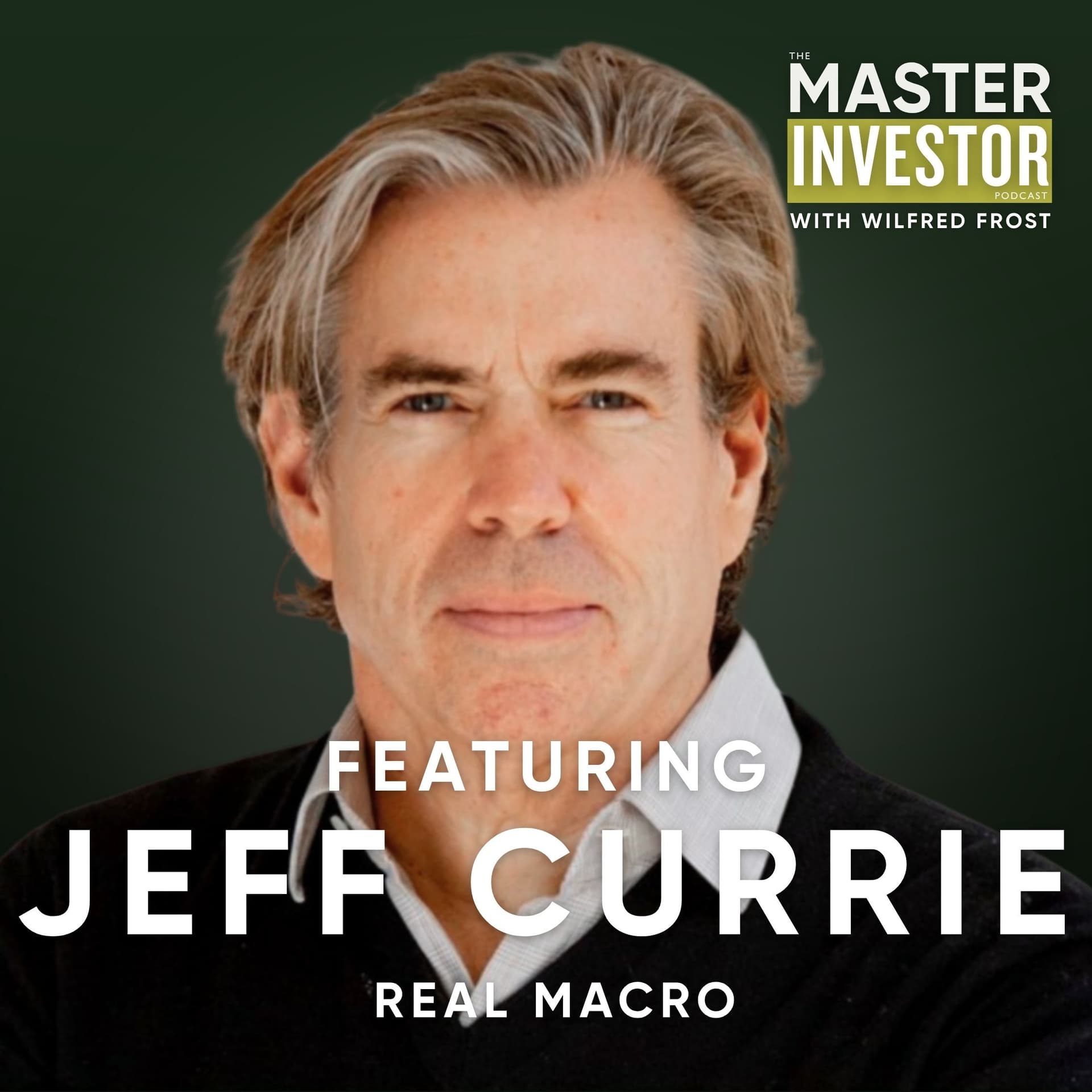
Cameron Dawson, Chief Investment Officer at NewEdge Wealth
---
Episode Overview In this episode, Cameron Dawson joins Wilfred Frost to discuss the recent market rotation away from mega-cap growth stocks, exploring whether this indicates a fundamental "tectonic shift" or simply a counter-trend rally. Dawson analyzes historical market behaviors, the current economic landscape, and the implications for growth versus value investing.
---
Key Topics Discussed
Market Rotation
- Current Environment: The market has seen strong rotations since November, shifting from tech dominance to value sectors like energy, industrials, and financials.
- Valuation Dynamics:
- Growth stocks were previously trading at a significant premium (85%) compared to value stocks.
- Ongoing volatility suggests the market is recalibrating valuations and positioning.
Historical Comparisons
- Nifty 50 & Dot-Com Bubble:
- References to historical market peaks to illustrate current valuation concerns.
- The Nifty 50 era led to a 14-year sideways market despite earnings growth, causing caution for current investors.
- Counter-Trend Rally vs. Tectonic Shift:
- A lasting shift must be supported by durable fundamentals, which remain uncertain.
The Wealth Effect
- U.S. Economy Dynamics:
- The top 10% of U.S. households account for 50% of consumption, with high equity exposure driving spending.
- A potential negative feedback loop exists if stock market weaknesses persist, impacting consumer behavior.
Liquidity and Market Influences
- Liquidity Cycle:
- Dawson emphasizes the importance of liquidity in market performance, noting that the global liquidity cycle may be peaking.
- Discussion on how the Fed and Treasury could respond to maintain liquidity amid market fluctuations.
Gold and Bitcoin
- Gold:
- Dawson shares insights on the psychological nature of gold and its recent price movements.
- Warnings about potential volatility and changing correlations between gold and equities.
- Bitcoin: Similar psychological factors affect its valuation, with speculative behaviors influencing market dynamics.
Sector Analysis
- Energy Sector:
- Viewed as a hedge against inflation and geopolitical risks, though its recent performance raises questions about sustainability.
- Industrials:
- Current high valuation levels despite strong earnings.
- Risks associated with crowded trades in popular sectors.
---
Key Insights and Advice
- Investment Strategy:
- Dawson advises investors to remain balanced between growth and value to manage risks effectively.
- Emphasizes a curious mindset to avoid hubris and adapt to market surprises.
- Future Market Outlook:
- Expectation of continued volatility, particularly in midterm election years, where history suggests weaker price returns despite strong earnings growth.
---
Personal Insights
- Cameron's Journey:
- Dawson shares her unconventional path from professional ballet dancer to finance, highlighting the discipline required in both fields.
- Advice to Young Investors:
- Stress on curiosity and imagination in investing to navigate changing market landscapes effectively.
---
Conclusion Cameron Dawson provides a comprehensive and nuanced view of the current market dynamics, emphasizing the importance of understanding historical context, the wealth effect, and maintaining a balanced investment approach. The conversation underscores the need for adaptability and continuous learning in the ever-evolving world of finance.
Next Episode: Join Wilfred Frost with Mason Morfitt of Value Act Capital.
---
Additional Resources
- Watch the Full Episode: [The Master Investor Podcast YouTube Channel](https://www.youtube.com/@TheMasterInvestorPodcast)
- Follow Wilfred Frost: [X (Twitter)](https://x.com/wilfredfrost?lang=en) | [LinkedIn](https://www.linkedin.com/in/wilfred-frost-279667374/)
Disclaimer: This podcast is for informational purposes only and does not constitute financial advice. Always consult with a qualified advisor before making investment decisions.
Written by AI. May contain mistakes. Listen to the episode to check what was said.
Chapters
Tap a time to open that second in VOMarket Dependency on Equity Growth
0:00 to 0:45
Learn how record high household stock exposure affects market stability.
“I think we cannot underestimate that you have record high exposure to stocks in household accounts based on flow of funds from the Fed, which just suggests that U.”
Valuations and Earnings Growth
0:45 to 1:55
Understand the relationship between valuations and sustainable earnings growth.
“The biggest killer to performance is hubris, right?”
The Role of Gold in Portfolios
1:55 to 4:00
Explore gold's effectiveness as a portfolio diversifier amid rising equity dependence.
“are for general information purposes only.”
Cameron's Background and New Edge Wealth
4:55 to 8:15
Discover Cameron Dawson's career journey and insights on New Edge Wealth.
“a lot of speculative parts of the market, all got to the point where growth was trading at that point at 85 % premium to value.”
Market Snapshot and Recent Trends
8:15 to 11:26
Analysis of recent market trends and the shift in leadership from tech to value.
“And right now, if you look at the long-term trends, they all still kind of look like counter trend rallies.”
Historical Lessons from Nifty 50 and Tech Bubble
11:26 to 14:00
Learn from past market peaks and their implications for current valuations.
“I wanted to kind of pause and talk a little bit about, you know, you've got a great perspective on this from New Edge Wealth, but the importance of the wealth effect to the American economy.”
Wealth Effect and Market Drawdowns
14:00 to 15:11
Explore how drawdowns in the equity market impact consumer behavior and wealth effects.
“households have never been this exposed to the equity market.”
Political Impact on Stock Markets
15:11 to 19:33
Understanding how political cycles and fiscal policies influence stock market performance.
“So I think that if we were to see a period of protracted sideways stock action rotations under the surface, don't forget a lot of popular retail names have retail areas have gotten hit really hard.”
The Role of Liquidity in Investments
19:33 to 19:50
Discuss the significance of liquidity in market trends and asset performance.
“That's really interesting because I guess people's expectation is that if it's not starting to pick up already, that it will do when the Fed chair changes.”
The Role of Liquidity in Investments
20:19 to 20:40
Discuss the significance of liquidity in market trends and asset performance.
“Just a quick reminder to please hit follow or subscribe on your podcast or video app so that you never miss an episode.”
Show all 16 chapters
Gold and Bitcoin: Speculation and Trends
20:40 to 24:32
Analyzing recent trends in gold and Bitcoin, and their psychological influences.
“Why don't we just move on to gold and Bitcoin a little bit?”
Energy and Industrial Stocks Outlook
24:32 to 28:00
Examine the current state of energy and industrial sectors in the market.
“The technicals still look actually really good.”
Market Multiples and Earnings Dynamics
28:00 to 30:08
Explore the relationship between market multiples and earnings performance in various sectors.
“And so you're still in this environment where earnings are very, very well capturing kind of the growth that we've seen in the economy.”
Navigating Market Volatility and Portfolio Strategy
30:08 to 32:22
Learn about the current market outlook and strategic adjustments for portfolios.
“Starting 26, being in the fourth year of a bull market, usually you have a 50-50 chance over history.”
Cameron Dawson's Journey from Ballet to Finance
32:22 to 34:19
Discover Cameron's unique background and how her experiences shaped her finance career.
“Yeah, well, convincing my parents to let me quit high school and homeschool myself was a bit of a feat.”
Overcoming Challenges in a Male-Dominated Industry
34:19 to 37:18
Hear Cameron's insights on navigating and succeeding in finance as a woman.
“Yeah, well, on this podcast, we definitely embrace geekiness.”
Transcript
Automatic transcript. May contain errors.0:00I think we cannot underestimate that you have record high exposure to stocks in household accounts based on flow of funds from the Fed, which just suggests that U. households have never been this exposed to the equity market. So they are more dependent on the equity market continuing to go up than they have ever been based on that data. So the move thus far has all been about effectively valuations and positioning getting recalibrated. To make this last longer, you have to see it reflected in earnings. The thing that differentiates tectonic shift versus counter trend rally is durable fundamentals and i think that still remains to be seen as to whether or not you can really see the the value areas of the market uh sustain earnings growth that is much faster than the growth areas the one thing i would watch with gold going forward is we've been referring to as like the sort of damocles effect of that you become a victim of your own success, where gold's ability to be the diversifier in portfolios starts to get eroded as people become more leveraged to it and have more holdings of it, meaning that the more parabolic you go, the more likely that gold and equities are going to trade in tandem.
1:21The biggest killer to performance is hubris, right? Hubris is the thing that causes you to not see the risk around the corner because you think you know everything. Welcome to the Master Investor Podcast with me, Wilfred Frost, where we celebrate and learn from the success of the greatest investors, business leaders and politicians in the world, giving you, our listeners, the edge. The Master Investor Podcast is sponsored by BNY Investments, LSEG and Interactive Brokers. Please do remember the views expressed in this podcast are for general information purposes only. Nothing in the podcast constitutes a financial promotion, investment advice, or a personal recommendation.
2:07More on that in the show notes. My guest today is Cameron Dawson. She's the Chief Investment Officer at New Edge Wealth and has been in that position since 2022. Before that, she was Chief Market Strategist at Fieldpoint Private securities and before that begun her financial career at Bank of America as an industrials analyst. All of that was preceded by a stint as a professional ballet dancer, which we might come to as well a little bit later on. Cameron, welcome to the Master Investor Podcast. Oh, well, thank you for the introduction and thank you so much for having me. And last time we spoke, Cameron, I think you were still at field point.
2:47Maybe you just made the switch to New Edge. But either way, I have to admit, I hadn't fully researched New Edge before preparing for this conversation. And I love that on your website, you guys say you're looking to give clients the edge, which, as you just heard, is one of my taglines for this podcast. I promise you I didn't steal the phrase from you. It's the first time I see that you guys have it. Yeah, yeah, yeah. No, but tell us what New Edge is, though. So New Edge Wealth is a RIA that's based here in Stanford, Connecticut, where I'm sitting today. But we have offices all around the country.
3:26And we focus on serving ultra high net worth investors, family offices, as well as institutions. We have invested and built an incredible platform on the investment side of things and well set strategy side of things that allow us to come to clients with really bespoke, spoke tailored kind of solutions to help solve more complicated problems. It's the coolest job that I've ever had because being able to work in accounts of this size, it allows us to look at different asset classes that are usually beyond the traditional 60-40 kind of complex, doing really interesting work within alternatives as well as traditional assets as well, bringing it together with really intelligent wealth strategy advice and different kinds of strategies.
4:12So it's been an absolute whirlwind of a four years, which I'll hit my four year anniversary in May of this year. We might come back to New Edge specifically and certainly to your career a bit later. But let's dive into the market snapshot right now, Cameron, and put Friday's bounce aside. Clearly, there's been a bit of a pullback, a bit of a sell off of late. What do you think the trigger for that has been? So it's been rotational. This market has had strong rotational undercurrents really since the beginning of November. What we saw going up until what we were calling the fever pitch silly season rally in September of October is growth got way stretched.
4:51Whether we're looking at the classic MAG7 names, the broader Russell 1000 growth index, a lot of speculative parts of the market, all got to the point where growth was trading at that point at 85 % premium to value. So you were definitely with that stretched rubber band. And ever since the beginning of November, we've been in an environment where the leadership has certainly shifted. It shifted away from tech and into things like value that includes energy, industrials, materials, and financials. And so one of the things that happened over the course of last week, of course, is that the magnitude of the downside within the growth side of things became even greater because of what was hitting software names.
5:31And if we think about software, it's so important as kind of the stalwart of quality in the overall S &P 500. One of the reasons that we've been talking about such high valuations in the S &P is because a lot of people will say, look, the S &P deserves a high valuation because look at these high recurring revenue businesses with great free cash flow margins and great return on invested capital. But now all of a sudden we're starting to question some of the viability of those areas of the market going forward. So it almost became too much of a weight at the beginning of last week, given the downside moves that we saw in the software names for these other areas to make up for that weakness.
6:08So it does appear that we had a little bit of a bounce on Friday, still a little bit of a choppiness to start the week. We're not at all surprised by the volatility just because, again, you were starting at such high valuations. And in that kind of environment, you have very little cushion to absorb any change in narrative and any kind of bad news. And I've seen you reference this actually sort of six months ago, so before the recent rotation really started. But do you take lessons from the nifty 50 as to kind of warning signs for now? Are we now in the midst of that warning sign kind of being legitimate?
6:42Just expand on that for me a bit. It is so important because we have two periods of time that we can go back to in history where we had peaks in valuations as well as peaks in market concentration. You've mentioned the nifty 50, which, of course, peaked in 1968. And the end result for the market is that the nifty 50, which was this group of stocks that you just had to own. They were going to be the stocks that dominated. They ended up causing the overall market index to trade effectively sideways for the next 14 years. There was a lot of volatility along the way. And those nifty 50 names grew earnings faster than the rest of the market, but they didn't deliver the price return because they were priced for so much perfection at the peak of that concentration.
7:25We, of course, had a similar concentration peak that was even more extended back in the period at the fever pitch of the tech bubble back in 2000, where markets were very expensive and very concentrated. In result, of course, we remember what happened where you had the bear market in growth versus value over the course of the next effectively six years. So we've been asking this question a lot. Is this the start of a tectonic shift that looks like a 2000 to 2006 period where the leadership isn't just handed over to value for one month or three months, but is handed over to value for a consistent period of time that could last multiple years.
8:05I think the most challenging thing about this seat and being a market watcher is that the start of a tectonic shift looks a lot like a countertrend rally at first. And right now, if you look at the long-term trends, they all still kind of look like counter trend rallies. It doesn't quite look like the start of a tectonic shift. But I think we have to, my favorite quote is by is Goethe and he says, few people possess the imagination for reality. We have to at least have these discussions of having the imagination for reality of what it would look like to have a period of prolonged value outperformance.
8:45I want to make one last point just to be very wary when we think about things like growth versus value and and rotations in leadership, value looks a lot more growthy than it used to. Names that are in the value index that might surprise you, Amazon, Google, Meta, Micron. So a lot of the names that we would typically consider more growthy names have now made their way into the value index. So that might not be the perfect hedge if you're looking to bet against some of this market concentration. And how do you try and weigh up? I mean, maybe this is a question for the end of the episode, not the start, if it is a tectonic shift as opposed to just something temporary?
9:27I think the big difference is whether or not it's supported by fundamentals. Countertrend rallies, so these short head fake kind of rallies, tend to be driven by valuation recalibrations and positioning. So if you go back to that peak, as I mentioned at the start in October, where growth was really outperforming value, you had that valuation stretch, but you also had a peak in the positioning concentration where people were max long mega cap growth and max short defensive areas like your financials, industrials, and materials. So the move thus far has all been about effectively valuations and positioning getting recalibrated.
10:06To make this last longer, you have to see it reflected in earnings. And that's why that That experience back in 2000 to 2006 is a great reminder as well, because not only was growth underperforming, but you had value in cyclical areas doing well because you had a driver like the industrialization of China. So China industrializing created this huge demand for the old economy, for materials, and for all these construction-related stocks. And that's what helped boost those parts of the markets in ways that were able to counter or offset what was going on in growth in tech. So the thing that differentiates tectonic shift versus counter-twin rally is durable fundamentals.
10:49And I think that still remains to be seen as to whether or not you can really see the value areas of the market sustain earnings growth that is much faster than the growth areas.
11:05This episode of the Master Investor Podcast is brought to you by LSEG, the leading global financial markets, infrastructure, data, and analytics provider. To learn more about how LSEG connects businesses, investors, and markets worldwide, visit lseg.com.
11:28I wanted to kind of pause and talk a little bit about, you know, you've got a great perspective on this from New Edge Wealth, but the importance of the wealth effect to the American economy. And for our British listeners, you know, I think it's hard to grasp quite the extent to which Americans kind of act based on how they feel. But is that a factor that is at the moment kind of hiding what would be a slightly weaker economy because the wealth effect clearly is so strong when markets are so high? One thousand percent, yes. We think it's one of the reasons why you've been able to see this huge divergence between overall personal consumption and real wage growth.
12:09So if you look at personal consumption growth on a real basis, it's up by 1.6 % since April of last year. If you look at real wages, it's actually down by 0.6%. So that gap between what people are earning and what they're spending is either fueled by drawing down savings rates, which we know the savings rate has fallen to multi-decade lows, as well as benefiting from the wealth effect. And we know we have this K-shaped economy dynamic in the U.S. The top 10 percent of consumers generate 50 percent of the consumption in the U.S. Those top 10 % of consumers also tend to have the highest cash balances.
12:49They enjoy high interest rates. They also have the largest exposure to overall equities. So that top leg of the K has really benefited from this strong market. The other thing to note, typically when you see a drop in savings rate, it is coincident with household net worth going up. When your stock prices are going up, your stock accounts are going up, when your home prices are going up, people tend to save less. and then spend more. And I think that's one of the things that has kept the U.S. consumer afloat. And what that means is we've been in effectively a positive feedback loop between the economy and the stock market, meaning stronger economy makes a stronger stock market, which then boosts a stronger economy.
13:33The one thing, and I got asked this recently, what keeps you up at night? I'm like, that feedback loop going negative. Effectively, a more protracted period of stock market weakness, which weighs on consumer growth, which causes more protracted stock market weakness. It's not a base case, but I think we cannot underestimate, given the fact, and one last point on this, is that you have record high exposure to stocks in household accounts based on flow of funds from the Fed, which just suggests that U.S. households have never been this exposed to the equity market. So they are more dependent on the equity market continuing to go up than they have ever been based on that data.
14:12And what do you think would be enough, either in terms of size of drawdown or perhaps persistence of a drawdown, how long it lasts, to change the wealth effect to being negative? I mean, short term blips, I'm sure, don't make a difference. I think that's exactly right. that if you use April as the example, April, you had some weakness in March. So people saw some of the softness, you know, maybe in their first quarter statements because prices had started to draw down. But the April drawdown was so swift and then rebounded so quickly, effectively intra-month, that it made it when people were seeing their accounts, if they didn't open their account on effectively, or their account on April 3rd, they might not have gotten that scared and it would not have dented consumption.
15:01So I think your point is exactly correct, that it's likely the duration of the correction, not really the magnitude. The magnitude, of course, will be important, but there's a very different feeling of stocks going sideways even for a year versus them going straight up as they had been. So I think that if we were to see a period of protracted sideways stock action rotations under the surface, don't forget a lot of popular retail names have retail areas have gotten hit really hard. Gold, silver, Bitcoin, momentum stocks, software areas, tech overall, mag seven, all areas where retail has played very, very heavily.
15:42So it could be that the overall index is masking some of the pain we're seeing potentially under the surface with that wealth effect. I guess before we move on to specifically the Fed and Kevin Walsh, a broad question on that, the importance of the wealth effect and I guess how invested this administration seems to be on things like that. Do you think it means invariably if there is a protracted big drawdown, whether it's Treasury or Fed or both together, that they'll step in again? Yeah. So my colleague, who's our head of portfolio strategy, Brian Nick, has been joking that the number one policy priority for 2026 is don't let the stock market go down, which is nice to think that you can try.
16:29right? You know, the stock market is wily, right? It's, you know, Walter Diemer has his rule of perversity, which is the stock market will do whatever it takes to make the greatest fool out of the greatest number of people to the greatest possible extent. One of the things that's the consensus narrative for 2026 is how could you possibly be bearish stocks or not expecting big gains, maybe just neutral stocks when you have a Fed that can become accommodative, when you have so much fiscal stimulus? How could you, and you're in a midterm election year, how could you possibly be dubious of big returns?
17:05The reality is that the data suggests that midterm election years are actually the years with the weakest returns of the entire four-year election cycle. So midterm election years, and this is great work that was done by Michael Howell, where he notes that midterm election years deliver the best earnings growth, but then they also, they come with the worst price returns. So you're right, fiscal stimulus, it juices and boosts earnings, but it does not translate necessarily to strong stock price gains. That said, I've also seen you talk in the past about the importance of liquidity as a factor that sometimes gets overlooked when earnings revisions are positive and everyone is looking for upside.
17:48So how big a weight in your decision making do you give to the outlook for liquidity? And isn't it already picking up even as Powell departs? Yeah, well, so liquidity is one of those, it's sort of like dark matter in the universe. Everybody knows it's there, and you can measure it, but people have a lot of debate as to what it is and how it exists and its role and influence on other things. Liquidity is incredibly important. And I mentioned Michael Howe, who's kind of like the king of liquidity tracking. And he's been making the argument that the global liquidity cycle has actually peaked, meaning that liquidity is turning into not a tailwind anymore, but a headwind.
18:37And you can potentially see some of that in the trading behavior of things like Bitcoin. Bitcoin has typically been associated with tighter liquidity environments of when you've seen drawdowns in that asset class. Think of a time like 2018 or 2022, both times when the liquidity tide was receding. Now, does that liquidity tide continue to recede if we're talking about potentially seeing a treasury-fed accord that could look like yield curve control? Do we where there were not only would they be trying to suppress rates on the long end, but buying up a bunch of bills on the front end in order to help the Treasury fund itself.
19:16That seems to be potentially liquidity positive. If we continue to get rate cuts that, you know, of course, something to watch. But I continue to defer to Michael Hall as he's the one who tracks all these cycles and has been arguing that the liquidity cycle peak is in. That's really interesting because I guess people's expectation is that if it's not starting to pick up already, that it will do when the Fed chair changes. So I think that's a really important note to pick up on.
19:49This podcast is sponsored by Interactive Brokers. Building wealth starts with the right broker. and Interactive Brokers helps you reach your goals with powerful tools, global market access, low costs, and unmatched financial strength. That's why the best informed investors choose IBKR. Learn more at ibkr.com forward slash master investor.
20:19Hi guys, it's Wilf. I hope you're enjoying this episode. Just a quick reminder to please hit follow or subscribe on your podcast or video app so that you never miss an episode. And if you've got time, please do give us a five star rating and leave us a comment. It really helps other people find the podcast too. Now, back to the episode. Why don't we just move on to gold and Bitcoin a little bit? I mean, what do you think drove gold up so aggressively over the course of the last 18 months. Is it an expectation of more liquidity to come? And based on what you just said there, is the top in on gold?
20:59Yeah. I keep putting up the meme from Anchorman where Will Ferrell, Rob Burgundy says, well, that escalated quickly. We saw something that was starting as sort of this normal bull market and then got very, very out of hand very quickly. There's a few things to point out. The first one is that you cannot ignore the fact that there was a lot of speculative behavior that happened as gold went parabolic and silver went parabolic. And we can all read the articles about how much speculation and leverage around the world, not just U.S. investors, but there's a great article in the journal talking about the Chinese antis who were, you know, going to gold stores and hoarding gold because of the bull run as a safety trade for themselves.
21:41We also cannot ignore the fact that there's been a lot of central bank buying after the invasion of Ukraine by Russia and that you had this weaponization of the dollar that kind of drove some central banks to buy more gold. Then the other aspect of the gold run that drove it higher was effectively this, what we call this, and this is from a friend, Dave Nadig, who calls it a psychological commodity. And that's how we frame both gold and Bitcoin. And we call it a psychological commodity because it's not about the thing happening itself. It's the fear of the thing happening that drives the price higher, which means that if you are bullish on gold and Bitcoin, buying it because you think the world is going to end in some kind of big flame of government debt, that it's not about that actually happening.
22:31It's about other people having that same fear as you that drives the price and the demand higher. And so what's fascinating is that I think that the most bearish thing for gold, and this is going to sound very through the looking glass and upside down, but the most bearish thing for gold would be a series of hot CPI prints. because it's a sell the rumor, buy the news, or buy the rumor, sell the news in this situation. Because the whole reason why gold has been rallying so much is you go, oh, wow, okay, so you're going to have easy Fed policy, you're going to have easy fiscal policy, lots of debt, lots of things, you effectively juicing the overall economy, but really no care about inflation.
23:17Doesn't that lead to dollar debasement? I want my gold. But if you get a hot inflation print or a series of hot inflation prints, it effectively says Fed's back is now in a corner. They can't cut rates as much as you expected. They actually have to be more disciplined. And don't forget, gold underperformed in 2022. Gold was down in 2022, the year of inflation. So when the thing that you are afraid of when it comes to a psychological commodity actually comes to pass that usually is the negative bearish thing that causes it to correct. The one thing I would watch with gold going forward is we've been referring to it as like the sort of Damocles effect of that you become a victim of your own success, where gold's ability to be the diversifier in portfolios starts to get eroded as people become more leveraged to it and have more holdings of it, meaning that the more parabolic you go, the more likely that gold and equities are going to trade in tandem.
24:18And so then if you're hoping your gold is going to be the ballast of your portfolio during some kind of equity market swoon, it's likely not going to play out that way. It doesn't mean that it can't still be in a bull market. The technicals still look actually really good. I mean, so it has this correction. It doesn't even touch its 50-day moving average, and it rallies right back up off of it. We've been calling gold Chuck Norris. You know, nothing stops it. It's, you know, it's swam to the top of the mountain. So, you know, at this point, it still suggests that the uptrend is very much intact, but it comes with the caveats of probably higher correlation to equities and probably higher volatility given the parabolic move.
25:01Yeah, when it escalates that fast, to use Anchorman phraseology again, it's hard to keep going in that direction. Let's go bring it back to the equity market. And I guess the rotation you alluded to at the top and the extent to which that's got more legs. And with that in mind, which sectors you like the most, where do you stand on energy? Yeah, energy is probably one of the most fascinating areas in the market right now, because it encapsulates this dynamic of, is it just positioning or is there something real happening? So we like having energy allocations within our equity portfolios because they are the hedge against some kind of inflationary shock, meaning that if you are in an environment where inflation is surprising to the upside and the Fed is backed into a corner, you are likely also seeing a rally in oil prices, remember a year like 2022.
26:01And so it acts as a little bit of a geopolitical hedge as well as a hedge on inflation upside surprises. That being said, energy has been in a huge downtrend ever since oil prices have peaked back in the middle of 2022 when your gasoline prices peaked at$5 a gallon and we've been marching ever lower ever since. And so the question is, as we've started seeing this turn in the stocks, they've been fantastic performance to start the year. You haven't really seen a concomitant increase in oil prices. You've seen a little bit of a jump, but not enough to suggest that you're seeing this big upside surprise to oil prices that would translate to higher earnings estimates for energy companies.
26:47So if you break down the earnings estimate forecast, what you can see is that they're actually still getting cut for 25 and 26 for the energy sector. So for now, we would classify it as this still looks to be positioning and a rotation into a laggard, kind of that classic last shall be first kind of rotation. And in order for it to have legs, you have to see oil prices move higher and that has to translate into higher earnings estimates. What about your old friends, the industrials? Oh, man. Boy, are they expensive. I kind of wish that I still covered the industrials because I'd finally be cool and in demand.
27:26I covered the industrials through the industrial recession and nobody wanted to talk to me because the stocks were so bad. Now they're cool and they're almost too cool. So what's really fascinating about the industrial cycle that we've seen is that for the last three years, the PMI, the Purchasing Managers Index, has effectively been below 50. There's been one little blip higher. But let's say it's been in contraction for three years. We've never seen such a protracted contraction in the PMI. But that actually didn't translate into weaker industrial earnings. Industrial earnings are already at all-time highs on a 12-month forward basis.
Read the full transcript
28:04And so you're still in this environment where earnings are very, very well capturing kind of the growth that we've seen in the economy. But what's very fascinating is that the market is putting a multiple on those earnings that we typically only see when earnings are depressed. So industrials have a counter cyclical multiple. You put the highest multiple on the lowest earnings, the lowest multiple on the highest earnings with the expectation that the second derivative is going to change. High earnings will eventually go lower, low earnings will go higher, and that's why you have that counter-cyclical multiple.
28:36And that happened back in 2020. You saw earnings collapse, and so the multiple went up to 25 times earnings. And then guess what happened? Earnings grew by 100 % over the next two years. Today, you're at all-time high earnings, but you're putting a 25 times multiple on those earnings again. So the sector is very expensive. it's one of those things and this is this is going to sound odd but it's kind of like christina aguilera where you know she she has the song and she says my my head is saying let's go and my heart is saying no no the charts look amazing the charts are saying let's go and the the the fundamentals are looking strong but they're so expensive that i think we just have to be wary that it is a crowded trade one last point on that uh uh morgan stanley i believe publishes sector flows data.
29:28And it's the most popular sector for inflows over the last six months. So it's turned into quite a crowded area. A bit of a warning sign. I thought you're going to say your heart is saying yes, because you used to be an industrials analyst. But your head is overriding your heart in a number of ways there, which I guess is to be commended. Just sum it up for us on the equity market as a whole. Sadly, I don't have time to go through all the sectors. But But is your takeaway kind of more caution right now than you've had for a couple of years? Or how would you frame it? Our title of our 2026 outlook was play the ball as it lies, meaning that you have to appreciate the lie of the ball.
30:09Golf, I don't know anything about golf, but we went with this theme with this idea of that the lie of the ball is we're starting 26 at 22 times forward earnings, starting 26 with 14 % earnings growth already baked into the estimates. Starting 26, being in the fourth year of a bull market, usually you have a 50-50 chance over history. You have a 50-50 chance of either extending the bull market into its fourth year or having it stumble. And lastly, as I mentioned earlier, you're in a midterm election year, which typically carries lower forward returns. So what we've been saying is don't be surprised if there's volatility.
30:48It's not to say that good things can't happen. There's a lot of exciting things that are happening in this market. But given the lie of the ball, don't be surprised if we have more volatility. And it does suggest as well, we've been arguing to clients that they should shore up the 60. So the 60-40 part of a portfolio is the equity portion. And shoring up the 60 to us said, become more balanced between growth versus value. If you're way overweight growth, we think it's a good time to be balanced. We've been arguing for the last two years to be neutral international markets because you were seeing this huge valuation dispersion that looked like it finally reached the point where the rubber band got too stretched.
31:28And so, well, people ask, are you bullish or bearish? I say, well, we're defiantly neutral. We're finding all these opportunities within markets. And what ends up looking is that you have this neutral weighting to U.S. and neutral weighting to international. but we think that that's the right place to be in a balanced time where there is more volatility. It's kind of your opportunity to kind of pull the tails in, in a portfolio a little bit, still play, you have to play the ball, but definitely do it in a way that we think is more diversified and a bit more risk managed. Cameron, I wanted to bring it back to your own career a little bit in this final stage of the conversation.
32:08And again, something I didn't know over the many times we've met and spoken in the past is that you were a professional ballet dancer in your in your late teens. I'd love you to talk a little bit about that. But I think in particular as well, what you went through to make that happen, and then went through to transition back to a kind of more geek, I can say this because I started in the same way in finance, a more geeky career in finance, having having left school, I think I'm right in saying at 15 to pursue ballet dancing and then having to pivot back to a much more kind of academic route after that?
32:45Yeah, well, convincing my parents to let me quit high school and homeschool myself was a bit of a feat. And, you know, the thing about dancing, and I would say this about all professional sports or not professional sports, just in general, is how much discipline that they teach you. And, you know, being able to be able to have respect for an art form that's been around for so very long, being able to work as hard as we did in pursuit of wanting to be these great dancers. And it was an extraordinary experience. And I think it taught me a lot. You know, I say studying for the CFA is easy in comparison to having shoes thrown at your head.
33:28So at the end of the day, we'll take that all day long. And, you know, I in homeschooling myself, like ended up seeding this ability to be more autodidactic. And I think that that's been really important in a career where, you know, whether it's studying for the CFA or in finance in general, and you know this best is that every week, there's a new topic that you have to get up to speed on in a blink of an eye. And if you're not used to teaching yourself and used to being creative and curious about what's going on, then you can't get up to speed as quickly. And so I'm really grateful. It probably would have made life a little bit easier if I would have taken a normal path.
34:09But I don't necessarily feel like I was ever necessarily normal, but definitely always geeky. So thank you for recognizing that. I appreciate it. Yeah, well, on this podcast, we definitely embrace geekiness. It's not a criticism. it's just strength in numbers with this audience. And I guess the other area I wanted to move on to is how tricky it was to pursue such a successful career in finance in what is obviously such a male-dominated industry. Was that something that you found initially was a hurdle? Is it still a hurdle? Or in fact, did it provide you an edge? I think I think the latter. I think it provided an edge because in many ways, I was this industrials analyst, I'd be the only woman in a room, it'd be me, 40 dudes talking about railroads.
35:06And it would be easy to feel like an outsider in that. But I've worked with so many amazing people all around the street who welcomed me with open arms, didn't make me feel like I was an outsider. At the same time, finances is a meritocracy, which is that if you have something to add, if you have something to contribute, if you are performing well, then the doors get opened. So I think that I always encourage young women when I speak to them that they should look for areas that they would be one of the few women in their research coverage or in the kind of role that they take, because if you can be good and different, meaning that you stand out, it's a lot easier to be remembered.
35:50And I think that that in a world where people are all trying to carve out their niche can be really valuable. So I also had the benefit. They say it takes a village. I think I probably took like six villages to get off the ground. So there was a lot of people who opened doors for me over the years that I wouldn't be here if it were not for their mentorship and instruction and support. As we wrap things up, we always like to end with a piece of advice for our listeners. And I wondered what your overriding piece of investment advice is, Cameron, for the Master Investor podcast listeners. Yeah, I think the most important one is to stay curious.
36:31because if you can stay curious, you avoid that hubristic kind of moment where you think that you know everything and you get surprised. The biggest killer to performance is hubris, right? Hubris is the thing that causes you to not see the risk around the corner because you think you know everything. I think not grasping too tightly to narrative is also incredibly important. We see this environment where narratives are shifting so quickly that sometimes the most dangerous thing is for you to have an idea and then get proven right from the market and then stay in the trade for too long. And so one of the things that I think is really important is to always kind of have that open mind, remember that imagination for reality, because we keep seeing these surprises.
37:18We're in unprecedented times. And the only way to combat that is to not be overconfident and to have a very curious perspective on the world. Cameron, it's been an absolute pleasure. I'm sorry it wasn't in person, but it was a delight to see you. Thank you so much for joining us. Thank you for having me. That was Cameron Dawson from New Edge Wealth joining us next week on the Master Investor Podcast. We'll be joined by Mason Morfitt of Value Act Capital. Please do subscribe or click follow in order to get that episode as well. But for now, our thanks again to Cameron.
38:05general information purposes only. Nothing in the podcast constitutes a financial promotion, investment advice, or a personal recommendation. More on that in the show notes. This podcast is produced by Paradine Productions and Master Investor Limited in association with Birdline Media. If you've enjoyed the show, please do subscribe on YouTube or click follow on your podcast platform and you'll be automatically notified each time a new episode drops. types.
From the publisher
Cameron Dawson, Chief Investment Officer at NewEdge Wealth, joins Wilf to explore whether recent market rotation away from mega-cap growth marks the start of a new “tectonic shift” or just a counter-trend rally.
She compares today’s market to the Nifty 50 era and the dot‑com bubble, and the warning signs those moments provide today, plus what it means for growth versus value over the next several years.
Cameron digs into the wealth effect and the “K‑shaped” US economy, laying out how elevated equity exposure among the top 10% of households is propping up consumption, and what could flip that positive feedback loop into a negative one. She also tackles liquidity, the prospect of a Treasury–Fed accord, and what the global liquidity cycle means for risk assets, gold and Bitcoin. Specifically on gold she warns of tougher times ahead given the extraordinary run last year, and how higher inflation might in fact hurt gold going forward because it is a “psychological commodity”.
In equities, Cameron shares how she’s positioning into 2026: balancing growth and value, thinking about energy as an inflation and geopolitical hedge, and weighing richly valued industrials where fundamentals are strong but flows look crowded. She outlines why she expects more volatility from here, and how midterm election years often disappoint on price returns despite solid earnings.
Away from the markets, Cameron reflects on her unconventional journey from professional ballet dancer to Wall Street. She closes with her core piece of advice to investors: stay curious to avoid hubris, resist falling in love with your narratives, and keep enough imagination for reality to be prepared for genuine surprises.
You can watch the full video on The Master Investor Podcast YouTube channel
And follow @WilfredFrost on X and Linked In
Sponsored by BNY Investments, Interactive Brokers - ibkr.com/masterinvestor and London Stock Exchange Group (LSEG).
The Master Investor Podcast is produced by Paradine Productions, Master Investor Ltd in association with Bird Lime Media.
This podcast is for information purposes only. It does not constitute an invitation or inducement to engage in any investment activity. It is not a financial promotion as defined under section 21 of the Financial Services and Markets Act 2000 (FSMA). The views expressed by the presenter of this podcast are those of the presenter and are provided in the course of journalism. This podcast benefits from the exemption under Article 20 of the Financial Services and Markets Act 2000 (Financial Promotion) Order 2005 (FPO), It does not require approval by a person authorised under the FSMA. Generic information, not identifying any specific investment, fund, provider or service, about a class of investments such as shares, bonds, derivatives and cryptoassets, might be provided and/or discussed during this podcast. Such discussion falls within the generic promotions exemption (Article 17 of the FPO). Such discussion is not a financial promotion requiring approval by an authorised person under section 21 of the FSMA. Investing involves risk. You should consult a suitably qualified adviser who can assess your individual circumstances before making any investment decision.