In short
Louis Gave’s “bull case” that China is the best opportunity now, framed by global shocks from the Middle East (Hormuz/Red Sea), supply-chain/inflation risks, and a structural shift in geopolitics and warfare.
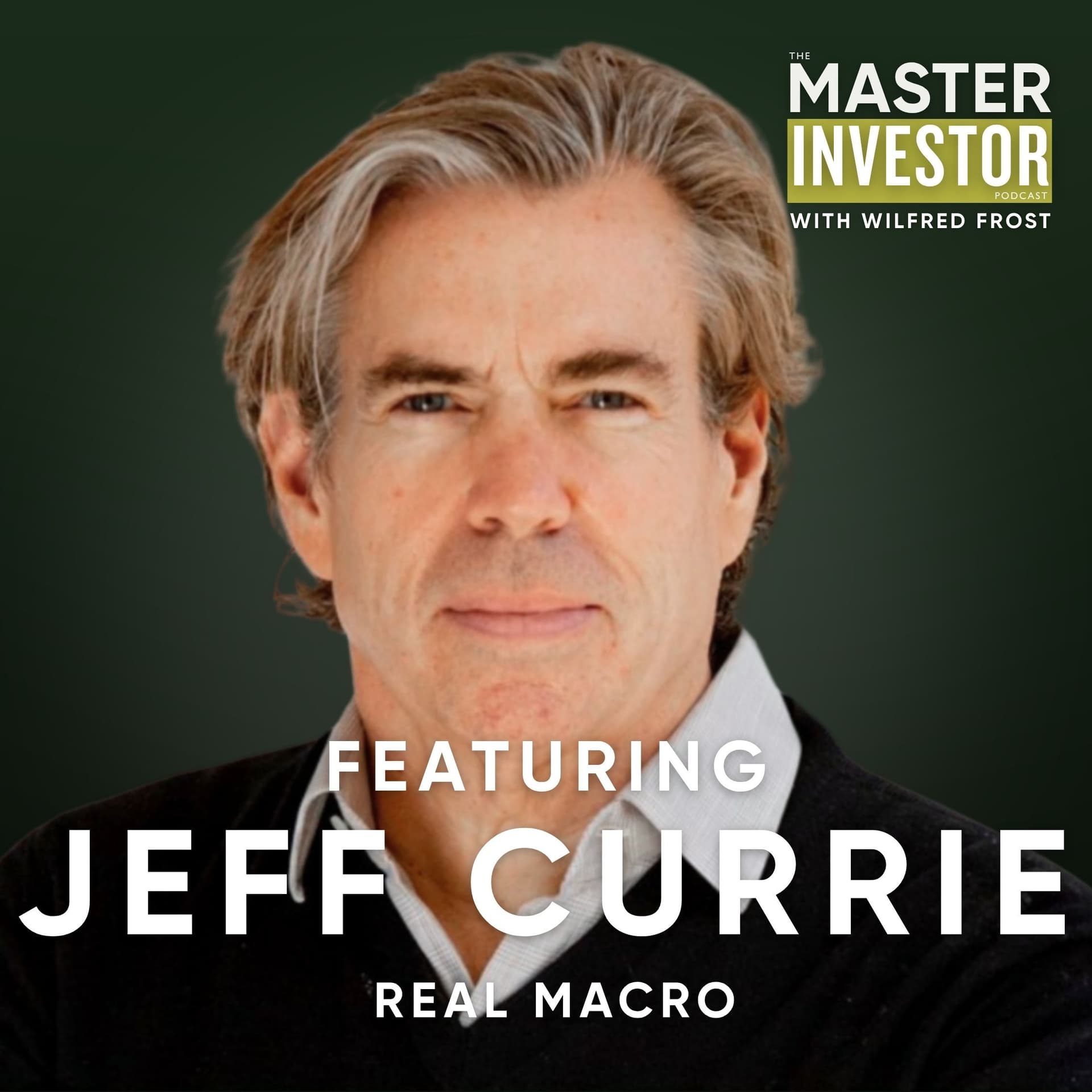
Guest background
Louis Gave is founding partner and CEO of Gavekal (founded 1998), a research firm serving buy-side clients and also managing a ~$6B AUM investment business; originally focused on Asia.
Key claims
- Iran/Hormuz closure likely leads to a US “victory” via diplomacy, but markets face a 6 weeks–2 months supply-chain air pocket.
- Inflation shock is partly “baked in,” but equities/bonds may not fully price it yet.
- US no longer controls waterways; treasuries/gold can’t always be converted into real goods quickly.
- China is structurally advantaged: lowest cost of capital, labor, electricity; cheapest currency.
- China is prepared due to 2018 semiconductor export restrictions; savings were redirected into industrial self-sufficiency.
Notable examples
China’s storage advantage (oil/gas/fertilizer), India calling China for fertilizer, BYD as world-class example, drone warfare making expensive air/naval systems obsolete.
Written by AI. May contain mistakes. Listen to the episode to check what was said.
Chapters
Tap a time to open that second in VOChina's Preparedness in Crisis
0:00 to 0:35
Explore how China's stockpiling strategy has positioned it well in the current global crisis.
“China comes into this crisis, I think, better prepared than pretty much anybody out there, mostly through luck.”
Global Bond Market Vulnerabilities
0:35 to 1:20
Discuss the vulnerabilities of bond markets in the UK, France, and the US.
“on their bond markets, there's a few countries that stand out.”
Impact of War on Markets
2:40 to 3:30
Analyzing the potential effects of the ongoing war on global markets, particularly in Asia.
“This was a very, very flattering introduction.”
Oil Prices and Supply Chain Disruptions
3:30 to 5:10
Understanding the implications of oil price fluctuations and supply chain issues on the economy.
“You think the most likely outcome is that the US claims some kind of victory and walks away even if tolls exist in the strait?”
Inflationary Shocks and Economic Responses
5:10 to 7:10
Discussing the anticipated inflationary impacts and potential economic responses from governments.
“And if that does get done, is that a massive positive for oil prices?”
China-US Relations in a Crisis
7:10 to 11:00
Exploring how the current crisis may lead to a reset in US-China relations.
“I think because of this, China and the US are almost condemned to get along.”
European Market Responses to Energy Issues
11:00 to 14:00
Examining the varying impacts of energy market fluctuations across Europe.
“And then the market pain will be there as well.”
Understanding Bond Market Vulnerabilities
14:00 to 16:45
Explore the vulnerabilities of various countries' bond markets and the implications of domestic savings.
“I wonder if that worsens as we near the back end of the year as well.”
The Evolution of Warfare and Its Economic Impact
16:45 to 20:35
Delve into how modern warfare has changed the defense industry and its economic implications.
“If you control the sky, then chances are you're going to control the battlefield.”
Shifts in Global Economic Assumptions
20:35 to 23:04
Analyze the breakdown of key economic assumptions due to geopolitical changes and their consequences.
“And that's where we are in warfare today.”
Show all 18 chapters
China's Strategic Position in Global Supply Chains
23:04 to 24:58
Examine China's preparedness and strategic advantages in global supply chains amidst crises.
“So depending who you are, you need different things.”
China's Economic Potential and Investment Outlook
28:20 to 30:18
Exploration of China's undervalued assets, economic fundamentals, and favorable investment conditions.
“I guess my question is, to what extent, given that since those post-COVID lockdown lows, equities in China have rallied, and the currency has begun to rally, obviously, in a more measured way.”
Market Momentum and Investor Sentiment in China
30:19 to 32:46
Discussion on market momentum, investor positioning, and comparisons with US market dynamics.
“which encourages the Chinese savings to stay at home instead of fleeing abroad like they've been doing.”
Emerging World-Class Companies in China
32:47 to 34:44
Insights into the emergence of competitive Chinese companies and the implications for global markets.
“And yes, China as a market, the currency is the cheapest in the world and it's not even close.”
Impact of China's Growth on Broader Asian Markets
34:45 to 36:14
Examination of how China's growth affects neighboring Asian economies and their industrial strategies.
“Oh, no, I was just going to just off the back of the very convincing bull case there on China wanted to move on to a couple other markets before we run out of time.”
US Market Dynamics and the Shift to Capital Intensity
36:15 to 39:26
Analysis of the US market's pricing and the transition from capital-light to capital-intensive models.
“And what happens if we do see, which there's been quite a lot of hints of of late, the AI capex cycle just start a rollover a little bit.”
Investment Strategy Considerations
39:27 to 41:26
Discussion on investment strategies, market positioning, and the importance of diversification.
“They've moved from low capital intensity to massive capital intensity.”
Building a Diversified Investment Portfolio
42:00 to 43:54
Learn how to construct a diversified portfolio to manage investment risks.
“But when you embrace your portfolio construction and your diversification, which allows you to sleep at night, and at least for me, allows me to not panic when things go against me, etc.”
Transcript
Automatic transcript. May contain errors.0:00China comes into this crisis, I think, better prepared than pretty much anybody out there, mostly through luck. China today has more oil and storage than the rest of the world combined. It has more natural gas and storage than the rest of Asia combined. It has more fertilizer and storage than the rest of the world combined. The reason China has all this is because eight years ago, the U.S. told China no more semiconductors. And China thought, oh my God, they can block us from this. They can block us from anything. We better store up on everything. Look, if you're looking for places in the world that have deep, deep vulnerabilities on their bond markets, there's a few countries that stand out.
0:38What always matters is the percentage of bonds owned by foreigners. And today there's three countries that stand out. One is yours, the UK, and yes, bond yields are going up there. The other is mine, France, and the third is the United States. These are the three countries that essentially depend on the kindness of strangers to keep the lights on. Now, when I look at China today, what I find is the country today that has the lowest cost of capital, the lowest cost of labor, the lowest cost of electricity, and has the world's cheapest currency, and it's not even close. And that makes for a very powerful combination.
1:20Welcome to the Master Investor Podcast with me, Wilfred Frost, where we celebrate and learn from the success of the greatest investors, business leaders and politicians in the world giving you, our listeners, the edge. The Master Investor Podcast is sponsored by LSEG, Interactive Brokers, the World Gold Council and BNY Investments. Please do remember the views expressed in this podcast are for general information purposes only. Nothing in the podcast constitutes a financial promotion, investment advice, or a personal recommendation. More on that in the show notes. My guest today is Louis Gav, the founding partner and CEO of GavCal, one of the best and most unique research companies in the world, providing market research to buy-side firms as well as having their own 6 billion AUM buy-side firm themselves.
2:16And when they were founded in 1998. They had a particular tilt to try and focus on Asia, which they felt at the time was undercovered, but cover all markets globally now. I've been an avid reader of GavCal Research for years since I graduated and joined Newton Investment Management in 2008. They are thoughtful and different and fantastic. And it is a real pleasure to welcome Louis to the podcast. Louis, great to see you. This was a very, very flattering introduction. I'm very grateful, Wilfred. I think only about half what you said is probably true. But even if half is true, it's, it's very flattering in itself.
2:55So thank you so much for this. Well, you've got 45 minutes ahead to live up to it, which is good. I've set the set the bar high. I've sort of switched my plan on this in the last six weeks since since the war began. And there's so many global topics that I think, as I kind of alluded to in the intro, you write about and think about much more than so many of the commentators we hear from. And I want to get to all of that, China, Japan, India, Brazil, and very much more. But need to kick off with the war and the impact that it may or may not have from markets here. You think the most likely outcome is that the US claims some kind of victory and walks away even if tolls exist in the strait?
3:39I think so. Look, let me kick off first with a disclaimer. I'm not a specialist on the Middle East. I spend most of my time looking at what's happening in Asia more broadly and, to be honest, more specifically in China. But what we're really looking at is, you know, given what's happening in the Middle East, how does this impact our region and the rest of the world? And here there's both dark clouds and light clouds and silver linings, perhaps, these dark clouds. The dark clouds is obviously Asia. Most of the Middle Eastern oil was going to Asia. And so this is a real problem for us. So that is the reality.
4:26And that's why I think everybody in Asia is pushing towards some kind of development, even if the development means paying a toll on the trade of Hormuz, even if with that money, the IRGC stays in power longer and ends up reinforced. At this stage, I think everyone in Asia is like, fine, let's just get that. So perhaps there's an element of wishful thinking to my position of saying, look, that seems like the most likely outcome at this stage because the US can't regain the Strait of Hormuz by military force. And so the only way it's going to reopen is through some kind of diplomatic settlement.
5:09Now, and, you know, the probably this, again, the sooner the better. And I think most of the US allies, rather in the region, whether the, you know, the local countries or the Europeans or the Asian allies of the United States are pushing the United States in that direction, saying, look, we can't keep this closed forever. So get something done. And if that does get done, is that a massive positive for oil prices? Or is in fact, there's still quite a lot of risk and complication priced in to that less negative outcome than we have now? When you say positive, you mean oil prices come back down?
5:49Yes, sorry. Yeah. Sorry. No, no. Just making sure we're on the same page. Look, I think the big challenge we have is even if it reopens tomorrow, we now have a six weeks to two month air pocket in the global economy because the ships that should be arriving now are no longer arriving. And even again, you reopen tomorrow, the ships are going to take quite a while to come back out. And so however you cut it, we're looking at a two-month supply chain dislocation for the world here. And of course, it's not just oil. It's the natural gas. It's the fertilizer. It's the sulfuric acid. It's the urea. It's the fertilizer.
6:27It's like all these things. And these can, of course, compound, right? If you don't have the fertilizer today, you're not planting. And so I think the inflationary shock coming from this is pretty much now baked in the cake. And of course, the longer we stay closed, the bigger the inflationary shock. But that brings me to the silver lining to this perhaps crisis, is that in an age where all of a sudden we are experiencing this massive inflationary shock, Like the, I think that the times when the US and China could turn around and try to trip each other up and you'd have these trade wars and these threats of tariffs and this is now gone.
7:12I think because of this, China and the US are almost condemned to get along. They might not want to, they might not like to, but Trump and Xi are scheduled to meet four times in the next 12 months, which has never happened, by the way. You've never had a U.S. president or a Chinese president scheduled to meet four times over a 12-month period. And I don't think they're going to meet to discuss the weather. And so you have these four meetings, which should be a reset of the U.S.-China relationship. And I think in the wake of the Iran war, it might very well be a very positive reset, where essentially the U.S.
7:48says, you know what? We can't take two inflationary shocks at the same time. We can't antagonize China and at the same time have this trade of Hormuz closed. It's sort of one or the other. I don't think you can do both. That's really interesting. I want to unpack that in that positive view and China specifically in a moment. Just dwell on the sort of negative view for me for a moment. I think you said that the inflationary shock is already baked into the cake, meaning in the economy to come. Is it priced into the market or are people underestimating the actual impact this is going to have on both inflation and GDP growth in a lot of those countries you mentioned across Asia?
8:30So I would say it really depends on your markets. I think it's increasingly, you're starting to see the crises in the world's poorer countries, the Pakistans, the Sri Lankas, etc., where you're already seeing fuel rationing, where you're already seeing food prices go up aggressively. to your question, is it priced in the markets? You could say, well, you know, fertilizer prices are now up by more than a third and gasoline prices are up by about 30 % in the United States and by 40 and 50 % in Europe. So you could say, well, look, you know, it is priced here. Here it is. Is it priced in the price of equities, of bonds?
9:12To be honest, I don't think it is. And I think it is again because perhaps we haven't yet felt the full shock and i think we haven't yet felt the full shock for a few reasons the first is up until a week ago the boats were still arriving from the belize because they'd left six weeks ago right and it takes six weeks to go to most destinations so we we haven't had yet the empty boats the empty boats are starting now when the ports literally no one's arriving so the the real shortages essentially start now but they probably don't really start for another six weeks or two months because in this misfortune that we're now experiencing, at least we had two previous crises.
9:54We obviously had the COVID crisis of 2020, and we had the Russia crisis of 2022. And with that, I think most businesses started already to move away from just-in-time inventories to more just-in-case. You'll remember that this was one of the big themes, that the just-in-case was one of the big themes following the Russia's invasion of Ukraine. All of a sudden, everybody starts to say, well, you know what, maybe I should have a little more helium since Ukraine's a big helium producer. You know what, maybe I do need to store more electricity. I do need to store to re-up my grid. So take Europe as an example.
10:35I think it's fascinating that today, the electricity price spike in Europe is nowhere near as bad as what we had in the Ukraine war. So for now, I think we came into this crisis perhaps a little bit better prepared than the previous two. But you can only run down your inventories for so long. And this is why, if this lasts another six weeks or two months, I think the economic pain really starts to get felt. And then the market pain will be there as well.
11:07This episode of the Master Investor Podcast with Wilfrid Frost is sponsored by BNY Investments, a trusted partner for many delivering financial solutions to investors and institutions worldwide. This sponsorship does not constitute financial advice. This episode is sponsored by the World Gold Council, the global experts on gold. They championed gold as a trusted strategic asset, provided market-leading research to help investors understand gold's role and modernize how gold is owned, traded and used, developing industry standards and market infrastructure. Learn more at goldhub.com.
11:52Just before we move on to market specifics and some of the positives. Touch on Europe for me. Does it affect everyone the same? Are there different short and long term effects like there are for Asia as well? So I think when you look at the problem from the Middle East, there's several categories of products that are being impacted. The obvious one we all think about, of course, is energy. And here, if you look across Europe, you have different countries whose economies are more or less energy intensive and whose own economy have to import more or less energy from the Middle East. So if you take my own country or France, we're actually not in that bad spot because we do have a lot of hydro and we do have a lot of nuclear for us to fall back on.
12:41And so we're a lot less dependent on imported energies than, say, Germany. Germany also happens to be quite an industrial economy, which is energy intensive. So Germany might be more vulnerable to what's happening. it's not like everything is smooth sailing for France because the other thing that the Middle East is extremely important for is fertilizer and so far somewhat amazingly but grain prices have not moved up if you look at wheat if you look at corn if you look at soybeans if you get all the grain prices they really haven't moved up so unless come unless come harvest time wheat prices go up I think you're going to get like massive food massive farmer riots in France Now, you could say, well, that's an easy prediction.
13:27That happens every year. But I think this year is going to be, come harvest time, September, October, it's going to be particularly, particularly bad. Well, I wonder whilst you're on France, to get your view on this, I wonder whether the back end of the year with the necessary, the need to pass a budget and a looming presidential election, whether the bond market reacts as well. I mean, looking at the UK, the 10 years back above 5 % today, you'd kind of look at the French bond market and think it's relatively calm, all metrics considered. I wonder if that worsens as we near the back end of the year as well.
14:03You're absolutely right. I think, look, if you're looking for places in the world that have deep, deep vulnerabilities on their bond markets, there's a few countries that stand out. And for me, the ratio has never been debt to GDP. I think that's a silly ratio. You're comparing a stock and a flow. So what always matters is the percentage of bonds owned by foreigners. This is a guide of whether domestic savings are enough to essentially keep governments going along. Governments need to fund themselves in one of two ways. They could say, okay, fine, I'll fund myself through taxes. But there's people who don't like paying taxes, but who like lending money, who have a high savings rate and who like lending money to their government.
14:50But China is a prime example of this today. China has fairly low taxes, but has the lowest bond yield in the world because Chinese people save a lot and all the savings go into government bonds. And so Chinese government gets to borrow cheaper than anybody. And as long as you borrow from your own citizens, you can keep that going forever. And you can keep it going for a very, or forever is a long time, but you can keep it for, the problem becomes when you start borrowing from foreigners. because one day foreigners wake up and say, you know what? Why do I own all these French bonds? Or why do I own all these British bonds?
15:25I don't like the politics. I don't like this. I don't like that. I'm out. And today there's three countries that stand out that borrowed disproportionately from foreigners. One is yours, the UK. And yes, Borneo's are going up there. The other is mine, France. And the third is the United States. These are the three countries that essentially depend on the kindness of strangers to keep the lights on. And again, that doesn't mean that that stops, but it means that all of a sudden you are vulnerable. Really interesting. And I want to touch on the US side of that in a moment. Before we move off the war, you guys did a really interesting piece recently on defense stocks, which we all would have expected to be shooting through the ceiling off the back of the war.
16:11They've rolled over somewhat. Talk me through your assessment of that. So I've actually been bearish defense stocks for a little bit. And my take is actually quite different, is that warfare has changed massively. I think Ukraine was a prime first example of this. And then the Red Sea and the Houthis was a second. And now we obviously have a third element of this. The reality is that since World War II, every effort by every military was first and foremost to control the sky. If you control the sky, then chances are you're going to control the battlefield. And controlling the sky was an extremely, extremely expensive proposition.
16:58Fido planes cost a fortune. Satellites cost a fortune. And with the Ukraine war, we found out that actually controlling the sky cost a few tens of thousands of dollars. The drone warfare has completely upended the military equation. It's all of a sudden, why pay$275 million for an F-35 seaplane? And not only the controlling the skies, but the delivery of firepower has also been upended. With a$50 ,000 drone, you can now sink a billion-dollar battleship. And so that equation – and to take down the$50 ,000 drone, you need a$2 million Patriot missile. So the spending has become so asymmetric. And you're seeing this today in the Persian Gulf where the U.S.
17:54Navy cannot be within 1 ,000 miles of Iran, which then raises a whole question mark. It's like, what's the point of a Navy if you can't get it close to where the battlefield is? Because who wants to, these aircraft carriers now cost$6 billion if they can be taken out by a$50 ,000 drone. The maths just don't work. And so we are living through right now, essentially an upending of both the financial and the, I would say, the geopolitical infrastructure of the past 80 years. You and I grew up in a world in which we had three key assumptions that we could take for granted. The first assumption that everyone took for granted is that you saved in US treasuries, whether you were an individual, whether you were a company, whether you were a government, you saved in US treasuries because in a crisis, that was the most deep liquid markets and you could transform your treasuries into commodities.
18:56So if you're Japan and there's Fukushima and you decide to shut down your nuclear power plant, you can sell your treasuries and buy oil and coal and natural gas and you get through the emergency that you're having. That assumption was essentially broke down with the Russia-Ukraine war. When we seized Russia's treasuries, we said, you only get access to treasuries if we say you do, we being the Western world and really being the United States. So that was the first assumption. And the response to this, everybody turned around and said, fine, then I'm going to buy gold instead. And so central banks became huge buyers of gold.
19:37Gold prices tripled. The second assumption was by buying gold is I can transform my gold into oil or into food or into fertilizer whenever I need because the US Navy controls the world's seaways. Because I can always have my stuff, my fertilizer delivered by the US Navy. That assumption has just been destroyed. So that's the second assumption that has now been left for rubbles. And therefore, you have to question, going back to your question on defense, if the US Navy can no longer control the seaways, what's the point of spending all this money on defense? I'm much better off buying$50 ,000 drones and$80 ,000 ballistic missiles from China.
20:24So these defense companies live off the sale of systems that cost millions of dollars and that are now obsolete. And that's where we are in warfare today. Just to pick up on something you said in the middle of that, the second big assumption we've lived our lives on that the U.S. will keep the waterways open. And I guess we touched on this on the top, but we presumably don't know what follows that yet. And what is the big implication of it that everyone's going to have to do more homegrown? And whilst we transition for countries like the UK to be able to do more of that, we're going to have higher inflation.
21:03That's exactly right. I think what ends up on the other side of this, look, if you're India, let's take India as an example, because India is really impacted by what's going on in the Middle East right now. India has roughly 700 billion US dollars in treasuries that they kept for the rainy day. That was the rainy day fund. Well, the rainy day just occurred. It's right now. And they're looking around saying, okay, what I need is fertilizer. What I need is food. What I need is natural gas. What I need is energy. And I can't transform my US treasuries into the fertilizer that I need. Literally, India called up China because China still has fertilizer.
21:43And China said, and India said, name your price. I know you have storage. The reason China has storage of everything. China today has more oil and storage than the rest of the world combined. It has more natural gas and storage than the rest of Asia combined. It has more fertilizer and storage than the rest of the world combined. The reason China has all this is because eight years ago, the US told China, no more semiconductors. And China thought, oh my God, they can block us from this. They can block us from anything. We better store up on everything. So they stored up on everything. So China comes into this, inventory is loaded up.
22:15So now everybody, Philippines, Thailand, India is calling up China, say, can we buy some of your fertilizer? Name your price. China's like, no, mate, sorry. I'd love to help. Keep in mind because I, you know, got to take care of my own people first. And so to answer your question, the end results, whether you're UK, whether you're in India, whether you're Philippines, is you're going to turn around and say, you know what? What good are these US treasuries? What good is this stock of gold? I can't sprinkle my gold on my fields to grow food. I can't shove my US treasuries in the gas container of my car for the gas container to get going.
22:51So everybody around the world coming out of this. So even if it ends tomorrow, the reality will remain that the US no longer controls the world's waterways. And in that environment, everybody's got to build up inventories. So depending who you are, you need different things. Like Chile isn't going to build a copper reserve and Canada isn't going to build an oil reserve. They don't need it. They've got it here. On this front, Europe as an aggregate is really the main thing is we're energy deficient. That's broadly it. Like the rest of the stuff we can actually produce as an aggregate in Europe.
23:25And So the end result of this is that everybody's going to turn around and need to have much smarter energy policies. And here, this is perhaps another silver lining to this crisis, is that our energy policies in Europe have been completely upside down. I think that the crisis of Ukraine, the crisis in Iran is forcing us to review this and saying, OK, you know what? We need to do what China did, which is embrace energy in all of its form. So solar, bring it in. Wind, bring it in. Nuclear, bring it in. Natural gas, oil, coal, we're going to do it all. Today, China produces more electricity than the US and Europe combined.
24:06And the cost of electricity in China is a fraction of what we pay in Europe or even what North Americans pay. This is going to have to change. And I think it is going to change. And by the way, that's another reason to think one of the silver linings of this crisis is people will now suddenly turn to China, both Europe and the United States, and they've been pushing China away for the past eight, nine years. They're going to turn around and say, actually, you know what, China? I will have those solar panels, please, because I need them. So please send them over. You know what, China? The sub$10 ,000 electric cars that you produce, I would like them, please.
24:41Send those over. You know what, China? those cheap wind turbines, those clean coal power plants, those nuclear power plants that you produce at half the cost of France, we'll take them all. Thank you very much. We need them. So coming out of this, I think, is a much more realistic appreciation of our own weaknesses, whether in Europe and North America. I think to a large extent in Europe and North America, We overestimated our strengths. We're like, you know what? We can ramp up our cost of electricity. We can afford to have completely idiotic energy policies, and our system will cope. Turns out it won't.
25:24Let's touch then on your view on China, because it sounds like the war just doubles down on the view you've held for a while, which is that you think China is structurally undervalued. Oh, look, China comes into this crisis, I think, better prepared than pretty much anybody out there, mostly through luck, mostly through luck. Again, I think it's hard to underestimate the trauma for the Chinese policymakers of the 2018 decision to block China from semiconductors. the Chinese policymakers genuinely panicked. You see this in the bank data. It's one of my favorite charts to explain what's happened in China the past seven, eight years.
26:09If you look at bank data, at bank lending to real estate and the consumer, starting in 2018, it plummets and all the money goes to industry. What happened in 2018, when we blocked them from semiconductors, is the Chinese policymakers turned to the banks and said, guys, we need to become self-sufficient on every single industrial vertical. Because they're blocking us on semiconductors today. Tomorrow, it could be car parts. It could be tires. It could be turbines. It could be anything. They clearly want to trip us up. So we have no choice but to become self-sufficient. And so all of China's savings, which happened to be massive, it's by now a big economy and with a very high savings rate, all of China's savings were redirected essentially into building up national resiliency.
27:01And so today, and I think the crisis that ended up happening for China wasn't the crisis that they'd expected. I think the one they were expecting was that at some point the US would ramp up the import restrictions into China. So it's not the crisis they were expecting, but at least they got ready for a crisis. So coming into this, they're ready for it. None of us are. Nobody else is.
27:53Master Investor. This episode of the Master Investor podcast is brought to you by LSEG, the leading global financial markets, infrastructure, data and analytics provider. To learn more about how LSEG connects businesses, investors and markets worldwide, visit lseg.com.
Read the full transcript
28:19So clearly, you think China's undervalued. You've made a very good case for that. I guess my question is, to what extent, given that since those post-COVID lockdown lows, equities in China have rallied, and the currency has begun to rally, obviously, in a more measured way. Is this the start of a 10-year bull market for those types of assets? Look, I believe it is. And you mentioned valuations, which are, of course, an important component of any investment decision. But at GAFCAL, when we look at markets, we'd like to look at them actually through four prisms. And valuation is only the last one.
28:55The very first prism we look at is the fundamentals. You want to make sure when you invest somewhere that, A, you're not fighting policymakers, that you have policy tailwinds rather than policy headwinds. And you want to make sure that whatever you're investing in makes sense. Now, when I look at China today, what I find is the country today that has the lowest cost of capital, the lowest cost of labor, the lowest cost of electricity, and has the world's cheapest currency and it's not even close. And if people don't believe me, I always tell everyone, you have to go over there. You stay in Four Seasons Hotel for 100 US a night.
29:34You have some of the best meals you'll have in your life for$25 per person. Incidentally, if you go back to 2010, 2009, 2010, back when everybody was telling you that the US was going to face a lost decade, that it was going to be Japan all over again, that it was a new normal. Back then, the US had the cheapest cost of capital in the world. It had one of the cheapest costs of labor. It had by far the cheapest cost of energy thanks to the Shell Revolution. and the US dollar was one of the cheapest currencies in the world back then. And that makes for a very powerful combination. That's a very, very potent combination.
30:12Today, you have that combination in China. And yes, the big difference from recent years is you now have policymakers that are clearly committed to a wanting a stronger currency, which encourages the Chinese savings to stay at home instead of fleeing abroad like they've been doing. In 2018 to 2024, the currency was broadly heading lower. Since then, you now have a stronger currency and you also have a government that essentially, each time the market's gone down 10, 15 percent, steps in to bring it back up. So that's the fundamental bit. The second pillar we look at when we look at a market is we look at the momentum.
30:53I'm a bit of a coward and I hate fighting the market. I don't like fighting. I played rugby for 30 years and fighting people who are much bigger than you is tough. It's a hard way to make a living. It's a tough day at the office when the guys on the other side are much, much bigger than you. Now, I start for the premise, the market is much bigger than me. So I like things with broadly positive momentum rather than negative momentum. Now, today, the RMB has the best momentum in the world. It's up 6.5 % against the US dollar over the past 12 months. And in itself, that's fascinating because historically, the Chinese central bank, each time there's global uncertainty, they would freeze the value of the renminbi.
31:40This time, they're not doing it. It's literally grinding higher every single day. So that's the momentum. The third thing you look at is the investor positioning. And on this front, I take a lot of comfort in the fact that half of the meeting I still have, people tell me China is uninvestable. And so it's the second biggest economy in the world. It accounts for roughly 18 % of GDP. And you'll be hard pressed to find anyone that has more than 5 % of China in their portfolio. Meanwhile, to compare and contrast with the US, the US is roughly 25 % of global GDP. And the US is roughly two third of the world MSCI.
32:19So when you look at the US today and you say, you know what, I'm just going to buy the world MSCI, which is the world index. Therefore, I'm going to be two thirds in the US. You're making the bet that over the next decade, two thirds of global profits are going to accrue to American companies. If you think that's the case, that's great. For a number of reasons, which probably deserves a whole other call, I think that's highly, highly unlikely. So in terms of investor positioning, I'm very happy being long China. The fourth reason is the valuations, the one you highlight, the one you started with.
32:54And yes, China as a market, the currency is the cheapest in the world and it's not even close. The bond market is one of the only major bond markets that has delivered very adequate, positive returns to investors for the past five years. I think everywhere else in the world, you're essentially in most markets in the world, the US, Europe, UK, Japan, you're in a situation where essentially policymakers are robbing Peter to pay Paul. They keep crushing the bonds and following policies that essentially mean currency debasement and bond debasement so that equity markets can stay up. And China is not at all in that situation.
33:32The bond markets have actually delivered very, very decent returns for China. But the overarching theme for me in China, this is how I'd look at the broader markets. The more important thing for me when I look at China and the reason I am excited about the market today is that there is a new development. Having been in China since 1997, having lived there in Beijing and Nanjing and in Hong Kong, what I now see in China for the first time is the emergence of truly world-class companies. Companies, as all that money has gone into industrial investment, as all the money essentially got taken from the stock market, from the real estate markets, to push up China's capacity of production.
34:18And as you've seen companies start to leapfrog companies in the West, in so many fields, you're now seeing companies emerge that you know are going to be world champions. The obvious example is a BYD. I know you already have BYD cars on the streets of the UK. But wherever you travel, and for the listeners who travel in the emerging world, increasingly, wherever you go, you see Chinese cars that are genuinely world class cars, then you've got robotics and automation, where essentially, China is taking over the world. You have sorry, go ahead. Oh, no, I was just going to just off the back of the very convincing bull case there on China wanted to move on to a couple other markets before we run out of time.
35:03Off the back of that briefly, I mean, does this bullish for the rest of Asia? Yeah, it's, look, growth is good news, right? I start off with that premise. A bigger pie, a rising tide lifts all boats, a bigger pie feeds everyone. It's Asia, I think the broader Asian markets have struggled from the fact that Asian Chinese growth has been very lackluster for the past seven or eight years because of these policies of redirecting all of the savings into national resiliency. And so, yes, a policy focused more on to reboosting consumer confidence, a policy focused more on moving or reducing Asia's dependency on the U.S.
35:53dollar, allowing countries like Vietnam, like Indonesia, like Thailand and others, the ability to industrialize on credit, on the cheap, without dependency on the U.S. dollar. I think all of that is a tide that brings all boats up. I want to bring it back before we conclude just to the US market, if we can, Louis, and the extent to which you think it is currently priced for perfection. And what happens if we do see, which there's been quite a lot of hints of of late, the AI capex cycle just start a rollover a little bit. Do you think we're priced as if that can never happen at the moment? uh so look i i do have an i do have this emerging market bias i've been doing emerging markets for 30 years and one of the first rules i think you learn in emerging markets is that uh if you go from being really really stupid to just plain stupid that's like such an improvement that a lot of assets can get re-rated massively you can make lots of money and that move from really really stupid to just plain stupid by the same token and to your point of your question if things are price more or less for perfection.
37:01If you go from perfection to just maybe just a tiny bit stupid, then you have a big problem. Now, what strikes me as interesting in the United States is that the growth of the past 30 years in the US equity markets was essentially premised on the idea of very capital-like business models. I actually wrote a book about this back in 2004 called Our Brave New World, where, and I talked about platform companies, highlighting that the model of, you know, the companies used to be vertically integrated with companies that designed the good, produced the good and sold the good. But that the model of the future was the company that designed the good and sold the good and led the manufacturing bid in the middle to somebody else, somebody in China, somebody in Poland or in Morocco or wherever else.
37:54And in so doing, you ended up with much higher returns on invested capital and much more stable returns on invested capital. And so the point of my book in 2004 was that the companies that successfully transitioned from the old vertically business integrated model to the platform company business model, those would re-rate massively. All the more so since as you become less and less capital intensive and you generate these cash flows, the only thing you can do with this money is buy back your shares. And I think that's what you've seen at Microsoft and that's what you've seen at Apple and that's what you've seen at Amazon.
38:28These guys have been the ultimate platform companies. The growth and the outperformance of the United States was primarily premised on this capital light business model. And what's fascinating is the new generation of leaders today are saying, look, that was then. AI is going to be such a massive thing that we now have to embrace a massively capital intensive business model. We're going to become more capital intensive than a steel plant. We're going to become more capital intensive than the auto industry has ever been. We are going to plow so much money into data centers, into accumulating chips, into building our own power plants to feed our data centers.
39:14because the productivity gains that are going to come from AI are going to be so gargantuan. So the first thing we have to acknowledge is that the quote-unquote successful companies in the United States have completely changed their stripes. They've moved from low capital intensity to massive capital intensity. Do I still want to pay 30 times earnings, 35 times earnings for a capital intensive business? You have to come to one of several possible conclusions. The first is to say, you know what? They're right. AI is going to be such a game changer. They're right to do this. That's option one. Option two is to say, you know what?
39:55Maybe they're doing this because they've had a zero cost of capital for 20 years. And so while before they were all capital disciplined, they've lost all that capital discipline. They're like Chinese companies of 10 years ago. When Chinese companies of 10 years ago, they had zero cost of capital and would throw anything on the wall to see what sticks. because when you're valued at 35 times earnings, you don't have to be capital disciplined. So that's the second option. And going back to the point where you go from being very smart and perhaps not quite as smart. Or you do like I do, which is to say, you know what?
40:30Maybe that falls into the too hard bucket. Maybe like deciding this one is like, yeah, maybe AI is going to revolutionize the world and these guys are going to be right on all these investments. Although the odds that they're all right at the same time seems low because you still need winners and losers. So perhaps I'm going to try to do something else. Perhaps I'm going to go into the parts of the market that aren't quite as crowded. I don't think I'm – you said we talk to the smartest people, etc. I really don't think I'm the smartest guy in the room. I never was the biggest rugby – like biggest player on the rugby field.
41:09I'm not small, but I was never the biggest guy. And I know I'm not the smartest guy in the room. And right now it feels to me like all the smartest guys in the AI room, and they talk to each other all day and they debate all day, etc. So I just feel like I need to go into a less crowded room because the odds of me winning in that room are too low. It's a really fascinating take, Louis, and I appreciate it a lot. We are basically out of time. So I'm going to jump to the final question, which is a flag to before we ask it to everyone. Maybe you've hinted at some of your answer already, but what is your overriding piece of investment advice for our listeners?
41:48It's a tough question to answer, of course. But I would say, look, the first thing you have to know as an investor is to know yourself, right? And it's an easy thing to say for a guy like Muse in his mid-50s who's gone through a few cycles. but the and I now know having made a lot of mistakes along the way I now know the situations I'm good in and the situations I'm bad in and and so much of this game is making sure to not put yourself in the situation where you're going to make the wrong decisions so that that's number one now to put yourself in the best possible decision when it comes to investing diversification does help.
42:28But when you embrace your portfolio construction and your diversification, which allows you to sleep at night, and at least for me, allows me to not panic when things go against me, etc. Because hopefully not everything goes against me at once. I think you have to build a diversified portfolio in a smart way. And a smart way, essentially, for me, there's four asset classes that each have their own life cycle and each sort of sometimes are correlated with each other, sometimes are not for different reasons. And these four asset classes for me are of course equities, of course fixed income, but energy and metals.
43:15These are the four main asset classes and a diverse, a well diversified portfolio. So if you want to rest at night, just say, you know what, I'll put a quarter in each, go to bed and you'll actually do fine over time. You'll do great. If you want to be smart, you eliminate one or two out of the four and you focus on the other two and you focus hard at picking the best components of the other two. That's what we try to do in our firm. It actually does take work, but that's my approach to financial markets. It just corresponds to my own sort of behavior and ability to withstand shocks. Well, Louis, it has been an absolute pleasure having you on with us today.
43:58Really do appreciate it. And we thank you so much for your time, particularly I know as you've got a busy day ahead of you there in New York. Louis Gav, thank you for joining us. Thank you so much for having me. Next week on the Master Investor Podcast, we will be joined by Dan Niles after what's going to be a very busy week of tech earnings. Nobody better to hear from than Dan. And please make sure to hit subscribe or follow on your podcast or video app to make sure that you don't miss that and any future episodes. But thanks again for listening. The Master Investor Podcast is sponsored by LSEG, Interactive Brokers, the World Gold Council and BNY Investments.
44:39Please do remember the views expressed in this podcast are for general information purposes only. Nothing in the podcast constitutes a financial promotion, investment advice or a personal recommendation. More on that in the show notes. This podcast is produced by Paradigm Productions and Master Investor Limited in association with Birdline Media. If you've enjoyed the show, please do subscribe on YouTube or click follow on your podcast platform and you'll be automatically notified each time a new episode drops.
From the publisher
Wilfred Frost is joined by Louis Gave, the founding partner and CEO of Gavekal, one of the world’s leading independent research firms. With a focus on the shifting geopolitical landscape, Gave outlines why traditional investment assumptions – from the safety of US Treasuries to the dominance of US tech & defence stocks – are being fundamentally upended, and why China is screamingly cheap.
The Middle East & The Inflationary "Air Pocket": Louis analyzes the ongoing conflict in the Middle East, noting that even a diplomatic resolution will leave a two-month "air pocket" in global supply chains. He argues that the resulting inflationary shock is definitely coming, and while it might be priced into commodities it isn’t priced into equities and bonds.
The US-China Reset: Amidst these dark clouds, Gave identifies a potential silver lining: the economic pressure of inflation may force a "positive reset" in US-China relations. He suggests that both nations are now "condemned to get along" to avoid simultaneous inflationary shocks. He also wonders whether it might force Europe to finally adopt sensible energy policies.
The Death of the "Capital-Light" Model: Louis offers a provocative take on the US market and the AI boom. He explains how the world’s most successful "platform companies" (like Microsoft and Amazon) are shifting from capital-light models to massive capital intensity, questioning if their 35x earnings valuations remain justified.
The Bull Case for China: Contrary to popular sentiment, Gave argues that China is structurally undervalued. “China has the lowest cost of capital, the lowest cost labour, the lowest cost of electricity, and has the world's cheapest currency and it's not even close. And that makes for a very powerful combination.” He also thinks they are the economy best prepared for the Iran War.
The Changing Face of Warfare: Louis explains his bearish stance on traditional defense stocks, arguing that the age of the "$275 million fighter jet" is being replaced by the age of the "$50,000 drone". He compares the current defense industry giants to IBM in the era of the personal computer.
Sovereign Vulnerabilities: A look at why the bond markets in the UK, France, and the US are uniquely vulnerable due to their reliance on "the kindness of strangers" (foreign investors) rather than domestic savings.
Finally he reflects on his overriding investment advice for listeners. "The first thing you have to know as an investor is to know yourself... making sure to not put yourself in the situation where you're going to make the wrong decisions."
Recorded 29th April 2026
You can watch the full video on The Master Investor Podcast YouTube channel
And follow @WilfredFrost on X and Linked In
Sponsored by BNY Investments, Interactive Brokers - ibkr.com/masterinvestor, The World Gold Council and London Stock Exchange Group (LSEG).
The Master Investor Podcast is produced by Paradine Productions, Master Investor Ltd in association with Bird Lime Media.
This podcast is for information purposes only. It does not constitute an invitation or inducement to engage in any investment activity. It is not a financial promotion as defined under section 21 of the Financial Services and Markets Act 2000 (FSMA). The views expressed by the presenter of this podcast are those of the presenter and are provided in the course of journalism. This podcast benefits from the exemption under Article 20 of the Financial Services and Markets Act 2000 (Financial Promotion) Order 2005 (FPO), It does not require approval by a person authorised under the FSMA. Generic information, not identifying any specific investment, fund, provider or service, about a class of investments such as shares, bonds, derivatives and cryptoassets, might be provided and/or discussed during this podcast. Such discussion falls within the generic promotions exemption (Article 17 of the FPO). Such discussion is not a financial promotion requiring approval by an authorised person under section 21 of the FSMA. Investing involves risk. You should consult a suitably qualified adviser who can assess your individual circumstances before making any investment decision.