In short
The Master Investor Podcast Notes
Episode
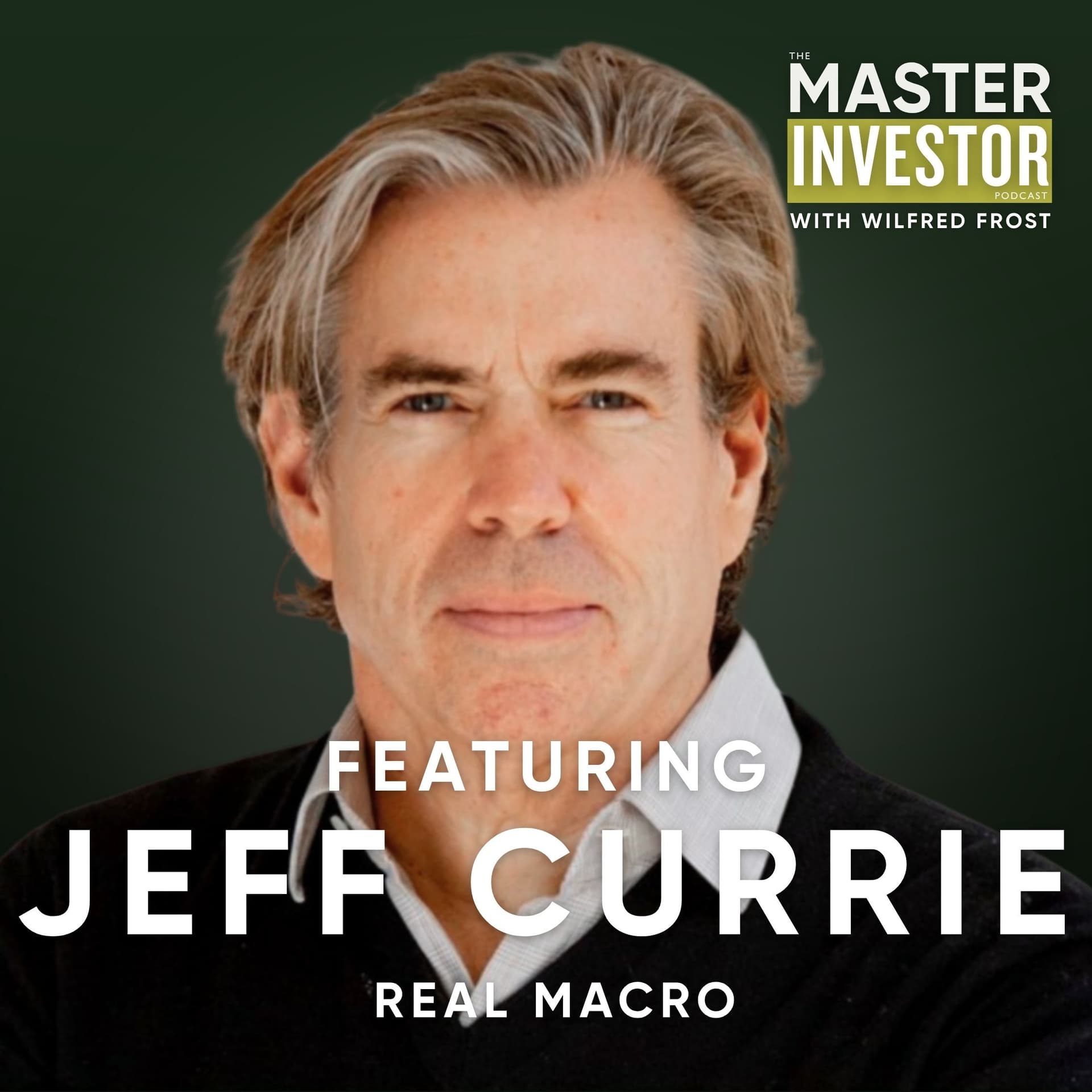
“This is the Era of the Retail Trader": Sonali Basak on Democratising Private Markets
Host
Wilfred Frost
Guest
Sonali Basak, Chief Investment Strategist at iCapital
---
Episode Overview
- Guest Background:
- Transitioned from Bloomberg anchor and lead Wall Street correspondent to Chief Investment Strategist at iCapital.
- Talks about the role of iCapital in democratizing access to private markets.
- Key Topics Discussed:
- The impact of technology on investment accessibility.
- Risks and outlook for bond markets and private credit.
- The evolving landscape of retail investing and market dynamics.
---
Key Discussions
- Democratization of Private Markets
- iCapital serves as a bridge between public and private markets.
- Lowering minimum investment thresholds (from millions to as low as $25,000) allows more everyday investors access to previously exclusive funds.
- Importance of transparency and education for new investors.
- Market Dynamics and Equity Trends
- Millennials and younger generations view private markets as less risky than public markets, influenced by high-profile companies like SpaceX and OpenAI.
- Discussion on the shift away from traditional wealth-building methods, such as home ownership, to equity markets.
- Emphasis on the need for market broadening beyond the concentrated "Magnificent 7" companies.
- Bond Market Risks
- Predictions of fewer cuts by the Federal Reserve in early 2026.
- Concerns about increasing long-end yields due to U.S. fiscal pressures and global dynamics (e.g., Japan and Europe).
- Floating-rate benefits in private credit and potential risks from vintage deals that were initiated in a low-rate environment.
- Role of Technology
- The emergence of tokenization and its potential to reshape investment access.
- Technology allows larger-scale access to private markets and structured products.
---
Key Takeaways
- Advice for Young Professionals:
- Embrace inexperience as an advantage.
- Utilize the opportunity to learn and observe in new environments.
- Market Outlook:
- Expect volatility in the bond markets and the need for careful evaluation of private credit investments.
- Equity investing strategies should become more diverse to mitigate concentration risks.
- Investment Strategy Recommendations:
- Focus on proven managers in private credit.
- Assess the underlying companies and their capacity to weather economic cycles.
---
Important Quotes
- "The calculus of how to build wealth has changed, and it's so weighted to the equity market."
- "There will be winners and losers, even in private markets, but rigorous research and diligence are key for success."
- "The idea is to buy low, sell high, and experience the growth of companies that will be the companies of tomorrow."
---
Conclusion The episode delves into the transformative era of retail investing, the critical role of technology in democratizing investment access, and the importance of adapting investment strategies in response to market changes. Sonali Basak's insights emphasize the necessity of education and transparency for new investors navigating these markets.
Follow Wilfred Frost & iCapital
- [Wilfred Frost on X](https://x.com/wilfredfrost?lang=en)
- [Master Investor Podcast on YouTube](https://www.youtube.com/@TheMasterInvestorPodcast)
Disclaimer: The podcast content is for informational purposes only and does not constitute financial advice or promotion. Always consult a qualified advisor for investment decisions.
Written by AI. May contain mistakes. Listen to the episode to check what was said.
Chapters
Tap a time to open that second in VOInvesting Trends Among Millennials
0:00 to 1:16
Learn about the changing perceptions of private markets among younger investors.
“Millennials and younger are more likely than their older generations to invest in private markets and actually see them less risky than public markets.”
Understanding iCapital and Private Markets
2:20 to 4:23
Explore the role of iCapital in democratizing access to private markets.
“Sonali, welcome to the Master Investor Podcast.”
The Shift in Wealth Building Strategies
4:23 to 6:17
Discuss how wealth-building strategies have evolved in the current market.
“I mean, by the way, I should have said this at the top.”
The Future of Private Markets and Investment Opportunities
6:17 to 10:10
Delve into the growing influence of private markets and their implications for investors.
“that's problematic because then how are people going to be involved in the growth of the future?”
Tokenization: Threat or Opportunity?
10:10 to 10:33
Understand the impact of tokenization on traditional investment frameworks.
“Final quick question on the sort of offering before we get into the markets.”
Macro-Economic Perspectives and Market Views
12:19 to 14:01
Gain insights into the current macroeconomic environment and its effect on markets.
“Let's talk a little bit about the rate structure, then move on to the macro and your views on the market as chief strategist.”
Current Market Conditions and Wealth Building
14:01 to 18:00
Explore the current state of the economy, including the equity market's resilience and changing wealth-building strategies.
“The college graduates, for example, not feeling the ability of a robust job market.”
Impacts of Global Bond Markets
18:01 to 22:51
Understand how global bond market dynamics, particularly in Japan and Europe, affect U.S. markets.
“is probably headed in a trajectory that most people are not accounting for?”
The Shift in Market Focus: U.S. vs. Global Equities
22:52 to 25:42
Analyze the growing interest in global equities among U.S. investors and the challenges they face.
“Or do we worry about the MAG7 and its ability, as you said at the top, with its concentration, to drag everything down in due course?”
Navigating Financial History and Personal Insights
28:00 to 30:00
Explore the evolution of finance and personal experiences in the industry.
“You know, finance, I think I wanted to cover, if I had to go back in time, I think I wanted to cover politics.”
Show all 15 chapters
The Importance of Financial Literacy
30:00 to 31:40
Learn about the critical role of financial literacy in helping individuals save and invest.
“That's why people hate some of the financial companies from like a societal perspective, right?”
Impactful Interviews and Lessons Learned
31:40 to 34:10
Discover key lessons from high-profile interviews in finance and politics.
“investing is even a taller order here than it is in the United States.”
The Rise of Retail Investors
34:10 to 36:10
Discuss the significant shift in how retail traders are perceived in the market.
“one, I believe, that he broke the news with that he was considering financing Nikki Haley ahead of the Trump election.”
The Investment Landscape and Future Considerations
36:10 to 37:40
Analyze the current investment landscape and the traits of modern investors.
“as critical parts of the financial infrastructure.”
Advice for Young Investors
37:40 to 40:00
Receive valuable career and investment advice tailored for younger generations.
“Well, I have no doubt you'll be the right person to do that.”
Transcript
Automatic transcript. May contain errors.0:00Millennials and younger are more likely than their older generations to invest in private markets and actually see them less risky than public markets. And we explored why for a while. And it's because these generations are used to the SpaceX's and open AIs of the world. And they want access. Of course they do. They missed so much of that growth. That's frustrating for people. The short end of the curve, we do think that the market is a little bit optimistic. They think that there's going to be a new dovish Fed chair. And that will change the entire equation, not remembering that there's a voting body at the Fed.
0:35where hawkish people like Beth Hammock are going to be entering that voting committee very soon. So there will still be tension on the Fed that could keep pressure on the short end at a time where Jerome Powell just said it himself. The labor market is stabilizing. In America, you used to be able to buy a house and say, that was how I was going to build wealth over the long term. Forget it. Forget buying a house in America today, let alone making money on that house. You don't know what it's going to be worth in 20 years. And so the calculus of how to build wealth has changed, and it's so weighted to the equity market that it doesn't surprise me for a minute that people are selling off other assets and the equity market's holding up anyways.
1:15Welcome to the Master Investor Podcast with me, Wilfred Frost, where we celebrate and learn from the success of the greatest investors, business leaders and politicians in the world giving you, our listeners, an edge. The Master Investor Podcast is sponsored by BNY Investments, LSEG and Interactive Brokers. Please do remember the views expressed in this podcast are for general information purposes only. Nothing in the podcast constitutes a financial promotion, investment advice or a personal recommendation. More on that in the show notes. My guest today is the Chief Investment Strategist at iCapital, which she joined just last September to much fanfare, not just because of the status of the new role, but the status of the role she walked away from.
2:03as a broadcaster at Bloomberg, where she led the network's coverage on financials, as well as anchoring open interest and presenting and producing her own interview series, Bullish with Sonali Bassic. I am, of course, referring to Sonali, who joins me here in studio. Sonali, welcome to the Master Investor Podcast. Thank you for having me. So good to be in London. So good to catch up. And there's so many areas I want to get to, including your career transition, which I think is sort of kind of the reverse of what I did. Started in finance, went to broadcast. I'm oversimplifying it to say yours was the reverse, but lots to get to on that.
2:38But firstly, what is iCapital for those that don't know? So iCapital really stands in the middle of public and private markets. So what does that mean? A lot of funds across the industry, all of the biggest ones really list on our platform and people can invest in those funds. Now with the retailization or democratization, as people call it, we actually don't love those words, but new investors are entering those markets. We also have funds that we distribute. So we do diligence on funds. We choose them. We have model portfolios where we help pick funds and create our own portfolios. But we also have a huge public markets business.
3:10And it's structured investments tied to NVIDIA and Amazon and Tesla and indexes around the world. So the S &P 500, now more Europe and Japan. So we have a really interesting intersection of what's happening in the investment world. So is it fair to say whether it's private markets, which obviously historically weren't that accessible to everybody, or structured products on the publicly listed securities of the big companies you mentioned, you're giving everyday investors and educated investors access to things that five, 10 years ago they wouldn't have had access to? 1 ,000%. Even a year ago, some of these investors couldn't really access it at this scale because the minimums are starting to come down.
3:51You used to have to have 10 million or at least 1 million to invest in some of these funds. Now you could have 25 ,000 or lower. It's starting to come down. And we want to make sure, I really want to make sure this happens responsibly, that there's the same amount of transparency and education that an institution would get. You and I both covered this for so long where we covered these really large institutions. And so in the first six months, what I really tried to do was travel the country and the world just to meet individual clients, wealth managers, RIAs, just to talk to them every day about the challenges they're having in portfolio allocation so that we can do better by them.
4:23I mean, by the way, I should have said this at the top. I mean, we basically were rivals for a period of time, both leading CNBC and Bloomberg's… Admiring rivals. Absolutely admiring rivals and often piggybacking off each other's stories as well, which is, I think, how it should be, even if our bosses used to want us to compete more. But, no, it's… We like to call it quiet confidence, right? Exactly. You break a scoop, I break a scoop. It all evens out, maybe. Exactly. We have similar interviews, different interviews at similar conferences. It was such good fun. So I guess in terms of what is the case for iCapital, what drew you away from that incredible job you had at Bloomberg?
5:00I imagine you'll probably say both to this question. But is it more that this asset class of private markets and structured products is just going to continue to be of more interest to people going forward? And or that you guys can be the best at doing it? So there's two things. One, first of all, it's so funny you mentioned that the job I left behind, I think is what you said. Because I feel you must feel this way too. Do you ever really leave it behind? Well, that's why I've launched this podcast. Exactly. Yeah, exactly. I still talk to my former colleagues almost every day. You know, the news person in you never fully goes away.
5:33But on iCapital, what happened by accident over the last 10 years, you know, I came in to cover the big banks at Bloomberg, and I did. But in that process, I also started covering all these companies that were not the banks. And in those now, what, since 2008 now, right? It's been a long time. Those companies are bank-like. They've filled in so much of the economy and are really critical in terms of the role they play in the financial system. They're the new financial system. And it's not just the companies that are listing funds on our platform. It's all these new market makers also that are entering the space.
6:10So I don't think that the public really has a great understanding of how the financial system has changed. And I do think that that's problematic because then how are people going to be involved in the growth of the future? That's so interesting. And I guess my flip side question to it is whether you fear that you kind of mark the top or short term top. I don't mean it specifically you, but for me, it's quite a high profile moment. You've quit to go and do something like this. I think what I'm really getting at is someone like Rachel Reeves, the chancellor here, started to say private investors here who are behind private investors, return investors in the US, should start to get involved in private markets.
6:49And that sort of suddenly puts a shiver down my spine of like, if we're starting to push people in, are we marking the top? Private capital is obviously not as accessible as public markets, but you're not the only person starting to talk about it and making it more accessible now. So there's a couple of things. One is technology is enabling this at a much greater scale. So why a year ago, five years ago, 10 years ago, people couldn't get in? Now, we can have people access these opportunities at scale. And you do need scale to succeed in these businesses for a lot of reasons. But on top of that, let's just even market structure alone.
7:24It's inevitable. Why? 86 % of companies that have revenue above$100 million are private, right? They're going public later and later. To access those growth opportunities, you know, one thing we're looking at now is just an index of 7 ,000 companies within one of the funds that are on our platform and trying to track that against the Russell 2000 to see how they're performing relatively. Are you actually getting better access to investment opportunities outside of the public markets if you're not in the mega cap? It's a good question. The other thing I think is interesting, you mentioned governments, right?
8:01We're at a moment where everyone can see what's happening with Japanese bond yields this year. Everyone can see what's happening with the U.S. fiscal situation, which is, by the way, ballooning. So when I go around talking to investors, and I think this is fair concern, they had a global 60-40 at equity valuations. You know, 10 companies, 10, make up for almost 40 % of the S &P 500's entire weighting. So if you're that concentrated in your retirement portfolio, you're running on this wealth effect. You're looking to diversify. So what are private markets? It's not just private equity. It's not not just private credit, it's things like infrastructure too.
8:36It's investing in roads and bridges and airports and things that people can see every day at a time where the government actually can't step in either and finance those things anymore. And so we're making that more investable. I think that's a really kind of enlightening perspective on it. I think the other theme I've heard you talk about is just the pure growth in wealth in the United States at the moment, I guess in other developed markets, but particularly in the US. And even if there are great challenges that all of these economies face, there's just a growing amount of money to be invested.
9:13That is very true. And also on top of that, Goldman Sachs had come out with a survey at the end of last year that I thought was really interesting, that millennials and younger are more likely than their older generations to invest in private markets and actually see them less risky than public markets. And we explored why for a while. And it's because these generations are used to the SpaceX's and open AIs of the world. And they want access. Of course they do. They missed so much of that growth. That's frustrating for people. And on top of that, you know, a lot of these people were paid in equity.
9:47They fundamentally understand what it's like to hold a private asset. Now, will there be mistakes made? Back to the Rachel Reeves comment. Of course there will. This is a bigger industry now. And when we look at it, when you're picking a public fund manager, for example, there are going to be losers and winners. There's divergence. That's also true for private markets. So what we're trying to do is make that research and diligence much more rigorous so people can get much more information on what's happening in their portfolios. Final quick question on the sort of offering before we get into the markets.
10:23tokenization and the sort of technology that's available to tokenize pretty much everything now. Is that a threat to a business that's been the leader in this space that is an expertise in giving access to previously inaccessible investments or is it an opportunity? I would say the conversation comes up once a week. And so to me that says it's an important strategic thing to be involved in. It will make a difference and it will fundamentally change certain parts of the market, like venture capital. And so if you're not thinking about it, you're at real risk of being behind. But the flows that you're seeing in tokenization are actually really small relative to the dollars being raised.
11:02And the tokenization benefits we're seeing near term are in places like Stablecoin, where really I wonder all day long what that's going to mean for the treasury market down the road, especially because we have a lot of big hedge fund clients on our platform, those hedge funds are a little worried about the – a little is an understatement. They're worried about the treasury market. And so if the hedge funds that have always bought treasuries, or at least in recent years they've been the biggest buyers in the short end, if they step back, that leaves you with the treasury market being vulnerable to the stablecoin market.
11:37So let's fast forward five, ten years. That's a new financial system. That's a new set of risks that we really need to think about.
11:49The Master Investor Podcast is sponsored by Interactive Brokers. Building wealth starts with the right broker, and Interactive Brokers helps you reach your goals with powerful tools, global market access, low costs, and unmatched financial strength. That's why the best informed investors choose IBKR. Learn more at ibkr.com forward slash masterinvestor.
12:19Let's talk a little bit about the rate structure, then move on to the macro and your views on the market as chief strategist. What is your view on short rates versus longer rates at the moment? I mean, there was obviously a big scare last year, Q2 around April, kind of went away for a bit. Suddenly, it's back to the fore. 4.8 % 10 year. I think, you know, as Max Kettner at HSBC calls it, the danger zone. We still think that that's the danger zone. We're not near that at the moment, but could we get back there? I don't think a treasury market event is necessarily a 2026 event. Once you start getting it, but it could be, by the way, based on what's happening in the world.
12:59When I say event, I mean a much more serious event, something that really makes the Fed step in more than it has been. Remember, the U.S. is already running on a little bit of life support with the Fed buying bills. So when we're thinking about that, we think, let's just do this in two ways. The short end of the curve, we do think that the market is a little bit optimistic. They think that there's going to be a new dovish Fed chair, and that will change the entire equation, not remembering that there's a voting body at the Fed where hawkish people like Beth Hammock are going to be entering that voting committee very soon.
13:34So there will still be tension on the Fed that could keep pressure on the short end at a time where Jerome Powell just said it himself. The labor market is stabilizing. And if I think about what we are kind of most proud of so far is there's been so much noise in the air. We're just looking at the data, the government data and the high frequency data, and it does show you the stabilization. Now, it doesn't feel good to society, but it's also not feeling good because the labor market dynamics are changing. The college graduates, for example, not feeling the ability of a robust job market. That's really hard.
14:07And you can understand that, but it doesn't mean we're falling into a recession. And in fact, on an aggregate basis, we're more at risk of reaccelerating than falling off the cliff right now. What then is happening in the very short term, start of this year to the dollar? I mean, obviously, long rates have moved a bit in the US, but they haven't moved that much, whereas the dollar move has been pretty pronounced. You know, people remember, right? Higher yields, lower bond prices. The sell America story, I think, is kind of an interesting one because there are ripple effects all over the place on a trade perspective, certainly.
14:40But just even from and, you know, anybody who watches the currency market from, you know, the bank CEOs will say, what is the dollar saying about the attractiveness of U.S. assets? Let's also put it into perspective. U.S. assets have been acquired and acquired on leverage for many, many years. So that's starting to unwind a little bit as it pertains to the dollar doesn't surprise me because everything we're seeing in terms of policy is meant to support the equity market. If everyone's retirement funds are levered to the equity market, if that's the way right now that most people can access any form of wealth.
15:13In America, you used to be able to buy a house and say, that was how I was going to build wealth over the long term. Forget it. Forget buying a house in America today, let alone making money on that house. You don't know what it's going to be worth in 20 years. And so the calculus of how to build wealth has changed. And it's so weighted to the equity market that it doesn't surprise me for a minute that people are selling off other assets and the equity market's holding up anyways. What about, I guess, the potential triggers from abroad for sort of long end of the bond market sell-off? Clearly, to start the year, the focus has been on Japan.
15:49There was a lot of discussion whether Greenland was triggering some bond market moves in the US, whereas I think it was perhaps more Japan. But you could talk about France, you could talk about the UK, I guess it just increases the risk of global bond market selling off when there's a number of countries that might be the trigger for that. The global bond market is a good way to put it because to your point, actually, me and my head of macro have been talking about this. We have a little bit of disagreement on this, which I think is good. Disagreement makes a spread. I'm all for it. That's how I run my team.
16:18And so in Japan, I agree with you. It was Japan. It was less about Greenland and more about Japan in the bond market, 1 ,000%. Japan's debt to GDP ratio, if you look at it on a chart, it far outpaces by a landslide any other developed nation. And so when you look at Europe, this is the debate. How much are Europe's bond market troubles going to spill over into the US? And certainly in the last two years, we've seen fits and starts of that, particularly because if you are any large investor, for most of your history, you've been weighted in bonds. And so I do worry about the spillover effect. The long way to say where it's going to come from, I think, is the big question mark.
17:00What is going to cause the pain at the end of the day? Again, we are running on life support today. So it's a little bit unreasonable not to look at the risks down the road. So bring back all of those views on the bond market and yields to your asset class. I know it's lots of asset classes, but particularly private markets and private credit. Is there a lot of leverage which is exposed to this? And I guess you're sort of saying that your base case for rates this year is not that many more cuts at the short end and fingers crossed for the long end? No more cuts in the first half of the year. So we don't think the Fed will cut in the first half.
17:35In the second half, once, maybe twice, we actually kind of worry about if you see too many cuts, because does it imply that the economy is weakening more than you expect. When the Fed chair is saying that we're kind of closer to neutral, what is neutral? Now we're talking about what is neutral again and where inflation will be in the longer term, right? So yes, a little higher than the market expects, I think, on the short end. On the long end, we could be stable, but we are worried about an uptick because we do believe that the fiscal situation in the U.S. is probably headed in a trajectory that most people are not accounting for?
18:12Higher defense spend, right? This is three weeks worth of everything signaling, we are going to be spending more on defense. And also what a lot of people did not talk about was the fact that in a midterm year, the fiscal impulse is so high to support the K-shaped economy. They have to step in. Otherwise, how is it going to get fixed? So that's to me the big problem. The long end has structural issues. So what does that mean for private credit? So for private credit, remember, it's floating rate. So actually higher rates for private credit can be good. Now, that's only so far as the underlying companies also perform well.
18:49And remember, so we in our 2026 outlook, while we think that private credit can stay kind of high single digits as it has been in terms of return with a decent spread to public fixed income, we also think that there's vintage risk. So deals done in 2020 and 2021. Also, by the way, let's not forget that a lot of people have entered this market without a track record through many cycles. So what we recommend is scale in the managers and also that track record because when you were underwriting at interest rates near zero, everyone looks smart. Now it's becoming a market that would imply you're going to see more divergence.
19:31and you're going to see managers fare very differently in this environment. And realistically speaking, this is the way private credit works that most people don't understand, that there are hundreds and hundreds of loans within those portfolios. So what I ask my managers is, okay, well, what's on the watch list? What are the loans that might go bad and why? What are the ones that you're worried about? The private credit managers, more than fixed income managers in public spaces, have control over those companies. So they can look at that watch list, come in and try to change the trajectory of the company they're lending to before things go wrong.
20:04Because the game is to not lose money. That's the whole point. Do not lose money and you are promised that return, right? So the losses matter and we've seen some high profile ones. We did the math. Most of the portfolios in the private credit world that were exposed to a lot of those losses were not massive. I mean, it was like less than 0.1 % most of the time because you're supposed to be underwriting to a broad portfolio of companies. I mean, some of the cockroaches that were referred to by Jamie Dimon, I guess, were more exposed to the traditional banks. Correct. You don't worry that there's going to be high profile examples of that in private credit space in the year ahead?
20:44No, I do. I think there will be. To be sure, there will be headlines. But let's look at the aggregate. One thing that's kind of interesting is if you look at last year, the Cliffwater BDC index. Everyone saw how the BDCs traded. They're publicly traded. It was down like 5%. But if you looked at the direct lending index in the private markets, it was up almost 10%. And so you can say, well, maybe it trailed S &P 500. You don't compare it that way. It's not supposed to be an equity-like return. So you have to ask yourself two things. Are we worried about the credit underwriting? That is a real question.
21:20Credit health, broadly speaking, has held up, not to say there won't be individual managers within certain losses, maybe more weighted. We've seen high profiles of that recently. There will be some losses, but in aggregate, it's holding up. There's a second question, though, that I think is actually a more relevant question for this asset class. People are equally as confused, I think is a fair word, about the liquidity profile. When you put your money in, it's not easy to get out. And there's a lot of vehicles coming to market that are being branded as semi-liquid. We don't like that word because, realistically speaking, when you want to all rush to the door, you are not going to get your money out.
21:59So make sure that if you're going to put your money in these funds, we say measure twice, cut once. Make sure it's a manager you love with underlying assets that you love and also can withstand cycles. Something interesting, if you looked at 2020 and 2023, some of the biggest kind of hiccups in markets in recent years, private credit stepped right in because that's when the banking industry stepped out. So actually, when trouble hits, the biggest managers have the biggest opportunities and they're the biggest vintages. They're the best performers. So it's not really the time to step out of private credit when kind of things are more broadly wrong in the economy.
22:36Provided you've got the right managers. Let's touch just quickly on some of the broader macro market themes, public market themes. I've seen some of the research pieces you've put out since starting. And I get one theme is that the market's broadening out. Is that largely a good thing? Or do we worry about the MAG7 and its ability, as you said at the top, with its concentration, to drag everything down in due course? You know, we have been cautioning since October, since the hyperscalers started taking on more leverage, that the calculus was going to change. And the reason the calculus was going to change is because now the free cash flow story is going to change for those hyperscalers.
23:13I think it's really healthy that the market is broadening. I think that it's kind of crazy that everyone is so overweight to such a small amount of names. That's not the idea of investing. The idea is to buy low, sell high, and experience the growth of companies that will be the companies of tomorrow. And that's not exactly what's happening now. And it does create a lot of complication and confusion. I do, we spend a lot of time on this, and I'm sure you do too, learning the language of this new AI generation, playing with the tools, understanding how they work, and wondering at the end of the day is, okay, all of these generational technologies kind of just going to be as simple as looking at Gemini on Google or using meta AI to shop on your Instagram.
Read the full transcript
23:59It's unclear what that ROI is going to look like. So we are at a juncture, and it's fair to ask what the return is going to be. And I guess within that, though, there'll still be winners, no doubt, even from these levels. You put out another piece recently about the difference in infrastructure software and application software. Tell us what that means and how it's played since you published it. So infrastructure software is things like data lakes, things like, you know, you've seen data bricks flying, for example, or even Snowflake having a chance at really winning in this market. But companies that our clients do buy into them through the structured products as well, structured investments rather.
24:36But, of course, application software is kind of that tried and true SaaS that everyone talks about that can and will be disrupted in a lot of ways by artificial intelligence. Now, one thing on the heels of that, speaking of private credit, speaking of private equity, there are a lot of managers in the last several years that have been very weighted to the software space. We are doing a lot of work in that space now to see what that looks like in private markets and seeing what the health is moving forward. And if they are truly companies that are benefiting from the wave of AI or if they're companies that are actually disrupted from it and, you know, have a few turns of leverage on those assets.
25:13So this is kind of what I was saying. It's so important to know what's happening at the company level. It's not just about the – it is about the fund manager, but it's not just about the fund manager. It's about what they're investing in. And software is a very vulnerable space. And I think the next wave of how AI will be reflected in kind of enterprise adoption here. The other question I wanted to come to in terms of the markets, which made a difference last year and the start of the year has made a difference again, is international versus U.S. equities. I always found it amazing in my time in the U.S.
25:47at CNBC how basically no one gave any interest whatsoever to global equities outside of the U.S. and it was right for the time I was there. It's just turned in terms of performance. Is that then leading to a greater interest from US investors in overseas equities or not? It is. I would still say there's a lot of confusion and a lot of, you know, Europe is not one thing. And so understanding the dynamics of what's happening on the ground, I feel is very challenging for a lot of American investors. Knowing how to pick their spots, understanding valuation, understanding, you know, if Germany comes up and says, we're going to increase our fiscal spend, and then you have all the big defense players taking up so much more of the index, then how do you think of forward returns?
26:30I would say that's part of the challenge. We think Europe can still do well. We actually think Japanese equities can still do well because of a lot of the structural reforms that are going on there. But we wonder if you're going to see the same growth rate that we've seen last year, especially relative to US equities.
26:50This episode of the Master Investor Podcast is brought to you by LSEG, the leading global financial markets, infrastructure, data, and analytics provider. To learn more about how LSEG connects businesses, investors, and markets worldwide, visit lseg.com.
27:14hi guys it's Wilf I hope you're enjoying this episode just a quick reminder to please hit follow or subscribe on your podcast or video app so that you never miss an episode and if you've got time please do give us a five star rating and leave us a comment it really helps other people find the podcast too now back to the episode I want to talk a little bit more about your your career now, Shanali. And as I mentioned at the top, obviously, you started in media, switched to finance, kind of reverse of what I did. But we both ended up leading coverage of Bloomberg and CNBC, respectively, of the financial sector.
27:50Was the financial sector an area you dreamt of covering or fell into covering? And I guess, do you miss it? That's a good question. You know, finance, I think I wanted to cover, if I had to go back in time, I think I wanted to cover politics. And the financial sector, I started covering, I was just a Northwestern, I was a journalist student, sitting in the Senate Banking Committee covering the Dodd-Frank reforms. I'm probably the only person on history that thought that was exciting. No, I think that's, I remember covering, it was a few years later, because I was still over here then, but covering all of the Wells Fargo hearings.
28:30It was pretty exciting. It's pretty fascinating. And the things that are said are kind of wild. You know, I remember I still went to the hearings even throughout my time at Bloomberg. They brought the CEOs to Washington and I insisted on going. And I just remember James Gorman, the former CEO of Morgan Stanley, was kind of, you know, he was already announced to be stepping down. He was doing his last hearing in Washington. He's Australian, so he's not even American. And he's sitting in Congress with, you know, that James Gorman, he was known to have a swagger to him, remember? Yeah. And so he was getting grilled by the senators and he goes, yeah, no, interest rates are way too high on credit cards.
29:08This is, you know, the rates I'm seeing out there shouldn't be out there. And, you know, there's a lot of predatory lending in America, even outside, very much outside the big banks. The biggest banks have stepped out of a lot of very major parts of the country. You know, Bank of America, I used to look at their FICO score on average every quarter. That was my favorite part of earnings because it was kind of high relative to what society was taking in, which meant already that the banks were being cautious in the way they underwrote America. And then a lot of that kind of prime, subprime lending had already moved out of the banking system.
29:44Again, a structural issue that a lot of people didn't see that you and I got to see in real time and explain to people. And remember, when we started covering finance, I think you'd agree. No one wanted to cover it. Yeah. I think the best thing about the sector is it's very complicated. Yes. I think it's always... Also the worst. It's the worst in what sense? That's why people hate some of the financial companies from like a societal perspective, right? Well, I think it was bad in the financial crisis and took on risks that hurt the economy and didn't necessarily pay for it. But I don't know. I graduated in 2008.
30:21So I feel like you're picking up the pieces afterwards. But I think what's exciting about finance is even if oil and gas is the biggest sector for one decade, tech is the next one, the pipes always are important. And I think finance is always relevant. And that's it. And I think it's complicated. So I think if you can get your head around it, you can have a bit of an edge on others. So it's fun. You're asking if I miss it. There are parts of it that I miss. but I would say that I figured to really do this in a way that kind of fit me was to take the pieces I loved of it and make it fit into my new life.
30:56So one of that, one of those components means financial literacy, helping people really understand how to get into the markets, how to save. You know how many people I talk to that don't have a savings account? They only have a checking account, I think that's one of the craziest things in America. Because if you're in a savings account, you're still getting yields on your assets. And if you're a checking account in America, you're making like 0.01%. So as simple as that, you know, basic money management to help people set up so that they can save, let alone invest. I think music to my ears, I mean, it's partly why launching this podcast here.
31:36And by the way, the job of convincing people the importance investing is even a taller order here than it is in the United States. I'm sure as well, by the way, Why is that? We're not as pro-capitalism. And typically, we had a higher percentage of pensions that would defined payment as opposed to defined kind of savings initially. So people kind of didn't have to take as much responsibility for it. But it's something that the government's trying to address, but it's a long way behind. I was going to say the other thing that I'm sure your new employers were thinking about is your ability to connect with potential investors.
32:11And that's a big part of today's technological shift as well. The next question I want to talk about in your careers, we're sort of nearly running out of time, but is obviously you've done lots of high profile interviews, both short form, long form, live, recorded. And I wonder who's sort of made the biggest impact on you, whether it's the lessons you learned from them or the moments you had in that interview, which is something that, you know, I think both you and I kind of, a big part of why we've gone into these jobs. There were some historic people that we covered, you know, in recent times.
32:48Wow. I've got to say one of the more interesting ones was covering Stanley Druckenmiller. Just because there's so few generational investors like that. And so many of the lessons that he had over time. He doesn't interview much. You remember he, I would be lucky if I got him once a year. I think my first interview I had to try for almost two years to get him to talk to me. But he did have really, I was kind of the reporter and this happened in print, not video. But when he started to criticize the government's funding cycle, the way that they were only going short, but not expanding the big, do you remember this, the historic argument with Janet Yellen.
33:28I just remember that. And I'm like, how am I in the middle of this conversation? And to me, I don't think I would understand half as much as what I said about the treasury market had I not gone through that moment because it was so high stakes and there was real money at play. And there were so many hedge funds involved in the way that the public doesn't understand. Hedge funds control the short end of the market. And they will tell you, you know, that there is a structural thing missing here in terms of how America finances itself. And so I learned a lot from that experience. I think Ken Griffin was also an interesting figure politically, too, because I was the one, I believe, that he broke the news with that he was considering financing Nikki Haley ahead of the Trump election.
34:19And I think a lot of the American public said big hedge fund manager must be a Republican, must be a Trump supporter. And, you know, I think this is interesting even today because so much of the American power center has moved to Florida. And you have Ken Griffin in Miami, you have Donald Trump in Mar-a-Lago, and they are not ideologically aligned, actually. So I do wonder, just moving forward, how money will play a role in American politics. Interestingly, though, he wasn't that critical last week in Davos, Ken Griffin, of the Trump. He was trying to strike a positive USA outlook, I would say.
34:56maybe without getting into the politics. Yeah. I don't think he's been overly political. I think he's generally avoided being overly political, for sure. But he's had his moments. You know, I think it was also his interview with me. Remember it so distinctly. It was at the Economic Club of New York. I believe Trump had just been elected but not yet inaugurated. And he was telling the crowd, that New York City crowd, how the Trump administration's tariff efforts were crony capitalism. And that was pretty critical. Yeah, that was pretty critical. I didn't see that. Do you think we've got a Citadel Securities IPO to come?
35:37You know, I think about that a lot in a weird way because in so many ways, Citadel Securities, Jane Street, all of these new market makers, people underestimate how Citadel Securities has become the threat of the financial system in so many ways because they handle so much retail flow. And this is the era of the retail trader, isn't it? I'm kind of glad not to be in the media on this one, actually. I think I'd go crazy covering every meme stock. But no, I don't think necessarily an IPO is in the cards. But I do think that they and their peers are hard to ignore as critical parts of the financial infrastructure.
36:16What I love about this is you still have that itch for the old job while still embracing and loving even more the new job, which is great to see, Shanali. I think as we start to wrap up, I kind of got two final questions. And one is, which I briefly mentioned, the upside of being able to connect directly with everyday investors. You know, I think the market's probably gone through a shift in the last 10 years where already retail traders aren't looked down upon. People totally understand the scale of impact they have in the market. But is there another couple of legs of that, that if you can really connect directly with retail investors, your potential ability to gather AUM is sort of limitless in a way that the traditional pipes and routes aren't as important as they perhaps were?
37:05I think the limitless thing is overstated because I think people underestimate how much people will put pen to paper from an individual perspective to put their money to work. I don't think that these investors are fickle. I think they're doing the work. They're doing the work more than they've ever been doing the work. And so they should be treated as such and be treated with the same transparency and be treated with the same information. And, you know, no one's trying to pull the hood over your eyes here. If anyone's treated like that, then I think they won't do well in this part of the market.
37:36That same institutional quality respect, I think it comes down to for the individual investor is what it's going to come down to. Well, I have no doubt you'll be the right person to do that. Can I ask you, do you miss it? Do you miss investing? No, I don't because I only did it for five years and I found it quite slow. relative to the news I was quite a slow long only asset manager um and I learned a lot but no I think CNBC got me more interested in the markets than the markets did as if if you see what I mean as very short term very fast pace and actually I'd say this podcast I would say this obviously now is the perfect marriage of all of that you know it's it's kind of longer form interviews which I think lead to the best stuff uh weekly rather than that daily move quick quick quick quick um and so i don't i think because i now have mainstream news morning show business and investing podcasts i feel well balanced to be honest so then who was your favorite interview there we go look i told you you still can't miss the job of asking the questions who was
38:50it's hard to choose the favorite it is hard to choose i hadn't thought about this i didn't know you're going to turn but I can't dodge this and just say you're not allowed to ask me the questions I think that my favorite on the podcast so far is probably Helena Morrissey who happened to be my first CEO in finance I thought she was fantastic and my favorite probably during I don't have favorites now and they're going to be upset but Jamie Dimon's always very outspoken I think in the job that we always had where you'd obviously book the interview you know work with their teams leading up to it he's always the one I felt confident wouldn't stick to the guidance that his communication chief had given him poor Joe poor Joe and you get you get a lot out of him so I am looking forward to having him in your seat uh for a longer interview on the podcast and I think it's Sky I did did a big one with Boris Johnson a couple years ago which went well so that kind of spread of people.
39:46And also a former journalist. And yes, in inverted, in inverted in his own way. But but no, I think those Yeah, it's a great, it's a privilege. I do think it really is getting to talk to these great, great people yourself included. And, and it brings me to my final question, which is, you know, we ask all of our guests, you know, what advice they have for our listeners. And I kind of leave the floor to you, whether that's career path and changing career path if you've got advice or in the markets themselves in the years ahead. What is your overriding advice? The career advice I'd give, and it goes back to interesting people we've interviewed, I've noticed that a lot of the most successful people I've covered actually had a tremendous amount of their success before they even turned 30.
40:30And so I don't feel that people should ever feel that they're too young. I think that that is a huge advantage. And I think that in the workforce, a lot of people say, well, you don't have experience, you're too young. Well, yeah, but if you're open about that, then you can use that as a massive advantage to learn and to get ahead of the curve and to see things other people are not seeing and offer that to the people around you. So I would embrace kind of being new to any situation and being young in the market you're in. Says Shonali with a new career path ahead of her. Great bit of advice. It's been so great to have you on.
41:04Thank you so much for joining. This is fun. It was a lot of fun. We'll the Master Investor Podcast. And by the way, I forgot to mention this in terms of your interviews, Bullish, your series, which you didn't just present, you produced as well, is available on Amazon. It is. On Amazon Prime. So make sure to tune in to that. Some fantastic interviews Shinaldi did with various business leaders for now. Thank you so much. Thank you. Coming up next week on the Master Investor Podcast is Cameron Dawson from New Edge Wealth. Make sure to tune in to that one. But for now, our thanks again to Shinaldi.
41:37Thank you. The Master Investor Podcast is sponsored by BNY Investments, LSEG and Interactive Brokers. Please do remember the views expressed in this podcast are for general information purposes only. Nothing in the podcast constitutes a financial promotion, investment advice or a personal recommendation. More on that in the show notes. This podcast is produced by Paradigm Productions and Master Investor Limited in association with Birdline Media. If you've enjoyed the show please do subscribe on YouTube or click follow on your podcast platform and you'll be automatically notified each time a new episode drops.
From the publisher
Sonali Basak joins the Master Investor Podcast to discuss her transition from Bloomberg anchor to Chief Investment Strategist at iCapital, a key player in democratising access to private markets.
The former lead Wall Street correspondent at Bloomberg Television and host of "Bullish," shares insights on iCapital's role in this new age of retail investing, explaining how technology is lowering minimum investment levels without removing rigorous due diligence.
Basak cautions on bond market risks, predicting fewer Fed cuts in early 2026 and potential upticks in long-end yields due to US fiscal pressures and global spillovers from Japan and Europe. In private credit, she highlights floating-rate benefits in a higher-rate environment but warns of vintage risks from low-rate deals and urges focus on proven managers. On equities, she welcomes market broadening beyond the Magnificent 7, favouring infrastructure software over vulnerable SaaS amid AI shifts.
The episode traces Basak's path from broadcasting to investing - the reverse of Wilf’s - reflecting on what she has learnt from some of her most high profile guests while at Bloomberg, including Stan Druckenmiller and Ken Griffin. She advises young professionals to embrace inexperience as an edge and embrace being new to a situation.
You can watch the full video on The Master Investor Podcast YouTube channel
And follow @WilfredFrost on X and Linked In
Sponsored by BNY Investments, Interactive Brokers - ibkr.com/masterinvestor and London Stock Exchange Group (LSEG).
The Master Investor Podcast is produced by Paradine Productions, Master Investor Ltd in association with Bird Lime Media.
This podcast is for information purposes only. It does not constitute an invitation or inducement to engage in any investment activity. It is not a financial promotion as defined under section 21 of the Financial Services and Markets Act 2000 (FSMA). The views expressed by the presenter of this podcast are those of the presenter and are provided in the course of journalism. This podcast benefits from the exemption under Article 20 of the Financial Services and Markets Act 2000 (Financial Promotion) Order 2005 (FPO), It does not require approval by a person authorised under the FSMA. Generic information, not identifying any specific investment, fund, provider or service, about a class of investments such as shares, bonds, derivatives and cryptoassets, might be provided and/or discussed during this podcast. Such discussion falls within the generic promotions exemption (Article 17 of the FPO). Such discussion is not a financial promotion requiring approval by an authorised person under section 21 of the FSMA. Investing involves risk. You should consult a suitably qualified adviser who can assess your individual circumstances before making any investment decision.