
 Ask ChatGPT

- Podcasts
- The Media Club with Matt Deegan
- BBC Gaza Row & YouTubers And Podcasters Seek New Status
The Media Club with Matt Deegan4 Jul 2025 · 44m · 22 chapters
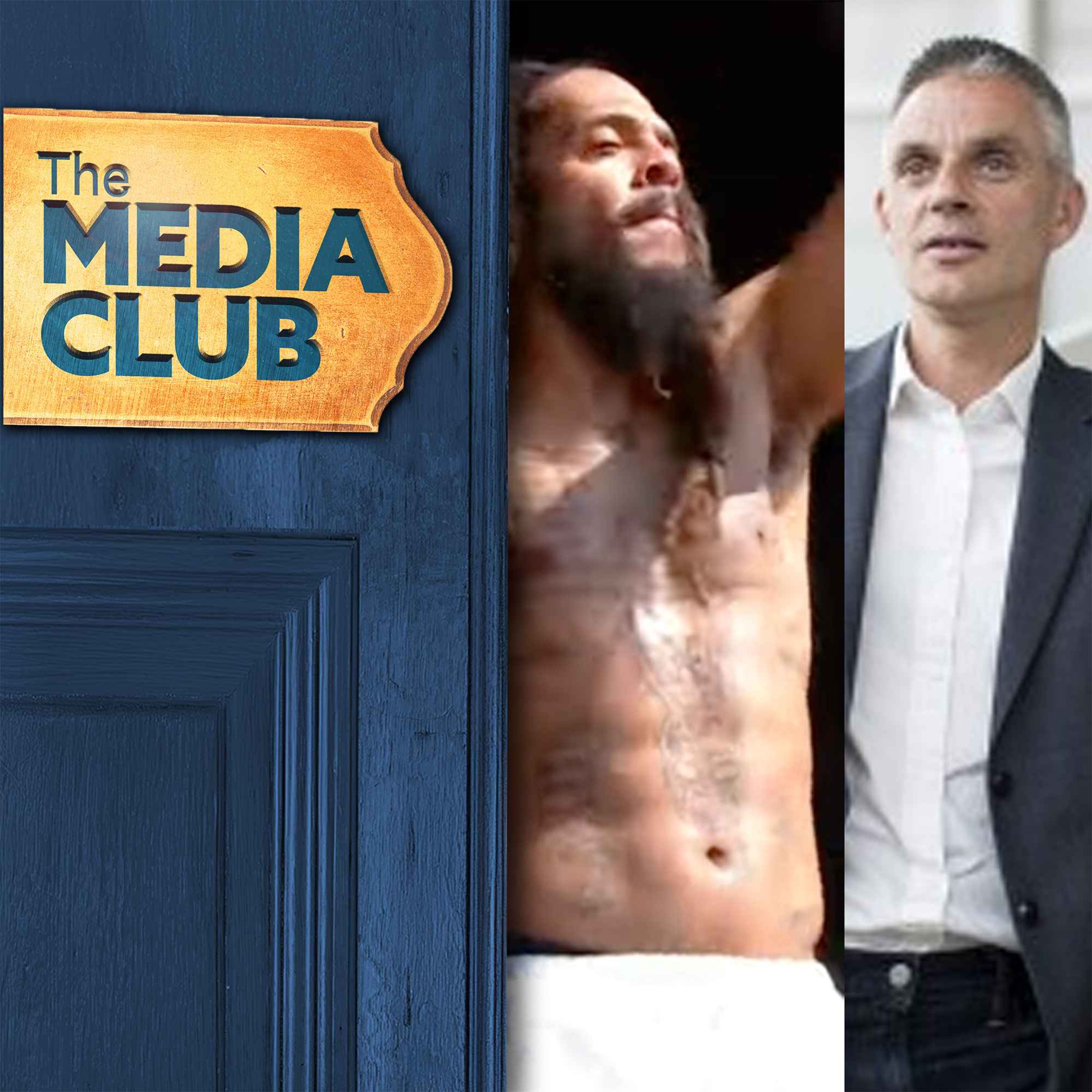
BBC Gaza Row & YouTubers And Podcasters Seek New Status
In short
UK creator/podcaster push for government recognition; BBC editorial controversies over Gaza documentary and a Glastonbury live-stream incident; media industry consolidation and AI-driven disruption in advertising and content.
Guests and backgrounds
Tim Burrows, Australian media executive and journalist; helped launch Mumbrella (2008), later sold it (2017), then co-founded Unmade (Substack-funded) and returned to run Mumbrella/Unmade under the same family. Karen Robinson, Edelman executive focused on communications/PR strategy and crisis management.
Key claims
Government legitimacy affects funding, statistics, and investor respect for creators; tax credits for podcasters are unlikely soon due to political risk and budget priorities. BBC must “reset” around journalistic integrity and public-broadcaster mission; Gaza doc cancellation was editorial judgment, while Glastonbury issue was partly misreported and technically constrained. AI scraping and ad “black boxes” (Facebook/Google Advantage Plus/Performance Max) threaten traditional media and agency roles.
Notable examples
YouTube report urging UK government recognition for creators; Audio UK’s similar call for podcasters; BBC Gaza doc pulled then aired by Channel 4; Glastonbury stream allegedly included incitement of violence; Australia’s News Media Bargaining Code and platform “shakedown” deals; MADFest discussion of Sorrell and AI ad automation.
Written by AI. May contain mistakes.
Chapters
2:18
Greet and Introduce Tim Burrows
Tim Burrows discusses his media career and recent experiences.
“Welcome to the So for the First Time, Tim.”
2:41
Tim's Media Background
Tim shares his journey through the media industry and his roles.
“And here I am now, I think earlier in the week, maybe wishing I was back there.”
3:29
Creator-led Media Ventures
Tim discusses launching and running creator-led media businesses.
“reaction to the existing media titles that were in the market was very kind of fleet of foot and And you sold that business a few years ago.”
3:52
Media Club Membership Discussion
Discussion about adding influential figures to the Media Club.
“So, yes, I was part of the team that started Mumbrella in 2008 against two very kind of traditional publications, you know, both sort of weekly print titles at the time.”
4:55
Clara Balding and BBC Coverage of Wimbledon
Karen highlights Clara Balding's contributions to Wimbledon coverage.
“The CEO of Cloudflare, which is one of those organisations which we don't really know what it is, but it's there and we don't appreciate it until it's not.”
7:00
Impact of Sports Rights on Media
Discussion on the significance of sports rights in media ownership.
“But I've been watching a lot of Wimbledon and I just want to give props to Clara Balding who always does such a fantastic job of chairing all the coverage for BBC, for Wimbledon on BBC.”
9:03
Government Recognition for Creators
Exploration of the need for government recognition in the creative industry.
“And when I was looking at my AI transcript, rather than transcribing it as live sports, it transcribed it as life support, which feels appropriate in the circumstances.”
12:15
Tax Credits and Funding Challenges
Debate on the viability of tax credits for podcasters amid budget constraints.
“just in terms of where the money actually ends up.”
13:00
Personal Experience as a Creator
Discussion on the shift from traditional media to independent creation.
“Yes, easy to ignore or to punt into the long grass.”
13:20
Media Evolution in Australia
Tim discusses the current state and evolution of media in Australia.
“Well, I suppose, I guess because we got to the point with Mumbrella, which it had become quite big, but it started off as me in front of a screen and a WordPress template.”
Show all 22 chapters
16:01
BBC's Turmoil over Gaza Coverage
Discuss the BBC's recent controversies regarding their coverage of Gaza and the implications of editorial decisions.
“for the Israeli army and then news that the most recent Gaza doc was to be canned and then it was picked up by Channel 4.”
21:03
Challenges for Public Broadcasters
Examine the challenges faced by public broadcasters like the BBC and ABC amid political pressure and public scrutiny.
“It's like this is what they were trying to ward off with the dog.”
24:39
Navigating PR in Conflict Situations
Learn about PR strategies in handling sensitive topics, particularly in conflict situations like Gaza.
“And so and so I am not surprised considering what we see from our clients, how desperately they're trying to stay out of this territory altogether and how that does not save them.”
28:00
Introduction to Podcast and Promotion of Podshop
Learn about the Media Club's production quality and how Podshop enhances podcasts.
“A lot of telechat on the show today, but what do the Media Club and your favourite chat shows have in common?”
31:00
Headlines Discussed in the Media Club
Explore current media headlines and controversies impacting the industry.
“Here's a few headlines we've been discussing in the club this week.”
31:46
Analysis of CBS and Media Companies' Decisions
Discuss the implications of media companies' decisions in the context of Donald Trump and journalism.
“And in somewhat related news, CBS has settled with Donald Trump over their 60 minute interview with Kamala Harris.”
32:18
Analysis of CBS and Media Companies' Decisions
Discuss the implications of media companies' decisions in the context of Donald Trump and journalism.
“Karen, more chilling effects in American newsrooms.”
33:58
Insights from MADFest and Advertising Trends
Gain insights on trends in advertising and AI from the MADFest experience.
“Now, some people might know what this is.”
39:28
Comparative Media Analysis: Australia and the UK
Learn about the differences and similarities in media practices between Australia and the UK.
“Look, I tend to come back maybe once a year or so.”
41:35
Media Quiz Segment: A Reversal of Fortunes
Participate in a fun media quiz that challenges your knowledge of current events.
“And of course, anything levy-based has suddenly become completely radioactive.”
42:01
A Reversal of Fortune Quiz
Participants engage in a media-themed quiz based on unscrambling headlines.
“Buzz in with your name if you know the answer.”
45:56
Discussion on BBC Charging Audiences
Hosts discuss the implications of BBC potentially charging US audiences for content.
“My thanks to Tim Burrows and Karen Robinson, and of course to Alex at Audio Network for this week's Suite of Music.”

Ask about this episode
Get the gist, explore an idea or ask about something said.
 Claude
On The Media Club with Matt Deegan, what are the key points of this episode?
Searching your listeningTranscript
Automatic transcript. May contain errors.
0:00Your call has been forwarded to an automatic voice message system. A missed call doesn't feel like anything. No red flag, no notifications screaming at you. It just disappears into your call log. And nine times out of ten, that was someone ready to hand you money. That's why today's episode is brought to you by Quo, spelled Q-U-O, the business phone system built so you never miss a call. Here's what I like about it. All your calls, texts, and voicemails live in one place, so anyone on your team can pick up a conversation, see the full history, and respond fast. No more, wait, who talked to this customer last?
0:36And if you're worried about after-hours leads slipping through, Quo's optional built-in AI agent can answer questions and even book appointments while your team's offline. It's the number one rated business phone system on G2, and over 90 ,000 businesses already trust it to stay reachable. Money is on the line. always say hello with Quo try Quo for free plus get 20 % off your first 6 months when you go to Quo.com slash tech that's Q-U-O dot com slash tech 500 orders a month was manageable 5 ,000 is madness embrace intelligent order fulfillment with ShipStation the only platform combining order management warehouse workflows, inventory, returns and analytics in one place would use to take 5 separate tools ShipStation does in one Automate fulfillment and rate shopping to ship up to 15 times more with up to 90 % savings.
1:28Go to ShipStation.com and use code AUDIO to try ShipStation free for 60 days.
1:38Hello, welcome to the Media Club. I'm your host, Matt Deegan. In the show today, why do YouTubers and podcasters want government recognition? Tim Burrows of Unmade Media joins us to discuss the perils of securing a mortgage as a digital creator. Also on the show, amid Glasto controversy and Channel 4 picking up a supposedly partial doc on Gaza, does the BBC need to reset its news coverage? Edelman's Karen Robinson fills us in. All that plus, after years of conglomerates and consolidation, is the media business about to get a lot simpler? And in the Audio Network Media Quiz, we try out another shiny floor format destined for primetime.
2:14Probably. That's all coming up in this edition of the Media Club. Come on in.
2:23Welcome back to Karen. Welcome to the So for the First Time, Tim. Tim, you're over from Australia. Yes, lovely to be here in the Dream Factory. Even more lovely to be in London in a week like this. A week ago, I was chipping ice off the car windscreen in Tasmania. And here I am now, I think earlier in the week, maybe wishing I was back there. Well, you've got an interesting media background in the UK, maybe best known for Media Week and being led to Media Week here. So Media Week was my first foray into writing about the media industry. So that was here in the UK where the Media Week, as it was, was very much about the relationship, the commercial relationships, media sales and the media agencies.
3:11then yes a short foray into uh into dubai where i launched uh was the launch editor of campaign the campaign's middle east edition and then yes about 20 years ago i got the call to head across to australia thought i'd do that for a couple of years and here i am an australian yeah so you ended up um running mumbrella uh sort of which i guess when it started was a sort of reaction to the existing media titles that were in the market was very kind of fleet of foot and And you sold that business a few years ago. And then you ran your kind of owned, more kind of creator-led media empire, sort of sub-stack-esque thing.
3:52Yeah, that's right. So, yes, I was part of the team that started Mumbrella in 2008 against two very kind of traditional publications, you know, both sort of weekly print titles at the time. So we sort of came through the middle, just did all of those traditional B2B publishing things, you know, running conferences, running awards, running events, but just not having a print component. As you say, yeah, sold in towards the end of 2017, stuck around for a while, then ended up, I was lucky enough to be part of the Substack program that they did for a while of funding some journalists to come in. And so Substack funded our first year of Unmade.
4:33And then when we had the opportunity to be part of the team that brought back Mumbrella earlier this year, we now have Unmade and Mumbrella both part of the same family. Yes, interesting to return back to the old place. So you've now got your Media Club membership. Who are you adding to our roles as your plus one? It's very exciting to have the opportunity. So Matthew Prince, I'm going to nominate. The CEO of Cloudflare, which is one of those organisations which we don't really know what it is, but it's there and we don't appreciate it until it's not. So it powers the back end of most media publications we know.
5:10It's like a big cash, isn't it? That sort of stops security coming, stops kind of people doing nefarious things, keeps your site up and big sites. It is. And it will just sort of if you're getting a lot of demand, then it will cope with that demand for you. Now, this week, Matthew declared Content Independence Day. Now, really what this is, and it was actually great PR because, of course, it framed it around blocking the AI scrapers. So it's arguably what the media world should have done 15 or 20 years ago when they lost the ground to Google and search. and this time there's the opportunity maybe just maybe for media owners to to stand by and monetize their content so it's nice it's a it made me think of um uh die hard that line of welcome to the party also they can they can make large scale impacts on a lot of sites obviously people can opt out of this if they want to i guess it helps them save on bandwidth as well i mean they're kind of a bandwidth company too and a lot of these these scrapers are sort of non-stop scraping kind of them look one of the fascinating things is how quickly the demand has spiked like you know we actually noticed just last weekend on mumbrella suddenly we started running slow because we were getting so much ai scraping going on so you know that's a thing and also frustratingly for media owners of course the way it works with bandwidth is we're paying them for the privilege of them scraping our content.
6:45So yes, let's band together and do something about it. Well, he's a good addition. He can also fix our website. So that's good too. Karen, who are you going to add to our list this week? So I'm going proper old school. I'm picking a legend of the British media who's probably already in the media club because she deserves to be. But I've been watching a lot of Wimbledon and I just want to give props to Clara Balding who always does such a fantastic job of chairing all the coverage for BBC, for Wimbledon on BBC. And I think I particularly want to take this moment to kind of just represent the work that they do on that show throughout the piece, because BBC's right to broadcast Wimbledon is potentially it's coming up by 2027.
7:25It may or may not still be with BBC. Now, interestingly, of course, the way that Ofcom's regulations are, Wimbledon is one of the kind of tier one sports that has to be free to air. so that's really nice so it will need to be broadcast free to air in some way but they can also share the coverage out so we could lose some of that Yeah, if you look at what Discovery have done I mean, you don't get a lot there's nothing on that doesn't have to be on Yeah, I mean, I watched the French Open I'm a big tennis fan so I watched the French Open on TNT had to buy a subscription to do it got a bit grumpy about it even though the coverage was fantastic so yeah, I think just let's take a moment to represent Claire No, great broadcaster And I mean, Odd is sort of a sort of super freelancer, really.
8:10She does that, Crufts on Channel 4, to be able to cope with all those things. Yes, she's been an excellent member. I think she's been a lot of fun as well. And it's interesting, both Glastonbury and Wimbledon are perhaps up for grabs in a few years' time. They might be glad to be rid of Glastonbury. Yeah, I mean, we'll talk about that a bit later. I mean, both of them have done incredibly well off the BBC's coverage. Yes. And for sports rights holders, a lot of them have taken the money and the success of their sports have dropped. So it's a big decision, isn't it, for sports owners to decide what they want?
8:45Look, funnily enough, I was at a conference this week, the Madfest, and listened to Martin Sorrell present. And he was making the point that sports rights, particularly live sports, are the one thing that are holding up for the traditional owners. And when I was looking at my AI transcript, rather than transcribing it as live sports, it transcribed it as life support, which feels appropriate in the circumstances. It does. I mean, essential for linear television and also the thing that Netflix and the streamers really want to take on next. You mentioned Martin Sorrell. Can I just deviate into a wild tangent?
9:22Did you see his comments where he was asked about what he thought the future for agencies would be? And he said, well, I think the man need to think about breaking them up. And I thought that is the most hilarious thing I've ever seen. The single man who created WPP as, you know, an integration powerhouse. Now he's running his own smaller shop. And funnily enough, he thinks maybe the big boys should be broken up. Just blissfully hilarious. We start with something of an existential crisis this week. After consulting thousands of independent creators this week, YouTube released a report saying the UK government needs to recognise their contribution to the creative industry.
9:58This also comes after Audio UK, called last week for pretty much the same thing for podcasters, saying podcasting and audio are no longer fringe media. They are vibrant, fast growing industries that reach millions of listeners, create thousands of jobs and showcase British creativity to the world. Karen, what does it matter what the government thinks? Why do all these people want their blessing? Well, I mean, it's not just kudos, although they do like the kudos. I think, you know, the way that we report our statistics changes a lot about how industries get funded, get respected, are able to accrue funding from investors and so forth.
10:33And right now, YouTube and I think we'll come on to podcasting in a bit is not broken out in that way. So it's not fully reflected. And it's treated more as a DIY media as opposed to the truly professional media that we know it to be. So these things do have lots of impacts in terms of kind of how seriously they're able to be treated, you know, as I say, funding inflows, and even just accurately representing what the media industry today looks like. I think it was interesting that the, I mean, both, but particularly on the audio side, isn't recognised in the government's like creator group. And radio's done 100 odd years, I think it deserves shortly to be on there.
11:16I guess so. And I was kind of amused by this suggestion, you know, the Minister for Influencers, which is perhaps a little self-serving. But yeah, you can see the attraction of it because it just gives it that extra level of legitimacy. And the tax credits thing is interesting. Audio UK have really been pushing for tax credits for podcasters. I mean, Karen, there's a bit of a question whether we're still even going to see the tax credits survive or be expanded for telly. I mean, the government are sort of short of a bubble too. Is Audio UK's demands going to fall on deaf ears? I mean, we'll wait and see.
11:54I don't think the government is scrambling to find money under every sofa cushion. So I don't think they're going to be necessarily looking to kind of add extra tax credits for the podcasters. Although I would argue that it would be a better place for them to spend their money than the kind of massive shift that they're trying to make to support AI, just in terms of where the money actually ends up. Because podcasters are, there is a huge UK-based podcast industry. All the AI work is actually, you know, it's based in the US. It's not contributing enormously to the UK economy. So, yeah, I think there would be some argument for it, but it doesn't feel like that's the way the government's mindset is.
12:35I would love to be wrong. I think one of the issues as well with tax credits is it's suddenly become such a political hot potato because of the whole US situation with anything that looks like a subsidy. Suddenly Trump has a problem with it. We heard what he said about the film industry and standing firm against that. So all of a sudden, there's just this extra political dimension which just makes it, I think, possibly just too hard. Yes, easy to ignore or to punt into the long grass. But, I mean, they're right, aren't they? I mean, you're interesting in that you sort of, you've worked for big media, you had a largest organisation with Mumbrella, then you kind of became a creator.
13:17Did it reset your views when suddenly you were sort of just you and your keyboard? Well, I suppose, I guess because we got to the point with Mumbrella, which it had become quite big, but it started off as me in front of a screen and a WordPress template. Yes. So I suppose it felt really more like going back. It was quite deliberate I ended up on Substack, though, because I was fascinated by that as a format. And, of course, it's particularly friendly and designed for individuals or, you know, small groups of people. You know, the tools are so good. You know, it did 15 years on or whatever, it did feel a bit like going back to those early exciting days of WordPress.
14:03And do any of these stories kind of chime with you with what's happening in Australia at the moment? Where's the evolution in media? Is it just reflecting what's happening here as well? Yeah, look, I think one of the things is I think we are seeing kind of a simplification of things to a certain extent. So if you look at kind of some of the ownerships of the certainly the listed media companies, you know, nine would be the biggest locally listed company. Big TV network. Yeah, big TV network. Back in 2018, they merged with Fairfax Media, which was one of the big publishers. Now, they're in the process of selling their real estate platform domain, which they owned 60 % of, which has given them a sort of a little bit of a fund.
14:44Now, they've spent some of that money on acquiring the Premier League rights from Optus, which was the local, one of the local telcos. So it certainly feels like what Nine are doing is they're resimplifying to being predominantly, certainly at the centre of it, a live sport company. Still doing lots of other things as well. But we're similarly seeing a simplification of a couple of the major audio companies. So Southern Cross Osterio, one of the players, have sold their TV licenses to go audio only. Just this week, ARN Media, the other player, and they're sort of aligned with iHeart kind of globally.
15:23But they have owned a big creative agency. They've just sold their stake in that. So everyone seems to be like resimplifying. And I don't know if that's like a reaction to a more complicated world. So you want to make things simpler for your investors or for your clients. No, it's interesting. Every market has its own problems and then it faces the wins that come particularly from America and for AI. Someone else has had a bit of a tumultuous week is the BBC. Every week is a tumultuous week for the BBC. with uproar over a Glastonbury live stream that included an incitement of violence for the Israeli army and then news that the most recent Gaza doc was to be canned and then it was picked up by Channel 4.
16:09I mean, Karen, this is sort of standard issue BBC disasters that come on. I'm slightly torn by this. I'm always, is this in the cock-up category or in the sort of conspiracy category? and have they been unlucky or is this a problem of their own making? Yes. But I do want to thank you very much for coming to me because anybody who's asked to speak on Israel-Gaza related issues always comes out well of it. So I look forward to my immediate cancellation. But yeah, I think I would take the two things a bit separately because for me, the Gaza documentary is a question of editorial judgment. um the glastonbury one is they were quite unlucky to be fair um and i think they're already starting to look again from a glastonbury point of view and i've seen some reports that maybe live broadcasts are you know going the way of the the dodo um because it's just not safe enough for for brands like bbc to do a live broadcast anymore or a live stream indeed as it was not even a broadcast i thought it was fascinating how how nobody who was reporting on it sort of understood what it was that was broadcast and how it was broadcast.
17:21So as I understand it, it was on iPlayer, on one of the sort of sub-channels, watch a stage. It's a stage that's sort of lower down the list. I imagine thousands of people watching it, if that. So it was available on the BBC iPlayer, but it was not on BBC One in any way, shape or form. And I think it was misreported as if it was. Yeah, and then you could, because of the nature of these things, you could pause it and go back and see it. So if you weren't offended the first time, you could rewind and be offended. And I think there was a bit where if they pulled it, it would have been a bit of a technical pain in the ass.
17:58And I think that's what drove a lot of the decision. Yeah. But of course, it's Israel Gaza. But it's Israel Gaza. So, you know, any content in that area is really challenging. And of course, you know, as a public broadcaster, you have to be particularly concerned about anything that could be legally in the territory of a threat to violence, even leaving aside the political situation. So they were in a very tough situation, could have certainly dealt with it better. But I don't think anyone could reasonably argue that they could have known what was about to happen. They could have technically dealt with it a bit better.
18:34But I think that was in the category of unlocking. I suppose the issue was Bob Villain, absolutely they couldn't have seen it coming. But then kneecap, there was a little bit more warning, wasn't there? And of course, they were probably a bit better prepared than to react to that. Also, I mean, there's a bit of this, what's the story every year? How dare the BBC send all these people to Glastonbury? So like, OK, a lot of which are actually volunteers and aren't in hotels. And just it's nice to send people, but also they are working on it. and so I bet there's a bit of they haven't got as many people as they used to that cover a lot of these things.
19:10Also didn't help that Tim Davey did make a decision on the day about this too but then on the Gars documentary the BBC chose not to put it on air and instead Channel 4 kind of picked it up I mean this is where it was a little more of an editorial decision by the BBC who basically said that they sort of thought the documentary was fine but they were kind of concerned it would give the impression of being impartial. I mean, that's pretty dangerous. It's really tricky territory. And I think, and the fact that Channel 4 broadcast it the next day, it was the very next day, I think, of when the BBC was meant to broadcast it, shows you how dangerous territory the BBC is operating in and what a fine line they walk and frankly stumble over quite a lot of the time.
19:59Even though Channel 4 is also a public broadcaster in a different guise. It is, on the one hand, it is a question of editorial judgment that they are perfectly free to make. On the other hand, if they come out and say, effectively, we did it because we thought it was a bit politically sensitive, even though we think it was editorially fine, then you start to ask, well, how can, in a conflict that has two sides in which perfect things are happening, journalistically, you would like people to say, what we're doing is editorially making judgments in the best interest of finding the truth and reporting it to our audience.
20:36But I think you can argue it either way because I also think the BBC also has a right to make editorial judgments based on its own role as the type of public broadcaster that it is. And Channel 4 has a right to make its own editorial judgments. Also, I thought it was fascinating for a PR position. So you've got everyone arguing how dare the BBC pull this documentary for PR reasons. Whilst in the same week, they're pilloried for not pulling a thing and being terrible, generating loads of bad PR. It's like this is what they were trying to ward off with the dog. They're in a no-win situation. And I think then you have the added layer.
21:13There's the letter that went out to Robbie Gibb, who's on the BBC board. We've talked about him many times on this podcast before. And so there are some allegations. There's some question whether he was involved in that editorial decision. if that were true then again that would be troubling and not what you would like to see and the board is not meant to be interfering at that level so there's another layer there's another turn of the screw that we have to look at and then of course a letter went out from hundreds of creatives across the UK again objecting to Robbie Gibb who I think has plenty to answer for.
21:46I mean Tim it's interesting I mean the ABC in Australia and you do basically a similar show to this on the ABC I mean they face similar issues that the BBC do it's in the interests of other media companies to give them a kick in? Yeah, they do. So yes, declaration of interest. Yeah, I do present MediaLand, but I'm not a spokesperson for the ABC. But yeah, they've certainly been quite heavily criticised for what some people have seen as timidity in how they report the conflict. The absolute flashpoint, though, was there was a presenter, just a fill-in presenter. This was the Christmas before last for a week.
22:27She had shared some posts about the human rights situation in Gaza. And there was a lobbying campaign which went into the chair at the time. What we then learned later, because there was a court case, was that she passed on these messages internally, put the management under pressure until they took this presenter off the air, Antoinette Latouffe. They took her off the air halfway through her only shift of what was only going to be a week. She went to court, successfully sued that she was wrongfully terminated. So that result only came in last week. And reading the judge's decision is absolutely excoriating of the internal decision making.
23:16You know, it was very clear that the management were lobbied and were influenced by the lobbying and were very concerned about how things would come across. So it's hard to argue that they weren't swayed. I mean, Karen, there is a PR battle. I mean, it seems almost dreadful to talk about the media implications of a horrific humanitarian disaster and, you know, from both sides, issues that have happened. But there is active lobbying because they want their point of view and we see lobbying in all forms of life. But it can be chilling and particularly for media organisations. It's difficult. You can choose to live a much easier life, can't you, if you choose to cover some other stories?
24:06I think this particular, the Gaza-Israel conflict, I think is probably the most difficult and no-win situation of anything that we deal with in PR. And without naming any names, we have clients who have been, you know, gotten into hot water for this. And literally, in several cases, not because they have taken any position on the conflict whatsoever, right? Tangential things happen. But because there is so much heat on both sides of this, because, as you say, it's a violent and horrible conflict and both sides think the other is entirely responsible. It is a no win situation. And so and so I am not surprised considering what we see from our clients, how desperately they're trying to stay out of this territory altogether and how that does not save them.
24:51Right. There is there is no safe space away from the Israel Gaza conflict, especially if you are a global company of many of our clients are. I'm not surprised that the BBC is is is getting it as bad or even worse, especially considering the delicate political position that they're in. So the only thing that, you know, I can suggest, as I suggest to all of my clients is sit down and have a good think about what your principles are. What is the mission of your organization? What are the what are the core beliefs that drive you and your customers? because people are going to criticize you no matter what you do.
25:24So decide what you stand for, decide what you do, come up with a good rationale for kind of what types of decisions you should be making under this basis because there's nothing you can do to avoid the criticism. And in the BBC's case, I think they need to have a really good hard think about what does journalistic integrity mean to them and specifically what is the journalistic role of a public broadcaster. And I think the whole conversation about balance, I think, has, in my personal opinion, has caused the BBC to lose track a little bit because their mission is not balanced. Their mission is serving the public because sometimes stories are unbalanced.
26:01Now, Israel Gaza is a particularly, you know, fraught. There's horrible things to say on both sides. So there's no heroes here. But, you know, I think it's, you really just have to come back to your core mission. That would always be my advice to my clients would be stop and think about what you do and while you do it, all of your decisions should be based on that. I mean, for Tim Davey, who has done pretty well as running the BBC, I mean, there's been a lot of landmines that he has sort of stepped around, occasionally been hit by some shrapnel, but it's been relatively untouched. I mean, we had Lisa Nandy say quite a tough line about whether the organisation should be looked at more closely.
26:40Do you think this is bad news for Tim? Is he going to survive this one? I think the one thing you learn about the BBC is you never know which is the one that's actually going to get them in the end. And that's, you know, if we look at the history of the last 20 years, you know, as often as not, it ends in failure. But if you looked at the beginning of the crisis, you probably wouldn't have known that was the one that was going to do for them. So I suspect when it comes, it'll be a bullet that he doesn't hear whizzing towards him. Yes, probably likely. Okay, when we return, more from our guests, including maybe asking Tim about Madfest and how that was.
27:22We'll see you in a sec.
27:30Hello, Media Club listeners. Patrick here from Podcast Discovery, the podcast marketing company, where this week we've been thinking about when it's time for a rebrand. For many people, the visual content that comes out of their podcast can be as useful as the audio itself. But how do you make sure that that content matches what listeners will hear when they play your show? And what if the look doesn't live up to the time and effort you put into making the podcast? To talk branding or anything else to do with podcast marketing, head to podcastdiscovery.com. That's podcastdiscovery.com. A lot of telechat on the show today, but what do the Media Club and your favourite chat shows have in common?
28:08Well, aside from sharp conversation and standout guests, both shows are filmed in top tier studios. These days, people aren't just listening to their podcasts. They're watching them too. And thanks to Podshop, our show doesn't just sound great. It looks great as well. So whether you're just starting your podcast journey or a seasoned pro like us, Podshop's the ideal space for recording content that stands out from the crowd. So you can focus on the talking and leave the rest to the experts. and for a limited time you can get 25 % off your first booking here at Podshop Studios. Just use the code MEDIACLUB when booking online at podshoponline.co.uk.
28:50So don't miss out. Head to the studio page at podshoponline.co.uk and claim your 25 % off. Business is booming. Is your fulfillment ready for peak season? Switch to ShipStation now and handle more volume with confidence when it counts. ShipStation connects Shopify, Amazon, TikTok Shop, and over 200 more integrations with one platform that does it all. You can manage orders, sync inventory, track returns, all automatically. Everything your operation needs, all in one place. Right now, qualified shippers get a real dedicated person to get you set up and switched over for free. So when peak season hits, you're ready to go.
29:25Switch today at ShipStation.com, code audio. Your call has been forwarded to an automatic voice message system. A missed call doesn't feel like anything. No red flag, no notifications screaming at you. It just disappears into your call log. And nine times out of 10, that was someone ready to hand you money. That's why today's episode is brought to you by Quo, spelled Q-U-O. The business phone system built so you never miss a call. Here's what I like about it. All your calls, texts, and voicemails live in one place. So anyone on your team can pick up a conversation, see the full history, and respond fast.
30:02No more, wait, who talked to this customer last? And if you're worried about after-hours leads slipping through, Quo's optional built-in AI agent can answer questions and even book appointments while your team's offline. It's the number one rated business phone system on G2, and over 90 ,000 businesses already trust it to stay reachable. Money is on the line. Always say hello with Quo. Try Quo for free. Plus get 20 % off your first six months when you go to Quo.com slash tech. That's q-u-o dot com slash tech. Hi, it's me, your gutters. I want to start by saying I'm fine. Everything is totally fine.
30:39There's just, there's a lot of debris up here, and I've been managing it mostly on my own for about eight months now, and I just thought maybe you could find someone on Angie to clean me up. You don't have to make it a whole thing. It doesn't need to be a whole thing. I just, I could really use your help. Your gutters have waited long enough. Find a pro at Angie.com.
31:06Welcome back. Here's a few headlines we've been discussing in the club this week. Tony Blackburn has hit our Ofcom's decision to block Radio 2's Extra Station, calling it a disgraceful decision from an organization which is totally out of touch. Phil Riley of rival Boom Radio handed out an olive branch to Blackburn, though, telling Radio Today that if he ever wants to come join Boom Radio, the door is always open. Paramount acts has now fallen in the UK with news that MTV has cancelled shows Gonzo and Fresh Out UK with most of its production staff exiting the company. It follows a more general policy of producing fewer local programs in favour of shows that work in multiple territories.
31:46And in somewhat related news, CBS has settled with Donald Trump over their 60 minute interview with Kamala Harris. in a sign of how ridiculous the world is, it's likely that the$14 million check will perhaps go some way to help grease the wheels of the merger between Skydance and Paramount, which needs FCC approval. Links to all of the stories we talk about on the show are available on our sub stack. Just go to themediaclub.com to sign up. It's free. You need a lovely email from me every week. Just head to themediaclub.com. Karen, more chilling effects in American newsrooms. CBS following ABC's lead.
32:24It's going to be media companies giving in that pay for Donald Trump's library. Yeah, he's doing very well out of it. We wouldn't legally want to call it bribery. So we definitely won't do that. But it is very, very concerning to me how quickly and how comprehensively media companies are rolling over. And I think it's just a sign of what you're seeing that it is now media conglomerates rather than journalistic practice that is that is taking place. I mean, the Kamala Harris interview was a pretty I actually saw it live. It was a pretty ordinary presidential election media interview, as you do.
33:04and I think the notion that a broadcaster should not broadcast an interview with one of the two major party political candidates close to the election just doesn't stand up to the laugh test. I mean when they put out the rushes I mean it was fine. It was 100 % it was absolutely fine there was nothing nothing inappropriate about it it is absolutely clear that they that Trump would have lost that case had it gone to trial um but it is in the media and company's best interest to not do that so yeah it's interesting the 16 minutes team and the cbs news team about how they do they do anything can they do anything um the drive for that business to be you know sold is so important yeah um it's not it's out of their hands it's really not a decision taken at the news level.
33:54Yes. So Tim, you've been here in the UK and you've popped into the MADFest this week. Now, some people might know what this is. Others might not. I think it stands for Media Advertising and Disruption. Yes. And then FESF for Festival, obviously. And advertising people don't do conferences. They do festivals. It's a bit like the slightly more famous Cannes Lions, the Festival of Creativity over in the south of France, which, of course, is a conference as well. But, you know, it's on a big scale. So it takes place at the old Truman Brewery on Brick Lane. And, you know, I'm told and I believe the number that it's more than 15 ,000 marketers coming through.
34:35So it's heaving. It's energetic. You really get the sense that most people there are for the kind of non-traditional part of the media. You know, everything's digital. you couldn't go more than a few, well, firstly, you could go more than a few meters without seeing some very pale legs. But then you couldn't go very many meters without people talking about AI. That was absolutely the central thing. And of course, you know, the real question and disruption around the communications industry, generally including that word of marketing is jobs. So, you know, Martin Sorrell, in his talk, sort of, he kind of referred to sort of media planning and buying jobs, maybe 250 ,000 of them around the world, mostly going.
35:25One of the things which is just fascinating was he talked about a couple of Facebook and Google products. So one of them calls it Pmax, which is performance max. And the other one is Advantage Plus. But effectively what they are, they're aimed actually at the moment at small advertisers, sort of SMEs, small and medium size advertisers and the idea is if you have a piece of advertising you need you just give them the information they create this is all through ai they create the ads and then they they just run the campaign you don't know it's just a magical black box and you you get the result at the other end now that's quite fascinating yeah mark zuckerberg was sort of saying basically just tell us what the product is and don't worry about anything else we'll get it in front of the right people yes And it's be fine.
36:11And that's quite fascinating anyway. Now, Sorrell's argument was, OK, they'll do that. They'll make it work. And then they'll go to, as he puts it, Enterprise, the big end of town. And then anyone who works in a creative agency or a media agency should really worry if that happens. because, you know, arguably the platforms have already got about 70 % of the advertising slice of pie, which doesn't leave much left for everybody else. And maybe they're coming for a little bit more. That's certainly Sir Martin Sorrell's point of view. Of course, the founder of WPP now doing S4 Capital. Yeah, I was buying some Facebook ads actually the other week, which is not something I've done for quite a long time.
36:54I was partly doing it because I was like, I haven't done this for a while. I should get my hands dirty. And I always quite liked the targeting of it, you know, work out the groups and who to target. And now Audience Max or the Audience Plus, it basically doesn't let you do anything. It's like, are you sure you want to go to the old version? Just you don't need to do any of this. And it's quite stunning. It really is. Whether it works as well, it's hard to... And that is the question, because as an advertiser, you can't necessarily see what's actually going on. And you just have to trust that it's getting the result.
37:28And, of course, you know, people love in the advertising, well, they love to talk about things like attribution modelling, you know, in other words, deciding which part of the advertising actually worked. and of course it should be complicated you know because who is to say whether it was actually that ad that got people across the line rather than the poster or the billboard or the word of mouth or the the newspaper ad for a car 10 years ago that influenced you to one day want it but um but so long as it appears to be working then then i suspect advertisers will keep going with it do you think there's a an interesting challenge for sort of traditional media owners you know modern media owners are trying to keep up with this have they got enough products themselves uh to sell to their clients or do they have to basically be the we're the non-ai company there's definitely a little thing to be said about being okay we're the artisans the bespoke people we're the we're the people for humans you know my as you know i i own a small media business and certainly we try for our position in the market to be the ones where okay when there's commoditized news we'll will do the opposite because I do certainly in Arnish kind of have a sense that often you'll see this kind of wave of press releases coming into the inbox of which you sometimes suspect these were written with the aid of chat GPT and then I suspect that at some places they're then being rewritten to news stories with the aid of chat GPT now once every human has their own agentic AI to read it on their behalf there's going to be an awful lot of news going through the cycle without any human involvement at all yeah if nobody if no human produces it no human reads it is it even news i always think if you can't be bothered to write it i can't be bothered to read it just get your chatbot to do it for you i'm interested in your kind of australia sort of british australian take back on britain um you now are sort of in in both areas i think you get to look at both sectors with an outside eye is there anything we should be learning from australia or Or vice versa?
39:31Oh, gosh. Look, I tend to come back maybe once a year or so. And it's funny because I do notice just the little changes like, oh, the billboards on the underground are moving now. Or, oh, I can't seem to get the standard in the way I used to. Or, gosh, the metro feels very thin these days. So there are all of those signals. I think the one, I suppose, kind of indicator for the wider world we saw out of Australia was the News Media Bargaining Code. So that was the law that effectively said that platforms that had a kind of unfair position in the market, and at the time they were really thinking of Google and Meta, could be forced into this mechanism whereby if they were designated by the government, they would have to negotiate with publishers about the value they derived.
40:23and it could then go to arbitrary kind of ruling on which of the two proposals was right, the publishers or the platforms. And they wouldn't pick something in the middle, they would pick one or the other, which was obviously quite risky for them. And rather than be designated, they did this whole series of deals to effectively give money to the publishers. This was about four years ago. It was a shakedown, in all honesty. It was an absolute shakedown. But it did provide a lot of funding, you know, in the tens, if not the hundreds of millions of publishers. But Facebook has since said it's not going again.
41:01It also inspired a lot of other countries to basically try and do the same shakedown. It did in Canada, in New Zealand. And I think the platforms learned from what they did in Australia and stood firmer in other places. We're now seeing the Australian government, their new policy is what they're calling an incentive scheme, whereby they're certainly stating as policy that there'll be a digital levy on the platforms, but they can offset it against the deals when they do with the publishers. But that was before Donald Trump came back to power. And of course, anything levy-based has suddenly become completely radioactive.
41:39So whether the Australian government actually has got the ticker to stick with the policy, we'll have to see. and something we face in the UK as well with our own digital tax incentives ok just enough time for the Audio Network Media Quiz let's see how much attention to the media our guests have been paying this week what's this week's called? A reversal of fortunes channeling the success of ITV's lateral thinking game show The 1 % Club I will give you a media headline in reverse order you just have to unscramble it and tell me what it all means and once again Alex Audio Network has gainly taken up this brief from producer Matt and supplied a playlist to score today's quiz.
42:21So it's the best of three. Buzz in with your name if you know the answer. So Karen, you'll say. Karen. And Tim, you'll say. Tim. Let's play A Reversal of Fortune.
42:34Views. Million. 60.1. Width. Record. Viewership. Netflix. Breaks. Season. game squid
42:52yes go on go on Karen so it's Netflix Netflix the new Squid Game season's coming out and lots of viewership yeah so the Squid Game season 3 broke Netflix viewership records with 60.1 million views have you watched this season I haven't I didn't watch it I have not now that I hear that there's going to be an English language one it just feels like I can wait for that just wait Why bother reading subtitles? Okay, time for reversal number two. Time. First. The. For. Month. A. $8.99. Audiences. Go ahead and pause in if you think you know. I'm waiting for you to say. US. Charge. To. Set. News. BBC.
43:44BBC. Yes. That was the word I was waiting for just to be sure. Yes, so the BBC are very likely to start charging overseas audiences, starting with the US, to view their wonderful content. Yes, BBC News sets charge US audiences$8.99 a month for the first time. I mean, I'm interested to see how well it does. Obviously, subscription is the way forward for lots of news publishers. Do you think the BBC should be in this market? In the US or just in the paid media market in general? In the US. uh it's the bbc does it does really well in the us um so there's bbc america um it's very well reviewed very very well viewed very well regarded um a kind of niche audience so yes definitely i think the um the withdrawal of the bbc world service and it's kind of um is is to me i think it's very disappointing because i think it was a really powerful um force for soft power um for the for the UK writ large.
44:42So I'm not a fan of kind of raising additional barriers for people to consume BBC content overseas because I think it's actually been very good for the country and very good for the BBC reputationally. But, you know, it's a potential revenue source. Let's see where it goes. OK, let's hear our final reversal.
45:02Rights, sports, UK, of value, impact, to pay TV, in decline. Tim. Yes. The perpetual prediction, which I've made this prediction many times myself and always been wrong, that the next round of sports rights are going to suddenly be worth less than the last one. Yes. And then every single time we are proved to be wrong because, as Sir Martin Sorrell was saying on stage, the last thing which seems to hold up is live sport so i know there's another prediction that the next rights fan is going to go down i don't believe a word of it yes it's you evans uh over now who's saying that it's going to go down yes it'll be interesting to see uh what happens with that so i think that makes you tim our winner congratulations as part of the prize you have to try and import the quiz to your own podcast media land i'm always happy to steal a good idea Good, good.
45:58My thanks to Tim Burrows and Karen Robinson, and of course to Alex at Audio Network for this week's Suite of Music. Remember, you can build your own, licensed from multiple platforms anywhere forever at audionetwork.com. That's audionetwork.com. So before we go, how can people keep up with your good work? Which social networks are you orbiting at the moment, Karen? So I'm on Blue Sky, Karen J.R. on Blue Sky. I also have a substack that I use for my own personal fiction writing. to keep people up with my journey as an aspiring novelist. Still trying to sell my first book, and I've got my agent reading my second book.
46:34So that's my little plug for that. And, you know, watch the space. Another kind of news from my side of things. We've been, I've been shortlisted. A paper that I've written has been shortlisted for the APG Strategy Awards. I had to do a presentation this week to see what color my prize is going to be. They tell me I've won something, but I don't know if it's gold, silver, and bronze. So I'll find out in September. We're happy back on, I'll tell you. Good luck for that. And Tim? All the usual podcast places. So please have a look for us, for the ABC's Media Land, for Mumbrella and Unmade. Gosh, I do talk a lot.
47:09That's good. That's good. Thank you both. Thank you to you for watching or listening as well. Remember, you can go to our website at themediaclub.com and sign up to our free newsletter, which we send out every week. My name is Matt Deegan. The producer is Matt Hill. It was a Rethink Audio production with video support from Podcast Discovery. We'll see you next week.
47:54sync inventory, track returns, all automatically. Everything your operation needs, all in one place. Upgrade your shipping operations to stress-proof your biggest sales days and capture every bit of potential revenue. Go to ShipStation.com and use code AUDIO and get 30 days free. Car crashes injure over a million of us every year because we're human. For over a decade, Waymo's been building a driver that's safer. statistically 10 times safer in the cities we serve not because humans aren't enough but because they're everything based on over a 94 reduction in serious injury or worse crash rates learn more at waymo.com
From the publisher
Why do YouTubers and podcasters want government recognition? Tim Burrowes of Unmade Media joins us to discuss the perils of securing a mortgage as a digital creator - as well as the latest from MADFest in London.
Also on the show: amid Glasto controversy and Channel 4 picking up a supposedly partial doc on Gaza... does the BBC need to reset its news coverage? Edelman’s Karin Robinson fills us in.
And, in the Audio Network Media Quiz, we try out another shiny floor format destined for primetime. Probably.
The Media Quiz is sponsored by Audio Network who select the music to score each episode - they can do it for you too at audionetwork.com
Become a member for FREE when you sign up for our newsletter at themediaclub.com
A Rethink Audio production, produced by Matt Hill with post-production from Podcast Discovery.
We record at Podshop Studios - for 25% off your first booking, use the code MEDIA CLUB at podshoponline.co.uk
What The Media Club has been reading this week:
YouTube calls on government to recognise creators
Audio UK calls for recognition as a creative industry
Channel 4 broadcasts BBC’s cancelled Gaza Medics doc
Australian journalist wins unfair dismissal case over Gaza post
CBS pays $16m to settle with Trump
Paramount Layoffs Hit UK As MTV Axes ‘Gonzo’ & ‘Fresh Out’
Tony Blackburn slams Ofcom’s Radio 2 decision
Squid Games breaks more records
BBC to charge US audiences for news access
Pay TV decline to hit sports rights holders
Hosted on Acast. See acast.com/privacy for more information.
More from The Media Club with Matt Deegan
All episodes
We use cookies.They keep VO running smoothly and help us improve it. Privacy policy