
 Ask ChatGPT

- Podcasts
- The Media Club with Matt Deegan
- Does News Need More Personality?
In short
The Media Club episode debates whether broadcast news needs more personality, and how news formats should adapt to podcast/social audiences. Guest Dino (Dino Sofos/Persephoneca; ex-BBC News, founder of Newscast/News Agents) argues TV news is likely losing and should lean into creator-style formats, insider access, and community. He cites BBC podcasts and YouTube “lean back” shows (e.g., Kathy Newman) and claims top podcast charts show audiences want personality-led expertise. Heather Fallon (Senior Reporter, Broadcast Magazine) supports Deborah Turness’s view that broadcasters must react to creator journalism; she highlights Ofcom constraints, community-building differences, and says TV only feels essential during major breaking events. Key examples include a Westminster live stream with Ed Balls and texts from Labour contacts, and Press Gazette reporting AI-generated finance journalists with unverifiable identities and AI profile pictures. Notable guests/figures discussed: Alice Levine and Greg James (Bad Chats), SNL UK, ITN CEO changes (Rachel Corp/ Ian Rumsey), and Australian media’s Kyle & Jackie O contract lawsuit.
Written by AI. May contain mistakes.
Chapters
0:58
Introducing the Guests
Matt introduces the guests and discusses their backgrounds in media.
“We launched a new podcast with them last week called Bad Chats.”
3:37
Launching Bad Chats Podcast
Discussion about the new podcast 'Bad Chats' and its unique format.
“So it's about, you know, fans of podcasts getting together and experiencing everything we love about podcasts, the fandoms, the inside jokes.”
6:29
Crosswires Festival Insights
Insights into the Crosswires podcast festival and its growth.
“And I think people really root for it, especially kind of comedic talent in the UK because we've lost so many of the shows that we're kind of helping get new people in.”
7:26
Spotlight on ITN and SNL UK
Heather shares insights about ITN's changes and celebrates SNL UK's success.
“Heather, Deborah Turness resigned as BBC News CEO last year, but she's been quite busy.”
8:23
Broadcast News Challenges
Discussion on the challenges facing traditional broadcast news today.
“And the journalists who make TV news need to find ways in order to reach those audiences or essentially lose them.”
10:51
The Role of Personalities in Journalism
Exploring how personality-led journalism affects news consumption.
“who is a TV news journalist, just happened to also be, you know, a Labour Party minister, was getting texts directly from people in the Labour Party that he knows well.”
13:06
Investment in News Gathering
Discussion on the funding and investment in news gathering operations.
“or like something very kind of intense, like a terrorist attack or something.”
14:00
The Evolution of News Investment
Learn how investment in news gathering has changed and its implications.
“it started with just me and some presenters, and it has now morphed into becoming a huge, huge thing that they invest a lot of money into.”
14:48
Balancing Tradition and Personality in Journalism
Explore the balance between traditional journalism and personality-driven content.
“and we do impartiality, especially in BBC news podcasts.”
16:10
The Impact of Social Media on Journalism
Understand the necessity of social media for modern journalists.
“I've recently been like, oh, God, I'm trying to reach a level of acceptance that I'm going to have to start using social media more, which is like naturally something that I'm just so averse to.”
Show all 24 chapters
17:10
ITN Leadership Changes and Industry Reactions
Discuss the recent changes at ITN and the uncertainty among staff.
“So, you know, it's not necessarily like a guarantee, although it was a very kind of sudden move where, you know, we reported like a month ago that Ian was off to Zinc.”
19:19
The Rise of AI in Journalism
Examine the increasing use of AI in journalism and its implications.
“I would say lots of women, which is nice.”
22:24
Zoe Ball and Strictly Come Dancing
Delve into Zoe Ball's audition for Strictly and the surrounding drama.
“So I think we've got to be really, really careful.”
23:11
Speculating on the Future of Strictly Hosts
Speculate on potential hosts for Strictly Come Dancing and the implications.
“She didn't get the Strictly Come Dancing job, which she talked about on the show.”
27:09
Key Media Updates and Developments
Get the latest updates from the media industry including BBC and Netflix.
“Here's a few stories we've been talking about in the club this week.”
28:06
B2B Media Conferences: Insights and Trends
Learn about the significance of face-to-face events in the B2B media industry and recent trends discussed at conferences.
“Remember, you can keep up with all of our stories by signing up to our sub stack.”
29:12
James Murdoch's Future with Vox Media
Explore the implications of James Murdoch potentially joining Vox Media and the dynamics of family media rivalries.
“So it was one of those ones where there perhaps wasn't quite as much talk of the role of journalists as I would have liked to hear.”
31:08
The Controversial Exit of Kyle and Jackie O
Dive into the drama surrounding Kyle and Jackie O's departure from ARN Media and the ensuing legal battles.
“They still own New Yorker magazine, New York magazine.”
35:15
Streaming Legal Battles in Australian Media
Understand the implications of live-streamed court cases in the Australian media landscape and the public's interest.
“Yeah, so, and it's going to be broadcast, it's going to be available to watch?”
36:49
The State of the Australian Media Market
Examine the current challenges faced by the Australian media industry amidst an advertising recession and legislative changes.
“Is this everybody just arguing their piece and then they'll get together and come up with something?”
42:00
Media Laws and Social Media Regulations
Discussion on media laws inspired by Australia and their potential global impact.
“And I think that's a mistake, by the way.”
44:00
The Audio Network Media Quiz Introduction
Introduction to the media quiz involving detective stories and hidden media insights.
“It's a best of three, so buzz in with your names when you know the answer.”
46:20
Detective Fiction Quiz Round
Participants engage in a quiz round, guessing media-related stories through clues.
“The local Bobby thinks there's nothing to see here.”
49:20
Wrap-Up Discussion and Reflections
Reflections on media formats and upcoming projects from the guests.
“I do feel like it's such a, like, people are always saying, oh, we need more original ideas, big new formats and stuff.”

Ask about this episode
Get the gist, explore an idea or ask about something said.
 Claude
On The Media Club with Matt Deegan, what are the key points of this episode?
Searching your listeningTranscript
Automatic transcript. May contain errors.
0:00If you're heading to the podcast show towards the end of May, be sure to say hello. The Media Club will be hosting our very own session. Yes, we've assembled a crack team of pundits to answer the question, what podcasters can learn from print pivot to video. Join us on Thursday, May 21st, and I'll see you there. Hello and welcome to the Media Club. I'm Matt Deegan. In the club today, as the ex-head of BBC News worries over the future of broadcast news, we ask the man who built Newscast and News Agents if we want journalists for their personality. Also on the show, sudden changes at the top of ITN, broadcast magazines, Heather Fallon, on the shock at the heart of Britain's biggest commercial news operation.
0:41All that plus what happened to Kyle and Jackie O, More tales of Australian media as we welcome back Tim Burrows. Meanwhile, Strictly goes off in a new direction. And in the Audio Network Media Quiz, it's comfy crime time. That's all coming up in this edition of the Media Club. Come on in.
1:04Hello both. Hello. Lovely to have you on the sofa. Dino, first time on the sofa. First time caller, long time listener. Yes, I think we've had you virtually. it's nice to see you in person um uh busy guy uh founder of persophonica that's the company behind miss me dig it political currency and more before that news agents and uh 14 years the bbc newscast brexit cast americast quite a lot all the casts all the cast lover cast uh so you're in your club memberships here who do you like as your plus one well i think timely that i would like to invite Alice Levine and Greg James into the Media Club, if that's okay.
1:42They're our latest signings. We launched a new podcast with them last week called Bad Chats. And we're sort of harking back to what we love about radio and podcasts. We sort of felt we're working on it for quite a while. We're friends with Alice and Greg. We also co-produced the Crosswires Festival together. And what we realized is we're missing that good old kind of Ricky Gervais show, Adam and Joe, Mark and Lard, all those kind of old school radio shows, podcasts that we grew up with. We want something without a format. So, you know, when people have been asking Greg and Alice, what's it about?
2:17They've said, none of your business. Shoot if you want to, if you don't want to, that's fine. So we're really leaning into that. And it's been really fun just kind of starting a show without an idea of what's going to come next and letting the listeners drive it. We've got a fax machine in the studio. We've got an old school voicemail. So people are calling in on landlines and leaving voice notes for us. So, yeah, it's really fun. I listened to the first one. I thought it was very good. I mean, they are two super broadcast professionals. They've got a great relationship. Obviously, you know each other quite well.
2:49I like that Alice very much puts down Greg all the time. It's a lovely combination. Yeah, and I think this is what we're looking for in podcasting all the time, right, is those authentic friendships and relationships. They're not fabricated for on air. And I think that's something we've done quite a lot of at Persephoneca with Lily and Makita, lifelong friends. Zoe and Joe worked together for decades. And I just don't think you can fabricate that or fake it. And when you get it right on podcasts, it's brilliant to listen to. You mentioned Crosswires there. So back in July? Yeah, 2nd to the 5th of July.
3:22We've extended by a day this year, which is great. So according to the Oracle, James Cridland, And Crosswires is now the biggest podcast festival in the world. And, you know, very different to what you get at the podcast show, which we're all going to be at next week. And we love it. It's an audience fan facing festival. So it's about, you know, fans of podcasts getting together and experiencing everything we love about podcasts, the fandoms, the inside jokes. Like, you know, you go to a festival, see your favorite bands. We wanted to create that space for podcast listeners. so yeah 25 ,000 people came last year so it's really big festival more this year and we've got some some huge names ellison john elizabeth day alice and greg will be doing their first live show at crosswires we've also got partners coming back so the bbc sounds have invested in crosswires in a really really big way and they're doing two stages this year so radio four are coming with their own stage with some of their i can't reveal too much now but let's say big beasts are in the area um and then a bbc soundstage we take over a disused department store in sheffield city center put a stage in for the weekend there's bars there's after parties their signings it's really really fun and although it's not an industry festival what we what we've seen is that lots of industry come to it because they get to see the listeners in the flesh and like who's actually listening to my show so it's great fun so yeah if you can if you want to come crosswise.live for tickets.
4:51Also people can go and see Fun Kids Science Quest Live. Yes, of course. Second time running, right? Yes, if you can still get tickets. I got an update today. Tickets sell fast. Well look, what we have learned is that the kids and family stuff sells out very, very quickly. So we will be doing more of that next year for sure. Also, welcome back to the club, Heather Fallon, Senior Reporter at Broadcast Magazine. Hello. Sharp Watcher of the TV business. Busy week for you this week in TV events land. Yes, we've had the BAFTAs, we've had the Media Production Technology Show, which is actually still going at the moment.
5:26And now I'm here. And trying to squeeze in some occasional journalism as well. If I can find the time. And who would you like to add to the club's roles this week? So I want to add a group, if that's OK. But saw them at the BAFTAs, just a name drop. But I would love to welcome in the team from SNL UK. Ah, yes. They've just received a second series order. and I just think it's a really nice example of making a big swing, taking a big risky commission and it succeeding. And, you know, I think as, you know, maybe an ITV show has shown in the last couple of weeks, it's really hard to actually do that and to get away with it.
6:05And, you know, even if their viewing numbers aren't always huge, they've had some sketches that have done really, really well, gone viral. And I think it's nice to celebrate them ahead of the final episode this week. Yeah, I mean, you obviously talked to lots of different people was everyone at sky thinking it was going to be a success or was everyone a bit nervous about it what do they feel i think the reception to it when it first got announced was interesting i think like a lot of tv people really backed it but i think the perception especially considering like a lot of i think british people don't find snl in america particularly funny and i think there was a lot of skepticism a lot of naysayers saying that it would be rubbish and I think people have been pleasantly surprised.
6:47And I think people really root for it, especially kind of comedic talent in the UK because we've lost so many of the shows that we're kind of helping get new people in. And this feels like a new, fresh thing where you actually see new talent doing their thing and doing it really well. I feel like the negativity dropped away pretty quickly, which is sort of unusual. We love being negative. This stuff builds. And it wasn't quite the scale, But when you think sort of like Olympics opening ceremony where everyone was like, oh, this is going to be dreadful. Oh, actually, maybe we can do these things.
7:18And just brilliant timing with the Keir Starmer, which is absolutely fantastic. Well, speaking of news, when we return, what's wrong with broadcast news? See you in a sec.
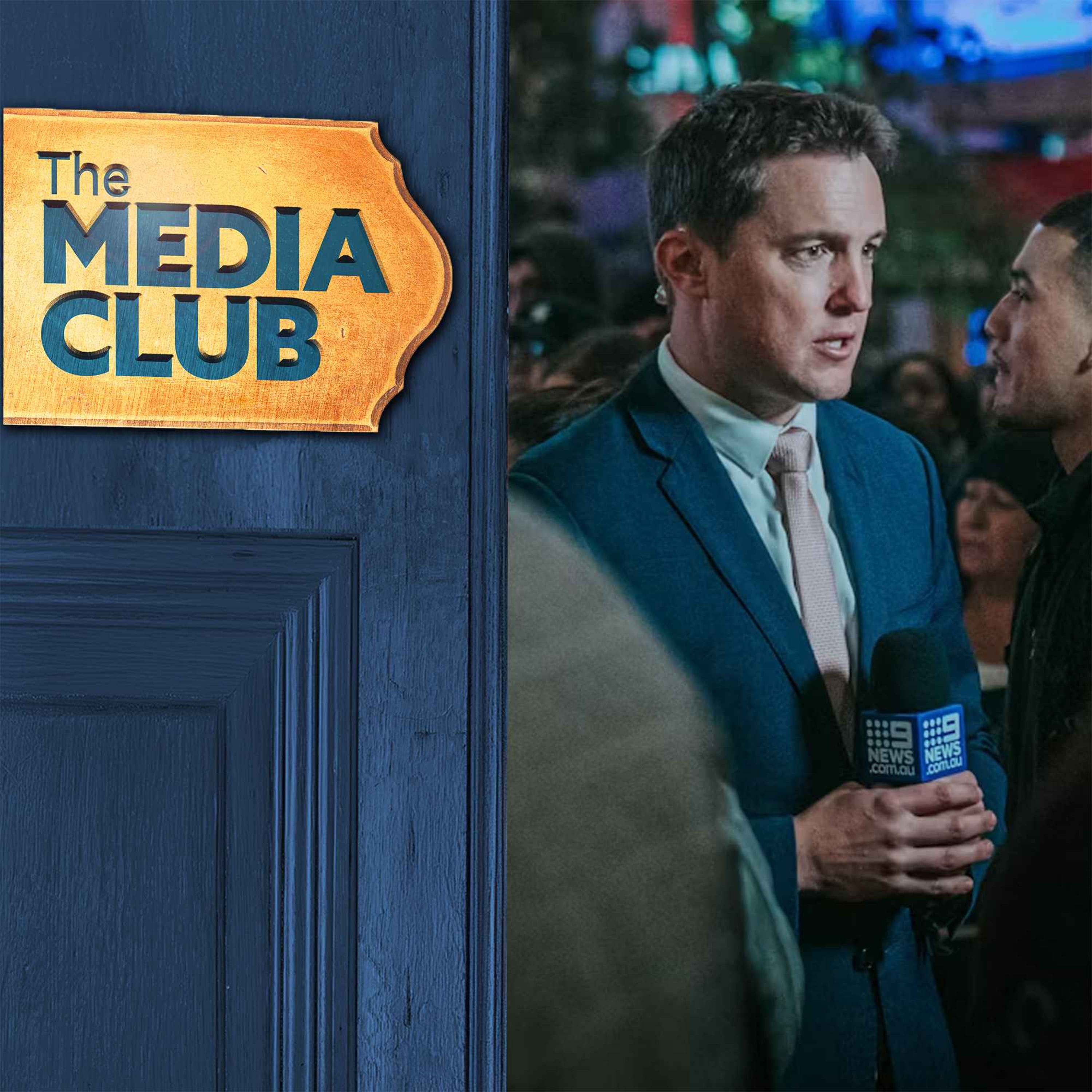
7:36Welcome back to the Media Club. Is TV news facing extinction? Heather, Deborah Turness resigned as BBC News CEO last year, but she's been quite busy. What's she been saying this week? So she issued a speech earlier this week where she essentially said that broadcasters, BBC, and also ITV, et cetera, need to react to a threat that they kind of are facing to do with personality-led journalism, creator journalism. And to be honest, I do think she's spot on with it. I know even my own news consumption has definitely started to lean towards. I definitely think that the majority of the way that I consume my news is through podcasts, through personalities on Instagram, etc.
8:21And it's essentially saying that TV needs to catch up. And the journalists who make TV news need to find ways in order to reach those audiences or essentially lose them. Well, Deanna, you created Newscast, News Agents. You try to turn journalists into stars. Aren't you part of the problem? Is this all your fault? Yeah, well, I find it quite interesting. And to be honest, I mean, I'd probably be unpopular for saying this, but I think we're fighting a losing battle trying to save TV news, to be honest. And we've been fighting that battle. Well, some people have been fighting that battle for a long time.
8:52Look, the way I look at it, and I looked at it back in 2017 when we created Brexitcast, which became Newscast and all the other casts, is that I think we realise that people like Chris Mason, Emily Maitlis, Mehdi Hassan, Louis Theroux journalists but they're also creators and the way to kind of combat this decline in people not watching traditional news bulletins is to lean into that by creating formats that people do want to watch and yes they might be clipped up and watched on social media but you know people want to spend people want to be entertained and they want to spend time with personalities that they identify with so I think for BBC News I think they're doing a brilliant job with the podcasts.
9:36And I think, you know, how are we consuming news now on social media, but also on YouTube? And I thought like last night, actually, I tuned in to watch, you know, wanted to see what was going on in Westminster. So I opened YouTube. The algorithm is obviously fantastic now. And I was served Kathy Newman's new show on Sky News, which had been, you know, produced for YouTube, basically. And it was a lot more informal and a lot more lean back. It was essentially TV news. But Kathy is a creator. She's a journalist. and they've leaned into that. And yeah, and I think, look, we just look at the podcast charts at the top of the podcast charts is always, you know, newscasts, newsagents, rest is politics, political currency.
10:13We are getting our expertise and information from these people. It's important that they're regulated and that the information is accurate. But, you know, I think the BBC can lean into that. But most of it's commentary. There's not loads of journalism in there. I push back on that. I think that, you know, look at some of the original investigations that the newsagents have done that newscasts do. But that's not every episode. It's not even every week. Not every episode. But then, look, so we just did a live stream political currency today of the unfolding events in Westminster as West Streeting resigned.
10:50And Ed Balls, who is a TV news journalist, just happened to also be, you know, a Labour Party minister, was getting texts directly from people in the Labour Party that he knows well. And he was giving it the inside track of what's happening. And I think that's really what people want these days. They don't want to just have somebody reading an autocue down the camera of something that's been scripted from PA. They want insider information and analysis. And that's why all these shows are so great. Heather? I think another part of it is like a sense of community. That's what stood out to me was where I think a lot of people consume things like news agents, rest is politics or whatever because it feels like you're kind of in the conversation with them and i think that's the issue that a lot of tv news has is that you are kind of just receiving facts and that's a lot of that is because it is a lot more regulated they have to adhere to ofcom guidance they have to you know hit all these markers that other creators don't have to and there's a lot of freedom in social media and podcasts etc i know that in her speech she she referenced joe rogan as an example who obviously does peddle misinformation because he's not going to have ofcom pull him up and fine him if he starts talking about covid vaccines right and that's that's where the problem lies and probably why maybe you know bbc journalists and others have felt like they don't have that same freedom to to go online and you know play with the format in that way but ultimately they don't start building communities like i mean even with the cross-wired festival that you were talking about there's you know people are going to that because they love ellis and john or whoever it is and they want to feel like they're part of that world and i think tv journalism just feels a bit too distant like people don't feel connected to it i mean we've always had anchors you know tv networks have always been obsessed with who presents the news or who's on the sofa on morning television uh isn't this just an evolution of kind of what we had before i will say i think there's something in because i was trying to think like when do I actually turn on the telly to watch news?
12:58And it tends to be when there is something like what's been happening today with where's street and resigning or like the outbreak of war or like something very kind of intense, like a terrorist attack or something. I think that's the last time I would like put on my news and want to watch an anchor report that rather than, you know, hearing people in a room kind of digest the week in like a reflection. and that's when I actually do think that TV news still really stands firm. But obviously, luckily, things like that don't happen every day. So it's trying to find ways to kind of protect the rest of the news outlet in order to then still have that when those major events happen.
13:41You worked at BBC News for a long time. Is the money in the wrong place for reflecting how people want to consume it? Obviously, you've got a big news gathering operation. But even that, is that too well-funded? Should there be cash into where the audiences are and what they're consuming? Look, I mean, it's been a few years since I worked for the BBC, but when I was there, the BBC News podcast department, it started with just me and some presenters, and it has now morphed into becoming a huge, huge thing that they invest a lot of money into. So I think they definitely realised that they needed to invest in that, and they're putting money increasingly in the right place.
14:17But, yes, you do have to invest in news gathering. You can't just have, you know, the presenters getting in front of a mobile phone and talking. They have to have access to Downing Street. They have to be in the field. So, yeah, you do have to have the underlying investment. And I think, look, you make exactly the right point that, you know, a lot of the examples that Deborah Ternes gave were in America. And I think actually, even though podcasts aren't regulated by Ofcom in the UK, I think podcasters do tend to adhere to the rules, you know, PIRDA and electoral guidelines. and we do impartiality, especially in BBC news podcasts.
14:54But do you think outside of the BBC, and you may think about your own shows, do you think sometimes the heritage means we do drift back to behaving like broadcast television when maybe sometimes we should drift towards maybe behaving more like Joe Rogan? No, I think we've struck the right balance, actually. And I think, you know, obviously the BBC is in its own zone. But if you look at, you know, news agents, they're able to make calls, they're able to kind of give views, they're able to swear a lot. But look, I think it's really, really valuable to hear from people like Ed Bores, George Osborne.
15:30I mean, look, when we crafted that show, we didn't want to just have two people who agreed with each other, fundamentally detested each other at one point and have very, very different views, but they could get together around a microphone and share their knowledge, share their wisdom and ultimately report what's going on in Westminster. I was thinking about other kind of newer news sources. So a friend of the show, Jim Watterson, has London-centric. He was nominated for two Orwell Prizes. And it's him and, I think, a staff of two at the moment around the kitchen table, partly. Right. I mean, he's sort of a personality journalist, if you read his stuff.
16:04Is that something that journalists have to lean into more? Do they have to think about their own personality? Yeah. I've recently been like, oh, God, I'm trying to reach a level of acceptance that I'm going to have to start using social media more, which is like naturally something that I'm just so averse to. But I do think like increasingly, like after BAFTAs, I was like, oh God, I'm going to have to make like a TikTok or something. Because I do just think that that is kind of the way that it's going. And actually, I would really value, you know, when you're kind of learning to be a journalist, that those things should be now much more incorporated into, you know this connecting with your audience in a different way because it's a very different skill and actually you know people like Jim do it really really well and a busy week uh at HR anyway for ITN as Rachel Corp stepped down as CEO with a media effect so ITN makes ITV News Channel 4 News Good Morning Britain and Channel 5's 5 News as well as lots of other current affairs programs too um heather the replacements ian rumsey uh who had just resigned to take a job at factual producer zinc yes uh mad story yeah so he's told staff in an email someone once told me that the definition of news is something that surprises you in which case today's announcement was very big news for everyone at it and i'm sure um this would suggest she is off to the bbc that is the rumor but i mean I've also heard a couple of other names circling that role.
17:39So, you know, it's not necessarily like a guarantee, although it was a very kind of sudden move where, you know, we reported like a month ago that Ian was off to Zinc. And then, yeah, you suddenly get this email from ITN that's like, oh, it's Ian. And we're like, wait, no, wait, we just said that he was over there. and I think you know the email that he sent to staff was quite funny because he was like I'm just as surprised as you are but also he obviously didn't have to say that he could say anything in that email and clearly he was surprised so something new has happened yes people did not expect something's definitely going on I do think it was interesting that um Kyla Mullins in her kind of public note didn't really acknowledge Rachel Corp.
18:30You know, congratulated Ian Rumsey, et cetera. But, you know, it is worth saying an internal note. You know, she did say some very nice things about her as well. But it was, I think, just because it is so sudden, it does raise a few eyebrows. But, you know, she's been there for over 30 years. So, you know, I think it's fair enough if she wants to move on and do something different. I think, you know, potentially would be a very strong fit for the BBC. But that is yet to be decided. Is that where she's going to go? I have no idea. What I do know is I've spoken to quite a few staff at ITN, working across the various news programmes there, and they are head in their hands at the moment.
19:11They really don't know what's going on at the top. I think there's a lot of uncertainty. Obviously, the news of the Sky ITV acquisition, there is a lot of questions about what happens to itn because i because itv own 40 percent of the shares in itn so i think a lot of people there are just wondering what's going to happen to their jobs you know is there going to be some kind of comcast sky itn merger they just don't know so i think a lot of the time when you're working in a newsroom all of these people on the high salaries kind of moving around there's like a game of thrones war going on and you're just worried about your own job and what's going to what's going to happen to you day to day heather who is on your big list then for the BBC News job?
19:50I'm not sure if I can say. I would say lots of women, which is nice. Okay. Esme Wren. Possibly. She could be brilliant and obviously ITN currently, but yeah, she'd be great. There's some good people at Channel 4, I would say. Okay. Who have you got your money on? Esme, I think, would be my... I think she'd be brilliant for it. She's obviously editor of Newsnight and experience at Channel 4, I think should be perfect. Well, Ian's been a guest in the club before. So when you've got your feet under the table, Ian, you're more than welcome back to tell us what's really been going on. OK, one last quick news story.
20:31Press Gazette has investigated four prolific finance journalists. Between them, over 1 ,000 articles across 30 publications, including Forbes and HuffPost. But when asked to verify their identities, none of them did. and their profile pictures appear AI generated. Heather, this is happening more and more often. God, I found this story so depressing because I think, you know, there's the whole like, oh, is AI going to steal your job? And you like to think, no, actually, you know, the way that people write, you can tell because there are so many jokes about how you can really tell when something's been written by AI.
21:09And then it's like, oh, actually, well, these people are getting more work than lots of freelancers at the moment apparently it was quite prolific it was like over a thousand articles or something in total between like four different profiles and i'm really hesitant to kind of suggest that there should be more barriers in place when it's already so hard for freelancers to kind of get work and stuff but you know sure you would think that they would be more vetted than this or that if they just do their copy on time that's all that's needed i'm like how did they get in touch in the Especially when they're promoting something like cryptocurrency, which has obviously got so much, you know, it tends to be something that tends to be quite scammy in the first place, that there would just be a few more checks and balances.
21:55So I think that's what I found most surprising about this. It's getting harder to detect inbound AI related things. Absolutely. I think the news industry at the moment is in the sort of move fast and break things approach to AI. And that comes with a lot of red flags. And, you know, it's not just some of the publications, the smaller publications that are listed in the article by the Press Reserve. It's also, you know, The Telegraph has come a cropper recently with the head to retract an article that they then established had been written by a fake AI journalist. So I think we've got to be really, really careful.
22:31And not just, you know, stuff like that, but also in podcasting as well. We've heard a lot recently about podcast AI slop appearing in podcast feeds. It's everywhere, I'm afraid. And also we've got to be careful how we use ourselves as producers, as journalists. I think fine for research purposes. But if we get into the stage where we're just reproducing what's being spat out by Claude or ChatGPT, then we're going to run into problems. Well, it does become quite circular if the LLMs are using the material that's been created by AI. Right, about to hit a break. But before that, actually, I just want to touch on Zoe Ball.
23:11So she's one of your team. She didn't get the Strictly Come Dancing job, which she talked about on the show. She did, yeah. So first of all, I think the BBC have made the wrong call. I think Zoe would have been absolutely brilliant for Strictly. She obviously presented It Takes Two. She kind of lives and breathes the show. And look, she obviously said she was devastated not to get it. She went through the audition process, quite a grueling audition process, it sounds like. And lots of people has emerged are in there. Apparently there's a WhatsApp group with all the rejects in there. A bit like it booted out of traitors.
23:50Yeah, exactly. But yeah, I think one of the great things about Dig It, about her podcast with Jo Wiley, is that she can kind of tell us how she's feeling. And yeah, she was sad not to get the job and has worked through, I think she said, the seven stages of grief. So Heather, is it going to be Emma Willis? Everyone's saying it's going to be Emma Willis. That's the word on the street. Yes, and a male and a potential male co-host. Well, I've seen that there's a lot of rumours about it being Johannes. Yes. Who's a striker pro. And I mean, he's my favourite striker pro. Josh Whittacombe. Josh Whittacombe, yeah.
24:28Is there a strong potential? Another rumour, but I was like, I love Johannes. I heard there could be three, right? Like one of them could be a roving reporter. Well, I could see it because in the format at the moment, they have Claudius and, well, I mean, I don't know whose surname will be able to fit Clauditorium better, but I can imagine them having someone like Josh in that kind of position where like you're kind of just chatting to everyone afterwards. And it's like, it is kind of great for like a comedian because it's like quick, quick reactions and just kind of having fun with the people, especially if like, I don't know, someone's been mean to them on the scoring.
25:06So I think, you know, someone like Josh could be quite a fun left field move. Will we do an announcement pretty soon, do we think? I think the paper will be signed pretty soon. Okay, well, thanks Dene for joining us. We're going to swap you out for Tim Burrows in part two. Where can people keep up with yours and Persephoneca's work? So Persephoneca, we're on LinkedIn. CrossWires is also on LinkedIn. And yeah, some other breaking news today. CrossWires is going to be teaming up with South by Southwest London. So we're co-curating the podcast stage on the 3rd of June in London. I don't know if you went to South by Southwest last year.
25:42It was great. But yeah, we've got some amazing talent. Jamie Lang, Makita Oliver, and our very own Alice Levine will be kind of hosting the day and doing a session about live podcasting as well. So come down to that if you can. Lovely. That's lots of fun. Thank you, Dino. Right. Join us in a sec when we're talking Australia.
26:23Spotify for creators or Megaphone will soon be able to distribute video podcasts to Apple without changing hosts. A big question mark over recent months. Does it change where your show should be hosted? Get in touch at podcastdiscovery.com. That's podcastdiscovery.com. Lots of news about news this week, but the top news is always where to record your podcast. And why not try Podshop Studios? That's where we record the Media Club every week. Each studio has its own distinct look and feel, professionally designed and fully equipped for broadcast quality video recording. Check out the whole range at podshoponline.co.uk.
27:02And they're offering Media Club listeners 25 % off their first booking when they use the code MEDIA CLUB. Enter online at podshoponline.co.uk. Welcome back. Here's a few stories we've been talking about in the club this week. BBC Radio 4 Longwave has confirmed switch off for the 27th of June. It's been a very long goodbye with a list of numbers long in decline and the equipment at the end of its life. In some cases, well, that actual spares in production. So this really is truly the end this time. Netflix has revealed it spent$135 billion on content over the last decade. They'd previously revealed that it's spent$4.4 billion in the UK since 2020.
27:47For comparison, a quick Google suggests the BBC invested around$9 billion and Channel 4$3 billion during the same five-year period. Meanwhile, BBC staff are bracing for a below-inflation pay offer this year after senior managers announced they would forego their own pay increases. A gesture in solidarity or a warning sign of what's coming? We'll see soon. Remember, you can keep up with all of our stories by signing up to our sub stack. Just go to themediaclub.com. You can sign up there. It's free, themediaclub.com. Heather's still with me. Also joining her on the couch is Tim Burrows, publisher of Mumbrella and Unmade, and author of Media Unmade, our Australian correspondent.
28:31Yes, it's becoming that way. It's good. It's becoming, I don't know if two counts as an annual visit, but I feel like maybe there's a new cushion since I was last here. It's always changing, always moving on. So you're at Flashes and Flames. that's a B2B conference yesterday and at Retail Media X this morning and now you're here. Yes, it's all been all those very, very niche very, very nerdy media conferences this week. It's the best kind. They are the best kind, I totally agree. So Fleshes and Flames, they publish out of London a really good weekly assessment of the state of the B2B industry, publishing industry and events industry globally And they do a conference called Monetizing B2B.
29:15So it was one of those ones where there perhaps wasn't quite as much talk of the role of journalists as I would have liked to hear. But, you know, I suppose the thing which was really interesting about that sector and the message that came through again is a lot of value is being given to face-to-face events. Because that's something that AI can't disrupt. So that was really quite interesting, I thought. I had the Haymarket boss. He was, I think, speaking. Yeah, that's right. Kevin Costello was up first thing, CEO of Haymarket. Just really interesting about how much of a transformation they've had.
29:50Clearly very proud of the campaign division. You know that I think I think it's possible that the only masthead of the entire group that got mentioned on stage was was campaign. If I remember briefly, but, you know, Haymarket have gone from being in pretty bad trouble in terms of debt to being debt free. and they've you know they've done that thing they they've they've shrunk to greatness yeah and still remain a family business still remain a family business and again that was actually one of the messages of the conference was there's a lot to be said not if you're a journalist but there's a lot to be said for being a private business because then you don't have to tell the uh tell the stock exchange every few months how you're doing and of course when you're a media journal that's where you get half of the information it certainly does relieve a lot of the pressure Well, who do you like to add to the media club this week?
30:39I'd like to mention a plucky up-and-comer who has been under the shadow of his father for some time. James Murdoch. Yes. He's coming in for Vox Media. Doesn't appear that it's quite a done deal yet, but it's looking pretty likely. And I guess it sets us up for the next season, doesn't it, of James versus Lachlan? Yes, it is very succession-like, picking up other media properties after you've been chucked out of the family. So Vox Media, interesting company, digital media business, very strong podcast operation. They still own New Yorker magazine, New York magazine. Got to get them the right way around.
31:17Do you think he'd be a good owner of those? That's a really good question, isn't it? I guess a good owner of those, a good proprietor, often somebody who stays away from the content, isn't it? you know and if we actually think about James Murdoch's track record when he was within News Corp I don't think there were too many complaints about him interfering actually so I guess I'm going to treat him with an open mind on that one I think Good, good, good, good The main media news we've been hearing from Australia are about some DJs I think we might have touched on it last time you were here too so this is Kyle and Jackie O naughty presenters always saying things so you can clutch your pearls when listening to them.
32:04They both had$100 million contracts with ARN Media, the company that owned the main stations they were on. But they've been chucked out. Yeah, they have. Look, this is the fascinating thing. I guess people in the UK may mainly know ARN Media as the people who brought Christian O 'Connell across to Australia, where he's still doing very well on the gold network. The sister network is Kiss. now Kiss when they launched Kiss they poached Carl Sanderland's Jackie Henderson from rival Southern Cross Osterio very successfully the ratings of Today FM the show they were on plummeted the ratings of Kiss became number one in Sydney it came up for renewal time and they'd already been through at least one main renewal and Southern Cross Osterio put in a very big bid to bring them back ARN bust the bank really to keep them the number reported at the time was 10 years and 10 million dollars each a year so 200 million dollars which is about, 10 million dollars is about 5 million pounds yeah half the number for pounds to Australian dollars now I always thought that 100 million dollar headline was or 200 million I always thought it was exaggeration but now we've seen the numbers because there's a court follow it was true, in fact it was even more so the new development of recent weeks and suddenly every trade press journo in Australia has become a contract law expert, is the show is over and everybody is suing each other.
33:37Yeah, so it sounded like... So Jackie fell out with Kyle, said she couldn't do the show anymore. ARN went, here's a great opportunity to get rid of a show that's costing us lots of money. And so we're going to sort of sack them both. They're now both suing for different reasons at ARN and to get hold of as much of their$100 million each as they can, I guess. Yeah, that's exactly right. So the key, I suppose, additional context is Carl Sanderland's always very controversial and more so in recent years. So advertiser boycott had been going on. So it was a show which was losing money because there was a campaign group called Mad Fucking Witches.
34:18Great, great name. Great name. The name comes from an Australian politician texted somebody describing a journo that way. Unfortunately, he texted it to the journo. So, of course, passed it along. But anyway, yeah, so MFW, as they're known, very effectively organised advertiser boycott. So it was a loss-making show. So that was some of the context. Behind the scenes, now being locked into this 10-year, three-legged race, things were not that great we now know between jackie henderson kyle sandalins over the years they had plenty of rows that were there were planned as part of the story arc and it was literally you know on the whiteboard you know he would walk out she would walk out this time was a little bit different um arn their legal position is they did everything they could to keep the show on track um of course you know other observers will say well it's it certainly landed very well for them but he got to the point where um jackie henderson wrote a letter we haven't seen the full letter yet saying she could no longer work with kyle arm well okay we will accept you repudiating the contract um kyle you have two weeks to sort things out they got to the end of the two weeks and kyle was gone as well so um jackie is suing with her one action kyle suing separately um the and initially these were two separate courts, two separate filings, but the judge has now put it all together in one hearing, which if they go all the way is likely to be heard in October.
36:03Yeah, so, and it's going to be broadcast, it's going to be available to watch? It will be streamed, yeah. So even right now, even the kind of procedural hearings have been streamed and have been getting thousands of views. I've been watching YouTube myself. So the Federal Court of Australia is quite good when there's a case of interest. So, for instance, the other quite controversial Australian media case was Antoinette Latouf when she was suing the ABC after being taken off air over a social media post to do with Gaza. That whole hearing, which was again under workplace law, that was streamed live again with thousands of viewers.
36:48So do we think this is just going to be resolved out of court? Is this everybody just arguing their piece and then they'll get together and come up with something? Things usually get resolved out of court. You know, if you look at the number of cases filed, most don't go to trial. There is the complication of three of them involved. you'd think surely they would be pushing whoever is advising them to do it outside of court i mean we were talking earlier about the um justin baldoni blake lively thing where it was like surely this isn't going to go to court because the longer that it goes on for the more just details that go to the public people are reading your private messages all of that it's just so painful you are totally right because we're about to hit discovery yeah and that's when all of the emails start coming out and all of those things we journalists are rubbing their hands together that's the thing when it's a journal you you you want to hear it all the the early signs of some sort of settlement taught were um photographs appeared in the daily mail of kyle sandalands appearing for a meeting at the house of the chairman of arn media hamish mcclennan now one of the interesting things about how did that photographer get there was um you might think that perhaps the photographer just followed kyle although i understand that the photographer got there a few minutes before Kyle did.
38:08Strange that. So yes, one of those amazing coincidences. So this has been one of the fascinating things, though, is, you know, Carl Sandilands is an absolute showman. Well, he's been turning up to the sort of preliminary stuff which no one ever would unless you were the lawyers. A hundred percent. Every time there's a really entertaining kind of media scrum on the steps of the court, Kyle has some things to say. you know Kyle has always been very kind of affable he will talk to the press his manager is very open to it as well so there are there are strong conduits to the press to understand what Kyle is thinking Heather it just makes our media seem so boring doesn't it I know we don't live stream anything I thought it's interesting I mean Kyle is he's probably going to do something on YouTube or something in podcasts.
38:59He probably can't get onto a broadcast network. But he's kind of a broadcast guy through and through. He's sort of spoken out kind of against podcasts and social media. Is he tooled up to exist in the modern media world? That is such a good question. I mean, for anyone who's interested, there's a wonderful Australian podcast, which is called Game Changers Radio, and they've talked about it in awful lot of detail. One of those points they've made is the radio format is not the podcast format. is a different discipline. Kyle, you know, they will go on air at six. Sometimes they just won't stop at nine.
39:36They'll keep going through till 10 or 10.30 because he just likes to talk and he's got the freedom to do so. Now, you know, compared to most radio shows, they have that looseness of format that might work potentially for podcasts. But they'll be doing that together, are they? That's 100 % right. No, they won't. And, you know, and again, the team is gradually sort of breaking up. So the director of the show, who was also Kyle's manager, Bruno Boucher, he was made redundant from ARN recently. Pete Deppler, who was the producer, has just actually moved sideways. So he's joined the Christian O 'Connell show now.
40:13So we're now seeing... It's messy, isn't it? It's messy, but we're also seeing kind of ARN move there. I think they're moving their bets. So, you know, I guess one of the real interesting things to me when I first got to Australia to cover it, having previously covered the media in the UK, was the fact that it was still effectively it's a city based format rather than national. So Christian O 'Connell now is ARN's best hope of creating a successful commercial breakfast show, which has never yet been cracked in Australia. In multiple cities. In multiple cities. So he's now based in Melbourne, but is now broadcasting in his first few months of broadcasting into Sydney as well.
40:50Just quickly, Australian media market, radio is obviously in this flux. The ownership of TV channels has changed a bit. What's the current view of Aussie media, if you're in it over there? Yeah, do you know, one of the things is, for as long as I can remember, there's been this advertising recession, which seems worse in Australia and many parts of the world. And it's not just the money leaking out to the platforms. You know, it feels like maybe it's going to other markets in the region as well. But, yeah, we're at this fascinating thing where the media owners are making quite a lot of noise to the Australian government about some need for help to stand up, as they will put it, against the platforms.
41:34And we're, you know, you might remember there was this thing called the News Media Bargaining Code where Google and Facebook were effectively strong-armed into giving some money to the news publishers. Sort of paying them off. Correct. I mean, that was basically it. I mean, it was a standover act. And we're just about to see the next round of that because there's some new legislation which has just been released, which is now the news bargaining incentive where now it's not the AI platforms, but it's Google. And I think that's a mistake, by the way. But it's Google, it's Meta and TikTok. are effectively going to have a digital levy on them, which would then go to publishers, unless they choose to voluntarily do deals with publishers, in which case they get a bit of a discount.
42:20Heather, quite a lot of these media laws or suggestions kind of come from Australia. I'm thinking about social media and kids, and they sort of kicked off the big coast having to pay for news. Do you think it's a model for the global news industry just to shake down the big voice? I know, I was just thinking that. I was like, I like where these people are going. Because, I mean, I think it is something that people, especially all this talk about, like Keir Starmer and stuff today, what they were trying to say. It's definitely been a conversation that people have been having about restricting social media usage in the UK for under-16s and implementing the Australian model there.
42:59And obviously the UK is no stranger to advertising decline as well. so I think it would be it's a solid model to try and replicate Also we saw that those social media companies sort of were in the news business but kind of they don't want to be anymore, they don't want to touch it they've got their own AI issues to solve, they don't really want to bribe news operators anymore No and it feels like this has been a policy they first announced two years ago so it does feel like it was it's a cutting edge policy for 2024 the rise of AI which effectively is its own search platform now and of course the the other issue which I think is yet to play through on it is um because they're nudged to do deals I think they're likely to do it with the big players and last time around that actually created even less of a playing field for the independents because those that didn't get deals suddenly couldn't afford to match the salaries and that sort of thing so um it's a mess uh well uh on that note we've got just enough time for the audio network media quiz
44:10three media stories hidden inside a work of detective fiction uh this week it's called a comfy crime can you work out the real story hidden inside the detective yarn love it and once again producer Matt to send that vaguely familiar brief to Alex Audio Network, who has scored it accordingly. It's a best of three, so buzz in with your names when you know the answer. So Heather, you'll say. Heather. And Tim, you'll say. Tim. Let's play Comfy Crime. The village's most famous detective novelist, known for his lanky frame, his quick wit, and a sideline in perfectly calibrated game shows, has been lured to a tall building with two lifts each representing heather okay figured it out at lanky frame okay um is this the news about richard osman now hosting formerly of house of games now of golden elevators golden elevators a new crochet over itv as you say produced by studio lambert and talpa uh the format i'm reading here the format pits 10 contestants against two elevators each representing one answer to a question step into the wrong lift and you're out have you seen much about golden elevators so it's a it's format created by the legendary john demoll but i believe this is the first commission outside of um the netherlands for it okay um so i've not actually seen the show in practice so it is on in the Netherlands.
45:46I believe so but I've heard Richard Osmond talking about it because he kind of talked about it on The Rest of Entertainment the other day. I love it when he talks about formats. Because he was kind of, I suppose, justifying why he decided to go on it because I think it was the same episode where they were talking about how the neighbourhood hadn't gone very well and he said that it's a very simple format but from what I can gather you essentially are asked a question, two choices, you either go up towards the money or you get it wrong and you go down and out of the room sounds a bit like snakes and ladders yeah when's it do you know when it's going to be on i think they're filming it later this year right um and i think he was saying that it would be easier for him because it would be like a slot of like eight episodes rather than like house of games where you're like churning out like god knows how many a day he of course doesn't need an elevator he's tall enough just to get us to the next floor.
46:41Right, crime scene number two. The local Bobby thinks there's nothing to see here. A powerful American holding court in front of drawing room fire. But when the same events take place 12 hours later, a different set of investigators arrive at the scene. Tim. Tim. I think this might be Ofcom being quite late and showing an interest in GB News' balance saw otherwise of a Donald Trump interview. But now that it was rebroadcast, they're showing an interest. Yes, so this is another investigation over the second airing of the Donald Trump interview conducted by Bev Turner, where he claimed climate change was a hoax and that parts of London were no-go areas for the police.
47:26Heather, Ofcom chose not to pursue the original midnight broadcast, but will investigate a repeat screening. Why is that? I think the first time around it got a lot of complaints, and then I suppose just the gall of doing it again maybe was the thing that's made them go, oh God, okay, maybe we do need to have a look at this. Timmy, have you been to GB News? I have actually, yes. I'm trying to remember when it was. I reckon it was possibly two to three years ago. So Angelus Frangiopoulos, who set it up, former boss of Sky News Australia. And again, I was at some other conference. I can't remember which one.
47:58I must admit, I will look for a conference to time an annual visit to the UK around. So I bumped into Andrew Losser at that conference. He was kind enough to invite me in for the tour. And the fascinating thing was, even as we were going around, Andrew Losser was showing me around, the security was so tight. I felt like there was never a moment when the security guard's eyes did not leave me. Maybe that's just something you get in all the places. Okay, question number three. It was a cold case that refused to stay cold. Inspector Hendry has been brought out of retirement but his new partner has been looking for his big break Oh, Heather Yes, Heather I have to get that one I think Matt ran out of ability to write a suggestion Because I think broadcast actually broke this one so I would get in big trouble because there was a lot of snooker puns going around being discussed for headlines but this is the BBC revival of Big Break Pass me by the first time around.
49:04So last aired in 2000. Very beloved, I believe. Yes, last aired in 2002. This time hosted by Paddy McGuinness with seven-time world champion Stephen Hendry doing the trick shots and demonstrating it all. 20 episodes in production. It's a big order. Everyone loves a reboot. I know. I do feel like it's such a, like, people are always saying, oh, we need more original ideas, big new formats and stuff. But then actually, you look at things like Gladiators, what really works with the BBC. So you're kind of in a rock and a hard place there. Desperate to know if they're going to go with the old theme tune.
49:41I hope so. I think they said they are going to have like a, yeah. And it was, I was looking this up, Captain Sensible. I'd forgotten it was Captain Sensible who was the original singer of it. And Mike Batt, I believe, of Womble's fame was the one who wrote it. So you can't mess with that. I think that makes Heather our winner. Congratulations. You get to go on a seven-week snooker course. Oh, God. Definitely not my sport of strength. In a new big break. Also, thanks to Alex Audio Network for supplying today's music. Remember, Audio Network can do that for you too. Just head to audionetwork.com and send them a brief.
50:20We've also got a link in the show notes to them as well. Before we go, how can people keep up with you, Heather, and your writings? things oh well wait maybe one day i'll make that tiktok eh um no otherwise um still writing away for broadcast um we do have some exciting news on the way or uh something for your ears to listen to um but we'll put some news out on that maybe next week some competition on the way i feel and tim well i guess if your ears would like something go to the mumbrella cast for the australian take Thank you both. And thank you to you too for watching and listening. My name is Matt Deegan.
50:57The producer is Matt Hill. It was a Rethink Audio production with video support from Podcast Discovery. I'll see you next week.
51:22ever get to number one and you'll never guess which one it is. On Thursday, the comic ineptitude of the thieves who tried to steal Edvard Munch's The Scream. And on Friday, we remember the days when Coca-Cola had cocaine in it. That's Today in History with The Retrospectors. 10 minutes each weekday, wherever you get your podcasts.
From the publisher
Is traditional journalism losing the battle for attention - or are individual journalists actually winning it? Dino Sofos, founder of Persephonica, helped build the shows from BBC’s Newscast to Global’s The News Agents has some thoughts.
Also on the show: ITN CEO Rachel Corp steps down immediately - and her replacement is the man who had just quit to take another job. Broadcast Magazine's Heather Fallon on the shock at the heart of Britain's biggest commercial news operation.
All that plus: the Strictly hosting race produces a bombshell reveal, Tim Burrowes of Mumbrella on the Kyle and Jackie O fallout, Australian media, and what the B2B publishing world is talking about this week.
The Media Quiz is sponsored by Audio Network. Alex selects the music to score each episode and she can do it for you too at audionetwork.com
We record at Podshop Studios - for 25% off your first booking, use the code MEDIACLUB at podshoponline.co.uk/services/podcast-studio
Become a member for FREE when you sign up for our newsletter at themediaclub.com
A Rethink Audio production, produced by Matt Hill with post-production from Podcast Discovery.
What The Media Club has been reading this week:
Broadcasters must react to threat from creator journalism - Deborah Turness
Prolific finance journalists facing questions over identities
ITN CEO Rachel Corp steps down immediately
Zoe Ball confirms she won't be hosting Strictly Come Dancing
Osman takes The Golden Elevators
Big Break returning to BBC daytime
BBC confirms Radio 4 Long Wave switch-off date
Netflix reveals $135bn content spend over past decade
BBC staff fear meagre pay rise after bosses forgo own increase
Hosted on Acast. See acast.com/privacy for more information.
More from The Media Club with Matt Deegan
All episodes
We use cookies.They keep VO running smoothly and help us improve it. Privacy policy