
 Ask ChatGPT

- Podcasts
- The Media Club with Matt Deegan
- Friends Leaves Netflix, Just As Streamers Embrace ‘Windowing’
The Media Club with Matt Deegan5 Dec 2025 · 44m
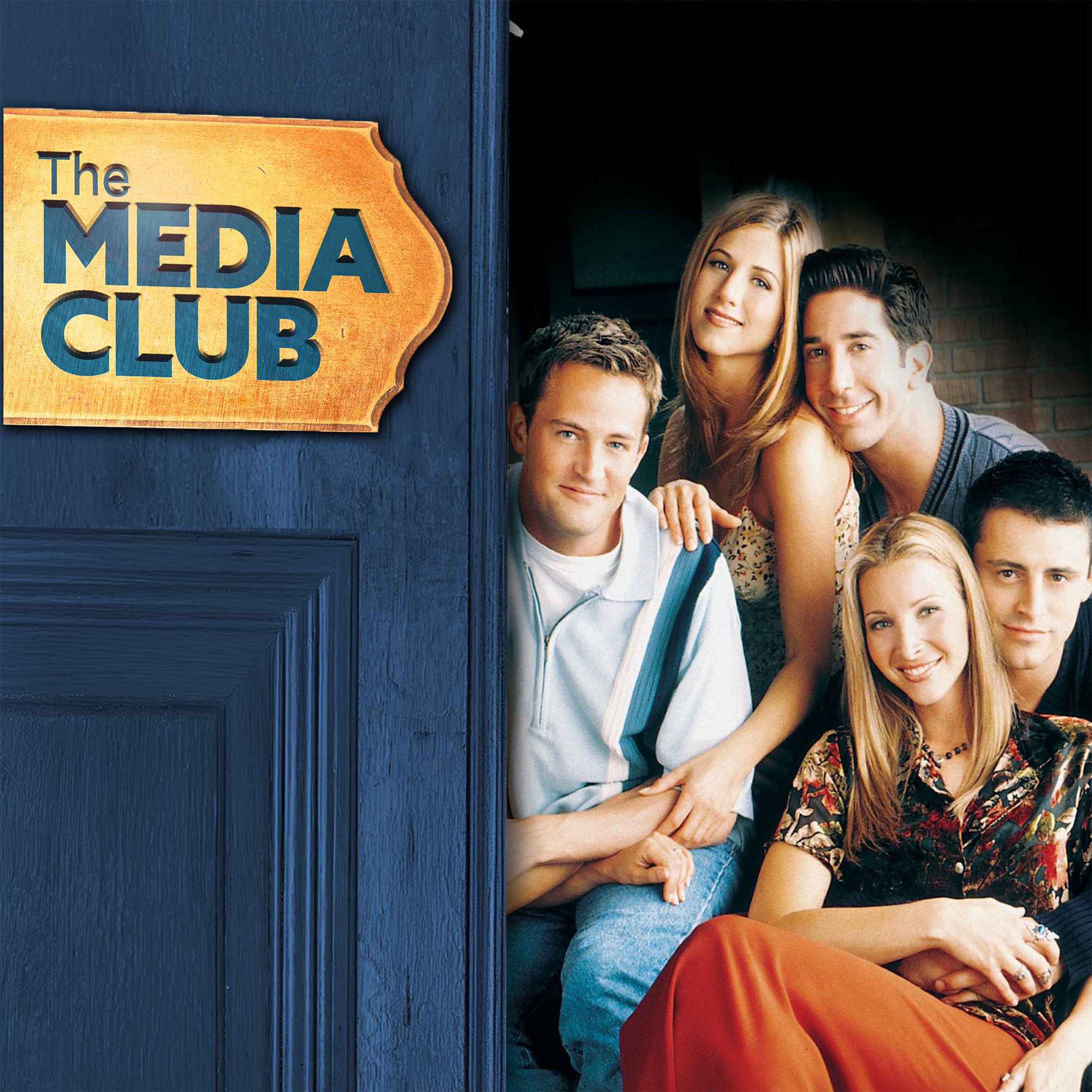
Friends Leaves Netflix, Just As Streamers Embrace ‘Windowing’
In short
In this episode of The Media Club, host Matt Deegan discusses multiple significant media topics, including the departure of the sitcom Friends from Netflix to HBO Max, the rise of the 'windowing' distribution model, and the implications of Omnicom's acquisition of Interpublic.
Written by AI. May contain mistakes.

Ask about this episode
Get the gist, explore an idea or ask about something said.
 Claude
On The Media Club with Matt Deegan, what are the key points of this episode?
Searching your listeningTranscript
Automatic transcript. May contain errors.
0:28Hello, welcome to the Media Club. I'm your host Matt Deegan. cast, offer podcasters a better deal with YouTube, and in the Audio Network Media Quiz, we revive the Christmas tapes of old. That's all coming up in this edition of the Media Club. Come on in.
0:46Hello both. Hello. Hello. Lovely to see you. Once again, I've cornered two members of the media to talk about this week's news. Maggie Brown, a media writer and official historian of Channel 4, welcome back to the club. Thank you. You're a well-storied member. Membership card goes back a long time. It does. But who would you like to bring as your plus one today? Well, I would really like, but I know I can't have, Andreas Wittem-Smith. I suppose I should call him Sir Andreas Wittem-Smith. A real gentleman of a journalist. I had a quite important role in the launch of the independent newspaper, which I joined in 1986.
1:24So he sadly passed away, hasn't he? Yes, he passed away at the weekend after, I think, quite a long illness. And he was 88 years old, which is, you know, a good age. And was still working quite, he was doing lots of different things on lots of boards. Yes, he was on boards. He never actually went back into journalism per se. But he did one role as some basically supervising standards for film and television. Well, not television. He was on the BBFC, I think. Yes, that's right. So he was launch editor of the Independent. He was the founder. He was the person. He was actually running the business and financial side of the Daily Telegraph.
2:05And that's how I got to know him because I was on The Guardian. And before that, I was on a paper which completely failed eventually, the Financial Weekly. You were there for the launch. Oh, yes. But also you've bought in a copy of the first dummy that you created as well. Well, what happened was that one of my reasons Andreas chose me, he had been tracking me as a journalist, I have to say. The thing that was really important about Financial Weekly for me was that they had never actually, well, I mean, nobody had actually launched a new newspaper. That's what it comes down to. And nobody knew how to do it.
2:48And they chose to do it in a very bad way. And of course, it didn't really work. And just was always tracking me. He said to me, what I want you to do is write down everything that went wrong with the Financial Weekly and how we should avoid it. And so I did. And of course, one of the things I said was that everything that can go wrong will go wrong. It's like going to war. This is like war. and everybody knows that you have to be prepared and do the you know change change quickly and that's what i learned and so that's what we did well uh andrea it's a great posthumous addition to the to the club yeah and next to maggie we have journalist and marketing consultant omar oaks uh welcome back to the show former media and tech editor of campaign back in the day and editor of the media leader so who are you going to give your plus one to this week i feel like after that discussion I want to pay homage to the people that employed me.
3:43We were talking in the green room, we were talking before about local newspapers and we've all got links to and you made me think about the people who first hired me. Sean Duggan, the editor of Newcastle South London and David Rankin, so shout out to them. But no, actually the one I want to bring into the media club is Tony, Thomas Mattson, who I'm sure you've all heard of, he's Swedish, he's the vice chair of Utgevarna, the Swedish Publishers Association. I'm assuming that's correctly pronounced. I wouldn't know. He's had a good week because he finally said what so many European media leaders fail to say out loud, and that Meta is failing to stop scam ads.
4:15And not only that, it's not an accident, it's actually baked into the business model. And there's a fantastic quote, which I read in Press Gazette, great publication, as you know, he says, I'm not gonna do the accent. He said, when Meta officials tried to claim they only build the highway and not responsible for speeders, I personally corrected them to say that a better comparison is drug crimes. And maybe that Meta does not actually hand over drugs to users, but Meta is smuggling the drugs into Sweden so that other illegal gangs can make money out of it. The very model of selling sponsored posts without pre-checking the content is what makes it possible for criminals to deal with Meta.
4:47So it reminds me of six years ago when I was at Campaign Magazine and I wrote about Martin Lewis who actually settled with Facebook because his face was appearing in all these scam ads and here we are six years later and that's still happening. So well done to Thomas. I wish more people would take his lead. Well, he can definitely join. There's also some reporting this week about Facebook and in some emails, I think, have come in a court case with Mark Zuckerberg saying things like, let's not show the videos kids upload to their parents or else this product won't be able to launch properly. I mean, there's a lot of things to still come out of those sort of earlier days at Facebook.
5:24I mean, you can understand why one might accuse Facebook of being secretive because the more that's revealed about them, the worse that it looks. Okay, we're back in a moment when we're talking windowing. see you in a sec
5:41welcome back to the media club so friends is leaving netflix and viewers are unhappy omar what's going on it's funny i actually forgot that friends was on netflix but i i remembered that um when barb um used to do early um um netflix wasn't officially a barb licensee but they used to do little windows into what people watching on netflix and Friends, despite more than 10 years after shutting down, Friends was the most popular show and it just shows the nature of what people are watching on streaming. A little different nowadays. But, you know, we're going back 10 years where you had this kind of streaming wars where it seemed like an arms race.
6:17But now it seems more like a car boot sale because you look at various platforms and the same shows are popping up here, there and everywhere. So there's not much differentiation nowadays. They're saying that Friends was still pretty much at the top of Netflix's list. 25 years on now from Friends finishing, which is remarkable. And that they were paying something like 80 to 100 million dollars a year for the rights to put Friends on Netflix. But why is it left? Where is it going next? Well, it's going to HBO Max, which is soon to launch in the UK. And HBO Max is NBCUniversal's Warner Brothers Discovery's global streaming platform.
6:57And because of licensing rights, Sky has had the exclusivity over HBO content for some time in the UK. But that is coming to an end. Things are going to change. And lots of content is going to be on HBO Max. And that is a property that they own. In America, four in ten US streaming titles now appear on more than one platform. Okay. And it's happening in the UK as well. I remember when ITVX launched two, three years ago. and they were openly talking about their windowing strategy where you saw this huge secondary market for titles appear all over the place where lots of Disney titles were exclusively putting onto ITV.
7:34You've seen they formalized that with a windowing deal between these two companies now. So it seems that exclusivity isn't as important as it was. Yeah, the exclusivity thing is fascinating. You have sort of marquee talent and I guess Friends is sort of, it's obviously so popular, it's essential for HBO Max to establish themselves. But you see a lot of ITV stuff, old ITV stuff appears in the Netflix charts. BBC. And a lot of content moving around. Maggie, do you think this is driven by consumers saying, we just want good content everywhere and we can no longer follow it across the different streamers?
8:15Well, I get confused myself, actually. So, I mean, and I'm supposed to know what I'm doing. so I do think it is a kind of like a sort of surplus really of opportunity at the same time usually one can find something one wants to watch thank goodness but I agree with you about ITVX when it first launched I really was quite excited by it I thought gosh you know this is this is worth checking out all the time and now I look at it and I think well do I really you know sometimes I do and sometimes I don't. I mean, their deal with Disney was interesting. They got some of their shows appeared on Disney and some of Disney's shows appeared on ITV.
8:53I guess that's trying to get people to sample ITVX. Well, I mean, you know, it's worth sampling. And I'm also, oddly, sometimes watching Channel 5 because they don't seem to be doing so much of that unless I'm very stupid. But they do occasionally have things like the play for the day they're doing. Now, I don't know if that came from anywhere else, but I think they're original. So I do actually like a few of those sort of opportunities. But to be absolutely frank with you, I shouldn't really say this on this program, but I have been so consumed by the news and current affairs that I have to admit that a lot of my viewing, when it's live viewing, has actually gone there rather than the dramas and the rest of it that I should be sort of seeking out and films.
9:40so I'm just praying actually that we can have a nice quiet time that everybody would be friends and then I can sort of sit down and watch something like Friends it would be very nice it is Christmas but we're all with our families over the festive period everyone's going to be huddled around the TV and we're all going to be looking for something to watch and so what do we do if you can't hang your hat on Friends being on Netflix etc etc then who's going to benefit from that it's going to be a Samsung, it's going to be a TV makers it's going to be a streaming TV makers because what are you going to do?
10:10Increasingly, consumers are going to be using those electronic prompt guides on the TV instead of just going straight to platform. And then we run into questions about prominence, which is a big issue for the PSPs in the UK. How are you actually going to make sure that consumers are getting access to quality content, not just whatever Samsung's going to do? Yeah, and also it's much harder now for broadcasters to actually know who the middlemen are because if you don't have a selection of these devices, you can sort of not realise that actually Samsung are scheduling and promoting certain shows.
10:42Do you think this might actually help the case for the BBC actually because it is distinctive. I know that it buys in stuff but my feeling is that a very strong brand where you have production built into it not all of it might be the BBC and I know obviously there are ways in which the natural history programmes kind of find their way around the place But it does strike me that a kind of a well-known friend, if you like, an organisation you kind of understand is in a better position than you might have thought it is going to be. I think we definitely see the big boys, don't we? And then there's a second division of streamers.
11:19And so we often talk about something like Paramount Plus has never quite had the content that maybe a Netflix or BBC has. Has the BBC successfully maintained their position? I think so. And I think, as Maggie says, it might actually put it in a stronger position going forward. Because I listened to your previous episode on MIPCOM, which was fantastic. And YouTube obviously had a big presence there because you're seeing that YouTube could you, is it now a new model where you show your case yourself on YouTube and you get picked up by a distributor, by a producer that way? I think when we're moving to a world where consumers are finding it hard to get good content, the more trusted media property that you are, you stand to gain, particularly in a world where AI slop is coming down the pipe and is already affecting us.
12:07Consumers are going to gravitate towards trust. So the BBC, I think, could benefit greatly. And also there's obviously some discussions, isn't there, Maggie, about should ITV be acquired by Comcast and Sky? It leaves BBC and Channel 4 as kind of the only homegrown broadcasters. There's obviously some discussion, and we come back to this time and time again about elements of BBC and Channel 4 moving together. I mean, having the streaming together, would that be actually a good thing for BBC and Channel 4? I honestly don't know. No, I really don't know. And I don't quite know what the fate of ITV will be.
12:42There's a side of me, because they're going to divide it if it happens, that obviously the broadcasting will go to Comcast's side and Sky, and then who knows what about the actual production and how are they going to, you know, divvy this up given they have all these so-called public service broadcasting obligations the odd thing is like every day first thing i do in the morning i check the itv share price and it isn't really going anywhere this is a good indication that there's a degree of uncertainty built into this given how volatile markets are and how given you know there's a lot of money slushing around if you really want to do something as we can see actually with a telegraph so i don't i don't know what the answer is.
13:26One of the things I do think, though, is that the appeal for ad-free programming is getting ever and ever more appealing because the actual ad breaks in the unregulated sector can be extremely annoying. So there's also that built into the whole sort of where the public going to go. But the most recent information from Ofcom, not in its grandest position at the moment, it's not a very strong, in my opinion, regulator at the moment, but they're starting to do all their work on charter renewal, which of course happens in 27. We're quite close to it now. One of the things they have found is that 83 % of the British public in a week do watch the BBC, which is quite high, and that the attrition rate rate is coming down a bit so i'm not saying that so it's declining but not as at speed then the speed is is kind of out of it and this is one of the quite sad things about the the bbc most recent debacle i think that tim davy was actually getting aligned to the fact that you need to have a lot of content or programming that appeals to lots of people with the bbc stamp on it so you could bring back maybe, I mean, I don't know if you saw this, I do because my husband saw it, but on Saturday there was the British Heavyweight Boxing Championship.
14:58He was really pleased. He said, it's on the BBC, don't you see this is how they're getting to the people who like this sort of thing? And I sat there and I thought, yeah, you know, he's right. When did I last see this kind of boxing that you would normally see probably behind a paywall on Sky? But all I'm trying to say is that nothing is ever static. We know that in media. And it could be that we're not quite as on the edge with these established broadcasters as we might think we are. And speaking of platforms that are changing, the podcast hosting and sales platform, Acast made some noise this week with a deal that upsells their YouTube offer.
15:38Omar, Acast has largely sold audio ads in podcasts previously. but obviously podcasts as we know are visualized too what does this deal allow them to do for the first time well essentially you're creating bigger media properties for podcasters where you're building i was going to say fan universe but that sounds too grand i mean these are these some of these are big brands in their own right and they're monetizable in lots of different ways and i suppose goal hanger which rebranded recently is the apotheosis of this where incredibly big and multivariate big names surrounding that and a lot of people out there see the opportunity um not least because in america they were calling it the podcast election and seeing what people like joe rogan can do um and acar still leaning into that and you know if you think about how when we started off with podcasts it was all about rss feeds and it's still that to a degree but actually the opportunity is so much more than that i mean look at you guys on youtube well i think it's what's interesting about acar so historically sold audio ads on the rss feed delivered uh into into the mp3s that people download uh and as video has grown that's meant that acast hasn't been able to reach those audiences particularly on youtube i think what this deal does is it allows them to sell into youtube uh kind of for the first time which is quite a good deal by acast because youtube have to bless you don't they to to allow you to sell some ads in their in their on their platform yeah and this is i mean this is i read so many stories and again to bring up the thing with MIPCOM and YouTube, so many people look at creators who have been successful on YouTube and think, oh, that's amazing.
17:11And it's still for young people nowadays one of the things they want to be when they grow up is an influencer. I would say it's probably harder to be an influencer than it is a rocket science nowadays. You think about the YouTube model for an independent creator, it's a hell of a high benchmark to actually make any money from the thing, let alone have a career on it. What an ACAST allows you to do is, as you say, be a preferred supplier where you get better rates on CPMs than you would be if you were an independent person. And YouTube is where the action happens for a lot of these people. It's where you get discoverability.
17:40It's where the algorithm is. And you get better at targeting. Also, I guess it keeps that talent within Acast's gang. There's lots of different places you can go to be monetized. Spotify can do it. Audio Boom, other companies. If they can offer more chances to make more money, they're likely to keep those shows a little more, aren't they? One of the biggest, in hindsight, mistakes that big broadcasters in particular made in the last 20 years is not seeing the opportunity with YouTube and thinking YouTube, oh, this load of cat videos, you know, that's fun, isn't it? if they'd only seen the opportunity to actually create their own academies.
18:16So imagine if the BBC had done this as part of its public service remit to actually bring up the next generators of radio producers and on-air talent, but actually had a UGC platform that showed them the BBC way to do this. And the more that a company like an Acast, Spotify even, can actually bring through that, if I call them a premium UGC creator, the internet would be so much better for it so you could actually have a more premiumised version of what increasingly younger audiences want to consume and perhaps older audiences increasingly too as well Yeah, I mean Maggie, we've seen Channel 4 do things like Channel 4.0 big push on to their YouTube channels obviously creators can kind of go direct to audiences but broadcasters can give them eyeballs and can make them more famous, can they?
19:05Yes, I was just thinking you've said such an important thing and everybody just clusters around the failure to go ahead with the, I can't remember what it was called now, do you remember? A kangaroo. Sorry, yes, I was thinking it was an animal, but I don't remember which one it was. And, I mean, it's in my history, it's seen as one of the big kind of flaws and mistakes, which it was, undoubtedly. But at the same time, what you're saying is actually another way around that. If it was the BBC, they would have probably still had to go and get permission for it. This is the problem, really. It didn't really open up enough, I don't think.
19:46Perhaps. But the fundamentals, as we know, is that the Internet has democratized content creation. But don't just leave it to an agnostic platform that isn't brand safe, that doesn't have standards, that doesn't care whether scam ads appear all over the place, given the history. actually have broadcasters who know what they're doing, have values, have compliance history, get them to bring forward the next generation of broadcasters. I'm sure YouTube might disagree with that characterisation, but also at the same time, have broadcasters miss the boat? But also for content creators, there's some opportunities.
20:23You were saying that it's difficult to get reach, difficult to get awareness. If you purely rely on the algorithm, that's difficult. is the BBC or Channel 4 or Sky maybe the answer to that question for creators? I would hope so because they still have incredibly strong brands. I repeat what I said before about in an age of increasing AI slop, consumers will, I think, flock to tried and true brands that they understand and that have values. And you mentioned briefly before in the discussion about Channel 4 and what's going to happen if ITV is bought by Comcast Sky. well then you're left with a situation where the only two uk broadcasters major ones in this country are owned by the government so you so what do you commercially you know you would fear for channel four under that regime so what's left if you can actually have a more aggressive attitude towards public service broadcasting plus content creation i think there's an opportunity where it doesn't the the boat doesn't the boat it's not all sailed yet i think the other thing is we're waiting to see quite what the terms of trade are for Channel 4, given that they're being able now to make money out of the programs they commission.
21:35They will be able to own content. So that may open up an opportunity to do something a bit more exciting, really. I think there's an interesting thing. If you look at the BBC have a commercial operation in UK TV. Channel 4 reps UK TV's advertising. could we see a future where you've got a sort of ad-funded public broadcaster and you've got a kind of subscription-funded public broadcaster, kind of ignoring all the names? Might that be the solution? Anyway, we've got to... It may be. It may be. I mean, everything's up. In a certain way, everything is now slightly more fluid because we're having this two-year run-up, really, to the new charter of the BBC, where such voices such as yours ought to be heard.
22:20Just before the break, when marketing and media agency Omnicom recently acquired into public. The intention was to knock out a competitor and increase profits. But Omar, you wrote on the media leader this week that it's not a given. I think scale only matters if you know what to do with it. You know, I quoted, you know, someone who knows far more about vesting than I ever will, the late Charlie Munger, who used an example of a textile mill that Berkshire Hathaway had bought. And this vendor had come in and said, this thing is going to save you loads of money. It's going to save you loads of money.
22:55And Warren Buffett, his partner said, oh, I hope not. Because if it does, then I have to close the mill. And the problem was they operate in a very competitive market. And what happens is if technology is going to lower your cost, then ultimately what's going to happen is you're going to have to lower prices for consumers. Because there's nothing that differentiates you. You don't have pricing power. And Omnicom, for those who don't know, it was the second world's biggest advertising agency group, has bought into public the fourth biggest and now has become by distance the first. Now, that scale is great in the short term, but look at what's happened.
23:29You mentioned my column for the Media Leader. Within hours of me pointing this out, they'd announced 14 ,000 headcount reduction, 4 ,000 redundancies, 10 ,000 jobs to go after that. So it shows you the scale of the financialization and the cost saving that they need to do to make this deal happen. and long term, what really differentiates an Omnicom from their rivals, a Publicis, a WPP, a Dentsu, a Havas, not much in terms of services, not much in terms of talents and even worse than that, they've got rid of three of their creative brands and I argue that the only thing that really distinguishes these companies anymore is what little creativity they have left.
24:06Also, what does it mean for clients? Fundamentally, what does it mean for clients? Is it good news or bad news for them? It's great news because they're going to get a discount because if they know that fundamentally you offer the same service as a WPP or a publicist, they're going to say, hey, you've just got rid of loads of people. So that must mean that your costs are going down. So can you give me a 10 % reduction if you're Volkswagen or the UK government and Omnicom buys the government's media in this country? What about Publicis, though? Because that's a French-owned company, isn't it? The other two are American companies.
24:37So from the outside, it looks like that, if you like, we're going back to the good or the bad old days where advertising was run basically from New York. Is this actually going to affect the European side of it or doesn't it matter now? I don't think it matters so much because they all have a global footprint. And there are always going to be big advertisers that need to work with these companies because of the global footprint that they have. But increasingly because of technology, automation, increasingly AI, they say, there's going to be even less. And as I say, AI is the equivalent of the textile mill.
25:10You know, the vendor saying AI is going to allow you to get rid of those people and lower your costs. well again what the procurement teams that these advertisers are going to do they're going to demand discounts and this is the game that ad agencies have been playing for since essentially the 1990s and also if you're a client for a big organization you can use meta business suite as well you know you don't necessarily need that expertise that was there previously yeah and you know meta were all over advertising week in new york a couple of months ago where they were essentially doubling down on the message that they've been saying all year, which is we can effectively be your agency.
25:46You know, we've got all the dashboards, we've got all the data that you need, we can do your media planning for you. And obviously, experts that actually have clients interests at heart within agency land say that this is terrible. But if you're a client, and particularly maybe if you're a marketer who struggles to defend the importance of creativity internally to a CFO in your organization, the agency isn't really giving you the tools that you need to be able to combat That's a meta when it says, oh, just do it through us. It's cheaper. And we know your business inside. And will it be cheaper?
26:16Advertising will be cheaper than Winted. Is that right? The actual business of... Well, it'll be cheaper, but not necessarily better. No, exactly. OK, when we return, is the BBC's talent pool running dry? I'll see you in a sec.
26:37If you need a distinctive look and feel for your brand, you should contact Podshop Studios, where we record the Media Club every week. They've opened four brand new super stylish studios here in Shoreditch, each one with its distinct own look and feel. This week, we're back in their Instagram-friendly lounge, one of two identical sets you can hire. They're all professionally designed and fully equipped for broadcast quality video recording. You can check out the whole selection of studios at podshoponline.co.uk and they're offering Media Club listeners 25 % off your first booking, better than any Black Friday deal.
27:12Just tap in Media Club in the code box at podshoponline.co.uk. Hello, Media Club listeners. Patrick here from Podcast Discovery, the podcast marketing company, where this week we've been thinking about Christmas. It's always an awkward period for podcasters with listeners' regular habits thrown out the window. How do you navigate the festive period? ensure you're dedicating your time to something people will actually listen to, and welcome all your regulars back come January. We've got plenty of thoughts. Just get in touch at podcastdiscovery.com. That's podcastdiscovery.com. Welcome back. Here's a few things we've been talking about in the club this week.
27:53Misha Glennie is to present In Our Time on Radio 4. The journalist and broadcaster was picked this week to succeed Melvin Bragg, who announced recently he was to step down. The station has chosen Christmas Eve as a handover ceremony of sorts, with the pair in conversation on a guest edited edition of the Today programme. Meanwhile, YouTube and TikTok's recent growth is being driven by those age 55 plus. New research from Ampere Analysis also reveals that 70 % of Internet users in the UK and US now watch influencer videos at least once a week. 29 % are now using a smart TV at least monthly to watch YouTube.
28:33And in the race to become the next director general of the BBC, an insider told Broadcast this week that there is no deep bench of candidates lamenting the lack of succession planning at the corporation. It's a good read. Go check it out at broadcastnow.co.uk. Links to all of our stories available on our sub stack. Sign up now for free at themediaclub.com. You also get any more Monday morning recapping all of the other media podcasts out there covering journalism, TV, audio and Hollywood. Sign up for free at TheMediaClub.com. Maggie and Omar are still with me. So BBC DGs, who have you got your money on, Maggie?
29:13Well, I've got my money on somebody I don't think, I don't know. This is just my intuitive reaction. OK, Mark Thompson. A return for Mark Thompson. Yes, that's what I think. Why do you think he will return to his old castle? Well, I don't know if he will, but it's my view that he is a perfect fit because he's tough. He's experienced. He's come up through the BBC. He loves the BBC. He's made a lot of money in his other jobs, including, of course, as we now know, being very commercial, saving the New York Times in a way. so I thought I was probably very alone on this but I did say it because I've been at St Bride's quite a bit in November because there are various commemorations and I saw somebody I know well and she said to me what do you think about the BBC so I said well you know I think Mark Thompson is the perfect fit and she said yes she said and I have heard this so I and she's better you know linked in than me so all i can say is that i have one person i think i think it's a good and we were in the pews so you know she might have just been thinking oh for god's sake maggie brown again go away i don't think it's a good thing to say you've got a situation where probably warner brothers which owns cnn where he's at the moment is about to be bought by paramount skydance um they're gonna do something with cnn it's not going to be fun uh probably merge it with cbs news i imagine so if there was a time for him to go now would be the time omar do you think do you think mark could return or have you got someone else that you think would be a good bbc dg well um it would take quite a strong character to give up all that money he's been earning so yeah that'd be he's got a lot in the bank yeah he needs more money mark though is that um he is quite a committed catholic and a christian and um he isn't quite as he seems i mean he of course um you know he everybody wants a lot of money if they can get it and he has done it extremely well but he has done it through talent it isn't just oh give me the money and run away you know um so i don't as i say this is a i'm i feel i'm sort of skating on ice here but i don't think it's as bad as you might think i think it'd be a fantastic appointment if you would if you wanted to do it i mean you just look at you know where he was with the new york times and when trump became president and did a fantastic job I think the fact that we're all probably scratching our heads a little bit wondering just shows you the predicament that the BBC is in.
31:52It shouldn't be actually that difficult. And I suppose if the BBC spent a decade fighting fires, they're looking around and no one's left to actually build the bench. I mean, it shouldn't be like that. And I don't think it's a succession problem. I think it's an identity problem. I mean, there was a suggestion that maybe going forward, the director general role has to be broken up because it's too big for one person. That's precisely the issue because what is it? Is it a person that has to lobby the government as people like Craig Dyke and Tim Davy were doing? Does it have to be the head editorial content in chief person?
32:25Does it have to be a more commercial person? There's all these things. Yes to all those things. So the BBC needs to fundamentally sort out what is the director general in the year 2030 and beyond and then decide who does it. There was a lot of discussion about having a stronger deputy. Yes, indeed. And so the point really is that you do have to have a director general or whoever it is who is tough. I mean, this is not an easy job and it is not a very comfortable job. And it probably only lasts for five years. And whatever you do, you have to. If you're lucky. Well, I mean, you know, John Burt was almost nine, ten years.
33:02I mean, it's not impossible. and so all I think is that there are not people kind of knocking on the door of the BBC we feel at the moment the right sort of people so you have to actually go back a bit and just think what would you do if you really cared about the BBC which I do definitely and I actually think it must be run properly but I also think Ofcom I was actually, I won't read them out but I was reading all of the things that Ofcom is supposed to be doing and I mean it is completely overwhelmed and that needs sorting out too as well as So you think they're too distracted? Well where do I start?
33:46The one thing I think has been terribly wrong with Ofcom, remember I've been covering it right from the start when they were debating how to do it is that I think it really missed the trick on protecting children It was obvious in the 10 years after, the decade after it was set up as a Labour Party, big kind of development, that children were going to need to be protected. There needed to be rules written in. And what did they do? They basically were not very interested in children's television at all. In fact, they scrapped some of the requirements to do it. And so we're now at a stage where, yes, we are getting extremely worried about what's been happening to children, not just through sexual exploitation, other things, but it's very late in the day.
34:36Yes, they've got that responsibility, but 20 years later. When I was writing all this stuff, The Guardian, I was always going to these meetings, banging at home, and nobody really took any notice of it. I'm not saying I'm a saint because I'm not, but I do think that Ofcom is, well, I wrote a list of all the things they do. It's just too much. i mean some interesting stuff also this week about australia uh we talked about child protection you know blocking social media for uh for younger audiences um i mean they're really going for it and a lot of unhappy teens over there a lot of unhappy teens but um it's fine because tiktok's over 55 now so we're going to be okay um but the sort of success of that that will leak to other countries won't it well if i was being cynical i'd say that um rupert murdoch earning 70 of the newspaper market in Australia would have something to do with it.
35:26It's very different. But no, it's interesting and it shows, I mean, we've seen to a similar extent what's happened in Canada as well with much tougher protections for broadcasters and children. These are big issues that any media organisation will have to handle. The thing about the BBC, you can't run a hundred year old organisation in constant crisis mode. These constant political bun fights when the charter renewal comes up, the constant toing and froing between Labour government and Conservative governments, which ultimately I'd argue that the BBC Director General has been chosen on the basis of how close they are to the governments.
36:03Sometimes that can work though, sometimes that can have some positives. Oh yeah, current incumbent Tim Davey, Conservative Party election candidate, right? But they really do need to actually think about not just what the role of DG needs to be, but making the BBC less siloed. Because the problem is when you have people running around over there doing commissioning, people over there trying to build up BBC studios, digital doing its own thing, you have people who become very good at specialisms. And you don't have anyone coming through that can actually do that broad approach of what a director general ideally would need to do.
36:38So for senior management, they really need to restructure that. Well, something that I'm sure we'll be returning to. OK, just enough time for the Audio Network Media Quiz. Oh, God.
36:52three media stories connected by one theme and then shoehorned into a format of an existing media property this week it's called christmas tape 2025 final not for tx dot doc final dot doc back in the analog days a compilation of bloopers and gaffes were made to keep staff at tv stations entertained on christmas day but what would be on a 2025 edition from this week I'll describe the blooper you tell me the story and once again Alex at Audio Network has taken that inside baseball brief from producer Matt and created a playlist of you've been framed style music to score today's game it's a best of three so buzz in with your names if you know the answer so Omar you will say Omar and Maggie you will say let's play Christmas Tape 2025 final not for TX so you've got to tell me what story i'm trying to describe question number one we're live in the jungle and now the presenter is swearing and flapping his hands around yes um this is omar yes you don't have to put your hands up though it's very nice to see okay i almost forgot my name there for a second i was trying to remember the presenter's name it's joel Domit he used to be on I'm a Celebrity years ago and now he presents the little brother program the extra show that they do and there was like a there was a wasp or a dragonfly or an actual dragon I don't know but something was coming towards him and he went fucking hell and then he started running around the place and it obviously was very scary at the time but it made great TV viewing and you know live TV don't we love it I was too busy watching Current Affair I never win this quiz by the way okay question number two it's the world cup in 2026 two lesser teams are playing in Canada and oh the feed's gone and they've cut to two commentators sitting in a cupboard in Salford what story am I talking about so world cup some discussions about how they're going to cover it the BBC have you seen this no I haven't I didn't hear about them sitting in a cupboard so the BBC have confirmed that some of the commentary from this year's world cup will be remote and might actually come from Salford rather than America and Mexico and Canada, I think, where the World Cup's coming from.
39:21That doesn't add much to the atmosphere, does it? It does. I mean, I think they're saying it's in so many places this year and there's more teams in the World Cup that sending commentators out is sort of uneconomic. Well, why not use the local ones then? I suppose you could do. You could do. Take the world feed. I imagine it's a decision to make, though. Do you want to hear the people that you're used to commentating? Sitting in a cupboard. Yeah. No, I don't. okay and what would you do you think is BBC trying to save some cash it's a difficult thing to well evidently I mean it is a massive tournament I mean ITV are really excited about it because you know it's five and a half weeks potentially all the home nations in it it's a big commercial opportunity not just for TV but the whole of media but when it's if it's kind of two lesser teams playing somewhere in Canada in some lowly group game match then do I really care who the commentators are just get local Canadian people to do it okay outsource first.
40:13Right, question number three. It's a typical breakfast show on BBC Scotland. But wait, is that smoke I can smell? Oh, there's a fire somewhere. Excuse me? Maggie. Yes, Maggie. I don't know where the fire was. I'm sorry. That's hot. Okay, half. Omar, do you know the rest of the story? Yeah, there was a fire and everyone had to evacuate obviously because it was a fire. And they were just playing music and it kind of just cut to five live at some point. It was all very confusing. Yeah, so this is BBC Scotland. breakfast was taken off air backup tape kicked in with Radio Today reporting that the first song contained the lyrics run away, run away which kind of worked I think Omar just about squeezes the win for that, congratulations you get to decide if I can record the media club from lots of different locations, I don't need to be with the guests, maybe I could be in my own cupboard in Salford you can investigate that for us as your prize or somewhere near Bergerac Airport where I know you like to fly to that would be great too my thanks to Maggie and Omar also thanks to Alex at Audio Network for supplying today's music remember Audio Network can do that for you as well get in touch with them at audionetwork.com and there's also a link in our show notes so where can people keep up with your good work Omar?
41:33I have a sub stack called Adverse Reactions where you can read my digest of what truly matters in this industry and increasingly what I'm doing as a freelance journalist as well. As you mentioned, I also write for the Media Leader where I used to be editor-in-chief and they still have me there. Good. That's nice that they invite you back. Maggie, what are you up to in the next 12 months? What should people keep an eye out for? Anything you've got planned? Well, I think probably I should be sorting through my cuttings. It will probably take all year. Yes, we were talking before that you've got 50 years.
42:05I have. It's a huge amount. and yeah, sometimes I think, gosh, you know, that's nice. I actually think I was a better writer when I was in my 20s than I am now. This is the awful truth. This is why I've been sort of glued to thinking, did I really write that? Better how? I mean, just better somehow. I think it was because, I mean, for example, I mean, would I get on a bicycle now and ride around Birmingham making comments about, you know, the irony there is, of course, that nobody in Birmingham really likes cyclists and they're very, very oriented towards their cars. So sort of 24 year old me, you know, five foot one kind of going around and, you know, there's things like that and some serious stuff as well.
42:54I mean, I have to say, we know we did it. We did. We did very well in the Birmingham poster. It was really very good. You know, I'm only at that stage now. You can see how much I've got to do. In the early years, you've got another 50 to go through. I will be doing some more stuff. I've got a few things I've got to write, but I've also got a lot to sort out, especially since I'm certainly not in mansion territory. I'm probably going to have to work out where I next to live. That's another podcast. Another podcast. And thank you for listening and watching today. I'm Matt Deegan. The producer was Matt Hill.
43:27It was a Rethink Audio production with visual support from Podcast Discovery. I'll see you next week.
43:57On Thursday, Britain's first black Member of Parliament, who was surprisingly pro-slavery. And on Friday, long before the national mourning for Princess Diana, the nation stopped for Lord Nelson's funeral. That's Today in History with The Retrospectives. 10 minutes each weekday, wherever you get your podcasts.
From the publisher
Is HBO Max doing the right thing pulling the sitcom everywhere but their own service? Or are consumers getting tired of chasing their favourite shows behind paywalls? We look at the return of ‘windowing’ and what’s driving the trend.
Also on the show: agency giant Omnicom acquired Interpublic recently. Does that solve all its problems? Brand consultant and writer Omar Oakes thinks maybe not.
All that plus: why the next Director General may not come from the ranks - media veteran Maggie Brown tells us more; Acast offers podcasters a better deal with YouTube... and, in the Audio Network Media Quiz, we revive the Christmas Tapes of old.
The Media Quiz is sponsored by Audio Network. Alex (who is a real person) selects the music for us to score each episode and she and her team can do it for you too at https://audionetwork.com
We record at Podshop Studios - for 25% off your first booking, use the code MEDIACLUB at https://www.podshoponline.co.uk/services/podcast-studio
Become a member for FREE when you sign up for our newsletter at https://themediaclub.com
A Rethink Audio production, produced by Matt Hill with post-production from Podcast Discovery.
What The Media Club has been reading this week:
Netflix Commission Goalhanger's Rest Is Football for World Cup
Acast announces tie-up for enhanced YouTube offering
YouTube growth down to older viewers
Why the Next DG Will Come From Outside
BBC Plans Remote Commentary For Some World Cup Matches
New In Our Time Host Announced
Hosted on Acast. See acast.com/privacy for more information.
More from The Media Club with Matt Deegan
All episodes
We use cookies.They keep VO running smoothly and help us improve it. Privacy policy