
 Ask ChatGPT

- Podcasts
- The Media Club with Matt Deegan
- Is The BBC In Jeopardy? Plus: Zeteo UK soft launch
The Media Club with Matt Deegan17 Jul 2026 · 44m · 20 chapters
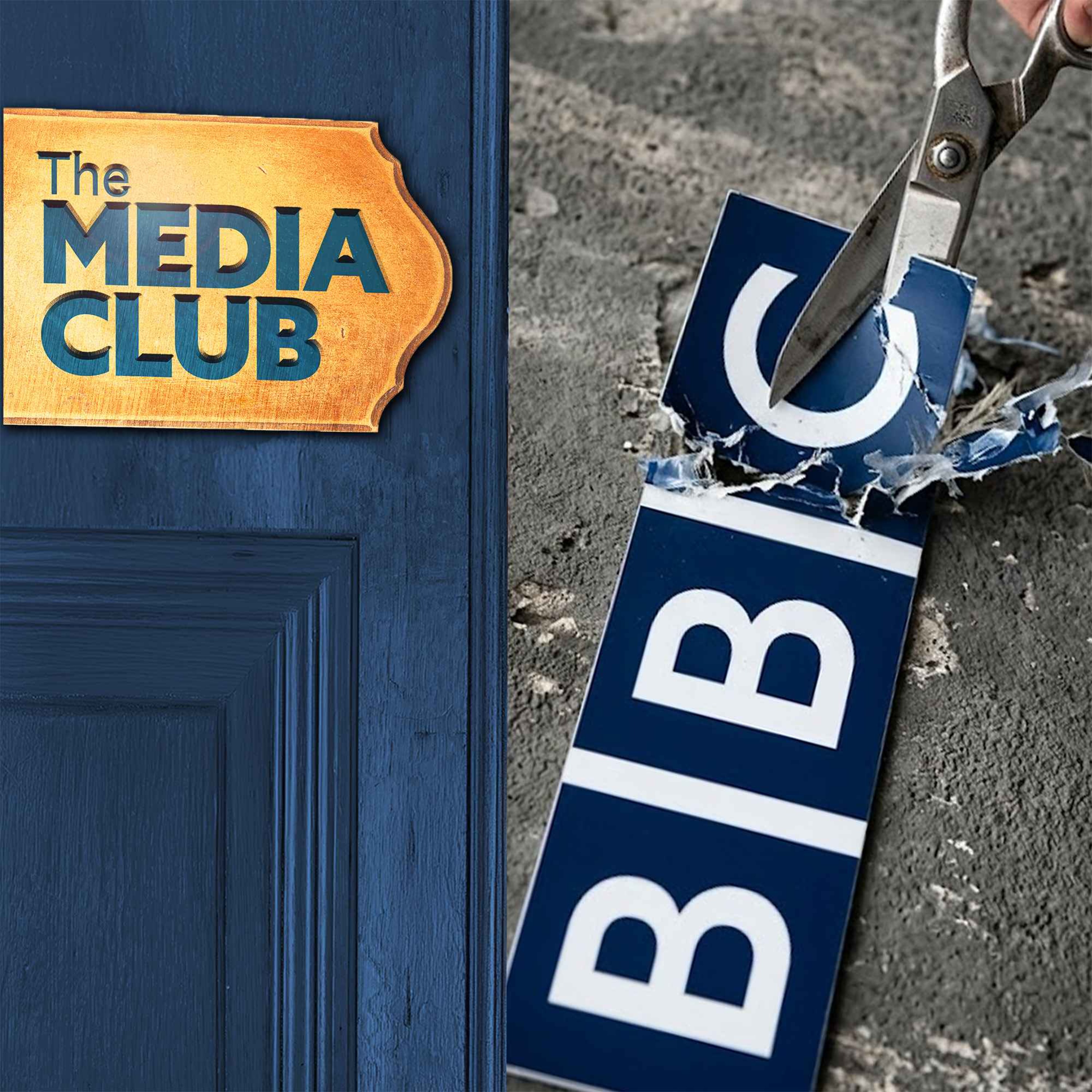
Is The BBC In Jeopardy? Plus: Zeteo UK soft launch
In short
The episode of The Media Club debates whether the BBC is “in jeopardy,” focusing on its annual report and the shrinking TV licence payer base (down 539,000; about 80% of households pay, despite 94% using the BBC monthly). Guests argue the BBC hasn’t adapted to changed consumption habits and has cut news/current affairs first, leaving fewer political programmes, reduced international bureaus, and weaker evening radio news. They discuss funding models: licence fee reform, possible opt-in/subscription approaches, and a floated idea of adding costs via Netflix/Prime/Disney+ (rejected as politically and commercially unlikely). Notable examples include abolition/cuts to Radio 4’s World Tonight and Midnight News, and claims that BBC management lacks a clear future vision.
Guests
Ian Dale (LBC presenter; former ITV News; author of an autobiography) and Shahab Khan (ex-ITV News; political editor at Zeteo; launching Zeteo UK).
Key claims
AI can summarize and help draft, but can’t replace human reporting/interviews; Zeteo UK soft launch has already broken stories (e.g., Lord Glasman meeting AfD; a Home Office letter on citizenship stripping; Edinburgh street attacks).
Written by AI. May contain mistakes.
Chapters
0:54
Discussing Anne Whittacombe and Media Personalities
Reflections on the late Anne Whittacombe and the media landscape's impact on political figures.
6:46
Shahab Khan's Transition to Zateo
Shahab Khan discusses his move to Zateo and the future of media consumption.
“Over 4 million businesses have skipped the line with Stamps.com.”
7:20
BBC's Annual Report and Future Challenges
Analysis of the BBC's annual report, funding challenges, and viewer engagement.
“When was the last time a display ad changed your mind?”
14:00
BBC Funding and License Fee Debate
Explore the controversial ideas surrounding the BBC's funding and license fee structure.
“Do they want to pay for football on the BBC when they're paying for it to Sky and Sky do a brilliant job on it?”
18:26
The State of BBC News and Current Affairs
Discussion on the BBC's challenges in news and current affairs cuts amid declining trust.
“And then I asked him a question about cuts to news and current affairs.”
22:17
AI in Journalism and the Future of Radio
Delve into the impact of AI on journalism and the unique qualities of radio.
“Here's a few stories we've been talking about in the club this week.”
23:58
Can AI Replace Radio Journalists?
Radio journalists discuss whether AI can replace human presenters and reporters, arguing that AI is good at summarizing but cannot replicate human intimacy, emotion and original reporting.
“It's quite good at summarizing complex tasks in a very quick way.”
28:00
The Role of AI in Journalism
Discussing the limitations of AI in producing thoughtful journalism.
“And therefore, a human somewhere needs to go do that journalism to begin with for it to be able to get repurposed by the AI.”
29:20
Insights from Ian's Autobiography
Exploring Ian's motivations for writing his autobiography and reflections on his career.
31:00
Navigating Political Journalism
Ian discusses his experiences in political journalism and the nuances of being an insider and outsider.
Show all 20 chapters
35:20
Impartiality in News Reporting
Debating the importance of impartiality in journalism and its impact on public perception.
36:40
Personal Views in Broadcasting
Discussion on how personal views can influence broadcasting and the role of opinions in journalism.
“it was difficult for me to even know what some of my colleagues thought about anything because they were so conscious of the fact that they had to remain impartial.”
37:50
Finding Joy in Mentoring
Ian shares his experiences and satisfaction in mentoring younger talent in the media.
“And I think that's the challenge that a lot of a lot of them have to deal with.”
38:30
Introducing the BBC Salaries Quiz
Transitioning into a fun quiz format centered on BBC salaries and public figures.
“But, I mean, Grant Tucker, who eventually got the job, he's now entertainment editor of The Sun, had a fantastic career.”
40:00
Playing the BBC Salaries Game
Engaging in a lively quiz about the salaries of various BBC presenters.
“First on the ladder, BBC Russia editor Steve Rosenberg.”
42:00
BBC Talent Salaries and Market Comparisons
Discussion on BBC salaries, talent pay, and market competition.
“I mean, I say in the book, he is a real role model for me.”
45:23
Zeteo UK Soft Launch Insights
Overview of Zeteo UK's soft launch and initial journalistic efforts.
“So, Shahab, how can people keep up with the ongoing work you're doing as you get ready for your proper launch?”
46:10
Promoting Upcoming Work and Books
Details on where to find books and follow ongoing work.
“And where can people get your book in and keep up with your work?”
46:43
Promoting Upcoming Work and Books
Details on where to find books and follow ongoing work.
“Save up to 90 % with automated rate shopping.”
48:06
Listener Survey Announcement
Invitation for listeners to participate in a survey with a prize.
“If you can spare five minutes to share your opinions on the show, not only will you help shape the future of The Media Club, but one lucky respondent will win a£50 John Lewis voucher.”

Ask about this episode
Get the gist, explore an idea or ask about something said.
 Claude
On The Media Club with Matt Deegan, what are the key points of this episode?
Searching your listeningTranscript
Automatic transcript. May contain errors.
0:00Right, it's time for our annual listener survey. If you can spare five minutes to share your opinions on the show, not only will you help shape the future of the Media Club, but one lucky respondent will win a£50 John Lewis voucher. Do it now. There's a link in the show notes or at themediaclub.com. Hello, welcome to the Media Club. I'm Matt Deegan. In the club today, it's BBC annual report time. Beyond the calls for new funding, LBC's Ian Dale has been looking through the news lines for The Real Stories. Shahab Khan left ITV News to become political editor at New Outfit Zateo, the British outpost of Mehdi Hassan's insurgent US operation, he tells us all.
0:40All that plus Banner Jay and all three media complete their merger. The TV festival schedule is unveiled and in the Audio Network Media Quiz, it's the return of Play Your BBC Salaries Right. That's all happening in this edition of the Media Club. Come on in. lovely to have you here um welcome back uh ian dale presenter of the evening show on lbc and author of a new uh autobiography um also joining us for the first time shab Khan hi nice to see you um so ian who would you like to add as your plus one this week well it's somebody who recently was killed and widdicombe because i've known and what i have to say i have known and now for 29 years and she was a gift to the media and she was part of the media as well she had a column in the express for many many years she was a gift to tv of all sorts of descriptions i mean she did quite serious documentaries but also appeared on reality tv and she loved the media and the media loved her because she always gave them something she understood the game i mean i hate to describe it as a game but she understood the game that had to be played and she was a regular on jeremy vine's show and um i mean i was talking to him the other day and he said he hadn't quite realized what an important part of her life going on that show was and i sort of after on the day that she died i i started to do a bit of media on it because i couldn't i hated the way that she was being introduced by certain people shall we leave it there or name names um i thought this is just wrong somebody's got to tell about the real Anne Whittacombe and I disagreed with her on huge amounts and we had some real good debates and rows I suppose but I didn't see the real Anne Whittacombe being portrayed so I was a bit nervous about doing it because I literally was on virtually every network and I was sort of rather afraid people would say he's milking this a bit and then of course you say oh oh you're making money out of Anne Whittacombe's death I said no no no if i'm paid any fees they will go to one of her donkey sanctuaries that she she gave money to so i can't say i enjoyed a single minute of it but it had to be done was she a complex individual was she was it just a different views all wrapped in a single person was she hard to describe which is why well you can go down the road and say well she's a real conviction politician and her religious faith was the most important thing in her life and it was and that explains some of her, shall we say, more controversial social views.
3:18But she was a bit more nuanced. She was a very kind person and yet came across sometimes as quite a hard-nosed person. But, I mean, it has been good to see a lot of people over the last few days, both in the media and in politics and just ordinary members of the public, tell their stories about their encounters with her. So, Shahab, who are you adding as your plus one in the club this week? Mine is not quite as powerful as Ian's But I was very impressed with Gary Lineker simply because the entire Westminster press back has been hunting Andy Burnham. We've been trying to get interviews. I know we did one on LBC with Andrew Marr, but he hasn't been doing that much media.
4:00He hasn't sat down with anyone. And somehow Gary Lineker has managed to secure a one on one. He's been able to ask him about the wealth tax. He's been able to ask him about his plans when he comes into office next week. none of us have managed to do it none of the big broadcasters have managed to do it so the person that i apart from us apart from us right yeah he did go on our show uh on lbc so hats off to lbc but other than those two interviews i haven't seen him do an awful lot uh i saw he did an interview with the guardian but it wasn't a and it's quite astonishing actually isn't it really i mean it they're playing they're playing a game they're choosing to and i understand it in a way because i think he would have preferred to become prime minister in september because they haven't got their ducks in a row and because of our system it's all so immediate in america they have a three-month transition and i mean i think andy burnham is a great communicator a great salesman but you if you're going to be a great salesman you have to have a great product to sell and i mean if you said to both of us what's his product i think we'd probably struggle after about 30 seconds yeah and i just hope he doesn't struggle after 30 seconds because if he does they're going to be bringing back Starmer a chance within about three months.
5:08Also, for you, obviously you're ITN News and now you've joined Zetio, launching the UK operation. Is that part of your thinking? Is that part of like, hey what should I be doing? What is media in this 2026? Yeah, I had a great time at ITV I was there for seven and a bit years they treated me really well, I had loads of fun I did some amazing stuff, I travelled around the world i traveled with the prime minister i've interviewed the last six or seven prime ministers i forget the number uh we did some great stories it was a really great experience but even during my time there it was clear that people's news consumption was changing people were absorbing the news in very different ways i had been watching what zateo were doing in the united states in a very short amount of time they have amassed a very loyal and quite significant audience they've got two million youtube subscribers in less than two years they're on the platform sub stack it's got 700 000 subscribers that's one of the biggest sub stacks in the world yeah yeah and it is growing rapidly and people are engaging with news content in a very different way and it felt like an opportunity that is quite rare in journalism the opportunity to be at something new that is different that is digitally focused and at the forefront of technology and willing to experiment and willing to do things in a different way and i just jumped at the opportunity to do something different, not because there was any criticism of my previous role.
6:34I had a great time at ITV, but it's just the opportunity to be part of something new and set something up, and it doesn't really come around in our world very often. Okay, we'll talk more about it in a bit. First, though, a BBC update. I'll see you in a sec. Still waiting in line? Again? That's time you will never get back. Save time and money with Stamps.com. Over 4 million businesses have skipped the line with Stamps.com. Join them to save up to 90 % off carrier rates from your computer or phone right now. Print postage for certified mail, registered mail, and packages in seconds. Then schedule a pickup right from your home or office.
7:15For a limited time, go to Stamps.com and use code PODCAST for a free welcome gift. Taxes and fees apply. Quick question. When was the last time a display ad changed your mind? Now think about the last time a friend told you about something they loved. Different feeling, right? That's how podcast advertising works. A host who's built real trust with their audience talks about your brand in their own words, in their own voice. It doesn't interrupt the experience. It's part of it. With Acast, you can access the world's largest podcast marketplace. Choose the right shows, the right audiences, the right format.
7:49Then watch the data tell you it worked. You're not buying impressions. You're buying influence. Learn more by visiting acast.com slash advertise.
8:08Welcome back to the Media Club. The BBC's annual report came out this week and made for some quite tough reading. Ian, licence fee payers fell by 539 ,000 last year. this is around 80 percent of households uh now pay even though 94 percent of the population use the bbc every month why is that gap growing and this has been reported as if it's a great surprise and shock to people i don't see why it would be i mean look as as she said we we all consume media in a very different way to even that that we did three or four years ago and that trend is not going to change and i'm afraid the bbc has not really adapted to this this new world um bizarrely i was invited to give evidence to the dcms select committee on the bbc charter in new which i thought why are they asking me apparently six years ago i wrote an article on the future of the bbc they do keep those documents seemingly and i mean i actually quite i didn't i wasn't expecting to enjoy it but i did enjoy it because it allowed me to sort of i think identify one or two issues that the bbc really has to face up to none of it well maybe i'm wrong here i couldn't tell you what the bbc's vision for their future is whether it's in tv whether it's in radio or anything the it for the last 10 years maybe more than that it the vision is we've got to cut our budgets and to me they've cut the budgets in entirely the wrong places if you're going to be a serious public service broadcaster then you need to indulge in public service broadcasting and nowhere is this more important than news and current affairs and yet the news and current affairs department is always the first one to be salami sliced and they've got to the point now where their political coverage i'm not talking about the reporters like chris mason i think does a great job i'm talking about the fact that there are virtually no political programs left on the bbc apart from politics live which has been cut from five to four days uh news night which is i mean i feel guilty saying this because i've been on it twice in the last four days but a shell of its former self the the budget cuts there hit more than any other program i think in that department that the number of their international bureaus has declined they're obsessed by america to the almost to the exclusion of anywhere else i get trump's box office but there are stories elsewhere in the world that british people need to know about and if the national broadcaster isn't going to broadcast about them who is but is this part of the problem that the governments of all flavors always kick this uh the can down the road um so does the bbc that's the problem but they're the supplier there is the supplier of public service broadcasting bbc surely if it if it feels it has a future it's got to articulate why it's got a future and identify what it does well what it does less well and what it needs to be doing in five years and in 10 years time and they haven't done that that that to me is is a basic of what what you should be doing as bbc management is it their fault or are they stuck between a rock and a hard place no ian's got a really good point there of one of the key things the bbc needs to do is really define what it means to people because consumption has changed so much that we've got to a point that it is very rare that as a community and i'm talking about the entire country that we sit down and watch something at the same time together minus maybe big sporting events which are the only times where we all tune into the same program at the same time that was not the case 20 years ago 20 years ago a lot of people would have turned on the television to watch the news at six o 'clock you would watch the news at 10 o 'clock you'd watch these tenders or you'd watch coronation street and you would you would relate to people depending on that shared experience of watching things and experiencing things at the same time that has changed and therefore the bbc and that was a huge part of the bbc's identity i think is people would turn on the bbc to have that shared experience you don't really do that anymore and it's partly because of technology it's partly because you can turn anything on at any moment i don't need to stay up till 10 p.m to watch the bbc news at 10 i can watch it in the morning on my phone on the commute into work and i think it's really crucial for the BBC and for other big public service broadcasters not just the BBC but to define what they mean to people and therefore what role they actually play and where they play it I don't think it can work if you are just chucking out social media clips on TikTok because the BBC is not going to be where a lot of people go for that type of content so it needs to figure out where it stands and Hinn's right there's been huge cuts to news and current affairs we are biased given the jobs that we do but i think it's a crucial part of their service it was an act of criminality i think to abolish the world tonight on radio 4 i'm not a radio 4 listener but i recognize the importance of that time slot for a news program for a station like radio 4 and to just say we're not going to do that or indeed the midnight news i mean you've got the national broadcaster not doing a proper news program after six o 'clock in the evening i find that astonishing well what matt britain was talking about this week uh was that the bbc is being held back by the straitjacket of the license fee um uh it's what we always kind of come to discussing what it should be how much should it be how should it be paid for um he's a he's a new boy in the job he gets a hundred days to sort of say what he thinks before perhaps he sinks into the to the organization uh is he right to push that change or is it a useful excuse for him i'm assuming that coming into that job when he was interviewed for it he told the interviewees interviewers what his vision was for the future funding of the bbc the license fee certainly had was valid in its day it is no longer valid in the day when people are used to paying subscriptions now i can't sit here and tell you what my recipe for success is for that but i think people will pay for a product that they value people do value the BBC in all sorts of different ways.
14:08Do they want to pay for football on the BBC when they're paying for it to Sky and Sky do a brilliant job on it? Why is the BBC spending so much money on Match of the Day, a programme I watch and I'd like to continue watching, but in my heart of hearts I'm thinking, well, that's a few million pounds that could be saved quite easily if they really want to make cuts. I mean, they'd argue that popular programming is there to deliver for all the licence fee payers rather than just do what the commercial sector fails at. Well, you can make that argument, and I think that argument was valid a few years ago.
14:40I'm not sure it is anymore. Well, Lisa Nandy, she's floating a plan this week that potentially sees viewers paying towards a license fee through their Netflix, Prime, or Disney Plus subscription. God save us. Is that really the best they can come up with? Do you think a surcharge on streamers is a good idea? I mean, I don't think it's going to go down very well. Is there anything to go down well? I don't have the recipe for the solution. I don't know what the solution is. I don't know how they what model would actually work. But what absolutely won't work is putting a fee on Netflix, Disney +, Amazon Prime because the streamers won't like it.
15:15They will not want their service to cost more. And as a consumer, if you find out your subscription is about to go up because the government's decided that the TV license needs to be added on, I'm going to assume, and I think safely, that there's going to be a lot of voters who are out there who are not going to be particularly happy about that, especially at a time where the government keeps talking about the cost of living crisis, are they going to get the cost down for people they're going to make people's lives easier that is not the way to do that well she's ruling out a straight household tax uh what i'm saying is that if you if you want to put it on something and you still want it to exist at the same level the council tax is the best place to do it it's uh connected to house prices so if you have a small house you'd pay less if you have a bigger house you pay more uh but no one no no uk government is going to touch the council tax well i mean the easiest way frankly and the most politically acceptable way to do this would actually to fund the whole thing out of general taxation.
16:08I mean, I don't agree with you. I don't think council tax would work. But you could fund it out of general government expenditure. But then, of course, it... But it's the BBC being controlled by the government. Well, then it's seen as a state... Well, it is a state broadcaster, I suppose, in some ways. But it gives those who already think that the BBC is being controlled by political forces more grist to their mill, doesn't it? How do you think the BBC would do if people had to opt in to pay for the bbc as a separate subscription i think it depends how it was organized if you just say we'll have one single subscription for the whole of the bbc um what would that be a month compared to netflix and disney it would be more wouldn't it well the current rate so it was 180 quid a uh a year so you're looking at 15 quid a month well i mean i don't think that's an unreasonable i mean even if it was say but if it's optional half the people pay then suddenly it's got to be 30 quid a month yeah i mean i don't know that is the honest answer to that i think people are willing to pay subscriptions for things that they want i mean i find i i see a series on disney plus i'm thinking oh i haven't got a subscription okay i'll get a subscription and then cancel it once i but i don't do it i forget and then let it go um and obviously the bbc is slightly complicated by the radio network so you could make a subscription tv option particularly around iplayer maybe you can come off free view or put that behind a subscription wall on sky what do you do about the radio option do you have to turn that all off because do you want that 600 million that goes to radio going into the tv subscription a lot about local radio on the on this program and i mean the bbc can't really decide what it wants to do with local radio i think there are many people in the bbc that frankly want to get rid of it altogether in some ways they already have um i mean would people in their localities pay a subscription for their own local radio station i think that might be a bit of a challenge to sell i don't know but i think they've got to experiment a bit but this is the evolution of the media we we are in the media we have been involved with the bbc we've made competitors or colleagues that work there we can't come up with a solution why should they be able to come up with a solution because they have to if they don't come up with a solution i think they're in real trouble and the annual report says that it highlights that they're in jeopardy and i think they are unless they come up with something and if they don't we will be discussing what the future holds for the bbc for not much longer i don't think i was on um another podcast the other day you can name them and uh one of the other guests was the deputy director general of the bbc and he was he was there to talk about all the sort of rights issues because apparently the Director General didn't realise that the BBC didn't own most of the rights to their own programmes.
18:51So he was talking about that. And then I asked him a question about cuts to news and current affairs. I was being, shall we say, relatively robust in my question. And he just started talking about, well of course trust in the BBC isn't at all time high. Yeah, that's not what I asked you, mate. And if you can't justify the cuts to news and current affairs, well, that's a pretty serious state of affairs. Okay, When we return, can an AI find a scoop before you can? See you in a sec.
19:27Hello, Media Club listeners. Patrick here from Podcast Discovery, the podcast marketing company, where this week we've been thinking about tracking. Podcast advertising is great. Audiences are super engaged and trust their favourite hosts more than many other forms of media. but how do you measure the effectiveness of your campaign and does where you advertise affect the data you're able to see we have the answers get in touch at podcastdiscovery.com that's podcastdiscovery.com well everyone this week has an opinion on who should pay for what uh well here's one thing that isn't up for debate the best place to record your podcast uh we're at pod shop studios where we record the media club every week each studio has its own distinct look and feel professionally designed and fully equipped for broadcast quality video recording you can check out the whole range at podshoponline.co.uk and they're offering media club listeners 25 off their first booking just use the code media club so you can experience it for yourself that's the code media club to get 25 off at podshoponline.co.uk when everything is moving all at once your workforce your tech stack, your business, you don't need more tools.
20:41You need one solution. That's why Paylocity built a single platform to connect HR, finance, and IT with AI-driven insights and automated workflows that simplify the complex and power what's next. Because when everything comes together in one place, growth comes easy. Experience one place for all your HCM needs. Start now at paylocity.com slash one. Still waiting in line? Again? That's time you'll never get back. Save time and money with Stamps.com. Over 4 million businesses have skipped the line with Stamps.com. Join them to save up to 90 % off carrier rates from your computer or phone right now.
21:21Print postage for certified mail, registered mail, and packages in seconds. Then schedule a pickup right from your home or office. For a limited time, go to Stamps.com and use code PODCAST for a free welcome gift. Taxes and fees apply. Here's a tip for you. There's a podcast out there with fans waiting to be your next customer. They tune in every week. They trust the host. And that host wants to talk about brands like yours in their own words to their audience. The problem is you just haven't been introduced yet. We're Acast, where that introduction happens. As the world's largest podcast marketplace, we let you browse shows, see who's listening, and book host-read sponsorships or run your own ads all from one platform.
22:04Transparent pricing, real-time data, complete control. Start advertising on podcasts by visiting acast.com slash advertise.
22:16Welcome back. Here's a few stories we've been talking about in the club this week. Banerjee Entertainment and all three media have completed their merger, creating an£8 billion production and distribution giant headquartered in London with more than 265 ,000 hours of programming, including The Traitors, Big Brother and Peaky Blinders. As expected, Jeff Zucker becomes chairman, Marco Bassetti, CEO, and Jane Turton, the deputy CEO. The TV festival looks to leave Edinburgh with a bang. Session titles recently announced include Screw It, Let's Build Our Own TV Channel, Too Big to Fail, Reality TV's Duty of Care Reckoning, and Richard Curtis and Davina McCall on the growing field of impact producing.
22:57And can AI find a scoop before you? media researcher nick newman told delegates that this week he was speaking at the media voices publishers summit he warned that ai models can now remix a newspaper's reporting into what he called liquid content reshaped however the reader wants it you don't need liquid content just sign up to our sub stack just go to themediaclub.com it's free to sign up themediaclub.com and when you're visiting themediaclub.com you can also fill out our annual listener survey if you can spend five minutes to fill it in we would really appreciate it because it helps us decide who we book on the show the topics we cover it's always really really useful genuinely so please fill it in at themediaclub.com as a small endorsement in a sort of cash for questions kind of way we'll pick one lucky entrant and they'll get a 50 pound john lewis voucher so fill it in at themediaclub.com ai and the news liquid content any ai coming into zateo uk um not really a conversation we've had as of yet so behind the time i'm not entirely convinced that i can pick up a scoop before a human being i think there is a human interaction and a one-to-one conversation that needs to happen where i do think ai plays a really helpful role in journalism is its ability to digest a lot of information very quickly when there are complex reports that you want to just quickly get a feel for before you read it properly I think it's quite good at that.
24:28It's quite good at summarizing complex tasks in a very quick way. I think it can eventually get to a point, if it hasn't already, to help you write scripts or to help you sort of guide your writing. But there is an element of journalism that is almost like an art form that you need a human touch. I don't think we're going to have Ian getting replaced on LBC by a robotic version of him presenting one of his phones. Enough people think I am. I think there are just some things an AI just simply cannot do. yet but who knows where we get to do you think one of the benefits of radio is that people are coming for you as an individual uh as well as the stories that you well i'd like to think that some insurance against the ai coming to get you when we first started talking about this sort of issue maybe about five or six years ago i was relatively confident that radio would not be touched in a negative way by ai i'm not so sure i'm as confident as that now because there are so many and they've become less clunky there are so many clips that i see on instagram that have clearly been generated by ai but they're very that there's somebody doing ones of um prince william and kate at the moment and you genuinely believe it's them and i'm thinking well if they can do that with them why couldn't they generate a radio present a sort of automated radio presenter but then if you're interacting with the public which is obviously what i do i mean i'm not sure that works then i don't think people would like it no i don't think they would especially with things i hope they wouldn't there's a and i don't put words in your mouth because i've never posted a radio show but when you listen to radio there's a sense of intimacy there that you don't really get with other forms of news or television or reading a newspaper and i just don't think an ai can replicate maybe it can maybe i'm wrong maybe in 10 years i'll give you a perfect example of that on the Keir Starmer's last PMQs he had all these people in the gallery in the House of Commons that he had helped in some way people have been through traumatic experiences one of them was a woman called Pooja Kanda whose 16 year old son was killed with some sort of samurai sword and the government have outlawed those and she was waxing lyrical about that and at the end of the interview I thanked her for being so open and said it must be difficult every time these things come up you come on the media and you have to do these interviews and i can't remember what i said then but am widdicombe came into my head and i i said well as i'm doing now i had a little bit of a moment yeah but you can't generate that in ai can you you just can't and i think that i mean i'm sure and i'm not being disparaging about music djs some of my best friends are music DJs but when you're doing a link between two records I mean I think you probably could do that with AI but I don't think you can do it on the conventional radio phone Do you think it makes you think slightly differently about what it is we should be making because some journalism you know there's journalism in some places also there is I didn't like the way you gestured at me though and then it is repeating other stories or it's taking news feeds or summarizing those.
27:44Actually, should we just get out of that world? Because that is going to be taken by AI and concentrate on actually what we're good at as humans. I think yes and no. I think AI, from what I understand it, especially in the news world, it can't fashion up a news article unless that information already exists out there. It needs to get it from somewhere. And therefore, a human somewhere needs to go do that journalism to begin with for it to be able to get repurposed by the AI. I'm going to shamelessly plug Sateo here. But one of the things that we are really focusing on is not churning out lots and lots of pieces of content every single day.
28:19We are not trying to cover every single breaking news line and every single turn that happens. Instead, the idea is thought out pieces of journalism that take three, four, five days to write, that you take your time, you really think about what's going on, you go speak to people, you have several coffees you have lunches you have dinners and you piece something together over the course of the week that gives readers something a little bit different a little bit more in depth and the feedback that we're getting is that that is what people like people prefer that sort of journalism they don't want and and there is space for that breaking new stuff because they need to get it somewhere but also there is huge value in getting that thousand words two thousand words of this is what is happening in the uk right now we have spoken to six or seven people who are intimately involved in what is going on and this is our analysis of it i don't think ai can do that simply because the ai can't go have a coffee with someone who's sitting in number 10 and have that conversation well speaking of thousands of words ian you've got a new autobiography out here it is um have i said too much did you say too much what in the book yeah um possibly in a particular chapter i mean you've been pretty open what's the point of doing an autobiography if you're not going to be as honest as you can now i mean ann weddickham always said she never wanted to write an autobiography because she didn't want to have a friendless old age she did end up writing one after she'd been in strictly because it obviously and it sold quite sold quite well um i'd never intended to do it i partly because i didn't think i was well known enough to make it sell um and but i a couple of people said to me well you've met so many interesting people you've interviewed a lot of interesting people you've had done loads of things in your career some successfully some not you've had led an interesting life but then i thought well if i do it now that kind of indicates i'm on my way out and i'm not i'm not on my way out so i was a bit conflicted but i wrote a couple of chapters and i thought i actually quite enjoyed that so i then just continued and here we are so i've read it i really enjoyed it uh i've got my core question from it are you a political insider or a political outsider in some ways both i know that's sitting on the fence but um i think i'm relatively unique in the current media world where i have been involved in politics i've never won an election apart from at school um and but i've i've stood for parliament i know how politicians think and when i interview them i think i have a bit of an advantage there because i kind of know which buttons to press or not to press and so from that point of view I've been a political insider but I've always felt slightly outsider because I don't come from a background that I mean my parents weren't involved in politics I came from a farming background a small farm in North Essex we I didn't I wasn't born with a silver spoon in my mouth I didn't go to private school I didn't go to Oxbridge so I have always felt a little bit of an outsider it was only I think when I turned 50 that I lost some of the imposter syndrome I had like if I'd be in a group say I was in a group of people chatting like George Osborne David Cameron Ed Vasey Nick Bowles I would always hold back a little bit because that kind of education I think gives you an inner self-confidence and I never really had that and people always think it's old when someone like me who's like on the radio three hours a night uh all over the media and then i say that i'm actually quite introverted i'm quite shy and they think well that can't be possible well it actually is i think people would be surprised well many are well you're right in that i mean i'm thinking of one now who i'm thinking i don't know how he does a radio show because he's got no social skills at all outside the studio so i hasn't narrowed it down a slightly different version of you comes out when you're on air do you think no i don't because i think i think listeners can spot a fraud a mile away and you have to in the famous words of dover cameron keep it real and if if you don't and if you try to be someone that you're not you get found out and i did have a colleague once who adopted a completely different persona on it deliberately i'm thinking i don't know how he does that i certainly couldn't do it and i think you've got to be yourself i read the book i think i feel i know more about the dock labour scheme than I ever needed to know but it's something that you campaign for I said at the time that I mean we didn't needn't go into the ins and outs of the dock labour scheme but I said at the time if I achieve nothing else in my life and by the moment I was 28 at that point if I achieve nothing else in my life I've done something good here well read the book if you want to find out more but what I thought was interesting is it was quite you know it's a knotty policy issue does that actually give you a better ability to interview politicians when you've sort of been through policy from start to finish yes because that was something i'd never heard of it when i was recruited to for the ports industry to lobby the thatcher government to get rid of it it was essentially a piece of trade union legislation which meant that dockers had enhanced employment rights you couldn't sack a docker even if the docker was in prison you couldn't sack them and if the company went bust they just got transferred to the company down the road even if the company didn't want them so um i thought this was iniquitous and it taught me a lot about how government works and sometimes how government doesn't work it took two years to persuade the government to do it um so i did learn a lot about how the civil service can be the roadblock to reform um and i think that's the challenge that andy burnham is now going to face can he pull the levers of power and effect real change in a way that keir starmer never could so i was on bbc scotland last week um as i you guys you get called up to do various things we're talking about the bbc license fee and so i sat there with an hour of callers talking about it and i was maybe i wasn't surprised but there were did you have any calls there were a lot of calls and a large number of people basically saying that the the bbc is biased and they felt the news was biased and they didn't like that uh something which you might have heard of five ten years ago but the sheer volume of that i was sort of surprised with and i think part of that comes from uh sort of pushing due impartiality you're quite interesting you obviously ran as a conservative um uh and wanted to and wanted to be a conservative mp there's a certain honesty and i think people know your view do you think part of the problem with for the public is when you've got a straight down the line um impartial observer they know deep down well surely they can't be i think it is fatuous to pretend if you are a political journalist you're interested in politics if you're interested in politics don't tell me you haven't got any views so i think what we do at lbc is very honest in that people it's not difficult to find out my background i like to think that i'm not a tribal conservative i've got very nuanced views on uh i mean i'm wet as a lettuce on immigration and all sorts of social issues so and most people they only agree with about 70 percent of what the party they vote for stands for um and i don't see any harm in that and look if i'm presenting and there's a terror attack or there's some big breaking news story i switch into journalism mode i've got no training as a journalist or even as a broadcaster but i know what to do and but it was about three years after i started lbc where there's a bullish terror attack when lee rigby was effectively was beheaded and i was on there for four hours doing that and after that show that was the first time i thought i can do this oh shahab you're obviously itv news um broadcast news trying to be impartial trying to be down the middle um do you think it's honest or do you think we're in a point where actually you need to describe your views so the belief from the audience comes from that rather than trying to say hey i'm not on any side i think impartial news plays a really important role in actually delivering news in a very important way uh i did it for seven or so years i've seen colleagues work very very hard to make sure that they are impartial um ian is right everyone has opinions it was difficult for me to even know what some of my colleagues thought about anything because they were so conscious of the fact that they had to remain impartial.
36:48I think both can exist simultaneously. I think it's important to have impartial news. I think it's important to have news where you know what the person thinks. My views are now very clear. Yeah, you're going to have a partial view on to tell you. You're very lefty, aren't you? I'm not hiding away from where I stand politically. And I think that in itself plays an important role because it also keeps that side and both sides keep each other in check. Like one of my major criticisms is that, you know, it's very difficult to be impartial on a number of issues. I think it's difficult to be impartial when it comes to racism.
37:21I think it's very difficult to be impartial when it comes to the rise of the far right. I think those are challenges. Those are challenges that public sector broadcasters need to deal with. Those are not challenges we're going to have as a TAO. We are going to call things out when we think they're wrong. We're going to call things out when we think big organisations are not covering stories in the right way. That's one of the reasons why I wanted to join TTAO. But I've also seen colleagues work incredibly hard because they are regulated. They have to be impartial and they work very hard to do that in the right way.
37:48I think it's difficult to be impartial when the Overton window has shifted so much. And I think that's the challenge that a lot of a lot of them have to deal with. Ian, what did you learn about yourself from from writing the book? Anything anything new? I wouldn't say it's new particularly, but I've never enjoyed writing as much as speaking, which is why I speak. I mean, I never pitch articles to newspapers. if they ask me to write one i'll happily write one but i i don't get the gratification i always think that when i send the article off and press send it's going to come back so this is useless start again it never has but i still live in fear of that happening i thought when i when i read it there was something in you perhaps were surprised enjoying um bringing on like younger talent i've always enjoyed doing that and that there are many people around the broadcast media now that I have, I mean, Joe Pike at the BBC, he started as an intern when I was running Total Politics, and I knew immediately that he could go far, and he applied for a job as my PA once, and I said, no, you're too good for that.
38:54But, I mean, Grant Tucker, who eventually got the job, he's now entertainment editor of The Sun, had a fantastic career. He was 17 when he came to work for me, came from a Newport council estate, and I think what a great thing that he's done. Okay, just enough time for the Audio Network Media Quiz.
39:16It's a welcome return format for the annual Talent Pay News Story. Yes, it's play your BBC salaries right. It's a game of higher or lower. I'm Bruce Forsyth. I'll reveal a salary, then give you the next name on the list and you guess whether they earn higher or lower than the person. Get it right, you get another pick. Get it wrong, passes to the other player. Whoever's winning after 10 salaries, they get to be the winner of the game. And once again, Alex Audio Network has pulled together some game show music to soundtrack today's game. So let's play your BBC Salaries Right. This is going to really test what we think about people in the industry.
39:57Ian, you're first to play. First on the ladder, BBC Russia editor Steve Rosenberg. He's on£190 ,000 to£194 ,000. That's your baseline. So higher or lower for Question Time's Fiona Bruce? Higher. She is higher, yes,£345 ,000 to£250 ,000. Question three. Higher or lower for Radio 2's Jeremy Vine? What, then Fiona Bruce? Yes. I think he's lower. He is lower. Vine's on... Which I was slightly surprised by. £265 ,000 to£270 ,000. you'd mention that in a renewal wouldn't you? oh believe me higher or lower for BBC breakfasts Naga Manchetti higher she is higher yes 355 ,000 you might not get it you stay on if you win okay so higher or lower for today's Nick Robinson so Manchetti was on 355 ,000 I think he's a little bit lower He is lower 330 ,000 I'm now feeling guilty No, please keep going Down 19 % on last year No general election to cover Okay, higher or lower For Match of the Day's Alan Shearer Higher He is higher, 380 ,000 for Alan Shearer That's actually down on the year I've got no self interest in studying BBC salaries I think maybe we should pass it on to give you a chance No, no, I want to see how long this goes on for So, higher or lower for today presenter, Anna Foster She's higher or lower than£380 ,000 for Alan Shearer?
41:40Lower She's lower,£315 ,000 A new entry on the list I'm really feeling the pressure not to get one wrong now So, higher or lower for Radio Ulster and Five Live, Stephen Nolan Higher, I think He is higher,£425 ,000 He's always at the top $130 ,000. He's the highest paid journalist at the BBC this year. What makes him get the big bucks, Ian? Because he's brilliant. I mean, I say in the book, he is a real role model for me. There are various people who've taught me a lot about speech radio, but he would be at the top of the list. Why? What's special? Because he can turn his hand to anything. He has a brilliant manner with callers.
42:21He can be very robust with callers. I think he and Brian Hayes, I think, are the two people who've mastered that art better than anybody else. Okay, so Nolan on 425. Higher or lower for the BBC's own Director General, Matt Britton? Lower? No. Actually, he's a bit higher. Wow, go on, Ron. £565 ,000. Same as his predecessor. And final rung, Ian, higher or lower for Scott Mills? Higher. he was hired yeah so this um uh went up to march uh when uh he left uh radio t's on uh 745 000 pounds um should he be earning more than the should the bbc radio 2 breakfast host be earning more than the director general does it matter it's really difficult this isn't it because i mean should public should civil servants earn more than the prime minister i mean there is no right answer to this.
43:17Look, there is a competitive market for talent in whatever field you're in and I'm not saying that the BBC should be paying whatever they need to to keep the best talent. I think, I mean, Zoe Ball was on much more than that, wasn't she? A bit more, yes. Look, it's very difficult. She's probably getting now more money at Greatest Hits Radio. Yeah, and breakfast show presenters, they've always got paid much more than any other presenter. and in some ways quite rightly. I mean, having presented, well, Nick Ferrari's been away, I've presented his show quite a few times. It's not an easy thing to do.
43:55What makes it more difficult, would you say? It's very pacey. You can't do long-form interviews in it, which is what I love to do. You don't get an awful lot of breaking news at that time of the day. Is there a challenge of trying to figure out what the story of the day is? Yeah. Yeah, and you've got to be, you have the set-up producer the previous day, but they're often thinking, well, this is a big story today. Will it be a big story in the morning? And the challenge for the producers in the morning is to say, no, we're not going to do that now. We're going to do something new and then ring up a possible guest at five o 'clock in the morning and suffer the consequences.
44:34Maybe you've got an insight into commercial salaries and definitely your own. Oh, yeah. Go on. Go on. No, but do you think the BBC are overpaying talent or when you think of the market? Oh, there are certain people on that list I think they're definitely overpaying. And then there are others where I'm surprised that commercial salaries are always generally a bit higher than the BBC. But I mean, you talk to an ordinary person and tell them that Nick Robinson earns£330 ,000 a year and they're going to think that's way too much. Now he's at the top of his game. I don't think that is way too much.
45:04Well, Ian, I think that makes you the winner as a special prize. You get to renegotiate my contract with producer Matt knowing all about that. My thanks to Ian and Shahab. And thanks again to Alex Audio Network for supplying today's music. Remember, Audio Network can do that for you as well. Just head to audionetwork.com and there's a link in the show notes. So, Shahab, how can people keep up with the ongoing work you're doing as you get ready for your proper launch? Yes, so we are on zateo.uk. You can subscribe there. We've already had almost 40 ,000 people subscribe. A large chunk of that is paid and we've only soft launched so far.
45:39We've done some little bit of journalism so far. We've broken a few stories. We broke the story that Lord Glasman, an influential Labour lord, was meeting with a member of the German far right party AFD in Parliament. I got my hands on a letter that was written by a Home Office minister where they were talking about citizenship stripping. We've also done a little bit of work around the attack in Edinburgh where Muslims were attacked on the street. And what we felt was not the right amount of coverage elsewhere. So we're doing a little bit in this soft launch period. We don't launch properly until September.
46:08So it's the Tao.uk is where you can subscribe. We're on Substack. We're on YouTube. and we are growing rapidly. And where can people get your book in and keep up with your work? In all bad bookshops. Excellent. And if you'd like a sign copy, you can get them from politicos.co.uk. And obviously on ABC weeknights? Weeknights, 7 till 10. Excellent. Thank you both. And thank you to you for listening and watching. My name's Matt Deegan. The producer is Matt Hill. It was a Rethink Audio production with video support from Podcast Discovery. We're off for a break now for the summer. We'll be back in August at the Edinburgh TV Festival.
46:43We might see you there.
47:09or home. Save up to 90 % with automated rate shopping. That's why over 1 million small businesses trust Stamps.com. Go to Stamps.com and use code PODCAST to try Stamps.com risk-free for 60 days. Here's a tip for you. There's a podcast out there with fans waiting to be your next customer. They tune in every week, they trust the host, and that host wants to talk about brands like yours in their own words to their audience. The problem is you just haven't been introduced yet. We're Acast, where that introduction happens. As the world's largest podcast marketplace, we let you browse shows, see who's listening, and book host-read sponsorships or run your own ads all from one platform.
47:54Transparent pricing, real-time data, complete control. Start advertising on podcasts by visiting acast.com slash advertise.
48:05Right, it's time for our annual listener survey. If you can spare five minutes to share your opinions on the show, not only will you help shape the future of The Media Club, but one lucky respondent will win a£50 John Lewis voucher. Do it now. There's a link in the show notes or at themediaclub.com.
From the publisher
The BBC's annual report lands with a sharp rise in licence fee dodgers and a stark warning from new Director General Matt Brittin that the corporation is being held back by its own funding model. LBC's Iain Dale gives us his verdict on where Culture Secretary Lisa Nandy's plan to widen the licence fee to streamers goes next.
** WIN A £50 John Lewis voucher - simply fill in our listener survey, and help us shape the future of the show. You’ll be entered into a prize draw. Do it now. **
Also on the show: a new name in British political journalism. Shehab Khan has left ITV News to become political editor of Zeteo UK, the British outpost of Mehdi Hasan's insurgent US operation. He tells us why.
All that plus: as AI learns to remix the news into whatever shape you fancy, we ask what's left for journalists to do... Banijay and All3Media complete their merger to create an £8billion giant, and Edinburgh says goodbye to its TV Festival... and in the Audio Network Media Quiz, an annual tradition returns, as we play Play Your BBC Salaries Right.
The Media Quiz is sponsored by Audio Network. Alex selects the music for us to score each episode and she and her team can do it for you too at https://audionetwork.com
We record at Podshop Studios - for 25% off your first booking, use the code MEDIACLUB at podshoponline.co.uk
Become a member for FREE when you sign up for our newsletter at themediaclub.com
A Rethink Audio production, produced by Matt Hill with post-production from Podcast Discovery.
What The Media Club has been reading this week:
BBC Annual Report: licence payers fall fastest in years
Nandy floats a streaming levy for BBC funding
Zeteo UK unveiled with Shehab Khan as political editor
Claude's 'liquid content' a serious challenge for news media
Banijay and All3Media complete $8bn merger
Edinburgh TV Festival's last schedule before Manchester move
Iain Dale's memoir Have I Said Too Much? published
Hosted on Acast. See acast.com/privacy for more information.
More from The Media Club with Matt Deegan
All episodes
We use cookies.They keep VO running smoothly and help us improve it. Privacy policy