
 Ask ChatGPT

- Podcasts
- The Media Club with Matt Deegan
- Ofcom's Cristina Nicolotti Squires on PSB promience
The Media Club with Matt Deegan21 Jul 2025 · 24m · 12 chapters
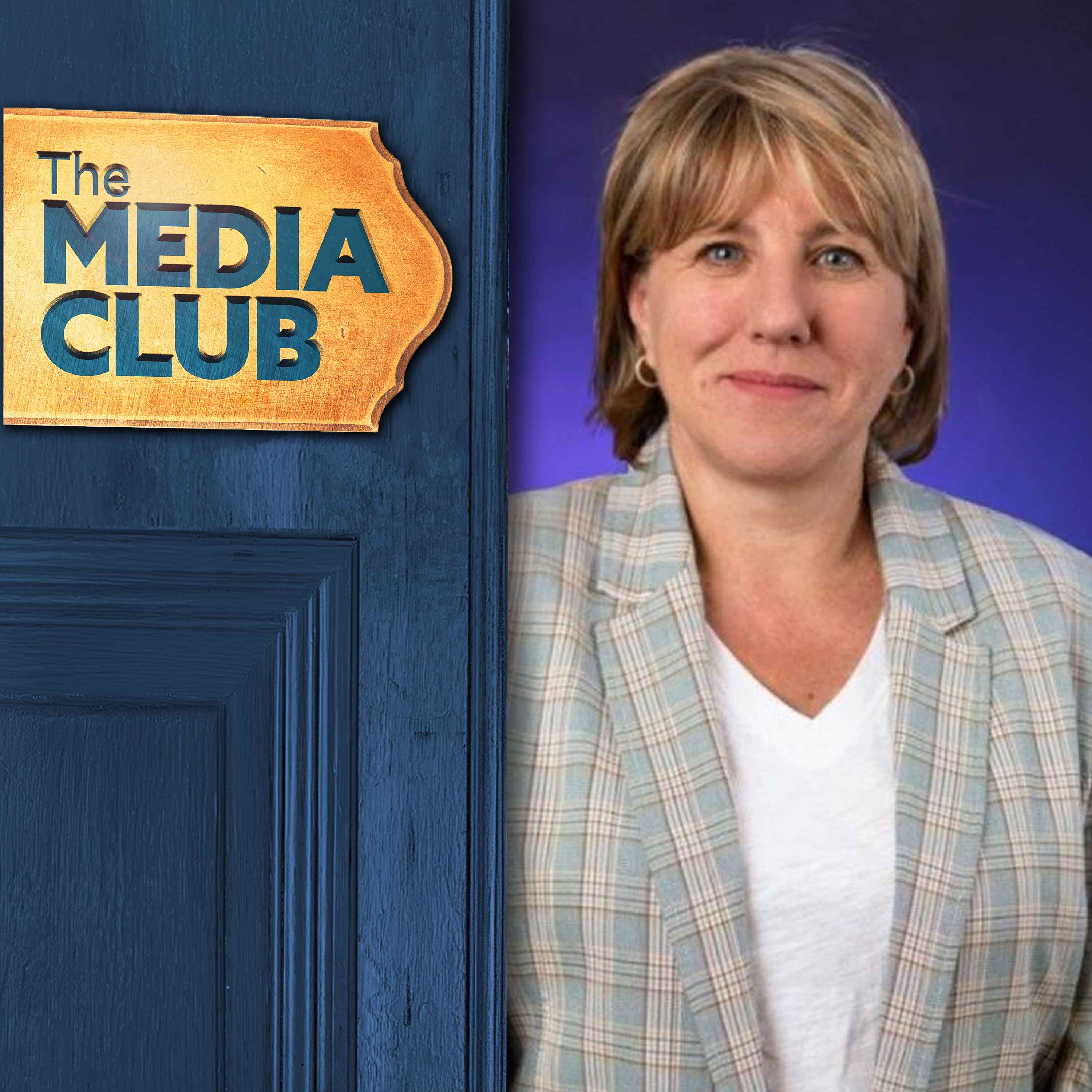
Ofcom's Cristina Nicolotti Squires on PSB promience
In short
Ofcom’s five-year review of public service broadcasting and media “prominence,” arguing that public service content (news, current affairs, sports, children’s programs, major drama) should be easier to find on platforms like YouTube, not just on TV EPG “buttons.” It also covers funding trade-offs, media literacy against misinformation, streamlining/modernizing regulation, and Ofcom’s approach to BBC online regulation and BBC radio spinoffs.
Guest backgrounds
Cristina Nicolotti-Squires is Group Director for Broadcasting and Media at Ofcom; previously worked at Sky (8 years).
Key claims
prominence regulation is a logical extension of smart-TV discovery; PSBs must create PS content, but other companies (e.g., Sky, Netflix) aren’t required; news is expensive and not purely commercial; media literacy is shared responsibility; Ofcom can’t fully regulate mis/disinformation; regulation should be flexible and faster.
Notable examples
YouTube prominence; ITV/Channel 4 full episodes; Sky News; Grenfell conspiracy claims; hairdresser example about Sadiq Khan/Sharia law; BBC Glastonbury iPlayer pop-up; BBC radio spinoffs (Radio 2 Retro, Five Live) rejected due to market impact.
Written by AI. May contain mistakes.
Chapters
0:00
Ofcom's Report Origins
Understanding the motivations behind Ofcom's latest report on media.
“Your team just added its 67th AI tool and also your 67th security blind spot.”
1:30
Ofcom's Report Origins
Understanding the motivations behind Ofcom's latest report on media.
“Before we get into what Ofcom was sort of recommending today, what sort of prompted the report?”
2:10
The Role of YouTube in Public Service Broadcasting
Exploring why YouTube should feature public service content prominently.
“Obviously, American company, internet-driven firm.”
4:00
Prominence and Public Service Content
Discussing the implications of prominence for public service broadcasters versus commercial entities.
“And they've got they've got some good they're developing some really good relationships, the broadcasters.”
6:05
Funding and Sustainability of Public Service Media
Analyzing funding challenges and the sustainability of public service broadcasting.
“But it is an area that I don't think the market would necessarily subscribe.”
8:25
Consumer Perspectives on Media Funding
Examining public attitudes towards media funding and the license fee.
“So, yeah, Sky News is a fantastic product, but again, it doesn't have to exist.”
10:40
Media Literacy and Digital Skills
The importance of media literacy in an age of misinformation and disinformation.
“And I'm not calling mates of mine conspiracy theorists, without a doubt.”
13:20
The Role of Broadcasters in Fighting Misinformation
Discussing the responsibility of broadcasters in addressing misinformation.
“And we're making amazing strides in that, which is fantastic.”
14:00
Navigating Information and Disinformation
Learn how to critically assess the truthfulness of news sources.
“What is information and what's disinformation?”
16:57
Evolving Media Regulation
Explore how media regulation must adapt to modern broadcasting challenges.
“Is this about trying to change some of those rules as well?”
Show all 12 chapters
21:42
The BBC's Regulatory Challenges
Understand the balance of innovation and regulation in BBC's new proposals.
“Yeah, I mean, so we're very cognizant with the media act when we're sort of writing, we're doing like 43 different statements and codes and stuff.”
25:01
Public Engagement in Media Conversations
Learn how listeners can participate in discussions about media regulation.
“have an opinion how should they communicate that to you what can they what can they do?”

Ask about this episode
Get the gist, explore an idea or ask about something said.
 Claude
On The Media Club with Matt Deegan, what are the key points of this episode?
Searching your listeningTranscript
Automatic transcript. May contain errors.
0:00Your team just added its 67th AI tool and also your 67th security blind spot. The good news? The Vanta agent works like a GRC engineer in the background, finding every app your team uses, scoring the risk, and drafting fixes for you. Vanta is the platform used by over 16 ,000 fast-moving companies like Ramp, Cursor, and Harvey, who are shaping the future with AI and staying ahead of AI risk. Get started at Vanta.com. Hi, this is Monica Reinagle of Nutrition Diva. Today's show is sponsored by Nature Raised Farms. Grocery shopping can be a little overwhelming, especially if you're reading labels.
0:37And in my opinion, chicken shouldn't be complicated, which is why I appreciate Nature Raised Farms. It's chicken that's just chicken. And their lightly breaded chicken nuggets are free from gluten, dairy, and soy. Look for Nature Raised Farms on your next grocery trip and feel more confident about your choices.
1:05Hello and welcome to this bonus edition of the Media Club. The UK media regulator Ofcom has been becoming more vocal in the past year from interventions in commercial radio and the thorny issue of what constitutes a news programme. And today Ofcom is pushing YouTube and others to feature public service content more prominently. Christina Nicolotti-Squires is the Group Director for Broadcasting and Media at Ofcom and joins me now. Christina, welcome to the Media Club. Thank you very much. Nice and cosy in here. It is. It's lovely. Before we get into what Ofcom was sort of recommending today, what sort of prompted the report?
1:41Why does it exist? It's something we actually have to do every five years. And in fact, five years ago, we did one called Small Screen Big Debate and it informed the Media Act, which we're currently implementing. So it is something that we're required to do as part of our job. But actually, you know what? things are changing so much so fast that not reviewing how public service broadcasting and media is is going would be would would be remiss of us so something we have to do but actually something we need to do really uh okay so there's quite a few sort of proposals here um one that's probably captures lots of people's imagination is around youtube and thinking about it when i was looking at the summary thinking a lot about um almost treating youtube like a traditional broadcast outlet like a sky or a cable um and you want them to have kind of public service media on there why youtube and why now if you think about prominence is the word we use about how you can find this stuff you know public service content it's a sort of logical conclusion the regulation of prominence was originally the three then became four then became five buttons on your television then where it was in what you know the epg with the media act is about you know where it is a bit how it appears on smart tvs we've got seven out of ten i think homes have got smart tellies these days and so this is kind of like a logical development of that um and youtube yeah it's a growing platform it's where and we're telling people the broadcasters make put your content where the audiences are and they're increasingly on YouTube.
3:18So it kind of makes sense. Obviously, American company, internet-driven firm. How do you think they'll feel about being sort of put into the Premier League and into your sites? We've already had a few conversations, actually. We've had some conversations with the broadcasters and with YouTube and actually people are generally in the same place. It's the stuff that the public service media that we talk about is it's news, it's current affairs, it's sports, it's children's programs, it's great dramas, it's stuff that brings people together. And they all have really good, strong brands. So actually, it's why would YouTube not want to put those things on there?
3:59And they do. And they've got they've got some good they're developing some really good relationships, the broadcasters. So I think it's kind of beneficial for everyone, really. I mean, ITV obviously have announced they're putting a lot more full episodes on their Channel 4 and Channel 4.0. We're doing quite a bit on YouTube. When we think about what public service media is, does that mean mandating that someone that's got an Ofcom license should get prominence? Or could it be other people that create public media? Yeah, I mean, it's kind of how many people can you promenade? That's not a word, is it?
4:33It should be. How many people? If you have prominence for everybody, how can you do that? So we're starting off with the public service broadcasters. They have to make a certain kind of content. Now, public service media is not just made by BBC, ITV, Channel 4, Channel 5. You know, Sky makes great stuff. Netflix is making, you know, adolescents, etc. There's a big difference. Those companies don't have to. In fact, I think Sky announced the other day that they're going to stop doing original kids stuff. Yeah, stop commissioning kids content for Sky Kids. So, you know, and, you know, that's for them to decide to do.
5:11But the public service broadcasters have to make this stuff. And so that's kind of, you know, the difference really, I suppose. And obviously, historically, they had to make that stuff to get access to Spectrum. Yeah. To get on to that button number three, four or five. and that was the exchange. You got access to Spectrum in exchange for maybe doing some stuff that you maybe wouldn't do on your own. But that sort of exchange has changed. You don't necessarily need to have a button. You can appear on an EPG as a commercial provider. Is some of this encouraging prominence on YouTube ways to keep ITV, Channel 4, Channel 5 in the public service family?
5:55Matt you're absolutely right I mean the pact has changed hasn't it as you said there was a trade-off so what can the trade-offs be in a world where there's so many different channels and so many different choices and yeah this is prominence of public service broadcasting is part of that trade-off and again it's it's the latest sort of iteration of it so yeah absolutely it is part of that as I said they have to make those kinds of programs lots of other people do but they don't have to and obviously then there's the question of who pays for these things so that's one of the things that is raised in the report and there's obviously a strong encouragement that there's government funding for for some of this maybe outside of what the license fee does yeah look luckily Ofcom doesn't have doesn't have to decide how this is done it's up to the government how things are funded we've seen that you know tax relief for high-end tv productions really helped there have been calls from various stakeholders for other things I think the government ruled out didn't they a tax on the on the streaming companies how the bbc is funded obviously is the biggest one but you know all the other psbs tell us it's not in their interest that they do badly funded bbc they don't necessarily want the bbc to compete for ad revenue from them or even maybe subscription revenue no i'm sure they don't so yeah how how are things are funded and look you know let's accept it where you know there isn't a lot of money sloshing around is there so i think it's about it's about sort of some smart thinking and at the end of the day yeah it's down to the government to work out to work out how that how that how that schedule should be done but it's not just about finding money it's how you spend the money as well i think and those things we mentioned them earlier so i guess kind of news uh children's content things that maybe the market wouldn't choose yeah i mean news has never news has never been a commercial thing um you know itv news uh you know costs a lot cost money to make and you know was kind of cross subsidized i suppose if you like by like the Coronation Street or other sort of more popular programmes.
7:56But it is an area that I don't think the market would necessarily subscribe. I mean, Sky has a very slight vested interest. I came from there after eight years. Sky does a fantastic news service. Doesn't have to, chose to. So there's a value. There is a kind of an inherent value of news. And some of that's because that was to get deals to happen. Well, it's good for the brand. It's really good for a brand that, you know, you provide, you know, pay us money to watch football, but also we do lots of other good things as well. So, yeah, Sky News is a fantastic product, but again, it doesn't have to exist.
8:30And Sky could turn around and go, we're not going to do it anymore. I don't think they will, but they could do. So it's, and news is an expensive business. You know, sending people to the countless wars that are always happening around the world is not cheap. And eyewitness journalism is really crucial. And now we're in an era where because there's kind of fake news and misinformation around, it's actually, you know, having news desks that have got people to verify stuff is now become, you know, part of what you have to do all the time. I guess from a consumer perspective, and there's a lot of research that Ofcom does about consumers that's incredibly high quality and covers all the different media.
9:10I do worry you see a lot of response to the license fee and now the public don't need to have a license fee to consume television if they don't watch live television or don't use the iPlayer. And you can see online that people are unhappy that they're forced to pay a license fee. I mean, do they want the government to invest in media or spend more of their money on media? A lot of people say actually the market should just look after itself. We haven't done specific research on that. I think it's important to realise that, you know, a lot of people still use the BBC. Something like 70 % of people, isn't it?
9:43I think, you know, use the BBC at some point. So it's still really used. But yes, trying to persuade people to pay the licence fee is, you know, is an ongoing thing. But I think with these things is that if you, I think, if we as a society, as Britain, if we don't fund things like the BBC and public service broadcasting properly, then you know we'll wake up one day and it'll be gone it's like those things you don't miss it till it's gone um and it you know the bbc and the other broadcasters they cover such a range of stuff that as i said some people do bits of but they don't have to and all it can do is you know a new boss can take over and they suddenly go let's not make loads of british content so it's it's really important and they they still make that kind of stuff that brings us together as a nation whether it's you know god willing whether it's the euros finals and you know the lionesses being in the final again or whether it's the you know finale of strictly or traitors it's kind of it's part of our it's part of who we are i think and so i think it's you know i think it's um and you know the other thing to mention i'm sure you're aware of this but the public service broadcasters are actually a really big part of what we call the creative industry yes that makes loads of money for this country and people come from all over the world not just because we've got great on-screen talent here but also we've got fantastic you know colorists lighting directors you name it and um and they that's where people learn their stuff uh and a lot of that public service training that then goes to the rest of the sector i mean sort of connected i guess to to news and and quality media uh is media literacy and in a in a world of we've talked about fake news already um you can see a lot of tv style content on youtube or on or on social media it's it can be hard for people to discern what's real or what's not what's comment what's been created by ai what what's real there's quite a push in here uh to invest in in media literacy so where's that does that come from those those those changes yeah it does you know and i think that just a couple of stories from my own experiences you You know, conspiracy theorists used to be sort of people that you've never encountered.
11:56And I'm not calling mates of mine conspiracy theorists, without a doubt. But, you know, I remember after the Grenfell Tower, I was having like a few drinks with some mums and dads from around the neighbourhood. And people were saying to me, oh, yeah, well, sky colluded with the government to cover up the death toll. And I was like, no, we didn't. But some of these things are becoming mainstream. And I think that it's really important that people we kind of we need to have we need to have kind of digital skills and digital literacy and citizenship to kind of understand what the world around us is doing.
12:29and that's why I think getting the facts right is so crucial and having news providers that are providing trusted, accurate, impartial news, reflecting a whole range of voices and stuff is so incredibly important and it's not just, you know Ofcom does have some duties in the media literacy area but we're very clear in our report that it's not just the work of government to do or Ofcom but it's also the broadcasters themselves the platforms um and making sure that we're all it's not just kids you know we do talk about the role of education um but that's obviously for Westminster and the devolved governments but it's adults as well you know people I remember I remember um going to have my haircut about a year ago and the hairdresser saying to me well now Sadiq Khan's been elected into London and he was bringing in Sharia law so where do you read that because I don't watch the news because it's too depressing but I saw it on my socials so I just think it's you know just getting a bit of kind of you know questioning a bit of critical thinking is important is it the job of the the media companies that are doing the good stuff to also fight the bad stuff or is this really a job for the for the platforms well look the online regulation world is kind of not it's part of ofcom but not obviously not mine and someone else does that i don't think i could do both um and you know there are some there are some rules around that um about making sure that people are not exposed to illegal content and harmful for kids and stuff.
13:55And we're making amazing strides in that, which is fantastic. Mis - and disinformation was not in the Media Act. It's not in the Online Safety Act. It's very hard. What is information and what's disinformation? So I think that it's important that we all play our part in that. And we just kind of ask a few questions of things. That picture I've just seen, you know, is it really real? I asked my kids the other day, I've got sort of 19 and 22 year olds, I asked them how they find out stuff, you know, where do they get their news from, TikTok, how do they know it's true? Well, if it's a really mad looking story, I'll go and check on the BBC.
14:30So I think getting people to think that maybe not always what you see is exactly what it purports to be is important. Is that something that needs, again, are we asking the government for more cash to help do that? I don't know if it's about more cash. I think it's about maybe, you know, as I said, it's down to the Department of Education, whether it's a curriculum thing. But again, you know, the broadcasters do quite a lot already on this. And it's just kind of, you know, reminding them. And coming out to charge to renew, I think it's something that the BBC might want to. Tim Davies already said it.
15:00They're quite keen to sort of do a bit more on. So it's just, you know, if you're being offered a pair of designer trainers and they're half price, little bell rings, doesn't it? If you see something on social media which looks a bit weird, then, you know, it's just making that bell ring a little bit for people. If it looks too good to be true, it probably is. Or does it look too good to be false, don't it?
15:29Hi, this is Monica Reinagle of Nutrition Diva. Today's show is sponsored by Nature Raised Farms. Grocery shopping can be a little overwhelming, especially if you're reading labels. And in my opinion, chicken shouldn't be complicated. Which is why I appreciate Nature Raised Farms. It's chicken that's just chicken. And their lightly breaded chicken nuggets are free from gluten, dairy, and soy. Look for Nature Raised Farms on your next grocery trip and feel more confident about your choices. Your team just added its 67th AI tool and also your 67th security blind spot. The good news? The Vanta agent works like a GRC engineer in the background.
16:09finding every app your team uses, scoring the risk, and drafting fixes for you. Vanta is the platform used by over 16 ,000 fast-moving companies like Ramp, Cursor, and Harvey, who are shaping the future with AI and staying ahead of AI risk. Get started at Vanta.com. The more you listen to your kids, the closer you'll be. So we asked kids, what do you want your parents to hear? I feel sometimes that I'm not listened to. I would just want you to listen to me more often and evaluate situations with me and lead me towards success. Listening is a form of love. Find resources to help you support your kids and their emotional well-being at SoundItOutTogether.org.
16:51That's SoundItOutTogether.org. Brought to you by the Ad Council and Pivotal. other thing on on uh the report um streamlining regulation to strip away any outdated and unnecessary restrictions that sounds quite sensible you know be be more efficient um different people would probably have different views about uh what are unnecessary restrictions obviously ofcom's uh made some uh statements around things like gb news and uh politicians on telly, some issues in the courts with about defending those decisions. Is this about trying to change some of those rules as well? From a sort of high point, it's sort of an overall view.
17:36It's more about really making sure that our regulation is fit for now. So the Media Act, which we're in, as I said, we're in the course of implementing, was the first kind of change in regulation for like 22 years, I think. As the world around us is changing, are things that have been put in place 20 years ago around advertising, product placement, stuff like that. Are they really the right thing? I think we also have to be cognizant about the future of TV and broadcasting. And in a world where, you know, in 10, 20 years' time, are we still going to have TV licences? Or are we going to have a bit like we have in the online world, systems and preferences or processes?
18:13So it's kind of like looking at all of it, really. As far as, like, you'll talk about the broadcast code and a consultation we're having on the role of politicians and presenters and what we call 5.3. There's a consultation going on in that at the moment. But, you know, we're bringing in, as part of the media, we're bringing in a video on demand code, which we mirrored on the broadcast code. I'm quite keen to look at, should there just be one code? If you're seeing something on live or you're seeing it on catch-up or you're seeing it on, you know, ITVX, should it be different things? so that's the kind of thing we're talking about but a review of everything really because it's interesting that the BBC obviously has gotten some hot water about their Glastonbury coverage now that was on an iPlayer kind of pop-up stream channel am I right in thinking that is an unregulated part of the media so it doesn't fit in with Ofcom's rules not quite yeah I had to work it out myself as well our powers are slightly different there we can and are looking into some of the editorial processes we can't unlike if it had been broadcast then we would have been able to investigate and sanction and fine etc so it's slightly different to that however we were asked by the last government as part of the framework agreement to start regulating BBC online material and I think that would have fitted into that that arrangement hasn't started yet because there's still parties waiting for signatures and stuff But yeah, it's a complex world, isn't it?
19:49Kind of working out, is a live stream part of the iPlayer or not part of the iPlayer? So that's why I think regulation's got to evolve with how stuff is delivered. Yes, we talk in that point about sort of efficiency and kind of outdated regulation. And I think your boss talked about the need for the BBC particularly to respond to things slightly quicker. Yeah. I'm also conscious that some of the, again, back to those GB News responses have taken maybe a year or so to be resolved. Notty issues, very complex. I mean, isn't this a bit of an issue for Ofcom as well, trying to solve some of these problems?
20:27Yeah, everyone wants speed, don't they? We live in a 24-hour world now. You know, you'd buy something online, you want next day delivery or even same day delivery. We're a kind of instant culture. slightly different in what my boss said about the BBC in that it takes the BBC quite a long time to sort of come to a conclusion that most of us can see quite clearly but with things like legislation and like sort of ruling on really complex cases you have to take a lot of time over it because we have to consult various people and you know legal processes you know lawyers take a long time over legal presses not saying they do it for billing hours by any means but you know there's a lot of back and forth that goes on.
21:07But I am really keen, you know, one of the things I really want to do is to make our processes more efficient, more streamlined. We're looking at use of technology for that. We're looking at the use of AI for that. Like all organisations, how can you take them kind of slightly more monotonous, clunky things and make them more efficient? I mean, some of this is sort of needs legislation and needs kind of colleagues in governments around the UK to do that. And media legislation, it took a long time to get to the Media Act. I mean, we're probably a few years away from anything else being added to media regulation.
21:41I mean, is that a problem for the evolution of these services and what consumers are accessing? Yeah, I mean, so we're very cognizant with the media act when we're sort of writing, we're doing like 43 different statements and codes and stuff. We're very keen to make sure that whatever we bring up can be quite flexible and doesn't need a whole load of legislation to update it. look, legislation takes time because you have to get it right. And if it's rushed through and you get bad laws that you have to enact, then, you know, that's in nobody's interests. This document that we launched is about sparking conversations.
22:18And yes, we may require legislation to force or to insist that various things are regulated in a certain way. But I'm kind of hoping that also by starting those conversations that you can have a bit of, you know, carrot as well as some stick. Yes. And Ofcom's been pretty busy this year. Obviously, a lot of safety, online safety stuff to do. I bet there's a lot more new colleagues in the building to deal with that. Also aware about Ofcom's response to the BBC's desire to launch some new radio stations. So kind of for the first time, Ofcom did a firm no on spinoffs for Radio 2 and for Five Live.
23:00That's a bit of a change. Yeah, I mean, look, we'll unpack that a bit. I mean, we don't want to stifle the BBC in terms of innovating, you know. I mean, you're asking them to do quite a lot as well at the same time. Yeah, exactly. They've got to create new products. They've got to get new audiences. And so we don't want to stifle that. So we have a very sort of quite rigorous system of if the BBC, who are a big organisation, if they come up with a proposal, we work out whether it's going to affect the market or whether it's going to damage the commercial thing. and of the five of those proposals we let three go through because we didn't have a serious what we call materiality impact but we felt that the five live one and the radio two um one were just a bit too had too much of an impact and the competitors in that field would have really really suffered and struggled so that's the decision we made and you know it's all backed up by evidence and economists do models and all that kind of thing so it was a yeah it was the first time but But it's kind of, it's a balance, isn't it?
24:00You want the BBC to innovate and be for everybody, but not at the expense of other people already out there. I mean, it's quite tough because whilst they're having those conversations with you, obviously commercial operators can take those ideas and launch them themselves or get ready for them. Don't they happen in this case? Well, you could argue that some of the radio stations launched similar things to radio anthems in the space. I mean, it's tough for the BBC. I mean, we expect a lot from that organization. And, you know, we tell them to do one thing on one side and then on the other side, we say, oh, no, that's too close to commercials.
24:36There's quite a lot of Radio 2 listeners that would have liked Radio 2 Retro as a spinoff service. Yeah, well, look, as I said, we have to assess the impact on existing businesses and on the commercial market. And in this case, you know, as I said, the evidence is all there. and in this case we just felt that actually it would have had too much of an impact on similar kinds of services. Okay back to the review so if people have an opinion and hopefully listeners do have an opinion how should they communicate that to you what can they what can they do? That's a good point actually well our website I mean I've never worked for more open organizations than Ofcom so everything's on our website and I'm sure there's ways that you can people can drop in emails or whatever on their views.
25:21I'm just really hoping that what we're going to start is a kind of a national conversation about how we preserve this thing that we love that, you know, we've all got moments. We've all got telly moments, you know, whether you were remembering where you were when I'm that old, when what's his face was short in Dallas. JR. That's it. You shot JR. I remember it so vividly. Or I remember, I remember Michael Jackson releasing some video on channel four. And just like, you remember those moments, don't you? And I just think that I want my kids to be able to remember those moments. And I just think that the sort of shared, whether it's Eurovision or, you know, we have a conversation, don't we?
26:00And I want us to be able to carry on having that conversation. Well, I hope we do too. My thanks to Christina Nicolotti-Squires. Right. We're on a break now until the Edinburgh TV Festival in August. So do pop by and say hello if you're there. And don't forget our members survey. I think you've got until the 4th of August to fill that in. there are links in the show notes here or on our website at themediaclub.com that's the place to go to sign up to our sub stack to get lots of updates about what we're doing so my name's Matt Deegan the producer was Matt Hill it was a Rethink Audio production with video support from Podcast Discovery I'll see you in August Hi this is Monica Reinagle of Nutrition Diva today's show is sponsored by Nature Raised Farms Grocery shopping can be a little overwhelming, especially if you're reading labels.
26:49And in my opinion, chicken shouldn't be complicated, which is why I appreciate Nature Raised Farms. It's chicken that's just chicken. And their lightly breaded chicken nuggets are free from gluten, dairy and soy. Look for Nature Raised Farms on your next grocery trip and feel more confident about your choices. Your team just added its 67th AI tool and also your 67th security blind spot. The good news? The Vanta agent works like a GRC engineer in the background, finding every app your team uses, scoring the risk, and drafting fixes for you. Vanta is the platform used by over 16 ,000 fast-moving companies like Ramp, Cursor, and Harvey, who are shaping the future with AI and staying ahead of AI risk.
27:32Get started at Vanta.com.
From the publisher
Public service content should be findable on YouTube - so says media regulator Ofcom, in today's announcement of a public service media review.
Cristina Nicolotti Squires speaks to Matt Deegan about treating YouTube as a new form of EPG, the need for media literacy - and looks back at the challenges the regulator has faced this year with impartiality at GB News and BBC Radio's spin-off stations.
We record at Podshop Studios - for 25% off your first booking, use the code MEDIA CLUB at podshoponline.co.uk
We're taking a break now until the Edinburgh TV Festival in August - if you're there, please do say hello!
**SURVEY TIME** We need more info on our listeners and viewers to help improve the show. It takes 2mins and one lucky applicant will win a £50 John Lewis voucher. Take part now
Hosted on Acast. See acast.com/privacy for more information.
More from The Media Club with Matt Deegan
All episodes
We use cookies.They keep VO running smoothly and help us improve it. Privacy policy