
 Ask ChatGPT

- Podcasts
- The Media Club with Matt Deegan
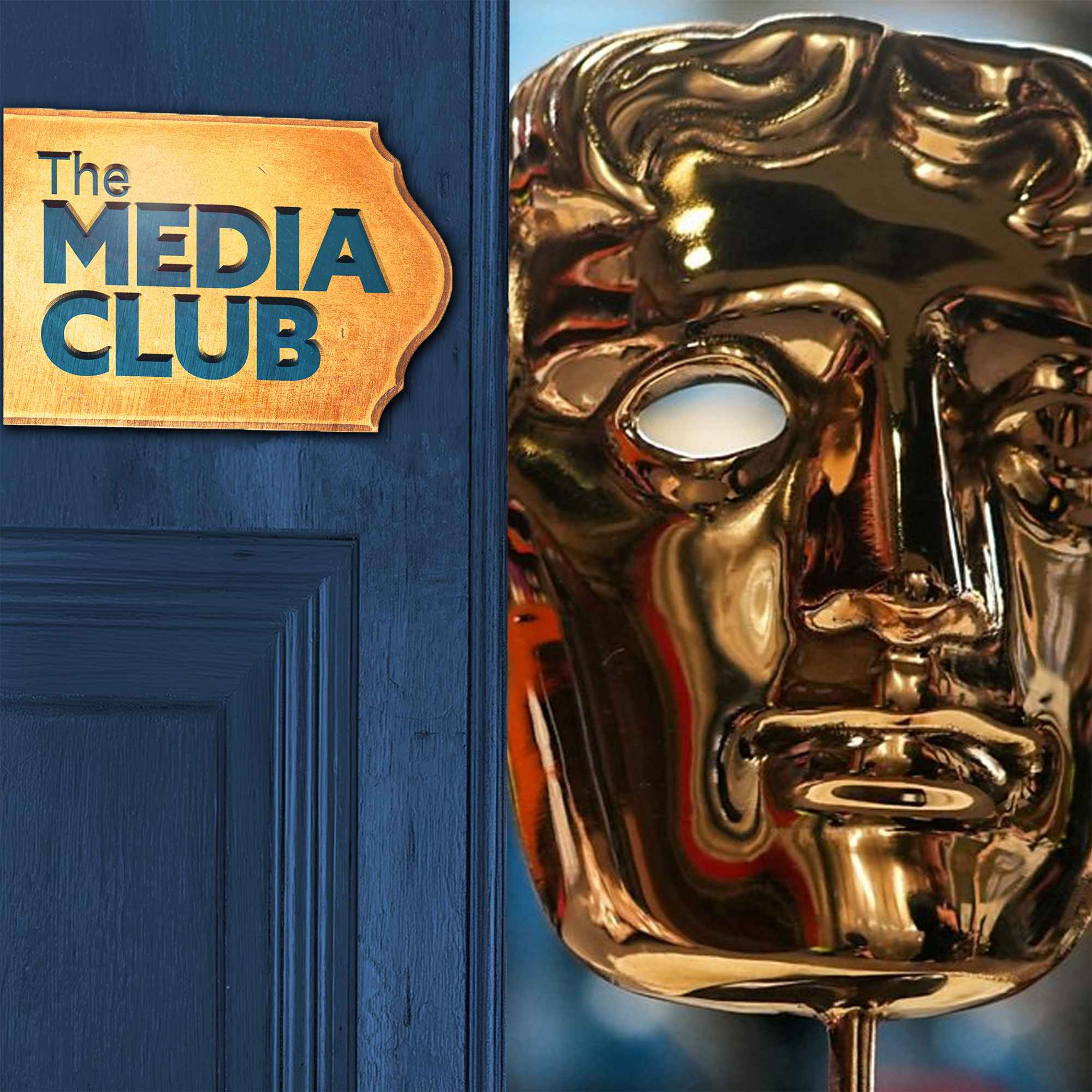
- That BAFTA edit, Mip London & AI Updates
The Media Club with Matt Deegan27 Feb 2026 · 40m · 14 chapters
That BAFTA edit, Mip London & AI Updates
In short
Main points
- Host: Matt Deegan
- Theme: Analyzing key media stories from the UK, focusing on television production, streaming, radio, audio, journalism, the internet, and publishing.
- Guest Experts: Includes talent agent Alex Segal and Clive Dickens.
- Incident Overview:
- The BAFTAs faced backlash due to a live incident involving an audience member with Tourette's syndrome, which became disruptive during the event.
- Talent agent Alex Segal shared insights from being present at the ceremony.
- Audience Reaction:
- The incident led to palpable discomfort among attendees, including actors Michael B. Jordan and Delroy Lindo during their presentation.
- Post-Event Editing:
- The BBC's rushed editing process failed to mitigate the incident adequately, leaving problematic content in the broadcast.
- Discussion on accountability within the BBC and the production chain that led to this oversight.
- Industry Impact:
- This incident raises questions about live broadcasting logistics and the responsibility of networks to create inclusive environments.
Written by AI. May contain mistakes.
Chapters
0:45
Premier League Plus: A Direct-to-Consumer Move
Discussion on the implications of Premier League's new direct-to-consumer service in Singapore.
“Getting my miles up, getting my status on Qantas.”
6:15
BAFTA Night: Unexpected Moments
Insights from the BAFTA ceremony, focusing on the unexpected audience reactions and their impact.
9:48
BBC's BAFTA Edit and Its Consequences
Analysis of the editorial decisions made by the BBC during the BAFTA broadcast and the aftermath.
“And I think obviously the word hits differently if you're a person of colour as well.”
14:03
Regulatory Changes in Local News and Broadcasting
Learn about new regulations affecting local radio and the responsibilities of broadcasters.
“And it's good to see the regulator actually taking a look and a temperature check of the consumer market.”
16:44
The Future of TV and Youth Engagement
Discussing challenges and strategies for TV networks to engage younger audiences.
“So the fact that there's a bit of ring fence around the thing that make it unique, which is news and news content and local news, I think it's a good development.”
19:23
Data Measurement in Modern Media Consumption
Exploring the difficulties in measuring audience engagement across media platforms.
“Whereas, in fact, where consumers are consuming their content, whether on podcasts, on social media, on YouTube, there isn't any form of MRC ratings.”
23:11
Media Industry Updates
Catch up on the latest developments in the media industry, including major deals and trends.
“Here's a few other stories we've been talking about in the club this week.”
24:31
AI Developments and Their Impact
Examination of the latest trends in AI and its implications for various industries.
“Right, Clive, I was just thinking about when you were on last year.”
27:29
Ethics and Challenges of AI in Media
Discussing the ethical concerns surrounding AI-generated content and likeness.
28:00
The Impact of AI on Talent and Development
Explore how AI tools are reshaping the roles of developers and talent in media.
“That's very dangerous from our point of view, especially for reputations and profile, because people don't know the difference.”
Show all 14 chapters
29:20
Ethical AI and Artist Compensation
Discuss ethical AI practices and how they affect artists' compensation and rights.
“who are very good at developing work even more efficiently.”
31:18
Investing in Vertical AI Startups
Learn about pre-seed investment and the significance of vertical AI startups.
“So we're just raising three million US dollars to a boutique fund to invest in vertical AI startups in the pre-seed stage.”
32:45
Talent's Perspective on AI and Job Opportunities
Examine how talent views AI technologies and their impact on job opportunities.
“And it does process organization documentation.”
35:17
Audio Network Media Quiz: Slate or Fake
Participate in a fun media quiz testing knowledge of upcoming shows and formats.
“But at the moment, It's a very mixed bag of responses.”

Ask about this episode
Get the gist, explore an idea or ask about something said.
 Claude
On The Media Club with Matt Deegan, what are the key points of this episode?
Searching your listeningTranscript
Automatic transcript. May contain errors.
0:00Clive Dickens: Hello, welcome to the Media Club. I'm Matt Deegan. In the club today, it was supposed to be all glam and trophies, but this year's BAFTAs became something else entirely. Talent agent Alex Segal was in the room where it happened. Also on the show, we check in with the AI revolution. Clive Dickens is here and we'll find out how news companies are ganging up on big tech. All that plus goal hangers Tony Pasta tells the TV industry what it's getting wrong about young audiences. The government's move to bring Netflix, Disney Plus and Prime under its watch. And in the Audio Network Media Quiz, we play Slate or Fake.
0:35Clive Dickens: That's all coming up in the Media Club. Come on in. Clive Dickens and Alex Siegel join me. Hello, nice to have you both on the sofa.
0:42Matt Deegan: Great to be here.
0:44Clive Dickens: Clive, senior partner, managing partner, Meliora. That's right, isn't it? That is right. What have you been up to recently? Getting my miles up, getting my status on Qantas.
0:55Matt Deegan: Normally Sydney and over in the UK for a little bit before some other travel. Yeah, a bit of London, a bit of New York, a bit of LA. Lots going on. It's really exciting. We're in a big AI economy, learning, investing, doing, having fun.
1:09Clive Dickens: Well, we'll talk a bit more about that later on. Your membership is well-worn. Maybe corners of the membership card need replacing. Who would you like to add as your plus one this week?
1:20Matt Deegan: So for me, it'd be Richard Masters, who's the head and CEO of the Premier League, who's just announced at the FT football conference the launch of Premier League Plus, their first direct-to-consumer service, launching in Singapore in August. Big deal for the sporting industry. Talked about for many years, finally going direct-to-consumer. I think this is a fascinating move, particularly off the back of NFL's investment in ESPN and NBA's investment in Evergent. this is the next wave of fandom where the sporting codes going straight to the fans and cutting out
2:00Clive Dickens: the media market so because there's been a bit of people kind of flipping backs and forwards a little bit on this so a lot of sports operators jumping with their own service then a bit of pullback like wwe deals with then kind of dumped that and went with netflix um premier league obviously testing it in a market why singapore why is that a good market let's say it's a great um off
2:22Matt Deegan: broadway market as we say in australia it's like a the the uh it's a very big fandom market high arpu market very sophisticated market but it's not so big that it would sort of um disrupt the market overall you know so it's a really good test market i think i'd imagine that's the reason it's um in the asia pacific market so it's a it's big news in asia pacific today and um i think it's a fascinating development.
2:50Clive Dickens: VPN and an Amazon stick,
2:53Matt Deegan: can you get it in here? Would that be all right? Oh, you know, apparently VPNs do still work. But, you know, 380 matches, you know, if you wanted a VPN, you can VPN in plenty of other countries before Singapore into streaming services. I think, you know, getting closer to your fans, that's the rule driver here. You know, because if you think about it, the media companies are the intermediary. You know, it's like getting close to the fans and I think that's good for the fans and good for the sport. Probably not so good for media. Alex Siegel, MD of Intertalent.
3:24Clive Dickens: Nice to see you. Thanks for having me back. So as you're saying, some time in LA. Any sunburn?
3:30Alex Segal: Yes, in February, which is very unusual. By the way, just to say, as a Spurs fan, this might not be applicable to me, this Premier League Plus, because we might not need it if results keep going this way. Championship Plus is what I'm after, sadly. So yes, spent some time in LA on behalf of Intertalent. Took about 16 meetings in one week. a lot of tv but also a lot of ai a lot of creator economy um they're very optimistic about everything over there as always uh there is a potential of another strike that they're talking about but they all say it's not going to happen but they did say that last time so we'll see i was reading
4:04Clive Dickens: your substack deal makers that you met an agent that was a substack agent yeah that's interesting
4:10Alex Segal: i'd already had that thought but he has beaten me to it i i do see a world where Substack first talent become the next generation. I mean, Substack is having a real, real moment right now.
4:21Clive Dickens: There's a big video push in Substack.
4:22Alex Segal: It's not just about journalists and writers. So people like Piers Morgan have joined video only. I saw that Keir Starmer had joined a few months ago. So people are joining not just to write, people are doing video stuff, live stuff. So it's expanding in that way. There is a notes section that's a bit like X really. But no, No, there is an agent out there who is representing some of the biggest American sub-stack first talent and getting them a lot of advertising, a lot of brand deals and now, you know, more. So I might be not far behind him. Not me personally, but representing them for sure.
4:56Clive Dickens: Yeah, well, it's all attention, I suppose. For sure. And who's your plus one this week?
5:01Alex Segal: Well, I think there's only one person for me. I mean, given Sunday, I think Robert Arameo. So I believe he's the first person to win both Rising Star and win in the leading category, which is just incredible. And a lot of people have never obviously heard of him before Sunday. So what a night for him. And I suspect this is going to be the start of a hugely exciting career. He's clearly phenomenal in this film.
5:26Clive Dickens: And he talks about it in the sub-sac. It's interesting when those Rising Stars kind of instantly hit. Can you be in both categories? Well, we had this debate in the office.
5:36Alex Segal: I was a bit in the minority on it. I did say if you're able to, if you're applicable, if you're that good to be alongside DiCaprio and Ethan Hawke and Michael B. Jordan, etc., then I feel like you've made it. So I'm not totally sure. I mean, you don't really need the rising star, do you? He does not. Within half an hour, he went from a rising star to basically just being an Oscar short of completing his career. So, listen, great for him and great for the Brits on the night as well.
6:04Clive Dickens: Well, two great additions and we will talk more about BAFTAs after the break.
6:15Clive Dickens: no one can deny that BAFTA had worked hard to be inclusive on Sunday night but the BBC pre-Watershed edit left audiences with quite a visceral experience um what was it like in the room
6:28Alex Segal: what what what happened in the room so in the room as soon as we got into the auditorium it was very apparent that there was somebody in the audience that that had Tourette's but given that we knew I swear was up for lots of awards you know that wasn't a surprise um and the floor manager comes out as he always does and does his logistical briefing chats and telling you about how the night's going to run and then he did make a point of mentioning it which did get a round of applause um and that was great because it was so it was so important that he was there and it really was a great moment and then yeah I mean from that moment onwards even during the briefing from the floor manager you could hear John throughout that and then into the night you could hear him throughout that I mean I couldn't really I wasn't on his side of the room so I wasn't always aware of of what he might have been saying but yeah when it got to the point of Michael B Jordan and Delroy Lindo coming out and in the middle of their sort of nomination presentation bit um it was very clear and it was a shocking moment i mean and and it was very uncomfortable it was one of those things and i quickly looked at them to see whether they might have heard it and you could tell on their faces that they had um so it was it was a big shock in the room it's not something you know you hear very often so um but i guess i guess there's a question like
7:53Clive Dickens: we can speculate and we shouldn't speculate too hard but just logistics of the day and I think a lot of people who watch this when you've got the logistics of a broadcast there are lots of moving parts whether they'd been briefed separately obviously they weren't out there probably when the floor manager was talking
8:09Alex Segal: Well this is what we were talking about just afterwards on the night because Michael and Delroy were presenting the first award of the night they might not have been in their seats in the auditorium when the floor manager was doing his briefing
8:21Clive Dickens: Or even to have heard what would have been happening more generally.
8:24Alex Segal: So it's unknown whether they were aware that John was in the auditorium or whether they weren't, whether it was a complete surprise to hear that. Because that does change things a little bit maybe for them in terms of their reaction. But what I would say is they definitely heard it, but they were super professional and obviously carried on through it. I think it's important that he was there. You know, I think it was really important. And I swear, obviously, it won awards on the night. Yeah. And I think that given what the film's about, given how a lot of people misunderstand it and what that film will do in terms of education, I think it just highlights even further that people need to watch it.
9:05Alex Segal: It was a really tricky situation, really unexpected, really shocking. But in the room, I don't necessarily know if there was anything that could have been done differently. the briefing was very clear and everyone was very happy that he was there so I think in the room on the night whilst that moment was shocking and we did realise that he'd left at some point because obviously at a certain point in the night you didn't hear John right so at some point we knew something had happened whether he removed himself or whether he was removed by others we didn't know but yeah it's a shame obviously I don't know what could have been different in the room.
9:48Clive Dickens: And I think obviously the word hits differently if you're a person of colour as well. And I'm aware that we're two white dudes talking about it as well. And what I've read from people who've written about it is some are very torn about the issue and reflecting elements of both sides. Obviously what was sort of very surprising was what was left in in the BBC edit. Now, it's a fast turnaround edit. it's a couple of hours and again anybody's worked on one of those things there is a lot of panic to to get that thing cut down to to what you need for tx but this kind of this comes after the bbc had made a previous uh edit non-edit live decision at glastonbury and that was almost forgivable from a it was on red button and there weren't really very high up editorial people looking at that you know this is called this is called bbc one it was a mistake huge huge and i don't think
10:45Alex Segal: anyone can say anything other i mean when we got out of the ceremony and i guess they'd kind of caught up on on live tv on tv um you did start your phone started going and you and it was it was a real surprise to know that had happened um of course it's a stressful situation you know you have a you have a two-hour head start but that creeps up on you very quickly and of course you have to make quick decisions and um not only are you editing a show for television quickly but you're having to cut it down by an hour i think the actual the actual thing lasts an hour more than the broadcast so obviously we can all appreciate it's a stressful environment for the whole team but i mean it's a clear massive error i mean and i think the other thing that
11:26Clive Dickens: was surprising uh and i know that friend of the show jake canters kind of talked about this is it was left up on iplayer for the rest of the night and like most of the next i think until about three o 'clock the next day. Right. I mean, that's, have they lost the passwords to iPlayer to edit it? Even if you weren't sure, would you pause it? Or is this, they'd had agreements with BAFTA or everyone was tied in knots. That's weird too.
11:52Alex Segal: The whole thing is peculiar. I saw Kate Phillips's email, which I thought was a great email. I think, you know, for her to sort of stand up and just say, and sort of take accountability from their point of view and be very clear on their position and what happened, I thought was a very, very good email. And she's brilliant. I think that the question is, is who makes the final decision? Is it with the production company? Is it BAFTA themselves? Is it the BBC? Like where along the chain did the mistake occur? I say mistake, it's a big, big, big mistake. And then going into the next day, yeah, again, at what point does somebody take the initiative and go, this is my responsibility to do this?
12:35Alex Segal: I don't know the answer to that. I don't know where from the three parties it really falls. And I guess this investigation is going to tell us everything we need to know. You know, it was a great night, you know, for the film industry. It was a great night for Robert. It was a great night for, you know, lots of British stars, Jesse as well. But these things just shouldn't be happening at this point.
12:59Clive Dickens: And Ofcom have been a bit busy. quite a regulatory shift. The government's announced it's bringing the biggest streaming platforms. That's Netflix, Disney Plus and Prime Video under enhanced Ofcom regulation. Any VOD service with more than half a million UK users becomes a tier one and must follow a new standards code, accuracy and impartiality in news, protection from harmful material. There's some accessibility requirements, things like subtitles. Clive, is this just streamers growing up? Is it the government trying to put some regulation on there? Is it just an actual thing that should happen?
13:36Matt Deegan: I think it's long overdue. The consumers are not thinking about how their content is distributed to them. They're very much thinking how it makes them feel. So I think it's a really mature decision in Australia. They've had local quotas have come in on streamers six months ago to promote the local market. Countries like France have had that for a while. I think it's really, really important. And it's interesting to see that it wasn't just limited to streamers. They put some new rules around local news as well for radio, which I think is really interesting. And it's good to see the regulator actually taking a look and a temperature check of the consumer market.
14:14Clive Dickens: Well, let's come on to radio in a sec. Just on telly, I mean, ITV spend over 100 million a year on kind of news obligations. That's not something that Netflix doesn't have to do. ITV have to do that in exchange for being kind of but a number three. and they get a few extra benefits. Should the government wade in and make the streamers do more content? I mean, Netflix is doing quite a lot of British content anyway.
14:37Alex Segal: Look, from my point of view, I think that people at home don't see the differences really between ITV and Netflix. They see it all in one and they should probably all have to abide by the same standards.
14:48Clive Dickens: Lisa Nandy also partly framed this as protecting children and the vulnerable. In Australia, child protection on social networks has been a busy story and something that is likely to be adopted across the world.
15:03Matt Deegan: Yeah, and it's great to see that protection come really working. It is a regulation and what it's allowed parents to do in Australia is just have that conversation with those young adults saying, look, it's the law and it's not about anyone getting a criminal record for doing it. It just means that it just makes that parenting test a little bit easier. Is it working? Are kids getting around it? What's the, you know, it's definitely, I think it really is about the parent allowing to have that conversation with the young adult. But of course, if you, you can get around it pretty easily. So it's, it's, it's, but it's, but what it is doing is allowing that conversation to happen in the home.
15:42Matt Deegan: And, you know, we need to, you know, keep children, children for as long as we can. And so, and of course it was, you know, big, big push. and it actually came out of the media industry. It was actually a campaign of a breakfast show presenter on a radio station who said, you know, took it to the prime minister and sort of pushed it through. And that's fantastic to see sort of radio having that influence. And then to see that all around the world, it was a sort of big deal. But, you know, actually whether it's smoking, alcohol, driving, we have these age-gated limits. So why wouldn't we have it on social media as well?
16:18Clive Dickens: So you mentioned the radio bit with Ofcom as well. So there's always been rules for local radio and how much news they should provide. But the new rules, for some stations, it's going to mean extra news that they're not doing at the moment. I mean, Ofcom is supposed to be a deregulatory body. Is it odd to kind of force analog-only radio stations? This is kind of the FM bit to do more news?
16:41Matt Deegan: I think it's a fair trade. The industry has automated, has centralized, has become much more organized, investing in content and personality and marketing and also other media. So the fact that there's a bit of ring fence around the thing that make it unique, which is news and news content and local news, I think it's a good development. There's some oldities about it, of course. As you said, there were some stations that were going to have to start on that investment. And there seems to be this weird approach to BBC local radio where they don't have to.
17:19Clive Dickens: Yes, BBC local radio is sort of regulated separately and don't follow the same rules. So whilst local stations in an area that can get BBC local radio might be forced to add staff and add cost, BBC don't have those same rules.
17:33Matt Deegan: Yeah, that's a bit odd. I think that looks like a sort of drafting error or someone's not thought that through. but it's very hard to wrap everything up in one big change if you think about what we're talking about, the SVODs and news and age gating these things are important and it's good to see the regulator getting some teeth
17:53Clive Dickens: Okay, this week saw two big TV events, the London Screenings Week and running alongside it the second MIP London Goalhanger co-founder Tony Pasta gave a keynote and had a pointed message for tv commissioners did you did you see this i did see that yeah what did he say well i i think that
18:12Alex Segal: i mean he was basically saying they've given up on trying to appeal to youngsters yeah is what he was
18:16Clive Dickens: was saying i don't they say their podcast average list is 33 half the audience is in their 20s and 30s uh and they're doing a decent job why can't tell you do it sure they haven't given up on it
18:28Alex Segal: on that whatsoever and there's many shows where they can easily say the same thing i think what i've come to realize is that tv is there for everybody right whereas whereas youtube and podcasts you appeal to a certain audience and there's something for all of us all the all the hobbies and all the interests that we have we will find our people we find a home that's not what tv is there tv is there to appeal to the country uh and there's different kinds of shows and that's great i think they're doing different things i think and i think i don't want tv and youtube for example and podcasting to be the same thing it's nice that that you get different things on in different ways i mean in terms of of us as a intertalent you know it's all shows right yes some live as a podcast and now it's a visualized podcast some live on tv some live on youtube and some live on tiktok and everywhere else we're trying to make shows and we're trying to get our clients in shows where they reach their audience how you find it sure different ways but for me i don't necessarily agree with with what he said and i think he's talking from a point of view of obviously being involved in something that's doing extremely well and they found their niche
19:35Clive Dickens: which is not a niche by the way yeah big mainstream success very mainstream and sure their demographics
19:41Alex Segal: younger but i definitely do not believe for a second that anyone in television has given up
19:46Clive Dickens: caring about the young people it's easy though isn't it to appeal to to make stuff for older audiences i mean clive if you've got your bbc one average age what must be 655 60 um you know the one show is not that bothered about tiktokers they're going to put you know older targeted talent on their um radio in most markets around the world you know chr young radio is not supported as much it used to be kiss lost its frequency in london and it was given to hit radio even that was an old older format than kiss was media is abandoning mass media is abandoning
20:23Matt Deegan: young people i think part of the challenge here is through the lens of what measurement you know So when you're looking at TV ratings or radio, you know, these are measuring relatively old habits. Whereas, in fact, where consumers are consuming their content, whether on podcasts, on social media, on YouTube, there isn't any form of MRC ratings. So when he's comparing what he's seeing in the shift with Barb or radio and then looking at his own server stats that says my audience is young, we are not comparing apples with apples here. So there is incredible content from the radio groups, from the TV groups, from all media companies across social video.
21:01Matt Deegan: But of course, it doesn't show up in Barb. So they're producing stories, they're producing shows. People are still consuming it. But then you can go and find a data point that says they're not. You know, come on. It's very, very hard to measure the way the audience is changing. So, you know, I think investing in stories and investing in shows is continuing to be really exciting.
21:21Alex Segal: also technology is more focused towards young people it's easier for young people to very quickly get to grips with with new ways of working and obviously it's a bit harder as you get older so yes of course as people of a certain age upwards are going to get go to the remote first before their phone that's just the way it goes you know give it 20 30 years we'll see where we're at again but it's not apples and apples like it really isn't and i don't understand the point he's trying to make i really don't i don't i don't think that they're playing in the same game i think
21:50Clive Dickens: what we're trying to make is please spend more money on advertising on podcasts. I think they're fine.
21:55Alex Segal: What's their deal with Netflix? I think they're absolutely fine.
21:58Clive Dickens: When we return, we're chatting AI back in a sec.
22:08Alex Segal: Hello Media Club listeners, Patrick here from Podcast Discovery, the podcast marketing company, where this week we've been thinking about events. If you've got a big launch coming up and want to shout about it, we've found hosting a launch event can be extremely helpful. Put on something people want to come to and you can give yourself a big head start when it comes to guesting, cross-promo and press. But where to start? Get in touch at podcastdiscovery.com. That's podcastdiscovery.com.
22:38Clive Dickens: We record the media club at Podshop Studios, where even the MIP London crowd could walk straight off a soundstage and feel at home. Each studio has its own distinct look and feel, professionally designed and fully equipped for broadcast quality video recording. Check out the whole range at podshoponline.co.uk and they're offering Media Club listeners 25 % off their first booking so you can experience it yourself. So use the code MEDIACLUB, that's all one word, to get 25 % off your first booking at podshoponline.co.uk. Here's a few other stories we've been talking about in the club this week. The Warner Brothers Discovery Bidding War has entered a new chapter this week.
23:18Clive Dickens: Paramount Skydance has raised its all-cash offer to$31 a share, which WBD's board says could reasonably beat Netflix's existing deal. Netflix has three more days to respond. ITV Studios has announced a new venture at the London screenings this week, Studio 55. It gives brands and agencies and content creators access to ITV's IP. The first project is an LGBTQ plus dating podcast sponsored by Tinder. And in the continuing saga of Prince Harry versus the press, the Mail on Sunday's former editor Peter Wright has given evidence in the ongoing phone hacking trial. He told the court under oath that he was never informed a story had been sourced by phone hacking and that Sunday newspapers stock in trade has always been well connected hangers on who talk to journalists freely, not a legal interception.
24:13Clive Dickens: The trial continues. Remember, you can sign up to our free sub stack. Just go to themediaclub.com. There's a weekly update from the show and briefed our newsletter telling you what's happening in all the other media podcasts. Sign up for free at themediaclub.com. Clive and Alex are still with me. Right, Clive, I was just thinking about when you were on last year. What has changed in AI since we last met?
24:38Matt Deegan: Well, the theory was not changed. is this impending AI bubble that this deficit still hasn't burst. In fact, we've had a SaaS apocalypse. We've had all sorts of contractions, but the AI growth is still there. You know, 1.1 billion weekly active users of AI in 39 months from zero. It continues to grow and we're getting more and more adoption where people are starting to generate their own music on Suno and Udio, generate their own videos on Sora 2 and using shadow AI away from their workplaces at home. So what is... What's shadow AI? So when you have a standard operating environment at work that says you can't do this and can't do that, they respect that.
25:17Matt Deegan: But then at home on their Mac, they'll just basically use ChatGPT anyway. And that's shadow AI. And that's happening everywhere. And then they'll copy it over to their work machine. So are we not in a bubble? Well, look, by the time this goes out, we can all of a sudden wake up to another bubble. But we go around and we're talking to people and it's going, when's the bubble? And then we see NVIDIA's results that they're up 74 % year on year in revenue. And OpenAI are rumored to be raising another$100 billion of capital in the next couple of weeks on possibly an$850 billion valuation. The last time was a$500 billion valuation.
25:54Matt Deegan: That's when Disney tipped in money. So that means Disney would have made$600 million on their investment in 12 weeks, which is more than some of their divisions make operating in 12 weeks. So, yes, we're just seeing there's still this incredible growth. I mean, logic says at some point it has to slow down, compress or worse. But so far, that's not happening.
26:14Clive Dickens: And also, nothing's going away. I mean, even if money has been wasted, the work that has been done is significant. You can download open AI models and run them on your own computer. Totally. You don't need it.
26:25Matt Deegan: And if you think about the dot-com bubble, you know, the thing about that period is that we were putting money into marketing, into headcount. people are not putting money into headcount and marketing in this particular they're putting into infrastructure and in fact only 20 percent of the active smartphone based in the world have actually even discovered the benefits of adding claude or gemini to their smartphone so you could
26:45Clive Dickens: argue there's still an 80 percent upside uh alex ai in your in your business it's there for sure i
26:52Alex Segal: think that um i say to my team i'm very happy for you to use it some use chat gpt some use gemini I use Claude a lot more than anything else now. But just there is a line. You know, it can't do your entire job for you. It's a very personal job being an agent to someone. So, you know, we have to make sure that we're on the right side of what's appropriate. Otherwise, why have I hired you? I might as well just, you know, but I'm very happy for the team to use it if it helps them get to where they need to get to more efficiently or in a smarter way. But I've hired these particular people for their skillset and for their talent.
27:28Alex Segal: and I don't want them to lose that. The one thing we are starting to see a bit more of that we are looking into is we have a few clients where people have started to use their likeness without permission, creating content, some of it very not okay and some of it just a bit mischievous, I'd say. And we are having to work with a few companies, mainly based in the US actually, to help us track those, remove those because that is a very, for us representing very well-known talent, And that is something that we really need to get a hold of very, very quickly. That's very dangerous from our point of view, especially for reputations and profile, because people don't know the difference.
28:04Alex Segal: It's that good now. And that is a big concern that some of our talent have already seen their likeness used in a way that we are obviously not comfortable with.
28:12Clive Dickens: It's kind of interesting sort of existential conversation happening around developers. So I'm sort of looking at a lot of subreddits of the AI tools. and if you are a developer you are using codex and cloud code and all those things and developers are sort of trying to rethink what is their role in this they know they're not going to disappear tomorrow but sitting down writing syntax is probably not part of it yeah well the marketing
28:38Matt Deegan: platform is cursor which is 33 months old and that kind of mixes together different
28:45Clive Dickens: AI coding platforms.
28:47Matt Deegan: That's right. And it has a market valuation of$29 billion after three years. But the reason it's so valuable is because it has 300 million annual recurring revenue. These people are really using these tools. But if you go on to Cursor or on to Lovable, the reality is that you and I wouldn't be able to make anything any good. Speak for yourself. I won't be able to make anything any good. But so you still have to have some pretty structured thought process to actually conceive your product and build it. It's just an enabler to make people who are very good at developing work even more efficiently.
29:24Clive Dickens: You chat to lots of media companies around the world about this stuff. Who's doing well or without, if you can't reveal that, what are habits of highly effective AI users?
29:37Matt Deegan: I think the key thing you're seeing is that people are really focused on automating the boring stuff. So we get very animated about Hollywood and video and audio. But in fact, actually, the boring stuff in the background, which is where the real change happens, whether it's back office functions where we're seeing real efficiency, which allow then a focus on what makes humans unique, the storytelling, the relationship, the personality. So those companies that really understand that are really good. Then there's this sort of really good trend around ethical AI where artists are actually allowing that likeness to be used.
30:13Matt Deegan: Look at Michael Caine's family and 11 labs and there's even smaller voiceovers in Australia where they're actually training their own voices for voiceovers. So they can then use AI voices at one tenth the cost. The human store gets paid and they're sitting on the sofa. The company that used the voiceover is getting the efficiency, but a human is getting compensated for it. I think that's really smart as well. So you're seeing ethical ways to come up. And then you're getting real sovereignty around AI as well, where sort of whether it's in France or Canada or other countries where people go, hang on a second, do we really want to outsource all of our large language models to an American model or a Chinese model?
30:52Matt Deegan: So sovereignty is a very big trend where people are starting to ask, actually, where is my large language model based? How was it powered? How was it trained? Did it respect copyright? And we've seen that coalition of journalists come out this week where media companies come together to actually stop people unethically scraping journalism across the Internet, which I think is a hugely important milestone as well.
31:17Clive Dickens: And rather than just kind of consulting or working on projects, you guys started investing in some new AI startups.
31:24Matt Deegan: Yeah. So we're just raising three million US dollars to a boutique fund to invest in vertical AI startups in the pre-seed stage.
31:33Clive Dickens: Okay, lots of things there. So what's vertical and how much money is pre-seed? What kind of company is ready for pre-seed?
31:40Matt Deegan: Yeah, so when you start a business, you would typically what's called bootstrap that money, which is your money. Then you might go to friends and family and you might go to a few angels. And then before your seed and Series A, there's typically a pre-seed round, which is where you bring in a fund like us, in a regulated fund where we can actually put cash in and actually help you scale before you get to your Series A. That's that pre-seed area. So we're cutting checks around$100 ,000,$200 ,000 only. So it's a business that has proved out its product market fit, got a few people, maybe got some revenue, got a product in market, wants to raise some decent money before it does that, has three to four, five months where they need to actually prove themselves out for the bigger check and that's where we add value small check big impact and in vertical ai is the term where a business sits in a vertical so 11 labs is in the vertical of media cursor is in the vertical of productivity and a Heidi health is in the product in the vertical of health so now there are these verticals are appearing and and that's vertical ai where it's a business that's not owned by one of the large language models like chat gpt or gemini and is more likely sitting in that vertical so 11 labs has completely killed the you know notebook lm you know mid journey has completely killed you know dali and cursor is completely killed github copilot because it's focusing on a vertical only whereas google and chat chp and microsoft are trying to do everything horizontally so it's a really interesting investment thesis what um what's a good company
33:16Clive Dickens: to invest in who gets your who gets you excited about opening your checkbook well that actually
33:20Matt Deegan: goes back to that boring stuff again so you know we've got a great little investment in a business called Fluency, which we've had for seven months, and it's already delivered a 2.9 times return on its original investment. And it does process organization documentation. You know, it's really getting the back-end stuff. You know, so to be honest, we're looking for investment. The boring, the better. When people say, oh, Hollywood is cooked, they go, no, Hollywood's not cooked because Hollywood is about stories and about personalities and people. The VFX industry might be cooked, but the Hollywood industry is fine.
33:54Matt Deegan: So we'll stay out of that and go into things that really help, you know, machines do what machines do best, allowing humans to do what machines can't do.
34:05Clive Dickens: When you speak to your talent, there is obviously opportunities with their likeness, with what they sound. Do anybody you represent want to create businesses around that? Do they see it as an opportunity or is it still kind of early days?
34:22Alex Segal: I think it's mixed. we have had a number of scenarios already where companies have come to us to try and license uh voice or their their likeness the problem is is that they quite like working and i think that we have um we have one particular client who voices a very well-known advert and has done for many years and they and the company came to him and said you know at this point we'd just like to buy you out basically we'll use your voice and we'll do whatever we want with it for the advert and we don't need you to go to an adr studio ever again how nice is that and he was just a bit like but what do I do with my days then?
34:55Alex Segal: And I think that's an interesting thing because the money is one thing and that's lovely, but there are a number of people that like working and I think that that does cause a bit of a, there are some people that don't like working by the way and they'd be very happy to do it. But we are definitely going back to what we were saying earlier that we are definitely in a world where we are exploring some people's back catalogs, likenesses, all these things to be used very, very appropriately from an AI point of view. But at the moment, It's a very mixed bag of responses.
35:23Clive Dickens: Well, something that will never be replaced by AI is the Audio Network Media Quiz.
35:30Clive Dickens: Three media stories shoehorned into a format of an existing media property. This week, it's Slate or Fake. It's London Screenings Week, as we've said, where the world's TV buyers descend on the West End and distributors pitch everything from scandy noirs to celebrity game shows. So we're House of Gamesing, the list of greenlit shows. I'm basically Richard Osman I'm going to read out a London TV screenings announcement You decide Slate, it's real, they're making it Or fake, we invented it So best of three Buzz in with your names when you know the answer So Clive you will say Clive And Alex you will say Alex Let's play Slate or Fake The BBC has confirmed a third and final series of the psychological thriller that last aired in 2017.
36:22Clive Dickens: Clive. Dr. Foster. This is Dr. Foster. Is it slate or fake? It's slate. Yes, returning for a third of final series with Saran Jones reprising her role as Gemma Foster. I think 10 million viewers for the season two finale. Alex, decade later, it'll be all right?
36:40Alex Segal: It'll be all right. It's brilliant. She's brilliant. It's brilliant. I'm in. I didn't know that and I'm in.
36:45Clive Dickens: Good, good. Okay, number two. Banerjee Entertainment is presenting a new celebrity format at the London screenings called Big Media Boss where 12 famous faces compete to run a fictional media company for a week Alex
37:02Alex Segal: that's fake
37:04Clive Dickens: don't you think it would work as a TV series but in a production company but no
37:11Alex Segal: I'm going fake
37:12Clive Dickens: you are correct it is fake what Banerjee is showing at the screenings is a woman of substance, a reimagining of Channel 4's record-breaking adaptation of Barbara Taylor Bradford's novel led by Brenda Bleffin. Taking something old again and rebirthing it. Does it need another version?
37:29Alex Segal: No, but I think they'll do a great job. Of course they'll do a great job. I work with Banerjee a lot. They'll do a fantastic job.
37:35Clive Dickens: Okay, question number three. Fremantle reveals high-stakes crime thriller called Dead Point, starring Sheridan Smith as a single mum. Clive. Yes.
37:48Matt Deegan: Slate.
37:49Clive Dickens: It sounds very Sheridan Smith. It is Slate. A dead point is real and it's one of the pick of the week in Variety's London Screenings Roundup produced by the company Behind Poor Things and Normal People. Sheridan Smith, Element Pictures, Tony Schumacher, that's a package a buyer's going to take seriously. 100%.
38:08Alex Segal: I feel like, weirdly, we obviously saw Sheridan Smith a lot for a long time, but maybe I'm going mad, but I think she's had a little bit of a break away from TV and that's probably a good thing for her. And so, yeah, I think people will be ready to see her again, for sure.
38:22Clive Dickens: Well, I think that makes Clive our winner. 100%. Yes. Victorious. Better luck next time. You get to reinvent the media show and take it to the market and try and get a TV adaptation sorted for next time. Or an AI mat, maybe. I'm down for that. I'm happy to be there. Train the models and you sit at home. Right. before we go how can people keep up with your work and what you're up to
38:45Alex Segal: so my deal maker Substack if you go to intertalent.substack.com I write every week about what it's like being a talent agent and how to be a talent agent so you can come and see come and read deal makers on Substack and yeah Intertalent is I think the number one independent entertainment talent agency in the UK so come and check us out
39:06Clive Dickens: and Clive how can people keep up with you and how can people pitch you their vertical AI startup that's ready for pre-season.
39:14Matt Deegan: Yeah, so it's either melior.company or melioradventures.com or you can find us on our new podcast as the Relentless Optimist on all of your normal podcast catchers, which is a fun B2B podcast series we've launched.
39:28Clive Dickens: It's a good listen. It's a good listen. And you can listen to that while you're listening to this. And thank you for listening to this or watching it on YouTube. My name's Matt Deegan. The producer was Matt Hill. It was a Rethink Audio production with visual support from Podcast Discovery. We'll see you next week.
39:48Alex Segal: So retrospectors, what historical events are we ticking off on this week's run of Today in History? On Monday, earhooks, lenses and bifocals, a brief history of spectacles. On Tuesday, the anniversary of the day Francis of Assisi first put on his sackcloth. On Wednesday, the dapper French businessman with a garden full of dead bodies.
40:06Clive Dickens: On Thursday, it's the 89th Academy Awards and the winner isn't La La Land.
40:10Alex Segal: And on Friday, throw me something, mister.
40:12Matt Deegan: How Mardi Gras came to America.
40:14Alex Segal: That's Today in History with the Retrospectives. Ten minutes each weekday, wherever you get your podcasts.
From the publisher
Just what went wrong on the BBC's BAFTA edit? And how did the afternoon unfold for audience members? Talent agent Alex Segal was in the room when it happened.
Also on the show: the government moves to bring Netflix, Disney+ and Prime Video under Ofcom regulation for the first time; Goalhanger tells TV commissioners they’ve got young audiences wrong; the Paramount vs Netflix bidding war for Warner Bros. Discovery ratchets up; ITV Studios launches Studio 55 at the London Screenings; Peter Wright gives evidence in the Harry phone-hacking trial; Clive Dickens reports from the AI front line… and in the Audio Network Media Quiz, we play Slate or Fake — London TV Screenings edition.
The Media Quiz is sponsored by Audio Network. Alex (who is a real person) selects the music for us to score each episode and she and her team can do it for you too at https://audionetwork.com
We record at Podshop Studios — for 25% off your first booking, use the code MEDIACLUB at https://www.podshoponline.co.uk/services/podcast-studio
Become a member for FREE when you sign up for our newsletter at https://themediaclub.com
A Rethink Audio production, produced by Matt Hill with post-production from Podcast Discovery.
What The Media Club has been reading this week:
BAFTA's Tourette Incident Derails Awards Celebrations - and Alex's take
Streamers to come under Ofcom's jurisdiction
Goalhanger chief says TV commissioners giving up on young audiences
BBC Studios eyeing acquisitions,
Acast says it's conscious of ad load
Paramount raises WBD bid to $31 a share
ITV Studios launches Studio 55 at London Screenings
Doctor Foster returns for final series with Suranne Jones
Former Mail on Sunday editor gives evidence in Harry phone-hacking trial
Police media guidelines updated
Hosted on Acast. See acast.com/privacy for more information.
More from The Media Club with Matt Deegan
All episodes
We use cookies.They keep VO running smoothly and help us improve it. Privacy policy