
 Ask ChatGPT

- Podcasts
- The Media Club with Matt Deegan
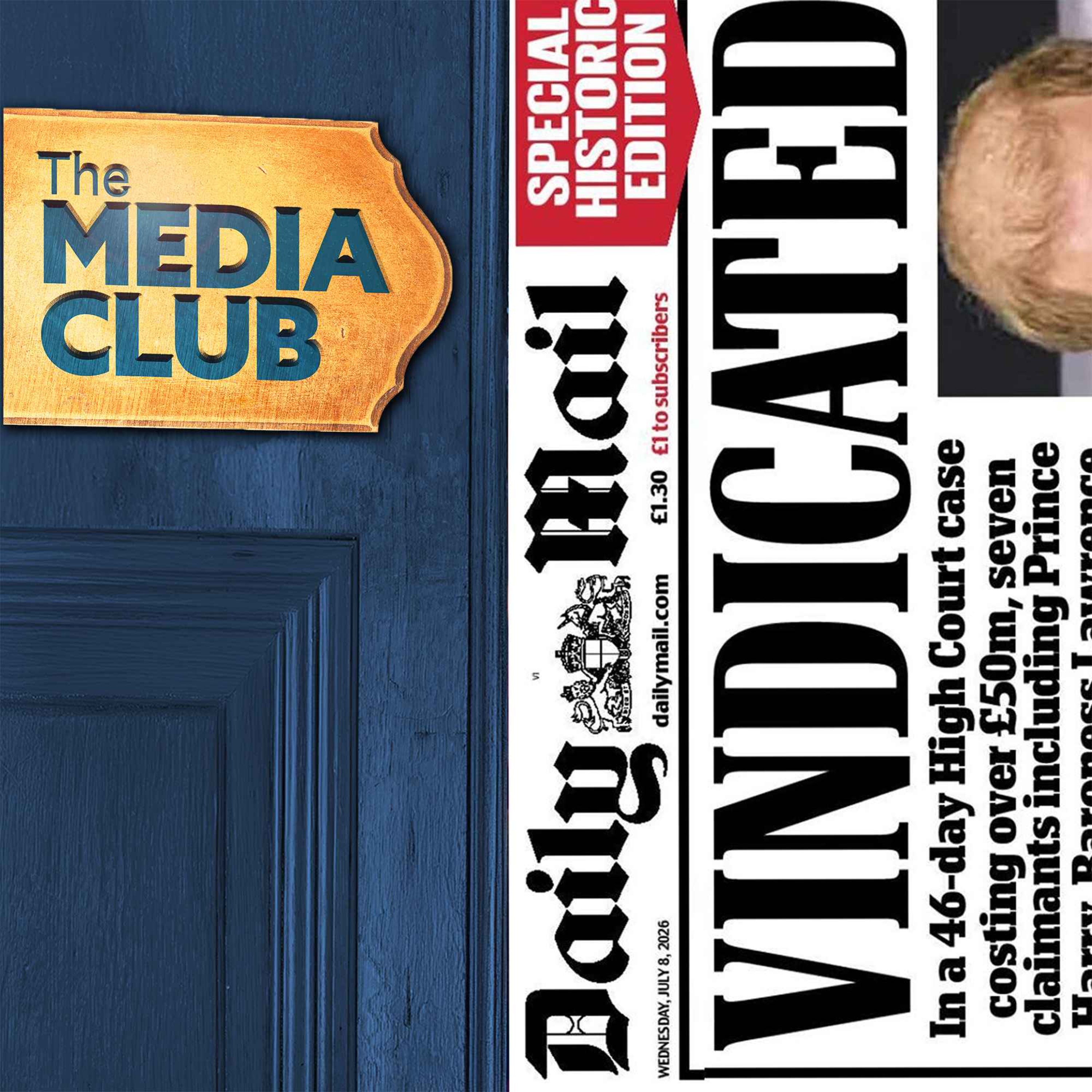
- The Mail's Big Win, Sky's Bigger Buy
In short
Prince Harry’s privacy lawsuit against the Daily Mail publisher is dismissed in full; Sky’s £1.6bn purchase of ITV channels and ITVX reshapes UK broadcasting; the Telegraph’s new owner pitches AI-led transformation; plus discussion of BBC strategy, AI governance, and Australia’s social-media age ban.
Guests and backgrounds
Michael Savage, media editor at The Guardian; Clive Dickens, of the Meliora Company (media/tech and broadcasting analysis; also a frequent AI and media commentator).
Key claims
The High Court found insufficient evidence of “unlawful information gathering” by the Mail; a key private investigator’s statement was later alleged forged and the judge deemed him not credible. Sky’s deal is framed as good timing/pricing for ITV shareholders and a strategic IP play for Sky, with messy open questions for ITN and Sky News. Telegraph’s owner (Matthias Döpfner/Springer) is portrayed as having real resources and an AI plan, not just buzzwords.
Notable examples
55 alleged stories (plus 3 incidents) in Harry’s case; Doreen Lawrence’s involvement highlighted by Paul Dacre’s reaction; sports-rights and free-to-air implications; BBC’s Ludwig recommission and Matt Britton’s license-fee stance; Bluey’s AI-enabled multilingual production; Channel 9’s Microsoft archive-to-new-stories deal.
Written by AI. May contain mistakes.
Chapters
0:38
Prince Harry's Tabloid War
Discussion on Prince Harry's case against tabloids and media scrutiny.
“come on in hello both nice to see you both back on the sofa first Michael Savage, media editor at The Guardian who are you giving your plus one to this week?”
2:26
Impact of Sports Rights in Media
Exploration of the significance of sports rights and broadcasting in media.
“as I say, in terms of the scrutiny and the stories, these journalists are really doing what they would do to any major party and just doing the same thing to reform.”
5:37
Impact of Sports Rights in Media
Exploration of the significance of sports rights and broadcasting in media.
“Okay, in a moment, another Harry, who's been taking on the mail in the final reckoning.”
6:25
Prince Harry vs. Daily Mail Ruling
Analysis of the High Court's ruling on Prince Harry's privacy case against the Daily Mail.
“Prince Harry's privacy case against the Daily Mail's publisher has been thrown out by the High Court on every single count.”
14:00
Sky's Business Strategy and ITV Studios
Explore the complexities of Sky's corporate structure and ITV's future.
“I think, I would imagine they've got a supply agreement between the new co and the studios for the intellectual property that they own.”
22:30
AI and Digital Transformation in Media
Discuss the impact of AI on media companies and the future of journalism.
28:00
BBC's Audience Win and Upcoming Events
Learn about BBC's record audience during a late-night match and upcoming industry appearances.
“England's stoppage time win over Mexico gave the BBC its biggest late night audience in years.”
28:57
Matt Britton's Challenges as DG
Discussion on Matt Britton's plans and challenges as the new Director General of BBC.
“Matt Britton, interesting obviously he was at the select committee this week, do you think he did a good job?”
30:15
Public Service Broadcasting Importance
Exploring the significance of public service broadcasting and the future of the BBC.
“on about forever it's like a mat alliance that the council tax is the right place um for the licence fee to land.”
31:46
AI Adoption Growth in Media
Insights into the rapid growth of AI usage among consumers and its implications.
“Who's doing it rather than talking about it?”
Show all 23 chapters
33:01
Sovereignty and AI Governance
Discussing the importance of AI governance and implications of sovereignty.
“So the growth in AI consumer adoption is vast.”
34:18
Efficiency and AI in Business
How businesses are utilizing AI for efficiency and the implications for jobs.
“Yes, they still gave access to the other models and obviously finally came back.”
35:56
Media and AI's Future Role
Examining how media companies are leveraging AI for storytelling and efficiency.
37:19
BBC's Product Development Issues
Critique of BBC Sounds and iPlayer's development and future direction.
39:48
Changes and Challenges at the BBC
Discussion on the turmoil and changes facing the BBC amid broader media shifts.
“There's other people who say, we've got to be careful in the detail here, even if directionally we're right about some of these changes in the media landscape.”
41:29
Opportunities in AI and Language
Exploring how AI can enhance storytelling across different languages and cultures.
“It's a really interesting time to be reporting it.”
42:00
AI and Language Accessibility in Media
Explore how AI is reshaping content creation in multiple languages and its implications.
“or whether it's new regulation that will establish new guardrails or its new business models.”
43:18
Social Media Bans and Youth Engagement
Discuss the impact of social media bans in Australia and their effect on youth behavior.
“The only thing they were talking about really was the children's media ban coming to here.”
45:06
The Youth Media Landscape Shift
Examine how bans might shift young people's media consumption toward gaming.
46:32
Media Quiz Introduction
Introduction to a fun media quiz segment with a children's media theme.
46:58
Media Quiz - The Rundown
Engage in a quiz about current media stories and their relevance in the industry.
50:54
Wrap-Up and Insights from Guests
Guests reflect on their work and the future of the media landscape.
“This is sort of the way the world's going, isn't it?”
52:06
Guests' Projects and Show Sign-Off
Matt's guests share where listeners can follow their work, including Clive's Meliora ventures fund and podcast and Michael's BBC and Guardian focus, before Matt thanks everyone and closes the episode.
“Yes check it out wherever you're listening to this.”

Ask about this episode
Get the gist, explore an idea or ask about something said.
 Claude
On The Media Club with Matt Deegan, what are the key points of this episode?
Searching your listeningTranscript
Automatic transcript. May contain errors.
0:01Clive Dickens: Hello, welcome to the Media Club. I'm Matt Deegan. In the club today, Prince Harry's six-year war on the tabloids ends in an expensive defeat. Guardian media editor Michael Savage has been following the case. Also on the show, Sky buys ITV's channels and ITVX. What are both sides getting out of it? And is ITV Studios next on someone's shopping list? Clive Dickens of the Meliora Company consider the options. All that plus the Telegraph makes a course correction. we have our biannual AI roundup with Clive and in the Audio Network Media Quiz we're going, going live that's all happening in this edition of the Media Club come on in hello both nice to see you both back on the sofa first Michael Savage, media editor at The Guardian who are you giving your plus one to this week?
0:51Clive Dickens: well I'm going to cheat a bit if that's alright everyone always does yeah I know, I know I don't feel bad really it's two of my counterparts I want to put in really it's two journalists and it's Anna Isaac of the Guardian and Gabriel Poggerand of the Sunday Times both have been doing some very important stories around reform, it's finances and that of senior figures in the party they've both done it in the face of some very personal attacks from reform and some attempts to undermine those stories and they've just kept on looking at the evidence and working with their sources and doing the stories I think they are worthy of the club and also I mean Nigel Farage's sort of 2pm announcement this week was sort of to get in front of some of their work really.
1:32Yeah absolutely I think part of what's going on here is it's the evolution of reform as a party they're so used to people in the party being the sort of plucky outsiders that's where they've been for a lot of their political careers and suddenly here they are leading the polls scrutiny goes up I think this is all part of them trying to figure out how to handle it really their new position in British politics.
1:52Clive Dickens: I mean, Nigel Farage, he seems very, very angry about the coverage, which he can't seem to hide. Obviously, big push against Sky News as well this week. Has it all got a bit ahead of him? Or does it just play into what people think of him and he can play it to his own benefit? Yeah, I mean, you can see what he's trying to do. And again, with the by-election, try to make this reaffirm his sort of anti-establishment credentials and that of the party and get that ban going again. So it's interesting to see if it works. It may do, it may not. But as I say, in terms of the scrutiny and the stories, these journalists are really doing what they would do to any major party and just doing the same thing to reform.
2:33And this has been the result.
2:34Clive Dickens: Well, obviously we'll see them do the same things to Camp Bimface as well. Absolutely. Very important. I thought it was funny that Rachel Reeves did quite a good joke on Twitter. She's not known for her comedy. She blessed Nigel's by-election by saying that if he wants to spend the summer fighting with the bin, he's more than welcome. It's one of those great sort of British political stories, isn't it? You can see it travelling quite well. I think that's probably how the world think we do by elections. Clive, a Brit, but I live in Australia now. Does any of us travel to Australia? Do they wear any of these?
3:06We don't get it all, but just 24 hours later. So for me, it's, you know, I wanted to nominate Neil the Seal into the club, but of course I woke up this morning and apparently he's gone back into the ocean. So we clearly can't make it. but if not then we need to be optimistic so there's got to be harry kane and then his post match speech with his voice at the end creating a lifelong meme that his grandchildren will still be generating revenue out of it's like that's classic where he goes oh you know granddad what were you thinking oh good it's just he's got to be in the club based on that it'd be a good
3:40Clive Dickens: addition he can definitely join the the five-a-side club uh i mean when we think about sports content and media content i mean it's it's one of the key drivers uh for media companies around the world like linear television is sort of based on sport and fox sport seems to be having a good world cup in in the u.s yeah i mean i think you know the my normal mantra is death taxes and sports rights they're the only three certainties in life right and uh and the value of sports right so whether it's the this i'm amazed every four years that people are surprised oh my god the world cup it's really popular or in australia we just had the renewed national rugby league rights that is a massive uplift and and in of course in the world of ai and uncertainty and you know division you know the the idea of a real life experience and a shared experience through sport continues to be a unifying and the world cup has has really proved that again doing more for cross-country communication the united nations i mean we'll talk about it a bit later as well obviously sky big investor in sport maybe we'll see a bit more free to air does that become an attractive thing for rights holders to combine the cash of a big subscription partner with in australia where i live you know i was explaining to a colleague yesterday we have free prime time sport on linear streaming and broadcast and that includes test matches um union rugby league airfield tennis on prime time you know whereas here wimbledon sort of gets tucked onto bbc2 if if um you know alistair fray ends up winning and oh you can switch to bbc2 we're in australia we're gonna know we can we can pause on masterchef we can pause on on x factor because there's something really important happening so i think this is what we're going to see now where whether it's um you know where sky coming in to free to air broadcasting we'll see actually probably more sport on free to air just as a sort of barker to get people to realize this is really important.
5:35I think that's really quite exciting.
5:37Clive Dickens: Okay, in a moment, another Harry, who's been taking on the mail in the final reckoning. We'll talk about it after the break. Still waiting in line? Again? That's time you will never get back. Save time and money with Stamps.com. Over 4 million businesses have skipped the line with Stamps.com. Join them to save up to 90 % off carrier rates from your computer or phone right now. Print postage for certified mail, registered mail, and packages in seconds. Then schedule a pickup right from your home or office. For a limited time, go to stamps.com and use code podcast for a free welcome gift. Taxes and fees apply.
6:24Clive Dickens: Oh, welcome back to the Media Club. It's over. Prince Harry's privacy case against the Daily Mail's publisher has been thrown out by the High Court on every single count. Michael, can you remind us what was being alleged? Where did this all start? Well, the saga of this case is extraordinary and it's been going on for a long time. But essentially, a group of claimants, essentially led by Prince Harry, claimed there was all sorts of unlawful information gathering. It's a sort of catch-all term to what they were alleging. But the original allegations were astonishing, sort of dwarfing anything that sort of closed the news of the world.
7:00We're talking bugging, tapping, hacking as well, blagging, essentially getting information by nefarious means. And in the end, they presented 55 stories, this group of claimants and three incidents that didn't result in stories. And the judge in the end dismissed all of them. So in the end, it was quite a clear and decisive win for the mail. although you could talk about this case for a whole podcast series, never mind just here today.
7:25Clive Dickens: Yes, in 97 claims of unlawful information gathering, this is Elton John, David Furnish, Baroness Doreen Lawrence, Liz Hurley, Sadie Frost, Libdam Simon Hughes. Are we surprised at the results or were they just in a strange place all along and this was never going to work? Sure. So I should say I wasn't in court for the previous cases against the Mirror and News International, News UK as it is now. But I did cover a lot of days of this case trotting in and out of Court 76 at the Royal Courts of Justice. And just as someone coming fresh to the case, watching it, the result was not a surprise to me.
8:04And that really comes down to something quite simple, which is a lot of the case was built on a private investigator who made these really serious allegations. and actually later he said this witness statement containing these things was a forgery. This sort of accounted for a lot of the big allegations. It was a constant thing hanging over this whole case. In the end we heard from the judge decided he wasn't a credible witness. So that fell away. And then the claimants were really left with these other claims of blagging, using private investigators to get information. What the judge really said was you just simply haven't got enough evidence to prove that unlawful means was used here.
8:42The journalists say they had a legitimate way of getting it a source or a contact or a press release or whatever. And so we can't say or just infer that unlawful means were used. And that's how we got to this judgment.
8:54Clive Dickens: Is that because quite a lot of the stories were from quite a while ago? And so it's sort of difficult to generate the evidence. And that they're probably, even if there were elements of truth, and obviously we don't know if there were, and they say there was no evidence for it, that perhaps they assumed that it was unlawful, but actually it was friends and contact close to the source, etc., etc. They did provide a lot of the information for the story. So a big part of this case, it must be said, and this was a point made by the claimants, including in closing arguments, was there was a lot of missing documentation in this case.
9:32Emails have disappeared, invoices to private investigators no longer around. on one level that's not surprising as you say this is quite a long time ago but what that means is it becomes very hard to to prove anything they did have one sort of box of essentially payment records to private investigators and they used this to say well look we've got this so judge you have to assume this was going on much greater if we had everything in front of us but the judge really came to the conclusion you just can't infer that much you're asking the court to do too much work to get to a verdict than something lawful happened here.
10:05Clive Dickens: Paul Dacre came out swinging. Obviously he was sort of editor of the Mail at the time and still involved with the papers. What did he say about the verdict? Well, if you looked at the Daily Mail the day after this verdict, no fewer than 11 full pages, front page saying vindication for the Mail and editorial. So understandably they really went to tell us. Dacre himself very unusually gave a sort of video, very modern, a sort of video statement on it all. Where his anger comes from, I think, the real anger, quite apart from the allegations, was the involvement of Doreen Lawrence. Obviously, the male championed the case of her murdered son, a racist murder.
10:48They ran the famous Murderers 1997 headline, challenging those guys to take them to court. So this is very, very personal. This is part of his legacy, the biggest story in his eyes that the Mail has done. And so her involvement, I think, really hurt him and baffled him.
11:04Clive Dickens: And I think that's caused a lot of the anger as well. And there's a bit of a question about who's going to be paying for what. They talked about it being kind of 50 million pounds of costs that Harry and the team might have to pay. Some say that's a little bit over-egged. I was reading about there is insurance that the claimants would have taken out as well. some sources close to the Duke say that Doreen will not be paying any of the money do we know who's going to be paying for any of this? So this is all going to be hammered out essentially in further hearings I think what can be missed in all this is the court has tried to limit the costs already it sort of gives a vague sort of budget if you like of about four or five million per side it's a complicated process and it's likely to go on for quite a long time insurance is involved but i think the honest truth is we don't quite know where this is going i would be amazed and actually it's my understanding that dory lawrence won't for any of this bill um clive you've sort of seen some reputational battles in your time uh this was was this prince harry's last chance to to bring some positivity around himself has he got nowhere to go now like it's um the royals remain incredibly popular in australia and um and obviously taking it to media around this uh it sort of feels you know seeing poor dacre on screen that way and and this pretty um uh you know compelling finding from the judge plus this um this witness statement i wonder whether there's a where whether there's an appeal and what goes on from here is is this is all we've seen um i think the sort of public have probably moved on from this now it's such a long time ago and we'd probably have more important things in the world to be thinking about uh do you think there's any chance of the team lodging a well they've got to get together and they've got to decide obviously this is seven different people so you know perhaps they won't all take the the same view i'll have to see but i do think that's a good point about the the whole phone hacking era if you like of british journalism because this would feel like new claims it's probably not very likely at this point thanks to this it's also worth saying the mail was was obviously clear to these things some of the stories involved that they were trying to write and the judge said too were ones that really you wouldn't want to be seen now i mean sadie frost confronted by a journalist over an ectopic pregnancy she hadn't told her mother about i mean an extraordinary thing to be trying to get into print yes the the world has moved by lots of different ways uh indeed since that point uh okay uh moving on on the show uh the biggest shake-up of british broadcasting in generations happening at the moment sky are buying itv's channels and itvx for up to 1.6 billion pounds um good deal for sky clive i think a good deal for itv showers i think i think you know caroline mccall and the team really getting a good price you know the that part of the business has peaked you know itv studios is over 50 of of profitability now and and and growing so i think it works for sky i think the probably the timing was not of their liking i would imagine they were trying to get this done earlier in the year or even late last year and then the comcast cable spin-out was meant to be next the fact they both hit in the same month was probably a bit unhelpful um but if you think about it they've spun off the cable tv business they've now spun off the cable connectivity business and then they've um put the itv with uh with the broadcast business and the sky but it leaves lots of unanswered questions you know what's going to happen to the itn and the sky news um agreement uh and even inside sky you've got a quite a lot of home broadband connectivity and mobile which would sit more naturally in the spin out of comcast and then of course um the family the roberts family have seemed to be doubling down on intellectual property and real life experiences through studios and theme parks and and actually itv studios have got a lot of those so it's that's a mystery of what what happens with itv studios next on balance i think itv shareholders probably got the better part of the deal than than uh comcraft shareholders oh it's it's interesting in the us obviously you've got kind of nbc and sort of also ran peacock uh streaming service theme parks are really big we're just going to get one here in the uk as well are we going to see coronation street world uh open up in in Hertfordshire.
15:29I think, I would imagine they've got a supply agreement between the new co and the studios for the intellectual property that they own. So that could happen. But I actually think that it'd be interesting to see what happens with ITV Studios now. There's a commentary saying that obviously they could be gobbled up. But I think if we think about sort of British culture, I think protecting the intellectual property of British stories through ITV Studios is probably more important than protecting the primetime nature of linear tv so i wonder whether the shareholders of itv would actually try and be a more inquisitive through itv studios whether this is sort of assumption they might just get swallowed up by a by a banjay all three type roll-up which i'm not sure is quite as obvious as
16:13Clive Dickens: people are talking so there's a five-year content deal with itv studios and and the new itv sky um that just sort of starts a bit of a clock and someone said if if itv studios isn't sold to someone else uh by the end of those five years does it end up being acquired by sky anyway to ensure they still have access to um certain content yeah that goes back to that point is that you'd have thought that intellectual property is at heart of that company and itv studios has a lot of it um and people forget that there's such a great array of global content whether it's love island whether it's rivals or coronation street so i i my guess is that the itv management team and border studios i have a good crack for the next couple years to try and create a british powerhouse studio and if not we might see that consolidated either by one of the big production companies or even in a back into the sky itself but i think in but you know what it is interesting m &a we get very obsessed around the method of distribution is it a dish is it a cable is it streamed or is it free to air you know we're going to have some type of free to air switch off whether it's 2030, 2034.
17:23It's the habit. It's the IP. It's the stories. Consumers don't sit there going, well, I'm going to switch on the method of distribution. And then from a streaming perspective, ITV Studios is clearly, ITVX is clearly a lot better than ITV Hub, but is subscale. And Peacock is also a good product, but was quite late, particularly in a world where NBC owned Hulu. So the streaming products and the consolidation and collaboration conversation is happening, whether it's iPlayer or Peacock or ITVX. I think there's a second and third act here to play out.
18:04Clive Dickens: Michael, we talked about ITN there. It's hard to work out exactly what's going to happen with the various news organizations that are left. It looks like the 40 % share that ITV owns is going to become 20 % Sky and 20 % ITV Studios. Sky are committed to using ITN because they have to. They've got a contract, I think, until 2030. We've got Sky News is sort of funded to a similar sort of time, commitments from Comcast. And then the new Sky entity runs the regional news operation as well. I mean, it's messy. It is messy. And I think it's the word they use distinctive between the ITN and Sky News, which is open to interpretation, obviously, in terms of what that means for behind the scenes and everything else.
18:53I guess one thing is, if you look at Sky News, David Rhodes, who runs Sky News, he's done something. He's got a really clear plan, actually. It's quite distinctive. He decided what we're going to do is we're going to do the sort of brand journalist thing. We're going to create premium content around them, go down that road. the sort of thing you guys talk about on a weekly basis. So in a way, that clear plan that he has does make it sort of quite distinctive. And so that maybe makes a difference between ITN doing the sort of bulletin thing, Sky News maybe going in this sort of more modern direction.
19:28So that is something. But as I say, I mean, it's completely legitimate to say there's a lot of open questions here about how it's all going to work. I think that the way that Comcast have operated Sky News since the acquisition, I guess, of course, there was a regulatory incentive and framework to do that. But actually, that's gone pretty well and it's still got time to run. So the idea of having a commercially funded, independent British news hub that isn't the BBC is a really important part of the deal. I think they've shown that they can do that with Sky News. And I think we'll find that inside an ITN agreement, there's every reason to be optimistic about that as well.
20:08Clive Dickens: Just on that, though, I mean, Sky News loss making might lose sort of 90 to 100 million pounds a year. ITN News is not a huge kind of cash driver. There's got to be some shift at some point, doesn't there? Assuming it's possible, there must be some synergies in their benefit as well. And in the great scheme of things, 90 million is a lot of money for us. But a multi-million dollar business that is distinctive with the quality of Sky News is output. and I'm sure there's probably a three-year plan where that 90 million falls. It's, you know, for the type of quality, the output that we get from that service, that's, you know, not a huge amount of money.
20:50Clive Dickens: Michael, just having a free-to-air broadcaster alongside a subscription company, does ITV become a sort of shop window for Sky content, be that Saturday Night Live or dramas? I mean, does it just become a big ad billboard for the subscription service? Yeah, you can totally see that happening. I think Kinyu SNL is the obvious example. And I think that's gone well, certainly on socials and everything else. So you can certainly see that happening. It's probably been a part of a frustration, certainly, with some of the people involved in some of those shows. It doesn't get a broader audience. Obviously, that's the complication of being a subscription service.
21:24So, yeah, you can totally see that happening.
21:26Clive Dickens: We've seen this happening in your neck of the woods. I think in New Zealand, Sky, different owners sort of merged with the free-to-air channel, I think Channel 3 over there. Any views on whether that's working for them? Well, it's hard to draw too many comparisons because it's such a small market and quite a challenged economy. But they've just recently renewed the NRR rights, which is the rugby league, which is a big sporting code in Australia. And that balance sheet and that scale has given them a chance to do that. But on the other hand, we did see the closure of a competitive news hub as part of that deal.
22:01So we lost a distinctive high-quality news part of that consolidation. So there are undoubtedly unintended consequences of these deals. And I think the timing of which this deal finally got announced wasn't coincidence. This is a very big free-to-air moment with the World Cup on BBC and ITV. And therefore, the seller and the buyer to announce it on a Monday, just after some of the biggest audiences in a long time. and we're probably going to see that again this weekend it's i think um that means the willing seller gets a bump the willing buyer gets to feel good and and we go into the summer and the lawyers
22:40Clive Dickens: get to go on holiday yeah and the lawyers get to uh do pretty well at this deal i'm sure they always do okay finally before the break the telegraph's new owner dropped by the office this week matthias doffner uh promised an ai powered digital transformation uh buzzwords or the future of telegraph yeah it's uh the the spring organization have long since wanted to bring this incredible brand into the stable and what we're seeing around the world the work we're doing is this sort of like this bimodal economy around ai where there's a whole group of ceos and leadership sort of hoping there's a bubble hoping it's going to go away and not wondering and wondering what they do and then there's a whole group of companies are just getting on with it and and really making massive strides and you just have to decide what company you are and in my experience of working with actual springer this is a sophisticated business and i think um don't underestimate how they can bring that transformation so definitely not just buzzwords uh michael they talked up an untapped white spot in the u.s market between liberal sites and conservative outlets the telegraph could occupy i think there's a good chance they could do that yeah well this is something I've written about actually and the you can see how sort of seductive the idea is I mean you know if you're a British outlet you look across to the United States the amazing market surely there's room for a long time in British media people have looked at the US especially the sort of right centre right they've seen the Wall Street Journal having it all its own way and they think wow there's a huge opportunity to do something there the people I speak to say well look you know they make the good point that actually it's quite a difficult time to be jumping into that market politically if you think about Trump the backlash to it where do you place yourself are you a sort of Reaganite old right thing are you appealing to Trump supporters we're more catered for in sort of podcast YouTube world so that's a difficult one but I would say that Springer and Matthias Dupst they have some advantages don't they they own Politico you know it's very much a creature of washington dc so they can get some marketing some boost for their stuff out there um their own you know business inside and they know what they're doing this is an experienced producer of journalism so there are advantages so all i would say was the one unifying thing that people told me about trying to break america is it probably takes more money than you think and it takes a long time uh that's correct isn't it clive and do you have to sort of pick a side as being sort of centrist or center right not enough to cut through today in most markets you've got to stand for something in america even more so but i think i'm buoyed up by you know what the guardian has shown is possible in markets like australia and america and and and therefore the telegraph is a great brand it's got a strong position and and i think that that's that and now has got an owner with very deep pockets long culture and a real plan and i think that's quite exciting regardless of your politics okay when we return uh more tales from the front line of ai we'll see you in a sec
25:47Clive Dickens: If this week's news proves anything, it's that everyone's suddenly promising you an AI-powered future. Well, almost everything. The one thing that doesn't change around here is fantastic service at Podshop Studios, where we record our podcast every week. Each studio has its own distinct look and feel, professionally designed and fully equipped for broadcast-quality video recording. You can check out the whole range at podshaponline.co.uk, and they're offering Media Club listeners 25 % off their first booking so you can experience it yourself. Just use the code MEDIACLUB, that's all one word, MEDIACLUB, to get 25 % off at podshaponline.co.uk.
26:24Hello, Media Club listeners. Patrick here from Podcast Discovery, the podcast marketing company, where this week we've been thinking about billboards. You don't see many podcasts out in the wild since it's only recently they've had a broad enough audience to be worth advertising at scale. But now 71 % of the UK listen to podcasts and other shows are yet to catch on. Not yours though. Get in touch at podcastdiscovery.com. That's podcastdiscovery.com.
26:52Clive Dickens: Submissions are now open for the International Women's Podcast Awards hosted by Tink Media. The awards celebrate women's and gender diverse voices across podcasting with 11 categories focused on creativity, storytelling, comedy and impact. podcasters from anywhere in the world are welcome to enter entries closed july 31st and the submission fee is 50 us dollars winners will be announced at the awards ceremony in toronto on october 8th 2026 search international women's podcast awards for more information shipping billing admin payroll marketing you're managing all the things so why waste time sending important documents the old-fashioned way.
27:35Mail and ship when you want, how you want with Stamps.com. Print postage on demand 24-7 and schedule pickups from your office or home. Save up to 90 % with automated rate shopping. That's why over 1 million small businesses trust Stamps.com. Go to Stamps.com and use code PODCAST to try Stamps.com risk-free for 60 days.
27:58Clive Dickens: Welcome back. Here's what we've been talking about in the club this week. England's stoppage time win over Mexico gave the BBC its biggest late night audience in years. A peak audience of 9.1 million watched on BBC One and iPlayer despite a 2am kickoff, smashing the corporation's previous record set by Mo Farah's 10 ,000 metre gold at the Rio Olympics a decade ago. BBC comedy drama Ludwig has been recommissioned for its third series just as marketing for the second begins in earnest. David Mitchell's returned as the puzzle setting sleuth. And new BBC Director General Matt Britton will make his first major industry appearance at the Edinburgh TV Festival next month.
28:39Clive Dickens: The first DG since Greg Dyke in 2000 to arrive at the corporation with no prior BBC experience. We will see you there in Scotland. Remember, links to all of our stories are available on our sub stack. Go sign up for free at themediaclub.com. That's themediaclub.com. Michael and Clive are still with me. Matt Britton, interesting obviously he was at the select committee this week, do you think he did a good job? Yeah there was no major foul ups or anything to worry about but what is he, six weeks into the job I think it was pretty impressive to be across the stuff he was across and to be fair to him he set out pretty clearly in internal emails his sort of plan, you know stepped in at a really difficult time to state the obvious, this cuts plan that's coming already in place, he's having to deal with that and he sort of promised not to salami slice he's got some big decisions ahead and he was you know quite straight he said some popular shows will go you know and that's quite a big deal for a dg to come in and say that so he's talking a big game at the moment also he sort of said that the license fee wasn't fit for purpose though he didn't necessarily have any particular decision about what it should be yes this is the sort of game we're playing at the moment where we're saying you know everything's on the table everything's up for grabs the sort of landing zone to me for the license fee feels like we'll continue with a license fee in some form but it's how do we define it when the age of the streamers just live tv probably isn't enough to cover it what does that mean for the streamers this is the sort of territory i suspect we're getting to he did align himself with my thoughts which i thought was the most important thing i've been banging on about forever it's like a mat alliance that the council tax is the right place um for the licence fee to land.
30:24Yeah, I mean, good luck with it politically. I mean, anything you can say is a tax, a new tax is a problem. Yes.
30:32Clive Dickens: Clive, does all of this just seem parochial Britishness from afar? Do we get too obsessed with the BBC and the future of the BBC? No, I don't think at all. I think it's hugely important. Public service broadcasting, I've been meeting him a few times over the years and I think he's an incredibly impressive experience operator and I've been really excited to see how quickly he's been willing to find his voice and you know and talking about you know channel four being subscale clearly as a reference to psb needing to work together license fee not for purpose doesn't mean that you blow it up but it means well if you increase it it may be will have more purpose you know it's simply a negotiation willing to go out on the front foot around things and if you just look at his um select committee appearances when he was at google this he was not afraid to speak his mind and and you know the people i talked to the bbc and they you know obviously most people really enjoyed that period of tim's leadership but towards the end it got more difficult and they're just really thrilled to have somebody who's waving the flag and and clearly has a plan and i think we know we know like to stay really excited about the opportunity uh is it right to have a sort of a tech leader uh in the corporation at this point is it a good time i think it's critical i think you know this is the moment where you know you actually whether it's youtube dominance whether it's a free to wear's question around its distribution and and and having someone who really understands that there's thousands of talented people in bbc who tell great stories whether that's journalism stories or drama actually someone who understands the landscape and can deal with the politics um unless as tim did for most of his period i think it's um and with the director the deputy dg reinstated i think we're in a stronger position When we think about kind of tech leaders and tech leadership in media, who's engaging with the future best?
32:19Clive Dickens: Who's looking at AI? Who's doing it rather than talking about it? Yeah, as I said earlier, I think it really falls into those two companies around people who are just hoping there's a bubble and they go back to normal, whatever normal is. Or people are just getting on with it and not talking about it. But it's interesting when you said at the top, you know, sort of biannual media club appearance. And so I thought, oh, right, yes, actually, you know, probably sitting here a year ago as sort of AI evangelist, AI optimist. And a lot has happened at that time. So, you know, we're sitting here now where with 65 percent of Americans saying that they use some form of AI on a weekly basis.
32:54Now, that might not that might seem like a lot. But when I tell you that when we researched in quarter one calendar, it was 50 percent. So the growth in AI consumer adoption is vast. And we're finding it very hard to keep products like Claude live because the demand from consumers is so high. Second thing is around the topic of sovereignty is now becoming even more important. Because if you believe, as we do, that AI has more characteristics to electricity, then why would we allow electricity to be controlled by jurisdictions, whether that's US or China? So sovereignty around AI is now becoming more of a topic we've been talking about for a while.
33:31So people are starting to think about where the AI there is. Is it, you know, where is that coming from? Is it fair trained? Did it respect copyright law? Is it fair governed?
33:41Clive Dickens: And is it fair powered from renewable energy? But also on that, probably for the first time we've seen a situation in the US where Fable and the new anthropic model appeared and then was stopped by the US government. I mean, does it mean a sort of AI haves and have nots? Yeah, well, if you think about it, if one government, whatever the government is, can unilaterally decide to withdraw a service of a model and that model is powering a banking system, a health system or food safety system, then, of course, then all of a sudden sovereignty becomes a real big thing. And, of course, we had it in a live example.
34:20Yes, they still gave access to the other models and obviously finally came back. So this is putting this into sharp focus that we weren't having this sophisticated conversation a year ago. We were talking about, you know, whether AI hallucinated or whether it gave people three fingers or whether it was using too much water or whether where the job's going to come from. And now we're specifically talking about the governance and the providence and the opportunities. And as I said, companies that we're working with that are scanning on with it and using it to grow products faster, cheaper and better.
34:53and and and that's and that's really the divide you're seeing there's a big um big chat a few
34:59Clive Dickens: months ago about token maxing so this is this is kind of particularly big tech companies uh using loads and loads of ai to underdoing leaderboards inside businesses just showing that whoever was kind of spending the most tokens was getting the most value and now it's like all these tokens are expensive maybe we should be a bit careful about it yeah so there was a very famous meme where open ai gave mckinsey like an award for being the most token user like you know wow this is this is not going to be something that's going to go to the toilet you know that award because that is not a thing you know overusing electricity is is not is not a prize for that so but so this is the the you know but of course the reason is that we don't need to use all of these models all the time the emergent is something called small language models you know these language models these large language models are amazing but to actually solve complex business problems you don't necessarily need to burn thousands of tokens and and where a cfo is going what's this new budget line so companies understanding their efficiency is not dissimilar to the cloud 10 or 15 years ago all of a sudden your cloud credits were going through the roof it shows a sign of maturity where people even understand what tokens are and i don't think there'll be any awards for the most tokens used again yeah and in the media space what's the what's the big news what are people using things for who's who's who's head of the pack i think the the key thing is around efficiency and people are using it to find efficiency and so you know the companies who are saying right i'm actually i'm rather than having uh direct reports and headcount actually put spinning up agents to do people's work you know in our company we all have team members who are agentic and that is not abnormal now and so and businesses and getting on with it and they're not press releasing it so it's not you don't need to go out and do a press release about your use of ai and and that's really because people are a bit embarrassed they've got agentic employees well there's maybe a little bit about that but also like you know you know when you utilize technology better was that really ever a press release you know it's you know whether we were utilizing hard drives in the 80s or spinning up lots of websites or buying domains or or whatever we were doing and setting up dns servers i don't remember the press release for the media club dns server being set up so i would like someone to borrow my domain names i still have knocking around too many you see you got the token award yeah um and but you know companies that are using it better are the ones who are really understand what their point of difference is so so you know we're working with companies say we want to protect our human to human interaction around content and we want to protect our human to human interaction in terms of sales but we want to automate everything else now that's a very inspiring brief because actually if you so if you're not creating content and telling stories or if you're not generating decisions earning revenue you can be automated and that but those companies that have that type of strong vision are the ones that are really going to make strides is that what you should think about if you are uh a media worker if you're not in those two two pots do you need to to move pretty quickly yeah i've got you know i've got two 20 something children who are very concerned about their career and then i said well if in doubt then it's about electricians plumbers and trades you know the idea that a robot is going to change fix our plumbing anytime soon is not possible but but back back to media absolutely if you can make an impact and tell a human story or you can create a relationship and generate revenue then that they are the two distinctive things and that revenue could come from subscription or negotiating a license fee or from advertising you know and but it's it's the back office jobs that are the ones that are more repeatable um by by an agent uh just going back to the bbc one of the things that matt britain's been talking about is how bbc sounds and iplayer are products which haven't developed so you've talked a lot about the content being pretty good on them but the physical product hasn't developed uh you've worked with lots of over the top uh ott video services uh audio services as well is he right absolutely and these the fact that these products exist in separate app stores would never made sense and now it makes no sense so if you look at rtl in germany they've been pushing audio and video together for years in australia we've seen the regus radio company tv company merge and that's uh netflix of now commissioning stories that visualized audio podcasts are doing video it makes no sense that there is bbc sounds and iplayer the cost of running two duplicative put it together create a worldwide experience and focus on the story so i'm hoping his first big story is to basically finally sunset sounds and put sounds as a fantastic environment inside the iplayer and push our license fee money into building one brand um and to be honest i'm not sure ever made sense 10 years ago and it definitely doesn't make sense now well michael i mean there's obviously been 2 000 roles uh likely to go clive is probably endorsing far more to to disappear as well i was going to say is there any advice for a 40 something too late for me stories though you're in a good position what's the i mean people at bbc they're not particularly happy are they at the moment well it's you can see there's a lot of things happening at the same time i know even if it weren't for the specific things that the bbc you can see around us the whole media landscape changing around our ears very fast and that's for everybody but the bbc obviously the license fee has lost all its value there's got to be cuts right across the board nothing's going to be spared you've already had things like um the will tonight go on on radio for sort of grumblings about what that may might mean a change of priority social media going up the agenda some other things maybe tv bulletins going down so you can see a lot going on on top of all that you've also got the age-old issue of pay a pay settlement happening at the moment the offer is one percent amazingly you'll find that's not been good enough for a lot of the journalists there so all these things are happening at the same time it's also worth saying an organization as big as the bbc contains multitudes there's plenty of people at the bbc who are really up for doing some quite radically different things not doing some stuff having big change.
41:11There's other people who say, we've got to be careful in the detail here, even if directionally we're right about some of these changes in the media landscape. We've got to be a bit careful to prioritise some of the best things the BBC does. So you can see there's a lot of tensions there. It's a fascinating time. I feel very lucky to, well, lucky is probably the wrong word. It's a really interesting time to be reporting it.
41:31Clive Dickens: I was talking to someone, Clive, at the BBC, and they said, chaos is a ladder, which I think is a Game of Thrones quotes um that is true isn't it when there is a lot of dust in the air you can get away with things that maybe you've been trying to get away with for quite a while yeah i think you know you know never let a good crisis go to waste and and this period of disruptive change means that we're going to see some some big changes and whether it's m &a in the us australia or here in europe or whether it's new regulation that will establish new guardrails or its new business models. So, you know, language is a great example.
42:11So Bluey in Australia has recently produced all of its content in 14 different Aboriginal languages, which was completely enabled by AI. And that wouldn't have been possible. It was just 20 months ago. And with so much of the content in the world driven by English language and actually, but if you live in India and there's 14 languages, AI is already making you able to communicate stories with the 1.5 billion people who either have to learn English or Hindi. Well, if you speak Tamil or Punjabi, then actually AI is the route to tell those stories. So these are huge opportunities. Or in Australia, the Channel 9 company has gone and done an interesting deal with Microsoft, where they've gone into hundreds of years of their archive and to actually produce new stories and new content from 100 and something years of new stories.
43:00So this archives that's sitting on tapes or microfilms or paper is going to be really interesting. It will create new business models.
43:09Clive Dickens: Just before the quiz, I wanted to touch on the social media ban that's happened in Australia. There's a lot of chat about it happening here in the UK. I've just been at the children's media conference up in Sheffield. The only thing they were talking about really was the children's media ban coming to here. my seven-year-old nephew got in the car with my mother-in-law and said ninny they're banning youtube which i thought was a brilliant line in australia are all the kids just still using all the devices and all the services or has it actually stopped them using yeah so the honest answer of course they are you know young people are incredibly sophisticated again around getting around um bans you know and and as we were many decades ago when we were young people whether it It was, you know, getting to the pub and drinking before drinking age or the equivalent.
43:58But the point of it isn't about cat and mouse. The point of it is about empowering parents to say this is the time of which you're able to have a profile. It allows a conversation between a parent and a young person to say this is the law. And that's the same. We could all go down to the off-license and buy some cider, but we knew it wasn't legal. And therefore, giving the parents that conversation to say is the most successful thing about the ban. Actually, stopping people from accessing YouTube, that is technically very, very hard. But actually, like smoking, like drinking, like driving, it is totally appropriate that there is an age gating.
44:48but we don't arrest people if they smoke when they're 13 we're not going to arrest people if they go onto youtube at 15 years and two months but but they but this is important for that for
45:00Clive Dickens: that conversation in the parental home uh it's obviously something politicians uh are very excited by partly because it has huge support from the public yeah absolutely and you know you can see how it's traveled across the world these conversations are happening everywhere very fast and you know there's been some already been some measures by social media companies themselves trying to tighten up things around teen accounts and everything else so it's just a product of the conversation shifting and you can say it took too long but here we are i saw some data that what will kids do if they can't access it um video gaming will likely increase there'll be more time on call of duty which has uh chat functions can get mates up there to talk to them through that do we want to move uh young people away from from media that we create to a location like video games where um maybe it's not the perfect place to send all young people but it goes back to that same thing you know like i saw the in australia this is a utopian idea where a news channel saw said on the day the ban they they videoed some young people out in the park as if they'd actually put down their phones and they're going to go for a walk and or play in the playground it's like you absolutely guarantee that the journalists say can you please just go outside so we can protect it's like so it's you know yes of course we'll go on to a product where there isn't an age gate but it's but of course it's the algorithm and the addictive nature of the algorithm for those young minds that was became uh over time the thing that we would notice was stunting development you know gaming you know 1981 i had a sinclair spectrum i was gaming you know catacombs you know whatever it was spending hours of gaming that the little happened look what happened matt my biannual media club appearance so you know i think there's humans are human okay okay just enough time for the audio network media quiz
46:58Clive Dickens: three media stories connected by one theme and then shoehorned into the format of an existing media property this week it's called the rundown in honor of the children's media conference this week in sheffield we'll be taking on the persona of saturday morning television i'm going to give you the menu sequence for a live saturday morning kids show you tell me what media story is hiding in each tease got it once again alex audio network has taken that brief and put together a playlist to score today's game it's the best of three so buzz in with your name if you know the story so michael you will say michael and clive you will say let's play the rundown
47:41Clive Dickens: coming up how one famous cartoon pooch became the most talked about pet in the house of commons this week clive yes this is a bbc uh winning the rights to scooby-doo yes and the drama that comes from that yes the bbc has been told by mps to review its foreign acquisition strategy after being criticized for outbidding rivals to acquire scooby-doo what a ridiculous non-story right we need we need the bbc to to to be aggressive in the world driving value for a story so just because it's an american story so so should they give it a bluey as well that's an australian dog right so what's the difference between american dog and australian dog as you know it's it is like classic beat up uh michael um politicians can't help interfering with broadcasting decisions can't very true i think this is already quite a small part of the bbc budget isn't it instead of buying stuff in um and maybe it's just a hatred of scrappy do maybe that's what yeah absolutely maybe it's a very personal deep-seated hatred of the mystery mobile but um it's also the case that i mean the bbc's argument is fairly straightforward it's you know you get these shows kids stay for cvvs and some of the nutritious british productions that they do okay uh question number two still to come the world's most famous blue dog goes audio only michael yes just there yeah this is the ever conquering bluey doing more and more in this in this case audiobooks uh yes uh she's got a first ever audiobook collection out in september from bbc studios and penguin random house um is there no end to what bluey there is no end the theme parks the movies are coming you know the inspired by bluey there's more bluey and in brisbane australia we do have a theme park already there'll probably be one featured in universal studios there is a movie coming you know it's uh then watch out for more blue healers one question always comes to my mind which is so the bbc have the global licensing rights for this thing but they didn't make it it was made by abc so is there somewhere in that deal it's like sort are not signing the beatles i mean have have these guys signed away a lot of money this is back to public service cash isn't it really for the abc well totally there is a really great youtube video where the current managing director of the abc was quizzed about how goodness could we allow the world's biggest dogging export to be to be controlled by another country and what happened around that you know and um the truth is it was you know there was a competitive tender abc and BBC have worked together for years whether it's Doctor Who and others and the BBC had a bigger jet book and distribution ABC at the time was was didn't have the funding and actually I think it works everybody because it has become a phenomena and I'm not sure the ABC on its own could have done for Bluey what the BBC has done right okay question number three and later a brand new family format where the whole household could win big without ever leaving their sofa michael yes this is a a spin-off to taskmaster i believe correct yes um a spin-off from avalon working title your time starts now uh devised by creator and host of taskmaster alex horn it'll see five families and friend groups from across the uk compete on his tasks without leaving home uh filming this october sounds like a kind of perfect covid style tv show maybe that's just of the commissioning process.
51:14Clive Dickens: It takes too long to get there. It's an interesting one, isn't it? A spin-off to a successful show. This is sort of the way the world's going, isn't it? That you've got to get some sure bets, and it sounds like a pretty good one. Also, it sounds like one of those formats which works across the generations, which I think all TV broadcasters are probably after at the moment. Yeah, and once again, John 30 and the Avalon team proving that they are in a box seat with some of these new ideas. It'll be interesting to see how it goes. I think that makes Michael our winner. Congratulations. as a prize you can create some media club taskmaster tasks for the christmas party i'll get working on it straight away do that uh my thanks to michael and clive and also thanks again to alex audio network for supplying today's music audio network can do this for you as well just head to audionetwork.com or click the link in the show notes uh right what else is going on in clive land how can people keep up with your your and meliora's work yeah so most active on linkedin and melioracompany.ai but we're right in the mode of our fund our meliora ventures fund one where we're raising money to invest in startups and we're working with some amazing companies around the world with their transformation you can read all about it on our on linkedin and on your award-nominated podcast as well yeah so you know we we are i have a podcast called the relentless optimist where we talk about media transformation and and we're thrilled to get a a long list nomination in the podcast awards so fingers crossed.
52:43Clive Dickens: Yes check it out wherever you're listening to this. Michael what's on your agenda? What are you keeping your eye on at the moment? Well there's a whole lot going on I mean I think the BBC will keep us all pretty busy but as we've discussed the huge changes going on some of the political pressures on the media that will keep me in work I think. I hope people follow your good work. Theguardian.com always. Excellent and a bit of blue sky a little bit of blue sky as well. Absolutely right. Thank you to you both. Also So thank you to you for listening and watching. My name's Matt Deegan. The producer was Matt Hill.
53:13Clive Dickens: It was a Rethink Audio production with video support from Podcast Discovery. We'll see you next week.
53:30Shipping, billing, admin, payroll, marketing. You're managing all the things. So why waste time sending important documents the old-fashioned way? Mail and ship when you want, how you want with Stamps.com. Print postage on demand 24-7 and schedule pickups from your office or home. Save up to 90 % with automated rate shopping. That's why over 1 million small businesses trust Stamps.com. Go to Stamps.com and use code podcast to try Stamps.com risk-free for 60 days. So retrospectors, what historical events are we
54:06Clive Dickens: On Monday, the anniversary of the day John and Paul became Lennon and McCartney. On Tuesday, I'm a real boy! We celebrate the birth of Pinocchio. On Wednesday, when roller coasters were thrilling because they really were actually dangerous. On Thursday, the biggest TV flop of the 90s. And on Friday, taking God to court. We remember the Scopes Monkey Trial. That's Today in History with The Retrospectors. 10 minutes each weekday, wherever you get your podcasts.
From the publisher
A High Court judge throws out Prince Harry’s privacy case against the Daily Mail's publisher, on every count. Guardian media editor Michael Savage sifts through the wreckage.
Also on the show: Sky agrees a £1.6bn deal to buy ITV's channels and ITVX - reshaping British broadcasting overnight.
Clive Dickens of The Meliora Company joins us for our now traditional, biannual AI roundup... and, in the Audio Network Media Quiz, we're heading back to Saturday mornings.
The Media Quiz is sponsored by Audio Network. Alex selects the music for us to score each episode and she and her team can do it for you too at https://audionetwork.com
We record at Podshop Studios - for 25% off your first booking, use the code MEDIACLUB at https://www.podshoponline.co.uk/services/podcast-studio
Become a member for FREE when you sign up for our newsletter at https://themediaclub.com
A Rethink Audio production, produced by Matt Hill with post-production from Podcast Discovery.
What The Media Club has been reading this week:
Prince Harry loses privacy case against the Daily Mail
Paul Dacre's reaction to the verdict
Sky agrees £1.6bn takeover of ITV's broadcasting arm
What the Sky/ITV deal means for ITV News
Is ITV Studios next in line for a takeover?
Axel Springer promises AI transformation at Telegraph
England's World Cup win breaks BBC viewing records
Ludwig recommissioned for series three
Matt Brittin to make Edinburgh TV Festival debut
BBC told to review acquisitions after Scooby-Doo criticism
Bluey gets its first audiobook collection
Channel 4 orders Taskmaster family spin-off
Hosted on Acast. See acast.com/privacy for more information.
More from The Media Club with Matt Deegan
All episodes
We use cookies.They keep VO running smoothly and help us improve it. Privacy policy