
 Ask ChatGPT

- Podcasts
- The Media Club with Matt Deegan
- When 1m readers isn’t enough: Metro seeks 'radical change'
The Media Club with Matt Deegan18 Sep 2026 · 43m · 17 chapters
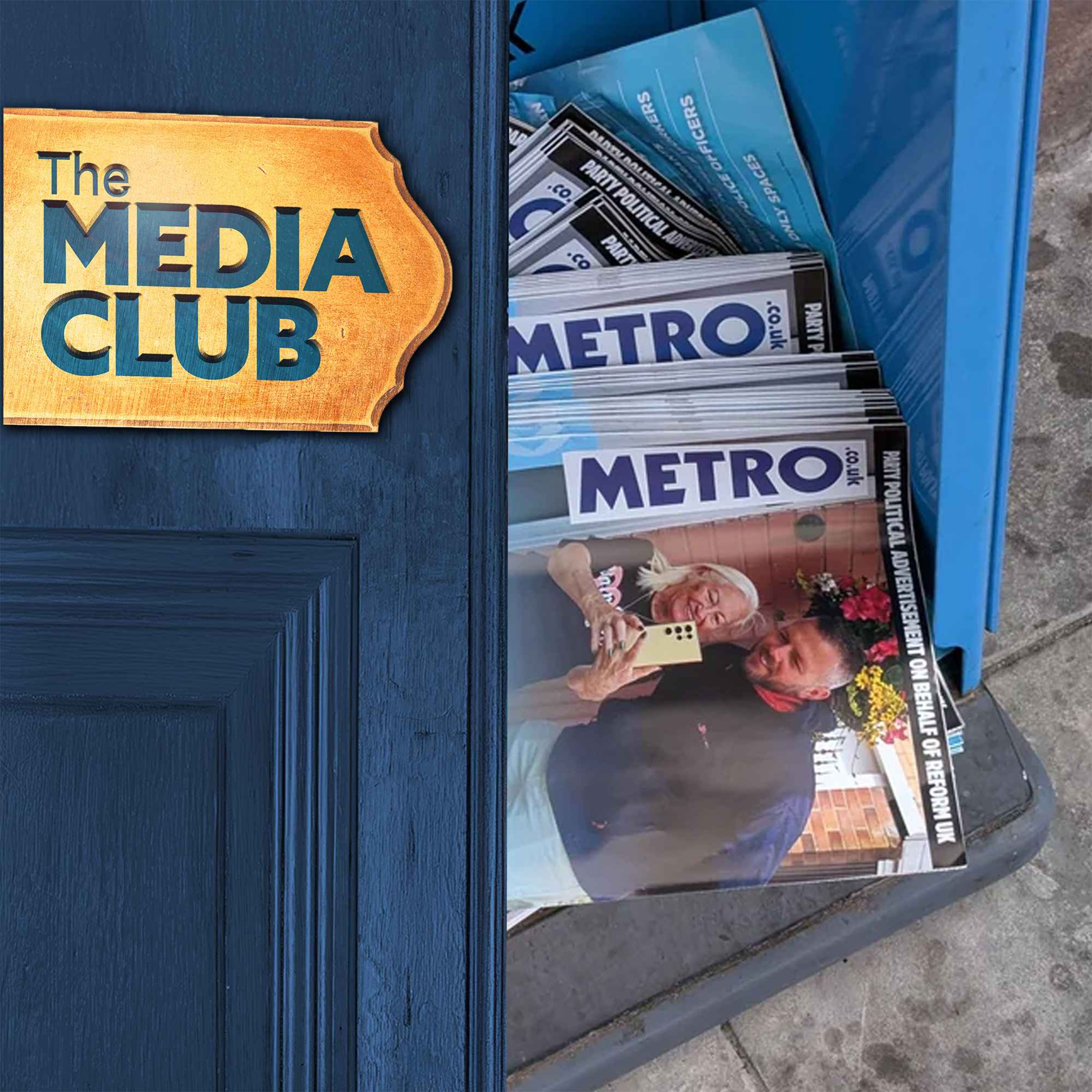
When 1m readers isn’t enough: Metro seeks 'radical change'
In short
The Media Club episode covers: Metro’s ownership-driven push to build subscriptions after a leadership shake-up; Reach’s ongoing newsroom cuts and the industry’s shift toward direct audience relationships as AI/search erode traffic; Channel 4’s major advertising deal with Paramount UK channels (including Channel 5) amid Channel 4 job cuts; BBC Birmingham’s 10-year creative skills partnership with Birmingham City University; and AI ethics in screenwriting after playwright Jack Thorne alleges writers are using AI to generate scripts and passing them off as their own. It also discusses BBC/Radio 2 investing in visualised podcasts and multi-platform consumption trends.
Guests
Alex Hudson (journalist/editor/presenter; former Metro newsroom; runs Crashed Podcast) and Tara Conlan (TV and media journalist; Guardian/Broadcast).
Key claims/examples
Metro’s “radical change” from free to subscription; AI regulation is behind reality (EU AI Act won’t stop workarounds); AI “cheating” is plagiarism/fraud (No Big Deal cited as a depressing example); Guardian and NewsQuest show “good news” via digital subscriber growth; Washington Post aims to break even by betting on journalism.
Written by AI. May contain mistakes.
Chapters
0:43
Metro's Editor Shake-Up and Challenges
Discussion on the recent departures at Metro and the challenges of transitioning to a subscription model.
“Joining me are two club members to talk through the week's biggest media stories.”
4:19
Impact of AI on Journalism and Audience Engagement
Exploration of AI's role in journalism and its effects on audience trust and engagement.
“If you Google something, you're using AI.”
7:52
Ongoing Struggles in the Media Industry
Further discussion on the media industry's current struggles and the future of journalism.
“That confusion is exactly what Ground News was built to solve.”
14:01
Challenges in Journalism
Discusses the ongoing cuts in journalism and the impact on reporters.
“And again, like 10 years ago, your job then was to build a direct relationship with your audience because we knew that search was massive and we knew that social was massive, but that was going to change.”
16:16
AI and Plagiarism in Screenwriting
Explores the implications of using AI in writing and the moral dilemmas it raises.
“If you get done for plagiarism, you know, you don't graduate.”
18:47
The Ethics of AI in Creative Work
Discusses the ethical concerns and practical challenges of using AI in creative processes.
“But that difference between it's giving me sources.”
21:06
AI in Comedy and Audience Reception
Analyzes audience reactions to AI-generated content and the future of comedy.
“then you've sort of played your own part in your own downfall, really.”
23:21
Channel 4's Advertising Partnership
Covers Channel 4's new advertising deal and its implications for the network.
“Yeah, the new CEO has got to be happy with this.”
26:53
Podcast Discovery and New Shows
Introduces a new podcast and discusses its themes and hosts.
“Just use the code MEDIACLUB when you book online at podshoponline.co.uk.”
28:22
Weekly Media Updates
Discussing recent media developments including BBC partnerships and new podcasts.
“Class is always in session at ACAST.com.”
Show all 17 chapters
30:45
The Rise of Podcasters
Exploring the growing trust in podcasters compared to other creators.
“I think Radio 2's new visualised podcast, it could just be us.”
32:42
BBC's Short-form Strategy
Analyzing the BBC's approach to talent and the potential for short-form content.
“I mean, Tara, BBC and the Radio 2 stories kind of both sort of point in the same way, kind of big bets on new talent and access to big names.”
35:18
Identity and AI in Media
Discussion on personality rights, self-sovereign identity, and AI's impact.
“that then they can clip up and put out on social media.”
39:35
The Future of Journalism
Examining the Guardian's success and the challenges for local press.
“mandatory ID There's a lot of stuff at play, all of which is about AI and none of which is about AI.”
42:00
Local Press Resilience: NewsQuest's Success
Discover how NewsQuest has increased its digital subscribers despite industry challenges.
“Down in the regions, the local press refuses to lie down.”
43:01
Challenges at the Washington Post
Explore the Washington Post's struggles and the hope for a turnaround under new management.
“Obviously, the BBC has cut back on local radio, but they have increased their digital presence locally and local newspapers, which basically means more text, more pages rather than radio.”
44:49
The Future of Journalism: Betting on Talent
Learn about the importance of investing in journalism in the face of adversity.
“So under this new management, maybe there is hope.”

Ask about this episode
Get the gist, explore an idea or ask about something said.
 Claude
On The Media Club with Matt Deegan, what are the key points of this episode?
Searching your listeningTranscript
Automatic transcript. May contain errors.
0:01Hello, welcome to the Media Club. I'm Matt Deegan. In the club today, Metro's editor is out. The paper's new owner wants radical change, just like Reach, whose radical idea is original journalism. Alex Hudson, who spent years in Metro's newsroom, updates us on the front line of Fleet Street. Also on the show, Channel 4 and Channel 5 make advertising history together. TV and media journalist Tara Conlan on what the deal and those massive cuts mean for the wider industry. All that plus playwright Jack Thorne accuses fellow screenwriters of using AI to cheat. The BBC gets serious about Birmingham.
0:36And in the Audio Network Media Quiz, we go looking for good news at the pictures. That's all happening in this edition of the Media Club. Come on in. Joining me are two club members to talk through the week's biggest media stories. And it's welcome back to the club for Alex Hudson, a journalist, editor and presenter of the Crashed Podcast. Hello. Hello. How are you? I'm very good. Thank you. who's on your list for a plus one? I was going to, until I got the bus here, it was going to be Ben Shannon, who's the sort of creator and writer of the BBC show, The Capture, which is in its third series, which I'd forgotten about, but I've watched both series and then it just popped up, BBC don't do personalisation that well, but it's now having the big advertising.
1:16It feels like it's getting somewhere. And then I saw the sort of fire wardens at News UK stewarding a load of journalists and they deserve absolute instant entry into the club because if you've ever tried to get journalists away from a desk, particularly if it's a fire drill they are not for moving so they were doing sterling work they deserve to be in the club so the fire marshals that we've never had that many people or that type of people um actually a colleague got i was with got an email saying you must leave the building now um so obviously something's going on i hope it's still standing but by the time they were doing sterling work in that in their high viz they were doing wonderful work uh the capture great series it's really good it's ridiculous and compelling and all of the doomsday scenario that we're probably going to talk about about ai are all true in that horror horrible world uh and also with us tv and media journalist tara conlon regular voice in the guardian and broadcast um who would you like to put forward as your plus one this week well i was going to do um
2:10Tara Conlan: because it's big week for documentaries obviously the final um installment of 70 up although it comes in two parts second part next week um and claire lewis there who's been an absolute custodian of the brand, you know, she has made it happen, basically. And also Jamie Roberts, who is back from Hoyo Films, he's come back with the controversy over the Gaza documentary that they made for the BBC, which was pulled with Channel 4, a really interesting new Channel 4 documentary called England Till I Die, which is about the rise of the anti-immigration movement. So I was going to do one of them as his docs, but as we're in our AI Frankenstein, moment with uh all the heads of ai basically saying that we are doomed or going to be taken over um or destroyed i thought i would do catherine webb from amici okay which is the if you don't know it's sort of like the the pact of of um of ai basically trying to sort of standardize um the use of ai basically in the screen industries and uh i was talking with her for a piece for um Indie Labs newsletter, The Indie Hustle, about AI and about the AI regulation that's coming down the tunnel this autumn.
3:28Tara Conlan: And there's quite a lot of it, which is a good thing. And basically, Catherine was telling me about Amici's plans to kind of standardize the recording of AI by production companies, but making it clear to viewers as well. so you know if you're watching something is there some kind of on-screen announcement basically card or whatever a bit like BAFTA's ALBA sustainability card that just says AR has been used for this this and this so it's trying to standardize that to help viewers and producers I mean the ALBA thing is quite an interesting analog isn't it because it's built into production systems it's built into the reporting, it flows through to the broadcasters, and it's sort of up to the broadcasters how they want to deal with it and how they want to communicate it to consumers.
4:18Tara Conlan: Yeah. That's a good thing. Alex, flagging up a few stuff? But everyone is using AI. If you Google something, you're using AI. It's legislation that's two steps behind actually what's happening. So if you would like... You could say there are stuff like if you're using image generation or video generation. If you're using Photoshop, you're using AI in the stricter sense of the word. if you're using Audition in certain contexts. If you're using Riverside, AI is now a core part of the software for podcast recording. So again, yes, everyone should be transparent, but it's a really blurry line and regulations and best practices are having to move much, much quicker than it is possible to move.
4:56I thought it was interesting that Anthropic and OpenAI, because of European regulations, have to make some of their stuff more watermarked, even from kind of text upwards. I mean, there is some change in regulation that will make it easier to spot some of these things. No, it won't. So the European Union AI Act is a good thing, but it means that companies will work their way around it and work in the UK and work in the US and work in China. And without unilateral regulation, there is no way of making it really happen. And it is all, as I'm sure we'll come on to, a huge marketing stunt for the year of IPOs and ultimately we need regulating so we can make it less good is not the sort of thing you hear from a trillion dollar company.
5:42You're just hearing marketing on marketing on marketing around slowing of growth until there is the next phase of that big boom of what's about to come. So you were Donald Trump then, just let it run? No, we should regulate because of what's about to happen. But this obsession because of audience numbers flocking to this content of the national media, anytime anybody says anything, the headlines write themselves and people click and people engage with it so it's popularity spiral up into this doomsday scenario and actually once again I listened to Crash for the New York discussion but the nuance and the detail and the rigour behind it there is a lot more to it and just people aren't reading into that they're just taking it as we're all doomed we're all going to be dead in 10 years.
6:25Well more on that later plus is Britain's biggest free paper in crisis? I'll see you in a sec. ACAST powers the world's best podcasts. New school year, new podcast obsession. Hit play on this. Hey, this is Kim Holderness. And this is Penn Holderness. And we have a podcast called Laugh Lines. You know, we're all getting older and sometimes it's fun just to laugh about it. We've laughed about insane 90s song lyrics, unhinged summer jobs, and designing the perfect Gen X retirement home. We also have some meaningful conversations about fighting Alzheimer's, understanding ADHD, marriage, parenting, empty nesting.
7:04If this sounds like you, welcome home. You're safe here. So we called our show Laugh Lines for, you know, the lines that show up on our face because we're getting old and we're laughing, but also because we have a literal laugh line. It's a place you can call in and very true to us, it's a landline. You can leave a voicemail on the Laugh Line. We actually love hearing your voices and we feel so lucky that our audience is growing older with us. So what are you waiting for? Go check out Laugh Lines. It's available in all the usual podcast places and also on YouTube. Yes, I have to wear a bra and hard pants when recording this show because we put it on YouTube.
7:39The sacrifices we make for our listeners, honey. Seriously. We hope you join us soon. Acast helps creators launch, grow, and monetize their podcasts. Class is always in session at acast.com. Why does the same news story sound completely different depending on where you read it? That confusion is exactly what Ground News was built to solve. It's an app and website that compares news coverage, allowing you to see how each story is framed across the political spectrum and the world. For the recent story about the U.S. signing the Memorandum of Understanding with Iran, their vantage plan shows us that.
8:11Right-leaning Daily Express framed it as a historic peace deal, while left-leaning NPR notes it resulted in the president's approval hitting record lows. Plus data like each publication's source of funding and a factuality rating. The Nobel Peace Center even called ground news an excellent way to stay informed. avoid echo chambers, and expand your worldview. Get 40 % off by going to ground.news.2026. That's ground.news.2026. Again, ground.news.2026.
8:49Welcome back to the Media Club. Metro's editor-in-chief has quit, Its executive editor has gone with her and a former editor is back on a temporary basis. All of the paper's new owners work out what to do with it. Alex, Metro, you were there a million years ago. What do you know? I was booked for this recording before this happened, to be clear. So what happened was I think they were taken over by a new company that's still under the main DMGT parent company in June. And they were looking after the eye and the new scientists. And they're really looking at subscription revenue. And so then you take a look at Metro, the free paper, and you try and build out a subscription business from that.
9:28Which is, that's quite a switch from paying no money to paying somebody. Can you make people pay a subscription for a free paper is a really complicated conversation. And I think those conversations, from what I understand, were quite testy to begin with. From the existing team? From the new CEOs and the existing team. And it's what Metro wants to be, what Metro wants to do. and Ted is an old colleague also. Ted Young, who was editor for five or six years. Yeah, 2015 to 2023. So relatively recently. And he is an old school newspaper man. So he is New York Post. He is Mail Online. He runs a newspaper like in the, you imagine it in a 1970s kind of style.
10:09Braces and cigar. He owns it. I've seen him in braces. He is a brilliant, brilliant journalist and a really, really sharp mind. But it is a very different way of running a newspaper from the sort of digital first thing that Metro was moving towards. so deborah arthur's uh richard hartley parkinson departed this week i heard they were sort of they sort of departed directly after the morning meeting so was somewhat unexpected by all i would have no view on that because i still have very good friends in that that newsroom so i don't want to i i wouldn't dispute your account i mean tara that's um it happens in newspapers it happens
10:45Tara Conlan: yes yes yeah it it does happen very quickly in some newspapers you know there have been accounts before you know of some some other papers within that building where that's uh where that's happened and they are never seen again but you know it happens in lots of companies doesn't it happens in finance and um and then there's a leaving party somewhere in a bar around the corner yes at 11 o 'clock in the morning yeah um this this is the challenges all newspapers face uh you've worked a lot lots of titles they have to reimagine themselves for an ever-changing future yeah exactly and it's in the the current kind of um rush now is towards digital subscribers you know with reach as well the way that the advertising market is going the way it's been gobbled up by you know ai and google um etc it's the same old story and it's getting worse under ai because of what's happening with search so everyone's going i know we'll switch to digital subscribers but you know there's subscription fatigue all round across all sorts of platforms.
11:48I mean print circulation is still just under a million copies a day which is nothing to be sniffed at.
11:53Tara Conlan: Yeah exactly and I haven't seen that many of them sort of papering the tube so where they're going I don't know. There's maybe some cat litter trays being beautifully furnished with them I don't know but I mean I certainly read it, I pick it up when it's there I look at it online as well, some good reporters there it just probably needs a bit more love really. It faces the same problem as Reach does as all of that mass volume publishers do and I say this advice anytime anyone asks me for consulting it's the same advice of course it's much more new as if you're paying me but it's essentially like what will people come to?
12:27What will people stay for? And if now AI will give you the news what is the story that you're telling? Who is telling that story? It's not quite the parasocial relationship you get in the influencer economy but those things are getting closer and closer together who do you trust who will you set an alarm clock for who when sends you an email will you open immediately what will you remember what will you come back to if metro was relying on rush hour crush and a couple of other formats is that enough to sustain a business you have to build out every relationship between the reporter and the editor and the audience member thousand by thousand ten thousand by ten thousand to make sure that you have that real direct relationship so that they it doesn't matter if they could get it anywhere else they don't want to because they have that
13:05Tara Conlan: relationship and that's vital there's a classic case there as well if jim waterson you know london centric because metro standard used to own those patches and now it's about the the personality of the journalist and the work they're doing on jim is breaking great exclusives it's funny something you can be famous for as well do you think they've they you know they're a talented bunch they got it within them to find their new their new future and metro team are unbelievably good at what they do and i think particularly as a relatively small newsroom the amount of stuff they put out, the amount of quality content they put out, the amount of brilliant minds and hustle and hard work that goes on in that place is unbelievable.
13:42So if there is a way to do it, they will find a way. It's just making sure that the sort of new world and the old world and then coming back to the old, all of that making sense and what that becomes, particularly in that push for subscribers, is going to be quite an adjustment to make, I think. Yeah, and Tara, obviously this is in a week when there's more cuts at reach. Owners of the mirror express and star 220 jobs going there they say they're going to fund um 60 new positions i mean there's there's never a lot of great news coming out that building no unfortunately not
14:14Tara Conlan: and journalists i know within it say the same i mean it's it's cuts after cuts after cuts isn't it um and it's it's really hard for those journalists who day in day out you know you see them at press conferences at screenings um working incredibly hard still getting great stories it's really really hard and also you know that was the sort of bedrock for the next you know the next generation of reporters and i i spoke to one you know last week who was feeling quite low about the future of the industry that's not how they should be feeling and you have to advise them to build up their personal brand and you know and do video which might not necessarily be in their particular skill set but they feel that they have to do it fortunately this journalist does have that but um yeah it's really really hard alex i mean obviously when they rebranded they rebranded as reach the whole point was to reach lots of people social media distribution all of those things i mean are they being buffeted by the weather or is this that they they never built their own kind of perfect direction do you mean literally the weather because there was a whole daily express strategy that was just ripping off bbc weather forecast It was like BBC weather forecast in the headline for SEO purposes.
15:25And again, like 10 years ago, your job then was to build a direct relationship with your audience because we knew that search was massive and we knew that social was massive, but that was going to change. We'd been burnt many times before. And instead of taking the sort of quick, wonderful gold rush of the millions and millions of page views with 15 second, 30 second, 12 times, actually that direct relationship with the audience is what Reach should have done. And instead they made their content unreadable. they made sure that their websites were just you couldn't navigate around that website and then the CEO came out and said that still reach like literal like reaching more and more people was still a plan and everyone at the time when he said that I think it maybe was 18 months two years ago said no friend that's not the answer and finally now after 12 years of understanding the data more he's finally understood that that isn't the answer but everyone else is two years ahead of him well moving on and one of britain's most prolific screenwriters has accused some of his own colleagues of cheating jack thorne writer of adolescence and president of the writers guild of great britain used a lecture this week at the south bank center to say he's heard from execs and from writers close to him that some in his profession are using ai to write scripts
16:34Tara Conlan: and passing off the work as their own does it matter yes yeah why because it's cheating and it's not um you know if you pay for someone's words i think you know you're entitled to get something which is unique and original but also it goes beyond that because it's the thin end of the wedge then i think as jack said in his speech and discussion at south bank center you lose the moral high ground don't you because then what's to stop a you know the principle of ai using your words if you're passing off someone else's words as your own you lose that moral high ground don't you because then and you know any of the ai models could do the same i i've been hearing about this a little bit for a while that a couple a couple of writers been using it for structure yeah but then since jack's speech which brilliantly put the spotlight on copyright which is a very important point um since then you know there's been sort of talk of um it being used for dialogue just studios wants you know if they don't want to pay writers as much do you just get someone in who will sort of put some shape around it and then get ai to write the rest in the style of a famous writer that you don't want to pay the money for um it's cheating uh thorn wants passing off AI work as your own to be made unlawful, prosecutable as fraud.
18:01Tara Conlan: Yeah, because he said it. I mean, it's like plagiarism. It's like a university. If you get done for plagiarism, you know, you don't graduate. It's the same. It's plagiarism. Alex, can I work with Claude to help me work on my script? It knows what I've written before. It knows how I talk. Yes, if you've trained your personas correctly, if you've trained them effectively, if you've sandboxed your copyright and non-copyright material effectively, if you've built out bespoke platforms around them if you've I can I can I can do that in in Claude I can say it's not used for training I can I can lock it in in that place I can give it give it give it my material AI is getting out of sandboxes that's the problem by design um so I think yes you can yes you should and as I think there is a whole manner of plagiarism issues and there are a whole manner of like is your work your own um but and I got into so much trouble for doing this a lecture about this and saying almost verbatim exactly what I'm about to say now but if you don't use google for your research you have to go back to the library and it takes you much longer if you don't use a digital camera you have to go and get your photo developed it takes much longer if you're not using ai responsibly ethically and without breach of copyright it's going to take you much longer to do the same thing and the people that leverage it effectively to build out agentic structures not to write the words but to give you all of the source data around the sorts of things you want about to give you an evidence base for what you want to do is incredibly powerful and so But I think that's that's great.
19:20But that difference between it's giving me sources. OK, it's writing up descriptions of those sources. It's providing structure for my thoughts. That all seeps into what goes into the to the written. It does seep into it. But then again, in that lecture, he's talking about his friend sing. I think there's that there's that big jump between, you know, my my best friend's cousin did this ridiculous thing. and you know my friend writer's writer's friend did this thing and i think there are going to be many examples of people who do agree with it like it's widespread but until we get that clear literal example of saying this is what is acceptable to the industry this is not this is what's not acceptable industry it's going to be that hearsay and there's so many ai news stories doing the rounds continuously because it's that fear-mongering we talked about the top of the show it's it's making sure that we actually call a spade a spade and if people are plagiarizing we calling out for plagiarism just because it's using a different platform and it's easier to plagiarize it doesn't change it but the tool the tools that are available are incredible and a powerful asset to being creative i mean tara if you're being commissioned and you're in demand i mean obviously jack thornsome one's hugely in demand yeah um you could see you could see why you would try and um oh of course make you can see the temptation yeah you can see the temptation
20:38Tara Conlan: but then you have to you know think forward of you know play a little bit of 3d chess here and just think, where does this lead us? What road does that lead you down if someone is passing off your work in future as their own? If you devalue your own work, how can someone else value it? You're devaluing it, exactly. And you're putting yourself out of work down the line because if someone younger and better at using Claude can ape your style and pass themselves off as the new Matt Deegan, then you've sort of played your own part in your own downfall, really. If you had a rapist style, I'd pick someone else's.
21:17So did you see this new sitcom written by AI? I think it's called No Big Deal. I haven't seen it yet. Tell me, should I tune in, Tara?
21:26Tara Conlan: I've watched the whole thing. Okay. I've watched the whole thing. I mean, it's really depressing, isn't it, really? It's billed as The Office meets Dragon's Den. But, you know, there were some good things about it, like when it finished. but actually the most when the AI is the most realistic thing in it rather than the exposition and the characters you know you have to worry but when there are you know like say Channel 4's got some brilliant comedies coming up like It Gets Worse and Break Claws the BBC's got you know the Reluctant Vampire comedy is so difficult to do and when I saw this story I think the guy has now got about 21 ,000 views last time I looked on YouTube obviously it's AI generated characters you know they glitch things don't add up the set up isn't great it's like one foot in the grave sort of meets robot walls Now that I would watch Yeah I would watch that but maybe I'm giving it too much credit but yeah it's for all one of the most depressing things was actually seeing some of the comments about it with some people going well you know that's the way that comedy is kind of like going anyway you know the way of the sitcom it's not great You've got comedy writers working so hard.
22:42Tara Conlan: Comedy is so difficult to do to get people to laugh. Alex, did you laugh? I laughed at the Guardian zero-star review. Stuart Heritage and the Guardian this week. Why are they reviewing it? Because AI gets people reading it. Why are we talking about it? It's not because it's worth us talking about. It's because it has AI in the headline and that will get people engaged. It was dreadful that the things were out of sync. You could vibe code better if you were really trying. It shows the absolute 0.1 % of what's already possible. And so it's interesting in the fact of if this is still getting coverage, even though it's terrible and pointless.
23:19Well, let's remove the oxygen. And finally, before the break, from next year, Channel 4 sales becomes the exclusive advertising partner for a broad swathe of Paramount's UK channels, including Five, Milkshake, MTV and Comedy Central, and a deal reportedly worth more than£300 million. pounds um tara this is good news for channel four they've sort of won this off sky and i guess if you're paramount you may be a bit concerned of sky and itv's advertising might who used to rep you
23:46Tara Conlan: yes that's true um i guess it goes back to the old days of you know when everyone was putting channel four and channel five together in some kind of merger you know it's it's who's gonna who's going who's channel four gonna buddy up with or get taken over by or whoever you know is it the BBC is it is it um you know channel five um so in in terms of you know back office um you know the cost savings that can be made across the board and winning and winning a new piece of business uh that's that that's good news for channel four in a you know at a time when they have got was it 340 job cuts which is really really difficult so this is some good news but But, you know, they need a lot more good news.
24:32Yeah, the new CEO has got to be happy with this. I mean, it's got to be a bit of a knock on from the Sky deal with ITV, I imagine. And there's probably a few more people that Sky represent that might find their way to horse free road, I imagine.
24:47Tara Conlan: Yeah, maybe or wherever they are when it's sold. But yes, I mean, advertising is obviously it's key. It's paramount. No pun intended. um inevitably with all the rounds of consolidation that there is going on at the moment this was probably going to happen it was a question of sort of if sort of when rather than if but um yeah i mean it's it's it's kind of small consolation probably for the people who are about to lose their jobs at channel four yeah i mean in a world where video advertising uh has lots of people that can uh host it and buy it meta obviously doing incredibly well with instagram and Facebook, it brings some scale, but does it still mean they're subscale in the market?
25:29Yes. And as we would love the world in which all of the big broadcasters and all of the big producers who aren't Netflix, who aren't Meta, who aren't Google, all came together and said, actually, if we all jump in together, we can really compete in this and our CPMs will be comparable and we can really push to look at how we compete in that market. And if it's still Channel 4, Channel 5 deal, we'll still be competing with ITV, We will still be competing with all of the competitors competing with Sky in this space. And instead, they should just be getting together and working out what is the most effective way to our broadest audiences and the crossover, the Venn diagrams.
26:05How can we make sure that we're getting paid as much, if not more than Meta and Google on comparison? Otherwise, it's just going to be that, like you say, it's subscale and advertising relies on scale for that model to work. OK, when we return, the BBC goes back to school. See you in a sec.
26:27If this week's news tells us anything, it's that even the fiercest rivals can end up sharing a sofa when the conditions are perfect. And that's learning we take onto our own sofa here at Podshop Studios, where we record the Media Club every week. Each studio has its own distinct look and feel, professionally designed and fully equipped for broadcast quality video recording. You can check out the whole range at podshoponline.co.uk. And they offer Media Club listeners 25 % off their first booking. Just use the code MEDIACLUB when you book online at podshoponline.co.uk.
27:23We have the answers. Get in touch at podcastdiscovery.com. That's podcastdiscovery.com. ACAST powers the world's best podcasts. New school year, new podcast obsession. Hit play on this. What is a cyberdeck and how can it blend makeup and Neuromancer? Why do we name birds, beetles, telescopes, and principals after people? How does Amdahl's Law explain when sometimes, 10 times faster, is not that fast? I'm Dr. Nikki Ackermans, a scientist. And I'm Huynh Tua-Dao, an engineer. And we're here to spill the tea on questions just like this at the intersection of science and technology. And we'll also add in quite a bit of nerdiness and fun.
28:06As well as a healthy pour of our experiences as women in STEM on our podcast, Technical Tea. Subscribe to Technical Tea wherever podcasts are found. We drop episodes every month. Acast helps creators launch, grow, and monetize their podcasts. Class is always in session at ACAST.com.
29:18Welcome back. Here's a few stories we've been talking about in the club this week. The BBC and Birmingham City University have announced a 10-year partnership to build a creative skills centre at the Tea Factory in Digbeth. That's the BBC's new Midlands base, complete with studios and workshops, all part of the corporation's wider push to grow talent pipelines outside of London. Emily Maitlis, whose 2019 Newsnight interview with Prince Andrews still casts a very long shadow, is fronzing a new global podcast, A Very British Epstein, tracing Jeffrey Epstein's ties to the UK from the 1980s onwards.
29:51Emily is all in on Epstein with a Channel 4 documentary on the files already in the works as well. The podcast is produced by Global Studios and Sonaloum. BBC Radio 2 has issued a brief for a new visualised podcast worth about£300 ,000 aimed at showcasing the station's access to A-list guests on iPlayer. It works out at about£10 ,000 to£12 ,000 an episode, which is either a big budget or peanuts, depending on which way you're looking at it. and new research suggests 88 % of fans now consume both video and audio within a podcast show. That's according to ACAST's latest podcast Pulse report. Podcaster Trust with audiences is up nine points this year, while every other category flatlined or fell.
30:37Links to all of our stories are available on our sub stack. It's free to sign up to. Just go to themediaclub.com. That's themediaclub.com. Alex and Tara are still with me. I think Radio 2's new visualised podcast, it could just be us. I think that could be great. I thought this ACAST data was quite striking. Obviously, they're sort of a podcast company, but they say that it's the only creator category gaining ground, whilst print journalists, YouTubers and influencers all flatline or fall. Why do you think that's the case? It's just a coincidence. It's the week after they announced a really big video partnership that is open to all.
31:15I thought it was interesting. I was trying to sort of think about it. Is there a difference between a YouTuber and a podcaster? Like, do people think about them different ways, particularly how they talk about advertising? Are YouTubers more in the influencey? We expect less of them, whereas podcasters, we think a bit more of them. I think probably you're right, but I think it's such a blurry line already and there is no distinction. Like the amount of influencers of the podcast, the amount of podcasters who are influencers, the amount of journalists who are both podcasters and influencers. There is a, so I think the number of people who are unhappy with one or more of those categories and just want to be one, because most audiences are platform agnostic.
31:57They have one or two things that they really care about and they will go and listen to or watch. And they don't really care where that is. You know, and Spotify and Apple and others are desperate to make sure that it's that platform that they choose. But it's that person that I know, that person that I like, that person that I've seen before, I really trust them to tell me the news or whatever information or that thing that I care about. It doesn't matter if they're watching it, they're listening to it. It doesn't matter if it's on Spotify or YouTube. I think a lot of the ACOS data, I think it was saying that 88 % of people are sort of natively multi-platform.
32:25Yeah, that surprised me. It was that low or that high. That high? Who is it? Who is what? Like, either I'm listening to a podcast or I'm watching a podcast. I'm not doing both. I'm not watching, switching mid-episode. That's because they were saying that a lot of people pick up one and then go to the other, which I thought was fascinating. I mean, Tara, BBC and the Radio 2 stories kind of both sort of point in the same way, kind of big bets on new talent and access to big names. Is there enough big talent to go around for everybody that wants to use them?
32:56Tara Conlan: Well, I guess following on from that, you know, are you a YouTuber or an influencer? I mean, we're all creators now, aren't we? We're all putting up stuff all the time. and it's about getting those, you know, scrollable moments that can then lead into the longer form stuff. And the BBC gets, you know, amazing guests, you know, Radio 1, Live Lounge, that's Future Archive right there and they, you know, they visualise a lot of their stuff now, Radio 1, because that is, you know, they've got, you know, the next Ed Sheeran or whoever, you know, there. So that's an investment in Ed Sheeran. We might need a new Ed Sheeran as well.
33:33Sorry? Might need a new Ed Sheeran as well. Do you want to wade into that? You go.
33:38Tara Conlan: Let's not go there. New Siena Spiro. New Siena Spiro, that's it. We'll say that instead. They get great guests across all their shows. So, of course, you're going to try and get as much value out of that as possible visually, you know, in audio as well. So it's no surprise. I've seen adverts for a while about, you know, for people within the BBC to be working on this kind of. Yeah. Yeah, it's sort of interesting, like, is it cheap telly? Is it a visualised podcast? Is it, you know, which angle do you come from? It'll all be on iPlayer, it'll all be on sales, does it matter? Yeah, exactly. And if you're heading towards the short-form world anyway, with, you know, what Matt Britton has said, and which people within the BBC have been talking about for a while, how do you have the BBC's version of TikTok or YouTube or whatever, and how that might work, those short form scrollable clips are a good way to attract people in.
34:34Tara Conlan: You know, Netflix has Netflix clips as well, those kind of moments that can then draw people in, hopefully to watch the full episode. I think the risk is that the BBC is once again one step behind. So if you look at Kareem of Subway Takes, it's the clips of the show. And his whole, like, Hail Mary, last throw the dice was, why do we need a podcast? Let's just make short form. And if you look at the microdramas and the growth of microdramas across all of the social platforms. You don't need a 30-minute drama, you need a three-minute drama. And the BBC, again, with its funding model, has a huge potential to make two-minute 30 drama episodes of really compelling content.
35:10It has the opportunity to do this fantastic, brilliant, bringing unearthing new voices and new funny voices into a half-minute clips and one-minute clips and two-minute clips. Instead, it wants a Radio 2 family-friendly podcast that then they can clip up and put out on social media. Does it worry them because they don't have a short-form platform? It's pushing everything elsewhere. with YouTube, their whole sale, all going high, all guns blazing into YouTube is the future, and they've already got some of the biggest Instagram platforms, meta platforms. If you hosted those shows on the BBC homepages, there's still massive numbers there.
35:40They have a platform. They have all the audience data. It's not plugged into where they need it to be to make functional decisions in that context. But, as we've talked about many times, you showed me a list of how many times I've been on this podcast, that the BBC has to be ahead of the competition rather than and looking at Netflix and going, oh, that's cool, let's try that. It has to be the ones that's testing out stuff that may not work.
36:02Tara Conlan: That's maybe for the future. Then they have to let those gates down. They have to just let the younger... They have to be where they were, the new guys on the block. Matt Brum was talking at the TV festival, wasn't he, about whether if your content fits in within BBC guidelines, then maybe you should be able to put it on iPlayer. Terrible idea. Yeah, business insider do it as a business model. So many Forbes do it as a business model. But you could see in some verticals, like I think on, say, local, could you find places where there's limited BBC content but there is material out there that needs a home that doesn't mean to have to put it on YouTube as well but could find more audiences if it had some value.
36:45Tara Conlan: AI could filter out anything, which is, you know, as a first step with humans in the loop, as they always say, to try and get, you know, that younger audience which the BBC is losing to try and get them back inside, you know, because they need to say, wow, in the same way that, you know, we did when we were. Alex, you're coming up to your 50th episode of your podcast, Crashed. I remember a long time podcaster, Helen Zaltzman. So it takes 50 episodes for a show to find its feet. Do you agree or are you still climbing that mountain? Still climbing that mountain, I think. It's really weird. like we started a year ago and now we feel like we've found our feet we've got enough listeners that actually we get people talking to us which is terrifying um we have enough social chatter going on and it's actually finding a niche that no one else has done about actually how you talk about technology not like it's the new iphone actually just talking about it like real humans trying to get to the bottom of those difficult questions like is technology good or bad is this doomsday scenario of ai actually real no it's not it's not yet can we have a real conversation about it and getting those brilliant so there's some great guests recently uh we had someone ceo came on ceo of chain come on talking about just how difficult image-based abuse is really really complicated terrifying topic about actually how fully clothed women it could still be image abuse even if they're fully clothed because of the difference in culture and the difference in what is obscenity laws depending on which country it's really really compelling they've done all the research around it and having those sorts of discussions alongside oh look new new phone iPhone that's very silly isn't it or like or the reality of where LLMs and agentic could really go next it's which there's we subtitle it the technology podcast about everything else which is the point of just making it as broad a church because everything is technology I think the government's opening a consultation on personality rights aren't they um this interesting so which everyone has their own personality rights not just actors obviously you know equity is very involved in this because of voice movement etc but everyone has a right to their own personality image it could be a backdoor trojan into self-sovereign identity which is a blairite thing that parnell who's said again uh so self-sovereign identity is a real big blairite policy that was pushed the back because everyone hated it because it involved digital id cards um but it essentially meant that if you were going to a club you wouldn't need to give you a whole id you would just hand hand in this thing the only thing they would be able to see will be your age because that's the only thing they needed so you have absolute control over your own identity and Parnell who's the chief of staff in number 10 is a known sympathiser with that sort of logic but it brings us back to ID cards which will never end up as policy James Parnell who was at the BBC yeah and ex-culture brief as well and so what happens with self-sovereign matters hugely to the right to privacy and AI IP laws and how Britain potentially could lead the way with that because the EU aren't going to bring in mandatory ID There's a lot of stuff at play, all of which is about AI and none of which is about AI.
39:43It's all politics played through that unusual prism. Well, there's always an opportunity, isn't there, with any new shift in technology to meet other needs too. Right, just enough time for the Audio Network Media Quiz.
39:57Three media stories hidden within a different media property. This week it's called Media on the Grow. However grim the actual news is, sometimes you need to inject a little positivity, Alex. So this week, we're heading back to the 1930s and the newsreels that accompanied the main feature. I'm going to give you three coded media stories in the voice of a narrator who's decided everything is in fact marvellous. You just tell me what the story is. And once again, Alex Audio Network has taken that brief from producer Matt and created a playlist of music to score today's game. it's the best of three buzz in with your names if you know the story so Alex you will say Alex and Tara you will say Tara let's play Media on the Grow God tidings from Fleet Street one of Britain's greatest campaigning titles reports its healthiest set of books in years with readers across the Atlantic flocking to its pages in their hundreds Tara yes thank God yes
40:57Tara Conlan: what's that one? do continue do continue are you available for Pantley this Christmas? yes absolutely I could see that we should make that happen the media club panto is it the Guardian it is the Guardian I shouldn't know that shouldn't I really they did what happened they managed to grow their revenue yes grow revenues grow digital subscribers I think it's up to is it 1.4 million digital subscribers up 17 % a US operation now worth 64 million quid it's good success for the Guardian it is it's still loss making Sorry, I'm meant to be optimistic. Annual losses have halved in two years. I think the endowment's grown 100 million, though.
41:37Tara Conlan: Okay, so cashing the bank up. The Guardian are doing important work. They're doing brilliant journalism. I think they've come through the sale of Observer Stronger. I think it's a testament to all the US operation. Although what happens after Trump to the US operation, that will be the really interesting test about if The Guardian can continue to ride that weight of doing really important, good quality, excellent journalism into post-Trump, whenever that may be. Whenever that may be. Okay, story number two. Down in the regions, the local press refuses to lie down. Britain's biggest local newspaper publisher toasts rising profits and their digital subscribe...
42:14Yes. You should use that voice for the entire podcast. It's about NewsQuest. Can we just put it through a filter? NewsQuest. Just do that. Yeah, that could happen. NewsQuest. You can use AI. You can pay extra for that version. Yes, NewsQuest. Sorry. What have they done? So they've actually managed to grow and they've got 18 % up digital subscribers. So which in this environment is a testament to really, really great work, which particularly as we were talking about reach earlier for the news press to come in and actually try and do the hard graft of getting people to pay and feel like there is value in there is a really, really, really hard job.
42:52So great, great work to them. Yeah, 18%, as you said, to 159 ,000 paying digital subscribers. But Tara, overall revenue still down a bit, 4.5%. But the NewsQuest boss does like having a go at the BBC's local news expansion.
43:07Tara Conlan: Yeah, it's very difficult. Obviously, the BBC has cut back on local radio, but they have increased their digital presence locally and local newspapers, which basically means more text, more pages rather than radio. so local newspaper groups a bit grumpy I can see both arguments ok one more to go and across the Atlantic a titan of American journalism steadies the ship after years in choppy waters its new captain promising the crew a course for dry land by Christmas Alex this is the Washington Post pretending that everything's fine are you just saying this is like the version of the room on fire and the editor and jeff bezos going it's fine it's fine from people familiar with that newsroom there are a lot of questions about its future editorial direction and the amount of interference into that space is a very complicated and all manner of bezos is not the least litigious person in the universe so let's not talk about that anymore but it feels like it has been lost making for a while turning a corner to be able for it to make money but it just looks at sort of down the east coast of New York Times like how have we not how have we done so little and how have we not capitalised on the brand name that the world knows and the big hope of Bezos coming in was that actually it was going to be for things that need to be more efficient more efficient and that didn't take that didn't really happen So under this new management, maybe there is hope.
44:53Yeah. So this is, as you said, on track to break even this year, they sold more than 300 ,000 subscriptions. But then, like, how many did they lose during their bad time? We could see the net figures there. And New York Times bet on journalism. And New York Times kept hiring. And games. And food. Yes. but they under Mark Thompson who's very much we back journalists we back them to go and find stories we back proper content and I appreciate that so much of their money does come from it's about diversifying but Washington Post made a load of journalists redundant they got rid of them and so so many of their good staff looked elsewhere and it's not as if they're cutting people that aren't necessary they're getting rid of brilliant journalists who have found work elsewhere and are working elsewhere and that's if you're going to be a news publisher your margin might be small you have to bet on journalism or else what's the point?
45:46And I think that makes you our winner today, Alex, which is a special prize. You get to host a good news version of the media club as you tour around media operators around the UK. And a recording of your pantomime voice. Excellent. Yes, we'll do all that together. My thanks to both of you. Also to Alex at Audio Network as well. Remember, Audio Network can score your production too. Just head to audionetwork.com and there's a link in the show notes as well. before we go Tara how can we keep up with your good work
46:16Tara Conlan: Guardian World Television Society Broadcast Indie Lab I've also been helping out with a new venture called How Do You Do which is from Dame Tristia Harrison it's a new platform which basically helps young people find jobs it's a chat show and an online careers platform and jobs marketplace and it sort of helps young people find jobs it's a brilliant brilliant idea check it out Alex at Alex at Alex at Alex H-U-D-S we're on too many social networks and crashed wherever you get your podcasts or on YouTube which apparently is the biggest yes absolutely podcast network thank you both and thank you for listening and watching my name's Matt Deegan the producer is Matt Hill it was a rethink audio production with video support from Podcast Discovery I'll see you next week
47:16A-Cast powers the world's best podcasts. New school year, new podcast obsession. Hit play on this. Welcome, crawlers. Do you like books? Do you like cats? Do you like dangerous subterranean games put on by ultra-wealthy alien corporations? If so, then Fantasy Fanfellas is the podcast for you. What is Fantasy Fanfellas, you ask? Well, it's a bookish podcast where me, Stephen, will be guiding my buddy Hayden through his first time reading Matt Deniman's smash hit, Dungeon Crawler Carl. So if you are a first-time Dungeon Crawler Carl reader or you've already finished it and want to see Hayden struggle to guess what's next, then you'll be right at home.
47:55Episode 1, covering spoilers for chapters 1 through 11, goes live on Wednesday, September 9th. We hope to see you there. Bye! Acast helps creators launch, grow, and monetize their podcasts. Class is always in session at ACAST.com. Why does the same news story sound completely different depending on where you read it? That confusion is exactly what Ground News was built to solve. It's an app and website that compares news coverage, allowing you to see how each story is framed across the political spectrum and the world. For the recent story about the U.S. signing the Memorandum of Understanding with Iran, their vantage plan shows us that.
48:31Right-leaning Daily Express framed it as a historic peace deal, while left-leaning NPR notes it resulted in the president's approval hitting record lows, plus data like each publication's source of funding and a factuality rating. The Nobel Peace Center even called Ground News an excellent way to stay informed, avoid echo chambers, and expand your worldview. Get 40 % off by going to ground.news.com. That's ground.news.com. Again, ground.news.com.
From the publisher
Metro's editor-in-chief has quit and a familiar face is back to steady the ship. Alex Hudson, who spent years as deputy editor of Metro.co.uk, sizes up his old newsroom.
Also on the show: Channel 4 and Channel 5 make advertising history together, just days after Channel 4 confirmed a quarter of its workforce is going. TV and media journalist Tara Conlan on what the deal – and the cuts – mean for the wider industry.
All that plus: playwright Jack Thorne accuses fellow screenwriters of using AI to cheat, the BBC gets serious about Birmingham, Radio 2 goes shopping for a £300k visualised podcast, Emily Maitlis goes digging into Jeffrey Epstein's British circle, and Acast says the format wars are finally over... and, in the Audio Network Media Quiz, we go looking for good news at the pictures.
The Media Quiz is sponsored by Audio Network. Alex selects the music for us to score each episode and the team can do it for you too at:
https://audionetwork.com
We record at Podshop Studios – for 25% off your first booking, use the code MEDIACLUB at:
https://www.podshoponline.co.uk/services/podcast-studio
Become a member for FREE when you sign up for our newsletter at:
https://themediaclub.com
A Rethink Audio production, produced by Matt Hill with post-production from Podcast Discovery.
What The Media Club has been reading this week:
Metro editor and executive editor exit amid radical change
Reach cuts 220 staff in reaction to AI Overview
Jack Thorne says fellow writers are using AI to cheat
Channel 4 and Paramount's 5 make advertising history
Emily Maitlis to host Global podcast on Epstein's British links
BBC launches partnership with Birmingham City University
Visualised Podcast Brief at R2
Acast releases Podcast Pulse 2026
Guardian grows revenue to record £282m
Newsquest grows profit as digital subscribers rise
Washington Post on track to break even after four years of losses
Tara’s Job Finding Platform, How Do You Do?
Hosted on Acast. See acast.com/privacy for more information.
More from The Media Club with Matt Deegan
All episodes
We use cookies.They keep VO running smoothly and help us improve it. Privacy policy