 Ask ChatGPT

Building a “meeting portfolio” for managers—standardized, reusable templates for recurring meetings (e.g., one-on-ones, project kickoffs, postmortems, budget reviews) so prep isn’t reinvented each time.
No guests are mentioned; the host is Mamie Camper-Stewart.
Most managers either treat meetings as one-offs (exhausting) or reuse last time’s version (assumes it was good). A meeting portfolio removes uncertainty by naming meetings clearly, defining purpose, using a consistent agenda structure, and specifying pre-work. Templates can be customized slightly and iteratively improved with feedback.
“Plus delta” reflection pre-work; quarterly goals alignment with up-to-date goal status; sending a one-page context before project kickoffs.
Written by AI. May contain mistakes.
Discussion on the common challenges managers face in preparing for meetings.
“That is the tax of running meetings the way that most of us do.”
Step-by-step guide to building a portfolio of reusable meeting templates.
“common recurring meetings that you have.”
Advice on experimenting with different meeting formats for improvement.
“But often I found that teams need to experiment with different meeting components until they land on the optimal one.”

Get the gist, explore an idea or ask about something said.
 Claude
On The Modern Manager, what are the key points of this episode?
Searching your listeningAutomatic transcript. May contain errors.
0:00Mamie Kanfer Stewart: It's Thursday afternoon. You've got a meeting on your calendar for next Tuesday. It's a project kickoff or a brainstorm session with a client, or maybe it's a one-on-one. You've got a few minutes to figure out the agenda. Maybe you pull up your last agenda for this type of meeting and use that as a starting point. Or maybe you open a blank doc and just try to build it from scratch. Or maybe you ask AI to help you design it, hoping that it will make the process a little faster and incorporate some good meeting practices. Or maybe you start, then you stop, you get pulled into something else and figure, I'll just figure this out later.
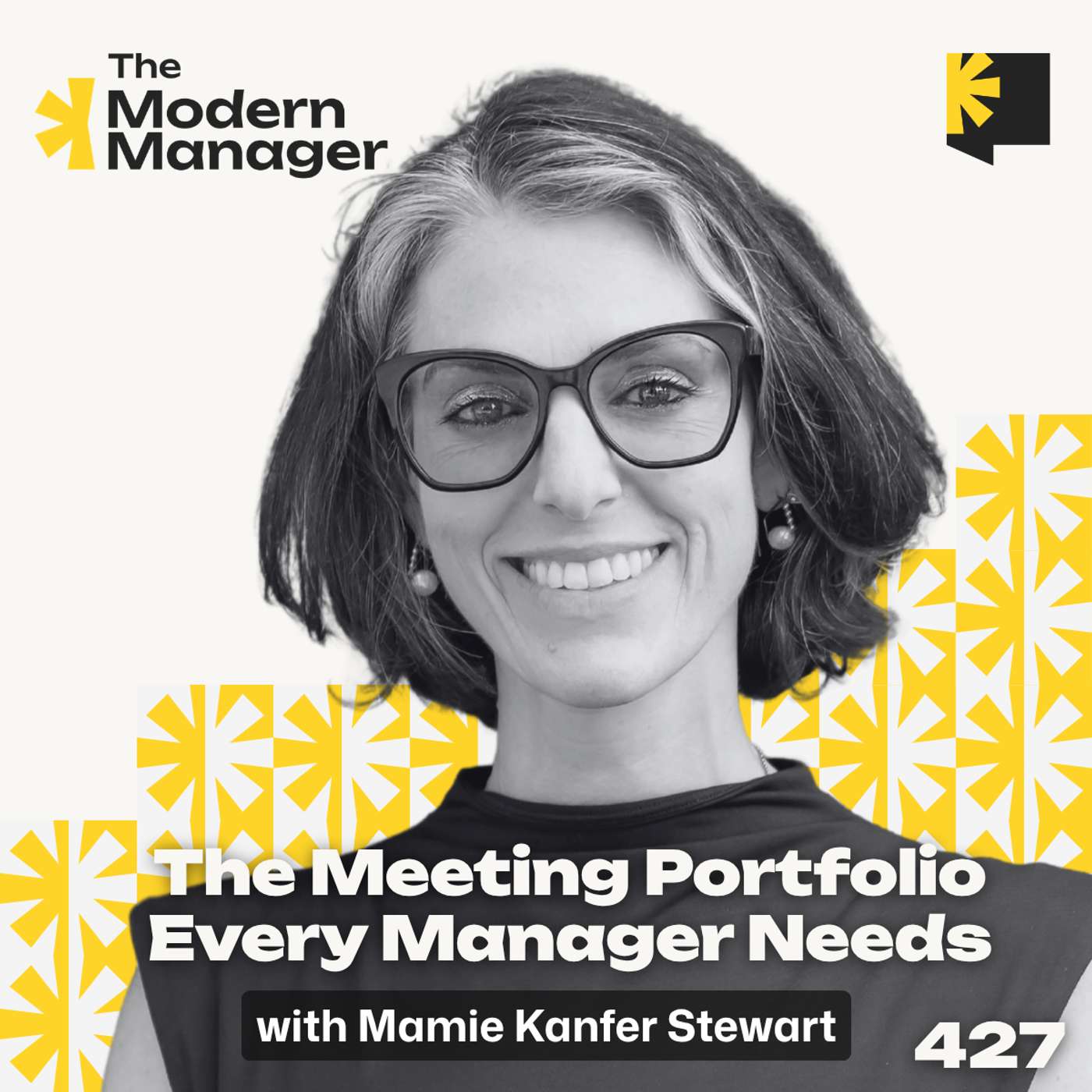
0:33Mamie Kanfer Stewart: Then suddenly it's Tuesday and you have nothing more than a vague sense of what you wanted to accomplish. Or you might have a little bit of an agenda, but it's rough and no one in the room saw it, so they weren't able to prepare. Everyone's just kind of winging it. That is the tax of running meetings the way that most of us do. We design every single one as a one-off, if at all. Hello, and welcome to The Modern Manager. I am Mamie Camper-Stewart, and this episode is about building a meeting portfolio. I know that sounds a little bit like business speak, but hang with me. What that actually means is that you build standardized templates for the meetings that you run regularly.
1:10Mamie Kanfer Stewart: So the next time you need to run that type of meeting, you don't have to start from scratch, and you don't walk in empty-handed. You pull the template off the shelf, and most importantly, you know it's going to be a well-designed meeting because you built it well the first time. And now you just get to use it over and over. No more stressing to prep right before the meeting. No more wondering if this meeting is a good use of time. Now, before we dive in, take a moment to follow the show so that you never miss an episode. And if you found the show helpful, I would be so grateful if you left a rating or review.
1:40Mamie Kanfer Stewart: That is the best way to let other managers know that this show is worth a listen. So here's what I've noticed with a lot of teams that I work with. Most managers run between five and 10 meetings regularly. a weekly team meeting, a one-on-one with each person, a monthly all-hands, a brainstorming session, a project kickoff, an after-action review. You know what I mean. But they do one of two things. Either they treat every single one like it's a one-off, like it's the first time that they've ever run this type of meeting and they need to figure out what they're going to do in it. Or they rely on whatever they did last time and then customize it for this next run.
2:15Mamie Kanfer Stewart: The first approach, it's exhausting. The second approach is better, but it assumes that the last meeting was good to begin with. And the best managers that I've worked with are more intentional. They spend the time upfront to design a meeting really, really well. And then they don't have to think about it. A meeting portfolio eliminates all the uncertainty and makes meeting prep significantly simpler. So let me walk you through how to build one. First, you identify the most common recurring meetings that you have. Again, things like one-on-ones, project kickoffs, postmortems, budget reviews. Then for each meeting type, you create a reusable template.
2:52And there are a few pieces to this. First, give the meeting a clear name that tells everyone exactly what's supposed to happen in that room. Something like problem solving session or project kickoff or one-on-one. The name might not seem like a big deal, but it actually sets the expectation so that everyone who sees it on the calendar instantly knows what they're getting into.
3:12Mamie Kanfer Stewart: Second, write down the purpose. Why does this meeting exist? What does it need to accomplish? If this is a weekly team meeting, is it about realigning on work? Is it about having space for people to bring issues so that the group can problem solve together? Is it for relationship building and motivation? These nuances matter because they are going to guide what comes next, which is creating a consistent structure for the agenda. The way you open, the type of questions you ask in your check-ins, the way that you end with a recap of next steps or decisions, and of course, what happens in the middle.
3:46Mamie Kanfer Stewart: Not just discuss current status, but the specific components. Do you always do a round robin to gather ideas? Do you always ask a specific set of questions? How much time are you allocating to each component? You want this to be as robust as possible so that it can really be your map. It can be your guide to leading the meeting. Then you get to define the pre-work. What needs to happen ahead of time? both what you're going to do as the manager and what you want your meeting participants to do. For example, for a plus delta, you might want them to come having done a reflection on what worked and what didn't with the project.
4:20Or for a quarterly goals alignment, you might want them to come with some up-to-date information on where each goal stands. Do you always send a one-page context before a project kickoff so that people have the background before they walk in? When you pull all of this together, you then have a meeting template, and then you just follow it. every single time. You can always customize a little, but you have the structure to give you a running start. Now, if you want some help to design those meetings so that you know they're built on effective meeting practices, you can get my 10-minute meeting blueprint that helps you prep a meeting agenda in under 10 minutes.
4:54It's an AI prompt that walks you through a guided conversation to design a meeting with a clear outcome, smart pre-work instructions, and a timebox agenda with thoughtful activities. It uses my proven frameworks for designing meetings that are actually productive and engaging. Find that at themodernmanager.com slash meeting blueprint. And now you've got a great starting point. But often I found that teams need to experiment with different meeting components until they land on the optimal one. So you might try an activity and then ask your team for feedback or allocate 10 minutes to something and discover you actually needed 20.
5:28Mamie Kanfer Stewart: If what you designed the first time around doesn't work the way you thought it would, you just adjust it. Say something like, we're going to try it this way and we'll see how it goes. And then the next week, here's what we learned. We're going to try it differently. Let's adjust this one piece. And suddenly you're improving the meeting instead of just reinventing it. Once you've got a meeting that's working, you lock it in. And then you don't need to revisit until something changes and the meeting design is no longer serving you. So here's what I want you to do this week. Pick one meeting that you run regularly.
5:58Could be your one-on-one, could be a team stand-up, could be a brainstorm session. Write down the structure of that meeting. How long is it? Who's usually in the room? What do you usually do? Is there any pre-work or do people just show up? Write all that down and then write down what you want it to be like.
6:15Mamie Kanfer Stewart: What is the actual purpose? What does the meeting need to accomplish? What should people do before they get there? What should happen in the first five minutes? What should happen step-by-step between the start of the meeting and the end of the meeting? And then how do you want the meeting to end? How much time are you allocating for your wrap-up? Once you have all of that written down, save it. That is your template. And then the next time that meeting rolls around, you're not starting from scratch. You pull out what you already designed, you follow it and customize it for the specific situation if needed, and then see what happens.
6:46Ask your team for feedback and adjust. That's fine because you've taken the heavy lifting out of meeting planning. That's what a meeting portfolio does. It turns something that you have to design from scratch into something that you designed once and get to use over and over and over. If you try this, I would love to hear how it goes. You can always find me on LinkedIn or join my newsletter where I share episodes and key takeaways every week. Find that at themodernmanager.com. Thanks again for joining me. Until next time.
Planning an agenda feels like it takes forever, so too often, we skip it or do it poorly at the last minute. But that’s often because we treat each meeting like we’re starting from scratch. Instead, what if you perfected your weekly team meeting, brainstorm session or any other type of meeting you hold regularly and then just used that same agenda structure again so meeting prep becomes fast and easy? That’s called creating a meeting portfolio. This episode breaks down exactly how to design a meeting once, so it works every single time you use it.
Conversation Topics
Additional Resources
Join my newsletter to get episodes and key takeaways delivered directly to your inbox: https://www.themodernmanager.com
The Modern Manager is a leadership podcast that helps you close the gap between knowing what good management is and actually doing it. Follow The Modern Manager on your favorite podcast platform so you never miss an episode!
#Leadership #ManagementTips #MeetingCulture #TeamManagement #Productivity #WorkplaceCulture #MeetingDesign #LeadershipDevelopment