 The New Yorker Radio Hour
9 Oct 2026 · 32m

 Add vo to ChatGPT or Claude to ask about everything you hear
vo listened to this episode to put together the overview and transcript, so there may be the odd mistake.
The episode examines Donald Trump’s escalating hostility toward Canada—tariffs, insults (calling Canada the “51st state” and the prime minister “governor”), and retaliatory Canadian economic measures—framing it as an existential challenge and a potential rupture in the Western alliance.
Chrystia Freeland, former Canadian deputy prime minister (under Justin Trudeau) and former minister of international trade and foreign affairs; previously a journalist covering Ukraine and worked for Reuters and the Financial Times. She is the author of Unreliable Boyfriend.
Trump’s actions aren’t trolling but a strategy to force submission and demonstrate that democracies can be dominated; Canada’s retaliation is “measured” and dollar-for-dollar; the U.S. lacks opposition to Trump’s moves, making the break feel deeper; Freeland argues the Western alliance can be rebuilt and Canada shouldn’t “write America off.”
Canada’s dispute-resolution trade deal; references to NAFTA/USMCA; Carney’s territorial-defense rhetoric; the Trans Mountain pipeline to diversify oil exports; a story of a Canadian security guard urging her to tell Americans “we’re better off without them.”
0:00This show is supported by Odoo. When you buy business software from lots of vendors, the costs add up and it gets complicated and confusing. Odoo solves this. It's a single company that sells a suite of enterprise apps that handles everything from accounting to inventory to sales. Odoo is all connected on a single platform in a simple and affordable way. You can save money without missing out on the features you need. Check out Odoo at O-D-O-O dot com. That's O-D-O-O dot com. The New Yorker Radio Hour is supported by AT &T. We all love to connect via video call, a text, or a group chat that never stops.
0:36And right now, AT &T has a deal that will keep the connection going. You can get the new iPhone 18 Pro for$0 with eligible trade-in. It has the ultimate pro camera system and big leap in battery life. So you can turn this deal into a long-lasting connection. Learn how you can trade-in your phone for the new iPhone 18 Pro at AT &T. Connecting changes everything. Required trade-in of$230 or more and eligible plan. Terms and restrictions apply. Subject to change. Visit an AT &T store for details. The New Yorker Radio Hour is a co-production of WNYC and The New Yorker.
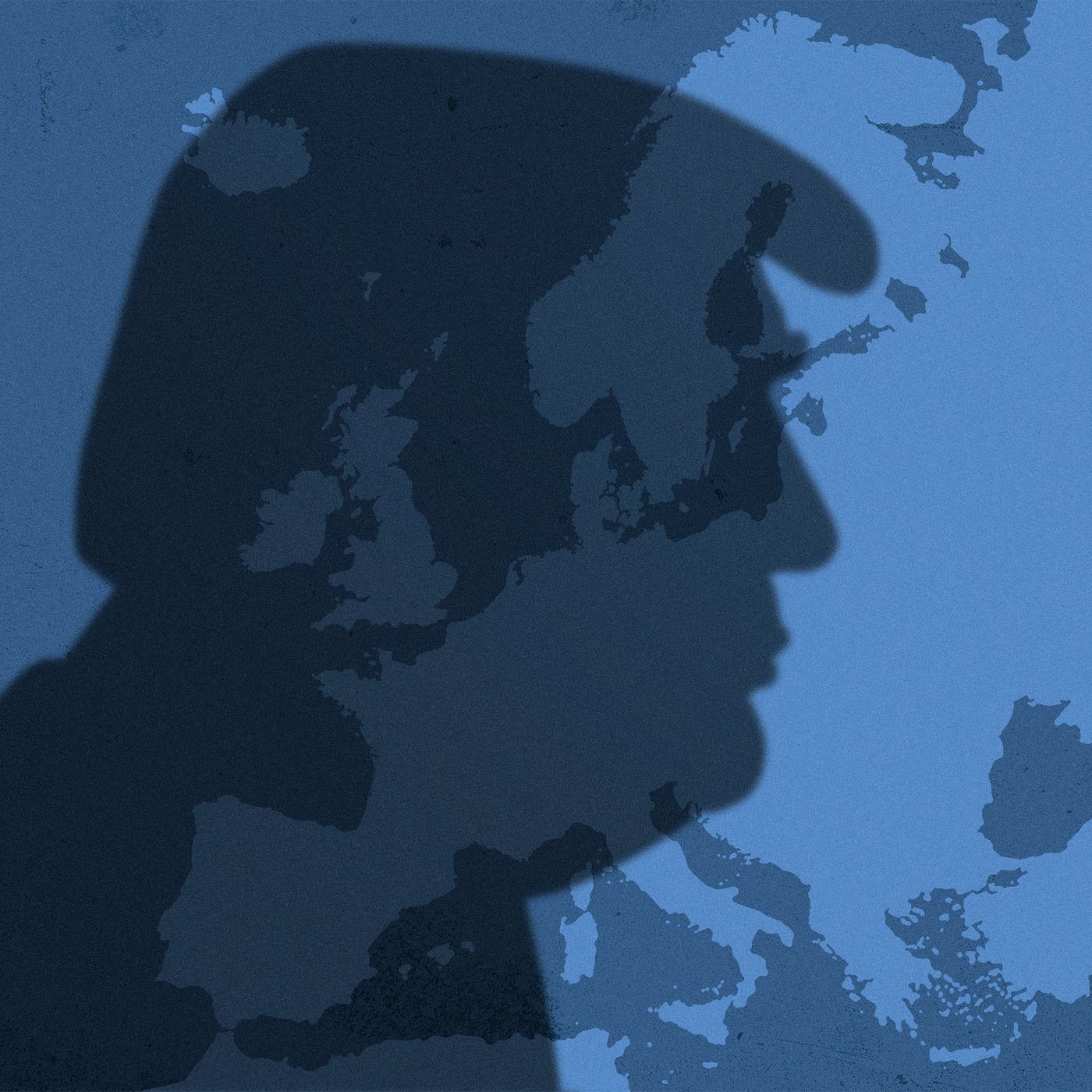
1:14Welcome to the New Yorker Radio Hour. I'm David Remnick. When Donald Trump started calling Canada the 51st state and referring to the Prime Minister as governor, it seemed like his usual trolling sessions. More serious than renaming the Gulf of Mexico, maybe less serious than the threat to take Greenland by force. Trump has said that Canada, quote, doesn't make sense, which even by his standards, doesn't make any sense. It turns out, though, that the president wasn't joking. His tariffs are punishing Canada's economy. He compared Canada unfavorably to China and called it, quote, one of the worst countries in the world, unquote, to deal with.
1:56It's like the bit from the old South Park movie, Come to Life. Should we blame the government or blame society? Or should we blame the images on TV? No, blame Canada! Blame Canada! For their beady little eyes, a-clap their heads on their eyes. But it's no joke for Canadians. They are absolutely furious. They're retaliating economically, and the prime minister, Mark Carney, even said his government is looking at how to prepare for U.S. military action. It would be irresponsible not to, he said. Now one of our top trading partners and closest neighbors is actively seeking allies elsewhere in the world.
2:36So I called up a senior figure in Canadian politics, Chrystia Freeland. Freeland served as the deputy prime minister for five years, and she dealt with the Trump administration very closely. She was the Minister of International Trade and of Foreign Affairs during his first term. Chrystia Freeland's new book about Canada and the U.S. has the evocative title, Unreliable Boyfriend.
3:03Chrystia, there was a time when the idea of U.S.-Canadian relations, it was so friendly and so warm and we didn't think about it almost. And the idea of conflict between the United States and Canada was kind of a source of comedy. In season six of The West Wing, there's a plot in one of the episodes about should we invade Canada? There's some crazy misunderstanding. Christian, how did we get to this point where the president of the United States refers to Canada as the potential 51st state? And he says all kinds of demeaning things about Canada. Did you see this coming? I kind of did see this coming, David.
3:42I was around for Trump one, and we got to a good deal in the end. You know, Trump, before the inauguration, he started talking about 25 % tariffs on all Canadian goods. And then he started calling the prime minister the governor. And I didn't think that was a joke. And I thought we needed to treat this like an existential challenge, which I'm sad to say I've turned out to be right. And it's turned out to be true. And it's turned out to be prolonged. It's not just one of these one-day Trumpian episodes that happens with many other issues. What are the origins, as you see it, of his animosity toward Canada and other traditional allies?
4:25I think he does it because he can. I think he only knows two kinds of relationships, right? A relationship where someone is submitting to him or a relationship with someone who he identifies as a fellow strongman. And, you know, Canada's unfortunate geography right now is we're the country where he wants to show the demonstration effect. He wants to show the world that Canada has to kowtow to him. And, you know, David, you and I both know Russia well and care about Ukraine a lot. And I don't want to draw parallels between Russia, Ukraine and Canada, U.S. lightly. But my analysis of the Russia-Ukrainian relationship was always that Putin needed to dominate Ukraine pour encourager les autres.
5:27You know what I mean? To show he could do it to them so everyone else had to fall in line. And I think there was a further twist to the Putin-Ukraine relationship, which is he wanted to show that democracies could fail. And I do think, very unfortunately, it's not an accident that this administration is going after the democracies with much more hostility than it is going after the authoritarian regimes, with the exception of Iran. Donald Trump recently commented on our trade relationship with Canada, and he said this. Well, they want to have a deal with us. They call us all the time. The problem is that they've treated the United States very unfairly.
6:13They have been one of the worst countries in the entire world. You know, we get along with China, we get along with the people and we make good deals. But Canada has been really very difficult to deal with, actually. Does he have any point that you can acknowledge? Truly, no. Our trade is governed by a trade deal that his administration concluded. Now, are there disputes within that deal? Sure. But the deal provides for a dispute resolution mechanism, which has judges from both sides and some neutral judges. We always abide by the decisions of those panels. I think the thing that makes the president really angry, and look, I am someone who he does not like.
7:02He's called me toxic. He's called me a nasty woman. He said that I don't like America very much. Not true, American listeners. Not true, David. I think what enrages him about Canada is we are a country that has a sense of our self-worth and our dignity. And we really believe in a win-win relationship with the United States. We really believe in compromise. It's like a core Canadian thing. But we will not accept a zero-sum game. We will not accept a position of vassalage. and I actually don't think America should want that. U.S. Secretary of the Treasury, Scott Besson, and I want to talk about him, compared Canada to a little yipping dog when it comes to trade with the U.S.
7:53He said that Carney, the present leader of Canada, came to power on an anti-American, anti-Trump agenda, and he blames him for escalating trade negotiations. Now, you know Scott Besson, and you write about him very sharply in this book. How do you understand these comments, and how do you understand Scott Besson? There are some situations in life, and you and I both as reporters have covered them, where, you know, there are good people on both sides, where it's murky, where it's ambiguous. Often those are the most fun and interesting stories. When it comes to the trade fight between the United States and Canada right now, it really is black and white.
8:38We have a trade deal. We have a trade deal that was negotiated by Donald Trump's administration that he said was the best trade deal ever. And it was a remarkable thing because he supported it. And so did Nancy Pelosi. Tell me one other thing they both agreed on. And it was the Trump administration, the Trump too, totally disregarding that agreement, his own agreement, imposed tariffs on Canada. That's why we're in a conflict. And Canada, in that situation, you have a choice. either you accept an illegal action, you accept a breaking of the deal, or you act in response. And I think Canada is absolutely right to be acting in response.
9:21On the Secretary of the Treasury, it's very hard for me to really understand, actually, because I first met him when he was working for George Soros. And he was so positive about George. And so what is surprising to me, he seems to have embraced this role as full-on mega warrior. One of the things that's not known to me, because I live here in New York, not in Toronto or Montreal, I can sense certainly the animosity that's coming from Canada, the desire to look elsewhere for friends. Mark Carney's political rhetoric is very sharp in reaction to Trump's. What I don't get a sense of is do Canadians, and not that everybody speaks in the same voice, but do they see this as an episode or as a real historical rupture?
10:25Do they think that when Trump ends, Trumpism will end and that everything will go back to status quo anti somehow? Or is Canada really looking for a new possibly European orientation in the world? I think the vast majority of Canadians see this as a rupture. And they think this is it. And they think America is toxic and broken and can never be trusted again. Now, I actually am an outlier because I think we shouldn't write America off quite yet. You know, when you saw the rise of Trump, but then you saw Biden elected, when you saw COVID, and then you saw what came after. I think fixed certainties can change much more quickly than it feels like in the moment.
11:24But in answer to your question, so I was recently traveling from Toronto to, I think it was Boston. And one of the security guards recognized me. And he was very nice. And he said, oh, Minister Freeland, it's great to see you. I haven't seen you for a while. How are you doing? And we chatted. And then he looked at me, he said, why are you traveling to the United States? You know that we're not supposed to go there anymore. And I said, sort of apologetically, I said, I know we're not supposed to go there anymore. And I think that's right. And I think we shouldn't go there frivolously. But I promise you, I'm going there to speak up for Canada.
12:09And he said, okay, but tell those sons of a bitches we're better off without them anyway. Whoa. This is like a security guard at the airport. And that's a widespread sentiment now, Christian. I'm afraid so. Yeah. Describe how else you feel it in your interactions with people in Canada, this new attitude toward the United States. It's not just a technical tariffs question. It's something that's running much deeper. It's the tariffs for sure, but then it's the response to our response. illegal and unjustified tariffs have been imposed on us. We have done what I think is strategically the right thing to do, which is retaliate in a measured way.
12:58It's a dollar for dollar retaliation. We did the same thing during Trump one. And during Trump one, when I announced the Canadian counter tariffs, I said, you know, we will not escalate, but we will not back down. And I said, you know, we're doing this more in sorrow than in anger. I think what makes it feel like a full break is open, explicit and repeated territorial claims on Canada. And then I think what makes people feel that this may be a break we can't come back from is the lack of opposition in the United States. and Canadians love the opinion polls that show that Americans don't like this.
13:47Canadians love the resistance of Minneapolis. You know, if you are from Minneapolis and you want to visit Canada, you should wear a Minneapolis t-shirt and I guarantee you, you will never have to buy your own beer the whole time you're in Canada. Because if they see the polls saying that this is not a popular point of view, if they see that the midterm elections will probably, to some degree or another, go blue. I'm not for a second suggesting that there's no reason for the animosity in Canada toward the United States, but why do you think it's a permanent rupture then? I didn't say I think it's a permanent rupture.
14:26You think it's a rupture for now? Well, I'm actually in a minority in Canada right now in that I think the Western alliance can be rebuilt. And I think we should at least try because for all the challenges of Trump's America, I worry a lot about China. I worry a lot about Russia. And I think sort of the uber challenge in the world today is authoritarian regimes trying to erode and weaken democracies and the Western alliance. You know, I want the Western alliance to come back again, and I hope that it can. Donald Trump said NAFTA, the original NAFTA, Clinton administration, period NAFTA, was a bad deal.
15:15And there's a lot of rethinking of that period. It's what some people call the N-word, neoliberalism, that NAFTA as a pillar of neoliberalism is of a certain period in the 90s. some things were not in the best interests of working people in particular. When you look back at that period, did you reevaluate NAFTA itself to the extent that, to any extent, much less to Donald Trump's extent? 100%. And look, like the Canadian debate around NAFTA was even more intense than the U.S. debate. the Canadian debate was much more about do we want to connect ourselves so closely to many metaphors Pierre Trudeau famously called America the elephant and said always hard to sleep with an elephant even if he's well behaved in my book I call America the unreliable boyfriend so you know that was the Canadian debate the US debate was about workers and I actually have a lot of sympathy with that That wasn't a Canada-U.S.
16:23concern because Canadian workers, we have higher unionization rates, we have very high labor standards, we have very high environmental standards. The concern was competition from Mexican workers. And I do think that critique was right. The good news, like the NAFTA agreement, the one currently kind of in force, KUSMA, USMCA, actually has provisions that accommodate that, has provisions that require that a certain amount of content of NAFTA-qualifying cars be made by high-wage workers. And I think that's great. And I think that is a path forward for trade agreements. Give me a sense of the atmosphere.
17:09When you were with ministers from European countries, democratic countries around the world, and Donald Trump and his ministers and his aides were not in the room, give me a sense of the conversation among the Canadians and the French and the Brits about Donald Trump. What was said and by whom? Well, I'll tell you one story that I think gives you a sense of it. So Cecilia Malmstrom, who was the EU trade commissioner. So Cecilia and I were both negotiating with the Trump administration on trade. And we developed a kind of jokey shorthand. If you went to Washington, we would tell each other and text each other, en route to Mordor.
17:57Cecilia once said to me that Gandalf was traveling to Mordor. That obviously meant Angela Merkel. I thought the Canadians were obviously the hobbits. Small, earnest, but profoundly decent. Europeans were the elves. And I think you know who Sauron was.
18:22I'm speaking with Canadian politician and journalist, Chrystia Freeland. We'll continue in just a moment. This is the New Yorker Radio Hour.
18:41WNYC Studios is supported by Decagon.
19:03AI agents across chat, email, voice, and SMS. They're available 24-7, feel natural to talk to, and can resolve customer requests on their own so businesses can keep up with the requests without losing their personal touch. Decagon plugs directly into your existing systems so agents can get live quickly. And because workflows can be updated using natural language, teams can make changes themselves without long engineering cycles. That means less time spent managing workflows, more time focused on customers, and measurable ROI within weeks. Once live, agents can pull up-to-date information, take action on requests, and understand the context behind any conversation.
19:38Decagon helps power millions of conversations every day for brands you know and love, including Avis, Affirm, Fanatics, and Aura. Ready to transform your customer support? Go to decagon.ai slash newyorker to get a personalized demo and see what Decagon can do for your team. Check Decagon out at decagon.ai slash newyorker. That's decagon.ai slash newyorker. WNYC Studios is supported by Quince. We've all got pieces in our closets that do more work than the others. Pieces you know you can rely on to make you look great and feel so good to wear. And if you're me, those pieces are from Quince. Quince excels at high-quality wardrobe staples made with premium materials like 100 % Mongolian cashmere, organic cotton, and merino wool.
20:22Stylish, dependable staples you can wear on repeat. Best of all, everything at Quince is priced 50 % to 80 % less than similar brands. They work directly with ethical factories and cut out the middlemen, so you're paying for high quality, not brand markup. Quince offers home goods as well, like hotel-quality bedding, thoughtfully designed furniture, and even kitchen essentials. And fall weather means fall cooking. And my German steel chef's knife from Quince is the hero of my kitchen. I can make all my favorite seasonal dishes with ease. Find your next fall favorites at Quince. Download the Quince app for app-exclusive offers or go to Quince.com.
20:55Get free shipping on your order and 365-day returns. Now available in Canada and the UK, too. And when Quince asks where you heard about them, let them know it was Radio Hour. It's the best way to support the show. WNYC Studios is supported by Hero Bread. Summer's finally winding down, and as I gear up for the busy fall season, I want to make sure my health goals don't fall by the wayside. And that's why I love Hero Bread. Hero Bread helps me stick to my schedule and my macros target without sacrificing flavor. I can toast up a bagel for breakfast, a grab-and-go wrap for lunch, and keep the whole family satisfied with Hero Noodles for dinner while keeping my net carbs low and my fiber and protein numbers up.
21:34And when I need a little treat, Hero's got me there too, with decadent pastries like their 5-gram net carb shortbread biscuits, perfect for a mid-afternoon pick-me-up but without the sugar crash. And unlike some products that make big promises but taste like packing material, Hero Bread actually has the flavor and texture you're looking for in a comfort food. Bread that tastes like bread, not cardboard. so you can indulge with confidence knowing you're getting 11 to 32 grams of fiber with just 0 to 5 net carbs and 0 grams of sugar. Wrap your summer up right. Get it? Wrap? See what I did there?
22:05Hero Bread is offering 10 % off your order. Go to hero.co and use code NEWYORKER at checkout. That's code NEWYORKER at H-E-R-O dot C-O. I'm Emily Flake, cartoonist at The New Yorker. The New Yorker Radio Hour is supported by HomeServe. So, you're finally a homeowner, and it feels so good. Right up until the first time your pipes burst and you realize that there's no landlord, there's no super, there's just you. When I bought my house, that's when I learned regular homeowner's insurance usually doesn't cover a lot of the day-to-day wear and tear. And in my case, with a house that's over 120 years old, that's a lot of surprises waiting to happen.
22:43That's where HomeServe comes in. It's like a subscription for your home. For as little as$4.99 a month, they've got your back. They've got you covered for all the fiddly little things. Damaged electrical outlets, broken light switches, septic line or water heater repair, Homeserve has helped homeowners for over 20 years with a trusted national network of 2 ,600 local contractors. And now it's your turn. Join the millions of customers who trust Homeserve. For 50 % less your first year, go to Homeserve.com. This is the New Yorker Radio Hour. I'm David Remnick, and I've been speaking with the Canadian politician, Chrystia Freeland, a former deputy prime minister who negotiated trade deals with the Trump administration.
23:24Freeland and I go way back. Before she ever entered politics, she was a journalist, and she covered Ukraine in the late Soviet period while I was posted in Moscow. And she attracted quite a bit of attention from the KGB while she was doing so. Freeland went on to work for the Toronto Globe and Mail, for Reuters, and eventually for the Financial Times in New York. Then she went to work for the government. So, Christian, for a brief period of time in our lives, we had a somewhat parallel track. You were a reporter, I was a reporter. And at a certain point, you did what is considered almost verboten among our tribe, among journalists.
24:01You entered, wait for it, trumpets blaring ominously, politics. Why did you do it? And how did it change your view of the world? Well, I did it really because Justin Trudeau asked me to. And there were lots of reasons that I ultimately agreed. But probably it boils down to the fact he was really nice to my dad at my book launch. If I'm really honest with myself. Wait, you got into politics because Justin Trudeau, and you do write about this in your book, because he was nice to your dad at the book party? My dad was like one of the few people in Canada who didn't know him who thought Trudeau was going to make it.
24:42He wanted to meet him. And then my dad loved ideas, loved politics, didn't have that many people to talk with about these ideas. Like everyone in town already knew what Don thought. And afterwards, I said to Trudeau, who I didn't know, I was like, I'm sorry, no one came to save you. And he was just so great. And he said, you know, no, your dad was great. I don't meet very many liberals from northern Alberta. It was good to hear from him. You were very close to Justin Trudeau. That relationship did not stay in the same place. It eroded. Why? Yeah, look, I wouldn't say we were ever close at a personal level, if you know what I mean.
25:23Like, we were never friends. We wouldn't, like, have supper with our spouses together or anything like that. Right. You know, I'm not sure what happened on the prime minister's side. But then ultimately two things happened. One, he wanted to fire me and I had to decide whether I wanted to accept that or not. And I guess this is the thing about politics, right? Like when you're making decisions, they're not just about you. They're not just about you and your career and what might be good for your career and what you might personally want. If you're Deputy Prime Minister and Finance Minister, as I was, you have to think about what are the consequences of this for the people I represent.
26:11And that's what made it hard. That's, I guess, David, you've led me to what is maybe the hardest thing about politics is you're a human being with human emotions and desires and feelings about other people and feelings about yourself. But, you know, if you are a minister of the crown, if you are a deputy prime minister, you have to try to set those aside and try to think what's the right thing to do for the country. And also, you sometimes don't know until 10 years later what was right and what was wrong. And you have to be able to make compromises. You have to find ways to survive politically, to be in a position to do what's right for the country.
27:00But it's hard. One thing that reporters and editors generally don't do is they don't stand for election. There's not like either before parliament or the people. And I think we have a picture of what winning might be like because we see the victory celebration and so on. Losing sounds like a miserable experience. after Trudeau resigned as prime minister, you ran for the leadership of your party and you lost to the current prime minister, Mark Carney, and he got 86 % of the vote. Tell me about that. It's a painful experience. Tell me about that. Yeah, look, losing, there is no way around it. It is terrible.
27:45And I feel like, you know, I made some choices that were not fantastic for my personal political career. But in the sort of dark hours of the night, I don't berate myself for having failed Canada. And that is like a powerful comfort. What was the dark path? What's the dark path you're referring to, Christian? Oh, the dark path would have been had Pierre Paulyev been elected prime minister. That would have been dark indeed. Yeah, it would have been terrible for Canada. And had I not resigned from the Trudeau government, it's hard for me to see a path where Poliev was not elected. A friend of mine once said to me, when making life decisions, this is kind of a dark way of looking at it, but when making life decisions, think about what you would like to appear in your obit.
28:41If a line in my obit is, she resigned as deputy prime minister, and that was an action that made it possible for Pierre Paulyev to lose and Mark Carney to be elected prime minister, I would be really happy to have that line in my obit. You're okay with that? So more than okay. I would be glad to have that in my obit. America to now watching the current prime minister, Mark Carney, and we particularly pay attention when he speaks about us, because after all, as you know, Christian, it's all about us. And he is extremely popular, never more so than when he's given speeches, you know, in defiance of, I would say, quiet defiance, restrained Canadian defiance, but defiance nevertheless.
29:30Will that popularity sustain itself? Okay, so here I have to just admit I am fiercely partisan. I'm a partisan liberal. I'm a patriotic Canadian. And I really like Mark. I've known him longer than anybody in Canadian politics. He's my son's godfather. And I think he's doing a fantastic job. Really outstanding. But help us understand Carney's strategy of confrontation with the United States. What is it that he will say and do? and what will he not say and do? How do you analyze the way he's handled himself in all of this? I think a leader is successful if he or she is channeling what people really want.
30:21And I think that that is what Mark is doing right now. I think in big struggles, a country is successful when the country wants the right thing. And then if it's lucky enough to have a leader who understands what the country wants and can express it. And again, I'm going to go back to Ukraine now. A good friend of mine, a guy called Boris Gudjak, who is the Archbishop of the Ukrainian Catholic Church, lives in Philadelphia. He said, people outside Ukraine see Zelensky's greatness, and he is great. But people inside Ukraine recognize that the real greatness is the people of Ukraine. And Zelensky's power is he's able to express it.
31:09And I don't think Mark would disagree if I were to say the greatness of Canada right now is Canadians. and Canada is lucky to have a leader who understands and recognizes that and is able to express it. Like, I'm so proud of Canadians. Canadians understand that their sovereignty matters and they are prepared to suffer economic pain to stand up for their sovereignty. Stephen Harper, who is a conservative former Canadian prime minister, said very early on in Trump too, that Canada should be prepared to endure any level of economic damage in order to defend our sovereignty. Let me ask you about that question of sovereignty and pain.
32:03Just recently, Mark Carney announced a new pipeline meant to export crude oil to markets in Asia, away from the United States. And that could generate billions and billions of dollars and GDP for Canada. Is there a future where Canada just doesn't need to export oil to the United States at all? And can Canada manage without much of an economic relationship with the United States? Or is that just dreamland? On the pipeline front, one of the things I'm proud of as finance minister that I did is I built a pipeline. I mean, not with my own hands, but it was something that the government bought a pipeline And we concluded the construction of that pipeline while I was minister.
32:49And that is the Trans Mountain Pipeline to the West Coast. And the entire theory of the building of that pipeline was to diversify Canada's exports from the U.S. Canadian Western crude trades at a discount to Texas or Brent because Canada has fewer places to sell its oil. So this is a longstanding Canadian strategy. It's hard because we're so close to the United States and also because the U.S. is so dynamic and such a robustly growing economy and so appealing. But what I will say, David, and here I am at odds with what I think is the Canadian view right now. I don't think we should give up on America.
33:38I really don't. I don't think we should write America off. I think the Western alliance will be much stronger if America rejoins the Western alliance. I hope that Canada's actions are going to help regular Americans recognize that their country is on the wrong path right now. And a lot of people will say there's no path back for America. I don't believe that. I really think there should be a path back for America. And I hope America chooses that path. You know, what the world is watching, and especially what America's allies are watching, is what are regular Americans doing and saying? What are journalists doing and saying?
34:32What are editors saying? What are heads of universities saying? What are business leaders saying? I'm actually so proud. I consider myself still a journalist. I don't know if you think I should be kicked out of the tribe for having— Out of the guild? Out of the guild for having flirted with politics. But I think that the way that journalists stood up to the White House is absolutely brilliant. I would love to see law firms do the same thing. I would love to see universities do the same thing. I'd love to see businesses do the same thing and show that kind of solidarity. and I am hopeful that we will see more of that.
35:08I don't know. Did you see Jamie Dimon's piece in the Wall Street Journal this week? You did not? That's the CEO of, I think, the biggest bank in the United States. I predict the piece that Jamie Dimon published in the Wall Street Journal this week is the beginning of business breaking with mega. But my God, not a moment too soon. For sure. It would have been nice earlier. Yeah. But it's a big moment, and I give Jamie a lot of credit. It's carefully written. It's not explicitly hostile to the administration in any way. Right. But it is explicitly hostile to America First, and it explicitly calls for the rebuilding of the Western alliance, which I agree with.
35:53I think we need that. Christopher Freeland, thank you so much. My pleasure.
36:01Christia Freeland was Deputy Prime Minister of Canada under Justin Trudeau. Her new book about the U.S.-Canada relationship is called Unreliable Boyfriend.
36:15On the ballot next month in California, there's a wealth tax measure that's up for vote. It would tax just a couple of hundred billionaires, actual billionaires. So you might, well, you might think this is an easy win for Democrats. But the wealth tax turns out to be enormously divisive. It's seen as a bellwether progressive issue. So what happens with this in California could matter to the rest of the party nationally. Our reporter Nicholas Lemon joins me on the next episode of our podcast, and he'll explain why. I hope you'll join us.
36:52The New Yorker Radio Hour is a co-production of WNYC and The New Yorker. Our theme music was composed and performed by Meryl Garbus of Tune Yards, with additional music by Louis Mitchell and Jared Paul. This episode was produced by Max Balton, Adam Howard, Erica Huang, David Krasnow, Jeffrey Masters, Louis Mitchell, Jared Paul, and Ursula Sommer, with guidance from Emily Botin. The New Yorker Radio Hour is supported in part by the Charina Endowment Fund.
37:46like Tiwa Savage, LoJ, Ruga, and SARS. Join us as we unpack how AfroBits became a global cultural force. Subscribe to AfroBits Intelligence on Apple Podcasts, Spotify, YouTube, or wherever you listen.
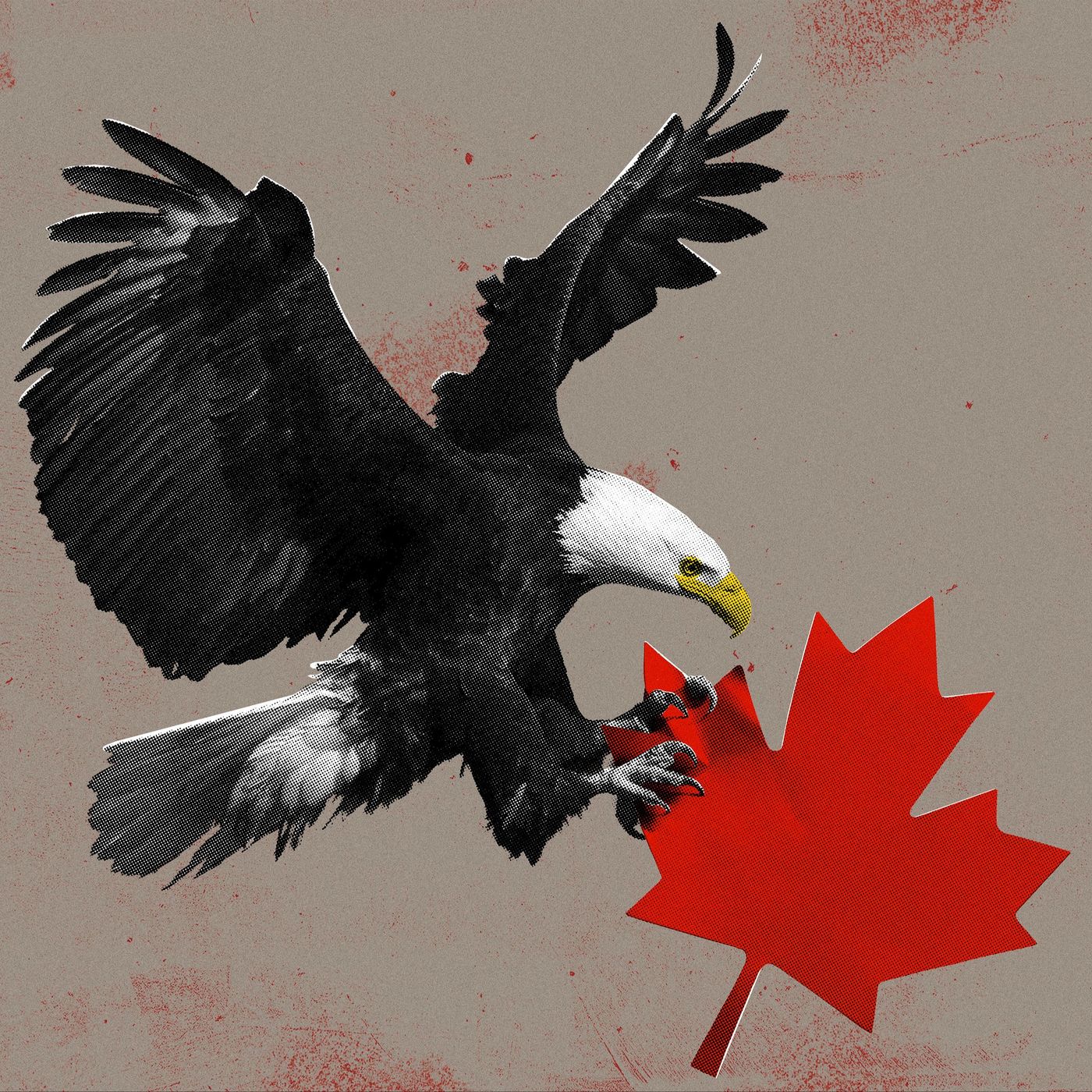
The economic punishment and threats of aggression that Donald Trump has launched against Canada are so severe that its government has looked at how to prepare for U.S. military action. David Remnick sits down with a former senior Canadian politician, Chrystia Freeland, to talk about the disintegration of a rock-solid partnership. Freeland served as the Deputy Prime Minister under Justin Trudeau, and has also held the roles of Minister of International Trade and Minister of Foreign Affairs; she helped negotiate a trade deal in Trump’s first term, which he subsequently broke. Freeland’s new book about the U.S.-Canada relationship is called “Unreliable Boyfriend,” but that title may soft-pedal it. “The vast majority of Canadians see this as a rupture” that will be permanent, she tells Remnick. “They think America is toxic and broken and can never be trusted again. . . . I actually am an outlier, because I think we shouldn’t write America off quite yet.”
Further reading:
New episodes of The New Yorker Radio Hour drop every Tuesday and Friday. Join host David Remnick as he discusses the latest in politics, news, and current events in conversation with political leaders, newsmakers, innovators, New Yorker staff writers, authors, actors, and musicians.
Hosted by Simplecast, an AdsWizz company. See pcm.adswizz.com for information about our collection and use of personal data for advertising.
Scan the code with your iPhone camera
Listen in the app.