 The New Yorker Radio Hour
1 Nov 2026 · 18m

 Add vo to ChatGPT or Claude to ask about everything you hear
vo listened to this episode to put together the overview and transcript, so there may be the odd mistake.
The episode discusses how Donald Trump’s administration is allegedly trying to disrupt or undermine the upcoming midterm elections, focusing on DOJ actions to control voter rolls and preempt election certification.
DOJ demanded unredacted electronic voter rolls from all 50 states; it allegedly made incorrect non-citizen claims (e.g., Nevada’s 16,000 claim narrowed to 185 names, later found to be U.S. citizens). Barton Gelman argues DOJ has lost 27 straight similar cases (0–27), citing separation-of-powers limits. Notable examples include Utah’s lieutenant governor Deidre Henderson refusing to cooperate and facing death threats, and DOJ lawsuits in California and Alaska that Gelman calls meritless and potentially aimed at post-election fraud narratives.
Barton Gelman, a New Yorker reporter and former Brennan Center for Justice researcher, interviewed by David Remnick.
0:00WNYC supporters include Live Right, publishers of John U. Bacon's New York Times bestseller, The Gales of November, a chronicle of the S.S. Edmund Fitzgerald's 1975 shipwreck. Never has it been told better than by Mr. Bacon in this colorful book, writes John J. Miller of the Wall Street Journal, while author Hampton Sides proclaims that it's destined to be a classic. The Gales of November, now in paperback. The New Yorker Radio Hour is a co-production of WNYC and The New Yorker.
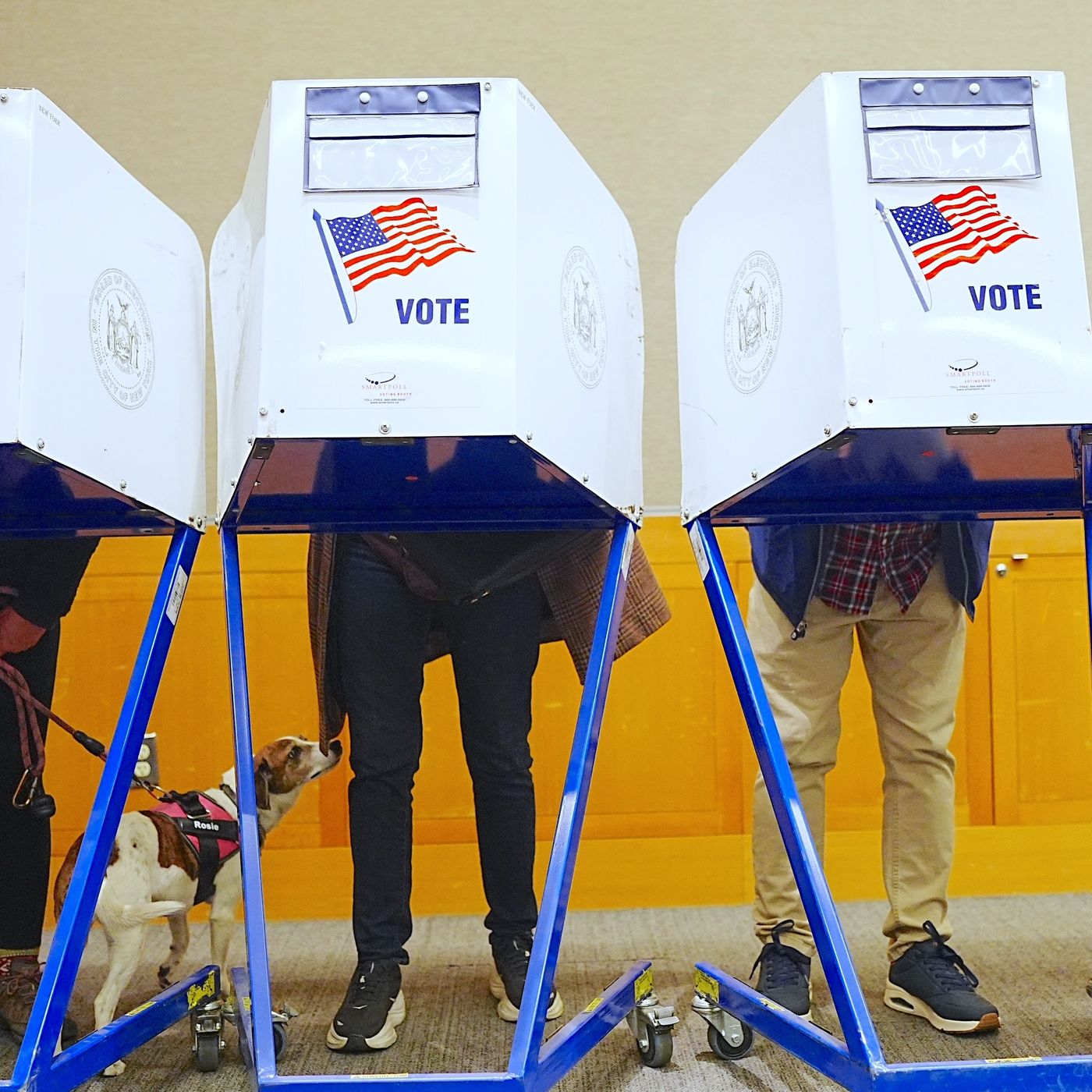
0:35This is The New Yorker Radio Hour. I'm David Remnick. Speculation about the midterms has reached a real fever pitch as the final stretch is now upon us. And amid all the predictions about which party will emerge triumphant and by how much, there's also been some alarm. Will it be a free and fair election? As soon as Trump returned to office, he began making moves to create disruption, demanding private voter data from states, threatening election officials with jail time, and even seizing ballots from prior elections to investigate alleged fraud. And while so far none of the White House's efforts have threatened to really significantly alter the results, the Department of Justice has hinted that there's more to come.
1:21Attorney General Todd Blanche has not ruled out using force of law to prevent election certifications. It's not DOJ's intention to, and it's never our intention, to improperly interfere with elections or the state confirmation process or certification process. But, you know, to say that there's no circumstances that we would ever do that, of course I'm not going to say that. The Justice Department has already filed a lawsuit against officials in Alaska before a single vote has even been counted. We've got a really interesting story about election interference in The New Yorker this week, and it's from the reporter Barton Gelman.
1:57And I asked Bart Gelman just how concerned we ought to be. So, big picture, I'm not terribly anxious, because a huge amount of what the president and his people tried to do came in advance of the election. They made a lot of extraordinary efforts, some of them plainly unlawful, to tilt the playing field. And they have largely failed up until now. Well, give me the instances of what he's tried so far and what has been blocked by, for want of a better word, the system. You had a vigorous effort by the Justice Department initially to decide who gets to vote. The Justice Department demanded of all 50 states that they hand over their full electronic voter rolls.
2:49And then as it gradually emerged, the Justice Department would sift through them and then come back and tell the states, the following people on your rolls are ineligible because we say so. These are categories of people or individuals and how would they do that? They would have done individuals. They never said how they would do it, but they have purported many times to be able to say that, for example, hundreds of thousands of people are on the voter rolls nationally who are non-citizens, which is, you know, wild fantasy. Here's an example. In Nevada, they said that there were 16 ,000 ineligible non-citizens on the Nevada rolls.
3:32Then Nevada said, what are you talking about? They produced 185 names, which they said they had hand-checked. Nevada then, in September, announced that it had looked through, and each of the 185 was a United States citizen. So the Trump administration has been making sort of wildly incorrect claims. It sounds pretty lame, the effort, this time around. Well, that's the thing. In our story, in The New Yorker, we quote David Becker, who's a longtime voting rights lawyer, and he said the efforts were lame. He said they were conflicting and incompetent. He said it was a combination of malevolence and incompetence.
4:14You know, over and over again, we point to institutions that have, you know, kind of turned tail, that have been chickened, that have bent the knee, to use all the cliches of the last few years, whether it's law firms or universities or various institutions around the country. Here it's possible to say that there were some heroic actions, people who did their job, namely judges. Can you give an example of where the federal government through the Justice Department made a challenge that was in the end lame and the court stood up? What would be a good example of that? Well, I mean, here's the thing.
4:51The Justice Department sued 30 state chief election officers. So far, 27 of those cases have led to rulings. The Justice Department is zero and 27. It has lost every single case. It has appealed a bunch of them. One has already gone to appeal. They lost that too. Now, it is unlikely that ever in the history of the U.S. Justice Department has the U.S. government lost 27 cases in a row of the same kind. And they are battling over and over and over again and continuing to battle and continuing to appeal. And the attorney general, Todd Blanche, has said he may bring this to the Supreme Court. Now, that's a little bit odd if you think of it in terms of the midterms because it's way too late to the election rolls.
5:39First of all, lots of states are already voting. But second of all, there's a law that says you can't do mass changes to the voter registration lists within 90 days of an election. And so my conclusion is that they're thinking ahead to 2028 and still hoping that some, you know, wild long shot will come through for them and they'll be able to purge voter rolls for the presidential election. Do you think it's possible that if the midterms turn out poorly for Donald Trump, that part of the reason, ironically, is the election denial, you know, oath of fealty? I do think that. First of all, I think that there are demonstrably a substantial number of voters, even voters who voted for him in 2024, who don't like the election denial.
6:30They just rolled their eyes and vote for him anyway. They did. But will they do it again? And will they do it with their state and district candidates for the Senate and the House? But also, the more he tries to suppress the vote, the more there is a backlash. And the more likely it is that people say, no, I want my vote counted. And I'm going to make the extra effort to get to the polls on Election Day. And we're seeing that already with early voting. I'm speaking with Barton Gelman about his reporting in The New Yorker this week. More in a moment.
7:12This podcast is supported by Quince. I'm Emily Flake, cartoonist at The New Yorker. The best pieces in your closet are the ones you can count on, no matter where your day takes you. And with the busy holiday season right around the corner, Quince makes it easy to find that best piece for everyone on your list. Quince focuses on high-quality staples made with premium materials, like 100 % Mongolian cashmere, 14-karat gold, washable silk, and Italian leather. All timeless, versatile pieces that make gorgeous, thoughtful gifts. Everything at Quince is priced 50-80 % less than similar brands. They work directly with ethical factories and cut out the middlemen, so you can give luxury-quality pieces without the luxury price tag.
7:53I got the Mulberry Silk Beauty Sleep Mask. It's been a game-changer. I'm getting one for everyone I know who could use a better night's sleep. So, basically, everyone I know. And Quince has so much more than clothing. Think fine jewelry, leather bags, hotel-quality bedding, chef-grade cookware, and five-star luggage. No matter who's on your list this year, Quince has just the thing to make their holidays special. Give the gift of quality this holiday season. Download the Quince app for app-exclusive offers or go to quince.com. Get free shipping on your order and 365-day returns. Now available in Canada and the UK, too.
8:26And when Quince asks where you heard about them, let them know it was Radio Hour. It's the best way to support the show. This is Eric Glass. On This American Life, one thing we like is a good mystery. Sometimes about really big things, things you hear in the news. But most times, the little mysteries are the best. Our lost and found is currently filled with pants. I don't know. I've never seen this happen. I've got skirts. I've got shorts. Wait, this is true? This is true. Mysteries of every size each week. This American Life, wherever you get your podcasts.
9:07Bart, I called you some months ago, having read your journalism on this very subject in The Atlantic, and I know that you've been working for the Brennan Center at NYU for some time. And the question was how to approach this story. And when you told me that I think I want to do it through the politics of Utah, why did you decide to concentrate your reporting efforts on Utah? A couple of reasons. One is it is – I totally get your first reaction. Utah sounds like an unlikely place for a conflict with the president. Utah has been represented exclusively by Republicans in Washington for longer than I can recall.
9:54In 2025, a federal judge imposed a new redistricting on Utah. So there is now a relatively safe Democratic district. Every seat counts in this fight for the House. And so there's a reason to fight about Utah now. Kamala Harris beat Donald Trump by 10 points, I think, in Salt Lake County. And that's the first congressional district in Utah. And second of all, Utah has a remarkable lieutenant governor. That's Deidre Henderson, who's a lieutenant governor. Exactly. Dieter Henderson. So tell me about the conflict there. Well, the conflict is that the Justice Department came to Dieter Henderson, as it did in all the other states, and said, please hand over a full, unredacted copy of your electronic voting rolls, and then later said, so that we can clean them for you.
10:46They were that blunt about it. You know, look, here's what their proposal was. Their proposal was, we will analyze your voter rolls. We will come up with a list of discrepancies and problems and ineligible voters, et cetera, et cetera, et cetera. And does the Justice Department have a right to do this? If, in fact, the Constitution guarantees the states the responsibility of dealing with elections, what role does the DOJ have? Zero. That's why there's zero for 27 in court. Right. A representative opinion by Judge David Carter in California in one of the identical cases said that the government's position, quote, wholly disregarded the separation of powers.
11:30It's a made-up claim of authority. So this conflict had what effect on the lieutenant governor's life? Well, she's in a reliably red state. It is a mix of mega Republicans and less than mega Republicans. I mean, it's a Romney state and it's also a Mike Lee state. She has been all her life a conservative Republican. But the election conspiracists and election deniers very much did not like her refusal to cooperate with the Trump administration on voting. Accused her of being a traitor and an election cheater. And she was flooded with death threats. and, because she's a woman, grotesque threats of sexual violence against herself and her family.
12:21And this is somebody I think, well, most lieutenant governors have ambition to be governor. I think she wants to be governor. How will that affect her political fortunes? So I asked her two days in a row because I didn't like the answer the first time. And I got the same answer the second time. She said, I don't know, and I don't care, and I know you don't believe me. So this is a person, wait for it, of principle. She is a person of principle. I think she is absolutely willing to lose the governor's election if this position disqualifies her in the eyes of the voters. But I quote a very interesting political analyst in the story who says that she is strategically poking the bear, that by standing up for Utah's independence and Utah's integrity in conducting the vote and in Utah's desire not to give up deeply personal information about every voter to the federal government in Washington, She is appealing to an important political constituency in Utah, and this may possibly turn out to be a winner for her.
13:30Now, the Trump administration has claimed in another state, in California, that it has 20 ,000, quote, likely non-citizens on its voter rolls. The DOJ charged 28 immigrants in California. That's 28 green card holders with election-related charges. How has California responded? California has said your lawsuit not only lacks merit, but it's honestly absurd. The lawsuit in California, and you know, I'm not a lawyer and I have no crystal ball, but I would put a bet on this, is going to fail. Partly for the same reason that all of the lawsuits about the voter rolls have failed, which is that the federal government has no lawful role in deciding who gets to vote in California.
14:15But also for about 20 other reasons because this lawsuit is even more, I'll say, unusual. I mean the things that the Trump administration wants to do, which is to set aside and not count 20 ,000 mail votes, is not only beyond the power of the federal government. It's against the law for the state to do it. Honestly, I think it is more setting the stage for a post-election argument about why the election was a hoax and a fraud and shouldn't count. You know, Todd Blanche, the attorney general, has said he won't rule out intervening in the midterms despite all these losses in the courts. Voting is underway.
14:59The DOJ is suing Alaska in an effort to preemptively block election certification if the Republican incumbent loses. What do you make of the Alaska lawsuit? I don't know how many different ways to say meritless. So the voting roll suits, they've lost zero for 27. The California case is even more extraordinary, and the Alaska goes beyond that. Why is that? Because it's outcome-oriented. it. It's saying that you should refuse to certify, that you judge should order that the certification of the election be blocked if and only if the Republican loses. There's no possible precedent for that case. The Trump administration is now asking a federal court to overrule the state authority when, again, the Constitution says the state's in charge of elections.
16:00So what is left for Donald Trump? Does he have any other mechanisms, any other tricks, any other legal recourse that he can challenge the ballot on the midterm elections? And looking forward to 2028, is it just smooth sailing? So when you're dealing with a president whose central political message has been about election fraud, the suspense is never entirely over. There are people who are worried because Trump's lieutenants have quite deliberately tried to make them worried that ICE agents will be deployed at the polls. And the fear is not that they're going to deter illegal aliens from voting because illegal aliens, undocumented people, aren't allowed to vote.
16:50The fear is that there are many people, especially Latinos, who have been witness to a great deal of ICE violence in their communities. And there are many people in the Latino community who are living in what they call mixed status families. That is to say they have relatives who are here who might be subject to deportation and they're afraid of coming to the attention even though they're citizens of ICE at all. And so it's intimidating. But people should know that it is a crime under federal law to deploy troops or armed people in the vicinity of polling places. The experts I talk to don't believe that the Trump administration is actually going to do it.
17:30They're trying to get the effect by scaring people in advance. And there are a lot of lawyers standing by with pre-printed court interventions to get them out of there if they do come. And I will say one more thing about this. It is quite possible that the threat of ICE deployments is going to spark a counter move, a counter reaction, a backlash among voters who say, how dare you? I'm not going to be deterred. I'm going to come to the polls. There was just some leaked audio that came to light in which Mike Rogers, who's running against Abdul El-Sayed in Michigan, talked about an effort to send off-duty or retired law enforcement officers to polls in Detroit.
18:17And he said this, go ahead, try to intimidate them. Steve Bannon has called for federal agents at the polls. Now, how likely is all this? This has been something that Republican operatives have talked about doing and to some extent have actually done for many decades, actually. For a long time, for example, the state of New Jersey was under a court supervision to make sure that no intimidating law enforcement-looking people came to the polls there. I don't think it's actually going to happen on any substantial scale. I think that courts will eject those folks if they do try to come. And I think that election officials are now, unfortunately, very experienced with all the different ways they can be intimidated.
19:13And they are pre-briefed and they know what to do. A rare note of optimism when the talk is about politics on the New Yorker Radio Hour. Thanks so much. Thanks for having me.
19:51performed by Meryl Garbus of Tune Yards, with additional music by Louis Mitchell and Jared Paul. This episode was produced by Max Balton, Adam Howard, Erica Huang, David Krasnow, Jeffrey Masters, Louis Mitchell, Jared Paul, and Ursula Sommer, with guidance from Emily Botin. And we had assistance this week from Pran Bandy. The New Yorker Radio Hour is supported in part by the Cherena Endowment Fund.
20:23In the 1960s, the federal government embarked on a huge experiment. It was groundbreaking at the time. The goal? To figure out the best ways to teach. They evaluated different philosophies of education. One approach stood above the rest. Seven plus how many equals eleven? Ten plus four! But a lot of people didn't like it. One educator is called the approach totalitarian. On the new season of Sold a Story, we investigate why. Follow Sold A Story in your podcast app.
Amid all the prognostication about which party will emerge triumphant during the midterms, there has also been increasing alarm: Will it be a free and fair election? As soon as Donald Trump returned to office, he began making moves to create disruption—demanding private voter data from states, threatening election officials with jail time, and even seizing ballots from prior elections to investigate alleged fraud. And although, so far, none of the White House’s efforts have threatened to significantly alter the results, the Department of Justice has hinted that there is more to come. The U.S. Attorney General, Todd Blanche, has not ruled out using the force of law to prevent election certifications. Furthermore, a lawsuit from the Trump Administration against the State of Alaska is already under way, before a single vote has even been counted. The reporter Barton Gellman and David Remnick discuss the threats to the midterm elections and Gellman’s new piece, “The State Officials Defending the Midterms from the President.”
Further reading:
New episodes of The New Yorker Radio Hour drop every Tuesday and Friday. Join host David Remnick as he discusses the latest in politics, news, and current events in conversation with political leaders, newsmakers, innovators, New Yorker staff writers, authors, actors, and musicians.
Hosted by Simplecast, an AdsWizz company. See pcm.adswizz.com for information about our collection and use of personal data for advertising.
Scan the code with your iPhone camera
Listen in the app.