 The New Yorker Radio Hour
20 Oct 2026 · 26m

 Add vo to ChatGPT or Claude to ask about everything you hear
vo listened to this episode to put together the overview and transcript, so there may be the odd mistake.
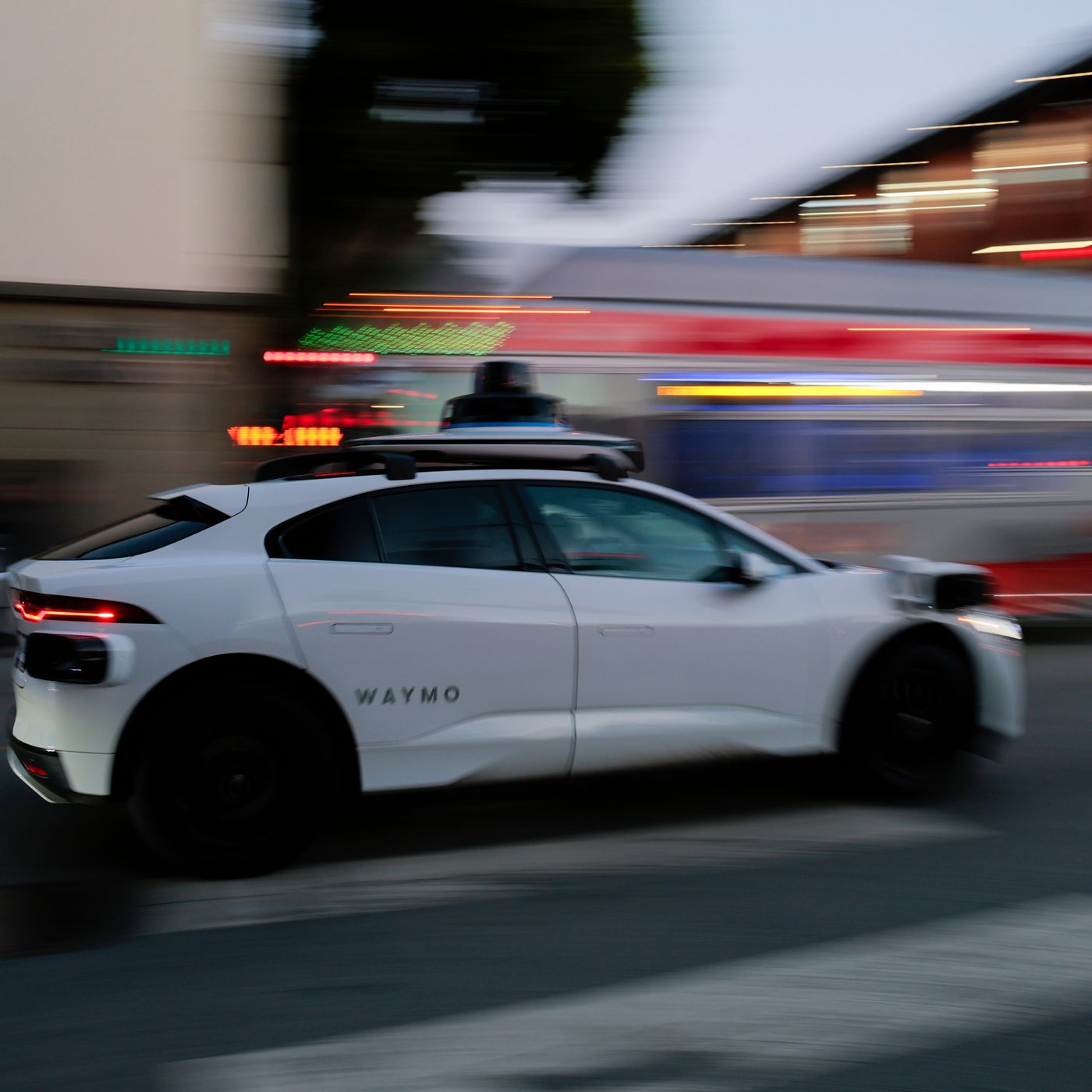
Molly Fisher reports on Waymo’s driverless taxis and the cultural, safety, and labor implications of replacing human drivers. She describes her June trip in San Francisco using the Waymo app, notes customer preferences for no in-car chatter or harassment, and explores “edge cases” where robots struggle.
Molly Fisher is a New Yorker staff writer who has reported on Waymo, including riding a Waymo in San Francisco while researching the story.
Waymo’s appeal is partly “isolated” self-sufficiency (music/temperature without talking). Robot errors differ from human ones; Waymo has trouble with varied school-bus stop signs and with emergency-vehicle interactions. Safety comparisons are complicated, though Waymo cites “10 times safer” injury-causing crash figures. Remote human support exists (about 70 people), but details are limited.
attacks on a Waymo in San Francisco; Waymos allegedly blocking emergency vehicles during an Austin mass shooting; school-bus stop-sign recognition failures.
0:02The New Yorker Radio Hour is a co-production of WNYC and The New Yorker. This is The New Yorker Radio Hour. I'm David Remnick. Hailing a taxi, getting into a car with a total stranger, trusting that he or she is going to get you, where are you going? Well, that's a quintessential big city experience. It used to be pretty rare outside of big cities, but rideshares like Uber have made it familiar around the country. What about getting into a cab with nobody in it? The driver's seat is empty, the steering wheel is turning as though there was a ghost. I can't think of a more uncanny experience, and I haven't been in one yet, and I'm not sure I intend to.
0:44The company that's putting these driverless cabs on the road is called Waymo, and as of now, there are about 4 ,000 nationwide. Staff writer Molly Fisher has been reporting on Waymo, and she lived to tell the tale. Molly, you have a big piece out this week in The New Yorker on Waymo and the phenomenon that's sweeping the country, I assume starting in the West Coast. What made you want to write about this? Well, I initially came to it through some writing I was doing about Zoran Mamdani and his time as the new mayor of New York City. And there was a lot of suspense around the question of what Zoran would do about the cabbies because he's had this longstanding alliance with New York City's cab drivers.
1:27And the fact that Waymo was looking to come into New York City seemed to present a real conundrum for him because, you know, it's this technology that's really exciting to a lot of people. It has a lot of promise in terms of improving road safety, but it also is something that in a very visible, concrete way is in a position to replace people's jobs. And so that was sort of my entry point, but it ended up becoming a much smaller piece than I anticipated of the article as a whole, in part because, you know, the question of when and how Waymo might actually arrive in New York has sort of been tabled for the moment, but also because I just became fascinated with all of the human weirdness around these cars.
2:08When was the first time you ever stepped into a Waymo? I stepped into a Waymo in San Francisco in June of this year while reporting this story. I took Caltrain, the commuter rail that runs up the San Francisco Peninsula, from my mother's home in San Jose to San Francisco. I opened the Waymo app that I had just downloaded, and lo, a car arrived and I climbed in. It was kind of shocking, actually, to realize how in stride I took this experience. You know, it made me appreciate my own kind of passivity when it comes to climbing into cars. The editors of the New Yorker must be horrible bastards to make you get in a car with no driver.
2:49Well, well, well, no. But here's the thing. You know, you say that, and yet no driver is exactly what customers want. I mean, I'm not speaking so much for myself here necessarily, but one of the things that really struck me was just that Waymo is very keen to talk about the power. you know, understandably the sophistication of its automated driving system. You know, it's able to do this incredibly complex task with an impressive degree of reliability and with what they tout as pretty impressive safety statistics. But what customers overwhelmingly told me they liked about this technology was the fact that there was not going to be someone else in the car, you know.
3:28They don't want the chatting. They don't want the chatting. They don't want to smell someone else's food. They want to control the music and the temperature without having to talk to someone else. You know, it's very much of a piece with the kind of Silicon Valley mindset of enabling people to order food without calling another person on the phone, enabling people to watch a movie without going to a theater. You know, it's all about this kind of isolated, bowling for alone, self-sufficiency that you can kind of cast as a broader trend in American life. What about the weirdness factor? Let's not cut the weirdness short.
4:01You get in a car and there's no one behind the wheel. But the wheel is turning. The wheel is there and it's turning, which kind of adds to the uncanniness. Okay, that adds to the weirdness factor. Yeah. You write in your piece, human drivers make human mistakes. Robot drivers make robot ones. What are the robot mistakes that you learned about while reporting this piece? Well, one robot mistake that's proved really vexing for Waymo is trying to understand and correctly respond to the stop signs on school buses. You know, when a school bus has stopped and it's, you know, letting kids on or off, a stop sign will pop out on the side.
4:41And, you know, drivers in both directions are supposed to stop and wait for that to be done so that kids stay totally safe and, you know, no one's driving. There's no traffic going by as kids are disembarking. And Waymos have had a lot of trouble with that one. And they've put out various fixes for this and it, you know, has not seemed to take. But the hypothesis I heard was that, you know, there are a lot of kinds of stop signs out there. Like there are stop signs that, you know, maybe a construction worker is holding at a construction site. Or there's a stop sign that's in the hand of a crossing guard and is kind of, you know, held loosely at their side while they're waiting by the side of the street corner.
5:15There are stop signs, of course, that are your classic normal stop signs planted by the road. And for the Waymo to get enough training data basically on the school bus stop signs, they'd have to pass a lot of school bus stop signs to know that they are responding correctly to that very particular instance as opposed to a stop sign by the side of the street. In the end, what we want to know that's so basic is a Waymo safer. Getting in a Waymo taxi, for example, is that safer than getting in a regular old taxi? Well, what I have to say, I worry will sound like I'm dodging the question, but the reality is that the answer to that question is really complicated because there are a lot of different ways you can define safety.
5:54And there are also, even when you try to reduce it to something as seemingly straightforward as crash statistics, there are a lot of ways to define those numbers and set up your statistics to kind of compensate for different things in different ways. Because you're trying to arrive at a comparison between human drivers on the road and the Waymo driver. And that involves making a lot of choices because, you know, for example, we know that cars that are old are less safe than cars that are very new. And there are a lot of old cars on the street. So, you know, if Waymos are all pretty new, to make a really parallel comparison, you'd want to just be comparing the new Waymos to other new cars.
6:34But, of course, that's not the reality on the street. So that skews things a little bit. There are a lot of minute choices that go into making the sausage of these statistics. And it's hard to arrive at something that everyone can agree is accurate. That said, Waymo does seem to have very promising figures for how they compare to a typical human driver when it comes to injury-causing crashes. They like to say that they are 10 times safer than a human driver. And while for a host of reasons it's hard to definitively prove or disprove that, it does seem to be a figure that's been received with, you know, some degree of approval.
7:11And people find it promising at core experts in the field. What's the geography of Waymos? Where am I going to find them most around the country and around the world? You'd certainly find them most in the Sun Belt, which shouldn't be surprising just because these are places where there's not a lot of scary weather to contend with. You know, the Waymos are not at this point, I think, understood to be equipped to deal with serious snow or, you know, even in some cases rain has been tricky historically. Much less black ice. Oh, yeah. I would be concerned. No, so they've been by far the most prevalent in places like Austin, Texas, in the Bay Area, of course, in Los Angeles, in now parts of Florida and Georgia and Southern California.
8:00And you're seeing them in that swath of the country. But now there's certainly interest in testing vehicles and trying to expand to places like New York or Boston or Washington, D.C. or London or Tokyo. And those cities that I mentioned have not gone into effect yet. You know, you can't yet download the app and hop in a Waymo in New York or Boston or D.C. But that certainly is what the company would like to do and where they'd like to be. But if I'm in less populated areas of the states, if I'm in central Colorado or Nebraska, I'm not going to see any Waymos around. Nobody's interested. No, you're not.
8:36It's just it can't work or people aren't interested? it. Well, it's kind of an interesting irony because I think, you know, I've heard people who are, you know, sometimes Waymo critics or Waymo skeptics to some degree observe that there could be real value in an autonomous vehicle in, say, you know, a rural area of a state where there's not transportation infrastructure, where maybe you have like old people who have to travel a long distance to get to their doctor's appointments. If you could dispatch a robot car to ferry them around, that could be great. But in a place like Midtown Manhattan, where there are already a lot of transit options, you know, it's less clear that Waymo is filling an obvious need.
9:16But of course, you know, Midtown Manhattan is the place where you go to make money and where you go to kind of be something that has the image that they want to have and is serving the clientele that they want to serve. What about around the world? Am I going to see a lot of this in tech forward cities like Seoul or Tokyo? I think that seems like it's certainly where the company would like to be. I mean, they right now are testing in Tokyo. And last time I looked at the Waymo Jobs page, hiring a number of roles in Tokyo. So something to look out for, for sure. Is the world that's envisioned here a world without drivers at all from coast to coast, or is it just for the purposes of supplementing public transportation in urban areas?
9:58It's a good question. I mean, you know, I think that that's, I think it would take long enough to dissuade all people from driving ever that no one is imagining that's something that's on the immediate horizon. But one of the two co-CEOs of Waymo has talked about, you know, envisioning driving as something that you do when you want to do it in a future where these cars are more prevalent. You know, something that you could do in the way that perhaps someone today rides horses as a hobby. You could be someone who drives as a hobby. But, you know, that's probably a long way off. Do truck drivers have reason to fear for their jobs?
10:35Waymo specifically is not a threat to truck drivers, but there are other companies out there and there have been other startups that are focused more on autonomous trucking. And certainly the Teamsters have been one of the big anti-Waymo, anti-autonomous vehicle voices as different local governments have tackled the question of whether to permit these cars in their cities, in their states. The unions that represent drivers of trucks and also drivers of taxis and rideshare vehicles have been really, really concerned about what this might portend for their workforce. Who owns Waymo and is it a competitive business?
11:13Google owns Waymo for the most part. They started Waymo. Waymo was originally the Google self-driving car project. It was a team of Google engineers kind of noodling around with Priuses that you could buy at a dealership and that they had then outfitted with all kinds of crazy sensors. But now it is a separate thing. It has its own shingle out in Mountain View. And it is and is not a competitive business in the sense that there are a number of other companies that are interested in doing this. Zoox is the Amazon self-driving car operation. Tesla, of course, is trying to do its own robo-taxis and cybercabs.
11:53There are a number of people who are interested in this. But it's also true that Waymo is out pretty far ahead of all these other competitors. They have just a vastly larger fleet in vastly more places than anyone else to the point that, you know, I'd heard some people in my conversations with sort of New York transit expert people talk about anxieties that, you know, if you were to regulate and permit Waymo in the state at this point, it would practically, it would in effect be granting them a monopoly just because they are the only people that would be able to fulfill the kinds of requirements you might place on a company to demonstrate that it had done X number of miles, had proved itself on X number of metrics.
12:33You know, they kind of are definitely leading the pack at this juncture. Now, for a while there, Elon Musk seemed to be the only person really talking about self-driving cars. But I think what you're telling me is Tesla has somehow fallen behind Waymo, which is mainly a Google-owned situation. How did he fall behind? Well, I mean, they're pursuing a different business model. Their focus is, you know, notwithstanding some robo-taxi service, cyber cab service in places like Austin, primarily they are concentrating on privately owned vehicles. So, you know, you can go out and buy a Tesla in a way that you cannot go out and buy a Waymo.
13:11So that is kind of a different proposition and means that, you know, you're approaching your clientele and your growth in a different way. I think it's also true that Tesla has run into some trouble with the way that it markets and describes its technology. Tesla describes what it offers as a self-driving vehicle, when in fact it's, you know, something that does still require that a person be sitting in the front seat and ready to take over if something goes awry. And so that's, you know, significantly different than what a provider like Waymo is offering, where they are comfortable sending these cars out fully without someone behind the wheel.
13:49Well, let's think of it in terms of jobs as we're thinking about AI in general, too. Let's say that Waymo really spreads across the country and becomes at least ubiquitous in cities. I'm sure it's impossible to come up with exact numbers, but how many drivers do you think will be put out of work by Waymo? It's not something, and the company is very keen to point this out, you know, it's not something that represents, you know, a switch being flipped and then immediately all the drivers are out of work. I think clearly there will still be, you know, no matter what, no matter how good this technology gets and how successfully it's marketed, cases where people do want and need another person in the car.
14:28For example, you know, people who need help getting in or out of a car, people who perhaps use a wheelchair or for another reason, you know, want to have a driver there to assist them. But that becomes a much smaller business then. Potentially, potentially, yeah, sure. I mean, I think that, you know, on one hand, there's the practical, concrete question of how many jobs could become obsolete if this technology becomes truly entrenched. But then beyond that, there's also this sort of more vibes-based, perhaps, thing that's going on where even people who are not necessarily granularly concerned about the labor question around Waymo are still sort of balking sometimes at the, I guess, optics, you could say, or against the idea of a company coming in and putting humans out of work or doing things that, you know, were once done by humans.
15:20And I think that that's something that even for people who wouldn't necessarily talk about their concerns in terms of labor questions, you know, you start to see in places where Waymos are prevalent, where people do feel like it's a certain kind of statement to, like, arrive at a bar in a Waymo as opposed to an Uber. You're kind of putting yourself out there as someone who is pro-technology, pro-Silicon Valley, pro kind of, you know, this kind of automation in a way that feels like it's a little bit of a cultural signal at this point and in this moment. I'm speaking with staff writer Molly Fisher.
15:53More in a moment.
16:02WNYC Studios is supported by Wayfair. I'm New Yorker cartoonist Jason Adam Katzenstein, and I'm here to tell you that it is not a chic Brooklyn one-bedroom artist's apartment without a stylish rug. My Parthenia Red Area Rug is from Wayfair. It's stylish, it's cozy, it's perfect for early autumn evenings when I want to have a few friends over and accept all the compliments about my decor. I can personally attest that Wayfair helps you turn your apartment into a home. At Wayfair, you can shop thousands of products across every style and budget. There are more than 20 million verified five-star reviews to help you buy with confidence.
16:41Plus, Wayfair Rewards members get 5 % back on every purchase. Transform your space with pieces that hold up to real life. Join Wayfair Rewards today and get 5 % back on every purchase. Head to Wayfair.com or shop the Wayfair app for all things home. That's W-A-Y-F-A-I-R dot com. Wayfair, every style, every home. WNYC Studios is supported by Quince. We've all got pieces in our closets that do more work than the others. Pieces you know you can rely on to make you look great and feel so good to wear. And if you're me, those pieces are from Quince. Quince excels at high-quality wardrobe staples made with premium materials like 100 % Mongolian cashmere, organic cotton, and merino wool, stylish, dependable staples you can wear on repeat.
17:28Best of all, everything at Quince is priced 50 % to 80 % less than similar brands. They work directly with ethical factories and cut out the middlemen, so you're paying for high quality, not brand markup. Quince offers home goods as well, like hotel-quality bedding, thoughtfully designed furniture, and even kitchen essentials. And fall weather means fall cooking. and my German steel chef's knife from Quince is the hero of my kitchen. I can make all my favorite seasonal dishes with ease. Find your next 12 favorites at Quince. Download the Quince app for app-exclusive offers or go to Quince.com.
17:59Get free shipping on your order and 365-day returns. Now available in Canada and the UK, too. And when Quince asks where you heard about them, let them know it was Radio Hour. It's the best way to support the show. I'm Emily Flake, cartoonist at The New Yorker. The New Yorker Radio Hour is supported by Ramp. Think about the last expense report you filed, the receipt you couldn't find, the category you guessed at, the email from finance asking about a coffee three weeks ago. What if I told you none of that needs to exist anymore? With Ramp, expenses submit themselves. Just text or email your receipt and Ramp categorizes, codes, and submits it for you.
18:33When you book business travel with Ramp, they find the best flights and hotels you're actually allowed to book. No more finding out a month later that your hotel is only partially covered, whatever that means. Ramp is the only finance platform that employees and finance teams both rave about. More than 70 ,000 organizations from family farms to the largest Fortune 100s have saved over$12 billion with Ramp. And as a freelancer, I can tell you that I love it when my clients use Ramp. It makes invoicing a snap and it means I get paid in a timely manner without the headaches. Time is money. Save both with Ramp.
19:06New customers get$250 off at ramp.com slash radio hour. Go to ramp.com slash radio hour. Ramp.com slash radio hour. I'm Emily Flake, cartoonist at The New Yorker. The New Yorker Radio Hour is supported by Bombas. It's finally cozy season, my favorite time of year. That means crisp mornings, fresh cool air, and dressing in layers. Bombas makes your comfiest fall staples, so you can make the most out of this glorious time. I love the feeling of opening my sock drawer and seeing all my Bombas and knowing there's a perfect pair for wherever I'm going that day. And it's not just socks. Bombas makes t-shirts, camis, and even underwear, so your first layer can be your most comfortable.
19:48They've even got slippers if you just want to stay cozy at home. And the best part about Bombas? For every item you purchase, they donate an essential clothing item to someone facing housing insecurity. One purchased equals one donated, with over 200 million donations and counting. Head over to Bombas.com slash RadioHour and use code RadioHour for 20 % off your first purchase. That's B-O-M-B-A-S dot com slash RadioHour. Code RadioHour at checkout.
20:19What's the most frightening story you heard about Waymo's? Oh, gosh. Well, you know, I think the most frightening stories that I heard had to do with the very quality that attracts people to Waymo in the first place, which is, as I mentioned, you know, the idea that you are in a driverless vehicle. You're in a car where there's not necessarily going to be another person in there in the front seat, not necessarily going to be someone else who is kind of an outside authority or supervisor or someone who's able to take control and help you navigate a difficult situation. And so some of the incidents that I heard about and that I talked to the people who had experienced them about had to do with, you know, in one case, a man who was riding in a Waymo late at night in San Francisco.
21:08And two men approached the car and began using what he remembers as something like a pipe, you know, something big and hard and heavy to hit the windshield and hit the windows. And they started climbing on top of the car. And he was terrified. He was alone in this car. It was, you know, the glass was starting to crack on the windshield. And when he called Waymo support, they basically said that they couldn't move the car because it was obstructed. You know, there were people on it. So, like, the Waymo is programmed to not drive through people. What was happening? Was it a robbery or was it like a Waymo jack?
21:40No. Well, it seemed to be an attack on the Waymo. What he remembers is seeing them, like, climb on top of the car as if they were trying to attack the LiDAR. And, you know, the LiDAR is used to help the Waymo see its environment. It has a number of different kinds of sensors, you know. The most distinctive part of the appearance for sure is the lighter that spins on top in a dome on the car. And the police eventually came. He was sitting there for about a half hour. But he realized that, you know, if he had been in this car with a driver, the driver would have gotten him out of there. You know, if you have a human driver, they will figure out a way to, you know, manage a totally freaky, unexpected circumstance like that.
22:22So I think the idea that isolation is something we want and isolation is also something that scares us when we realize we're alone in our circumstances is one that I really took to heart because it does feel like – I mean when you think about also the people who put their kids in Waymos, which is something that is technically not allowed in San Francisco but also pretty widespread. Right. The idea, you know, as a parent of putting my kid in a car where there was no one else in the car and just knowing that, you know, not through any fault of the car or through any, you know, misdeed or problem necessarily, they could get stuck somewhere.
22:59Something could, you know, something could go wrong unexpectedly. And the idea of a child or someone else who, you know, is limited in their ability to navigate that being alone is pretty scary to me. Well, in Austin, there was a mass shooting in Austin, Texas. And weirdly, a number of Waymo's blocked the emergency vehicles from getting to the site of the disaster. What did Waymo learn from this? Why did it happen in the first place? Yeah, well, this is a real problem that Waymo has to contend with right now. And I know that in San Francisco, for example, the mayor has been pretty pro-Waymo for a long time had been someone who was a proponent of this technology and of supporting tech in the city and has recently called for more regulation in part because of incidents where Waymos were interacting poorly with emergency vehicles, were limiting first responders' ability to do their jobs.
23:53So, like, the company certainly knows that this is something that it needs to work on and that people are seeing it fall short. But I think this is, again, coming back to the fact that, But, you know, when you don't have a human being who's able to make judgments in the moment behind the wheel, you run into what is called an edge case, which is to say something that is kind of on the edge of Waymo's ability to, you know, navigate its typical circumstances. And so an emergency vehicle is not something you're going to have to contend with. A mass shooting is not something you're going to have to contend with almost ever when you're on the road.
24:28But, you know, if you are a human, you're going to be able to make choices that accommodate that circumstance in an appropriate way. And the Waymo driver is not necessarily capable of doing that reliably quite yet. Well, in some circumstances, it's assuring to have a human being, even though you don't know who the hell a human being is behind the wheel. Indeed. But in some cases, I think people would prefer not to have it. And notoriously, Uber has had some very negative headlines about drivers, about the rate of sexual misconduct and assault. And here you have no driver at all. Is Waymo assertively going after Uber and Lyft and the other ride shares with human drivers?
25:13Yeah. Yeah, I mean, I think certainly they recognize that women and other people as well having difficult experiences with rideshare drivers is a real problem in an area where they have a real advantage to offer. I mean I spoke to many women and have read accounts from many other women who have described this as being a real part of what appeals to them about something like a Waymo is that they don't want to have to deal with harassment or with innuendos or just with the fact of giving a man who they don't know their home address, say. Like I think that that is understandably something that is disconcerting to people.
25:54You know, at the same time, I did speak to a woman who, you know, described herself as being really, really cautious about that stuff to me. You know, who said that when she gets in an Uber, she, like, gives them a pickup address down the block from her house because she doesn't want to, you know, give out her home address. She's someone who, like, thinks really carefully about safety and is really cautious and had a really terrifying experience of sexual assault with a man she got into the Waymo with who had called the Waymo, which was something that was only possible because there was not a driver there.
26:25And she thinks that, you know, he chose a driverless car because he was looking for an opportunity to assault her. Jesus. Yeah. Yeah. Finally, I want to know this. When I see a movie like The Taking of Pelham 1, 2, 3, both the early version and the later version, one of the cool things about it is that a subway rider somehow realizes that somewhere elsewhere in the city there's a kind of skunk works. There's a central command. They know where all the subways are and where they're going and how fast and Denzel Washington and or Walter Matthau is trying to deal with all this. By the way, great movie, both versions.
27:03I get into a Waymo. Okay, I know what's not there. There's no driver. But who knows where the hell I am? And is there a kind of command center for Waymo that, you know, is following me and making sure I don't, you know, end up in a disaster? Not in the same centralized way you're picturing for the New York City subway, for example. Waymo does have people through subcontractors who are located remotely and, you know, do jobs that include responding to customer inquiries or problems on the road. So, you know, if your Waymo is stuck, if you are having trouble getting the doors to open, there's a customer service agent basically who you can call and who will help you with that.
27:43There are also people who are able to respond to inquiries from the driving system itself. So if the driving system finds itself in a situation that it doesn't know quite how to navigate, you know, for example, a traffic light is out and it's trying to figure out how and when to proceed, it can, you know, what the company calls this is like something like phone a friend. It can phone a friend who's located perhaps in the U.S., perhaps in the Philippines. You know, there are a number of call centers and organizations for people who are handling this. And from there, you know, the human can sort of provide some direction.
28:16The company has been pretty cagey about this in terms of what they're willing to reveal to the public. I mean, because, you know, people are understandably uncomfortable with the idea of someone being able to watch them while they're on the road. This all seems pretty disconcerting to a lot of people. So I think they are pretty tight-lipped about what that actually looks like. In response to a Senate inquiry earlier this year, they did say that they have about 70 of these people on duty at any given time and that they are located in several locations in the U.S. as well as in the Philippines. And that's – there's not a lot beyond that that has been publicly established about what the company does in terms of remote operations.
28:58All right, Molly, here's the moment of truth. Next time you're in San Francisco and you're not on assignment, are you getting in a Waymo or are you getting in a cab or are you getting around some other way? I'm probably getting in an Uber for better or worse. You know, I don't feel great about that, but I think that— You're not sold yet.
29:18Oh, who knows? I might do it. I might do it if I had my son with me. He's intrigued by the robot cars. He's heard me talk a lot about robot cars. And so I think the novelty for, you know, a three-and-a-half-year-old would probably be strong. I feel comfortable with that. The things we do for our children. Molly Fisher, thanks so much. Thank you. The title of Molly Fisher's piece is, We're Learning to Live with Waymos. It's Going Weird. You can find it at newyorker.com and you can subscribe to The New Yorker there as well. newyorker.com I'm David Remnick. That's The New Yorker Radio Hour for today.
29:53Thanks so much for listening. See you next time. The New Yorker Radio Hour is a co-production of WNYC and The New Yorker. Our theme music was composed and performed by Meryl Garbus of Tune Yards, with additional music by Louis Mitchell and Jared Paul. This episode was produced by Max Balton, Adam Howard, Erica Huang, David Krasnow, Jeffrey Masters, Louis Mitchell, Jared Paul, and Ursula Sommer, with guidance from Emily Botin. The New Yorker Radio Hour is supported in part by the Charina Endowment Fund.
30:33My name is Madeline Barron. I'm a journalist for The New Yorker. I focus on stories where powerful people or institutions are doing something that's harming people or harming someone or something in some way. And so my job is to report that so exhaustively that we can reveal what's actually going on and present it to the public. You know, for us at In the Dark, we're paying equal attention to the reporting and the storytelling. And we felt a real kinship with The New Yorker, like the combination of the deeply reported stories that The New Yorker is known for, but also the quality of those stories, the attention to narrative.
31:16if I could give you only one reason to subscribe to the New Yorker it would be maybe this is not the answer you're looking for but I just don't think that there is any other magazine in America that combines so many different types of things into a single issue as a New Yorker you know like you have poetry you have theater reviews you have restaurant recommendations, which for some reason I read even though I don't live in New York City. And all of those things are great, but I haven't even mentioned like the other half of the magazine, which is deeply reported stories that honestly are the first things that I read.
31:53You know, I'm a big fan of gymnastics and people will say, oh, we're so lucky to live in the era of Simone Biles, which I agree. We're also so lucky to live in the era of Lawrence Wright, Jane Mayer, Ronan Farrow, Patrick Radden Keefe. And so to me, it's like I can't imagine not reading these writers.
32:15You can have all the journalism, the fiction, the film, book, and TV reviews, all the cartoons, just by going right now to newyorker.com slash dark. Plus, there's an incredible archive, a century's worth of award-winning work just waiting for you. That's newyorker.com slash dark. And thanks. you
A Waymo offers a unique experience: you ride as a passenger behind or next to an empty driver’s seat, the steering wheel turning as though handled by a ghost. The New Yorker staff writer Molly Fischer has been reporting on Waymo, and she tells David Remnick that though the statistics are hard to parse, Waymos appear to be safer than cars driven by humans. Fans of Waymo prefer not putting themselves in the temporary custody of a stranger, but, Fischer says, this appeal is precisely what makes Waymos’ glitches scariest. Now that her reporting is done, Remnick wants to know: Would she take one of the robot taxis by choice?
Further reading:
“We’re Learning to Live with Waymos. It’s Going Weird,” by Molly Fischer
“Waymo Cars, Honey Bears, and the Future of San Francisco,” by Anna Wiener
New episodes of The New Yorker Radio Hour drop every Tuesday and Friday. Join host David Remnick as he discusses the latest in politics, news, and current events in conversation with political leaders, newsmakers, innovators, New Yorker staff writers, authors, actors, and musicians.
Hosted by Simplecast, an AdsWizz company. See pcm.adswizz.com for information about our collection and use of personal data for advertising.
Scan the code with your iPhone camera
Listen in the app.