 The New Yorker Radio Hour
13 Oct 2026 · 18m

 Add vo to ChatGPT or Claude to ask about everything you hear
vo listened to this episode to put together the overview and transcript, so there may be the odd mistake.
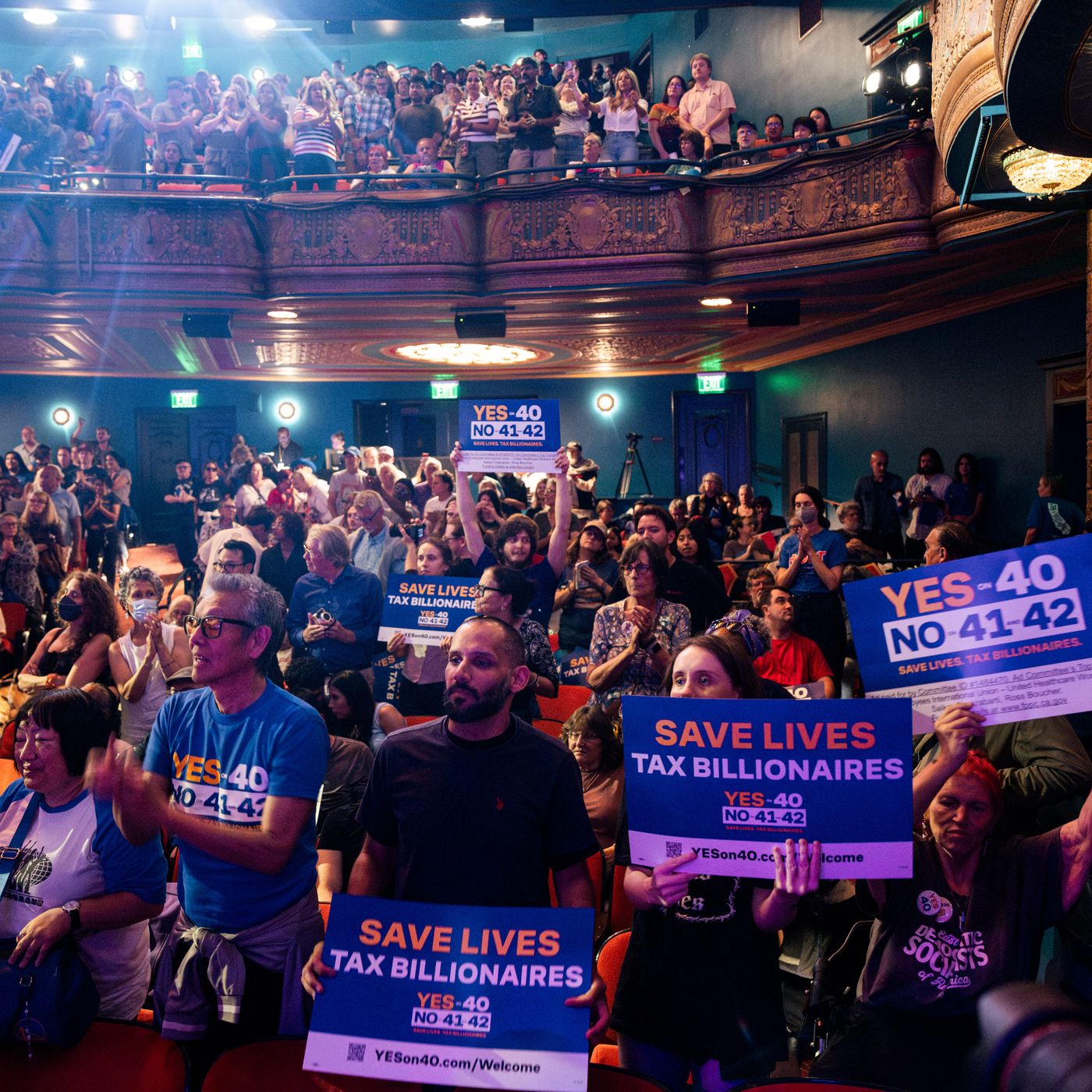
California’s Proposition 40, a midterm ballot measure imposing a 5% wealth tax on individuals with more than $1 billion, framed as a one-time billionaire tax to fund healthcare. The episode explains why it’s a “bellwether” progressive test and why support is weaker than expected.
Nicholas Lemann, New Yorker staff writer reporting on the measure’s politics. David Remnick hosts. Mentioned figures include Sergey Brin (Google co-founder), union leader Dave Regan (SEIU/AHW), Rep. Ro Khanna (Silicon Valley district), and economists Thomas Piketty, Gabriel Zuckman, and Emmanuel Saez.
Billionaires will fund a heavy defeat campaign and argue they’ll leave California; Democratic leaders and many unions are hesitant. Proposition 40’s organized support is limited despite general pro-wealth-tax sentiment.
Brin’s reported $100M+ personal spending; Regan’s union-backed plan to route revenues to hospitals; polling gaps between support for “wealth tax in principle” and support for Prop 40; prediction markets showing ~30% odds.
0:00The New Yorker Radio Hour is supported by AT &T. We all love to connect via video call, a text, or a group chat that never stops. And right now, AT &T has a deal that will keep the connection going. You can get the new iPhone 18 Pro for$0 with eligible trade-in. It has the Ultimate Pro camera system and big leap in battery life, so you can turn this deal into a long-lasting connection. Learn how you can trade-in your phone for the new iPhone 18 Pro at AT &T. Connecting changes everything. Required trade-in of$230 or more and eligible plan. Terms and restrictions apply. Subject to change. Visit an AT &T store for details.
0:36The New Yorker Radio Hour is a co-production of WNYC and The New Yorker.
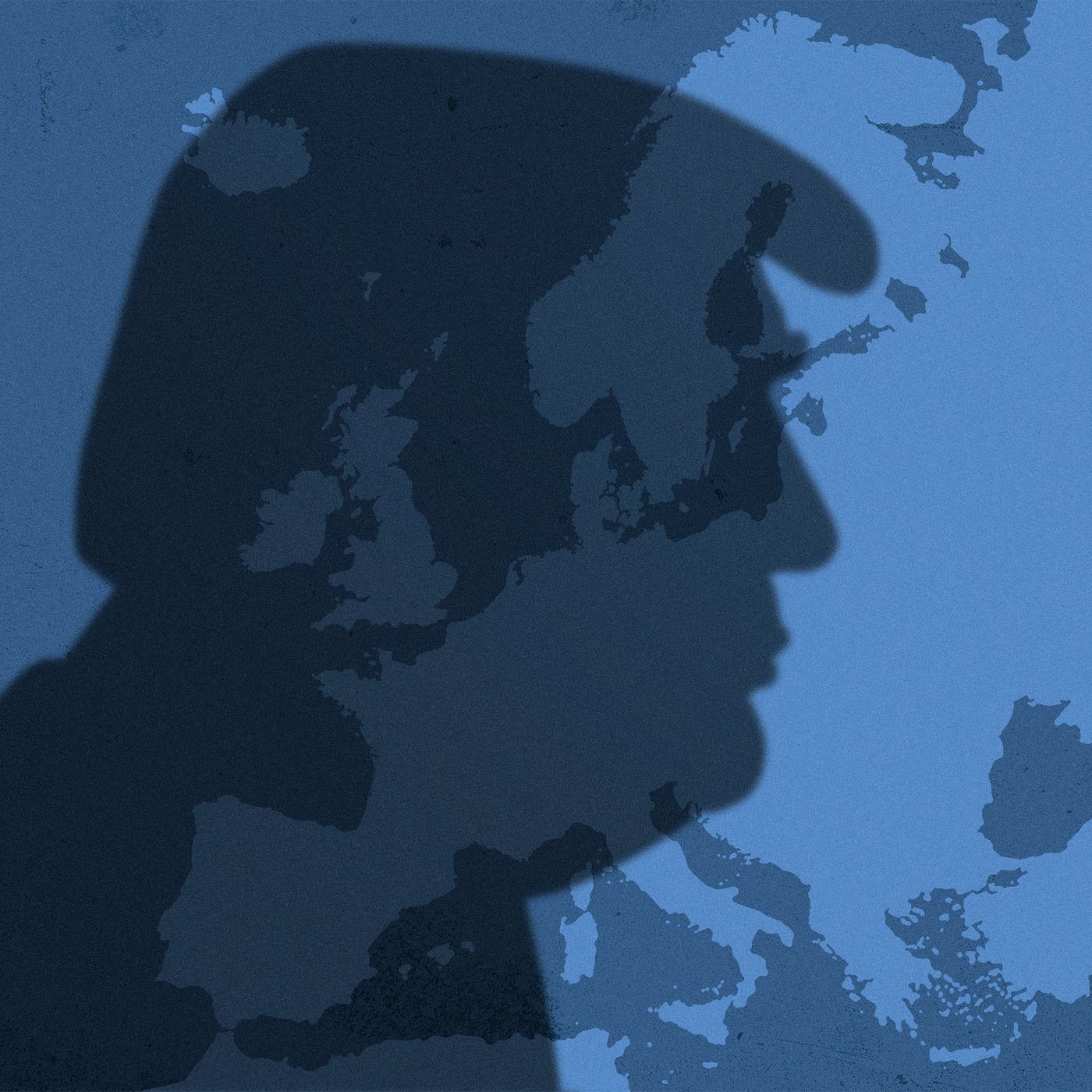
0:46This is The New Yorker Radio Hour. I'm David Remnick. In the midterm election next month, there's a wealth tax on the ballot in the state of California. It calls for a 5 % tax on wealth above$1 billion. It's earmarked for health care. Now, that's a tax only on actual billionaires. And we've heard a lot about the progressive surge in this election, so you would think that's a pretty easy win for the Democrats. Who would not vote to tax the billionaires just a little bit more? Well, not so fast. Many prominent Democrats are not supporting the measure, and it really faces an uphill battle. The wealth tax is seen as a bellwether progressive issue, so what happens with this in the state of California could well matter to the Democratic Party nationally.
1:34Beginning this week, we're starting a new feature at the Radio Hour, the big story. Something drawn from reporting in the pages of The New Yorker. This week, my colleague Nicholas Lemon has reported on the politics around the wealth tax in California. Yeah.
1:52Nick, the big political story, obviously, in the United States is the midterms in early November. And there are a lot of candidates to consider and potential blue wave to consider. But I think the most vivid political question that's being debated now that doesn't involve a candidate is the wealth tax or Proposition 40 in California. And this is an attempt to, as it were, go after billionaires, a one-time only thing. And a lot of the billionaires are asking, don't we pay enough taxes already? And we're going to leave if you levy this big tax. Give me the background of what this bill is and why there's such a ferocious debate about it.
2:33Okay. So first of all, I love intellectual history. And the problem of loving intellectual history is most of the time people say to you, well, who cares what intellectuals think? So there are very few examples we can say, well, here's direct impact of intellectuals on politics. But this is one such example. So it all starts with Thomas Piketty writing that surprise bestseller on inequality. The book Capital in the 21st Century. Yeah. And then he has two close associates, Gabriel Zuckman and Emmanuel Saez. And they have enlisted three law professor allies. And this group of five, really, not Piketty himself, but these other five.
3:23We should point out that Piketty is French. Piketty is French. And Zuckman is French. And Saez is French. Always a recipe for political success in America. Yeah. So these five guys have been going around for years talking about rising inequality, talking about how wealth inequality is more severe than income inequality, and making themselves available to any politician anywhere who wants to devise wealth taxes. So they've been involved in a bunch of these efforts over the years. So that's one piece of the background. Their big sort of debut, I guess, in American politics was designing a wealth tax proposal for Elizabeth Warren when she ran for president in 2020.
4:11So that's one part of the story. They're kind of open for business to design wealth taxes for people. And then if you remember back a year plus ago, the One Big Beautiful Bill Act that President Trump signed on July 4th, 2025, that had massive tax cuts and also to pay for part of them, but not all of them, massive spending cuts. A lot of the cuts were to Medicaid. There's one union leader in California, a guy named Dave Regan, who had the idea his union would be devastated by these Medicaid cuts. Trump signs this bill. Dave Regan says, aha, I know what to do. We'll have an initiative to have a wealth tax to plug the hole left by Medicaid cuts.
5:05He calls Emmanuel Saez at Berkeley and says, you know, activate your team. And they put together a proposition to tax billionaires only. This tax would fall on as few as 200 people in California. And it's supposed to produce something like$100 billion in revenues. and it would go overwhelmingly to one group of hospitals where Regan's union is the organizing union to prevent them from suffering from the effects of Medicaid cuts. Well, it's a pretty stark question. And I think when people would first hear about it, they think, what's the problem? I mean, income inequality has gotten worse and worse and more and more stark with time.
5:55time. It can't possibly be considered an unpopular idea, at least, to tax the wealthy. So what's the what? What are the flaws in this bill? Okay. So it's actually super controversial and may or may not pass. So just for starters, the billionaires who would be taxed don't like this. They have a lot of money. The lead billionaire is Sergey Brin, the Google co-founder. He's put well over$100 million of his own money, which is kind of like$15 for you into this. And so they're going to be spending very, very heavily to defeat this measure. Sergey Brin, I believe, has already moved out of California, hasn't he?
6:41Yeah, he's moved out. And one of the key arguments is, if you put this tax in, all the billionaires will simply leave. So it's not going to actually work as a revenue producer. Despite all this opposition and the opposition of 200 billionaires and whatever money they pour into it, it's interesting to me to note that a lot of labor unions in California have not come out for this. No, and a lot have come out against it, in fact. And the Democratic Party establishment in California, even though it seems, for example, in Los Angeles, the DSA candidate is running strong against Karen Bass, the Democratic Party, mainly in the name of Gavin Newsom, the governor, is not behind this.
7:31Democratic politicians are terrified of it. And so Newsom has kind of stuck his head out and been vocal in his opposition. Why terrified, Nick? Why are they are terrified of this bill? Well, depending on how cynical you want to be about politicians, one theory is they genuinely have bought the argument that the billionaires will leave, and so it'll defeat its own purpose. Another is that these billionaires who are overwhelmingly in tech, Silicon Valley, many of them, not all of them, have supported Democratic politicians. And in a way, tech, especially in California, is the industry group that is really in the Democratic column a lot of the time.
8:21These guys are not going to get money from the oil industry. And it's really expensive to run campaigns. So that's another thought about it. By and large, they were certainly, you know, all in for Obama. There was an affinity for that kind of Democratic Party. Now you have tech titans sitting behind the president of the United States, Donald Trump, at his second inauguration. Right. So that's a hugely interesting story on its own. Trump came in and essentially said, I don't think it was pure love, you know, David. I think it was, as he has with many other sectors in the country. He said, you don't think of me as your biggest customer or client, but I am because I've got a lot of weapons I can use against you that traditionally presidents haven't used, but I don't follow traditional norms and I'm going to use them.
9:14And if you don't want me to, put on a tie and suit and come to my inauguration. And, you know, I have to remind you, David, years ago during the romance between tech and Washington, I did a profile for the New Yorker of Reid Hoffman, one of the big Democratic donors. And the first time I went there, you know, I wore a suit and tie to interview him. And he sort of takes me aside and said, let me tell you something. Never come to Silicon Valley in a necktie again, please. I beg you. And I didn't, but that was why it was especially striking to see all these guys in suits at the inauguration.
9:54I'm speaking with staff writer Nicholas Lemon. More in a moment.
10:15And you've probably seen how limited or time-consuming most options are. That's why I'm excited to tell you about Decagon. Decagon helps companies create personalized, concierge-style customer experiences with AI agents across chat, email, voice, and SMS. They're available 24-7, feel natural to talk to, and can resolve customer requests on their own so businesses can keep up with the requests without losing their personal touch. Decagon plugs directly into your existing systems so agents can get live quickly. And because workflows can be updated using natural language, teams can make changes themselves without long engineering cycles.
10:48That means less time spent managing workflows, more time focused on customers, and measurable ROI within weeks. Once live, agents can pull up-to-date information, take action on requests, and understand the context behind any conversation. Decagon helps power millions of conversations every day for brands you know and love, including Avis, Affirm, Fanatics, and Aura. Ready to transform your customer support? Go to decagon.ai slash newyorker to get a personalized demo and see what Decagon can do for your team. Check Decagon out at decagon.ai slash newyorker. That's decagon.ai slash newyorker. I am a bona fide boomer.
11:27We just hit it at the right time. The right time to accumulate power, voter influence, and wealth. Boomers were born into a time where there was greater economic prosperity and a greater chance of upward mobility. It's an odd feeling that my grandkids are not going to have that situation for them. I'm Meghna Chakrabarty, host of On Point from WBUR. Look out for our special series. It's called Senior Class, Gerontocracy in America. So be sure to follow On Point wherever you get your podcasts.
12:06You know, for years I've been hearing rich people in New York City threaten to leave the city because the taxes are too high, I'm going to move to Miami Beach. Right. Whatever. They don't do it in any great numbers. You know, Mom Domini was elected and that was supposed to be a tripwire for this trend to happen. Okay, Sergey Brin left, fine. A couple others left. It's hard to know because, I mean, part of it is you're only talking about 200 people. And part of it is that these guys already have, you know, multiple homes. So where they quote unquote live is a little bit of a mystery. Here's an interesting figure in all of this.
12:46And this is such an excellent piece. Congressman Ro Khanna, whose district is in the heart of Silicon Valley, supports the tax. Right. And he's the representative for a lot of these billionaires because of where his district is. And he, by the way, is a wealthy guy himself. What does he see that his fellow Democratic lawmakers do not? I think, first of all, he sees that there's a big cultural gap between the Silicon Valley worker bees and the Silicon Valley founder-owner types. There's a big, big gap, and there's a lot of resentment and a feeling of, you know, I'm living on a hamster wheel and I'm, you know, very high cost of living, very high pressure, all I do is work.
13:35And the level of sort of satisfaction with life is not that high. And that creates a political gap between the people who vote in elections and the people who own the companies. And I think the other thing is he sees an opportunity to occupy the left flank of next round's Democratic presidential field because Bernie's now 85 and Ro Khanna has really allied himself or positioned himself as the Bernie heir. They've co-sponsored a national wealth tax. Bernie, unlike Elizabeth Warren, has publicly endorsed Proposition 40. If I can interrupt, why would Elizabeth Warren not endorse it? Well, I don't know, partly because I called her office repeatedly and they would not answer that question.
14:28But this is something a lot of the kind of left establishment of the Democratic Party is very uncomfortable with. And it's partly because Dave Regan, the father of Prop 40, is not a real popular guy even in the labor movement. This is the SEIU labor. Yeah, the SEIU, AUHW is the name of his union. And he's seen as a sort of maverick union leader who doesn't play well with the movement and is kind of too aggressive and looks out for his own union, not the whole movement. So that's one thing. And then, you know, there's a lot of sort of liberal tax lawyers who are telling politicians, it's a good cause, but this isn't the right, you know, vessel for it.
15:16So we had on this program not so long ago, Senator Chris Murphy from Connecticut, pretty wealthy state. And he said to me that one reason the Democrats had become so weak is that they gave up on populist economics a long time ago because to win office, they need campaign financing from, as you mentioned before, very wealthy people. Would you agree with that? And if so, how do you break out of that cycle? Yeah, that's the question. And Kanna is quoted in the story saying essentially that and slightly more kindly toward his colleagues. You know, in the post-Citizens United era, there's two things going on.
15:55So one is politics is very, very expensive and the Democrats need money to be competitive. And they've made themselves competitive, partly as a result of making an alliance with elements of business and wealth. So that's one. And then two is the so-called Great Reversal, where the Republicans, some of them claim to be the new working class party and the Democrats are the sort of upper middle class professional party. Right. Something like 24 of the 25 richest congressional districts in America are represented by Democrats. So that's another part of the story. It's not so clear which is the party of the rich and which isn't the party of the rich.
16:41Now, polls are not to be believed, but if we can cheat on that principle a little bit, what they don't seem to envision is Proposition 40 in California winning. The polls have that possibility. It seems like the support for that is well under 50%. Yeah, so here's the kind of weird thing on this. If you ask Democratic voters, do you believe in a heavy wealth tax on billionaires, you get like three quarters, yes. If you ask, are you for Proposition 40, it's like 45 % or something like that, yes, and 42%, no. If you go on the, you Online prediction markets, it's down to below a third prediction. Yeah, 30%.
17:26Yeah. Yeah. So that's something to unpack, right? And you know what political professionals look at? They look at polymarket all the time. Yeah, yeah, exactly. I'm still a little unclear, Nick, why there's still such a huge gap between people supporting a wealth tax in principle versus supporting Prop 40. I think one reason is Prop 40 has a big, big opposition. I cannot tell you how much anti-Prop 40 content just flows into my inbox every day just because I'm on all the mailing lists. And it's all over the airwaves in California. Many prominent politicians from the governor on down are vocal opponents of it.
18:11Very few politicians are vocal proponents of it. The labor movement is split. The National Democratic Party isn't really backing it. It has broad notional support as an idea among Democrats, but it doesn't have broad organized political support. So that's one thing. It may be that people admire tech titans and don't want them to leave California and that they're buying that argument. I think you're telling me, Nick, that while there's good ideological reason for this, it sounds to me like the billionaires are going to walk away with it. Well, if I were betting, I don't know if I would go against polymarket.
18:57But I would say this. In the early 20th century, somewhat on purpose, somewhat by accident, the country decided we're going to tax nationally through income tax and not wealth tax for the most part. But today, number one, wealth inequality is just extreme and it's pulled away from income inequality. The top 0.1%, the top 10th of a percent, just that group has 15 % of the total wealth in America. The bottom half has about 2%. So just the numbers are very striking. And the populist mood is very striking. So, you know, it could be that America, you know, in the late 19th century, thought of itself as an agricultural small government country, and then it changed in 20 years.
19:55So we could be seeing some seismic shift like that now. Nicholas Lemon, thanks so much. Thank you. You can read Nicholas Lemmon's article, The Battle to Pass a Billionaire Tax, and many years of Nick's reporting on American politics at NewYorker.com. You can also subscribe to the magazine there as well, NewYorker.com. I'm David Remnick. Thanks for joining me today. See you next time. The New Yorker Radio Hour is a co-production of WNYC and The New Yorker. Our theme music was composed and performed by Meryl Garbus of Tune Yards, with additional music by Louis Mitchell and Jared Paul. This episode was produced by Max Balton, Adam Howard, Erica Huang, David Krasnow, Jeffrey Masters, Louis Mitchell, Jared Paul, and Ursula Sommer, with guidance from Emily Botin.
20:50The New Yorker Radio Hour is supported in part by the Charina Endowment Fund.
21:04My name is Madeline Barron. I'm a journalist for The New Yorker. I focus on stories where powerful people or institutions are doing something that's harming people or harming someone or something in some way. And so my job is to report that so exhaustively that we can reveal what's actually going on and present it to the public. You know, for us at In the Dark, we're paying equal attention to the reporting and the storytelling. And we felt a real kinship with The New Yorker, like the combination of the deeply reported stories that The New Yorker is known for, but also the quality of those stories, the attention to narrative.
21:47if I could give you only one reason to subscribe to the New Yorker it would be maybe this is not the answer you're looking for but I just don't think that there is any other magazine in America that combines so many different types of things into a single issue as a New Yorker you know like you have poetry you have theater reviews you have restaurant recommendations, which for some reason I read even though I don't live in New York City. And all of those things are great, but I haven't even mentioned the other half of the magazine, which is deeply reported stories that honestly are the first things that I read.
22:23You know, I'm a big fan of gymnastics and people will say, oh, we're so lucky to live in the era of Simone Biles, which I agree. We're also so lucky to live in the era of Lawrence Wright, Jane Mayer, Ronan Farrow, Patrick Radden Keefe. And so to me, it's like, I can't imagine not reading these writers.
22:46You can have all the journalism, the fiction, the film, book, and TV reviews, all the cartoons, just by going right now to newyorker.com slash dark. Plus, there's an incredible archive, a century's worth of award-winning work just waiting for you. That's newyorker.com slash dark. And thanks. you
In California, progressives have crafted a ballot initiative that calls for a wealth tax—a one-time, five-per-cent tax on wealth above a billion dollars, earmarked to shore up the state’s health-care system after drastic federal cuts. Wealth inequality is a vast concern, especially among Democrats, and taxes on substantial wealth are broadly popular. Yet, as the New Yorker staff writer Nicholas Lemann reports in “The Battle to Pass a Billionaire Tax,” many prominent Democratic politicians, including Elizabeth Warren, have declined to support it publicly. Lemann talks with David Remnick about why this bellwether progressive issue faces such an uphill battle.
Further reading and listening:
New episodes of The New Yorker Radio Hour drop every Tuesday and Friday. Join host David Remnick as he discusses the latest in politics, news, and current events in conversation with political leaders, newsmakers, innovators, New Yorker staff writers, authors, actors, and musicians.
Hosted by Simplecast, an AdsWizz company. See pcm.adswizz.com for information about our collection and use of personal data for advertising.
Scan the code with your iPhone camera
Listen in the app.