In short
Notes on Podcast Episode: SaaStr 840: From 1 Agent to 20+
Podcast Overview Title: The Official SaaStr Podcast: SaaS | Founders | Investors Episode Title: SaaStr 840: From 1 Agent to 20+: The Reality of Managing Multiple AI Agents Across Your GTM Hosts: Jason Lemkin (CEO and Founder of SaaStr) and Amelia Lerutte (Chief AI Officer) Description: The episode discusses the management of multiple AI agents in Go-To-Market (GTM) strategies, sharing insights on what works, what doesn’t, and the real implications of deploying AI in a business context.
---
Key Takeaways
- Deployment Results: Over eight months, 20+ AI agents have generated an additional $4.8M in pipeline, doubling deal volume and win rates.
- Time Commitment: Both hosts spend 15-20 hours per week managing AI agents, emphasizing the ongoing need for human oversight and interaction.
- Hyper-Segmentation: The importance of tailoring messages and campaigns to specific segments rather than using broad, one-size-fits-all approaches.
- Build vs. Buy Rule: Follow the 90/10 rule—buy 90% of your AI stack and only build 10% when necessary.
- Continuous Maintenance: AI agents require constant updates and contextual training to remain effective.
- Data Utilization: Leveraging internal data and previous successful interactions plays a crucial role in the success of AI agents.
---
Detailed Insights
- Managing AI Agents
- Daily Management:
- Maintaining agents requires a significant time commitment (15-20 hours each per week).
- Each agent's output needs to be monitored to maintain quality and ensure they align with company standards.
- Challenges:
- Continuous evolution of AI agents requires regular updates and interaction to prevent degradation of their performance.
- Ensuring that AI responses match the company's voice and context is essential.
- Results Achieved
- Performance Metrics:
- $4.8 million in additional pipeline.
- Increase in deal volume and win rates attributed to AI agents working around the clock.
- Demonstrates success without cannibalizing existing revenue sources.
- The Build vs. Buy Rule
- 90/10 Rule:
- Invest in existing AI tools (90%) rather than building custom solutions unless absolutely necessary (10%).
- This approach streamlines operations and reduces complexity.
- Hyper-Segmentation Strategy
- Tailored Campaigns:
- Each marketing campaign should be tailored to specific segments instead of broad targeting.
- Hyper-segmentation increases the relevance of outreach, thus improving engagement and conversion rates.
- Contextual Training:
- Providing AI agents with rich context from previous interactions enhances their effectiveness.
- Understanding customer pain points and tailoring messaging accordingly is crucial.
- Building Custom AI Solutions
- In-House Development:
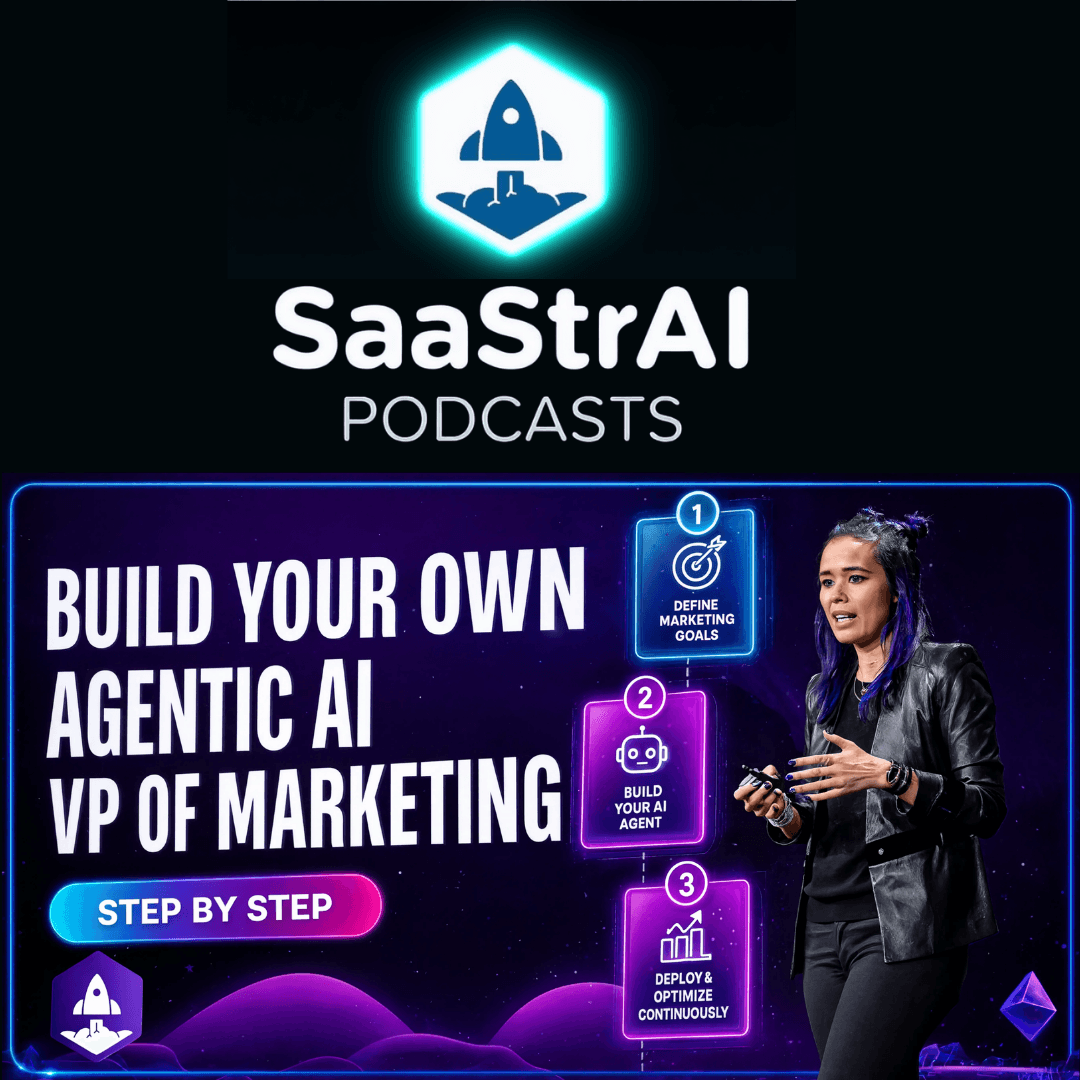
- The hosts created a custom AI VP of Marketing agent to coordinate campaigns based on data insights.
- This agent utilizes both internal and external data to provide actionable insights and streamline marketing efforts.
- Realities of AI Integration
- Current Limitations:
- Many AI tools are not yet mature enough for extensive orchestration across business functions.
- Custom solutions may still be necessary to fill gaps in existing AI offerings.
- Future of AI in Marketing:
- Anticipation of advancements that will enable better integration and functionality of AI tools.
- The hope that future tools will automate many current manual processes, improving overall efficiency.
---
Conclusion The episode offers a candid look at the realities of integrating multiple AI agents into a business strategy, highlighting both the successes and the challenges faced. The hosts emphasize the importance of human oversight, continuous iteration, and the necessity of targeted, data-driven approaches in the deployment of AI technologies.
---
Additional Information
- Sponsorship: The episode is sponsored by HappyFox, featuring pre-built AI agents for support tasks.
- Upcoming Event: SaaStr Annual will return in May 2026, offering networking and learning opportunities for professionals in the SaaS and AI industries.
For more information, visit [HappyFox](http://happyfox.com/saastr) and [SaaStr Annual](http://podcast.saastrannual.com).
Written by AI. May contain mistakes. Listen to the episode to check what was said.
Chapters
Tap a time to open that second in VOUnderstanding AI Agents in SaaS
0:45 to 2:24
Discussing the challenges and realities of managing AI agents.
“Otherwise, it's like going to the doctor and getting a prescription for medicine and never taking it.”
The Journey of Deploying AI Agents
2:24 to 6:10
Exploring the deployment process and lessons learned from using multiple agents.
“So, yeah, to kick things off for today, we wanted to talk a little bit about where we're at today with all of our agents.”
Evaluating the Impact of AI Agents
6:10 to 11:00
Analyzing the effects of AI agents on business performance and revenue.
“But okay, so eight months later, you know, just kind of like highlight result is, you know, does all this work?”
Ongoing Management of AI Agents
11:00 to 14:00
Understanding the continuous management and updates required for AI agents.
“Sometimes you see these agents degrade over time.”
The Evolution of AI Agents in 2023
14:00 to 15:00
Learn about the current state and future potential of AI agents in the market.
“And so it will be interesting to see where it goes this year.”
The Importance of Training AI Agents
15:00 to 16:30
Understand the critical need for effective training and management of AI agents.
“I haven't seen any other app like this that can just do it with not consistent training and work every single day.”
Maximizing Email Interactions with AI
16:30 to 18:00
Discover how AI can enhance email outreach and customer interaction.
“Now I will say you can use things like Chat and Claude to make your prompts better.”
Identifying Low-Hanging Fruit for AI Deployment
18:00 to 19:30
Learn how to find and address areas in your business that can benefit from AI agents.
“We are connecting with more people more often, not spam, right?”
Best Practices for Implementing AI in Sales
19:30 to 21:00
Discuss the best practices for integrating AI agents into sales processes.
“There's just some things like the agents can't slash shouldn't do.”
Evaluating AI Tools for Your Business
21:00 to 22:30
Learn about the criteria for evaluating and selecting the right AI tools.
“But I also think if you don't know what works first, I don't get this mindset of like, oh, it didn't work, but I'm just going to add AI and it'll magically work now.”
Show all 23 chapters
The 90-10 Rule in AI Tool Selection
22:30 to 24:00
Understand the 90-10 rule for balancing third-party tools with in-house builds.
“But I think if you do it and you train it on the best of everything, it will work that much better, right?”
Leveraging Customer References for AI Tools
24:00 to 25:30
Discuss the value of customer references in choosing AI tools.
“And it's either a P1 priority, priority, or as you'll see in like our AI BPM, you know, I built that agent because it was a commodity.”
Evaluating AI Agents: Trust Your Instincts
28:00 to 29:10
Learn how to assess AI agents and the importance of trusting your instincts during evaluation.
“When you're talking to a vendor, if it doesn't feel right, don't buy it.”
Navigating the Multi-Agent Journey
29:10 to 30:25
Understand the complexities of managing multiple AI agents and the potential challenges involved.
Integrating Third-Party Tools with Salesforce
30:25 to 32:40
Discover how to integrate various tools and maintain data in Salesforce for effective management.
“heard from some others is it's kind of all band-aided together.”
Understanding Webhooks and Data Flow
32:40 to 34:25
Learn about webhooks, their role in data flow, and how to effectively manage this integration.
“But that's also because, you know, we use a lot of specialized tools.”
Sample Go-To-Market Flow with AI Agents
34:25 to 39:35
Explore a practical example of a go-to-market flow using multiple AI agents and automation tools.
“But you might not live in it if you pick one system that can do multiple agents.”
Dynamic Segmentation in AI Go-To-Market Strategies
39:35 to 42:01
Learn the importance of dynamic segmentation and personalized approaches in AI-driven marketing campaigns.
“It's a lot of Zapier to Salesforce, to other things, to APIs, to whatever.”
Hyper-Segmentation Strategy for AI Agents
42:01 to 45:45
Learn the importance of hyper-segmentation in managing AI agents for effective outreach.
“But I treat each of these dynamically and I train each sub agent dynamically on each of these things so that the output, to Jason's early point, is pretty good, right?”
Understanding AI Agent Limitations
45:45 to 48:32
Discover the critical nuances of defining both capabilities and limitations for AI agents.
“And a lot of the reasons why you should start here is not only will it give your agent context, it will give your human team context on what works and what doesn't.”
The Impact of Bad Context on Emails
48:32 to 50:46
Explore how poor context leads to ineffective emails and the role of human errors.
“They did it based on geo of like where the office is in for SASTR.”
Building a Custom AI Marketing Agent
50:46 to 54:49
Understand the process and considerations for creating a tailored AI marketing agent.
“how are you thinking about using, you know, what are your priorities for 2026?”
Leveraging AI for Marketing Strategy
56:04 to 1:01:22
Learn how to utilize AI agents to create actionable marketing strategies and campaigns.
“And so that's where, again, I think a lot of this just was a culmination of our using agents.”
Transcript
Automatic transcript. May contain errors.0:00Welcome to the official Sastra podcast where you can hear some of the best Sastra speakers. This is where the cloud meets. Up today on the Sastra podcast. If you don't know your FTE, if you don't know the answers to these questions, and you're spending any material amount of money on an agent, you're wasting your energy. And so it will be interesting to see where it goes this year. A lot of the agents we use are pushing down market to be more self-service. So far, that doesn't work. So far, I will say for the most part, agents that require deep training cannot be self-trained. It will come. Agents are getting so much better.
0:37That's frontier one. But wait and see. Be skeptical if you buy a cheap tool that says it's self-trained. Make sure it works. And you know the time. If you buy a more complicated tool like we're talking about, just talk with someone senior enough on deployment, not again, of someone trying to sell you something that doesn't know, and be honest about what it's going to take. Otherwise, it's like going to the doctor and getting a prescription for medicine and never taking it. It's not going to work. It's literally like that for an agent.
1:07Hey, Sasser, imagine having agents for every support tech. One that triages tickets, another that catches duplicates, one that spots churn risk. That'd be pretty amazing, right? HappyFox just made it real with Autopilot. These pre-built AI agents deploy in about 60 seconds and run for as low as two cents per successful action. All of it sits inside the HappyFox Omnichannel AI First support stack. Chatbot, Copilot, and Autopilot working as one. Check them out at happyfox.com slash Saster.
1:39Hey, everybody. Saster Annual will be back. May, 2026. The world's largest SaaS and AI gathering for executives. Just as last May, we hosted 10 ,000 attendees with 68 VP level and above attendees, 36 % CEOs and founders, and 25 % were AI first professionals. It's the very best of S-tier attendees and decision makers that come to Saster Annual and AI Summit each and every year. But here's the reality, folks. The longer you wait, the higher ticket prices get. They're cheap now. They're cheap, so just get them. Early lock in your spot today. Use my code Jason100 for exclusive savings. Get your tickets at podcast.sasterannual.com or just use code Jason100 when you check out.
2:20See you there. Saster Annual and AI Summit 2026. It will rock.
2:27All right, cool. So, yeah, to kick things off for today, we wanted to talk a little bit about where we're at today with all of our agents. And maybe more importantly, now that some of you have deployed at least one agent and are looking at doing multiple agents kind of in the path that we've been. How, what does that really take in reality, in fruition to do this multi-agent management? What does that all mean? so just for quick context i think a lot of you have seen this now but just as a refresher we have about you know 20 plus agents now we've i've got about 12 apps they've been used you know almost a million times which is kind of crazy i think we'll probably cross a million mark before the next ai day um and so that's a lot of usage right and so a lot of the things you'll see us talking about today we also have on sasser.ai slash agents so you can always go there at any time and see like you know some of either the third party tools or the in-house ones that we've built and kind of play around with them there okay um so what have we learned now that we're about you know almost depending on how you count either eight months or a year into this journey i mean i was looking up like when we when you joined delphi jason i think it was like December of 24, but I didn't get on it until like February, March timeframe.
3:49So depending on where you can't like fully deployed though, I say eight months was multiple agents in tow. So we started with Delphi. If you guys haven't read it, you can go to saps.com. It's the Jason bubble there. You can talk to his clone. So we added that and then we quickly learned, you know, it was doing kind of like advice and support and we spent a lot of time training it. We've talked about it on other pieces of content here. But that was our first foray into an agent. And I think support and sale I see now is like the most two common use cases of where people deploy their first agent.
4:21So super, you know, super common thing to do there. And then, you know, then we added an outbound AISDR if we added multiple of those. Now that's not necessarily, I think, a path that everyone needs to take. You could probably deploy on outbound AISDR agents and do it well. And then Secondly, I think, too, we also looked across our sales funnel of where do we want to be in terms of what else we want to deploy and go to market. And so we quickly added multiple outbound AISDRs, an inbound AISDR agent, and then multiple agents across go to market, and then a few custom by-putted apps, some of which we're using now internally, but mostly our external facing, like the pitch check valuation and things like that.
5:08it's a good summary a lot of folks have followed the journey but um we did we did push the limit here as as some folks know after saster ai annual last year in may basically anyone that left our tiny team we replaced them with an agent so we've been on this journey we've deployed you can see our whole uh list we've deployed a bunch of startups are also one of the leaders on agent force and Amelia will touch on that. We'll keep chatting about that because I think it's just helpful for you guys to see these apps in production. And then we'll get into it. And then we've also, we started off vibe coding for fun, but as Amelia will go, when we found, we really recommend you buy something.
5:51Don't build the 90-10 rule Amelia will have here. But the latest thing we've added, which we've talked here is we built our own VP of marketing. And we'll talk about why in a minute. Yeah. So that's, yeah, that's kind of been our journey again it's not necessarily that everybody needs to be at you know be a number of agents we are for a lot of reasons we try different agents right like part of the saster community and ecosystem is we are trying different agents we have different partners and so we have also a like underlying need to just try a bunch of different things i also am just like wanting to try different agents and see what works and what doesn't and so there's like that inherent but that it's not necessarily what you need to do for your business it may not make sense to be at the same level and number of agents we are.
6:36But okay, so eight months later, you know, just kind of like highlight result is, you know, does all this work? I think I've seen kind of now that we're, you know, maybe a year slash eight months into this journey, I'm starting to see a little bit more like skepticism, honestly, weirdly on LinkedIn. I don't know what you're seeing, Jason, on X. But I see some people becoming a little bit disenchanted with AI agents. And I see a little skepticism. So does this work? I think for us, you know, we have now eight months in 4.8 million and counting an additional in additional pipeline source via agents and i'll talk about why it's additional and then about half of that so 2.4 million is closed one revenue that was you know first touch source from an agent across go to market so a lot of a lot of good things there as like a proof point additionally it's yeah we've seen some underlying things also improve via the agents so our deal volume has more than doubled right i count a lot of that towards and credit a lot of that towards the agents working you know 24 7 365 they can always answer a question they can always book a meeting they can always reach back out to you now sometimes you know the humans here like me david jason have to take the meeting so sometimes they're limited by our human capacities but i i credit that to the agents working you know you're you're around all the clock now our win rate has nearly doubled i think that's just in the nature of the agents you know especially when it comes to folks that are inbounding and also how it's doing outbound just having a lot more context right it's a lot better context it's a lot better outreach in some cases but then essentially for us like across me and david specifically itself like it helps us with our conversations because we already know what this person has said to the agent we can see the exact conversation they're having we can see for on the website we can literally see what else our company has been doing with our agents and we use that in the mean right so it saves a lot of time it's also a lot more qualified when we get on that call and so i think a lot of that has to do with some of the nurturing there and i think more importantly too in those stats like it did not cannibalize our other inbound revenue sources these have just been augmented by our agent and then another thing i like to remind folks too is like and it's not that we dropped a bunch of stuff either when we deployed these agents right i think a lot of folks now will be like well okay if i if i just get an outbound ai sdr then maybe i don't need any human sdr and maybe that's true right we we between data and i we do some we do some outbound ourselves so we don't really have a human sdr per se but i think there's a lot of pieces in which you would you might still need both why because we we do personally respond as humans to each message that our ai agents produce and so there's a lot of you know time needed there that i don't necessarily like the ai autopilot responses i still think it's better to come from a person who actually knows the business and i think too in that too i think um you know a lot of this has been augmented by our agents so you know in helping us book again more meanings helping us understand the leads a little bit better again we did not drop the other things we're doing right we still send marketing emails we still do outbound we still send gifts to people like we still invite people to come to sass like all the things we used to do before with the age of like now we can do them a little better but we're still doing them and so i think that might be surprising to some folks but just know i don't i don't think it will cannibalize anything if you do it right but i also think it can definitely augment versus you know you don't need to go after the service we have to necessarily replace we've done that and it's worked but you may see that doing a mix of both kind of work okay so cool but you know here's the um here's maybe the honest truth that that you may not see on linkedin or x and that is that we maintain these apps every day like literally even this morning before getting on ai day and stuff you know i'm like checking our agents and i think the important thing here is like the agents and the humans have to rapidly evolve and change constantly like it's such a mind share killer for myself for jason like we're in these agents you know i think 15 to 20 hours a week each that's each not like between two of us, that's each of us, constantly iterating with our agents, constantly saying, what are they outputting, checking the responses, making sure it doesn't hallucinate, making sure it's talking to folks the way we want it to talk to people, making sure it's adding value, making sure it's not degrading.
11:23Sometimes you see these agents degrade over time. And so I think the important thing here is it is kind of a real killer. It does take a lot of time. I don't think you can replace the time of managing you know we've just seen the time shift like the time we used to spend managing slightly more people on our team we now spend that same amount of time if not more managing the agents but it's just a lot different right like there's no there's no people drama really but the end the agents just work at a much higher capacity and higher scale than a human being that it's hard to eventually keep up with them and i put this here in bold i you know i've been trying for a long time for the last few months to keep up with my agents and then I realized it was futile because I couldn't fordo it but I try and keep up as best as I can and in that what I truly mean is you know anytime we get a response we have a system that it'll slack us from like any of our agents so whenever there's an interaction or agents having a conversation with somebody and we want to reply and you know again we like to reply ourselves it says this is like we do try and respond to those people literally instantaneously, if not in real time.
12:30Sometimes we are asleep. And so we respond to them first thing in the morning. But I've realized I can keep up with my agents. They're smarter than me. I'll tell you just one nuanced learning actually from this week. So I was meeting last night with the CEO of a next, we're already in the next generation of AI go-to-market agents that's already got millions of revenue and is publicly launching in a few weeks, but they already have millions of revenue. And I asked, I've known them for a long time, but I asked what the secret sauce was. And the secret sauce was they do everything. They do the onboarding, they do the tagging, they get the first campaigns running, they do everything.
13:14And they do it almost to such a fault that some of the customers think it's too easy and don't even realize the energy that's going into it if they haven't deployed an agent yet. And the learning from that is just, if you haven't deployed many agents or any for real, you got to have an honest conversation, not with someone in sales that doesn't know how the product works or use it themselves, with a forward deploy engineer, with a leader, and find out what is it going to take to be successful. Up front, the first 14 and 30 days and every day thereafter, and then you got to do it or it will fail.
13:49Yep. And meet with the best of them. Um, and you know, if you don't know your FTE, if you don't know the answers to these questions and you're spending any material amount of money on an agent, you're wasting your energy. And so it will be interesting to see where it goes this year. A lot of the agents we use, um, are pushing down market to be more self-service so far that doesn't work so far. I will say for the most part, agents that require deep training cannot be self-trained. It will come. Agents are getting so much better. That's frontier one. but wait and see, be skeptical. If you buy a cheap tool that says it's self-trained, make sure it works.
14:27And you know, the time, if you buy a more complicated tool, like we're talking about, just talk with someone senior enough on deployment, not again, of someone trying to sell you something that doesn't know and be honest about what it's going to take. Um, otherwise it's like going to the doctor and getting a prescription for medicine and never taking it. It's not going to work. It's literally like that for an agent. Right. But this was the first one I saw that could do the type of stuff Amelia and I are talking about without you doing any work. But it's because they have a huge human team. They call them forward deployed AEs in the beginning, and then other folks take it off.
15:00But that's an extreme case. I haven't seen any other app like this that can just do it with not consistent training and work every single day. Every single day. Yeah, we do spend a lot of time per week actively managing all of our agents. Just, I think, to Jason's point, be prepared, right? It is, again, I think I see too many folks who they see the really good stats and they get, you know, even our stats are, you know, fairly good. And they get a little like mesmerized by them thinking, you know, OK, it's AI. I can just prompt it and it'll it'll do it fairly quickly. I'll say to you, like most of these agents have some sort of prompting in them, but they're not necessarily all built via a prompt.
15:41Right. Like don't think about it the same way you think about putting a prompt into open AI or Claude. it's not going to function the same way. There's a lot of like, there is some prompting in each of these third-party tools, but at the end of the day, you're going to have to like figure out what works, put that into, you know, their prompt builder in whatever format they have and refine it from there. And then there's usually additional steps other than a prompt. So I think some of the tools we've seen are kind of getting to that point. Maybe they'll get there like by the time we're at SAS Reannual or maybe right after in like the second half of the year.
16:13But most of them are not just prompt builders. So I think that's another thing to just bear in mind. Like it's not, if you're used to kind of like this easy path that Claude and Chat and OpenAI have, you know, kind of proprietary put out there, like they're not all like that. They're not all that easy. Now I will say you can use things like Chat and Claude to make your prompts better. I do that all the time. Like I'll put whatever context I'm putting into our agents. I'll run it through Claude. I'll run it through ChatTBT and see what I suggest to make it better. Sometimes I'll take or leave the suggestions.
16:44Sometimes it's not, you know, the AI doesn't know your business the same way you do sometimes. And so I think that's just another thing to be prepared for. So how did we get to this? I think this will address some of the questions as well. How did we get to these results of, you know, 4.8 million and counting an additional revenue, 2.4 close to one, so about half that. And then also, you know, we've now crossed the 60K mark in how many emails and interactions our AI emails have had just in the sales funnel, right? Like that's not even counting the almost close to a million we've had in our proprietary interactions with our VibeCoded apps.
17:19But that's a lot right there. You're going to explain how this works. And given how tiny we are, it's pretty impressive numbers. But if I had to summarize all of this and then challenge me if I'm wrong, because you're doing the real work, right? I think some of the key here is not that all these emails were the best emails that have ever been sent in the history of mankind. I know you think they're great. I actually just think they're okay. I don't think they're bad. I think they're better than most of the outbound emails I'm going to get during this day, during AI day. The ones we send are better, but they're not the best.
17:49They're not something you can spend an hour crafting. I think the number one key, and that's why the 60 ,000 key is cool. We are touching folks, lapsed folks. We forgot to talk to folks. We don't talk to enough more often. We are connecting with more people more often, not spam, right? But we couldn't do 60 ,000 high quality emails manually or even with old school outreach tools. We just couldn't do it. Right. So I think the key to this, tell me if you're wrong and then we'll be quiet. I think it's just more high quality, pretty good interactions. Yep. That's the thing. We're getting scale. And that's why what I think, when I think about everything we've learned and you've done most of the work, Amelia, if I had to advise people that are earlier on their journey, find something in your go-to-market motion that just isn't getting done or is getting done very at a very mediocre level yep then put an agent don't try to replace what's working well do that as your 10th agent or your 20th like literally we're such a tiny team we just weren't reaching out to enough people in our base in our activated base and so that's the low-hanging fruit for us we just could not be sure any you could put something in a dated outreach sales loft cadence but that don't work, right?
19:08But we never would have done this otherwise. So find that low-hanging fruit, the stuff in your jodiment that you're just not getting to, the customers that are too small, the customers that take too long to respond and your team doesn't want to do, the customers that have lower scores, right? But they still have intent, but no one wants to call them back. Do those ones for whatever your low-hanging fruit is because then even if you get some yield, is it's it's magical yep i agree so i think again a little bit of a misconception here related to some of what the chatter is the formula for us is to copy your best human like as you're deploying maybe you've already deployed one agent maybe you're deploying your next agents to jason's point right do something that you could either get a lot of scale out of by adding an agent and do pretty good.
20:02There's just some things like the agents can't slash shouldn't do. Like, obviously we love agents. Like, I love our agents. I use a lot of them. I add, you know, I just added the AIBP marketing. We'll show you guys. But there are some things I'm like, the agent would just suck at that. So I'm just not going to do it. It's just like, there are some things I still need humans to do. Like a lot of the production stuff we're doing for SAS Reannual. I'm like, I still need a human to do that, dude. The agent is not there yet. But what we also mean by copy you're human is if you're going to add AI agents at scale to help you scale, right?
20:35Just on scaling more emails, more meetings, more clicks, more volume, figure out what works first. I see too many people who, you know, okay, they want to automatically give an AI SDR to their SDRs. And I'm like, okay, well, are those SDRs new? Did they just join? One, I don't think it's a good idea to give it to every single SDR. I think that's, you're going to, there's a lot of reasons that would get you into trouble fairly quickly in terms of workflows. But I also think if you don't know what works first, I don't get this mindset of like, oh, it didn't work, but I'm just going to add AI and it'll magically work now.
21:13Like, no, if it didn't work or wasn't working before AI, it's not going to magically work now. And somebody asked me this question yesterday when I was doing a Salesforce webinar, like, okay, what if I'm a super early stage startup and I don't know what works? And I was like, well, do you have any customers? They're like, yeah, we have like, you know, 10 paying customers. I'm like, well, go ask your customers why they bought you. Like everybody has at least a few customers, or maybe if you're super early stage and you've got a few folks on a trial, just go ask them, like figure out what works, figure out what got them in to your product and is getting them hands on product.
21:45figure out what works first right we had so much data that we ran through before we put it into any of our agents on what was working right the best the best a like the best email copy for doing outbound the best responses of how we should follow up with inbounds you know the best um contacts and verbiage about saster you know about saster's events about sponsoring saster like we went through all this data we went through all this context we flagged everything that was the best of everything before we put it into any agents, any AI, etc. So, you know, train the agent on what works best. I think I see too many people now falling into the strap of they want to add AI into something new.
22:28And sometimes you can and it will work to some degree. But I think if you do it and you train it on the best of everything, it will work that much better, right? It will get you to pretty good to Jason's point. Like it'll get you to pretty good emails. They still may not be the best on planet earth but it'll still you it'll i think it'll put you over that bar of pretty good versus crappy ai emails that we've all seen or even crappy human emails that we've all seen so yeah that's that's why i can't get you on it but yeah i think you know you have to train it on the best of everything and if you don't know what that is yet i would take that time take a week figure that out before you know you deploy your first or next agent so that and then see where that gets you i feel like you'll have a better output because we are constantly iterating our agents now to make sure they're they have the best of everything and that they know everything that we know like as we know it right so like as we get you know speakers for saster we have new things that we're doing or now we've got like lounges and stuff or like new things in our sales process like we're i'm constantly making sure the agent knows all this so that i can talk to that.
23:36Okay. So I want to address some of the questions in the chat of like, you know, some of folks are asking about evaluation tools, like what's our processes. And then this is the 90-10 rule that Jason came up with, but I really do agree with, and I think it's a good one, which is, you know, buy 90 % of your AI stack. And I'll talk about the evaluation process we've done in a second and only build the 10 % where there's, where I, where I think there's, you know, there's no vendor that can do this well. And it's either a P1 priority, priority, or as you'll see in like our AI BPM, you know, I built that agent because it was a commodity.
24:15Like it was something where even with all of our agents now, I was like, I just still have so much data from Sastra internally that I want to act on. And I want to deploy this agent in a way that maybe I don't need it to run everything automatically so it's a very specific use case but that was where i kind of built that and that's where that kind of fostered in from right it's like okay i had all this data i wanted to do something that was more internal facing not necessarily external like a lot of our go-to-market agents are and so in that case it made sense to build i'd say for a lot of things it doesn't make sense to build right like if you guys listen to the podcast kyle and jason did i think we put it up like last week or something kyle who's the cro of owner talks about how you know he's also kind kind of roughly followed the 90-10 rule of, you know, he's bought a lot of third-party agents, he's made them work.
25:04And then he hired somebody who was like a, I think it was like a former founder or something, right, Jason, to like build a proprietary in-house tool. And that's like one extreme, right? But like even that 10 % that he's building in-house, like he hired somebody who like was a CEO, was an engineer, like knew how to code. Like I think he was like a CEO of like an LLM company or somebody like knew all this crazy stuff and like could build a proprietary like internal agent but again for a lot of things it probably won't make sense to do
25:34um i think too just to address some of the questions on the chat of like what what's been our criteria um and we've talked about it a little bit before but when you're evaluating these tools for the 90 you want to buy um i think the important thing is to one you know again i don't know why i think in the age of ai people sometimes will will throw things away because they're like oh there's this shiny new object i literally asked all of our all of these ai tools that we now use and deploy for help i was like i need one like one i'm gonna need help like i'm gonna need an fd and two let me talk to people who have used this like i think i see too often folks are like okay it's an ai tool and so i'm not going to ask for a customer reference like ask for a customer reference i do these all the time now like i try to make them as short as possible now because um you know we do these webinars and stuff too but i do this all the time now like marshall from manuel mint kyle from owner like we do this all the time like philippe from persona we do this all the time now people ask us constantly for like you know a customer reference like it's called like ask them for a customer reference and if you can ask them for one like in your vertical see what they say to you right like if they push back maybe don't use that vendor like they you know most of these folks have at least one customer that's slightly like you were, if they don't have one in your vertical, maybe you can give them a pass on that.
26:52But like at least talk to a customer and then see how much they will help you, right? I think a lot of these tools, to their credit for the third-party tools we do use now, have been helping us along the way, right? Like there's some of this, like we've learned from just now deploying so many agents, but some of it was because they put an FDE on our success team, right? Like Salesforce put an FDE on our success team. Orison is unique in that, you know, anytime I have an issue or I have an idea, I just see the CEO or the head of product, you know, qualified. There's an FDE on our success team. Oh, you know, Replit, we have an FDE on our success team.
27:32There's just so many cases here where if you ask them for that, they should give you some level of that service, right? Like to make it work because they should want your business and they should want you to be successful. Now, it doesn't mean that you need to have an FDE like every week. Like now I meet with them a lot less often than getting started. Right. But you should ask them at the very start, at the very least to have some FTE time at the start.
27:57Say one thing on the tools. I know this is versions of things we've said since the beginning. When you're talking to a vendor, if it doesn't feel right, don't buy it. Yeah, it should feel right. It should feel a lot of folks flame me a little bit when I say a lot of agents should almost get you going for free, right? And a lot of agents can't do that. There's economic reasons, there's headcount limits. People can't really train you and deploy you for free. But if you look at like the 20 VC that I did with Harry and Rory when Mark Benioff came on, it was interesting when he said he wished he could.
28:31He said he can't at Salesforce, but he wished he had enough FDEs that everyone could be in production on Agent Force before they had to pay. it's not practical but the best ones take you as far down that journey in the age of ai as they can they're proud of their products they'll show it to you if something doesn't smell right if it doesn't feel right if you don't think it's going to work it won't work buy another one even if the brand's less good even if it's scrappier even if whatever if it smell if it doesn't if your spidey sense says this agent isn't going to work don't buy it yep i agree i think too like um yeah that's that's a the the point you made on the free trial they like a lot of agents cannot set you up for free that's a really good point in the evaluation so yeah we you know we threw down for these agents it makes it hard it makes it hard it makes it harder risk it is interesting i want to say it is interesting that when you look at the prosumer ai tools that we highlight all all the reeves and the gammas they're lucky because you can get so much value for free even forget about 29 bucks a month or 99 bucks you actually the free products are great like try those tools the problem with AIG Tim tools is like even if they want to do it they can't do it right so you've got to take some risk but um maybe not later in the year but you know don't do it if it doesn't feel right all right that's our kind of like build versus buy rule and then once you get to this point in the process like um something I wanted to address which is also the title of this hard talk today was what does that look like in reality once you get into multiple agents right and i'm going to say something today that it's not so simple don't let that scare you don't let that like frighten you off of doing more than one agent and maybe you stick to one and it works really well and that's fine like you do not everybody needs to be i think in a multi-agent management journey but just know that if you are you if you're in that journey today for ourselves and what i've heard from some others is it's kind of all band-aided together.
30:35There's kind of a big reason folks like Salesforce are having a big renaissance because a lot of these third-party tools we use, for instance, and for example, push back to Salesforce or we push all the data back to Salesforce with a Zap or whatever, or some of them have a native that they can push records and update records back to Salesforce. And so a lot of the time right now, it looks like all of our third-party tools, whether we're API-ing into them or not, or using things like a Zapier. Then we have all of our internal data and our VibeCoder navs, right? We're pushing all that back into things like, you know, Cod, Zapier, back into things like Salesforce as our like system of record, just to keep all the records up to date somewhere central.
31:18But, you know, that's not native now, right? For now, that's not native at this moment. And so it takes a lot of webhooks. If you haven't heard this word, you'll probably learn it fast. We have so many webhooks in our Zapier account. I can't even count them, right? We have so many webhooks just firing all the time to push things back. But I'm pushing them again as into one kind of thing. And for now, that's like Salesforce because it can ingest all this data and take all the context for our agents. But, and not to say like, you could say, okay, I don't maybe need that data everywhere all at once.
31:56But I like to have it. I like to build the context of the agents from one agent to another. And so to let it build on itself, we use a lot of webhooks. We use Appier. I know N8N is having a renaissance now because it's kind of the same thing, but just built in the age of AI. But whatever one you use, you're going to see quickly. And I've got a screenshot of it. You end up with a lot of different hooks and kind of hodgepodge things together. but I think it's just for now right I don't think that's a problem for always I think it's just a problem for now you know in the first half of 2026 to to you know have it kind of web hooked into things that you need to make sure you can control the flow of what your agents are are doing and where that data is ultimately pushing back to and pulling from I do think you should pick one source of truth right at the end of the day to store some of this and then build further context for your agents you know we put sales first you could pick up spot or something else i think also to get used to your agents talking to each other on their own you know it happens our agents talk to one another it's fine get used to also as a human like talking to your agents um it is kind of a weird thing to at first get used to and then you'll get used to it and then also get used to you know for now copy pasting context like we do a lot of context sharing between our agents like yeah some of this pushes to salesforce but sometimes i'm like you know what i don't want to push through that flow i'm just going to copy paste something in this context from one agent and then put in the other agent like the way that it it understands context and so again that's not necessarily the simplest or the cleanest path of multi-agent management and so i I just wanted to be for real about that, that in today's world, that's what our reality looks like.
33:44But that's also because, you know, we use a lot of specialized tools. Like there are obviously, I know there's like all-in-one agent builders out there. Some of them are coming to Sastra this May. But for us, like, you know, I like to use the specialized tools. I just still find that the output is a little bit better. I like to use the best of everything in each agent versus an all-in-one tool that can build multiple agents. For us, it works better. For you, you might see success in using an all-in-one tool that could build different agents across the board. But for us, since we use very specialized third-party agents, this is the reality we live in.
Read the full transcript
34:25But you might not live in it if you pick one system that can do multiple agents. You might just have to manage one from there. And if you're like, okay, you know, I'll trade off maybe some of the quality for quality of life and managing all the agents, then it might make sense to use an all-in-one.
34:45All right. So what do I mean by this in reality? All right. This is a screenshot of one of one. This is a screenshot of one of my zaps. I'll explain to you what's slightly happening here because this is a good. I also wanted to show people like a go-to-market flow they could copy. Maybe not necessarily at the same degree or scale, but this is one you could feasibly copy slash iterate on for yourselves once you get to multiple agents. So you'll see. It's catching a webhook. I think this webhook is Sastra Annual, if I remember which one I screenshot in. I think this one is Sastra Annual. It's catching a webhook because there's a lot of forms on our website, and we vibe-coded the website.
35:27And so it's got a webhook when you fill out the form. And so anyways, it's catching this. Basically, a webhook is a listening tool, if you don't know what a webhook is. It's listening to say, okay, in this case, when you submit a form, the webhook is going to catch it anytime it has a submission and then tell me what to do with that hook, right? So it's basically capturing that data. So it's catching the hook. It's porting that submission, one, to a Google Sheet because I'm crazy and I just like backups of everything also in Google Sheets. It's like, again, you'll see, like you've literally seen this flow, it's going to Salesforce, but I also just, yeah, just sometimes I need a quick little sheet.
36:04Sometimes it's just nice. So it's pushing to Google Sheets. You'll see, it's pushing to Salesforce. So you could do this on contact or lead. It also depends on how, like we're in the flow or we have agent force. And so ours is triggered off contacts. You can't trigger yours off leads. Ours is triggered off contacts. And so it's creating a contact in Salesforce. it's adding a contact to a campaign now in number four i circled it because i said you know we can pick when it adds a contact to campaign if we want to send it to agent force already in the zap right because i have certain campaign triggers that say okay when they're added to this campaign trigger the agent to turn on so again you don't necessarily need to do that if you're not ready for that yet but it's something you could do here feasibly easily and do it a little bit more automated, right?
36:52Then, you know, it's going to find those records of those, find those records of, you know, the company. There's a little, this is a little misleading because it sounds simple, but it's finding the company records, right? So since this is a contact level contact that it's created and triggering to Agent Force potentially, now it's going to find records of, okay, basically I'm asking Salesforce to see what is this company on the account level because we use account level content records what is this company done with us and so i wanted to find those records of what that company has done with us and then you know i wanted to get the record attachments if you use clay you can use it here in a very kind of fun way to say okay if i already have a table in clay you can have it like summarized for you and then also like look at linkedin and say okay what else is this person actually also doing on linkedin what are they doing what are they posting on social media for example so again you can get more context you could skip this step if you're like not into using a clay table but that's a fun way you could do it there and then you can send a slack channel message to send you all this so send you all this context of like okay here's the you know here's the context that i just added to the campaign here's the account information about it here's the you know clay context about it and then i'll send you a slack about it.
38:17And then if you really want to, you could do things like make a gamma. Like if you wanted to make either a landing page or a presentation for this person to send in their email about, you know, let's say how to use gamma at Saster or whatever, like how to use whatever your company is for Saster. You could do a super complex thought like that, have it make you a draft presentation or landing page to send to you. And then, you know, in Gmail, you could create a draft ultimately send to this person, if you want to do it that way. Again, this is just a sample. Go to MarketFlow. You can see I didn't like fully set up my ClayTable because I'm just feeding through this.
38:53But again, this is a good sample. Go to MarketFlow, you'll see it's like, you know, it's got agents kind of layered in it. There's like an agent force layer in it. There's a, you know, if you consider a Clay an agent, there's a Clay agent in there. You know, this one pushes to Gmail, but if you have an AISDR email platform, you might want it to push to that platform. But, you know, all that I think is just important to see as an example.
39:21In this multi-agent management sample flow, right, again, this is just a sample flow of how you can feasibly kind of manage agents, which right now for us is somewhat messy, but it looks a lot like these Zapier flows. It's a lot of Zapier to Salesforce, to other things, to APIs, to whatever. and so yours may or may not look like this i think a lot of times folks will be like oh you guys have 20 agents like who are you using as your mcp i'm like we don't have one like we don't have a true like i don't consider this zapier or salesforce thing a real mcp i consider it a mcp light but like it's not like if you truly look up what an mcp is it's not a true mcp like yes like the context is sharing back and forth and you can kind of get there on zapier and salesforce but i again i call it light mcp in air quotes because it's not really an mcb and so many people have been asking me that lately because they've seen you know all of our content or agents are like yeah you know what do you recommend i use for my mcp i'm like i'm not using one truly like this is my mcp it's a lot of human work and so again this may not be your use case but this is how we've done it okay uh i just want to deep dive into two quick things because i feel like there are um a few related questions to it so i have a few deep dive slides on the aisdr and then a few deep dives on our ai vpm that i'll just quickly touch on and then if you guys like this content i can go fully i don't know i could do more questions at another time um on another wednesday that's not ai day but yeah on a quick deep dive i think um things to keep in mind if you're because a lot of you in the chat seem to be rolling out like your first aisdr announced i think a few tips and tricks just agnostic of any tool that you use i feel like this is good um hopefully good advice across the board regardless of what tool you're using which is wanting to treat each outbound segment dynamically and what i mean by that is like even across our you know multiple agents we have for ai go to market i don't do like i see people do one campaign for like 10 000 leads i'm like no i max my campaign to like 100 500 like i want each campaign each subagent to be highly customized highly trained to the exact segment that it's going after.
41:50Not like a broad, hey, have you heard about SASTR? No, I want to say, okay, these are my outbound segments. I put a chart here on the right that I made for our outbound AISDR funnel. Hopefully it's helpful. But I treat each of these dynamically and I train each sub agent dynamically on each of these things so that the output, to Jason's early point, is pretty good, right? Okay. Maybe it's not great, but at least it's pretty good because everything is tailored. The audience is hyper-segmented. The messaging is hyper-segmented. The training is hyper-segmented. Hyper-segmentation in the age of AI with these agents is your friend.
42:27Don't go, don't spray and pray, please. Like, don't do that with your agents. I see a lot of people do that. It's, that's how you get the bad emails. Oh, my AISDRs. You know, another way to think about it too is to not think about it in the human ways of segmentation, right? A lot of times, classic outbound would be, okay, I'm going to do it on the geo of where they're based. I'm going to do it on their title. I'm going to do it on their role. You can see on my chart, none of that exists here. I'm not doing any of that super high level, almost artificial segmenting. We do it hyper segmented. And the reason we do this is to, as I bolded it here, give your agent context, right?
43:06If you're already used to using chat and Claude, what you're doing with those agents every day is talking to it, giving it context, telling it about your business. That's the same thing you have to do for these AI go-to-market SDR agents. You have to give your agent context. And the more context you give it, the better the result will be. And so that's why I hyper-segment everything, list, messaging, targeting, etc. All hyper-segmented to the AI SDRs. And that's across all of our AISDR agents, right? You have to give your agent context for it to understand who are you trying to reach out to? What are their specific pain points that your problem and your tool can solve?
43:50And then I'm going to use, you know, my classic AI of I can script the internet, see what their company is doing and relate it back to them. And so you'll see in my outbound AISDR funnel, none of this is like cold leads and none of it is like geo or title or location or... And I think too, this good list, I don't know how long this list is, 12 things. Like for most of you, start here. Like start here with your AISDRs. Too many folks I see now are doing AISDRs. I'm just going to let it loose on cold outbound because that's what our human SDRs don't want to do. I understand our human SDRs don't want to do cold outbound to people who don't know you, but neither does your AI agent.
44:30Because your AI agent does not have context for why you should be reaching out to this person. So same rules apply here. And outbound AI SDRs, you know, start with the hot people, the people on your website. A lot of these AI agent tools can de-anonymize some of your website traffic to email them. People who have inbounded to you. If you have like abandoned carts or trials or you have event leads, start with all the hot people. Do the people who like, you know, was a customer, maybe they changed jobs. Do current customers. Like we do this all the time. I'm like, I know people who like bought a ticket for London to come to Sasser Annual in May, in Nessa.
45:08and IEMO sponsors that are like current customers to be like hey we added a bunch of new stuff I think too many folks kind of skip using AI for expansion but it's a great way to do it you know if you have recent marketing leads because you're doing something like a webinar like this or you've gotten ebooks for data content or you spent some money on some sponsored media and you got some leads with those people onto the agent leads we never followed up with that we famously gave to agent force again the list goes on you can see what I mean hopefully here Like there's so many hyper segments you can give your agent before you give it a quote unquote like cold lead that knows nothing about you that you should start here.
45:45And a lot of the reasons why you should start here is not only will it give your agent context, it will give your human team context on what works and what doesn't. So that by the time maybe you exhaust this list, I still haven't exhausted this list after eight months, but maybe you start to dwindle down this list because you don't have as many contacts. then you can start to do the AI truly cold outbound to folks who maybe don't know you. But at that point, you're using what works. Again, this all goes back to what works. At that point, you know how to train your AI agent. You kind of know what's worked for these audiences.
46:19Then you can make a very informed guess on what would work for a truly cold lead.
46:28All right. Hopefully, that's helpful. I think the other quick thing just across the board, and then I'll go into our AI VPN that we built and try and do some quick questions is, you know, AI is great because it can adjust in everything, right? We have it, yeah, again, ingest the best of everything, your best case studies, your best everything, right? But also tell it what you can't do. And I think this is a super important nuance that I've only learned after eight months now. I used to just be like, okay, here's the best of everything. super good to stay in these stay in these boundaries and then over time because ai is the agents are so self-gratifying it's trying to beat itself right it's like hey amelia i did pretty good and so now i'm going to start to maybe either make stuff up or try and beat myself with my opens clicks meetings and i'm going to start to say things that maybe you didn't put into the context of the agent and so i quickly learned a couple months in actually that But once you start to do this at scale, it's maybe just as important to tell your AI agents what you can't do and what you can't do.
47:39I have now told it, you know, okay, we don't do that or we don't do this or we don't do that. You know, we don't offer people like a speaking song. Like, yeah, we have speakers at Sastra, but a lot of people apply to speak. Send them to, you know, the content committee submission form, like do that instead. So I think that's just an important nuance I've learned over time. So hopefully that's helpful for you guys to know now, hopefully earlier in your journey, that I kind of learned it the hard way because it sent some emails it shouldn't have. Of things that like we didn't do and I realized it was because I didn't tell it that we couldn't do those things, right?
48:18Like it was just ambitious, like in the way that maybe a human SDR would be like, I don't know, I think we could do that. Or, oh, I think that's on the roadmap. Classic, right? and so the AI agent did a little bit of that and so I think it's important to now to say okay here's what we can do here's what we can't do
48:40okay uh this is a little bit on the context but I'm going to go through I'm going to upload these slides for everyone so just after.com said don't sweat it also send it to you and still reply to everything but maybe just the last uh tidbit on AISDR agents is you know if you have found bad foundations and what i mean by that is bad context that's where you'll see bad email right bad context equals bad emails honestly this bad email i put on here i actually think a human wrote to be honest it's written in a way that i actually don't think of ai wrote it but it was written in a way where like they're just bad these are truly bad but i have i have seen ai str emails that are of this quality i do think these are two human emails because this person didn't actually know where i worked and i was like i would have gotten right where i work so i think human wrote that because that seems like a very basic mistake that ai would not make so um i think that one's a little funny but anyways uh yeah so this is one where like again uh oh i guess i didn't put the screenshot of what sorry there was a i meant to add another screenshot where they got the company that i worked for wrong and i was like that's not an ai that's a human uh but i'll add it and then i'll send the slides but you know this other one is like okay again this person wrote this i'm pretty sure they wrote this was a human maybe i'm wrong um but they just did it you know based on Again, things I never segment for in an AISDR.
50:13They did it based on geo of like where the office is in for SASTR. They did it based on my role at SASTR. But clearly, again, I think a human role if this did not look anything up because they wanted me to use their tool where I already, I literally mentioned that tool on this call. So I was like, wow, like at least reference that or like be knowledgeable that like I'm already using a different AISDR. that would have like, you know, told me that at least you listened to something or your LLM listened to something I did that knew that I used this product. But like just saying like, how are you thinking about using, you know, what are your priorities for 2026?
50:52I'm like, dude, this is such, anyways, this is a bad email. So bad foundations, bad context equals bad emails. But also, you know, there's still plenty. Oh, here's the other one. Yeah, this is the other that somebody sent me um that yeah again i think a human wrote this not a person because they got the company wrong and i think an ai would get the company right but clearly on mother's webinar talking about saster so i don't work at forester and never have i ever worked at forester so i don't think a i think a human wrote this and just copy pasted um and again non-ai because ai I think 100 % of the time, or maybe 99.9 % of the time, our AI agents know where you work.
51:34It's pretty... Maybe if I had worked there previously, I would give it a pass, but never ever worked there, so I don't give that one a pass. All right. In the last few minutes, our newest AI agent that we built and why we built it, and then we could do a follow-up to this because five minutes will not do it justice, but we did not find a viable third-party marketing agent that could do more than content right a lot of the marketing tools out there for true go-to-market do a lot of content related activities the real problem we had was orchestration you know based on data based on already having other agents based on having you know proprietary agents whatever like i had a need to build an agent and i also new.
52:20We had a track record where anytime I try to onboard an actual human with all this data, they get overwhelmed. And so I was like, okay, what can I do now knowing what I know now eight months in to really capitalize on getting an agent to work that could push us, keep us on track. And then ultimately what our AIVPM does is actually tell me what to do. Just like most CMOs. I know. They don't actually do the work they just tell everybody what to do that's the dream job that's the dream job but the difference on my agent is it at least it uses data to give me what to do i see it's not what they did that's what they did five years ago at their last one i see not just like hey i use this playbook at my last company i'm gonna do it here and bring in an agency and like a bunch of people at least my agent was like honest about hey here's the data here's where i think you're falling short here's where you should double down here's where you should spend more here's where you should hire a person like it literally gave me all this output which was quite nice so yeah that's a little so funny that's a good embarrassing so this is a quick slide on how we did it i took a bunch of data from our from our agents from our third-party tools from internal data that we've had over the not all of our data just some because it's a lot so i i cherry-picked kind of some of the best data because that i wanted it to action on you know i looked at our our zephyr workflows i looked at you know, Salesforce.
53:47I took all of it. I pushed it into, um, Claude just for purposes of this. Um, and then I, I took that, I took what I did in Claude and I pushed it into Replay just so I can make it into a website that the rest of the team could access. Cause I was like, okay, obviously my Claude is for me. And I, I don't, that's not like a good, maybe for good reasons, you know, there's not good team sharing on like specific chats. And so I, I pushed into Replay so I can make websites to share with Jason and David and then like some of our production team at Saster. So we built our own, we nicknamed it 10K for a lot of reasons.
54:22But at the end of the day, how I built this custom agent was I already had something in mind of what I wanted it to do. And so in that, I had a very clear goal in mind of like, I want it to get us to the first 10 ,000 attendees for Saster annual in May and the first 10, you know, 10 million of revenue for this year so it gave it very clear goals when i built this agent i gave it very related like context and data that related just to those two goals and those two things and basically what the architecture was was it used a lot of claude um opus right which is like kind of the i will say i had to upgrade to max use because my pro account ran out of memory and it did take me a weekend this was over a weekend i did this um i had to upgrade to max which now i love but it at one point it was like you know i was on the pro plan it was like you're out of memory please wait until three please wait until seven i was like okay i'm just gonna upgrade this is i had to write that because i was using the lm lots but i had it you know analyze all these things all the emails the data what's worked year over year the registration pattern it's a time of day and like when do people buy a ticket to sasra you know when do people buy a sponsorship um all all plus all of our recent again all of our recent agent interactions i put i shouldn't say all i put some of the recent agent interactions in there so we could see how agents and people were interacting with sasra i felt like that was an important context to give it as our ai vp of marketing um and then you know i i i told it to give me an analysis of you know the next six months give me a roadmap of everything we should be doing and i said give me high level and then give me uh full details and i'll show you that in the next slide i was like i need every single marketing initiative at again a high level and then actual daily executable tasks and i told it to give me that right i think this is super important so that you don't just get a bunch of like generic strategy ideas um i told it i wanted executable tasks i wanted them grounded in the data and I wanted it to be easy enough to follow so that we could, the humans here, the three plus one dog, could still execute it.
56:42And so that's where, again, I think a lot of this just was a culmination of our using agents. And I kind of knew what I wanted and I knew what context to give it. I knew what data to give it. I don't recommend just building your own AI VPN today um you know two other agents first but it's interesting because a lot of stuff i was doing it said to blow up or abandon and then some stuff it said to bring back and then there was a bunch of new stuff it told me to do so again since it was based in data i'm trusting it on what to do and how to run these campaigns and so you'll see here this is kind of again you'll see at a high level it's giving me a week over game plan for uh cumulative tickets so this is important that's And I told her this would be cumulative to everything else we're already doing at SASTER.
57:28But just give me cumulative ideas of what we can do to, you know, get, you know, maybe instead of 10 ,000, we have 12 ,000 or 15 ,000 people at SASTER. Like, just give me a cumulative ideas to get, you know, a couple thousand more folks to SASTER. And so this was the game plan it came up with. You can see, you know, in the early weeks, it's like, okay, you can do some early bird stuff. In January, you can do some alumni stuff. And then when you click each of these, it has literally what you should be doing. the email the it knows i'm using an ais dr it knows some of our ais like again i gave a contest variety goods and this is what to do with qualified this is what to do with art this is what to do with 18 fork this is what to tell jason to do to push on his social media it literally gave me obviously it told me how much to spend on linkedin and what the linkedin ad should be like it is that granular level of yeah you can see on the left it's high level but then it's also super granular and so i think this is where it's been a important like back and forth between us of just seeing you know what works and what can be done on an ai sdr i think it's important too of like what you know 10k as we nicknamed him can do a lot there are some things though it can't do right so like because i built this as an internal agent because i built this as an internal agent today i don't have it hooked up to these tools directly right now you can imagine a world maybe in the late half of 2026 where you're like okay ai bpm is connected either via zapier or something else to you know like and it can start to draft the ads for you or it can start to you know draft like the email copy for you like today it still is not doing that level of augmentation and automation, like coming up with the idea of, and it's tracking, you know, it's tracking daily.
59:22Like I literally talk to 10K every day of like, hey, where are we at today? What should we be doing today? Where are we maybe falling behind? Because I'm a human now, I'm running out of time. And so again, it's not running all of our teammates for us and we're still doing that ourselves. But again, it gave us really good data on what to do every day. It keeps us focused, right? The other thing I'll say is it's not always right or wrong. But then literally challenge it on something where it was like, oh, I think you should run this campaign. It was like, for example, it gave me a campaign to run for January end of month.
59:55I was like, I don't really like that one. Like, it's not very urgent. Like, to me, I would not click on that campaign. So why would other people? And so I kind of challenged our AIBPM on doing something else for this week. And then I degraded it. Like, looked at the data. I looked at my points. And it was like, no, you're right. We should change it. So it's not always right. but it's not always wrong right i think it's a good again to have that whatever you want to call it human orchestration or human in the loop um to say that it's yeah to to check in with it it does you know i will say the biggest thing 10k has done is one it's keeping me extremely organized in this one very particular vector which for me because i manage so many agents and i still do a lot of like goals production goals it does keep me on what i should be doing and focusing on each day so for me i wouldn't and i don't mind actually that 10k has told me what to do okay and it's become more of a conversation now but i don't mind that it's come up with like what i should be doing i'm like sometimes i'm out of energy like you tell me based on the data what we should be doing where we shouldn't be doubling down etc sometimes i'm too hard to think so i don't mind that you might mind that you might be like i don't want that though i'm not I absolutely don't mind it because, again, it's rooted in it.
1:01:11It keeps me honest, and that's why I tend to like it.
1:01:22We'll demo this in an AI workshop Wednesday coming up. I think for the future, I think our learning is, listen, that AI marketing tools, no matter what vendors say, are not nearly as mature as the sales tools, which are not nearly as mature as coding or support tools, right? They're earlier. So we had to build our whole AI to map out all of our marketing initiatives for the year to hit our goals. And it's not ready yet to automatically integrate with all of the other tools, all the other tools you saw from clay to artisan, it should integrate with all of them natively one way or the other. It doesn't yet.
1:01:53But that is something I think we will explore as a community, as a group. And I think took me to this point. I think by the second half of the year, this will all work. like instead of us having to build our own AI VPN and it being siloed, it will all connect and there won't be any excuses for shooting from the hip and marketing anymore in B2B. Like it will do all the work for you. That's what I'm excited about. So, but we'll share our journey and we'll dig into this. We'll do a whole session on 10 K and what works and what doesn't in the coming weeks. Yep. All right. With that. Yeah. We'll do a follow-up specifically for this.
1:02:28Cause I know I like, we're like breezed through. AISDR stuff and the AIVPM. So we can do a follow-up by the next. I know we didn't get to all the questions. I'm so sorry. There's a lot of good ones. Thanks for joining. Hope this was helpful. And we will see you guys. I'm literally going in the next session. So I'll see you in the next session. Thank you, Nene.
1:02:51Pace Haster, imagine having agents for every support task. One that triages tickets, another that catches duplicates, one that spots churn risk. That'd be pretty amazing, right? Happy Fox just made it real with Autopilot. These pre-built AI agents deploy in about 60 seconds and run for as low as two cents per successful action. All of it sits inside the Happy Fox Omnichannel AI First support stack. Chatbot, Copilot, and Autopilot working as one. Check them out at happyfox.com slash saster.
From the publisher
SaaStr 840: From 1 Agent to 20+: The Reality of Managing Multiple AI Agents Across Your GTM with SaaStr's CEO and CAIO
Eight months and 20+ AI agents later, what does managing a multi-agent GTM stack actually look like day to day?
SaaStr's CEO and Founder, Jason Lemkin, and SaaStr's Chief AI Officer, Amelia Lerutte, get candid about what's working, and what's not.
$4.8M in additional pipeline later, AI agents deployed across Go To Market have helped deal volume doubled and win rates double. But here's what nobody talks about on LinkedIn: the 15-20 hours per week each spent maintaining agents, the messy flows holding it all together, and why you still can't outrun your own AI.
They cover the 90/10 build vs. buy rule, why hyper-segmentation is the key to AI SDR success, what to demand from vendors before signing, and why bad context will always produce bad emails, whether a human or an AI writes them. Plus, they walkthrough how they built SaaStr's custom AI VP of Marketing agent to plan and execute every campaign for the year, grounded entirely in data.
If you've deployed your first agent and are thinking about what comes next, or you're skeptical the whole thing works at all, this one's for you.
---------------------
This episode is Sponsored in part by HappyFox:
Imagine having AI agents for every support task — one that triages tickets, another that catches duplicates, one that spots churn risks. That'd be pretty amazing, right? HappyFox just made it real with Autopilot. These pre-built AI agents deploy in about 60 seconds and run for as low as 2 cents per successful action. All of it sits inside the HappyFox omnichannel, AI-first support stack — Chatbot, Copilot, and Autopilot working as one. Check them out at happyfox.com/saastr
---------------------
Hey everybody, the biggest B2B + AI event of the year will be back - SaaStr AI in the SF Bay Area, aka the SaaStr Annual, will be back in May 2026.
With 68% VP-level and above, 36% CEOs and founders and a growing 25% AI-first professional, this is the very best of the best S-tier attendees and decision makers that come to SaaStr each year.
But here's the reality, folks: the longer you wait, the higher ticket prices can get. Early bird tickets are available now, but once they're gone, you'll pay hundreds more so don't wait.
Lock in your spot today by going to podcast.saastrannual.com to get my exclusive discount SaaStr AI SF 2026. We'll see you there.