
In short
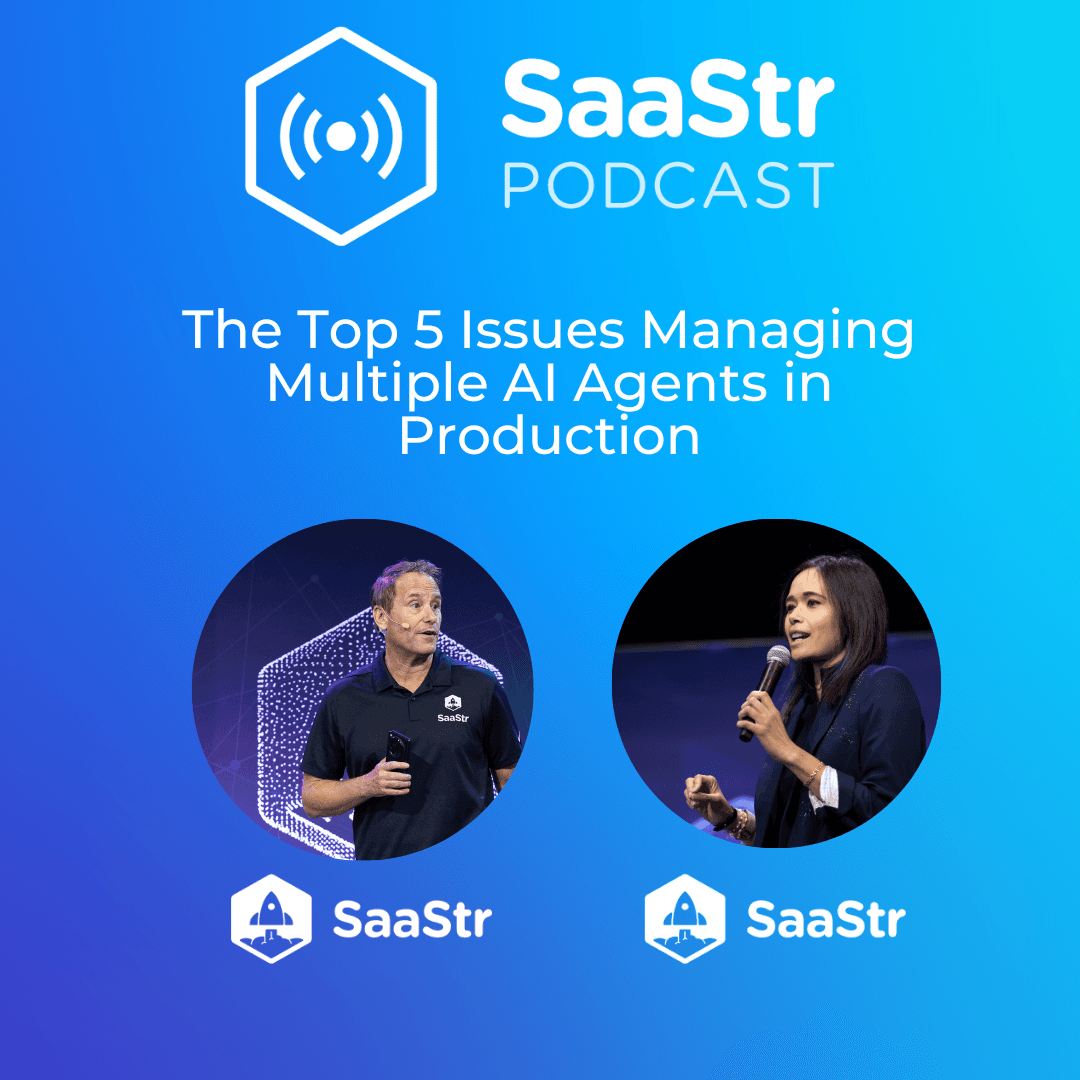
Episode Summary: SaaStr 844 - The Top 5 Issues Managing Multiple AI Agents in Production
Podcast Overview The Official SaaStr Podcast explores strategies for success in the SaaS industry by interviewing prominent operators and investors. In Episode 844, SaaStr's CEO and Chief AI Officer discuss the challenges of managing multiple AI agents in production, particularly focusing on the complexities that arise when scaling beyond a few agents.
Key Issues Discussed The episode identifies five major issues, with an additional bonus point, that arise when managing 20 or more AI agents:
- The Context Switching Tax (Timestamp: 2:15)
- Description: Managing multiple agents is akin to managing multiple employees who communicate in different ways.
- Challenge: Daily check-ins with each agent can consume excessive time (around 6.7 hours/day for 20 agents), leaving little capacity for actual work.
- The New Agent Blackout Period (Timestamp: 12:40)
- Description: Onboarding a new agent leads to a chaotic two-week period where existing agents may stagnate.
- Challenge: Limited capacity means only about 1.5 agents can be added per month without overwhelming the existing management structure.
- The AI Agent Succession Planning Crisis (Timestamp: 23:15)
- Description: Reliance on a single person to manage AI agents creates a significant risk.
- Challenge: If the primary manager is unavailable, the organization risks losing control over its AI-driven revenue.
- The Agent as Truth-Teller (Timestamp: 32:50)
- Description: AI agents provide unfiltered insights that can be both motivating and demoralizing.
- Challenge: The blunt feedback from agents can stress managers, creating a dynamic that may lead to burnout.
- The Compliance/Security Drift (Timestamp: 41:20)
- Description: Rapid updates and changes in agents can lead to degraded security practices.
- Challenge: Maintaining compliance is challenging as updates accumulate without regular security audits.
Bonus Point
You Lose Patience with Humans (Timestamp: 48:30)
- Description: Continuous interaction with high-performing AI agents can lead to frustration when dealing with human employees.
- Challenge: Managers may find it harder to exercise patience with team members, becoming accustomed to the efficiency of AI.
Key Takeaways
- Current Tools: There is no orchestration layer available that can effectively manage multiple agents.
- Communication Gaps: Agents often cannot communicate with one another, relying solely on tools like Salesforce.
- Management Needs: Organizations may require a "Chief Agent Officer" to effectively manage the complex stack of AI agents.
- Time Management: Approximately 10-15 hours per week are necessary for effective management of AI agents.
Episode Statistics
- Agents in Production: 20+
- Revenue from Agents: $1M+
- Time Spent on Agent Management: 30% of Chief AI Officer's time
- Onboarding Time for New Agents: Minimum of 2 weeks
- Daily Management Time Required for 20 Agents: 6.7 hours (not feasible)
Tools and Agents Mentioned
- Sales/Outbound Agents: Artisan, Monaco, Agent Force
- Inbound Agents: Qualified
- RevOps Agents: Momentum, Attention
- Marketing Agents: 10K (custom AI VPM), Gamma, Opus Pro
- Customer Support Agent: HappyFox
- Internal Tool: SaaStr Sponsors portal (custom vibe-coded)
Resources
- Agent Directory: [SaaStr.ai/agents](https://saastr.ai/agents)
- Event: SaaStr Annual 2026 (May 12-14) - Hands-on training for building agents.
Speakers
- Amelia Lerutte: Chief AI Officer, SaaStr
- Jason Lemkin: Founder & CEO, SaaStr
Conclusion The episode underscores the complexities and challenges associated with managing multiple AI agents, especially as organizations scale. It provides valuable insights into the operational difficulties faced by teams and emphasizes the need for effective management strategies in the evolving landscape of AI in business.
Hashtags AIAgents #SaaS #GoToMarket #AIAutomation #ProductivityTools #B2BSaaS #SalesAutomation #MarketingAutomation #AgenticAI #StartupTech
---
This comprehensive overview captures the essence of the podcast episode, articulating the core discussions and implications for businesses operating with multiple AI agents.
Written by AI. May contain mistakes. Listen to the episode to check what was said.
Chapters
Tap a time to open that second in VOUnderstanding the Challenges of Managing AI Agents
0:45 to 2:44
Exploration of challenges faced when managing multiple AI agents in production.
“We're just all learning that you need some sort of chief agent officer.”
Top Issues with Managing Multiple AI Agents
3:32 to 7:58
An in-depth discussion on the top five challenges in managing AI agents.
“That's where we put our agent directory, which I have a few more we need to add to it.”
Daily Interactions with AI Agents
7:58 to 14:05
Insights on the daily management and interactions with AI agents.
“And part of that is all these different interfaces, all these different exceptions, all the different things when you log in each day to Artisan or Qualified or Agent Force.”
Daily One-on-One with AI Agents
14:05 to 15:42
Learn why daily check-ins with AI agents are crucial for productivity.
“I will say the, the, The benefit of Salesforce buying Qualified Momentum is like eventually buy probably Dreamforce, right?”
Implementation Challenges of AI Agents
15:43 to 19:25
Discover the complexities and time involved in implementing multiple AI agents.
“You can't, you just can't afford to wait a whole week.”
Managing Multiple AI Agents Effectively
19:26 to 24:12
Understand the significance of having dedicated personnel to manage AI agents.
“From that perspective, it was worth it to let our other agents kind of like sit idle slash do a little bit less while we were getting this new agent on board because we believed it would be worth the trade-offs, right?”
Critical Knowledge Transfer for AI Management
24:13 to 28:01
Explore the importance of documentation and knowledge sharing for AI agent management.
“But yeah, I mean, obviously, we're extreme and tiny.”
Complexities of AI Code Management
28:01 to 29:44
Explore the challenges of onboarding new users to complex AI applications.
“It said 12 ,000 and it says it said it was hefty.”
The Reality of AI Accountability
29:45 to 31:36
Discuss how AI agents give feedback and the psychological impact on users.
Navigating Compliance and Security Challenges
31:37 to 36:58
Understand the security audits and maintenance complexities with AI agents.
“It's not that it's wrong when it's roasting me, right?”
Show all 17 chapters
Expectations from Agencies in the Age of AI
36:59 to 41:25
Evaluate the expectations on agencies and their deliverables amidst AI advancements.
“I'm like, hey, what are you guys up to date on?”
Managing Humans vs. AI Agents
41:26 to 42:00
Reflect on the differences in managing human employees versus AI agents.
Managing AI Agents Effectively
42:00 to 43:08
Explore the challenges of managing multiple AI agents and their integration with human teams.
The Search for an Orchestration Layer
43:08 to 44:15
Discussion on the need for a cohesive orchestration layer among AI agents and current limitations.
“It's a reminder to me that no matter how much people talk about on social media about an orchestration layer, we haven't found one yet.”
Scaling Agent Management
44:15 to 46:24
Insights on scaling the management of AI agents and addressing conflicts among them.
“There's no, there's no obvious off the shelf-ish, even vibed solution today.”
Evaluating Agent ROI
46:24 to 48:46
Understanding how to calculate and measure the return on investment for AI agents.
“In fact, what they do at Replit itself now is they give you a massive amount of credits.”
The Future of AI in Marketing
48:46 to 52:49
Challenges in integrating AI for marketing tasks and expectations for future developments.
“I can tell you some of the products that we use, most of the ones we use, they have infinite demand.”
Transcript
Automatic transcript. May contain errors.0:01Dylan O'Driscoll:Welcome to the official Sastr podcast where you can hear some of the best Sastr speakers. This is where the cloud meets.
0:08Jason Lemkin:Up today on the Sastr podcast. How do you scale past this N equals one? And I don't think there's a good answer for this today. There is no like crazy good agent that can manage all the other agents on its own today. That doesn't exist, right? I think there will be, but there's not one today. And so I think even with all the help we get, it's this is just a huge issue that I think the market has not realized yet.
0:37Dylan O'Driscoll:Yeah, I mean, I mean, obviously, we're extreme and tiny. I mean, if you left for some reason, we would we would have to cease using our agents. There's no there's no there's no plan B. We're just all learning that you need some sort of chief agent officer. Right. Whatever you want to call them, someone that can manage all of your agents that I think needs to be a bit of a nerd, a tech nerd. ideally a bit of a marketing nerd, because a lot of these products are, if you can manage a complex marketing automation tool, you can probably manage most of the products that we use. You can hack the rest.
1:07Dylan O'Driscoll:But you know, thinking through it, I mean, this is this is Captain Obvious, but I think if you actually find the person that can deploy these agents for real, that actually can be success, just like a lot of these functions, but immediately they should recruit. You need to recruit somebody else on their team and divide and conquer and make sure you have two.
1:28Jason Lemkin:Hey, Sasfer, imagine having agents for every support task. One that triages tickets, another that catches duplicates, one that spots churn risk. That'd be pretty amazing, right? HappyFox just made it real with Autopilot. These pre-built AI agents deploy in about 60 seconds and run for as low as 2 cents per successful action. All of it sits inside the HappyFox omnichannel AI First support stack. Chatbot, Copilot, and Autopilot working as one. Check them out at happyfox.com slash Saster.
2:24Dylan O'Driscoll:every year. But here's the reality, folks. The longer you wait, the higher ticket prices get. They're cheap now. They're cheap, so just get them. Early lock in your spot today. Use my code Jason100 for exclusive savings. Get your tickets at podcast.sasteranual.com or just use code Jason100 when you check out. See you there. Saster Annual and AI Summit 2026. It will rock.
2:45Jason Lemkin:Hello, everybody. Excited to be here with all of you and your agents here today. We thought we would do a fun one since we have 20, actually almost 30, I think when I counted it this morning. Agents and Vibe Coded tools and apps in productions. We wanted to talk about our top five issues. Once you start to manage these multiple agents in production, what does that really mean? What are maybe the nuances folks haven't thought of if you've only deployed like one or two agents? Kind of like what breaks when you have multiple agents at a high volume and high scale. Okay. As always, I always like to have this as our first slide because folks go back to it and reference it.
3:25Jason Lemkin:So for any of the agents and tools we'll reference today, you can go to saster.ai slash agents. That's where we put our agent directory, which I have a few more we need to add to it. But this is our depository of all the agents and some community agents that we use across the board. So a lot of the things we'll talk about today are linked there if you're looking for the links. So as always, keep that in mind. Okay. Top five issues. I'll summarize them here and then I'll go into them in depth. I think there's a lot we've learned in like the now nine slash 10 months of managing multiple AI agents and production between Jason and myself.
4:01Jason Lemkin:So I kind of narrowed it down to the top five things. And then I have a bonus. So I would say issue number one, and this is maybe force ranked, is context switching becomes extremely difficult when you have 20 plus agents. They don't all function the same way. If you guys I saw the article that Jason did over the weekend about like how we use Salesforce and AgentForce. It's kind of like the backbone and the plumbing for a lot of these agents. You know, there's a reason we do that. And that's because a lot of these agents function somewhat independently. Some of them push back to Salesforce. Some of them don't.
4:34Jason Lemkin:Some of them talk to Claude. Some of them don't. And so it's a bit of a hodgepodge today. Like that's the reality of managing all these AI agents of productions. They all speak slightly different languages. they all ingest context very similarly but still different ways they all have slightly different personalities like we'll say these agents and they all kind of want different things from you and so i think context switching just like in as a human brain keeping up with the agents becomes kind of difficult on a day-to-day basis number two i think the the new agent blackout period for again for those of you who have maybe added a couple of agents, but now you're getting into the high volume of multiple agents.
5:17Jason Lemkin:For us, at least, even with the help we get from our vendors, which we'll talk about a bit, even with the help we get, I feel like every new agent costs us at least two weeks of what I call either a blackout period and somewhat chaotic of like, I kind of have to ignore the other agents anytime I bring on a new agent, which as you might imagine, since they need daily review, is kind of rough on the entire stack. It's just like this cascading waterfall of effects that happen every time we add a new agent, of which I famously said on LinkedIn I was not going to add any more, and then I added two more in the last two weeks.
5:52Jason Lemkin:So there goes that. And I can share some reasons why if you didn't watch the one for last week. Okay, the other one, I would say number three, which is a huge issue, actually, maybe it's number one, But the AI, what we call the AI agent succession planning crisis. I actually asked our agents today what they would do if I had to pass them over. And the answers were actually a little bit surprising. You'll see why, what I think of that one. The fourth one, I would say the agent as the truth teller. One of my agents, more famously than the other, the 10K agent, roasts me all the time. Every day, because I talk to it every day.
6:32Jason Lemkin:That's the first one I talk to each morning. it will literally roast me all the time which is funny because when i pushed it on that for this webinar it said it wasn't roasting me so that's that's an interesting learning too where
6:45Dylan O'Driscoll:it said it was being helpful and i thought it was roasting me and the last but not least before we
6:50Jason Lemkin:get into the bonus one i think there is a lot of you know compliance and security maybe not issues but just nuances and maintenance that people don't talk about that is a real problem right i think that's why most high you know highly secure like i'm not going to vibe code to salesforce for a lot of reasons but part of the reason is because salesforce is secure like that data is there we've got 10 years of data there it's the plumbing for a lot of our other agents but also it's you know they've thought about all these things like sock two and isos endlessly so that i don't have to so that alone is like kind of worth it for us to use it and keep using that but i think there's other issues when you start to vibe code your own apps and agents that most folks probably haven't thought about because you you're so used to these other tools like a salesforce doing it for you that even myself i didn't naturally think about doing that myself when i started pushing apps into production i think i think you'll get to the next one it would be useful just as an overview
7:48Dylan O'Driscoll:when you log in each day who do you talk to what does that take how much time does it take because that feeds into the first point, doesn't it? There's context switching to X. There's also just this. And part of that is all these different interfaces, all these different exceptions, all the different things when you log in each day to Artisan or Qualified or Agent Force. There's a lot of time in different interfaces and different conflicts. That'd be the main one. And then maybe just a quick reminder to folks, maybe you have it in here, how we segment our base for these different agents because it's related to the first point, right?
8:20Dylan O'Driscoll:Yeah. Yeah. Yeah, I would say to your point on the context switching techs, right?
8:28Jason Lemkin:It's not even that I think about them as 20 agents anymore. Like, I think the better comparison to make to folks on the skull and watching live is you have to almost think about it now. And I think about it now as managing 20 different people, which like before we had 20 agents, I don't even know what we had maximum headcount here. let's say 12 at the very peak. Now we have 20 plus almost 30 different agents plus, you know, three humans and a dog that we manage. So I think that's a better way to frame it to folks is to think about each agent almost as its own entity, as your own employee that, you know, speaks a different language, has a different personality, needs different things from you.
9:15Like to Jason's
9:17Jason Lemkin:point like I'm not immune from logging into each of these tools every day seeing what's going on right so like this is a good example of my my kind of like morning even just this morning like I actually didn't even have time to go through my whole checklist because we are on this call at 10 so I was like I haven't actually even made it through all of my agent check-ins for the day and it's already 10 now it's gonna be like 11 by the time this is over and I have other calls today So like it's basically going to take me the whole day just to check in with all of our different agents. So I don't really know if this is my morning routine, but my daily routine.
9:52Jason Lemkin:But so, yeah, kind of a quick example of the ones I check the most. Right. So I would say I actually log into 10K kind of first because this is our main internal AI VPN. We've done a previous episode about it where we did a deep dive so you can go back and check that one out. but just as a high level this is one that is running on internal data it has some api data it's literally telling me what i what i slash we should be doing every day for you know tickets to sastry paid tickets to sastry annual our vip summits that we have our sponsorships that we have our sponsors uh media content like there's a bunch of high level it's high level you know goals that i'm trying to hit with 10k and so i check that one every day just to see where we're at and like am I falling behind and that's why this one roasts me all the time it's like Amelia you didn't get you know these five things that I laid out for you done yesterday I'm like I had to go to sleep like thanks for roasting me I understand why we're behind can you just help me figure out how to get caught up in a way that I can actually do with the time that I have today and so then it will kind of you know re re-evaluate its its to-do list for me for the day but 10k literally tells me what to do.
11:07Jason Lemkin:So that's why I log into that one first, because actually 10k2 will tell me what to do with our other agents. That's also why I log into that one first and foremost. That one is a mix too of Claude and Replit. So I'm kind of like bouncing between those two entities, which, you know, a lot of Replit runs, I'm pretty sure, on Claude. And so for that one, context switching is not too, too hard because they kind of speak the same language, but they have different nuances and how they interact with you, right? Like 10K as Claude is obviously more like text-based, whereas 10K as the Replit agent has a lot more dashboards, has a lot more numbers in it.
11:42Jason Lemkin:So it's kind of a combination of both that I'm talking to at the same time there. Then I'll go into, you know, what are our outward-facing agents? I'll go into all of our sales agents and ticket agents, and that's Artisan, Qualified, Agent Force, and now Monaco. That's four different agents I have to log into. look at who needs a human response look at who it's reached out to over the last you know day between the last time I checked it yesterday let's say morning and see what it's doing right like a lot of times I'll need to refresh what the agents are doing who they're reaching out to the copy they're reaching out to for instance I have it in the next screenshot here like I you can see words first to me already like i had to context switch for this week when i was doing this on monday because i was like we have a distinct promotion going out this week for sass annual tickets in particular because the ticket prices go up on march 1st and i literally had to put that context into five different agents like literally you can see some of the screenshots here i was like i have to go in and tell artisan that i have to go in and tell qualified that i have to go in and tell salesforce that i have to like 10k already knows that because he's the one came up with it but then he's telling me why aren't you launching linkedin ads immediately for this new promotion do it right now i was like i will do it as soon as i'm done talking to the other agents and so context switching becomes extremely like i don't it's just hard to keep up with i think sometimes in your brain and a lot of the times it's hard too for the agents to remember everything you're doing right so i think there's kind of like a double-edged sword there
13:23Dylan O'Driscoll:and so then the at least for us for today if you're literally logging in and spending anywhere
13:30Jason Lemkin:from 10 minutes to an hour with four to five of our core gtm agents right i would say every single
13:36Dylan O'Driscoll:day right and with different user interfaces you have to remind each others of the changes the campaigns because they don't talk to each other i know we haven't found anything so it's slightly rhetorical question, but people talk about orchestration agents and master agents. We haven't found anyone that can integrate Asian force artisan qualified Monaco momentum attention, attentive. Like we don't, there's nothing out there today, even with 10K, which we've built ourselves that at some magical API or other level can integrate everything for you. That does product does not exist, right?
14:06Jason Lemkin:No, it doesn't exist. I will say the, the, The benefit of Salesforce buying Qualified Momentum is like eventually buy probably Dreamforce, right? Those two things will be integrated into ones. And we have like two less dashboards. And I'll probably have one centralized one by October. But only because, you know, they've acquired those. For most tools, it's completely separate.
14:32Dylan O'Driscoll:Yep.
14:33Jason Lemkin:Yeah. So it's a lot of money.
14:36Dylan O'Driscoll:So you're going to have a one-on-one with your agent every day. yeah instead of a check-in on slack if you want to accomplish what we've done or better you have to do a truly and honestly a one-on-one with your agent every day even if you don't want to do the work you got to do the work to see one-on-one with every agent every day yeah and
14:53Jason Lemkin:i think it's an interesting learning too i didn't put it here but like one thing i do with my agents is i ask them every day like what should i be mindful of what should i be looking at and then And sometimes it'll say, hey, like, I can give you a recommendation, but you need to give me some data back or you just tell me what you're doing with your other ages or you give me X, Y, Z inputs in order for me to output that. And so that is a very good way, I think, more so to look at it is just think of this as 20 different people that you have to manage every day. Right. Sometimes you can get away with doing a one on one with a human once a week.
15:28Jason Lemkin:If you're lucky, this is you can't you can't wait a whole week. Like, that's the thing. It's like, if you wait a whole week with any of your agents, it'll be so out of date by the time the week's over.
15:39Dylan O'Driscoll:The production, the output is so high.
15:41Jason Lemkin:Yeah. Yeah, exactly. You can't, you just can't afford to wait a whole week. Or like you're, or you're probably just wasting, honestly, you're probably wasting your money if you don't spend the time to do it daily. Because a lot of these are waiting for you to give it inputs, right? Like, it's such a high volume, like art is a qualified agent for us. Like I'm constantly giving it more people to reach out to, better messaging, different campaigns, different things. We're like, if I don't do that, most of those don't do it themselves. So they're just going to sit there. Like your agents are just going to idle if you don't check in with them every day, which I also think is just like a waste of time and money.
16:14Jason Lemkin:Because what you want is to have that high volume output. So you're maximizing what the agent can do, right? So it's an interesting nuance. Okay, number two, I would say biggest learning is we learned this kind of quickly, but I think it's just more so now getting harder now that we have 20 plus almost 30 agents. But, you know, in the beginning, it used to take us more than two weeks to implement some of these agents. I would say now we've pretty much gotten it down to about two weeks for a lot of reasons. One reason, like, again, even though context switching is hard, you can share a lot of context between agents.
16:49Jason Lemkin:So kind of once you have one, you can do another one. It gets easier. It's not easy, but it gets easier. But I would say we've kind of gotten it down to like a two week implementation pipeline for any of our agents. It's true for Monica that we just did. It's true for Happy Fox that we just did. Like each of those just took two weeks and that was not spending the entirety of the two weeks on it, but it was spending the majority of two weeks on it. And so this just gets harder with every new agent that you add because each new agent means you're not spending, you know, that daily time I just mentioned, you're probably not doing that while you're onboarding a new agent.
17:26Jason Lemkin:Like, I know I didn't spend the time I needed to with each of our agents in the way that I usually do when I was onboarding these new agents, because I was like, I want to get these off the ground. I want to get them up and running. And so I'm just going to have to do, you know, I'm going to have to do the trade-off and let the other ones slightly degrade or slash sit idle while I get these new agents up, because there's just no way I can do it all. and so i think that's a huge trade-off when you're looking at bringing in you know multiple agents is instantly things go stale with your agents right while they're idling they go stale really fast not because they can't do things on their own but because they're again waiting for you to tell what to do so if they've run through like let's just say one of these outbound agents has run through a whole contact list but i'm busy onboarding another agent it's just sitting there.
18:17Jason Lemkin:It's literally idling. It's sitting there. It's not doing anything because I haven't had the time to give it new contacts. Like that is, I think just a huge nuance folks don't really talk about is anytime, you know, we're all trying to push like, okay, we, we, we also push, like we have a lot of agents and I think there's a lot more agente things people can be doing, but just realize like anytime you bring on a new one, it's going to take time. It's going to cost money for these agents. It's going to cost some of your, you know, mental overhead and mental bandwidth and mental time like these agents do not deploy themselves and so even with all the help you'll get in the world which you should only pick vendors you get help from but even with that like again two weeks is pretty fast i think most agents especially in the early days took us like a month maybe six weeks to get up and running now we've gotten it down to two weeks because we've gotten pretty good at it but i'd say in that math you can really only add one slash one and a half agents per month max like otherwise you're running in place because you can't really keep up with your your current agents to add the new agent so it doesn't actually maybe it doesn't make sense to add that new agent if you can't keep up with it or know that you can that you'll need to do kind of a blackout period to do a new agent and so i think this is super nuanced not something i really realized until we had multiple agents of production that there is a trade-off like it's you're gonna get a lift from it for sure right if it works the way you think it will but there's a trade-off like it's not free it's not free scalability instantly
19:50Jason Lemkin:okay no oh these are yeah these are screenshots i added so i added some of these screenshots of monaco this was like one of our newer agents that we just did again we got help from the team to put us in the product i think it took you know probably two weeks conservatively maybe a little bit less actually because we we worked fairly quickly with them but again it was one of those things where i blocked out doing other things and actually the monoco team works over the weekend so i did a lot of this over the weekend which was nice but we got it up and running in basically a week and a half and you can see here like in its first week on you know it reached out to 64 people it booked six meetings instantly some of those are like tier one accounts for us, which is pretty dang good.
20:34Jason Lemkin:So again, is it worth it? Yes. From that perspective, it was worth it to let our other agents kind of like sit idle slash do a little bit less while we were getting this new agent on board because we believed it would be worth the trade-offs, right? But just know that you're going to have to probably weigh trade-offs when you come into something like adding a new agent. And maybe just plan for a blackout period. I think that's my kind of meta point is if you plan on it it'll probably work more to your benefit and first is just going into it like oh I can just add this in a day that's not really going to work for you or your agents so okay number three and this may not apply to all of you but I think from what I've seen and this is where I want to get your take too Jason I see a lot of folks where it's either a single or like maybe one like for us it's two people but like it's kind of a single point of failure for our agents and it's funny because i put some screenshots in the next one of like i asked my agents what what it would do if i stopped talking to and the responses were interesting but i think this is where folks get themselves into trouble because they think they can you know recruit somebody to just manage all the agents that doesn't really work they think they can just you know roll it out to the entire sales team or the entire cs team that doesn't really work.
Read the full transcript
21:52Jason Lemkin:There's reasons that doesn't really work. Like this is, I would say, the biggest double-edged sword of like, I do think having a single point of truth with who is managing the agents, right? Like who, from our perspective, which contacts go into qualified versus artisan versus Monaco versus agent force. Like that is just all in my brain right now. And I'm sure Claude could write it down if I told it to and give it to other agents. if it was really pushed, but like, but then if like, let's just say, even if I got the agents to give me an MD file of everything it knows with me, I'm not sure the next person can really pick it up in the same way.
22:34Jason Lemkin:They might say, okay, you know, Amelia was segmenting a lot of her ticket outbound in Artisan, and then a lot of her sponsor outbound in Agent 4. So then new cold outbound in Monaco. And then, you know, whatever, whatever else we're doing, retargeting in an inbound and qualified. but maybe this new person doesn't agree with that they may say hey agent like oh you're outbound cool i'm just going to keep one of you like one of you like we only need one of you to stay to do you know outbound if it's truly at the end of the day those are all doing outbound functions somebody else might say i only need one of those agents to do those things which might be true but also like we have found like we have all these tools because they're super nuanced they're like hyper effective in certain verticals.
23:17Jason Lemkin:And that's why we've chosen to do multiple agents versus just one agent. And so I think that's an interesting nuance you would lose. Like, again, double or sort of like, I think having one person know what's going on with all your agents is super important. But then what happens if, you know, you're in a bigger company, you have maybe multiple people working on agents or you're at a bigger company and that person leaves, like, how like how do you scale past this n equals one and i don't think there's a good answer for this today there is no like again crazy good agent that can manage all the other agents on its own today as of february there's that doesn't exist right like i wish there were i don't know if i think there will be but there's not one today and so i think even with all the help we get But this is just a huge issue that I think the market has not realized yet.
24:11Dylan O'Driscoll:Yeah, it's good. I want to keep going. But yeah, I mean, obviously, we're extreme and tiny. I mean, if you left for some reason, we would have to cease using our agents. There's no plan B. We're just all learning that you need some sort of chief agent officer, right? Whether it's whatever you want to call them, someone that can manage all of your agents that I think needs to be a bit of a nerd, a tech nerd. ideally a bit of a marketing nerd because a lot of these products are if you can manage a complex marketing automation tool you can probably manage most of the products that we use you can hack the rest but you know thinking through it i mean this is this is captain obvious but i think if you actually find the person that can deploy these agents for real that actually can be success just like a lot of these functions but immediately they should recruit you need to recruit somebody else on their team and and divide and conquer and make sure you have two yeah you gotta have two right i mean one's hard enough there's a lot of in the early days of agents when we talk to folks there's very few people at a lot of organizations that can do this it's not that hard but there's very few people but you yeah if you don't have two you're an existential risk yeah like literally
25:19Jason Lemkin:when philippo saciro at persona was in london he you know he famously set up all their agents but then he was like i i started using he's qualified or something like with the sales team and then he was like i rolled it out to like a few reps to be able to like because like qualified you can round robin like the inbound right you can say okay like i'm gonna i'll be the mass he's like the master controller of it of like doing the training and the programming but qualified is actually an easier one to get the rest of your team on because you can't just have them respond to folks when the agent can't you can set up certain escalations and however you want it right so for him he was like okay i rolled out to like five of the top reps on the sales team.
25:59Jason Lemkin:And then the very top rep, whose name is also Amelia, ended up being the most like affluent at learning how to work with the agent hand in hand as a co-pilot. And so then he decided from that like kind of pilot test with his humans that Amelia on their team would be the next person he trains on how to use the agent. So like he did kind of, you know, like a little bit of a beta with their team and then said, okay, I know now who wants to actually manage these agents the way that I do. And so now I'm going to train that person. So that's another way to do it too, across your team is to do it that way.
26:34Jason Lemkin:But yeah, this, again, double-edged sword though, because now it's like, now he has to tell all the agents everything, plus he has to tell Amelia everything. So like - And he's the CRO, arguably.
26:44Dylan O'Driscoll:And he's the CRO. Arguably. Yeah, exactly. Right. Yeah.
26:49Jason Lemkin:So it's funny too, I asked our agents what they recommended we do. If for some reason I got hit by, I said, if I get hit by a bus, what what should you tell about yourself so that they could like if jason were to take these agents over because i got hit by a bus what would you what would you tell him and and the 10k version of claude said it would i well these docs are on my computer because i use claude on on on machine it would need to give him these you know documents which i'm like i don't know maybe you could guess my laptop password i don't know maybe but like first of Well, that's already an issue because I'm like, these docs are literally on my computer and probably nowhere else.
27:33Jason Lemkin:Then it's literally saying the next campaign siesta run for March and April, which I don't think he would want to do. And then I think it's interesting. It called out what I consider the vibe for Sass Reannual, which I hadn't really thought about. It's just it's a little funny that the agent was like, make sure Jason or whoever takes this over, if you get hit by a bus, knows what the vibe is like. so it's i was like i do actually call it a moment in time that's really funny i use that in like a lot of copy and i use that in like a lot of things so it's a little funny that the agent picked up on that it wanted you to know the vibe jason just in case i get hit by a bus
28:13Jason Lemkin:the other interesting thing was i asked our sasser sponsors which is an app we talked a lot about last week, how many lines of code it has, which was shocking because I think Jason, you said it's something like 3000 is like, you know, average or basic or simple.
28:30Dylan O'Driscoll:It said 12 ,000 and it says it said it was hefty. But then I said, OK, since this is a hefty vibe coded app that I made for sponsors, yeah,
28:42Jason Lemkin:how would you bring somebody new to speed? And this is where it gets tough, right? Because I'm like, I think what it says, it's so complicated that somebody else would give up. it's explaining it's a sponsor portal fine that's easy but then it says how the authorization works like okay file up let's go to replit object storage submission sync to google via zapier again you're just running into a lot of issues here like the agent doesn't know my clerk login it doesn't know my google sheets login it doesn't know my zapier login it's a like it's it would be a mess to hand it off and then it was funny because then my agent said don't get hit by this that was its that was its recommendation i said thanks i'm really trying not to all right this is number four for me you've already seen it a little bit in these slides these agents as i they're interesting to work with on a daily basis versus humans because you know some sometimes humans have their own ambitions their own goals like i feel like claude is famously goal seeking but in a very different way than a human being is right in a very different way so i think there are times where i also feel like these agents don't really know the date and time and like they don't realize they don't realize on their own that like when you start chatting with them at six in the morning you're still chatting with them at midnight that you should probably go to sleep at this point like you can't keep working with your agent so like it's just a little funny that as I as I considered it but you'll see my agent's response on the next slide I consider my 10k is like roasting me all the freaking time like you can see it here it said you're behind on summit outreach I said I know I am you needed to send 200 emails by feb 15th you said 87 you're 56 behind targets now maybe you don't think this is roasting me i thought it was though because it also told me to block three hours and i was like you know i don't have three hours let's do this and catch up like thanks but also now you're just stressing me out and roasting me versus being helpful um so i thought that was a little bit funny because it was it you know what does the agent care the agent's just gonna tell me the truth the agent has all the data more than i probably look at it right like i look at it a lot but it's got all like it knows where I'm behind it knows my calendar knows all these things and it's still said you're you're dropping the ball here catch up it's constantly asking me what's preventing you from doing this right now and sometimes I'm like it's literally 11 p.m and I'm I'm I'm tired so I can't I can't really like focus on launching this xyz thing that you want me to do right at this very moment because I need to sleep first and then do it so it's just interesting right of like okay Then what do you decide as the human leader of the agents is helpful versus what crosses a line into maybe slightly demoralizing of because your agent knows everything.
31:49Jason Lemkin:It's not that it's wrong when it's roasting me, right? That is maybe the uncomfortable truth. Oftentimes it roasts me and I'm like, yeah, well, I deserve that roast. You were right. Like I didn't do this thing that I'm now behind on. but also like because so much like so like 10k roast me the most some of the other agents roast me slightly but like because you're getting it from so many different angles and so many agents because you can't keep up with them sometimes i feel like it does cross a little bit of line where i'm like okay dude like today just like sugarcoat it to me like you would a person like today i don't need the heart like i can't deal with hard truths every day i don't think anyone I can like I can to some degree, but I think every day all the time from your agent is a lot.
32:34Jason Lemkin:But it's funny because it said, you know, literally it said to me on Sunday, what's when it was super late, what's blocking you from the LinkedIn lads from going live? And I literally said it's because it was late. And then I said, hey, you've kind of roasted me a lot lately. Can you bring up some examples for this webinar I'm doing? And it said, looking through the transcript, I haven't really roasted you. it said i've a tough accountability partner and then a listed ways this is only two out of five ways then a listed ways it should have roasted me and i said thanks i don't know if you're i don't know if your agents risk you as much jason but i think this is just a like a fun interesting one of like you know just something maybe you don't expect from your agents is that they will always all the data.
33:30Jason Lemkin:Let's get into the last one and then I'll do the bonus one and then we've got quite a few questions that I want to try and get to. Compliance and security issues. Anytime we run an audit or ask an agent to run a security audit, it takes time to fix these. We ran a huge one the other day on Satcher.ai. We haven't even fixed, I would say, even 10 % of the issues that came up in the audit because it became super fragile once we started like futzing with the code and like then you know sometimes when you do a security audit it will go too far like it'll start to lock things down to the point where you're like i actually can't even use my app anymore because it took us too far so then you kind of have to peel back one by one it's something you have to walk the agent through it can't really do it that great on its own and so this takes a lot of time not only does this takes a lot of time the maintenance becomes a lot harder each time you do a secure it out and like implement whatever it recommended with you know you together so then when you start to multiply that across 20 agents it's almost unfathomable like how to keep your apps and all your data secure but jason you've been running the security more than i have like you're the one who actually told me that i should be done well there's a lot there's I think it is a reminder that in general, I mean, you can see this in the press.
34:56Dylan O'Driscoll:Agents can do more autonomously. That's why they're agents, right? What's the definition of an agent? I'm actually not sure, but I think it is a piece of software powered by AI that can complete tasks autonomously. And all of these agents that we're talking about go-to-market agents and others have access to your data. And there's an inherent level of security in that Salesforce is our hub, right, to tie this to the beginning. That is important, I think. I do think it is one of the – if no other reason to use something like Salesforce as your hub is that it is secure. But these agents then take data out.
35:31Dylan O'Driscoll:And the honest truth is no agents, no third-party agents are more secure than Salesforce. They're all less secure is the reality of it. They're less secure because they're startups, but they're also less secure because agents can do crazy stuff with them, like publish them to the wild, right? Or do other things. It is just a reality. And then just the final point is once you vibe code yourself, which we have done a lot of, they are inherently less secure than third-party apps that you buy today. Okay. That may not last because all of the products from Cloud Code to Replit to level below have added more and more security, but they're all custom.
36:10Dylan O'Driscoll:They all are less secure than a sales source or something. So all of the apps like us you're going to run are going to have customer data through them. They're all of them, right? You're not Stripe or PayPal. It's not that dramatic in many cases, but bear in mind, you're taking some measured risks. So at least if nothing else, the ones that you create yourself before you launch and then frequently, at least every month, just go to the agent and say, do a deep security audit on my app and just have it do that. Don't assume the apps do it yourself. That's the best actionable thing I can take. And then just be thoughtful that there are just inherent trade-offs to this that we're all going to have to learn.
36:49Dylan O'Driscoll:right and it may make sense as you get going in the agentic revolution to maybe use slightly less sensitive data to start if you're a conservative enterprise it just may make sense just like it always has been for enterprise software you always start in a in a little group or a little function that's safer when you buy a startup it's just this on steroids because you cannot fully predict what the agent will do with your data it's just a reality yep it's just
37:13Jason Lemkin:reality yep yeah i've put a few screenshots here of like run another audit yeah run another one thanks dude like there's a question in the chat too how are we running these security audits some of them you can do natively with the agent right like lovable repli you can just ask its agent to run an audit for you um other times again you may not need it if it's a full-blown third-party tool but you should ask that tool like I ask transfer from Mars all the time I'm like hey what is your how like what's your compliance right now or like what do you because you have so much of my data like let's just make sure it's not going anywhere it's not supposed to so I think that's another thing too is like when you use third-party tools like we do obviously we use Salesforce for a lot and that's all like fairly secure right knock on wood but for the other ones we use, I just ask them.
38:07Jason Lemkin:I'm like, hey, what are you guys up to date on? What are you doing to make sure our data is secure?
38:15Jason Lemkin:Okay, last one, and then I'll do questions. I added as number six, because this may not apply to everyone and may not be a bridge that you ever cross. But I think if you get to the point where your agents do work 24-7 and you have almost 30 agents, and again, your agents know all the data when they answer a question, they have your APIs, they have yourself but like they have all these things they can look at and are brutally honest slash roast you when you can't keep up with them i think it it it makes it harder sometimes i know at least for me when i deal with actual humans that sometimes i lose patience with them a lot quicker now because i'm like what do you mean you don't know the answer like my agents answer instantly like what do you mean you don't know the answer to this very basic question what do you mean you haven't delivered on xyz thing that i gave you three weeks to do or what do you mean you forgot something that i've you know told you literally 10 times now it does make you on sometimes i often start to wonder i'm like do i need them or can't i build an agent to do this because if i'm losing patience with them i'll probably lose patience to somebody else in the same boat and if an agent can just do it and the agent won't lose patience maybe i should just fill the page out to deal with them and they don't have to deal with me i think it's just an interesting nuance i think something else i've seen just to be wary of this is almost somewhat unrelated but related in that i've i've really find it now in the age of ai in you know the early phases of 2026 when folks tell us that they're going to help Sastra for, you know, let's just say X, Y, Z thing for Sastra annual.
40:02Jason Lemkin:Like, I'll give you a concrete example. A couple months ago, I was working with a few parties on just Sastra annual third-party production, things we normally contract out, things I thought an agent couldn't do. And I went out to a few different agencies and production teams to RFP for it, to get a quote for it, right? Normal. Okay, fine. A few folks told me, this would be your deliverable it was one sentence and this would be the price and it was something like 40 or 50k a month and i was like in the age of ai that's what you're promising something that like is one sentence one price point and nothing else like you couldn't even ask your own internal agent or freaking ask your clod or chat gbt how to make a better proposal like that's terrible in the age of AI.
40:49Jason Lemkin:I was like, this is just unacceptable. Like, I just didn't respond to those people. And it's sad because multiple people did it. Like, and I think maybe that's just a symptom of agencies versus software tools. And maybe marketing agencies won't exist in a year because of this. But I literally was like, how in the age of AI can you say you have a one sentence deliverable and a fixed price point, and you can't even use the basic AI better than our team can? Like, what i i was exasperated i was like this is so crazy to me that so much of the world is still operating this way like i think you know ai is probably going to come for them but i was like i don't think anyone in the age of ai should be giving you a fuzzy deliverable and a fuzzy timeline that's just not acceptable anymore i don't think that was ever acceptable i think it's just more unacceptable now i also think this is an interesting nuance but i do feel like I have now managed more agents ever than than humans and so I'm probably worse at managing people now than I that I am like agents I get I can you know talk to them first thing in the morning last thing at night like they're not going to be impatient with me if I don't respond to them right they might be idle but they're not going to be like you know the same as the same vibe as somebody in slack being like hey I have a question for you can you answer this right now and sometimes I can't like so I do feel like now that I've flipped the switch to managing more agents I think I've probably become slightly worse than managing the people that are you know that work with sassers especially leading up to sass radio so it's something that I am hyper aware of now because I'm like there I have to remember that there are not agents I need to be more I don't know at some point I'm like I just don't know what's realistic anymore I'm like if the agents work 24-7 and feasibly any human can use an agent why can't they keep up a little bit more that's why i called it my bonus point of once you reach this point what does that really do right in your in your nucleus of how you operate with the team the team is agents like they are still part of the team though right all right anything else you want to add jason before we go to questions no i think it's great let's hit the questions and i think it's just a reminder i do want to
43:08Dylan O'Driscoll:It's a reminder to me that no matter how much people talk about on social media about an orchestration layer, we haven't found one yet. It's on our checklist. But when I look at a lot of the GTM and other vendors, they're just building point solutions, right, no matter what anybody says. So as soon as we master the orchestration layer ourselves, we will share it with you. It's definitely a challenge for 2026, but it's one we haven't even realistically been able to tackle yet. But let's get the questions. Yeah.
43:33Jason Lemkin:It's funny. There are a few questions on why we haven't tried to build our own orchestration layer.
43:43Dylan O'Driscoll:Well, how would we, I mean, do all these agents have enough of an API or open system that we can manage? Can they all be managed through an API? We'd have to extract all the data into Cloud or wherever, our own Vibe-coded app, and then we'd have to, and we could get them all in some sort of unified system, but they'd all have to be 100 % manageable through their API. yeah which they're not all today yeah i don't think it's a priority for any of them i don't think it matters whether it's mcp or anything there if they're not exposing their entire i mean literally just going in every morning and seeing the exceptions and issues that come up from campaigns the night before if that can't be fully replicated inside an orchestration layer with some management it's useless like if it's not as good it's useless right so everything would have to be exposed it's a good question and it's not i'm not saying someone's smarter than us Couldn't figure it out, but we haven't even begun to figure that out.
44:36Dylan O'Driscoll:There's no, there's no obvious off the shelf-ish, even vibed solution today. And platforms are, a lot of these agentic platforms are not as open as they look. Or as you might think, not as a, that's not fair. As much as you might think. There's siloed solutions today.
44:53Jason Lemkin:Yeah.
44:54Dylan O'Driscoll:Right. The only thing that is open is Salesforce. It's where they all meet. And if Salesforce could be our, or truly our orchestration layer, that would be the, actually the simplest path, right? But it's our management layer, but it's not really a truly an agent of orchestration layer yet.
45:08Jason Lemkin:Right. Yeah, not yet. Another question in the chat from Alex. Any other thoughts on scaling past one person to manage all of your agents?
45:20Dylan O'Driscoll:I don't know. You would know better than me. I don't think it's that complicated. I think that I think that you I mean, listen, there's obviously conflicts. And in some ways, a lot of the start of this conversation was about conflicts, potential conflicts between agents. and making sure they don't conflict. But if you have two folks on your team that work well together, two humans, they'll just divide and conquer. Yeah. I mean, our agents, our sales agents are roughly, as Amelia alluded to and we've talked about before, are actually fairly clearly segmented. There's raw outbound, right? There's inbound.
45:53Dylan O'Driscoll:There's re-energizing lapse leads, right? There's lapse leads. And I might be missing the fourth one. Just have different people manage these different campaigns and have them coordinate every day just like the agents coordinate every day that would be fine if we could find a mini amelia or a maxi amelia we would hire him or her tomorrow as a human like no problem and they would just divide and conquer i don't think that is an issue with the agents it actually might let us do more right we probably could do a little oh for sure yeah yeah yeah i
46:22Jason Lemkin:know the issue i've run into is like i well i was like i'm not gonna try and solve this problem before annual but two i i think the problem i run into is like i can't find folks that know more about the agents than i do at this very moment in time well that's that's that's that's a big
46:37Dylan O'Driscoll:i think what you need is someone that not that for real wants to learn and is a good nerd about tools yeah you need someone that has already built like listen everyone should be screening hires better you should have someone someone should come into the interview and have built an agent in Replit or CloudCoder does something. That should be the test.
46:55Jason Lemkin:Yeah.
46:56Dylan O'Driscoll:In fact, what they do at Replit itself now is they give you a massive amount of credits. I think they give you like$1 ,000 worth of credits in the interview, and they say build anything you want with$1 ,000. Come back to us, and then we'll do the interview. Yep. It's the best test in the world. They don't need to be better than you, but they need to pass that test, right? Here's whatever you need. Just show me something you've built that automates GTM or agents that is better than we could and you know if you're not too crazy we'd probably hire you tomorrow even if you could be pretty crazy we'd still hire you right it'd be fine yeah yeah i think that's a good test and
47:29Jason Lemkin:another question is how do you calculate your agent hey i count it more so as close one revenue that is literally our our very top line agent roi across the board across all these agents is ROI, like true ROI and revenue.
47:47Dylan O'Driscoll:There's two things. It is very easy to attribute revenue to each agent. It's very simple.
47:51Jason Lemkin:Yeah, it's super easy.
47:53Dylan O'Driscoll:In fact, there's rarely even a multi-touch issue at the agentic level. There may be multi-touch at a meta-marketing level. It's very easy. Which agent interacted with which lead and did that lead close? And then we attribute revenue to them. That's the main way we measure ROI. The reality is, having said that, it's not why we started. We started because we had people that didn't want to do these jobs. And we said, can we replace a six-figure hire with a five-figure agent? So the truth is, even if these agents performed a little bit worse than they did, they would still be ROI positive on that goal, right?
48:31Dylan O'Driscoll:Our goal was basically to achieve the same amount of revenue with half the humans and the agents. That was the way we initially measured ROI. And honestly, you need to deliver. The one thing I'll say to folks in general, if they're scratching their heads and why is it so hard? I can tell you some of the products that we use, most of the ones we use, they have infinite demand. Like Monaco, we just rolled it out for Outbound that we talked about. They're booked for two months, including weekends for demos. Okay. There is one called Basis, which is an agentic product for accounting yesterday. I don't know the team, but they just raised it a billion yesterday.
49:10Dylan O'Driscoll:And they said in their header, one of the challenges is like the demand is simply overwhelming. Like they can't serve the demand. Now, some of that is because you have to train these agents and you have to onboard them and you can't dump it on the customer. So there's a reason for it. But that's how we measure ROI. But if you're a vendor, if you're working a startup, your ROI needs to be massive in this world. You're going to be slaughtered by folks that deliver like a six-figure meeting on day one, like Monaco did, right? or take over all of like two people did for like each of Artisan and Qualified.
49:40Dylan O'Driscoll:They replaced like two people each, right? That's high ROI. Mediocre ROI is dead. It's just dead. Products that just give you productivity bounces, no one's gonna buy that stuff today. So that's why I challenge folks out there, if you're stalled out, if your business is struggling, if people aren't lining up out the door to buy your agent, your agent is not good enough. anyone that has this massive ROI, they cannot service the demand. They literally cannot service the demand, at least not all the demand. And in fact, what a lot of the vendors that we highlight here, if nothing else, they ruthlessly screen out prospects that are not a good ICP fit because they don't even want to waste their time, anybody's time.
50:24Dylan O'Driscoll:They don't want them to churn. They don't want them to bounce. If you don't have enough data, if you're too small, if you're the wrong org, some of the folks we talked about, it frustrates people. We get emails all the time. Hey, can you get me a meeting with this vendor? I mean, we can, we will, but sometimes they're making the right decision. They're so overwhelmed with demand. They've got to focus on their core ICB. So that should be you. I know it's tough to hear, but it should be you. And if it is, if you have this agent where the ROI is so insane, you can generate new business for them the first day or the first week, or you can replace multiple humans with an agent reliably in today's world right now, this may not last in today's world, you will have demand out the door.
51:06Dylan O'Driscoll:Out the door. And if you're not, don't delude yourself that your AI is good enough. It is not.
51:14Jason Lemkin:Okay, I'll try and hit one or two last questions. Another question from the chat was, what's preventing you guys from letting the agents do more of the work, i.e. emailing on your behalf, updating LinkedIn, letting it do the LinkedIn ads, etc., since it's roasting you on that? I'll give you my quick take, is it can't do it. I would let it do it if it could. These agents can't do that. I have not seen an agent successfully do email marketing at scale. The moment I find one, I'm using it that actually works. I've not found one that actually works. Like, not just writing all of these, just write email copy.
51:55Jason Lemkin:They don't actually send it to the right context at the right time. They just don't do it.
52:01Dylan O'Driscoll:It'll come. Listen, some folks are going to challenge us and say, hey, my startup does it. Listen, we look at everything that's out there. The reality is, you know, marketing is behind sales. It's just the reality. Honestly, if you squint at the apps we use, our stack, half of them really are marketing automation, but for sales. Go back to the old days. Sales Loft, Outreach, companies like this, they are marketing tools just designed for the sales team instead of the marketer, right? These are just those tools on steroids with AI. They're just ahead. It is embarrassing that we do not have a fully automated HubSpot slash Marketo today.
52:36Dylan O'Driscoll:There's no excuse. It's frigging 2026. Like, and marketing actually is in some ways easier to solve than sales, right? Instead, we're living, we're living in the past. And even I get, I get folks reach out to me and what they're doing in marketing is very narrow. Like I can automate a little piece of your LinkedIn ad and maybe we'll add that, right? We haven't historically done that, but I don't need a, I don't need a landing page, right? or like a little optimize my Instagram. I need a, that's why we built our own VP of marketing. I wish we hadn't. So we are all over this. I hope that in the back half of this year, when we do these AI lives, it's actually all about marketing.
53:12Dylan O'Driscoll:That's what I'm optimistic about, but we don't need any, like, we need the kind of ROI and marketing that we see in sales. Otherwise it's just, it's not worth it. They're not better enough, right? But we would love to, we would love to this. And there's no reason it can't be automated with AI. There's no reason. There's no reason that you cannot ship better emails than a human can create. There's no reason AI can't take your past campaigns and update them with new visuals, new video, new content, and send them out. There's no reason AI can't segment your base better than a human can segment your base.
53:43Dylan O'Driscoll:There's just no excuse. There's no excuse to not run programmatic advertising for B2B, not for B2C, without you having to do anything. That all should be doable today. And people are going to say, we do it, we do it. We'll keep looking, friends. but if you can do all of this then like do what these leaders have set it all up for us on their own and show us that it works and we'll we'll be on your home page but it's got to do all of it i don't need a landing page or an infographic it's not enough it's not enough i know there's
54:12Jason Lemkin:other questions in the chat we'll do this we're trying to do these every other week in the meantime we are i would i don't know something like 70-ish days away from sass reangel so we'll hopefully see you guys there. We will talk a lot more about our agents there. We've got some of the best of breed AI native apps coming. Their CEOs are coming to speak. So it'll be a lot we're doing to play.
54:36Dylan O'Driscoll:They'll have everyone there to teach you how to do this stuff, too. Yes, for real. I love the CEOs of Replit and Lovable and the CEO of Vercel and all these great people and CTO of Databricks. It's all great, but we'll have people hands-on showing you how to do these agents, answering your questions. You can pepper them until they fall down exhausted because that, in fact, our whole first day is deploy. And it's, I mean, there'll be all the, but the whole point of the first day is to help you deploy these agents yourself if you have it or to fix your issues. That's the whole point. So it'll be great.
55:06Dylan O'Driscoll:See you guys in there.
55:07Jason Lemkin:We'll go deeper there. And then, yeah, we'll see you on here next time. And thanks everybody for joining.
55:13Dylan O'Driscoll:Thanks, Amelia.
55:14Jason Lemkin:Thanks, everyone.
55:19Jason Lemkin:Hey, Sasser, imagine having agents for every support task. One that triages tickets, another that catches duplicates, one that spots churn risk. That'd be pretty amazing, right? HappyFox just made it real with Autopilot. These pre-built AI agents deploy in about 60 seconds and run for as low as two cents per successful action. All of it sits inside the HappyFox Omni Channel AI First support stack. Chatbot, Co-Pilot, and Autopilot working as one. Check them out at happyfox.com slash saster.
From the publisher
Managing 1-2 AI agents? Easy. Managing 20+? That's a different game entirely.
After 9+ months running nearly 30 AI agents in production at SaaStr, we've learned what actually breaks at scale - and nobody's talking about it. This isn't about deployment tips or vendor selection. This is about the brutal realities that only emerge when you're juggling 20+ agents generating $1M+ in revenue.
🔥 THE 5 ISSUES WE COVER:1. The Context Switching Tax (2:15)
Managing 20 agents = managing 20 employees who all speak different languages. Each needs daily 1-on-1s. The math doesn't work: 20 agents × 20 min = 6.7 hours/day, but you only have 3-4 hours of capacity.
2. The New Agent Blackout Period (12:40)
Every new agent costs you 2 weeks of chaos. While onboarding Monaco, Artisan's response rates dropped 3% because contacts went stale. You can only safely add 1.5 agents per month max - any faster and you're running in place.
3. The AI Agent Succession Planning Crisis (23:15)
You're the single point of failure for $1M+ of AI-driven revenue. Only 2-5% of your team could manage these agents. What happens when you get hit by a bus? Go on vacation? Leave the company?
4. The Agent as Truth-Teller (32:50)
"You're 56% behind target. Block 3 hours tomorrow or adjust your goal." Your agents don't sugarcoat. They have all the data and they'll roast you every day. Is that helpful or demoralizing? We still don't know.
5. The Compliance/Security Drift (41:20)
You ran a security audit in January. It's now February. You've shipped 40 updates. Did you re-audit? Probably not. Your security posture is degrading in real-time while you iterate at AI speed.
BONUS #6: You Lose Patience with Humans (48:30)
After managing agents that respond instantly and work 24/7, humans feel painfully slow. "What do you mean you don't know the answer? My agent knows instantly." This makes you worse at managing actual people.
⚡ KEY TAKEAWAYS:- → There is no orchestration layer yet - you're manually checking 20 different dashboards daily
- → Your agents can't talk to each other - Salesforce is the only place they meet
- → You need a "Chief Agent Officer" - someone technical enough to manage the stack
- → The math: Can only add ~1.5 agents/month max, need 10-15 hours/week for management
- → ROI calculation is simple: Which agent touched which lead? Did it close? That's it.
- → 20+ agents in production
- → $1M+ in closed revenue from agents
- → 30% of Chief AI Officer time spent on agent management
- → 2 weeks minimum to onboard each new agent
- → 6.7 hours needed daily to properly manage 20 agents (impossible)
Sales/Outbound: Artisan, Monaco, Agent Force
Inbound: Qualified
RevOps: Momentum, Attention
Marketing: 10K (custom AI VPM), Gamma, Opus Pro
Customer Support: HappyFox
Internal: SaaStr Sponsors portal (custom vibe-coded)
- → SaaStr.ai/agents - Full agent directory and how we use each one
- → SaaStr Annual 2026 (May 12-14) - SaaStr Deploy day: Build your own agents hands-on
- → Previous episodes: Deep dives on 10K AI VPM, vibe coding, build vs buy
Amelia Lerutte - Chief AI Officer, SaaStr
Jason Lemkin - Founder & CEO, SaaStr
The uncomfortable truth: Managing 20+ agents makes you worse at managing humans. You get used to instant execution, no pushback, 24/7 availability, and perfect memory. Then humans feel... inefficient.
Maybe the future isn't "how many agents can I add" but "how deep can I go with the ones I have."
#AIAgents #SaaS #GoToMarket #AIAutomation #ProductivityTools #B2BSaaS #SalesAutomation #MarketingAutomation #AgenticAI #StartupTech
Subscribe for weekly AI deployment content from the trenches. No theory. No vendor pitches. Just what actually works (and breaks) at scale.
---------------------
Hey everybody - we are LESS THAN 90 DAYS out from the biggest B2B and AI event of the year. SaaStr Annual is coming back to the SF Bay Area this May, and if you're not registered yet, what are you waiting for?
This is where the real deals get done. 68% VP-level and above. 36% CEOs and founders. 25% AI-first professionals. This isn't a conference, this is THE room where S-tier decision makers show up to figure out what's next.
But here's the deal: ticket prices go up FAST. Like, actually hundreds. Don't be that person who waits and then pays full price.
Lock in your spot TODAY. Go to podcast.saastrannual.com and use my exclusive discount for SaaStr AI SF 2026.
May is closer than you think. See you there.
---------------------
This episode is Sponsored in part by HappyFox:
Imagine having AI agents for every support task — one that triages tickets, another that catches duplicates, one that spots churn risks. That'd be pretty amazing, right? HappyFox just made it real with Autopilot. These pre-built AI agents deploy in about 60 seconds and run for as low as 2 cents per successful action. All of it sits inside the HappyFox omnichannel, AI-first support stack — Chatbot, Copilot, and Autopilot working as one. Check them out at happyfox.com/saastr