In short
Founder-style operating as a later CEO hire; “executive mindset” vs “operator/owner mindset”; how Figure and Brex built value through first-principles decisions, customer feedback loops, and blockchain-enabled capital markets efficiency.
Guest backgrounds
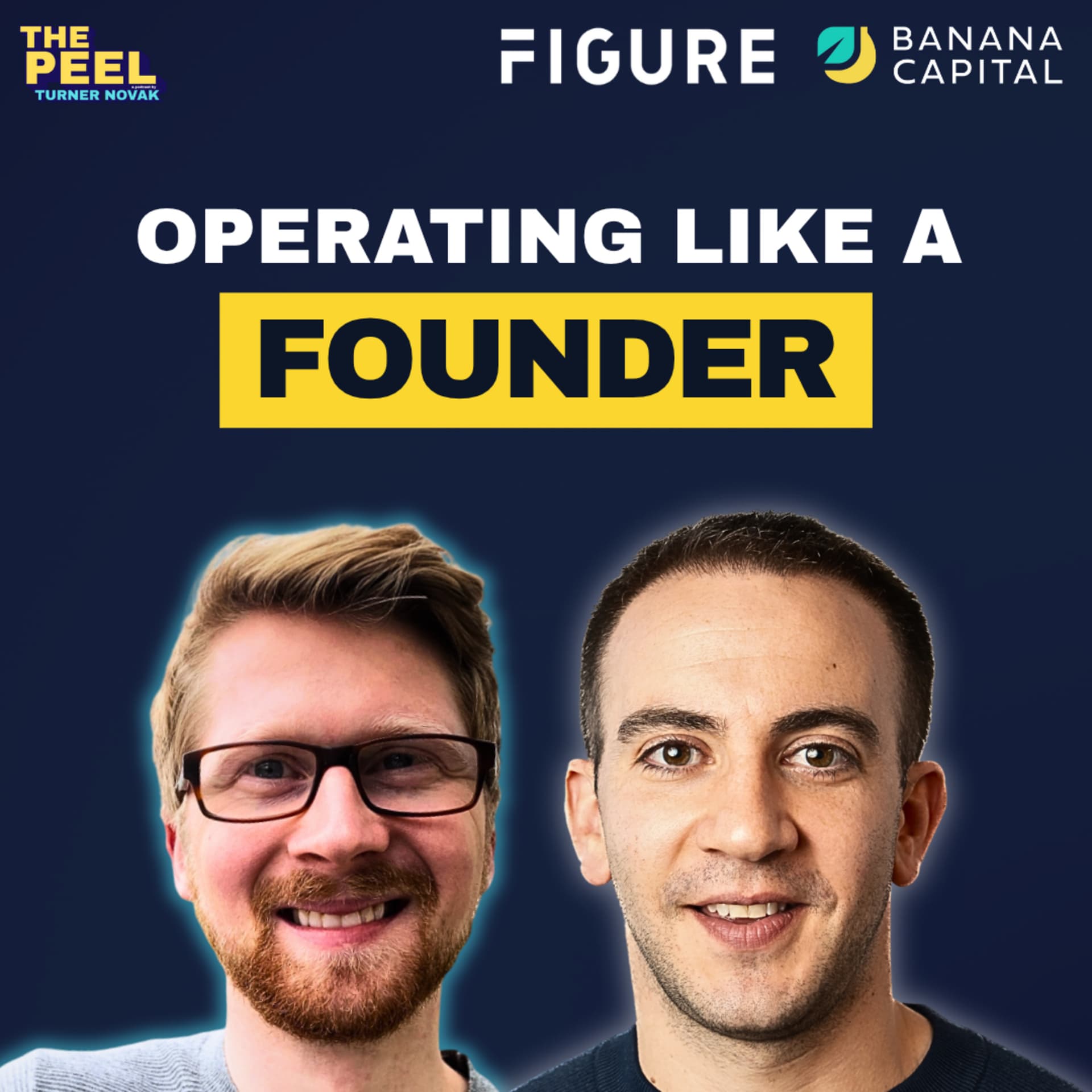
Michael Tannenbaum is CEO of Figure (blockchain rails for capital markets). He previously joined SoFi early (about 75 people; grew to 1,000+), later ran mortgage as VP of finance, and joined Brex as the first employee (company started in a kitchen, initially no product). He has a finance/financial-services background (regional bank M&A, private equity).
Key claims
- “Owner mindset” optimizes for the company (e.g., run the broken business) vs “executive mindset” optimizes for career optics and preserving reputation.
- Vendor/partner choices should be first-principles based on current company needs, not executives’ existing relationships.
- Board dynamics can incentivize self-preservation over “win for the company.”
- Customer listening and weekly business reviews keep teams in the weeds.
Notable examples
- SoFi: chose to run the mortgage business despite advice to stay VP of finance.
- Brex: Masa offered a billion-dollar investment; Brex later used crisp positioning (“first corporate card for startups”) and outdoor ads.
- Figure: blockchain reduces repeated loan diligence costs and prevents double-selling/double-pledging; example cited: JP Morgan losses tied to auto-loan double-selling.
Written by AI. May contain mistakes. Listen to the episode to check what was said.
Chapters
Tap a time to open that second in VOThinking Like a Founder
0:06 to 1:30
Discussion on the differences between founder and executive mindsets.
“That is a little bit unique for the guests of the show.”
Executive vs. Operator Mindset
1:30 to 2:52
Exploration of how executives think about their careers versus the needs of the company.
“And then how is that different from the operator owner mindset?”
Decision Making and Career Risks
2:52 to 5:25
Michael shares a story about taking risks in his career and the mindset behind it.
“And so that's, I think, an example, whereas operator owner mindset is going to be about the company first.”
Navigating Board Dynamics
5:25 to 6:40
Insights on managing board relationships and the impact of reputation on decision-making.
“because they can't ever let themselves fully immerse into the company because they're always sort of managing.”
The Importance of Customer Feedback
6:40 to 7:34
Michael discusses the role of customer feedback in business strategy.
“And I recall in some of the past roles I've been in where we've hired people from large companies, even large tech companies like Meta, their framework is very much about self-preservation.”
The Importance of Customer Feedback
8:28 to 9:32
Michael discusses the role of customer feedback in business strategy.
“It's the AI-native private bank for business owners.”
Getting Involved with Customers
9:32 to 12:10
Discussion on how to gather and implement customer feedback effectively.
“So I run the company with this Big Rock framework, which I don't think that's the only way to do it, but it's a way that works for me.”
Customer Engagement Strategies
12:10 to 15:00
Michael shares his approach to engaging with customers and understanding their needs.
“Is this like aggregated from the internet?”
Career Path and Strategic Decisions
15:00 to 21:10
Learn about Michael Tannenbaum's career choices and insights in fintech.
“I was like, hey, anyone else think I should have on?”
Figure's Innovative Approach
21:10 to 22:33
Discover how Figure is revolutionizing capital markets using blockchain.
“You kind of talked maybe a vision for, what was the vision for Figure?”
Show all 41 chapters
Streamlining Loan Processes
22:33 to 25:45
Understand how Figure improves the efficiency of loan processing.
“So it's a very fast and efficient process.”
The Role of Blockchain in Finance
25:45 to 27:45
Examine the benefits of blockchain technology beyond cryptocurrency.
“So this is just straight up committing fraud.”
Tokenization Trends
27:45 to 28:00
Discuss the trend of tokenizing real-world assets and its implications.
“is that we are a example of blockchain technology in a quote, non-crypto use case.”
Crypto's Current State and Use Cases
28:00 to 28:35
Exploring the current perception of crypto and its uses in tokenization.
“And right now it's more on the cold side.”
The Evolution of Crypto Narratives
28:35 to 29:19
Discussing why crypto narratives shifted towards meme coins and NFTs.
“And we're broadly in the tokenization trend, which is to move real world assets like loans, like equities on chain.”
Comparing Crypto and AI Opportunities
29:19 to 30:16
Analyzing how the monetization opportunities differ between crypto and AI.
“Do you have an idea around like what was going on there where we could have been using it for this kind of stuff and figure obviously was, but like the rest of the industry was doing other things.”
The Virtual Meeting with Masa
31:31 to 32:28
Michael recounts his significant virtual meeting with Masa at SoftBank.
“With AI analytics, all you have to do is ask.”
The Billion Dollar Offer
32:28 to 34:28
A detailed narrative about the moment Michael received a billion-dollar investment offer.
“And it started to be like their telecom company, but they're doing tech investments.”
An Unforgettable Moment at Denny's
34:28 to 35:36
Michael shares a memorable experience post-investment offer at Denny's.
“But like, I don't know that we either of us could have, but I know I couldn't do it.”
Transitioning from SoFi to Brex
35:36 to 36:55
Discussing Michael's decision to leave SoFi and join the younger team at Brex.
“Like, if you what did he say that he was like kind of threatened you?”
Challenges in the Early Days of Brex
36:55 to 38:11
Michael reflects on the struggles and doubts faced during Brex's early development.
“And I was definitely looking for that type of opportunity.”
Building Ownership and Commitment
38:11 to 41:31
Exploring the importance of personal investment and ownership at Brex.
“So what were you specifically looking for?”
Turning Points and Growth at Brex
41:31 to 42:04
Michael discusses critical partnerships and milestones that led to Brex's success.
“in order to get extra ownership, they matched me.”
The Evolution of Brex's Marketing Strategy
42:04 to 46:21
Learn how Brex's marketing efforts transformed the company into a unicorn.
“I wasn't going to compete with SoFi, right?”
The Evolution of Brex's Marketing Strategy
46:24 to 46:59
Learn how Brex's marketing efforts transformed the company into a unicorn.
“Monaco is the first revenue engine built specifically for startups.”
Navigating the SVB Collapse
46:59 to 54:24
Understand the internal chaos at Brex during the SVB collapse.
“So I was a regional bank M &A guy, as I mentioned.”
The Insights Behind Figure's Launch
54:24 to 56:00
Explore the foundational insights that led to Figure's HELOC product.
“But we're talking about people call it$75 ,000 to$200 ,000,$250 ,000 income.”
Understanding AAA Ratings
56:00 to 58:20
Learn about the significance of AAA ratings in the mortgage industry.
“And that just changed our positioning very much from a IPO perspective.”
The Role of Fannie Mae
58:20 to 1:01:20
Discover how Fannie Mae operates and its impact on the mortgage market.
“because most mortgages are performing well, but it's how were we able to maintain that credit quality but taking out a bunch of process, right?”
Blockchain and Loan Origination
1:01:20 to 1:03:40
Explore how blockchain technology is transforming loan origination processes.
“So what is that or what does that mean for somebody who's never heard this before and or knows that you do that.”
Innovations in Mortgage Loans
1:03:40 to 1:06:30
Learn about strategies to innovate in the mortgage space and their implications.
“So this is, so not only is having a faster process valuable, but having a pre-committed pool of capital is also quite valuable.”
Acquiring Kiavi: Strategic Insights
1:06:30 to 1:09:10
Understand the strategic reasoning behind the acquisition of Kiavi.
“It was like pretty big, that seemed like it was like 10 % of your market cap.”
Leveraging Market Leadership
1:09:10 to 1:10:01
Find out how market leadership can be leveraged for growth in fintech.
“that I thought was kind of interesting, You said figures growing about 100 % a year.”
Leveraging Partnerships for Growth
1:10:01 to 1:12:09
Learn how Figure collaborates with partners like Flagstar Bank to enhance services.
“Two was very tangential space because they're doing a version of mortgage, fast, automated marketplace, not marketplace kind of financing, but they have a very active capital market that wants to buy from them.”
Challenges of Transitioning to a Marketplace Model
1:12:10 to 1:14:10
Discover the difficulties fintechs face in adopting a marketplace approach.
“Rule 150 versus rule of 40 sounds incredible.”
Risks and Innovations in Lending
1:14:11 to 1:16:15
Explore the risks associated with outsourcing in lending and how Figure mitigates them.
“They're thinking very much like my North Star is number of customers or my North Star is volume.”
The Process of Going Public
1:16:16 to 1:18:14
Understand the steps and challenges involved in taking a company public.
“confident that our partners will do that.”
The Reality of Being a Public CEO
1:18:15 to 1:23:49
Learn about the differences and challenges faced by CEOs of public companies.
“But like what's the process of going public?”
The Gas Station Test for Business Acumen
1:23:50 to 1:24:01
Discover the gas station test as a measure of practical business skills.
“if your business plan is be stripe and not go public stripe is kind of one-on-one so yeah one One other question.”
Understanding the Gas Station Test
1:24:01 to 1:25:42
Learn about the gas station test and its implications for understanding business operations.
“You have this framework, this test that you call, it's called the gas station test.”
The Reverse Pyramid in Operations
1:25:42 to 1:26:24
Explore the concept of the reverse pyramid in operational roles compared to traditional business structures.
“But in an operating world, it's the opposite.”
Transcript
Automatic transcript. May contain errors.0:02Turner Novak:Michael, welcome to the show. Thanks for having me. Thanks for being here. I think probably one of the most interesting things is you are the CEO of a company, but you are not the founder. That is a little bit unique for the guests of the show. So how do you think like a founder when you are the CEO of a company that you didn't actually start? For me, it's relatively easy because I've been on the ground floor of two other companies. The first was SoFi. I joined there, maybe it was like 75 people. By the time I left, it was over a thousand. And so I got to see how that was put together. And then second company, Brex, I joined as the first employee.
0:42So we were in a kitchen and wasn't even called Brex, didn't have a product. So I really kind of was built from the ground up. And I've always had sort of this owner's mentality, act like an owner. And I think probably that is the number one thing you hear a lot about. And I've seen this at the companies that I've been a part of where, quote, like executives come in later in the company and have that more executive mindset, which is more like managing a career versus I think a founder mindset. It's more like I'm running a company, not managing a career. And those are really different things. And you optimize for very different things depending on what you're focused on.
1:25Turner Novak:I mean, that'd be interesting to talk about then. So what is the executive mindset? And then how is that different from the operator owner mindset? What have you seen as the biggest differences? I think executive mindset is a lot about people are thinking about what they might do next or how this might look on paper. And I think actually a really interesting example is through the use of vendors. A lot of times executives will call me like they have their vendors. And I'm someone like when I came to figure any role, I'm like, I don't have vendors. Like I don't have law firms I have to use or people I'm trying to pay.
2:01Like that's just not, that's not my focus. Like I want to use the best thing for the company. But a lot of times executives come in, like, you know, if it's marketing, they bring their PR firm, they bring their this, they bring, and it's like, it's kind of about them and like their relationships. And they're always thinking through what they might bring these with them wherever they go versus the company. And you can sort of feel that. I know it's kind of a specific example, but I think that's very palpable. But you could argue that it's a
2:31Turner Novak:really good PR agency that they're bringing with them. Totally. Yeah. Totally. I think they could be bringing a good PR agency, but if they are doing right by the company, they should look into, well, is PR a problem today? Is it going well? Is it not? Just because they were a good agency before doesn't mean they're the right thing for there. It doesn't mean that executives are bad. I think that is not what I'm saying, but it's just a different mindset of like, I've got my vendors my way versus what is right for this company, which is a more, I think operator founder approach is a bit more first principled and a first principles approach to a vendor selection would not necessarily come with your existing.
3:20And so that's, I think, an example, whereas operator owner mindset is going to be about the company first. I think a good example of this actually came up when I was at SoFi pretty early on. I was the VP of finance relatively quickly. I kind of rose the ranks. and I remember I had this option. So I was with Mike Jagney, he was the founder of Figure and the founder of SoFi, and we were traveling to New York actually from San Francisco.
3:50Turner Novak:Okay. And I was kind of like complaining about other people at the company and saying like how great I was, blah, blah, blah. And he was sort of like, sure, like you're a great VP of finance, but at the end of the day, like I don't really care that much about that. Like if you want to be great, Like you're going to have to run one of the businesses here. And so I said, okay, well, give me mortgage. Because it was all screwed up at the time. So it was like the worst business? Yeah, terrible. So why did you do mortgage? Because that was an opportunity. Like he wasn't going to give me something that was working.
4:22That's true. Right. So I need to prove myself. I was probably like 27, 8. So relatively, I mean, I was probably 15, at least 15 years younger than everybody else that was at that company. So in a leadership position. So it was a big, big kind of, I guess, bet on me. And point being there though, that a lot of people in my network gave me this advice not to do it. They said, stay, be a VP of finance, you know, because VP of finance is like this, it's this role that every company needs.
4:54Turner Novak:Oh, so you're like super marketable. Yeah, you're so marketable. You're in San Francisco, there's a million startups. All of them need a VP of finance. You go and run mortgage, like who needs that? Yeah. And I thought at the time, like, okay, But like, you know, so I'm just saying, again, it's a different mindset of how you make decisions. You're optimizing for your own career versus for me, I was just thinking, well, this is what the company needs and I'm all in. So I'm just going to do. And then there, look, I left SoFi, right? So there came a time that I clearly wasn't all in, but that was then, right?
5:24And I think that a lot of times executives, they actually manage the career to their detriment because they can't ever let themselves fully immerse into the company because they're always sort of managing. And you also see this at the board level. It's another common advice I give founders is just be really careful with the board. I think people are always looking to add people to the board and it makes them credible. But a lot of times, you know, board members, if they have these big reputations, you know, they're going to protect themselves. And I've seen that firsthand and it's happened at a lot of companies.
6:03And so you just want to be thinking through that dynamic because I think that gets to the same executive versus owner mentality. And is it more about preserving your reputation or is it more about doing whatever it takes to win for the company?
6:18Turner Novak:Maybe another way to describe it is like politics. Like you're playing that game a little bit versus like how do you increase free cash flow per share? Right. Versus, you know, you're increasing your own free cash flow per share. And when you hire executives from big companies, you almost can't avoid that because that is the environment that they're coming from. And I recall in some of the past roles I've been in where we've hired people from large companies, even large tech companies like Meta, their framework is very much about self-preservation. And it's all about kind of attaching yourselves to things that's working and staying as far away from things that are not working.
7:02Turner Novak:So it's like about attaching yourself to success, not creating the success. Yeah, absolutely. Like whatever starts to be working, they kind of run there like little kids playing soccer, you know, chase the ball and they're running away from problems. But when you're like, the kind of way I run my business is I'm focused on the problems. Like if things are working, I'm like, great, you know, that I don't need to spend time on that. Yeah. So I know you have like a process of like getting feedback from the business and from the customers. What's your general process of like really getting in the weeds?
7:34Turner Novak:This episode is brought to you by Numeral. Numeral is the fastest, easiest way to stay compliant with US sales tax and global VAT. It's easy to set up and they automatically handle all registrations, ongoing filings, and their API provides sales tax rates wherever you need them with all the integrations you need. Their solution combines AI-driven automation with human expertise to manage global sales tax compliance end-to-end. Numerals supports over 3 ,000 customers, including companies like Brex and Character AI, and they pride themselves on white-glove, high-touch customer service. Plus, they guarantee their work, and they'll cover the difference if they mess anything up.
8:10Turner Novak:If you want to get compliant, check out Numeral at their new domain, numeral.com. That's N-U-M-E-R-A-L.com for the end-to-end platform for sales tax and VAT compliance. This episode is brought to you by Flex. It's the AI-native private bank for business owners. I use Flex personally, and I love it because I use AI to underwrite the cashflow of your business, giving you a real credit line. The best part is 60 days afloat, double the industry standard. Flex has all the features you'd expect from a modern financial platform, like unlimited cards, expense management, bill pay that syncs with your credit line, and their new consumer card, Flex Elite.
8:51Turner Novak:Flex Elite is a brand new ramp-like experience for your personal life. A credit card with points, premium perks, concierge services, personal banking, cars and expense management for your family, net worth tracking across public and private assets, and a whole lot more fully integrated with your business spend. One card for your businesses, one card for your personal life, one card for everything. To skip the wait list, head to flex.one and use my code Turner to get an additional 100 ,000 points worth$1 ,000 after spending your first$10 ,000 with Flex Elite. That's Flex.1 and code Turner for$1 ,000 on your first$10 ,000 of spend.
9:30Turner Novak:Thank you, Flex. And now let's jump in. So I run the company with this Big Rock framework, which I don't think that's the only way to do it, but it's a way that works for me. And essentially it's Big Rocks can be as many as five, but we really have three at Figure. and those are a goal that is somewhat ephemeral, meaning that it doesn't change every quarter. There may be sub goals or numeric components to that goal that change quarterly, but these are things that everybody's working towards that are very clear and they don't change quarter to quarter. That's part of their value. And they're a meeting, they're a Slack group and or Slack channel.
10:16So they're just like a way of organizing everyone cross-functionally against this goal.
10:22Turner Novak:So there's three big goals at Figure that each have their own recurring meeting and Slack channel that everyone participates in. And KPIs and OKRs and exactly. And so that is the general – and so those meetings are weekly. Some people might call that a weekly – like the Amazon term for that is a weekly business review. And I think it's a very effective way to see what's working, how you're hitting goals, and also what are the blockers. And then I also just spend a lot of time with customers, right? I think, I mean, that sounds so basic, but it's not always done. Really? Yeah. How do people not spend time with customers?
11:01Turner Novak:What are ways to not do that? Or what do you see people who are not good at it? I think what they do is they themselves may instead think of strategy, think about they may be more product oriented and constantly going into user flows, right? And tweaking around with the product, but not necessarily getting customer feedback on that, right? They may have their own. I mean, there's a lot of founders that are like that. They're just looking through design and screen and coding and kind of coming up with what they think is right. And I think that can work. In B2B, we're almost 90 % B2B. Being kind of listening to your customers is an easier growth strategy.
11:46But I think so that's a big thing for me, participating, doing a lot of the sales myself, reading customer feedback directly. We have it kind of piped into Slack where people can, especially negative feedback is available in the channel. so you can see that. And that's a good way to debug a lot of issues.
12:09Turner Novak:What's the way of getting feedback? Is this like aggregated from the internet? Is it like emails, like the customer service tools? Like how do you get all this? So we have an ability for customers in the product, even for end customers of our private label customers to share feedback, like basically a CSAT survey, customer satisfaction. There's like a little button in the product. Yeah, exactly. And then those results are piped into Slack. And then we also do QBRs, quarterly business reviews, with our largest customers. And I sit in on those and review the materials and just make myself generally involved such that people know me and feel free to give feedback accordingly.
12:49Turner Novak:And then you actually sometimes go to customer sites and like go to their operation centers, right? I do all the time. What do you get out of that? Well, what I actually do is, and this is something that I kind of made up that I think is working is our off sites, which we do like as an executive team, two times a year, they're always include a customer visit. So we will go to a customer as part of the off site and see them in their operation. And for me, like I'm doing this kind of all the time, but not everybody is. So I think it's really valuable because you'd be surprised, you know, your head of legal, for example, may not actually appreciate what your customer looks like or feels like or what they're, you know, cause you, someone like me has a lot of context.
13:37I ran the mortgage business at SoFi, for example, I spend all this time with customers, but if you're trying to generate empathy for that situation, it can be hard if you've never actually seen it.
13:48Turner Novak:Yeah. Yeah. That's an interesting idea. Cause I feel like everyone does do the executive offsites. So it's just like tailor it around maybe you do it it's slightly less exciting you can't go to the beach because you got to go right to see customers but yeah like ours most in our upcoming one in july is in pittsburgh the one prior to the most unglomerous place the prior one was dallas we've had charlotte i try to do them either in figure offices um where then we have customers nearby okay um or do them in places where we have heavy customer concentration versus, yeah, like, you know, it's not like we're going to Miami Beach, for example.
14:25Turner Novak:And it's not like you're talking to the CEOs of these companies, right? Like you're trying to get down as far as you can get. Yeah. So we'll usually talk with our decision maker, which can be the CEO, but is most often not. It would be like the head of product or capital markets, depending on the company. So that's usually the person that we're meeting with. And they'll bring in that kind of a meeting, they'll bring more people just because we're bringing like, you know, six or eight people. I think probably one of the most interesting things about your career, you kind of hit on it earlier. The guy who introduced us, Sam Blonde and Monaco, prior guest of the show, I asked him.
15:03Turner Novak:I was like, hey, anyone else think I should have on? And he's like, I got to have you on. I think he described you as like the best person of like seeking out value in financial services or like something like that. That was like the phrasing I forget exactly. So how have you like, can you, you've almost made like some interesting calls on like joining SoFi really early. You were the first employee at Brax. You joined in the kitchen. That's right. And then working, jumping over to figure two. Like, how do you just find opportunities? Like, how did you think through? These are all technically like you joined a new thing.
15:36Turner Novak:Right. How did you know that it was a good idea? So I think candidly, you know, part of it is knowing it's a good idea. part of it is my contributions to that idea. Okay, that's fair. But no, but I mean, but also like I could have been spending my time working on things that were going nowhere, right? So it's not like I didn't join a taco stand, not that taco stand is bad, but you know, clearly not the kind of places I've worked. So there's something, there's sort of both. And I guess that comes from a pretty fundamental understanding of financial services. That's always been the place I've worked.
16:13I started out of college as a regional bank, M &A banker. So I kind of learned financial services there. I worked in private equity, which was quite painful. But there you learn a lot about how to evaluate a business and what makes a good business,
16:29Turner Novak:especially the private equity company that I worked at, was really focused on high quality businesses. So I had that framework. And then I remember when I was living in San Francisco looking to go to SoFi, I actually met with a bunch of different fintechs. So I always wanted to do this to go into the operating space. I specifically chose a private equity in San Francisco so I could get into fintech. And so I started meeting with a bunch of these companies. And SoFi, and this has then been validated by the time that I've spent with Mike Cagney, SoFi was one of the unique financial services companies, fintechs at the time, focused on a mass affluent customer.
17:10Almost all the fintechs of, let's say, the 2010 era, Lending Club and Prosper, a lot of these emerging lenders and online lenders were all focused on a down market customer.
17:25Turner Novak:Really? They were focused on using either machine learning, which was AI at the time, or kind of new neobanking, new UI or new underwriting models to target a generally ignored or less affluent customer. So these are essentially people who probably couldn't pay back loans on paper and theory. Yeah, in credit card debt. Yes, exactly. And here's SoFi saying, you know, I don't know if people are familiar with SoFi story, but it was all about refinancing the student loans of people that had graduated and were less risky. So it was a really smart idea. And it was targeting this relative, like an employed professional group of people.
18:08And I think people miss this, but it's like if you're trying to do financial services for consumers that don't have a lot of money, you are sort of capping the amount of money that you can make because they could only make so much if someone only has let's say twenty thousand dollars to spend for the year you have to capture all of that which is impossible to make twenty thousand dollars right if someone is making a hundred and twenty thousand dollars that became six times easier yeah right so it that is something that people don't totally appreciate all the time. And so that type of framework, I just applied again, like I know people overuse the word first principles, but just kind of looking at the companies for what they are and what's their right to win, as people say now, took me a lot, took me to SoFi.
18:58And then similarly with Brex, this idea of a corporate credit card plus expense management, I had lived that because when I was the VP of finance until I moved into those much riskier waters as we discussed to the other roles. I kind of experienced this like drama around the corporate card. Really?
19:17Turner Novak:What's the drama around it? Like speaking of executives, like some executive comes from Google, whatever. They need a corporate card. They need this. They need that. And they want to run all these expenses. And then the AP people are like horrified by it, chasing them. They constantly ignore the people and never provide receipts until the CFO usually has to get involved. It's like this game that happens at every company. And I just knew there were issues around the – also who gets to use the rewards points. That's kind of controversial. So I kind of knew that this company was going to be on to something because the reconciliation and the kind of drama around the corporate credit card.
19:59from an accounting and finance perspective was big. And they really wanted me to set up the capital market, set up the credit policy, figure out how to do all that, get the banks to approve us because you can't issue a credit card without a bank. And so that was my role in the beginning. And I thought that would work too. And then with Figure, when I joined there here, the company was working And I actually sent out an email when I joined and said, like, you know, my first principle in this role is that you guys are successful. So I'm only going to try to improve what I can. But we've significantly grown since I joined.
20:41You know, we're growing about 100 % year over year at huge scale. And we've turned the company into a marketplace, which I think was a big factor in our IPO. So I had kind of a plan because the mandate was to go public in a relatively short amount of time. did in about 18 months from when I joined. And so that was very much the focus there, but it was already a working business. You didn't need to be a genius to figure out that it was working. But I think you needed to have some vision as to how this could be a public company. So what was the vision then? You kind of talked maybe a vision for,
21:14Turner Novak:what was the vision for Figure? Like what did you kind of see when you joined? And maybe might be interesting for people, I don't know, we're like 20 minutes in, what is Figure for someone who's never come across it before? Yeah, no, and I think there's probably a lot of people who haven't. So Figures, a company focused on building the future of the capital markets on blockchain rails. And specifically where we started is in the mortgage space, which I have experience in. And we started building a direct-to-consumer home equity line of credit, which has become a bigger product in recent years.
21:45and we did this home equity line of credit all on blockchain rails ourselves and then built a marketplace for those home equity lines of credit and built it b2b so specifically we have about 380 partners which could be a bank credit union fintech that wants to originate a home equity line or essentially a mortgage, type of mortgage. And they can do that using our technology and sell it into a capital market that we provide, which is, and we take a ton of time and cost out of the system when we do that. So we do it in about$1 ,000 versus 12 ,000 industry average. And we do it for in about five days versus industry average of 45.
22:33So it's a very fast and efficient process. Average time is nine days, but can be as fast as five. Three of those days are a government required rescission or waiting period from the regulators. So it's a really fast and efficient process with a very liquid capital market on the back end.
Read the full transcript
22:50Turner Novak:Okay. So you could argue that there's the speed related to it, the cost related to it. So how do you make it faster or cheaper? Like what are you doing differently than if I was using the other, the prefigure options. Yeah, so it comes back to what we did. If you go back to SoFi, and when I first joined SoFi, I was actually on the capital markets team doing securitizations. And you guys were basically buying student loans from people. Originating student loans. Originating. But we were refinancing people's student loans and creating new student loans. But they were like non-student loan. They were not.
23:25Turner Novak:Consolidating them sort of, right? That's right. Was kind of the pitch. Okay. Yeah, and so when we were doing that, we then securitized those student loans, which just means we took a bunch of them and then issued bonds against them to kind of spread the risk around and make them tradable. So you could, you're, instead of buying a student loan, you're buying 101, 100 of student loans. Because basically like mortgage-backed securities cause a financial crisis. Everyone's like, but this is for student loans. I think mortgage-backed securities didn't cause the financial crisis. Mortgage-backed securities exacerbated the financial crisis by spreading the problem out into a bunch of bondholders.
24:07But the problem was that people weren't paying back their mortgages, right? That was the fundamental issue. And then mortgage-backed securities took those mortgages that people weren't paying back and spread them throughout the financial system. Okay. So, but, you know, so it depends. Small details. Yeah, details, exactly. So when I was doing that at SoFi, we would validate the same attributes of the loans multiple times. So for example, the credit score of the borrower, we would check it at SoFi, then a buyer, a loan buyer would check it, then the securitization would check it, the rating agencies would check it.
24:43And so there's like these attributes of a loan are being checked so many times. But with figure, we take those attributes like the FICO score, put it on a blockchain day one, and then all the people that buy the loan or evaluate the loan or lend against the loan just reference that initial hash of that data rather than checking it each time and paying a huge amount. So for example, we take 80 % of the cost of third party diligence out by using blockchain technology. That's a very clear example. Another clear example of how we are fast and efficient is that we prevent loans from being double sold or double pledged, which is a huge way that fraud happens by tracking a loan and its life on a blockchain.
25:32Because otherwise, when you're buying and selling loans, you have no idea that someone didn't buy or sell the same loans to someone else.
25:39Turner Novak:That's pretty common that that happens. Yeah, if you look at this bankruptcy that happened this year called Tricolor, like JP Morgan lost like$200,$300 million because someone was selling the same auto loans to multiple people and they didn't figure it out. So this is just straight up committing fraud. This is right. You should not be able to. Okay. So you're saying that it's on a publicly available database. That's right. blockchain that anyone can access. And it just says, hey, ABC Financial bought this and this other entity no longer owns it. No one else can buy it. Exactly. And because there's our mortgages, it actually goes down to the lien level, meaning that there is a property at the end of this, behind this mortgage, and that property can only have one encumbrance on it.
26:30And there can only be one owner of that encumbrance and we're tied into that too. Meaning that if you actually go into the county record, like where you're from, County of Washtenaw in Michigan, there's only going to be one lien holder against that property unless you have another mortgage on top. But for the dollar amount in that loan, there could only be one holder and the blockchain is going to connect that to the owner of the loan. And if that's transferred, that will be tracked on chain. Do you need blockchain to do this? You, I guess you don't, you could use a kind of open source permissionless database.
27:14I mean, that's essentially blockchain though. So I mean, yes, I guess in that way, meaning that if you did buy a traditional database, you get into the question of, well, who owns and maintains that database? The nice thing about blockchain is that there's incentives that allow that to happen without anyone having to own that or maintain it. It's part of the technology. So I think this is a very good use of blockchain. And I think that gets to one of the things about figure and why our IPO was really unique is that we are a example of blockchain technology in a quote, non-crypto use case. like we actually add value in blockchain by preventing double sales and double pledging of loans and by saving time and money in the process yeah because i feel like a lot of people
28:04Turner Novak:would say they just hear figure crypto not interested or like blockchain right not interested i hope they don't say that but i guess that's what they're saying well i'm saying no i'm saying well to your point of like it actually gives it a use case for it like they just be like i'm not interested in learning more about this because i don't believe in crypto right crypto sort of goes It was hot and cold, right? And right now it's more on the cold side. Is it on the cold side? Right now you could describe it as a winter, at least if you look at Bitcoin pricing and what's happening there. But what's not cold, and I think this is where you're seeing a divorce between those two, is tokenization.
28:36And we're broadly in the tokenization trend, which is to move real world assets like loans, like equities on chain. And that has a lot more momentum. them stable coin is not tokenization but i think is another example of a blockchain use case that is not crypto right if you own a stable coin that's not a cryptocurrency it's a stable coin so it's using blockchain technology for the transfer of money but it is not crypto
29:07Turner Novak:what do you think happened where there was this like this whole like crypto coins meme coins nfts like it kind of like took over the narrative of crypto where everyone just thought that that's what it was. Right. Do you have an idea around like what was going on there where we could have been using it for this kind of stuff and figure obviously was, but like the rest of the industry was doing other things. Like why weren't more people doing real things with it? In some ways it's similar to in how like with AI, you got things like character AI and sex bots and things like that. I feel like new technologies always will attract some type of fraud and grift.
29:50And you also see a little bit of that in prediction markets now and some of the things that are coming out. I do think that crypto was much like the scale of it was larger and a greater percentage of the projects were related to this. And I think that's because this is a crypto and blockchain were fundamentally money-oriented technologies. So just the opportunity was much greater, right? Whereas in AI, in order to actually profit off this, you have to kind of monetize that. Whereas crypto was like self-monetizing because you're creating a coin.
30:30Turner Novak:Yeah, you're creating money. Exactly. Yeah. Interesting. one thing I wanted to ask you about before we get too far away from SoFi stuff when I talked to Mike beforehand he told me a story he's basically like Michael if you want to go anywhere in life you gotta own a P &L so you took over this business and I think you guys met Masa so what happened when you talked to Masa about SoFi when you can build anything Amplitude lets you know how to build the right thing use human language to get complex answers about your products nor manually selecting events or building charts or dashboards, just to ask.
31:07Turner Novak:Use agents to sense changes in customer behavior, decide what's causing them, and ask you if it's okay to fix it continuously in the background while you work. Get the answers you need while building directly in the tools you are already in, like Claude, Cursor, Lovable, and more. And for the first time, understand if your agents actually work, measure quality, debug failures, experiment, and measure their ROI with agent analytics. Amplitude. With AI analytics, all you have to do is ask. This episode is brought to you by Merge, the connective infrastructure for production AI. The hardest part about building an agent is everything around it, connecting to the tools your team and customers rely on, letting agents take action with the right permissions, and keeping everything reliable and cost-efficient once you're in production.
31:52Turner Novak:Merge handles that all for you. It connects agents to thousands of tools, handles permissions and LLM routing, and lets teams move faster without building it all themselves. OpenAI, Dropbox, and Ramp all use Merge to move faster and build AI right. Visit merge.dev slash Turner to start building for free. That's merge.dev slash Turner to try Merge for free. This was pre-Vision Fund 2015. So this was kind of like SoftBank was just starting to do some deals. Maybe they were in Uber or a few things. I don't even remember, but they just started to, I mean, they're a telecom company, right? And it started to be like their telecom company, but they're doing tech investments.
32:35And so we got through one of our board members, we got an opportunity to go, we went to San Carlos. So we didn't actually go to Japan. I did go to Japan with Enrique and Pedro at Brex to meet Masa, but this was a virtual. And we saw, so Masa was on this huge screen, like an IMAX.
32:56Turner Novak:Okay. Wait, so you were in the SoftBank office in St. Carlo and Masa was on a screen from Japan? Yep. And he was on IMAX. Yeah, exactly. It was like an IMAX. Yeah, and I have like my little laptop like, you know, trying to be, make sure, answer any questions. Were you still VP of finance or were you leading the mortgage? I was VP of finance, yeah. Mike does the pitch. I obviously don't talk. And Masa basically says, I want to give you a billion dollars. I think we thought we were raising like 200, 300 million, Maybe$250. So I'm thinking, okay. So we thought that was going to be our valuation. Right, exactly.
33:29Not the amount of money. Yeah, yeah. So then we kind of go and we get in the car and I'm like - So you just laughed after the numbers. Well, it was like, yeah. He just like says his piece and leaves, right? It wasn't like, you know, come in for coffee. Oh, there wasn't really a discussion.
33:42Turner Novak:It was just like, take a leave. It was like, my guys will do the diligence, but like, that's it. And then we go to the car, which was a Tesla. This is 2015. And I'm like, are we doing this? And he's like, we're definitely doing this. So then I start like firing up the laptop in the car. It's like one of my signatures. I love to work in the car. And I'm like emailing the board, getting stuff moving. And then somehow we get into a car accident. I don't exactly know what happened. We blew out a tire. Like a small car accident. But like the problem was the Tesla. So, you can't like fix, not that like I really knew how, but I don't know if Mike did either.
34:25We both pretended we could. We're like, oh yeah, like if this was a real car, like we'd fix this. But like, I don't know that we either of us could have, but I know I couldn't do it. But I would have some sense of like jacking the thing, but I think it would fall apart.
34:37Turner Novak:There's YouTube. You had YouTube on your phone. You would have figured it out. Yeah. Like tongue of bow tie. You know, I always have to bring up the YouTube whenever that happens. But so we call the Tesla. They're like, oh, we're, I don't know, 45 minutes away. This is like still not everybody had a Tesla then, right? So then we decided to walk to Denny's because that's nearby. I don't know if you know what Denny's is. I mean, I've been to a Denny's before. Yeah, it's like a, you know. American. I actually, wasn't NVIDIA founded in the Denny's or whatever? Maybe. I didn't know that. I think there's like a plaque on this, on the Denny's where he like sat at the table or something.
35:09Turner Novak:Interesting. Did he work at Denny's? I don't know. Maybe it's the same Denny's because we're in the South Bay. It might have been the same Denny's. We'll say for the lore, we'll say this is the same Denny's. This is the Jensen. He was our server. No. So we went to Denny's and then I said to Mike at the time, like, we're the only people who've ever raised a billion dollars and got to Denny's. Yeah. But so, yeah. So then we got that was a big, that was definitely an unforgettable moment. But what didn't he say? Like, if you what did he say that he was like kind of threatened you? We said, if you don't take it, I'll give it to your competitor.
35:43Turner Novak:So you kind of had to take it then, right? And that also happened at Brex, too. With Masa? Yep. Same concept. So that's his move, then. That is a move. Yeah. Huh. And so he kind of picks which one. And now they call it kingmaking, right, in the podcast circuit. So he's kind of picking his winner. And if by virtue of picking the winner and giving all that capital, it reinforces the winning. So he kind of invented kingmaking. I think he invented kingmaking. Maybe he brought it to venture capital. Right. Exactly. And so were you at SoFi for a couple more years then? Yeah, until 2017. So a couple more years.
36:24Turner Novak:And then you left. And you went to – what was that process of like, okay, I'm going to go join these teenagers in a kitchen essentially? I know. They were kids. Because they weren't 20 yet, were they? They were 20, 21. 20-ish. And I was 28-9. Okay. So... Did you ever think after being the junior guy at SoFi, like the youngest business manager, now you're like the grown up as a 29-year-old? I did not think... No, I didn't think that. But I did want to get onto the ground floor of a company. I was excited by that. I thought the idea was good. I thought they were good. And I was definitely looking for that type of opportunity.
37:01So you knew you wanted to like... I did. My dad kind of worked in, not kind of, my dad worked in startups and more biotech-y because I'm from Boston. That's a business there. But so I grew up with that in the mix. He had to actually take in a company public as CFO. I had always heard about that all the time. He would talk about the IPO, the roadshow. Mine was actually a lot different than the way he talked about it, which is interesting.
37:27Turner Novak:Did you do that at SoFi? You guys went public or was that? No, Figur. We just went public in September. Oh, with Figur. Okay. Yeah. And so, but my, I know we were talking about so far, sorry, but I was just saying that. Yeah. I went to Brex because I was focused on kind of starting a company from the ground up. My dad had done that a few, had joined companies early. I'd seen that success, right? So I knew it could work, which I think affected a lot. Because if you, if I think if my dad had done it like seven times and never worked, I probably wouldn't have tried. Like this is a terrible career move.
37:57Yeah, this is awful. Like I'll do, you know, work in insurance or something. So I think that that was a big reason why because I had seen it work for him. It probably worked two out of five time, but that's enough. That's enough. Oh, that's definitely enough. That's a good hit rate. Absolutely.
38:11Turner Novak:So what were you specifically looking for? Like what's been your framework for finding an opportunity like that? Like I'm assuming you probably met a lot of founders when you were thinking about that super early. Well, second time founders, like Mike had done a bunch of stuff before. He was an adult. Even though when Regain Pedro were young, they had already bought and sold a business before. So that was helpful. I think obviously me having a real understanding of the business and why it deserved to be successful is probably the number one actually. So you could kind of tell that there wasn't like some founder bullshit.
38:46Turner Novak:It was basically like a real problem. Yeah. Hair on fire problem. I love that term. You need a hair on fire problem. So you joined. What happened next? At Brax? Yeah. Well, the beginning was good because I was setting everything up. Like they didn't have anything ready, you know, like basics, had a payroll, that kind of thing. But then it was terrible because we didn't have a product. And what we did started to work on was really bad. And I remember because it was a product sold to finance, we actually brought – we had my dad use it. Oh, really? And he was like, Mikey, this is shit. Oh, no. And I was like – that was a low.
39:24So, you know, I was like so mad, you know, because he was just like, what the hell is this? It sucks. And so it kind of, that was a rough time where we were just building out the product. It wasn't that good. People didn't like it. We weren't growing. We had nothing. And I remember people would ask, like, you know, where do you work? Very basic question.
39:44Turner Novak:Yeah. And I'd be like, I work at this company. It was called Vyond. I'm like, I work at Vyond. Vyond was the original name of it? Whatever. Was this the VR name? Yes, exactly, VR. And it was like, oh, I work at Vyond. And people were like, what the fuck? You know, what's that? And I just felt so stupid, right? And someone was like, well, weren't you the chief revenue officer of SoFi? And I was like, yeah. And they're like, okay, now you work here. And I'm like, yeah. It's kind of like a humiliating step down sometimes. It was. But, you know, just to deal with it, right? But it definitely, I felt it for sure.
40:13I felt it for my in-laws. They were definitely not liking it.
40:19Turner Novak:For sure. We raised this child and you just throw your life away to some loser who's working at some random company. Yes. Like we thought you were a big dog and now you're nothing. So, but you know, my wife was pretty good about it. Definitely good. She comes from more of an entrepreneurial family also where they've gone, made a lot of money, gone bankrupt, made a lot of money, gone bankrupt. So she's been through the ups and downs too. Oh, this is just like par for the course then. Kind of par for the course. She's just going on another cycle. Just a cycle. Exactly. So that all was good. But I was actually almost going to leave because it was a while.
40:54Like it wasn't really moving. And I remember right around like Thanksgiving time, I'd come back to New York to go Thanksgiving with my wife's family. And they were kind of making me feel bad. How long had this been? Like a year? No, I know. I sound weak. It was probably like six months.
41:15Turner Novak:Okay. So you're just trying to have some doubts, just some doubts. And I was like, look, I'll give this a little bit more. But if it's not getting better in a couple more months, like I got to think about doing something else. But Enrique and Pedro were smart. They made me invest in the company with my own money up front and they matched in order to get extra ownership, they matched me. So I actually had a lot of ownership up front because I was coming from chief revenue officer SoFi to this nothing company. So and then also I bought a lot of stock, which ended up being good. But they want, they were smart.
41:47They said like, we want you to invest because we don't want you to just like leave at the drop of a hat, right? We want you to have real skin in the game, which was smart.
41:55Turner Novak:So then how did that go after Thanksgiving? Well, yeah, by December, First Republic Bank, rest in peace, kind of, they approached, they were like asking me to run their student loan business, which I would never do. I wasn't going to compete with SoFi, right? That's not my style. But I kind of then reverse sold them and said, why don't you, I'm working at this new place. You guys don't have a credit card. You have a bunch of tech customers. You need to offer this credit card because otherwise Silicon Valley Bank is going to get those customers because they have a credit card. It's not like the SVB card was like so good, right?
42:30So they said, yeah, we do have this problem. And then that kind of kicked off a partnership that started to bring in real volume and real customers. and that made me change. And by February, we raised our Series B. And by, but we hadn't launched. And it was pre-launched. And then we launched in June of 2017, 2018. Sorry, it was 2018. And then we were a unicorn. It happened during my honeymoon. So August, we were already unicorn.
43:03Turner Novak:Oh, wow. With a billion dollar valuation. So you went from, I should probably start thinking about leaving because I don't think this is going to work. This is going to work in eight months to being worth a million dollars. Yeah. Okay. But you had people using the product, right? You hadn't like launched what people were using it? Yeah, we had people using it, exactly. And we launched in June and we were like that unicorn status by August. Okay. Which by today's AI standards is like slow or nothing. Yeah, you could have joined and been investing at the billion dollar valuation. Right. Like, you know, you need a hundred million bucks just to like incorporate.
43:39Turner Novak:Right. This is an AI company. Exactly. So then I feel like Brex is pretty, pretty, the story is like pretty well told of like kind of marketing you did. But so what was it like as the finance guy coming in and it's like, all right, let's spend all this money on marketing. I mean, if. Well, I was also marketing. Okay. So, so, so, so dedicated listeners of the show probably heard the Sam episode a little bit. So what was it like the early days, like the interesting risks that you took on the marketing side from your perspective? Well, the biggest risk was having me run it. Why did you run it? I ran it because we had recruited someone who never came.
44:16What happened? He just decided he didn't want to move to San Francisco. So he kind of called us and was like, yeah, I'm not coming. And so I said, well, I worked at SoFi. They had a good brand, so let me do it.
44:27Turner Novak:Okay. And I basically took a lot of what we had done at SoFi. SoFi was known for their ads. They used outdoor ads. And Sam, as he mentioned, had done that at Zenefit. So we both were believers in it. And the real thing that we had at Brex is a very crisp one-liner, which was the first corporate card for startups. And that was so clear. and that really, and because startups were so concentrated in San Francisco, we were able to really use that go-to-market and all the press and all the outdoor ads and just kind of create a lot of virality. Is that the most important thing in marketing is just like a really crisp one-liner?
45:12Turner Novak:Like it just explains the problem and the product just all in one? I think in this example, that was the most important thing. My experience at Figure has been, at least for B2B marketing, that just to position yourself as differentiated. And so for us, it's not as crisp of a one-liner as it is$1 ,000 versus 12, five days versus 45. So in a way, it is, I mean, that's what I'm saying all the time. And that just gets attention, right? And that's not the same thing as saying the first corporate card for startups. That's much more about making something for you specifically. Whereas here in figure, it's been more about the value proposition.
45:54But either way, yeah, I think it's very important to distill your differentiation down into whether it's a one-liner or a value proposition. Absolutely.
46:05Turner Novak:And I think you are still at Rax during SVB. Oh, yeah. What was it like inside Brax at SVB during the SVB collapse? Chaos. So what was it like? I mean, that yeah, like Wednesday, Thursday, right? Like what started to go down? This episode is brought to you by Monaco. Monaco is the first revenue engine built specifically for startups. Monaco's AI native platform replaces your legacy CRM and sales point solutions. It has everything startups need all in one place. Monaco helps build your TAM, generate demand, run outbound, capture every interaction, manage pipeline, and automate follow-ups all in one tool.
46:44Turner Novak:They pride themselves on an effortless onboarding, white glove activation, and get you to value in days, not months. And the product practically runs itself with built-in agents that are always working for you. Start growing your revenue faster with Monaco. Try it now at monaco.com. So I was a regional bank M &A guy, as I mentioned. So I had some understanding of bank balance sheets, certainly would be in the top 1 % of the population. People that knows that. Well, you think about like all the people that were chiming in on SVB saying stuff like, you know, probably know what you're talking about versus the average.
47:22Right. And so what happened was, and at the time, this was a big moment because SVB had released some financials that suggested they were insolvent, meaning that their liabilities were greater than their assets.
47:36Turner Novak:It was like a Wednesday. I remember they did this call. So this was, yeah, the earnings. The earnings came out and people were noticing. And then what happened actually was that they announced a capital raise because they were getting a downgrade. And that was the Wednesday. Okay. So there was already drama out there, but people weren't really focused on it a little bit. And I had actually been a little bit attuned to that because I saw it and we had a lot of money there. I was the COO, but I managed finance. And I was like, so we were looking into it. And we actually asked them about it. I had our treasurer ask them.
48:11And the response was weak. It was like, oh, it was not about what we asked. It wasn't about the balance sheet. It was about all these other things. And I was like, hmm, it's like weird response. It's like not addressing the problem. So my ears were perked. Then they announced that failed capital. They announced a capital raise that was unsubscribed, meaning that normally if you're in distress, you announce your capital raise, it's done. Like we've raised the money. They announced that they were raising money, but it was not subscribed. It was like 20 % anchored by General Atlantic, which is kind of a growth equity fund.
48:49And I was expecting like Apollo, you know, someone like much more focused on like distressed stuff, not a growth company. So I feel like SVB wasn't really facing the reality of what was really happening. And because the capital raise was not subscribed, meaning it was it wasn't completely done. It was only 20 percent done. It was like a falling knife. And so that was Thursday. We were incident coincidentally meeting with SVB about a partnership that day. and it was all this debate about whether to move our money out of SVB.
49:24Turner Novak:Oh, in the meeting? No, but before the meeting. And there wasn't alignment internally. And like you said, there was a bunch of pundits online and calling in, people saying, oh, don't move the money because you're going to harm the relationship, blah, blah, blah. And I just said, guys, we're moving the money. I mean, this is insane, right? We have no, like, unfortunately, as much as we love them, like we need to go. So we did. And then that ultimately that flexibility allowed us to be on the offensive because we were able to then go attract over a billion dollars of deposits from other startups into the Brex banking product, which was called Brex Cash.
50:10Turner Novak:And so you didn't, you held deposits at SVB. you just had like a bunch of different bank accounts and then did you have like banking partners because brex was basically like a software layer that worked with other banks like exactly well we were actually a broker dealer that put the money into money market funds which post svb has become much more popular now yes and so we were taking the account the money and putting into essentially treasury funds so that's that's why we attracted a lot of that money at the time yeah or that was like big marketing at the time was like five percent right rates whatever but then also like the you know we get you up to 250 million of ftic insurance because we have all these different yeah that makes sense that's right huh and um and then you were you joined figure probably about a year later roughly i joined bigger about a year later exactly okay yep and figure was kind of i think you maybe mentioned it was kind of inspired by sofi in a way?
51:09Two things. One, the insight that the capital markets insight of how often loans are audited and re-audited and how much money is wasted and time is wasted in doing that as they move. Because loans don't just get bought and sold once. They move multiple times. They go to a warehouse line. They're borrowed against. They are securitized. So in each time it's being checked and rechecked. So it's a great use case for blockchain. So that was insight one.
51:36Turner Novak:So this is almost like a lot of people don't know a bond is almost like a stock where you can just buy and sell. People are trading the bonds. That's right. All both of us back and forth. Like I might give it to you one day, you might give it to me. We're paying each other based on what it's worth. Right. Or even for a loan, right, a mortgage or a student loan, that loan may be borrowed against by the person that originated it. Then it may be sold. That person may pool it with other loans and then sell it or securitize it to someone else. And each time the loan is changing ownership, whether it's in loan form or bond form or until it gets into bond form, there's going to be someone paying to diligence the attributes of the loan, like the credit score or the income.
52:22So that was insight one. And insight two was just more around home equity, which was SoFi has a huge personal loan business. And 80 % of those personal loan customers were homeowners. So they have homes and they have home equity, but they're taking out high rate personal loans instead of borrowing against their house. Why are they doing that? Because it's so painful to get a mortgage. And that was the other big insight. So a lot of figure was born from SoFi.
52:52Turner Novak:It was essentially Helox was the very first figure product. Absolutely. So then how did you go about, how did you guys go about, I don't know if you were there or Mike's. Told me. Yeah. So how did that go launching that very first HELOC product? Well, it was direct to consumer because it's really hard. And I learned this at Brex. I've learned this at Figure. It's very hard to get people to adopt something that's not working. So one of the advantages Figure has, and I like this a lot, is that even though we are B2B, we can launch products direct to consumer. Because partners don't want to be the guinea pig.
53:24And it's really hard to get someone to start something and be the first.
53:27Turner Novak:Yeah. They want to be the first second. Yes. They want to be the first to try something that's really working already. Right, exactly. So as a result, Figur started direct to consumer. And that was a hurdle, of course, because it was an unknown brand. But it's easier to build a brand giving people money than it is to build a brand taking people's money. And so it was more about, and this is something that both SoFi and Figur had in common, and we touched on it earlier, focusing on a more mass affluent demographic. Because every single customer owns a house. And has equity in the home. Equity in the home.
54:05So by virtue of that already, you're dealing with a more affluent customer. Obviously not someone rich, because if they're so rich, they don't need to borrow. So it's mass affluent.
54:16Turner Novak:Yeah, the richest, they like have a stock portfolio probably, and they're borrowing on the stock portfolio. Yeah, or they just have cash on hand or whatever. They have so much income, they're not doing that. But we're talking about people call it$75 ,000 to$200 ,000,$250 ,000 income. So mass affluent. And so then what was the product evolution like over time? Starting from HELOCs, like what did you kind of do next and why did you do it? Well, the HELOC started direct to consumer and then we moved to B2B, which means that we took our technology and offered it to other people. That were offering HELOCs.
54:51That were offering HELOCs or weren't offering HELOCs. Like we work with fintechs and like house, I think is a good example. It's like a home improvement website and design website. They offer financing through a HELOC, through figure, and they never did mortgage before. And then what we did from there is we went full marketplace. So that is was part of the. That launched in June 2024. I joined maybe two to three months earlier than that, and that was a big part of the marketplace approach and has been a big part of our IPO, which is we move from us buying the loans from other people and then selling them to us just giving people the technology and the capital market such that they can, these like banks or credit unions or fintechs or house, they can originate the loans themselves with our technology.
55:43They fund it, it's their license, and then they sell it and we're just matching and we created a marketplace. And that today is about 60 % of what we do, 60 % plus. So it's gone from zero to 60 in two years.
55:56Turner Novak:Oh, interesting. Yeah. And so that way you're not like, because before you had to fund everything or find the partners coming and fund things. Okay. And that just changed our positioning very much from a IPO perspective. There's a lot more. I mean, marketplaces are really hard to build. They're hard to disrupt. And you can't vibe code a marketplace. No, you can't. Right. Or I also say like you can't AI your way into AAA, right? We're AAA, S &P, and Moody's, and you can't just like AI that, right? We have a lot of history in what we do. So what does that mean being AAA for your business? Like for somebody who doesn't know this?
56:33Yeah, it means the bonds that are against the mortgages that we originate, the HELOCs, those are rated at the top of the stack, meaning the least risky bonds are rated AAA, which is hard to get. And they're not just rated AAA. They rated AAA by S &P and Moody's who are the premier rating agencies.
56:51Turner Novak:So why are they rated AAA? Like what's like - Because of how they perform. Because of how the loans perform and how little they lose or go delinquent. Because the underlying customers have money and they pay back their loans? And the process that we do to originate those loans, even though we do it very fast and efficient results in a loan that has high ability to repay and also repayment history. So what do you do differently from like a triple C rated or something like, like what's the difference between like a figure? It's about the losses. So, oh, you mean how do we create that? Yeah. Like how do you have a way better product?
57:31Well, I think what's actually the right way to look at it is that mortgage in general post-crisis. I know you were criticizing me earlier for the mortgage-backed securities. I'm just being funny. But post that though, and this is a good lesson for FinTech is like, once people, there was so much regulation and cleanup that happened post-crisis, post-GFC 2008, that mortgage is now a very low risk asset, right? Because there's a whole Dodd-Frank Act and all these changes to mortgage and regulation and so many people lost so much money that everything has been much more conservative. And so I think the way to look at us is not what do we do that's unique to get such good credit quality because most mortgages are performing well, but it's how were we able to maintain that credit quality but taking out a bunch of process, right?
58:30So it's really that we have similar credit quality to what Fannie Mae would see, but we're able to do that in$1 ,000 cost to produce versus$12 ,000. That's the power.
58:42Turner Novak:And you have a similar business to Fannie Mae, right? That's right. That's kind of like the closest comp. That's the closest comp, which is very bold because people think of Fannie Mae. It's almost the government, right? Yeah. I mean, so what is Fannie Mae? I think I might know. I honestly probably don't know as well as you. So for somebody who doesn't know what it is, what does Fannie Mae do? Fannie Mae is a mortgage guarantor. So what Fannie Mae does is they offer underwriting technology and a capital market, just like figure. So technology from the government, that's immediately telling me it's – Bad.
59:13Turner Novak:It's run on fax machines. Yes. But Fannie Mae basically, they give you a widget into your loan origination process that says what you're doing is eligible for our marketplace. It's called Approve Eligible. And why do you want to be on their marketplace? because then you can sell to them or to any buyer who buys Fannie Mae loans, which is trillions of dollars. So they have standardized this approach and liquidity and built this capital market engine. And what's really interesting, and this ties into blockchain, is that they've done it in a way that is relatively homogenous. So when you buy a Fannie Mae loan, you don't care if it was done by your uncle, it was done by this bank, that bank, it's all Fannie Mae.
1:00:00And Figuer's done the same thing And that standardized approach has been put all on chain. So it's provided that very automated, standardized approach that Fannie Mae does, but just on modern rails.
1:00:14Turner Novak:And maybe if I'm like ignorant and don't understand like how blockchain works, like couldn't anyone put it on the blockchain or like figures blockchain? Or how does that work exactly? Anybody could put loans on blockchain, yes. Okay. So do – and this is a common misconception with blockchain. just because you put something on a blockchain or quote tokenize it doesn't mean people want it okay and so i have people from my investment banking class that see and they're like oh yeah i've got like some this actually happened like i have like this warehouse in costa rica i hope this guy's not listening but and he's like you know can we put it on the blockchain i'm like well just because we put on the blockchain doesn't mean that anybody wants it like the point is figure has loans that people want and we use the fact that people wanted it to move the capital markets to a blockchain future.
1:01:00If people didn't want the loans, it wouldn't work. So it's more about showing the market through a reference marketplace that you can save time and money using blockchain technology by originating loans that people actually want to buy and own on a blockchain.
1:01:16Turner Novak:And I think you recently announced this sort of pre-funded pool. So what is that or what does that mean for somebody who's never heard this before and or knows that you do that. So anyone who's been in fintech knows that if you have, you're always looking for capital for your loans. To fund your loans. Yeah, for Brex, for Ramp, right? They need to finance those loans. Ramp and Brex make loans to companies short term. They pay their bills in advance and then those companies pay Brex or Ramp back, right? Yep. And they don't want to have to fund all that themselves. And so they need to find a capital for that.
1:02:00And every sort of fintech, for the most part, Klarna, a firm, they all have this problem. And what FIGURE has done is we're basically, as a company, telling those people to outsource that problem, at least in the mortgage space and now other spaces, to us. We're saying, we're going to standardize that approach. It would be like as if Brex and Ramp and Airwallex all use the same underwriting program and the same technology for the underwriting part of what they do. And then we took the capital. That's what Figure does, except we do it in mortgage. And now we do it in a few other asset classes. Yeah.
1:02:32And so, but now we're telling those same people who are trusting us with the capital market to that we have investors that are willing to buy the loans even before they're originated because they're so confident in the Figure platform and in the standardized approach that we take. So it just gives you one more reason to work with Figure.
1:02:53Turner Novak:And is it because can I like not kind of like pull a fast one or sneak something through or something like that? That's right. And you can't. And then even if the market collapses between the time that you made the commitment to the customer and the loan is funded, you know you have that buyer there for you. So it's just a less risky approach for our partners. And we're always trying to improve things, make our partners' lives better. I guess if you're – is there like some duration risk or whatever where if it's a 45-day process, there's that window versus you shrink it to five days? Absolutely.
1:03:30Turner Novak:Is that a thing that happens? Yeah. I mean you're taking significantly less interest rate risk, right? I mean think about 45 days, especially with the Saron War, like rates are changing all over the place. And investor appetite in buying risky assets is changing all the time. So this is, so not only is having a faster process valuable, but having a pre-committed pool of capital is also quite valuable. Interesting. So then how did you think about just the order of all this stuff that you did at Fedor? Because you had, it started with HELOCs. Like, how did you know and figure out what was like the next kind of like the order of operations you had to go in?
1:04:04Turner Novak:And then what are you thinking about next? The way that I approach this is try to do like 70 % of the time and effort spent on things that are going to materialize in six months and then say another 20 from the six to 18 month and then 10 beyond that. And that's a little bit compressed because we're a public company and we definitely spend time on moonshots, but we also have to kind of hit the near term numbers. and we also are a company that is more B2B. So we can follow the product as it gets pulled. That's a benefit of B2B a lot, which is like we see where our customers are going. And I think a good example of this is our product.
1:04:53When I joined Home Equity, Helox, they're largely known for being on top of other mortgages. Which is kind of bad, right?
1:05:00Turner Novak:Like you don't want to be below everyone else, do you? I guess it is worse than being the first because it's more risky. But in today's world, there's$35 trillion of home equity. So it's not that risky and we have really low losses. But the first, I noticed that some of our customers were using the product in the first lien position, meaning they weren't putting it on top of an existing mortgage. So they own their home free and clear. That or they were using the product to refinance an existing. Yeah. If it was a higher rate mortgage. And so that was a very unique thing. And at first, a lot of people were like, oh, that's bad.
1:05:38You know, those people are down with it. And I was like, well, why don't we look more into that?
1:05:41Turner Novak:Wait, why would it be bad? Because our rates are, if you are in the first lien position to the point you immediately made, you're normally going to get a better rate. So why are these people taking a rate that's meant for the second lien position in the first lien position? Is it because they're dumb or desperate? But at the end of the day, it was actually because it was so much faster and easier. And when you get into these, it was really on smaller loans. So if you get into a$100 ,000 loan and it costs you$12 ,000 to make that loan, that's not going to be efficient. And whereas if it costs you only$1 ,000, it's totally different.
1:06:15And so I started to follow that thread and then build out the ability for it to pay off more debts and operate more like a traditional mortgage. And now that's 20 % of what we do, which is a lot at the scale we operate at.
1:06:28Turner Novak:Interesting. And didn't you, you recently acquired someone. It was like pretty big, that seemed like it was like 10 % of your market cap. So who'd you acquire? It's a company called Kiavi. They are, they focus on investor loans. So we focus on loans to people. They focus on loans to investors, like people improving a house, fixing it up, renting it out, that type of activity. I think fix and flip is like the Yeah, that's the popular buzzword for it. Yeah. And they are the market leader in that business. And that's a business that has grown nicely, has reached profitability, wasn't at the scale of figure.
1:07:03It's actually about 40 % of our volume. So it was temporary. We paid 10 % of our market, but it's 40 % of the volume.
1:07:10Turner Novak:And those like less profitable loans or something like that for you? Well, it's just more that I think in the in the market environment we're in for fintech, you have different, I don't think KIAVI was at the scale to go public. It wasn't that big enough. And it also, there's significantly less private equity interest in, this is, and software companies are saying this too, right? As private equities experience more issues with SaaS kind of being more questionably valued and a lot of private equity leaned into SaaS with AI. And so there's just less. So that was one of the dynamics. And QVU is not growing as fast as figure figures about 100%.
1:07:54They're more like in the 20s. So, you know, growth adjusted. And so it was a pretty sizable acquisition. They are the market leader, a great company. I'm super excited about it. Hoping to close in the coming months. And founders staying on or not. Actually, it's also run by a non-founder CEO who was there when the founders were there. and they selected him to run it. And I'm really excited about bringing them on. And I think that's going to, one of the interesting things that we did is we bought it with Sixth Street, which is sort of a private equity firm, private capital. And we turned it into a marketplace day one.
1:08:30So we basically, Sixth Street bought the loans and also is going to be funding an entity that is gonna kind of be funding the loans and then selling them into our marketplace and then we're going to take the technology that they have and offer it to our existing partners. So we turned, which was what once was a direct-to-consumer originator or direct-to-investor originator, and made it a marketplace day one by using Sixth Street. So that structure, I think, was really creative and kind of mirrored what Figure did, which was we went from DTC to 60 %-plus marketplace over the last couple of years.
1:09:08Turner Novak:Yeah, because I feel like one thing that you said that I thought was kind of interesting, You said figures growing about 100 % a year. Kiavi was growing 20%. One thing you see a lot with companies is like you'll acquire a faster growing company to increase your growth rate. They're actually going slower than you. Yeah. So what got you excited about it? Because in theory, I could be like, this company is not growing fast. Like why are you interested in it? One was the fact that they were the market leader. I think it's really we're the market leader. It's hard to be the market leader. That shows so much.
1:09:42And I think that's very common in the VC world. People love the market leader.
1:09:47Turner Novak:Own, what is it, Fifth Avenue assets or whatever? Madison Avenue assets? Sure. Yeah, or Park. I mean, there's a lot of good places to own stuff. Which I guess kind of shows you that maybe that's not the right analogy because it's unclear. Blue chip. Yeah, blue chip assets. Right, exactly. So that was one. Two was very tangential space because they're doing a version of mortgage, fast, automated marketplace, not marketplace kind of financing, but they have a very active capital market that wants to buy from them. They have a securitization as well. So they have like a deep investor pool, low losses, so all that.
1:10:30But the number one thing is we can take what they do, and this gets to the growth point, and offer it to our partners. And we know our partners want that.
1:10:41Turner Novak:So this is a 380 customers that you mentioned? And these are big customers, yes. So give me an example of what you might do or what maybe it's already happened. Well, let's take a bank like Flagstar Bank. So Flagstar Bank, we just announced that in our most recent quarterly earnings. Michigan-based bank. I mean, you probably know what it is because you're from Michigan. I've heard of them, yeah. You should, yeah. So they are based in the Detroit area, but they've got branches everywhere, including New York. And they're using FIGURE to originate their home equity lines of credit and then selling into our marketplace.
1:11:15and they also would not have the ability to fast and quickly serve a fix and flip customer. Flagstar absolutely has customers that are deposit customers for them that do fix and flip. And today they go to a place like Kiavi or somewhere else. And if we can offer this in a seamless way to Flagstar Bank, they're going to want to do that because they're going to want to serve their customers and not tell them, sorry, we don't have that product. Because it's a product you'd expect a bank to be able to offer. And Kyabi is a market leader. They can do it much faster and cheaper. The only difference between us and Kyabi is we have been a marketplace focus, meaning we offer our technology and the capital market as we open that up to everyone.
1:11:58Whereas Kyabi said we're going to actually, which is what most fintechs do, we're just going to keep this for ourselves. Like a firm doesn't let other people use a firm, right? But we do. And that's why we're unique. And that's why we're growing 100%, but also at 50 % margin, right?
1:12:12Turner Novak:We're a rule of 150. So why do more people don't do it? Rule 150 versus rule of 40 sounds incredible. Everyone should turn themselves into a marketplace. Why do more fintechs not do that? Two reasons. One, you have to give up revenue and EBITDA to do it. Really? How does that usually play out? Well, because you have to incentivize these people. So when we launched Figure Connect, which is our marketplace, we actually gave away, we turned the economics over to the partner. So they're making more money, more EBITDA, but we're making higher margin. It's almost like franchising. So when you franchise something, you're basically like even Marriott Hotels, right?
1:12:51Like they're just making a high margin piece, but the hotel owner is making all of the revenue and all of the profit, but they're also taking way more risk. But if you look at that, like you can sort of say, well, why doesn't everyone franchise it? It's the same reason, which is it's hard to do that because you have to give up revenue and you have to give up EBITDA and people hate doing that. And it's really hard to do that in the public eye, which is why we did it prior to going.
1:13:22Turner Novak:Would it have looked really bad? I think it would have been hard to explain and it would have made us hard to model. And everything in public companies is about these analysts and whether they be research analysts or hedge fund analysts or mutual fund analysts. They're all trying to project what they expect the quarter to be. And if they can't model your business, it makes it very challenging. So if you're like moving your P &L around because you're franchising or turning into a marketplace, that would be hard. So I think that's the number one reason people don't do it is because you have to give up revenue and EBITDA.
1:13:58And who wants to do that? So you have to like give up something in service of a greater good, if you will. And I think the second reason is that people just don't have that vision. It's just not on people's radar, right? They're thinking very much like my North Star is number of customers or my North Star is volume. And they're not focused on like this very specific thing that figure is focused on, which is using our marketplace as a reference for how blockchain can change the capital market.
1:14:32Turner Novak:Is there a risk related to this like outsourcing the lending and underwriting and like basically the quality of the cash flow that's paying the loan? Like you're giving it to like someone else. Like there's multiple layers in this. So we maintain the underwriting. Like our system, kind of going back to the Fannie Mae example, we are still doing the underwriting and the processing of the loans. Is there like figure software? Correct. It is. That the people punching things in at the your customer are using? Exactly. But the risk, though, to your point is we, I think one of the risks in why we keep a direct to consumer business as well, though it's much smaller, is I think there are risks around, say, something like AI, where I think a really good example is a lot of the lending world, not just mortgage, focuses on these lead generation platforms like your credit karmas, your lending trees.
1:15:24Basically, they're called affiliates or you could call them, you know, like personal finance websites that then that send out leads, lead generation firms, however you want to call it. Right. And if AI disrupts that. Well, how do we know that our partners are set up well to make sure they get those leads in that future?
1:15:47Turner Novak:Oh, she's saying that's a big risk. That's more the type of risk that we take because we're not really outsourcing the underwriting. We're outsourcing the go-to market. You're outsourcing the customer acquisition. Which is really efficient from a cost perspective. But if there was a paradigm shift like AI, and that's why we maintain this direct – it's one of the reasons why we maintain direct-to-consumer. Another is so we don't test stuff on our customers. But that is really important to us. and we're making sure that we're leveraging a lot of cutting edge AI technology because we cannot be confident that our partners will do that.
1:16:25We can't take that risk.
1:16:27Turner Novak:Have you seen it show up at all yet? I have seen it show up. I've seen it show up in multiple ways. One is exactly the example I gave where the way that search is changing is absolutely affecting certain websites that rely on using blogs and personal finance information to aggregate eyeballs and then sell those off. That is very much affected. And because at the end of the day, if you're asking Claude or you're asking GPT or you're asking Gemini, it may only give you one option. And if it's not giving you that option, so there's sort of like a winner takes all motion. So the long tail of those are getting hurt.
1:17:11Another thing that we're doing is using an AI loan officer assistant. So someone that's actually reaching out and helping schedule and contact people and doing that outbound in a way that our partners may not be as ready to adopt. And it's actually a really big pro for figure because our process is so simple and cheap that it's much easier to have an AI assistant, like a loan officer assistant, reach out and do some of these tasks because our process is so simple. Yeah.
1:17:46Turner Novak:Because when I think about when I get my mortgage, it was like sending some docs, like some back and forth and like all that stuff. Yeah. So it's like a many weeks process with lots of hours and back and forth. And we eliminate all that. And at the same time, we can have a loan officer bought, trained to work with a loan officer and help facilitate those things and reach out without having to have like a tickler. It just does it automatically. So one thing I wanted to ask you about before we – you talked a little bit about what it's like to be a public company. But like what's the process of going public?
1:18:21Turner Novak:You said you kind of joined as it was happening. So what is that like for somebody who's never done it before? Yeah, I didn't join as it was happening. I joined with the mandate to do it. And it depends. As I mentioned, I kind of grew up with someone talking about an IPO in my house a lot. So I had a sense of what I thought it was. But I'm not sure if it's as helpful to compare to that. I'll just say what it kind of felt like. And now you're doing, it's about a six-month process. And you're doing a lot of investor meetings up front. So a lot of people put emphasis on this roadshow concept, but actually by the time you're at the roadshow, many of the investors you've met twice or three times.
1:19:00So we did rounds and rounds of what's called testing the waters meetings to get feedback from investors on our story. We continue to meet with them. And then you flip the switch to you file to go public and then you launch your offering. And timing is so important. and you have to have that, like the right market for that. Think about financial companies. There's interest rate risk. There are times where you do want to go, times where you can't go because your financials are stale, times where the government's been shut down and there's a war. If you think about the last couple of years, the windows are ripe and then they're kind of stale and you've got to hit that at the right time.
1:19:45Turner Novak:So if the timing is not good when you're planning on, Like you're a month out, you're like, do we have to stop and restart? You have to pull. Or you don't launch and you wait for the market to be right. And so you want your stuff, you want all your documents, your materials ready to go so you can hit that market when it's ready. And then, so you went public. What's the experience like being the CEO of a public home? Like how is it probably different than private for somebody who doesn't know? Yeah, it's a lot different, honestly. What's the biggest difference? Biggest difference is the quarterly earnings cadence because you're really talking to the market in very specific windows, sharing your financials.
1:20:25You're like not allowed to say things during some windows, right? Yeah, quiet periods. You're allowed to say things, but it's frowned upon and you need to issue a release. So the quarterly cadence and one thing that really stuck out to me is that when you're giving your earnings, you're usually halfway through your next quarter. So you're talking about stuff that happened as far as like 45 days ago. Way, way longer than that. Right. You could be talking about 135 days ago. Yeah. And so that's a lot. So it's kind of a weird experience.
1:20:58Turner Novak:Do you have to almost be like, fuck, this quarter is like not going to be as good as this one or like we're doing so well right now. Like you want to like you. The natural thing to do is to incorporate some of how you're doing or feeling into this release. Right. You want to set up expectations, but you can't say anything. A huge thing that I think your audience would find interesting is that when you're a private company, even if no matter how well you're doing, investors are kind of typically respectful and they will ask things of you respectfully and treat information as like a gift that you're giving them.
1:21:36But once you become public, everyone feels that they can have an opinion on what you're doing. So I've noticed a huge shift where all of a sudden it's like your compensation is public. Everything you're doing is public. Your results are completely public. And everyone from some person on X to someone you are sitting at dinner with to someone that you've known who's been an investor for a long time feels entitled. And maybe they are entitled, right? Because you've chosen to go public. So obviously they feel this way for a reason. But it's a really big change. And so I get significantly more feedback on everything about the company and what I'm doing, my compensation, this, that.
1:22:17Turner Novak:Like all of that is kind of up for discussion in a way that would never have been before. So it's much more like when they say you're a public figure, it's not like all of a sudden you're going to walk down the street and people are chasing after me for autographs. But it's more people who know feel very free and comfortable to kind of tell me what they think. And sometimes it's positive and sometimes it's not. Do you want to talk about people short the stock, right? What is that like? We had a short report come out in maybe April. Yeah. And that honestly, that doesn't bother me. I'm sort of tough.
1:22:52I've been through a lot. We talked about COVID. We talked about kind of like I was in college in a recession. I was studying mortgage, which was falling apart. So that's not the worst thing that's happened to me is short sale. I've at SoFi there were times where I thought we were gonna run out of money so I've been through more and you know figure excuse me Brex we start in the kitchen so I've been through a lot of a lot of things so short report wasn't such a big deal but you know people don't say nice things in that and it never feels good yeah but that's kind of the risk you take and one of the negatives for going public one of the things though that I just say this for because I think there's a lot of companies that preach this never go public why would you especially stripe i think they're really pretty vocal about not going public not going public and and i just would would counter that not every company is stripe like they don't have to go public because they have tons of investor demand for what they do and that's great for them like genuinely but that's not every company so i don't think that your plan if your business plan is be stripe and not go public stripe is kind of one-on-one so yeah one
1:24:00Turner Novak:One other question. So you coming from operator, sorry, investor, operator, CEO, kind of run the gamut. You have this framework, this test that you call, it's called the gas station test. That's right. What's the gas station test? It comes back to when I was younger, I was walking with my dad, who's an operator. And he was telling me, he was like, look, Mikey, look at all these fancy houses here. None of these people that live in them could run a gas station. And I know what he means, which is a lot of times you get people, this gets to some of the people commenting about the company. They have ideas on what you could do better.
1:24:35But it's like, you have to be able to run a business if you want to work in the operating world. And you have to be the kind of person that was put in a gas station and would know what to do, how to price the gas and just figure it out. And what I've really tried to do in every role that I've been is understand the business from the first principles, understand and how everything works every time I've gotten deep into the operations and made sure I really knew. And I think another good test of this in a company, and you see, going back to that executive point we were talking about, I remember this so many times where you see a piece of feedback from the customer, you should know what they're talking about.
1:25:11And if you see people in the company that are like, what do they mean by this? It's like, you're just totally out of it. Yeah. Like if If there's feedback that we're giving, I'm going to have an idea of what they're talking about. 90 % of the time, of course, there's going to be some things and that could be a bug or something. But a lot of times that's a real tell.
1:25:33Turner Novak:So it's like pyramid structure of businesses, like management. How do you feel about that? Well, and this also gets to the gas station test, right? In the investor kind of consulting law firm world, you get this pyramid where all the junior people do all the work and the top people kind of like relationship manage and go out to dinner, et cetera. But in an operating world, it's the opposite. Really? In terms of like that. Yeah. I think the stress and I mean, maybe other people would say otherwise, but I definitely think that it's without making it about me, it is a reverse pyramid for sure. And you think that the best operators embrace that?
1:26:10Turner Novak:embrace that. And, and it's, you know, if you want this job and I always say that to myself, I chose this life, I chose this role. So it's not an easy job. It's, it's not easy, but nobody's forcing me to do it. And I chose it. Yeah. Well, this has been a lot of fun. Thanks for coming on the show. Thank you for having me. And thank you for listening. Thanks again to this episode sponsors, Flex, Numeral, Amplitude, Merge, and Monaco. If you enjoyed this, please like, comment, subscribe and share it with a friend who should be thinking like a founder. Make sure to check out the back catalog of over 100 episodes with investors like Gary Tan, Alad Gil, Chayton Eric and Benchmark, and the founders of companies like Robinhood, Sweetgreen, and Mercury.
1:26:51Turner Novak:Tune in over the next few weeks for conversations with Chris Olson at Drive Capital, Ryan Neese at NextLegacy, and Ron Gabrisco to join Databricks as CRO with less than a million in ARR. It takes us inside how they scaled it to a$188 billion company, run rating at over$7 billion in revenue. If you don't want to miss any of these, subscribe to my newsletter, The Split, linked in the description to get each episode plus a transcript emailed directly to your inbox every week. Thanks again for listening. See you next time.
From the publisher
Michael Tannenbaum is the CEO of Figure, the blockchain lending company he took public in 2025.
He was employee #1 at Brex, and before that ran the mortgage business at SoFi. Mike Cagney, who founded both SoFi and Figure, pulled him back to take Figure public om 2025.
This is a conversation on how to think and act like a founder, the framework he uses to run Figure, plus a look at how a lending business works under the hood, why he ran the broken mortgage business at SoFi to prove himself, the time Masa offered him a billion dollars, how he nearly walking away from Brex right before they launched, inside the SVB collapse, how Figure originates loans for $1,000 instead of $12,000, their recent Kiavi acquisition, and the gas station test his dad taught him.
Thank you to Mike Cagney, Art Levy, and Sam Blond for helping brainstorm topics for the conversation!
Thanks to this episodes sponsors!
Numeral: Sales tax on autopilot https://www.numeral.com
Flex: Premium banking, 60-day credit, 0% APR https://home.flex.one/referral/bananacapital
Amplitude: AI analytics https://www.amplitude.com
Merge: Every model, one API https://www.merge.dev/turner
Monaco: The revenue engine for startups https://www.monaco.com/
Timestamps:
(0:00) From Brex employee #1 to public-company CEO
(1:28) Operating vs managing a career
(3:23) Why he took the worst business at SoFi
(9:33) The Big Rock framework
(11:02) How to get real customer feedback
(14:58) The best nose for value in fintech
(17:49) Why banking the affluent beats down-market
(21:12) Figure: cutting mortgage cost from $12k to $1k
(25:41) Do you actually need to use blockchain?
(28:03) Why memecoins took over crypto
(32:17) Masa's billion-dollar offer
(36:29) Leaving SoFi for two kids in a kitchen
(39:05) Six months from almost quitting to a unicorn
(44:09) The finance guy who ran Brex's marketing
(47:03) Inside Brex during the SVB collapse
(51:09) The two SoFi insights behind Figure
(54:40) From direct-to-consumer to B2B marketplace
(56:41) AI can’t get you better credit ratings
(58:50) Figure is a modern Fannie Mae
(1:01:28) Buyers who commit before the loan exists
(1:03:59) Following customers into new products
(1:06:35) Buying Kiavi, the fix-and-flip leader
(1:12:15) Why more fintech’s don't become marketplaces
(1:14:46) The AI risk in outsourcing customer acquisition
(1:18:23) What going public actually takes
(1:20:14) Life as a public-company CEO
(1:22:38) Getting shorted
(1:24:12) The gas station test
(1:25:42) The reverse pyramid of big corporates
Referenced
Figure: https://www.figure.com/
Careers at Figure: https://www.figure.com/careers/
Kiavi: https://www.kiavi.com/
Follow Michael
Twitter: https://x.com/MBTannenbaum
LinkedIn: https://www.linkedin.com/in/michaeltannenbaum/
Follow Turner
Twitter: https://twitter.com/TurnerNovak
LinkedIn: https://www.linkedin.com/in/turnernovak
Subscribe to my newsletter to get every episode + the transcript in your inbox every week: https://www.thespl.it/