In short
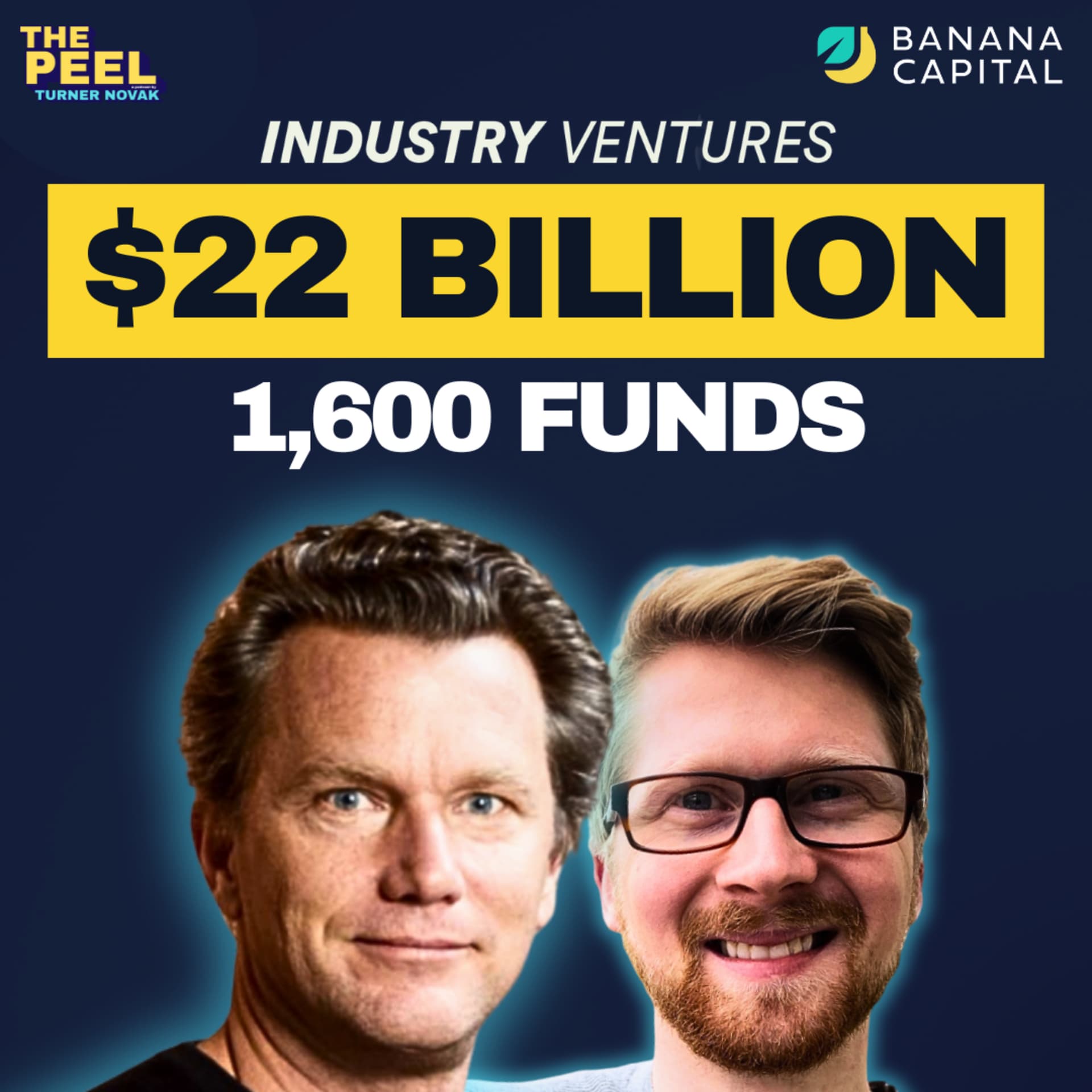
Hans Swildens (Industry Ventures) discusses Industry Ventures’ 25-year journey, its phased relationship and eventual acquisition by Goldman Sachs via the XIG alternatives platform, and how scale in venture secondaries enables more deal flow, better “see-through” analytics, and multidimensional investing. He also covers seed fund portfolio construction, LP base evolution, and common mistakes emerging managers make.
Guest backgrounds
Hans Swildens is the founder of Industry Ventures, a long-time venture secondaries investor (started ~25 years ago). He previously ran software businesses with his brother. The Goldman side references Mike Brandmeier (global CIO of Alternatives, runs XIG) and Harold (runs secondary funds within the group), plus Ollie and Rob (run XIG-related funds). The episode also mentions seeding/early-stage and co-investment teams within Industry Ventures.
Key claims
Acquisition was a “green light” despite strong performance; strategic timing matters when things are going well. Scale: ~$8.5B institutional capital pre-transaction; combined ~525 venture firm relationships, ~1,600 venture funds, and $22B+ commitments. Scale improves proprietary deal flow, access to restricted transfer lists, and triangulation across GPs, LPs, and companies. Seed investing has much higher loss rates (seed/formation ~60–70% vs crossover ~10–20%). LP fundraising is a sales process and LP needs change over successive funds.
Notable examples
Buying Enron Broadband Ventures’ venture assets; InfoSpace; EDS venture division; later LP portfolio purchases (e.g., Washington Mutual’s Strategic Investments). Speedera Networks (acquired by Akamai). He also recounts passing on an empty Vegas data center later turned into Switch after leasing to eBay.
Written by AI. May contain mistakes. Listen to the episode to check what was said.
Chapters
Tap a time to open that second in VOThe Evolution of Industry Ventures
0:45 to 2:53
Hans discusses the history and evolution of Industry Ventures and its relationship with Goldman Sachs.
“They were funding one of our competitors and then they started becoming a partner and then they invested in our funds as a limited partner.”
Strategic Acquisition Insights
2:53 to 5:19
Hans shares insights about the strategic reasons behind the acquisition by Goldman Sachs.
“Like, it seemed like things were going really well.”
Strategic Acquisition Insights
6:49 to 7:45
Hans shares insights about the strategic reasons behind the acquisition by Goldman Sachs.
“It's the AI native private bank for business owners.”
Scale and Competitive Advantage in Venture Capital
7:53 to 14:00
Hans discusses the advantages of scale in venture capital and the dynamics of market relationships.
“So we combining it with the XIG team, we believe that we have one of the largest portfolios of venture capital funds and investments in the world.”
The Humbling Nature of Investing
14:00 to 14:55
Learn about the unpredictable risks in investing and how to manage them.
“I mean, there's just thousands of things.”
Constructing a Seed Fund Portfolio
14:55 to 16:00
Explore different approaches to building a seed fund portfolio.
“So there's like a green to red risk level bar that sits next to how you're constructing your portfolio and then how humbling it is.”
Understanding Limited Partners (LPs)
16:00 to 17:00
Discuss the importance of knowing your LPs and their needs over time.
“Yeah, I think it depends on the type of seed fund.”
Sales Strategies for Fundraising
17:00 to 18:27
Learn how to approach fundraising like a salesperson with a structured pipeline.
“I was, you know, started a software company with my brother.”
Transitioning LP Relationships
18:27 to 21:06
Understand how LP needs evolve as a fund matures.
“There's all different types of LPs, right?”
Transitioning LP Relationships
21:12 to 21:43
Understand how LP needs evolve as a fund matures.
“connecting to the tools your team and customers rely on, letting agents take action with the right permissions, and keeping everything reliable and cost-efficient once you're in production.”
Show all 40 chapters
Lessons Learned from Fundraising
23:25 to 25:34
Reflect on the challenges faced during fundraising and their solutions.
“are going to be an awesome fit for you when you're on fund 10 and your fund's 800 million or whatever it is.”
Building a Systematic Data Analysis Model
25:34 to 28:06
Explore how to create a repeatable data set for better investment decisions.
“Like, it's like, what kind of analysis are you doing?”
Understanding Multidimensional Investing
28:06 to 29:18
Learn how multidimensional perspectives in investing can reveal unique insights.
“And so it's like seeing the cube, right?”
The Evolution of Secondary Market Investments
29:18 to 31:22
Discover how secondary investments have changed over time and the complexities involved.
“I bought Electronic Data Systems' venture division right off their balance sheet.”
The Differences in Investor Perspectives
31:22 to 36:21
Explore the contrasting views between general partners and company founders in investment.
“So there's no visibility in databases around this stuff when we started.”
Strategies for Seed Fund Managers
36:21 to 39:25
Learn about effective strategies for seed fund managers in a competitive market.
“I mean, we have found seed managers that are very good growth investors, But I would say it's less than 20 % for sure.”
Building Strong Relationships in Venture Capital
39:25 to 42:00
Understand the importance of relationships and humility in venture capital funding.
“Well, I would say most of what we're looking at, we're looking at from referrals from the other managers we're in.”
Common Mistakes in Starting a Fund
42:00 to 44:22
Learn about the key mistakes people make when starting a fund and how humility matters.
“But like, what are some of the biggest mistakes you see people make when they're kind of putting that first fund together with their LPs?”
Buying Enron's Venture Portfolio
44:22 to 46:08
Discover the story behind acquiring Enron's venture portfolio and the lessons learned.
“And this is a slightly different topic, but I didn't want to miss it because you said it and it was pretty interesting.”
The Rise of Speeder and Its Impact
46:08 to 49:56
Explore how Speeder Networks was built and its significance in the tech landscape.
“But the broadband, they called it Enron Broadband Ventures, right?”
Entrepreneurial Finance in Asset Management
49:56 to 53:03
Understand the entrepreneurial aspects of large asset management firms and their growth strategies.
“You'd go and like, I'm going to raise the 5 million, whatever the number is to buy this Enron portfolio that is at like 1 % of cost or something like that.”
Future Trends in Venture Firm Acquisitions
53:03 to 56:00
Examine future trends in venture firm acquisitions and the growth of entrepreneurial finance.
“Some of them came from the buyout market.”
Scaling Challenges in Venture Capital
56:00 to 1:03:00
Discusses the scalability issues faced by venture capital firms compared to data center businesses.
“I would say there's a lot of them struggle with the scalability issue.”
Understanding the Secondary Market
1:03:00 to 1:10:02
Explains the evolution, segmentation, and functioning of the secondary market in venture capital.
“We haven't really talked about the secondary market much today, but how do you think about the secondary market today?”
Understanding Structured Equity Solutions
1:10:02 to 1:11:52
Learn about structured equity solutions and their role in the market.
“That's actually a big part of the market.”
The Growth of the Secondary Market
1:11:52 to 1:14:10
Explore the rapid growth of the secondary market and its significance.
“It's taken a long time, but it's been keggering at an amazing rate because it went from nothing to like 150 bill.”
Market Dynamics and Liquidity
1:14:10 to 1:16:04
Discuss the dynamics of liquidity in the secondary market and its implications.
“And so like, if you're just looking at like brokers, brokering LP stakes and looking at that size of the market or continuation funds and LP stakes, you're missing like a massive part of the market.”
Approaching Secondary Transactions
1:16:04 to 1:19:24
Gain insights into how to approach secondary transactions creatively.
“public after this gets published, but six months ago, we'll say SpaceX, super popular company, everyone wants to own part of it, but it's difficult.”
Innovative Solutions in Secondary Investments
1:19:24 to 1:24:01
Learn about innovative solutions for structuring secondary investments.
“which is the employee stock option exercise loan market.”
Corporate Venture Investing and Liquidity Solutions
1:24:01 to 1:25:52
Learn how corporate venture investors can address liquidity issues through strategic funding solutions.
“And then we could do like a deal with you and help you with that liquidity issue.”
Current State and Future of Venture Capital
1:25:52 to 1:27:58
Explore the concerning trends in venture capital distributions and market dynamics.
“And so thinking about like the mountains going to keep growing, right?”
Barbell Strategy in Venture Capital Markets
1:27:58 to 1:29:50
Understand the implications of a barbell strategy in venture capital and how it affects market competition.
“And so these larger platforms have just been treasuring everybody in the middle and everybody down into the seed market even.”
Competing as a Seed Stage Manager
1:29:50 to 1:33:36
Discover strategies for seed stage managers to compete against dominant platforms in venture capital.
“So, you know, we needed to decide if we were going to get bigger and more competitive and, um, having more capabilities and, and it's in front of everybody.”
Importance of Manufacturing Liquidity
1:33:36 to 1:35:38
Learn why manufacturing liquidity is crucial for venture funds to remain competitive and attract investors.
“And you, you probably do have to be taking quite a bit of risk then where you're taking a risk on a founder that they're not going to give 50 million to without a deck or in a category.”
Assessing Fund Performance and IRR
1:35:38 to 1:38:00
Examine how to evaluate venture fund performance through IRR, multiple, and DPI metrics.
“Then you have another disadvantage against them.”
Analyzing Venture Capital Returns
1:38:00 to 1:38:30
Explore the impressive returns from a recent 2021 vintage investment.
“Which you'd think got destroyed because most of them did.”
The Role of Secondaries in Exits
1:38:30 to 1:39:42
Understand the increasing significance of secondary transactions in venture capital.
“When I look at that manager, yeah, the IRR is awesome.”
The Cost of Holding Assets
1:39:42 to 1:40:58
Learn about the risks and consequences of not realizing gains in funds.
“I think they used to have one until for five years, there's five to 7 % DPI coming out of the funds.”
Impact of AI on Venture Capital
1:40:58 to 1:41:58
Discover how AI is transforming the secondary market and venture capital processes.
“And it's just frustrating like as an LP because like I would talk to them and be like, just sell your fund cost out.”
Optimizing Investment Strategies with Data
1:41:58 to 1:44:09
Examine how data analysis can enhance investment decision-making and returns.
“We have this GSAI internally we use, and then there's also Copilot and some other technologies, and there's a whole bunch of new stuff coming down the pike that is making underwriting easier, better.”
Transcript
Automatic transcript. May contain errors.0:02Turner Novak:Hans, welcome to the show. Thanks, Turner. Thanks for having me. So you started Industry Ventures over 20 years ago, I think 25 years ago, and you were recently acquired by Goldman Sachs. Can you just kind of talk about what happened with the opposition? Sure. Yeah, we've had a long relationship, a 20-year relationship with Goldman. and it started as an LP and a co-investor back when the dot-com collapse happened and there was a lot of corporate venture funds and hedge funds and mutual funds that held venture securities that were trying to liquidate them. And so it's been a really long-term relationship.
0:44They started originally kind of as a competitor. They were funding one of our competitors and then they started becoming a partner and then they invested in our funds as a limited partner. And that's kind of how the relationship started. I went to business school with the gentleman now that is the global CIO of Alternatives and runs XIG. His name's Mike Brandmeier and he was in the class before me at Columbia. And so we had worked together when he was in the Vintage Funds, which is our secondary funds and Harold who runs the secondary funds today was there with Mike as well at that point. And so that's how it started.
1:27And then over the years, we started working on more things together. We co-developed a direct co-investment fund together after we launched and built a seed funding business of seeding venture funds and then co-investing with them and buying LPs in them. That business here we call our early stage team. And we have an early stage team, the secondary team and then a co-investment team for buyout tech buyout here but then you know the the co-development of our co-investment funds with them was in 2016 and then after that in 2019 they were keen on investing in our management company with their petersel funds and so we actually took an investment uh from from from the petersel funds in XIG, the division that we're now in.
2:23And Ollie and Rob run those funds. And so they became a minority equity investor in our firm. I mean, we created a firm balance sheet at that point. That was seven years ago. So we've had a phased relationship with most of the different investment teams that are in our group. And we've been working with all the partners in the group as well as all the folks managing all the funds for a really long time. So it wasn't something that it was a progression rather than something that just showed up.
2:53Turner Novak:And why do it? Like, it seemed like things were going really well. Like, what's the point of getting acquired by someone and joining like a whole new firm? Yeah. I mean, everything here was a green light. So we didn't have any yellow or red lights last year in terms of market growth, you know, So fund performance, team, execution, portfolio construction, relationships, and all that stuff. But I found as an entrepreneur, because this is the third company I've had, I had two software companies, my brother, before starting Industry Ventures, that when things are great is the best time to think about strategic options.
3:35so we were thinking about it we were continuing to get inbound interest from large publicly traded asset managers we've it's been happening now for six years we had a we had a competitor get acquired um by stephstone and that they're they're a green spring that was their name and ever since then we've been kind of on people's list to to uh to try to target to see if they can take our team and our funds and plug it into their multi-asset you know, alternatives firm. So we had, we had, we had, we got approached again by another party that approached us five years ago. So we spent a good four months digging into everything.
4:24I would say they, they knew us better than we knew them. And so a lot of, I would say it's two there's about us getting to know them better and kind of how we can take what we built and add it to their business and then have it be a one plus one is three but after i mean every week we dug in every week we came back saying wow i didn't realize that that would be a huge benefit to us and and then by the end of the whole process we both decided that it would be a a great fit So we went forth and negotiated a transaction.
5:01Turner Novak:And I know you've told me before that this combined kind of industry ventures Goldman, I'm not sure. Actually, what is the name currently? Like what do people like Hans, he works at? Like what do you say? Yeah. So we have, it's actually kind of nice because we're going to keep our brand as a team. each one of the teams in in our in our division has their own brand and the funds are have their own fund name and so we're going to keep industry ventures just like there's you know the goldman sacks peters hill team there's the goldman sacks industry ventures team um and uh and there's the golden's vax vintage team and so i think you you mentioned before that you you think you may have like the biggest secondaries portfolio or at least one of the largest in the world what is what is kind of the scale of the business today, just in terms of like how many funds, the capital, the relationships you have.
5:54Turner Novak:This episode is brought to you by Numeral. Numeral is the fastest, easiest way to stay compliant with US sales tax and global VAT. It's easy to set up and they automatically handle all registrations, ongoing filings, and their API provides sales tax rates wherever you need them with all the integrations you need. Their solution combines AI-driven automation with human expertise to manage global sales tax compliance end-to-end. Numeral supports over 3 ,000 customers, including companies like Brex and Character AI, and they pride themselves on white-glove, high-touch customer service. Plus, they guarantee their work, and they'll cover the difference if they mess anything up.
6:31Turner Novak:If you want to get compliant, check out Numeral at their new domain, numeral.com. That's N-U-M-E-R-A-L dot com for the end-to-end platform for sales tax and VAT compliance.
6:46Turner Novak:This episode is brought to you by Flex. It's the AI native private bank for business owners. I use Flex personally, and I love it because I use AI to underwrite the cash flow of your business, giving you a real credit line. The best part is 60 days afloat, double the industry standard. Flex has all the features you'd expect from a modern financial platform, like unlimited cards, expense management, bill pay that syncs with your credit line, and their new consumer card, Flex Elite. Flex Elite is a brand new ramp-like experience for your personal life. A credit card with points, premium perks, concierge services, personal banking, cars and expense management for your family, net worth tracking across public and private assets, and a whole lot more fully integrated with your business spend.
7:29Turner Novak:One card for your businesses, one card for your personal life, one card for everything. To skip the waitlist, head to flex.one and use my code Turner to get an additional 100 ,000 points worth$1 ,000 after spending your first$10 ,000 with Flex Elite. that's flex.one and code Turner for$1 ,000 on your first$10 ,000 of spend. Thank you, Flex. And now let's jump in. So we combining it with the XIG team, we believe that we have one of the largest portfolios of venture capital funds and investments in the world. We did all the aggregation. And we've kind of organized it all. And we've got a bunch of IT systems as well as people and whatnot that are being applied to this.
8:22So there's an effort that we're working on called VC at GS. And so at a high level, before the transaction, we had$8.5 billion of capital from institutional investors. that's pension funds endowments foundations um family offices and and hospitals and whatnot and and xigs over 500 billion and when you look at um what we had before we had 325 uh venture firm relationships and then we had 850 venture funds the partnerships that we owned a part of. When we did the aggregation, we had some overlap, but because we're so heavy on the small fund side of the market and they were heavy on the large fund side of the market, when you combine it, we added approximately another 200 firm relationships.
9:16So we went up to 525 or so approximate firms that we are a limited partner in their funds. And then it's almost 1 ,600 venture funds so and it's over 22 billion of commitments and so i was struggling to find another group that had a portfolio this large both in terms of firm count fund count and commitment size we have so much of the market in our in our group in terms of the data flow the reporting the all the investment back and forth with not only the people, but also all the information that we actually can start doing things like aggregated into three level.
10:03Turner Novak:Oh yeah, I was going to ask. You should start doing that. Are we looking at it? I mean, I think we're going to, we did it ourselves before just for our own benefit. We're not sure that the market needs another index. Another benchmark report. Yeah. but we were already doing it ourselves right because when we invest into a new venture fund or we are buying an lp out of a fund or we're buying a portfolio or buying a direct investment and whatnot we look at all of our analytics and everything across everything we own so we have we already have a general statistics around like overall dpi in the market year by year you know outperformance against averages at small medium large size funds you know call the you know capital call pace distribution pace you know tvpi metrics so we have a lot of that here array and we you know because we do a lot of analysis on the funds that the company is every day and you i'm assuming like there's so this is one of the things you can do with scale like is there anything else like being this large that just kind of like allows you to operate a little bit differently than maybe a different player in the space?
11:17Yeah, we think we've got a bunch of advantages by having scale. And one of the advantages is our market, as you know, right, is a very relationship-driven, curated market where deals are kind of curated, right? So by having scale, we'll have more deal flow and more proprietary deal flow. And then in addition to that um once you work with firms over a long period of time and built trust and participated in their funds and participated in their companies and helped them with liquidity structures and issues and even talked to them about their firm at a management company level of how to how to grow that um you know that they a lot of venture funds add you to these restricted lists so they kind of restrict transfers in their partnerships and so that that gives us an advantage if we're on all those lists.
12:13And it's the same thing on the company side of the market where companies are curating now who's buying their shares, who's obviously who participates in the rounds. And, and, and with scale and relationships, the market, you can traverse it easier. You know, we, we have, we have, we, if you think about what we do here in our team, it's a multidimensional investment strategy. So, you know, we're not only, you know, talking to the companies, we're talking to the funds. We're also talking to the LPs in the funds. And we're also talking to the non-venture investors in the companies, corporate CBCs, hedge funds, mutual funds, in the offices.
12:51So when you look at the dimensional aspect of what we're doing, it's actually quite fascinating. And as you get scale, you can just see the cube more, right?
13:01Turner Novak:What's been the most interesting thing as you've gotten the scale, whether this was recently or even like 10 years ago was there like anything that really changed your mind on something or changed the way you look at the world or think about the strategy of the firm getting that viewpoint actually that's one of the best things about this job i've been doing this 26 years and every day i learn and that's what keeps me excited to come in and everything it's like it's such a fascinating job and in business i've learned so much and i'm you know i'm learning even you know today i'm sure i was something something from you but um the uh there there's just a long laundry list in terms of like the companies and kind of the power law and the companies there's a bunch of learnings there in terms of the funds you know the the risk levels in the funds the portfolio construction in the funds the stage of the funds how the funds source investments that are proprietary that create outsized returns and the power law dynamic.
14:03Turner Novak:I mean, there's just thousands of things. Maybe we need to do a separate podcast of the thousand things that you've learned over the past 26 years. Probably 5 ,000. Okay. I'd say one of the number one thing I'd probably have learned is that no matter how smart you are and no matter how good you are there's always things that happen in companies and in portfolios and at firms that you can't predict and and and i think over time the people that have been doing this for a long time it's just very humbling because you can be right and be right for a really long time um and then be completely wrong later and it could you know it could be your fault or it could not be your fault.
14:52But in terms of just understanding that things can go wrong and for like a lot of reasons. And then I'd say how you construct a portfolio to understand how to get rid of that risk so you don't over concentrate your portfolio on certain things at certain stages because the risk and the humbling effect is higher as you get closer to seed investing. So there's like a green to red risk level bar that sits next to how you're constructing your portfolio and then how humbling it is. Because if you do crossover investing and stuff, you can have loss rates of 10 % to 20%. If you're doing seed investing and formation stage investing, you can have loss rates of 60%, 70%.
15:47and so and and you know as well as anyone there's a lot of ways to lose money and you know fortunately we're learning less of that but we're still learning it and i think kind of over time it's just very humbling this market so then maybe this is interesting question in terms of the the the risk appropriate levels of portfolio or the appropriate
16:13Turner Novak:levels of risk portfolio construction wise for a seed stage fund, how would you approach thinking through like, this is a good setup for a seed fund today? Yeah, I think it depends on the type of seed fund. So I think that there's categories of seed funds and, you know, we have a, we have a certain type of portfolio construction we like because of what we do, but that doesn't mean that the portfolio construction that we don't like won't work. It just means it might not be the best fit for us. If you think about that portfolio, we do have one of the largest seed fund portfolios in the world. And a lot of, they kind of fall into different buckets.
16:58You know, there's the founder-led seed fund, which is kind of what, you know, when I started, I was kind of like me, right? I was, you know, started a software company with my brother. I sold it. I started another software company and then I started investing. So there's kind of the founder coming from the founder side of the market. Seed fund, they act a certain way and source deals in a certain way that's different than the other categories. Then there's the spin out of Kleiner or Sequoia or Andreessen or whoever. And, you know, there's sole GPs, there's multi, you know, multi GP spin outs. and they come from the investment side of the market and they're investing and constructing a portfolio a little differently.
17:45And then you have kind of the third side, which is like just rapid spray and pray, like large index portfolios at the seed stage and then trying to capture the 10%, 20 % of that portfolio that is performing and then concentrating capital in there. So it's a different way to do it. And that could either be someone who's coming from the founder side, coming from the VC side, even coming from the LP side of the market or the CVC side of the market or hedge fund. And so, yeah, so we've seen it. We've seen that people construct portfolios and source transactions and investments differently. we the one we we like both the founder head side as well as the spin out side we don't like the indexed side as much what do you like and dislike about those well so if you think about us i think one of the things venture fund managers should learn if if because i actually didn't know myself it took me a while that okay you gotta understand your lp yep there's different types of lps and they all want different things right a pension fund manager is more of an allocator um you know a fund of funds or someone seeding funds is maybe looking also for come investments and secondaries like us you know there's there's lps that are you know only looking for brand name funds and don't want to invest into new venture funds.
19:26There's all different types of LPs, right? And they all want different things. So one thing I learned early on is when I started calling to raise capital is like, what do they want? And which category of LPs want what I have? And then that actually will change as your firm develops, which is something people don't talk about very much, but the LPs that are in your first fund and your LPs are in your second fund, are a different type of LP that's gonna be in your 10th fund. And so you actually have to change who you're talking to over time and develop different types of LPs as you're scaling and growing your firm.
20:06And nobody really talks about that, but that's kind of a whole thing that probably should be described better
20:13Turner Novak:to venture managers. So how would you describe the process of doing that? Like if I asked you like, hey, how do I transition and think about scaling my LP base or evolving my LP base? Anything you've kind of like picked up on as best practices? When you can build anything, Amplitude lets you know how to build the right thing. Use human language to get complex answers about your products. No more manually selecting events or building charts or dashboards, just to ask. Use agents to sense changes in customer behavior, decide what's causing them, and ask you if it's okay to fix it continuously in the background while you work.
20:46Turner Novak:Get the answers you need while building directly in the tools you are already in, like Cloud, Cursor, Lovable, and more. And for the first time, understand if your agents actually work. Measure quality, debug failures, experiment, and measure their ROI with agent analytics. Amplitude. With AI analytics, all you have to do is ask. This episode is brought to you by Merge, the connective infrastructure for production AI. The hardest part about building an agent is everything around it, connecting to the tools your team and customers rely on, letting agents take action with the right permissions, and keeping everything reliable and cost-efficient once you're in production.
21:24Turner Novak:Merge handles that all for you. It connects agents to thousands of tools, handles permissions and LLM routing, and lets teams move faster without building it all themselves. OpenAI, Dropbox, and Ramp all use Merge to move faster and build AI right. Visit merge.dev slash Turner to start building for free. that's merge.dev slash turner to try merge for free i learned a lot there because i wasted a lot of time like most gps talking to the wrong people and so i would say i probably would have saved a couple so i'm doing this 26 years i probably would have saved a couple years of my life in terms of just literally like time spent talking to the wrong people damn what'd you mess What's up?
22:11It's a big, it's like talking to the wrong entrepreneurs, right? So a couple of things. One thing that I, that I learned was, and I've, you know, we work with all these seed stage funds and new formations and everything every day, emerging managers. And most don't understand it. First, this really is a sales game. It's really a, you know, it'll be an agent driven, but not, you know, historically was a CRM driven pipeline sales. You got to think about raising capital for your funds as a, you're a salesperson, you're doing outbound. You've got leads, you've got qualified leads, unqualified leads.
22:51You've got highly likely to, you know, to invest. And then you've got to layer onto that things that you would normally do if you're a salesperson. Like, have you ever done a fund like mine before? Did you like it? Was it successful? Would you like to look at another one? and then just kind of weed through the 10 ,000 LPs to understand which 1 ,000 fit for you, right? And then focus there. And the 1 ,000 that will be a fit for you in your fund one, fund two, fund three, kind of where you are today, are not going to be, very few, are going to be an awesome fit for you when you're on fund 10 and your fund's 800 million or whatever it is.
23:35Because it's just a different type of investor, right? The ones that are funding you and fund one, two, and three are looking for, you know, high multiple, high risk, emerging manager, as well as they want to get, you know, spend time with you and do some co-investments with you, a lot of them. And kind of use you and you use them for like learning and access to whatever you're doing and whatever they're doing. the the fun 10 lps a lot of them will be pretty passive right they'll write you a 50 million dollar check 100 million dollar check and and if they're a large u.s pension or they're a large u.s endowment they might not have the capability or interest in doing any co-investments at all
24:25Turner Novak:because they can't due to their internal investment processes yeah it's interesting some people love that we do co-invest and we raise spvs and some people hate when you say that yeah of course so i think you gotta you gotta create this i mean the crm systems a must do one of the managers i met with that was creating a pun why i described that to him and he kind of laughed and shrugged it off and said hey i don't need to do that you know i'm gonna raise my fund in in three to six months and it'll be done um you know i've got a you know xyz is gonna anchor my fund and i'll be done and and i was like well you know it's like there's like one to two percent of the managers that do that.
25:04Okay. But 90, 99 % of the managers take a long time to raise their personal lives. It's not something that's just like easy. And so I said, you should probably start, you know, tracking all this in a CRM system. And he's like, no, I won't need to. I'm like, okay, great. And then he calls me back six months later, he calls me back and he goes, what's CRM system?
25:26Turner Novak:This setup that you had, like what were the most important things to do? And when you talk about like the analytics, Like, what were you getting? Because someone might say, like, it's a CRM. Like, it's like, what kind of analysis are you doing? I mean, so, you know, I came from being a software entrepreneur, so it's very different, right? Like, I didn't come from being VC or an endowment manager or whatever. So we've always, and the companies I've dealt with were mostly infrastructure software. So when we went into this thing, we were like, how can we build a systematic repeatable data set that we can leverage over time and grow to make what we do better, to help us learn from our mistakes, to help us learn from what went right and wrong, and then become a better investor over time, as well as just leverage data so we have to redo our work every time.
26:20But so in terms of what we did at that point, we had a model that we built, which when we were analyzing a fund, you'd put in like all the metrics in the fund and you get it from the audit and get it from the quarterly report in terms of the fund size. We've got the amount of capital called, just how much distributed, blah, blah, blah. Then you go into the SOI, which is all the underlying companies and put in the cost, the NAV, the ownership, you know, the enterprise value at entry, the enterprise value at NAV. And then, you know, you're trying to predict.
26:47Turner Novak:You were manually typing all this in. Yeah. you can use AI today. Yeah. I don't know. That's, that's, that's actually the funny thing is we're kind of in this new phase of, of having this all being automated, but, and then, but having that all go into the database and then reusing that later. And so if you're going to look at the same fund later, or if you're going to look at investing in a new fund later, you can look at the old fund. You're looking at investing in one of the companies directly. You can pull the old context and having like the funds map to the companies and having it so that all your company information is auto-filling into the fund analysis and having all that fund analysis auto-input into the company analysis.
27:29And then have the funds linked into the LPs in the funds so you know who see-through owns the companies in the funds and also through to the LPs. I think very few people, what I've found over a long time doing this, have that sort of visibility and are tying the company data and the performance at a company level quarter for quarter, quarter after quarter with the funds and with the SOIs and the funds. And then they're not doing the multidimensional linking into like the LPs and into the other people. And so it's like seeing the cube, right? Maybe that's my highlight here is just the data Dataset is super interesting once you can see it in a multidimensional way.
28:20And then if you can invest into it in a multidimensional way too, it's actually very unique. Because most people are only investing into one dimension. So when you can invest into any dimension, it ends up being fascinating because you can see things that other people can see. And you can understand things other people can't understand.
Read the full transcript
28:41Turner Novak:And it sounds like the LP flow through was important to you because you would potentially be buying some things from like they were also kind of in your world, like for as a venture manager, you probably don't need just like as a GP investing directly in the startups, not no, no fund investments at all. No secondaries. The LP flow through might not be that interesting, but for you, it was because that was you're also buying from them in a sense. Yeah, so when we started, the dot-com collapse happened, and we started buying people out of portfolios of their venture investments. So I bought Enron's venture funds out of Anchor T, Enron Broadband Ventures.
29:17I bought InfoSpaces' venture capital funds off their balance sheet. I bought Electronic Data Systems' venture division right off their balance sheet. And so that's how we formed doing secondaries. And then we started buying... So like I bought Williams Communications, Will Tell's fund portfolio. And in 09, I bought Washington Mutual's LP portfolio. It was called Strategic Investments. And, you know, and so when you look at like, how do you buy this stuff? Right. It's very difficult because if I get your fund SOI, so like, you know, I bought a secondary in your fund, right? That's why we're talking today.
30:02And I get your reporting, right? and you're showing me, hey, here's all my deals. You're talking about your best deals. You've got three funds. You're highlighting each one of those in the report or maybe I'll talk to you on the phone or see you and grab coffee or lunch and we can walk through it or maybe I go to an AGM and we're always talking about these things. If you capture all the information and understand what's going on in all these funds at the company level and then also talk to the companies and verify what the funds are saying, And then also talk to the LPs who are trying to sell part of their funds, right?
30:40And if you can understand kind of all that, which is difficult to understand because everybody wants to keep their information private. The companies don't want to give the information to the public. The funds don't want to give the information to the public. And a lot of the LPs don't want to tell anybody that they're in funds. So there's like a barrier to like understand even what it all is, right? Like who owns what? now there's databases. So when we started like 26 years ago, Prequen didn't exist, PitchBook didn't exist, Crunchbase didn't exist. You couldn't go into an LLM and say, give me all the LPs in Banana Capital 1, 2, and 3 and it probably won't spit out much but it'll spit out something.
31:25So there's no visibility in databases around this stuff when we started. So we had to do our own.
31:32Turner Novak:What, when you talk about like the differences between what, uh, what an investor would say, like the GP and what the company would say, what do you find is like some of the biggest differences between GP saying something and then you talk to like the founder of the company, like, yeah, it's, it's not true. Yeah. I mean, that happens. My, um, my partnership over time, right. This is, this is when, you know, experience matters. my partnership over time and all the people that i work with here that affects also how we underwrite their funds think about their companies they're talking about so part of it's just getting to the point where you've already like if you're invested in flex right in your fund one and you know i go meet flex and then they're telling me everything about their business and i can ask them about you and blah blah blah and and then you're going to tell me about it you might not know i'm i'm talking to flex right and but i already have context there or i might be talking to another manager that's in flex like uh titanium is in it i think and so like i can be talking to them and they tell me one thing i talk to you you tell me another thing i talk to the company they tell me another thing and then i can start kind of triangling around like what do i think right so the one interesting thing about this job of being a primary investor, a secondary investor, a co-investor, a direct investor, is that you get to talk to all those people.
32:59So you can form your own opinion, your own kind of thesis and underwriting model on whatever you're going to invest into. And then you can kind of get everybody else's opinion on it. Typically, GPs are not able to do that, right? They'll do it sometimes if you're a growth stage GP and you're talking to the seed funds. But what we've learned over time is what the seed funds are saying to us is going to be different than what the growth funds say to us, depending on what stage the company is. Really? So what causes the difference? Because when they invested, they're both investing completely differently.
33:37One's going after the entrepreneur, how much domain experience they have, how much hustle they have, their confidence level in that person or people. If it's a group to go execute on this awesome opportunity and for some reason they can't execute their ability to pivot into a new business. And it's more of a, you're backing teams and you're backing people and trying to predict markets. That's like the early stage group. They're not doing comp analysis, capital market analysis, valuation analysis, CAC and churn, LTV, any of the analysis that a growth stage investor is doing. I mean, growth stage investors are trying to quantify how much value and growth and profits are in a business and how durable it is and then projecting it out and trying to pay a value that captures all that growth of revenue and earnings.
34:38And they can grow through their price if they're paying a high price. So, you know, a lot of what's happened in growth is that you have to pay a price above what the current value is of the business. And so, you know, a lot of them are trying to pay like two, one, two, three years out of that value. But then if they hold the security for seven to 10 years, it compounds and they make their three acts or five acts by just compounded, you know, revenue growth and earnings growth. And so when you talk to them, the five things they're talking about are completely different, right? I mean, management team and founders, obviously on the list, because that's critical.
35:14But then they go into all the other metrics about the business, right? How healthy is it? How healthy is sticky of the customers? What are the margins over time? What's the competitive dynamic? You know, there's a lot of like, you know, five forces analysis and financial analysis. And then you also have the capital markets analysis for short comparable trading. What's comparable? What does it look like? How does it compare to what's being already valued by the public market? How are M &A deals valued? What's the most comparable company to this in an M &A exit? Was it a PE exit? Was it a strategic exit?
35:51How strategic is this? Because if it's strategic, it might have a higher value. And that's like what the growth investors are all noodling on all day. and the seed investors literally don't do that. Yeah.
36:04Turner Novak:I've had one time where somebody asked me, what do you think about all the competitors to this company? I'm like, I don't know any of them. They started this company before they created the category. There's no one else. And I still don't know who the competitors are. There's a deal. That is not your job. I should though. I probably should go. I should be on top of it. I mean, we have found seed managers that are very good growth investors, But I would say it's less than 20 % for sure. And it's probably less than 10%. The skill set of being like an awesome seed investor and getting in this and the deal flow that's spinning out of whatever, opening AI now and Entropic and Google and everybody else, being with the right talent, with the right people and seeding them and convincing them that you're going to add value and that you should take your money.
36:53and having that, that skillset is a very different skillset than, you know, leading, you know, a billion dollar round and the next AI business, right?
37:05Turner Novak:Very different. And so speaking of that, is that what you think a good seed manager should be doing right now? Like, should I be trying to, if I, if I'm banana capital, right? I have a$10 million fund. Should I be trying to find the people leaving open AI and Anthropic to start the new, like vertical AI, Neolab, or like, what do you think kind of makes sense right now at Seed? Because I mean, there's a lot of stuff going on. It's a little bit of a crazy, crazy time in the world. I think that the Seed market now, it's even more important to have differentiation, how and what you're sourcing. So for example, you had Ollie on here, right?
37:41And with Neo, And, you know, he's got a lot of stuff going on at the technical founder kind of formation stage, right? Due to his whole strategy in terms of how he's sourcing deals, what kind of people he's looking for. He's getting them early. He's watching them. So he's got an angle, right? And it's not your angle, right? And so you've got to have your own angle. I think that there's also multiple, there's a lot of angles that work, right? I mean, we've been in funds that, they were people that worked at Google or wherever, and then they got to know everybody and all the talent and just funded all the best people that left.
38:29That's an awesome strategy, right? Because you know the people, you know what they can do. You've worked with them, you trust them. You know they can build something awesome. You know, they're probably top 0.1 % in what they do. And so like, that's a good strategy. I think, you know, there's a lot of different strategies. And a lot will work. But the most important thing is to actually have a differentiated one.
38:54Turner Novak:You know what I mean? Like if you're just another fund that's got 50 to 200 million bucks, and you're just like, I'm going to be AI, and you have no differentiation, you have no sourcing advantage, you have no access to the best talent advantage, You have no kind of curated deal flow that's coming from your networks or what you're doing to generate that. You know, that's not interesting. Is that a pretty down the fairway average pitch that you see today? It's like we're raising up, we're a hundred million dollar seed fund and we're investing in AI and there's not enough else around it to make it interesting?
39:27Well, I would say most of what we're looking at, we're looking at from referrals from the other managers we're in. so you know we've been we've been we've been we've been seeding the seed funds now for uh that's 2007 right that's when Roland started doing it so and then I started doing it in 2009 and and the rest of the team since probably ONAG as well so the um the uh since we already have over a hundred of them right and they're all working together and see because seed rounds are typically syndicated, we are getting pointed to people and people are being introduced to us as like we're a value-added LP.
40:13And so I think there's a brand advantage now we have. But in terms of like what we're actually putting checks into new managers, most of it's through our current relationships. If you think about it, so in the second bucket, which is spin outs. We're in 525 firms' funds now. And we can, when they spin out, what do they do? A lot of them call some of the investors they had in the funds they got to know. So, I mean, that happens here. And sometimes we're in the funds and in the spin out funds, right? So like we're in both, the main funds that have been around for a long time and then we're also in the spin outs.
40:58and we're able to determine which spin out to invest in because we just talked to the partnership and say there's three GPs that spun out of your firm in the last five years. Which ones have you written checks to and which ones would you write a check to again? So it's like diligence gets easier too, right? So the deal flow gets a little easier to see and the diligence gets a little easier to do because you're having a confidential relationship with everybody in the market anyway. It's the same thing with the companies, right? In terms of like new founders going out and starting a fund, the probability of us knowing one of their prior venture investors is 90%.
41:42So we can just talk to who funded them, you know? What were they like working as a CEO and a founder? And, you know, did they, you know, how key would they do the whole thing? Or did they become a chairman one year after they founded it and we're not ever there again? you know, I mean, it's a very easy, very easy call.
42:02Turner Novak:What do you see as one of the biggest mistakes when someone's doing that when they're starting a fund and they talk to you and like that first, the first conversation, I don't know if there's like a lot of patterns or if any one specific, very, you know, red flag type instance stands out. But like, what are some of the biggest mistakes you see people make when they're kind of putting that first fund together with their LPs? I just be humble, right? Like people that my team meets and I meet that are not humble and not respectful and not someone you'd want to actually work with. I think that's a big turnoff.
42:37And I think that, you know, a lot of the VCs and new VCs think that they need to come into the LPs and pound their chest and say, hey, you know, this is how I did this. I did that. I did this. I did that. You know, guess what? Like we meet like 10 people like that every day. so you know it's not different right i mean why people are doing what they're doing is because they already did that so it's like what we what we factor into is like do we want to work with this person do we trust this person do we if they're representing our capital are we proud of that you know what i mean are they treating people well right are they a good did they create value for the investments they make?
43:24How do they treat other people? And the last thing an LP wants is to have somebody that's going to mistreat them. I mean, you're talking about a 10-year commitment that really is 12 to 15 years if you stick in it the whole time and don't sell it in secondary as an LP. And nobody wants to be 12 years with someone they don't like and someone they don't trust I mean, this is just like, that's like the worst, right? It's like being in a bad marriage, right? Just trying to get out.
44:01So, yeah, I think, you know, so I think, you know, coming in and, you know, explaining your successes, because otherwise, you know, it's hard to have a track record to back, but in a way that is, I guess, just more level with the LPs you're talking to.
44:23Turner Novak:And this is a slightly different topic, but I didn't want to miss it because you said it and it was pretty interesting. So you talked about how you, I think this is when you're really early days of industry, you bought Enron's venture portfolio. So how does that come about? And how did that go? So, yeah. So, I mean, I was a little, so I end up in stock and I got lost my capital in it and I got kind of pissed off. Right. I mean, and so I went in and said, if this thing is bankrupt, what can I buy from it? That'll make me my money back. Right. And that's how that one started. And so I just went and called Ike Gody and I knew I networked all into the people and I ended up going right into the trustee of the bankruptcy and being aggressive and digging in the portfolio and found some investments there I really liked.
45:14you know the second company i have with my brother was called speed era networks and it was a content delivery network and so we basically you know we we dropped in um servers in all these different locations in the world and we had a caching system and then we you know bought bandwidth resold it um through our overlay network to speed up everybody's videos and and you know So you could listen to iTunes. We served iTunes. We served Netflix. We served DoubleClick, all that stuff. So there's no buffering, and you can get videos to people and large files to people quickly.
45:52Turner Novak:And this was back when the internet was slow, right? This is like in the late 90s, I think? Yeah, we started Speeder in 1999, and we competed directly with Akamai. We ended up getting acquired by Akamai. So it's part of Akamai. But the broadband, they called it Enron Broadband Ventures, right? So some of the stuff they own in there, we knew. So one of the assets was Interaction, which was the largest data center in Europe. And they had an ownership in it. So we kind of dug through the whole thing and negotiated a deal to buy the whole portfolio. And it ended up being a good transaction. You know, the thing that I missed there, though, like I've missed a lot of stuff.
46:40And the one thing that's interesting that I missed is they showed me the data center that was built in Vegas because it was also part of the bankruptcy. And it was also part of this like broadband division. And they said, do you want to buy that thing, too? And I was like, well, let me check it out. And it was like a fully built kind of amazing next gen data center sitting on, you know, one of the hubs of the Internet in Vegas. But it was empty. And it was losing money because it didn't have any customers yet. And it was like just brand new, spanking new thing with nothing in it. So I looked at it and said, hey, you know, that's a real estate deal.
47:25Like I'm buying, you know, tech stuff. and I didn't realize that thing. So there was an entrepreneur that bought it and it became Switch. And when he bought it, he cobbled together some money to buy it. And then he actually signed a lease. He leased the entire thing out to eBay. And he's created a multi-billion dollar data center business. he's one of the largest data center oh wow
47:58Turner Novak:imagine telling someone that today that you passed on an empty data center that was ready to go and you didn't invest in it today I mean I didn't understand at that point that I should be buying that it just looked like a hole in the ground I did the same thing with Whamu where they had a conference center right next to the airport and sea tack that they'd owned and i was in the i was buying their venture portfolio and they're like hey here we have a wind farm we own they owned a wind farm asset and they owned um this conference and at least there's a hotel in it it's huge it was huge it's like and a family bought it killed it but uh but it was like it's distressed because they were using it as their corporate kind of hotel conference meeting center next to the airports you'd have to go up to seattle and so you'd fly in because you know waymond was so big you would just go over to their you know kind of corporate you know conference and meeting and hotel that was huge center i think when you went bankrupt like it was it was empty and uh some of the hotel had some had some people saying it though and um but it was just one big loss looked like a hole in the ground and a family bought it and and i think they i think they made like 250 million dollars and this was just sitting there for you in the bankruptcy and you didn't take it yeah but i didn't have it at that point i was just struggling with trying to build this thing and fund it and um buy investments just so focused on buying the venture investments i wasn't thinking about the other assets.
49:41Turner Novak:And was this like pre-fund? Were you still investing off of your own dollars or had you raised outside capital yet? No, at that point, we were doing SPVs. Okay. So you were like deal by deal. You'd go and like, I'm going to raise the 5 million, whatever the number is to buy this Enron portfolio that is at like 1 % of cost or something like that. Yep. That's exactly right. And we put actually the Enron deal and the InfoSpace deal into one fund. We ended up doing two deals and one FPV. Oh, wow. It was scrappy. I mean, most of these firms, by the way, and you probably know this, but if not, most firms, even larger ones, when they formed, it was a scrappy situation.
50:25It's like entrepreneurial. I think that entrepreneurial finance is underappreciated. And I also think, by the way, Goldman's history and teams and how they've been an entrepreneurial finance business is extremely underappreciated because everyone views the firm as like a bank or a financial institution or an investment bank or an asset manager, and they don't understand all the innovation and kind of creativity around creating new products, creating new businesses, entering new markets, and doing entrepreneurial finance activities. And I think that that's one of the things that has been eye-opening for me going from being an entrepreneur, you know, with my own funds and stuff to a firm that is large, that has a lot of fun teams, that has a lot of different business units, that has developed markets, right?
51:30A lot of the people in there that are senior in the org have built businesses from scratch inside the firm. And so that's one thing that's kind of underappreciated with some of these asset managers, if you want to call them, or investment banks or financial institutions is, you know, where did you think the businesses came from? You know what I mean? They didn't just show up. Like it's, it's, they had to be created by somebody and to be like a number one player in a segment, you need to be early and you need to be innovative and you need to be competitive. And, and, and, and, and so there's an entrepreneurial aspect to it.
52:15Turner Novak:Do you think that there are going to be more, uh, acquisition of venture firms over the next, I don't know, whatever the time period is, or like, like, is this a trend that's, that's going to really start to take off or it's already been one i would say well it will accelerate it's probably going to keep its current pace i mean you're going to see other um firms in the venture growth space be acquired for sure i mean i would say if you look at the if you look at the asset management landscape none of these firms were publicly traded until like 10 20 years ago right Right. So, you know, you have a, you have a new cohort of asset management firms that are publicly traded.
53:06Some of them came from the buyout market. Some of them came from the credit markets. Some came from the real estate market. Some came from multiple parts of the markets. and then they've added new businesses to their entrepreneurial finance again. They've added new business units. They've added new ways to make money. They've added new strategies. For example, there was sports investing was a new category, right? Buying minority equity positions in professional sporting teams. That was a new thing that happened over the last 10 years. That's now in KKR. for example. And Apollo and Arias have efforts.
53:47The GP stakes business of like, hey, you have these private GPs that are like you and like I was, but can you fund them as an equity investor and be a growth investor or a venture investor into the GPs, which are the fund managers? And how does that investment structure look? How do you make money on that? How do you deal with kind of over time monetizing it? You know, that's all was a new category in the last 15 years. And so, you know, these businesses are being built in an entrepreneurial way and they're adding new business units in different categories. But if you look at the macro trends, everyone has a pretty sophisticated buyout business.
54:33business, everyone has a pretty, most have a pretty sophisticated real estate business. Now, most have a pretty sophisticated credit business, right? Today. And so when you look at, you know, where they have a, most of them also are having an infrastructure, you know, business in terms of like funding infrastructure, your funds. And, and, and, and, And so who has a venture growth business, right? I mean, there's a lot of holes in these asset managers as a, you know, because they want to have, they're building multi-asset management firms that can leverage a corporate infrastructure of accounting, finance, compliance, fundraising.
55:21There's all these services and people and technology needed to execute and help execute fund strategies. And they have the infrastructure for that. And so if they can add boutiques in different areas and then leverage all that, it's actually a win-win for both the investment manager that's the boutique, as well as the larger corporate that's scaling. And so I think that you're going to see more and more of these. I mean, I know because I've been talking to all of them and some of the CEOs are in my fund as LPs afterwards and still. And so they're all looking at venture growth, trying to figure out how to do it.
56:04I would say there's a lot of them struggle with the scalability issue. There's a scale issue. If you're going to rank it and you're going to say, hey, would I rather do data center business that can be huge and fund all the new AI data centers or do a venture business? A lot of them are like, yeah, I'll do the data center business. It's like a ranking of what are they looking for?
56:29Turner Novak:Yeah, I've seen multiple times people proclaim, you know, like the CEO of an asset management business on a stage at a conference, right? They proclaim that, you know, data centers and compute is like the biggest asset class ever in humanities in history. So like you should fund that. Without the AI wave, we'd have flat GDP. Yeah. Well, so one question based on that line of thinking is why acquire someone? like let's say like banana capital i get acquired by like i don't know ox if or like just like some i know like a publicly traded like hedge fund or whatever so you have a meeting business and then you have your investment business and so you do you do probably have some enterprise value right in your business i think it's actually a lot higher than what other people would pay like in my mind i'm like i mean this is like extremely valuable i would i would never sell this and someone might look at and be like yeah here's your pino like i'll give you a million bucks for it and i'm like no way it's like that's not i'm not doing it that's what i felt and then some you know i decided to at one point sell it right but we still have ownership moving forward in our carried interest pools and things so it's a little different because you've got two different so you know uh these fund businesses have two different um revenue streams you've got your management fee revenue and you've got your carried interest profit sharing revenue.
57:55And those can be decoupled, right? So you can have a partner in your management fee revenue, but they're not a partner in your carried interest. And then you can have the reverse, which is partners in your carried interest, but not in your management fee.
58:10Turner Novak:I didn't think about that. Yeah. That's what makes these businesses really interesting is, uh you know there's two different you know and one is long-term capital gains if you hold the securities long enough the other one is short-term um ordinary income and depending on what state you're in that matters a lot so um but but but by holding securities longer than three years or five years and you know funding the securities early you can you can uh you can claim long-term capital gains on your investments. And do you, so you think it will mostly be acquisitions of these firms, not people starting internally, like, you know, the, cause Goldman kind of already had one internally.
58:55Turner Novak:It's both. Yeah. I mean, our team internally here, you know, not our team, but the, the, the, the group I'm in looked at doing this themselves, of course. Right. Why would, you know, if you're going to buy something, you have to consider building it. And the challenge with building this is pretty hard challenge, right? It took us like two decades to get approved and into the market with scale. Maybe we were at scale after like 10 to 15 years. But 25 years later, we've been at scale with information flow and things for probably about 10 years. But it took over 15 years to get there. And I think, I think that, so there's a barrier to just being in the, in the market, right?
59:45Owning all the funds, having transferred into all of them. And then there's also a technology barrier to like how you're processing that data, how you're, how you're using that data for making investments. Then there's actually, there's the other thing, which is really a pain, which is, you know, getting the right capital, right? From the LPs and having scale and raising capital. to fund and grow your business, both in terms of your profit pools and the carry-house your management fee and earnings. And so you need a base. And then there's the track record, which by the way, as you know, is the hardest thing in this market.
1:00:25It's the chicken and the egg thing that is the thing, which is, are you proven to make money over cycles? Have you proven in a 20-year period through multiple cycles of multiple drawdowns, capital market crises, GFC, COVID, everything, that your funds will make money in compounded rates that are appropriate for the risk and the lockup. And so there's the track record. And that relates to investment management and it relates to experience in your team. And so all those things are difficult, right? Because you have to have expertise. You have to have, you know, the way we do things, it just takes a long time to get it to a point where it's systematic and repeatable and scalable.
1:01:20If we were just a small fund and we had like 50 million bucks and we had no systematic repeatable stuff, no one would want to invest or buy it, right? So a lot of it's about creating. I mean, this is actually something I have a lot of conversations with, with managing partners that are managing firms. Because I actually went and created a managing company and a holding company and then looked at it like an entrepreneur would, which is an enterprise value and how to create enterprise value at the firm level. Most VCs don't think about that, which is shocking. The irony of this is that VCs fund entrepreneurs to create enterprise value.
1:02:07but they don't figure out their own enterprise value. They're finding their firm, but they're not thinking their firm as a firm.
1:02:16Turner Novak:They think of it as like an LLC or something. Yeah, I mean, it technically is. Well, I know, but you can convert it into a limited partnership, which you should, and that creates a different tax structure as well as you can start creating more of a firm because you can share partnership, to make sure it's with others easily compared to an LLC, which is difficult to cut up weight or share with it because it could max issues. It's funny. You see a lot of entrepreneurs will comment on like, there's these VCs that are like, they're backing like AGI. And then you talk to like, their firm is just like some dude sending emails to like sit around a table.
1:02:56Turner Novak:It's like the opposite of the technology business. So one, I think interesting question is today, We haven't really talked about the secondary market much today, but how do you think about the secondary market today? What is it, I guess? We actually never really defined what a secondary transaction is for somebody who's never heard this word before. And then how big is the market? How does it work? Just for someone who's coming into this for the first time. Yeah, this was for me after the dot-com collapse, which was at that point, we were in a market. the venture capital business, the industry itself, was primarily a primary investment business.
1:03:41Turner Novak:Where you bought shares from the company? The LPs were buying a partnership interest when the funds started with nothing in it and a primary investment. The funds, the managers were buying into the companies directly to fund them with the capital for a primary investment. When I started doing this, that was pretty much the whole market. There didn't really exist a functional secondary market. Right? The first year I started doing it, there was$250 million of secondaries we estimated transacted in the entire year. So it's very small. Right? Because it just didn't exist. It was like a nascent thing.
1:04:25That could be like a single Series A today. Oh, just like tiny. I mean, just one continuation fund now, like we're looking at one right now, it's$750 million. Just one deal. Three times larger than the whole market was in 2021. Sorry. So, yeah. But what's happened is, and this has been just fascinating and just exciting and interesting. just like every other software market or technology market or whatever market, it developed and grew over time and had multiple segments develop. And so just like Ventures segmented into seed, early growth, crossover, buyout, tech buyout, because it has segmented now, right?
1:05:21And now you have funds that are in each one of those segments, focusing on those segments, or they have full stack, you know, platforms focusing on all of the segments. When, when 26 years ago, there wasn't that. It was, Hey, your funds should be small, no more than like 400 million. And you're doing primary investing. That's the whole market. We didn't have crossovers. We didn't have, I didn't have any hedge funds. We didn't have that. The corporates were like Intel was the biggest one. You know, it just didn't look like today. But what's happened is the secondary market also developed into a huge market and then also segmented.
1:06:00And so, and the segmentation in the secondary market is different than the primary market, interestingly, because the segmentation in the primary market segmented by stage, right? When you invest, it's by stage, right? And in the secondary market, it's actually by transaction type. And because you have pretty much one transaction type, right? It's like you buy the stock from the company and it issues it to you. In the secondary market, we have transaction types based on different types of securities and different counterparties of sellers. So our segmentation in the secondary market, it started as like corporate CVCs that you're buying out and then some hedge funds and mutual funds.
1:06:51And then it went to like venture funds selling some things. So like there was this Facebook moment when there was a count issue in Facebook and, you know, there was a regulatory count that you had in terms of number of shareholders and they're going to break it. So they had to have a secondary process to keep their account into the regulatory window. And then they had VCs started selling Facebook stock pre-IPO. And that's when the other VCs said, wait, I can sell my venture stock pre-IPO? Someone's going to buy that? And then the whole institutional VC market started selling stock. It started slower.
1:07:31Now it's all over the place. And then I started buying the stock too, by the way. So both selling and buying. And so when you look at the segmentation today, we have things like direct secondary market, which is one-off direct secondaries. So if you want to buy XYZ shares and XYZ company, and you can go directly into either from the founders, from the employees, from the tender offer into the company, from a venture fund, from a CVC or whatever, just one-off. I want XYZ stock and you just buy the securities for whoever's selling them. That's direct secondaries. Then you've got continuation funds.
1:08:09These are venture funds that are at the end of their life or don't have much DPI. A secondary manager like us can go in and buy and restructure the partnership itself by tendering the LPs, restructuring that we re-amend the LPA, create a new term, a new set of time periods, as well as a new set of GPLP economics. We can take the partnership agreement and just amend it and modify it and redline it, or we can create a new partnership, and then it is buying everything from the old partnership, and you just do a transfer affiliate from one partnership to another, and you're still the manager from one to the other, right?
1:08:53You're still the manager, so it's an affiliate of yours. And so there's different ways to do this, like continuation fund, you know, taking a partnership that owns securities that are 15 years old and great. And they, cause they wanted to stay private longer and whatever. They're one of the top 20 companies in the world and enterprise value that are venture funded. And you like put them in a continuation fund. So there's that part of the market. And then there's a part of the market, which direct portfolios that are being bought without a GP attached. Okay. And so like, you know, a hedge fund portfolio and that hedge fund won't manage it anymore.
1:09:28They just want to take the private securities and their hedge fund and just blow them all out at once, for example, to be a pure play public market investor again. Or they got overweighted in it. Then there's the LP-led secondary market, which is LPs selling to another LP in a secondary or LP selling an entire portfolio of LP interests, like a whole portfolio of funds at once. then there's also structured equity solutions. This is one, I mean, there's so many different segments. I've never heard of this before. Yeah, the structured equity solutions. That's actually a big part of the market. It's not debt, but it looks like debt in a way because it's structured equity.
1:10:15And so there's a structured return to it. And those things are typically on top of portfolios. So like if you are a pension fund and you've got a billion dollars of private equity or venture or whatever, what you do is you just transfer all these things into an LLC or a partnership. That's now, you know, you own that, a hundred percent of it. And then someone comes in the partnership and restructures it with a preferred equity tranche that is, you know, compounding, that's a compounding pick and then a participation on the distributions. So it looks like a loan, but it's not a loan. It's a preferred equity.
1:10:54It looks like a Warren Buffett kind of deal where it's like, hey, we'll drop a preferred on top with a interest rate, minimum return threshold. And then there's a profit share on the back end of the net asset
1:11:08Turner Novak:value when it gets distributed. So this is like, it accrues interest like debt would, but you don't have to actually pay. It just increases the balance over time. You can do it either way. You can have it pay interest or not pay interest. you can you can have it be non-interest varying for five years then pay interest if you can giving this you can structure however you want it's just a you know special situation structured equity instrument and then there's the debt side so there's the loans so there's actually like secondary loans so like loans against your common stock if you're an employee to have an option exercise um you know there's there's loans against portfolios right the 25 percent loan to value on top of a private equity venture portfolio you know there's there's the actual debt structures too to get liquidity to people i mean there this whole thing got developed into a massive business we think last year there was probably over 150 billion dollars in transactions that closed just in venture growth and so it's approaching the size of the whole primary business.
1:12:18And we've had a thesis for 20 years. It's taken a long time, but it's been keggering at an amazing rate because it went from nothing to like 150 bill. But we think there's an argument that the secondary market will be a multiple of the size of the primary market because every other equity or debt asset class, that is the case. So if you look at the stock market, it's all secondaries. If you look at the real estate market, it's predominantly secondaries. If you look at the debt markets, it's predominantly secondaries, right? I mean, everyone's trading what's already been built or already created or issued.
1:13:00And so we think that over time that this market would be larger than the primary market.
1:13:05Turner Novak:Is it probably bigger than most people think it is? Like, is this size of the market that shows up in reports most likely underreported? Yes. And why that's the case is because brokers have been the ones historically that reported the market and the brokers in the secondary market predominantly broker private equity secondaries. And it used to be predominantly only the LP led secondaries. Now they're doing the LP led and the GP led, which are the continuation funds. And they're predominantly doing them in private equity, real estate infrastructure and whatnot. and to a lesser extent, venture. They do capture venture deals, but a lot of them are through these multi-asset portfolio sales.
1:13:53And a lot of what's being transacted in the venture business is never registered through a broker and not registered with the government. It's just being registered in the private partnerships and in the private equity structures. And so it doesn't have to be reported. And so it's very hard to track. And so like, if you're just looking at like brokers, brokering LP stakes and looking at that size of the market or continuation funds and LP stakes, you're missing like a massive part of the market. They're not even reporting the direct secondary market. So they don't report the enders in the companies, for example, which should now obviously huge market.
1:14:29Right. And so what you have to do in this market, which we've got frustrated and made our own reports over time, is break all these segments down, size them all, and then add it all up in a bar chart to get your aggregated market size. Okay.
1:14:46Turner Novak:What are the biggest sections of this? Where's the most capital moving right now? Is it the LP led? Is it the GP side? Is it the direct from the company and the employee side? Or is it all, is it kind of like one thirds each? all three of those yeah those are the bulk of it kind of equally splay roughly and then there's all these different smaller pieces but yeah i would say that the fastest growing segment which if you take the bar charts and you look at how it's going to grow in the next five years we think the fastest growing segment is continuation funds so this is essentially just um when you think about like when you talk about this like every other market has secondary purchases and it's the bulk of it so it's basically someone issues the primary you buy the primary and they just hold forever until there's an ipo this is basically you issue it and you hold it to not quite forever someone starts to buy and then they start to trade once it's traded you're selling it in a secondary the ipo can be primary and secondary together or it can be secondary only but most of the time it's primary only, but it could be all that stuff.
1:15:54Once it lists, it's a secondary. The entire NASDAQ and NYSE is secondaries.
1:16:03Turner Novak:Yeah. And it's interesting because you think of as of today, maybe it'll go public after this gets published, but six months ago, we'll say SpaceX, super popular company, everyone wants to own part of it, but it's difficult. There's a ton of friction, But just suddenly at IPOs and you can anyone in the world can buy and press a button and there's probably going to be billions of shares or volume, probably hundreds of billions of volume traded per day in SpaceX. And you think that that's just going to start happening before the IPO. There's just going to be more liquidity, more trading of the shares of like well-known assets.
1:16:38I already have.
1:16:40Turner Novak:And it'll just get more prominent. But every year it is. Yes. I mean, I've had for 20 years, this is like, now I'm like, gave up. It's like, for 20 years, I've had, let me go raise our capital, or we go talk to people that don't understand the market. they've said well this is going to slow down or this is going to go away or this is just a flash in the pan or if the regulatory restrictions get lifted on compliance that everyone's going to list and then there's no secondary market and and and you know when these big ipos happen there's going to be no secondary market and it's like every year this thing keeps growing and growing and growing because the number of companies that get funded grow the amount of capital that goes into the primaries grow and that keeps funding the derivative market which is the secondary market and they're just like assets that people want to own like people want part of this good asset it's investments yeah just it's simple investments the thing that also is interesting about the secondary market it for venture growth and private equity and stuff is is you can have the same security held in different structures trading so you can have like a company a stock in the companies trading in a secondary.
1:17:54And then you can have the fund interest that holds the stock trading itself as well. That holds the company that's trading. So it's multidimensional. So like you can, and then those two things might trade at different prices too, right? Because a buyer that wants to buy the stock directly might not want to buy into a fund that has a fee and carry on it and has other assets, right? Most of the time they don't want that because they don't want they don't know how to underwrite the other assets they don't want the other assets they sell by one asset but they have to take everything else because it's a fund interest right they can't like separate it out although people are starting to try to separate things out now inside the fund stakes but that's a whole nother a whole nother conversation okay there's like there's like a little bar chart the little bar that's starting that's derivatives and futures and do you think that'll get pretty big i don't know i i kind of don't i would rather just buy the title to the securities and own the vanilla securities either the fund interest or the or the direct stock certificates or baskets of them so maybe we're just old and and and uh used to that but like in terms of derivatives and and forward contracts and things it's a small piece but it's growing you know it could become big we also decided a long time ago not to do a lot of these option exercise loans.
1:19:20So we don't do that. And that is a segment of the market, which is the employee stock option exercise loan market. And we just didn't, because you have to be a lender and there's regulatory stuff around that. And we just wanted to be an equity investor. But yeah, so there's a derivative market, there's a loan market, there's a structured equity market, all in these different segments that people don't see if you're a primary investor.
1:19:52Turner Novak:So one of my friends, Zach Coelius, he's he said that he's worked with you guys on some stuff in the past. He said, you're one of the most creative second, like the one of the most creative like deal terms, dealmaker, investors he's ever worked with. So how do you typically approach a secondary transaction? Like when you guys are coming in, like what are you specifically looking for? How do you think about making sure everyone's happy? Because you could argue that someone's getting a bad deal in any transaction that happened, whether it's like the company, the LP, the GP you're buying from, you guys are maybe getting a bad deal.
1:20:29Turner Novak:Like, how do you just think about structuring one of these things and approaching it? Yeah. I mean, I come at it from like a solution provider perspective. Like, you know, what do we need to do to help you, right? If you are a seller of anything, why are you selling? What do you want to accomplish selling? And then how can we help you do that if we want to buy what you have? So I think that's the first thing is just approaching it like a partnership of like, you're a seller, we're a buyer, we're trying to solve your problem. We're trying to put together a solution. And then we have to be competitive because there's other buyers, right?
1:21:11And so I think one of the reasons why Zach might have said that is that we've always looked at it as how can we solve this and win? I mean, because otherwise you never invest. And so I think we're willing to do special structures with people. If you say, hey, I'm getting a divorce and I want to keep my voting of the certificates and I'm a founder and I own 20 % of a business that's worth$2 billion. So it's, do the math, 400 million bucks on paper. And my husband or wife is getting half of that, so 200 million bucks. But I want to keep the votes of that. We'd be like, fine. You know what I mean?
1:21:59as long as it doesn't impact our ability to exit at some point and get our cash back and we do the diligence around it, that maybe we're fine giving you the vote. We just give you our proxy. And we could give you our proxy for a period of time and then it revokes. So a lot of people wouldn't think about doing that. I mean, literally. Same thing with funds. It's like, oh, I want liquidity in my fund. I haven't had any DPI. Like if you have a fund that has no DPI, but the one asset in the fund that is sellable that people will buy, I don't want to sell. But I want to try to keep it. Right. But I still want money from it.
1:22:40So what do you do? How do you do that? That's the point. You have to sell it, don't you? We can say, hey, just go to your, we will assign a deal with you that you go to your investors with because you have to get their approval because you're going to get compensated. compensated. You're selling and you're getting compensated. So you need approval from your investors. And we will lift out that investment from your portfolio and put it in a new partnership that sits next to your portfolio. Let's say it's called Banana Capital Fund 1, and I'll create a Banana Capital Fund 1-A, and I'll just move the certificate from the 1 to the 1-A, or you're going to ask the company to do that.
1:23:18And then you've got to ask your LPs, hey, if you want to get liquidity on this thing and get two times your money back. I'm willing to do that. These guys want me to manage it and they're going to compensate me for doing that transaction. Here's what I'm doing. You know, it's fully disclosed. Here's how much money they're going to pay me. And you're, um, you're going to have to approve this and then we're good. And you can, you know, the asset will be sold and moved into the fund. And you can say, cause some of them might say, I don't like it. And you say, well, then great. You can just roll your stake in there and have the same economics as you had before and you're net neutral.
1:23:52So the people that want to sell in your fund can sell. The people that don't want to sell, don't sell and nothing happens to them. They're not forced into new economics or anything like that. They're just net neutral. And then we could do like a deal with you and help you with that liquidity issue. It's also like another one's like you're a corporate venture investor. You ran out of money. Your CEO is new and says that there's a billion dollars of venture out of your balance. you're publicly traded, and there's probably$500 million of unfunded to keep funding all around so you don't get wiped out.
1:24:25And the corporate entity doesn't want to do that anymore. And we can go in there and say, hey, we'll put up the$500 million to fund all your unfunded obligations, and we'll do that in a structure with you. We'll take your securities, put them in a fund, and we'll negotiate terms and payments around how our capital is being invested and called and when we get it back and at what rates and with what splits and what percentage of the partnership we own over time and what our return profiles are and stuff. And we will remove your unfunded 500 million liability. And here's an equity structure for that.
1:25:02And it looks like that. And so like, because we, because the market was, I think we do this so well because when the market was so small, there was no transactions. happening and we had to like solve you had to like make a transaction yeah yes but what happened is these transactions we were doing became segments right and then became their own markets and that's like the amazing entrepreneurial journey in this adventure right i mean we've been on this like 25 year adventure and like the mountain keeps growing as we climb it and so like We keep thinking we're going to hit the peak and then the thing grows another mile.
1:25:46And it's been an incredible journey, honestly.
1:25:52Turner Novak:And so thinking about like the mountains going to keep growing, right? Whether this is in 20 years or even, yeah, even in the next like 12 months, we'll probably have, I don't know. I never know the timing of this stuff, like SpaceX, OpenAI, Anthropic. It seems like they'll all go public within the next 12 months. Who knows when? Maybe there'll be more. like what what's kind of going to happen over the next next year or so are the things you're kind of expecting or or looking at working on waiting for well at a high level the thing that's the most concerning about the venture category to invest into is for the since 2001 so it's been five years.
1:26:35The distributions coming out of the industry have been 75 % less than what they need to be to be healthy. This is each year it's below what it needs to be. We need about 20 % of all the NAV in the market to exit each year to have a healthy market. Because if you exit 20 % of all your NAV in your fund every year for five years, you'll get your fund capital back. And then for the next five years, you will get your returns back. It's very simple. That's the math. For the last four or five years, it's been five years now, then on average, like five to 7%. So you have a situation where most venture funds might have 20 cents back in the last five years.
1:27:24The whole industry hasn't produced the distributions of cash that's needed to have it function correctly. so um whether or not these so there's going to be have and have nots in this thing right like whether or not these companies you mentioned go or not i can't comment because of where i work but you know not every venture not not all the venture funds are invested in these companies and if you have them in your funds you're probably going to have if they if if they do what people think distributions. And so you're going to see, I think it might create a bifurcated, more concentrated venture market because what's happened, the really interesting thing in the last like three years, and you can, you know, this is a whole nother conversation, but it's super fascinating is like, I believe that the market's bar belt.
1:28:17So it's either you're very small and very, you have a very strong advantage doing a specific thing and you're very differentiated and you can still get the great deals at the early, you know, or you're like a huge platform that you're full stack all the way into the seed market and into the crossover market. And so these larger platforms have just been treasuring everybody in the middle and everybody down into the seed market even. And if those are the people that own all the equity in these businesses, they're just going to get bigger. And so what's going to happen is you're going to have more pressure to keep barbelling in the market and everybody in the middle is going to get blown away.
1:29:03And so, yeah, I think that it's kind of fascinating.
1:29:10Turner Novak:Because it seems like those big ones that have sucked up a lot of the capital, they're also the ones giving capital back so like they're kind of i don't know in a way they have ball control over that flow of funds and they're giving money back so it's like do you want to put it somewhere else or do you want to give it back to them like what's what's the call are you gonna so as an lp like because you know i'm an lp who are you gonna prioritize something that gave you all your money back or somebody hasn't given you anything back yeah that's fair pretty simple right like yeah so yeah i think what the markets the markets so one of the reasons why we decided to do the one plus one is three with um with the firm here is we believe and we got to a place we thought this entire industry is going to be very institutionalized kind of already is but it's going to be even more so and and then you have to be more at scale and have more proprietary information and more proprietary deal flow to compete over time.
1:30:14So, you know, we needed to decide if we were going to get bigger and more competitive and, um, having more capabilities and, and it's in front of everybody. And we decided that it was a good time to do that.
1:30:31Turner Novak:Uh, do you, this is a little bit on that comment before. So what would you do as a seed stage manager that is trying to continue to compete against the super, you know, dominant platforms that are returning a ton of cash? Like, how do you, how do you think about putting a stake in the ground and like actually competing against them with a realistic strategy? Well, if you don't have an answer for that, you should stop investing and go do something else. Literally, because you're just wasting your time and money, I think. Because, or you're just going to have to be lucky. And I don't think lucky is a strategy, but maybe for some people it is.
1:31:13I think that everybody needs to really, really work on how they're getting into the best companies at the early stage and what it will take for them to take your check. I think the market's changing in venture where it's getting more and more and more difficult to get in them, right? Because there's so many different people trying to put money in them that you have a hyper-competition dynamic. And in that case, the only way to win is to be super specialized, right? Carve out your own unique deal flow mode. It could be with proprietary AI technology. We've seen that. Some of our managers have developed pretty credible like sourcing and underwriting and transacting ai driven uh systems so that's that's one thing so that you know and and so like like we we have one that when we went through the whole thing we're like wow that's incredible like it is very very awesome and i think it's It's focused on sourcing, right?
1:32:27Sourcing and being first in the best. And doing that at scale so that even if they have hit like the thousand new companies that might be the next unicorns, that they actually can write a check into like 20 % of them. Because I think that the challenge now is not whether or not you can see them. It's actually whether or not you can get a check into them, right? when before the seed funds would see them be able to write a check because they were all like, there's a hot tub thing where it's like, oh, you know, I'll let Joe and, you know, Jennifer, everyone's going to come in and here's, you know, 500 grand, 500 grand, 500 grand, it was a hot tub thing.
1:33:07Now it's like, oh, this one manager wants to give me 50 million out of 250 pre and I don't even have a deck. I'll take that. So then it's not syndicated. Sorry. Right. So then the seed funds don't even, they can't even write a check. Right. So I think that that dynamic is new and it creates challenges because if you're a seed fund and you're not getting into the best companies.
1:33:37Turner Novak:And you, you probably do have to be taking quite a bit of risk then where you're taking a risk on a founder that they're not going to give 50 million to without a deck or in a category. maybe that's like a new category that's not like an instant instant check without even having a deck or product yet and those sometimes do work right that's the humbling thing about the market is sometimes those people are the ones that create the biggest and best businesses but it's not normal it's a hard thing to systematically repeatedly do yeah and you also it's not like you do that and then in three months it's like oh this works here's more money it's like you need to have a track record over a long period of time to prove that you've done it like once a year you know a couple in each fund so it's like takes 10 years to get there one or two and banana one one or two and banana two one or two and banana three you need to exit them you need to return like three four x net on your funds if they hold yours hold hold those securities for longer than eight years to get your 20 compounded ir or no one's going to give you any money is that probably the threshold you think in venture is the 20 % IRR you could get above that yeah you need 20 % IRRs high teens are okay but like otherwise why are you doing venture yeah you can easily get 10 % in the public markets yeah you can just go buy go buy distress debt today at 15 % returns I mean right senior secured loans why would you do that it's more liquid and it pays you know a monthly dividend and you can lever it make 25 but that's probably too probably too junky but like so yeah i think venture needs to be high teens low 20s and compounded over 10 years that's a big multiple yeah that's fair what then what is your kind of rough ballpark then is that like a 5x 10x over over the years like what do you think you should shoot for sell secondaries do a continuation fund do a secondary sale do a um you know move securities over to a side fund to buy out the lps and the main fund from that security that want to sell and get dpi for the ones that don't care about dpi that will just roll manufacture liquidity that this is this is something that people now by the way like the large platforms have dedicated teams and their entire job is to manufacture liquidity.
1:36:04So if, if you're a venture fund and you're a seed fund, and you're not thinking about manufacturing liquidity, you also are at a disadvantage to them there too, because they will have more DPI and distributions than you because they're manufacturing liquidity. Then you have another disadvantage against them. So yeah, you need to start manufacturing because when you look at you have to look at cash flow time and irr so like lps don't care if you give them a 5x multiple over 20 years they're better off buying muni bonds and like literally like it's your irs like six right i'm better off buying california muni bonds that are tax-free.
1:36:55I will make more money buying an automated muni ladder than putting money with you. And I get monthly income that's tax-free. So the multiple is one metric. The IRR is the other. And you need to look at both. Because if you're not compounding capital at 18 % plus, no one's going to give you money. I mean, maybe if, well, maybe they'll take a shot thinking maybe the next one's 18 or something. But like if you consistently have produced 9%, 10%, 12 % net IRR funds, that is not interesting.
1:37:33Turner Novak:How do you look at like a 19 through 21 vintage, like as a pool? Like what are you seeing as being interesting in terms of like the IRR in that pool? Because it was like a, it was a, it was a rough vintage. The funds that we're in that have manufactured liquidity are doing 10 times better than the ones that didn't. We're in a fund that's a growth fund, okay? Which you'd think got destroyed because most of them did. And it's like two and a half X net. That's a 2021 vintage. And it's almost fully realized because they did a whole continuation fund out of it. Well, it's already got 200 % plus DPI.
1:38:21Turner Novak:and they're out of the securities. They're sitting in the continuation fund, unless you roll. So this is probably like 50 to 100 % IRR, I'm assuming, based on when they did it? When I look at that manager, yeah, the IRR is awesome. The DPI is incredible. The multiple is good. I'm going to reload because that manager managed my money in an amazing way, but it wasn't through natural exits. it wasn't through an M &A exit or an IPO exit it was through secondaries and this is this is like a pretty new thing in venture and we probably like romanticize the IPO and romanticize like this incredible founder relationship for decades upon decades but in in private equity and like I feel like the way I think about it is like as a seed stage manager I'm like a lower bottom middle market private equity firm and the way private equity works it's like you sell to a firm that sits slightly above you in the stack.
1:39:16Turner Novak:And then you sell to a firm that sits slightly above. And you might do that like four times. And then it's like a public company. And that's like a super common. Like there's like five secondary transactions of the asset. It's like 60, 70 % of how people exit in that market. Yeah. And so you think over the next decade, this is just going to become like, is it maybe even today as a venture manager, you got to think about this. I don't think venture funds have a choice anymore. I think they used to have one until for five years, there's five to 7 % DPI coming out of the funds. If you're in year like 10 and your fund has like 20 % DPI, nobody's going to give you any money.
1:39:58Turner Novak:You would probably just need like an absolutely incredible asset in there to justify him not selling it, but you probably should have been trimming some overtime anyways to give you some DPI back. That's death to a firm. We have this one firm, which I can't even talk to anymore because it's like the fund was awesome. It was at like a 30 % net IRR. It was at a 4X. It was like four years in. I mean, it was cranking. And they had a bunch of SPACs in the fund, three of them, and they could have sold them all. and then all the SPACs melted, okay? And the fund's at a 0.8 with no DPI. And they could have realized like a 4X, it could be 400 % DPI.
1:40:50And the only reason why they didn't, they just decided to hold. I'm sorry. And it's just frustrating like as an LP because like I would talk to them and be like, just sell your fund cost out. Just take 25 % of your securities and sell them. Keep the other 75%. Just give us our money back. You're out of 4X. That's great. You're out of amazing gross and net return. You're a home run. You just won. You won the lottery.
1:41:25And the care and interest in that thing, it was like$200 million. So if you do the math, it was like$700 million of profits. It was$140 million of the GP that's now zero.
1:41:37Turner Novak:That's insane. That's really unfortunate. How do you think AI is changing this stuff? Is there any development around the capabilities of LMs that's going to impact the secondary markets and maybe venture as a whole? What have you seen already? All this stuff's going to impact you and me for sure. It already has, I think. I think we've been implementing... We have this GSAI internally we use, and then there's also Copilot and some other technologies, and there's a whole bunch of new stuff coming down the pike that is making underwriting easier, better. And we also are... I think sourcing is also going to become much more improved.
1:42:27I think the entire process of sourcing, selecting, underwriting, transacting, exiting, even with the different secondary categories and segments we talked about, some of it could be more automated. like if you just dropped your fund uh uh documents into quite an lom that was my own and you just like uploaded your audits and your lp reports for the last five years and all your one-pagers and all your financials and all your companies everything like that i just like would spit out a price or maybe i would help you value the portfolio i could actually have a statistical analysis of all that data.
1:43:18Turner Novak:Oh, that'd be helpful. Yeah. Where you are in your capital calls and distributions and your IRR multiples and at what points in time do you need to sell certain things or restructure things to get you and manufacture a 18 % net IRR on a low case so that you constantly are doing distributions and having a minimal return to meet the threshold of what your industries want so you can manufacture it out if you have good assets if you obviously have bad assets no one's going to buy anything but if you have like good companies that are compounding that you could kind of use it to like continue to optimize that multiple dpi irr matrix that'd be a very easy thing to do well i mean it's it's just like a lot of of work with all that.
1:44:05Turner Novak:And maybe if it's like a new relationship, you can just be like, to your point, give us all your stuff. We'll digest it all. And now I'm all be like, you know, this is directionally pretty interesting. Spend some time. Well, thanks for coming on the show. This is a lot of fun. Yeah, it was great to see you. And thanks for having me. And thank you for listening. Thanks again to this episode sponsors, Flex, Numeral, Amplitude, and Merge. If you enjoy this, please like, comment, subscribe, and share this in the group chat where everyone can manufacture some liquidity. Make sure to check out the back catalog of over 100 episodes with investors like Gary Tan at YC, Alad Gill, Chathan and Eric at Benchmark, and the founders of companies like Robinhood, Sweetgreen, and Mercury.
1:44:42Turner Novak:Tune in over the next few weeks for conversations with Peter Rahal, who started RxBAR and David Protein, Michael Tannenbaum, the CEO of blockchain lending company FIGURE, and my friend Shensi Ding at Merge. If you don't want to miss any of these, subscribe to my newsletter, The Split, linked in the description to get each episode plus a transcript emailed directly to your inbox every week. Thanks again for listening. See you next time.
From the publisher
Hans Swildens started Industry Ventures in 2000, and this is his first podcast since selling it to Goldman Sachs in 2026.
Hans has been buying venture secondaries longer than almost anyone, and the combined business is one of the largest VC portfolios in the world: 525 firms, 1,600 funds, and over $22B in capital commitments.
We get into why he sold to Goldman, the barbell market quietly killing middle-stage venture, how VC's are manufacturing their own exits, why most seed funds without a real angle have 5 years left, the LP base that's a completely different species every fund cycle, how he started Industry by acquiring funds at 99% discounts during the Dot Com Collapse, the day he passed on a multi-billion-dollar data center, and why the secondary market may eventually be multiples the size of the primary market.
Thank you to Zach Coelius, Will Quist, Emily Zheng, and Andrea McGee for help brainstorming topics for the conversation.
Thank you to Numeral, Flex, Amplitude, and Merge for supporting this episode.
Numeral: The end-to-end platform for sales tax and compliance https://www.numeral.com
Flex: Get premium banking and a net 60 day credit card at 0% APR https://home.flex.one/referral/bananacapital
Amplitude: AI analytics, all you have to do is ask https://www.amplitude.com
Merge: Every model. One API. Total control. Check out Merge’s Agent Handler. merge.dev/turner
Timestamps:
(0:00) Inside Goldman’s $22B venture bet
(7:57) 1,600 funds over 525 firms
(11:11) Why scale lets you “see the cube”
(14:17) Most humbling lesson in 26 years
(16:19) Three types of Seed funds
(18:47) LP's evolve every fund cycle
(22:00) VC is a sales game
(24:38) A strong CRM is non-negotiable
(29:06) Buying secondaries during the Dot Com Collapse
(31:33) Triangulating opinions across GP’s, founders, and LP’s
(37:22) Seed without differentiation doesn’t work
(42:16) Biggest mistakes by first-time GP’s
(44:31) Buying Enron’s VC portfolio at a 99% discount
(50:15) Entrepreneurial finance is underappreciated
(52:15) Why asset managers are acquiring venture firms
(58:47) Why it’s hard to start venture programs
(1:03:20) Secondaries: $250M to $150B market in 25 years
(1:08:06) Continuation funds & debt structured secondaries
(1:12:02) “Secondaries might be multiples bigger than primaries”
(1:19:52) How to structure secondary transactions
(1:26:00) What happens after SpaceX, OpenAI, Anthropic IPO’s
(1:30:35) How Seed survives the asset manager era
(1:35:16) How to manufacture liquidity
(1:41:41) How AI is impacting secondary markets
Referenced
Industry Ventures: https://www.industryventures.com/
How Big Is The Secondary Market for Venture Capital?: https://www.industryventures.com/insight/2023-2025e-how-big-is-the-secondary-market-for-venture-capital/
Exploring the Growth of Venture Secondaries: https://www.chronograph.pe/exploring-the-growth-of-venture-secondaries/
Pitchbook’s US Secondaries Market Watch: https://pitchbook.com/news/reports/2025-annual-us-vc-secondary-market-watch
Follow Hans
Twitter: https://x.com/HansSwildens
LinkedIn: https://www.linkedin.com/in/hansswildens
Follow Turner
Twitter: https://twitter.com/TurnerNovak
LinkedIn: https://www.linkedin.com/in/turnernovak
Subscribe to my newsletter to get every episode + the transcript in your inbox every week: https://www.thespl.it/