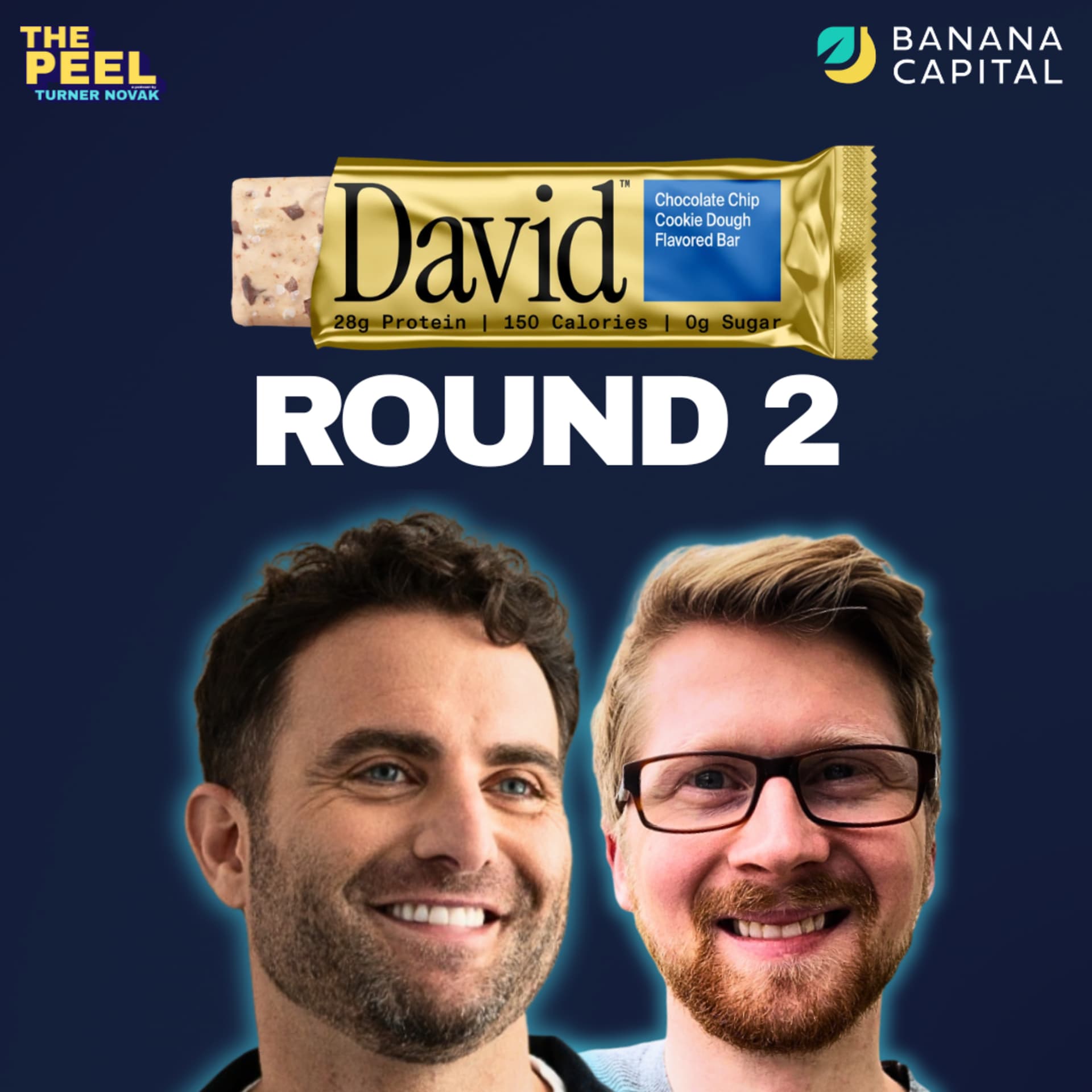
In short
Rebuilding a $600M food company by designing protein-focused nutrition products from first principles, using evidence-based nutrition instead of ideology, and scaling via differentiated technology (EPG fat-replacement) and a multi-brand structure under a parent company (Medici).
Guests (backgrounds)
- Peter Rahal: Co-founder of RXBAR; later sold RXBAR to Kellogg for $600M; built David after non-compete; focuses on evidence-based nutrition and protein-to-calorie optimization.
- David (speaker/guest): Runs David, a protein-focused CPG brand; designs tools/products to increase muscle and decrease fat using high protein-to-calorie ratios.
Key claims
- Protein-to-calorie ratio is an objective way to measure nutrition (1g protein = 4 calories).
- Most negative health outcomes stem from overconsuming calories (“energy toxicity”); GLP-1s shift diet culture away from volatile elimination trends.
- Food companies struggle to invest in nutrition science due to economics and public-company incentives; differentiation requires real, hard innovation.
- David’s ceiling is 1–2B revenue, so Medici will build multiple brands with distinct identities.
Notable examples
- RXBAR started in CrossFit gyms via trial sampling; sold to Kellogg after scaling.
- David’s “Gold Bar” is ~75% of calories from protein; protein ice cream targets ~30g protein with low sugar.
- EPG (fat-replacing technology) enables lower-calorie versions of fat/sugar-heavy foods like ice cream, chocolate, and even fried snacks.
- Planned sibling brand “Hall Pass” for low-calorie, low-sugar confection (no protein promise).
Written by AI. May contain mistakes. Listen to the episode to check what was said.
Chapters
Tap a time to open that second in VODavid's Mission and Product Offerings
0:09 to 2:29
Peter Rahal discusses the mission of David and their unique protein products.
“So at David, our mission is to design tools to help you increase muscle and decrease fat.”
Understanding Nutritional Measurements
2:29 to 4:25
Exploration of how nutrition is measured and the misconceptions in food branding.
“We spend in the US, it's like two to three ish trillion a year, depending on like how you measure certain things globally.”
Scaling David and Financial Success
4:25 to 6:13
Peter shares the growth and financial success of David in its second year.
“I think I saw you're thinking it'll be about 300 million in revenue this year or in year two, I think is what it said.”
Entrepreneurial Journey: From RXBAR to David
6:13 to 7:59
Discussion on Peter's transition from building RXBAR to launching David.
“Like that's, that's, and I'm like, I'm like, okay with that.”
Challenges in the Food Industry
7:59 to 10:13
Peter discusses the competitive landscape of the food industry and the need for innovation.
“And like, I started when I was like 12 years old, really, like just listening to my dad.”
Challenges in the Food Industry
11:08 to 12:10
Peter discusses the competitive landscape of the food industry and the need for innovation.
“I use Flex personally, and I love it because I use AI to underwrite the cashflow of your business, giving you a real credit line.”
Lessons Learned from RXBAR's Success
12:10 to 14:00
Peter reflects on the lessons learned from RXBAR and how they influenced David.
“So what did you do differently the second time around?”
The Evolution of RX Bar and Nutrition Focus
14:00 to 17:49
Learn about the ideological shift from RX Bar to a science-based nutrition approach.
“from their head product market fit and then sold in four years to Kellogg for 600 million.”
Designing a Protein Bar for Retention
17:50 to 21:36
Discover how understanding customer behavior influences product design.
“It sounds like, so the biggest thing you did or one of the big things you did differently was thinking about it almost from like a retention perspective, like keep making sure your customers would continue to come back.”
The Role of Brand Identity in Product Development
21:37 to 24:10
Explore how brand identity shapes product offerings and market strategy.
“So at Medici will be creating multiple brands that do that.”
Show all 36 chapters
Raising Capital for a Food Business
24:11 to 25:02
Understand the challenges and strategies behind funding a food startup.
“I think it was maybe within the past year.”
Raising Capital for a Food Business
25:08 to 26:01
Understand the challenges and strategies behind funding a food startup.
“Connecting to the tools your team and customers rely on, letting agents take action with the right permissions, and keeping everything reliable and cost efficient once you're in production.”
Vertical Integration Strategies in Food Production
27:16 to 28:00
Analyze the considerations for vertical integration within the food industry.
“Like what should you be doing internally as a food company versus outsourcing?”
Challenges in Dairy Protein Business
28:00 to 29:00
Explore the challenges and opportunities in the dairy protein market.
The Medici Inspiration for Innovation
29:00 to 30:39
Learn how the Medici family's legacy influences modern food innovation.
“So then what's the context of the name Medici that you mentioned?”
Barriers to Entry in Food Innovation
30:39 to 33:19
Understand the economic factors hindering innovation in the food industry.
“Like if you look at our organization, we have chemists, we have a team of food scientists, but then we have like creatives, artists, all in the same world.”
The Dilemma of Big Food Companies
33:19 to 35:09
Discuss the structural challenges faced by large food corporations regarding innovation.
“And and I mean, hopefully it will change in the future.”
Founder-Led Business Advantages
35:09 to 36:56
Discover why founder-led companies often outperform their competitors.
“of one of those big CPG companies, it's like a great grandma and that like lives off the dividends or something.”
Beverage vs. Food Industry Dynamics
36:56 to 39:44
Examine the differences between the beverage and food industries from a distribution and consumer behavior perspective.
“I'm trying to think of like companies that have maybe gone through it kind of recently under, I mean like Apple, right?”
Product Development Frameworks
39:44 to 42:05
Learn about the frameworks used for deciding new product launches in the food sector.
“lower margins or more fixed costs necessary to distribute the thing, which is then actually more defensible.”
Innovating Low-Calorie Foods
42:05 to 44:52
Discussion on creating healthier, low-calorie food options and their impact.
“our best product we have is because it's that item is so dependent on those things and we can we can do that.”
The Future of Dieting with GLP-1
44:52 to 47:19
Exploration of GLP-1 drugs as a game-changer in dieting and health.
“So if you look back at the history of like nutrition culture, what do people eat?”
Shifts in Health and Fitness Trends
47:19 to 50:46
Insights on the rising importance of fitness and health in modern culture.
“I mean, I feel like it's unlike the spectrum of like everyone wants to be stronger.”
Nutrition: Balancing Basics and Optimization
50:46 to 54:08
Discussion on nutrition's role in health and the importance of balance over obsession.
“Like you pay for your kids to go to a better school or like being healthier.”
Building a Brand Identity
54:08 to 56:00
Exploration of how to create a compelling brand identity for effective marketing.
“Like how do you think about generally marketing?”
Brand Identity and Marketing Framework
56:00 to 58:20
Learn how brand identity can simplify marketing strategies.
“And, and so, so we have like all these like values and identity in it.”
The Role of Humor in Brand Marketing
58:20 to 1:00:30
Discover the importance of humor in effective marketing strategies.
“I'm probably like one of the, I'm very serious about what I do, but I don't take myself that seriously, if that makes sense.”
Mispricing in Marketing and Sponsorships
1:00:30 to 1:03:00
Understand how to identify mispriced opportunities in marketing.
“And like, that's, that's your marketing.”
Navigating Marketing Trends and Coolness
1:03:00 to 1:09:00
Learn how to evaluate and adapt to changing marketing trends.
“So like for all those reasons, I think they're just mispriced.”
The Power of Memes in Communication
1:09:00 to 1:10:03
Explore the impact of memes as a form of modern communication.
“But yeah, it's it's it's so hard to just think about from marketing.”
The Launch of Boiled Cod
1:10:03 to 1:12:02
Learn about a unique marketing strategy using boiled cod to highlight product quality.
“So I was like, I don't, I don't want a chart where I'm like winning green and everything.”
Navigating Legal Challenges
1:12:03 to 1:13:44
Discover how to approach legal challenges as a founder, with insights from a lawsuit experience.
“And so we did that the first year and then it was, you know, by, by measures, it worked.”
Leveraging Social Media for Crisis Management
1:13:45 to 1:17:40
Find out how to manage a crisis through effective communication and social media strategies.
“Like if this happens to you as a founder, like how do you navigate that?”
Influences of Notable CEOs
1:17:41 to 1:20:29
Explore the lessons learned from various successful CEOs and their management styles.
“Did that give you a step up in baseline going forward too?”
Learning from Non-Food Brands
1:20:30 to 1:23:38
Understand the branding and management insights applicable to food businesses from non-food industries.
“I find it hard to learn what he does because it's like, I can't do that.”
Influence of Women and Gay Men on Consumer Culture
1:24:04 to 1:27:04
Learn how marketing strategies focus on women and the cultural influence of gay men.
“And so that that is a really, really powerful achievement.”
Transcript
Automatic transcript. May contain errors.0:02Turner Novak:Peter, welcome to the show. Hi, Turner. Thank you for having me. Thanks for coming on. This will be fun. Real quick for people who don't know, you actually started two companies, but the company you're running right now, David, can you just real quick give us some 30-second context on it? Yep. So at David, our mission is to design tools to help you increase muscle and decrease fat. and we do that through a protein bar that has the highest protein to calorie ratio on the market. So what that looks like is a tool that's 150 calories, 20 grams of protein, and zero sugar. So that's our hero products is the protein bar, but then we also have protein ice cream, which is really incredible.
0:51It tastes like the full fat, your kind of favorite naughty ice cream but with incredible nutrition so 30 grams of protein 260 calories and
1:03Turner Novak:two grams of sugar so that's a pretty bold claim healthy ice cream it actually is like from a strictly speaking nutritional profile and you you know it's it's like a post-workout type of product um so yeah so we make um so that's that's david we make we make protein different protein products that maximize this concept of protein to calorie ratio. So anywhere between 75 % of the calories to 50 % of the calories coming from protein. How unique is that? What do protein foods normally have or just generally food in general? Yeah. I mean, I'm protein bars. So our gold bar is 75 % of its calories coming from protein.
1:52So So the rest of the market would be around 45, 45 % of its calories coming from protein. You know, it's pretty easy to calculate. One gram of protein is four calories. Carbohydrates and fats, fats are nine, carbohydrates are four. so it's actually just like a way to objectively measure food in a way versus the subjective like clean bad good like food's quite a barbed wired ideological place and so really one of our missions at david is like to make it more intellectual and evidence-based rather than sort of like you have these heuristics that sort of aren't that sophisticated yeah it's interesting
2:41Turner Novak:like the way the food is always branded yeah like to your point like clean or it's like non-gmo or free trade or something it's like oh what does that even mean technically you just say anything you want it's like green washing yeah completely like clean can mean anything so yeah like our one of our i just was my first business was rx bar which one of the frustrations i had was like this there was this utter confusion around nutrition and it was it was like there was no definition and total misinformation it's like it's like not a real science and yeah it just led to people sort of like these massive swings in um nutrition culture so wanted to build something really robust that was like really evidence-based and it's kind of crazy because i mean in terms of like how big food is it's just like a thing like a market like a category every single person eats probably, I don't know, two to six times a day.
3:44Turner Novak:We spend in the US, it's like two to three ish trillion a year, depending on like how you measure certain things globally. It's like a lot of people, it's like 10 % of their daily income or like 50 % of their income is just spent on food and eating. And it also it's like goes in your body and it impacts how you grow. Like it's just everything food like it's down is like upstream of everything. Everything flows from what you eat. and to your point it's like we just kind of like make things up like oh yeah this is healthy like don't worry about it yeah yeah and it really affects like you know it's like how is it organized it's a macronutrients micronutrients calories and like those things all matter more than the ancestry so and what's what's kind of the scale of david like today like how do you talk about just like the current scale of the business yeah like when my first business we were really secretive about it all and now i just sort of say everything um this is our second year we'll do over 300 million this year which is incredible it's been like dog years here it feels like it's been five years but it's only our second year so we're just domestic in the us and And yeah, we'll grow 300 % this year.
5:07Turner Novak:Nice. I think I saw you're thinking it'll be about 300 million in revenue this year or in year two, I think is what it said. Yeah. Yeah. North of that. Nice. And I think that probably like the most interesting thing just like about you is like you talked about, you built RXBAR, you sold it. And then I think you basically had to wait on non-compete and then just you immediately just started almost the same company again. Like, so like, why, why did you do it? Like personally, as like an entrepreneur, you just like, I needed to go back in the arena, going on the adventure. I tried investing and it just like, I don't have the temperament for it.
5:50Turner Novak:What's so hard about investing for you? The feedback loop is really slow. You have no control. you don't i didn't find myself i didn't get mastery or like learning anything it's kind of i think like investing is nice because you have it's good for lifestyle you you do get to study a lot of different markets and learn but i i'm someone who gets obsessed and likes to go really really deep on something
6:23so yeah so investing wasn't for me i just wanted to have another adventure and then second like i looked at other like a bunch of different industries and categories but well like the one thing i really really really really know well is food and it's like my whole family's background so it's like you know it's like when i die that's like what it will say on my grave, like the bar guy or something like that. Yeah. The protein bar guy. Yeah. Like that's, that's, and I'm like, I'm like, okay with that. Um, yeah. So just like self-awareness and then just, and then like, I didn't understand the market.
6:58Like I, like people want the most, like people want a product that, that can help them build increased muscle and decreased fat. And, um, I think the market wasn't offering that.
7:11Turner Novak:Well, and I think there's something to be said too about just like doing what you're really good at. like for example I did not really want to be an influencer like it just it just kind of happened and I've been I just kind of like have accepted like I mean I guess I'm pretty good at this so I'll just keep doing it and lean into it like why would I just remove all that skill set from my like repertoire of what I'm doing like it's kind of a it's kind of dumb not to do what you're good at and like like you know you like let's say you started like uh I don't know like a trucking company or something.
7:44Turner Novak:I mean, like, I'm sure you do fine or whatever, but like, you don't have all the same connections. Maybe you do in food, like maybe you can leverage all the connections you made for the trucking company or whatever, but like, just the nuances of all that I'm sure you'd have to start from scratch. Yeah, yeah. And like, I started when I was like 12 years old, really, like just listening to my dad. And then my first jobs were, you know, internships were doing supply, raw material supply. And then, yeah, so like shifting a career is pretty expensive. And I think the world's so competitive. You just got to, it just compounds, all the knowledge compounds and the knowledge is what's really valuable.
8:23I think it's where like a lot of entrepreneurs like look at Elon and say like, oh, look, he shifted from this to that to this. And he's just like an N of one. and I can't learn as fast as him.
8:37Turner Novak:Well, and it's also not like SpaceX started a couple years ago. Like he's been doing it for over two decades now. And it wasn't like it was successful right away either. Like it took him, I don't know, almost 10 years. I forget exactly like all the timelines, but like it took him like 10 years to just get one to work in the first place. No, it still took a really long time. Yeah, totally. But he did go from the internet to internet companies to just straight complete pivots yeah fair but but it's also i think it's also an argument for like you should do things that are actually really hard like you know you don't just like in food you see a lot of people they maybe just like work with a contract manufacturer take up existing all ingredients make a brand that kind of looks like what's already out there and you just like make shop by store and you like you pay some influencers or whatever I probably like didn't describe this right but like that I feels like that's what everyone kind of does and they don't do anything that's different or harder like you're not really inventing anything new per se and I mean I feel like it's like that in every category maybe maybe I'm wrong but or not just food like every every business right like you gotta do something that's like unique and difficult yeah for sure and at least I can speak on food is is there's sort of like no more white.
9:57There's very little white space in food and everyone has the same materials. You're kind of like only differentiation is art, which is brand, which is super abstract. So yeah, in food, it's super, super hard.
10:13Turner Novak:This episode is brought to you by Numeral. Numeral is the fastest, easiest way to stay compliant with US sales tax and global VAT. It's easy to set up and they automatically handle all registrations, ongoing filings, and their API provides sales tax rates wherever you need them with all the integrations you need. Their solution combines AI-driven automation with human expertise to manage global sales tax compliance end-to-end. Numeral supports over 3 ,000 customers, including companies like Brex and Character AI, and they pride themselves on white-gloved, high-touch customer service. Plus, they guarantee their work, and they'll cover the difference if they mess anything up.
10:50Turner Novak:If you want to get compliant, check out Numeral at their new domain, numeral.com. That's N-U-M-E-R-A-L.com for the end-to-end platform for sales tax and VAT compliance. This episode is brought to you by Flex. It's the AI native private bank for business owners. I use Flex personally, and I love it because I use AI to underwrite the cashflow of your business, giving you a real credit line. The best part is 60 days afloat, double the industry standard. Flex has all the features you'd expect from a modern financial platform like unlimited cards, expense management, bill pay that syncs with your credit line, and their new consumer card, Flex Elite.
11:30Turner Novak:Flex Elite is a brand new, ramp-like experience for your personal life. A credit card with points, premium perks, concierge services, personal banking, cards and expense management for your family, net worth tracking across public and private assets, and a whole lot more fully integrated with your business spend. One card for your businesses, one card for your personal life, one card for everything. To skip the waitlist, head to Flex.1 and use my code Turner to get an additional 100 ,000 points worth$1 ,000 after spending your first$10 ,000 with Flex Elite. That's Flex.1 and code Turner for$1 ,000 on your first$10 ,000 of spend.
12:09Turner Novak:Thank you, Flex. And now let's jump in. So what did you do differently the second time around? because you or maybe it would be interesting really quick for a few who don't know the RxBAR story. Talk about what you did, how that went, and then we can talk about what you decided to do differently second time around. Yeah. So quickly on RxBAR,
12:33pretty resource constrained. So me and my co-founder Jared started it. We each put$5 ,000 dollars in and kind of built a business the old-fashioned way. Like started in my parents' basement, you know, made a hundred bars, sold it locally, took those made 150 bars, et cetera. So really like brick by brick.
12:55Turner Novak:How did you, how did you like convince people to use it and try it in the early days? Like walk into the store, give it to them, they'd place an order. The market we started was CrossFit gyms. which was really uncompetitive. So it was like a perfect early adopter market. And so that's, the strategy was, let's dominate that market, be the protein bar for that market, and then figure out across the chasm to the natural food channel and mass market. It's kind of, the thing I think about a lot is like, can you figure out a new distribution channel? So like that was a distribution channel that probably didn't have a product like that, that you could basically slot into.
13:38Yeah, but it's totally uncompetitive. And it was all like just product market fit. Like we, we didn't do anything marketing wise, no ads. It was just trial sampling and getting awareness. So, you know, we got to like 10 million there and then crossed into, we've rebranded repositioned and then went into the natural channel and yeah, took off from their head product market fit and then sold in four years to Kellogg for 600 million. And then they add a five-year non-compete. And then, you know, the story of Dave for, from RX to David is a bit of like, a bit of my own journey through nutrition. So RX bar is really ideological.
14:21It was a paleo protein bar, sort of like this ancestral idea and ideology. And then with David, it's really more about nutrition and, um, and evidence rather than ideology so it's like a fundamental different positioning and the reason for that is like at our expo all the early adopters of ours that were doing paleo had all those consumers and customers moved like two years later they're doing keto then they're doing carnivore and so they just i saw all that um and it was really a vulnerable position and so yeah i wanted a position that like just was really based on nutrition, like actual science and, and, and evidence, not just like, yeah, the, the idea, the ideologues of, um, paleo.
15:16And so, and then with David, so the product, like if you design a protein bar from first principles, like what people actually want is the most protein least amount of calories and then it has to taste good and so we just designed that and through designing that we we encountered a fat technology called epg
15:47and that completely changed just enhanced the product tremendously because you know you have these choices of like do you want to use palm oil like you need fat for um taste texture it's a it's like it's funny like you don't realize how important fat is in food until you like remove it yeah and then there's
16:10Turner Novak:these like no fat wasn't like no fat and like fat free no trans fat it's been all these like diet trends over the years is actually removing it yeah and they removed it and added sugar which is like way worse yeah but the thing about fat is like that's the biggest driver of calories and so you do you you like the if you look at the like the highest level from like a public health perspective not so much in ann arbor or in new york but the biggest issue is overconsumption of calories, like, and it called energy toxicity. And so like, most negative health outcomes come from that problem. From eating too many, consuming too many calories.
16:59Yes. And so it turns out if you just don't overeat calories, um, most of the negative health outcomes are mitigated. Um, so, and then, and then obviously here comes, you know, GLP the GLPs and why they're so popular. So anyway, we designed the product with that in mind. Because when you think about nutrition bars, like you're not eating them for pleasure. You're eating them for very much a nutrition goal. And typically it's body composition, increasing muscle, losing weight, body fat. Typically that's the only weight people really want to lose. And so that, that, that's the, that, that was what we focused on.
17:42And yeah, we have a killer, I think we have a really killer product and we've got product market fit. So it's pretty hard to do that in food, to be honest.
17:52Turner Novak:Yeah. It sounds like, so the biggest thing you did or one of the big things you did differently was thinking about it almost from like a retention perspective, like keep making sure your customers would continue to come back. If I'm getting this like super, I'm not taking away all the romance of it. It's like basically like, well, the customers like not churn essentially is like what you were trying to crack and figure out with this. Yeah. I lost you. Why the, why the customer was churn, but it's all actually the main, the main thing is like studying why do people not eat protein bars? Interesting.
18:28Turner Novak:I love protein bars. I like eat them too much to the point where it has probably not been healthy for me as a, as a person from eating too many bars. Yeah. Yeah. And well, so you find like some people are like, it's kind of binary, like, oh, I eat them and I love them or I just don't really eat them. And so if you look at the reason why people don't eat them, it's usually around taste texture. And then the second would be nutrition. Like you can kind of have, you can really beat the nutrition on a protein shake, ready to drink or a protein powder. And so what David was able to do is actually like, incrementally grow the market.
19:10And so around 40 % of people that eat our product are like previously not protein bar consumers. So, and that's always just a reflection of value. Like people that order on our website. You just like a pop-up question. Yeah, pop-up question. And anecdotally, you see it as well.
19:30Turner Novak:So then what else did you do differently? Because you could argue you started like a new CPG brand and like it hits all the same things you run into with other CBG businesses like in food businesses, like what did you do specifically to say like, Oh, this is going to be like a lasting, durable company. The main thing is, is our product differentiation. It's just it's just so strong. And then going into different categories, so diversifying outside into ice cream will have other categories we're going into and then We actually are migrating the business to a different organizational structure. So the parent company is actually called Medici.
20:15And then we'll have multiple brands underneath Medici and sort of a hybrid model. So the first brand is David, which is all about protein to calorie ratio, really like high performance. Like we make a high-tech ice cream, high-tech protein bar. and then the second brand we're launching in september is called hall pass which is better for you confection so think of it as like so chocolate has a lot of calories from cocoa butter it's all it's all fat so we make it low calorie low sugar like tastes amazing low price chocolate so so wafer sticks peanut butter cups and though so so the way to like grow when you think about like a brand like a brand is just a human it's it has identity and and like so david has its categories and its identity where it can go and you really have to like let that asset be so so there's a there's a ceiling on david and it's you know between a a billion and two billion in revenue.
21:23And so what's really important is like not forcing that, forcing certain products into that brand and just letting that asset be and then creating multiple assets with different identity to pursue different consumer needs. So at Medici will be creating multiple brands that do that.
21:40Turner Novak:What would be an example of like messing up the David brand? Like what do you think you probably shouldn't do under this like understanding the limitations and not like straying too much or? yeah so david is all about protein so building tools to help increase muscle decrease fat so maximizing calories from protein something that would not be in that identity would be like doing gummies or like anything not protein like yeah like yeah so so anything yeah so the parameters would be just maximizing calories from protein, calories coming from protein. So it's sort of like what's like the brand staple and like if a product doesn't fulfill that like promise and you almost like create a new promise somewhere else that you then build around.
22:31Turner Novak:And then once that reaches its limitations, you almost like make another brand promise with to fulfill something else, whatever it is. Yeah, exactly. Because ideally you want a portfolio that sort of serves a broader population. and with hall pass like there's no protein in it it's really fun for you products like why do you eat candy it's like it's like a pleasure thing and i i think the analogy is like hall passes coke what coke zero did to soda is very much like that um and if you look at like coke zero great product it's really a pleasure like you it's a treat for you it it it doesn't have much utility other than like it's kind of or a little self-reward um and so yeah and it's that that discipline is important and you and you probably i'm sure you see examples of food companies doing that like at some point you just like throw a bunch of shit against the wall and like the good example is doritos protein doritos like you know doritos is all about bold flavors it's a huge business i think it'd be like six billion dollars in the US.
23:40And then they did that. And like, I don't think it causes harm for them, but like, it just won't, I don't know if it'll really work.
23:49So yeah, the brand identity,
23:56it sort of defines where you should go and how you should go with your products.
24:01Turner Novak:One thing you specifically mentioned, I don't think we were recording when you talked about this, but you're like, food businesses usually suck. Like they're like terrible investments, but you went on, you actually raised a good chunk of money. I think it was maybe within the past year. So why do you go out and raise money? And how did you convince people that they should invest in a food business when they're historically, it's not, not the greatest. When you can build anything, Amplitude lets you know how to build the right thing. Use human language to get complex answers about your products.
Read the full transcript
24:30Turner Novak:No more manually selecting events or building charts or dashboards, just ask. Use agents to sense changes in customer behavior, decide what's causing them, and ask you if it's okay to fix it continuously in the background while you work. Get the answers you need while building directly in the tools you are already in, like Claude, Cursor, Lovable, and more. And for the first time, understand if your agents actually work. Measure quality, debug failures, experiment, and measure their ROI with agent analytics. Amplitude. With AI analytics, all you have to do is ask. This episode is brought to you by Merge, the connective infrastructure for production AI.
25:07Turner Novak:The hardest part about building an agent is everything around it. Connecting to the tools your team and customers rely on, letting agents take action with the right permissions, and keeping everything reliable and cost efficient once you're in production. Merge handles that all for you. It connects agents to thousands of tools, handles permissions and LLM routing, and lets teams move faster without building it all themselves. OpenAI, Dropbox, and Ramp all use Merge to move faster and build AI right. Visit merge.dev slash turner to start building for free. That's merge.dev slash turner to try Merge for free.
25:43Yeah, like CPG's businesses are not really venture backable. Like statistically, you just look at how many, they're just really hard. You can't really differentiate. It's hard to get a billion dollar exit. But that all changed for us when we acquired one of our suppliers that had the IP around the fat replacing technology, EPG, certified peroxidic glycol. So that just changed our trajectory completely. So vertically integrating that technology and then building a platform across different brands using that made our business venture backable because now we can go build multiple brands. We have something that makes really differentiated products.
26:41We can get product market fit across different things. And so the TAM just completely changed for us.
26:49Turner Novak:But couldn't you have done that without acquiring the supplier? Why did you have to acquire them? one, they weren't able to scale this. They needed capital to scale the manufacturing. And so, yeah, we needed capital to buy them and scale it. So it took a lot of CapEx to get the capacity where it needs to be. So then how do you think about maybe vertically integrating in other aspects of the business? Like what should you be doing internally as a food company versus outsourcing? A couple of factors to think about is like, how difficult is it? Meaning, are there other, so like manufacturing, for example, is that a commodity process?
27:36Is it something that's, there's a robust market for it, where there are a lot of players? So for example, bar manufacturing, there's a lot of people that, there's a lot of capacity out there. It's, you could lock up a line, you don't really need to capex. So that one doesn't make sense. it will make sense once you get to like mega scale and then you do a hybrid approach but it's just not a good use of capital to be honest on the ingredient side it probably only makes sense if it's proprietary because if you're if you're if you're in the like right now being in the dairy protein business it's a really great time dairy like whey protein is like 14 bucks a pound um historically it was like six or seven so they're like making a lot of money but the problem with agricultural products like that is you you really can't control the demand like they just they're really volatile and so it wouldn't be a good use of capital for us but the reason to buy vertically integrate raw materials is to secure supply typically but it wouldn't be like where we where we make money and what we're good at is just making brands and making finished product for consumers and so anything that helps us do that better might you can justify but yeah it's not a capital efficient i think just to buy stuff just to integrate certain things yeah it almost seems like it's it's like about um wherever
29:08Turner Novak:there's like limited supply like with the raw materials it sounds in the manufacturing capacity there just like wasn't enough and you just kind of needed to need to capture what was out there and then also make it make more of it yeah and they had they had ip so buying ips if it's real ip is super valuable and is it when you talk about like the other tent pole brands you're going to create is it relevant across all those or just specifically to protein yeah yeah yeah yeah they'll all utilize the EPG for the near term. So then what's the context of the name Medici that you mentioned? The Medici family, to get back to history class, they were responsible, or they created the conditions to get Europe out of the dark ages.
30:02They were really credited for creating modern banking, and the application for us so so why i the name is they were the patrons of both michelangelo who made the masterpiece the sculpture of david which is our our namesake but then also were the patrons of uh galileo who developed the scientific method um so the cool thing about our business which I love working here is it's a combination of both the arts and sciences. Like if you look at our organization, we have chemists, we have a team of food scientists, but then we have like creatives, artists, all in the same world.
30:54So yeah, so in the way our parent company works, like Medici organizationally is where the cash is, It's where the talent acquisition or people are, and it's where the product development is in the sciences. And then, so Medici creates the conditions for all that magic to happen. And then the business units underneath David, Hall Pass, and Svelte, the other one, the ones that make it happen and bring it to life.
31:24Turner Novak:It's kind of like bringing food out of the dark ages, maybe, where we're like, we kind of already talked about it but it's like yeah maybe maybe there's better times ahead yeah there should be like i think a lot of the food entrepreneurs like are predominantly like luddites so that's like our contrarian sort of view is like no like technology is the opportunity to advance society and and make products and foods that that that solve problems for people and so like we're kind of the only ones doing that actually why do you think that no one's really done it before because like it kind of seems i don't know we're 30 minutes into this like kind of seems like it all makes sense like why isn't this more common um i think a lot of talented entrepreneurs just don't go to food because it's hard and it's it's not obvious how to differentiate nutrition science is not a real science so therefore you have a lot of of like confusion in the market.
32:26Like for example, you can't study, the economics don't work to study the effect of a potato on the human body, right? There's just like not enough money in potatoes to like justify the R and D budget to like learn about potatoes. And so there's actually not a lot of money going into research and science of nutrition. And I think Peter Thiel's a quote is like, if you ever put science behind something it's not a real science and like so like nutrition science is not a real science and like it can be but like there's just no money in it and so you know what is food it's like it's really it's understanding biochemistry like and so it just doesn't exist i think it's probably driven by the economics of it um
33:17And so I think that's the main reason. And and I mean, hopefully it will change in the future.
33:24Turner Novak:Do you think so? Is it like the food companies are not profitable and like they don't have enough free cash flow to just start investing in the science to develop this out and like they don't make enough from it? The big food companies have a different they have like a different structural problem is They're all public. They're all massive. They're all really profitable. And the reason why you buy the stock as an investor is for consistent earnings per share and a dividend. So you have this like innovators dilemma. So like for them to actually invest in something innovative, that it would be a dilution of earnings per share.
34:04And then the CEOs would get fired. Like the stock would plummet and they would get fired. So they're just not structurally set up to do much innovation.
34:14Turner Novak:They acquire usually, right? They just acquire anything that seems to be working. Yeah. And they're really good as a scale and running multinational global supply chains. That's what they're really good at. And so they're just structurally not set up to invest in R &D in a meaningful way. And the point is, like, even if they did, so just take like their hero skew makes like a 70 % gross margin. So then are you going to disrupt your hero skew? Like no, you're probably not going to like that. It takes a lot of like courage to do that. And the point is like the actual people who own the stock don't want that.
34:58They want the gross margin. They want the dividend. They want they don't want to dilute earnings per share. So structurally, they're they're just set up for acquisition mostly.
35:08Turner Novak:I feel like any time I meet someone who's like legitimately like proud to be a shareholder of one of those big CPG companies, it's like a great grandma and that like lives off the dividends or something. Yeah, yeah, exactly. And then I mean, there's there's probably like these like more passive funds that own it. I feel like there's everyone's always trading in and out based on like factor analysis and momentum and like whatever kind of exposure you want. But yeah, there's just like not very many people that are like dedicated long-term shareholders of like a big publicly traded CPG company. Like what you usually see is I feel like every year or so there's like a some activist hedge fund that comes in and like we got to spin all this stuff out.
35:48Turner Novak:And that's I mean, that's the extent of like the dedicated investors that actually want you to do stuff. And it's like destructive to building a bigger business. It's like splitting it apart. And you know, maybe you increase shareholder value, but that's not what you want, David. Yeah, no, no, totally. And it has to be very difficult to manage those big CPG companies. Pepsi's going through right now, I think. I think they have Elliot trying to break up the Frito-Lay business. So imagine that you're just distracted by all these things versus really focusing on technology or innovation that could provide value in five years.
36:28so like that lays the opportunity for us well and that's probably like the argument of why
36:33Turner Novak:founder-led businesses usually outperform is because you have somebody who owns a majority stake who controls the business and will get fired if a quarter doesn't go well but then you also have the incentives of like playing the long game of like this is like a 10-year thing but like we're gonna win and like i'm incentivized to get this done and if like a two like you see it with I'm trying to think of like companies that have maybe gone through it kind of recently under, I mean like Apple, right? Like Steve Jobs came back. It's like his company is like objectively like not doing very well. And to the point of like destroying hero products, didn't they shrink the skews down to like basically four products?
37:12Turner Novak:And they just like simplified everything. And now it's one of the most valuable companies in the world. I mean, maybe not a perfect analogy, but I feel like that's kind of what you have to do. yeah i totally agree it's like yeah i mean being a public company ceo getting hired to a legacy business that is enormous like we're gonna say we're gonna we're gonna risk it all like for for something that's not proven like it actually doesn't make sense so i mean i mean but But they do have like, like Coke's a good example, like as a brand and a beverage, but like the beverage companies seem to be doing really, really well at scale, but I'm sure they have problems.
37:59But like Coke has grown, Coke and Pepsi both have grown pretty well over time. What do you think is different about the, the, the liquid that like, does it lick?
38:08Turner Novak:They basically just sell sugar to people who then bottle it. Like, do you have higher margins or is there like more, is like, is like something that's easier about that or like are they more like defensible in some way or so with difference in food and beverage so with beverage the cost of shipping is so high that you have real power and just being able to control distribution and think about beverage like if you go to if you go to a if you go to a restaurant or you actually don't have a choice there's like cook products are there you know what i mean it's not like whereas in a grocery store you have there's a more more of a full market so that's that's called like a push market where like the products are being pushed to you and then with beverage ltv is really good you don't get fatigued on beverages so the distribution is really expensive and if you can control that you have a moat but then the second thing is you don't get product fatigue and so I don't know what beverages you like but you kind of like live you live with them your whole life whereas food items you sort of have fatigue and you move around like you they're less the LTV is not as good as a beverage and the reason is liquid it's just harder to get fatigued on it whereas food you sort of it's easy to get fatigued because of the sensory experience.
39:43It's kind of interesting because when you explain that, I'm assuming beverage maybe has
39:51Turner Novak:lower margins or more fixed costs necessary to distribute the thing, which is then actually more defensible. It's more capital intensive, but it's actually more defensible because it's harder to displace that. And then if you look at it from an investor lens, beverages have the best outcomes historically, but have been the most capital intensive, like very, like you got to get them to scale and they're usually really, really expensive to get to scale. Yeah. Cause it's yeah. The gross margins are terrible in the beginning. Interesting. I mean, have, have you guys weighed then getting into beverage, like a protein drink I'm sure would be like, I think those already exist.
40:32Yeah.
40:32Turner Novak:We're looking at it. So then how do you how do you decide what to launch? Like, how did you go through this process of like within David, but then also building like the other tent poles that you're doing? Like, how do you how do you do a like a project of like figuring out what to do? Yeah. So obviously we started our gold bar. That was just because I knew it the best. And then so one factors is like, can we make a product that's materially better than what's on the market? and i say like subjectively like 30 better and in all factors taste taste like customers what customers always want three things better taste better texture better nutrition and better pricing so we can deliver those things like we have a good shot at product market fit and then that's one like framework and then the other one is where, where are their products that are dependent on a lot of what, where are their products or items that have a dependency on fat to taste good?
41:39Turner Novak:Because you have the tech to replace the fat. Yeah. Yeah. Fat, fat and sugar basically. So I like just have a nose for fat and sugar. So where there's a lot of fat and sugar, those are the areas we can like really innovate. And the fat, the products that have a lot of fat and sugar are usually the best. So perfect example is ice cream it's cream and sugar like pure fat and pure sugar yeah like one pint can be 1400 calories to give you an idea it's like it's a lot so that's like that's why our ice cream products probably our best product we have is because it's that item is so dependent on those things and we can we can do that.
42:21And so chocolate is example, it's mostly fat and cocoa butter, and then mostly sugar. So it's high calorie, high sugar. We can make a low calorie, low sugar. And the other one is frying is an interesting space. So we can fry an EPG and, um, we can make a tortilla chip. That's half the calories. Interesting.
42:44Turner Novak:So what other, so this is frying, like you deep fry to then crisp and store and chip it this is not like a like chicken chicken nuggets are those deep fried in some way yeah they're breaded and fried yeah like the best foods are like you know like a donut's like it's fried sugar bread basically so it's probably the worst thing you could eat but the best tasting thing you could eat yeah like the best like fat and sugar is like the best so we can make we can remove a lot of calories from the american diet doing that And that's the opportunity. I mean, that's basically what GLP ones are kind of doing, right?
43:22Turner Novak:Is it just removing calories from the diet? So you're almost like doing the same thing where you're just like, you can still eat your donut, but it's just half the calories. So you either eat the same amount or you eat twice as many donuts. Either way, good benefit for you. You get more of it or you get less calories. Yeah. And that's why like at the highest level public health wise, like if you just don't do that, most of your negative health outcomes are, are like mitigated. I mean, that seems extremely simple. Just eat less calories and it solves all the problems. Like why has that not. Because it's fucking so hard because bio evolutionarily, we've never lived in like abundance in the same way.
44:01Like the most disciplined person, it's, it's very hard to resist the, like the hormonal response of to eat. So, I mean, even like, yeah, that's why GLP ones are just such a breakthrough. Like now it's arguably a choice. Like once it becomes affordable or more affordable, it's kind of like, we're like in 50, 20, less than that, maybe like 10 years of a look back and be like, remember when people like obesity was a thing. And so how, how do you think that's changed, but then going to change the economy?
44:37Turner Novak:Like, how do you think through second, third order effects, especially with what you're doing, selling food to people? Cause you could argue market shrinking. This is a terrible space to be in, in theory. Yeah. Um, on the food side. So if you look back at the history of like nutrition culture, what do people eat? It was really driven by weight loss, at least in America. And so diet as an intervention for weight loss will no longer be the main intervention. glp ones are the main intervention and they're about a thousand times more effective so the idea that someone's going to go on january after the holidays onto a keto diet versus taking the glp one is like that's they're just not going to do that anymore so that what happened is like the yeah so like diet trends are over in that sense of like being the main intervention so you're used to like being in the food business you'd see like these volatile swings of like oh carbs are in carbs are out starve yourself fast eat six small meals low fat high fat paleo keto you saw this like just volatility like those days are over so why did we do that because like don't you go okay i've been through five of these diet trends like i'm fucking done with these these don't work, but if you will just keep, keep doing them, like, why did it, why did it work?
46:04Yeah. And well, and they, they like, they kind of work. So like these elimination diets is what they are is like, don't eat this. This is good. This is bad. They do work. They're just not, they're not, you have to be really compliant and being compliant super hard. And then you just go back. So, so, so, so I think diet trends are over to this, to the degree in which they were like these massive cultural swings and another funny i think effect is like this is a funny one socially it's like i think people are having going to have more sex it's like so like sexual activity i think goes up actually uh broadly because people like look look better right like if you like like it's just if you want to have sex with yourself you're going to want to to fix it with someone else.
46:55So yeah, those are the two big effects of GLP ones is like, and like our portfolio is perfect for GLP ones. Cause we have David for when you're on them, cause you need protein or else you're going to get the negative effect of muscle loss. And then when you're off of GLP ones, you realize like, Oh, calories do matter. I don't want to get fat. And so you're going to be more conscious of nutrition. Yeah.
47:19Turner Novak:And invested in a company called fort it's basically a wearable for like muscle health like there's no real wearables that like help you get stronger so it works just like a whoop or ring etc more targeted towards women and just when you do strength training it like automatically tracks your workouts gives you data around like how can you improve things you need to work on they're in like a similar position where they're they're like actually seeing you've seen over the past couple years, like more interest in just like getting stronger now. I mean, I feel like it's unlike the spectrum of like everyone wants to be stronger.
47:53Turner Novak:You want to be better looking. You want to look good. That's like the like the peak human is just like looking the way you want to look. Yeah, like we're basically social animals.
48:07And like, I was like on Twitter, someone's like, you're like bicep veins, like the new status symbol you know what i mean like for for for men and it's like i can see that yeah and it's like it's a perfect example it's like like that guy cavicular like why did he get so popular and it's always like he's so extreme and vulgar whatever but like he's right like there's like a truth to what he's saying and it's like it's just funny but my observation it's like it's it's all compounded by zoom social media like everyone's on camera all fucking day like remember before covid we used to do conference lines where you just would call into a conference there wasn't no video but so like now everyone's on video constantly so you're just like hard not to be self-conscious and you have like this like facetime culture of like you know like um so i think that's just all exacerbates and now you have so it's like our society's so it's like our society it's like a eating disorder because of all this stuff and now there's a tool that makes it really easy to achieve that and it's getting more affordable and so like i just don't see a world where that just doesn't continue but it's really interesting like uh to like anthropologically to watch it all happen Well, I've seen like the like the thesis, whatever is like, just look at what's happening
49:35Turner Novak:in South Korea. And we kind of were a couple of years behind them. And I saw a statistic is probably about a year ago. It was something like 50 % of women in South Korea under the age of 30 had gotten plastic surgery or something like that, like kind of an insane statistic. And it was a lot of just like nose job, I lift, like maybe small or cosmetic things. but it's basically just like what you get from like a Snapchat filter or whatever. And it was just like cosmetic things. Like, and I mean, the, uh, the other thing is like leg lengthening surgery. Like that's kind of a thing that you can kind of do now.
50:09Turner Novak:Yeah. Yeah. Everyone wants status and attract a good mate. Like these are fundamental human things. So like now there's technology that's getting, like, so people are going to do it. Yeah. Well, and you think about like abundance of humanity, like, I don't know, a thousand years ago, we were just like, we spent 90 % of our lives just like trying to get food and then eating it. And like, that was it. And then now when you think of like, okay, you, you make like a million dollars a year, you're not going to spend a million dollars on food. You'll spend like whatever, whatever you need. And then it's like, okay, you go from making 1 million to 2 million a year.
50:43Turner Novak:Like, what do you spend that on? You're just like, get a bigger house. You get another house. Like you pay for your kids to go to a better school or like being healthier. Like you'll get the$10 ,000 a year like on call doctor or something like you or like you know you get to the point where you like you have a private jet and you just you can get things faster you can get places quicker like it's all about we don't spend on those like basic needs anymore we always like as you get more resources you just spend on things that are either like personal achievement like status type things or just like making your life easier giving yourself more time essentially yeah it's like how you travel where you put your head down at night yeah how comfortable that is no yeah it's in i just see with like anecdotally with my like entrepreneurial friends like 10 years ago they weren't into health like no one worked out and now everyone's like optimizing and yeah and trying to look good and be healthy and so it's a new status symbol for sure but it is it is like pretty crazy though that even 10 years ago it's like hey if you sleep three hours a night you're not gonna be able to function properly like if you get if you like drink a lot of water you work out your brain is better like you get a lot of sleep like you will perform better it's just kind of nuts that just now it's a thing like why did we not care about this 10 years ago it's just kind of fascinating that it wasn't a thing when it probably should have been oh it's so obvious it was actually like when i first started being like getting in the workforce.
52:14It was like cool not to sleep. Really? Okay. I was feeling shit when I don't sleep. Like I can't function. Oh yeah. It's, it's really, it's super counterproductive. But not, and like, and you think about like the importance of health, like sleep's number one. If you don't get that, nothing else fucking matters. Second, I'd argue is exercise, like movement. Even mentally for me, it's like the most important thing. and then three then it's like nutrition and nutrition is just about not fucking up like don't you know i mean it's like managing the it's like asymmetric meaning like if you just dial in everything right nutritionally and spend all this time like the benefits that but nutrition is about not fucking up like the downside is enormous if you overeat if you just bad bad macronutrients not enough micronutrients but like the real energy should be on sleep and exercise and the nutrition just don't you know it's a pretty simple framework to follow you don't
53:12Turner Novak:it's not rocket science i feel like nutrition can flow into that though like if you drink a bunch of coffee at nine o 'clock at night like you won't sleep so you do have to kind of well that's like that's from that's pharmacology that's not even nutrition you're taking caffeine you know what i mean like my my point is like whether you eat a chicken or tuna or like doesn't like these some people obsess over like the total optimization of little things and it's like you just got to get your macronutrients right your calorie balance right and then make sure you cover your micronutrients and and there's like fiber other things but it's if it's not that hard where people get in trouble in nutrition is like over consuming certain things like you know the dose makes the poison and and i see people like obsessing over like the little things and then they're not dialing in their sleep or exercise.
54:05It's like, like you should wait, sleep and exercise way more than anything else. Yeah. That's a good point.
54:12Turner Novak:So then I guess like a slightly different topic, but I feel like you, most people listening to this or watching, they probably heard of David before they probably like, just because you guys are good at getting attention. Like how do you think about generally marketing? Like what is your approach at a high level and then we can maybe get into more like tactical stuff. But how did you think about marketing a product? I would start with marketing a brand. Maybe it's creating a brand in the first place. Yeah. Yeah. So it really is like that's the foundation. So. You really need to create a brand is what is a brand?
54:52It's just an identity. And the analogy I use, it's like a human being. And so. Right. Like, what does it look like? What is it where? What's its religion? Who are its friends? What of its belief system? What of its personality type? So like defining just like a person, you wanted to have a clear definition of what that is and that identity. And then when you think of, so, and you think of like, you know, I'm sure you have friends that are just like super boring, right? Like there's, those aren't good brands right like they're just they might have some other purpose or whatever but like great brands are usually like this polarizing thing or they have a strong point of view on the world and if you just look at our like human role models as an example like the ones that are like bold or have a strong point of view or polarizing are typically the strongest brands like trump's the perfect example of that as like a personality like super polarizing super strong brand everyone's heard of them like the most yeah so so brand i just as an analogy is like just think as a human right and so you have to define that human and then that's the foundation for your marketing so for david for example like michelangelo's masterpiece the sculpture of david our symbol is the chisel the chisel means is a symbol of intelligence discipline and beauty when you apply the chisel but the chisel is like this really rugged tool it's like it's just a nail but you can create a masterpiece with it.
56:26And, and so, so we have like all these like values and identity in it. And so that from that, it's easy to market. So, so like our parameter, our, our framework for what we do is everything should be around discipline, intelligence, and then beauty. So if you look at our, our, our, our image or identity and some of our marketing, it's, it's usually around those, those three values as a brand. And so that's when, like in the brand world, like there's nothing more toxic than saying like, oh, that's not on brand or like not on brand. And that's usually it's like, so it needs to be very clear what is on brand.
57:08And so for us, we have these like these values that make it, it just makes it easy. Like, so then the whole team can be like, oh, no, that's not David. That's not like, that's not what we do. And then, you know, there's performance marketing, brand marketing. And then there's just a framework I use is like, it's really like poetry and riddles, like great branding and brand marketing. It's like, and so it just can't be obvious. Like, and for example, like, so, so for example, the most obvious, like we always get candidates doing case studies and like, there's the same ideas come up, which is like a golden ticket, like Willy Wonka or something.
57:50David and Goliath. like do a meetup with all these Davids, like people named David.
57:57Turner Novak:Those all make sense. Like I get all those, yeah. No, yeah, yeah. And they're not like funny. Like they're not like, and so it's like, how do you find something that is true that is like not, is not obvious. It's really actually like subcontrarian thinking applied to this riddle or branding or like, so that's, that's. that's like brand marketing but then there's like tactical like performance marketing or which is in our business it's just getting trial and and getting product in people's mouths and so there's all these different levels to it um but the fun stuff's brand marketing so you think that humor is like a big piece of it or like oh 100 percent Do not enough people do that?
58:50Turner Novak:I mean, I agree with you 100%. I'm probably like one of the, I'm very serious about what I do, but I don't take myself that seriously, if that makes sense. Like I think I host comedy shows like. Oh, yeah. It has to be. So here's like, all right, how does on the internet, how does things travel? In the group chat. Yeah. So it's either it's the, so there's two ways that like education or like informative. but we're entertaining, which is funny. So, like, making educational stuff travel is pretty fucking hard. So humor is what travels. Like, so to me, yeah, it's all about having a good sense of humor is, like, mission critical.
59:37For a growing brand, I think, like, you know, if you're, like, Coke Zero, Coca-Cola, it's, like, a different game. It's, like, it's basically preservative. Like, don't fuck up, and everything's working really, really well, and we have, a hundred plus years. But when you're a growing brand, sort of trying to take attention, a share of attention, I think it's like, how do you get things to travel? It's humor, cleverness.
59:59Turner Novak:I feel like humor is kind of risky too. So, I mean, you have to take risks if you want to grow. So, and humor is, cause like I could say something that I think is funny, but it actually really offends a lot of people and maybe gets me in a lot of trouble. And that can be, that can be good, but also like that could be really bad, like to exponentially detrimental to the brand potentially if you do it wrong. So really, yeah, if you're Coke Zero, it's like, don't do anything funny. You just throw the, yeah, just throw the Coke Zero brand on a, on a soccer jersey. And like, that's, that's your marketing.
1:00:33Just get impressions. Totally. But if you're like, you know, we're like, we're disrupting, we're like trying to enter the market. So it's a different game. But yeah, like once, once we like have market share or we're at like our equilibrium, them, then we probably like risk off of it. Right. Like that's a natural thing.
1:00:49Turner Novak:You could probably just like sponsor some athletes or whatever and be like this, like this guy's just the epitome of like brand and protein and like we're, we're associated with him and like we're safe or whatever. It's like what Nike does, Adidas, they just like, you know, your sponsor, like Steph Curry, give him a hundred million bucks and like that's, that's the branding or whatever. Just like do some commercials. Yeah. Yeah. Well, I guess back to my approach to marketing, we always look for mispricing. And you brought up athletes, which made me think of it. Athletes are totally not mispriced.
1:01:21Turner Novak:Like they're optimally, did you think they're overpriced probably? Massively overpriced. Because they, I mean, I feel like especially in fitness, like it's probably extremely, because you're just competitive, right? It's like a supply demand thing. Well, and here's what, like when I was growing up in the nineties or early two thousands, like athletes were like the, the main role models were in the Midwest. Right. So like today there's so many more famous people. So like the proliferation of famous people, like Jack Welsh was like the only CEO that was like cool from GE. Like now there's like all these really cool CEOs that are like public figures.
1:02:04Turner Novak:I could probably name more cool CEOs than like anything else like than athletes. Yeah. So the proliferation of who is famous, like social media exacerbated this. So I think the markets are so different and then athletes still get paid a lot. So their cost, they're just expectations high. And then the second thing is for the consumer, like you and I, like we're fucking desk warriors. Like, you know what I mean? Like an athlete is just so they're like genetically gifted. They're not relatable. I can't. I don't. And there's not there's not there's no one like Jordan, like the days of like a real like icon slash religious figure like they're not the same.
1:02:47It's like either all of them are so good that there's no outlier in the same way. And then the second fact is like they're just so gifted in what they have that it's not really relatable to me. So like for all those reasons, I think they're just mispriced. And then, you know, you have someone like Andrew Huberman, who's a real expert in his world that is now a celebrity who is trusted. It's just he's just competing, actually, with other athletes from from an endorsement perspective.
1:03:23Turner Novak:Yeah. So then how do you think about like how do you spot mispricings or opportunities? OK, so there's like this is a venture one. so you know the movie obsession that's like yeah the one that's in theaters i think still yeah so someone on our team saw that and the actress indy was just not like just emerging so this was like a very much a venture thing so he reached out to their agent and did a commercial with her right when she was about to be super popular and so that's like an example of like we took a risk on her but it's very clear she's super talented and that movie is amazing it's like a national headline so that's an example you underwrite it like it's just like investing actually it's very much like underwriting an investment um is that's how we approach it yeah that's because i've had i mean i do sponsorships in the podcast and a lot of people feel like you know i feel like you're you're like your podcast is kind of undervalued or whatever, which I mean, is the person that owns a podcast like that kind of sucks.
1:04:29Turner Novak:I guess like I should be I should be appropriately valued. But but but I do think it I mean, personally, I think it's true. I'm like, I think I think these turn out pretty good. A lot of people tell me actually the most common feedback on this is it was actually pretty good. Like I was expecting I was expecting it to be good, but they actually was pretty good. That's a definition of like happiness is expectation minus reality. So so better than that than the other way. yeah i feel like maybe like caitlin clark maybe would have been a recent example not right now but probably a couple years ago we looked at her she's like she's she's properly priced but yeah for sure like she's great you just got to get her at the right time because what happens is then you get like you get the coca-cola money you get the you get the big brand money coming in and just drives the price up so you almost have to find things that are like too risky for them still yeah like here's a perfect example we wouldn't do this but some someone's gonna do this and i we couldn't do it and i don't suggest us doing it so clearly but porn stars former porn stars no one's gonna they're like mispriced the only reason i know about this company is because they they sponsored they did a commercial with bonnie blue or someone else there's these like two year these like uk only fans models who just like they broke records for like most sessions in a day or whatever and and they they did a commercial with her i think it was called air it's kind of like a dropbox like file storage thing i don't have i have no idea what the product even does but it was like a big deal that they worked with her and yeah it was probably pretty undervalued for sure so you're right about like there's this risk there's it's just like investing yeah so you almost have to figure out like what are some contentious risky attention getting things that are happening or going to happen that i could become attached to or do something with or just like you're just like like a barnacle like you ride it and then get off how do you know when to get out of like a marketing trend like i feel like for example um you know, the people who climb the Empire State Building with the flag and everyone was like editing the flag to like say their brand's message.
1:06:49Turner Novak:I started to see people being like, this is the most uncreative, not like, not, not exciting branding I've ever seen anyone do. Like, so how do you think about if a marketing trend is worth like not doing or getting unattaching yourself from? The, the, the comp is like April fools, you know, like everyone does like some stupid fucking April Fool's thing. Like, don't do that. You just gotta be original. If it's not cool, like, don't do it. Like... Yeah. It's like coolness is also, like, a big factor of this. And, like, what is cool? Like, how do you define cool from, like, high school? Who is cool?
1:07:31Like, cool, I view it as, like, right, like, thinking out loud is, like, it's like someone who's funny, unique, or original. Like, like why there why is someone likable like that right like what makes someone likable and i think there's like a uniqueness or originality to them and then they're like funny in general like i think i don't know about you like i growing up all the cool kids were just like funny actually or entertaining and in an authentic way so that's the parallel i would draw to it and and so like the flag examples like that was easy kind of like pirating it like taking it's
1:08:16Turner Novak:just low effort yeah i feel like something that's happening more in like this is like kind of driving me crazy so like i i first started making memes on twitter like seven eight years ago and it was like very novel and unique like nobody really like made jokes on tech twitter and now That's like all that it is. So like I've been trying to figure out how I how I have to modify my approach because I still enjoy doing it. It's just like not quite as effective. So and I almost have like a barbell strategy now where I still do like memes and jokes and the podcast is it's mostly serious. Like it's like laid back, but it's like a very serious, you know, you're learning.
1:08:57Turner Novak:It's like edutainment, I guess, is how I think about this. But yeah, it's it's it's so hard to just think about from marketing. Like there's so much competition. I feel like you gotta, you gotta try new things. Yeah. You gotta be bold and you gotta like, how do you, what makes a good meme? Like if you analyze that, like, cause memes are like such powerful forms of communication. Yeah. What I, what I found is it's something that everyone understands, but no one's talking about. Like, that's how I usually think about what the best ones usually are or, and it's something new too. Like, I think you're like the first one to like it's and I think it's a lot of like mashups, like pretty much everything at this point.
1:09:37Turner Novak:Like no one can ever do anything that's like new. Everything's already been done before. So it's like some kind of you're you're combining different ideas and making something that is relevant today or and then that's that's kind of timely. Like you usually have to do things that are that are happening now. Otherwise, no one gives a shit. one thing so when you guys did you did this like viral launch for the can of fish i think was like the most recent thing how did you how did you like approach going into that moment like i think it was kind of this like pretty serious like she was at the gym and then she just like randomly just like started eating fish off of a plate that was in her locker i don't know if you did other videos really too but like that was kind of funny but it was like pretty serious but it was also like i was like what the heck like those kind of i'll give you the whole story so we got some time so we're making a comparison chart of our product versus like the market and we just like win on everything like protein to calorie ratio sugar protein and then actually peter atio we were like going over with him and he's like you can't trust a chart you don't like when you see a deck right you never trust a deck where it's like, you're the best, you're the best.
1:10:54So I was like, I don't, I don't want a chart where I'm like winning green and everything. And so we're like, well, what's better than our product? And the only thing that was better was boiled the cod. So on our launch on our website, we put boiled cod is the best protein to calorie ratio. It's about 85 % of its calories coming from protein. And then we put our bar, then some other like comparisons. And we just left, there's like a quirky, like dorky thing. And it's just funny, like cod is like, it sounds like God. It's like this. And it's actually like bodybuilders love cod because it has this protein to calorie ratio.
1:11:31So like this niche population like loves this thing. And so anyway, like people would like pick it up on Twitter. You'd be like, oh, like, so it was like a riddle that people were like calling Easter egg. That's someone saw. And then like in our launch, we were doing well. I'm like, I like, we got to do something funny. Like we got to, I don't want to just sell another flavor. Like, and so they were like, well, how about we sell boiled cod? And they're like, let's do it. Like, and it wasn't just a stunt to like, oh, let's just like pretend it like, no, it's actually like go sell frozen cod.
1:12:02Turner Novak:So I can go to the website and buy it. Yeah. And so we did that the first year and then it was, you know, by, by measures, it worked. financially, we didn't sell much cod. It turns out it's really inconvenient and expensive, which is why you want a protein bar, actually. It just enforced our product. So there's a lot of layers to it. So in our values, that was an intelligent marketing thing. And then for me, the next year, I'm like, all right, what's the iteration of this? How do we improve on it? And so it turned into canned cod. And so that's our next, that was our next innovation. And it was interesting, like comparing the two, the canned cod wasn't as successful, successful, like from an impression perspective as frozen cod, cod, cod one, cod two.
1:12:57And the reason I think the novelty is like not there, like you mentioned, like it needs, there's newness that needs to happen and it just wasn't as new. So, but it was a good, it was a fun thing. And we still have we still sell cod. It's part of our portfolio. Yeah.
1:13:14Turner Novak:Yeah, we haven't we haven't tried the cod, the David cod yet. But my wife actually buys canned sardines. She just buys canned fish and eats because it's just like an efficient way to do it. It's got good nutrients in it. So one thing that actually that would be pretty interesting to talk about you, I think you maybe hit on this a little bit earlier, but you had a lawsuit a couple of months ago that I'm not actually sure the full story, but I think people, it'd be interesting people to kind of like heard or to hear more about just how, how do you approach that? Like if this happens to you as a founder, like how do you navigate that?
1:13:49Yeah, it's really important learning. So it's a bit on the context of the suit. So like what makes EBG great is that it tastes like it's full fat and calories, but the body doesn't, um, can't metabolize it. And so one way of measuring calories is through a bomb calorimeter, which is essentially putting it in a chamber and burning it and seeing how much energy is in there. So for example, allulose fiber, those carbohydrate, non-nutritive carbohydrates would show up for calories, not 0.4 or point or two. so that's not that's not how i actually measure calories for the human body is not through burning them however the bomb calorimeter is one way to do that so so if you burn our bar some of these ingredients will show up full full calories so that so they had like a lot of litigation leverage right so like they could sue us we couldn't sue counter sue so anyway total par for the course in food like and then consumer brands this happens all the time happened to me at rx um so when it happened it happened and it just it didn't go public it wasn't like it didn't go viral but so on tiktok a really funny creator made a cultural video about like caitlin bars which is from um um this movie
1:15:16mean girls which i i never seen but it was like culturally really relevant because in the mean girls this one the mean girl gives bars that make you fat uh what okay yeah so culturally like this creator made like connect the dots that like oh my god and it just went viral on tiktok and then and tiktok's this animal that like things just really really really really accelerate there and like the media cycle is like I'm weak, right? Like, like what, what is trending and cool? Like happens fast and it moves on to the next thing. But then like good morning America, all the conventional or traditional media picked up the story as well.
1:16:02And like the headlines, terrible. Like, you know what I mean? Like, you know, media is like, they just, they just going for clicks. So it's like, there was no alleged, it was just like David's lying about their calories.
1:16:17so the way you have to handle like you have to move super fast and you have to go direct and communicate so our approach was like the next day we like immediately went into action and this was typically a tiktok problem um and then so so like right how does information spread. So there's like education and then there's humor. So we did one video with our, one of our PhD chemists, Mitch Kohler, who's really great. So he just set the, like an education video. Of course that doesn't go viral, right? Like no one's going to sit for that, but that's, there's a foundation for people to land on. And then the second one was like a rumors video.
1:17:05That's really good. If you go to our TikTok, you can see it. This is basically like all the rumors that aren't true about the company. And that went viral. It got like 16 million impressions. So you just got to communicate. And I think you have to use the truth and then you got to use humor. And back to that, like how do things travel? It's like it needs to be able to travel. It needs to be a story too. So, and the good thing that's crazy is like we got 120 million impressions impressions that week. What do you normally get a normal week?
1:17:44Turner Novak:Well, now like 50. Did that give you a step up in baseline going forward too? Probably yeah. So like long run net positive because we educated everyone on calories and how they're calculated and we got a lot of impressions. Yeah. And I feel like it's another point of like with how humor, humor is like a top of funnel and then your education is more of like a bottom funnel right where someone might see the humor and like most people are just like oh it's kind of funny whatever but then some people are like oh wait but that one rumor that's kind of interesting and then you like get the 10 minute explainer video and then you like really really get it and then but most people won't see that it's kind of like in um in like b2b marketing right you like make memes about your product and like that gets shared in slack and and then like when the when they're signing like a seven figure contract, like you use the product, there's like white papers and like everyone's in the technical details.
1:18:41Turner Novak:But like people don't want to see that right away. Like nobody gives a shit about that. No one's got time. So you should communicate fast and be funny or like, you know, set the record straight, but you got to go fast. So. And one last question. Do you have like a favorite CEO, business or founder, just maybe multiple that you've just kind of gotten inspiration from throughout history that you've like learned from, bored from at Medici slash David? yeah I mean a lot I mean I I've I study a lot of them so like in my free time I just kind of I listened to Fonda's podcast which I'm sure you know and David Senra and then I listened to the um I think it's a sequoia one I forgot what it's called it's like the long strange long trip yeah long trip or something the name I can't it's always in cursive so I can't see it.
1:19:33You're just like, yeah, right? Yeah, yeah. So I don't look at the word, but it's really, so my point is, there's a bunch of different CEOs in that, and I find it's actually like, I just love hearing all the different perspectives. From a management and culture perspective, I've studied a lot of Jeff Bezos, and I thought he was really extraordinary. Brad Jacobs, I think he's done like managing, it's like something I'm thinking about is like how do you manage multiple business units in a way
1:20:05Turner Novak:because you're kind of doing that yeah like we're going to have four management teams so like how I can't be in all those management teams so like the relationship with time changes
1:20:19Elon obviously I just he's just he's just he's not, I can't And, you know, he's just so extraordinary. It's hard to like, you can't really relate to. I find it hard to learn what he does because it's like, I can't do that. Because the hardest thing is like, how do you be a good CEO of a high growth company and a good father and husband and friend? That's like the hard part I find myself in.
1:20:50Turner Novak:It's like, yeah, you kind of you have to pick in ways of like how far you lean. and he's leaned fully into one of the directions. So yeah, that's like the constant unsolvable problem. I like Alex Karp just because he's so honest and at scale doing that. I admire like. And he's dyslexic, too, so I'm always like, there's there's a chance for me. Yeah. So but I would say like from proper like management leadership is probably Jeff Bezos and Brad Jacobs. I feel like maybe, what did you learn the most from Bezos and Brad Jacobs? Maybe Bezos is, people have heard him before, but Brad Jacobs, I mean, I know who he is.
1:21:37Turner Novak:I think he's like, he wrote the book about founding like eight different billion dollar companies or something like that. I don't know how familiar people are with him. So what have you kind of learned from those two? I found some Bezos' leadership principles are so good. the meeting culture we don't do that totally business reviews disrupting yourself like just strategy stuff like for example like our strategy on the food side is like we know our customers want three things they want great taste and texture they want more affordable stuff they always want more affordable things and they want better nutrition So like that's very much what Bezos, I more or less imitated that with his business is like customers want variety, they want faster shipping and they want better prices.
1:22:30Yeah. And so like when in doubt, we should always be going in that direction. Like over time, we should just be always making better tasting product, better nutrition and that lower cost items. And so that's an example of like just that strategy, right? Like you just, it's very simple. It's the fundamental thing.
1:22:51And then Jacobs was just an operating model. I listened to him speak on a podcast. And I was like, oh, like, you know, and the pattern is like it's all about people, right? It's all about leadership and people. And, you know, what is a company? It's just an organization of humans and in a mission all going in the same direction. um so you know like making sure you have the right vision operating values operating systems and right measurements and then yeah it's like people and product do you feel like do you learn more from non-food businesses or is it like yeah completely completely no all non-food it's basically i learned from on the brand side you learn from i learned from the best brands which are like arguably i think it's like beauty and fashion are the best brands and then on i think tech companies i can you learn a lot on like the management and um innovation side why do you think
1:23:59Turner Novak:brand and beauty or sorry fashion and beauty are so good at brand like is that the only way to differentiate so they're kind of forced to yeah it's art because you can't just like make up a new material of dress maybe you could right but like for the most part it's like how do you how do you position yourself with an artistic point of view yeah so like lvmh right like their portfolio and if you if you want to build a really great brand i think you just study some of their strategies and and ultimately like i think like the chanel purse for example is like and it's it's an iconic status symbol globally, like globally.
1:24:37And so that that is a really, really powerful achievement.
1:24:41Turner Novak:Like I have never owned a purse. I cannot tell you anything about any of them or how they work. I know Chanel. So it's like to me, it's like if somebody mentioned it like, oh, yeah, yeah, I know that I think of that as high high status or luxury, I guess. Even if it's not. Yeah, men are different with that. But do you feel like do you market more towards men or is it pretty like men women it's like about 50 50 roughly we market more to women women's sex culture i think and at least in consumer food and and consumables women share more
1:25:22Turner Novak:and men follow women i think women drive like 70 percent of consumer spend essentially is like the number I've seen. The kind of like the heuristic a lot of people say it's you figure out where like young teen to like late 20s women like what is that general gap of like 12 to 30 year olds like what do they do in there? Everyone kind of follows them eventually. They're usually the earliest adopters of things. Yeah like cool girls set culture but then the gay men influence the cool girls. Oh really? So really you're like you gotta influence you gotta follow the gay men first i think they're the seed interesting okay why why is that the case do you know it's more of a hypothesis or like loose observation well like gay men are i think they usually have really good taste these are like the stereotype they're they're usually always in cities they're in fields around fashion design they do shape culture they usually work really hard um and so popular culture is shaped in big cities by a lot of those people so like they like they like massively outkick their like population right and influence interesting huh i didn't really thought about that that lens of it but i guess yeah it does make sense to me so i guess it's really like study study what the gay men and the young women are doing and then that's that's how you figure out where culture is going yeah i would say it's like some like barometer of that yeah well it's been a lot of fun thanks for thanks for coming on the show.
1:27:11Turner Novak:This is an awesome conversation. Thanks, Turner. Hope you had fun. I did. And thank you for listening. Thanks again to this episode's sponsors, Flex, Numeral, Amplitude, and Merge. If you enjoyed this, please like, comment, subscribe, and share this in the group chat. Make sure to check out the back catalog of over 100 episodes with investors like Gary Tan at YC, Elad Gill, Chathan and Eric at Benchmark, and the founders of companies like Robinhood, Sweetgreen, and Mercury. Tune in over the next few weeks for conversations with Michael Tannenbaum, the CEO of blockchain lending company FIGURE, and my friend Shensi Ding at Merge.
1:27:45Turner Novak:If you don't want to miss any of these, subscribe to my newsletter, The Split, linked in the description to get each episode plus a transcript emailed directly to your inbox every week. Thanks again for listening. See you next time.
From the publisher
Peter Rahal is the Founder and CEO of David. Before David, he built RXBAR in his parents' basement with $10k and sold it to Kellogg for $600M.
We get into why he basically rebuilt the same company again, how buying his own ingredient supplier made a food business venture-backable, why RXBAR's paleo positioning was a trap, the EPG fat technology behind David, how GLP-1’s have changed diet trends forever, selling cans of fish as a marketing weapon, the lawsuit that got him 120M impressions in a week, and why he studies fashion houses instead of food companies.
Thank you to Numeral, Flex, Amplitude, and Merge for supporting this episode.
Numeral: Sales tax on autopilot https://www.numeral.com
Flex: Premium banking, 60-day credit, 0% APR https://home.flex.one/referral/bananacapital
Amplitude: AI analytics https://www.amplitude.com
Merge: Every model, one API https://www.merge.dev/turner
Timestamps:
(0:00) David: Tools to increase muscle, decrease fat
(2:24) Making nutrition evidence-based, not ideological
(4:27) $300M revenue in year two
(5:19) Why he rebuilt the same company again
(7:12) Do what you're already good at
(9:57) In food, the only edge is brand
(12:13) The RXBAR playbook and $600M exit
(14:20) RXBAR's original positioning was too fragile
(15:25) Designing David from first principles
(18:22) Why people don't eat protein bars
(19:33) Building a multi-brand company that lasts
(25:44) How EPG made David venture-backable
(29:44) The Medici name and structure
(31:38) Food entrepreneurs are Luddites
(33:37) Why Big Food can't innovate
(38:21) Beverage is a better business than food
(40:34) Deciding which products to launch
(43:21) GLP-1's ended diet trends forever
(48:09) Looking good is the new status symbol
(51:30) Sleep first, exercise second, nutrition third
(54:35) Brand is just a unique human being
(59:05) Humor travels
(1:01:09) Marketing is finding mispriced attention
(1:06:35) When to bail on a marketing trend
(1:09:05) What makes a good meme
(1:10:00) Why David sold cans of fish
(1:13:30) How to navigate a lawsuit
(1:17:02) 120M impressions from a lawsuit
(1:18:52) Lessons from Bezos and Brad Jacobs
(1:23:30) Why the best brands are fashion and beauty
(1:25:00) Women set culture
Referenced
David: https://davidprotein.com/
EPG / Epogee: https://epogee.com/
Whoop: https://www.whoop.com/
Oura: https://ouraring.com/
Fort: https://fort.cx/
David Rumors TikTok: https://www.tiktok.com/@davidprotein/video/7616855415875210510
Founders Podcast: https://www.founderspodcast.com/
How to Make a Few Billion Dollars by Brad Jacobs: https://www.amazon.com/How-Make-Few-Billion-Dollars/dp/B0CHTQP25T
Follow Peter
Twitter: https://x.com/PeterRahal
LinkedIn: https://www.linkedin.com/in/peter-rahal-037bba43
Follow Turner
Twitter: https://twitter.com/TurnerNovak
LinkedIn: https://www.linkedin.com/in/turnernovak
Subscribe to my newsletter to get every episode + the transcript in your inbox every week: https://www.thespl.it/