In short
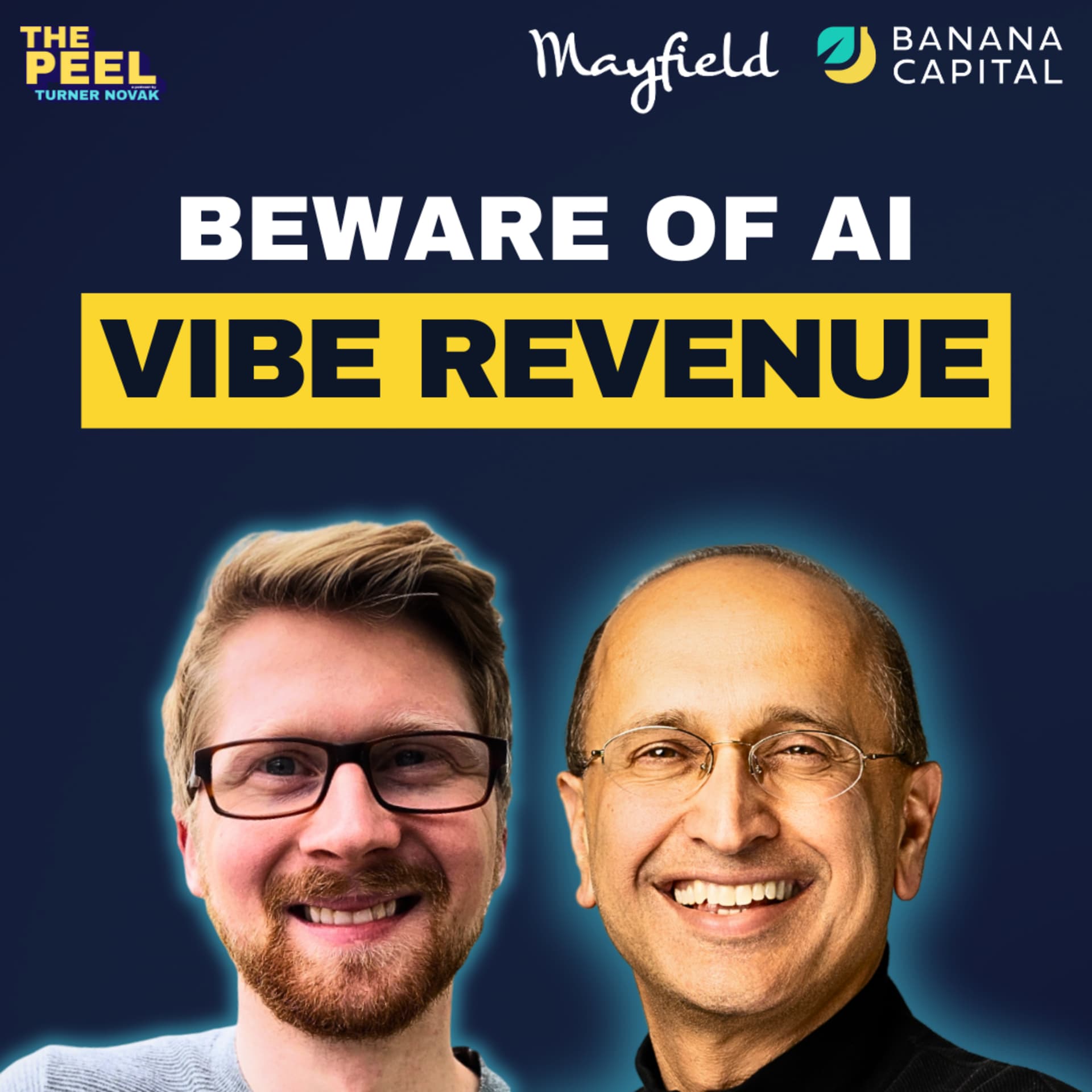
Navin Chaddha (Mayfield) discusses AI data-center infrastructure, why optics are replacing copper for GPU connectivity, and why many “billion-dollar seed” rounds may be overhyped or unsustainable. He also outlines Mayfield’s early-stage investing approach and cautions about adoption lag.
Guests
Navin Chaddha, investor at Mayfield (early-stage VC). Mayfield is an early-stage venture firm (56+ years, 500+ early investments; 70% at inception; 120+ IPOs, 225+ acquisitions; investing ~$3B active over five years, including AI hardware/semiconductors). Co-entrepreneur mentioned: Ankur Singla, serial entrepreneur and co-creator of Lumilence.
Key claims
- AI data centers hit “laws of physics” on copper; optics are required to connect GPUs/racks at terabit speeds.
- Lumilence is shipping physical photonics modules (scale-out and near-packaged optics NPO; moving to co-packaged optics CPO) using indium phosphide modules.
- Massive AI rounds are often justified by infrastructure CapEx (GPUs via cloud providers), but most companies shouldn’t raise “10x too much.”
- Seed-stage “winners” are hard to identify; Mayfield prioritizes people and “vibe revenue”/real traction signals over FOMO.
- Main risk: infrastructure may outpace end-user adoption of AI agents.
Notable examples
- Anthropic/OpenAI as “black swan” model companies needing huge capital.
- Past infrastructure cycles: internet/telecom (dial-up to mobile), and AI highways analogy.
- SaaS valuation collapse as a cautionary parallel.
- Uber/Lyft/Airbnb/Poshmark as “blue ocean” net-new market examples.
Written by AI. May contain mistakes. Listen to the episode to check what was said.
Chapters
Tap a time to open that second in VOLumilence: A $3B Success Story
0:45 to 2:30
Discussion on the rapid growth of Lumilence and its market potential.
“So essentially what is happening in the data center space is the GPUs and AI accelerators exist, but connecting them is a huge bottleneck.”
Challenges of Copper Connectivity
2:30 to 4:06
Exploration of the limitations of copper wiring in data centers and the need for optics.
“To do that, you need optical modules for both scale out and scale up.”
Photonics in AI Data Centers
4:06 to 5:44
Insight into how photonics technology is revolutionizing AI data center connectivity.
“And that's where a lot of money got spent in laying out.”
Mayfield and Investments in AI
5:44 to 7:22
Overview of Mayfield's investment strategy and focus on AI ventures.
“And today, we are investing 3 billion in AI up and down the AI stack, including semiconductors, which was a dead area 10 years back.”
The Cost of AI Innovation
7:22 to 7:39
Discussion on the financial requirements for building AI companies and hardware.
“that some companies raise are unsustainable.”
The Cost of AI Innovation
8:34 to 9:37
Discussion on the financial requirements for building AI companies and hardware.
“I use Flex personally, and I love it because I use AI to underwrite the cashflow of your business, giving you a real credit line.”
Navigating AI Investment Opportunities
9:37 to 14:00
In-depth discussion on the investment landscape in AI and how to evaluate opportunities.
“So I think first and foremost, right, there's no right answer.”
The Dynamics of Chip Manufacturing and Investment
14:00 to 17:46
Explore the complex investment landscape in chip manufacturing and the capital required.
“So essentially, you hire people to build the chip, to design it.”
Investor Strategies and FOMO in AI Startups
17:46 to 20:03
Understand how FOMO influences investment strategies in early-stage AI companies.
“Because I feel like the general sentiment right now is you kind of just have to bet on the winners.”
Evaluating Founders and Company Building in Venture Capital
21:02 to 24:44
Learn the importance of backing authentic founders and long-term vision in startups.
“So since 70 % of Mayfield's investments are at the inception stage, we try to back founders who are authentic and know company building is a marathon, not a sprint.”
Show all 42 chapters
Market Fit and Specialization in Venture Investments
24:44 to 28:00
Discover the significance of market fit and specialization for early-stage venture firms.
“The best firms, the best entrepreneurs are built on doing one thing, one thing well.”
The Current State of AI Adoption
28:00 to 29:25
Learn about the early stages of AI going mainstream and its impact on various sectors.
“whether it was cloud and SaaS, it went for like 15 years.”
Infrastructure and Market Dynamics
29:25 to 31:06
Understand the relationship between AI infrastructure growth and market demand dynamics.
“Now, whether it grows for five years or seven years is anybody's guess.”
Historical Lessons from Infrastructure Builds
31:06 to 34:28
Discover how historical technology infrastructure developments relate to current AI adoption challenges.
“But the different models of cars, the different things that will come out, we can't even imagine what it will be.”
The Bottleneck of AI Adoption
34:28 to 36:37
Explore the key challenges in the adoption of AI technologies and their infrastructure.
“The bottleneck is going to be is the end user ready to adopt it.”
Training Needs for AI Models
36:37 to 37:58
Learn about the necessity for continuous training in AI models and its implications.
“But that's for productivity and research.”
Market Valuations and AI Stocks
37:58 to 39:40
Understand the current market trends regarding AI company valuations and their implications.
“So that's where the training infrastructure is going.”
Venture Capital Trends in AI
39:40 to 42:00
Examine how venture capitalists approach investments in AI and emerging technologies.
“is today there is dearth of pure play AI companies.”
The Resurgence of Semiconductors
42:00 to 43:33
Explore how the semiconductor industry has bounced back and the implications for investment.
“So a decade back, I said, semiconductors and silicon will come back.”
Evaluating Founders in Tech
43:33 to 46:20
Learn how to assess the capabilities and technical knowledge of founders in the semiconductor space.
“because we already made the bets, right?”
Navigating New Market Opportunities
46:20 to 49:11
Discover the mindset required for investing in emerging and net new markets.
“and that market doesn't exist, it's the net new thing.”
The Importance of Risk in Venture Capital
49:11 to 52:52
Understand the necessity of taking risks to achieve significant returns in venture capital.
“depending upon the area, you need to have a prepared mind and at the same time, an open mind for blue ocean opportunities.”
Evolving Business Models in AI
52:52 to 56:00
Examine how AI is transforming business models and go-to-market strategies in tech.
“which is the same for people starting a company entrepreneurs.”
The Shift in Business Models with AI
56:00 to 1:01:15
Learn about the changing landscape of business models influenced by AI and outcome-based pricing.
“But they needed GTM innovation because you can't hire a physical sales force.”
Strategies for Competing with Incumbents
1:01:42 to 1:10:05
Explore strategies for startups to compete against larger, established companies in the AI space.
“you think through like where they're going to be more competitive against you?”
Building a Lasting VC Legacy
1:10:05 to 1:10:57
Learn about the importance of consistency in venture capital investing.
“And we'll be in business for a long time like we have been.”
Investing Philosophy at Mayfield
1:10:59 to 1:13:29
Discover how Mayfield partners with entrepreneurs to build successful companies.
“They're looking for consistency of returns, that you're not a one-trick pony to up markets, down markets.”
The Psychology of Investment Decisions
1:13:31 to 1:15:56
Understand the criteria Mayfield uses to evaluate entrepreneurs for investment.
“It's like being Mayfield believes we're in the service business.”
Lessons from Cricket and Entrepreneurship
1:15:57 to 1:18:04
Explore parallels between cricket teamwork and building successful startups.
“We look at people metrics, which is, are these people who are going to go build a real company?”
Personal Journey and Innovations
1:18:05 to 1:23:18
Hear about the speaker's journey from India to Silicon Valley and his contributions to video streaming technology.
“And you can tell once you spend time with people, what are they made of?”
Reflections on Educational Background
1:23:19 to 1:24:00
Learn about the speaker's educational experience and foundational contributions in tech.
“Went to IIT, Indian Institute of Technology in India.”
Early Streaming Innovations
1:24:00 to 1:25:16
Learn about the technological innovations that shaped early streaming services.
“then you have to send it over the internet.”
From PhD to Startup
1:25:16 to 1:26:48
Discover Navin Chaddha's journey from academia to launching a successful tech company.
“And we had done a prototype to put Stanford classes on the internet in Q1 of 95.”
Building a Distributed Internet
1:26:48 to 1:28:58
Explore the concept of a distributed internet and its impact on video streaming.
“This is 18 months from when you started it to acquired by Microsoft.”
Navigating the Dot-Com Bubble
1:28:58 to 1:30:14
Understand the challenges faced during the dot-com crash and its effects on companies.
“We grew from zero to a hundred million in revenues.”
Lessons from IPO and Acquisition
1:30:14 to 1:31:54
Hear about the lessons learned from going public and subsequent acquisition experiences.
“Yeah, it's kind of hard to argue with the guy who's 52 years old and around the world.”
Transition to Venture Capital
1:31:54 to 1:33:41
Learn about Navin Chaddha's transition from entrepreneur to managing partner at Mayfield.
“And I realized this is entrepreneurial again.”
Vision for the Future
1:33:41 to 1:35:44
Discover the ambitious vision and goals for building successful companies.
“I've only reached 40, 50 billion from inception.”
Reflections on Microsoft and Satya Nadella
1:35:44 to 1:37:18
Gain insights into working with Satya Nadella and what makes a great leader.
“And it doesn't matter whose company it is.”
Admiring Successful Founders
1:37:18 to 1:38:04
Listen to Navin Chaddha's thoughts on successful founders and their key qualities.
“He just wanted to grow and be an important player at a company like Microsoft.”
Insights on Successful Founders
1:38:04 to 1:40:19
Learn about the traits that make certain founders successful in the startup ecosystem.
“But still, and he says, I have no succession plan.”
AI Tools and Productivity Gains
1:40:29 to 1:41:44
Discover how AI tools like Claude are enhancing productivity for entrepreneurs.
“And by the way, 60 % to 70 % of our investments are referrals from our existing founders.”
Transcript
Automatic transcript. May contain errors.0:02Turner Novak:Navin, welcome to the show. Thank you for having me here. It's a delight. I'm delighted to have you. So you just recently announced you had a company that you invested in that went from zero to three billion in booked revenue in, I think, 14 month period. So that's you don't hear about that that often. So what happened? What happened is we teamed up with the serial entrepreneurs of ours and AI data centers is a massive market. Just five or six companies this year are spending over half a trillion dollars in infrastructure spend. It's insane. And it's crazy. And this is just the beginning. And I'm sure you and I will talk about, are we done or is this just what inning it is?
0:49So essentially what is happening in the data center space is the GPUs and AI accelerators exist, but connecting them is a huge bottleneck. And we are hitting the laws of physics where when you connect GPUs, you can only do so much on copper wires. So the world is moving to optics. So the company I'm proud to announce is Lumilence with a serial entrepreneur, Ankur Singla. It's his fourth company. And we co-created the company with a hyperscaler along with him. And the company provides scale-out and scale-up photonics to connect GPUs and data center racks. And very excited to be part of this company.
1:37It's a massive market, over$50 billion, dominated by Asian vendors. And you need a U.S. company. Yeah, that's true. I feel like that's a big, always a big talking point. Yeah. So what does it actually do?
1:52Turner Novak:Just for people that are curious, like the actual product, you said it's connectivity. Correct. So the company has like, it's photonics, it's optics. So what the company does is when you have a rack, you need to connect it to another rack. You can't do it over copper wires. So why not? Just they don't go beyond one meter. Like you cannot make a copper meter longer? Essentially, the transmission speed goes down. You can make it as long, but if you have to send stuff at terabit per second, you cannot send it on copper. If it's low speed, you can send a lot of bits through. So essentially the world is hitting a wall where connecting GPUs, connecting them to memory, connecting them outside the rack, you need optical cables.
2:41To do that, you need optical modules for both scale out and scale up. of AI data centers. So that's what the company provides is a physical product. First product is a scale-out module. And then in scale-up, they provide near-packaged optics, technical term, NPO. And then they're moving to co-packaged optics, which is CPO. And that's like technical jargon, but essentially the company's providing modules that go on optical cables to make magic work on connectivity. And this happened during the internet era where telecom companies needed optics and optics companies were the biggest market cap companies and networking companies.
3:30They were, right? Like, because you needed fiber for connecting things because when you have the internet, the last mile, you only need so much connectivity. But to send it from US internationally, you had to put undersea fiber. So to do that, you needed optical communication. But now the data center needs the same capacity. It's no longer undersea fiber. So that's what is happening. What used to go in thousands of miles of connectivity has come to the data center.
4:03Turner Novak:It's almost, it sounds like an easier problem to solve than literally sticking it under the ocean. That sounds like a pretty hard thing. But that's the wire. And that's where a lot of money got spent in laying out. Here, you have hit the law of physics. Over copper wires, you can't send bits at high speed. So to send it, you essentially need optics. To do it well in optics, you need optical components. So this company is actually shipping physical hardware. It's not a cloud company. Yeah. So where do they make the material out of then if copper doesn't work? So essentially, it's optical cables and their modules are on indium phosphide.
4:43And so it's the module is a digital and analog module, but the connectivity wire is optical cable. They don't make optical cables, but basically they make the modules which you need to put into the server on each side. You need to connect GPUs. So that's what they're providing. Interesting.
5:04Turner Novak:And I guess really quick for you who don't know, Mayfield, can you give us a quick 30 seconds on what you guys are? So Mayfield is an early stage venture capital firm. We've been in business for over 56 years. In our history, we have backed over 500 companies at the early stages, which is primarily seed, series A and B. And 70 % of the investments we have done are at the inception stage. essentially paper and pencil ideas before the entrepreneur even has a product. And in our history, we have been lucky to participate in over 120 IPOs and 225 acquisition. And today, we are investing 3 billion in AI up and down the AI stack, including semiconductors, which was a dead area 10 years back.
5:54And we started investing in it 10 years back because we believed even Even though software had eaten the world, that game would be over. There would be a renaissance and a golden era of semiconductors and hardware. And that's what as a VC, you have to be contrarian. You have to see something the world is not seeing, make early bets, and then get lucky with market timing. So that's what has happened to us. But pure early stage investing, 70 % is inception, paper and pencil ideas. and 30 % is either post a seed round or post a series A. Post a series, I think you said - Our first investment. So we do seed, which is inception stage, bigger checks, not one, two million, high conviction, do few things, do them well.
6:41And then if we miss it, we want to become, if angels did the seed round or micro VC or seed funds did it, series A to us is the first institutional VC. and then if we miss it there, we can get a second bite at the apple and this is for leading the rounds. But we have enough dry powder to keep investing in follow-on rounds all the way up to the IPO. Yeah, I think you said 3 billion that you had just raised.
7:10Turner Novak:Correct. That's our active under management over the last five years. That's what we have been investing. Okay. And I think you've also said before, so you think there's this huge opportunity in AI, but you also think that these billion-dollar seed rounds that some companies raise are unsustainable. Yeah, absolutely. How do you kind of square up, okay, there's this huge opportunity, but also there's certain areas you maybe shouldn't be investing in today. How do you think through just what the opportunity set is? This episode is brought to you by Numeral. Numeral is the fastest, easiest way to stay compliant with US sales tax and global VAT.
7:47Turner Novak:It's easy to set up and they automatically handle all registrations, ongoing filings, and their API provides sales tax rates wherever you need them with all the integrations you need. Their solution combines AI-driven automation with human expertise to manage global sales tax compliance end-to-end. Numeral supports over 3 ,000 customers, including companies like Brex and Character AI, and they pride themselves on white-glove, high-touch customer service. Plus, they guarantee their work, and they'll cover the difference if they mess anything up. If you want to get compliant, check out Numeral at their new domain, numeral.com.
8:21Turner Novak:That's N-U-M-E-R-A-L.com for the end-to-end platform for sales tax and VAT compliance. This episode is brought to you by Flex. It's the AI native private bank for business owners. I use Flex personally, and I love it because I use AI to underwrite the cashflow of your business, giving you a real credit line. The best part is 60 days afloat, double the industry standard. Flex has all the features you'd expect from a modern financial platform like unlimited cards, expense management, bill pay that syncs with your credit line, and their new consumer card, Flex Elite. Flex Elite is a brand new ramp-like experience for your personal life.
9:01Turner Novak:A credit card with points, premium perks, concierge services, personal banking, cards and expense management for your family, net worth tracking across public and private assets, and a whole lot more fully integrated with your business spend. One card for your businesses, one card for your personal life, one card for everything. To skip the waitlist, head to Flex.1 and use my code Turner to get an additional 100 ,000 points worth$1 ,000 after spending your first$10 ,000 with Flex Elite. That's Flex.1 and code Turner for$1 ,000 on your first$10 ,000 of spend. Thank you, Flex. And now let's jump in.
9:38So I think first and foremost, right, there's no right answer. It depends on where you're playing in the stack. Say you're building a chip. Essentially, you need hundreds of millions of dollars to essentially tape it out. Do you know where that money goes?
9:58Turner Novak:Because I feel like a lot of people see, you know, someone raised a billion dollars pre-seed or whatever. The headline, people are like, that's insane. This is a bubble. And they just dismiss it. Like what actually happens with all that money? So let's look at semiconductors and models. Those are the big rays. Models, it's pretty clear. People's sight is on the trillion dollar companies, which are black swans. They happen once in the venture capital history. Those companies have to train. They have to spend money on GPUs. They have to spend money with cloud providers. And to go to the scale of an anthropic or open AI, That's the kind of money you need.
10:40So there, it makes sense. So are they mostly buying the GPUs? Absolutely.
10:46Turner Novak:Is that the majority of that? Majority of the stuff, right? If you look at it, with tens of billions of dollars raised by Anthropic and OpenAI, or even more, the bulk of the money went into CapEx. The operation expenses of the people, there are only 2 ,500 to 3 ,000 people in these companies with a run rate of$100 billion in revenues. So these companies, if you look at revenue by the employee kind, is the highest ever in the history of venture capital. But then these are industrial companies. They are essentially spending money on infrastructure. They have to buy GPUs. They have to buy it through a cloud provider.
11:29That's where the money goes. And that's why the chip companies are so valuable.
11:33Turner Novak:And they also have collateral, right? Like it's not like Anthropik is just burning tens of billions of dollars on the cloud and it just goes away. They actually have these GPUs that some cases they might be able to sell them for more than they bought them, I guess, because we're constrained. So it's there's almost some downside protection, which you don't really think about that much. We're not playing for that, right? So say there are like two or three massive model companies. Maybe you can take five or ten shots at the goal in horizontal models. And you need that kind of capital. Now, there are two ways to raise that capital.
12:10And let's bookmark. I'll come to semiconductors and hardware, too. There are two ways to bookmark. In traditional venture capital, you raise rounds in series. And if you need a billion dollars, you don't raise it all at once. You raise X amount of money, then you raise three to five X of money, then you raise 10X of that. So essentially a billion dollars gets staggered over multiple rounds. So that's point one. Point two is just because these model companies need that kind of capital, everybody doesn't need it. It depends upon where you play in the AI stack. and let me define the AI stack in my mind.
12:54It starts with hardware, the semiconductor layer. On top of that, you need the models. They are the brain. They are the operating system. Once you have models and you have the hardware underlying it, the GPUs, the network, the power, the cooling, you need now data. You need to train on it. And for inference, you need to bring your own data. Above that is middleware and tooling, based on which you build intelligent applications and we'll talk about agents. So essentially, if you look at the flow, it's a six-layer cake. Starts with hardware, move up models, move up data, middleware and tooling for developers.
13:36On that, you build intelligent applications. And then in today's world, applications are becoming headless and only agents use it and less and less humans will do it. So that's what is happening with models. Now let's look at physical hardware companies. Essentially, to build a hardware company, a lot of the money goes in licensing IP, licensing tools from EDA vendors, and paying the manufacturing companies like TSMC. So essentially, you hire people to build the chip, to design it. But then to do that, you need tools. You need IP from Broadcom and others. You need tools from Cadence and Synopsys.
14:20And then you need to manufacture it. So if you need 300 to 400 million to tape out a chip, half of it just goes in miscellaneous things, not your people count. But they don't need a billion. But most of the chip companies raise round in a series of them. So I would say out of two, three, 5 ,000 new companies getting formed a year, maybe 10, 20 deserve those billion dollar rounds. not a hundred, not a 200. So that's my comment. It depends upon where you're playing on the stack and how do you set up your rounds and valuations accordingly.
14:59Turner Novak:So what's going on then when we have 10 or 20 times more companies raising those massive rounds that we need to? Is there just too much capital that investors have to work with? Is there actually a big opportunity there and the founders are pitching it well and people are buying into the vision. Like what do you think is going on where there's like, it sounds like there's like a 10 to 20 X more of these happening than there should be. Absolutely. So I think it's dependent upon two things. One, in certain categories, like hardware, there are many one to$5 trillion companies, but people forget it took them 20, 30, 40 years to get there.
15:39But the anomaly is there are two model companies. Anthropic started in 2021 and is approaching a trillion dollar market. It's the fastest growing company ever in the history. So there is a lot of FOMO among people who missed it and want to fund the next thing, the next thing and next thing, because the price is so big. But to play, you need that kind of capital. But my point is, you don't need it in 20x of what is needed in the kinds of companies which deserve that kind of capital. So that's where my worry, my caution is because if companies raise that kind of capital, they're going to spend it.
16:21And we saw that what happened in the last unicorn era. I was reading a number. There's like 5.8 trillion of value sitting in private company unicorns before the AI era. And we know SaaS, what happened to it. I want to use the appropriate words. It stuck. So$5.8 trillion of economic value is in the last set of SaaS unicorns. And you know what has happened in public markets. We're never going to get back. So same thing will happen in AI. Some companies will do it. But the amount of money being invested is$250,$300 billion per year. You take it over a 10-year period,$2.5 to$3 trillion will get invested.
17:05the equity value of these private companies is probably going to be 10x 25 30 trillion over the private companies sas was only 5.8 so you forward and say man how many anthropics how many open ai you need to create to hit that 30 trillion number which is going to be needed to be able to justify all these private valuations. So the math is the issue. Some areas deserve it, but probably I would say it's overcapitalizing by a factor of 10x, what you and I just talked about.
17:45Turner Novak:And so what do you think is the right way to approach it if you are a seed stage, inception stage, series A investor? Because I feel like the general sentiment right now is you kind of just have to bet on the winners. You have to bet on the things that are obviously working because if you're not, there's adverse selection, you're putting good money after bad, et cetera. Like if something is not immediately working right away, it's not worth investing in. That seems to kind of be the consensus. So how do you think, how do you work around that? Absolutely. So I think first and foremost, having been an entrepreneur for a decade and then a VC for over 20 years and having less hair and gray hair.
18:32You still got, you got a decent amount of luck. Yeah, like, but it'll keep going thanks to California water. I'm just kidding. Essentially, what is happening is it's very hard to call what a winner is at the seed stage and the series A stage. People like to do that right now. But I think it's driven by FOMO. It depends upon which is a hard deal, who's raising how much money. It's hard, right? Like once Anthropic is Anthropic, I can understand the$10 billion round. I can understand. But those are not seed and air rounds. So add the seed in a billion dollar round. You can have fear of missing out.
19:12But I think FOMO is for sheep. How do you know? I've been in the business for 30 years. This is a winning company. I understand. Their scarcity value. Founders are stellar. It's a great area. But how do you know it's a winner? You can't know it's a winner.
19:28Turner Novak:Well, so I think it then poses an interesting question. You are investing in some of them. So how do you figure out what is like high quality? I think you have a phrase called vibe revenue. Correct. How do you suss out vibe revenue versus real revenue? When you can build anything, Amplitude lets you know how to build the right thing. Use human language to get complex answers about your products. No more manually selecting events or building charts or dashboards. just to ask. Use agents to sense changes in customer behavior, decide what's causing them, and ask you if it's okay to fix it continuously in the background while you work.
20:01Turner Novak:Get the answers you need while building directly in the tools you are already in, like Claude, Cursor, Lovable, and more. And for the first time, understand if your agents actually work, measure quality, debug failures, experiment, and measure their ROI with agent analytics. Amplitude. With AI analytics, All you have to do is ask.
20:49Open AI, Dropbox, and Ramp all use Merge to move faster and build AI right.
20:54Turner Novak:Visit merge.dev slash Turner to start building for free. That's merge.dev slash Turner to try Merge for free. So since 70 % of Mayfield's investments are at the inception stage, we try to back founders who are authentic and know company building is a marathon, not a sprint. So at that stage, we lean towards more the people rather than the idea. Having been involved in 120 IPOs and 225 acquisition, at least half of them weren't there on their first idea. And if you read the book, Built to Last, if people haven't, they should. Most companies pivot. Most companies can start with that idea at the inception stage.
21:44So our belief is if you're building a team from scratch, go after people who have found a market fit for that problem and are going to be sane on building the company and not have FOMO. And I keep using that word again and again. They want to set the company in the right way. They start with what's the mission? What's the values? What's the culture of the company? Then they set up their own North Star and they realize company building is a team sport and they amass an amazing founding team. And those are the kinds of things we look at. We don't look at, right, like, hey, what is the idea? There's no traction.
22:30There's no vibe revenue. There's nothing. So our core business, 70 % is paper and pencil ideas, which very few people do. Now, it depends upon where you are in the stack. right? So, and then if you are an early stage venture firm, there's some things you have to just say no to because you don't have the capital. So for example, horizontal models, transformer based models at the inception stage, we don't just have the capital to play. So you can't play, but if they are vertical models or domain specific models in security, in IT, or vertical models in healthcare, finance, or for coding, we have done them.
23:16But in semiconductors, we can play. The raises are 40, 50 million. They're not a billion dollars. So in life, you need to know where is your market fit? You can't be a jack of all trades. It's better to be master of one or master of few. And I always joke around, right? Like I'm a foodie. I don't know if you are, right? I would say so, yeah. Great. Mayfield specialization is inception stage, people first. We produce in a restaurant a certain kind of food. If you like it, there'll be a line of people who want our food, but we don't make all kinds of cuisine. Do you see what I'm saying? Right? So you have to learn to say, no.
23:59It's like In-N-Out burger, right? You want a chicken burger, please go to Chick-fil-A. hey, we only make one kind of burger with multiple patties, maybe with cheese, maybe with not. That's what we do. So in life, entrepreneurs, and my advice to VCs is, unless you're a platform, I'm talking only my lens is early stage VCs, know what you are the best at. Where is your fund market fit? Similar to founder market fit is the PMF. You can't be everything for everybody because to compete with the platforms who have 10x the number of people of Mayfield as investors, but their strategy is different. I never believe in chasing somebody else's strategy because they might see the cliff and move this way.
Read the full transcript
24:51And you just keep going. Yeah. You need your own North Star. The best firms, the best entrepreneurs are built on doing one thing, one thing well. And my belief is in whatever you do, it's the 10 ,000 rule and you have to build trenches. You can't be three inches deep and go everywhere. It's hard. Inception stage business, entrepreneurship at paper and pencil is hard. Yeah. It's the hardest business. So why do you do it then if it's so hard? Love it. Love it. Our team loves it. What I love is basically when things are not clear, the team we have gotten are all startup founders, have worked in startups.
25:31We just love the art of company creation. We love the art of essentially working with founders, helping them figure out PMF, helping them figure out their GTM. And we want to democratize entrepreneurship. Today, there is a power law. all the money is going into companies at growth and later stages, which are working. 65 % of capital in Q1 was three companies this year. That's crazy. So how can innovation...
26:01Turner Novak:Anthropic and OpenAI? Absolutely. And if you look at it, like innovation, how can it happen in three companies? That's gone. That's already happened. Those are like trillion dollar companies now. Now, if their value are$2 trillion in the case of SpaceX, they're probably the 10th. SpaceX is probably the fifth or sixth largest enterprise value company. And these trillion-dollar companies, you and I can count on our hands how many companies are above a trillion dollars. Right? How many is it today? It's like 10 to 15. Yeah. 10 to 15. They have gone up because of the hardware stuff. There's a couple.
26:43Turner Novak:Isn't Broadcom a trillion-dollar company? They're like$2 trillion. micron is over a trillion and memory is not easy. So we will talk about it, right? It's at all time high. They're like 2x semiconductor public stocks are at 2x multiples of what the S &P and the normal tech companies are. You're saying semiconductor, public companies trade two times like an entirely double the multiples or the multiples. Okay. So I think it begs an interesting It's all growth driven. It's all growth driven. When the growth slays down, they're going to come down. Yeah, because I think if you've been paying attention to semis for decades, they are kind of notoriously known for being extremely cyclical.
27:27Turner Novak:Absolutely. I think that's something I've struggled with a little bit as an outsider, right? You just know that semis are cyclical. So you're like, oh, you're just kind of waiting for it to fall back down to earth again. And how do you kind of think through that? Like, is someone who's been through it, like, where did the, where are we similar to what's happened in the past? Like, is it something like, is security over because of how the world changed? No, no. I think what happened with the software run, whether it was cloud and SaaS, it went for like 15 years. We are in the early innings of essentially AI going mainstream.
28:10Today, it's two things which have massive traction. One is search and answers, which is to make me better. And the second is coding. But the revenues in search and answers is probably 10, 20, 30x of what it is in the whole coding ecosystem. So these two plays I'm talking about, one is training. The inference models are training and then they get used for search and answers, ChatGPT, Gemini, what Claude does, and then coding is the breakout. After that, I would say, if you're not even on innings one of the other place. So still, the training infrastructure is not fully built. That's why so much CapEx is going, but inference workloads are less than 10%.
29:03So when inference grows, the capex on hardware is going to keep growing. Maybe in the training innings, maybe we are third or fourth on infrastructure innings. But in inference, it's just the start. It's just the start. So you think we're going to need a lot more inference infrastructure? Yep. And that's where it's 10x bigger than training. And that's why this will keep growing. Now, whether it grows for five years or seven years is anybody's guess. But there is one caution. If AI adoption doesn't happen at the pace at which the training infrastructure was built, there'll be a slowdown and there'll be a huge market correction.
29:46And in semiconductors and hardware and even in models, right? Today, CapEx is being spent on training and you're building the inference infrastructure. But somebody has to buy. And besides coding, customer support and legal, but even legal is small. We are talking about companies with 100 million, 200 million. And cursor is 2 billion going to 4 billion. Cloud is bigger than that, Cloud Code. So you're comparing a$100 million revenue company with 2, 3, 4 billion. So the scale of coding is 30 to 50x. So this has to happen in other areas. It has to happen in finance. It has to happen in sales. It has to happen in marketing.
30:29But we are at infancy. Yeah. The entire industry of those things is not even 40, 50 million in revenues.
30:36Turner Novak:Yeah. Well, we're still kind of using the generic search and answer tools for the sales, for the finance. But it'll change. It'll change. Yeah. That's what happened with enterprise software. You had operating systems, you had databases, and applications came after that. And it's the same, right? Like I look at inference as the cars. Today, the highways are being built. Only a certain kind of car for coding that GM has built is running. But the different models of cars, the different things that will come out, we can't even imagine what it will be. But it's in its infancy, infancy. besides one or two areas.
31:18Turner Novak:Yeah. And so going back to what we saw in prior infrastructure buildouts where we ramp up super quick and then there's almost like a mismatch of AI adoption that doesn't quite mean what they need. Then that's a problem. So what's happened in the past when we've had these big infrastructure buildouts? Like when things, they go well, they always go well until there's like some kind of a mismatch and maybe they keep going again and we're totally fine, you know, 10 years afterwards. But how do those initial kind of mismatches of adoption and like the underlying supply or demand build? I don't know which side is which of this equation, but how have those gone in the past?
31:57Turner Novak:And what do you kind of think might happen if we were to see it with AI? So I think I'm a student of history, right? I became an entrepreneur in the mid-90s when the internet was just happening. And at that time, there were two things which were happening. The web, people were putting content, e-commerce were coming, entertainment was coming. The problem was the infrastructure wasn't there. At that time, there were like 30, 40, 50 million PCs. There were no smartphones in the mid 90s and there was no last mile connectivity. And what I mean by that is to access the internet, you had - You had to call in.
32:41It was like dial up. dial up 28k. First, it was 14, 4, 28k, 56. If you had 128 kilobits per second, you fast forward. You fast forward now, basically 7 billion phones in the world. More. People have multiple phones, always connected. Speeds are in megabits per second, 100x of where we started on the internet, hundreds of millions of PCs, hundreds of millions of smart tablets. And so the next era was mobile from internet where the telecom connectivity, the last mile was there. Devices were expensive, but they penetrated and PC adoption stopped. But now after the mobile era, we are coming 10 years later.
33:35The connectivity, human through phone, through PC, bandwidth is all available. So the adoption is going to be much faster, which is the same thing that happened from newspapers to radio, to television, to cable. So this time, the telecom infrastructure, the connectivity is there. What is missing is the compute grid. We don't have enough electricity to be able to either train or to be able to do inference. So that's where the build-out is happening. It's not happening. The past things were limited, but the end devices weren't there. So there was an issue of number of people you could reach and connectivity was an issue and it wasn't always on, always connected.
34:29That's solved. So now I need to add AI. The bottleneck is going to be is the end user ready to adopt it. that's the biggest issue. But what people are saying is, let's assume that will happen like it happened with coding. Let's build. So my point is, the biggest risk is adoption of AI agents, AI native application is not at the rate at what the world, then the infrastructure build out will slow down, multiples will correct. And we're going to know Today, because of training infrastructure, every hardware company is even sold out next year. Supply chain is the bottleneck. You can't get these components to be able to even build a product.
35:18Manufacturing is the constraint. So people are trying to invest in that so that the AI highways are built. But the cars have to come. But cars have to be bought by somebody. Enterprises is the first use case. So if they don't buy, you could have empty highways. And today, the highways are equivalent to building training infrastructure. Once the training infrastructure is built, and like what happened if you go back 100 years, the people who built railroads, the Vanderbilt's, people who built the oil,
36:01the Rockefeller's, people who built the roads after railroads. They were the biggest players. People who built infrastructure in steel, buildings, Carnegie, they ended up becoming the biggest one. Then cars came, which could run on those things. But it was slow. It didn't happen overnight. People were, but it's timing.
36:26Turner Novak:Because you could say today, for AI adoption, everyone uses a Google product and Google just says, here's some AI. And there's suddenly 2 billion people that use it. I don't know. But that's for productivity and research. It's an expansion of the search experience because now you can chat and search was static. This is more interactive, right? If you look at Google with the page rank, it essentially looked at what's the most popular things that came up with the linking technology. But now you have trained it. You don't even need to go to the web. You can just have a smart person on the other side.
37:12It's a digital encyclopedia, which is giving you summarized answers. And that's the danger. Separate day, separate topic with hallucination and models. How do you know? The smart perceived person is giving you the best information.
37:26Turner Novak:I mean, I still get, you know, you'll look something up and you kind of know that it's the wrong answer. And you're like, are you sure? Can you double check? And then it's like, ah, you know what? I made that up. Like, it's actually this. And very good point. That's why they have to keep spending money on training, data labeling, data expertise, because you can't, your answers keep changing. Daily basis, it's a different information. So you have to train again. Do you see what I'm saying? So that's where the training infrastructure is going. It's not perfect. It's real time. You can't train three months old and give answers.
38:05You're extinct. It's like investing in the stock market based on three months old results. It's not static. I mean, if you use three years old results, you know, you'd say, maybe we'll say four
38:18Turner Novak:or five years old, just to like drive the point home. you know it's like the end of 2021 beginning of 2022 and you say oh sass i love sass i love oh yeah that's the biggest thing in the world you know i don't know salesforce or which the one that's gotten hit the most chegg chegg is going to be huge because kids use it for education they have this moat with all the the bookstores with across all the campuses fast forward i don't i don't know what chegg's trading at but i think it was like terrible down 99 yeah actually you're absolutely right. In 20, we were at offsites, right? Like, same argument.
38:57Valuations don't matter. Everything is going to be 10 billion unicorns grow on trees. This was in 21. Yeah, it was SaaS, right? Like, basically, the forward multiple of private companies was 25 to 30x on revenues.
39:12Turner Novak:On revenues. SaaS. Today, you're lucky if you get 3 to 4x. So, it's one-tenth. 90 % down. Yeah. So it's the same, right? Like basically it's all dependent upon growth. When growth slows down, multiples can have, multiples can one third, multiples can get one fifth and it's all supply and demand, but growth sometimes hides sense and it's supply and demand. One other thing which will happen with AI public stocks is today there is dearth of pure play AI companies. So if I am a big money manager with trillions of dollars in assets. I want AI exposure for my investment. Yeah, there's none of it out there.
39:55Palantir was the great example. That was like the first one, yeah. Yeah, now there's SpaceX. But look at Palantir multiple compared to IT services. It's like 20x more. IT services companies are half X, one X, two X revenues. I can't even calculate the multiple. So it's a supply and demand. That's why SpaceX is what there is. That's NVIDIA. is a good example. Pure proxy. AMD. Now CPUs are hot. Intel. Micron. Memory. HBM. Host-based. Sorry, high bandwidth memories. High speed memories are needed. So that's what is happening. It's supply-demand. There is a shortage of stocks which are pure play-ate AI.
40:39SaaS, there are hundreds. AI, sub-10. Supply and demand. Where do I put money? Do you think,
40:46Turner Novak:is there an element of that that goes on in venture where someone says, okay, optics is interesting or power cooling is interesting. And they have their portfolio and they've got 20 slots in the portfolio and there's a hundred funds, a thousand funds. And they all say, we need an investment in all of these categories. Does that kind of happen in venture a lot? And maybe that's contributing to this like just over funding of certain categories? You're getting it right, right? Basically, when you are an early stage investor, you have to discover things which are not obvious, which are not on Gartner, not, nobody's talking about it.
41:31So you go say there is a reimagination which is going to happen in this space, go early, make the bets. That's what Mayfield Tech, 15, 20 semiconductor hardware bets. Because we want to be contrarian. We want to see things before others are seeing. And it's obvious. Everybody said hardware is dead. I remember going to a conference, three VCs had to vote on where is the next decade. So a decade back, I said, semiconductors and silicon will come back. My fellow panelists laughed at me. What did they say? They said, no, it's dead. It's not a venture opportunity. Takes too much money. At that time - Those were all true though, right?
42:20Yeah. At the time, yeah. Right, nobody will fund it. There's no follow on money. And two anecdotes. Luckily, since it's Silicon Valley, you have to raise your back on what is a popular trend. One was FinTech. I don't know, SaaS is the next decade. Somehow I won. I go like, wow. So there is, and maybe it was, my line was, Silicon needs to come back to Silicon Valley. Software has eaten the world. So you need to go to solve problems in science. And you fast forward 10 years. NVIDIA is up 1000x. The semiconductor stock index is up 40x. it happened but now other people who are growth stage investors late stage investors they don't have hardware exposure whether it is crossover funds whether it's public market funds that money is rotating in here and that's what is causing mega rounds that's what is causing the valuations to go up.
43:27And now time has come for me and Mayfield to go invest in other areas at the early stages because we already made the bets, right? Maybe the new one I'm working on is in the memory space because the memory wall is there, but you need to be deep. You need to be technical. You need to see everything which is out there because these are hard products. Three teams can build CPUs in the world, maybe. Three can build GPU. three can build uptakes. So it's hard. But to go to inception stage, it's hard work. You need to love it.
44:01Turner Novak:Yeah. Right? You probably need to really understand what the opportunities are, what the problems are. And can they build it? The technical risk is so high. It's rocket science. So how do you, when you're talking to a team, like you meet a founder, let's say it's the first time. Yeah. Never met them before. I don't know how much that influences. It sounds like you like to really get to know people. Absolutely. But how do you figure out how a founder is going to operate? How do you figure out how good they are, how technical they are, how they lead a team, how they recruit, how they do customer discovery?
44:32Turner Novak:What's your general process for getting to know a founder and what are you looking for? So I think it depends on where you are in the stack. In the semiconductors and the model areas, these people have given their 10 ,000 hours. So you just get them to talk about what they've done? What they've done, they've shipped hardware before. or they know the exact problems in the industry. I'm not going to back somebody who's building a GPU who has never built one before, or I'm not going to back, but that's at the semi-layer. You move up to models, it's the same. All these people had done this at other places, right?
45:09But the more up you move the stack to agents and apps, it's fair game. Because you are using now models and GPUs and network power cooling of somebody else. and we have companies in each of these spaces, people have done this for 10 years, 15 years. So in some areas, domain expertise, length of experience in that area is critical. Because otherwise, how will you solve these problems? You need to have learned and given your 10 ,000 hours on somebody's past experience. So if you don't have that. So they are more seasoned in some layers and they're more inexperienced in certain other areas because, see, you're creating an agent for finance.
45:56An industry doesn't exist. It's a fair playing ground. You're going to do cooling. You never worked on it. How? It's physics. So either you have to have done it as a PhD student, postdoc, or have that experience in the industry. These are hard problems. But because somebody was doing it, They have to just adapt it to this AI era. But if I'm building a sales agent and that market doesn't exist, it's the net new thing. So there it's a fair playing ground and they're having a beginner's mind and a fresh entrepreneur is actually better because most people will say when coding was happening, maybe including us, there's no market because monetizing developers is very hard and that's where you go wrong.
46:45So there are two kinds of plays in venture. One are fast, better, cheaper on existing markets. You 10X what is happening. The other is net new markets. When I invested in Lyft, people will drive other people. I thought only cab drivers do that. What's the market? Zero. So that's Airbnb, same. Or you say like the taxi market.
47:09Turner Novak:Taxi small, right? You think a normal human being will, and an Airbnb will rent their apartment, stay in the same apartment, and people will sleep in the other room. Like a normal person from the hotel industry is going to laugh, right? When I did Poshmark again at the inception stage, there was a lot of discussion, even at Mayfield. People will buy used clothes out of somebody else's closets. Yeah. It's not obvious. Kind of gross, maybe. Oh, yeah. The company grew like crazy, right? Went public. And the reason was, basically, it became a circular economy. I sell, I buy. So it wasn't professional sellers.
47:5270 % of buyers ended up selling their past things. So you're in a circular economy that you create people to people.
48:01Turner Novak:Yeah. And a lot of those things, Uber, Airbnb, Poshmark, they all enabled a business, right? Like Uber, you can go in and make money. I think that's a beautiful thing. expanded the market. Yeah, about ride sharing is... No, they made drivers 100x. Yeah. Professional sellers 100x. Hosts 100x. So that's what I call blue ocean. Net new markets actually experiences a problem there because you will come up with hundreds of reasons why it won't work. Interesting. Versus I need to sell to a hyperscaler. Man, I've never done it. or I know how a data center operates, how a chip is built. So you cannot have the same lens.
48:46When you invest in areas which exist, markets which exist, that you are reimagining or disrupting, you start with a prepared mind. You need to have a thesis. When you invest in Uber, Lyft, Poshmark, Airbnb, you need to have an open mind as a VC. Yeah. So there's no one answer that fits. So I always believe to be a good VC, depending upon the area, you need to have a prepared mind and at the same time, an open mind for blue ocean opportunities. And a lot of times more money gets made by having an open mind, where it's not clear, it's risk. Oh, I get excited when people say semiconductors is a bad area, start investing.
49:37When they say there is no market for used clothes, I like it. And the reason is no big company is going to do it. Most VCs won't fund it. Great. You get time to hone your product, to get it right. That's what venture capital is, is venture. It's an adventure.
49:56Turner Novak:You're going on an adventure. You got it. You say it better, right? Like I'm just saying, if everything is obvious, hundreds of companies will be doing it. All big companies will be doing it. All VCs will be funding it at the early stage. Once it's obvious, money gets poured. That's the stacking of capital. So how do you then, okay, so that's interesting for me to think about things is like, everyone hates this category. It is an unsexy category. I like it. So how do you avoid just falling in the trap of they're right, that this is a bad category. What do you look for to suss out this is actually a good space to be investing in?
50:32So I think venture is mostly about picking and having the sixth sense of imagining what could something become, not today, over a five, 10 year period. And what if it happens?
50:48Turner Novak:What would the new world look like? So it's almost like arbitrage of like TAM expansion. Like everyone else sees the market and like bad market, small market, bad economics. So that's one. The second is market exists. Nobody needs a 10X product, right? An example. No names. Cellular market came out. Some, the biggest, no names name. Consulting company told AT &T, there's no market for wireless and cellular. Didn't they say they'd sell like 5 million? No, not even that, 5 ,000. Oh, 5 ,000? Yeah. Wait, this is mobile phones, like cell phones. phones. There's no need. Everybody in the U.S. has a phone.
51:28Why would you carry a big device? And look what's happening. It's just annoying having this big... People are shutting down landlines, right? So sometimes conventional wisdom, right? So that's the net new, right? So here is the other thing. In venture, it's the power law. 10 % of companies make all the returns. you cannot be afraid of failure. 30, 40, 50 % of the companies will fail. It's okay. It's adventure. It's okay. But if you get it right, what is going to happen? So this business is not about worrying about failures. I believe if you don't take enough risk, there's no reward to create home runs.
52:15And as Einstein said, If you're not feeling enough, then you're shooting for the roof, not the moon. I want to shoot. He said, basically, if you don't have enough failure and experiments in front of you, you're not doing something which is going to be consequential. My feeling is if you're an entrepreneur, you're just shooting for the roof, man. Shoot for the moon. At least if you shoot for the moon, you'll get to the tallest story in the building. You'll still be pretty high, yeah. So that's what early stage venture is. If you're a growth stage investor, you can't have that many losses. So my lens for the audience is early stage, which is the same for people starting a company entrepreneurs.
52:58So your odds are against you. Yeah. Right. Google comes last. Search is a solved problem. No VC funded it till it became the largest search engine. Facebook, it's a solved market. There are like 20 social networks. There's no need. There's no business model for them either, right?
53:15Turner Novak:But somebody bet on it. We didn't see it, but it's okay. So do you think an appropriate risk then to take is this kind of TAM expansion risk or this like the market could actually be much bigger than you think? So that's one. That's net new. Yep. But in existing markets also, they're expanding. And in deep tech, there is an inflection that is happening on technology. And the bet you are making is the incumbent doesn't have the talent to do it. The talent or like capacity to do it. Or they don't believe in it. they'll be slow. Yeah. So you just preempt the market to be better than them. I think it'd be like a classic, like with IBM, when the cloud came around, you know.
53:55Turner Novak:Or even the PCs. Yeah, or HP, when cloud came around. Like they sold these mainframe servers and the cloud was kind of, you know, maybe it's like, it's kind of small, like it cannibalizes our server business. When I was funding companies in 2008, 2009, same thing. That happened with wireless. Nobody will put their data on the cloud. What was the argument? Because it sounds, The cloud's awesome today. What was the argument? The argument was, it's my proprietary data. Somebody will steal it. Why would I give it to a third party? It needs to be within my firewalls. So who bet on them? Market expansion, startups, AWS customers.
54:31Millions of startups went there. Then departments of big companies started saying, ah, I don't need to give customer-facing data or employee-facing data. Let me do training. let me do side projects where I don't need data. Then solutions came. I keep my data on my premise and use cloud for compute. I love those ideas. When people say it will never happen, my point is, what if it happens? Less companies are funded, big companies are against it. But I would say all these new companies, just technology and market expansion is not enough. You have to change your GTM and you have to change your business model.
55:22Let's look at enterprise software. 80s and 90s was about perpetual license. You put the product on your own prem. You need IT, you need this, you need that. SaaS came. They said, we'll rent it to you. We'll build the infrastructure. You don't need to pay five years of license up front. PCs would say bad business model. You're in the financing business. But they didn't go after the largest Fortune 5000 companies. They expanded the market to mid-market and small companies. Because you could sell software to a small business that pays you$10 a month. And build a business. But they needed GTM innovation because you can't hire a physical sales force.
56:04Yeah, for$10 a month, that's pretty low. So that was credit card PLG. than if you're selling a 25K product per year phone. If you get to the field, you need like a few hundred K. And the same thing is happening with AI. They're changing the model from subscription to outcome-based. If I'm a public company, can I really, really change my business model where I was collecting monthly? I make money when you make monthly, but it also needs a new GTM. It also needs a new GTM because now you're selling work. You're not selling software. Software was given to humans to make them productive, do their jobs faster.
56:49Now humans said, AI does the work, but I will only pay you if you do something. I won't pay you a salary. I won't pay you overheads for just sitting around. If you do something, I'll pay you.
57:03Turner Novak:There's probably a lot of software companies that would, if they switch from you just pay us every month for everyone to have a seat to you pay us for what was actually accomplished in the software. There's probably a lot of them that it exposes the business quite a bit. It will just like kill it. And by the way, the software industry, if you look at the spend on white collar employees around the world is$30 trillion. dollars. What are you bucking into white collar employees? These are people who are not on the factory floor. It's like a desk worker of desk worker or sales, marketing developers, GNA, right?
57:46People in the field. These are not manufacturing people or some of the other people who go in the field. It's not contractors and those kinds of people where software has penetrated. It could be small companies, mid-sized companies, large companies. Enterprise software is a $600 billion market. So to provide software in a$30 trillion industry, if you take 10 % of$30 trillion, $3 trillion, you take 1%, it's $300 billion. Enterprise software is 2%. So for providing software, improving productivity, you get 2 % of all the money you spend on your employees and contractors, right? With AI, I believe the number is 10x.
58:41It's 6 trillion. So why is it 10x? The main reason is you're going after operational expense spend, people and headcount spend. So if I look at by 2030, 30. Jobs will grow. I'm a believer. Net new jobs will get created, which happens with every IT. But there'll be jobs where there is shortage of talent. Humans can't do. Or they don't want to do. So if 10 % by 2030 of the market is being done by AI, it's a$3 trillion opportunity. If it's 20%, it's$6 trillion. 10x of the enterprise software market. it. Now we can debate. It's only 1%. How? It cannot be. People spend, there's like shortage, right?
59:32Like who wants to climb a stair in a fire thing? You can send a physical snake who goes and take pictures, right? Like look at, but certain things which were offshore for cheap labor arbitrage, they're going to come here. Back, they'll become near shore. So there will be a dislocation of certain jobs will get dislocated. Net new jobs will get created. But you pick DevOps, you pick security, you pick coding. There are like 30 million developers. I think they're going to be a billion developers. AI will be providing the remaining ones. But if companies make money, they grow. It's not like jobs are going to go down.
1:00:16They still need it, but they'll be augmented for the growth with AI. That's why. And then if AI is using the stuff, that 600 billion is going down because they're less seats. And they don't want to pay you for subscription. Yeah. They want to pay you for the work you do. So that's the issue, right? Like why this AI market, the belief is it's so much bigger.
1:00:41Turner Novak:Do you have any AI agent portfolio companies? Around 20. Okay, so if you were the CEOs, the founding, like the teams of these companies, how would you approach going up against a big incumbent in the space?
1:01:16Turner Novak:run outbound capture every interaction manage pipeline and automate follow-ups all in one tool they pride themselves on an effortless onboarding white glove activation and get you to value in days not months and the product practically runs itself with built-in agents that are always working for you start growing your revenue faster with monaco try it now at monaco.com and maybe this is easy because they're all doing it you can talk like what's worked the best but like yeah how would you think through like where they're going to be more competitive against you? Where are the weaknesses usually?
1:01:52Turner Novak:Like when you're thinking about - And this is at the agentic layer, right? Yeah. So this is like - And it's four, actually. One is the model companies can keep doing it, what they did with coding. Or traditional SaaS companies can come after it, right? So let's start with, if you're okay, like why is there an opportunity around models? They're like the operating system. And we'll talk about maybe like how OpenClaw is Linux and Cloud is the new browser. I've been writing about it. Horizontal models are very good at what they're trained at and very good at some of the horizontal things where the data is open.
1:02:33You can essentially go in, train, or you can get specialists.
1:02:39Turner Novak:So is this what you consider a horizontal model is anything where there's open data that you can go in and figure out new things? Correct. And it's primarily around research, productivity, and those writing emails, man, like that's going to be horizontal. So where do you go? So if you are a agent company, first, you need to solve domain-specific problems and vertical-specific problems. You need to have context and memory about that industry. You might have to put FDs, forward deployed engineers, to get the data. And you have to do multi-step boring workflows. And then I would say your GTM is very, very important and business model.
1:03:30GTM is important. You have to go after fragmented markets where the ticket size is small. You have to. And I'll tell you why. Because that's terrible. Some people say it's terrible advice. Go for the enterprise. But we saw that in SaaS. The challenge is the model people are going to go after the biggest companies. They're$50 ,000 ,000 ,000 in revenue, a$10 ,000 ,000 deal per year. They don't even respond to calls of our companies which are giving them a million-dollar order. It's some rounding error. So GTM, picking a market, it's not GTM, then you need to innovate. How do you go there? You can do it through channels.
1:04:09You can do it through PLG, separate topic. But then your business model is very, very important, if you will. And that becomes the crux of the problem with the SaaS companies. So if SaaS companies, I'm 5 billion in revenues, 10 billion in revenues, really? I'm going to like change and dwindle my revenue from 10 billion, which is predictable, to 100 million? And my stock price has probably been shot. It's already been shot. Yeah. So that's one, business model innovation. Second, the kind of GTM you build for a 100K ACV product is very different than a 5K. So how are they going to retool, fire all these salespeople?
1:04:57And the agentic companies are very smart. They're not saying don't use software. They're saying augment your people. That's not the value proposition of a SaaS company. So they go after productivity software budget. They don't, this is TAM expansion, right? And agents, if they're smart, they can use any software. The problem, and the final thing is, if I'm a SaaS company, I create an agent. Man, that only works with my software. The world needs choice. You and I can have a new Nuko, works with everybody's software. Enterprises, small business, they want open. So it's very, very interesting what's happening with cloud providers too.
1:05:45Every model is available through every cloud, every new cloud. Yeah. So it's an open world. So that's why I'm a big believer. And building an agentic business is very different than building a SaaS business. So that's where it's a chess game right from the get-go. You have to design your business besides the tech. And I learned through HashiCorp and other companies, when you build your product, GTM is a very important feature. Because if your product needs 10 people to sell it and 10 people to deploy it, it's a very different product if you're going bottoms up. So it depends upon what your GTM is.
1:06:30So it's complicated. Tech and UI is not enough.
1:06:34Turner Novak:So it sounds like go very specific, solve a really hard, deep vertical problem. Go for small customers that just - Fragmented markets initially. Fragmented markets, okay. They could be mid-sized, but it's not thousand. And lower ticket sizes. Lower ticket sizes. And innovation on business model. Outcome-based pricing. Could you argue that there's too much that has to go right doing all these different things? like, do you maybe only pick a couple? Like, do you have to do all of them together? Oh, you mean to say all verticals and all horizontals? No, no, to say like - Oh, all those things. No, no, no, no.
1:07:11You got indigestion, startups die.
1:07:13Turner Novak:Yeah. I think you figure out if you're competing with a model company, what are the one or two things you attack them on? And if you're competing with a SaaS company, what are one or two things? market expansion is number one. You have to go after things which incumbents can't serve with a pricing model and a business model. Expansion and uniqueness on business model and GTM. Because that's a separate market, what SaaS did to enterprise software. If your ticket sizes are lower, why in the right mind, Claude is going after that market? but they're like 100 billion in revenues man it's a 100k customer man who will take that 3 000 employees they can't even serve enterprises yeah they created jv's to go after them that's true yeah and there's a whole competency something else in life startups die of indigestion they don't die of starvation everybody in this world plus the big companies are fighting each other Why are they going to fight a small company whose stamp is 100 to 1 ,000 of what they are playing in?
1:08:26That's where opportunity gets created. And then if these companies get to 100 million, 1 billion, hey, they can go public. Not today because the bar is too high. Or they can get acquired. If you invest at the early stages, you can still make home runs. And 10x is not enough in a home run today. You need to make 100x on your first one. You need to have fund returners.
1:08:49Turner Novak:Well, I feel like that's the argument. If I was really, if we were going really deep, like debating this, I would say those markets are too small. The TAM is too small. You should not invest there. Like go for the bigger markets. So then you have to do both. You have to do both. So it's almost like small niche. They have small to the initial, but then will be big for it and expand. That's the bet you're making. Because incumbents, like, and you and I talked about it, SaaS companies, their markets didn't exist. Enterprise software companies sold to Fortune 1000. They went after mid-market. Uber, Lyft, Poshmark, Airbnb, Instacart, DoorDash.
1:09:34These are market expansions. They made the markets 1000x. It's good. I love when people say there's no market. Now, okay, I'm going to go wrong. More often, it's playing against the house. But what if we get it right? What if we get it right? So you have to imagine. And in this business, you'll go wrong more often than right. Your anti-portfolio is always better than your portfolio. At this stage, Mayfield Invest. Because there's no product, there's no data, sometimes there's no market. But we only need to get a few companies right every fund cycle. And we'll be in business for a long time like we have been.
1:10:13and you've been in business, I think 56 years. Yeah. And I've been doing this for 30 years, 20 as a VC, 10 as a serial entrepreneur, did three companies and learned hard lessons, hard lessons.
1:10:26Turner Novak:Yeah. Well, and I think, I just want to make sure we talk about this like super briefly. I don't know if we mentioned, but I think you've made the Midas list 18 times. Very lucky. And then there's also, I think you mentioned, And they also called you like one of the top 15 VCs of all time based on the Midas list data. Is that also kind of the stat? Yeah, very humbling. And what they did on the 15 is how many VCs have appeared on the Midas list 15 times or more. So I ended up as number six or seven on that. They're looking for consistency of returns, that you're not a one-trick pony to up markets, down markets.
1:11:05it's one day it's cloud, next day it's SaaS, next day it is crypto, then it is AI, mobile, right? Like who can go through those cycles? And venture is an apprenticeship-based business. It's a picking business. It's not about technology only. You need to understand it, but business building is different than building technology and a product. And that's what I tell Yeah, you have to sell to somebody. That's right. Like I can have a product, but it's on the shelf. Or I can have the best technology, still not have the most usable product. So business building is very different than building just a technical product.
1:11:48Turner Novak:Do you, what does Mayfield do, or maybe you specifically, when you're investing? Like if I started a company, you're on my board. What could I expect from you? Like what's the partnership you guys usually give? so first and foremost right before we invest we have to spend a lot of time and the reason is when you are building a company you cannot look at me as an investor you have to look at me as your partner like you have co-founders i'm going to be first and foremost your safety net and what that means is through ups downs you can go verify when things get tough we're always there because we're also running a marathon, not a sprint.
1:12:33So first and foremost, we need to be aligned that Mayfield can get behind your mission and vision. And we really understand you and the culture and strategy of the organization you're trying to build. And then we agree on rules of the road. And then we come back and say, don't worry about anything. we are there for you now let's talk about where you need help i can't help you on everything where do you need help somebody says hey help me with hiring so mayfield has a team which helps with hiring because it's hard somebody says i need to get to the first 10 customers great somebody says man i need help with my business model let's talk that i do i need help with follow on fundraising, right?
1:13:23We have the network, we can do it, but it's not a custom thing that you just, sorry, it's not the same package to everybody. It's like being Mayfield believes we're in the service business. Since I'm a foodie, you come to a restaurant, we ask you, what do you need? You need a chicken burger, man. We don't have it. So Amandar burgers will give you the best service. Right? And that's why we share economics with everybody at the firm, including people who sit at front desk, people who are admins, people who are in the back office. We want the best experience for the entrepreneur. And that's why entrepreneurs like Ankur, Rehan, don't work with us one time.
1:14:09They work with us three times, four times, and they have choices. They've already succeeded. So our product appeals with high NPS to founders who care about it. If they're only looking for money at the highest price, like we are the wrong firm. We have nothing to offer you.
1:14:26Turner Novak:Shouldn't you, in theory, as a founder, be looking for the highest price? Like you want the lowest dilution. That's what, that's. Some of them do, but then you have to look at it's only paper money. Right. And it's okay. hey, we are finding enough entrepreneurs who have done 120 IPOs, 225 acquisitions in the last five years. We have been part of 40 unicorns, 10 decacons. So it's a selection, right? There are entrepreneurs who want that. But Mayfield doesn't make such a product. You want 50 million? My fund sizes don't allow you to give 50 million at seed. It's okay. We can still be friends. Mayfield is not going to be an investor in every company.
1:15:07but consistently if we make 50 and we don't even make that much bets per year our early fund we make like 10ish investments a year high conviction and in our series a and b we are making five six investments and i can look you in the eye and say we are creating home runs at 10 of whatever we invest consistently since I've been the leader of the firm since 2009. So you do 15 deals, can we get two to three home runs? We're not going to get seven, eight, 10 at this stage. There's so much risk. Maybe they can't build a product. Maybe the market never happens. Maybe there's no follow on fundraising.
1:15:50But I don't want to fail on backing the wrong people. We have to be right. We are psychologists. People look at metrics on companies. At our stage, there are no metrics. So we do a people x-ray. People x-ray, okay. We look at people metrics, which is, are these people who are going to go build a real company? And then we have some special things we look at in them, which is our formula. Like you have Coca-Cola, you have Pepsi. That's our formula. formula. So you don't talk about this publicly? Some of it, but how we evaluate like we want. What I would say is, R is a people first firm, market second.
1:16:36Because I can get fixated on market and never look at the founder who's building it. So it starts with how we do it is black magic. How we do it is we are looking for authenticity. To evaluate authenticity, city, we have to spend five, 10 hours with you, or we know you from before, right? And we don't talk business. We talk about that. Then our belief is clearly they'll have IQ. We need to see the hunger to go through any wall. Business building is a marathon. It's not a sprint. You need persistence and perseverance. Is that a common pitfall? The people, you can't give up. This didn't work. I know it's hard, man.
1:17:26Then we want team players for whom is company first, team second, them third. You use too much I, wrong person. Mayfield is not the right one for you. Then they have to have a growth mindset. They can't say, I already know it. We have been doing it this way, it will never happen another way. You're going to fail. Startups. So a learning mindset, then they have to be secure in their skin. It's not about them. It's just business. How are you going to be right all the time? So those are some of the things. How we discover it is through interaction. It's not going and calling their references. And you can tell once you spend time with people, what are they made of?
1:18:11So do you think that people put too much weight in references then when they're doing? If they're giving references, man, what bad will people say? Like you have to evaluate the person like on your own, right? Like I can go on Yelp reviews, but they're all like cooked half of them. 70 % of them are all great. I need to go taste the product and form my own opinion because once you write the check, you know, in my history of 20 years as a VC, the founder I've done like 70, 75 companies who started the company besides two is there at the exit the other two wanted to change their role I don't believe in changing the jockey unless they want somebody else to be the CEO so my conviction and the firm's conviction is very different that is on jockey we're going to help you and support you but you need to have the right ingredients and the right characteristics
1:19:06Turner Novak:And so maybe there's some things that you can pull from what we just talked about, but what all have you learned from cricket and investing in entrepreneurship? Absolutely. So I'm a huge fan and a fanatic of cricket. It's the national sport of India. And you were born in India? I was born in India. I'm a cricket player, no longer. And I was the captain of the cricket team, which is the equivalent of the founder CEO. So what did I learn, which applies to venture and entrepreneurship? First and foremost, cricket is 11 people and a few sitting, 11 play at the same time. It's a team sport. There's no individual glory.
1:19:56The ring is for winning for your country, then your team, and then you last. The entrepreneurs need to set a culture of camaraderie and excellence. So you have to start, not the entrepreneurs, the captain, which applies to entrepreneurs too. You need to start with mission, values, culture, and strategy. Once you have this in your place, you need to be an open leader. Best ideas on what to change in real time can come from anybody. There's no coach. The founder, CEO is the coach. When the game is going on, besides drink breaks, which happen every hour. No coach can tell you anything. There's no quarterback coach telling the quarterback what to do.
1:20:58Or you miss a ball, there's no timeouts. So the coach cannot communicate with the players on the field? There's nothing. Only in the drinks break. So you need to be Mr. Cool or Ms. Cool. You need to lead by example and be open to anybody's ideas. And as a CEO, compared to what the company is and what leadership is. It's exactly the same parallel. You can call the board, but man, they are not there in meetings with you. You said, I'm saying it's asynchronous. And they are just amazing leaders. They lead by example and get the best out of everybody on their team. And they put the team first, them second.
1:21:45When it works, they praise the team. When it doesn't work, they take all the blame. So those are some of the lessons I've learned playing cricket, being the captain, and as the managing partner of Mayfield, failures are mine. Glory is of others. It's the same rule. Partnerships, and that's why. Guess what the average tenure of an employee at Mayfield is. Any guesses? You know how much. It's a tricky question. I mean, I feel like this has to be, it has to be pretty high because you wouldn't have me say this.
1:22:20Turner Novak:It wasn't high. Yeah, that's right. Take a question. Just guess. You know, the industry is three years, four years, five years. I'll say nine. Sixteen. Wow. Okay. And the entrepreneurs and some of the partners here, we go back 25 years. Or they were our entrepreneurs for 10 years and now seven years at Mayfield. They were on boards with us. it's just a long term business it's a team sport so those are some of my lessons you come in as an entrepreneur it's all about you Mayfield has no product for you then go play not a team sport go play badminton or ping pong or go pay 100 meter dash you're not a relay race player and that's okay that's the Mayfield DNA if you're an individual go build a consulting business if you want to build a company that's a team thing.
1:23:12Company first, team second, you third. And so when did you grow up in India?
1:23:19Turner Novak:Like what? I was there from 1970 to 1992. Went to IIT, Indian Institute of Technology in India. Was lucky to graduate at the top of the class. Came on a fellowship in 92 to Stanford. And you did a PhD. You started a PhD. I dropped out. I started a PhD. Had published like 30 papers. we invented video streaming over the internet and software. You invented it? As a team, not me. Right, like Stanford, the faculty and the students, how to do it in software in a scalable manner. So this, what was so hard about it? Because it's like table stakes. It's like all over the place today. But the underlying technology was very hard.
1:23:58The reason is video is huge megabytes of files. You have to first bring it down. Did you like compress it? Compress the files, okay. then you have to send it over the internet. The internet is slow. So you need to innovate in networking. Then you need a client because it's streaming. At that time, what was the? QuickTime was the player you download. We were doing streaming. So all YouTube, Netflix is based on that underlying technology. It went mainstream. Like you had the browser, you had the web server. That's what we did. video server, video client, but we needed compression, we needed networking, we need high throughput.
1:24:44And nothing was done in hardware. All products at that time were hardware products. You had to put a card. So it was a limited market. Like graphic cards, which even still exist. We did it on CPUs. No additional card had to be put in. Similar to graphics cards today for gaming, There used to be video cards. We made it mass market, right? So I dropped out of the PhD program thanks to my advisors. They said, we'll be your safety net, take a leave of absence and let's go do a company. And we had done a prototype to put Stanford classes on the internet in Q1 of 95. Every VC, this was a small industry, then approached us and said, do a company.
1:25:32We look at it, 24 years old, never done a company, never worked at a company, really. We are on H1 visas, immigrants. We have too much hair. Can't speak well. Understand, we'll do a company. But this happens in Silicon Valley. Six months later, we convinced ourselves and said, let's roll up our sleeves and go. And at that time, 25-year-old, PhD dropouts, it wasn't common to get venture funding. And to be an immigrant and get venture funding was even harder because people couldn't relate to you. So if you look at it, we were so lucky. But then we did something else. We declined all the VCs. Oh, really?
1:26:20Okay. Same issue. Too much dilution. They wanted to give us 10 million. We raised half a million and built the company. First 30 engineers, everybody's at$30 ,000. We built our own desks, launched, and then we raised$10 million from SoftBank and others. And then Microsoft saw our success, came and acquired us in all stock. So it was an 18-month journey and blitzscaling, hundreds of millions of players, people putting content on the internet, fund right.
1:26:54Turner Novak:This is 18 months from when you started it to acquired by Microsoft. We started January of 96. We were acquired in July of 97. And then you stayed at Microsoft for a while. I ran Windows Media. This is Windows Media Player. Yeah. We became, VXtreme became Windows Media Player. Okay. But also the server and the streaming technology. And many of our technologies became the standard for video compression. Because, like, I don't know, 30 years back. So then I became one of the youngest execs at 26 at Microsoft, got to see how Bill Gates, Steve Ballmer operate. There were like only 40 people who were running products and were VPs, SVPs.
1:27:43I was called a pump, product unit manager. A pump, I've never heard that before. That's your product unit manager. It's like you have program managers, pump, product unit manager for Windows Media. So I did it for 12 to 18 months, realized this is not for me. So went on to start my second company, iBeam Broadcasting, which even grew faster. In 18 months, it went IPO. Is it similar, iBeam Broadcasting? Yeah, to Akamai. This is video streaming? Video streaming. We built an alternative internet. Akamai created an internet for images and fast web page transmission by putting caches.
1:28:22Turner Novak:What does this mean, an alternate internet? Basically, we used to pump video if you had it on a website through satellite or fast links to the edge. And the content, if you're coming from San Francisco, was served from a San Francisco pop. You never had to go to CNN in New York. So we created a distributed internet where you push content through the satellite and serve it from the edge. So there are multiple copies of the content lying around. So it's basically closer to the end. Correct. And like user. Now it's mainstream. That was like 99. We grew from zero to a hundred million in revenues. Like that's nothing in today's world.
1:29:04Nine months from launch. Yeah, it's like, that's decent for today. Like, you know. Today people only talk about billions, right? Yeah. Maybe, yeah, nine months from launch to a hundred. That might get you a meeting with a VC.
1:29:16Turner Novak:Yeah, might get you a meeting today. That's true. That's true. That's true. You're right. But it got you an IPO back then. And then we went public in May 2000. Worst time. Dot-com crash happened. And we went from blitz scaling to blitz failing. So how did that work? Because the IPO or the bubble technically popped in March of 2020. We were still able to go out in May because we were an infrastructure company and we had revenues. We were not pre-revenue. But when - At the time, like, was it all of a sudden April and then people are like, oh, the bubble popped and this is over? or was it like gradually over the course of this summer?
1:29:53Turner Novak:It was like we were the last IPO. Bad timing. Bad timing to go public. And basically what happened in the dot-com crash, we shouldn't have gone public. Our customers disappeared because there were dot-com companies who were putting video as a communication format. They were media companies. so in six months i think from 100 we went to like 20 30 million in revenues from 3 billion market cap we went to like 300 million and we ended up getting acquired it was a two-year journey and that's where i realized company building is a marathon it's not a sprint if it takes nine months 12 months five years to do something just be patient i was not in favor of going ipo for the record, but everybody's telling you you're young, you don't know anything, you're 29, just listen to us.
1:30:51Yeah, it's kind of hard to argue with the guy who's 52 years old and around the world. And I was never the CEO in the first two companies because you needed gray hair, you needed experience. It wasn't fashionable for founders at 25 to be CEOs. Would you ever go back and do it again? Would you ever start a company? company? No, I think I'm having too much fun basically partnering with entrepreneurs. And then I got the opportunity to be the managing partner of Mayfield. Yeah. How'd that come about? Essentially, I joined after my third company, Mobius Venture Capital as an entrepreneur in residence to do my fourth company, which was going to be a US-India company.
1:31:34And one thing led to the other, India became hot. Mayfield approached me and said, hey, why don't you come in and help us create our India investment strategy, create a team and let's see where it goes. It was a long dating process. I wasn't sure I want to be a VC, but I'm glad. And I realized this is entrepreneurial again. You come in within an established firm, you're setting up a new fund startup. Wake up, Naveen, wake up, your forte. So I created a strategy, hired a team, we raised a dedicated fund. And then it was 2008, 2009. The firm was in transition, looking for the next generation of leadership for the US platform, where somebody had to be groomed to be the next generation leader with the managing partner at that point.
1:32:29Because you come, you grow. and having been a three-time serial entrepreneur, just having done the India Fund, I was the youngest again at 37. I got voted to be the co-managing partner because you can't just say I founded this firm and that was re-imagination, restart, again entrepreneurial. I said, guys, let's pause. It's okay, we have been doing this. 2009, what was it? like 40 years, right? Like basically, let's pause. Let's go back to the drawing board. Who do we want to be? What are our mission? What are our values? What is our culture? What's our strategy? Come together. Luckily, we had already raised a fund.
1:33:16Then who wants to play to this? Who doesn't want to play to this? Create a cohesive team and go. And looking back, it's worked out well. but we're still good. We're not great. So we have unfinished business, unfinished business. So that's what drives me. What's the unfinished business? Basically still not part of a trillion dollar company working hard, working hard. I've only reached 40, 50 billion from inception. So the bar is high. It should be. VCs shouldn't hang on to their past lures, right? Like basically, so at least a hundred billion dollar company. You think you can get that? Yeah, it depends upon markets.
1:34:00At least I'm a dreamer. If I don't shoot for the moon, maybe some of our existing companies are on that path, but I'll keep trying.
1:34:09Turner Novak:I think that's like the most important thing to remember is when you're investing, as an early stage venture investor, there has to be like some opportunity, like this could be one of the biggest companies in the world one day. Correct. It's very hard to tell. Yeah, I mean, it's hard, but... But you have to dream for it. You see what I'm saying? Yeah. We need to have the ambition. And I still have that, right? Like my prior art is already sold out. Those movies and arts are all sold out. I need to create new art with the right entrepreneurs. I'm helping them. They are the ones creating it. But it's the producer role, right?
1:34:43Like what can we create? And this market, the exits at least will be three to five X bigger. I don't know if, yeah, it's for some of the companies. So you take your 50, take that to 150 to 250. Correct. And then if you get lucky over a certain time period, maybe you can be part of a trillion dollar company.
1:35:04Turner Novak:Plus, I mean, if you stick around long enough with inflation, we'll be raising trillion dollar seed rounds soon. You can just raise the first round and you made it. Yeah, that's true. On paper money. I want realized. I want realized valuations. Well, at that point, though, we'll probably have a pretty robust. I just had an 11 billion dollar company got announced today, and this will play later. It's Sambanova. It's like in the edge inference, GPU systems market, right? Like the last round four months back was like 2.5 billion. Today it's 11 billion. The growth is like just crazy on inference. So working, working, man.
1:35:39Like that's why it drives me not done. Unfinished business. Unfinished business for me and my partners. And it doesn't matter whose company it is. I'm representing Mayfield.
1:35:49Turner Novak:One thing I wanted to ask you about, we kind of, we didn't get a chance to hit on it. We're talking about Microsoft. So you actually worked with Satya and Nadella. Absolutely. We were peers. So back in 98, 99. Could you tell at the time, would you, if somebody said, oh, this guy's going to be the CEO of Microsoft in 20 years? Like, was it obvious back then? We weren't even thinking about that. Both of us were thinking about how do we build great products? How do we win? But I saw a few things in him. That question, see, it's easy to ask those questions in hindsight. But what did I see in that individual?
1:36:25Authentic, great people leader, has empathy because he had issues growing up. One of his kids had challenges. Very high EQ. And a beginner's mindset. Pension for learning. And of course, IQ, hunger all exists. So those combinations and in an organization with Microsoft where you need a third time CEO. And if it's a homegrown thing, he was there, had all the right characteristics and was given a chance. And look what he has done. The stock is up 10x. He had the characteristics, but man, both of us are director level product unit managers to dream. I don't think we even had those dreams. I wanted to be an entrepreneur.
1:37:18He just wanted to grow and be an important player at a company like Microsoft. So our paths were different. We have kept in touch, done many things together. I've interviewed him multiple times. Respect him as one of the best leaders who wasn't a founder. And as a founder, I'm in awe of Jensen Huang. He's a friend. I've done many things with him. But persistent and perseverance. Struggled from 92. Many death moments. Made a bet when the whole world laughed at him in the early 2010. What was that specifically? It was making a bet on AI when some of the new technologies were coming. 2015 to now, stock is up 10 ,000, 1 ,000x.
1:38:07It's crazy. He believed in it. 92, we can do the math. It's 2026. Yeah. But still, and he says, I have no succession plan. Like I'm going all the way till the end.
1:38:21Turner Novak:Are there any other favorite CEOs or founders? Yeah, from my portfolio, I've had very good experience with the founders of Poshmark, very good experience with the founders of Lyft, but that's cheating. I got to work with them and they had all the qualities I've been looking for in entrepreneurs. And there's many more who have gone on to succeed. It's a pattern. Team players, high EQ, secure in their skin. They're not dinosaurs. They are pig in our mindset. What about that you haven't worked with? Any that you really respect or you've learned? Yeah, I think like the Twilio founder, I would say we made a mistake, didn't believe in the market.
1:39:06DocuSign was founder-less when we were investing. The ones we could have done, reflection, and that was within our range. They didn't pitch us what they are today. So we didn't look at, we got sidetracked and they were in London. The deal was moving in a day and the same thing happened to me with Together AI. So those are some of the ones which come to mind. Anthropic and OpenAI wasn't a product for Mayfield, but I was able to invest personally in a few of them. Like the raises were so big, man, we don't have capital to lead those rounds and we don't do SPVs.
1:39:44Turner Novak:I actually, there's at least one firm that everyone here right now probably knows of the firm, I won't say, but they actually had to increase their fund size to participate with the minimum check size in one of those Anthropic rounds. And significantly changed the size of the fund. Yeah, but that's not been our focus, right? We're inception. Yeah. And early rounds, that's not our charter. And once we give our word to limited partners, we stick to it. Like we're not trying to be everything to everybody, right? We have a core focus, no FOMO, go in and what we love, what we know, and do a good job and get good.
1:40:29And by the way, 60 % to 70 % of our investments are referrals from our existing founders. They like our product word of mouth. Maybe last question.
1:40:38Turner Novak:Do you have a favorite new AI tool? Like what do you use? Man, I'm just on Claude. I just love it. It's not favorite, but I just went all in in the last 12 months on it. I'm just amazed. Yeah. Just amazed. What's been the biggest productivity you've gained or productivity gain that you've gotten? I think it's around thought leadership and content. Basically, I have a long history, 30 years as an entrepreneur VC when I look at these new things, I was like writing once a month before Claude. A lot of research had to be done on, and we have a lean team, but with Claude, I'm up to two to three a week.
1:41:28So my productivity is 10x because as a VC, I'm doing deals on board, but I could only take out one thought leadership piece. I'm at 12 a month.
1:41:44Turner Novak:12x your thought leadership production. It's pretty good. It's a 10x opportunity. Yeah. No, thank you for giving me the opportunity. This has been one of the best interactive conversations. I'm a huge fan. That's great. Well, thank you. It's been a lot of fun. And looking forward to hearing soon what we were chatting about. Because I think it's two hours. I don't know where the time went. Yeah, we've been going and we've hit on a lot of - And I still am excited. I can go for the whole day with your questions. We could have kept going. Maybe I'll come back on the next series. Chapter two. Yeah, chapter round two.
1:42:19Turner Novak:It was a lot of fun. Thanks for doing it. Absolutely. And thank you for listening. Shout out to this episode's sponsors, Flex Numeral Amplitude Merge in Monaco. If you enjoyed this, please like, comment, subscribe, and share with a friend. Make sure to check out the back catalog of over 100 episodes with investors like Gary Tan, Vlad Gill, Chathan and Eric at Benchmark, and the founders of companies like Robinhood, Sweetgreen, and Mercury. Tune in over the next few weeks for conversations with Michael Tannenbaum, CEO of Figure, the first blockchain-based lending company, Shansi Ding at Merge, Chris Olson at DriveCapital, and Ryan Neese at NextLegacy.
1:42:52Turner Novak:If you don't want to miss any of these, subscribe to my newsletter, The Split, linked in the description to get each episode plus a transcript emailed directly to your inbox every week. Thanks again for listening. See you next time. Bye.
From the publisher
Navin Chaddha is the Managing Partner at Mayfield. He’s made the Forbes Midas List 18 times, and thinks a lot of the AI revenue everyone's chasing right now is fake.
Mayfield is a 56-year-old firm that backs founders at the paper-and-pencil stage. They’re investing $3 billion into AI, but Navin warns the market is overcapitalized by a factor of 10x.
We get into what’s actually going on with the $1B+ funding rounds, the $25 trillion of value AI has to justify, the dangers of FOMO, how he separates vibe revenue from real revenue, backing vertical models instead of horizontal ones, why inference will dwarf training, how a startup actually beats a $100 billion incumbent, the people x-ray behind his founder bets, what cricket taught him about running a company, lessons being the last founder to IPO before the Dot Com Crash, what he learned working with Satya Nadella, and the unfinished business still driving him.
Thanks to this episodes sponsors!
Numeral: Sales tax on autopilot https://www.numeral.com
Flex: Premium banking, 60-day credit, 0% APR https://home.flex.one/referral/bananacapital
Amplitude: AI analytics https://www.amplitude.com
Merge: Every model, one API https://www.merge.dev/turner
Monaco: The revenue engine for startups https://www.monaco.com/
Timestamps:
0:00 Lumilens: Zero to $3B revenue in 14 months
0:50 Connecting GPU's is AI's next bottleneck
5:07 Mayfield: investing $3B in AI and semiconductors
9:39 Where a $1B round actually gets spent
12:51 The six-layer AI stack, and who needs mega-rounds
15:00 Why AI is overcapitalized by 10x
17:47 FOMO is for sheep
21:13 Vibe revenue vs real revenue
22:45 Backing vertical models
24:22 The best firms have one North Star
27:18 Are semiconductors still cyclical?
29:10 Why inference will dwarf training
31:19 What happens after every infra build-out
36:27 2 billion Gemini users isn't real AI adoption
38:21 What a correction does to AI stocks
40:46 How FOMO pulls VC's into hot categories
44:13 What Navin looks for in founders
50:23 Why "everyone hates this category" can be a buy signal
54:12 The argument against the cloud everyone got wrong
57:20 What white-collar work AI teammates will take
1:01:45 How AI startups beat incumbents
1:06:54 Why startups die of indigestion
1:11:49 Mayfield’s secret formula: people-first
1:19:18 What cricket taught Navin about building companies
1:23:17 Dropping out of Stanford to start VXtreme
1:29:22 Blitzscaling to blitz-failing: the last IPO before the Dot-Com Crash
1:31:25 Joining Mayfield instead of starting a 4th company
1:33:29 Unfinished business (backing a $1T company)
1:35:54 Could you tell Satya would run Microsoft?
1:38:58 Investors he respects, founders he missed
Referenced
Mayfield: https://www.mayfield.com/
Lumilens: https://lumilens.com/
Lumilens Raises $700M: https://www.wsj.com/tech/startup-raises-700-million-to-replace-data-center-wires-with-light-adc74358?mod=e2twd
Built to Last by Jim Collins: https://www.amazon.com/s?k=built+to+last+-+jim+collins&adgrpid=186020621003&hvadid=779535177756&hvdev=c&hvexpln=0&hvlocphy=9218885&hvnetw=g&hvocijid=9037174021105194159--&hvqmt=e&hvrand=9037174021105194159&hvtargid=kwd-362242264527&hydadcr=21907_13365950_10662&mcid=f1dd2c5deb5539b7afc6bcdfee5613c8&tag=googhydr-20&ref=pd_sl_4b3f3t1l23_e
Follow Navin
LinkedIn: https://www.linkedin.com/in/navinchaddha
Follow Turner
Twitter: https://twitter.com/TurnerNovak
LinkedIn: https://www.linkedin.com/in/turnernovak
Subscribe to my newsletter to get every episode + the transcript in your inbox every week: https://www.thespl.it/