Ask ChatGPT


 The Peterman Pod
5 Oct 2026 · 35m · 15 chapters
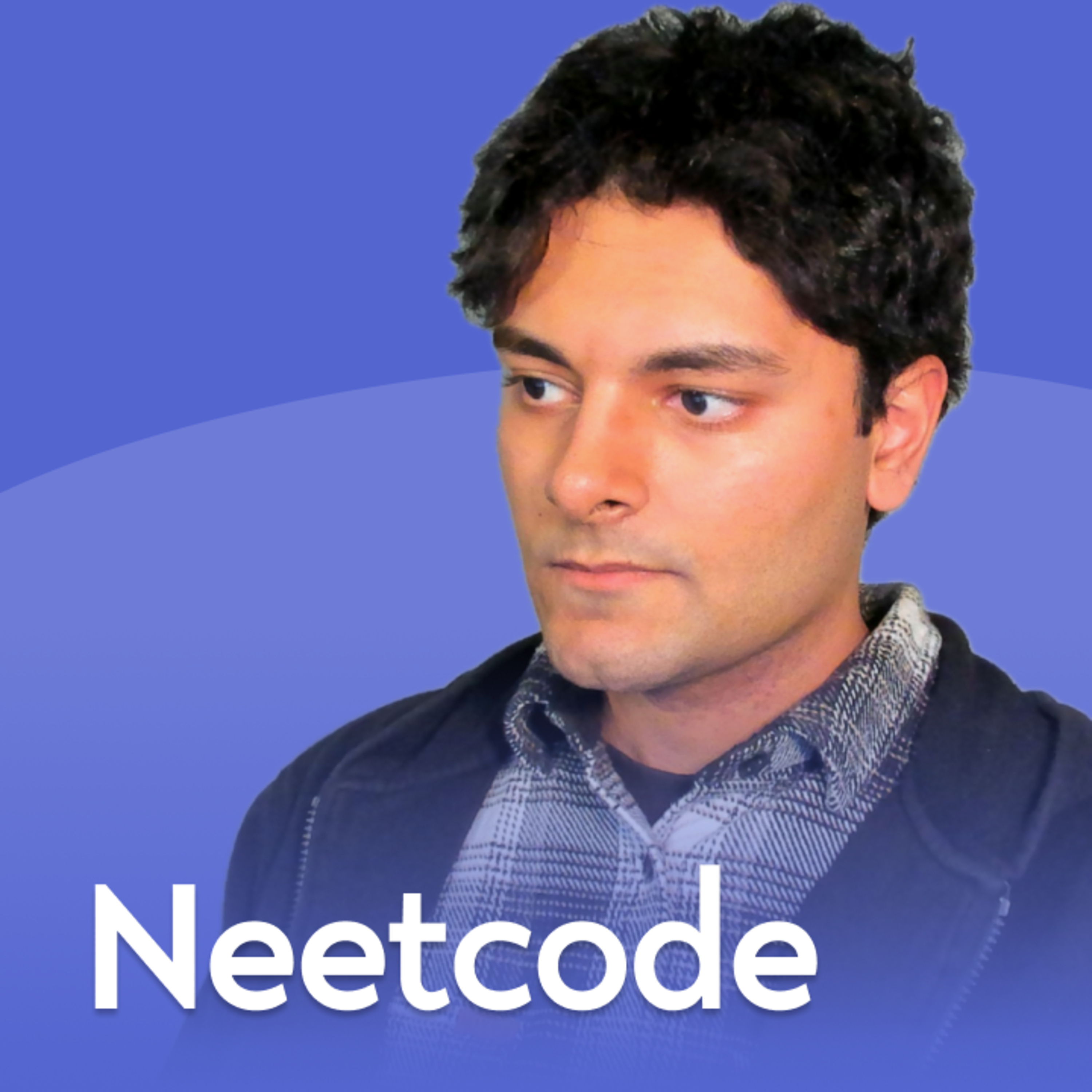
NeetCode (coding interview prep) discusses his career at Amazon and Google, why he quit quickly, how LeetCode difficulty relates to interview outcomes, and how passion/work ethic and practice (especially video creation) shaped his success; he also comments on OpenAI/Anthropic interview styles and gives book advice.
NeetCode (most well-known creator teaching coding interview prep). Background: worked at Amazon (quit after a couple months) and later at Google; runs a large LeetCode-focused YouTube channel (hundreds of videos; initially faceless, later showed his face). Claims: Amazon interviews were “surprisingly easy” on LeetCode but heavily emphasized leadership principles; LeetCode “hards” aren’t required for most passes—interviews are a numbers game and question fit matters.
Google-hosted college competitive programming event where his team solved 0/13 while Caltech solved all 13; an impromptu whiteboarding session on LeetCode hards (uploaded separately).
Written by AI. May contain mistakes.
Discussion about the experience of quitting Google and its impact.
“Yeah, it's a funny story, I guess, now in hindsight.”
Insights into the intense culture and challenges faced at Amazon.
“plan or i was like like i was broke like i couldn't afford to quit but i still did it anyway So it was just, I'm glad it worked out, but I wouldn't probably recommend it to most people.”
Reflections on job performance and confidence in quitting.
“Like I didn't really keep in touch with them.”
Discussion on LeetCode questions and their relevance in interviews.
“You know, the funny thing is, I don't know if I should say this, but it's been like seven years at this point.”
Comparison of competitive programming and LeetCode assessments.
“I think they have an ELO system in that, right?”
Exploration of the balance between memorization and genuine understanding in coding interviews.
“Like you'd think it would because it's like the exact same muscle, but for some reason it actually doesn't.”
Explore the difficulties of mastering programming concepts without blind memorization.
“And this is what makes it really hard because you have to cover a lot of stuff, but at the same time, you have to build at least some of the skills to understand what's going on.”
Discuss how enjoyment and work ethic can be more important than innate intelligence in success.
Delve into the implications and interpretation of a video suggesting some should give up on coding.
“OpenAI, Anthropic, Cursor, and Vercel all use this product to make their lives better.”
Discuss the transition from working at Amazon to finding fulfillment at Google and beyond.
“In your career path, I mean, you went to Amazon, you instantly quit and you started making these videos, right?”
Reflect on the reasons for leaving a big tech job to pursue personal projects and interests.
“You I remember back in the day you were faceless.”
The speaker discusses their journey in the tech industry, touching on passion and the choice to leave Google.
“really know what else they want to do either.”
An exploration of what the speaker misses about Google and the challenges faced working in a large corporate environment.
“but what is it that you hated most about working at Google?”
Discussion on the book 'Designing Data-Intensive Applications' and its impact on thinking about programming.
“Yeah, I guess I really liked DDIA, designing data intensive applications.”
The speaker reflects on their early career decisions and shares advice for choosing fulfilling work.
“And so in that way, it's been useful for me, but I wouldn't necessarily say for everybody it would be.”

Get the gist, explore an idea or ask about something said.
 Claude
On The Peterman Pod, what are the key points of this episode?
Searching your listeningAutomatic transcript. May contain errors.
0:00Anyway, I'll stop there before I do more reputational damage. This is Neetcode. He's the most well-known creator teaching coding interview prep, and I asked him all about Leetcode and his career story at Google and Amazon. Where does that place you in the percentile of all ELOs? I don't know how people are going to feel about this. How's your experience quitting Google and doing your own thing full-time? I don't know if I should say this, but it's been like seven years at this point. Do you ever miss Google? A lot. Like I missed. Here's the full episode.
0:36You ended up unemployed. What was going on at the time? Yeah, it's a funny story, I guess, now in hindsight. But basically, like I started working, I got my full my first full time offer at Amazon. I'd heard it was like, you know, like a pretty tough environment from like the online stuff, the things that you see on Reddit are blind. But for some reason, I just wasn't like nervous. I just thought like, OK, it'll be fine. And like as much as I would use like the word intense, I think it was more so that it was like a culture shock for me, which is like I was very like introverted and do like too many activities or extracurriculars.
1:13And then so being in a place where it's not really academic, it's like there's a lot that goes into like having like a full time job and like working with people and like all those other things. that was really really tough for me and so um among like other reasons like amazon was not like the the ideal environment in hindsight i probably could have survived if i had to redo it but i just didn't really know things at that point and so for whatever reason i just decided to quit after like a couple months and it was just a really dumb decision because it's not like i had like a backup plan or i was like like i was broke like i couldn't afford to quit but i still did it anyway So it was just, I'm glad it worked out, but I wouldn't probably recommend it to most people.
1:54What did you see at Amazon that made you want to quit so quickly? Yeah. So it was, like I said, a very intense environment. But I think many people have dealt with that. I think there's intense environments that are like, people are still happy. People are like trying to perform like at the top of their game. And it's like kind of like a, almost like a sport, I guess, where people are super competitive and they want to do the best that they can. But there are other environments, I think, that are like super cutthroat. And it's not people trying to do their best. It's like people, you can tell people are not like rooting for each other.
2:28Like people are, I wouldn't say they're trying to like screw each other over. I wasn't really there long enough to judge that. But you can tell people are not friendly. Like there were some like meetings, like icebreakers that we had. And like nobody, like all, it was like 10 people, like five of us were like new grads. Literally, we all had joined within the first month. The other half were like super burnt out, experienced people like like mid-level and seniors and stuff. And they were just like very unhappy. And that like spreads pretty quickly to the rest of the team. And like I said, like I think every other new grad on the team probably survived that experience.
3:06Like I didn't really keep in touch with them. I don't think they probably got pipped or whatever. But it was clearly like most people left that team, I think, like within a year, like I have them all added on LinkedIn. So they were not happy there either. I don't think. What gave you the confidence to just quit your job so quickly? Yeah, I think it was like a very uncharacteristic thing of me. I think I was like 22. And like, it's so weird because right before I had started that job, I was like, I'm on top of the world. Like I'm like, everything is going so well. Like I have like I was I was broken.
3:38and now I have like a job and like, okay, it might be stressful, but like I'll have it for the rest of my life or maybe I'll switch to another job. Like it's so crazy. Like how quickly, like I was like literally on the moon and then it all just like plummeted overnight. Like it was like my first day, my manager's like, okay, like the team's a little burnt out trying not to ask too many questions. And so I'm just like, okay, like, whoa, like what's going on? It's like a horror movie. Like it keeps getting worse and worse. But yeah, anyways. Did you have to do LeetCode to get that job? Yeah. You know, the funny thing is, I don't know if I should say this, but it's been like seven years at this point.
4:16The LeetCode questions for Amazon were actually like surprisingly easy. People always say that you can cheat now. At that point, I don't remember the exact question. It was like some variation of twosome and questions that really weren't that difficult. They really grill you on the leadership principles, though. And I think it's important to be at least a little bit honest with that, because I think I lied for every single question for that, because it's like a personality test. It's like, OK, if you're in this situation, what would you do? And I know what they're looking for. They're looking for the personality type who has high agency.
4:51They're not really scared. They're going to take risks, and they're going to show up and stuff. And so I gave answers like that. But that's really not my personality. It's like very like the opposite where like I'm very risk averse and like I try not to like mess things up. And like I take initiative, but at Amazon, like they want like really high initiative where like you're on your first day, you're just like making decisions. So it took some like getting used to. Well, I ask is when I when I was doing recruitment, I remember this is a long time ago. Amazon, they did some weird thing where they had like this group SAT at my college where they sat down hundreds of us and gave us these.
5:32It's a sequence of logic puzzles. It would be something like this makes it this makes it sound really trivial, but it'd be like multiple choice and be like, you know, A, B, C, D, colon. and then it'd be like you know uh efg blank what's the remaining like it's just you know continue the pattern kind of stuff i think i had something like that actually it was like an online thing it was like one section of it though you said you weren't good at leak code to begin with and i mean today like let's say i don't know how practiced you are right now if i gave you the hardest leak code hard could you solve it no problem probably not and i don't i don't think i was ever actually that good.
6:16Because leak code is such a big spectrum where it's like, as you get better, most people can't really tell the difference between a good engineer and a 10X engineer. And that's the level that most people, I think, see leak code, where somebody who's really, really good at leak code hard, they're just indistinguishable. But there's other platforms, like Code Forces, I think is the other big one, where it's like the distribution is really known because you'll be like on the completely other end of like somebody else who's better than you, but you might be the same, like on the leak code spectrum as they are, but like on a different platform, it's much wider.
6:53But I guess to answer your question, yeah, I'm like decent still, surprisingly. Like if you do something for years, it's actually hard to forget it. And I just kept making videos for years, even when I didn't need to. So like I'm pretty like practiced with like the core patterns. I could look at a problem and like tell you like what the solution might be, but it'd be harder to like actually like hand code it up, especially now that I feel like most people aren't like hand typing code anymore, including myself. So yeah, it'd probably be tough. What percent of like we could mediums could you do right now?
7:25If I just tested you right now, say, you know, do this one or whatever. I mean, I'd be curious, but not all of them for sure. I think for the vast majority of them, I could probably at least tell you like what the solution would be or like roughly like the pattern. Do you want to do a LeetCode? Yeah, we can try it. So I was genuinely curious to see how good he was at LeetCode. And so we actually did do an impromptu LeetCode whiteboarding session where I asked him nothing but LeetCode hards and he had no time to prepare. If you're curious to see how he did, I uploaded it to my YouTube channel separately because it didn't fit in the podcast.
8:01Anyways, back to the original conversation. You mentioned the code forces. I think they have an ELO system in that, right? Right. This is my mental model. There's leak code is actually just the beginning. And leak code easy is you're just barely doing it. Leak code mediums, you get jobs. Leak code hards, you're a bit better. But you can go past that many standard deviations into code forces. And so where do you think roughly someone who can pass interviews decently well, let's say they can do leak code mediums pretty well where does that place you in the percentile of all elos did you say yeah so that's really i guess kind of funny and i don't know how people are going to feel about this because i've i talked to a lot of people and i've spoken to a lot of people over the last few years and some people have the mentality that like if you want to get a job at big tech today most of them are still doing some variation of like leak code they think that they need to like be able to do the hardest questions, like super hards.
9:07And if they failed their interview, it's just because they weren't able to do all the leak code hards and somebody else did. Unfortunately, that's not what usually happens. The people who are passing their interviews, it's not that they're dumb. They are competent and they're just as good as anybody else. But most likely, they were just asked a question that they were able to answer and the other person just wasn't. And I mean, that's provided you meet like some bar of like, okay, you kind of know like the core patterns that you'd be able to solve a question you've already seen before and stuff like that.
9:40Um, so I think unfortunately, like the answer is like, it's wider than you think there isn't like an average. I think you could be pretty like low on that end and still pass interviews. You could be pretty high and fail some interviews, but if you're like really high, like probably you won't fail most of them because it's like a numbers game at that point. But I think the average is lower than a lot of people think. I think if you can solve like some leak code mediums, like a third of leak code mediums, you have a pretty good chance, I think, of like passing in an interview. One story that really showed me how big the gaps are is this was in college.
10:17Google hosted some event where they invited all these colleges to bring their, you know, a team to go and compete in this set of puzzles and one of the rounds was just pure competitive programming the other ones were like word association and some other things but then the the competitive programming one my team was full of people that were all stacked in terms of getting jobs like lead code was no problem for them but these problems were so hard there I think there was like 13 and and no one got any of them and then one of the guys on our team was he's a little bit he was much better than all of us and he carried us and he did like three problems out of like the 13 but the crazy thing is there's another college there it was caltech they they did all 13 and they just destroyed us so like you know there are there are levels to this stuff it's really crazy so i i interviewed someone who's a complexity theorist i want to know so clearly competitive programmers that's above leak coding where's complexity theory and all on all this stuff right i feel like to do something and to like learn it or to just do anything the the best way to do it is to like actually do it and so like if you're training like another skill it doesn't really work it out like the same way i guess to use like an analogy even with like muscles like i feel like i could be wrong about this, but if you're doing like a leg press machine, it doesn't actually help you that much for your squat.
11:53Like you'd think it would because it's like the exact same muscle, but for some reason it actually doesn't. It'll make like a very small difference. And I think that's how a lot of life works. If you're like preparing like for competitive programming specifically, you'll get pretty good at that. But maybe like your communication will suck during like the actual interview or you'll miss something else. In my case, I did a lot of videos and I think that actually doesn't make you that much better at solving the problems at a certain point because it's more of a distraction because it's like if you if you take like four hours to make a video most of that is spent making the video and trying to understand like somebody else's perspective rather than making yourself better so if i had to guess i don't think like the complexity theorists are probably like as good under like time constraints and like typing as fast as they can but maybe for like really like hard problems they could probably like i don't know they've probably just seen way more stuff so they can kind of like recall something like okay like maybe this this like algorithm or this technique will work on this problem or something because a lot of them get like really really elaborate at that level where you like need like some really crazy obscure algorithm you couldn't have possibly heard of there's this idea i think this was true throughout when i was learning math and you know various things in school this is this idea of like deriving something when you need it and then memorization in this hierarchy deriving it is the true intelligence that's where you you really you know you you come up into the math that you don't know the formulas but you're you're good with math and you can figure it out on the fly what percent of performance in leak code do you think is is just people memorizing the solutions versus you know deriving things when they hear the the question if i had to guess and even just from like speaking with people i'd say like at least 90 percent of people just kind of memorizing one way or another which i think is fine because if you look at like the entire problem of like interview preparation there's a lot to cover and you just can't like possibly do it yourself but the other thing i will say is that you can't just memorize you do have to like And this is what makes it really hard because you have to cover a lot of stuff, but at the same time, you have to build at least some of the skills to understand what's going on.
14:10So you're not just blindly memorizing or you're not asking yourself, okay, should I do DFS or BFS? You should still have some high-level understanding. And that's really hard, I think, actually covering things in a smart way. I guess since we're talking about this memorization versus deriving, and you've taught so many people leak code is leak code an accurate assessment of intelligence i think definitely not i think there's components to it i think like is the sat like a sign of intelligence i think not really but it's a sign of like a lot of things that correlate with it and it like some subset of it surely isn't intelligence because it's not like a dog could like pass those tests or like do a leak good problem or something so like yes but i think it's i don't know i think people get like caught up on that because then they've like they see some people doing well and some people aren't and they're like well it just must be intelligence or something else like maybe partially but i think that's it's not just that like i'm just saying this just to say it but i actually believe it now like after meeting so many people and like seeing so much stuff i'm sure you've seen so many like high performing people and you've spoken to a lot of like guests and stuff i feel like the the number one thing the the number one bottleneck is usually like some level of enjoyment or passion or work ethic or just something of that nature where like somebody keeps doing something because I don't think I really did anything that special all I did was just made a lot of leak code videos when most people wouldn't have been willing to do that or just not had the time to do that and I think that's what most things boil down to like a lot of the like really smart people that you have on the podcast I think they just enjoyed what they did and then just kept doing it and then and built their life around that.
15:55And then it just becomes that. And I think the people usually, in terms of LeetCode, they're usually people that either did a lot of math or programming or some kind of like math club when they were kids. Like to get to a certain level, like the code forces level and stuff, you just have to have done that since you were a kid. Like if you're a chess player, like you have to just start early. What kept you making these LeetCode videos for so long? Because you have hundreds of them. One thing I guess I didn't like about school, and for the most part I liked school but I always thought that like the computer science classes especially especially like every time we would get to a part where it's like starting to get really interesting like whether it's databases or like ML or something else like you get to the end of the class and you do like your random project or whatever and then you you kind of know like the core stuff about that class and then that's the part where I want to like go 10 times deeper I just want to like do one thing and then do it really really well I think that's why I wasn't in terms of being the best developer I could be, I think I'm better at other things than that.
16:56And I think when I got to LeakCode, I just enjoyed that. I felt productive as I was doing it, even though it really wasn't on paper. I was making a video, getting 50 views, and I was enjoying that. But it wasn't like I was ever going to make a living off of this or anything. So I just kept doing it just because I was stubborn and I enjoyed it and I was I thought I was like helping people as well so I just stuck with it you had this one video I remember it was like maybe some people should just give up or what was that the that was the title yeah it was like maybe some people should just give up and yeah I guess a question to you is do you think that anyone could be good at LeetCode are some people inherently not able to do it I think the vast majority of people especially anybody who like is a programmer and likes programming i think they could get to that point i think the i mean they might feel like they're not smart enough and like they might feel that like many steps along the way and i think that'll probably like burn them out before they can like get to that point because it's not like any everyone wants to do everything like if they if they want to like pass their interviews or for whatever reason they need to i think they could probably do that but um i think most people will find like that there are other like most people decide for whatever reason that there are better ways to spend their time like most people will start the leak code grind and then give up they're like okay screw this like i'm gonna get a job another way i'm gonna network like i'm not i'm not about to like do a 300 leak code problems and that's perfectly fine i think but yeah well so when you say that maybe some people should just give up what's your your take on okay um yeah i i don't like i don't recommend anybody to give up i really don't i swear I like it for me like I want the opposite I really do like I want people to like push themselves and to be like the best that they can be and I don't know I guess it's just that like the reason I made that video I guess is like there's a certain attitude that I feel like it just really like turns you off like sometimes you'll see it in school especially like early school where like half the class like is paying attention and half the class just doesn't really care and that's fine um but it's like i don't know it's like the more seriously you take something and you spend like a bunch of time like making this video explaining all these parts and somebody asks you a question that like you know they could have answered it just makes me like disappointed just makes me think like like i know you're better than this like like you can like you you can figure it out yourself like you can like you're smarter like you're too smart to like give up that early Like that's like how I feel.
19:36But obviously like the words that I said and like when I say it a certain way, like I recognize that people aren't going to interpret it that way. So I have to live with that. But I think I had a lot of people, I'd say like 95 % of people actually like liked that video, like clicked like on that video, which was surprising to me. Most people that like reached out or commented, they said that, hey, like I needed to hear this. This was like a wake up call. And I had somebody like message me before their like Microsoft intern interview. And they're like, hey, like I really needed this. like I'm going to lock in for the next like couple weeks and I was like okay like I guess I'll leave that video up because at least somebody got something out of it but yeah I see so the the energy in that is um it's like a disappointed teacher yeah disappointed yeah because why would I make videos that are teaching people and then on the same side like tell people that they should give up and not do this like it doesn't make sense and yeah so like I said I can live with like what I said it wasn't the nicest thing if I could do it over again probably whatever I think like the only thing I said in that that video though I think that was actually offensive is that I can't believe somebody would ask me this dumb and I said another word after that and I said question that's that's literally the worst thing I said I didn't make it personal with that person I didn't call anybody like not smart enough or anything but yeah anyway I'll stop I'll stop there before I like do more reputational damage when when you when you were recording this uh you know video because well i i like the video by the way but when i saw the packaging and you know it was like this unhinged thing that you had dropped were you were you worried at all on your side because you gotta record it watch it over and click send right so yeah i watched that video a couple times actually because I was like am I sure but like sometimes I'm just like I think when I made that video if I could like somehow find a way to harness that energy I'd have so many viral videos by now but I really can't like I'll just like every like few months I'll just get like mad about something and just like make a rant video but I really wasn't planning it like that video like when I when I look back at it it was just a really long like ramble where I went off on like five different tangents to make my point I'm like you know if I was trying to make a viral video this could be a little bit like better.
21:54OpenAI, Anthropic, Cursor, and Vercel all use this product to make their lives better. And the problem it solves is when you're building SaaS or an AI product and you want to sell to other companies, there's all these requirements you need to meet. There's SSO, there's SCIM, there's RBAC, there's audit logs. These are all things that take time to integrate, but aren't the main focus of your app. WorkOS is an API layer that lets you meet all of these requirements in just a few lines of code. So let's say you have a new SaaS product and you want to sell to other companies, WorkOS will solve all of these critical feature gaps for you.
22:32You can check them out at workos.com to learn more and get started. And I appreciate them for supporting my work and sponsoring this podcast. In your career path, I mean, you went to Amazon, you instantly quit and you started making these videos, right? You keep creating these videos and later you get your you know your quote unquote dream job yeah so when i was making the videos i was hoping that somebody would like give me a job interview at some point and i'd like ace it it took a long time it took like almost a year and then it just happened to be google and i was like you know i kind of would have actually preferred somebody else so that the interview would be a little bit easier but i was like okay well like i guess like here goes and the interview itself i wasn't very nervous for for whatever reason i guess i just preferred so much but um And then getting into Google, pretty much like you said, it was like my dream job.
23:23I think a lot of people, like young college students, they see like a tech company like that. And like once you're in, like you feel like, you know, you've made it. And that's definitely how I felt. And I was making like pretty good money. I was up in here in Seattle and like everything was going well. Like my team was really nice. It was kind of the opposite of Amazon where like everybody is like super friendly and like willing to help. And the work was, I would say, fine. Like it was technical at least, but it wasn't the most interesting. It was a lot of like processes and bureaucracies. So that was kind of boring.
23:58But then I got to a point where I felt like I could actually like go full time into like the YouTube neat code thing. And that was pretty risk averse. Like I probably could have done it actually a lot sooner. And yeah, I really enjoyed my time at Google, but it was just something that I felt like I enjoyed algorithms and stuff more, and it was an opportunity that wasn't going to be there forever, so I just wanted to take it. But I could have definitely seen myself working in big tech my whole life. A lot of people I talk to, they don't feel that way. A lot of people are like, I'm just here until I don't have to be here anymore, for how many ever years that is.
24:36But for me, I was pretty happy just doing something technical my whole life. You mentioned that some Google's interviews maybe were a certain level of hardness in LeetCode. if you were to come up with a tier list of like the just purely LeetCode so purely uh which companies ask the hardest LeetCode questions and if you pass that bar you must be pretty great at LeetCode what's your tier list I think the labs ask pretty like tough questions these days like open AI and Anthropic but they're not like exactly like the LeetCode traditional LeetCode format they're a lot different. But yeah, I think it usually just comes down to the supply and demand, like how many people are trying to get into that company and how many roles does that company actually try to fill.
25:22I feel like the smaller companies are usually harder. You said OpenAI Anthropic's interview process is a little different. How does OpenAI and Anthropic do their coding interviews? Yeah, I've heard a lot of mixed things. Recently, what I've heard is that definitely like knowledge of data structures and algorithms will be pretty helpful like it's pretty hard to get through it without that but it's it's definitely not like a leak code interview is what they would say it's that like there might be components of like an algorithm or like multiple files or like you're just given like a problem and you kind of have to like reason through it some of them mentioned that like they have ai access but i think for anthropic it's not and i think the most recent person i asked for open ai also said that they don't have ai access which is really interesting to me.
26:10I think interviews are just kind of really random lately. I'm trying to figure out where this is going, but it's really impossible. I thought it was going to be AI assisted, but all these companies are still figuring it out as they go. So it's been interesting to watch. You went to Google and you liked it, but it sounds like you left because you wanted to pursue full-time. It wasn't like you were running from something.
26:38You I remember back in the day you were faceless. Were you nervous at all to post your face? Yeah, no, it's kind of funny, I guess, because it's been six years now since I made the YouTube channel. And for the first three years, I think I was faceless. And roughly three years ago this month, I think, is when I did it. And so now I've had half and half. And I think it's been great because I've gotten to actually be a person. And after I did that, I had a lot of people reach out to me. they're like hey like I didn't know like you're the guy who did that like hey like let me know if you're ever in town blah blah blah and um I guess it was cool to like actually like meet people and I don't know just meet people I guess that you can like relate to like content creators like we met as well yeah I mean so there's a part of me I guess that kind of liked the faceless version as well because you just get to be like really introverted and just like not have to like ever deal with people but people are pretty nice to me and I don't have any regrets about that once in a while, like I'll be out and somebody will like recognize me.
27:37And if I'm with a friend, it's like you can kind of like show off or act like you're a big deal. But for the most part, I don't know. I just, yeah, it's been fun meeting like other nerds and stuff. How's your experience quitting Google and doing your own thing full time? I think in my case, I really enjoyed what I was doing. So it was a lot easier for me. I have a lot of people reach out that like they don't really enjoy their jobs, but they don't really know what else they want to do either. I think that's a lot harder. For me, it was just that I liked algorithms and doing things around that, whether it was like building my site or making YouTube videos.
28:13And I just kind of leaned into that. And that's been working out for the past few years. And more recently, I've been trying to like expand into other areas and stuff. But I guess what I've learned is that like, I guess passion really matters. And it's like, if you're passionate about one thing, that doesn't necessarily mean you'll be passionate about everything. But yeah, I think it's I've definitely had no regrets. I think it's been a success for the most part. But yeah, it's not it's not like perfect. I wouldn't necessarily recommend like every person out there needs to quit their job or do their own side hustle or whatever.
28:48I don't like buy into a lot of that stuff. Do you ever miss Google? A lot. Like I miss like I can afford food now, but I still miss the free food for some reason. I don't know if you had that experience because they really like make it like in a way that you'd miss it if you weren't there like especially the free coffee and stuff because I'd always get like a latte um but okay anyways but um yeah I miss um I mean the one thing I miss is the culture because I could like add my neat code and like I could hire a bunch of people and kind of create my own culture and it's really nice that you have like the freedom to do that but I'm not really like a culture builder.
29:27I'm more of like a person that just does things or solves problems or whatever. Like I don't consider myself a manager, but I've had to do that a lot the last couple of years. And it's been a learning experience. You mentioned what you miss about Google, but what is it that you hated most about working at Google? That's a good question. I think it's just really slow. Like urgency and like speed doesn't seem to matter, which is fine. I guess the reason that's a problem because some people would see that and think like oh it's like a work-life balance paradise you can kind of just chill and do whatever you want which is which is true because there there's that side to it but the other side is that like if you're ambitious or you're trying to like get your project delivered sooner or you're trying to get promoted or just anything you're gonna be fighting against like all that like work-life balance culture because you're trying to get somebody else to do something and like you don't want to like put too much pressure on them you don't want to like mess with their work-life balance because then they're gonna to mess with yours and like yeah it was just really slow if you're a technical person you you want to be there because they're not going to probably at google like cut too many corners but sometimes you wish they would because it just goes so slow and like like they prioritize processes over actually like making a like an impact for like a customer like getting a project delivered it's just like yeah they care too much i think about like what the engineers think and like what they feel rather than like actually trying to serve like customers so it's like the opposite of Amazon, I'd say, in that respect.
30:52What's the top technical book recommendation for software engineers? Do you have any thoughts on that? Yeah, I guess I really liked DDIA, designing data intensive applications. I just spoke with somebody a month ago, and they were telling me that they did read through it, but for them, most of it didn't really stick. And I think that's fair, actually. I think for most people, it wouldn't stick. But I think my brain is just kind of wired a different way. I think most people learn by getting an introduction to a high-level topic and then digging deeper into that. But for me, I like understanding the actual building blocks of something, and that'll help me understand the higher-level stuff.
31:31For example, why did data warehouses use a completely different query engine than an actual transactional database? I mean, most people don't need to know, and it doesn't really matter most of the time, so you probably won't remember, even if you did learn it. But there happens to be the way the data is actually assembled. And for certain query patterns, blah, blah, blah, these things do matter. And the reason I say it's a good book, based on that, isn't because you'll necessarily take those exact details and then apply them to some problem. But it changes the way your brain thinks about things.
32:04The same way learning algorithms will help you think about things differently. Understanding just general computer science problems and distributed systems and all that stuff. For me, at least, like I noticed a lot of like parallels and stuff. Like when I'm reading DDIA, practically every single chapter, I can like find at least like a few leak code problems that like can like help explain like certain things or like help me understand certain things. And so in that way, it's been useful for me, but I wouldn't necessarily say for everybody it would be. Last question is, if you go back to your younger self when you just graduated college and give yourself some advice, what would you say?
32:42Definitely focus a little bit more on what you enjoy because my priority at that point was just trying to get like some job that I would reasonably enjoy. And I thought like anything technical will be fine. And then so like as I was doing computer science, I started learning a lot about like web development because I saw people talking about that online and learning React. But I think probably my career would have been just as well, if not better, had I done something like really random and obscure, like operating systems or databases or something, which I would have enjoyed a lot more. And I think I probably would have been better at it than I was at web development, even though people say like web dev or just like building apps is like the easy thing.
33:23I feel like it's not really easy if it's like boring to you. And to me, it was pretty boring. So yeah, people say the same thing about leak code, like it's hard. But for me, it was, I guess, easy because i just enjoyed it so yeah i'd say yeah i think a lot of people are asking that question now and so i would just say that like try to enjoy it at least a little bit awesome well thanks so much for your time neat i appreciate it yeah appreciate it yeah hey thank you for watching this podcast if you liked it and you want to see the show grow please support with a comment or a like also if you have any recommendations for people you want me to bring on please drop a comment guests like barbara liskov mike stonebreaker mark brooker these were all people that i brought on because someone left a comment on another note aside from the podcast i'm working on building the ergonomic keyboard that i wish existed here's a glance at the prototype it's a split keyboard so there's two sides this is in the case but yeah we launched on kickstarter and we hit our goal within eight hours of launching i really appreciate it if you were one of the people who grabbed one of the early units.
34:27We're now working on the long journey of building the tooling now. And so if you still want to pick one up, I've left the late pledges open on Kickstarter. So you can grab one there. I'll put a link in the description. Thank you again for watching the podcast and I'll see you in the next episode.
Neetcode is the most well-known coding interview prep creator with over 1M+ subs on YouTube. I interviewed him about the latest on coding interviews, his career at Amazon vs Google, and what it was like quitting big tech to do his own thing.
• My ergonomic keyboard project I mentioned, you can follow along here: https://read.compose.llc/
• The Kickstarter page for it: https://www.kickstarter.com/projects/ryanlpeterman/compose-simple-ergonomics-beautifully-done
Podcast links:
• YouTube: https://youtu.be/K15dND_Kfvg
• Apple: https://podcasts.apple.com/us/podcast/the-peterman-pod/id1777363835
• Transcript: https://www.developing.dev/p/neetcode-google-vs-amazon-programming
Thank you to this episode's sponsor for supporting my work:
• WorkOS: makes your app Enterprise Ready with easy to use APIs to add SSO, SCIM, RBAC, and more in just a few lines of code, check them out at https://workos.com/
Timestamps:
(00:00) Intro
(00:33) Quitting Amazon after 2 months
(06:00) Testing Neetcode on Leetcode
(12:57) Memorizing vs deriving solutions and intelligence
(16:13) The story behind Neetcode
(22:24) Getting a job at Google
(27:47) How it was quitting big tech
(29:38) What he hated most about Google
(30:52) Top technical book recommendation
(32:34) Advice for his younger self
(33:46) Outro
Where to find Neetcode:
• LinkedIn: https://www.linkedin.com/in/navdeep-singh-3aaa14161/
• Twitter/X: https://x.com/neetcode1
• His website: https://neetcode.io/
• YouTube: https://www.youtube.com/@NeetCodeIO
• GitHub: https://github.com/neetcode-gh
• Instagram: https://www.instagram.com/neetcodeio/
• TikTok: https://www.tiktok.com/@neetcode.io
• Discord: https://discord.gg/ddjKRXPqtk
Where to find Ryan:
• Newsletter: https://www.developing.dev/
• X/Twitter: https://x.com/ryanlpeterman
• LinkedIn: https://www.linkedin.com/in/ryanlpeterman/
• Threads: https://www.threads.com/@ryanlpeterman
• Instagram: https://www.instagram.com/ryanlpeterman
• TikTok: https://www.tiktok.com/@ryanlpeterman
Referenced in this episode:
• Neetcode's "Maybe Some People Should Just Give Up" video: https://www.youtube.com/watch?v=rsoEipuwXiI
• Designing Data-Intensive Applications: https://www.amazon.com/Designing-Data-Intensive-Applications-Reliable-Maintainable/dp/B08VL1BLHB