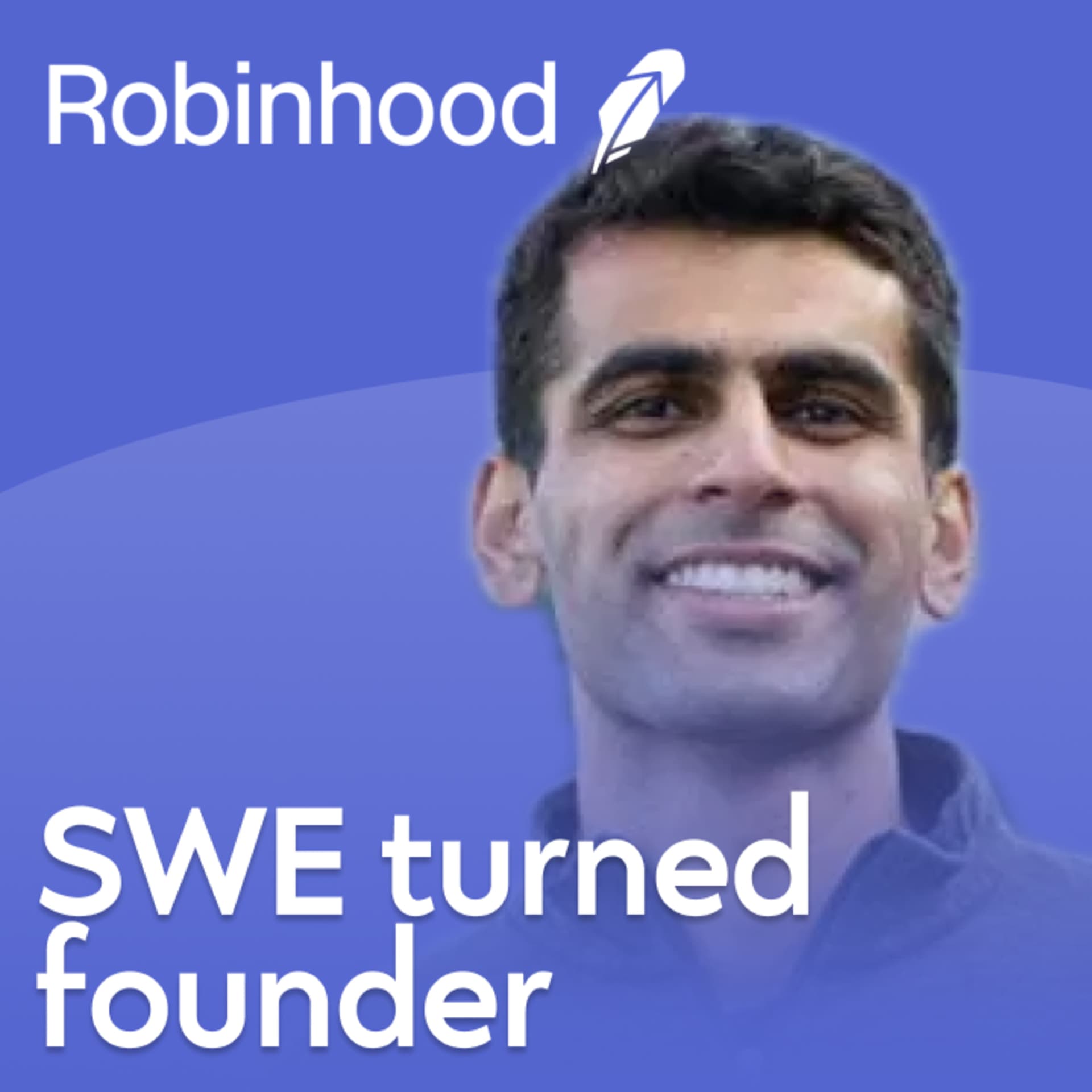

In short
Jay Jog (Robinhood SWE turned founder) discusses non-linear career paths, why “playing the game” at big tech can lead to jadedness, and how he built a crypto company after the GameStop/RH episode highlighted broken “financial rails.” He also covers fundraising during the Terra collapse, the importance of a tier-one lead investor, and crypto’s case for payments/trading via verifiability.
Guest background
Jay Jog is a former software engineer at Robinhood (joined ~Series D; company ~100 people). He worked through the GameStop saga, later co-founded a crypto infrastructure company (Stay Network/SEI Network), raising $35M total ($5M seed, ~$30M strategic). He previously did internships at Facebook and Pinterest (Kleiner Perkins fellow).
Key claims
Leaving big tech is less risky than feared; learning and growth can be faster in high-growth smaller environments; promotions can be decoupled from reward; crypto can improve global financial systems; fundraising is easier with a strong lead.
Notable examples
“Lead Code and Chill” (Number of Islands) leading to Facebook interview; Robinhood turning off meme-stock buys on Jan 28, 2021 due to collateral/T+2 settlement needs; Terra collapse timing for seed fundraising; Multicoin as lead investor (Solana investor).
Written by AI. May contain mistakes. Listen to the episode to check what was said.
Chapters
Tap a time to open that second in VOCareer Growth and Jaded Experiences
0:14 to 1:12
Discussion on career growth, jaded feelings towards promotions, and experiences at Robinhood.
“I think at Robinhood it was probably easier than it would have been at like a Meta or like one of these other bigger companies.”
From Internships to Big Tech
1:12 to 3:00
Jay shares his experiences with internships at Facebook and Pinterest, comparing the cultures.
“So, you know, how did you first get into big tech?”
Joining Robinhood and Early Experiences
3:00 to 6:36
Exploration of Jay's decision to join Robinhood and his initial experiences there.
“And then I noticed after I became older in that circle, there were other companies that started to be viewed as more prestigious, like the Palantir, so like a lot of these pre-IPO companies as well.”
The Challenges of Working at Robinhood
6:36 to 10:28
Jay discusses the challenges faced during his time at Robinhood, including performance reviews and workload.
“Going to Pinterest, I think that would have not been as positive as going to Robinhood.”
The Impact of Family and Financial Decisions
10:28 to 14:01
Jay reflects on personal challenges and financial considerations that affected his decision to stay at Robinhood.
“And for context over there, I think I honestly just joined a bit too late.”
Navigating Career Challenges at Robinhood
14:01 to 15:40
Learn about the complexities of leaving Robinhood amid personal challenges and financial decisions.
“So it would have cost me$400 ,000 to exercise my options, which I didn't have$400 ,000 lying around.”
Promotions and Engagement at Work
15:41 to 18:03
Explore how to get promoted while feeling disengaged at work and the impact of high growth environments.
“And I think we got pretty lucky too, because I graduated in 2018.”
The GameStop Saga from an Insider's Perspective
18:04 to 20:46
Understand the GameStop saga's implications on Robinhood and the feelings of powerlessness during a crisis.
“Yeah, I mean, so for anyone that doesn't have context into it, like when the GameStop saga happened, there were like 12 stocks.”
Leaving Robinhood to Start a Startup
20:47 to 22:34
Discover the motivations and circumstances that led to leaving Robinhood to pursue entrepreneurship.
“In the case of Robinhood, that happened because there's this concept of T plus two settlement that back then it used to take two days for trades to settle.”
Initial Startup Challenges and Direction
22:35 to 24:52
Learn about the early struggles of launching a startup and the pivot to a decentralized exchange.
“What's the story behind you eventually leaving and wanting to start a startup?”
Show all 18 chapters
Skills and Credibility Gained from Founding
24:53 to 27:38
Understand the skills gained from attempting to start a business and their value in the job market.
“And that led to us initially building a central limit order book based exchange on chain.”
Navigating Career Paths in Tech
28:01 to 29:54
Explore how diverse experiences can enhance your role in tech.
“And you're also able to play a much bigger role on like the eventual go to market of that product as well.”
Fundraising Insights from the Trenches
29:54 to 30:58
Learn about the challenges and strategies in securing startup funding.
“And I've seen examples of people, big tech, left big tech, started something, failed, came right back to big tech.”
Understanding Crypto Fundraising Dynamics
30:58 to 33:56
Discover the unique fundraising processes in the crypto industry.
“So like the intro calls, then eventually meeting the partners and like kind of talking through the team, the product, the vision, all that, all that kind of jazz.”
The Future of Crypto and Financial Innovation
33:56 to 36:44
Examine the potential impact of crypto on the financial landscape.
“People came up with like number of eyeballs that like are looking at a website, for example, stuff like that.”
Personal Growth Through Entrepreneurship
36:44 to 37:50
Reflect on personal growth experiences while building a startup.
“that'll be globally accessible that anyone's able to trade on and basically make use of.”
Advice for Aspiring Entrepreneurs
37:50 to 39:55
Gain insights on taking risks and pursuing startup ventures.
“2022 was the year that I had the most growth, undoubtedly.”
Podcast Engagement and Guest Suggestions
42:01 to 42:34
Learn how to support the podcast and suggest potential guests.
“I don't sell anything or do sponsorships, but if you want to help out with the podcast, you can support by engaging with the content on YouTube or on Spotify.”
Transcript
Automatic transcript. May contain errors.0:00People tend to be way too scared of leaving their jobs.
0:04The Peterman Pod Host:This is Jay Jog. He went from a software engineer at Robinhood to a successful founder raising$35 million and he shared everything he learned along the way. You were playing the game, doing the minimum, but still getting promoted. How'd you do that? I think at Robinhood it was probably easier than it would have been at like a Meta or like one of these other bigger companies. You worked at Robinhood during the whole GameStop saga. That day, there were so many people that just reached out to me like, yo, man, what the hell is going on? Eventually, Jay left Robinhood to start his own company after getting jaded about career growth.
0:36The Peterman Pod Host:You raised$35 million. You must have learned something in that process. That was one of the worst times in the history of crypto to be raising money. What's the clear case of here's the value that crypto provides the world? Here's the full episode.
0:54The Peterman Pod Host:You started your own crypto company where the market cap of the coins worth over$10 billion. I kind of want to go over your career story, hear each of the legs and, you know, Facebook, Robinhood, what made you want to leave? So maybe we can start with the Facebook part of the saga. So, you know, how did you first get into big tech? What's the story behind that? I feel like life is not linear for anyone. I mean, ups and downs, but I think when there are ups that happen, they tend to be kind of like step function improvements versus just being like linear growth. And in the case of myself, when I was in college, I really wanted to get like one of these brand name internships.
1:32I don't have a good reason for why. I think it was just kind of like mimetic in a way. Like I just wanted what everyone else wanted. And at that time, it felt like there were two internships that were like the cream of the crop, which were like the Facebook and Google internships. So I'm like, I really want to get this. And when I was a sophomore, I was basically just grinding all the time. I was fortunate where I was in a spot where I was able to get interviews with a lot of these companies. And I'm like, okay, I'm just going to go into hermit mode and try to get one of these internships. And at that time, I was not necessarily very good at the lead code type of problems.
2:10So what ended up happening was there's one of our friends, Vic, They organized this event called Lead Code and Chill. And it's basically where a bunch of like, honestly, like a bunch of CS guys got together one evening. It was like Friday night or something. And we're just solving lead code problems together. And it sounds hella nerdy. And it, I mean, honestly, it was. But there was one problem that we went over there, which is called number of islands, which is a pretty kind of classic problem, which is like you either do a breadth first search or depth first search to be able to identify the number of like connected islands that are there.
2:40and that ended up being the exact question that I got during my second like during the on-site of my Facebook internship interview and yeah it was just like bizarre like if I had not gone to that event I would not have got my Facebook internship and without that Facebook internship I don't think any of the things that happened afterwards in my career would have really materialized so yeah it was just like a totally random lucky coincidence.
3:02The Peterman Pod Host:You said Google and Facebook were the cream of the crop what about those other ones like if I recall correctly Palantir was pretty good back then there's also you know the finance ones too that's true that's true so i think what you value is a function of what other people around you value and are talking about i think my social circle wasn't really talking about those other companies as much like uh if for example you went to difference college then maybe like these high frequency trading shops would be viewed as more prestigious i think amongst my social circle at ucla it was very much at that time like google and Facebook.
3:35And then I noticed after I became older in that circle, there were other companies that started to be viewed as more prestigious, like the Palantir, so like a lot of these pre-IPO companies as well.
3:45The Peterman Pod Host:You got the internship at Facebook, which is the dream at the time. And how was the experience when you actually were doing the internship? It was not that fun, to be completely honest, from my perspective. And I think it's just because it felt very impersonal in a way. It was better than in some ways in like the previous internship that I'd had the summer before. But I did want to try exploring being in a smaller environment. And I think that led me the next summer to work at Pinterest. And that was like as a Kleiner Perkins fellow. So I'm like, oh, I'm going to get like ideally the full kind of like startup exposure.
4:20Pinterest was definitely a much better, I would say, experience. I think part of it was just that but it was based in San Francisco. So it was a much better culture just like being in the city at the time. But I think also because it was a smaller company, there was a much closer knit intern class and that allowed me to have much more meaningful friendships. Like from my Facebook internship class, I'm not really in touch with too many people. I think from my Pinterest internship class, I'm still in touch with like four or five guys. I'm like, I'm super close to them. So it was just very different in terms of the kind of atmosphere that it created.
4:51You had the Pinterest internship.
4:52The Peterman Pod Host:and then after school you decided to go with Robin Hood right? Exactly so at that time I was about to graduate I mean I was uh this was like September October so like my senior year um and at that time I had a couple of options I could either go back to Pinterest and I was like not too enthusiastic about that like I had a great internship experience but a lot of my friends weren't going back over there so I was like it might not make as much sense to go back over there the biggest reason was like more this social reason. Second thing was getting a master's degree. And UCLA has this like fifth year, or I guess you can automatically get admitted to the master's program.
5:29So I was like, this is something that I'm like seriously considering. And then I just decided to interview for a few different places as well. And what I was basically looking for is a small environment where I felt like I could be surrounded by people that would be doing pretty significant things in the future. And Robin Hood was one of the places that I talked to. So I went to this thing called Greylock Tech Fair. They basically rent out what's it called now, Oracle Arena, the big stadium in SF. And they basically invite a bunch of interns to come over there, but it's like invite only. So most companies don't have very long lines to go and talk to these companies or the booths.
6:07In the case of Robinhood back in 2017, that was like the longest line that they had. There are like a couple hundred people that are waiting in line to talk to those folks from Robinhood. And I was like, okay, this is actually pretty interesting to look at, like to learn more about. Because I didn't know too much about trading back then. I wasn't really managing any brokerage accounts. And that led to me like talking to the folks over there. And I just thought it was a really, really strong team. I ended up going over there. And in hindsight, I feel like that was absolutely the right decision.
6:34Like getting a master's degree, I don't think that would have mattered at all for my career. Going to Pinterest, I think that would have not been as positive as going to Robinhood. In Robinhood's case, I think there were some things that ended up being just phenomenal. first of all, I think the caliber of person that was joining at that time was really, really high. So even for my new grad class, around a third of the people in that new grad class, they went on to raise money. So they basically started venture-backed companies. And I think that's a much higher percentage than you see at most companies.
7:03But I think there was a lot of really strong people over there. And on top of that, when you're at a company that's scaling so quickly, when you're running into all these scaling problems, you just end up getting exposed to a lot more stuff, so you learn a lot more. But I think you also have much faster career growth as a result of that. Definitely more so than you would at like a smaller startup where things don't really change year to year. Where like you're just trying to find PMF, doesn't work. You do the same thing again, doesn't work. Third time. So yeah, I'm definitely very grateful for that experience at Robinhood.
7:32The Peterman Pod Host:What series was Robinhood at the time? When I signed the offer, it was Series C. When I joined, it was Series D. But when I signed the offer, it was around 100 people at the company. So it was basically one building, like two buildings across the street from one another. And one of them was actually a house. So they had like bedrooms in that house that people were working from. So they're like standing desks where engineers were actually working from. Yeah, it was a much, much smaller environment than Pinterest was. I think the most common take for, you know, the high EV job for a new grad is go to big tech, get the stamp and go into that big environment.
8:10The Peterman Pod Host:I feel like you have a completely contradictory opinion to that. So what is the rationale for smaller in this case? To be fair, I think I did have the stamp from the internship. So I think it was... So you didn't have that. Yeah, it might have been a different decision if I didn't have that. But I do think that you basically have to pick what you're optimizing for in your career. If you're optimizing for, I mean, TC, let's say. I mean, you're not going to be hitting the ceiling by going to a big tech company. The only way you can get the max upside is by going to a very early stage company and kind of hitting it out at the park.
8:44If you're trying to optimize for learning, you're going to definitely have much better learning opportunities as a smaller company that's actually growing very quickly. So I think you kind of need to figure out what that thing you're optimizing for is. In my case, it became clear, I didn't care as much about money as I did about growth, both from the learning standpoint and also from the career growth standpoint. And that's why I decided to go to Robinhood. I don't think my career growth is actually as fast as I had anticipated it to be over there. It kind of felt just like a normal company career growth.
9:14But I do think it ended up being much better from the kind of learning standpoint.
9:18The Peterman Pod Host:Yeah, that is a common thing that I hear. It's like, you go to the small company for learning. I do kind of feel like the small company, it's like the high variance path. I could see a case where you learn much more. But I could see also a case where like the company, you know, stops growing and it's like, you know, you're really not learning as much. Yeah. But I can also see cases of big tech where the team is like getting re-ordered like crazy. Yeah, I think, I mean, across the board, it definitely depends on how lucky you get with whatever position you end up in. Right. Probably the biggest thing you can control is the kind of person you're going to be working with because you don't know what the career prospects are going to be for any startup.
9:57like maybe you're working on something that sounds brilliant at the time but then it just isn't able to get as much traction as you need to raise the next round of money for example um so i do think optimizing for like surrounding yourself with really smart people gives you the best chance of learning a lot more than you otherwise would and that could be like a pretty good heuristic people use when they're deciding where to go definitely and so you said you you started working at robin
10:19The Peterman Pod Host:hood you were expecting a lot of growth and it sounds like it was not what you expected i went in thinking that I'd be able to have pretty fast career growth. And for context over there, I think I honestly just joined a bit too late. Like by the time I started, it was Series D. The people that had joined around Series A, Series B timeframe, I think they did end up having the kind of growth that I was hoping for, which is like moving up the ladder really quickly, becoming engineering managers for like even higher than that in like a two, three year time horizon. In my case, I joined. And I think at that point, it was already starting to manifest into more of like a big company type of progression.
10:57So at my three month mark, they were having performance reviews, but I couldn't participate in them because I joined like one or two weeks to it. So I had to participate in the one six months after that. So at my nine month mark, I like went through the entire perf review process and I'd been like busting my ass for the nine months before then. There were several days where I was working till like 2am just actually working. And our on-call rotation back then was also horrendous because there's this thing called overnight batch where after market closes each day, you need to do a bunch of stuff before market opens the next day.
11:28In our case, there was a lot of manual intervention that was required. Hopefully now it's fixed. So if there's any Robnode engineers listening, hopefully it's better for you now. But back in our day, it was just horrendous. So, I mean, honestly, there were several times that it went to like 4 or 5 a.m. and it was like actually dangerously close to causing like a business issue for Robnode. Because if you're not done with the batch process by the time market opens the next day, there's like, yeah, definitely a lot of downside there. What is the batch product? What do you need to actually do? So there's things like trade settlement that needs to happen.
12:00So you need to be working with a lot of different counterparties externally just to make sure that everything, like all the different parties have accounted for everything to be the same across all their systems. It's basically just a bunch of batch jobs need to run one after the other. But if any of them fail, you need to figure out why it failed and then fix it if there's some kind of issue from the actual code base side, get it out, and then move on to the rest of the process. So imagine that there's some deployment that happened. There's hundreds of different batch jobs. So there could be three, four different deployments that happened that day.
12:30There might be two issues that got deployed, and then these batch jobs fail at, let's say, 11 p.m. at night. You need to page the person who wrote that. They need to fix it. They need to deploy the new code. Then you have to go through that process again and just go through with it. So I do think that Robinhood's code base has not been architected in the most kind of stable way possible. And they did end up having a bunch of tech debt as a result of that. But yeah, I guess the core point was that I felt like I'd been working really hard. And then I got like the performance rating, which was the performance rating itself was like five out of five.
13:03So I'm like, okay, that's pretty typical for people to get. So I'm happy about that. But then there was like nothing else tied to that. There was like no promotion, no compensation change tied to that. And I just like, why did I do this? because when you're like 22, there's a lot of things you could be investing your time into. And I felt like if I had just been not investing so much time into work, I would have had a lot more happiness. I don't know if that actually would have materialized in the same way if I hadn't been, but it did feel like the amount of time I was putting in was not commensurate with the reward I was getting.
13:36And I was just like, okay, so then I should just kind of be a little more checked out and just like trying to go through the motions of like playing the game in a way. and that just made me super jaded about like this kind of big tech kind of environment because it does feel like a lot of people are just going through the motions playing the game and i felt like there could be something bigger to work towards than that and that happened nine months in but you were there for three and a half years yeah so my situation was a little complex of a couple of reasons there was like a death in the family which made it harder for me to leave On top of that, they also gave us options that were expensive to exercise.
14:16So it would have cost me$400 ,000 to exercise my options, which I didn't have$400 ,000 lying around. I would have like needed to take a loan or something. So my game plan at the time was to just stick around until there was some way to get out of that, which would have either been... The way that they set it up was if you stayed long enough, then you wouldn't need to exercise the options before leaving. They give you seven years afterwards. That was like one strategy. or the other strategy was to just wait for the IPO to happen. And the IPO ended up happening in July of 2021. And that's when I kind of had like my handcuffs removed in a way.
14:47I could like do whatever I wanted to at that time. That's when I started like just going a lot more deep, a lot deeper into crypto and kind of exploring like what we could be building over there.
14:56The Peterman Pod Host:When you look back, because you mentioned like, you know, compensation starting at a pre-IPO startup compared to like as if you had worked in big tech. Like, did it net out to be higher pay? Yeah, I mean, it's like an order of magnitude higher than it would have been at like spending three and a half years at like a Google or Facebook type of company. I mean, yeah. So I think financially that was like a fantastic decision in hindsight. But at the time, I kind of felt like I was locked in without really having too much flexibility. So I think that also detracted from my happiness. And I think we definitely got lucky over there as well.
15:29Like most of my friends that joined pre-IPO companies, some of them ended up IPO-ing. And so they were like pretty happy about that. But a lot of them just still have an IPO. So they're kind of, they felt like they've invested all this time and then their stock options generally end up being worth anything. And I think we got pretty lucky too, because I graduated in 2018. There are a lot of tech IPOs that happened in 2021. So like my graduating class, your graduating class, we were pretty fortunate with that timing. I think after that, the IPO market cooled down and there's been less and less IPOs.
15:57So like someone that graduated in like 2020, for example, I don't think they would have had that same kind of liquidation opportunity.
16:03The Peterman Pod Host:When it comes to your career growth, I mean, sounds like you were a little bit checked out. Was there, were you going for promotions or getting them or you're kind of coasting? I was I mean I still got promoted to the second performance cycle and then afterwards before leaving I was technically up for promotion um so at that point I was playing the game still but I wasn't really investing too much mental energy into it or like too much time into it one way of thinking about it is I was putting in the bare minimum to make sure that I was like close to average um and yeah then I was spending my time elsewhere when you think about I guess because you were playing the game, doing the minimum, but still getting promoted.
16:44Like what, how'd you do that? Yeah, I think at RobMod it was probably easier than it would have been at like a Meta or like one of these other bigger companies because I joined and the company just grew 10x after that. So I like became a domain expert pretty like just because of that in a way. Because like we were hiring a lot of people, we're starting to build a lot of new services. So just by the fact that I existed and I was in the seat at that time, I was the only person that knew how to do like 10 different things. and once you're given that much kind of responsibility then it's pretty easy to become someone that's viewed as like an expert and can be relied upon to like solve different problems so I think I was a competent engineer that just knew a lot of stuff and that made it very easy for me to get promoted the second time and I think that's what was happening as well for my second promotion if that had ended up happening like I was already an engineering lead because I was like doing stuff for like a few different systems so I think I was just kind of given that responsibility I see.
17:38The Peterman Pod Host:So it sounds like just by default in a high growth environment, if you are competent, you become load bearing. Yeah, I definitely think that. If it's like a high growth environment where both the team grows and like the work to do also grows, then 100%. And because of that, there are also a lot of opportunities I got that I probably wouldn't have gotten at a bigger company. like I mentored three different people like my first person that I mentored was like a year and a half in roughly um to the start of my job over there and I feel like a lot of bigger companies that might be less common like you don't get your first mentee or like your first intern until you're like much more senior right right so it sounds like I mean you know a lot of career trajectories and things are opportunity luck you know things outside of our control but it sounds like two things that were you know a through line here was that you sought out talented people or like you went where talented people were and you went towards like a high growth environment yeah and those things just kind of you know working together led to promotions even though you weren't really even trying and also your compensation was uh also good as well um I understand that you worked at Robinhood during the whole GameStop saga.
18:59The Peterman Pod Host:What was that like from the inside? Yeah, I mean, so for anyone that doesn't have context into it, like when the GameStop saga happened, there were like 12 stocks. It was like GameStop, AMC, and like 10 other ones that I don't remember right now. All of them were just like straight ripping because this is like when COVID was happening. So people had gotten their like stimmy checks as well, if I recall. And yeah, I mean, people were just like gambling a lot in a way. And these stocks started going up in values, like hedge funds and a lot of institutional traders were like, okay, we think that this, based on a fundamental analysis, like this valuation no longer makes sense.
19:35So we're going to short it because we think it'll eventually return to normal. The issue with shorting a stock though, is that you have to borrow the stock, then you sell it. And then when you want to close that position, you have to buy that stock back and then return it. So when you buy that stock back, it leads to the price of that stock going up. So when the price is going up and people have to start closing their short positions, that leads to more buy pressure from those shorts being closed, which causes a short squeeze. So all these stocks, a short squeeze is happening on them. And in a way, it was like the little guy was beating the big guy because these institutions were leading.
Read the full transcript
20:09Robinhood was the place where everyone was going to trade. And then I think it was like January 28th of 2021. Robinhood just turned off buys on all these meme stocks. And it was insane because I found out about it when I woke up and I was like, damn, this is crazy. And then that day, there were so many people that just reached out to me like, yo, man, what the hell is going on? Because a lot of them, I think, were actually financially invested in this as well. And when Robinhood turned off buys, the price of GameStop started to go down. So they were like, understandably, like quite pissed about that.
20:38And yeah, I mean, it just makes you feel super powerless when you're an insider at a situation like that. And one thing that I realized is just how, that really reinforced me just how archaic our current financial system is. In the case of Robinhood, that happened because there's this concept of T plus two settlement that back then it used to take two days for trades to settle. And during this time, Robinhood needed to have collateral for the positions that people were opening. So they needed to actually give counterparties like billions of dollars on January 28th if they wanted to let people keep trading these assets.
21:08And like normal people don't know about any of that stuff. And it only exists because these are like the ramifications of the traditional financial system that was built like whatever. The current version, I think, was built like 40 years ago, for example. It kind of made very clear to me that we will need much better financial rails in the future. And that was one of the things that led to the inspiration for Sayer.
21:26The Peterman Pod Host:Oh, that's interesting. So because I remember that moment when they turned off the buys. And I think the public narrative was that they were doing it on purpose to manipulate the price. but it sounds like you're saying it was just logistical. They just couldn't support the trades. Yeah, so Robinhood did not turn off the buys because they were trying to like fuck with the price or whatever. They did turn off the buys because they needed to put up more collateral. And I think they miscommunicated this potentially on purpose. Like they were saying that like we didn't turn off the buys for XYZ, even though that was actually the case.
22:04And I think that's because they were actively fundraising because they needed to raise billions of dollars at that same time. So it was like this really difficult thing that Vlad and Beiju were trying to do at the time. I don't know what the right way to do that would have been because it was basically they were fighting for their company's existence at the time in a way, especially when regulators didn't really like them to begin with. So things could have gone very, very wrong over there. So I think all things considered, they did navigate that in an okay way, but I think they could have communicated to the public a lot better.
22:33The Peterman Pod Host:Okay, so it sounds like you were getting promoted, but you were disengaged and trying to leave. What's the story behind you eventually leaving and wanting to start a startup? Yeah. So, I mean, from a, I mean, growing up in Silicon Valley, the people that are the most respected there are not like sports stars or like Hollywood stars. It is basically entrepreneurs. Like growing up, everyone would talk about like Steve Jobs, for example, instead of like Madonna or whatever. And yeah, I mean, I think everyone, if you're growing up in Silicon Valley, like consider starting something at some point. in my case I did that Kleiner Perkins fellowship where it seemed a lot more accessible in a way like there were a lot of folks there that had started their own companies or a lot of folks that are considering starting it so I think being surrounded by that kind of group when I was 21 I was like okay it's doable to start something and then in 2019 me and my co-founder my current co-founder we decided to actually start trying to build things together so this is like after promotion didn't work out.
23:34I'm like, what should I do with my life? So nights and weekends, we're basically trying to get this like AWS cost management startup off the ground. And it's such a boring, boring space to be in because literally your job is to help people cut down on cloud costs. And what that means is if there's a super high growth company, they're not going to be interested in working with you because they're growing so quickly that it'll be easy for them to raise more money in the future. So the only kind of companies that you can really work with are ones that are like kind of atrophying in a way. And because we're small, it's not even going to be like the big companies that are atrophying that would work with us.
24:09It'd be like these series A, series B companies that have kind of stalled out in growth and need to start cutting their cost. That's a horrible customer to have. Like that's not someone that you want to really build your business off of. So yeah, I mean, we didn't find too much traction with that. Honestly, thank God for that because I don't think I would have liked spending several years of my life working on that. That's like the first thing that we did back in 2019. Then 2021, we decided to like start spending a lot more time in crypto. There are different ideas that we kind of looked into, but ultimately what we decided we wanted to do was building something like Robinhood, except building it in a decentralized way.
24:43And the thinking is that if it was built in a decentralized way, you'd be able to solve all the issues that were happening with the Robinhood saga, like the GameStop saga that we're talking about. And that led to us initially building a central limit order book based exchange on chain. And I guess I'll avoid going too deep in the details over there. But essentially, we're initially trying to build an exchange, which is an application. Then we realized it's actually better to build the infrastructure for that application, which led to say. And that's around when I quit my job and we just went kind of all in on it.
25:15What did you need to see before you went all in? So in our case, we had basically a team of people that was like willing to work part time with us. I think that helped. We had a good relationship, me and my co-founder. And I think that we started seeing some initial kind of excitement around what we're building. And that's when I kind of pulled the trigger. I think my bar for pulling the trigger was lower than it would be for a lot of other people. Because like the IPO just happened financially, there wasn't much downside for me to do that because I was hitting the end of my four year grant anyway.
25:45So I was like, this is the time. and in hindsight that was like a fantastic time to kind of pull the trigger.
25:53The Peterman Pod Host:Imagine that Robinhood had a, like compensation wise, let's say it had a middling performance or like it was just, you know, normal. It's as if you hadn't like worked at Google or like a big tech company. Do you think you still would have left to start your own company with the same conviction or do you think that money is a big part of that? I think it would have been even easier to make that decision. honestly, because the six months of equity that I left on the table was still a dollar value that was pretty high to me. If it had been like a normal kind of compensation that I'd be leaving on the table, I don't think it would have been a hard decision at all.
26:32In general, I think people tend to be way too scared of leaving their jobs. Most of the time, if you're like competent, things will work out anyway. Like I don't know too many people that are like, that are good at their jobs at company A that are not able to find any work again after that. Actually, I don't know anyone like that um typically if someone's good at company a they have no trouble finding a job somewhere else um so yeah i think people tend to over index on how much risk they're taking on
26:55The Peterman Pod Host:when they leave to start something i see i see okay so you're saying it's not that big of a deal and you can just go back or you can find another opportunity if it if it fails exactly i mean if you're a software engineer working in tech i think it's there's such little downside in a way there's just the opportunity cost for the most part if you spend like a year trying to get something off the ground it doesn't work out not only are you like i would actually say you're more valuable to a startup or like to any kind of company if you've been through the reps of actually trying to start something um then then you would expect like i think a lot of people worry that like oh yeah if i'm not working on anything like if i'm not working as a software engineer for a year then it'll be hard for me to get a job but if you're going through the reps of like actually trying to build a product you end up learning a lot more that makes you more valuable to any kind of business Like what are those things that you learn?
27:42Like, for example, getting product validation, like coming up with a product idea, being able to see if people actually care about it, then working through the entire life cycle of like designing the product, actually building it from the engineering side, going to market with it, like the marketing side around that, the business development side around that. So there's just so many things that as a normal engineer, you don't have to do it all. And in this case, you end up just learning all of that, which when you go as an engineer to any company, If you're able to play the roles of like being a marketer, being a product manager, like being a business development guy as well, I think you're able to do a much better job of building the product.
28:18And you're also able to play a much bigger role on like the eventual go to market of that product as well.
28:23The Peterman Pod Host:What about in the bear case? I guess let's say you quit your job, you are working on something where you don't establish PMF, and you don't have a, I guess, a marketable milestone in that thing that you did. But you did get the skills, but who's going to give them credibility if you just wandered and explored ideas? So I don't think big companies will give you that much credibility. I think a lot of early-stage startups would. Like if you go and interview at a startup that's like a seed or pre-seed startup, they would be very happy to work with an engineer that's been a previous founder, much more so than they would a normal engineer, just because that founder, that engineer can be much more impactful in like the zero to one process that you're getting started with.
29:09The Peterman Pod Host:Right. Okay. So it's kind of, I mean, if you do choose to make that career decision, it doesn't necessarily pigeonhole you, but your career starts to bias a little more towards smaller companies. I think smaller companies is where you're going to excel more. But I also think there's this other side of it where people that try to start a company, they're already biased towards smaller companies. So they're much more likely to only interview for these smaller companies after their startup doesn't work out. And that's going to be where there's like more interesting problems for them to work on anyway.
29:38So you probably do see more examples of that if like people leaving to start a company, failing and then going to another small company. But I don't think that's just because big companies say no. I think that's also because that's the environment that those founders want to find themselves in.
29:50The Peterman Pod Host:Yeah, no, there's definitely some confounding factors. And I've seen examples of people, big tech, left big tech, started something, failed, came right back to big tech. So, you know, you can definitely do that as well. I want to talk about fundraising because, I mean, your startup, thankfully, was successful and you raised a lot of money. I don't know the total. Maybe you could. We raised$35 million in total. We raised a$5 million seed round. And then afterwards, we had strategic rounds that ended up being for$30 million. Okay, so you raised$35 million. You must have learned something in that process.
30:30The Peterman Pod Host:I'm curious, what was that like? Yeah, so our seed round, we started raising it right after. There was this blockchain called Terra, which is one of the biggest blockchains out there. It collapsed. And then we started raising our seed round three weeks after that. That was one of the worst times in the history of crypto to be raising money. So we learned a lot about, I mean, rejection, obviously, because most investors said no to us. I mean, we obviously learned like what the end-to-end lifecycle for like fundraising looks like. We hadn't raised money before then. So like the intro calls, then eventually meeting the partners and like kind of talking through the team, the product, the vision, all that, all that kind of jazz.
31:08It's actually not that scary in a way. And there is a bunch of group things that happens. Like initially everyone's kind of like skeptical. And then once one fund becomes excited about something, it makes it much easier to convince other funds to get on board with it. And there's a lot of investors that are just like kind of on the sidelines trying to maintain as much optionality as they can. So they like give excuses a lot of the time like, oh, yeah, we're like still doing diligence. We'll get back to you in like a week or something just to see like how the deal plays out. So there is definitely that aspect of like trying to get people more excited about the investment.
31:40The Peterman Pod Host:I see. And so it sounds like the most impactful thing here is you get a good lead and then all the sheep will come. Yeah, if you get a tier one lead investor, everything else is super easy after that. So then how did you get your lead investor and what's that process look like if you're just an engineer with a product? Yeah, so in our case, we just got an intro to a bunch of different, I mean, basically every investor that's like a top tier investor in crypto. One of the funds we talked to was Multicoin. Multicoin was the biggest investor in Solana, and they've made billions of dollars from that investment.
32:15So I would say that's like, they're regarded as like one of the top five to 10 investors in crypto. And we had really good conversations with them, and they ultimately decided to invest in us. And after that investment, I think everything just became much, much easier. Because initially, when you're getting started with something, if you don't have a track record, everyone's kind of skeptical of you. But once you get that stamp, it becomes much easier to open a lot of doors, whether it's for business development opportunities, whether it's for future fundraising, whether it's for like anything required for the actual launch as well.
32:45It just becomes significantly easier. The other thing that I'll say is that for crypto, it's very different than traditional kind of venture. I think in traditional venture, it's probably even harder than it is in crypto. Because in crypto, there's like a very different type of process. there's like typically most projects have like a seed round, a series A, and then afterwards there's some kind of token launch event that happens. And then they don't typically raise like institutional like venture capital rounds too much after that. Whereas in like AI companies or like most Web2 companies, there's like several rounds of fundraising that need to happen.
33:17And there's like a lot of like revenue and like financials that people look at. In crypto, there's a lot of like softer metrics people look at, but there's not really the same concept of like revenue if you're like helping build a blockchain um and as a result of that like web2 companies like okay this is your arr and then that's like a very fundamental metric like how quickly you're going around that um in the case of crypto it's much more like how much excitement is there around this project how many teams are actually building with this so it seems reminiscent of like 1995 to 1997 um in like internet investing where there are a lot of like alternate metrics People came up with like number of eyeballs that like are looking at a website, for example, stuff like that.
34:01So I think it is much more of like a subjective space to be investing in if you're like an investor in crypto.
34:07The Peterman Pod Host:Let's say I'm a skeptical, you know, software engineer and I'm looking at crypto. I think there's a lot of grift there. What's the the bowl case or what's the clear case of here's the value that crypto provides the world? Yeah. So I guess I mean, two separate streams of thought over there. The first is that any industry that is an early stage industry, I think it tends to have a ton of grift and a ton of things that don't make sense. When Web2, when like the internet was getting started, for example, arguably the biggest use case for it was porn, right? Like that was one of the biggest things that was taking off in Web2 back in like the mid 90s.
34:44And I would make the argument that the internet has just completely changed society. So I think it does take time. And I think there does tend to be a lot of grift in any kind of new industry that's getting started. I think even with AI, we're probably seeing semblances of that, where there's like a lot of people that are raising money that aren't really building anything super meaningful. And they're probably like misusing a lot of the funds that they're getting. In crypto's case, I think, yeah, there's been a ton of events like that. And I think that we're starting to move, like those events are becoming less and less typical, I think through a couple of different things.
35:12The first, I think, is they're starting to be more and more regulatory clarity. So once the government gets involved, sets clear guidelines around like what is acceptable, what's not acceptable, I think that grift naturally goes away. And then there's also like the kind of social policing that happens as well. Like if you're seeing patterns where if people do XYZ, that results in bad things happening. Other people tend to be less supporting of like investing in founders that they think might do those kinds of things. So it's becoming much less common to see that kind of negative stuff happening, I would say.
35:42In terms of where I see crypto going. So my view on this is that crypto will be playing a very big role in changing the financial system in the future. And right now there's two things that crypto has been really, really good at. It's been really good at payments and it's been really good at trading. And the reason for that is when you have this kind of distributed ledger, it adds in a ton of cost because you're basically doing the same thing many, many times across a bunch of different machines. But the benefit of that is verifiability. So you're able to verify that you can trust whatever this computation is because you're like doing it yourself as well.
36:15So the only use case that really, really makes sense over there is finance. Like when there's actually money at stake, I think that's going to be the biggest use case where crypto can be really, really impactful. So right now, I think it's already playing a big role in terms of like international remittances from the stablecoin side. And I think in the future, like when you start seeing more and more stablecoin adoption, that'll lead to more financial rails being built up around those stablecoins. So I think in the future, like we're actually going to have some version of just completely decentralized Wall Street getting built as well.
36:45that'll be globally accessible that anyone's able to trade on and basically make use of. Another thing would be if you're in a country that doesn't have a stable currency, what do you actually hold your money in? Unless you're investing it into some kind of stock market, you don't want to be holding a currency that's inflating, let's say, 30 % in the course of a couple of days. So in that case, you'd actually want to hold on to US dollars. But if your country doesn't want you to get easy access to US dollars, what do you do? Well, crypto is becoming one of the clearly used solutions over there where people just buy USDC or USDT and they hold on to it and that's what they transact in.
37:20So I'd say that's another use case where crypto has been picking up. In Southeast Asia, Latin America, it's being used a lot more for just actual payments as well. I think that it's just starting to become more and more widely adopted over there. And yeah, I mean, I definitely think in the long term, the verifiability that crypto offers is going to be really, really useful for allowing computation to happen between people that don't trust each other, which will be like a lot of financial use cases for people basically around the world.
37:47The Peterman Pod Host:Coming to the end here, when you look back on your career, like which time do you feel like you had the most growth and why? 2022 was the year that I had the most growth, undoubtedly. And that was when you started the company? Yeah, when we, that was like the, yeah, when we started to, when you're at a job, I think there's a lot of rails there to help support you. When you start a company yourself, like you're all by yourself and you need to figure everything out by yourself. And yeah, as a result of that, I think I learned a lot. But I think basically every single year since then, I've probably learned more than I did during my, like any of the jobs that I work for other people.
38:25The Peterman Pod Host:I see. And these things that you're learning are more of like the non-engineering things. Oh, yeah. Okay. It's like, you know, how do you start a business? How do you fundraise? Exactly. I think the engineering side of things is generally pretty easy. Definitely. I mean, once you're like going up the ladder at like a meta or something, you're solving really, really difficult problems. But I don't think most businesses need, like they have those kinds of problems and they don't need support to solve those problems. Like most businesses are solving pretty mundane kind of problems. So from the aspect of like building a product that people use, I don't think you typically end up facing those kinds of scaling problems.
39:00So if you're a competent, let's say, I forget the leveling that Meta uses now, but like it probably is like L3 is like a new grad, L4 is the level above it. If you're a competent L4, then I think you can do perfectly fine as a founder in any kind of engineering side.
39:16The Peterman Pod Host:So let's say I wanted to start my own company. I'm a new grad. Would you recommend stay until you hit that minimum bar of technical competency or just go for it? If you know what you want to build, I think you should just go for it. I think you'll be able to either build that technical competency or more likely hire for that technical competency. Because if you have a good idea, you have like, and if you have a good idea, it'll be pretty easy for you to raise money. And if you raise money, then it's going to be pretty straightforward for you to grow a team from there as well. And I mean, you know, when we look back, I mean, obviously hindsight's 20-20, but your startup has been successful.
39:53The Peterman Pod Host:in how has the the team grown over the last few years and i'm curious like we can think about that compared to like maybe big tech levels and stuff and we can see what those promos kind of look like yeah so when we got started it was around i mean there were like five to seven of us this is in 2022 um now across like there's multiple entities but if you combine all the entities it's around 60 people working full-time on say. So we've been pretty lean in terms of our growth relative to what I've seen in places like Robinhood, for example. And I think that was absolutely the right decision. Like if you grow slowly, it allows you to maintain the culture and it also prevents all the scaling issues you see with like bureaucracy and people kind of being clueless on what to do.
40:39So that allows you to move more quickly as well.
40:41The Peterman Pod Host:I think the last thing that I want to ask you is, If you were to go back to yourself right when you had graduated from UCLA and give yourself some advice, knowing everything you know now, what would you say? Yeah, I mean, the main thing that comes to mind right now is to not be so scared. I think I'm naturally more of a risk-averse person. And as a result of that, I've been more hesitant to basically take these big leaps of faith. There's other people I know where it's very, very easy for them to do that. And I do think optimally, like there is some kind of middle ground where you think through any decision you make, but then afterwards you pull the trigger quickly.
41:19And I think that I shouldn't have been scared at all about leaving my job at Robinhood, even potentially earlier on.
41:25The Peterman Pod Host:So in a perfect world, actually, you would have left earlier. In a perfect world, I would have left earlier. But then I don't know if things would have played out the same way because I might not have started a crypto company in that case. And I think that it had been like that AWS cost management company. I don't think it would have been the same kind of outcome. Makes sense. Cool. Well, thank you for your time, Jay. You know, at the end of the interview, is there anything you want to plug? If you guys want to learn more about today, you could just follow the Stay Network Twitter. S-E-I-N-E-T-W-O-R-K.
41:56Thanks. Cool.
41:58The Peterman Pod Host:All right. Thanks, Jay. Thanks for listening to the podcast. I don't sell anything or do sponsorships, but if you want to help out with the podcast, you can support by engaging with the content on YouTube or on Spotify. If you want to drop a review, that'll be super helpful. And if there's any guests that you want to bring on to, please let me know. I feel like sourcing very senior ICs. There's no well studied list out there on Google that I can just search this up. So if there's someone in your org or at your company who you really look up to and you want to hear their career story, let me know and I'll reach out to them.
From the publisher
Jayendra Jog left Robinhood and raised $35m to start his own crypto startup (Sei Labs). Before he left, he got jaded about software engineering career ladders yet was coasting through promotions at Robinhood. I asked him about how he did that along with a bunch of questions about when to leave your job, how to raise money, and what to expect as a founder.
𝗣𝗼𝗱𝗰𝗮𝘀𝘁 𝗹𝗶𝗻𝗸𝘀:
• Transcript: https://www.developing.dev/p/quitting-robinhood-and-raising-35m?open=false
• YouTube: https://youtu.be/f4eeoetb8t4
• Apple: https://podcasts.apple.com/au/podcast/the-peterman-pod/id1777363835
𝗧𝗶𝗺𝗲𝘀𝘁𝗮𝗺𝗽𝘀:
00:00:00 - Intro
00:00:54 - Big tech internships
00:04:51 - Joining Robinhood
00:07:58 - Big tech vs startups discussion
00:10:16 - Getting jaded about Robinhood career growth
00:16:04 - Coasting and getting promoted
00:18:54 - Gamestop stories from the inside
00:22:34 - Leaving Robinhood
00:30:25 - Learnings from raising $35m
00:34:07 - What value does crypto provide?
00:37:47 - Learnings and when to leave
00:40:41 - Advice for his younger self
00:41:58 - Outro
𝗪𝗵𝗲𝗿𝗲 𝘁𝗼 𝗳𝗶𝗻𝗱 𝗝𝗮𝘆:
• LinkedIn: https://www.linkedin.com/in/jayendrajog
• X/Twitter: https://x.com/jayendra_jog
• His Company: https://x.com/Sei_Labs
𝗪𝗵𝗲𝗿𝗲 𝘁𝗼 𝗳𝗶𝗻𝗱 𝗥𝘆𝗮𝗻:
• Newsletter: https://www.developing.dev/
• X/Twitter: https://x.com/ryanlpeterman
• LinkedIn: https://www.linkedin.com/in/ryanlpeterman/
• Threads: https://www.threads.com/@ryanlpeterman
• Instagram: https://www.instagram.com/ryanlpeterman
• TikTok: https://www.tiktok.com/@ryanlpeterman


