
 Ask ChatGPT

- Podcasts
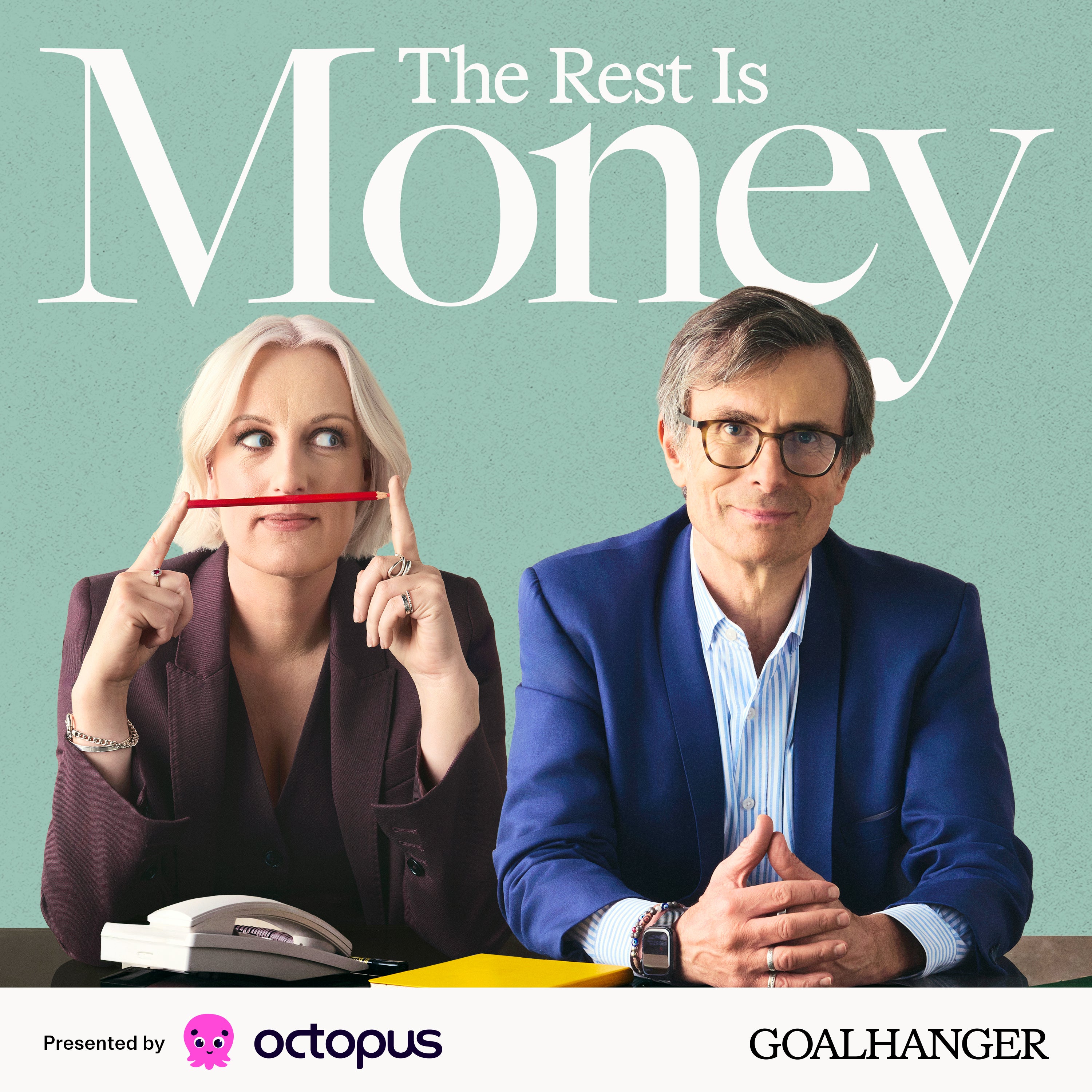
- The Rest Is Money
- 332. How to make a million in... Crypto (with Anthony Scaramucci)
The Rest Is Money16 Nov 2026 · 53m · 25 chapters
332. How to make a million in... Crypto (with Anthony Scaramucci)
In short
Anthony Scaramucci explains why Bitcoin and crypto are more than short-lived speculation, tracing crypto’s origins to 1990s “eCash” attempts and the post-2008 push for decentralized, permissionless ledgers. He argues Bitcoin is “digital gold” and a hardened, scarce trust network that can reduce transaction fees and compete with banks/credit cards; he also distinguishes Bitcoin from “gambling tokens” and discusses stablecoins and regulation.
Guests
Anthony “The Mooch” Scaramucci (crypto investor; says he spent 10 hours in 2020 learning Bitcoin after initially dismissing it; describes his “eureka moment” comparing banks to spreadsheets). Greg Jackson (CEO and founder of Octopus Energy; appears briefly for imposter-syndrome “be more rat” advice).
Key claims
Bitcoin supply is capped at 21 million; transactions are verified by a decentralized network; halving cycles reduce new issuance; volatility should lessen with adoption; AI can’t “cheat” mining because hash rate competition increases; quantum computing is a risk but “quantum resistance” work is underway.
Notable examples
Trump’s meme coin wiping out $3.8B; Dogecoin as a “worthless” meme; Larry Fink shifting from hating Bitcoin to launching a major Bitcoin ETF; US government seizing Bitcoin from cyber criminals; stablecoin issuers Tether and Circle holding large US treasuries.
Written by AI. May contain mistakes.
Chapters
0:36
Insight from Greg Jackson
Greg Jackson discusses success and overcoming imposter syndrome.
“Support for this episode of The Rest Is Money comes from Octopus Energy.”
3:32
The Origins of Cryptocurrency
Anthony Scaramucci explains the history and evolution of cryptocurrency.
“Anthony, it's great to talk to you about this because I know this is your bag.”
6:10
Understanding Bitcoin Transactions
Explains how Bitcoin transactions work and the concept of mining.
“And so we're going to get hundreds of thousands of people to download the software.”
10:44
Eureka Moment: Trust and Technology
Scaramucci shares his realization of Bitcoin's value as a trust network.
“And so what's happening is the token supply is declining.”
14:03
Understanding Crypto Volatility
Learn about the historical volatility of major tech companies and its relation to cryptocurrency.
“Facebook experienced that, Google, Amazon dropped 50 % eight times since its May 1997 IPO.”
14:45
The Tangibility Debate in Crypto
Explore the challenges of understanding cryptocurrency's value in a digital world.
“the fact that you described going into a bar with a note, for us plastic, as you say, and for you paper.”
15:47
Bitcoin as Digital Gold
Discover why Bitcoin is often compared to gold and its perceived value.
“But I'm trying to tell you people, learn about it.”
16:57
Larry Fink's Change of Heart
Hear how influential figures like Larry Fink shifted their views on Bitcoin.
“the rest of it is in our perception of its store of value.”
18:15
Bitcoin Governance Explained
Understand how Bitcoin's governance ensures its decentralized nature.
“And when I talked to Larry, so what made me change is people like you who insisted that I do the homework on Bitcoin.”
19:17
The Role of AI in Bitcoin Mining
Examine how AI interacts with Bitcoin mining and its impact on competition.
“You're talking about a group, an anonymous group releasing this, and they decide how many coins, tokens, whatever are released.”
Show all 25 chapters
21:33
Quantum Resistance in Bitcoin
Learn about the efforts to protect Bitcoin from potential quantum computing threats.
“coins, the higher the price would go up.”
22:48
Investing in Bitcoin: A Personal Perspective
Explore personal views on investing in Bitcoin and its future potential.
“But if you said to me, okay, nobody is going to work on quantum resistance.”
24:40
Investing in Bitcoin: A Personal Perspective
Explore personal views on investing in Bitcoin and its future potential.
“Sometimes you make questionable ones, like buying a new TV that's too big for the wall because the electronic store employee was a little too good at their job.”
25:43
Buying and Trading Cryptocurrency
Gain insights on how retail investors can navigate cryptocurrency markets.
“cryptocurrency and and how do you know which ones are essentially legit feels like the wrong word because it doesn't feel like we're there with regulation and things but you know just talk me through that?”
28:00
Understanding Cryptocurrency Value
Learn about the perceived value of various cryptocurrencies and the pitfalls of hype.
“And so those coins, I think, do have value.”
29:00
Investment Strategies in Crypto
Explore approaches to investing in cryptocurrencies, including ETFs and long-term holding.
“Yes, because how do you know when a new cryptocurrency comes out, like you mentioned, Trump's Dogecoin?”
31:30
Resistance to New Technologies
Discuss how society adapts to new financial technologies amidst resistance from traditional institutions.
“And all of those have ETFs here in the United States.”
33:20
Bitcoin's Image and Government Involvement
Analyze the challenges Bitcoin faces regarding its association with crime and government actions.
“even if you have governmental resistance, regulatory resistance, the society eventually adapts the better technology.”
35:40
Long-Term Perspectives on Bitcoin
Understand Bitcoin as a long-term investment and the potential for future adoption.
“You can like it or you can dislike it, but I would implore people, if they're intellectually curious, to learn about it.”
37:50
Volatility and Market Behavior
Examine the volatility of cryptocurrencies and the factors influencing price changes.
“You know, the United Kingdom, despite what I sometimes hear of criticism about the U.S.”
40:30
Institutional Adoption of Cryptocurrency
Discuss the potential for more institutions and governments to adopt and invest in cryptocurrencies.
“I just think Bitcoin is still in that early adoption phase where people are gaining traction.”
42:00
The Future of Cryptocurrency Transactions
Explore the potential of cryptocurrencies as mainstream transaction methods and the role of intermediaries.
“And so Elon Musk is telling you that he believes in it.”
45:29
Understanding Stablecoins
Learn about stablecoins, their purpose, and their potential impact on the financial system.
“And obviously, these are meant to be more stable, more reliable than cryptocurrencies in the sense that their value is linked to other more stable assets.”
48:29
The Reliability of Cryptocurrency
Discuss the security of cryptocurrency, particularly Bitcoin, and the factors that could affect its viability.
“Whether people like this or not, the US is still considered the financial services leadership of the world.”
50:47
Path to Wealth Through Investment
Understand the importance of investment strategies and the potential of cryptocurrency in wealth building.
“again, these are only my opinions, not investment advice.”

Ask about this episode
Get the gist, explore an idea or ask about something said.
 Claude
On The Rest Is Money, what are the key points of this episode?
Searching your listeningTranscript
Automatic transcript. May contain errors.
0:00Steph McGovern: In 2020, Anthony Scaramucci spent 10 hours doing something he'd been refusing to, get his head round Bitcoin. He thought it was a load of bunk, but something clicked. Fast forward and he's now a huge investor in it. And he reckons we all need to understand that cryptocurrencies are not a flash in the pan, despite President Trump's meme coin wiping out$3.8 billion for the people who bought it. So what actually separates a technology reshaping global finance from a gambling token with a cartoon dog on it? The Mooch is going to tell us. Support for this episode of The Rest Is Money comes from Octopus Energy.
0:40Steph McGovern: And back with us is the CEO and founder of Octopus Energy, Greg Jackson. Right, Greg, you're dead successful for lots of reasons. Do you ever get imposter syndrome? Yeah, I once read a report about some research, I don't know how they did it, about rats and mice. and it said the difference between mice and rats is mice know they're not welcome. So when you go into the kitchen and turn the light on, the mice scurry away. The rat just sits and stares at you because the rat, you know, thinks it's got every right to be there. It's almost like, what are you doing here? So my advice when I do talks for students and people starting their careers is be more rat.
1:16Steph McGovern: Now, by the way, it doesn't mean be arrogant, don't be entitled. You have to do your work. You have to justify the place. But if you do that, you've got every right to be there. That's great advice. Be more rat. I like that. Thanks again to Octopus Energy for powering The Rest is Money. You'll be hearing more from Greg in the rest of our shows.
1:54Steph McGovern: fair exchange rate, an easy transfer and no surprises along the way. Wise keeps things simple. Wise is a smart way to move the currencies you need around the globe. It works in more than 160 countries and with over 40 currencies. Most transfers arrive instantly. Wise uses the mid-market exchange rate, like the one you see on Google, with no markups or hidden fees. So when money needs to move, you can see the rate, know the fee and get on with it. Join millions saving billions on hidden fees by downloading the Wise app today. Be smart, get wise, T's and C's apply. For adults with Crohn's disease or ulcerative colitis symptoms, every choice matters.
2:39Steph McGovern: Tremphaya offers self-injection or intravenous infusion from the start. Tremphaya is administered as injections under the skin or infusions through a vein every four weeks, followed by injections under the skin every four or eight weeks. If your doctor decides that you can self-inject Tremphaya, proper training is required. Tremphaya is a prescription medicine used to treat adults with moderately to severely active Crohn's disease and adults with moderately to severely active ulcerative colitis. Serious allergic reactions, increased risk of infections or lower ability to fight them, and liver problems may occur.
3:12Steph McGovern: Before treatment, get checked for infections and tuberculosis. Tell your doctor if you have an infection, flu-like symptoms, or need a vaccine. Explore what's possible. Ask your doctor about Trimphia today. Call 1-800-526-7736 to learn more or visit trimphiaradio.com.
3:42Steph McGovern: Anthony, it's great to talk to you about this because I know this is your bag. You are often described as the crypto king in many ways. So I'm keen to get your thoughts. Can we start right at the beginning of where cryptocurrency came from? You know, Bitcoin was launched, wasn't it, in 2009. But what led up to that? What went on and where did it come from? OK, so first of all, it's always a pleasure to be on with you guys. And thank you. So I want to go back to the 1990s. So we developed the Internet. And now there's a group of computer programmers saying, okay, wow, we have the internet. I'm wondering if we can create a ledger system, a spreadsheet system on the internet where we can transact with each other outside of the banks.
4:28And so something was invented in the 1990s called eCash. There was actually a group of guys that were well-known. They put it up on the internet and nobody bought into it because it was tied to a corporation or a startup company, and it fizzled. And so I want to fast forward, because I think this is an important part of the story. There were three or four times that a digital currency system was tried and tried to put on the internet, and it didn't work. And so the computer programmers looked around and said, well, why didn't it work? Well, one of the reasons it didn't work, it wasn't fully decentralized.
5:02There was a centralized company that actually control the network. And so people feared that and they'd feel, okay, maybe they'll erase my ledger or eliminate my digits in my bank account on the internet. And so now they're tinkering with this in the early 2000s. And then we have the global financial crisis and we have this widespread shock in the economy, the Federal Reserve of the United States, the Bank of England, others say, okay, we're going to flood the economies with money. We're effectively going to print a lot of money and we're going to create a lot of liquidity in the system to protect people.
5:38This does touch off some levels of inflation scare. If you remember, the gold prices were going up and so forth. And now these computer programmers say, aha, we can create a decentralized system. We're going to make it anonymous. We're going to put out a white paper and we're going to name the white paper Satoshi Nakamoto. It's going to be a 20-page white paper. And we're going to be anonymous. And we're going to explain how this ledger works on the internet. It'll be fully decentralized. And so we're going to get hundreds of thousands of people to download the software. And then in the process of downloading that software, they'll be able to verify transactions with each other.
6:20So let me take you through a transaction. And then let me take you through a Bitcoin transaction. I'm going to buy Steph's house. You and I negotiate a price. I say, okay, that's great. You say to me, okay, wire me the money. You give me your corresponding bank. I then wire the money from my bank to your bank. Your bank lets you know that you have the money. You hand me the deed to your house. Over the Bitcoin transactional system, we wouldn't have to do that. I could get your wallet address. If you were accepting my Bitcoin as currency to buy your house, I could just send my Bitcoin from my wallet to your wallet.
6:59There's 180 ,000 nodes on the system that will verify and lock that transaction and create finality. And so now we have a peer-to-peer transaction without a third-party permission. Okay, so this is called a peer-to-peer permissionless transaction. And so Satoshi Nakamoto or the computer programmers that developed this explained this system. And they said, oh, by the way, we don't like and we don't trust each other. So we always get our money from a third party. Okay, well, what is money? Well, money is a technology that we use so that we don't have to barter. I don't walk into your pub with a calf that I just raised on my farm, put it on the bar and say, hey, here's your fuel cutlet parmesan for the next 10 weeks.
7:50Could I have 25 gin and tonics? We don't barter like that. I have money, or in your case, it's plastic money. In my case, it's actually cloth money. I put it out on the bar, and then you give me the gin and tonic, and now that person has something that they know they can use to get the goods and services they want, right? So the money, you have to understand what the money is. It's a technology. It's a tool that we trust that allows us to transfer goods and services between each other. The problem with the money, Steph, is that the government corrupts it. It prints more of it. It creates inflation.
8:24And so what the Nakamoto team said is, let's tell you what we're going to do. We're going to create 21 million of these tokens. Never will there be any more created. You can mine gold. An asteroid could hit the earth. There'll be tons of gold. but this is a finite technological system and it's effectively a ledger. Okay. So I've talked a little bit too long, but I just wanted to explain the framework of what it is. And then I can tell you a little bit more how it works and I can tell you why I think it caught on.
8:51Steph McGovern: Yeah. I mean, it's totally fascinating. And on that point about there being a limited number of them, so something like 21 million Bitcoin, and they were hard-coded then into the software rules by Bitcoins Anonymous, as you say, creator, this group of people. It could be one person, nobody knows. And then in order to get them, you have to mine. And what does that involve? It's about these complex mathematical puzzles, isn't it? So how does that work? Okay, great, great question. So what the Nakamoto team said is that we're going to create this system. We're going to release these tokens into the internet.
9:32You can log on. And if you're willing to do the mathematical puzzles and the mathematical codes, and you beat the computer that's competing against you, we'll give you one of the tokens. You can have that deposited in your account. And moreover, if you understand what we're going to do, we're going to put out a certain number of tokens every single day. And those tokens will help reward people that are helping to verify the transactions. And then every four years, we will cut the token supply in half. And that's called the halving cycle. And so what we've done is, Bitcoin started in 2009. We've been through four halving cycles.
10:18We're through the second half now of the fourth halving cycle. And so sometime two years from now, it'll probably be a year from April, maybe 18 months from now, we have 450 tokens that are being released by the network into the Bitcoin system per day. And then in April of 2028, it'll be 225. And then April of 2032, it'll be 122.5. And so what's happening is the token supply is declining. And so lo and behold, as the demand is building for Bitcoin, as people want to own Bitcoin, you know this, I know this, everyone listening know this, as supply goes down in something and demand builds up, the price goes higher.
11:04And so, and then people say, well, geez, Anthony, this is just a cryptographic code on the internet. This is absolutely bunk. It is absolutely worthless. is why would anybody pay$75 ,000 for this cryptographic code? And that is a really good question. And I will tell everybody listening, when I looked at Bitcoin, I was introduced to it in 2012, I said, okay, this is a load of bunk. I saw it again in 2014. I passed on it again. And it took me the third time, way back in 2020, where I sat down and somebody said to me, you have to spend time to understand this. Please give yourself 10 hours of research on Bitcoin, reading, listening, read the white paper, go to computer programmers and listen.
11:54And so I did that. And then when I was done doing that, I flipped the switch and said, okay, I now understand what this is. And so it's going to be very hard for me to explain to your viewers and listeners what it is in a few minutes, but I want to try to give you my eureka moment. My eureka moment is your bank, Steph, is a spreadsheet. And just hear me out for a second. You're going to open up the app on your phone. There are digits. Maybe it's British pounds. It'll tell you how many British pounds you have in your bank. But they're just digits. Now, if you want to buy a car, you wire those digits to the car dealer.
12:28So your digits in your bank account go down. The digits in their bank account go up. And then you get the car delivered. So when you think about it that way, they're just electronic digits, right? The money is actually something that we trust. And so if you can get your arms around that and you can say, wait a minute, this is a trust network. We don't have to rely on a third party. It's hardened. The supply is immutable. Oh my God. These guys created a fully diversified, fully transparent, fully decentralized spreadsheet, just like my bank, that we can transact upon. And we can save money doing it because, Steph, you have$4 trillion are spent per year globally in verifying transactions.
13:20Those are wire fees. Those are credit card fees. You and I go to the restaurant. We pay a 3.5 % fee to the credit card to buy the food. But over the Bitcoin network, I could just take my wallet. I could link it to the waiter's wallet or the restaurant's wallet. And I can make that transfer directly without paying those fees. And so this is something, once I understood it, I said, okay. So I bought my first Bitcoin at$6 ,000. It went to$20 ,000. And I said, okay, I'm a genius. And then it went to$4 ,000. I said, okay, now I'm a dummy. And I bought a little bit more Bitcoin. And it's been oscillating.
13:59But what happens with something like this, because it's very hard to understand, technology, most of these technologies as they're getting adopted have high volatility. Facebook experienced that, Google, Amazon dropped 50 % eight times since its May 1997 IPO. And so you're seeing this jagged effect as we're waiting for the regulation, as we're waiting for the technology and everything else to catch up to where Bitcoin is.
14:29Steph McGovern: And I want to come back to loads of what you said about the volatility and everything else and the regulation. But just on that point you make about your eureka moment, and I have crypto as well, so I'm kind of on the same page as you. But when I'm having that conversation with maybe relatives or whatever, that sense of the lack of tangibility, the fact that you described going into a bar with a note, for us plastic, as you say, and for you paper. But that sense of having something that if there were something wrong in the financial market, and obviously you talked about the global financial crisis in 2008, and I covered that with Robert Peston and we reported on all the runs on the banks, people were trying to get their money out.
15:14Steph McGovern: That sense that they could physically get something to put somewhere and whether it's those money or it's gold bars or whatever. Yes, we live in a much more digital world now. And although I can appreciate that it doesn't have to be tangible for it to still have value. There's lots of people who can't buy into that and worry about that. What do you say to them? I say to them, I completely understand you. And I missed this opportunity for myself because it took me 10 years to buy into that. So anybody that's listening says, okay, I can't understand it and I'm not going to buy into it. I sort of respect it.
15:53But I'm trying to tell you people, learn about it. You should know about it. You should understand it because there are 350 million people globally that now own a portion of a Bitcoin or a full Bitcoin. and I'm saying to you that our central banking system, frankly, these guys are a bunch of drunk drivers with our money. They've destroyed the value of our money because of the very high deficit spend. Our politicians and political leaders overpromise us and then they undertax us and then they use the most pernicious and they use the most regressive form of taxation, which is inflation, okay? And this hurts everybody and it hurts the value of our money and our purchasing power.
16:38But Bitcoin is a immutable, scarce asset. And if you think about it like gold, it's digital gold. You say, well, gold, I can have it, hold it in my hand. Okay, I understand that. But gold, you can't eat it. We've ascribed to gold because of its scarcity, the value. Maybe 5 % of gold's value is in the manufacturing process and jewelry. the rest of it is in our perception of its store of value. And so I'm just saying, we have created, like, if you read Neil Ferguson's book, The Ascent of Money, which is the whole history of money, 5 ,000 years, and he has a whole checklist in the back of what money actually is.
17:17And we've had, as you said, cloth or paper money or plastic money. We've had wampum. We've had seashells. We've had gold coins with Roman emperor's heads stamped on them. We've had all different types of things over the course of our history that we've used as money, but they all have certain tenants. Bitcoin has every single one of those tenants, has every single one of those characteristics. And so in a weird way, it's like the purest form of money. It's a hardened technology that we can use to transact with each other. And that's why it's catching on. And that's why guys like Larry Fink, who is running one of the largest asset managers in the world, told me in Abu Dhabi in 2021, he hated Bitcoin.
18:04Oh my God, Larry, I hate Bitcoin. I hate Bitcoin. Okay. By January of 2024, he was launching what became the largest Bitcoin ETF in the world. So what made Larry Fink change? And when I talked to Larry, so what made me change is people like you who insisted that I do the homework on Bitcoin. I did the homework and then I understood. And again, I'll explain that eureka moment briefly. Wait a minute. My bank is a spreadsheet. This is a spreadsheet that's not controlled by anybody, but the asset is technologically hardened. So therefore, I can transact peer to peer on this spreadsheet, without third-party intervention, and I can make the transactions cheap.
18:53I can make the transactions accessible. And so you know what? I'm going to put some money in this network because I believe long-term, as we continue to inflate our currencies, this network will have more and more value.
19:07Steph McGovern: So just a couple of points on that then. One is I'm sure politicians and financiers and people would say, hang on a minute, you're making us out like we're the bad guys, and we're just trying to take money off you and everything else, I'm sure they would rally against that. You're talking about a group, an anonymous group releasing this, and they decide how many coins, tokens, whatever are released. That's control. There is somebody controlling it. Can they not also be the people who go, hang on a minute, we're just going to delete everyone's files, wallets, whatever? It's a great question. And I started the conversation by saying that eCash in the 1990s, people felt that about eCash.
19:46and so it never got adopted. So what these guys did is they turned the entire process of governance and they turned the entire process over to the Bitcoin node member. So if you download the software onto your computer, you're now a member of the Bitcoin network. And so there's a governance of the Bitcoin network and there are certain protocols and procedures that make what you just said, completely impossible. So if you read the white paper and you download the node, you're like, okay, wait a minute. They ceded control and all governance to the network. A result of which the network is now viral and it would be impossible to shut down the network unless we kill the electricity, the global electricity supply.
20:34That would be a big issue for Bitcoin. That would kill Bitcoin. But I don't see that as likely in our lifetimes.
20:39Steph McGovern: Yeah. So coming back to the mining point then, before we go into the more general trading of it. Obviously, it relies on to be able to mine it, you know, its energy, its time, its computational power. And essentially, that obviously adds to its scarcity. But couldn't AI cheat the system in the sense that couldn't someone just create an AI, use AI to be able to go just find me where all the Bitcoins are? What stops that from happening? I mean, you could take your computer, your AI-based computer, you could hook it into the network and it could join the mining process. But there's something called a hash rate, which is the processing speed of the computations that happen.
21:21Every computer that joins the process makes that hash rate harder. And so it would just increase the competition for the coins. And frankly, the more competition you have for the coins, the higher the price would go up. But the AI wouldn't be able to compute it any differently because it's a mining software code, which has been unbreakable. Now, one of the questions that does come up is, well, when we eventually have quantum computing, won't the quantum system be able to crack the code and then steal all the coins from the Bitcoin network? That's a separate question. I don't think the AI could have any real difference in terms of what it's doing, because it's using the same digital system of zeros and ones like every other computer.
22:10Steph McGovern: So what about the quantum computer then? The quantum is definitely an issue. There's no question about that. And so there's a group of people that are working on core development for Bitcoin. You could join that group of people if you decide to. You have to get certain metrics on your computer to be one of the core developers. And so what the core developers are doing is they're creating what's called quantum resistance. Who's working on that? Coinbase is working on that. Binance is working on that. Kraken. These are some of the largest cryptocurrency exchanges in the world. They have a group of core developers that are creating quantum mechanical computing to rebut any potential attack that could happen on the network.
22:52But if you said to me, okay, nobody is going to work on quantum resistance. and in 10 years when these quantum computers are available, that would be a huge risk to Bitcoin. There's no question about that. But I'm saying to you, as a Bitcoin holder, and I have a lot of my personal money in Bitcoin, we are working on the quantum resistance. So in other words, you can have a threat from a quantum computer, but you can meet that threat by matching it off with another quantum computer. And that's what we're working on right now. But those are good questions. And those are, listen, there's risk in everything.
23:28You know, I've been humbled by life. I've been humbled by markets. I just want to tell people, I'm just giving you my opinion of something. I've lost money in markets. I've made money in markets. And people ask me for a recommendation. I guess I'm not technically allowed to give them, but I always say, hey, 1%, 2 % of your money should be in something like this. I'm not saying, hey, sell your house and donate a kidney and buy Bitcoin. I'm not saying that. I'm saying this is something that is catching on, and this is something that my children are looking at, who are way more technically savvy and way more digitally competent than me.
24:04And they're saying, okay, I get this. I'd like to own a little bit of this in my overall portfolio.
24:10Steph McGovern: Shaq here. What's it like to buy a car from Carvana 100 % online and get it delivered to your door? Let me tell you. Your car is here, Mr. Shaq. Thank you, Mr. Carvana guy. Can't wait to take it for a spin. Only the best for you, Mr. Shaq. Hey, have you always been so big, tall, and handsome? Not always. I was 6 '10 once. Seven days to love it or return it, Mr. Shaq. Not that I would. You never do. No, I never do. So buy your car today on Carvana. Delivery fees may apply. See our seven-day return policy at Carvana.com. Life is all about making decisions. Sometimes you make questionable ones, like buying a new TV that's too big for the wall because the electronic store employee was a little too good at their job.
24:52Steph McGovern: Then sometimes you make great ones, like protecting your home and auto with Progressive. You get customized coverage options so you can be sure you have the right coverage. Get your quote today at Progressive.com. Progressive Casualty Insurance Company affiliates and other insurers not available in all states. This episode is brought to you by Google Chrome. You think you know a browser, but Gemini and Chrome, that's new. It can help you with practically anything on the web, like restoring a vintage motorcycle from a 50-page restoration block, or finally break down that long article you've had open for weeks.
25:26Gemini and Chrome is here for it. Ready to make anything online make sense? There's no place like Chrome. Check responses set up required compatibility and availability varies 18+.
25:42Steph McGovern: let's talk about it as an asset then how does it work as a as a retail investor to to buy to trade cryptocurrency and and how do you know which ones are essentially legit feels like the wrong word because it doesn't feel like we're there with regulation and things but you know just talk me through that? Okay. So what I would say to you is, because I don't know what the regulation is in the UK, I can speak more directly about the United States. But what I would say is that you can purchase these coins by going to a cryptocurrency exchange. So that could be eToro, who's one of the sponsors of my podcast with Katty K, the rest is Politics US.
26:23And so you would open up an account at eToro. And then you would say, okay, I'd like to buy some Bitcoin, you'd send them the cash, they would deposit Bitcoin in your account. You could do something that's called cold storage, where you could ask them to wire that Bitcoin to your USB. You could have it in your pocket if that's what you wanted. But most people put their Bitcoin in an account somewhere. And so it's a simple thing to do. It would be as easy as buying a stock or a bond in your brokerage account at this point. You could also buy the ETF, the BlackRock ETF or the Fidelity ETF, you have ETPs in Europe that are Bitcoin.
27:01You could also buy it that way and you get the holding of Bitcoin that way. But when you talk about legit, because you say legit, there are 20 ,000 coins in the cryptocurrency ecosystem. And I believe that many of those coins are worthless. I think Bitcoin has value. There are a few things that are called layer one coins like Ethereum or Solana and coins like that, which is different than Bitcoin. Yes, they are on the blockchain and they're cryptographic codes on the blockchain, but you're able to layer something on top of it. So what could you layer on something like a Solana? You could take a share certificate.
27:41Let's say I was going to buy shares in Goalhanger if Goalhanger was publicly traded. You could have Solana. You could take a contract, which is a share certificate of that individual stock, and now you could trade that across the network. Okay, so it's a way of adding something to the train system, okay, sort of like a cargo supply rail system on the network. And so those coins, I think, do have value. And so fully disclosed, I own things like Solana. I own things like Ethereum and Avalanche. But there's 20 ,000 other coin stuff that I don't own. And a lot of those coins, frankly, I think are just like gambling tokens and are in fact worthless.
28:21And I think this is the thing that the press talks about. And if you're reading the press, you're like, oh my God, Trump, as an example, launched a worthless gambling coin. He rug pulled$800 million for himself. And the people that bought that coin lost$3.8 billion. Okay, when you read a story like that, it would make you hate all of crypto for all of time. And I get that. But there's technology out there in this system that I think is going to make the financial services industry move more quickly with less costs associated with it. And that's why I'm a big investor in it.
29:01Steph McGovern: Yes, because how do you know when a new cryptocurrency comes out, like you mentioned, Trump's Dogecoin? How do you know that that is, whether that is, I've got to jump on and be part of this and it's going to go really well because to begin with, we did see, obviously, as you say, the price of that rise. How do you know whether it is going to be one that is one that's worth it or not, I guess? Well, I mean, again, this happens in life, right? You have something comes up with a lot of hype. There's a fear of missing out. And so people jump in and the price starts going higher and higher and higher.
29:40And then all of a sudden people realize, wait a minute, there's nothing there. Then they start selling and then there's a cascade of selling and everybody gets wiped out. That's sort of what happened. I think you know if you are doing your homework, because if you looked at that coin as an example, the coin had no value. It had no transactional utility. You were never going to use that cryptocurrency to trade stocks or bonds or real world assets. It just didn't. All it was was a gambling token. You could buy this gambling token on the internet and you can trade it. There's something called Doge.
30:16It's something that Elon Musk obviously liked a lot maybe five years ago, which is how we named the Department of Government Efficiency Doge. This was also a meme coin. maybe five years ago, was trading at over a dollar. Now it's trading at eight cents. It's like literally completely worthless. But yet I'm looking at it right here. It has a$12 billion market capitalization for something completely worthless. So we're human beings. We like gambling. We like being in the adrenaline rush of that stuff. I'm an investor, so I don't own any of that. I'm more interested in things that I can look at and say, okay, this has a lot of utility.
30:55This has a lot of use cases. I want to be a part of this.
30:59Steph McGovern: You mentioned ETFs, exchange traded funds. Of course, this is essentially a collection of investments. Is that a way you tend to see lots of people do this is by, I guess, hedging their bets and doing it as a... And has that helped legitimize it in a way? Yes. And it's a very easy way to get involved with it. But again, you have ETFs for the higher quality tokens and the ones that have utility. I see Bitcoin as a store of value. I see Solana and Ethereum as things that we can have use cases for. And all of those have ETFs here in the United States. I'm pretty sure they do have something similar in the UK.
31:39Steph McGovern: Yeah, they do. Yeah, yeah. And do you think that that's kind of changed perception in any way? because you can go to an institutional investor and say, get me an ETF. You know, listen, I have a couple of friends of mine that are billionaire hedge fund managers. They all started out the same way. They hated Bitcoin. Stan Druckenmiller, I hate Bitcoin. Okay, learn about Bitcoin. Okay, I've learned about Bitcoin. I now own Bitcoin. Ray Dalio, always talking about the debt crisis globally. I hate Bitcoin. Okay, I hate Bitcoin. Okay, let's learn about Bitcoin. Now he owns Bitcoin. I could give you Paul Tudor Jones.
32:12There's a whole collection of people. Jamie Dimon, Bitcoin is a decentralized pet rock. I hate Bitcoin. He's spending over a billion dollars a year building the infrastructure to trade and custody Bitcoin once the regulation clears. So Bitcoin was one of these things where none of us understood it. We all had a sneered at it. Frankly, I wish I didn't sneer at it because I could have bought my Bitcoins at$600 as opposed to$6 ,000. But the point I'm making is that newer technologies, we are often very resistant to embracing them. And also, this type of transactional activity will be in direct competition with the banks and the credit card companies.
32:57So what do you think, Steph? You think the banks and the credit card companies are not calling their senators and their members of the House of Representatives, or maybe even in the UK, whatever the representative government is, say, hey, I don't want this. Could you please stop this? I don't know if you remember the fight over Uber. Yeah. We had a huge fight over Uber here in the United States. I believe you guys did as well in London. But I always say to people, if you have a better technology, if you have a better mousetrap, even if you have governmental resistance, regulatory resistance, the society eventually adapts the better technology.
33:31Trust me, the horse and carriage people did not like the horse less carriage. They didn't like it. Okay. But we adopted it anyway. Same thing with the phone system. Same thing with commercial aircraft. Same thing with the internet. And this is something that is catching on. Because I bought my first Bitcoin. There were about 90 million people globally that owned it. And now there's about 370 million people.
33:57Steph McGovern: Yeah. Can I ask you a bit about ownership? Because if I understand this right, correct me if I'm wrong, the US government is one of the largest single Bitcoin owners because of seizing them from cyber criminals. Is that right? So that's a good point. I think this is important. This is another thing that's tarred the image of Bitcoin. So in the beginning, when this started, it was a lot of criminal activity. There was arms trading going on. There was drug deals going on. And they were using the Bitcoin network to transact in value. And when the government was catching them, they would then reach into their wallets and seize their Bitcoin.
34:36and then they put it on the balance sheet of the U.S. government. And so a lot of people are very critical. They say, oh, well, this is really just for drug users and for money launderers, et cetera. I don't know if you remember this. I don't even know if it's appropriate to say on your show you can cut it out if you want. But the original pipe system for the Internet, what enabled the Internet to catch on was Internet pornography. Ultimately, if you read the book called Pipes, the Internet started with all of this nefarious activity. And then people said, okay, well, wait a minute, we could use it for commercial transactions.
35:10We could use it to download 4K video. We could use it for all these different things, social media, et cetera. So, I mean, it did start in a nefarious way. And yes, the government did seize a lot of Bitcoin. And the Biden administration was selling the Bitcoin. They were negative on Bitcoin. But the Trump administration has been positive on Bitcoin. There's a lot of people I know inside the administration that are working towards trying to get the regulation right for this. I would just say to everybody listening, this technology is with us. You can like it or you can dislike it, but I would implore people, if they're intellectually curious, to learn about it.
35:48And then after you've done the 10 hours of work on it, then you can form an opinion. You can say, oh, you know, I would submit to people, if 100 people do the work on it, I'm saying 85, 90, I'll probably buy it. 10 will always hate it no matter what. I totally got that. But I started out as a skeptic, did the homework, and ended up buying some of it for myself and my family.
36:09Steph McGovern: So tell me about if you are buying it, how long should you wait for a return on investment? You know, you're talking about, you've talked about the four-year cycle and I've heard you talk about it being, you know, a garden market bear, a garden activity bear market at the moment. So when people are putting money into something like cryptocurrency, How long should they be thinking about leaving it there before they take it out again? It's a great question. And so I'm only going to give you my investment philosophy in something like this. I've owned the asset since 2000. I haven't traded it. I'm long the asset.
36:45I don't look at it day to day because it would probably affect my judgment and my nerves. It's a volatile asset. And so I would just tell people, if you have a rolling four-year holding period of Bitcoin, if you hold it through a full halving cycle, everybody has made money. If you're going to trade in and out of it, we're weak. We're emotionally weak. You know this as an investor. We have flight and we have flight in our personalities. And we typically buy things at the top and want to sell things at the bottom. And we have to train ourselves to do the opposite, right? So when Bitcoin got into the 60s earlier this year, everyone was panicking.
37:25I was buying more Bitcoin. I said, okay, it could go into the 40s. I don't know. And if it goes into the 40s, I have a little bit of cash left over, I'll buy more. Now it's back into the mid-70s. It may go down. I don't know. I'm not here to tell you I know something that I don't know. What I am here to tell you is that this technology is like a near-perfect form of money. and this technology is being adopted by tens of millions of people around the world. You know, the United Kingdom, despite what I sometimes hear of criticism about the U.S. government or the U.K. government, believe it or not, the currency, the British pound is pretty stable.
38:05And by the way, for that matter, so is the U.S. dollar. However, if you're in Africa or you're in certain South American countries or certain Asian countries where the governments have spoiled the currency system, or you're in Argentina, or you're even in a place like Iran right now that has 66 % inflation, you look around and you say, okay, wait a minute, the governments typically corrupt our currency. This is an incorruptible asset. And it becomes something that people want to hold globally. And we're experiencing that.
38:38Steph McGovern: And what about the volatility then? Because it's interesting how cryptocurrency behaves depending on what's caused the economic volatility. It doesn't really follow other asset types in that way, does it? You talked about if there's a financial crisis, that's when actually the price of crypto tends to go up. Whereas if it's more of a geopolitical worry or a stock market crash, it goes down. It's really interesting. Can you tell me a bit about your thoughts on the volatility side of it? Yeah, it's a great question. I think that most new technologies are extremely volatile. This has like a 50 % vol by measurement, which means that at any point in time, you could see a 50 % swing in the price movement.
39:28That does scare people. But I submit to you that that's because there's a group of people that are uncertain about it and they're selling it. And there's a group of people that like it and are buying it. And that happened with Amazon. That happened with Facebook. It happened with Google, the early parts. And as the network grew for Amazon, then the volatility and the stability of the asset grew. I think Bitcoin could easily trade to half of the market capitalization of gold. and gold's like a$22,$23 trillion asset. Bitcoin is a$1.3 trillion asset. And so as it gets to that level, I think the volatility will become more muted because it'll be more stable, broader group of owners.
40:12Same thing happened in technology stocks. If you look at the volatility of SpaceX as an example, SpaceX pretty volatile. It got added to the NASDAQ 100. If it eventually goes into the S &P 500, which I predict it will, you'll watch the volatility trend to be more indicative of the overall market. I just think Bitcoin is still in that early adoption phase where people are gaining traction. If you and I do this podcast in three or four years and Bitcoin has a billion people that own it and it's in different wallets around the world to the tune of a billion, which would be like three times what we have today, I think the volatility will go way down.
40:55Steph McGovern: Yeah. Yeah. And in terms of how its future then, because it's quite interesting what we're seeing happen with currencies. And, you know, I mentioned, obviously, the U.S. is one of the biggest owners because of the season of cyber criminals. But then you've got other countries like El Salvador who are actively purchasing cryptocurrency as a national reserve. Could you see more of that, more institutional investors, more central governments or whatever, putting more money into cryptocurrency? I do see that. I mean, I hope so. Let's put it that way. I think that, you know, and people have talked about this, the US government has talked about having a Bitcoin reserve, which would be in addition to its gold reserve.
41:37And I think that for now, it's still a new newish asset. And I think that conservative publicly traded companies will probably not own a lot of Bitcoin. But I don't know if you saw in the prospectus in the disclosure statement of SpaceX, they had almost a billion dollars worth of Bitcoin on their balance sheet. So the combination of XAI and SpaceX. And so Elon Musk is telling you that he believes in it. He's got it on his balance sheet. Some companies do have it on their balance sheet. I don't think that that's the reason to own it. I think the reason to own it is the belief that long term, we will be using cryptocurrencies and things like Bitcoin or stablecoin, which you and I haven't even gotten into, but we will be using these things into the future as a way to transact with each other, to save fees, to save transaction charges.
42:32I want to be early. One of my buddies who runs a big pension fund for a state here in the United States, he bought$150 million of Bitcoin. And I said, why did you do that? He said, well, someday a consultant is going to come in here and say, I need a 1 % exposure to Bitcoin. And the price will already be up as a result of that because all of my contemporaries will be buying it. And so to me, I just want it to be early on this asset.
42:57Steph McGovern: Do you know, though, don't you think, Anthony, as we see things become more mainstream as that volatility lessons, you tend to get more middle people who get involved though, don't you? And then start adding those transactions like you mentioned, obviously, Toro and there's others like Coinbase or whoever else, they take a cut for what they do. So although you're saying it kind of cuts out the middlemen, middlemen will find their way in there, won't they? In order for you to be part of owning cryptocurrency, you would use, most people would use a platform to do it who will take a hit. Okay. All right.
43:36Okay. So let me frame it to you this way. But I'm a lot older than you, but when I was in London and I was going to the London School of Economics in the mid 80s, I used to go to the post office and I'd get a phone card and that would entitle me to a certain amount of minutes to call my parents.
43:54Steph McGovern: Yeah. And I think if I remember at the time, it was - Yeah. You remember those days. So I had a card for$15,$3 a minute. I could talk to my parents for five minutes on a Wednesday. Okay. And that was 40 plus years ago. So today, I can log into any internet cafe in London and I could FaceTime my parents, right, like George Jetson over the phone. And that's a costless transaction. However, we are paying a carrying fee to the telephone company, right? The telephone company didn't go out of business. We are paying for the ability to express ourselves over this technology that you and I are talking on right now.
44:36And so the technology got better. It got cheaper, but it got more widespread, so the phone company is still making money. And so you are making a very good point. People will still use a credit card. Maybe there'll be services at American Express or MasterCard or Visa that people are going to want. But I believe that those charges, those fees, like what happened with the phone companies, are going to go down. And I think this will unleash more capital into the system, and it'll make it more innovative. So yes, you are making a point that I'm accepting that there will probably be a third party intermediary because of the way we have done things historically.
45:18But I just think because of this technology, those fees, like what happened with the long distance phone companies, are going to go down over time. And I think that's better for the society.
45:28Steph McGovern: You mentioned stable coins there. And obviously, these are meant to be more stable, more reliable than cryptocurrencies in the sense that their value is linked to other more stable assets. Just tell me a bit about stable coins and are they the next iteration of cryptocurrency? This is definitely happening. So let me see if I can step back and explain this. So now, I told you we have Bitcoin and we have these other coins like Solana and Ethereum and et cetera. And so there are companies like Tether and companies like Circle that said, okay, I want to be able to use something stable like the US dollar.
46:08It's worth$1. What I'm going to do is I'm going to take a smart contract and I am going to put it on top of Ethereum or on top of Solana. And now you have$1 on the internet. And if you look up Circle or you look up Tether, they're the two largest stable coin companies. They have hundreds of billions of dollars denominated in US dollars on this cryptocurrency system. And okay, why is that valuable? Well, there will be a day where I have$1 ,000 on my phone in stablecoins. And I will then be able to take that stablecoin and transfer it to you, Steph, or to Starbucks or to Walmart off of my phone.
46:53And I think this has huge value because you can move the money at the speed of light. If I want to transfer something to you in London, it used to take about three days. It probably would take a day now for me to get my money from my JP Morgan bank account to your bank account in London. But if I have a stable coin on my phone and I want to transfer you money, I can just send to your address, the ping, and you accept the money, then the money will flow directly to you. And so this is a very valuable technology. This is the bypass system of all those fees that we're talking about. And so another thing that I think people should be aware of is that for right now, at least, these stablecoin companies are denominating the stablecoin in US dollars.
47:44It's very good for the US currency. It's very good for the system. As an example, Tether and Circle have more US treasuries on their balance sheet than Germany and Japan. And so what I'm telling my friends that are in the government, you probably want to get the stablecoin regulation right because it'll increase the amount of treasuries that are held globally by people that want to transact in something over the internet that is stable, meaning the dollar, you know, Bitcoin's going to move. Today, it's up a percent. Tomorrow, it could be down a percent. But the dollar is the dollar. And that's why it's called a stable coin.
48:19Steph McGovern: How far away are we from getting the regulation right on this? Well, we have some regulation that passed last year. We had this thing called clarity in the United States. Whether people like this or not, the US is still considered the financial services leadership of the world. And so a lot of regulatory agencies around the world are waiting for the US to pass legislation, which they will then more or less copy. And so that's been at a standstill because there's a big political fight going on. The irony here is that because President Trump put a meme coin out, he's hurt the industry because there's a lot of his adversaries are like, okay, well, I don't want to give the president a win on this.
49:03And so I'm just going to vote against it. And I've gone to those people and I said, okay, you can dislike the president. I understand that, but you don't want to stall the innovation. You don't want to stall the ability for us to get the regulation right. We shouldn't have a partisan debate or a partisan divide about regulation. Regulation shouldn't be left-leaning or right-leaning. It should be about what's right or wrong for the society.
49:26Steph McGovern: Is there anything that would make you abandon cryptocurrency? Yeah, I mean, sure. I mean, I'm a realist and I'm neurally plastic and I've changed my mind on a lot of different things. And I started out by telling you, you know, I've had my ass kicked in life. I've had my ass kicked politically. I've had my ass kicked as an entrepreneur. And I've certainly had the market beat me up a few times as well. So if you told me that there was something wrong with the code, and you told me that I am wrong on the quantum resistance, that we won't be able to protect ourselves from a quantum attack on Bitcoin, that would probably make me abandon it.
50:08But it's been up and running and unhacked for 17 years. And every person in every global society, the North Koreans, you name it, have tried to hack this thing. But if you understand the mathematical properties, it's almost impossible to hack it. It's like one in all the grains of sand globally, in terms of the way the math works. But yeah, that would finish me. I'd have to come on your show and say, wow, I really got this wrong. There's a back door here. But 17 years and running, I'm pretty confident that that won't happen. But like I said, I've been wrong about other things, which is why I tell people if you're going to buy it, again, these are only my opinions, not investment advice.
50:51Steph McGovern: Just buy a small amount of it. Final question then, which is what I'm asking everyone who I'm talking to about investing. Yeah. Can you make a million from cryptocurrency? I'm a turtle, okay? The turtle wins the race, okay? Everybody who's listening should pick up a copy of George Clayson's book. It's a 1920s classic called The Richest Man in Babylon, and it's a 100-page book. Read the book. I read it at age 17, and it changed my life. And what does the book simply say? Pay yourself first. If you've got$100, give$5 to yourself. Put it in a stock account. We have producers, which I won't name them on the show, but we have goal hanger producers who I've gotten in a headlock, and I've said, pay yourself first, pay yourself first.
51:38And one of them called me a few months back and said, you know, I listened to you. I now have 100 ,000 pounds worth of stock in my portfolio. And I think what I would tell people listening in, you want to get to be a millionaire, you have to use a compound table. You have to understand the properties of compound interest and how compounding works in the stock market. And so since the age of 17, I have paid myself first. And so every month, whatever my paycheck may be, I take a sliver of that and I put it into the S &P 500. And if you put a little bit of that into Bitcoin, a little bit of that into the S &P 500, you will surprise yourself how quickly that will grow.
52:22and then you'll have a little bit of a nest egg and it'll give you some financial security.
52:26Steph McGovern: Yeah. So the person, I won't ask who it is because I'll know them, the production team. How much did they put in of their own money? Well, I mean, again, you'd have to ask them, but I'm pretty sure it's 10 % of their earnings. 10 % of their net earnings every single month for the last four years have gone into a stock account. And by the way, the stock market has gone up. So you're getting benefit of the compound interest in the market. And remember, these stocks also pay dividends. So even when the markets are not going up, the cash is still coming into the account. Think about it as yourself becoming an owner in some of the greatest companies in the world.
53:03Steph McGovern: So can you make a million then from crypto? Yes or no? You can. The answer is yes, but you got to be patient. Yeah. You know, the turtle is the one that's going to win that race. Anthony, thank you so much. It's been brilliant to talk to you about this. And we've also given our listeners, viewers, a lengthy reading list as well of some great books to make them even more informed. As always, I appreciate being on with you. Thanks, Steph. That's it for me on The Rest Is Money. Bye bye.
53:39Steph McGovern: Are you ever shopping online and suddenly a discount that helps you save pops up? It makes your day, sometimes even your week. Want that feeling month after month? Well, new customers who save by switching their home and auto insurance to Progressive save hundreds. Cue your happy dance. Get your quote today at Progressive.com. Progressive Casualty Insurance Company affiliates and other insurers. Not available in all states. The secret society of semi-homemade? Listen up. Sam's Club has pre-made dishes for a Thanksgiving feast that's ready in two hours. All while tasting suspiciously homemade. Come join us.
54:18Steph McGovern: Sam's Club. Individual oven times may vary. Your sausage McMuffin with egg didn't change. Your receipt did. The sausage McMuffin with egg extra value meal includes a hash brown and a small coffee for just$5. Only at McDonald's for a limited time. Price and participation may vary. Promotion pricing may be lower than meal pricing.
From the publisher
What is cryptocurrency and where did it come from? Who is buying it and how? What's the difference between the digital currencies and where do they get stored? How safe are they? Can you get rich from investing in them? And what made The Mooch go from crypto critic to evangelist, investing millions in them?
Steph talks to Wall Street financier Anthony Scaramucci about what separates a technology reshaping global finance from a gambling token with a cartoon dog on it. The first in a special series on alternative investments.
The Rest is Money is brought to you by Octopus Energy, Britain’s smart energy pioneer.
Email: the[email protected]
X: @TheRestIsMoney
Instagram: @TheRestIsMoney
TikTok: @RestIsMoney
Advertise with us: [email protected]
For more Goalhanger Podcasts, head to www.goalhanger.com
Video Editor: Dylan Bonham
Social Producer: Teo Ayodeji-Ansell
Producer: Lizzie Wood
General Manager: Tom Whiter
Learn more about your ad choices. Visit podcastchoices.com/adchoices
More from The Rest Is Money
All episodes
We use cookies.They keep VO running smoothly and help us improve it. Privacy policy