
 Ask ChatGPT

- Podcasts
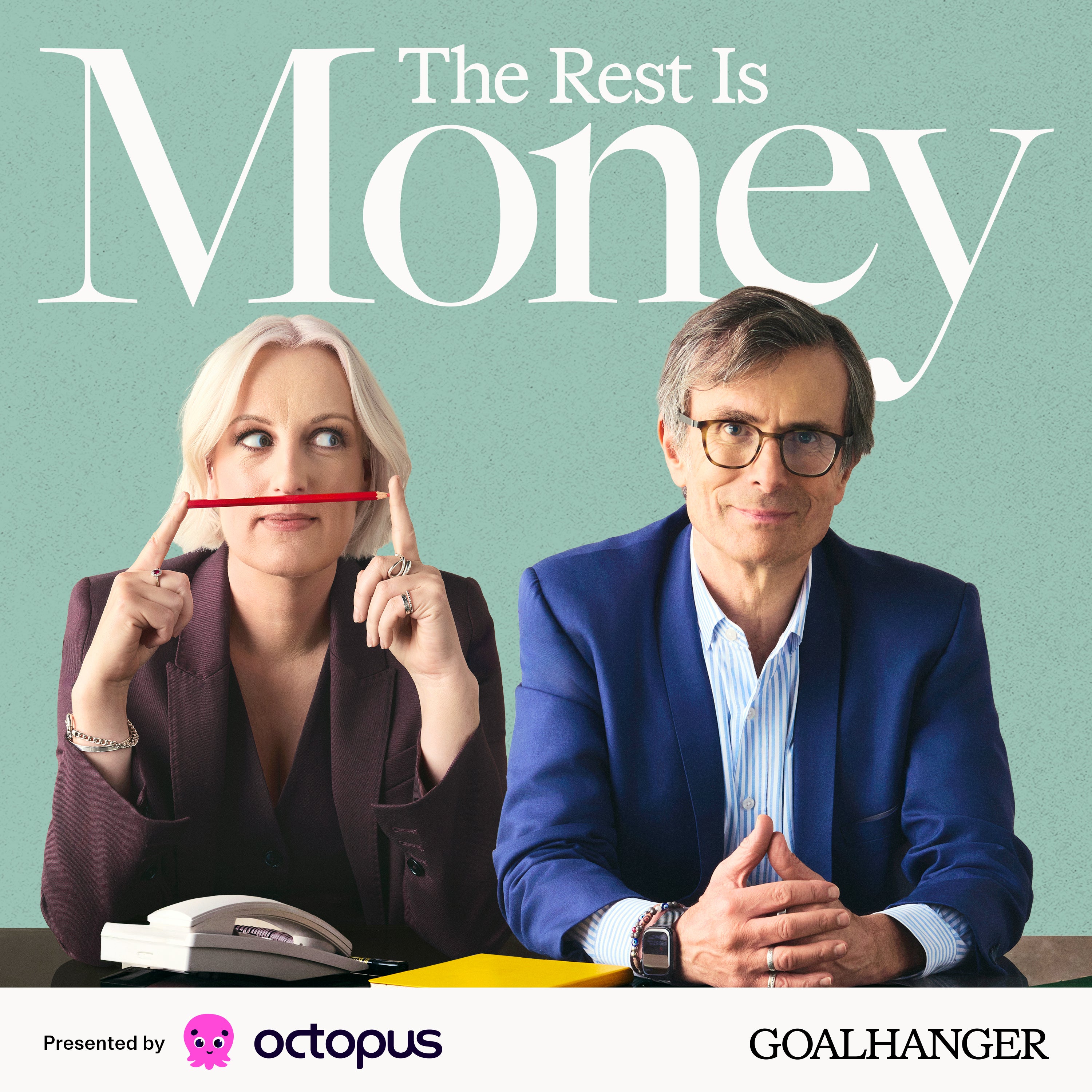
- The Rest Is Money
- 334. How to make a million in... gold
In short
How gold became a modern, investable asset after the 1971 end of the $35/oz dollar peg; what drives gold’s price today; and how investors buy it (physical, ETFs, futures), including risks and return expectations.
Guests
John Reid, World Gold Council (membership org of large gold mining companies); previously worked eight years producing gold in South Africa (1980s). Greg Jackson, founder/CEO of Octopus Energy (discusses UK renewables briefly).
Key claims
Gold’s “safe haven” role developed over time; gold is driven mainly by lack of trust and diversification needs. Demand drivers now include investment and central banks (especially since the Global Financial Crisis), with emerging markets—particularly China—shaping prices. Gold is hard to manipulate due to deep liquidity and mining’s small share of total above-ground stock. Long-run expected returns: inflation + 2–3% (not repeat of 2025’s +65%). Biggest competitor: government bonds (diversification benefit weakened in 2021–2022).
Notable examples
Nixon unpegging in 1971; gold trading up to ~$850/oz in Jan 1980 then falling; ~$250B traded daily, ~70% OTC centered in London; central banks buying ~500 tons/yr (2010–2021) rising to ~1,000 tons in 2022; retail “FOMO” and queues at ABC Bullion in January; correction after Fed-chair nomination news (Kevin Walsh).
Written by AI. May contain mistakes.
Chapters
1:56
Understanding Gold Investment
Exploration of the World Gold Council's role and gold as an investment.
“Tremphaya is administered as injections under the skin or infusions through a vein every four weeks, followed by injections under the skin every four or eight weeks.”
2:45
Understanding Gold Investment
Exploration of the World Gold Council's role and gold as an investment.
“Observe the North American dad, 50s, great polo collection.”
3:26
The Shift in Gold's Value Post-1971
How the unpegging of gold in 1971 changed its market dynamics.
“So the United States, Australia, China, the UK, South Africa.”
5:48
Gold's Role as a Safe Haven Asset
Discussion about gold's perception as a safe haven and its market drivers.
“So, I mean, that's not as high as some other assets, particularly US equities.”
10:03
Gold Pricing Mechanisms
Insights into how gold prices are determined and market influences.
“And when one is strong, the other is usually weak.”
11:28
Global Dynamics Affecting Gold
Analysis of global economic conditions impacting gold demand and value.
“You better come armed with billions of dollars and expect in the end for you to be outweighed by other flows.”
14:00
The Evolution of Gold Demand
Explore how trust and economic conditions shape gold's appeal in various markets over time.
“Yeah, I mean, there's been a lot of them.”
16:48
Emerging Markets Impact on Gold Investment
Learn about the shifting dynamics of gold investment driven by emerging market consumers.
“But it's going to be an Indian, maybe an Indian housewife, maybe a Chinese man, head of a family who's done well through his business.”
20:09
Methods of Investing in Gold
Understand various methods of gold investment, including physical and electronic options.
“I haven't checked in the last few weeks, months, but gold has outperformed on a total return basis the S &P 500 since the turn of the millennium, for example.”
25:41
Consumer Behavior and Gold Investment Trends
Analyze recent consumer behaviors driving gold investment and market dynamics.
“But when I spoke to the guys later on after that, they said, yeah, but what people didn't understand is, yes, there were 50 people queuing up outside.”
Show all 12 chapters
28:00
Market Influences on Gold Prices
Learn how interest rates, the dollar, and market events affect gold prices.
“So, yes, at any time, we could get an announcement by, I'd say, a major central banker, but I guess I really mean the Fed.”
32:01
Investment Strategies in Gold
Explore how different types of investors approach gold as an asset.
“Then this is a job for Indeed Sponsored Jobs.”

Ask about this episode
Get the gist, explore an idea or ask about something said.
 Claude
On The Rest Is Money, what are the key points of this episode?
Searching your listeningTranscript
Automatic transcript. May contain errors.
0:00This is an asset that's up 65 % in a single year. Cab drivers are giving hot tips about it. Shops have got people lined up queuing to buy bits of it. And the world's most powerful central banks are hoarding it. We have known this does have been valuable for centuries. But what was the decision in the 70s that changed everything? $250 billion of gold is traded every day. But who's buying it and why? We're going to find out from John Reid, who went from the gold mines of South Africa to the high stakes trading desks in London. We're very proud to say that The Rest Is Money is partnered with Octopus Energy this year.
0:43Octopus Energy's founder and CEO Greg Jackson is with us. Greg, I've got a question for you. Is the UK's move to renewable power speeding up, do you think, or slowing down? There's a whole load of new projects recently being licensed. There's others under construction. So our renewable percentage is not just forecast to grow. That equipment is going in the ground as we speak. So we're going to have more and more renewable on the grid. Broadly, that should be a good thing. You know, with a gas power station, you have to pay for the gas that goes in. With wind and with solar, you don't pay for the resource.
1:20But we need to overhaul our system so people get the benefit of that cheap power. It's crazy that today, you know, we're going to spend maybe three billion over the next year, turning off wind farms on windy days and paying gas to replace it. We should be changing our electricity system and putting that electricity to work. Thank you very much, Greg. You'll be hearing more from Greg on The Rest Is Money this year. But for now, let's get on with the episode.
1:55from the start. Tremphaya is administered as injections under the skin or infusions through a vein every four weeks, followed by injections under the skin every four or eight weeks. If your doctor decides that you can self-inject Tremphaya, proper training is required. Tremphaya is a prescription medicine used to treat adults with moderately to severely active Crohn's disease and adults with moderately to severely active ulcerative colitis. Serious allergic reactions, increased risk of infections or lower ability to fight them, and liver problems may occur. Before treatment, get checked for infections and tuberculosis.
2:29Tell your doctor if you have an infection, flu-like symptoms, or need a vaccine. Explore what's possible. Ask your doctor about Trimphia today. Call 1-800-526-7736 to learn more or visit trimphiaradio.com. Observe the North American dad, 50s, great polo collection. He enters his vehicle information on Carvana. An offer appears in minutes. Remarkable. He squints, reads it again, smiles and says, dang, that's a good offer. The highest form of approval. No haggling. No hassle. No one called him boss. He's still on the couch. Astonishing. Sell your car today on Carvana.com. Pickup fees may apply.
3:25so john the first thing i want to ask you is you're from the world gold council so obviously it's in your interest to promote gold as an investment but just tell us a bit about what the council does now thanks for asking steph it's a question we get a lot so the world gold council is a membership organization our members are large-scale gold mining companies from around the world. So the United States, Australia, China, the UK, South Africa. Our job is to grow and sustain demand for gold. And we're set up as a non-for-profit. And everything that we get in terms of revenue goes into explaining gold to investors, to buyers, to jewelers, to central bankers so that they can feel more confident about gold and that they can participate in the market, invest in it and buy gold.
4:19Yeah, which is some of the stuff I want to talk to you about in this episode. And obviously gold is something we talk a lot about anyway. You know, it's one of the things we watch regularly as economic commentators. And it's got an incredible history in so many different senses. And we'll probably take up about seven podcasts if we covered it all. So So I guess what I want to focus on is when gold became a modern investment. And that was in the 70s. So take us back there. The way to think about it is before 1971, gold was money. The price of gold was fixed to the US dollar at$35 an ounce. And then it was freed from this peg against the US dollar.
5:07and gold was able to trade up or down based upon whether people wanted to buy more of it or sell more of it, et cetera. So before 1971, you can't really compare gold's performance because its price was fixed. After 1971, it started to behave like another commodity or another financial asset which would go up and down in value based on supply and demand, whether that be for investment demand or whether that be jewelry. Now, fast forward, we're now trading at about$4 ,300 an ounce. So you can see that from 1971 right up until now, we've seen the price of gold go up an awful lot, averaging 8 % or 9 % per annum.
5:51So, I mean, that's not as high as some other assets, particularly US equities. But if you look at the performance of gold compared to other assets, UK equities, government bonds, investing it in cash. It's done really well. So it has been an investable asset since 1971 and one that's really come into its own, I'd say, over the last 20 years. Yeah. And I want to get into all of that in terms of how you invest it and investing it and who's doing that and how you store it and everything else. But what happened in 1971? Why was there a change? Gold had been fixed against the US dollar. And the US dollar was effectively coming under pressure.
6:35It was weakening because of budget deficits and high inflation associated with the Vietnam War. And I think the Great Society program in the United States, I don't remember this. I was still in primary school at the time. But I certainly read a lot about it. So holders of US dollars were worried that the US dollar actually was going to fall against everything else. So they were selling dollars and buying gold. And America couldn't defend that peg or chose not to defend that peg right to the bitter end. So Nixon basically unpegged gold from the dollar and the dollar indeed weakened against gold.
7:15Yeah, because we often on this programme talk about gold as the safe asset. When things are really turbulent on the stock markets, the money comes out of the markets and goes into, out of equities and goes into gold. Did that happen straight away then from what you're saying? People were worried about the value of the dollar and therefore gold was seen as more of a safer haven. Safer haven, I think, against fiat currencies. In other words, currencies that weren't backed by anything but trust in the government and trust in the central bank. So gold's role as a safe haven asset and protecting you against sell-offs in equity markets or other asset classes probably only became established later.
8:00I think the first five, maybe slightly longer years, gold was readjusting. I mean, you can imagine it had been fixed against the dollar for a very long time. It needed to find its right price. And the right price wasn't$35 an ounce. And it traded as high as$850 an ounce back in January 1980. And that proved not to be the right price either because it then fell for the next 10, 20 years. Before, I think, gold has taken over the role that it now has, which is as a mainstream investment asset. So when the World Gold Council started in the 80s, in the late 1980s, most of demand for gold each year was from the jewelry sector.
8:46Central banks weren't buying gold. They were selling gold, rebalancing really after the end of this fixed period of gold. The technology or industrial sector is small but important for gold. An investment was sometimes positive, sometimes negative. It was a jewelry market. But what's happened really over the 40 years that the World Gold Council has been going is that it has transitioned now to a market which is balanced. It has still an important component of jewellery demand, although not so much at$4 ,300 an ounce as it would have done a couple of years ago. It's got a very large component of investment demand.
9:29Central banks have been buying gold every year since the global financial crisis. And the industrial technology aspect of gold remains small, but really important. So now you have different drivers of gold demand. And I think that's a really important message that people should understand. It's not a simple asset that is driven by one thing, like, say, crypto, which is driven by speculative flows in and speculative flows out. It's a bit of a one-trick pony, really, if you look at Bitcoin and some of those other assets. Whereas gold has lots of uses. And when one is strong, the other is usually weak.
10:06And at the moment, investment demand and central bank demand are strong. Jewelry is weaker. Yeah. So talk to me then about the pricing side of things, because you mentioned there it took a few years to kind of adjust. How is it worked out? Oh, it's worked out very easily. There's about$250 billion of gold traded every day, about 70 % of that in the over-the-counter market centered in London. So it's one thing London actually still dominates is gold trade. But there's also gold exchanges and buying and selling in many other different markets. There's a futures market in New York, which is really important.
10:48increasingly now, trading taking place in China, on futures markets, on physical markets over there. China's the biggest consumer of gold out there in terms of jewellery plus investment demand, and their central bank's been buying a lot as well. So everybody determines the price. It's not like six people sit around a table and work out where gold should be trading each day. But can people influence it? Yeah, sure. If you're the chair of the Federal Reserve, you can certainly influence it by saying things. Can you manipulate the gold price higher or lower? Well, if you want to buy an awful lot of it or sell an awful lot of it, like anything else, you can move the price.
11:28But it is a deep liquid market. You better come armed with billions of dollars and expect in the end for you to be outweighed by other flows. Yeah, because, for example, you were talking about there as well, within the World Gold Council, part of your membership is the mining companies and things. Do they try? And like, is there ever been a time where they would try and control the price? I've been in the gold market now, in one way or another, I started off actually working in gold mines, digging it out of the ground. Did you? Absolutely. I worked for eight years in production in gold mines in South Africa in the 1980s.
12:01So what was that like? I'm very pleased I went into the career of mining. It's given me, as I say, a 40-year career of talking about gold after it. But I'm quite pleased I left after eight years. It's much nicer seeing an air-conditioned studio that is cramped in a height, perhaps below the height of this table with a shovel, or directing other people. And that is physically what it was like. That's what you were doing. Absolutely. It's why I wear hearing aids, because my hearing is damaged from all the machinery noise underground as well. Gold is different from pretty much every commodity out there.
12:35Normally, when you have a commodity like copper or oil or wheat, you measure the stocks above ground or available to the market in terms of months of production. Yeah. So you might have three months or six months of oil held by countries in case there's an interruption, say, in the Straits of Hormuz. In the case of gold, it's different. When you mine gold, you take it out of the ground, you put it through a refinery, you turn it into something, and it never goes away. You don't throw gold away. You don't destroy it like you do oil. When we burn petrol or diesel, it goes away. Gold's around. So there's about 220 ,000 tons of gold has been mined since antiquity.
13:16We mine about 3 ,700 tons a year. So the amount that gold mining companies produce compared to the stock of gold that is held by investors, by jewelry owners, by central banks, mining companies aren't really able to influence the price very much. Even though gold is scarce and valuable, there's still a lot of it compared to current production. So I've never seen mining companies try to influence the price like OPEC tries to or tried to influence the price of oil. So on that point then about what does impact pricing the most, obviously, as you mentioned there, there was a few different geopolitics and everything else.
13:54And when things are tough in the equities market, people put more into gold. What are the key drivers then? What have been the big moments in gold's history. Yeah, I mean, there's been a lot of them. And those drivers have changed over time. The way I try and explain it to people is gold is driven by, mostly by, a lack of trust. So when times are good, when economic growth is high, when inflation is low, when governments are running balanced budgets or even surpluses like they were 20 years ago, So interest in gold is low. Fast forward to where we are today, big budget deficits, large stock of debt, confidence in governments and central banks, probably much reduced, adding all the geopolitics as well.
14:43Then suddenly, you know, we're in a situation where people are worried more. They're looking to protect themselves more. And therefore, gold has more of an attraction to them. Now, the other thing that's changed a lot in the last, I don't know, 20, 30 years is gold used to be dominated by developed market buying. So Western jewelry demand, Italy used to be an enormous place to fabricate gold. The European jewelry market was enormous. The American jewelry market was enormous. And OK, India's always been important. China at that point didn't really matter for the gold market at all. Fast forward to where we are today, more than 70 % of consumer demand, so that's jewellery and investment, is driven by emerging markets.
15:31Right. Typically, the last three or four years, it's been the growth of Asian investors. They're no longer buying just jewellery, but they are investing in gold for all the same sorts of reasons why Western investors have been investing in gold. But these emerging market investors in gold have really changed the dynamics in the market. So I would say now the single most important country in terms of determining the price is what China does. And I don't mean the government, although the central bank has been buying. It's more what's going on in terms of the man and woman on the street buying jewellery and increasingly buying investment products in gold.
16:09So is there a traditional gold investor? Traditionally, that gold investor would look a bit like me. Yeah. Male, old, small c conservative perhaps, somebody that is worried about the future and looking to protect themselves against inflation or other things. So that's the stereotypical German or American physical investor in gold. But now I'd say the stereotypical investor is Asian and much less so German or Northern European or American. But it's going to be an Indian, maybe an Indian housewife, maybe a Chinese man, head of a family who's done well through his business. Yeah. Is finding that the places that he would have or maybe she would have invested in China are no longer as attractive.
17:07because in China, traditionally, you've bought real estate, particularly apartments, and you might own two or three or 10 of these, and that's your savings, that's your investment portfolio. But of course, real estate prices in China have been doing really poorly over the last few years. And it's at the same time that we've seen tremendous growth coming through in gold investment. And I think the two are very much linked. Yeah, that's so fascinating. So then tell me a bit about how, as these people you depict then, how do you invest in gold? Like what's the process to do it? Look, there's lots of ways of investing in gold.
17:41And it's something we try to expand and develop. So traditionally, if you wanted to buy gold, you would go into a jewelry shop and buy jewelry. Okay. Maybe buy an investment piece there or maybe go to a place where you could buy coins or small bars and gold. Yeah. You'd pay a hefty premium over the real price of gold, the spot price of gold that you can see on a Bloomberg screen or a Reuters terminal because you're buying something which has had a fabrication charge associated with it. The shop has had to store this inventory and fund it, et cetera. So you might pay a 5 % or 7 % premium. That's one way to do it.
18:22And it's still a way to do it. and the physical investment market for small bars, coins, etc. is enormous. What percentage of it is it? It's running at about 25 % of overall demand. Oh, right. Okay. Interesting. But there are lots of other ways you can buy gold as well. If you've got an account, you can buy it on your phone. And there are lots of providers that give you access to gold electronically. On trading platforms. On trading platforms, etc. What the World Gold Council pioneered just over 20 years ago was exchange-traded funds that are backed by physical gold. So we launched a couple of products on those.
19:05There are now collectively about 4 ,000 tonnes or more than one year of mine production sitting in vaults backing exchange-traded funds that are listed around the world. Is this gold that's already out of the mine? Oh, yeah. Out of the mind. It's sitting in vaults in London or in other countries. Most of it's in London. And what type of stuff is it backing then? Well, what that gold does is there are certificates, effectively, that are issued against it, which trade on stock exchanges. Yes. So you as an investor in equities can choose. You can buy BP. You could buy Vodafone. Or you could buy an exchange-traded fund backed by physical gold.
19:44and the price of that exchange-traded fund or exchange-traded certificate, as it's called in other markets, tracks the price of gold very closely. So you get the financial performance of gold without having to pay the premiums involved in buying the physical gold and it means that you can buy and sell it literally intraday. So that's been an enormous success. That's something, as I say, that we pioneered about 20 years ago. And how is that done as an asset class? How is it done compared to equities? I haven't checked in the last few weeks, months, but gold has outperformed on a total return basis the S &P 500 since the turn of the millennium, for example.
20:28So it's been a good investment. It's been an investment which you should expect. And this is one of the things that we would say to prospective investors. Don't look at last year and assume that it's going to do that again because gold went up 65 % in 2025. And that's the single biggest year of increase that we've seen, apart from in 1979, when it was on the run-up to its last all-time high. We would look at the historic returns of 8 % to 9 % per annum, again, all US dollars, a bit more in sterling, because sterling's fallen against the dollar over the long term. But 8 % to 9 % in US dollars is more what you should expect in terms of returns for gold.
21:07Last year was remarkable. But then again, 2024, we saw a 26 % increase and 2023, I think, was 19 % increase. So clearly something has been going on in the last few years, which is different from what's been going on perhaps over the longer term. And I think the growth of this emerging market investment demand is part of that. Part of that's probably the statements and policies coming out of the US administration, shall we say. And you said that obviously with a glint in your eye there in terms of Trump and what's going on. I know you're saying you can't look at a year to then forecast what's going to happen the next year.
21:42How do you forecast what's going to happen with gold? Sure. With a number of different econometric quantitative models that are done by my colleagues at the World Gold Council. Now, as I said, I'm a mining engineer. I'm not a quantitative financier. but our econometricians have spent a lot of time looking at what are the drivers of gold, building models and looking at what we should expect going forward. And there's a number of papers and presentations all available on our website, which is free for anybody that wants to sign up to it. And it's called gold.org, very imaginatively. But no, they go into a lot of detail there.
22:24Really, the conclusion is, is that you should expect over the long term, gold to perform in line with inflation plus 2 % to 3 % about that. Right, okay. So you're getting a real return of 2 % to 3%. Now, again, doesn't sound that attractive, but if you think about what people are expecting out of government bonds or even equities over the long term, it's good enough to justify its inclusion in a portfolio, especially if you look at this characteristic of gold tends to do well when everything else is doing badly. So the diversification benefits you get from gold tending not to fall when everything else is, in fact, it usually goes up when other things are going down.
23:04Those diversification benefits are enormously important for a portfolio. With something like gold, are you seeing more people? I mean, you've talked about what's happening in Asia, but are you seeing more people who are, you know, putting a bit of money in gold along with their cash iser and their whatever else? Is there that kind of consumer-driven investment in gold? It's interesting. First of all, the consumer component of investment in gold is really huge. In general, it's fair to say that institutional investors like pension funds and asset managers don't buy physical gold. Certainly, they don't buy small bars and coins because the quantities involved would be too large.
23:44The premiums they pay would be too big. We've definitely seen a pickup in investment in bars and coins around the world over the last few years. But what I would say, though, is Western investors appear to have missed most of this move. Right. It was really only beginning of 2025 where they began to get involved in gold again after having been absent for a few years. Whereas the gains that we saw in 2023 and 2024 were experienced by much more the emerging market investors, the Asian investors that I spoke of earlier. But, and it's ironic because I've spent some time looking at building some spreadsheets, my happy place, looking at spreadsheets on gold.
24:29Just today to look at, to try and judge how much of the surge in the price of gold that we saw towards the end of last year and the beginning of this year was driven by retail investment. And it stands out, really. Everywhere we've looked, every market where gold is bought and sold by investors, all turned massively positive on gold towards the end of last year and particularly into January this year. Now, again, we're thinking about an asset class that should deliver, as I say, inflation plus 2 % to 3 % per year. Gold was up 30 % in January alone before it corrected. And look, anything that's going up that much faster than you should expect, then a correction is certainly unsurprising.
25:15But in that run-up that we saw towards the end of last year and into January this year, tremendous signs of buying by consumers around the world, whether that was through financial products, whether that was through, as I say, physical investment. One of the companies that we know quite well in Martin Place in Sydney, it's called ABC Bullion. They've got a physical gold shop there. And there's been photographs of like 50 people standing outside queuing up to buy gold in January. But when I spoke to the guys later on after that, they said, yeah, but what people didn't understand is, yes, there were 50 people queuing up outside.
25:53But that was only 5 % of our business. Most of it was coming online or over telephones. We were inundated with people buying gold. And that's true whether it was Australia, UK, the US, India, China. And did it come down to them saying, we want to put our money somewhere safe? Was that what they were? I think what was going on towards the end of last year and into January was a bit of FOMO. Yeah. Fear of missing out. Yeah, yeah. There were really good reasons why investors were buying gold, I think, over the last few years. but with every fundamentally driven move higher in an asset class, particularly when it starts to move fast, you attract some momentum buying as well.
26:33And I know there were clear signs of that taking place. It's like anything, you don't know when it's going to stop, so you can hardly say, okay, watch out. But when you see so many people getting – when the cab driver tells me to buy gold, not knowing who I am, that's always a warning signal. And does that happen? Yes, it used to be people that shined your shoes, but we don't do that anymore. But no, I was hearing it from cab drivers. You know, people ask you, you know, what do you do? And I say, I work for the World Gold Castle. I said, no, you should be buying gold. And I said, yeah, fine. Amber warning signal.
27:06But then that is, in a sense, as you said, like it's like an artificial increase in the price. Sure. You get, and look, it's not just gold. There's an awful lot of things that have gone up a lot in the last few years, and some of it's based on fundamentals. but then people come along for the ride as well. What are the risks with investing in gold? Pretty much the same as everything else. You can get to a situation where the gold trade gets crowded where everybody's come in or lots of people have come in and then for whatever reason a surprise takes place. In this particular case in January it was the announcement that Kevin Walsh would be nominated as the new Fed chair And I think he was seen as the more mainstream of some of the potential candidates that President Trump might nominate.
27:53Yeah, less independent. Yeah, exactly. But at least somebody that understood economics and operated more or less within the mainstream. So that caused a move in U.S. interest rates. It caused a move in the dollar. That triggered a correction in gold. So, yes, at any time, we could get an announcement by, I'd say, a major central banker, but I guess I really mean the Fed. Or, you know, hostilities could break out unexpectedly. All of these things can move gold as they move other markets as well. Obviously, as you've said, you know, talking about the dollar, about what's happening with interest rates and everything else affects the price.
28:29But also, what's the main competitor to gold in terms of an asset? Like, is it precious, other precious metals? is it? Not really. And I'll say why. Look, gold was money. Silver was money for longer than gold, actually. So silver is also considered to be one of the monetary metals. But the silver market is much smaller. Silver is much more volatile. Institutional investors like pension funds wouldn't really be able to access the market because they couldn't buy enough of it with it. So silver, you might say, is a competitor. The other precious metals like platinum and palladium are much, much smaller still.
29:09So I guess the way I think about it is the biggest competitor for gold is government bonds. Right. And the reason I say that, again, it comes down to the diversification characteristics of gold. Gold helps protect your risky assets, your equities against sudden shocks. That's what bonds are supposed to do as well. And if you think about an investment portfolio, people have pretty much designed their portfolios around what they call the 60-40 portfolio. 60 % in equities or other growth assets, 40 % in government bonds. And the idea being is that when your equity portfolio comes under pressure, then your bond portfolio will do well.
29:50And that was 40 years of reliable negative correlation between those two asset classes. which stopped in 2021. And if you think back to 2022, we saw equities take a bath and bonds, government bonds take a bath at the same time. So if you're not going to get that diversification benefit of bonds in your portfolio that you have grown to expect, then you've got to look for other diversifiers. And gold has been a really good diversifier and isn't threatened by large budget deficits and lots of supply like government bond markets are. So I think that's the biggest competitor for gold is government bonds.
30:30And guess what? I think the case for owning government bonds is deteriorating. Did you know that psoriatic arthritis may progress over time and could cause permanent joint damage if left untreated?
30:48Listen to what it sounds like to be a million miles away.
30:57Trimphia, Gucelcumab, taken by injection, is a prescription medicine for adults with active psoriatic arthritis. Serious allergic reactions, increased risk of infections or lower ability to fight them and liver problems may occur. Before treatment, get checked for infections and tuberculosis. Tell your doctor if you have an infection, flu-like symptoms or need a vaccine. Imagine being a million miles away. Explore the possibilities. Ask your doctor about Trimphaya. Tap this ad to see new joint data and learn more about Trimphaya, including important safety information. This episode is brought to you by Indeed.
31:39You're ready to level up your business, but the pressure to find the right person to make that happen is intense. Indeed Sponsored Jobs can help carry the load. It boosts your job post to help it reach quality talent fast. Cut through the chaos with Indeed Sponsored Jobs. Get a$75 sponsored job credit at indeed.com slash podcast. Terms and conditions apply. Hiring now? Then this is a job for Indeed Sponsored Jobs.
32:10Coming back then to, you know, the kind of retail investors putting money into gold. How long typically do people put money into gold for? Oh, you know, we've talked a bit about the return on investment. How long does that normally take? The momentum buyers, the FOMO buyers, the people buying via financial markets that we saw very much late last year and into January, they're probably holding anything from intraday to a few weeks, few months. And then they got blown out by the correction, probably. Physical investors in bars and coins, though, they're paying a larger premium. they tend to hold on to that for years, decades, generations, hand it down.
32:53And then in the middle, people who are using, so we say, conventional financial products like gold-backed ETFs, yeah, that could be anything from a tactical, I don't know, six-month, one-year view or a strategic allocation, which is the case that we make, particularly to institutional investors, in which case it could actually be considered to be like a permanent part of your portfolio. And is there that same sense of, you know, if you are an investor who's putting a bit of your savings that you've got into stocks and shares or whatever it is, and you put it into gold, is it the same sense of don't look every day because it looks volatile?
33:30Is it, you know, just put it like you would with a typical stocks and shares icing, don't look at it? And that's what we try and make the case to people is that it should be a strategic allocation, i.e. something that's there permanently. And look, I had a lot of questions coming from people who had owned gold and silver. Perhaps by the fourth quarter of last year, they put what they thought was an appropriate proportion of their assets into gold. And it had done really well. And instead of being the 5 % to 10 % that most people would probably benefit from having that in their portfolio in gold, it had gone up a lot more.
34:09So what I said to them is, you know, there's nothing wrong with reducing your weighting back towards the amount that you wanted to have in the beginning. So that's the way I would think about it. You don't look at it every day and trade it. You rather rebalance it every three months, every six months, or after there's been a really big move like there has been in gold over the last couple of years. Do you think gold's going to be impacted by how technology is used in precious metals and the kind of rare earth minerals and everything else that we're seeing being fought for at the moment? Yeah. I mean, the short answer is yes, but it's too small a component of demand to make a difference.
34:51Right. Now, I'll explain what I mean there. We are seeing technology demand being boosted by all of this investment that's going into data centers and AI in general. Yeah. Because at the heart of every computer chip, integrated circuit, particularly the higher priced ones, there is gold bonding wire in there. And it's not used because of its diversification benefits. It's used because of its physical properties of conductivity and ductility, etc. And we're definitely seeing that coming through in the numbers. But all of industrial demand, we actually call it technology demand because it's virtually all technology demand.
35:30But all industrial demand for gold only makes up about 6 % of total demand each year. Oh, interesting. And that number doesn't really change. Now, in the case of silver, even though I called it a monetary metal, more than 50 % of demand goes into industrial applications. In the case of copper, it's 100%. So the investments that's going to take place for the green transition or for the AI revolution is really going to benefit some metals massively, but not so much gold. That's so interesting that because obviously as an outsider watching the kind of claim for land of all these places that have got these rare earth minerals and everything else, it's interesting to hear that as things stand with gold it's such a tiny proportion.
36:16It is and therefore it isn't considered by most countries to be a strategic metal or strategic mineral unlike copper or cobalt or you name them. Obviously, you've mentioned as well central banks' role in buying gold. Tell me the history there in terms of why and when. The history is actually more nuanced than that. Central banks have been buying gold every year since the global financial crisis. But they sold gold for 22 years in a row before then. And part of this comes from where gold was back in 1971. Most central bank reserves were gold. And then suddenly, gold was no longer tied to the US dollar.
36:58You needed foreign exchange reserves rather than gold reserves. So there's an awful lot of developed market countries that had a very large proportion of gold in their foreign exchange reserves. And they then proceeded to reduce that, including famously the Bank of England, which sold on behalf of HM Treasury at their instructions, I think 60 % of the gold that was held by the by the UK at an average price of, I think,$274 US per ounce compared to$4 ,300 per ounce now. But hey, we're not blaming anybody. It never works on our favour, does it? It wasn't just the UK, to be frank. I mean, basically, we saw Western central banks, primarily European central banks, plus Canada and Australia sell gold for years.
37:42They probably had too much of it as a proportion of their foreign exchange reserves. It didn't pay a yield. And the world was a happy place in the run-up to the GFC. Okay. Then, obviously, we saw the gold price perform really well during the global financial crisis. We saw government bonds getting downgraded because of everything else that was going on. So central banks that were selling gold stopped. And emerging market central banks who built up trillions of dollars of foreign exchange reserves but had virtually no gold in there realized that, well, we probably should have some gold in our portfolios to, again, diversify, protect us against shocks.
38:24So emerging market central banks started buying back in 2010, maybe a few of them slightly before. But in total, we saw central banks adding gold to their holdings. And again, out of about a 5 ,000 ton a year market, they were buying an average of just under 500 tons a year between 2010 and 2021. But in 2022, they stepped up their rate of purchases, doubling them to around 1000 tons. So you've gone from central bank purchases being well, originally sales, now suddenly buying 10 % of the market. And from 2022, they've been, they double that. So they're buying 20 % of the market. So that's been a big change.
39:05Even so, emerging market central banks still hold much less gold as a proportion of their foreign exchange reserves than the legacy holders, the European central banks, the United States, et cetera. So there's probably room for them to continue buying for some years, maybe decades to come. But it's been a really important change in the market. And their actions have influenced other players in the market as well. When you see the People's Bank of China reporting strong purchases of gold every month, that influences the Chinese investor towards gold as well. It's almost seen as a approved asset by the government.
39:44Gives it credibility. Absolutely. Can you get rich from investing in gold? It's probably not the thing that you should be aiming to do with gold. Gold will help keep you rich through adversity rather than making you rich. It is very rare to get the sort of gains that we've seen over the last few years. And investors shouldn't be leveraging themselves up and buying gold and expecting those returns again. It might happen. But no, I'd say it's more an asset which should be an important part of your portfolio and will help protect that portfolio. Yeah. John, that's brilliant. Thank you. That was totally fascinating.
40:22I feel like I've been on a world tour with you as well, which is lovely. So there you go. That's how to make a million from investing in gold. If you want to know how to do that with cryptocurrencies well the mooch has talked to us all about that that is available online now next up we're going to be talking about art and wine so do stay tuned for those
40:53it's officially the holiday season and abercrombie's new collection has outfits for everything on your calendar. It's the busiest time of year, and between shopping and party invites, I don't have time to plan every look. But Abercrombie's always got me covered. Their sweaters are the perfect easy layer for low-key plans, and on a nice night out, I'm reaching for their classic trousers. Fill your closet with the pieces you'll need all season long. Have a very Abercrombie holiday. Shop in the app, online, and in stores.
From the publisher
Why has the price of gold been rising so much recently? What happened in the 70s that changed its value forever? How long do you need to hold on to it to make a decent return? Is it still a safe haven? Who is the biggest buyer of it? And how is it stored?
In this episode, the second in a series on alternative investments, Steph talks to John Reade, who went from the gold mines of South Africa to the top table at the World Gold Council.
The Rest is Money is brought to you by Octopus Energy, Britain’s smart energy pioneer.
Email: the[email protected]
X: @TheRestIsMoney
Instagram: @TheRestIsMoney
TikTok: @RestIsMoney
Advertise with us: [email protected]
For more Goalhanger Podcasts, head to www.goalhanger.com
Video Editor: Dylan Bonham
Social Producer: Teo Ayodeji-Ansell
Producer: Lizzie Wood
General Manager: Tom Whiter
Learn more about your ad choices. Visit podcastchoices.com/adchoices
More from The Rest Is Money
All episodes
We use cookies.They keep VO running smoothly and help us improve it. Privacy policy