
 Ask ChatGPT

- Podcasts
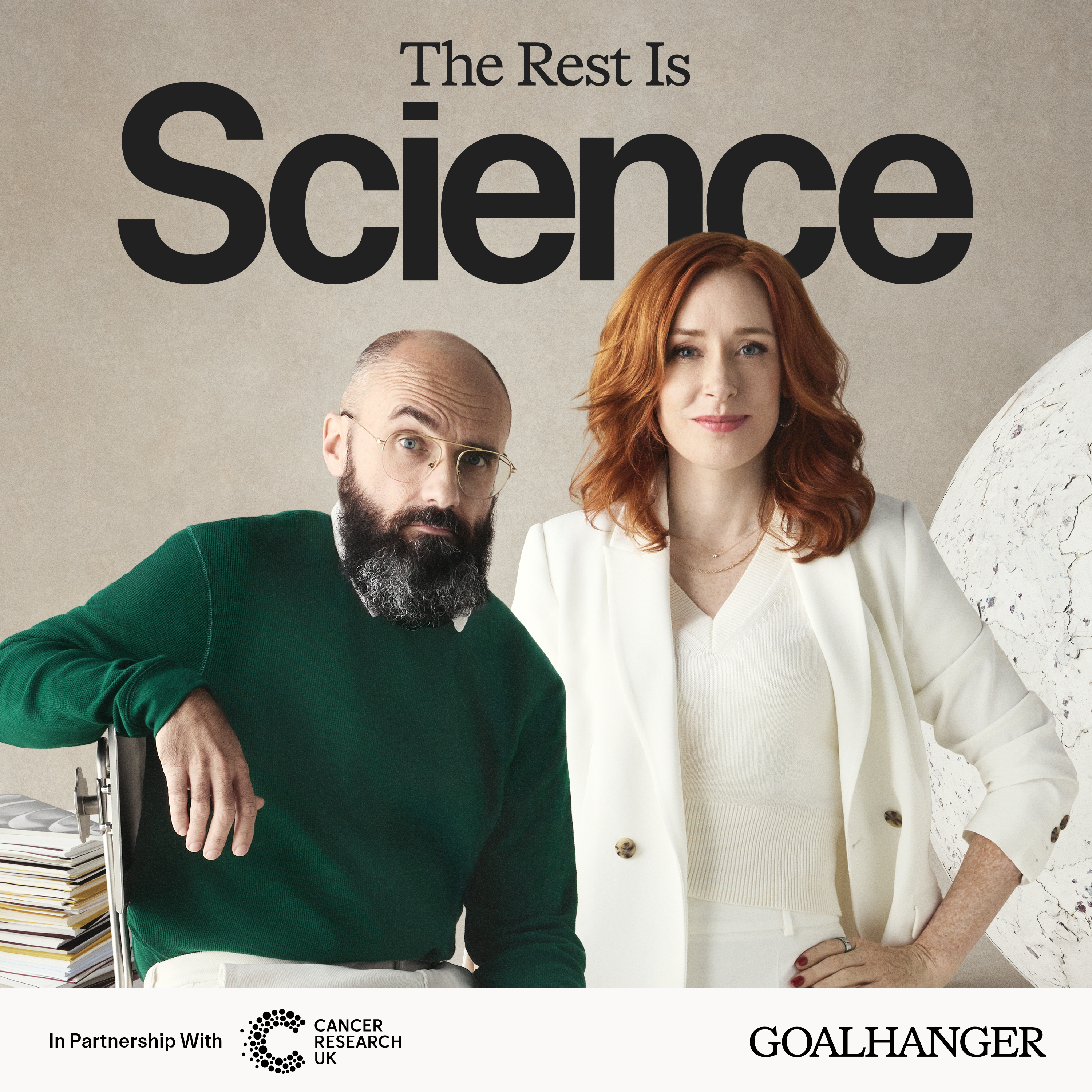
- The Rest Is Science
- Why Does Evolution Keep Inventing Mind Control?
In short
How and why evolution repeatedly produces “mind control” via parasites—organisms that alter host behavior to complete their life cycles—plus how parasites get into hosts and the evidence for early parasitism.
Guests
No guests. Hosts are Michael Stevens and Hannah Fry.
Guest backgrounds (hosts)
Michael Stevens is a science communicator (The Rest is Science). Hannah Fry is a science communicator and mathematician.
Key claims
- Parasites “reinvent mind control” because once inside another organism, the host’s existing biology and behaviors become resources.
- Mind control often works by hijacking hormones or brain chemistry (e.g., rabies; spongy moth caterpillar via viral gene egt).
- Parasites are hard to evolve because they must access hosts, evade defenses, harm minimally, reproduce, and reach the next host.
Notable examples
- Trichogramma evanescens wasps parasitize clothes moth eggs (50th of an inch long).
- Hairworms (up to 30 cm) manipulate crickets to seek water.
- Oldest parasite evidence: 512-million-year-old shelled fossils with tube-like parasites.
- Hookworms penetrate skin, travel via bloodstream to lungs, then throat to intestine.
- Toxoplasma gondii: cat-litter parasite alters rats’ attraction to cat urine; pregnancy risk noted.
Written by AI. May contain mistakes.
Chapters
0:45
Introducing Trichogramma Evanescens
Hannah shares her experience with parasitic wasps in her home.
“And then when they arrive in the post, they've got this little label on them saying live cargo.”
4:38
Additional Sponsorship Messages
Brief promotional messages from various sponsors.
“Whether you're living abroad, paying someone overseas or just trying to manage your money across borders, you want a fair exchange rate, an easy transfer and no surprises along the way.”
5:26
The Hair Worm and Its Lifecycle
Michael describes the fascinating lifecycle of the hair worm.
6:03
The Hair Worm and Its Lifecycle
Michael describes the fascinating lifecycle of the hair worm.
“It can help you with practically anything on the web, like restoring a vintage motorcycle from a 50-page restoration block, or finally break down that long article you've had open for weeks.”
8:11
Mind Control in Nature
Discussion on how parasites manipulate their hosts for survival.
“Yeah, that probably is about 30 centimeters long.”
11:34
The Oldest Evidence of Parasites
Exploration of the oldest fossil evidence of parasites in history.
“So these are, you are, you are as ever, Michael, you are nailing every single one of the, of the areas that I wanted to chat to you about a little bit more.”
14:00
Parasites and Their Relationships
Explore the complex interactions between parasites and their hosts, including definitions and examples of parasitism, mutualism, and commensalism.
“using the clam to sort of direct all the food in and then sort of parasitically just hoofing up anything that comes by that's kind of good and juicy and tasty not doing any of the work just taking all of the credit.”
23:33
How Parasites Invade Hosts
Discover the various strategies parasites use to bypass host defenses and establish themselves within their hosts.
“But are there viruses that aren't parasitic in any way?”
28:00
The Intriguing World of Parasites
Learn how parasites utilize host organisms and other creatures for survival.
“But the point about that though is that what the butterfly has done is it's not only a parasite in the sense of it's sort of parasitically borrowing the flesh of a mammal to raise its young.”
31:14
Behavioral Manipulation by Parasites
Explore how parasites change the behavior of their hosts for their own benefit.
“But the point is that you can have another organism put you in your host, or you can get in through the host's existing holes.”
Show all 15 chapters
34:25
The Science of Behavioral Changes
Discover the mechanisms behind how parasites influence host behavior and physiology.
“Now, the thing is, you sort of mentioned this right at the beginning about how, when you eat sugar, you become a slightly different person.”
37:36
The Caterpillar and Its Parasite
Understand the specific case of a caterpillar that is controlled by a parasite and its life cycle.
“Now, when these hormones rise in the caterpillar, the caterpillar changes state.”
41:30
Mind Control and Free Will
Examine the implications of parasites on the concept of free will and identity.
“However, the cricket which is infected is no better at finding water when it's sort of masked off than otherwise.”
42:09
The Nature of Identity and Memory
Explore the complexities of identity, memory, and the interplay of our biological components.
“Like, how can you say that this is like a distinct entity, it's distinct organism when, I mean, in our bodies, right?”
46:34
The Fascinating World of Toxoplasmosis
Learn about the parasite Toxoplasmosis and its surprising effects on behavior.
“Should we finish up with my favorite parasite?”

Ask about this episode
Get the gist, explore an idea or ask about something said.
 Claude
On The Rest Is Science, what are the key points of this episode?
Searching your listeningTranscript
Automatic transcript. May contain errors.
0:00Hello and welcome to The Rest is Science. I'm Michael Stevens.
0:04Hannah Fry: And I'm Hannah Fry. Today, Michael, I thought I'd introduce you to my new housemates. I've got them right here. There's 6 ,000 of them. Oh. They are all teeny tiny little assassins. That's what I've invited in to live with me. They are known as Trichogramma evanescens. Oh, I've heard they're cute. Here they are. They all live in here. and they are a parasitic wasp that I have willingly and lovingly invited into my home. Okay, so hold on. You're holding up a white bag that's all sealed up. Are they like freeze-dried? Their little eggs are in here. They're all... Oh, they're eggs. Okay, so I've got a lot of questions.
0:46Hannah Fry: Okay, go on. First of all, parasitic to what? To humans? No, to clothes moths. oh no kidding so can you get these first how does it work so you've got a bunch of parasitic wasp eggs do you just sprinkle them all over your clothes no you like it comes in a little sachet like this and then you pop this in the bottom of the wardrobe and then the all of the little wasps will emerge they're teeny teeny tiny by the way like they're so small you can't even really see them you won't feel like your house is full of wasps oh no we're not talking about yellow jackets here you know this isn't like all of a sudden you're eating jam and there's a swarm around you no yeah this is like mini mini mini mini mini little things um and uh they emerge so you sort of pop this inside your wardrobe they emerge from the packet they go off they do their thing and then very soon a few weeks uh all the all the moss are gone it's great i've done this i've done this is like the second or third round that i've done over many years oh okay and it's worked every time, but you do need to periodically re-wasp your home.
1:53Hannah Fry: And then when they arrive in the post, they've got this little label on them saying live cargo. Wow. Yeah. Do you want to see a picture of what they look like? Hang on. Yeah. When they're up close. They've got these golden yellow bodies, wings and bright red eyes. Yeah, they're pretty, aren't they? They're really pretty. Oh, and they are tiny. They're only a 50th of an inch long, which means they're like half a millimeter long. That is smaller than I imagined. Like that is a dot. That is a point bug. Right. Totally. I mean, even the moth eggs that they're going into are, I mean, like the size of a full stop on a sentence.
2:37Hannah Fry: Right. The thing is, right. So they're very effective. They're really effective, these things. I'm a big fan of them. But also, and I say this as their employer, they are sort of unimaginative in the way that they are parasitic across another species. They want the body, they want sort of the body of the moth egg. They go in and they eat it and then they leave and then they don't really have a lot of vision. I think that's what I'm saying here because if you're going to be a parasite, there's some pretty big parasites to live up to here and these parasitic wasps are, they're kind of low down on the pecking order of what potentially parasites can do.
3:15Hannah Fry: Because there are other parasites that manage to not just get into the egg and eat it and then leave, but properly get into the body of the other creature. So this summer, I was on holiday in France.
3:31Hannah Fry: This episode is brought to you by Cancer Research UK. We know that DNA holds a lot of information, but here's a way to visualize it. If we encoded all the movies ever made in all of history into DNA, that clump of DNA would be smaller than a sugar cube. It is packed with data. And so Cancer Research UK scientists are analyzing cancer DNA to understand what makes every cancer different. They're even searching through what was once considered genetic junk. That's because uncovering these differences could lead to more personalized and precise ways to prevent, detect and treat the disease. Over the last 50 years, Cancer Research UK's work has helped to double cancer survival in the UK.
4:15Hannah Fry: And today it's continuing to save and improve lives around the world. For more information about Cancer Research UK, their research, breakthroughs and how you can support them, visit cancerresearchuk.org slash rest is science. Hi, this is Gary Lineker from Goalhangers. The rest is football. This episode is brought to you by WISE. It's only when you start moving money between currencies that you really think about the exchange rate, the fee and what might be hidden away in the small print. Whether you're living abroad, paying someone overseas or just trying to manage your money across borders, you want a fair exchange rate, an easy transfer and no surprises along the way.
4:56Hannah Fry: WISE keeps things simple. Wise is a smart way to move the currencies you need around the globe. It works in more than 160 countries and with over 40 currencies. Most transfers arrive instantly. Wise uses the mid-market exchange rate, like the one you see on Google, with no markups or hidden fees. So when money needs to move, you can see the rate, know the fee and get on with it. Join millions saving billions on hidden fees by downloading the Wise app today. Be smart, get wise, T's and C's apply.
5:55Sell your car today on Carvana.com. Pickup fees may apply. This episode is brought to you by Google Chrome. You think you know a browser, but Gemini and Chrome? That's new. It can help you with practically anything on the web, like restoring a vintage motorcycle from a 50-page restoration block, or finally break down that long article you've had open for weeks. Gemini and Chrome is here for it. Ready to make anything online make sense? There's no place like Chrome. Check responses set up required. Compatibility and availability varies 18+.
6:30Hannah Fry: and there was um there was a cricket in my sister's bathroom so she uh she got the cricket she trapped it in a glass and then she uh used the side of the glass to squish the cricket right look we're not proud of it but we kill insects sometimes okay anyway as she did that She got her comeuppance because as she squished the side of the glass against the cricket's body, out of the cricket emerged this horrific long worm that was living inside of the body of this cricket. I'm not sure I want to open this WhatsApp image you just sent me. Do you know what? I was preparing for this, right? I was preparing for this, for chatting to you while I was eating my lunch.
7:21Hannah Fry: And I had to stop eating my lunch because it was just a bit too much. Wow. Okay. I am looking at the picture and that is a very long worm. Isn't it? It's very out of focus, but still I can see the general shape of the parasite and the cricket. So this is called, it's called a hair worm. They can grow up to 30 centimeters long. And they do this inside of a cricket. Wait, how long is your hair? Your hair is probably about 30 centimeters long. Maybe longer. Might be a bit longer, but yeah, probably. About that, yeah, yeah, there you go. That's like a monster hair worm. Millions of them all over your head.
8:09Hannah Fry: Isn't that horrific? Isn't that horrific, that idea? Yeah, that probably is about 30 centimeters long. Oh, gosh. Anyway, these things, these worms, they breed in water. And so what happens is they deliberately sort of go in water and they're breeding in water. And then they get eaten by little bugs that live in the water. Fine. They're happy with that. They're cool with that. And then those bugs in turn get eaten by crickets. That is where they're like, right, I'm happy. I'm where I want to be. They kind of grow bigger and bigger and bigger They change the behaviour of the cricket So the cricket ends up making a beeline For like ponds, you know, like lakes, rivers, whatever Dives in, at which point, boom This worm emerges from the body of the cricket Back in to restart its life cycle all over again Does the cricket survive?
9:07Sometimes
9:08Hannah Fry: sometimes it does sometimes it does yeah i'm i'm gonna say not every time and also i don't think that the um i don't think that the worm particularly is that fussed about whether it um whether it manages to make it or not but here is the thing okay so these are two examples of where one species life cycle totally depends on the other and with the hair worm it's one where essentially evolution has come up with mind control. Here's my question for today. Okay. How on earth, how on earth and why on earth can it possibly be the case that one organism ends up linking their evolution to another in this parasitic way?
9:57Hannah Fry: That's what I'm going to do today. Okay. Cause it is, it is completely wild. Yeah. I love that. I wrote that down, the hair worm, because I love when behavior is changed by a parasite because it really brings in deeper questions about identity and desire and want. I don't know if crickets have them, but look, maybe we'll wind up going this far today. If I eat a whole bunch of sugar, I feel different and the sugar isn't alive, but it changes who I am. It's in a way a parasite that is controlling my mind. It's changing how I think and react. And that's to say nothing for medicines and drugs. Do you remember that fun idea about, did we domesticate wheat or did wheat domesticate us?
10:45Yeah.
10:45Hannah Fry: Because if you think about it, if you were wheat and you were like, we want to take over the world. So what we're going to do is we're going to trick another species into mowing down large ecosystems into growing us, into breeding us, into making us one of the most abundant plants on the entire planet. You know, there's sort of a perspective shift right there, right? I know. And while we're this perspective shifted, I can also bring up the old chestnut that our entire species, or let me rephrase this, that humans themselves are kind of just a machine built by DNA to make more DNA. So who's in charge here?
11:32Hannah Fry: Right. Who is ultimately in charge? Okay. So these are, you are, you are as ever, Michael, you are nailing every single one of the, of the areas that I wanted to chat to you about a little bit more. The first thing though, where I want to start is I want to start with the oldest evidence of parasites. So, okay. It's really difficult when you're looking in the fossil record to be absolutely sure that you've spotted a parasite. But the oldest sort of confirmed evidence that we have of it is 512 million years ago. So this is, you know, this is predating the dinosaurs by 300 million years. Okay. This is like literally at the point where life starts to get complex.
12:12Hannah Fry: Yeah. The complex life starts to emerge. It looks like there were parasites. Okay. So this is in 2020. There's researchers in Northwest University in China. and they have got these fossils that are these animals that have two shells so a little bit like a clam these are called neobolus uh wulong quingenesis it's gonna be a lot of me saying latin words in this um excellent my favorite kind of episode exactly i think it is for everybody okay so you got a little picture um that i've just sent you there the main animal here that you're looking at, the kind of clam, is it's got a soft animal inside of this hard shell, but it's also got this tentacle that creates a water current to help suck in food and particles.
12:59Hannah Fry: Okay. So it's like, it's sort of, it's changing the fluid dynamics to get water in. So let me describe these pictures I'm looking at. I'm looking at like a fossil in kind of an orangish rock of what just looks like a seashell, but it does have some like globs, some tubular globs that are radiating out from the edges. And then I've also been sent a cartoon of what they may have looked like alive and they look like clams, like a classic clam shape, but they've got these tubes, maybe four or five of them or more, um, uh, radiating across their shells with little like feathery things coming out of them.
13:38Hannah Fry: Right. Exactly. So you've got, so the clam has got a little tentacle that's like waving around in the water and helping to direct flow into the clam so it can eat and then the little tubes those are your parasites so they are growing on the side of this hard shell oh they aren't part of the clam correct they are all there like hoovering up using the clam to sort of direct all the food in and then sort of parasitically just hoofing up anything that comes by that's kind of good and juicy and tasty not doing any of the work just taking all of the credit. That's essentially what those guys are doing.
14:13That makes it makes a lot of sense that that would be one of the earliest forms of parasitism. Because if you've got a clam that's just like its feelers are directing flows of water to concentrate food near its mouth, quote unquote, then sure, other organisms are going to want to live there.
14:32Hannah Fry: Yeah, I'm going to get me some of that. Thank you. And hey, why don't I just clamp onto the shell? Yeah, this is my home. exactly so the thing that's the thing that's really interesting about these ones so on on the one hand they're not that interesting because they're living on the outside of the shell right these are not parasites that have managed to penetrate the body of the organism it's it's it's sort of attacking oh and so living on the outside what makes them parasites then we know that they're parasites the reason why we are sure that they are parasites is because two reasons First, all of the tubes, they face the same direction.
15:11Hannah Fry: They're towards the incoming food. So you can be sure that they're stealing the food, basically, from this clam. And the second thing is they took a bunch of measurements. They've got loads and loads and loads of these. They took all these measurements of the size of the shells. And those that didn't have any tubes were bigger overall. And those that had loads and loads of tubes were much smaller, much weaker. So it's this host parasite relationship. It wasn't a symbiotic relationship where they both lived their best life together. The parasites really were harming the host. Exactly. Which reminds me of one of my favorite definitions of a parasite, which is that it's a predator that kills its prey in units of less than one.
15:55It doesn't just kill and eat the whole thing. It just sits there and says, your life is going to be less. it's going to be you're going to be hungrier and you're going to grow less and that's that's my
16:07Hannah Fry: modus operandi right totally because that is the definition it's where because you do get these these relationships these symbiotic relationships as you described where you have two species that are very very closely interwoven with one another there's something called uh commensalism which is where one creature benefits and the other creature just doesn't really like it doesn't really affect them at all. So it's sort of like a plus zero, right? If you're sort of keeping score. Good for one, indifferent for the other. So this might be things like the little mites that live in your eyebrows, right?
16:41Hannah Fry: There's mutualism where both receive the benefits. This is like plus plus. Gut bacteria fall into this category, although the relationship does vary quite massively between different species. But broadly speaking, we are much better off that we have so much bacteria living inside of our gut. And they also are much better off that they're living inside of our gut than they would be otherwise. Parasitism is where it's a plus minus, where one of them is definitely benefiting and the other one is definitely being harmed. You know, I thought of those face mites as soon as you said commensalism. I'm going to go ahead and reveal a cool little fact that I've been saving for a future Vsauce video right now.
17:23and it's that you can easily find them by putting a piece of sellotape or scotch tape on your face and then covering it in darkness. They come out when it's dark and they'll get stuck on the tape. Okay, so like put a bag over your head or go in a dark room. Take off the tape and look at it under a microscope and you can just find these guys. But here's what's cool. They hide in our pores and in our skin face down, okay? Which means their butts are up, which means that almost all of us are buttheads. When you look at someone's face, you are seeing one human face and thousands of bug butts.
18:02Hannah Fry: Michael, you honestly are one of a kind. Absolutely. How your mind works, I will never. I'm endlessly jealous of it. It's not my mind, Hannah. It's reality. We got to face up. We got to butt up to the reality of what we are. Just a whole plethora of bug butts. but these bites don't bother us and they don't bother us either it's a it's a plus for them and a nothing a zero for us right exactly and the other thing about those those bugs is that they're living on the surface of our skins i mean they're sort of burrowing into our pores and things but they're but they're not like penetrating um our you know our skin properly and and finding the first parasite that has managed to do that is it's difficult right so there is um there's another example this is another clam like creature around the same time this is called lina sonia i think look i'm sorry if you are related to lina sonia if this is uh one of your favorite clams um i'm really sorry for the way i'm pronouncing this but i'm giving it a good go so this one is from from 520 million years ago and this one also has a worm but the worm is inside that sort of mantle cavity right inside the shell of this clam oh the only thing is you do find them but you can't be sure it's a parasite because you just don't have the same evidence in it as the the other example but we do know right that like basically as soon as complex life emerged some dudes were trying to sort of get in through the back door get into other dudes and like take whatever the hell that they could get you can't blame them can't blame them but you know what it is it is so rare being able to do this, being able to successfully get into another creature's body and make that your sort of domain where you live is so rare and so hard.
19:55Hannah Fry: So in 2016, two scientists, Sarah Wiseman and Arman Kuris, they went through the entire animal kingdom looking for every occasion where parasitism, parasites basically, had independently evolved. Okay. So we're not talking about how many parasites there are in total we're talking about moments when some creature worked out that this was a good strategy on its own right on its own right the first time that it did it and they found at least 223 times yeah incredibly rare it's delicate because not only do you need to uh successfully not be repelled by the host you also need to not harm the host because that's your home while you're in it yeah and then i mean you're you're getting to my list here right this is this is what you got to this is why it's so hard you've got you've got to find a host you've got to gain access to it you've got to survive its defenses you've got to steal enough resources to keep it alive while you reproduce and then somehow you've got to get your offspring into the next host i mean that is that's crazy hard my goodness it's crazy hard because the other thing is you've got that list right get into a host gain access to it survivors defenses steal enough resources to reproduce then get into another host if you fail on any of them it's game over you know it's sort of the end of the experiment um you've got to you've got to successfully manage every single one of that those sort of check boxes but if you do manage to do it if you manage to be a parasite the prize oh my god michael it is extraordinary this is like it's worth the squeeze this is sun lit uplands this is worth a squeeze this is utopic okay because your host does all the work for you you know it finds your food it digests it for you it ends up sort of making all your complicated molecules for you it keeps you at the right temperature so so the prize is pretty great Well, maybe I should try this.
22:01Hannah Fry: Okay, right. Here's a question of how on earth do you get in? And how on earth does this work? And why on earth does this keep happening? I'm going to come to it after the break.
22:27from a 50-page restoration block, or finally break down that long article you've had open for weeks. Gemini and Chrome is here for it. Ready to make anything online make sense? There's no place like Chrome. Check responses set up required, compatibility and availability varies 18+. From athletic stuff like a full-court pickup game, swish, to athletic-ish stuff like a half-mile stroll. Get those steps in. Head to Sierra or Sierra.com for the brands you want at the prices that let you do it all. From athletic to athletic-ish, Sierra's got it.
22:58Hannah Fry: This episode is brought to you by Indeed. You're ready to level up your business, but the pressure to find the right person to make that happen is intense. Indeed Sponsored Jobs can help carry the load. It boosts your job post to help it reach quality talent fast. Cut through the chaos with Indeed Sponsored Jobs. Get a$75 sponsored job credit at indeed.com slash podcast. Terms and conditions apply. Hiring now? Then this is a job for Indeed Sponsored Jobs.
23:33Hannah Fry: all right we're talking about how parasites manage to get in and this is tricky this is i think in many ways this is this is the trickiest part because from a parasite's point of view the body is is sort of built as a fortress you know your your skin is waterproof it's like armor you've got mucus that traps things you've got stomachs that are full of acid with you know enzymes that are supposed to dismantle biological material and even if you manage to get through all of that there is this you know mobile security force in your immune system that is its entire job is to like hunt down things that are not you and then go in and kill them and so there are a few different ways that parasites have worked out how to get around all of those defenses the first is that uh you can kind of hitch a ride on another creature to make a hole for you so this is a virus rather than a parasite although although it is a sort of parasitic virus right ah okay i go on because yeah i made a note about like should we consider a virus a parasite does a parasite have to be its own living organism because that's debatable with viruses i personally think they should fall on the life spectrum.
24:50But are there viruses that aren't parasitic in any way?
24:54Hannah Fry: Or are they all? No, no, they're all because they're all parasitic. Because the thing is, is that for a virus to reproduce itself, it has to hijack the sort of the function of a cell in order to reproduce. And so by definition, it's getting inside of its host, the host might be a single cell rather than a larger individual. But yes, all viruses are parasites, but not all parasites are viruses. So I guess with this whole mind control thing, I mean, there are examples, I'll give you one in a second, of where viruses end up changing people's behavior. But I guess overall the mind control thing, I'm talking about more complex organisms.
25:33Hannah Fry: Okay, one way that you can do this is you can get somebody else to make the hole for you. Oh, the hole in the host that you get to enter through climb on in and that is exactly what malaria does with mosquitoes so you have an infected mosquito and when it bites you it's piercing the skin right it's like literally ripping a hole in in the host and it deposits this plasmodium the parasite into your tissue but it doesn't always manage to get it straight into your bloodstream which is where the parasite wants to be so it just sort of dumps it into your skin and then these microscopic parasites start moving through the tissue until they enter a blood vessel.
26:11Hannah Fry: And then they're like, well, hey, free ride all the way over to the liver. But the mosquito is the thing that has done the difficult thing. The mosquito is the one that has dumped the parasite into the host where it wants to be. Malaria though, isn't even the most shameless example of this, even with mosquitoes. So there's something called a bot fly. Have you ever come across these? they're i've heard about it in moments when i'm looking up the grossest things i can imagine but i don't remember exactly what they do so you better tell me genuinely horrific okay so the the adult female botfly what she does she catches mosquitoes and then she glues her eggs onto its body oh and then she lets it go and then that mosquito goes off lands on a human or another mammal to drink their blood and then the bot fly larva they emerge and then they penetrate into the to the host skin um and then they sort of i mean it's absolutely disgusting they end up come breaking out later it's it's genuinely horrific anyway don't google it if it's late at night okay that's that's all i'm saying yeah right i didn't realize that the bot fly larva traveled to us on mosquitoes.
27:37Hannah Fry: Mm-hmm. Is that the only way they can get on you? I think the botfly doesn't really care about what it sticks it to. Right. It's just going to be a blood-sucking insect. Right. So it doesn't have to be a mosquito. And then the larva get inside whoever was bit by the mosquito and they've got some free food and they can come out later. When they're ready. Yeah. Horrifying isn't it? Horrifying. But the point about that though is that what the butterfly has done is it's not only a parasite in the sense of it's sort of parasitically borrowing the flesh of a mammal to raise its young. It's also borrowing the kind of delivery service of a mosquito to get into the host in the first place.
28:25Hannah Fry: Sort of it's outsourced its break in basically. So that's one way you can do it is you can kind of punch a hole or use another creature to punch a hole. The other way that you can get into a host is to use the door that the host already has, by which I mean our mouths. Yeah. Like what happens with the cricket and the hair worm. Yeah. Exactly. It eats something that has got the hair worm inside it, and that's how it sort of ends up getting in. So, by the way, I thought this back when you first mentioned this. The hair worm is like a turducken parasite. It's like, I'm going to get in a bug, and then that bug's going to get inside a cricket, and then I'm ready.
29:05And then I'm ready. I need two layers above me before I'm home.
29:08Hannah Fry: Well, I mean, same as the botfly. It's like, I'm going to get on a bug, and then that bug is going to take me to the host, and then, then, and then, right? Well, it's not quite turducken, because the mosquito doesn't get inside me. True. It just helps. Well, it sort of does. it punctures you but it does it's temporarily inside of me yeah yeah but it's not all wrapped up like a little turducken no true anyway if you if you're in charge of the scientific naming organizations clearly you gotta hire me because i've got taxonomy uh distinctions wait i would turducken is in like you put the duck inside the turkey you put a a duck inside it no sorry what or You put a chicken inside a duck inside a turkey.
29:52Hannah Fry: Amazing. Have you ever done it? No. It feels a little too cruel. It's like, I'm going to eat you, but I'm not going to rub your nose in it. I mean, every time you put egg on chicken, though. Yeah, like a chicken omelet. Sometimes I feel like maybe I'll keep them separate on the same way. It just sounds like there's going to be a lot of bones. That's what it sounds like to me. It's like to get to the meat that's in the middle. There's a lot of hacking. Yeah, well, you remove the bones when you do the wrapping. Yeah, you take out the bones. So you've just got the boneless. Like breast meat. Yeah, yeah.
30:29I don't think you even have to really separate the cuts of meat. You just debone it. Now it can be turned into like a meatball, an unground meatball, and shoved inside a larger unground meatball.
30:43Hannah Fry: Honestly, you Americans, you really are the absolute height of culinary excellence, aren't you? It can't just be an American thing, but it certainly today culturally is like an American thing. The Canadians' epic mealtime did their whole like seven layers where they started with a small bird and went all the way up to a whole hog roast. And this is where we went while talking about parasites. I'm just looking at pictures of them now. Can I just say no? You're looking at pictures of what? Turduckens. Turducken. Yeah. It's not a bot fly. And I've got the same response to both. But the point is that you can have another organism put you in your host, or you can get in through the host's existing holes.
31:36Hannah Fry: You can. Exactly. Exactly. So like in their nose or in their mouth, whatever. Okay, the only other option, right, is if you are not being eaten or not being kind of punched in. The only other option is that you can, there are some parasites that just sort of dispense with all of that subtlety altogether and they just kind of go through you. Hookworms are an example of this. Hookworms are wild. Do you know how hookworms end up getting into your intestine? It's crazy. I think I've heard about something that just comes from the ground up through your bare feet. Exactly. exactly is that a hookworm that's a hookworm that's exactly it so you can walk on them and they penetrate your skin but then when they're inside they want to get to your intestine okay that's where they want to get but the moment they're in your foot let's first get into the bloodstream we'll go around the bloodstream until we get to the heart and it's like next stop here thank you very much i'll get off at the heart then when they get to the heart they're like okay we'll go through to the lung okay then when they're in the lung they're like right nearly there climb up the windpipe yes really get into the throat get swallowed get into the intestine oh I didn't know that I know I assume they took a faster route which is I guess like capillaries to bloodstream to intestines right but then you can't guarantee you're going to stop off at the intestine can you right but you're guaranteed to go to the heart you're guaranteed to go to the heart once you're there you can be like whoop let's go on the other loop thank you lungs like it's like changing on the circle line isn't it wow okay so that's how that's how they get in okay now i mean getting in you've got you've got all of these defenses that are going on so you have to and this is like you know these things are incredibly finely tuned to sneak on under the immune responses of various creatures and and yet they have managed to do this i mean you can sort of see how you can see the evolutionary pressure in that situation very easily that if you are trying some tactic that the immune system shuts down it's not going to go anywhere whereas if you manage to find something that's like a trick that happens to work you're way more likely to survive so um you know you can kind of see how that that pressure leads for them to be able to to duck under the radar of of these systems but then the problem is somehow or other you've got to get back out of your house and you get back into the next version, you know, and this is your sort of hair worm getting back into the water via the cricket.
34:11Hannah Fry: Okay. So it's like, get back to the place. By changing the cricket's behavior. Exactly. Because otherwise it's just in a very comfortable prison. It's sort of very nice, but it's got no, no way of, you know, sending on its offspring to, for the next generation. Now, the thing is, you sort of mentioned this right at the beginning about how, when you eat sugar, you become a slightly different person. Yeah. And actually you're totally right there are all kinds of things that change our behavior if you think about when you get flu um you get hot you get tired you want to lay down right you're you're doing that to yourself right your body is doing that to yourself to fight the virus right um when you eat sugar i mean how does sugar affect you to make it makes me really irritable it makes me really impatient and grumpy right okay and i think that's the thing is that like all of our bodies all biological bodies have they kind of come out of the box with these behavioral switches that are already fitted right and uh all the parasite has to do is to to learn what those switches are learn what molecules affect what behavior and then off you go easy peasy rabies is a really really good example of this so rabies is a virus rather than a parasite but what rabies does it to reach another animal it needs to get infected saliva into another animal's skin and so late into the infection it spreads into the salivary glands but it also ends up getting through the brain and makes certain creatures unusually excitable and aggressive so that they will bite another which means that the virus itself has like worked out how to sort out its own delivery mechanism by tweaking the behavior of an individual who ends up being infected by it.
36:04Well, yeah. And that's where things get really spooky because infecting the salivary glands so that you can pass to another organism through a bite feels really mechanical. But to then also infect the brain and make the animal more aggressive so it's more likely to bite, that seems to be changing something deeper about the identity and personality of the
36:28Hannah Fry: animal right completely you don't have a distinct end and beginning if you believe that your uh that your behavior that your your choices your actions your reactions are an entirely conscious decision that you're making every moment in time i'm really sorry to break it to you but quite a lot of this comes down to the molecules that are floating around in your body you know you see this with antidepressants that boost serotonin suddenly people are just actually way more you know way more relaxed, way less self-critical, all of these things. It's just a single molecule that's sort of driving your behaviour.
37:05Hannah Fry: And what happens is these parasites manage to work out how to tap into exactly those molecules. So I think the clearest illustration of this, I mean, it's all, by the way, phenomenally complex, right? And we don't always have clear mechanistic answers for this, then this, then this, then this, and that's how it all works, like rabies, for example. but there are some where we have like a much better idea of what exactly is going on and there's uh one called the spongy moth caterpillar right it's this really cute little caterpillar spends most of its day in the uh you know in the forest lower down you get them in germany and the germans have a word for what ends up happening to them they call it wipfel krankheit which means treetop disease walter krankheit wipfel krankheit okay that was my gcc german coming up thank you walter cronkite was a famous american news broadcaster was he okay yeah maybe it's named after him i think he was famously the one who famously announced the assassination of john f kennedy oh to the world through television yeah was he climbed up the top of a tree when he did it no he was on he was on television okay so what these what happens to these caterpillars is if they're infected by this parasite if these caterpillars are infected what they do is they they normally have this this life cycle where they spend most of their time down at the ground but they do have this life cycle where they'll climb up the tree a little bit and then they'll like go through molting and sort of emerge as a beautiful moth but when they're infected they do something really different instead of kind of hanging around down the ground they climb up the vegetation really really really really really high up in the treetops where they die and then when their bodies sort of disintegrate they end up like spilling this virus all over the leaves below for other caterpillars to come and get infected um now that is a really clear example of how the behavior of this caterpillar is directly impacted by the parasite that um that that has infected it But we know that this whole process is, we know that their malting process is controlled by this particular hormone, which is called 20E, 20 -hydroxydison.
39:32Hannah Fry: Okay. Now, when these hormones rise in the caterpillar, the caterpillar changes state. It stops feeding. It sort of shifts its development. It starts malting. this parasite carries a gene called egt and egt messes up that hormone it basically goes in adds a sugar to it makes it not work so it's like directly tapping into the hormone that is already working in the caterpillar's body and it's like very specific in the way that it's targeting it so in 2011 kelly hoover and colleagues they did this really beautiful experiment where they deleted egt from the virus they deleted that tiny little bit of the virus that that makes this enzyme that mucks up this protein or this hormone and they gave it to caterpillars and the caterpillars that were infected with this modified parasite still died They still didn't make it, but they don't climb up the top of the tree.
40:40Hannah Fry: They don't climb. And they also, there's other experiments that they've done. Oh, by the way, you put EGT back in, they start climbing again, right? So it's like it's definitely, that's definitely what it is. But they also have done these experiments with these caterpillars where they put them in vertical tubes and they put the light at the top. And when they're infected, the caterpillars are just climbing towards the light, climbing upwards. but if you put the light at the bottom the caterpillars will climb downwards so it's not that the caterpillar is like i must get to the top of this tree it's just like the caterpillar is like whoa just i'm heading towards the light towards light and it looks like the hair worm the horrible little thing that goes inside of a cricket is doing the same thing it's just changing the sensitivity of the cricket to light so not not like off you go off you go find some water However, the cricket which is infected is no better at finding water when it's sort of masked off than otherwise.
41:37Hannah Fry: It's not like it's sort of sensing it or smelling it or anything. Right. I was wondering how they found the water. Yeah. It's all about light. All about light. Huh. Man, you know, I've heard about these like, you know, zombie animals infected by mind controlling viruses, but I never really questioned how the virus or parasite does it. And when you get into how it happens, it just makes all living things seem so much more like elaborate chemical reactions, puppets being pulled by molecular strings. And the puppet master can be anyone who has the right molecules. Right. You have absolutely nailed it.
42:15Hannah Fry: You have completely nailed it. We are, and I think it raises all these questions about free will as well, about like how much are we actually defining and controlling our own behavior, as well as the question that you raised a moment ago of like, where do we begin and end, you know? Like, how can you say that this is like a distinct entity, it's distinct organism when, I mean, in our bodies, right? We barely exist without the bacteria that makes us up, the bug butts all over our faces. It's just really kind of, you know, difficult to draw the lines here and there. I know. I mean, we've drawn the lines.
42:52We say things like, oh, I'm freaking out. My amygdala is pumping out a bunch of cortisol. But that's me doing it because the amygdala is always part of my brain. But like, at what point do you say, nah, it's just along for the ride, along with all your other parts. And you're all getting along most of the time. but sometimes some of them act up and you change and you feel differently. But you are the fictitious combined behaviors of all these parts that found themselves together when you were born and are going to have to make the best of it.
43:27Hannah Fry: Honestly, the longer I live, the more I think that we are just a fictitious. Exactly as you've just described that this idea that you are a thing is just a fiction. It's the one that freaks me out the most lately is remembering things. When I go, oh yeah, what was that actor's name? And I can't think of it, but then it pops into my head. And I'm like, who the heck put that there? I mean, remembering is such a normal thing that we all do. And yet I don't get how it's happening. When I remember, okay, yesterday, what did I have for dinner? It somehow just shows up, usually as a visual. And I'm like, who in there did that?
44:08Who like went in, found the file and then put it into my awareness and was like, here's what you had. You had, I had Indian food. Okay. Like, how did that happen?
44:19Hannah Fry: There's an amazing bit of work, neuroscience work that was done about 10 years ago, maybe a little bit longer about how memory and imagination are the exact same parts of the brain that you think that you're recalling something from a filing cabinet, but actually you are creating a story with like, you get the kind of gist of it that gets filed away, but, um, but the rest of it, you're just, you're creating a story. Yeah. And you know, this is something I want to learn more about. It's that there's some kind of feeling we have, a feeling of, wow, my camera was really shaking when I was using my eraser.
44:57Look at that. I'm erasing a note on my notepad and it's like causing an earthquake. I've, I've been curious about, is there a name for the feeling of this is real? Cause like when things happen in my dream, I remember them later and I, I'm like, but that didn't really happen. And when I imagine something at a whole cloth, like a elephant that can fly, I'm aware that like that thought in my head is not real. But when I remember things from the past, I'm also creating a visual. But yet my body accepts that like, oh, no, no, this isn't like a daydream. This is like this really happened in the past.
45:36And it feels different. It has a different quality to it. So it almost feels like a memory and an imagination are the same thing with a different coat of lacquer on them so that we can distinguish, oh yeah, that's actually what happened yesterday versus that is what could have happened yesterday.
45:55Hannah Fry: You know? I want to do a proper dive into this. We should definitely put this on the list of future episodes because I want to learn more about it. I have a few friends who have worked on this in the past. I want to go and talk to them. I want to like get their take on it. Yeah, I want to do a full episode on it. Yeah, okay, we should do that because we have talked in the past about that feeling of not being able to discern, wait a second, has this happened before or did I just dream that it happened? So that's a place where that quality has eroded or it's malfunctioning and you can't quite remember, wait a second, did I dream that or did it happen?
46:31And I think that's fascinating that that can happen to us.
46:33Hannah Fry: Yeah, I totally agree. Should we finish up with my favorite parasite? Oh, please. Yeah. What is it? Everyone's got one, surely, by now. If you've survived this far through with our hairworms, our tapeworms and our hookworms. Okay, it's Toxoplasmosis gondii. Ooh, wait. So Toxoplasmosis, this is like the cat poop thing? It's, I think, one of the best stories of all time ever. So it's this eukaryotic parasite. So it's like a single cell. It's very happy when it is inside the gut of a cat. that's this that's where it wants to be and it comes out of the gut of the cat in the cat poop right the problem is now it's on the ground in cat poop and somehow it needs to get back into the gut of another cat and it does that by going via a rat so rats will eat anything they're like you know they're disgusting and so eventually it's kind of common that you know rats will eat a bit of cat litter.
47:35Hannah Fry: That's fine. So now it's inside of a rat and now toxic person has to get into a cat by getting the rat into a cat. And the way that it does this is, as we've seen before, by altering the behavior of the cat. So normally you take a rat, you take a rat into like a big wide open room and the rat is like, I'm not going in the middle. Thank you very much. I'm going to around the outside i'm i'm no fool i don't want to get eaten if you put cat urine in a big open space and a normal rat would be like absolutely no way thank you very much i'm not going anywhere near that if you put a rat into a room that has been infected by toxoposmosis with cat urine right in the middle of the room the rat is just like let me at him just makes an absolute beeline like runs straight over is like, yeah, give me the cat urine.
48:29Hannah Fry: Right. Loves it. Loves it. So the rat to put itself in danger so it will be more likely to be eaten by a rat. Precisely. Sorry, eaten by a cat. Precisely. But not only does it just say, oh, love the smell of cat urine, off I go. There is some evidence. Okay. This is like, I would say maybe a little bit controversial, sure but there is some evidence that the way that it works is it changes the same part of the rat's brain as sexual attraction so that actually what it's doing is making is making the rat sexually attracted to the cat okay is that not the best thing that you've ever i'm not actually sure how they ran that experiment i should have looked into a bit deeper but in my head i like to imagine that the rat is um sitting in an mri scanner and they're just showing it pictures of cats and it's like, that one is lovely.
49:21Hannah Fry: Yeah. And it's like reproductive pathways are lighting up like, oh yeah, that's my type, cats. This is what happens basically, irrespective of the precise mechanism that it has changed inside of the rat. Rats will launch themselves at cats if they have been infected with this particular parasite. The cat will eat the rat, gets back into the cat gut, happy days. Wow. The reason, by the way, this is the reason why you have to be extremely careful about handling cat poop or cat litter if you are pregnant because uh toxoplasmosis can end up having like really serious impact on your unborn baby but there is um there's all these studies on on because humans do get infected with it too right this is it's not an unusual thing we live very closely with cats um but there have been these studies now okay some of this gets a little bit on the you know a little bit dodgy right okay in terms of like reproducibility and whatever but but let me just tell you them anyway okay because some studies have found that if you're infected with toxoplasmosis it makes men enjoy the smell of cat way more let's see if we can reproduce this study i want to try it there was one study that looked at the connection between being infected with the parasite and being involved in a road traffic accident and found that you are about twice as likely to be involved.
50:44Hannah Fry: Now, look, I'm saying all of this stuff with a raised eyebrow, right? Because I think that we get into quite shaky science in terms of like the quality of these particular studies. Yeah, we're not really sure what kind of conclusions to really draw. Is there a cause here or is it just a correlation? Could be spurious, but it could also be that it really is affecting your cognition i mean it definitely affects the behavior i mean look parasites affect the behavior of their house they are perfectly capable of doing that it is not mechanistically impossible but but we just don't have like the hard the hard evidence here i think but i think going back to the the earlier point i mean that's my favorite parasite you can you can have that one pop it on your top trump cards um for parasites but but i think going back to your point here earlier richard dawkins had this idea of an extended phenotype that a gene's phenotype doesn't necessarily sort of end at the physical boundary of the creature the organism that's carrying it because if a parasite's gene reliably changes another animal's behavior in a way that helps the parasite to reproduce well then that other animal's behavior has become part of the of the parasites phenotype right of like the way that they sort of present themselves right and i think this ultimately sort of answer the question i start set out at the beginning of like why does evolution keep reinventing mind control it's it's partly because you can't think of like hard boundaries between organisms it's sort of it's much much much more nuanced than that but it's also that it's not because minds are easy to control necessarily it's more that once evolution has managed to put one organism inside of another, everything the host already knows and does, everything that the host already knows and does then becomes a potential resource for that organism, including its behavior.
52:44Hannah Fry: And that I think is the reason why mind control is on the table and it's why we do this show you guys have infected our minds and we wait who's the parasite here is it us or them i'm not sure i'm not sure i think we are i think it's us i think there's an argument both ways and so i think that the the true answer is that it's symbiotic we are both better together we certainly are we certainly are and we'll be better together later on this week as well with our usual episode of Phil Notes. But in the meantime, thank you very much for joining us. See you later.
53:31Sam's Club is the club for every holiday club. Guess who's joining the club this season? Walmart Plus. Yep. Sam's Club Plus membership now comes with Walmart Plus at no extra cost. Two memberships, one great price. Just$120 a year can save you time and over$700. Want to get in on the membership duo of the century? Visit samsclub.com. Come join us. Sam's Club. Annual plan only, auto renews, TNC apply, estimate based on average combined Walmart Plus and Sam's Club Plus savings among members of both for one plus year versus non-member or club member pricing slash fees. Excludes membership fees. See Walmart Plus terms and Sam's Club terms for more info.
54:01The real cost of a break-in isn't your valuables. It's the feeling that your home stopped being safe. SimpliSafe keeps danger away from your family with three layers of protection. One, smart AI cameras and live U.S.-based agents help stop intruders before they break in. Two, we sound the alarm at points of entry. Three, our agents request emergency response. Plans starting around$1 a day. Right now, get 70 % off your new system with professional monitoring at simplisafe.com slash Spotify. Outdoor deterrence plans start at$49.99 a month. Visit simplisafe.com slash licenses for alarm license information.
54:32Carhartt's Holiday Gift Guides were built in collaboration with the greatest gift giver of all time, Santa Claus himself Old St. Nick counts on Carhartt's durable gear to have his back through rain, sleep and snow on the biggest night of the year because when everyone's counting on you to do your job, what else would you wear to work? Tap the banner to grab a gift for every hardworking person on your holiday shopping list or head to carhartt.com
From the publisher
What if your thoughts, fears and desires weren't entirely your own? What if something living inside your body could change your behaviour, without you ever knowing?
Professor Hannah Fry and Michael Stevens (Vsauce) enter the disturbing world of parasites.
From worms that grow inside crickets to viruses that alter animal behaviour, they explore the extraordinary lengths parasites will go to in order to survive and reproduce.
But how does one organism evolve the ability to manipulate another?
How do parasites overcome the body's defences?
Along the way, Hannah and Michael investigate 500 million year old fossils, parasites that hitchhike on mosquitoes, the strange science of rabies and the unsettling relationship between cats, rats and a parasite that may even influence our own behaviour.
-------------------
For more information about Cancer Research UK, their research, breakthroughs and how you can support them, visit https://cancerresearchuk.org/restisscience
Cancer Research UK is a registered charity in England and Wales (1089464), Scotland (SC041666), the Isle of Man (1103) and Jersey (247). A company limited by guarantee. Registered company in England and Wales (4325234) and the Isle of Man (5713F). Registered address: 2 Redman Place, London, E20 1JQ.
-------------------
Find The Rest Is Science all over the internet by clicking here.
-------------------
Video Producer: Adam Thornton + Oli Oakley + Jack Meek
Animator: Sam Benson
Video & Social: Bex Tyrrell
Producer: Simona Rata + Lucy Lipscombe
Senior Producer: Lauren Armstrong-Carter
Chief Digital Officer: Samuel Oakley
Exec Producer: Neil Fearn
Learn more about your ad choices. Visit podcastchoices.com/adchoices
More from The Rest Is Science
All episodesWe use cookies.They keep VO running smoothly and help us improve it. Privacy policy