 Ask ChatGPT



The episode of The State of It focuses on two linked stories: Britain’s economic fate being shaped by Donald Trump’s next moves on Iran, and the political/legal fallout from Russell Brand’s rape trial. Guests are Stephen Swinford (political editor, The Times), Ben Reilly-Smith (political editor, The Sunday Times), and Laura Spruitt (deputy political editor, The Sunday Times).
Trump’s decision on escalating or ending the Iran war could quickly affect UK petrol prices, energy bills, inflation, and growth; Republicans are publicly blaming the Iran war for midterm losses; UK ministers are trying to give Trump an “off-ramp” via backchannels during a seven-week congressional gap.
OBR figures on inflation and GDP under an “orderly recovery” scenario; Burnham’s “rally around” remarks about ending the Iran war; and Brand KC Ian Winter Casey’s confrontational comments to journalist Roz Irwin. The episode also discusses calls to require judges to dispel “rape myths” to juries, referencing Clare Waxman and Mark Rowley, and suggests Andy Burnham may sympathize with that position.
Written by AI. May contain mistakes.
Discussion on how Trump's actions impact Britain's economy and political landscape.
“The first is a kind of discussion about political impotence.”
Exploration of the implications of the Iran war on UK politics and Trump's decisions.
“One is that the new Democrat controlled House and Senate do not come into sitting until January.”
Analysis of Andy Burnham's political strategies and challenges moving forward.
“It says that under an orderly recovery scenario, which is what it calls it, oil prices, which is currently around$90 a barrel, fall to$55 a barrel in the second quarter of 27.”
Discussion on the potential long-term plans for economic growth and political impacts.
“So whether you see more and more examples of Burnham doing what we've always known would be domestically more popular, which is be more publicly critical of Trump, that's a theme to watch in the coming months.”
Discussion on political strategies and the roadmap from present to future.
“A lot of that document, I think, is unpacking the one line, top line aim.”
Analysis of the trial of Russell Brand and the implications of recent events.
“Excite OSA is an FDA-cleared prescription-only device for primary snoring and mild obstructive sleep apnea.”
Explore how Labour's endorsement of Russell Brand in 2015 has come under scrutiny due to recent events.
“behaviour was pretty well known at the time.”

Get the gist, explore an idea or ask about something said.
 Claude
On The State of It, what are the key points of this episode?
Searching your listeningAutomatic transcript. May contain errors.
0:00At PwC, we optimize the systems that put your data to work so you can scale your AI from proof of concept to competitive edge and accelerate your tech evolution so you can redefine what's possible. From blueprint to breakthrough, we take you further with tech so you can outthink, outpace and outperform. PwC, so you can. PwC refers to the PwC network and or one or more of its member firms, each of which is a separate legal entity. This episode of The State of It is sponsored by Google. Google believes that if everyone has the skills to use AI to its full potential, the whole British economy will benefit.
0:42While other businesses are embracing AI to boost productivity, many tradespeople are yet to fully discover how AI can save them time and help them grow their business. As part of the AI Works for Britain programme, Google is helping tradespeople develop practical AI skills to simplify everyday tasks, deliver more for their customers and focus on what they do best. Visit grow.google.com to learn more about AI and find the right training resources for you. He talks a big game, but is he actually doing stuff that lives up to that? Is it all bark, not enough bite or all jam tomorrow? Welcome to The State of It, the political podcast from The Times and The Sunday Times.
1:25I'm Stephen Swinford, the political editor of The Times. I'm Ben Reilly-Smith, the political editor of The Sunday Times. I'm Laura Spruitt, the deputy political editor of The Sunday Times. This week we want to talk about two things. The first is a kind of discussion about political impotence. For everything Andy Burnham wants to do on the government, for everything he wants to change, for all the everyday fixes, ultimately much of Britain's economic fortunes are in the hands of a man 3 ,600 miles away in the White House. What Donald Trump does next is the only question that matters to this government and in Westminster more broadly.
1:59And we're going to tell you why that is and unpack some of the statistics behind it. And secondly, we want to talk about the Russell Brand trial. We'll talk about some of the political ramifications of that and a big scoop that our colleague Anna Mikhailova from Times Radio has got into tomorrow, which is all about what judges should tell juries about rape myths. And we also want to talk about the appalling treatment that was meted out to one of Ben and Lara's colleagues, Ros Irwin, by Russell Brand's KC. But let's let us start with Andy Burnham. So this was a prime minister that wanted to be all about the domestic.
2:33He wanted to be all about the cost of living. But actually what he is discovering is that we are a relatively small island nation that is uniquely exposed to world events and to world trade wins. and what we are seeing is that what Trump does next on Iran in the wake of the midterms is everything. In government and in number 10 they are talking about an opportunity and how they see this is that if Donald Trump stops the war on Iran because of the political pressure applied by J.D. Vance and world leaders everywhere that will have an immediate impact on Britain's economy. It will lead immediately almost immediately to lower prices at the pump.
3:10It will lead to lower energy bills. It will lead, if you look at the OBR's figures on this, to significantly higher growth. It will lead to significantly lower inflation. And it will all but reverse the kind of issue with living standards that is coming down the tracks next year. So all of the bad economic news that Andy Burnham faces would kind of disappear. And what Donald Trump does next matters. It seems to me it's a will he won't he moment. Is he going to escalate the war in Iran or not. What is so fascinating is now you've got Republicans, so people on Trump's own side, openly blaming his Iran folly for the mass defeat of Republicans at the midterms earlier this week.
3:51So you had J.D. Vance, Trump's number two, coming out and saying explicitly the war was to blame for the defeats. You have Ted Cruz, serial presidential hopeful and appearing to be gearing up for another run in the 2028 primaries coming out and saying we need to stop the iran war so it all becomes this question of whether what had been speculated for weeks on which was the military build up in the middle east was going to see trump once he got the other side of the midterms unchained by the need to hold his tongue uh before that election going again on iran or are you going to see this scenario where not just democrats but congressional republicans and indeed Republicans in the White House with Vance saying you cannot escalate this and push this much further.
4:39And again, we're watching remotely. There's a couple of elements to it. One is that the new Democrat controlled House and Senate do not come into sitting until January. So there is a kind of seven week gap when Trump is unchained by Congress. So then the question of kind of legacy, I guess. The president is always pretty free to act as they want on foreign policy matters. And we know one thing about Trump is he's so driven by the perception of his self and legacy and whether he's being slighted. So perhaps if he's desperate not to have been seen to have been defeated by the Iranians, then maybe he will go again.
5:19And it doesn't matter that Republicans are going to speak out. But the whole dynamic of American politics now after that hammering, you know, the biggest win by a party since the Democrats surge in the wake of Watergate and Richard Nixon's blunders there. Does that mean that now Republican candidates hoping to succeed Trump for the presidency not only have the freedom to, but actually have the political incentive to publicly be going after the Iran war on his record in the first term to put some distance? That's why you're beginning to see these voices breakaway. Interesting reports overnight about whether Marco Rubio, who's the Secretary of State, I don't know how correct they are, but certainly the Independent and then Bloomberg wrote reports that possibly he was thinking about whether he should step back from his position have been denied by him publicly.
6:07But you can see all Republicans now thinking, oh, I don't just need to be MAGA Trump 2.0. Maybe there is a path to the nomination by actually standing at arm's width from him. Yeah, it's really interesting. I think Trump himself has been surprisingly conciliatory in the wake of these results. I mean, saying initially that he would work with Democrats, you see the war had played something of a role in their defeat. But I think very importantly, not resiling from the war or its rationale entirely, defending it, saying he would do it again, which I think makes people trying to pass what he will do next quite confused.
6:40But it's interesting in Burnham's initial remarks that he was extremely explicit about the war and that needed to be a priority. And as we've spoken about on this programme before, the budget and the fact that John Healy, the Chancellor, was also very explicit about the impact the war had had on the public finances. Even Nigel Farage yesterday, having said that he was fearful about the possibility of escalation. So from the British perspective, I think everybody is completely united and on one page about the impact of the war on the public finances. But that just means we're waiting to see what's happening in America.
7:07What was that Burnham reaction quote? Because you're right, the next morning he said something like, oh, I hope we can now all rally around bringing down the cost of living, i.e. ending the Iran war. J.D. Vance and Burnham are singing from the same hymn sheet, right? And look, not surprisingly, let's do some of the stats. So a couple of stats from different places from the OBR and elsewhere this week. There are two paths for Burnham's premiership, right? One is we've already had one interest rate rise, another before Christmas. The Bank of England is warning that inflation, if the Iran war continues, hits 6.2 % in quarter three of 2027, right?
7:396%. 6.2%, right? So over it, really bad, really difficult, significant deterioration in living standards, mortgages jacked up really hard all round. And that was the path and is the path they've been staring down the barrel of that gun for some time. There is, however, another path and another route. The OBR has these figures. It says that under an orderly recovery scenario, which is what it calls it, oil prices, which is currently around$90 a barrel, fall to$55 a barrel in the second quarter of 27. inflation falls to 2.25 % in 2027 and GDP growth is 0.5 % higher. So that is how stark this is.
8:20That's like 50 % drop in the oil price almost. Like 30 % drop in inflation and growth increasing by half again. This is the stuff of a chancellor's dreams, right? If chancellors could do this, we had a budget which had almost no impact on growth, right? If chancellors could pull this kind of lever, that is how significant this decision is. And that matters because it's a decision that's not just politically advantageous to Burnham in Number 10. It makes a difference to the entire country, to energy bills, to how much it costs to fill up your car. And that is why in that building over there in Number 10, they are talking to me about what they see as an opportunity.
9:00The other thing they're saying is they have to be careful about how they go about it. There was a discussion about that in Downing Street. How hard do you go on Trump? And Lara, you pointed out, it's really interesting, Burnham is not going for Trump directly over the Iran war. And indeed, J.D. Vance is not naming Trump directly. What everyone is trying to do in the UK and the US and around Europe is give Trump an off-ramp. Because we all know he is one of the most capricious presidents in history. And Ben is bang on about this. He's got seven weeks. He can do whatever he wants for these seven weeks before he's constrained by Congress and the Senate.
9:38So expect a lot of stuff on the back channels, just trying to find a way to resolve this conflict and bring it to an end. Now, how you bring it to an end without giving huge amounts of money to Iran to make it stop kind of holding the world hostage over the Strait of Hornets. That's another question. But that is what minds and thoughts are turning to in the US, the UK and elsewhere now. Yeah, I mean, something I've been picking up this week as well is actually there's quite a mounting on ease with some of these Labour MPs about a fear that we will be soft on Iran in some form. And I just think it'll be interesting to see how Labour MPs respond if they push it ever so slightly too far with a conciliatory approach.
10:20I think some of those MPs are a bit nervous. I think the other flip side of it as well, to go back to what you were saying at the very beginning, Steve, is yes, this is fundamentally important. It's hard to underestimate how significant this is for the public finances and the future of the economy. Also, I think you mustn't underestimate how irrelevant Britain is in the conversation about whether Donald Trump starts to bomb Iran or not. He is not looking to Ed Miliband and Danny Burnham for the green light before he does this stuff. I mean, even with Keir Starmer, when he had a good working relationship, he was going ahead with bombing.
10:52He asked us to use Diego Garcia. We said no, he cracked on with the bombing anyway. And then totally fell out with the prime minister over our refusal. So there's a degree of helplessness that you've got to have sympathy with for Downing Street because they just cannot, they are not in charge of these events. And there are so few ways you can think about influencing that event, despite it being so fundamental. I do wonder in the domestic politics of it, we've seen Burnham take a more lukewarm stance on the Trump premiership compared to Starmer. And part of that, I think, was in those early months.
11:27Trump was all powerful. There was huge looming threats about the possibility he might pull the plug on NATO or strong arms Zelensky immediately into a deal. Two years on, those things haven't happened. And now you have his fading popularity. You've got this huge public snubbing from the American electorate who've kind of turned on him en masse. He's lost both houses of Congress. He can't run again for the presidency. So that lame duck phrase that is always used in American media, I think is just true. That's just when you don't have control of the Congress and you're coming to the end of your presidency.
12:02see, Burnham doesn't have to bend the knee in the same way that Starmer felt he had to around two years ago. So whether you see more and more examples of Burnham doing what we've always known would be domestically more popular, which is be more publicly critical of Trump, that's a theme to watch in the coming months. Yeah, and we're hosting the G20, so that's going to be a lot of stuff around that next year as well. But let's come to a connected issue. And Ben, I want to talk to you particularly about this, because you wrote some really interesting stuff on it at the weekend. What do you do if you're a prime minister who is constrained on all sides?
12:32The public finances are really tight. It's really difficult. You've had a budget which is limited in its impact on a fiscal scale. It's very hard to deliver meaningful growth. You've got big ambitions, but actually very few levers to pull. What do you do? Well, what you do is what Keir Starmer also recently did. You come up with a... You publish a document. Yeah, you come up with a 10-year plan. There are two views of this that are circulating. I'll put the case for defence cinema just just initially and you can rip it apart you guys over there. So he is going to come out with a 10-year plan which is his vision and this is being billed in number 10 as the antithesis of these everyday fixes.
13:10It's not about the small things, it's big solutions to the big problems. We are promised some kind of document that will come come with it. There is a huge amount of work going on. They've got management consultants working on it. They've got loads of think tanks feeding in on it. We're told that there are chunky policies in there. It's a big deal. It's a moment to kind of set out his vision and his stall in a way that he hasn't been able to so far. But there are obviously inherent limitations to that approach. Yeah, which is largely money and not having the money to do the radical things. I mean, what critics say when I did that piece on Andy Burnham's 100 Days and talked to him, but also talked to the three opposition leaders about their views on him all of them struck on essentially the same criticism which was he talks a good game talks a big game but is he actually doing stuff that lives up to that is it uh all uh hype you know all bark not enough bite or all jan tomorrow so you know he says i want to be the biggest force in british politics for years radical ripping up of neoliberalism actually he's making sure people don't play music loud on trains and making sure their salaries are known when they apply for jobs but this document is designed to be a counter to that but i think critics will say it's all very good telling us what you might do in 2036 what are you going to do now in 2026 to have a meaningful impact i think that critique is a bit unfair having talked to people some of the people who are putting together that document i think one of the things they're trying to do is to work out the route between what you were talking about the everyday fixes now and the point on the map where you want to be in 10 years time and actually show what was described to me as kind of layering up or stepping up uh so the example that was given to me was energy which we know a bit of in public uh what's being planned there this year remove vat from energy bills next year remove gas standing charges 2028 think about moving electric standing charges then you begin to get a bit more detail about uh public ownership of things in electricity so in various these areas trying to say look here is the plan with steps all along the way, not just tiny thing now, big thing in a decade's time.
15:18A lot of that document, I think, is unpacking the one line, top line aim. Shouldn't we have more public control of utilities and actually beginning to put in the hard work and making that more granular? And OK, what's that mean for the water century? What's that mean for Thames Water and things like that? Yeah, I mean, I think it was inevitable that they would end up having to delay it in some form, simply because it was very hard to see on the timescale and with the limited number of people that have been involved, quite how they get it over... They've delayed it till next year, haven't they, Lara?
15:49That's right. It's next year now. It might be next year. So Andy Burnham said on the plane back from Chogham, where he was this week, yeah, we might have to go along with it, basically. We'll have to see on that. Obviously, there's a wider conversation about does the public care if it's published in December or January, which I think is a legitimate question, But I think it speaks more to the fact that this is, as you say, a plan taking shape as it goes along. And there's been some lingering uncertainties about it. We've just spoken about all of these various cost of living pressures that are on people.
16:19Very, very hard to have a long termist approach to politics when there are such immediate pressures on people's living standards that people are looking to the government to address. And so when you are therefore promising this document that is supposed to contain all of these, you know, final and massive answers to the great abiding questions of our age, and it gets pushed further down the line, that therefore becomes a political problem for you. And it raises the stakes of the eventual moment when you do publish it. If it doesn't, if it isn't seen as this great defining document, then the disappointment will be all the more bitter, I think, particularly among Labour MPs.
16:51Yes. And it might be worth briefly saying the other interesting thing about it is it will be the clearest sense yet of what a Burnham manifesto will look like, this document, because it will spell out the Burnham vision in a depth and kind of more forensic nature than we've had so far. It does seem to me, you know, everybody's obsessed with election, early election, will there be or whenever. Every week that goes by, it feels to me like it's all geared up for the Burnham Downing Street to have their ducks in a row by the end of next year. So by the end of next year, you would have sorted where the defence spending money is coming from.
17:21You would have sorted what you're doing on social care because that review is coming back in the summer. You would have got your welfare reforms announced and hopefully legislated for and locked in. On Europe, you would have had a year of thinking about these big options and seeing where public sentiment is. And you can begin to kind of place your chip on one of them. So when Burnham says publicly, I'm not going to hold an election in the next 12 months, they'll still like that chimes with what we're seeing behind the scenes, which is come the end of 2027, and they want to know where they are on all these big topics.
17:49And then you can decide, do you go 28? Do you go 29? Right. We're going to head to the interval. When we come back, we're going to talk about Russell Brand, the political implications of that, and also the appalling treatment of one of your colleagues, Ben and Laura. So let's come back shortly. This episode of The State of It is sponsored by Google. Tradespeople are the backbone of the economy, yet many are faced with limited time and resources. But adopting AI has the potential to help these tradespeople grow their businesses and reach new customers. Google's AI Works for Britain programme is giving tradespeople skills to help them work more productively in new ways, from problem-solving on-site to visualising jobs before a project starts or creating effective marketing to win new customers.
18:34Visit grow.google.com to learn more about AI and find the right training resources for you. At PwC, we optimize the systems that put your data to work so you can scale your AI from proof of concept to competitive edge and accelerate your tech evolution so you can redefine what's possible. From blueprint to breakthrough, we take you further with tech so you can outthink, outpace, and outperform. PwC, so you can. PwC refers to the PwC network and or one or more of its member firms, each of which is a separate legal entity. Do you snore? Did somebody hand you a CPAP and did you quietly stop using it?
19:19The mask that never quite seals, the hose tugging at you every time you roll over, a machine sitting abandoned in a closet? Excite OSA works a different way. It treats a root cause instead of managing the noise and you use it while you're awake. 20 minutes a day, while the coffee brews, while you set your fantasy lineup. An FDA-cleared prescription device for primary snoring and mild obstructive sleep apnea. Then you go to bed like a person. Nothing strapped on, nothing plugged in. In clinical studies, 90 % of patients saw a reduction in snoring. No sleep study required. Prescribed online, shipped to your door.
20:02Excite OSA at springsleep.com slash sleep20. Code sleep20 for 20 % off. Excite OSA is an FDA-cleared prescription-only device for primary snoring and mild obstructive sleep apnea. Not for everyone. Individual results vary. Risks and benefits at springsleep.com.
20:31Welcome back to The State of It, the politics podcast from The Times and The Sunday Times. We want to talk to you a bit about Russell Brand and the story. Obviously, we've had the convictions, but something that happened in the wake of the convictions is drawing a lot of attention. So Ian Winter Casey was the barrister for Russell Brand, and he'd actually put forward a series of really controversial arguments in court about what had happened, which we're going to get onto in a minute. But he, as he emerged from the court, came out and confronted Roz Irwin, who's an absolutely brilliant journalist, works for the Sunday Times.
21:04And she was part of the team of the Times, the Sunday Times and Channel 4, which uncovered Russell Brand's behaviour in 2023. And he said to her, as he came out, he accosted her and said, I hope you are pleased with yourself. And she responded, I'm pleased justice has been done. And then Winter said to that, well, it wasn't. You fucked it. Congratulations. Now, that is pretty unprofessional behaviour. I think that's putting it mildly. Ros Owen is obviously an exceptional journalist and her journalism has been proven to be absolutely right to the criminal threshold. The stories that she ran and the rest of the teams ran at huge risk to themselves, at huge risk to the Sunday Times, the Times and Channel 4, have been proven irrevocably to be correct in the courts.
21:53And they carried huge legal risk. He might not like that outcome. But for a prominent KC to go up to a journalist who has just done her job and clearly done a very significant job in the public interest is pretty appalling. It was staggering. And, you know, we went in the courtroom, but reading those reports, I think the conversation happened right by all the other media reporters who then put it in their live blogs and it became public. It is quite shocking. As someone who hasn't done loads and loads of court reporting, you always assume that barristers are, you know, guns for hire, who put the best argument they can for the prosecution or defence.
22:28And then the jury come to their decision and then that's accepted as a fait accompli. So to hear someone say that in such a barbed way in a topic that is already incredibly heated, allegations of rape and sexual assault, was absolutely bemusing. And knowing Ros, I've only been here a couple of months, but she's an incredibly tenacious reporter. and reporting, we saw this in the Me Too era, reporting on those types of allegations, convincing people to have the bravery to speak up publicly, taking on the legal risk of being sued for libel if you get it wrong, is huge. And it took her years of reporting to get to the point that they could put what they put about Brandon, the public domain in 2023.
23:15And it has led in part to a conviction and he is now facing punishment for the crimes that he committed. And Tenace's reporting and Roz's reporting was a huge part of that. So I think as a paper, we're very proud of the reporting she's done and shocked by that scene that played out. Yeah, definitely. I mean, as you say, watching her in recent months as this case has gone on, just such a dedicated reporter who has approached this with such an amazing sensitivity that I think all of us have learned a great deal from. It should be said that the case, Casey has referred himself to the Bar Council as of Friday afternoon.
23:52Part of the reason we want to talk to that is there is a connected issue. So during the trial, the Casey advanced some highly contentious arguments in defence of Russell Brand. Laura, can you just give us a favour of that? Yeah, I think the one we just need to pick up is that Winter, the Casey, told the court that none of the complainants had resisted or screamed or even tried to leave. And that has been the source of a huge amount of criticism, particularly from Clare Waxman, who's the Victims Commissioner, who said that actually the Courts and Tribunals Bill is making its way through Parliament at the moment should include a legal duty requiring judges to issue directions to jury on rape myths.
24:28And actually Mark Rowley, of course, Britain's most senior police officer, basically referring to this, saying that actually it was getting very close to victim blaming that. And so it's prompted a broader conversation about rape myths during particular trials. And I think that, you know, many people know who have even, I would say, dimly been aware of reporting around these sensitive issues in recent years that you can very obviously be a victim of rape and not have screamed or resisted or tried to leave in the moment. We know that it is an incredibly natural thing for many people to completely freeze, to not tell people about it for a number of years.
25:06You know, just the sensitivity around these issues, I think, is so well embedded among certain parts of society now that that intervention, particularly from Winter, was pretty staggering. Just to put some of the context of it, to unpack it slightly for listeners. At the moment, it is up to the judge whether they, when they speak to the jury, dispel these rape myths, basically. so what they're not doing is they're not saying it's right or wrong but they are saying that you know victims react in different ways some people are immediately affected others it takes time to report it and just because they haven't reported it in time at the time doesn't mean that they have not been raped and that that is it's a clarifying point for juries more broadly so at the moment that is and there's 20 pages of guidance on this in all sorts of different scenarios in a big bundle of legal advice that the judges get and it's up to them whether they then tell juries that.
25:56It's left as a conditional basis basically. They don't have to do it. And Claire Waxman, the Victims Commission, is arguing they should. Mark Rowley is also arguing they should be legally compelled to tell juries to basically dispel rape myths and just explain that different victims are affected in different ways. That is the logic of this. What is interesting and what our colleague Anna Mikhailova has is a good scoop tonight. She's spoken to Andy Burnham, done an interview with him, and he has revealed that he has sympathies with Mark Rowley's position. He has said that women should not be put on trial when they give evidence in cases like these, when they're victims, when they've been raped, when they've been sexually assaulted.
26:39They shouldn't feel like they're being put on trial. And he's expressed a sympathial support for what Mark Rowley and the Victims Commissioner is saying. And that matters because it then ends up entering the political arena. It becomes about effectively legally binding the judiciary to act in a certain way. And that is always a really grey area of politics because the judiciary is obviously independent. Is this kind of Burnham expressing reflexive sympathies or will they actually do something about it? Well, it feels to me quite likely something might happen if the PM, the head of the Met and the Victims Commissioner all seem to be aligned on something.
27:15And it feels like there's a vehicle if this bill is still going through the Commons to put in an amendment. I suppose there's still early days. And look, this story is not going away. You know, Mark Rowley was saying today that more and more victims are going to come forward. There's obviously a political debate around, Ben and I reported on this back in the day, but in 2015, Russell Brand endorsed Ed Miliband, the Labour leader, and did a kind of like softball interview with him that was a critical part of Ed Miliband's campaign to, you know, to win the election at that time. Now, obviously it didn't work.
27:52And there is a genuine question about how much weight should be put on an interview from 2015. Because let's not forget that the issue with Russell Brand is that this behaviour was pretty well known at the time. Already today, you are seeing a renewed focus on Labour's embrace, and it was an embrace, of Russell Brand back in 2015. And obviously, things have changed now, and he's been convicted of rape. But there are going to be really significant questions about that period of the Labour Party. Well, it was certainly a deliberate embrace of Russell Brand in the 2015 election campaign. He had this platform, Trues, where he spoke quite loosely and engagingly on politics at times, and it was seen to have a young audience that Labour was trying to reach and what was quite a tight election with Cameron.
28:38I mean, I do think what Labour will say, understandably, is they did not know this guy was a rapist. They didn't know this guy was a sex offender. It was 11 years ago. But they did know he was highly promiscuous and that he had developed a reputation and career, in part, about being his promiscuity. That is a significant judgment failure. I remember reporting on Ed Billaband at the time when they did that and they were really excited by it. They were really pumped by this endorsement from Russell Brand and they made a big play of it and told us it was all, you know, they weren't used, the term mainstream media didn't exist as much then, but that was the gist of it.
29:15You know, got new avenues to appeal to new voters and they put it front and centre and that was clearly a huge misjudgment. And I say that both with the wisdom of hindsight, but I also say that with the wisdom of what we knew about Russell Brand at the time because he was a highly contentious figure. There is probably an argument, well, it certainly is because it's playing out, about whether that was a wise call. Politically, I'm not sure it's going to have a huge bite because I think a lot of the public will think, well, they only discovered the worst stuff now rather than 11 years ago. We'll see.
29:50I mean, opposition politicians will inevitably seize on it and it will get drawn up. And I imagine Ed Meliband will have to possibly say something about it at some point again. you'll have to confront it in an interview or in public and indeed Andy Burnham is probably going to have to say something about it so we'll see in coming days but there is always politics right it may sometimes seem unseemly in the immediate aftermath of a trial but it's a fact right and people have histories and they've said things and done things and they get opened up to scrutiny that's part of the broader political debate um but look so I think that brings this week's episode the state of it to a close um and thank you to everyone for listening and thank you also to our amazing producers.
30:28We have a full house today. Lara, could you give due credit to all of them? Yep. Thank you so much to Molly Guinness, Ewan Daughtry and Harry Kitson.
30:43This episode of The State of It is sponsored by Google. UK tradespeople contribute billions to the British economy, with many being sole traders like builders, plumbers and electricians. As part of its AI Works for Britain programme, Google is giving tradespeople AI skills to help them add new tools to their toolbox. From helping clients visualise a room design to creating email and social media marketing more easily, Google could help tradespeople work more efficiently and boost their business. Visit grow.google.com to learn more about AI and find the right training resources for you. At PwC, we optimize the systems that put your data to work so you can scale your AI from proof of concept to competitive edge and accelerate your tech evolution so you can redefine what's possible.
31:36From blueprint to breakthrough, we take you further with tech so you can outthink, outpace and outperform. PwC, so you can. PwC refers to the PwC network and or one or more of its member firms, each of which is a separate legal entity
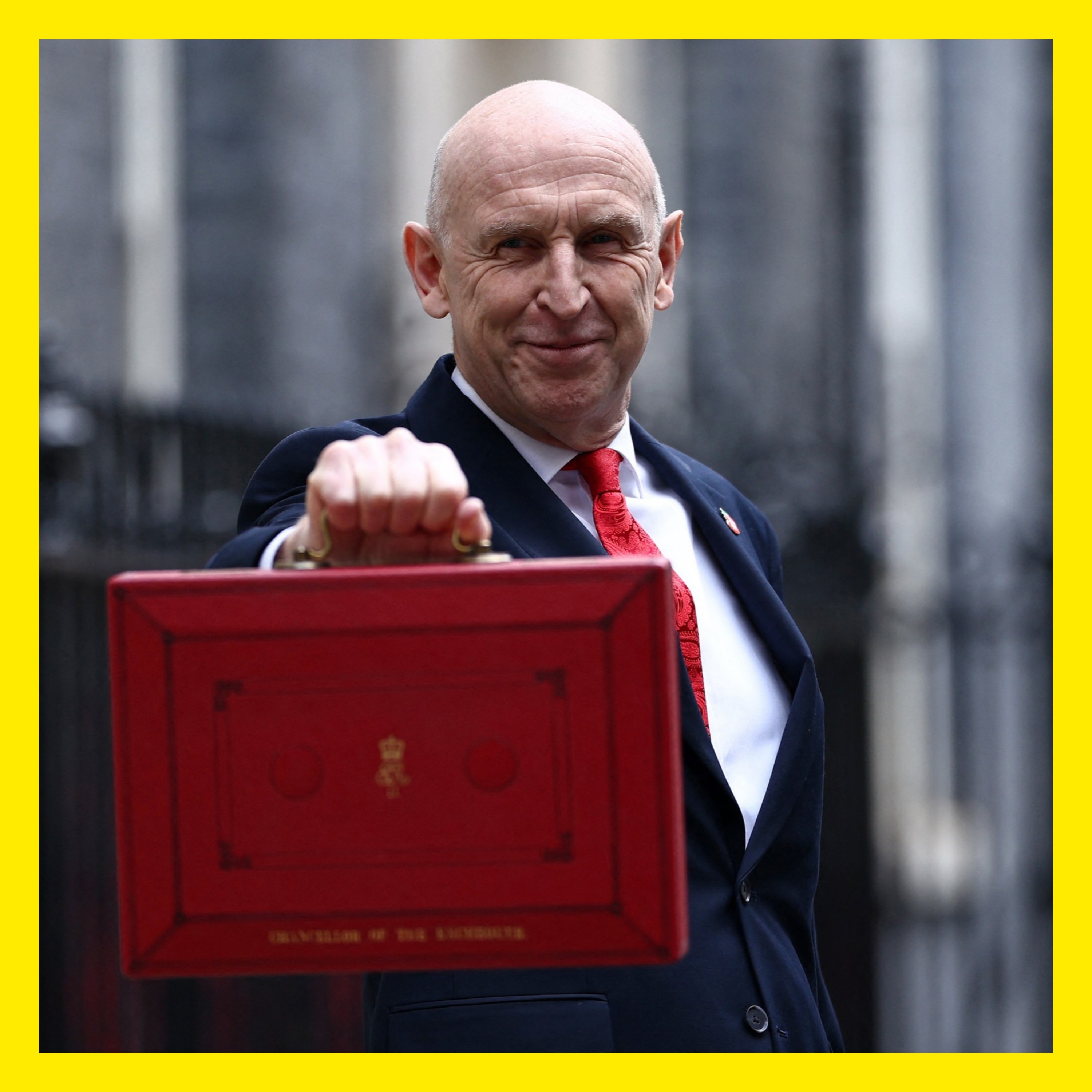
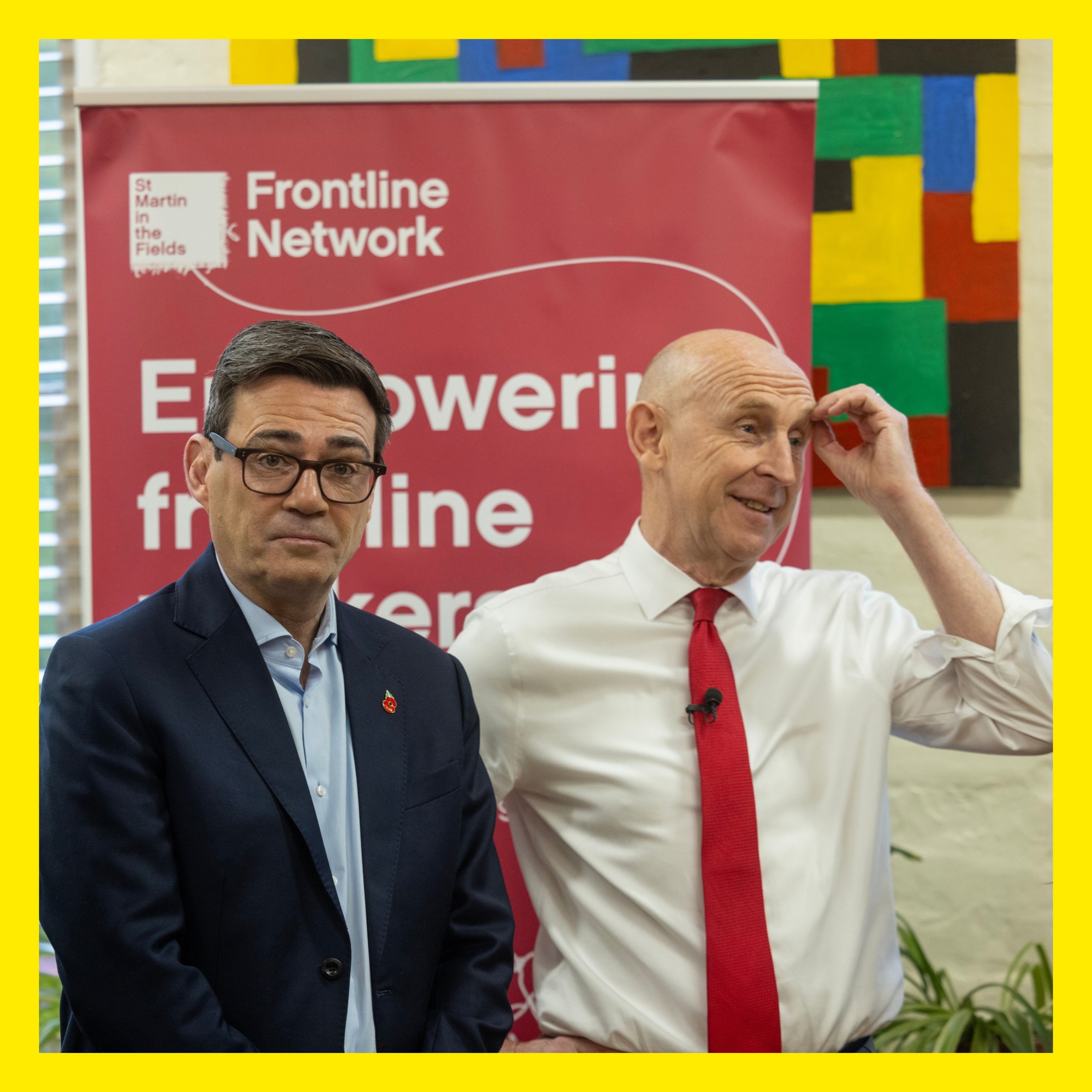
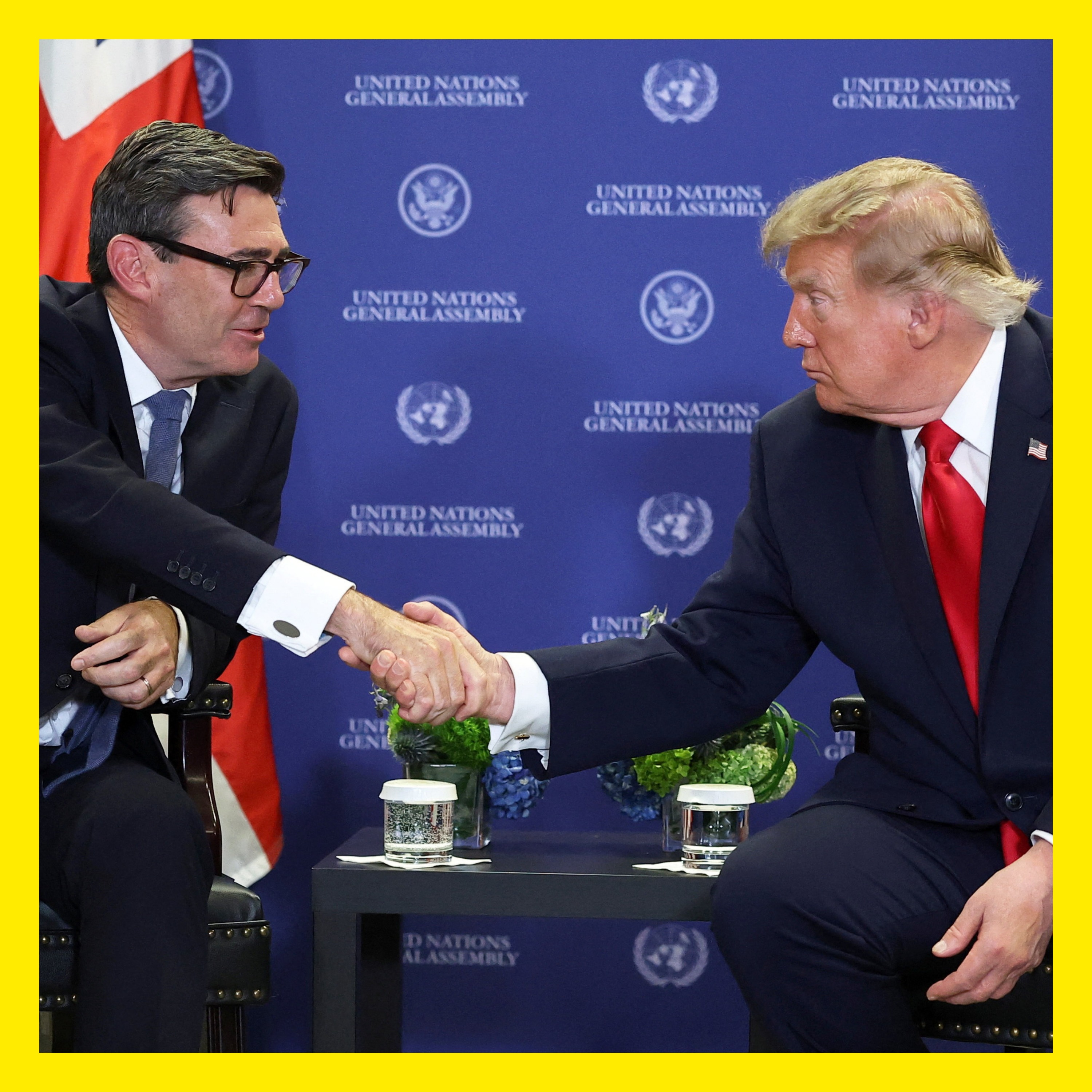
After Donald Trump took an almighty shellacking in the US midterms, Andy Burnham is left waiting to see what the American president does next. Will Trump escalate the war in Iran or find a way out? The difference could mean the difference between soaring inflation and higher energy bills, or falling oil prices, stronger growth and relief for households. With Britain largely powerless to influence the decision, Westminster is watching Washington closely.
Meanwhile, Russell Brand’s conviction has reopened questions about Labour’s embrace of him in 2015. What are the political consequences for Ed Miliband and Andy Burnham? And could the controversy over the defence barrister’s arguments about rape myths lead to changes in how judges direct juries?
Steven Swinford, political editor, The Times
Ben Riley-Smith, political editor, The Sunday Times
Lara Spirit, deputy political editor, The Sunday Times
Producers: Euan Dawtrey, Harry Kitson
Executive producer: Molly Guinness
Picture: Getty Images
This podcast was brought to you thanks to subscribers of The Times and The Sunday Times. To enjoy unlimited digital access to all our journalism subscribe here.
Hosted on Acast. See acast.com/privacy for more information.