Ask ChatGPT


 The State of It
28 Oct 2026 · 33m · 16 chapters
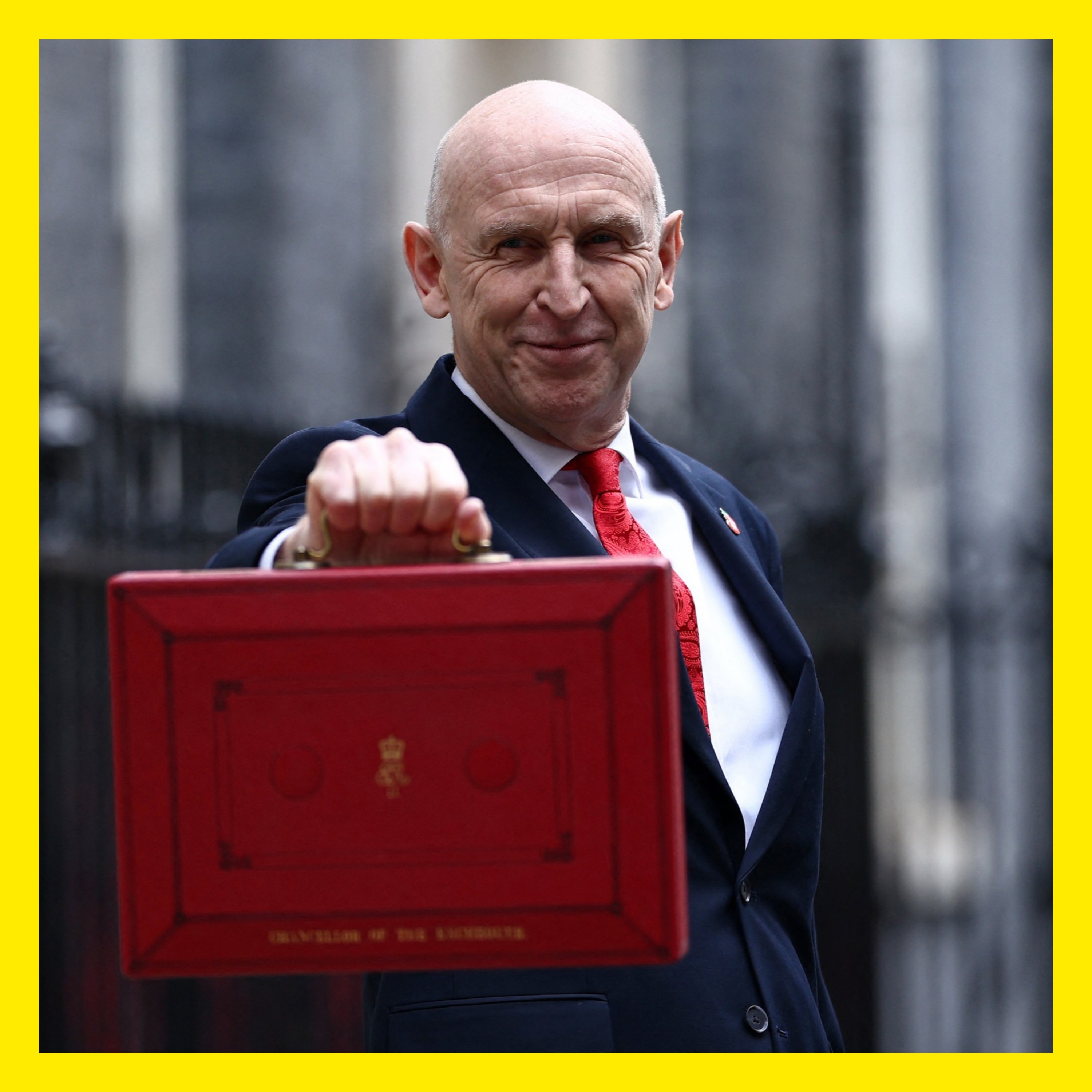
A post-budget discussion of John Healey’s first UK budget, framed as a “Bronski Beat” retreat from big decisions. Hosts argue it’s a small “tax and spend” budget with limited near-term impact, postponing major welfare, defence, and social-care funding questions. They stress bleak OBR forecasts, rising borrowing costs, stealth taxes, and a looming January energy-bills crunch (projected to £2,400, plus a £100 cash handout and bank-tax changes). Key claims include: fiscal headroom is thin and could be wiped out by economic shocks; defence spending targets (3% of GDP by 2030) lack funding; capital spending cuts are politically likely but not fully specified; the budget contains many small tax measures (98 in the Red Book) that could unravel.
None. The episode features hosts Steven Swinford, Patrick Maguire, Ben Riley-Smith, and Lara Spirit (Times/Sunday Times).
“Bronski B budget” phrase; landlord and saver tax rates; founder relief for entrepreneurs; devolution of business rates/income tax; AI/data-centre package; Rosebank/Jackdaw oil-drilling slip; Nancy Pelosi at PMQs.
Written by AI. May contain mistakes.
Discussing current global economic issues impacting the UK.
“What we face today are global economic storms.”
In-depth discussion of John Healy's first budget and its implications.
“It's a relatively small budget on tax and spend.”
Exploring the political ramifications and reactions to the budget announcements.
“And in that sense, some of the biggest decisions he made or alluded to are not going to be answered today.”
Discussing potential economic challenges and impacts on the budget's effectiveness.
“And we literally know the size between spring and autumn was 12 billion.”
Examining defense spending commitments and the complexity of budget measures.
“We haven't really yet had the judgment from, you know, the major economists who will go through all of these figures and measures line by line and tell us exactly what they think.”
Analyzing planned cuts and their implications on capital spending and public services.
“increase in spending if you talk through an institute fiscal study so that is either whopping great tax rises or whopping great spending cuts and you can tell the OBR has looked at this statement and is puzzled by it.”
Discussing rising energy costs and governmental measures to alleviate financial burdens.
“Actually, they're going to have to go further, as Steve says, and find the money to fund defence.”
Discussion on the alarming rise in energy bills and the government's cash handout response.
“unemployment is up and taxes are at record levels.”
Exploration of the political challenges and implications of the current budget decisions.
“and obviously there'll be a big task ahead to explain the political rationale for this.”
A critical analysis of the budget and its alignment with government priorities.
“But because, of course, the sensitive point on these energy bills, as you as you say, is due to come in a semi-immediate crunch point.”
Discussion on the radical rebalancing of fiscal power and its implications for local governance.
“It was all the stuff we're talking about, which is, look, fundamentally, is this not quite a small defensive budget?”
Analysis of the budget's focus on AI development and economic strategy.
“There was this whole data centers package essentially trying to avoid what's happened in America, the politicization of data centers.”
Exploration of how political narratives influence public perception of budget decisions.
“and I think this is so revealing of how this government works and the food chain within this government, what he would say is, yeah, but that was just the start.”
John Healy's strategic framing of external factors causing political pain.
“All of it sort of leads you towards thinking, well, maybe actually this rhetoric on the EU inevitably leads them to a closer relationship than the red lines currently permit because they'll need a lever to pull.”
Discussion on the complexities of addressing cost of living challenges within government.
“And that's the kind of what they're trying to the narrative that they're trying to frame here.”
Discussion on the implications of the new budget and potential early elections.
“Because she obviously was really opposed to Jack Dorr and eventually obviously signed it off.”

Get the gist, explore an idea or ask about something said.
 Claude
On The State of It, what are the key points of this episode?
Searching your listeningAutomatic transcript. May contain errors.
0:00Patrick Maguire: What we face today are global economic storms. Growth is down, borrowing is up, unemployment is up and taxes are at record levels. The OBR book is pretty bleak reading. I call it the Bronski Beat Budget. Run away, turn away, run away, turn away. And that's what he did.
0:19Welcome to The State of It, the political podcast from The Times and The Sunday Times. I'm Steven Swinford, the political editor of The Times. I'm Patrick Maguire, chief political commentator for The Times. I'm Ben Riley-Smith, the political editor of the Sunday Times. I'm Lara Spirit, the deputy political editor of the Sunday Times. And look, we're coming to you moments after John Healy has just delivered his first budget. And I think it is pretty much what we were expecting. It's a relatively small budget on tax and spend. And it's done what we also thought it might do. The accusations that this is a Manana budget that will postpone the big decisions are true.
0:53Big decisions on welfare, big decisions on defence spending are all in the distance. huge decisions that have huge implications for potential tax rises or spending cuts. So it's an event, a kind of do no harm budget, but, but, but there were some surprises. We have a tax rate on savers. We have a tax rate on landlords, which raise negligible amounts, but will relatively negligible amounts, but will generate some very negative headlines for the government. And then underlying all of it, you've got the tax burden, And as we said earlier this week on the show, rising to another record level, being driven by those stealth taxes, which are now at the heart of every budget that we cover.
1:34So, Patrick, do you want to start us off?
1:36Patrick Maguire: Yeah, I agree with your manana budget assessment, basically, Steve. In my piece that's just gone live on The Times, I coined a new phrase, which maybe says more about me than it was the Chancellor. I call it the Bronski B budget. Bronski B? You're going to have to explain that. Oh, Ben, you haven't wasted your youth listening to absolute 80s like I have. But we'll all remember Bronski Beat's famous song, Small Town Boy, the chorus of which says repetitively, run away, turn away, run away, turn away. And that's what he did from the biggest, most consequential decisions on welfare and defence. And what's interesting, you know, from the conversation I had with the Chancellor last week, from what the Chancellor said in the chamber today, this whole process, usually the most significant fiscal event of the year, is being subordinated to the Prime Minister's 10-year plan and the spending review.
2:29Patrick Maguire: And in that sense, some of the biggest decisions he made or alluded to are not going to be answered today. And you can't get away from that. I mean, there is, I hesitate to say plenty, but there's enough there for Labour MPs to take back to their constituencies and say, look, we're offering the breathing space. You know, one Treasury minister texted me from the chamber saying it's about short-term support and long-term change. There were points at which I thought this is basically just an energy announcement with ideas above its station, because the big consequential decisions were made on energy and the change in government policy in that direction, you know, moving away from renewables towards cheap rather than clean power.
3:09Patrick Maguire: But what I'm struggling to come up with is a narrative through line you know what is this sort of what is the binding agent that makes us into a coherent political whole there were lots of parallel narratives about re-industrialization about about cost of living about national security i don't necessarily think there was that one sentence that tied it all together and but maybe that's a problem or maybe i so often with this government it will just fall to andy burnham to to tell the story that was the very closest they got to a narrative was it's pretty tough and we'll do a little bit to make sure it's not quite as tough as it would be.
3:48Yeah, exactly. Which I think massively inspiring.
3:50Patrick Maguire: Well, which underlines the sort of curiosity at the heart of this budget, which is that it's liable to be completely blown up or blown off course. One of the first things a senior Labour person said to me was 15 billion pounds in headroom in the fiscal headroom he's got left is rainy day fund. The economy needs to take one wrong turn. And from what John Healy said to cabinet last week, the sobering lecture, one grim-faced minister was telling me about in the Strangers Bar last night. And what he said in the Chambers Day, what he repeats in the Chambers Day, i.e. we're facing not just global headwinds, but an economic storm.
4:22Patrick Maguire: It sounds like he does expect the economy to take one wrong turn. And where are we going to be then? And we literally know the size between spring and autumn was 12 billion. So they had 12 billion wiped out of the headroom over the last six months. So who knows why couldn't it be 15 billion? I mean, I agree with what you guys are saying. It feels small and it felt defensive. one way of, it felt to me the political imperative from the whole thing was to protect the burn and bounce. You've launched this premiership, you're a couple of months in, things seem to be going well, he seems to be connecting, Labour is being grabbed up.
4:54Whatever you do, do not have a third massive tax raising budget that's going to smash that around the head. So if you look at the figures, Rachel Reeves' first budget, 40 billion tax rate, second budget, 26 billion tax rate. This John more beer and then six billion in giveaways from spending uh i was actually listening to george osborne react to it he said it is it is the least consequential budget that i can remember in terms of tax and spend the amounts of money that they're raising and giving away are pretty small and then the other thing that was just defining the whole thing is the economic headwinds the storm that was the kind of metaphor that john healy used throughout i mean it looks really grim when you look at the economic numbers.
5:35Bleak. Growth down from 1.5 % to 1 % next year. Inflation's heading to 4%. Interest rates are going up, not down. People's living standards are now falling in the way they're meant to be rising when they made their predictions back in spring. So the next six months is going to be pretty grim. And the reality is there's only so much that you can do that. The most important person in this budget was Donald Trump. Is Donald Trump bombing Iran continuously, which has grabbed hold of Britain's public finances and turned them on their heads. So there is only so much they can do with that. Yeah, I mean, Donald Trump is a reason why actually the tail of this budget might be relatively short insofar as we don't know what the impact of that will be, like Steve says, with the 10-year plan and all of the other various challenges that are yet to come for Andy Burnham's government.
6:21It might mean that we're not actually talking about this budget for as long as we usually do. At the same time, in this very short window after the budget, We're still at the point where it hasn't quite matured enough that we can see what the settled opinion will be. We haven't really yet had the judgment from, you know, the major economists who will go through all of these figures and measures line by line and tell us exactly what they think. We've had initial reaction from the Institute for Fiscal Studies, which, you know, essentially says, well, it says a number of things, but broadly that it makes sense that the headroom took some bit of a hit given the rise in borrowing costs, but that many of these challenges are still yet to come.
6:55And we'll obviously hear more from them on Thursday, as we will from a number of other senior economists as well. I mean, I think it's interesting. It feels like a very small budget. The OBR saying the net impact of this is something like£1.3 billion, which is 0.02 % of GDP, which is really strikingly small. And yet, if you look at, Ben, when we were just sat in our office, we unfortunately, I think this speaks to how poor the clean out of our office has been in recent years. we have basically all of the OBR forecasts going back to 2011. And they are much more modest and slim volumes. And actually, the number of these tiny, pernickety policies that the OBR is scoring at this point is huge.
7:35And actually, if you read the criticisms that people have of the Treasury in particular, it is that we have a fiendishly complicated tax system, which we didn't do anything to simplify today. We just made it even more complicated again. And I think the big picture will include a judgment on that, which is that it is actually a really legitimate criticism of the way that we do politics in this country. And I think just looking at how tiny those little volumes were, even in some of those really massive budget years, it just made me think, funny that we're saying that this actually, you know, pretty massive and complicated budget is now insignificant.
8:07Let's break it down. Let's just do start on defence as a starter for 10. So I'm old enough to remember when chancellors, you know, the golden rule was don't make an unfunded spending pledge. We've got a whopper. we've had John Healy stand up and say that I will hit 3 % of GDP on defence spending in 2030 but I won't tell you how I'm going to get there I won't tell you how I'm going to fund that. It's just a target but as a target what does that mean that is equivalent to a 10 billion pound a year increase in spending if you talk through an institute fiscal study so that is either whopping great tax rises or whopping great spending cuts and you can tell the OBR has looked at this statement and is puzzled by it.
8:50It's basically pointing out, well, if you want to do this, it's going to mean massive cuts to unprotected departments, which is outside the NHS, outside defence and outside overseas aid spending.
9:01Patrick Maguire: And the Labour Party loves that, as we famously know. We're talking about schools. We're talking about council budgets. We're talking, you know, justice, crime, you name it. All of these things would be subject to huge cuts. And that's the one, there is a political issue here that in a way, John, I understand why he did it, because he's the guy that resigned over 3 % in 2030. It was there in black and white. He felt he had to do it. But having done it, the question is going to come back again and again and again. How are you going to pay for it, Chancellor? What are you going to do about that?
9:31And I think that will become a big political problem as we get into next year.
9:34Patrick Maguire: Yeah, West Street, I understand, is very chipper about the road to 3%, which you'd expect him to be, because he's not driving. That's the thing. he's not having to fill up the car. He's in the back. He's put the destination in an Uber and now he's just going for a nap. How can he be chipper about it? They haven't worked out where the money's coming from. But the Chancellor has got up and said you're having the money, by hook or by crook. Also remember, this was supposed to be the budget that we found out a great deal more about how that£4.7 billion black hole would be funded. And of course we do know that it's coming from an extra capital cut on these departmental budgets.
10:11I think it is really worth reflecting on that because I'm not sure it will get as much attention as it deserves. When this initial, you know, 10 billion of cuts was announced and it was going to come from capital budgets, one of the comments that people came back to and that Labour MPs mentioned to me was they said, look at what Rachel Reeves has said about capital spending before. When she has stood up in the Commons, she has said previous Conservative chancellors have cut capital spending because that's the easy thing to do. But it is not the pro-growth thing to do. And I'm not doing it. And that is the reflexive measure that this government reaches for now when it needs to make difficult cuts.
10:42It's to capital spending. And so it's really hard within the prism of them saying they care about growth to say, OK, well, the thing that you immediately reach for is to cut these capital budgets. And when you drill down into it and actually the budget does not do that today, we do not get these kind of specifics of exactly where this will come from. We know that, you know, there's been this efficiency drive between the Treasury and these various departments. But actually, these cuts are really painful for them. And they've been extremely controversial behind closed doors because actually for a number of these departments that are feeling very squeezed and who weren't offered more support than they might have expected today, it's going to be really difficult for them.
11:15And as Paul Johnson, the former Institute of Fiscal Studies director, wrote in The Times online, the website right now, currently penciled in as a real-time cut in public spending at the end of the decade. Not going to happen. And exactly, not going to happen because you'll never go into an election doing it. And it's very easy to say, oh, we'll cut something for four or five years time. But even next year, holding the line on the departmental budgets can be incredibly tough, gutting out by inflation. Actually, they're going to have to go further, as Steve says, and find the money to fund defence.
11:44Patrick Maguire: Which is the folly of the IMF. John Healy keeps coming back saying the IMF love us. The IMF say you've got a credible path to deficit reduction. Actually, that relies on suspending our disbelief and saying the Labour Party in the back end of this parliament is going to say, yeah, OK, let's have 2.6 % cuts. in real terms to departmental budgets, including frontline services. It's just not going to happen. It's the antithesis of Andy Burnham's politics. It is part of this wider problem with the whole budget process, which is you are required to say what you're going to be doing in five years' time.
12:14And every Tory and Labour Chancellor always says, oh, in five years' time, I'll get really tough on spending. Jeremy Hunt going into the election was pretending the kind of real spending terms increases were going to drop down to kind of below 1%. just it was kind of a tax trap for Labour because then they had to say if they wanted harder than that, where's the money going to come from? Can I flag two, because we're still speaking just three or four hours after the budget, two things that I think is worth watching. One is these small fiddly things. Ed Conway on Sky had this very good stat that I think there were 90 plus different measures.
12:4798. 98 different measures in the Red Book, which I think he said was a record, but also the average of all of them in terms of how much was either being given away or raised in tax. was the smallest average. So what does that mean? It's a very large number of small, fiddly things. And if you know one thing about budgets in the past, often they can unravel. The pasty tax, as it got dubbed for George Osborne, was not a huge frontline measure that everybody was talking about within hours. It was when you looked at the small print, they were raising a bit of money over here. And it meant kind of raiding the amount that pasties were being taxed.
13:22I just wonder on some of these, one tax we weren't expecting was an increase on what landlords are going to be paying. Is that going to be, certainly be controversial with landlords. Could that be questionable? The only other thing I was going to say is borrowing. Borrowing has increased. The decision to allow the fiscal headroom to reduce means you are borrowing more in the years to come. And this is a time when we've been talking a lot about global bond market sell-offs. We shouldn't be too exposed to the bond markets. Well, whether how they've used borrowing this budget It becomes a bit of a theme and a controversy is worth watching.
13:57There is a gift for the opposition here. You've got a situation where growth is down, borrowing is up, unemployment is up and taxes are at record levels. That is a total, the OBR book is pretty bleak reading. We should talk about another area of this project, the other big area, which is energy. Now, in government, there is genuine alarm about what is coming in January. At the moment, the projections keep ticking up. The latest ones suggest that energy bills are going to hit£2 ,400 over that, which is a 25 % increase in energy bills. Now, today, they have announced a£100 cash handout. They went further than we thought they would for all of those in council tax bands A to D.
14:38And that is not insignificant. It's a couple of billion. It's a lot of money. But by the same token, it won't really touch the sides. I mean, the maths, you can see it there, right? £100 off, you know, nearly£500 on. So that is the problem they're facing. Martin Lewis, the money-saving guru, was saying today they're going to have to come back in January. There's no way you can let the bills go up by that much because a lot of the people that are going to get hurt are Labour voters, people on low incomes. It's going to be very difficult. It's a really politically sensitive one for them and obviously there'll be a big task ahead to explain the political rationale for this.
15:16I spoke to James Nation, who is an advisor to Rishi Sunak, when he was Chancellor, of course, about this earlier. And he was saying, you know, presumably they've gone down this route to avoid the political difficulties of going down other routes where it would basically be welfare claimants who would be those more in line for this. It's because Warm Homes Discount is benefits claimant. They were looking at that at one point. Exactly. And yet this, of course, Steve, as you say, is not without political difficulty for them. So I think that will be a big thing. And one of the surprising things, this is something the IFS pointed out, is that we weren't expecting the tax on banks to be temporary.
15:49And yet it is. So that's another difficulty that they've got here, which is essentially the big message from Healy on energy was we're basically taking from the banks to help vulnerable people with their energy bills. I mean, essentially, and he did pretty much say that. And yet this is not something which is, you know, it seemed to be a long lasting problem because, of course, I mean, nobody knows it's uncertain. But because, of course, the sensitive point on these energy bills, as you as you say, is due to come in a semi-immediate crunch point. But I do think that adds another level of uncertainty to the government's fiscal plans that people will pour over in the next few days.
16:24Patrick Maguire: What is the best possible case for the defence of this budget politically that we can construct? Because for me, I think it would be he promised a budget for bloody minded entrepreneurs. And there was a big rabbit, a medium sized rabbit. Steve, you said there'd be a medium sized rabbit and there was a medium sized rabbit. Not covered in source at HB Source, I said yesterday. but probably in a posher sauce in Ali Ali Ali or something is that how you pronounce Ali Ali? Anyway Aioli Aioli I'm a horny handed son of toil we don't know we don't eat not swigging shrimps and oysters with you well no not yet not yet one day one day so yeah a rabbit covered in that you know for the founders relief on capital gains tax that was a pretty big deal for the founder community there were their tax relief for small business basically he did what he said he was going to do and there weren't any nasty surprises indeed the nasty surprises we're talking about are largely the OBR's grisly forecast for the future and beyond that I'm sort of politically brave in some respects the shift away from clean power to cheap power is quite bold by the standards of this era of labour politics but beyond that i'm sort of struggling to the best thing you can say about this budget is that he did broadly what little he said he was going to do and the political decisions he made none of them cut across the grain dramatically of what this government says it is i mean look the second order consequences may blow it up but it was all you know the political priorities of this government were there within the limited space they had i think is what i would say in defense to give a bit more defense to the treasury because after these uh big moments the budget all of us journos leave the commons gallery and there's a briefing right outside with the treasury team i put it to them that was a pretty small defensive budget all the stuff we've been talking about and and the reason it's amusing is because uh we have the situation where we question the treasury spokesman the head of the head you know very important person over there and ben out of nowhere at the end of this briefing just had this highly aggressive question ben can Can you repeat the question that you asked?
18:40It wasn't aggressive. Very nice man. It wasn't aggressive. It was all the stuff we're talking about, which is, look, fundamentally, is this not quite a small defensive budget? You haven't rebuilt the headroom. It's a couple of bill tax raise, a couple of bills spent. You haven't done massive welfare reform. You haven't spelled out how you're going to pay for 3 % defense spending. This is not the ripping up of 40 years of neoliberalism that Andy Burnham talked about. And they basically said, ooh, don't just look at tax and spend measures. And then to give their defense, because it's fair to say that, one thing they pointed to is devolution, which is something we've talked about.
19:10It's very hard for the average punter to get excited about it. But they said this is the most radical rebalancing of fiscal power in this country, which is essentially saying to mayors, actually, eventually they said you can keep all of your business rates, tax receipts you raise, spend them locally because you know what it's best to spend at. You know, you get the benefit if you've encouraged businesses to be there and also devolve some income tax receipts and you can borrow off that. They pointed to that thing. The other thing that is quite interesting and maybe has been a bit overlooked so far, there were quite a lot of moves to try and boost AI.
19:43There was this whole data centers package essentially trying to avoid what's happened in America, the politicization of data centers. You need them for AI. They take a lot of water and energy. They've become quite controversial in parts of America. Healy has put this package together saying, look, we'll kind of set a load of standards. You've got to protect the water. You've got to be kind of paying back into the community somehow. But as a result, you get what seemed to me essentially lose the planning laws to get to get building. So so kind of more of a focus on AI than certainly we saw in Healy or Andy Burnham's budget.
20:15So it's worth putting those points for the defence. Yeah, I mean, and also just in terms of perspective on being in the chamber, Nancy Pelosi, the former Speaker of the House in the US, was there for PMQs and was visibly having a wonderful time. But she didn't look like she was having an amazing time during the budget. I have to say.
20:35Patrick Maguire: Well, she must have thought that she left like fairly, not that soon in, but she didn't stay the course for the budget. Although I could slightly detect a smile across her lips when John Healy opened the budget with a reference to how damaging President Trump's war in I mean, he wasn't saying that, but you know, he was saying the global uncertainty created by it, we didn't back it the Tories wanted us to help out. I could slightly see that she was enjoying that, but I mean, it was compared, because you have this odd thing on a Wednesday of course on budget day where you have to have PMQs anyway which is always a bit of a odd affair and slightly low on energy but actually that proved to be quite high energy I did feel like the budget today even in the chamber was just quite low energy yeah exactly I was just thinking when we were recounting Ben's aggressive questioning of the treasury I also think it's pretty generous to call it a question well no but if Ben sorry it was it was getting the treasury to respond to the core narrative conclusion that is playing out publicly.
21:34Patrick Maguire: Well, if you gave your narrative conclusion to Andy Burnham, right, if you get a fifth interview, if you get a call back to Andy Burnham or any of us get a call back to see Andy Burnham again, and you put that to Andy Burnham, and I think this is so revealing of how this government works and the food chain within this government, what he would say is, yeah, but that was just the start. We've got the 10-year plan. And that, I think, that reveals everything. This was not, yes, this was the Chancellor's Day, but usually this is the main event in terms of the political economy the government is trying to shape and the vision it's trying to set out and its vision for the economy.
22:11Patrick Maguire: The whole structure of government has now changed. Who is shaping the political economy of this government? It is Andy Burnham, right? And, you know, John is, Keely is going round, he is the, what Traysman would call a snagger, right? He's like, actually, a cabinet minister last night said to me, I said, you know, do you think John is underrated? You know, this is going to be a low key budget. And the cabinet minister said to me, well, actually, I would compare their relationship to a captain and the first engineer to Captain Kirk and Scotty from Star Trek. Now, having actually, despite appearances, had something of a life as a teenager.
22:51Patrick Maguire: I never watched much Star Trek, but I'm led to believe I did some deep reading on Star Trek this morning. and Kirk was the idealist. He had grand visions. You know, he was like, let's go to that galaxy over there. But the Enterprise, you know, it was clapped out. They didn't know how to get there. You know, the thrusters weren't going to work and Scotty was dour and unfussy and deferential and loyal and he would always make it happen. And that's the relationship they have. And I think the mere sequencing and the relative importance of these two events, certainly in Andy Burnham's mind, when he answers that hypothetical question from you, Ben, will, I think it all reveals that.
23:28Patrick Maguire: I think that's one of the big lessons of today. And so, yeah, of course it's less consequential than it would be because that's the way this government works. And to spin off exactly what you're saying, it comes back to what we were saying in the last podcast, this thinking in real time, trying to work out where they need to land. This has ultimately only come three months into their premiership. Andy Burnham didn't have the whole summer to plan it all out. So it feels like the big moves they need to make, how are you getting the money for defence? how are you getting the money for social care quite how do you want to reform the welfare system and the way you can get it past the Labour PLP those are still open questions they're beginning to get their heads around and before they can kind of bank where they want to be on that and then make the public argument for stuff that's going to be quite controversial social care is going to involve increasing taxes in some form to pay for it this is a kind of let's just get through the budget and then we've got the 10 year plan we've done that thinking and then we've got the spending review and we can place our chips on the politics and I think this is also all very intriguing in terms of clearly, as another senior Labour figure said to me earlier, it's a budget that wants something to turn up, higher growth, a better outcome to the war in Iran than you might think.
24:34Patrick Maguire: All of it sort of leads you towards thinking, well, maybe actually this rhetoric on the EU inevitably leads them to a closer relationship than the red lines currently permit because they'll need a lever to pull. You know, they will need a growth. You're back to the place where, oh God, as someone left an extra two percentage points of GDP behind the sofa, oh, let's someone get Emily Thornberry's berry out and try it on for size. That's basically where we're at, I think. The other thing I want to just come back to is what Laura was saying about Nancy Pelosi enjoying the beginning of the speech.
25:04And the beginning of the speech was really important, because what John Healy was doing was framing the pain that is to come this winter. And he was essentially saying, it's not me, Garth, it's him. It's him in the White House. It's Donald Trump is the cause of this political pain, this war that we didn't want. It was a very overtly political thing. And he was basically a pile on Donald Trump at the top of the speech. And that is the political characters behind this budget. They are basically gambling that the public will understand that this is caused by external factors, notably the guy in the White House, you know, all those miles away, rather than by the actions of this government, which is on their side.
25:41And that's the kind of what they're trying to the narrative that they're trying to frame here. And it's going to be, as we've learned from experience and from previous prime ministers, that is really difficult to do because ultimately the public always blame the government of the day when things go bad but they are going to try it that language, that ratcheting up of language really stood out to me, Laura and I thought that was actually a very interesting moment Yeah, I mean it's kind of this like unavoidable, invidious choice that you have to make where you can't not make the cost of living the centrepiece of your government at this time and yet to make the cost of living the centrepiece of your government when it is something that you fundamentally cannot control at the moment just is a massive hostage to fortune and could well turn out terribly for you.
26:20But there's nothing you can do other than make voters feel like you understand the problem. I think one of the interesting things to watch over the coming weeks will just be where this politics of kind of small changes and the politics of trying and announcing these discrete measures actually goes. Because I think up until now, there's very much been a sense that, yes, it's been a successful strategy to, you know, announce that you don't want people to wear headphones on, you know, the tube anymore and the various other kind of small announcements on parking fines, for example, that actually a number of people have defended robustly by saying people do actually care about these things.
26:55But I think the idea in a number of Labour figures' minds that I've spoken to in recent days had kind of been that the budget wouldn't be an end point to that, but would give that some kind of wider coherence as a strategy and would kind of make those bigger decisions. And actually what it seems to be is that there have been a number of many, many, many discrete measures contained within this budget, which is kind of consistent with that broader strategy. And yet we're all sort of searching around for what the wider message of it is. And I think that is a risk. And yes, we do have the 10-year plan upcoming.
27:24We have the spending review. We have answers on welfare and defence spending. But one of the big, the maybe main abiding criticism made perhaps most frequently by our dear colleague Patrick was that someone wasn't able to tell a story. And that has been one of the great things that Labour MPs defend about Andy Burnham is that he's capable of it. But I think this is the big test. Can we talk about the best moment of the budget, which was John Healy's slip about Miatza van Bulla the Energy Secretary. I'm trying to remember the correct wording. He wanted to say thank you the Energy Secretary for approving Jack Dorr but he actually said opposing and the whole chamber roared with laughter She laughed as well, yeah.
28:00Because she obviously was really opposed to Jack Dorr and eventually obviously signed it off. And the whole debate is about whether she will approve Rosebank, which is the second more sea drilling project, more controversial because there's oil rather than gas. And Healy lets slip that the media reports that he supports going ahead. She is rather more reluctant, may well be on the money. Shall we just finish on, I'll take all of us or any of us on this. Early election, what do we think? Does this budget increase? So some people say, you look at the measures in this budget, they've extended fuel duty to July, the VAT cut on energy bills has been extended to July, early election's coming.
28:37What could possibly happen between now and then? That's the logic. I still think that given all of the pain that we're talking about coming in January, and I do think that the energy price cap in January is a horrendous moment for this government. And it's a proper big juggernaut political moment if they can't find a way to get bills down. So I think no to early elections still. But I know that the speculation is rough. Anyone else, please, Aunt. I think that looking at the forecast, you can see why an election before that period towards the end of it, where those spending, those implausible spending cuts are penciled in, would make it seem like it might happen.
29:14But I definitely think the key thing for me is that this government has not yet answered the key questions that it set itself. It's just it's completely unable yet to go to the electorate with answers on social care, on defence, on various other policies on which Andy Burnham has said he cares extremely deeply about. I think they that they need to give themselves the time and the space. And I mean, on welfare, especially to be able to go into an election against the Tories and against the Reform Party, who do have answers to these questions and think that these are really powerful political issues for them and be able to say what it is that you're doing.
29:46And you can't do that with the United Party at the moment because you haven't done the working. And the whole credibility, the whole case for John Healy in seeing this budget as a credible exercise was having faith that those other aspects of this government, on welfare, the Timbs and the Milburn review that are upcoming, on Baroness Casey's review, etc., are coming down the line and are going to answer those very big questions. If you go to the country before you've answered those, I just think it's politically insane. I think you've seen a bit of this kind of whispered and bumbling along this afternoon.
30:18I think the argument is, why was this budget so small? Or maybe it was so small, because in reality, it is so hard to raise any money to do anything, given the constraints of the manifesto that Andy Burnham has inherited. So you can't touch income tax, national insurance and BAT, and that would leave you fiddling around the edges. So I think that's why some people are looking at this budget and being like, well, clearly they've realized they can't break out of this tax log in a way that the public is going to wash with the public. And then you look at the spending review and you think, well, they somehow got to get all this money for defence.
30:53Possibly that's coming from cuts. They somehow got to at some point fund social care, which presumably is also coming from a tax rise. And maybe it's easier to bank this kind of goodwill feeling that is emerging with the Burnham Premiership. I'm personally not convinced that they're going to do that I asked Andy Burnham twice about this when I was interviewing him in this 100 Days project at the beginning, at the end he said look I can just assure you it's not going to happen he was similarly absolutely clear on Monday on broadcast interviews I think it'd be very hard to swallow his words in a month two months, three months time we also forgot Europe in that issue as well which obviously they've go on well I mean just adding to those things that they haven't answered as a Labour Party yet they would need to put in the manifesto some position on Europe and they fundamentally obviously do not know that yet It feels to me before today that we're lining up for a kind of end of 27 you know where they are, you know where they are in Europe you know where they are on social care, you know where they are on welfare that's got through, you know where they are on defence because you've done it in the spending review but some of that stuff is going to be quite unpalatable on the spending side of things
31:55Patrick Maguire: I'd say the only thing that militates in favour of an election, an early election is something we knew already which is you avoid those cuts in the second half of the parliament or having to confront Labour MPs with them But then you're back into a situation where, okay, you're basically going to the public and saying, please, please, can we raise your taxes? And maybe offset with a big bold offer on Europe for your progressives that that might, you know, take the edge off that slightly. I don't know. But right now, what would what would Labour's what would the campaign look like? Andy Burnham on a series of podcasts saying who remembers bus conductors?
32:27Patrick Maguire: That's basically like, you're right, Laurie, they do not have enough substance to take to the country. And it would be a solely negative campaign and a completely opportunistic campaign. And history tells us that the public do not like that and set themselves a different question, as Theresa May learned. And also the energy context, as you were saying before, Steve, you know, Ted Heath sought to blame the miners for their exploitation of the oil shock in 73, 74. He asked who governs Britain. They said, actually, Ted, not you. And that is always the risk, especially when he goes to an election in time of crisis.
33:05Right, I think that brings this week's episode to a close. Who would like to do... Laura, do you want to do the big thank you today? I would love to do the big thank you. Ewan and Harry and Molly. Thank you, that's a great honour. Thank you so much to Molly Guinness, Ewan Daughtry and Harry and Kitson.
John Healey’s first Budget is being dubbed the “Bronski Beat Budget”: a Chancellor running away from the big decisions on welfare and defence. With growth downgraded, energy bills set to soar and taxes at record highs, how much room for manoeuvre does he really have? And is this Burnham’s economy now, with the Chancellor merely keeping the engine running until the Prime Minister’s 10-year plan arrives?
Steven Swinford, political editor, The Times
Ben Riley-Smith, political editor, The Sunday Times
Patrick Maguire, chief political commentator, The Times
Lara Spirit, deputy political editor, The Sunday Times
Producers: Euan Dawtrey, Harry Kitson
Pictures: Getty Images
This podcast was brought to you thanks to subscribers of The Times and The Sunday Times. To enjoy unlimited digital access to all our journalism subscribe here.
Hosted on Acast. See acast.com/privacy for more information.